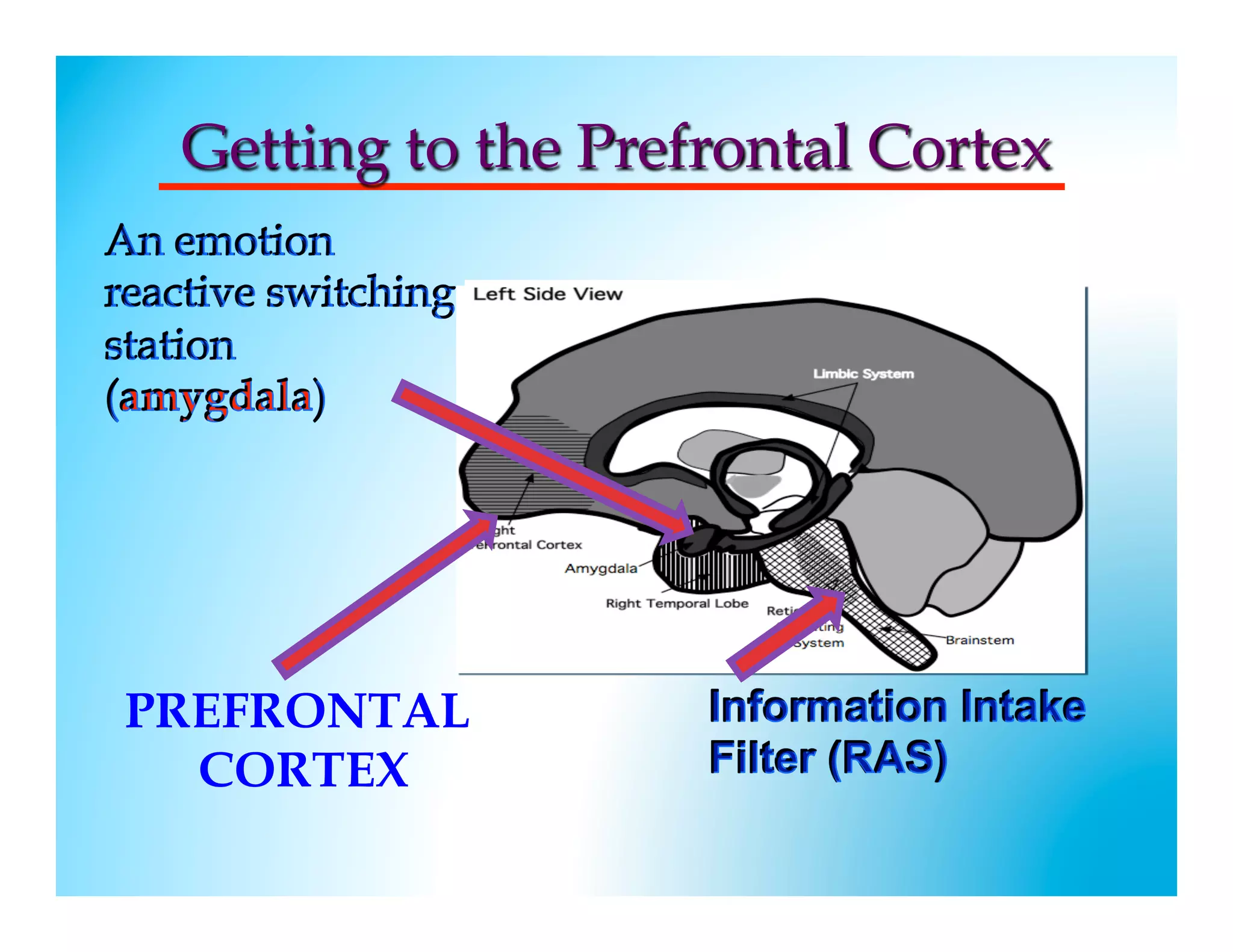
Getting to the Prefrontal Cortex


PREFRONTAL
  CORTEX
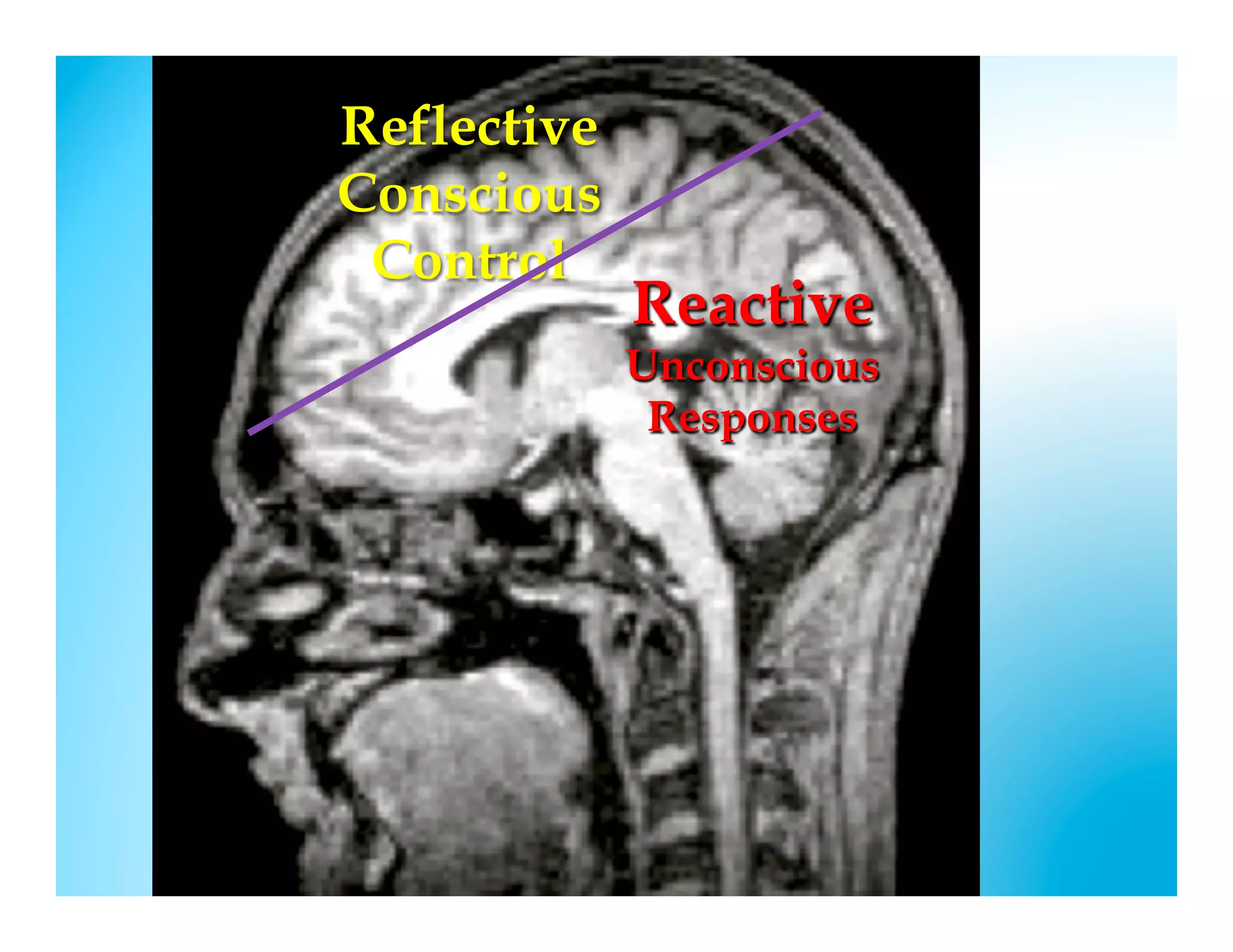
Reflective
Conscious
 Control
             Reactive
             Unconscious
              Responses
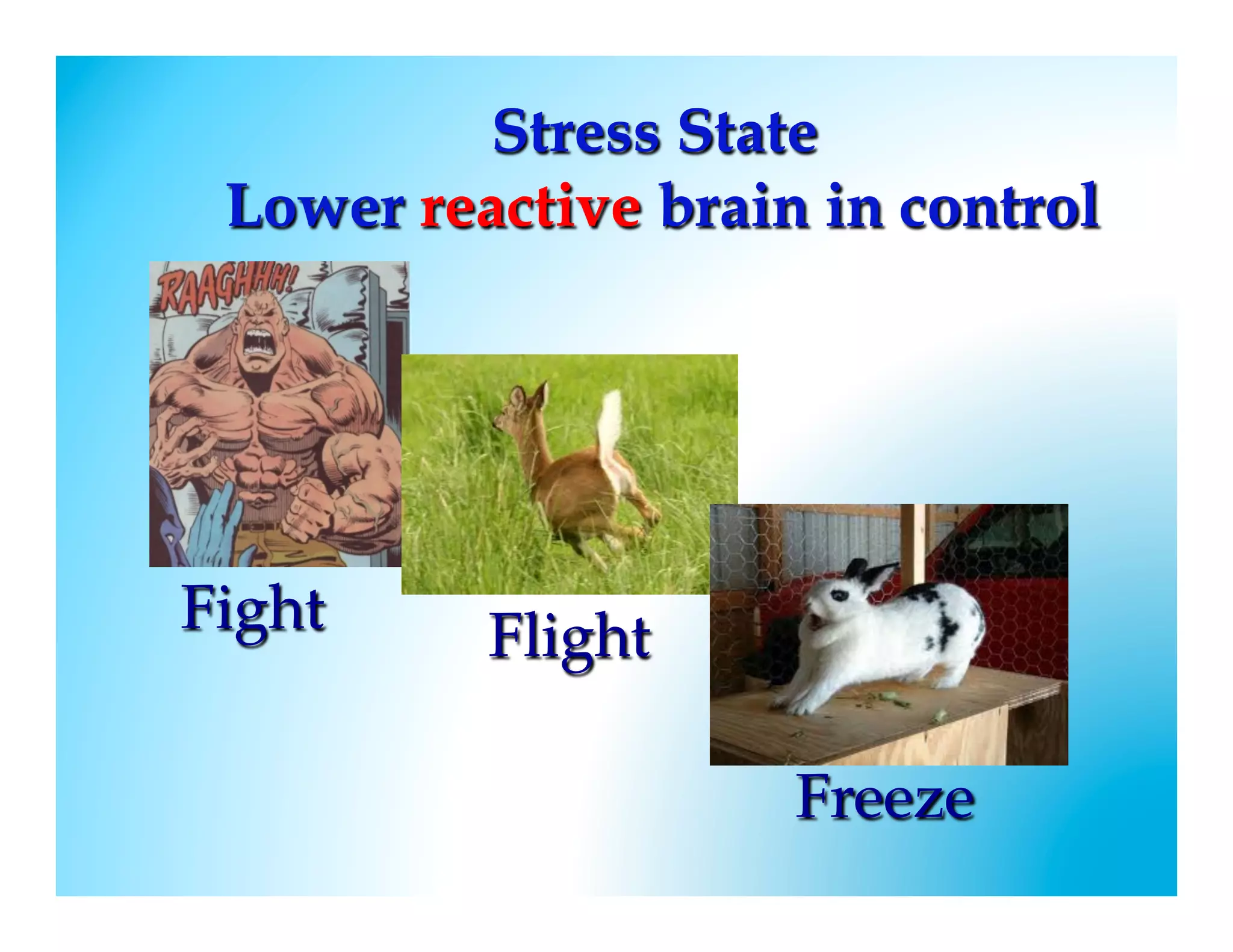
Stress State
     Lower reactive brain in control
!


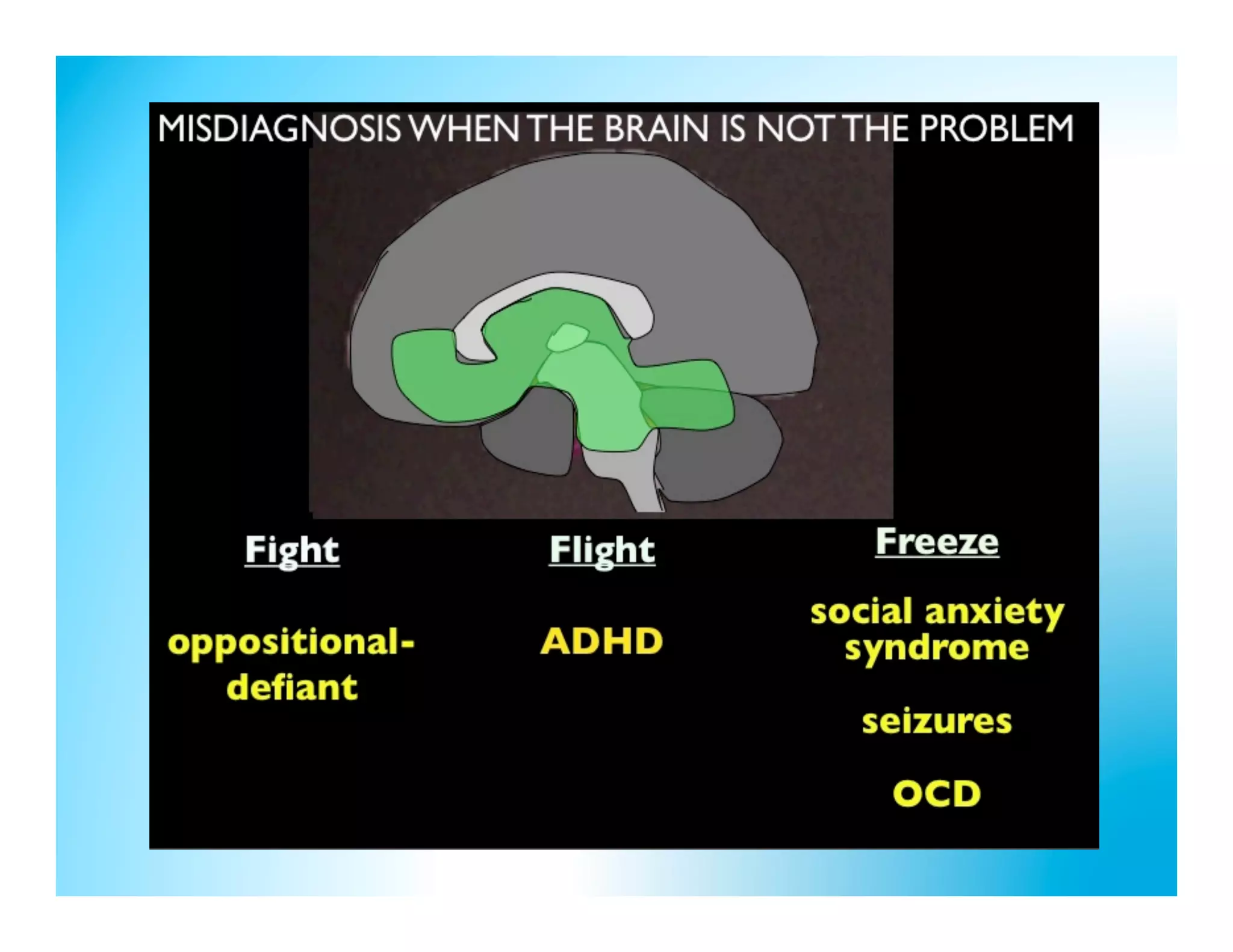
    Fight


              Flight

                         Freeze
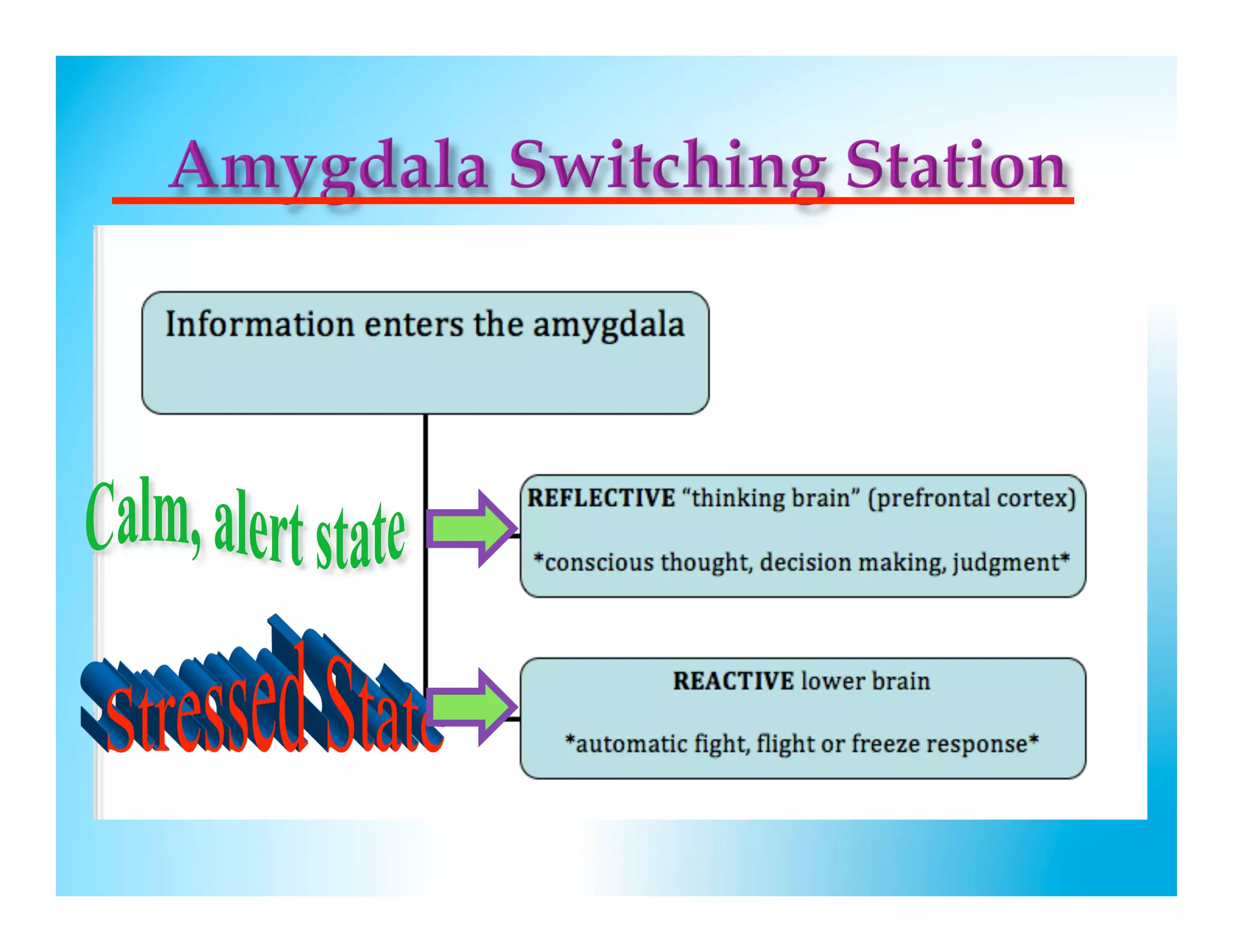
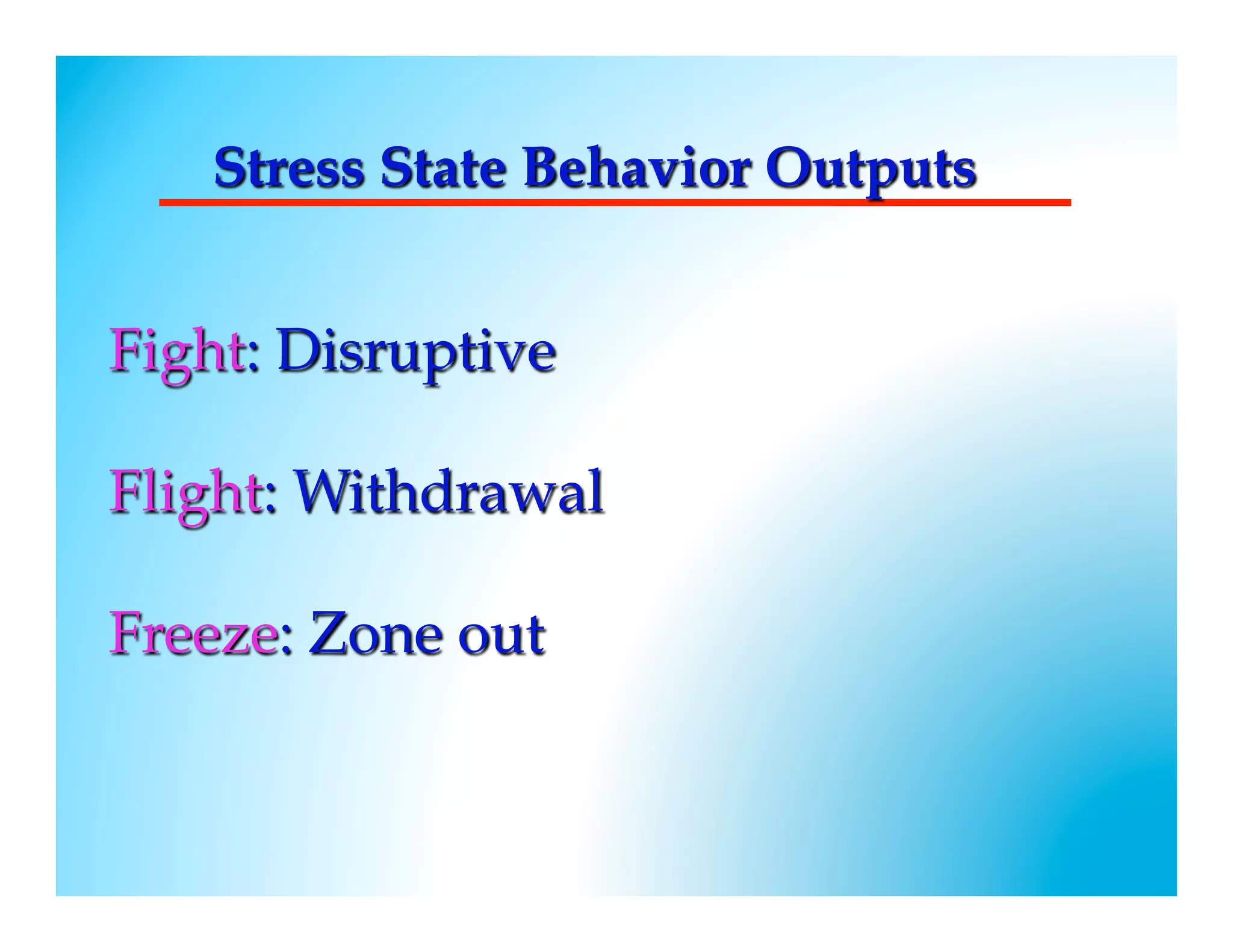
Stress State Behavior Outputs


Fight: Disruptive

Flight: Withdrawal

Freeze: Zone out
82
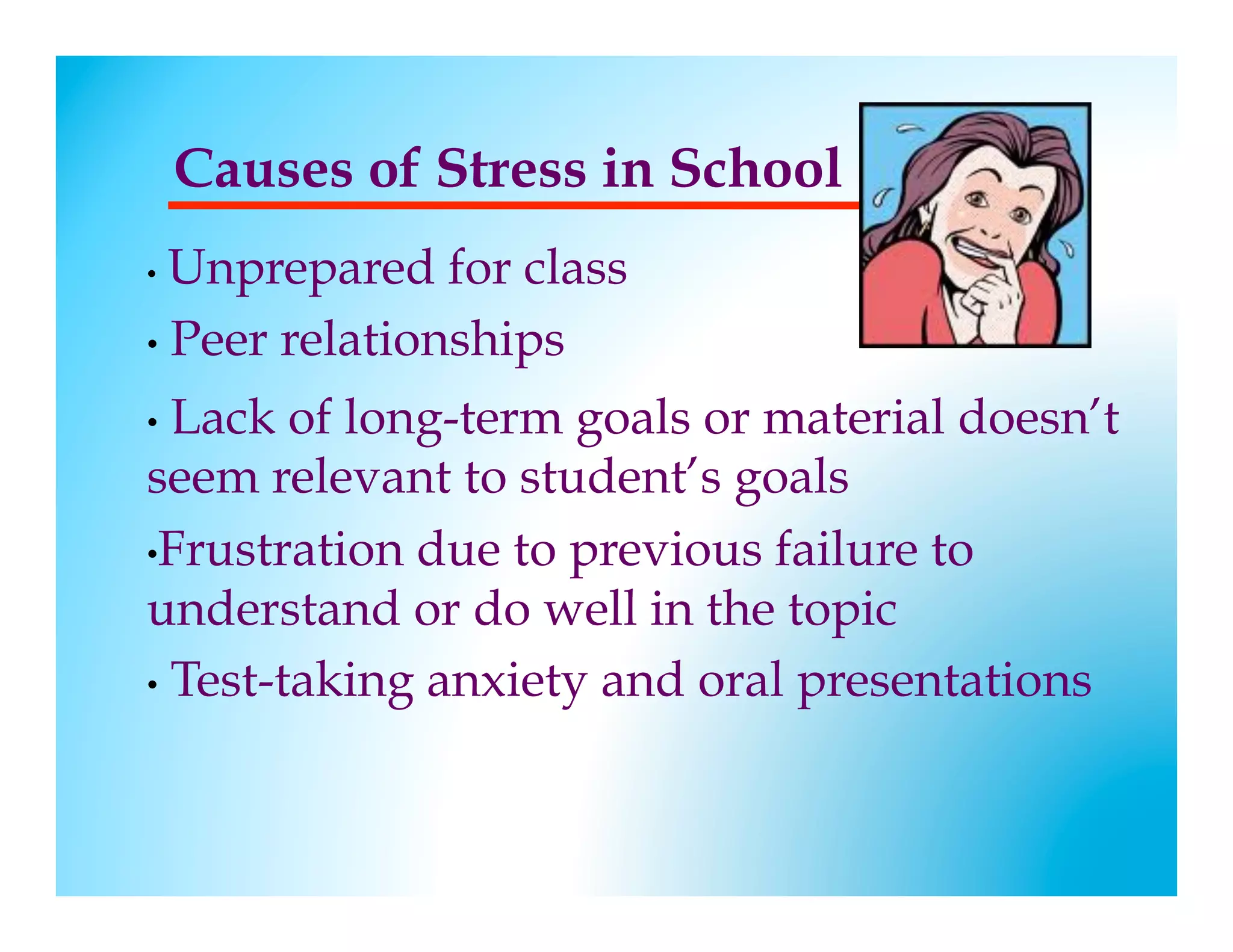
Causes of Stress in School
•  Unprepared for class
•  Peer relationships

•  Lack  of long-term goals or material doesn’t
seem relevant to student’s goals
• Frustration due to previous failure to
understand or do well in the topic
•  Test-taking anxiety and oral presentations
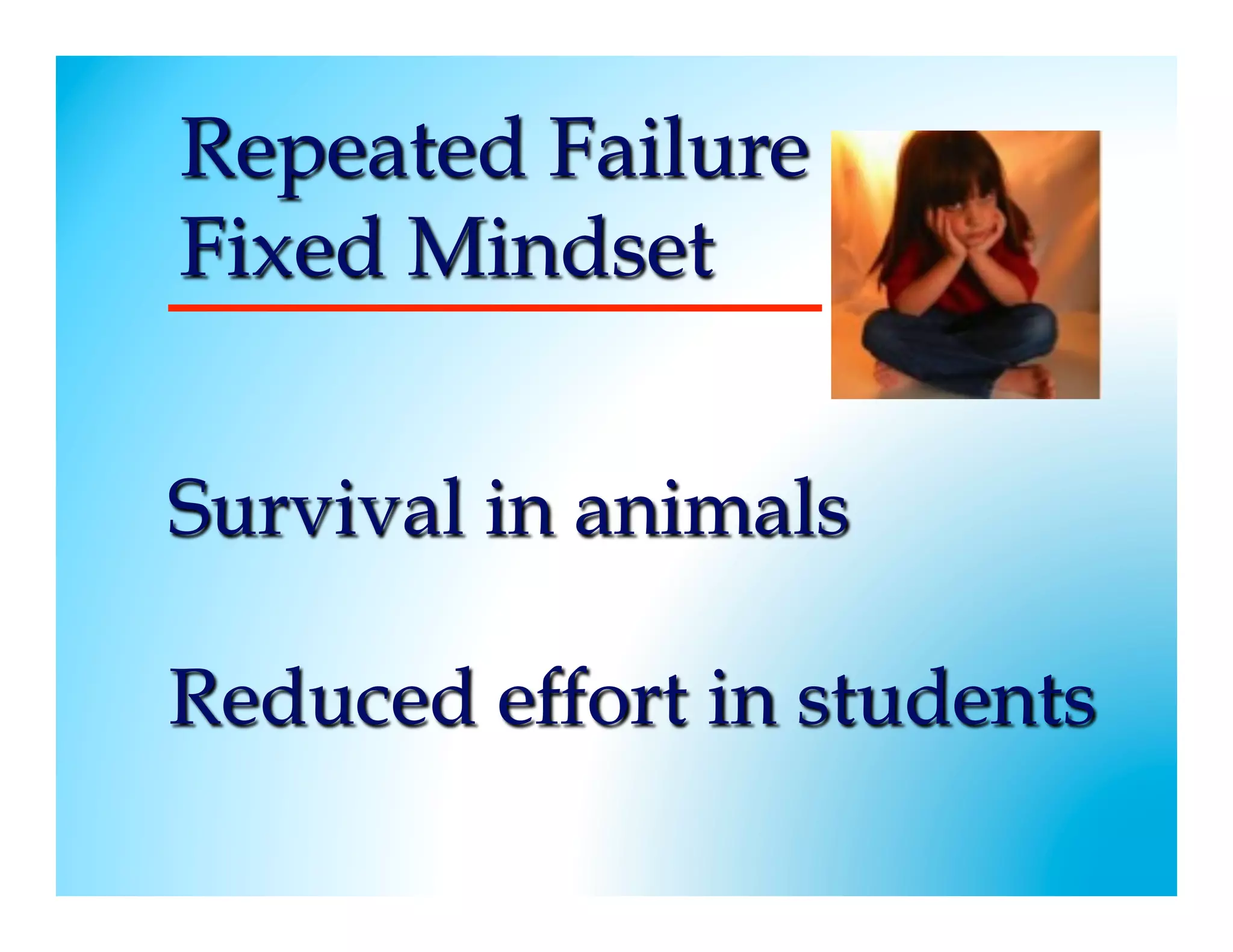
Repeated Failure
Fixed Mindset


Survival in animals

Reduced effort in students

!
For Amygdala Positive
Attitude & Growth Mindset


	     Follow the Computer
           Game Model
The PULL of Video Games


He’s so close to Level 10 he doesn’t
even want to go out for pizza
Characteristics
     Video Gamers

u  buy-in to goal
u  80% of the time failure
u  persevere with challenge
u  use immediate feedback to improve
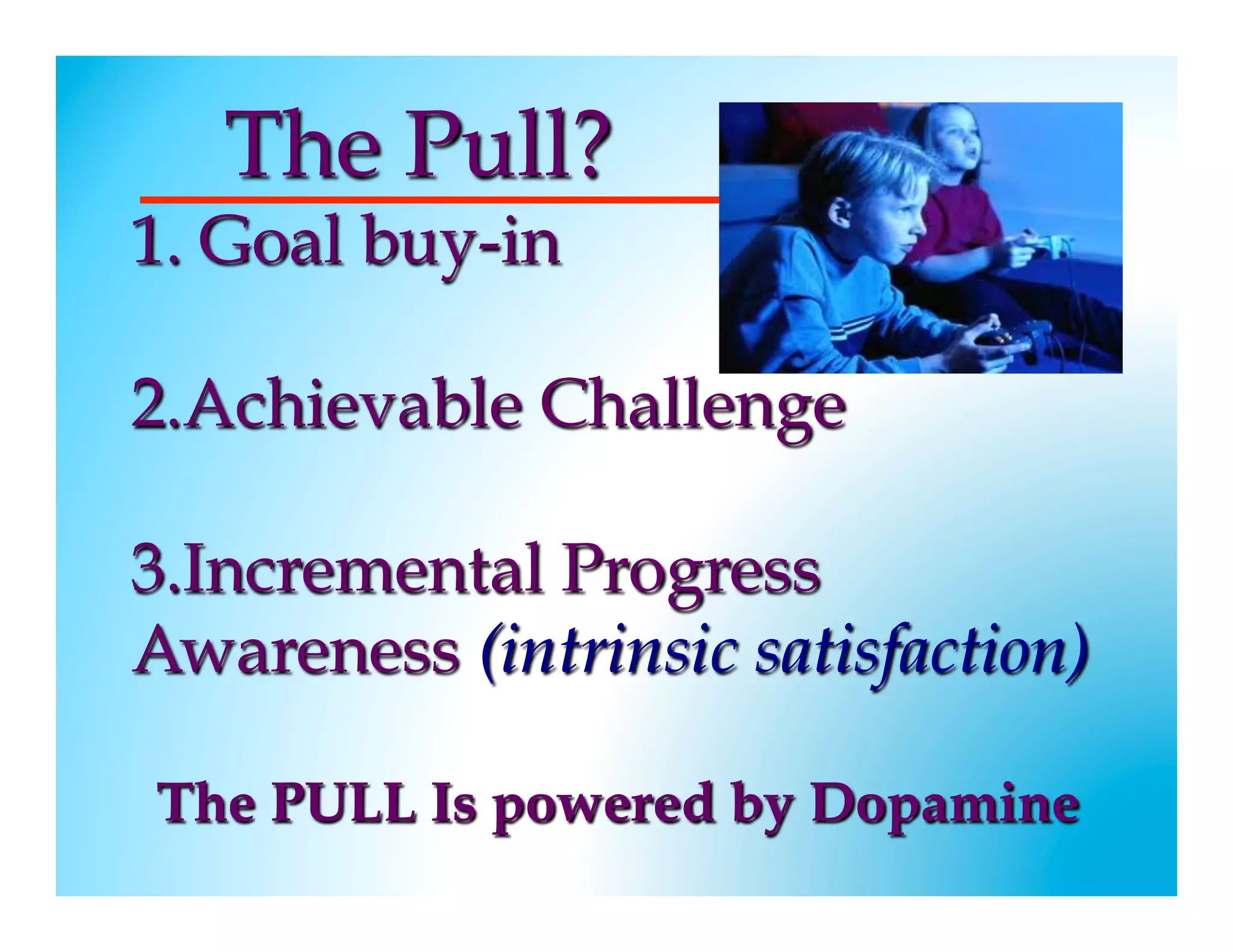
The Pull?
1.  Goal buy-in
2. Achievable Challenge

3. Incremental Progress
Awareness (intrinsic satisfaction)

The PULL Is powered by Dopamine
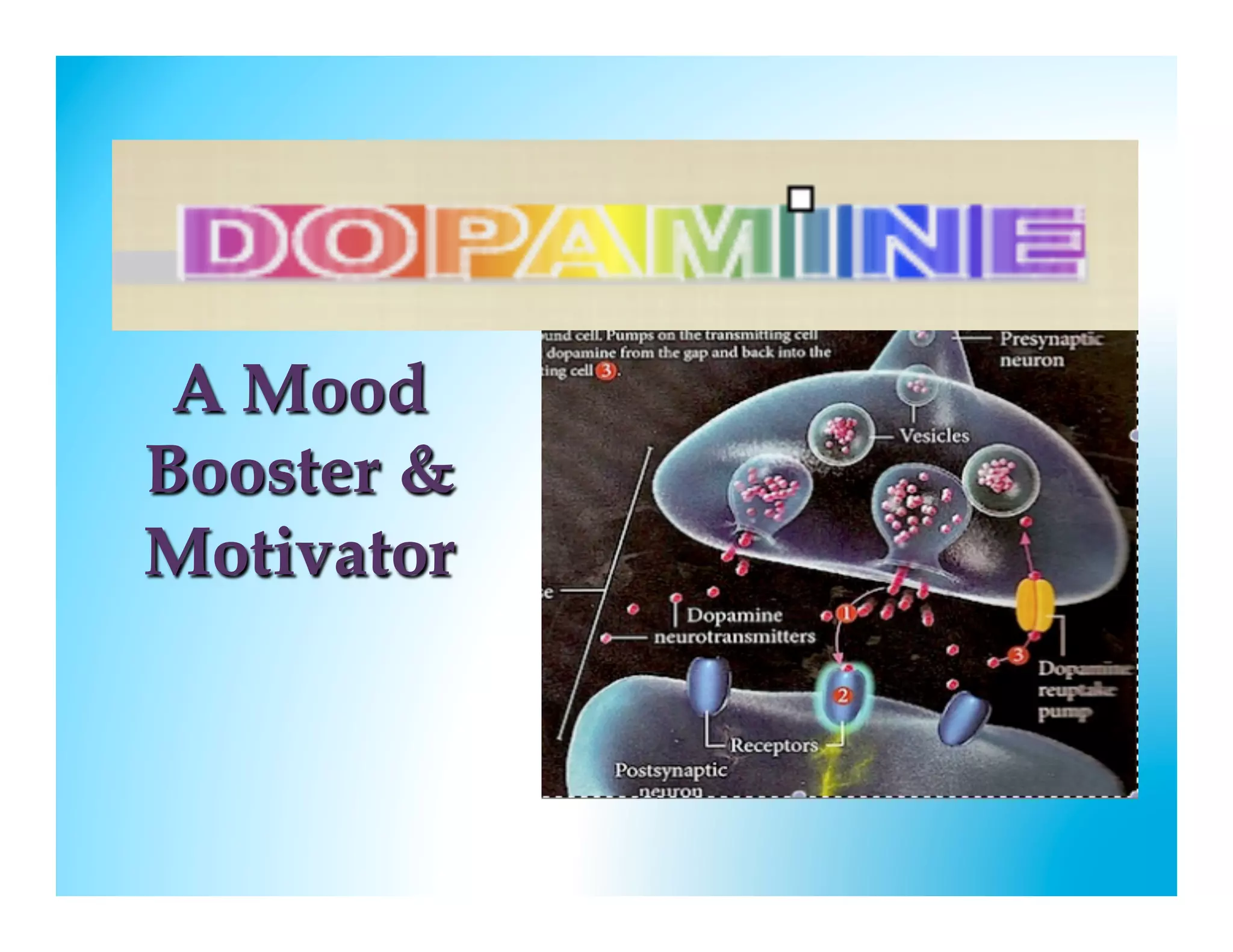
A Mood
Booster &
Motivator
Pleasure & Decreased Stress
Curiosity
Attention
Motivation


      Persistence and perseverance
      Memory
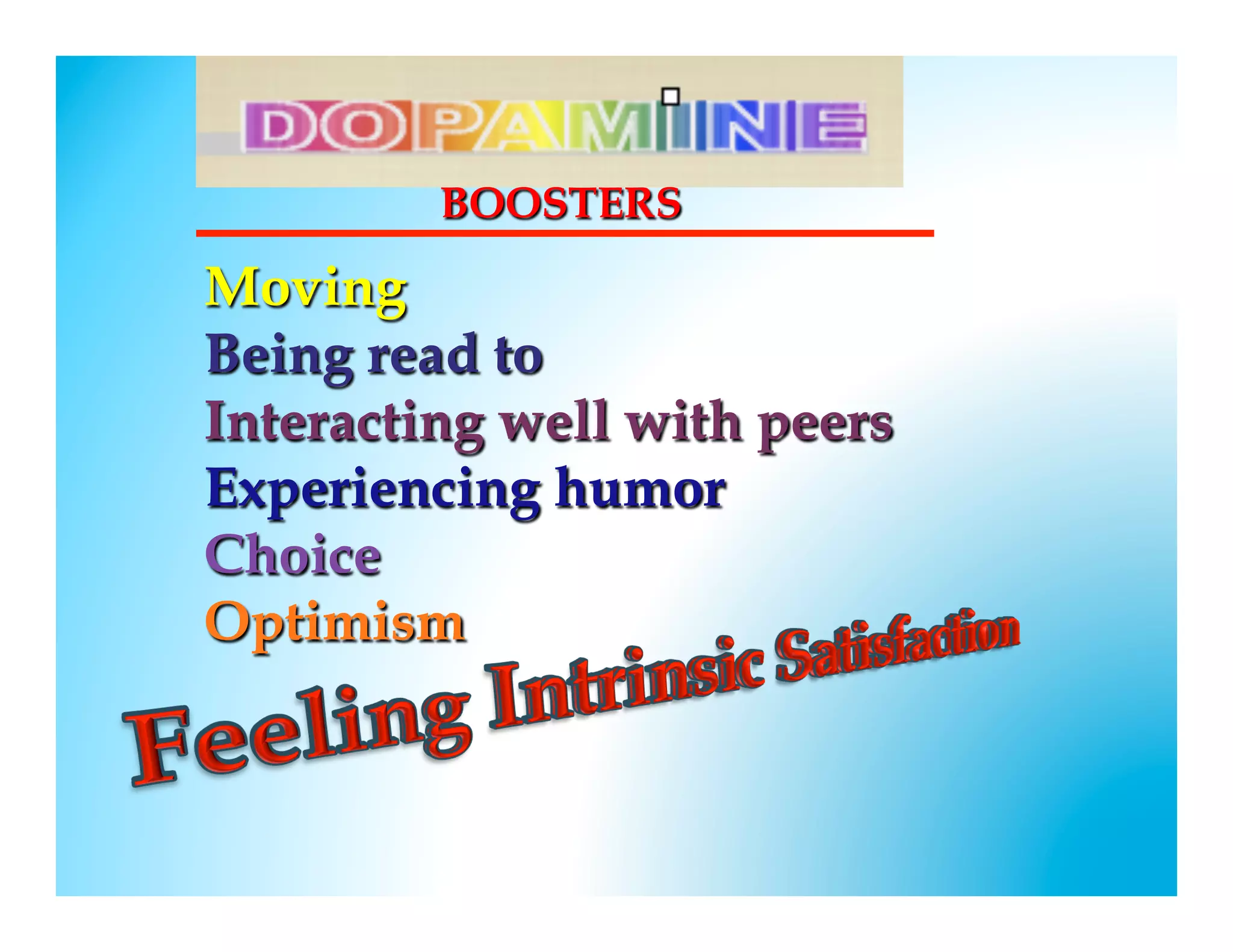
BOOSTERS

Moving
Being read to
Interacting well with peers
Experiencing humor
Choice
Optimism
Prediction for
Intrinsic Satisfaction

Is your brain motivated the
potential of intrinsic
satisfaction from knowing if
a prediction it makes is
correct?
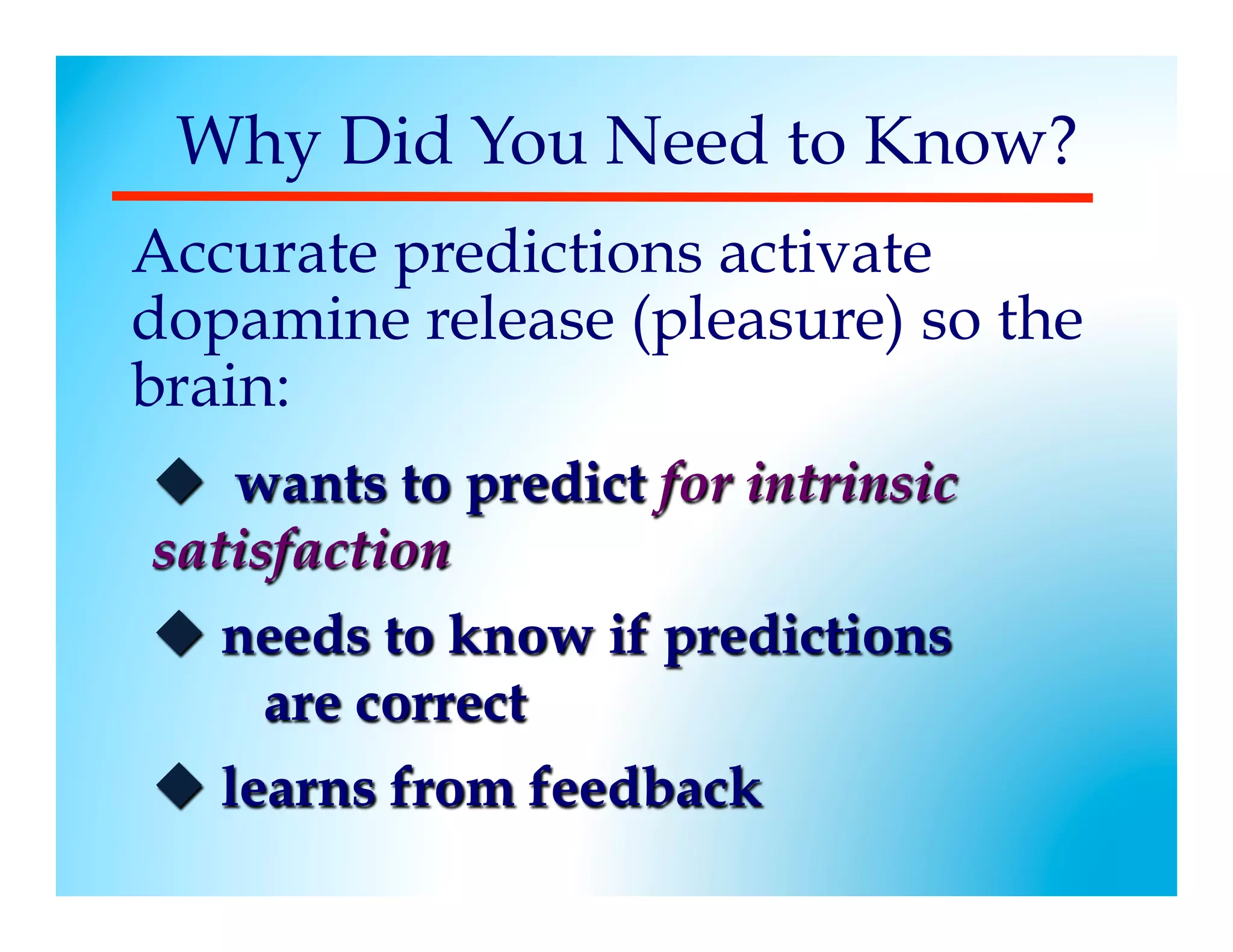
Why Did You Need to Know?
Accurate predictions activate
dopamine release (pleasure) so the
brain:
u  wants to predict for intrinsic
satisfaction
u  needs to know if predictions
     are correct
u  learns from feedback
Incremental Progress
Children need to see frequent
connections between their work
and their progress (to build on
the intrinsic satisfaction).

    Effort=Progress to Goal
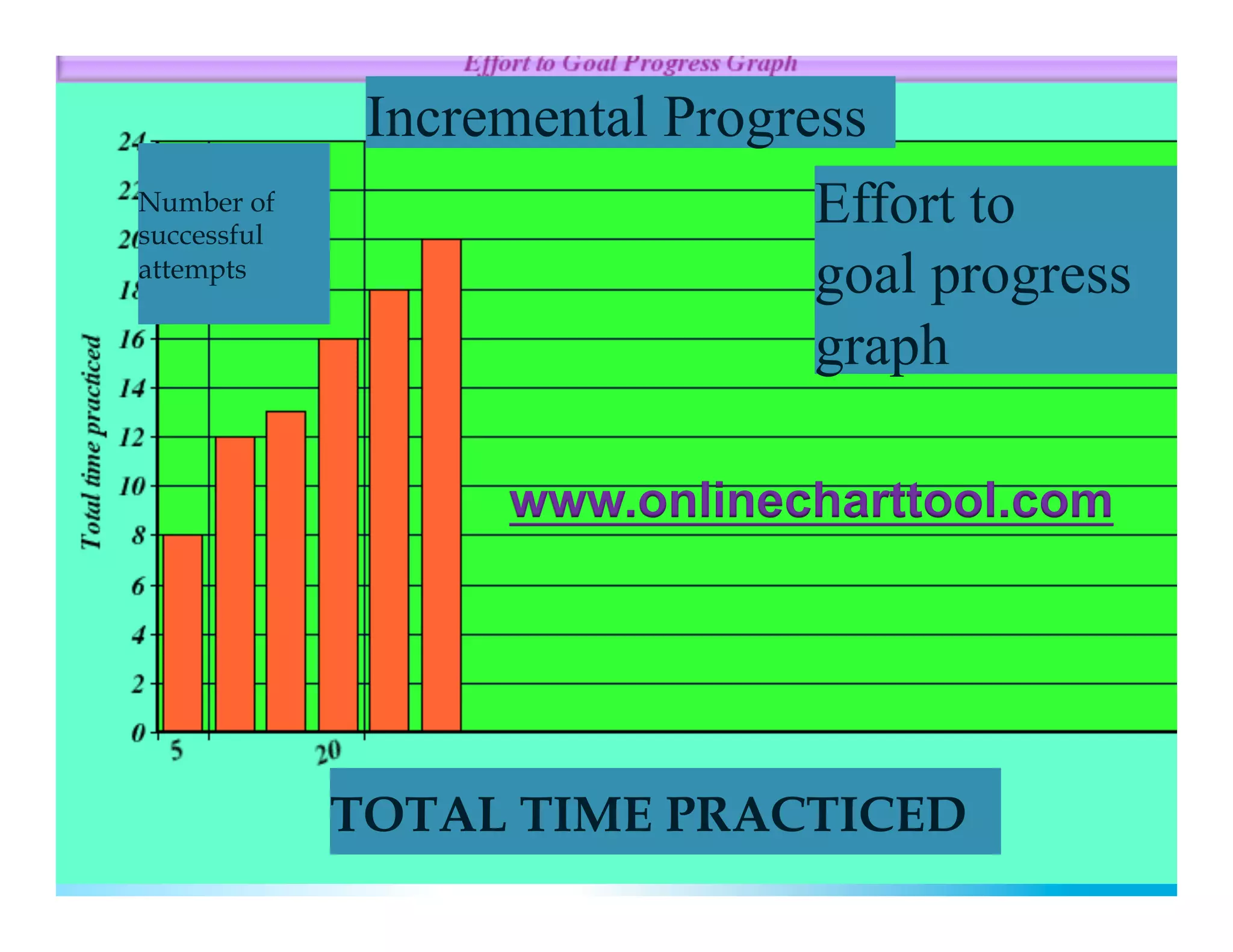
Incremental Progress
Number of
successful
                                Effort to
attempts
                                goal progress
                                graph

                   www.onlinecharttool.com


             TOTAL TIME PRACTICED
Using the game model of
achievable challenge and
incremental goal progress
feedback, children are motivated
to persevere through challenges
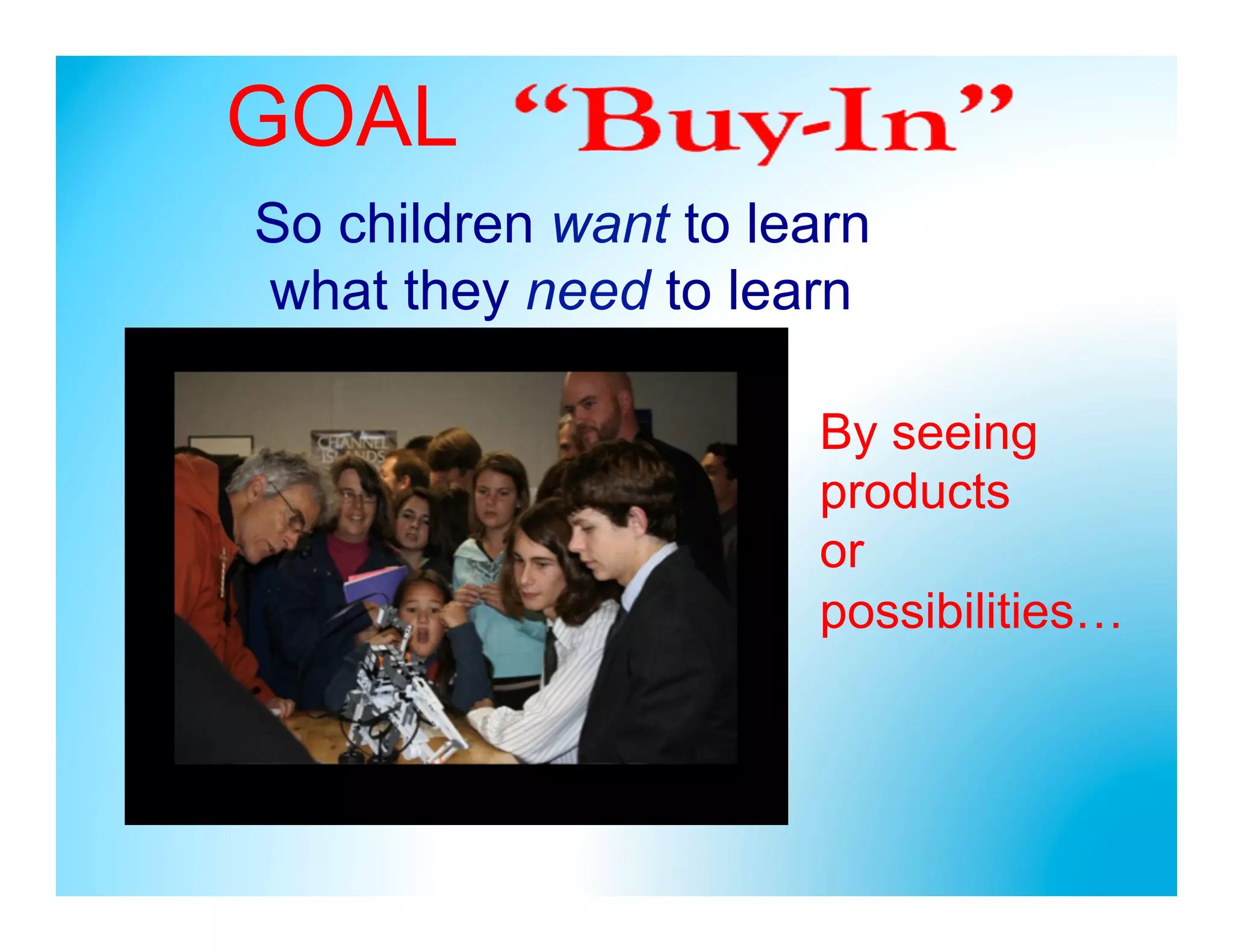
GOAL
So children want to learn
what they need to learn

                      By seeing
                      products
                      or
                      possibilities…
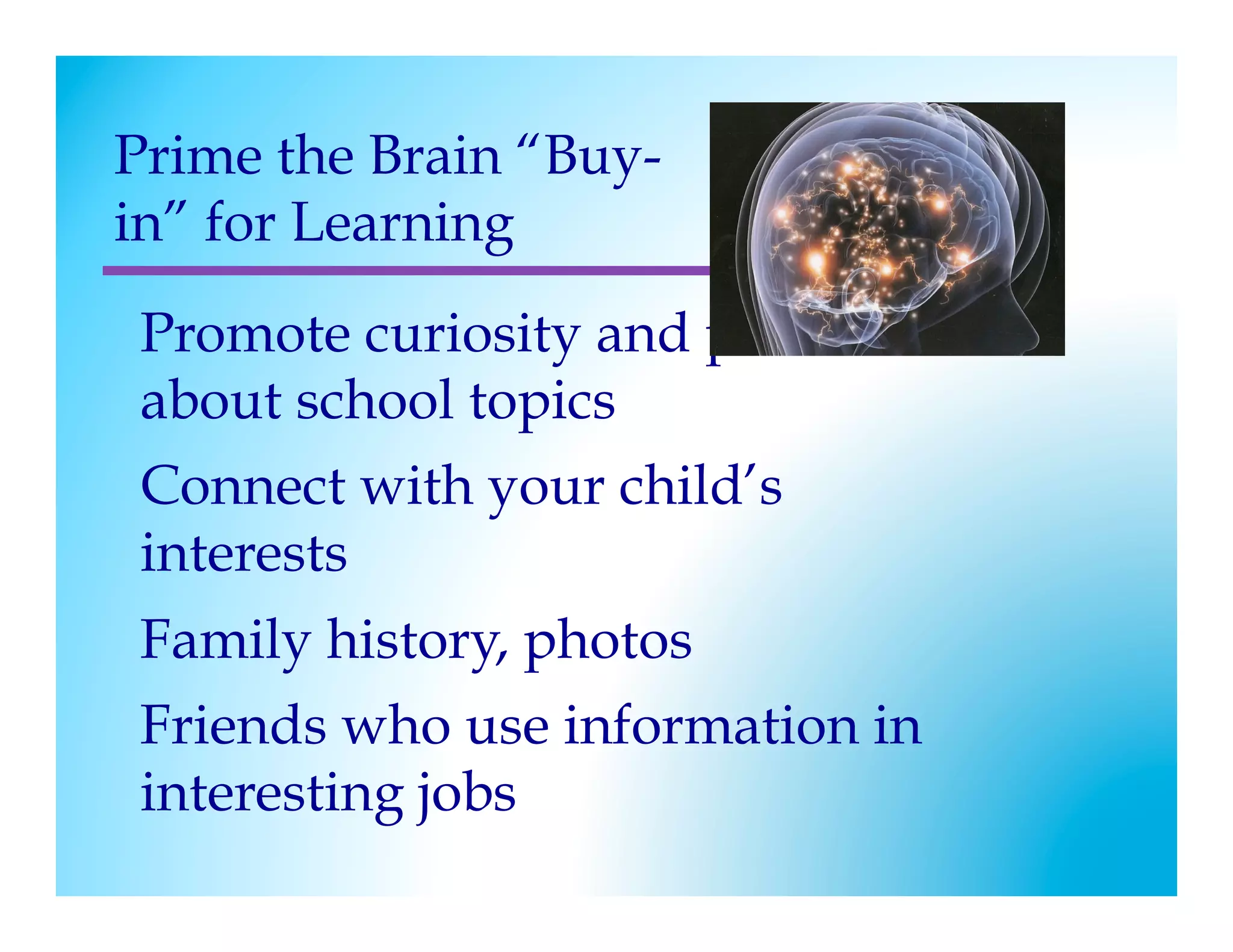
Prime the Brain “Buy-
in” for Learning
 Promote curiosity and prediction
 about school topics
 Connect with your child’s
 interests
 Family history, photos
 Friends who use information in
 interesting jobs
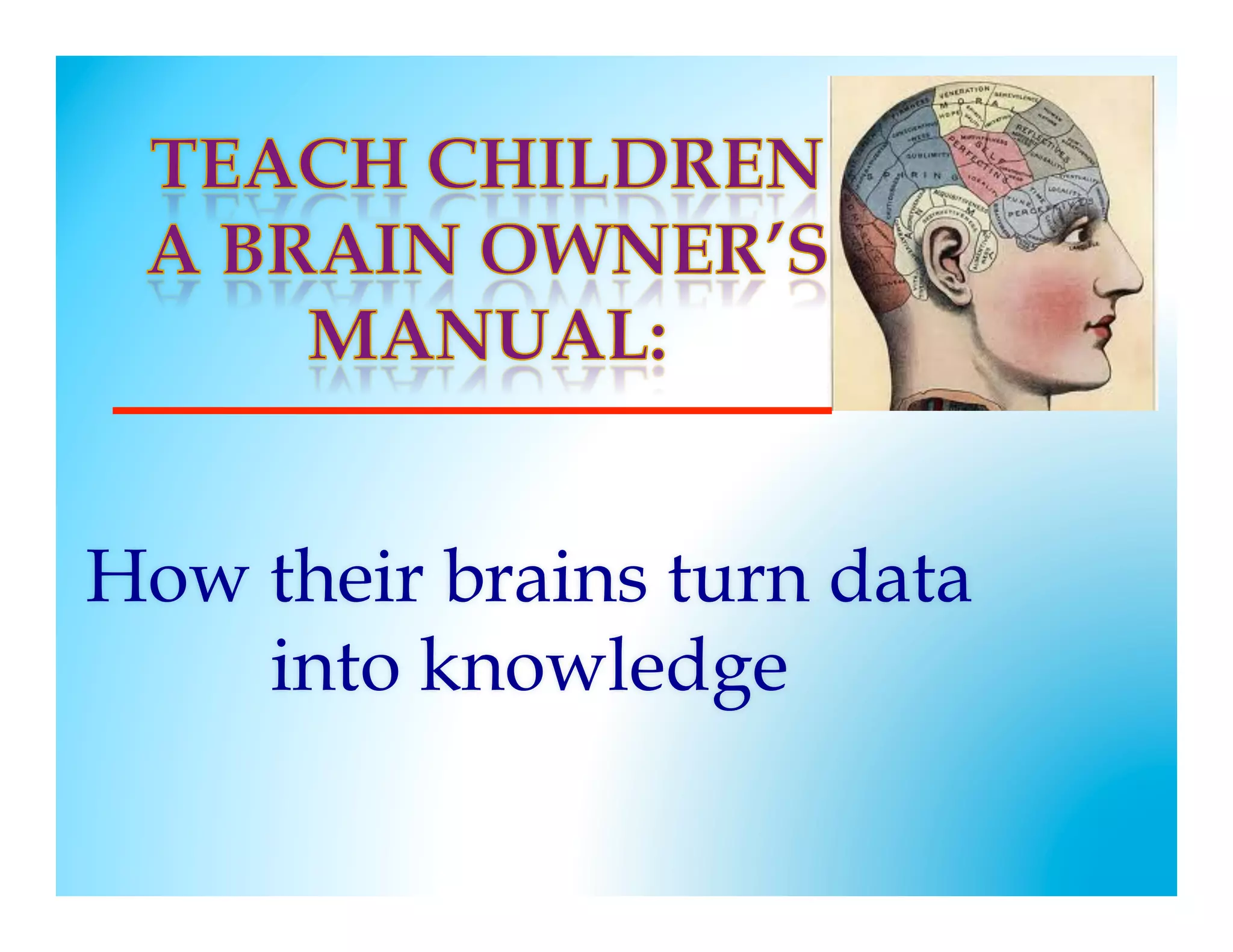
How their brains turn data
    into knowledge
Important BOM Messages from
Neuroscience for Parents  Children

 Acting out/zoning out is brain’s adaptive
stress response
  Neuroplasticity=Potential
Genius is more than genes
Past performance does not limit future success

    You can change your brain’s social,
    emotional, and cognitive intelligence
Knowing Why
      	

 When children understand the
neuroplasticity they know the
“why” for:
•  doing assignments
•  participation
•  understanding concepts
•  making mistakes!
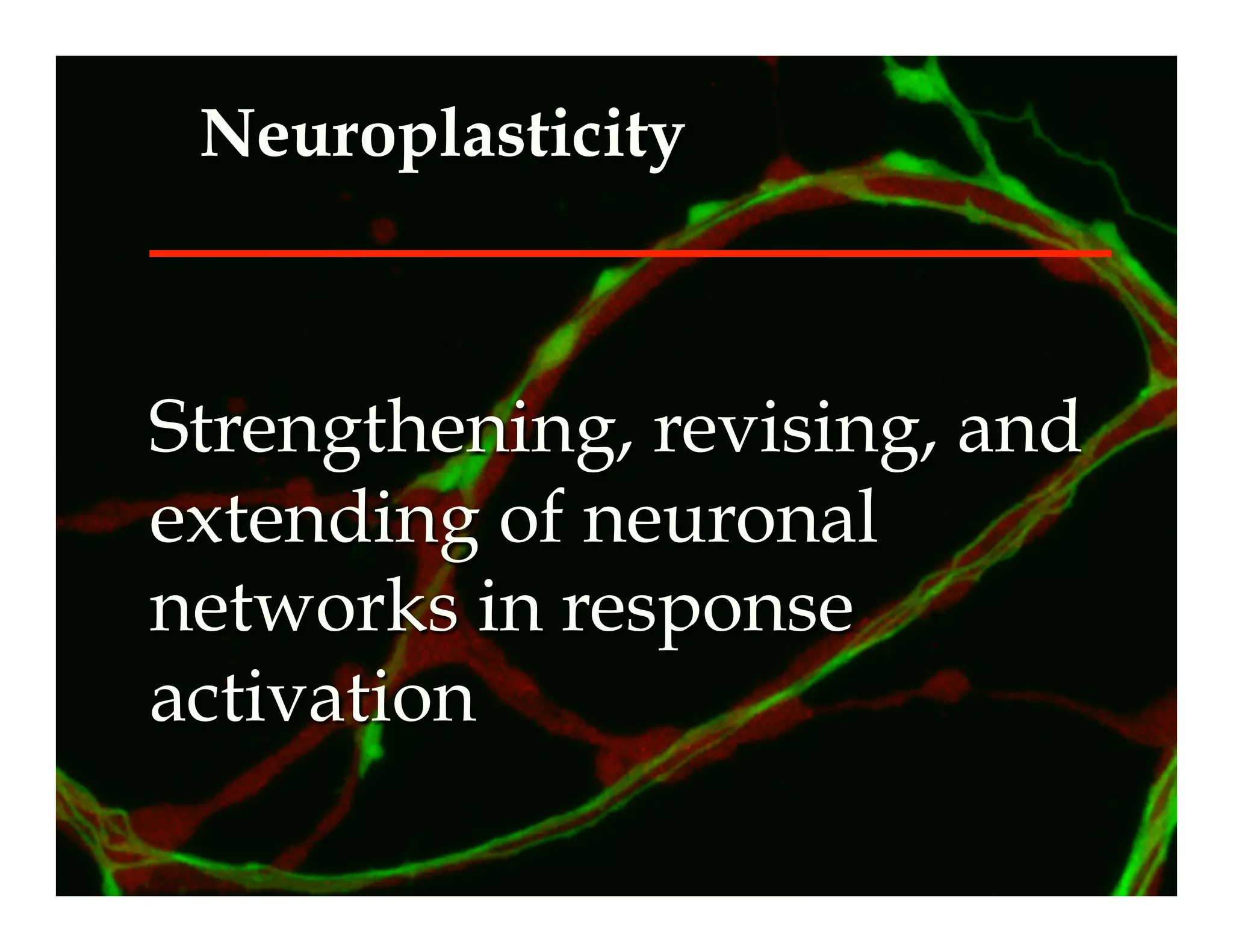
Neuroplasticity


Strengthening, revising, and
extending of neuronal
networks in response
activation
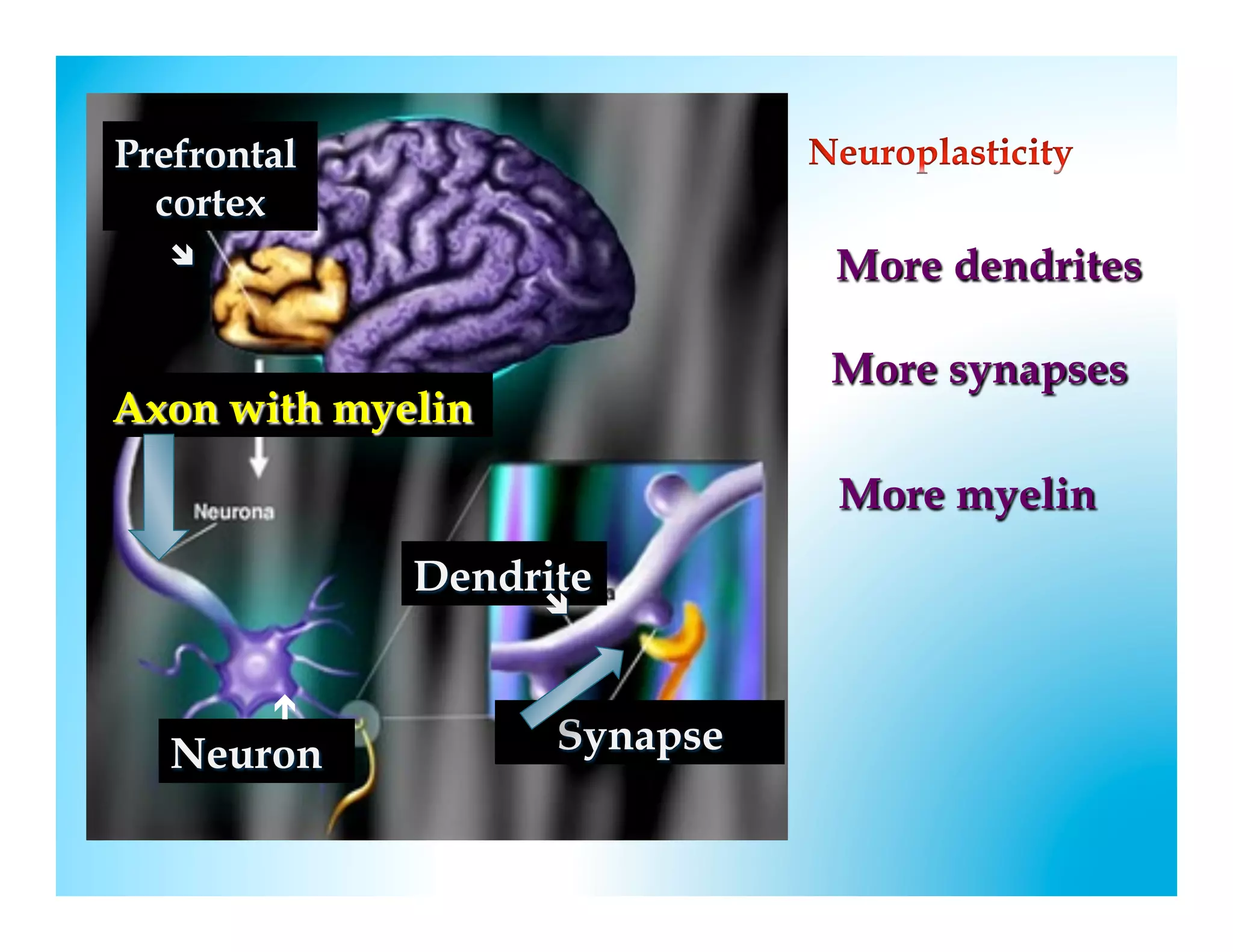
Prefrontal
  cortex
   
                             More dendrites

                             More synapses
Axon with myelin
                             More myelin
             Dendrite
                  î
                   


        é
   Neuron          Synapse
+

    It is by neurons making
    connections with one another that
    learning can occur
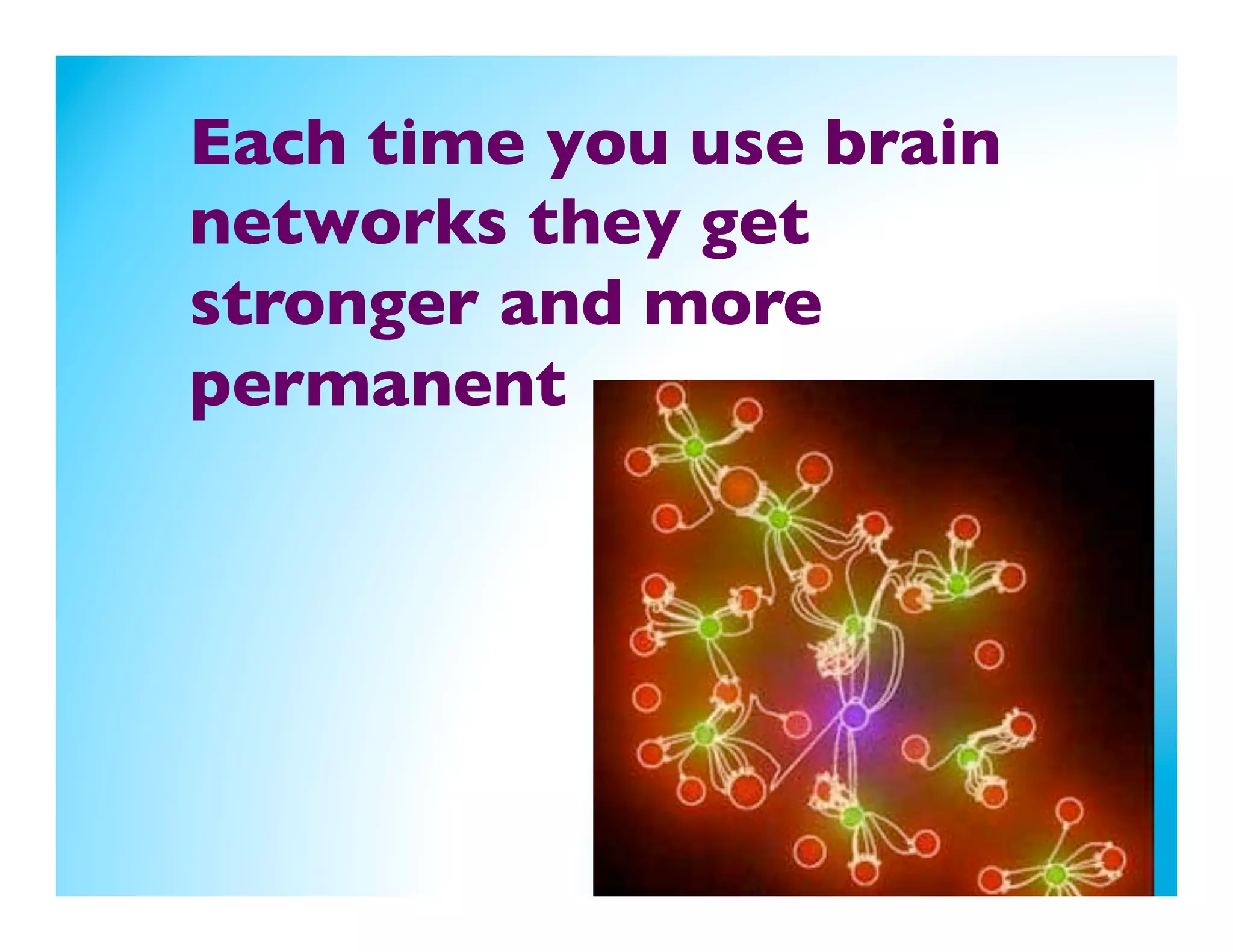
Each time you use brain
networks they get
stronger and more
permanent
A congested highway is like the flow of
       brain traffic when there are few connections
       available to get to the same place.
Neuroplasticity: More connections
       move traffic more quickly
Neuroplasticity


PRACTICE
MAKES
PERMANENT
Executive Functions:
The Skill Sets for the
    21st Century
•  To evaluate new information and
modify understanding as information
increases and “facts” change

•  Use new technology as it becomes
available
To find solutions for
problems we have yet to
recognize


  Wes Frye (Cisco Systems)
Prefrontal
Cortex
The PFC holds an executive
function system that, when
exercised and developed,
can become our brain’s
successful CEO.
               
Prun
                             Prefrontal
                              Cortex


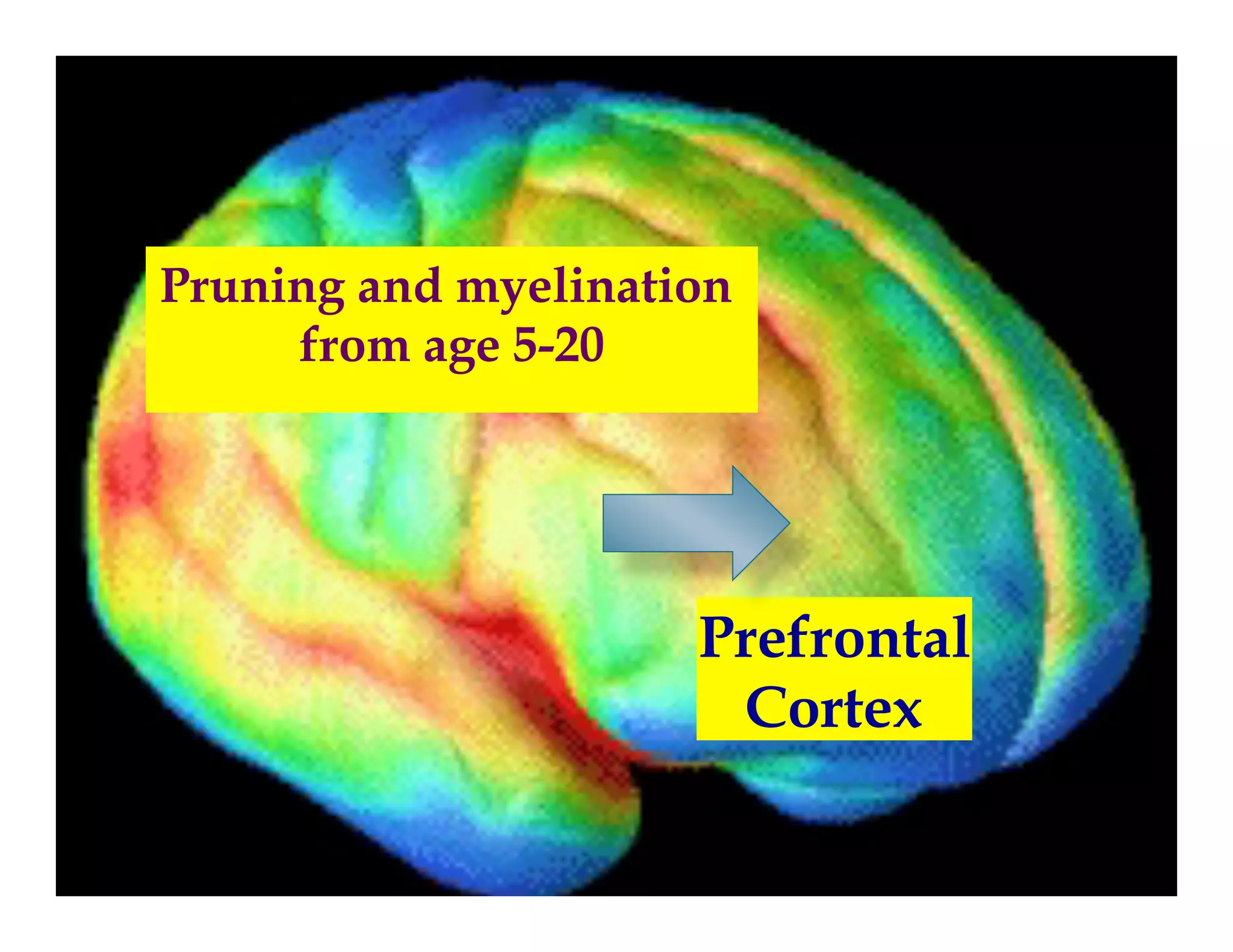
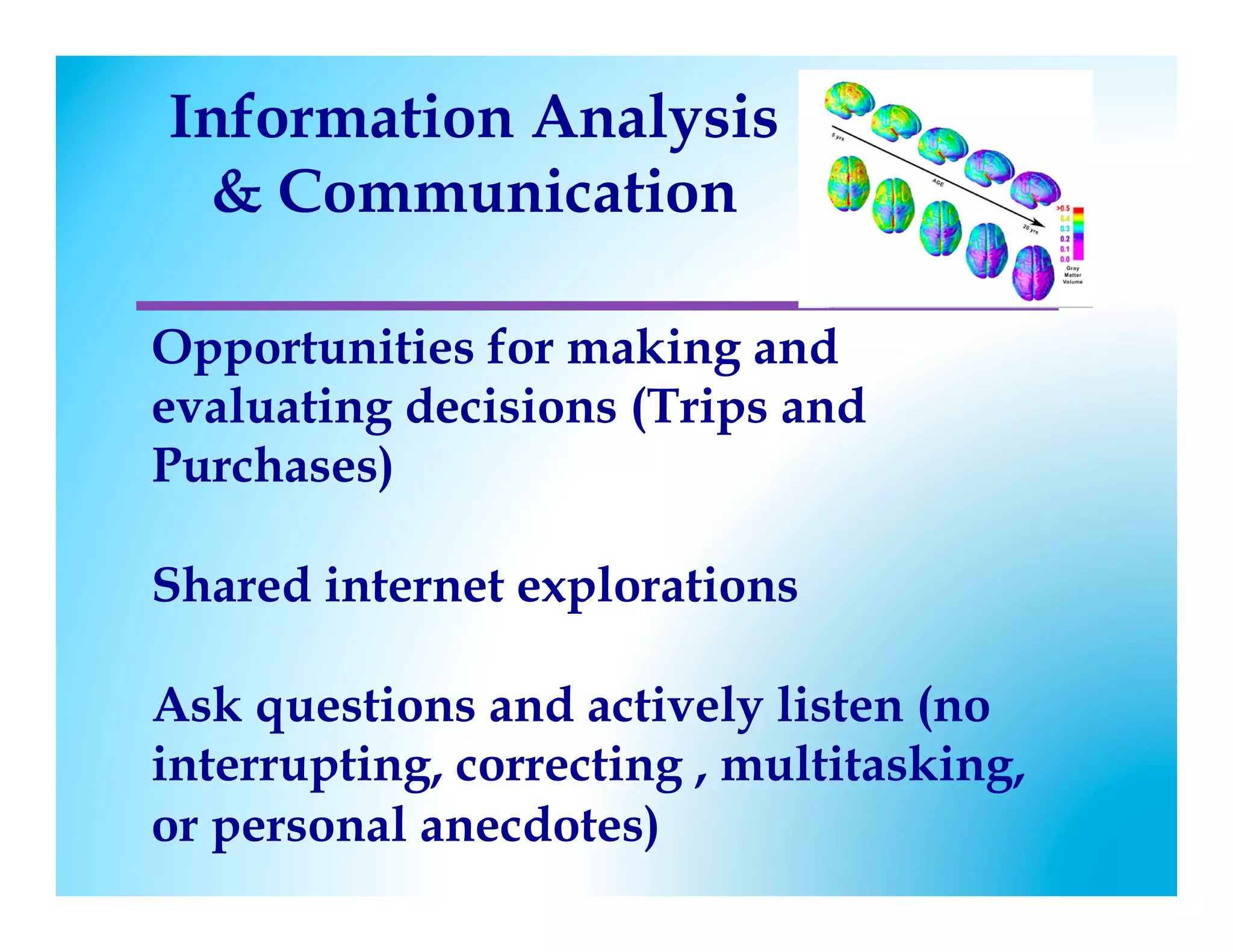
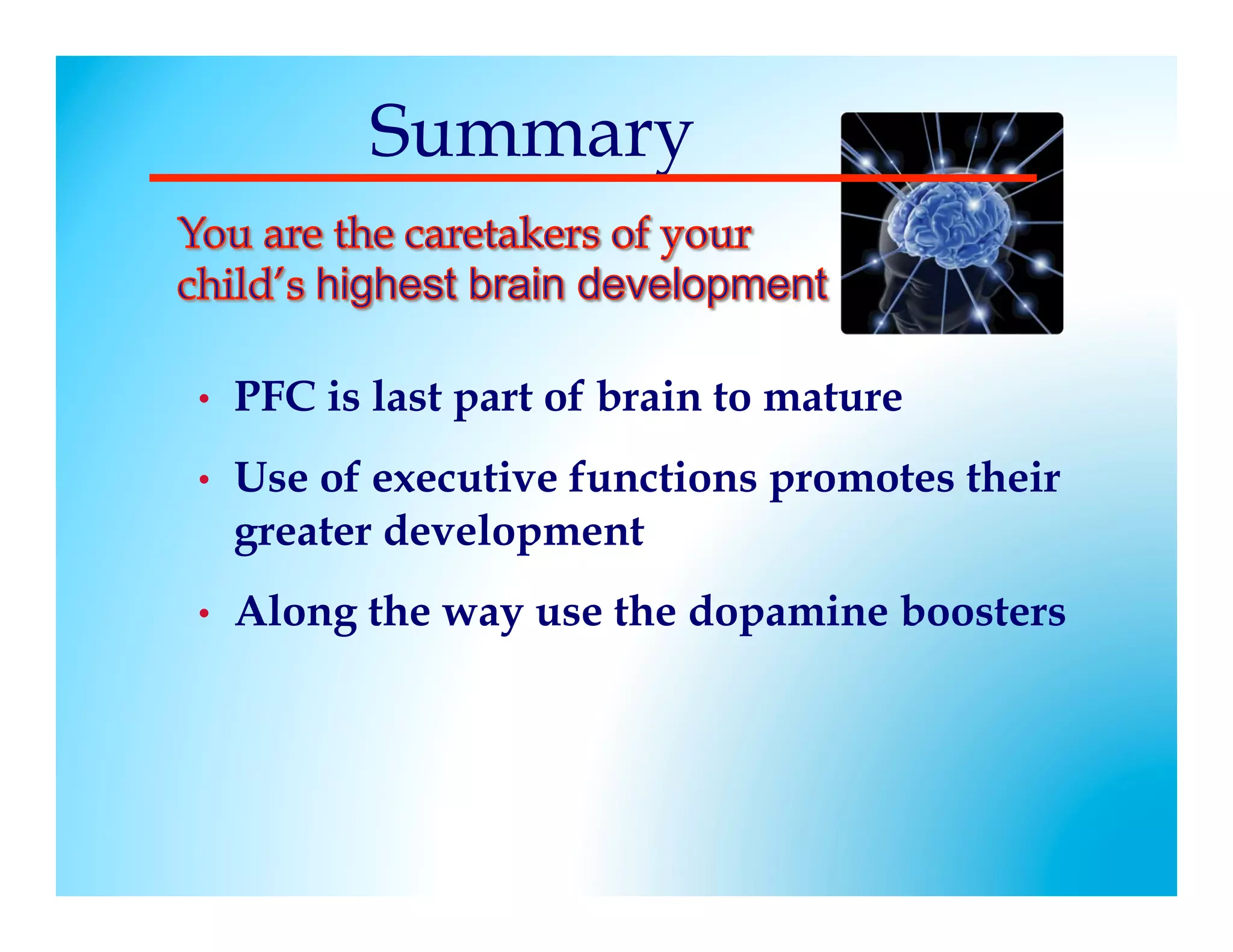
Pruning and myelination
     from age 5-20


                     Prefrontal
                      Cortex
Most active maturation: 5-20
Neural Networks of
   Executive Function
Can be developed to:
•  evaluate new information
•  modify understanding as
   information increases and “facts”
   change
•  use new technology as it becomes
   available
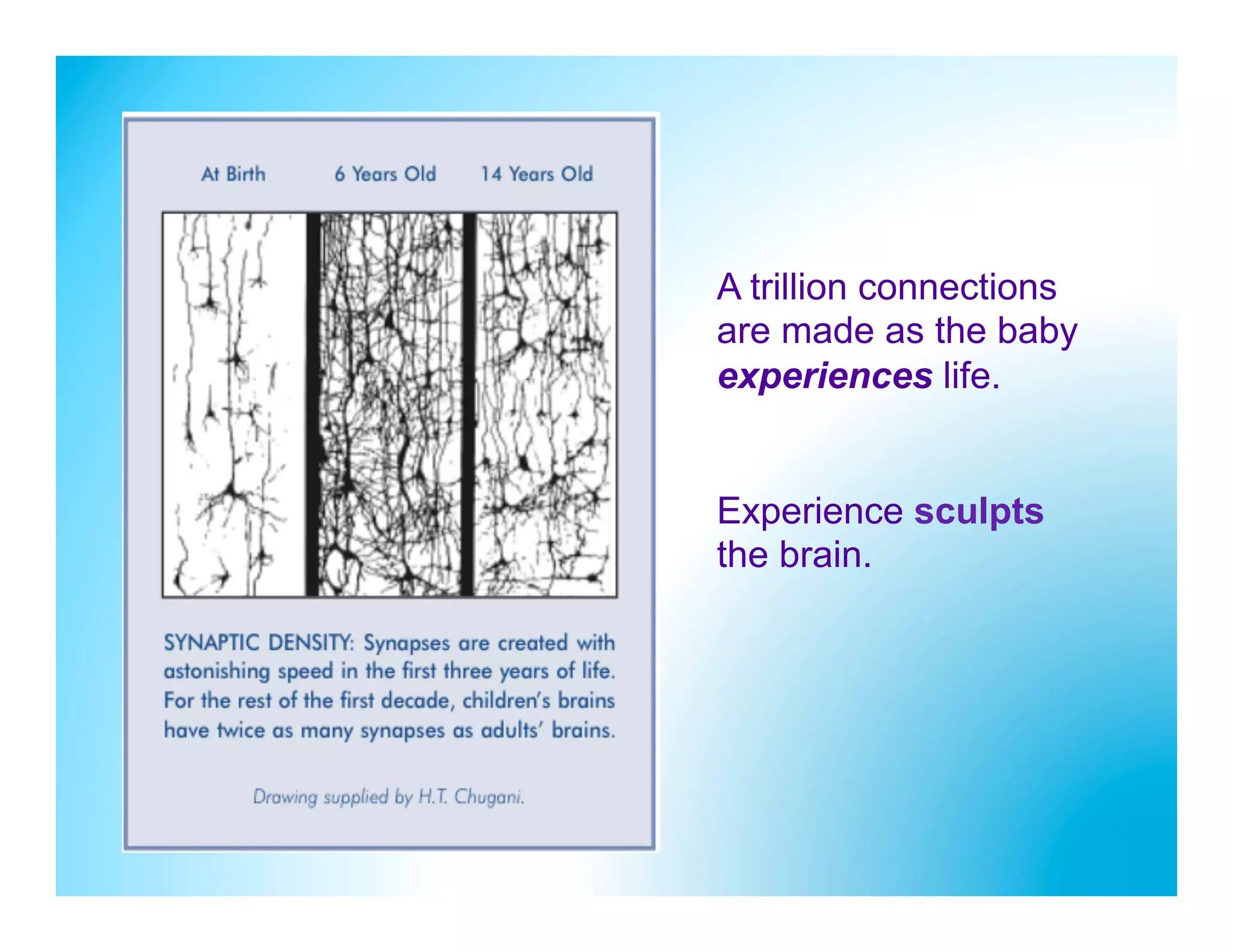
A trillion connections
are made as the baby
experiences life.


Experience sculpts
the brain.
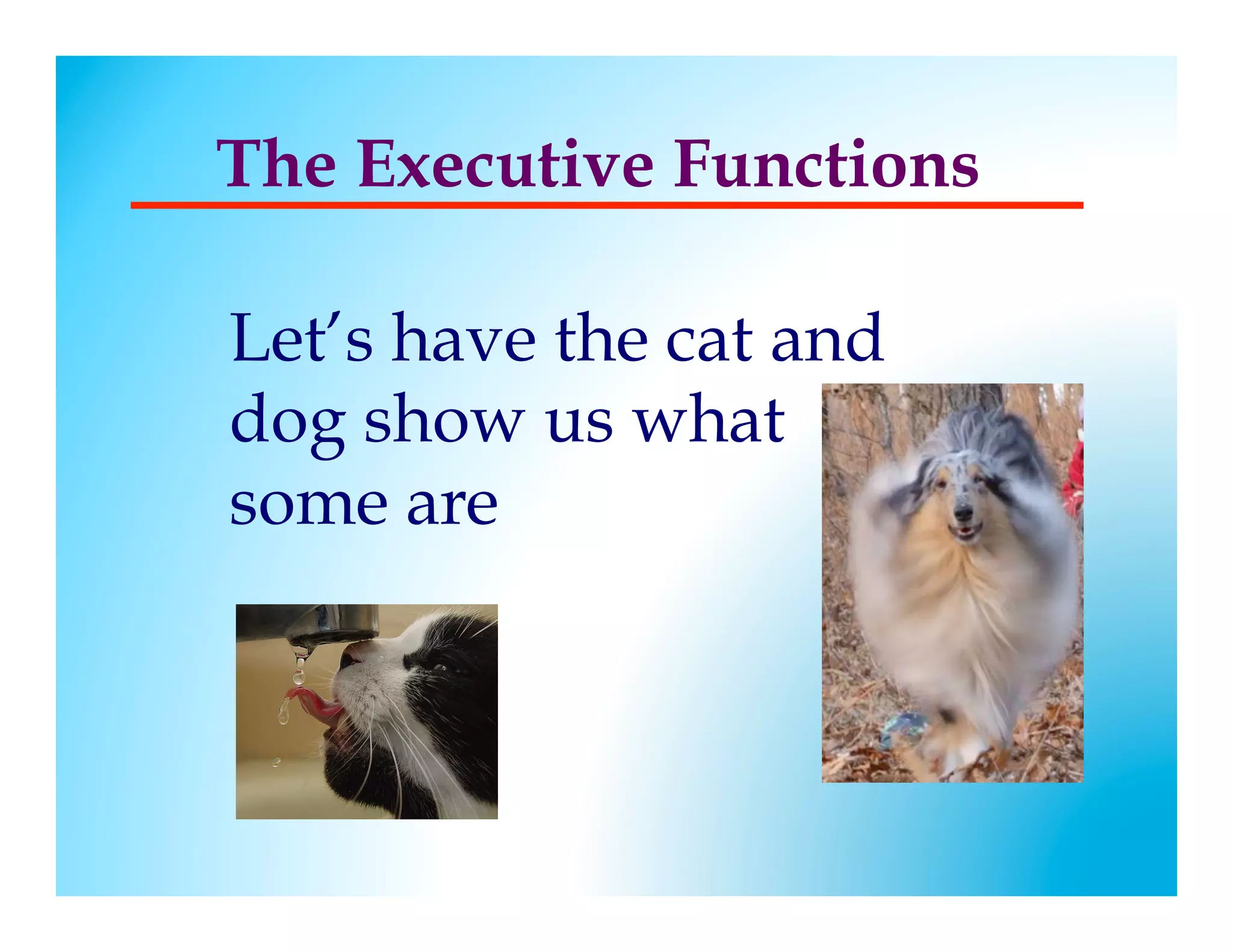
The Executive Functions

Let’s have the cat and
dog show us what
some are
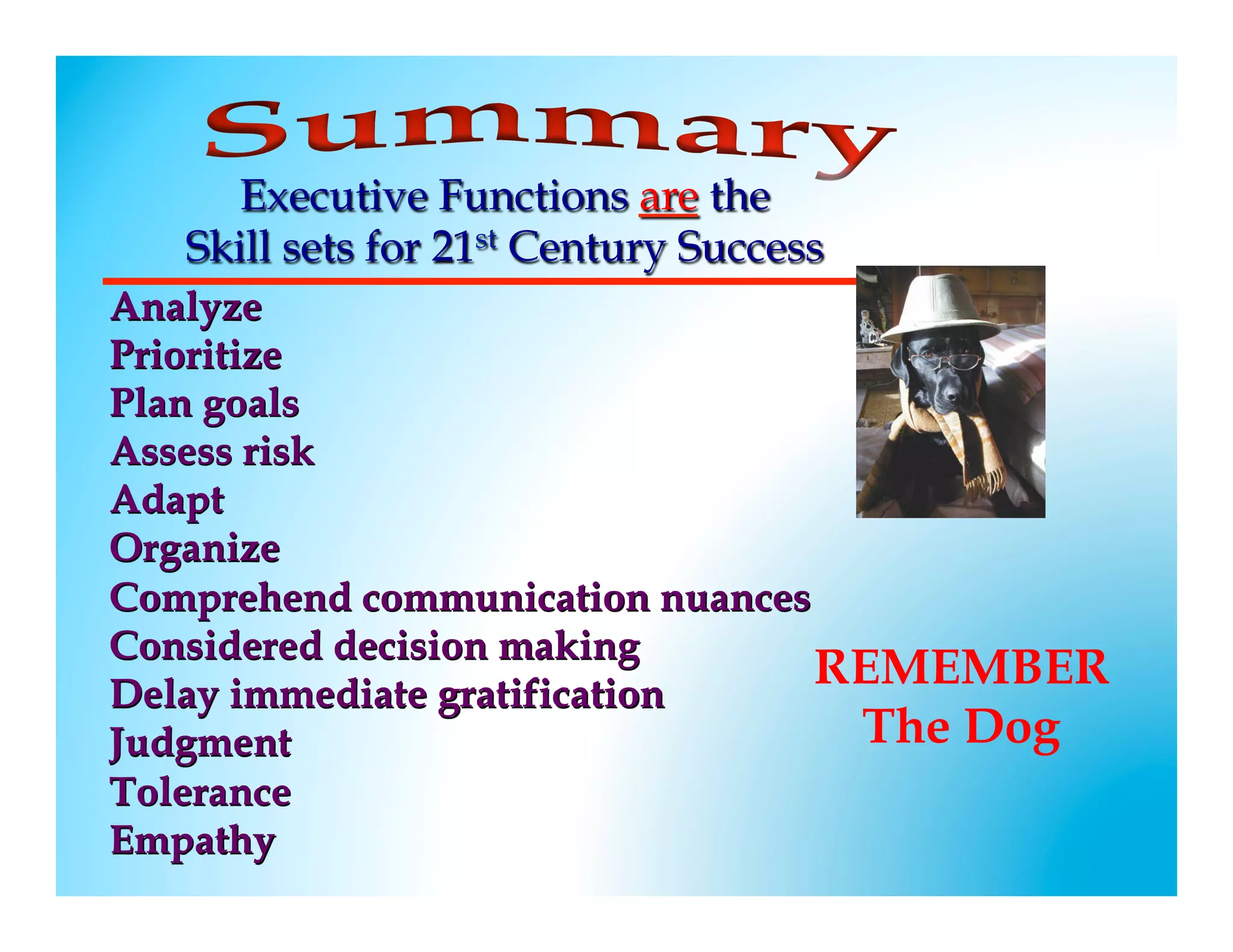
Executive Functions are the
   Skill sets for 21st Century Success
Analyze
Prioritize
Plan goals
Assess risk
Adapt
Organize
Comprehend communication nuances
Considered decision making
Delay immediate gratification
                                 REMEMBER
Judgment                          The Dog
Tolerance
Empathy
Marshmallow Test


                                       !


Those participants with high levels of self-
control activated the “executive function” PFC

 Those less able to delay gratification activated
the more emotional lower brain regions
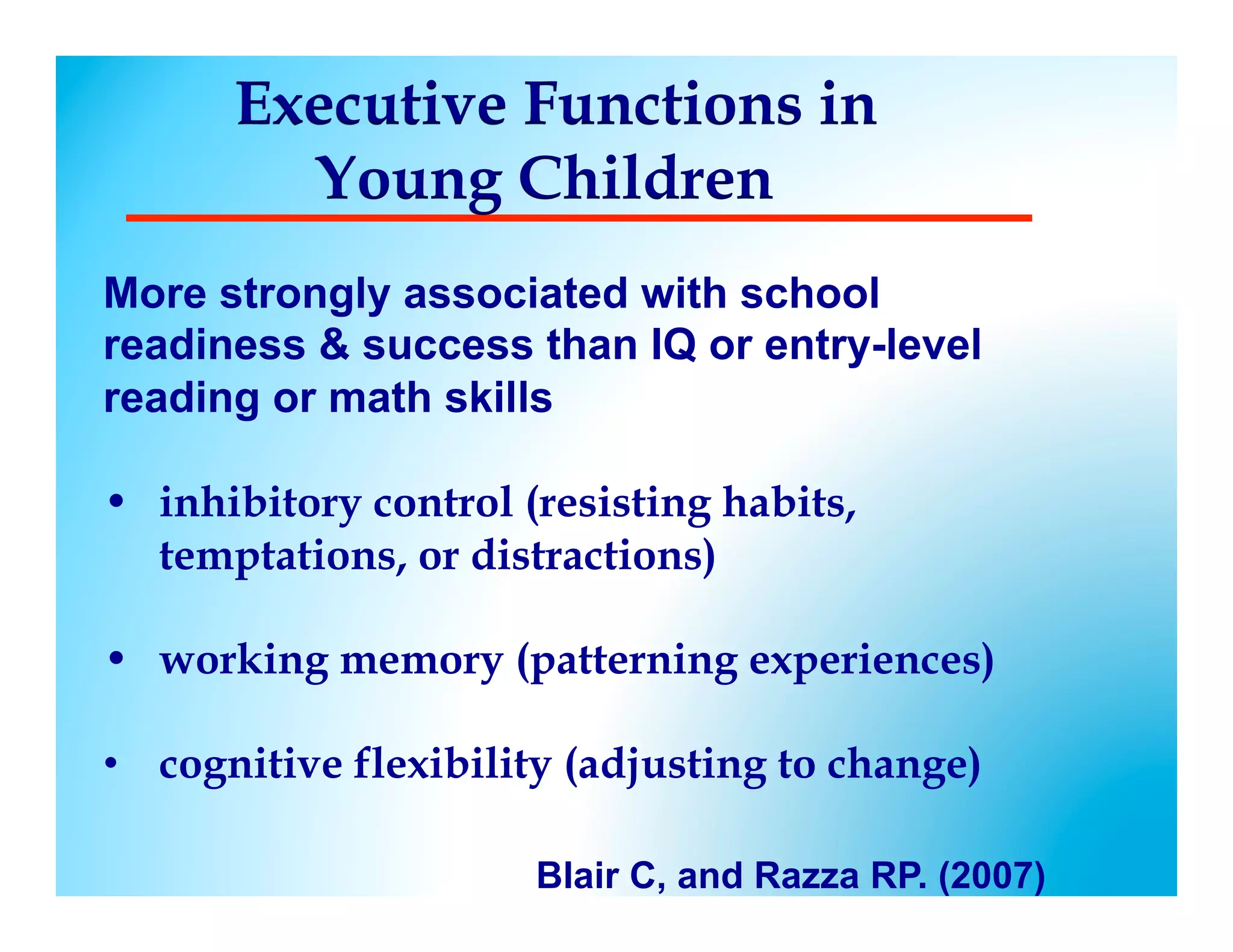
Executive Functions in
        Young Children
More strongly associated with school
readiness  success than IQ or entry-level
reading or math skills

•  inhibitory control (resisting habits,
   temptations, or distractions)

•  working memory (patterning experiences)

•  cognitive flexibility (adjusting to change)
 
                      Blair C, and Razza RP. (2007)
Neural Networks of
   Executive Function
Can be developed to:
•  evaluate new information
•  modify understanding as
   information increases and “facts”
   change
•  use new technology as it becomes
   available
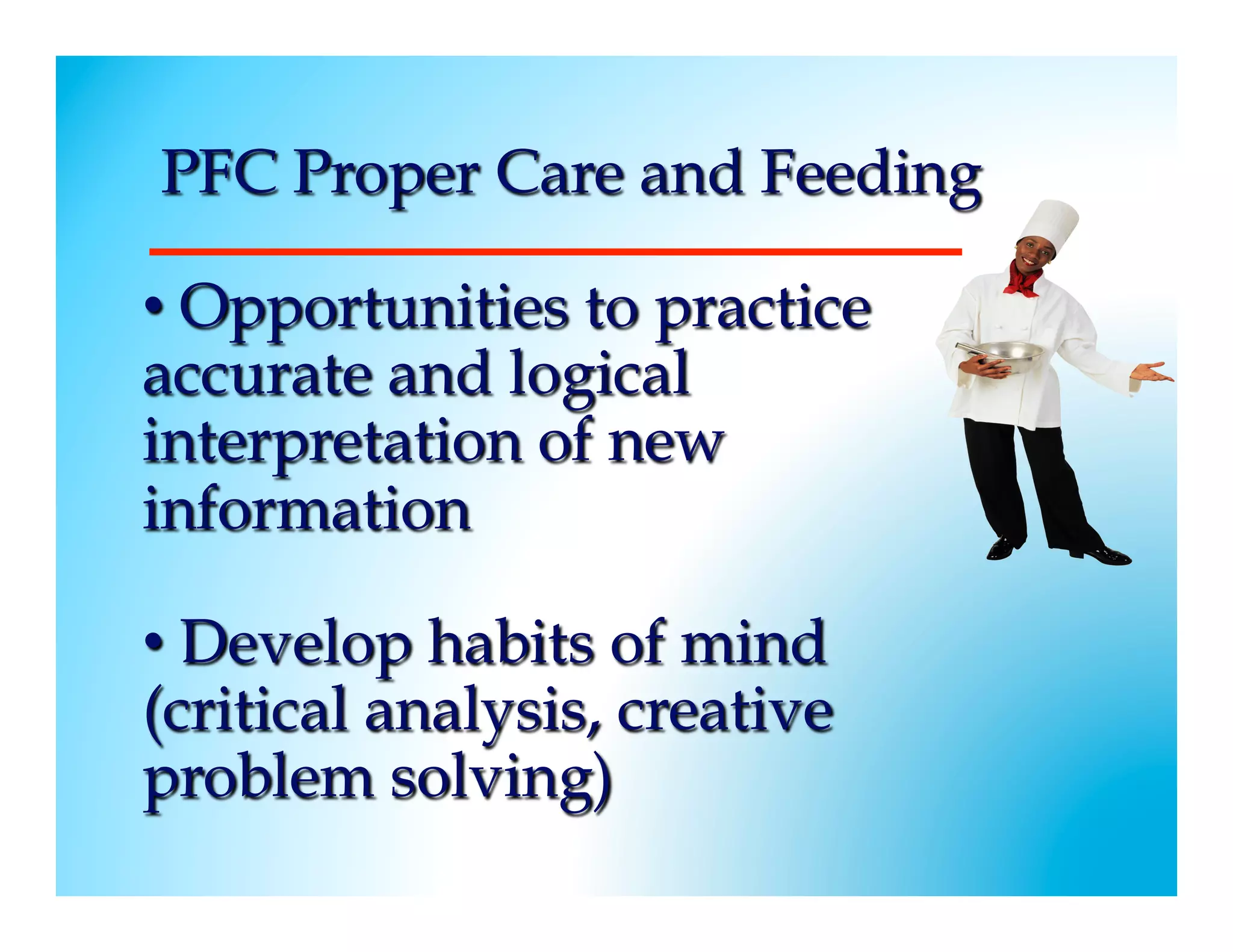
PFC Proper Care and Feeding

•  Opportunities to practice
accurate and logical
interpretation of new
information

•  Develop habits of mind
(critical analysis, creative
problem solving)
Information Analysis
  Communication

Opportunities for making and
evaluating decisions (Trips and
Purchases)

Shared internet explorations

Ask questions and actively listen (no
interrupting, correcting , multitasking,
or personal anecdotes)
•    Recognize the difference between fact
     and opinion (TV commercials, internet
     sites, best restaurant)

•    Ask for their opinions and reasons

•    Defend personal opinions with facts

•    Predict arguments against theirs and
     prepare responses
Summary


!   •    PFC is last part of brain to mature
    •    Use of executive functions promotes their
         greater development
    •    Along the way use the dopamine boosters
Judy Willis’ Website for Brain
Owner’s Manual free articles


                           !


 www.RADTeach.com

Willis Parent Powerpoint

  • 2.
    Getting to thePrefrontal Cortex PREFRONTAL CORTEX
  • 3.
    Reflective Conscious Control Reactive Unconscious Responses
  • 5.
    Stress State Lower reactive brain in control ! Fight Flight Freeze
  • 6.
    Stress State BehaviorOutputs Fight: Disruptive Flight: Withdrawal Freeze: Zone out
  • 7.
  • 8.
    Causes of Stressin School •  Unprepared for class •  Peer relationships •  Lack of long-term goals or material doesn’t seem relevant to student’s goals • Frustration due to previous failure to understand or do well in the topic •  Test-taking anxiety and oral presentations
  • 9.
    Repeated Failure Fixed Mindset Survivalin animals Reduced effort in students !
  • 10.
    For Amygdala Positive Attitude& Growth Mindset Follow the Computer Game Model
  • 11.
    The PULL ofVideo Games He’s so close to Level 10 he doesn’t even want to go out for pizza
  • 12.
    Characteristics Video Gamers u  buy-in to goal u  80% of the time failure u  persevere with challenge u  use immediate feedback to improve
  • 13.
    The Pull? 1.  Goalbuy-in 2. Achievable Challenge 3. Incremental Progress Awareness (intrinsic satisfaction) The PULL Is powered by Dopamine
  • 14.
  • 15.
    Pleasure & DecreasedStress Curiosity Attention Motivation Persistence and perseverance Memory
  • 16.
    BOOSTERS Moving Being read to Interactingwell with peers Experiencing humor Choice Optimism
  • 17.
    Prediction for Intrinsic Satisfaction Isyour brain motivated the potential of intrinsic satisfaction from knowing if a prediction it makes is correct?
  • 18.
    Why Did YouNeed to Know? Accurate predictions activate dopamine release (pleasure) so the brain: u  wants to predict for intrinsic satisfaction u  needs to know if predictions are correct u  learns from feedback
  • 19.
    Incremental Progress Children needto see frequent connections between their work and their progress (to build on the intrinsic satisfaction). Effort=Progress to Goal
  • 20.
    Incremental Progress Number of successful Effort to attempts goal progress graph www.onlinecharttool.com TOTAL TIME PRACTICED
  • 21.
    Using the gamemodel of achievable challenge and incremental goal progress feedback, children are motivated to persevere through challenges
  • 22.
    GOAL So children wantto learn what they need to learn By seeing products or possibilities…
  • 23.
    Prime the Brain“Buy- in” for Learning Promote curiosity and prediction about school topics Connect with your child’s interests Family history, photos Friends who use information in interesting jobs
  • 24.
    How their brainsturn data into knowledge
  • 25.
    Important BOM Messagesfrom Neuroscience for Parents Children Acting out/zoning out is brain’s adaptive stress response Neuroplasticity=Potential Genius is more than genes Past performance does not limit future success You can change your brain’s social, emotional, and cognitive intelligence
  • 26.
    Knowing Why When children understand the neuroplasticity they know the “why” for: •  doing assignments •  participation •  understanding concepts •  making mistakes!
  • 27.
    Neuroplasticity Strengthening, revising, and extendingof neuronal networks in response activation
  • 28.
    Prefrontal cortex  More dendrites More synapses Axon with myelin More myelin Dendrite î  é Neuron Synapse
  • 29.
    + It is by neurons making connections with one another that learning can occur
  • 30.
    Each time youuse brain networks they get stronger and more permanent
  • 31.
    A congested highwayis like the flow of brain traffic when there are few connections available to get to the same place.
  • 32.
    Neuroplasticity: More connections move traffic more quickly
  • 33.
  • 34.
    Executive Functions: The SkillSets for the 21st Century
  • 35.
    •  To evaluatenew information and modify understanding as information increases and “facts” change •  Use new technology as it becomes available
  • 36.
    To find solutionsfor problems we have yet to recognize Wes Frye (Cisco Systems)
  • 37.
    Prefrontal Cortex The PFC holdsan executive function system that, when exercised and developed, can become our brain’s successful CEO.  
  • 38.
    Prun Prefrontal Cortex Pruning and myelination from age 5-20 Prefrontal Cortex
  • 39.
  • 40.
    Neural Networks of Executive Function Can be developed to: •  evaluate new information •  modify understanding as information increases and “facts” change •  use new technology as it becomes available
  • 41.
    A trillion connections aremade as the baby experiences life. Experience sculpts the brain.
  • 42.
    The Executive Functions Let’shave the cat and dog show us what some are
  • 43.
    Executive Functions arethe Skill sets for 21st Century Success Analyze Prioritize Plan goals Assess risk Adapt Organize Comprehend communication nuances Considered decision making Delay immediate gratification REMEMBER Judgment The Dog Tolerance Empathy
  • 44.
    Marshmallow Test ! Those participants with high levels of self- control activated the “executive function” PFC Those less able to delay gratification activated the more emotional lower brain regions
  • 45.
    Executive Functions in Young Children More strongly associated with school readiness success than IQ or entry-level reading or math skills •  inhibitory control (resisting habits, temptations, or distractions) •  working memory (patterning experiences) •  cognitive flexibility (adjusting to change)   Blair C, and Razza RP. (2007)
  • 46.
    Neural Networks of Executive Function Can be developed to: •  evaluate new information •  modify understanding as information increases and “facts” change •  use new technology as it becomes available
  • 47.
    PFC Proper Careand Feeding •  Opportunities to practice accurate and logical interpretation of new information •  Develop habits of mind (critical analysis, creative problem solving)
  • 48.
    Information Analysis Communication Opportunities for making and evaluating decisions (Trips and Purchases) Shared internet explorations Ask questions and actively listen (no interrupting, correcting , multitasking, or personal anecdotes)
  • 49.
    •  Recognize the difference between fact and opinion (TV commercials, internet sites, best restaurant) •  Ask for their opinions and reasons •  Defend personal opinions with facts •  Predict arguments against theirs and prepare responses
  • 50.
    Summary ! •  PFC is last part of brain to mature •  Use of executive functions promotes their greater development •  Along the way use the dopamine boosters
  • 51.
    Judy Willis’ Websitefor Brain Owner’s Manual free articles ! www.RADTeach.com