Group Dynamics
Wednesday 16th November, 2011
Leicester University
Jo Pakulska
Today’s objectives
 To understand Belbin’s theory of team roles
 To understand the key skills needed to work effectively in a team
 To understand the skills that employers look for in group case
 studies
 To practice teamwork skills by taking part in a team work case
 study
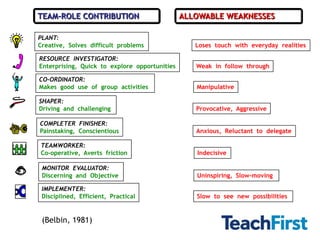
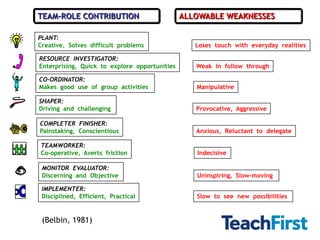
TEAM-ROLE CONTRIBUTION                         ALLOWABLE WEAKNESSES

PLANT:
Creative, Solves difficult problems               Loses touch with everyday realities

RESOURCE INVESTIGATOR:
Enterprising, Quick to explore opportunities      Weak in follow through

CO-ORDINATOR:
Makes good use of group activities                Manipulative

SHAPER:
Driving and challenging                           Provocative, Aggressive

COMPLETER FINISHER:
Painstaking, Conscientious                        Anxious, Reluctant to delegate

TEAMWORKER:
Co-operative, Averts friction                     Indecisive

 MONITOR EVALUATOR:
 Discerning and Objective                         Uninspiring, Slow-moving

 IMPLEMENTER:
 Disciplined, Efficient, Practical                Slow to see new possibilities


 (Belbin, 1981)
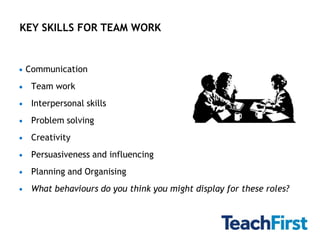
KEY SKILLS FOR TEAM WORK


 Communication
  Team work
  Interpersonal skills
  Problem solving
  Creativity
  Persuasiveness and influencing
  Planning and Organising
  What behaviours do you think you might display for these roles?
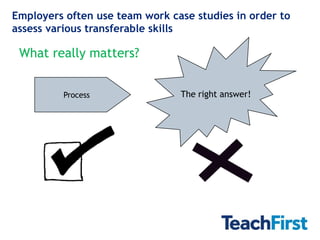
Employers often use team work case studies in order to
assess various transferable skills

 What really matters?


         Process                The right answer!
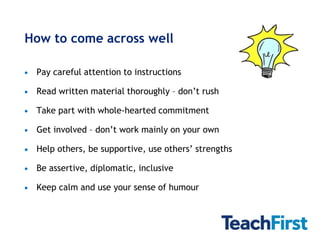
How to come across well

 Pay careful attention to instructions

 Read written material thoroughly – don’t rush

 Take part with whole-hearted commitment

 Get involved – don’t work mainly on your own

 Help others, be supportive, use others’ strengths

 Be assertive, diplomatic, inclusive

 Keep calm and use your sense of humour
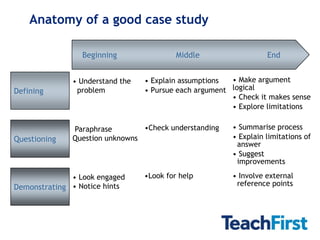
Anatomy of a good case study

                 Beginning                Middle                  End


              • Understand the   • Explain assumptions  • Make argument
Defining       problem           • Pursue each argument logical
                                                        • Check it makes sense
                                                        • Explore limitations

              Paraphrase        •Check understanding    • Summarise process
Questioning   Question unknowns                         • Explain limitations of
                                                         answer
                                                        • Suggest
                                                         improvements

              • Look engaged     •Look for help         • Involve external
Demonstrating • Notice hints                             reference points
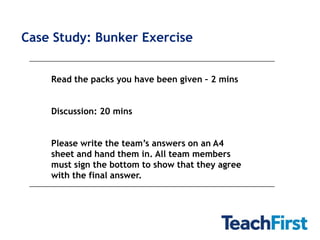
Case Study: Bunker Exercise


    Read the packs you have been given – 2 mins


    Discussion: 20 mins


    Please write the team’s answers on an A4
    sheet and hand them in. All team members
    must sign the bottom to show that they agree
    with the final answer.
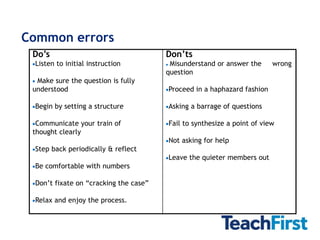
Common errors
 Do’s                                  Don’ts
 Listen to initial instruction          Misunderstand or answer the     wrong
                                       question
  Make sure the question is fully
 understood                            Proceed in a haphazard fashion

 Begin by setting a structure          Asking a barrage of questions

  Communicate your train of            Fail to synthesize a point of view
 thought clearly
                                       Not asking for help
 Step back periodically & reflect
                                       Leave the quieter members out
 Be comfortable with numbers

 Don’t fixate on “cracking the case”

 Relax and enjoy the process.
Some people may feel…
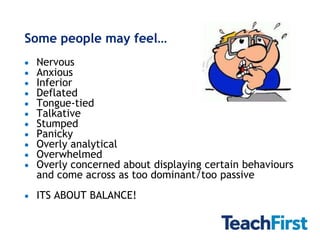
 Nervous
 Anxious
 Inferior
 Deflated
 Tongue-tied
 Talkative
 Stumped
 Panicky
 Overly analytical
 Overwhelmed
 Overly concerned about displaying certain behaviours
 and come across as too dominant/too passive
 ITS ABOUT BALANCE!
Key points to remember
Be yourself
     Positive
     Interesting/Interested
     Enthusiastic
     Truthful
Participate and don’t forget to listen
Remember it is not so much about the answer - show
your skills!
Prepare well and don’t panic!
Enjoy!
TEAM-ROLE CONTRIBUTION                         ALLOWABLE WEAKNESSES

PLANT:
Creative, Solves difficult problems               Loses touch with everyday realities

RESOURCE INVESTIGATOR:
Enterprising, Quick to explore opportunities      Weak in follow through

CO-ORDINATOR:
Makes good use of group activities                Manipulative

SHAPER:
Driving and challenging                           Provocative, Aggressive

COMPLETER FINISHER:
Painstaking, Conscientious                        Anxious, Reluctant to delegate

TEAMWORKER:
Co-operative, Averts friction                     Indecisive

 MONITOR EVALUATOR:
 Discerning and Objective                         Uninspiring, Slow-moving

 IMPLEMENTER:
 Disciplined, Efficient, Practical                Slow to see new possibilities


 (Belbin, 1981)
In the UK, the link between low family income
and poor educational attainment is greater than
     in almost any other developed country.


                 believes that it doesn’t have to be this way.
Teach First      is an independent charity with a mission
to address educational disadvantage by transforming
exceptional graduates into inspirational, effective teachers
and leaders in all fields.
We offer an exceptional two-year Leadership Development Programme that
focuses on education, and which includes in its first year a PGCE qualification.

Developing a network of future leaders with a
life-long commitment to ending inequality in
education from inside and outside the classroom.

Working with our partner schools, supporters,
and university-based training partners,
Teach First is now able to place teachers in
seven regions across England.
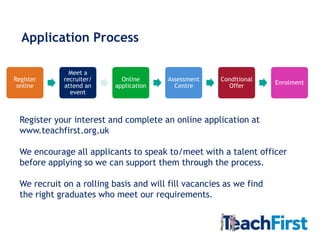
Application Process

               Meet a
Register     recruiter/      Online      Assessment   Conditional
                                                                     Enrolment
 online      attend an     application     Centre       Offer
               event


  Register your interest and complete an online application at
  www.teachfirst.org.uk

  We encourage all applicants to speak to/meet with a talent officer
  before applying so we can support them through the process.

  We recruit on a rolling basis and will fill vacancies as we find
  the right graduates who meet our requirements.
Contact me
•   Phone or email with any questions
    jpakulska@teachfirst.org.uk

•   Have a one to one with Jo

•   Join us on Facebook

•   Follow us on Twitter

•   Log onto our website for more information about the
    programme www.teachfirst.org.uk

Leicester Employability Group Dynamics 161111

  • 1.
    Group Dynamics Wednesday 16thNovember, 2011 Leicester University Jo Pakulska
  • 2.
    Today’s objectives Tounderstand Belbin’s theory of team roles To understand the key skills needed to work effectively in a team To understand the skills that employers look for in group case studies To practice teamwork skills by taking part in a team work case study
  • 3.
    TEAM-ROLE CONTRIBUTION ALLOWABLE WEAKNESSES PLANT: Creative, Solves difficult problems Loses touch with everyday realities RESOURCE INVESTIGATOR: Enterprising, Quick to explore opportunities Weak in follow through CO-ORDINATOR: Makes good use of group activities Manipulative SHAPER: Driving and challenging Provocative, Aggressive COMPLETER FINISHER: Painstaking, Conscientious Anxious, Reluctant to delegate TEAMWORKER: Co-operative, Averts friction Indecisive MONITOR EVALUATOR: Discerning and Objective Uninspiring, Slow-moving IMPLEMENTER: Disciplined, Efficient, Practical Slow to see new possibilities (Belbin, 1981)
  • 4.
    KEY SKILLS FORTEAM WORK Communication Team work Interpersonal skills Problem solving Creativity Persuasiveness and influencing Planning and Organising What behaviours do you think you might display for these roles?
  • 5.
    Employers often useteam work case studies in order to assess various transferable skills What really matters? Process The right answer!
  • 6.
    How to comeacross well Pay careful attention to instructions Read written material thoroughly – don’t rush Take part with whole-hearted commitment Get involved – don’t work mainly on your own Help others, be supportive, use others’ strengths Be assertive, diplomatic, inclusive Keep calm and use your sense of humour
  • 7.
    Anatomy of agood case study Beginning Middle End • Understand the • Explain assumptions • Make argument Defining problem • Pursue each argument logical • Check it makes sense • Explore limitations Paraphrase •Check understanding • Summarise process Questioning Question unknowns • Explain limitations of answer • Suggest improvements • Look engaged •Look for help • Involve external Demonstrating • Notice hints reference points
  • 8.
    Case Study: BunkerExercise Read the packs you have been given – 2 mins Discussion: 20 mins Please write the team’s answers on an A4 sheet and hand them in. All team members must sign the bottom to show that they agree with the final answer.
  • 9.
    Common errors Do’s Don’ts Listen to initial instruction Misunderstand or answer the wrong question Make sure the question is fully understood Proceed in a haphazard fashion Begin by setting a structure Asking a barrage of questions Communicate your train of Fail to synthesize a point of view thought clearly Not asking for help Step back periodically & reflect Leave the quieter members out Be comfortable with numbers Don’t fixate on “cracking the case” Relax and enjoy the process.
  • 10.
    Some people mayfeel… Nervous Anxious Inferior Deflated Tongue-tied Talkative Stumped Panicky Overly analytical Overwhelmed Overly concerned about displaying certain behaviours and come across as too dominant/too passive ITS ABOUT BALANCE!
  • 11.
    Key points toremember Be yourself Positive Interesting/Interested Enthusiastic Truthful Participate and don’t forget to listen Remember it is not so much about the answer - show your skills! Prepare well and don’t panic! Enjoy!
  • 12.
    TEAM-ROLE CONTRIBUTION ALLOWABLE WEAKNESSES PLANT: Creative, Solves difficult problems Loses touch with everyday realities RESOURCE INVESTIGATOR: Enterprising, Quick to explore opportunities Weak in follow through CO-ORDINATOR: Makes good use of group activities Manipulative SHAPER: Driving and challenging Provocative, Aggressive COMPLETER FINISHER: Painstaking, Conscientious Anxious, Reluctant to delegate TEAMWORKER: Co-operative, Averts friction Indecisive MONITOR EVALUATOR: Discerning and Objective Uninspiring, Slow-moving IMPLEMENTER: Disciplined, Efficient, Practical Slow to see new possibilities (Belbin, 1981)
  • 13.
    In the UK,the link between low family income and poor educational attainment is greater than in almost any other developed country. believes that it doesn’t have to be this way.
  • 14.
    Teach First is an independent charity with a mission to address educational disadvantage by transforming exceptional graduates into inspirational, effective teachers and leaders in all fields. We offer an exceptional two-year Leadership Development Programme that focuses on education, and which includes in its first year a PGCE qualification. Developing a network of future leaders with a life-long commitment to ending inequality in education from inside and outside the classroom. Working with our partner schools, supporters, and university-based training partners, Teach First is now able to place teachers in seven regions across England.
  • 15.
    Application Process Meet a Register recruiter/ Online Assessment Conditional Enrolment online attend an application Centre Offer event Register your interest and complete an online application at www.teachfirst.org.uk We encourage all applicants to speak to/meet with a talent officer before applying so we can support them through the process. We recruit on a rolling basis and will fill vacancies as we find the right graduates who meet our requirements.
  • 16.
    Contact me • Phone or email with any questions jpakulska@teachfirst.org.uk • Have a one to one with Jo • Join us on Facebook • Follow us on Twitter • Log onto our website for more information about the programme www.teachfirst.org.uk

Editor's Notes

  • #4 Which one is you??
  • #13 Which one is you??
  • #16 We expect to receive over 7000 applications for the 2012 LDP.** Reference that Offer is conditional on SKA, reference and degree resultOnly once enrolled do you begin to find out your region allocationFast turnaround – AC’s held weekly, 10 days of submitting you’ll hear back about your application1 week turnaround after AC to find out if you’ve got an offerCheck website for most up to date information on subject availability