LEED your way
Of life
Be constructive in developing knowledge
• Since we are in the construction industry we should
know basis and fundamentals of architecture
• Past construction mile stones
• What are the difficulties faced in the earlier stages of
civil engineering
• What a construction company expect from architect
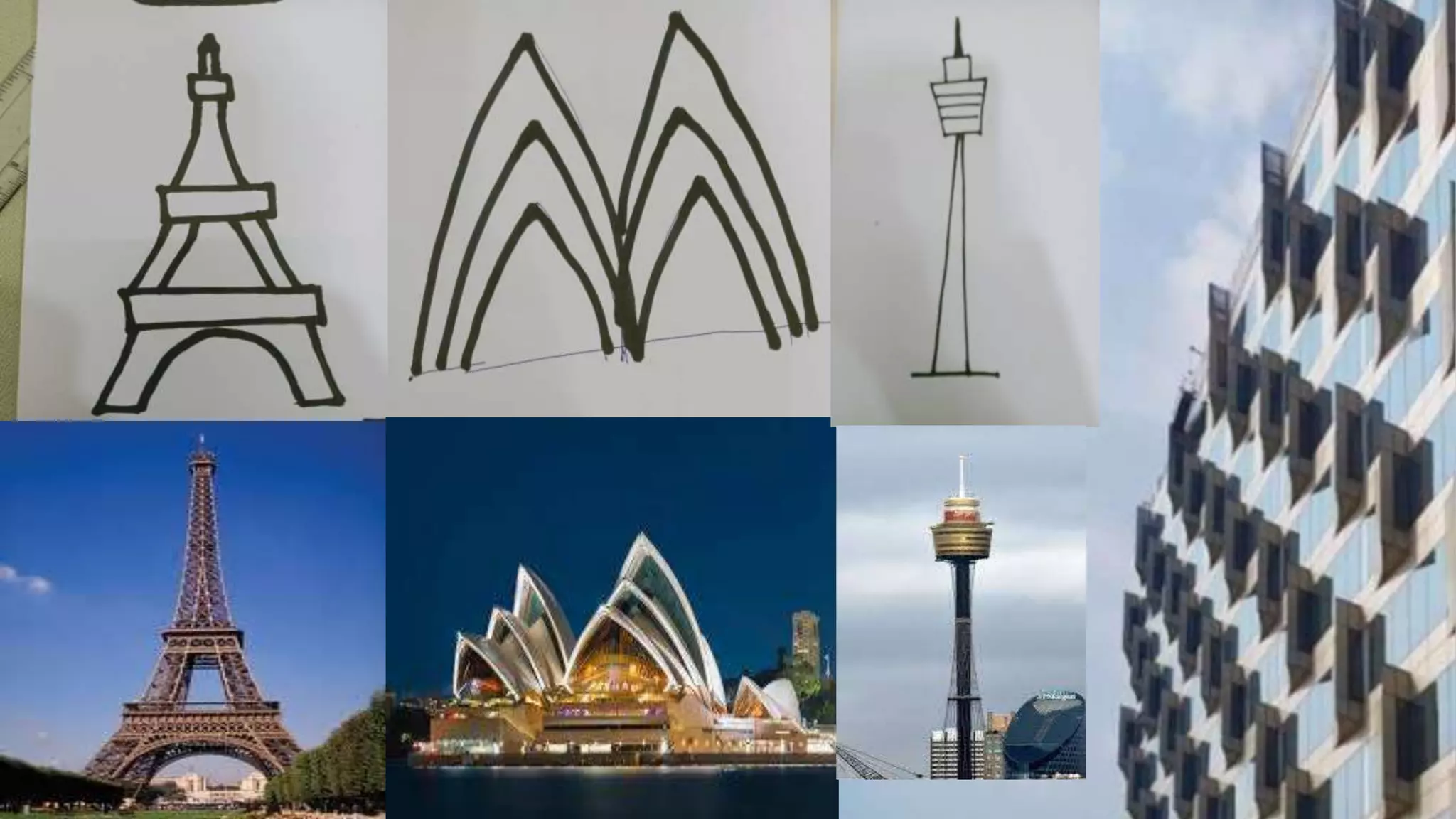
Do identify the buildings the following sketch
represents
MAIN ENVIRONMENTAL CATEGORIES:
• Sustainable Architecture and Design
• Site Selection and Planning
• Water Conservation
• Energy Efficiency
• Building Materials and Resources
• Indoor Environmental Quality
• Innovation and Development
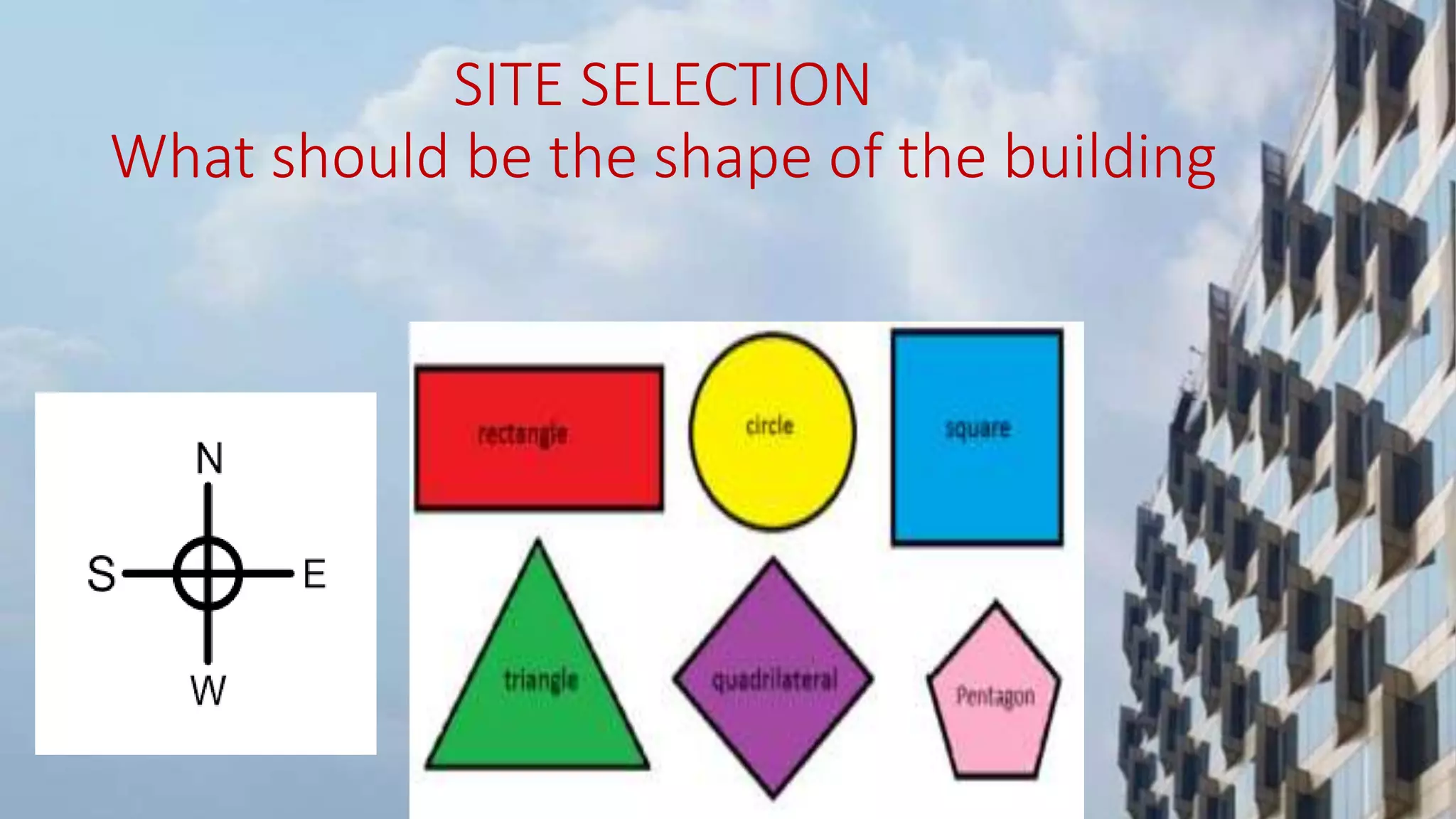
SITE SELECTION
What should be the shape of the building
SITE SELECTION
the basic shape of the building
• The LEED building should be rectangle and the length
of the building should be facing North or South for
natural light to reduce energy on lighting system
SITE SELECTION
Advantages of building with N&S facing
• No shadow at any time at day time
• No glaring at any time during morning or evening hours
• Buildings can be constructed close to each others
• More space will be covered with natural light
• Can accommodate more solar panels
SUSTAINABLE SITE
Outlines various opportunities for reducing the negative impact
the building has on the environment.
The opportunities range from Preventing erosion of top soil,
Preventing water contamination & creation of heat islands,
Effective use of a barren or waste lands etc.
Use what nature has given by working with existing topography,
plants and views.
Touch the earth lightly, rather than cutting deep and covering it
with concrete
Site Selection and Planning
• Site should be proximity to rail road connection
• Near by housing complex or society
• Abundance of raw material for construction
• Possibly away from Urban Heat Load
• Amble parking slots and proper way for vehicle movement
inside the campus
• Not near a heavy traffic zone
Sustainable Architecture and Design
LIFE CYCLE ASSESSMENT
• 80 % steel for the paneling compared to conventional wood based partition
• Fabrics : 100% Cotton or PP based without any blend
• 100 % use of reconstituted wood: (PPB or MDF) for work surfaces
• Number of parts reduced to minimum
• Easy to disassemble reconfigure and refurbish for reuse
• Paper based packing material: 100 % Recyclable
Sustainable Architecture and Design
GREEN DESIGN STRATEGY
• Optimized utilization of raw material to conserve natural resources
• Maximize recycled content
• Reduction in product volume to reduce transportation cost
• Use of rapidly renewable wood substitutes
• Possibility of refurbishing for reuse (Ease of servicing –
• assembly and disassembly )
• Design for durability – adherence to performance standards
• to enhance product life cycle
Sustainable Architecture and Design
Sustainable Materials
• •A large amount of energy — and pollution — was also reduced through
• choices in the production and transportation of building materials.
• • use recycled content in the form of fly ash, broken glass, broken
• tiles, recycled paper, recycled aluminum, cinder from industrial
• furnaces
• •The building reuses a significant amount of material salvaged
• from other construction sites like toilet doors, granite, marble
• scrap steel, scrap glazed tiles,
• A waste management plan ensured that 96 percent of
• construction waste was recycled.
Advantages of façade glasses
• Has amorphous structure and no definite melting point.
• Not easily affected by air or water and any chemicals.
• Can be polished, cast into any desired shape and modify
• its properties like hardness,
• Very high resistance to heat flow and allows light to pass
through and Provide insulating effect
• It is made of two or more plates of glass of 6mmand 13mm of
• dehydrated captive air or vacuum
• Edges are sealed of the glass.
Energy Efficiency lighting system
• Maximum usage of day light
• Use of façade glass to reduce heat gain
• Online monitoring system to monitor the energy
performance. and energy consumption.
• Usage of timers occupancy sensor luminous sensors .
• Else install DALI system for lighting to save energy
up to 60 %
Advantages of DALI system
• Saves lighting power up to 60 % max
• Light intensity for each person can be set
• Light adjustment based on luminous
• Occupancy sensor
• Timer based operation that can be programmed as per the
meteorological time
• Can be connected with access control
• Can be connected to BMS
WATER EFFICIENCY
• Harvest 100% of the rain water, and recycle 100% of all the
water used in the building including waste water.
• Use of waterless urinals in the building with biological
blocks hence saves 3lakhs liters of water per annum.
• Annually, storm water pits recharged ground water
by around 5500 KL
• sewage treatment plant recycled 6900 KL of water

LEED the way of life

  • 1.
  • 2.
    Be constructive indeveloping knowledge • Since we are in the construction industry we should know basis and fundamentals of architecture • Past construction mile stones • What are the difficulties faced in the earlier stages of civil engineering • What a construction company expect from architect
  • 3.
    Do identify thebuildings the following sketch represents
  • 6.
    MAIN ENVIRONMENTAL CATEGORIES: •Sustainable Architecture and Design • Site Selection and Planning • Water Conservation • Energy Efficiency • Building Materials and Resources • Indoor Environmental Quality • Innovation and Development
  • 7.
    SITE SELECTION What shouldbe the shape of the building
  • 8.
    SITE SELECTION the basicshape of the building • The LEED building should be rectangle and the length of the building should be facing North or South for natural light to reduce energy on lighting system
  • 9.
    SITE SELECTION Advantages ofbuilding with N&S facing • No shadow at any time at day time • No glaring at any time during morning or evening hours • Buildings can be constructed close to each others • More space will be covered with natural light • Can accommodate more solar panels
  • 10.
    SUSTAINABLE SITE Outlines variousopportunities for reducing the negative impact the building has on the environment. The opportunities range from Preventing erosion of top soil, Preventing water contamination & creation of heat islands, Effective use of a barren or waste lands etc. Use what nature has given by working with existing topography, plants and views. Touch the earth lightly, rather than cutting deep and covering it with concrete
  • 11.
    Site Selection andPlanning • Site should be proximity to rail road connection • Near by housing complex or society • Abundance of raw material for construction • Possibly away from Urban Heat Load • Amble parking slots and proper way for vehicle movement inside the campus • Not near a heavy traffic zone
  • 12.
    Sustainable Architecture andDesign LIFE CYCLE ASSESSMENT • 80 % steel for the paneling compared to conventional wood based partition • Fabrics : 100% Cotton or PP based without any blend • 100 % use of reconstituted wood: (PPB or MDF) for work surfaces • Number of parts reduced to minimum • Easy to disassemble reconfigure and refurbish for reuse • Paper based packing material: 100 % Recyclable
  • 13.
    Sustainable Architecture andDesign GREEN DESIGN STRATEGY • Optimized utilization of raw material to conserve natural resources • Maximize recycled content • Reduction in product volume to reduce transportation cost • Use of rapidly renewable wood substitutes • Possibility of refurbishing for reuse (Ease of servicing – • assembly and disassembly ) • Design for durability – adherence to performance standards • to enhance product life cycle
  • 14.
    Sustainable Architecture andDesign Sustainable Materials • •A large amount of energy — and pollution — was also reduced through • choices in the production and transportation of building materials. • • use recycled content in the form of fly ash, broken glass, broken • tiles, recycled paper, recycled aluminum, cinder from industrial • furnaces • •The building reuses a significant amount of material salvaged • from other construction sites like toilet doors, granite, marble • scrap steel, scrap glazed tiles, • A waste management plan ensured that 96 percent of • construction waste was recycled.
  • 15.
    Advantages of façadeglasses • Has amorphous structure and no definite melting point. • Not easily affected by air or water and any chemicals. • Can be polished, cast into any desired shape and modify • its properties like hardness, • Very high resistance to heat flow and allows light to pass through and Provide insulating effect • It is made of two or more plates of glass of 6mmand 13mm of • dehydrated captive air or vacuum • Edges are sealed of the glass.
  • 16.
    Energy Efficiency lightingsystem • Maximum usage of day light • Use of façade glass to reduce heat gain • Online monitoring system to monitor the energy performance. and energy consumption. • Usage of timers occupancy sensor luminous sensors . • Else install DALI system for lighting to save energy up to 60 %
  • 17.
    Advantages of DALIsystem • Saves lighting power up to 60 % max • Light intensity for each person can be set • Light adjustment based on luminous • Occupancy sensor • Timer based operation that can be programmed as per the meteorological time • Can be connected with access control • Can be connected to BMS
  • 18.
    WATER EFFICIENCY • Harvest100% of the rain water, and recycle 100% of all the water used in the building including waste water. • Use of waterless urinals in the building with biological blocks hence saves 3lakhs liters of water per annum. • Annually, storm water pits recharged ground water by around 5500 KL • sewage treatment plant recycled 6900 KL of water