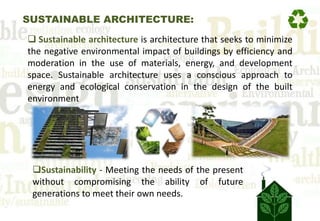
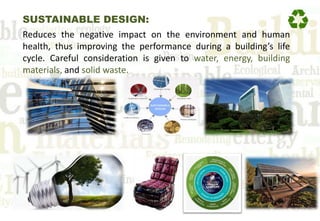
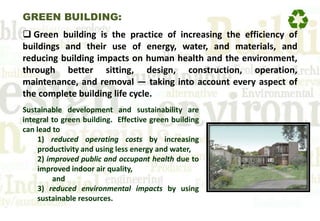
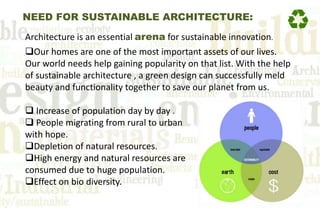
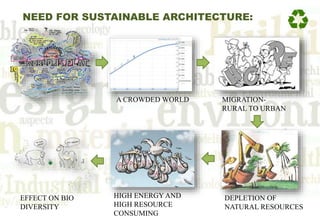
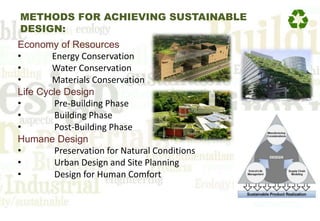
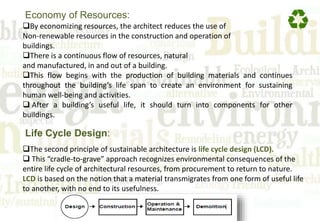
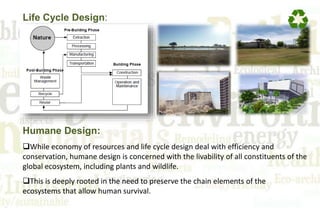
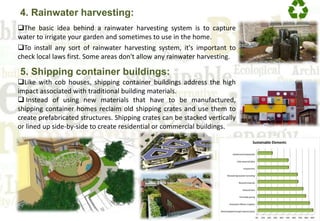
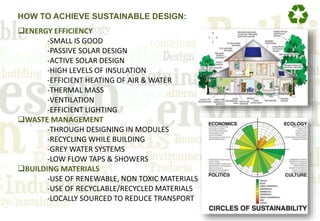
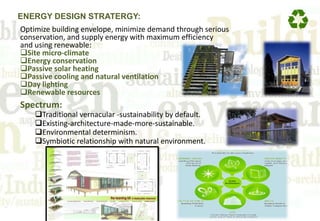
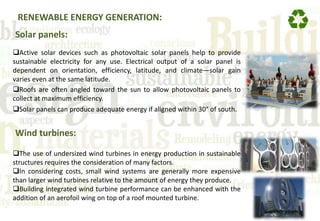
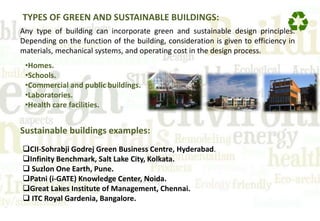
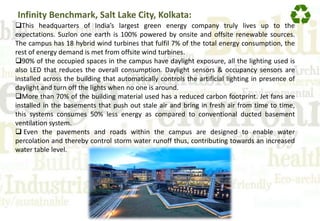
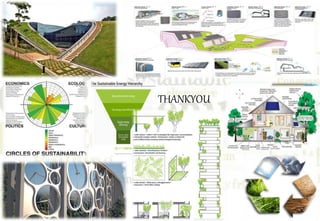
Sustainable architecture seeks to minimize environmental impacts and promote efficiency. It considers energy and resource use over a building's entire lifecycle. Key principles include reducing energy and water use with techniques like passive solar design, green roofs, and rainwater harvesting. Sustainable materials conserve resources and may include recycled, renewable, or local options. Achieving sustainable design requires optimizing building envelopes, incorporating renewable energy, and prioritizing human and environmental health. Examples of sustainable buildings apply these principles across various types and demonstrate reductions in operating costs and environmental impacts.