Introduction to Low
Energy Electron
Diffraction (LEED)
Low-energy electron diffraction (LEED) is a surface-sensitive technique used to
determine the atomic structure of crystalline materials. It involves bombarding a
material's surface with a beam of low-energy electrons (typically 10-500 eV) and
analyzing the diffraction pattern produced by the scattered electrons.
LEED is a powerful tool for studying the arrangement of atoms on the surface of
materials. It is particularly useful for investigating the structure of clean
surfaces, adsorbed layers, and surface reconstructions.
by Abhinav Manas
Principles of Electron Diffraction
1 Wave-Particle Duality
Electrons exhibit wave-particle duality,
meaning they possess both wave-like
and particle-like properties. When
electrons interact with a crystal lattice,
their wave nature becomes significant.
2 Diffraction
The wave nature of electrons causes
them to diffract when they encounter
periodic structures, such as the atomic
arrangement in a crystal lattice. This
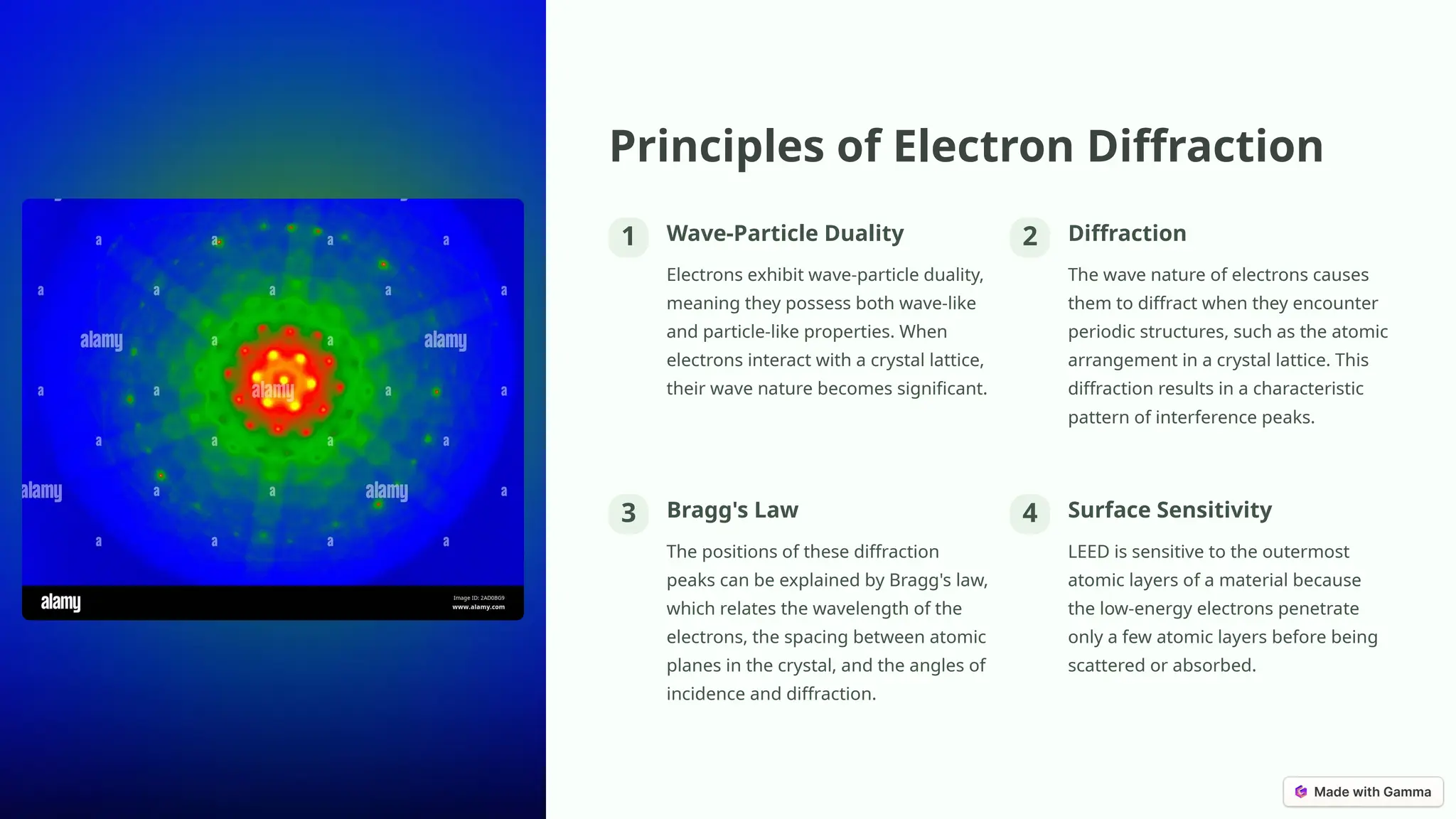
diffraction results in a characteristic
pattern of interference peaks.
3 Bragg's Law
The positions of these diffraction
peaks can be explained by Bragg's law,
which relates the wavelength of the
electrons, the spacing between atomic
planes in the crystal, and the angles of
incidence and diffraction.
4 Surface Sensitivity
LEED is sensitive to the outermost
atomic layers of a material because
the low-energy electrons penetrate
only a few atomic layers before being
scattered or absorbed.
Electron Wavelength and Bragg's Law
Electron Wavelength
The wavelength of an electron is
inversely proportional to its
momentum, as described by the de
Broglie equation. The lower the
energy of the electrons, the longer
their wavelength. This is why LEED
uses low-energy electrons to achieve
surface sensitivity.
Bragg's Law
Bragg's law describes the condition
for constructive interference of waves
scattered from the atomic planes of a
crystal. It states that the path
difference between two waves
scattered from adjacent planes must
be an integer multiple of the
wavelength.
Diffraction Pattern
The diffraction pattern observed in
LEED is a consequence of the
constructive interference of waves
scattered from the atomic planes of
the crystal. The positions and
intensities of the diffraction peaks
provide information about the crystal
structure.
Experimental Setup and
Instrumentation
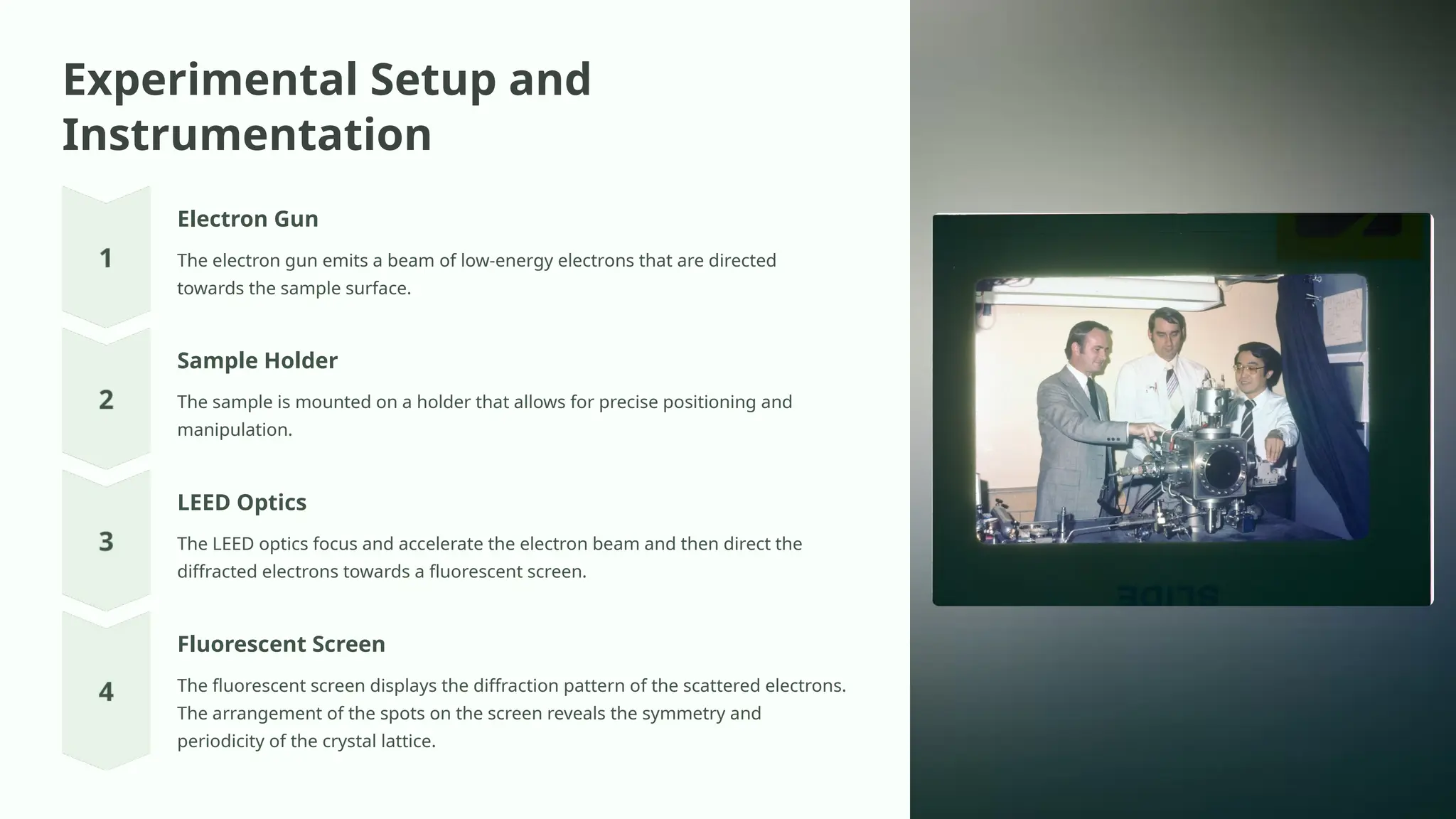
Electron Gun
The electron gun emits a beam of low-energy electrons that are directed
towards the sample surface.
Sample Holder
The sample is mounted on a holder that allows for precise positioning and
manipulation.
LEED Optics
The LEED optics focus and accelerate the electron beam and then direct the
diffracted electrons towards a fluorescent screen.
Fluorescent Screen
The fluorescent screen displays the diffraction pattern of the scattered electrons.
The arrangement of the spots on the screen reveals the symmetry and
periodicity of the crystal lattice.
Surface Structure Analysis using LEED
LEED is used to analyze the surface structure of crystalline materials by analyzing the diffraction pattern of electrons
scattered from the surface. The diffraction pattern provides information about:
• Lattice parameters
• Symmetry of the surface unit cell
• Presence of surface defects
• Adsorption of molecules on the surface
• Surface reconstructions
Interpretation of LEED Patterns
Spot Position Information
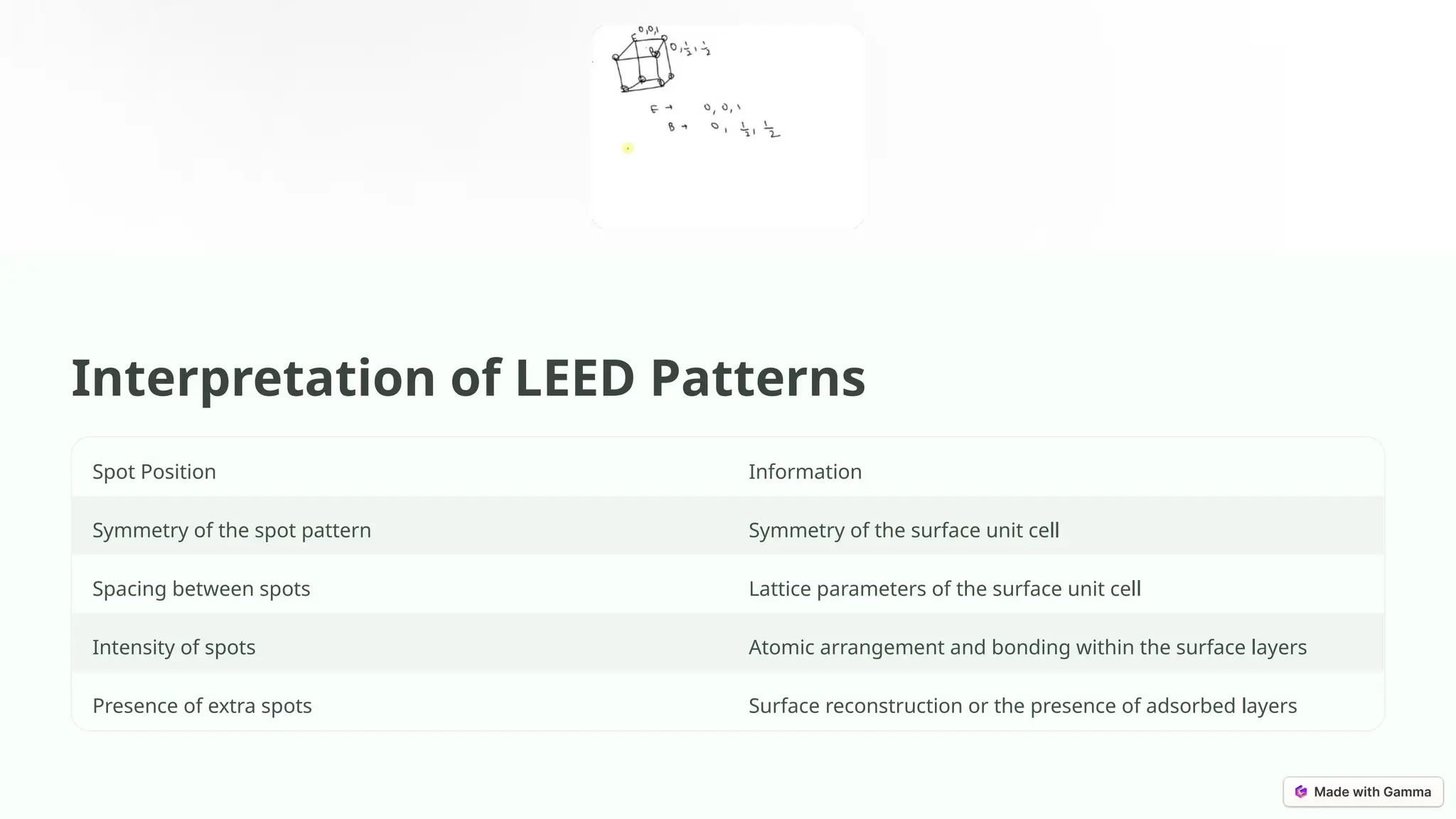
Symmetry of the spot pattern Symmetry of the surface unit cell
Spacing between spots Lattice parameters of the surface unit cell
Intensity of spots Atomic arrangement and bonding within the surface layers
Presence of extra spots Surface reconstruction or the presence of adsorbed layers
Advantages and
Limitations of LEED
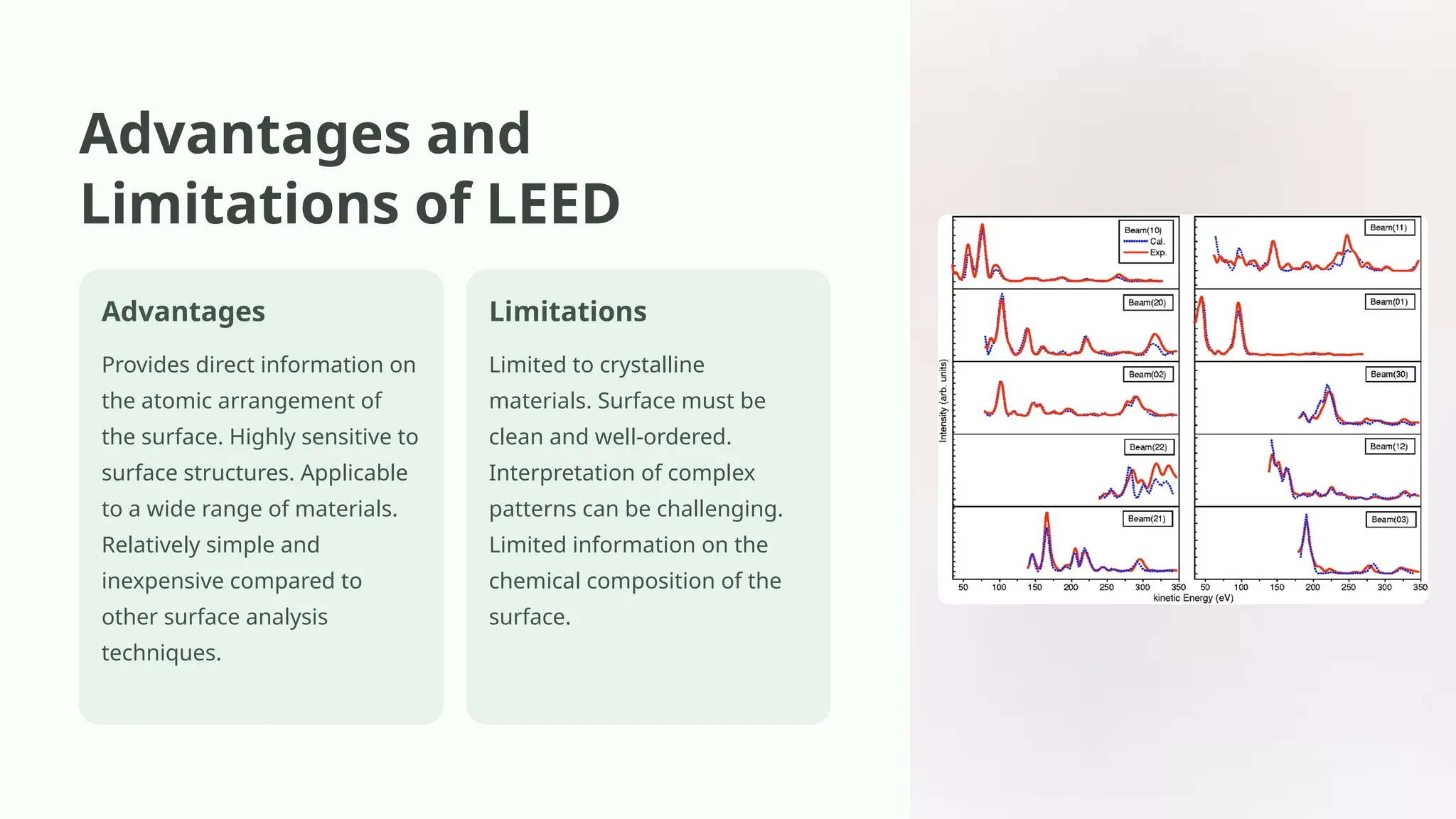
Advantages
Provides direct information on
the atomic arrangement of
the surface. Highly sensitive to
surface structures. Applicable
to a wide range of materials.
Relatively simple and
inexpensive compared to
other surface analysis
techniques.
Limitations
Limited to crystalline
materials. Surface must be
clean and well-ordered.
Interpretation of complex
patterns can be challenging.
Limited information on the
chemical composition of the
surface.
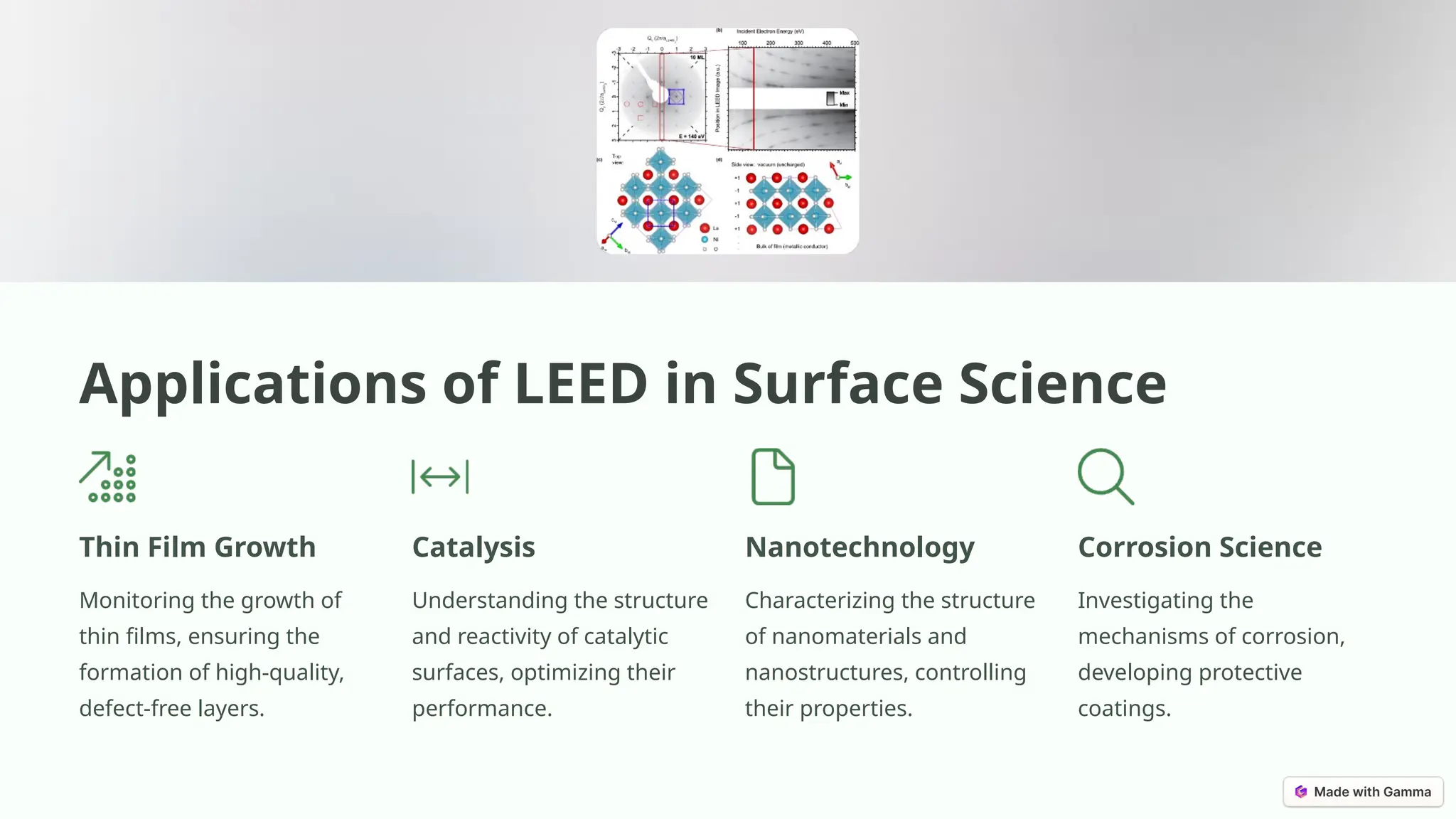
Applications of LEED in Surface Science
Thin Film Growth
Monitoring the growth of
thin films, ensuring the
formation of high-quality,
defect-free layers.
Catalysis
Understanding the structure
and reactivity of catalytic
surfaces, optimizing their
performance.
Nanotechnology
Characterizing the structure
of nanomaterials and
nanostructures, controlling
their properties.
Corrosion Science
Investigating the
mechanisms of corrosion,
developing protective
coatings.
Surface Reconstruction and
Phase Transitions
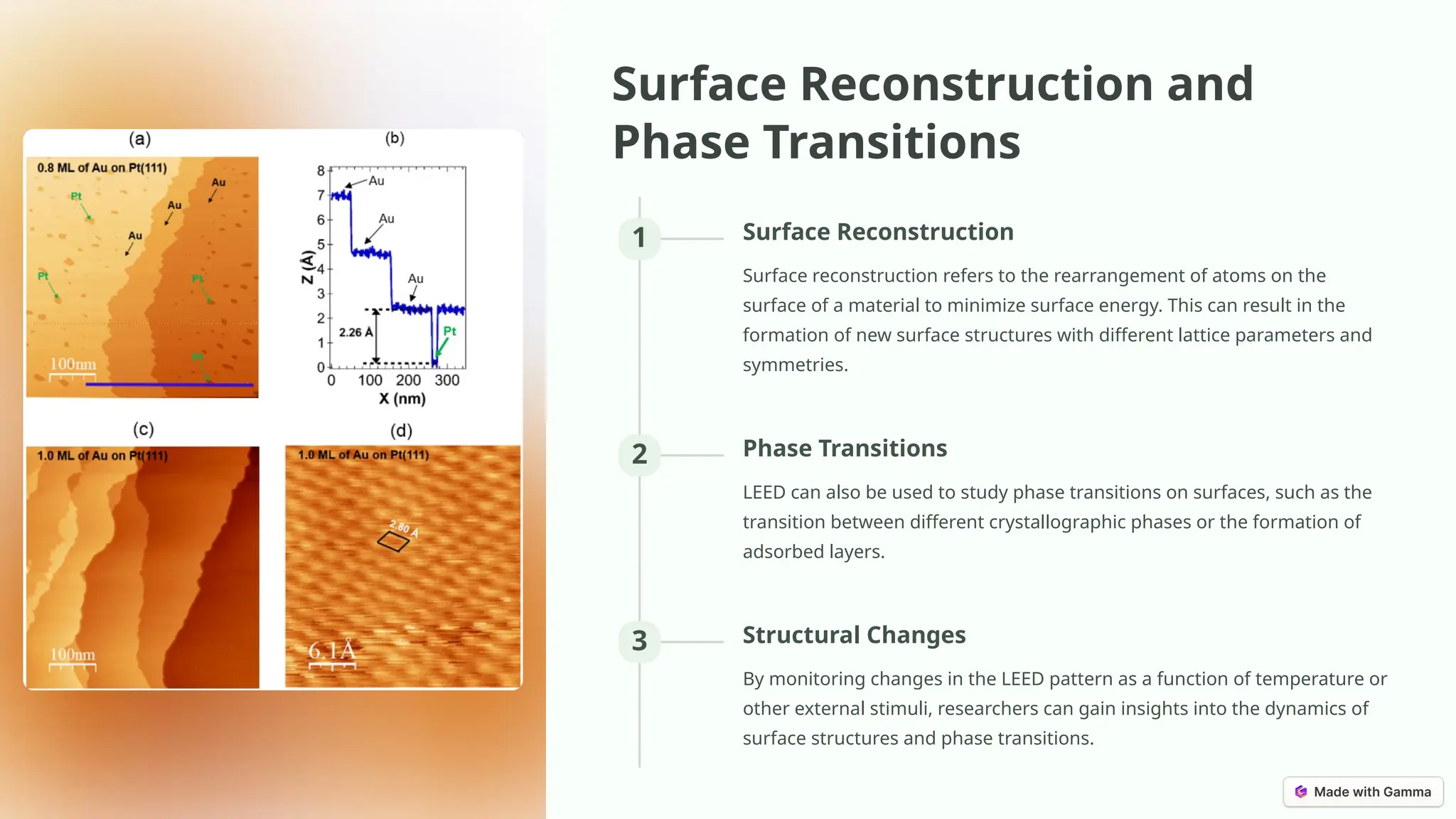
1 Surface Reconstruction
Surface reconstruction refers to the rearrangement of atoms on the
surface of a material to minimize surface energy. This can result in the
formation of new surface structures with different lattice parameters and
symmetries.
2 Phase Transitions
LEED can also be used to study phase transitions on surfaces, such as the
transition between different crystallographic phases or the formation of
adsorbed layers.
3 Structural Changes
By monitoring changes in the LEED pattern as a function of temperature or
other external stimuli, researchers can gain insights into the dynamics of
surface structures and phase transitions.
Recent Advancements and Future Prospects
of LEED
Recent advancements in LEED instrumentation and analysis techniques have enabled the study of more complex surface
structures, including:
• High-resolution LEED (HRLEED)
• Spin-polarized LEED (SPLEED)
• Quantitative LEED (QLEED)
Future prospects of LEED include the development of new techniques for:
• Imaging surface structures with atomic resolution
• Studying the dynamics of surface processes
• Analyzing the electronic structure of surfaces

LEED-low energy electron diffraction.pptx

  • 1.
    Introduction to Low EnergyElectron Diffraction (LEED) Low-energy electron diffraction (LEED) is a surface-sensitive technique used to determine the atomic structure of crystalline materials. It involves bombarding a material's surface with a beam of low-energy electrons (typically 10-500 eV) and analyzing the diffraction pattern produced by the scattered electrons. LEED is a powerful tool for studying the arrangement of atoms on the surface of materials. It is particularly useful for investigating the structure of clean surfaces, adsorbed layers, and surface reconstructions. by Abhinav Manas
  • 2.
    Principles of ElectronDiffraction 1 Wave-Particle Duality Electrons exhibit wave-particle duality, meaning they possess both wave-like and particle-like properties. When electrons interact with a crystal lattice, their wave nature becomes significant. 2 Diffraction The wave nature of electrons causes them to diffract when they encounter periodic structures, such as the atomic arrangement in a crystal lattice. This diffraction results in a characteristic pattern of interference peaks. 3 Bragg's Law The positions of these diffraction peaks can be explained by Bragg's law, which relates the wavelength of the electrons, the spacing between atomic planes in the crystal, and the angles of incidence and diffraction. 4 Surface Sensitivity LEED is sensitive to the outermost atomic layers of a material because the low-energy electrons penetrate only a few atomic layers before being scattered or absorbed.
  • 3.
    Electron Wavelength andBragg's Law Electron Wavelength The wavelength of an electron is inversely proportional to its momentum, as described by the de Broglie equation. The lower the energy of the electrons, the longer their wavelength. This is why LEED uses low-energy electrons to achieve surface sensitivity. Bragg's Law Bragg's law describes the condition for constructive interference of waves scattered from the atomic planes of a crystal. It states that the path difference between two waves scattered from adjacent planes must be an integer multiple of the wavelength. Diffraction Pattern The diffraction pattern observed in LEED is a consequence of the constructive interference of waves scattered from the atomic planes of the crystal. The positions and intensities of the diffraction peaks provide information about the crystal structure.
  • 4.
    Experimental Setup and Instrumentation ElectronGun The electron gun emits a beam of low-energy electrons that are directed towards the sample surface. Sample Holder The sample is mounted on a holder that allows for precise positioning and manipulation. LEED Optics The LEED optics focus and accelerate the electron beam and then direct the diffracted electrons towards a fluorescent screen. Fluorescent Screen The fluorescent screen displays the diffraction pattern of the scattered electrons. The arrangement of the spots on the screen reveals the symmetry and periodicity of the crystal lattice.
  • 5.
    Surface Structure Analysisusing LEED LEED is used to analyze the surface structure of crystalline materials by analyzing the diffraction pattern of electrons scattered from the surface. The diffraction pattern provides information about: • Lattice parameters • Symmetry of the surface unit cell • Presence of surface defects • Adsorption of molecules on the surface • Surface reconstructions
  • 6.
    Interpretation of LEEDPatterns Spot Position Information Symmetry of the spot pattern Symmetry of the surface unit cell Spacing between spots Lattice parameters of the surface unit cell Intensity of spots Atomic arrangement and bonding within the surface layers Presence of extra spots Surface reconstruction or the presence of adsorbed layers
  • 7.
    Advantages and Limitations ofLEED Advantages Provides direct information on the atomic arrangement of the surface. Highly sensitive to surface structures. Applicable to a wide range of materials. Relatively simple and inexpensive compared to other surface analysis techniques. Limitations Limited to crystalline materials. Surface must be clean and well-ordered. Interpretation of complex patterns can be challenging. Limited information on the chemical composition of the surface.
  • 8.
    Applications of LEEDin Surface Science Thin Film Growth Monitoring the growth of thin films, ensuring the formation of high-quality, defect-free layers. Catalysis Understanding the structure and reactivity of catalytic surfaces, optimizing their performance. Nanotechnology Characterizing the structure of nanomaterials and nanostructures, controlling their properties. Corrosion Science Investigating the mechanisms of corrosion, developing protective coatings.
  • 9.
    Surface Reconstruction and PhaseTransitions 1 Surface Reconstruction Surface reconstruction refers to the rearrangement of atoms on the surface of a material to minimize surface energy. This can result in the formation of new surface structures with different lattice parameters and symmetries. 2 Phase Transitions LEED can also be used to study phase transitions on surfaces, such as the transition between different crystallographic phases or the formation of adsorbed layers. 3 Structural Changes By monitoring changes in the LEED pattern as a function of temperature or other external stimuli, researchers can gain insights into the dynamics of surface structures and phase transitions.
  • 10.
    Recent Advancements andFuture Prospects of LEED Recent advancements in LEED instrumentation and analysis techniques have enabled the study of more complex surface structures, including: • High-resolution LEED (HRLEED) • Spin-polarized LEED (SPLEED) • Quantitative LEED (QLEED) Future prospects of LEED include the development of new techniques for: • Imaging surface structures with atomic resolution • Studying the dynamics of surface processes • Analyzing the electronic structure of surfaces