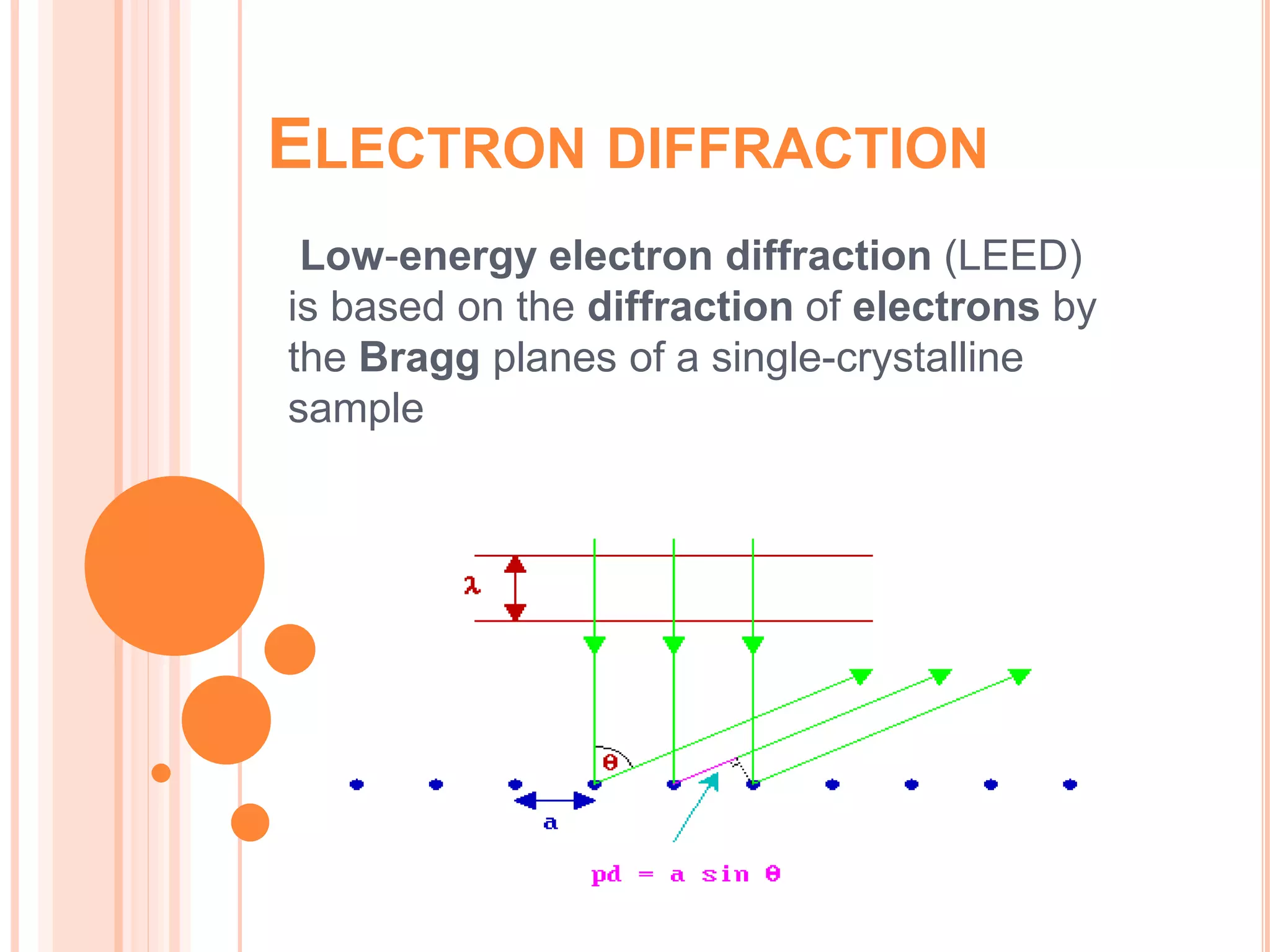
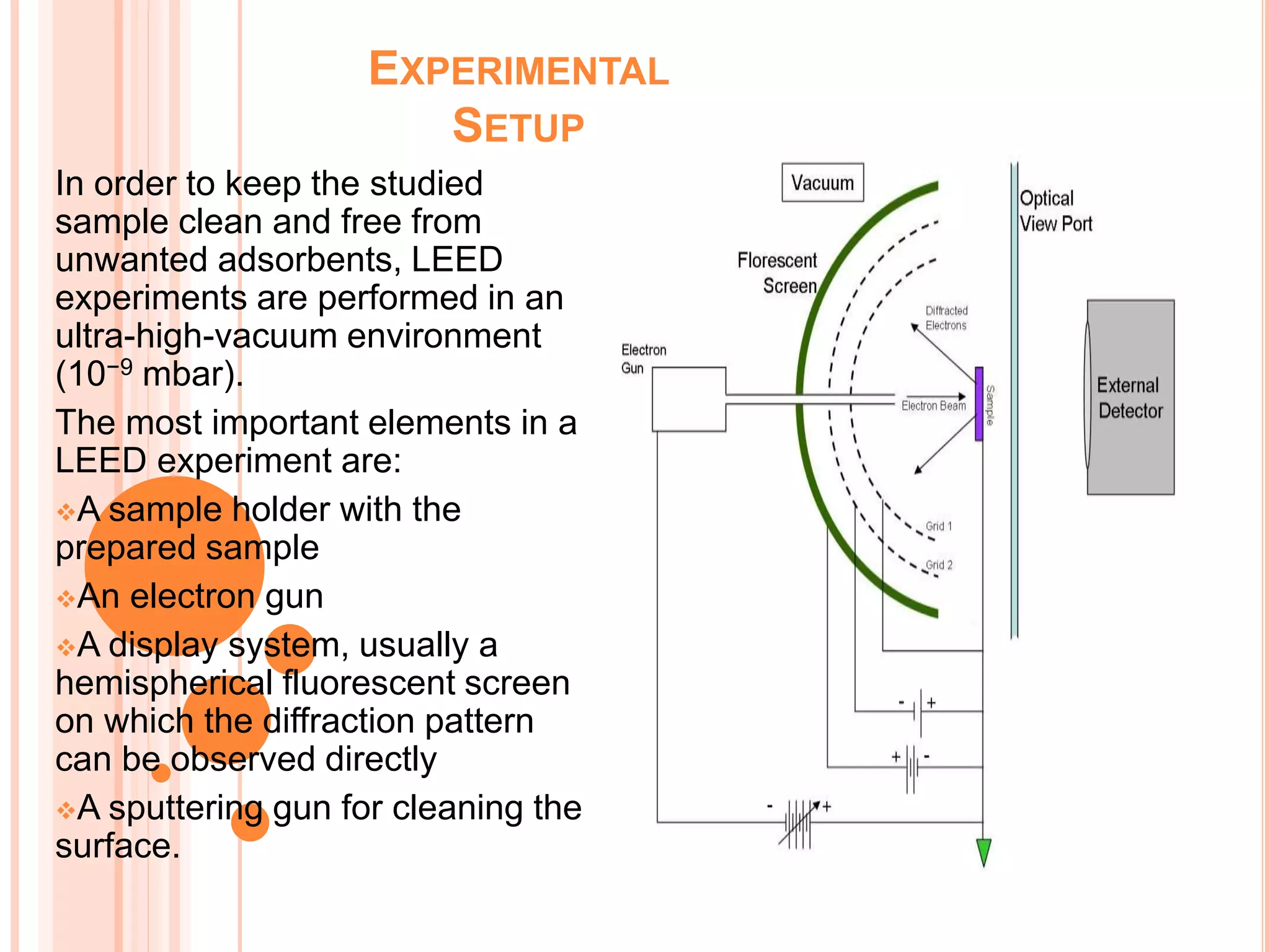
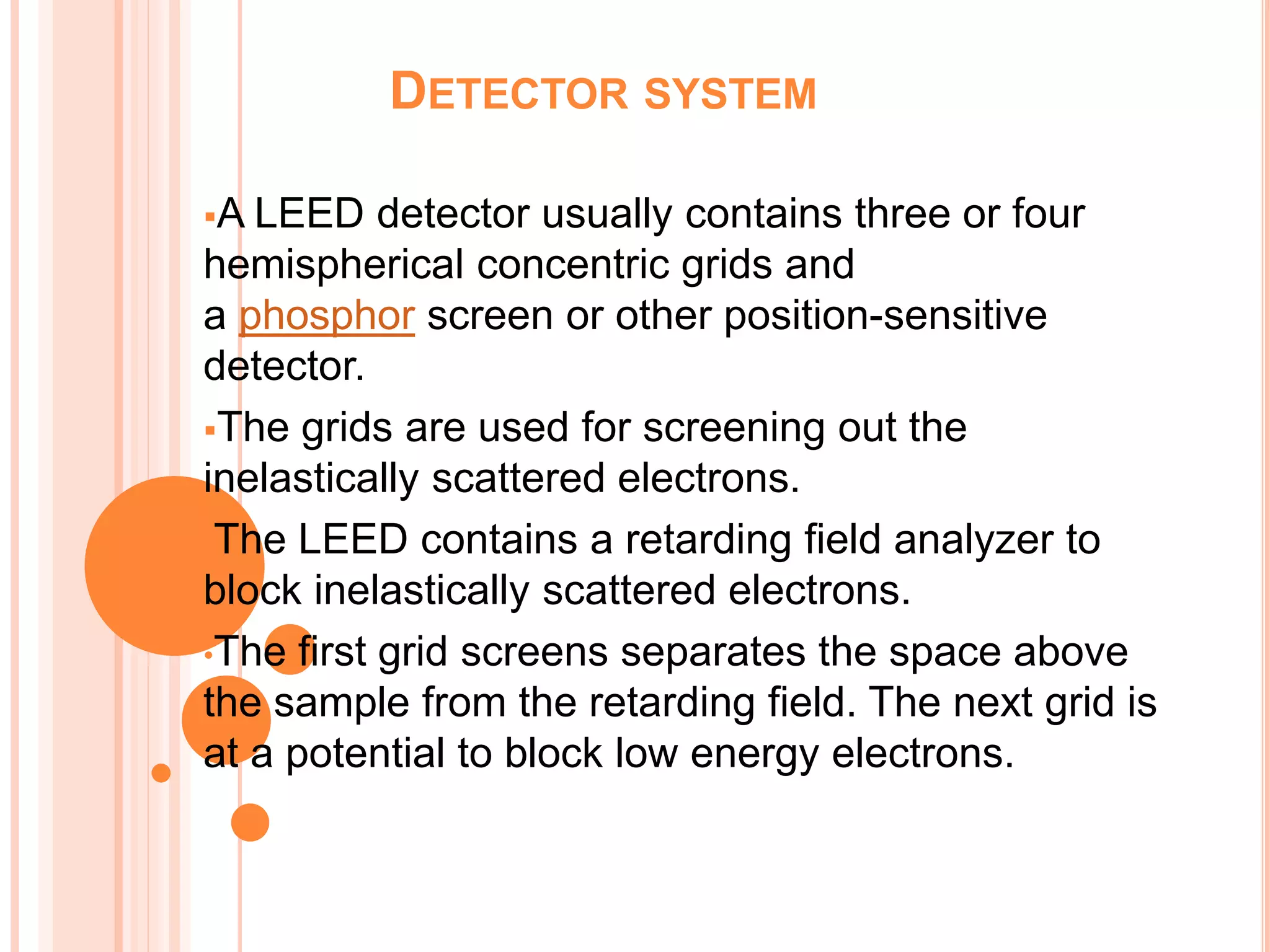
This document discusses low-energy electron diffraction (LEED), a technique used to determine the surface structure of single-crystalline materials. LEED works by bombarding a sample's surface with a low-energy electron beam and observing the diffraction pattern of scattered electrons on a fluorescent screen. The key components of a LEED system are an electron gun, sample holder, and detector. LEED provides structural information about a sample's surface and has the advantages of being relatively simple and highly surface sensitive, but requires an ultra-high vacuum environment and thin sample specimens.