Lecture 3
Core hardware and PC Maintenance
Outline
• DRAM
• Motherboard
• BIOS
• Power Supply
DRAM
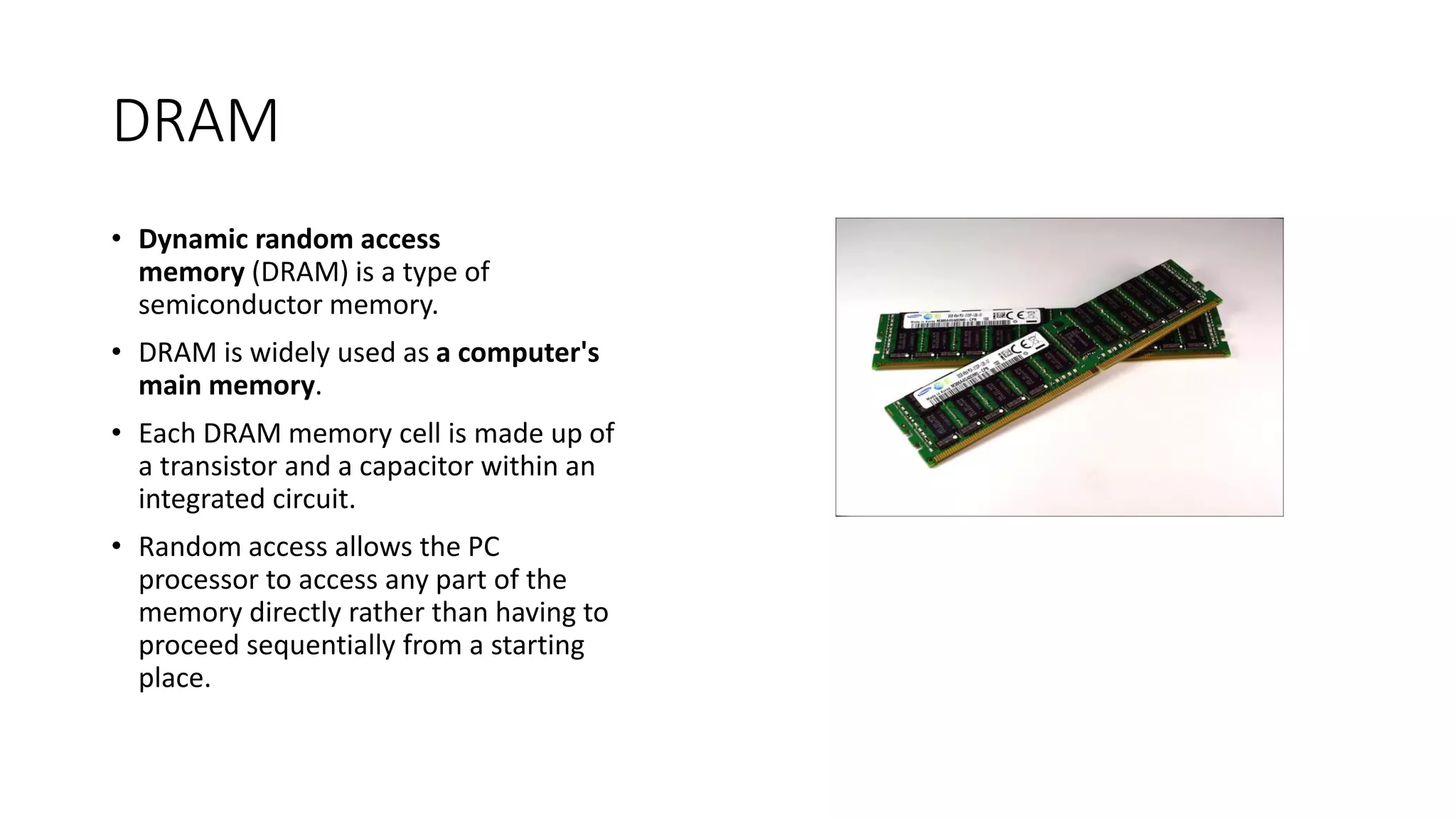
• Dynamic random access
memory (DRAM) is a type of
semiconductor memory.
• DRAM is widely used as a computer's
main memory.
• Each DRAM memory cell is made up of
a transistor and a capacitor within an
integrated circuit.
• Random access allows the PC
processor to access any part of the
memory directly rather than having to
proceed sequentially from a starting
place.
Motherboard
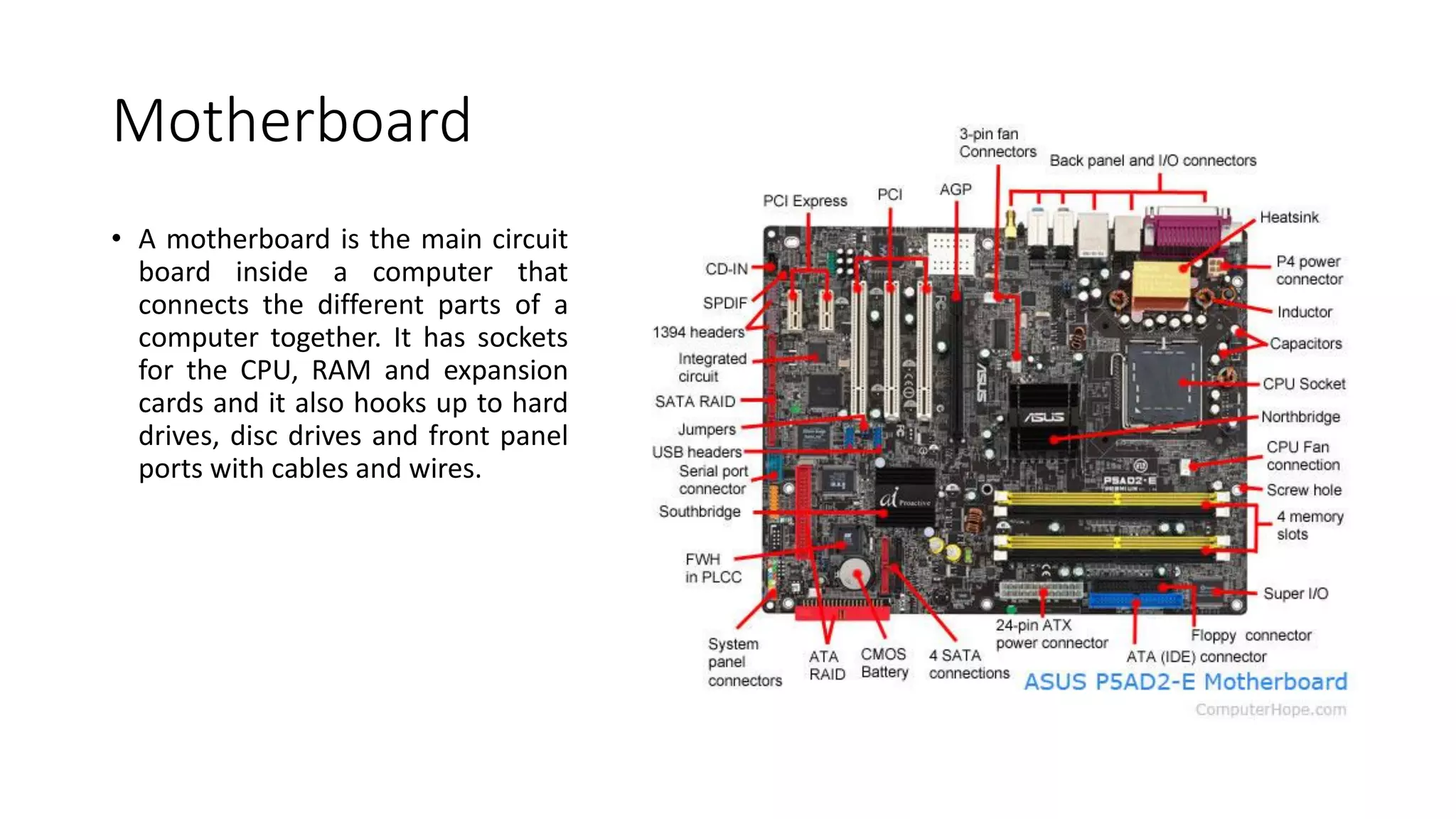
• A motherboard is the main circuit
board inside a computer that
connects the different parts of a
computer together. It has sockets
for the CPU, RAM and expansion
cards and it also hooks up to hard
drives, disc drives and front panel
ports with cables and wires.
BIOS
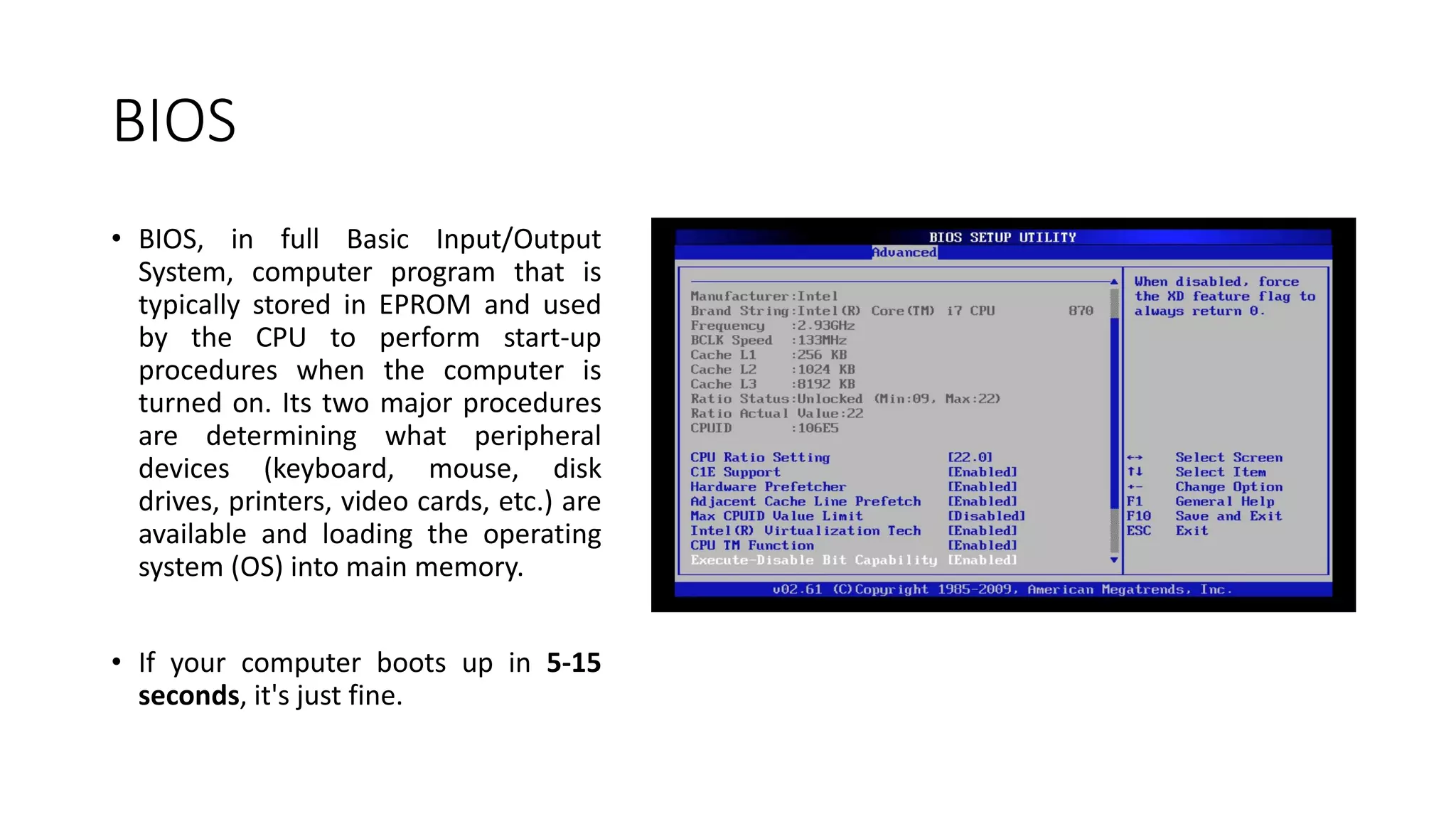
• BIOS, in full Basic Input/Output
System, computer program that is
typically stored in EPROM and used
by the CPU to perform start-up
procedures when the computer is
turned on. Its two major procedures
are determining what peripheral
devices (keyboard, mouse, disk
drives, printers, video cards, etc.) are
available and loading the operating
system (OS) into main memory.
• If your computer boots up in 5-15
seconds, it's just fine.
Power Supply
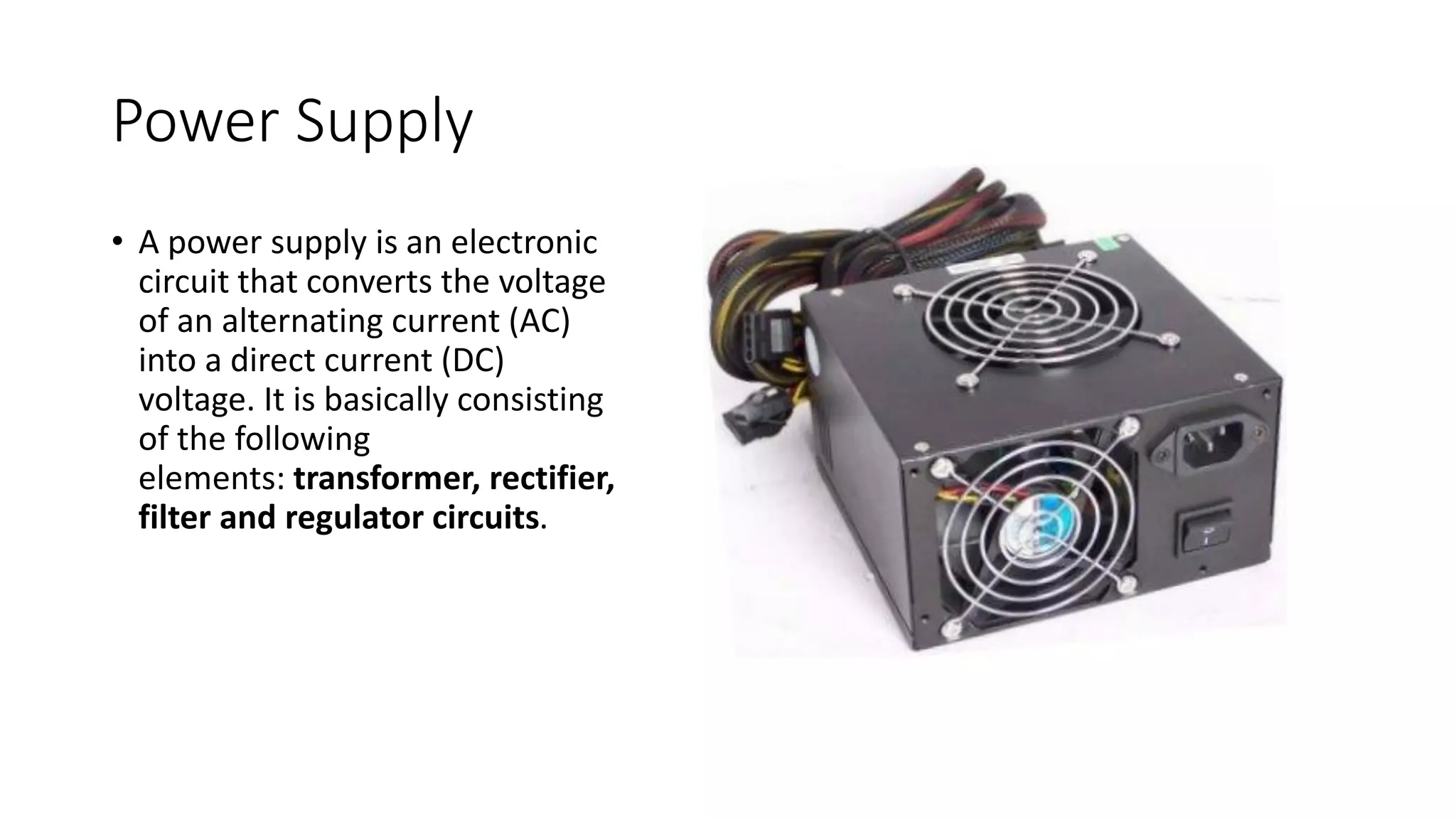
• A power supply is an electronic
circuit that converts the voltage
of an alternating current (AC)
into a direct current (DC)
voltage. It is basically consisting
of the following
elements: transformer, rectifier,
filter and regulator circuits.

Core Hardware: Lecture 3

  • 1.
    Lecture 3 Core hardwareand PC Maintenance
  • 2.
  • 3.
    DRAM • Dynamic randomaccess memory (DRAM) is a type of semiconductor memory. • DRAM is widely used as a computer's main memory. • Each DRAM memory cell is made up of a transistor and a capacitor within an integrated circuit. • Random access allows the PC processor to access any part of the memory directly rather than having to proceed sequentially from a starting place.
  • 4.
    Motherboard • A motherboardis the main circuit board inside a computer that connects the different parts of a computer together. It has sockets for the CPU, RAM and expansion cards and it also hooks up to hard drives, disc drives and front panel ports with cables and wires.
  • 5.
    BIOS • BIOS, infull Basic Input/Output System, computer program that is typically stored in EPROM and used by the CPU to perform start-up procedures when the computer is turned on. Its two major procedures are determining what peripheral devices (keyboard, mouse, disk drives, printers, video cards, etc.) are available and loading the operating system (OS) into main memory. • If your computer boots up in 5-15 seconds, it's just fine.
  • 6.
    Power Supply • Apower supply is an electronic circuit that converts the voltage of an alternating current (AC) into a direct current (DC) voltage. It is basically consisting of the following elements: transformer, rectifier, filter and regulator circuits.