Rooh Ullah
IPMR
KMU
 Medium frequency currents are the currents whose
frequency falls between the range of 1000 to 10000 Hz.
 They are being used therapeutically due to their
advantage of greater penetration and with a higher
tolerance and comfort over the low frequency current.
 Rebox-type Current
 Russian Currents
 Interferential Currents
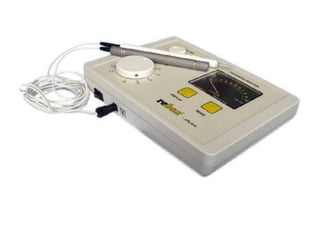
 Rebox–type currents are derived from a device called
Rebox. It was developed in Czechoslovakia in the 1970s.
 This system can be linked to a computer for display of
graph of current.
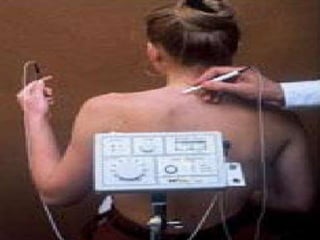
 Specific impulses (frequency 2–4 kHz) of weak electric
currents (100-200 μA) are introduced to the affected
region with a touch of a small non-invasive treatment
electrode (cathode)
 while the patient holds a second reference electrode
(anode) in a hand to complete electric circuit.
 The treatment electrode is applied for 2–3 seconds in one
spot, then proceeding approx. 1,5 cm to another point.
 About 20 points are treated per one session. Frequency of
treatment sessions is individual for each patient
 Acute and chronic pain
 Immobility
 Wound Healing
 Neurological disorders
 Edema
 Russian currents are evenly alternating currents with a
frequency of 2500 Hz (between 2000–10000 Hz).
 These are applied with a series of separate bursts, i.e.
polyphasic AC waveforms . There are thus 50 periods of
20 ms duration consisting of 10 ms burst and 10 ms
interval.
 Each 10 ms burst contains 25 cycles of alternating
current.
 These bursts reduces the total amount of current given
to the patient thus increases patients tolerance.
 The other factor affecting patients tolerance is the
effect of frequency on the patients tissue.
 MEDIUM frequency current reduces the resistance to
the current flow again making this type of waveform
comfortable enough that the patient may tolerate with
higher intensities.
 The only indication for use of Russian current is to
strengthening the muscular system of healthy and
athletic persons :
 Post-knee ligaments surgery
 Post-arthroscopic knee surgery
 Following ligament sprain
 The principles of interferential therapy were first introduced by
Ho Nemec (an Austrian scientist). Interferential currents are
also known as Nemec’s currents. In this two medium frequency
currents are used to produce a low frequency effect.
 Since direct application of faradic current results in pain due to
high impedance of tissues, so to have a low frequency effect two
medium frequency currents are used.
 Out of these two medium frequency currents one current is
always of 4000 Hz because there is minimum impedance
generated by the tissues against this frequency current.
 The other current can be varied accordingly
 The Interferential therapy depends upon the principles
of Interferential effect of two medium frequency
currents crossing in the patient’s tissues.
 The interference produced by two currents in the tissues
is called the beat frequency.
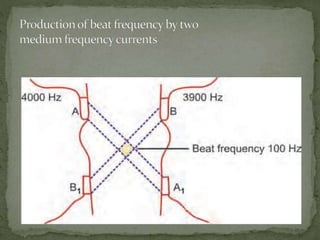
 For example, let us take two medium frequency
currents, current in circuit A = 4000 Hz and circuit B =
3900 Hz.
 Where these two currents are applied to the tissues, at
the point where the currents cross over, a new beat
frequency current is set up whose amplitude is
modulated and the frequency of new current is called
beat frequency (interferential current) and that is 100
Hz
1. Skin must be clean and clear before the start of the treatment.
2. The part of the body to be treated should be washed and if there
is any skin lesion it should be covered by applying petroleum
jelly on it.
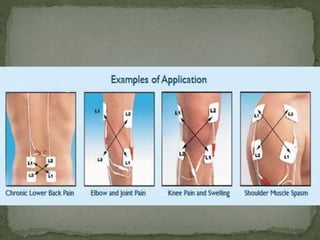
3. The electrodes should be placed in such a way that the crossing
point of two currents lie above or around the affected part.
4. The suitable frequency current should be given for different
conditions.
5. Select the spectrum mode rectangular, triangular or trapezoidal
as needed.
6. Select the base frequency and upper frequency, the difference
between upper frequency and base frequency would give the
spectrum.
7. Increase the power gently and cautiously until the
patient starts feeling the current. It can be increased till
the patient can tolerate.
8. After the treatment, adjust the intensity control to
minimum.
9. Switch ‘OFF’ the mains and disconnect the electrodes.
 The interferential currents do not produce any sensory
nerve irritation, irrespective of amplitude. Their
application is free of any burning sensation on the skin
surface as is sometimes experienced with other low
frequency currents which are disturbing to current
sensitive patients.
 A medium frequency alternative current, it is high
frequency and absence of direct current properties, are the
most suitable for treating deeper layers of tissues. It is
therefore most useful in treating tissues at a greater depth.
For example, in muscles, tendons, nerves, bursae and
periosteum..
 Resistance of skin is minimum while using frequencies
in the range of 4,000 Hz, and therefore higher doses
can be given to the body without any discomfort to the
skin.
 The current can be localized more effectively in
specific area. Extensive area can also be covered.
 Pain – Both case of pain and referred pain- e.g.-
Migraine, Vascular insufficiency, Stump complication,
Neuralgia
 Muscle spasm
 Edema
 Hematoma
 Chronic Ligamentous lesion
 Trigger points
 Stress incontinence – contraction of pelvic floor muscle
 Delayed union – in case of fracture to stimulate the
union
THANK YOU

Lecture 10 Medical PhysicsMedium Frequency currents.pptx

  • 1.
  • 2.
     Medium frequencycurrents are the currents whose frequency falls between the range of 1000 to 10000 Hz.  They are being used therapeutically due to their advantage of greater penetration and with a higher tolerance and comfort over the low frequency current.
  • 3.
     Rebox-type Current Russian Currents  Interferential Currents
  • 4.
     Rebox–type currentsare derived from a device called Rebox. It was developed in Czechoslovakia in the 1970s.  This system can be linked to a computer for display of graph of current.  Specific impulses (frequency 2–4 kHz) of weak electric currents (100-200 μA) are introduced to the affected region with a touch of a small non-invasive treatment electrode (cathode)
  • 5.
     while thepatient holds a second reference electrode (anode) in a hand to complete electric circuit.  The treatment electrode is applied for 2–3 seconds in one spot, then proceeding approx. 1,5 cm to another point.  About 20 points are treated per one session. Frequency of treatment sessions is individual for each patient
  • 8.
     Acute andchronic pain  Immobility  Wound Healing  Neurological disorders  Edema
  • 9.
     Russian currentsare evenly alternating currents with a frequency of 2500 Hz (between 2000–10000 Hz).  These are applied with a series of separate bursts, i.e. polyphasic AC waveforms . There are thus 50 periods of 20 ms duration consisting of 10 ms burst and 10 ms interval.  Each 10 ms burst contains 25 cycles of alternating current.
  • 10.
     These burstsreduces the total amount of current given to the patient thus increases patients tolerance.  The other factor affecting patients tolerance is the effect of frequency on the patients tissue.  MEDIUM frequency current reduces the resistance to the current flow again making this type of waveform comfortable enough that the patient may tolerate with higher intensities.
  • 12.
     The onlyindication for use of Russian current is to strengthening the muscular system of healthy and athletic persons :  Post-knee ligaments surgery  Post-arthroscopic knee surgery  Following ligament sprain
  • 13.
     The principlesof interferential therapy were first introduced by Ho Nemec (an Austrian scientist). Interferential currents are also known as Nemec’s currents. In this two medium frequency currents are used to produce a low frequency effect.  Since direct application of faradic current results in pain due to high impedance of tissues, so to have a low frequency effect two medium frequency currents are used.  Out of these two medium frequency currents one current is always of 4000 Hz because there is minimum impedance generated by the tissues against this frequency current.  The other current can be varied accordingly
  • 14.
     The Interferentialtherapy depends upon the principles of Interferential effect of two medium frequency currents crossing in the patient’s tissues.  The interference produced by two currents in the tissues is called the beat frequency.
  • 15.
     For example,let us take two medium frequency currents, current in circuit A = 4000 Hz and circuit B = 3900 Hz.  Where these two currents are applied to the tissues, at the point where the currents cross over, a new beat frequency current is set up whose amplitude is modulated and the frequency of new current is called beat frequency (interferential current) and that is 100 Hz
  • 17.
    1. Skin mustbe clean and clear before the start of the treatment. 2. The part of the body to be treated should be washed and if there is any skin lesion it should be covered by applying petroleum jelly on it. 3. The electrodes should be placed in such a way that the crossing point of two currents lie above or around the affected part. 4. The suitable frequency current should be given for different conditions. 5. Select the spectrum mode rectangular, triangular or trapezoidal as needed. 6. Select the base frequency and upper frequency, the difference between upper frequency and base frequency would give the spectrum.
  • 18.
    7. Increase thepower gently and cautiously until the patient starts feeling the current. It can be increased till the patient can tolerate. 8. After the treatment, adjust the intensity control to minimum. 9. Switch ‘OFF’ the mains and disconnect the electrodes.
  • 20.
     The interferentialcurrents do not produce any sensory nerve irritation, irrespective of amplitude. Their application is free of any burning sensation on the skin surface as is sometimes experienced with other low frequency currents which are disturbing to current sensitive patients.  A medium frequency alternative current, it is high frequency and absence of direct current properties, are the most suitable for treating deeper layers of tissues. It is therefore most useful in treating tissues at a greater depth. For example, in muscles, tendons, nerves, bursae and periosteum..
  • 21.
     Resistance ofskin is minimum while using frequencies in the range of 4,000 Hz, and therefore higher doses can be given to the body without any discomfort to the skin.  The current can be localized more effectively in specific area. Extensive area can also be covered.
  • 22.
     Pain –Both case of pain and referred pain- e.g.- Migraine, Vascular insufficiency, Stump complication, Neuralgia  Muscle spasm  Edema  Hematoma  Chronic Ligamentous lesion  Trigger points  Stress incontinence – contraction of pelvic floor muscle  Delayed union – in case of fracture to stimulate the union
  • 23.