
EVELYN G. BAGAMANO
POTEN & ELISEO M. QUESADA MNHS
PAETE LAGUNA
Checking of understanding :
As part of initial
activities, the learners shall
explore an idea about the
concept about earth and space
exploration.
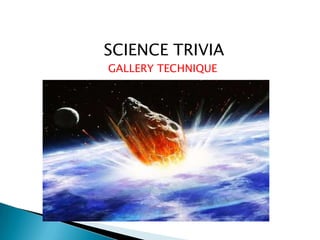
SCIENCE TRIVIA
GALLERY TECHNIQUE
 DIRECTION: Answer yes or no to
explore an idea about the major
concept about the earth and space.
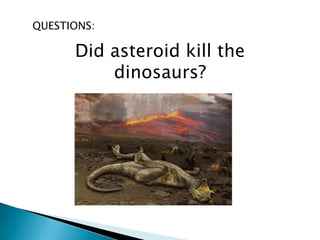
Did asteroid kill the
dinosaurs?
QUESTIONS:
Answer : No
Facts 1.
In time, the earth might have
become so cold that the change in
climate would have killed the
dinosaurs.
Facts 2.
The extinction of the dinosaurs
coincided with a period of high
volcanic activity, which could have
contributed to their extinction
Answer: NO
FACTS
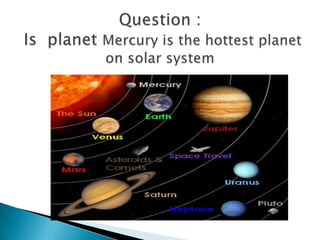
Planet Venus is the most hottest planet
in solar system due to its average
temperature of 900◦ F (480◦C) that can
melt lead. While planet mercury has
average temperature of -300◦F- 800◦F
(-184◦C to 427◦C)
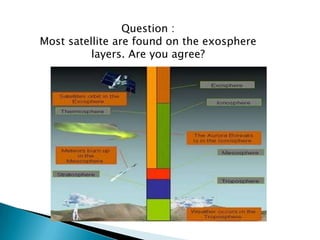
Question :
Most satellite are found on the exosphere
layers. Are you agree?
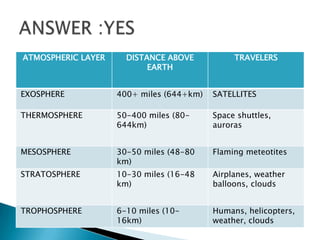
ATMOSPHERIC LAYER DISTANCE ABOVE
EARTH
TRAVELERS
EXOSPHERE 400+ miles (644+km) SATELLITES
THERMOSPHERE 50-400 miles (80-
644km)
Space shuttles,
auroras
MESOSPHERE 30-50 miles (48-80
km)
Flaming meteotites
STRATOSPHERE 10-30 miles (16-48
km)
Airplanes, weather
balloons, clouds
TROPHOSPHERE 6-10 miles (10-
16km)
Humans, helicopters,
weather, clouds
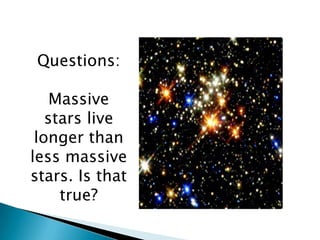
Questions:
Massive
stars live
longer than
less massive
stars. Is that
true?
ANSWER: NO
FACTS:
Massive stars use up more fuel
than less- massive ones, so
they actually die sooner. The
length of star’s life and what
happens when it dies depend on
how mass the star has when
it’s born.
Learners activity
Video presentation:
From the video introduce the major idea about
earth and space explorations and its sub-topics
such as spaced based observations of earth,
earths waters, space-based observations beyond
earth, and recent discoveries and breakthrough in
space explorations.
Learning strategy:
BRAINSTORMING
Group the students into 3.
Learners must formulate
questions on what they understand
about the video presented.
Support some facts that can
explain about what they learn.
Learning plan in integrated science 1

Learning plan in integrated science 1

  • 1.
    EVELYN G. BAGAMANO POTEN& ELISEO M. QUESADA MNHS PAETE LAGUNA
  • 2.
    Checking of understanding: As part of initial activities, the learners shall explore an idea about the concept about earth and space exploration.
  • 3.
  • 4.
     DIRECTION: Answeryes or no to explore an idea about the major concept about the earth and space.
  • 5.
    Did asteroid killthe dinosaurs? QUESTIONS:
  • 6.
    Answer : No Facts1. In time, the earth might have become so cold that the change in climate would have killed the dinosaurs. Facts 2. The extinction of the dinosaurs coincided with a period of high volcanic activity, which could have contributed to their extinction
  • 8.
    Answer: NO FACTS Planet Venusis the most hottest planet in solar system due to its average temperature of 900◦ F (480◦C) that can melt lead. While planet mercury has average temperature of -300◦F- 800◦F (-184◦C to 427◦C)
  • 9.
    Question : Most satelliteare found on the exosphere layers. Are you agree?
  • 10.
    ATMOSPHERIC LAYER DISTANCEABOVE EARTH TRAVELERS EXOSPHERE 400+ miles (644+km) SATELLITES THERMOSPHERE 50-400 miles (80- 644km) Space shuttles, auroras MESOSPHERE 30-50 miles (48-80 km) Flaming meteotites STRATOSPHERE 10-30 miles (16-48 km) Airplanes, weather balloons, clouds TROPHOSPHERE 6-10 miles (10- 16km) Humans, helicopters, weather, clouds
  • 11.
  • 12.
    ANSWER: NO FACTS: Massive starsuse up more fuel than less- massive ones, so they actually die sooner. The length of star’s life and what happens when it dies depend on how mass the star has when it’s born.
  • 13.
    Learners activity Video presentation: Fromthe video introduce the major idea about earth and space explorations and its sub-topics such as spaced based observations of earth, earths waters, space-based observations beyond earth, and recent discoveries and breakthrough in space explorations.
  • 14.
    Learning strategy: BRAINSTORMING Group thestudents into 3. Learners must formulate questions on what they understand about the video presented. Support some facts that can explain about what they learn.