
Mato Grosso: realising the land-sparing potential
    from increased agricultural productivity
            Bernardo Baeta Neves Strassburg
                 b.strassburg@iis-rio.org
      Instituto Internacional para Sustentabilidade
                   Rio de Janeiro, Brasil
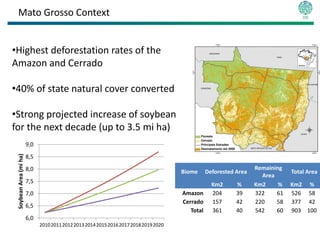
Mato Grosso Context


•Highest deforestation rates of the
Amazon and Cerrado

•40% of state natural cover converted

•Strong projected increase of soybean
for the next decade (up to 3.5 mi ha)
                        9,0
 Soybean Area (mi ha)


                        8,5
                        8,0                                                                                         Remaining
                                                                                       Biome      Deforested Area               Total Area
                                                                                                                      Area
                        7,5
                                                                                                    Km2      %      Km2     %   Km2 %
                        7,0                                                            Amazon       204      39     322    61   526 58
                                                                                       Cerrado      157      42     220    58   377 42
                        6,5
                                                                                          Total     361      40     542    60   903 100
                        6,0
                              2010 2011 2012 2013 2014 2015 2016 2017 2018 2019 2020
Increasing Cattle Ranching Productivity as main option to
conciliate conservation and agricultural expansion

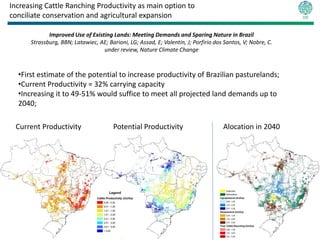
             Improved Use of Existing Lands: Meeting Demands and Sparing Nature in Brazil
      Strassburg, BBN; Latawiec, AE; Barioni, LG; Assad, E; Valentin, J; Porfirio dos Santos, V; Nobre, C.
                                  under review, Nature Climate Change


  •First estimate of the potential to increase productivity of Brazilian pasturelands;
  •Current Productivity = 32% carrying capacity
  •Increasing it to 49-51% would suffice to meet all projected land demands up to
  2040;

 Current Productivity                   Potential Productivity                       Alocation in 2040
But…


… will land sparing follow cattle
ranching intensification ?
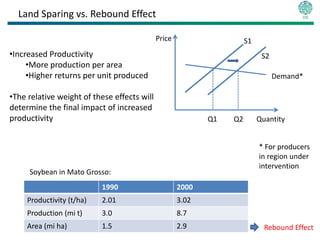
Land Sparing vs. Rebound Effect

                                             Price                    S1
•Increased Productivity                                                     S2
     •More production per area
     •Higher returns per unit produced                                           Demand*

•The relative weight of these effects will
determine the final impact of increased
productivity                                                Q1   Q2        Quantity


                                                                           * For producers
                                                                           in region under
                                                                           intervention
     Soybean in Mato Grosso:
                           1990                      2000
     Productivity (t/ha)   2.01                      3.02
     Production (mi t)     3.0                       8.7
     Area (mi ha)          1.5                       2.9                     Rebound Effect
So…


… how to realise the potential for
land sparing from increased
productivity?
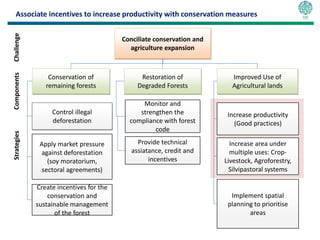
Associate incentives to increase productivity with conservation measures
Challenge


                                         Conciliate conservation and
                                           agriculture expansion
Components


                 Conservation of               Restoration of            Improved Use of
                remaining forests             Degraded Forests           Agricultural lands

                                               Monitor and
                  Control illegal             strengthen the            Increase productivity
                  deforestation            compliance with forest         (Good practices)
                                                   code
Strategies


              Apply market pressure           Provide technical          Increase area under
              against deforestation         assiatance, credit and       multiple uses: Crop-
                 (soy moratorium,                 incentives           Livestock, Agroforestry,
               sectoral agreements)                                      Silvipastoral systems

             Create incentives for the
                 conservation and                                        Implement spatial
             sustainable management                                     planning to prioritise
                   of the forest                                               areas
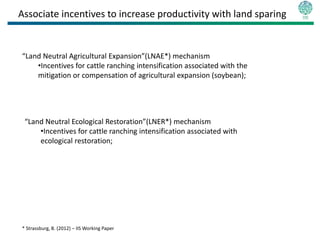
Associate incentives to increase productivity with land sparing


“Land Neutral Agricultural Expansion”(LNAE*) mechanism
    •Incentives for cattle ranching intensification associated with the
    mitigation or compensation of agricultural expansion (soybean);


 “Land Neutral Ecological Restoration”(LNER*) mechanism
     •Incentives for cattle ranching intensification associated with
     ecological restoration;


* Strassburg, B. (2012) – IIS Working Paper
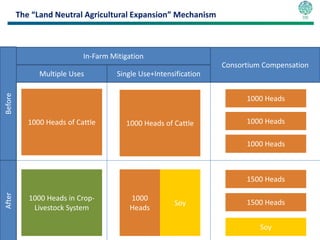
The “Land Neutral Agricultural Expansion” Mechanism


                            In-Farm Mitigation
                                                                   Consortium Compensation
               Multiple Uses          Single Use+Intensification
Before


                                                                         1000 Heads

            1000 Heads of Cattle        1000 Heads of Cattle             1000 Heads

                                                                         1000 Heads


                                                                         1500 Heads
After


            1000 Heads in Crop-          1000
                                                       Soy               1500 Heads
             Livestock System            Heads

                                                                             Soy
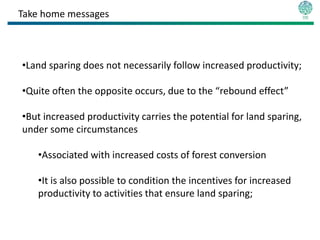
Take home messages


•Land sparing does not necessarily follow increased productivity;

•Quite often the opposite occurs, due to the “rebound effect”

•But increased productivity carries the potential for land sparing,
under some circumstances

   •Associated with increased costs of forest conversion

   •It is also possible to condition the incentives for increased
   productivity to activities that ensure land sparing;
Thank You

      Bernardo Baeta Neves Strassburg
           b.strassburg@iis-rio.org
Instituto Internacional para Sustentabilidade
             Rio de Janeiro, Brasil

Learning Event No. 1, Session 1: Strassburg, ARDD2012 Rio

  • 1.
    Mato Grosso: realisingthe land-sparing potential from increased agricultural productivity Bernardo Baeta Neves Strassburg b.strassburg@iis-rio.org Instituto Internacional para Sustentabilidade Rio de Janeiro, Brasil
  • 2.
    Mato Grosso Context •Highestdeforestation rates of the Amazon and Cerrado •40% of state natural cover converted •Strong projected increase of soybean for the next decade (up to 3.5 mi ha) 9,0 Soybean Area (mi ha) 8,5 8,0 Remaining Biome Deforested Area Total Area Area 7,5 Km2 % Km2 % Km2 % 7,0 Amazon 204 39 322 61 526 58 Cerrado 157 42 220 58 377 42 6,5 Total 361 40 542 60 903 100 6,0 2010 2011 2012 2013 2014 2015 2016 2017 2018 2019 2020
  • 3.
    Increasing Cattle RanchingProductivity as main option to conciliate conservation and agricultural expansion Improved Use of Existing Lands: Meeting Demands and Sparing Nature in Brazil Strassburg, BBN; Latawiec, AE; Barioni, LG; Assad, E; Valentin, J; Porfirio dos Santos, V; Nobre, C. under review, Nature Climate Change •First estimate of the potential to increase productivity of Brazilian pasturelands; •Current Productivity = 32% carrying capacity •Increasing it to 49-51% would suffice to meet all projected land demands up to 2040; Current Productivity Potential Productivity Alocation in 2040
  • 4.
    But… … will landsparing follow cattle ranching intensification ?
  • 5.
    Land Sparing vs.Rebound Effect Price S1 •Increased Productivity S2 •More production per area •Higher returns per unit produced Demand* •The relative weight of these effects will determine the final impact of increased productivity Q1 Q2 Quantity * For producers in region under intervention Soybean in Mato Grosso: 1990 2000 Productivity (t/ha) 2.01 3.02 Production (mi t) 3.0 8.7 Area (mi ha) 1.5 2.9 Rebound Effect
  • 6.
    So… … how torealise the potential for land sparing from increased productivity?
  • 7.
    Associate incentives toincrease productivity with conservation measures Challenge Conciliate conservation and agriculture expansion Components Conservation of Restoration of Improved Use of remaining forests Degraded Forests Agricultural lands Monitor and Control illegal strengthen the Increase productivity deforestation compliance with forest (Good practices) code Strategies Apply market pressure Provide technical Increase area under against deforestation assiatance, credit and multiple uses: Crop- (soy moratorium, incentives Livestock, Agroforestry, sectoral agreements) Silvipastoral systems Create incentives for the conservation and Implement spatial sustainable management planning to prioritise of the forest areas
  • 8.
    Associate incentives toincrease productivity with land sparing “Land Neutral Agricultural Expansion”(LNAE*) mechanism •Incentives for cattle ranching intensification associated with the mitigation or compensation of agricultural expansion (soybean); “Land Neutral Ecological Restoration”(LNER*) mechanism •Incentives for cattle ranching intensification associated with ecological restoration; * Strassburg, B. (2012) – IIS Working Paper
  • 9.
    The “Land NeutralAgricultural Expansion” Mechanism In-Farm Mitigation Consortium Compensation Multiple Uses Single Use+Intensification Before 1000 Heads 1000 Heads of Cattle 1000 Heads of Cattle 1000 Heads 1000 Heads 1500 Heads After 1000 Heads in Crop- 1000 Soy 1500 Heads Livestock System Heads Soy
  • 10.
    Take home messages •Landsparing does not necessarily follow increased productivity; •Quite often the opposite occurs, due to the “rebound effect” •But increased productivity carries the potential for land sparing, under some circumstances •Associated with increased costs of forest conversion •It is also possible to condition the incentives for increased productivity to activities that ensure land sparing;
  • 11.
    Thank You Bernardo Baeta Neves Strassburg b.strassburg@iis-rio.org Instituto Internacional para Sustentabilidade Rio de Janeiro, Brasil