VICENTE M. QUISAY JR
UNIT 3: TYPOLOGY OF LEARNERS WITH
SPECIAL NEEDS
B: LEARNERS WITH LEARNING DISABILITIES
OBJECTIVES
• DESCRIBE THE VARIOUS TYPES OF LEARNING DIFFICULTIES THAT CAN
AFFECT A PERSON'S ABILITY TO READ, WRITE, AND PERFORM MATH
CALCULATIONS.
• UNCOVER MISCONCEPTIONS AMONG INSTRUCTORS ABOUT STUDENTS
WITH LD AND THEIR CAPACITY FOR LEARNING.
• PROVIDE EXAMPLES OF THE FINEST TECHNIQUES FOR ENHANCING THE
LEARNING ENVIRONMENT FOR STUDENTS WITH LEARNING DISABILITIES.
WHAT ARE LEARNING
DISABILITIES?
> ARE PROBLEMS THAT AFFECTS THE
BRAIN'S ABILITY TO RECEIVE, PROCESS,
ANALYZE OR STORE INFORMATION
> THESE PROBLEMS CAN MAKE IT
DIFFICULT FOR A STUDENT TO
LEARNAS QUICKLY AS SOMEONE WHO
ISN'T AFFECTED BY LEARNING
DISABILITIES.
Strong converging evidence supports the validity of the concept
of specific learning disabilities (SLD) this evidencee is
particularly impressive because it converges acrross different
indicators and methodologies. the central concept of SLD
involves disorders of learning and cognition that are intrisinc to
the individual. SLD
are specific in the sense that these disorders each significantly
affect a relatively narrow range of academic and performance
outcomme
CONCEPT OF LD (2000):
3. Dyscalculia
1. Dyslexia.
2. Dysgraphia
LEARNING DISABILITIES
IN PARTICULAR, PSYCHOLOGY PROFESSIONALS SHOULD STUDY
THESE SEVEN LEARNING DISABILITIES:
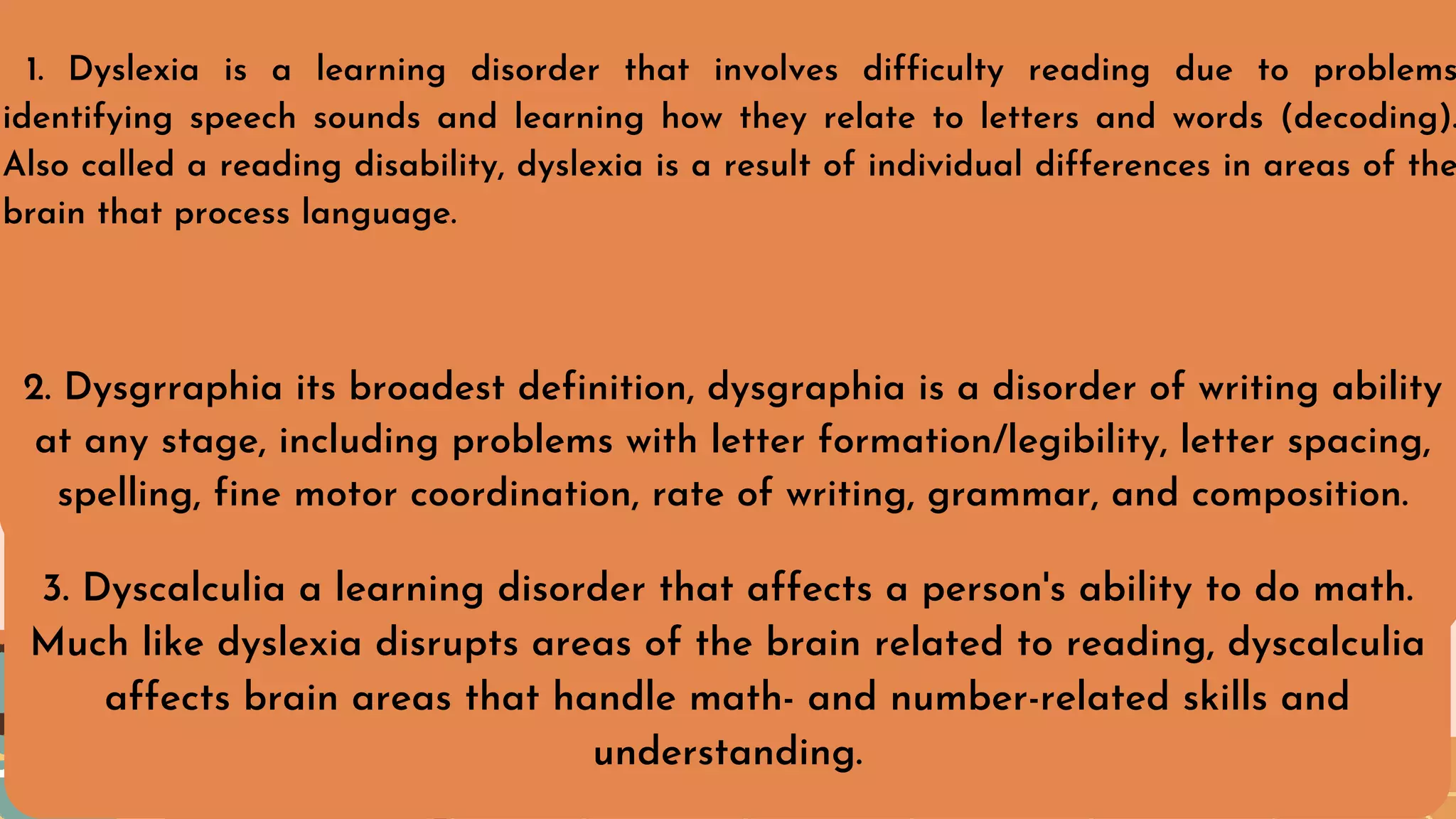
1. Dyslexia is a learning disorder that involves difficulty reading due to problems
identifying speech sounds and learning how they relate to letters and words (decoding).
Also called a reading disability, dyslexia is a result of individual differences in areas of the
brain that process language.
2. Dysgrraphia its broadest definition, dysgraphia is a disorder of writing ability
at any stage, including problems with letter formation/legibility, letter spacing,
spelling, fine motor coordination, rate of writing, grammar, and composition.
3. Dyscalculia a learning disorder that affects a person's ability to do math.
Much like dyslexia disrupts areas of the brain related to reading, dyscalculia
affects brain areas that handle math- and number-related skills and
understanding.
1. Heredity
2. Problems during pregnancy
and birth.
3. Accidents after Death
NATURE AND CAUSES
LEARNINGDISABILITIESLOOKVERYDIFFERENTFROMONE
CHILDTOANOTHER.ONECHILDMAYSTRUGGLEWITHREADING
ANDSPELLING,WHILEANOTHERLOVESBOOKSBUTCAN'T
UNDERSTANDMATH.STILLANOTHERCHILDMAYHAVE
DIFFICULTYINUNDERSTANDINGWHATITHERSARESAYINGOR
COMMUNICATINGOUTLOUD.THEPROBLEMSAREVERY
DIFFERENT,BUTTHEYAREALLLEARNINGDISORDERS.
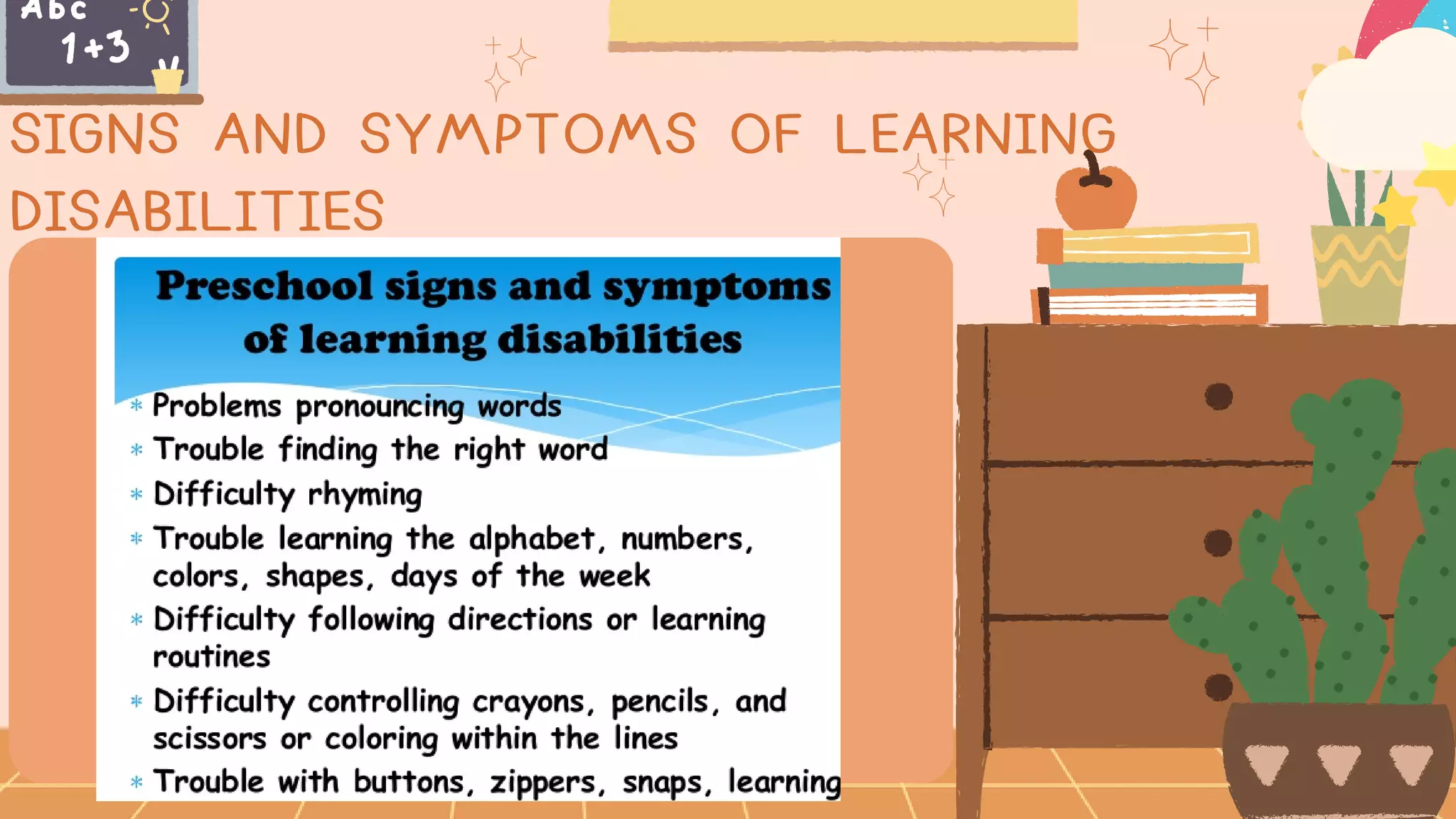
SIGNS AND SYMPTOMS OF LEARNING
DISABILITIES
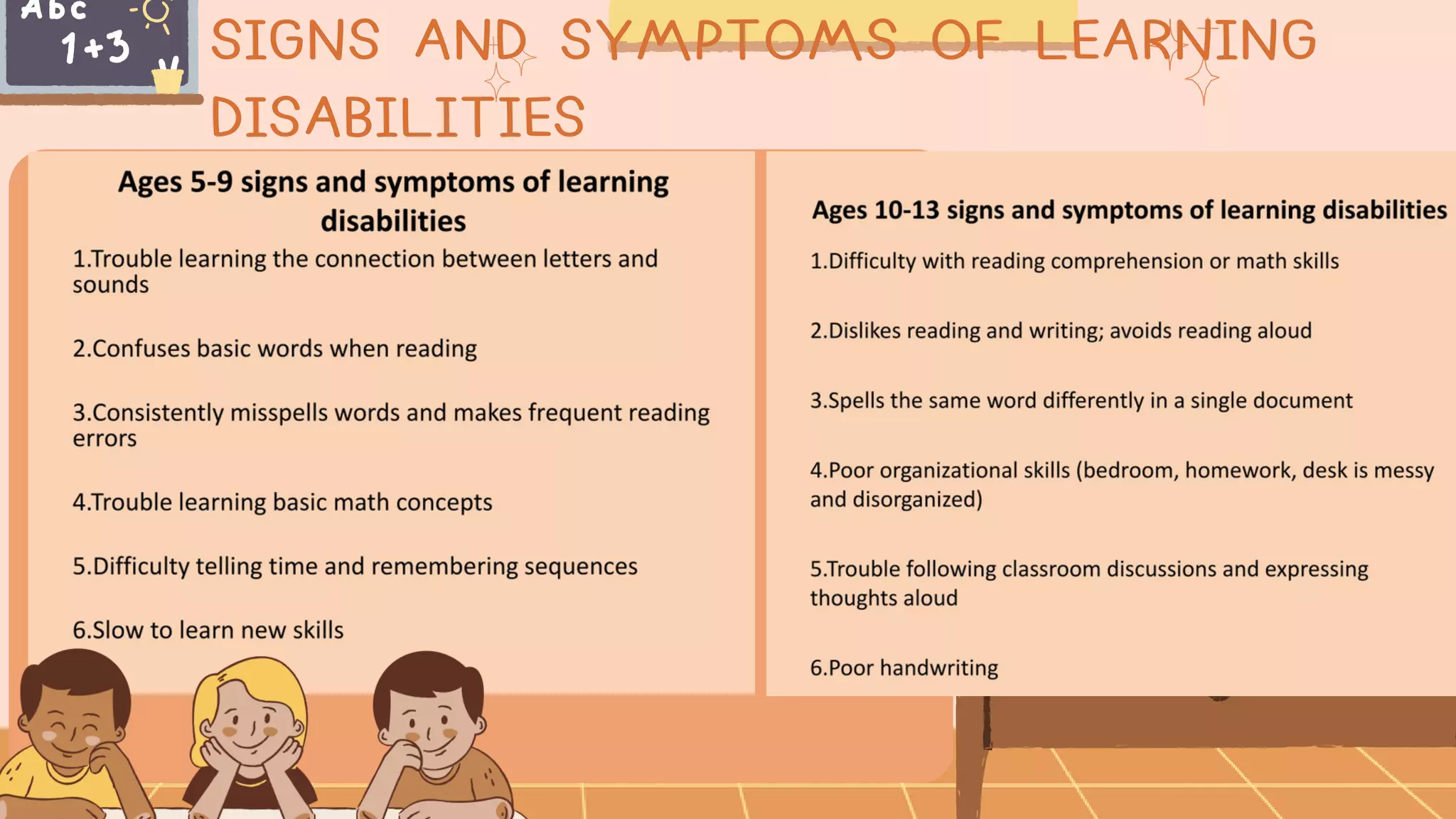
SIGNS AND SYMPTOMS OF LEARNING
DISABILITIES
SIGNS AND SYMPTOMS OF LEARNING
DISABILITIES
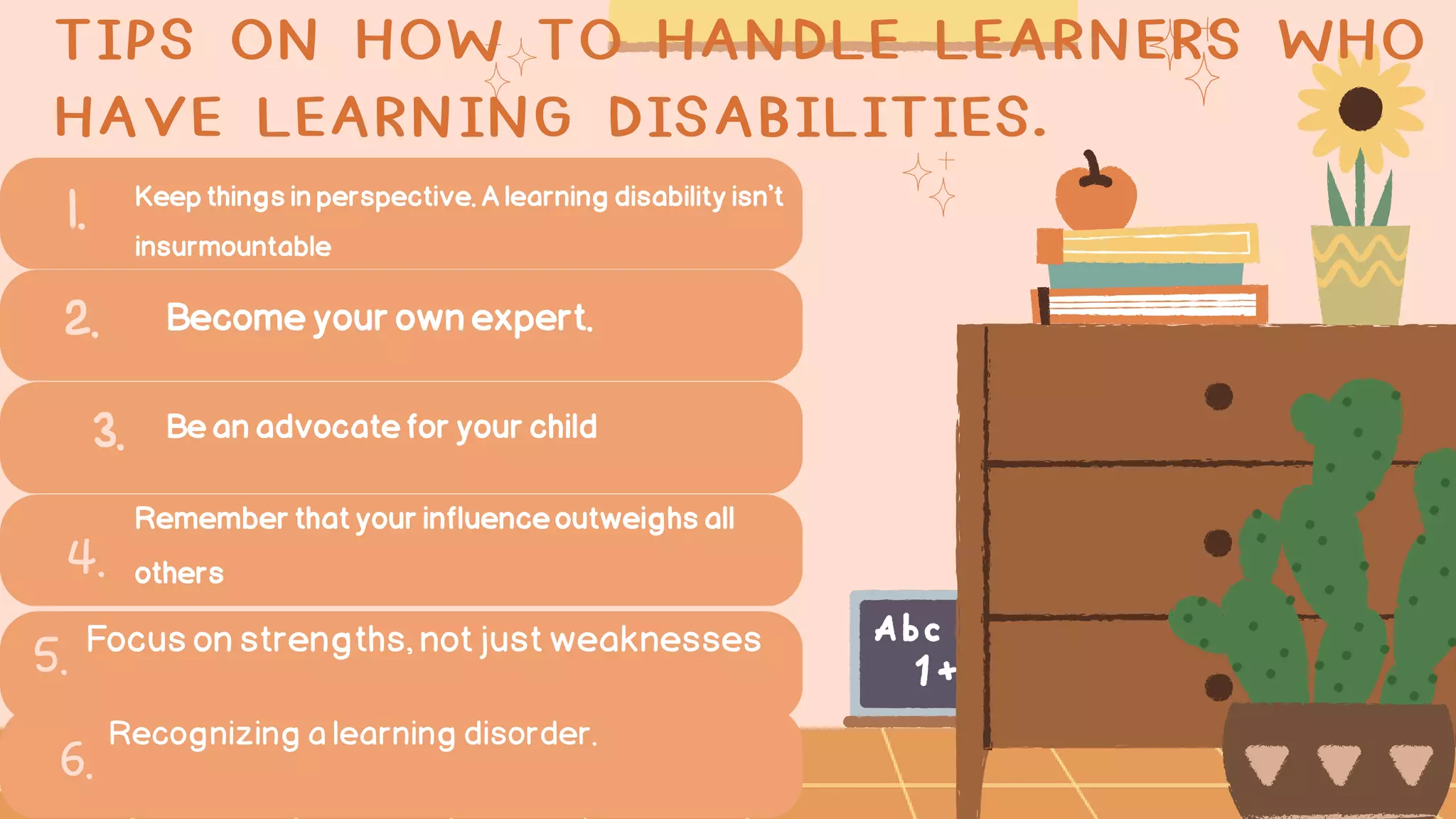
3. Beanadvocateforyourchild
1. Keepthingsinperspective.Alearningdisabilityisn't
insurmountable
2. Becomeyourownexpert.
TIPS ON HOW TO HANDLE LEARNERS WHO
HAVE LEARNING DISABILITIES.
Rememberthatyourinfluenceoutweighsall
others
Focusonstrengths,notjustweaknesses
Recognizingalearningdisorder.
4.
5.
6.
The class will be divided into Three groups.
each group will be given a task, a "Role Play"
the role play is all about the 3 kinds of Learning
Disabilities.
You are about to act on how to handle if you
have students having;
GROUP 1-Dyslexia.
GROUP 2- Dysgraphia
GROUP 3- Dyscalculia
ASSESSMENT
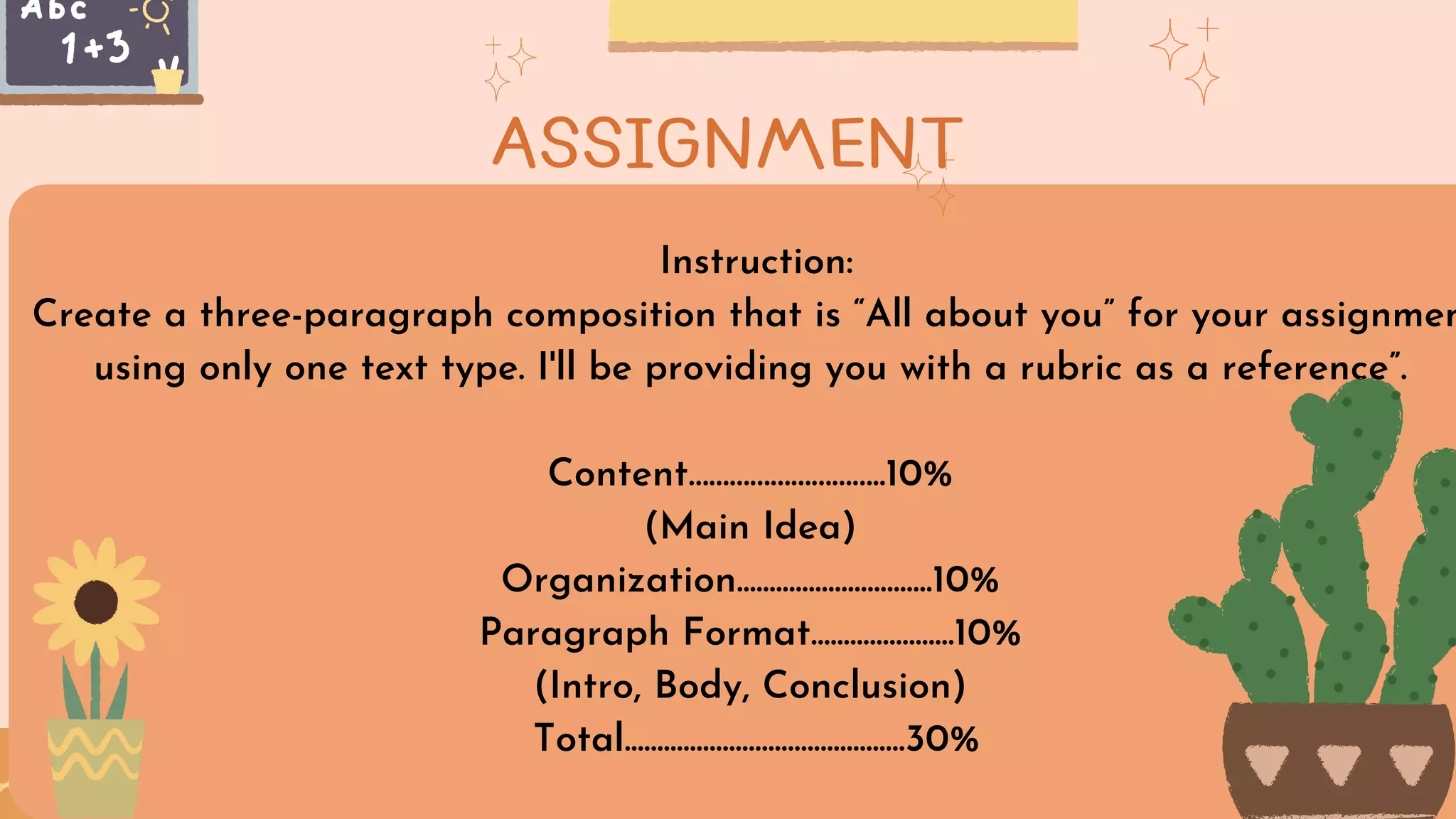
Instruction:
Create a three-paragraph composition that is “All about you” for your assignmen
using only one text type. I'll be providing you with a rubric as a reference”.
Content………………………..10%
(Main Idea)
Organization..............................10%
Paragraph Format......................10%
(Intro, Body, Conclusion)
Total...........................................30%
ASSIGNMENT
REFERENCES
>https://www.helpguide.org/articles/autism-> learning-
disabilities/helping-children-with-learning-disabilities.htm
> https://www.youtube.com/watch?v=8JN-TPTjxII&t=9s
> https://ldaamerica.org/types-of-learning-disabilities/
https://quizizz.com/admin/quiz/5e7c706486eba5001b2177
33/learning-disabilities?ctaSource=cta-
quiz_detail_copy_edit&fromPage=admin-quizType-id-
slug

Learners with Learning Disabilities