Researchers’ Behaviours, Needs and Expectations: Some Challenges Michael Jubb Research Information Network The Changing Face of Learned and Professional Society Libraries 5 August 2009
Some propositions the volume of research undertaken worldwide has increased, is increasing, and will continue to increase and more of it will be done collaboratively researchers are both producers and consumers of research outputs but they don’t necessarily share the same interests Governments invest in research because they believe it has a positive impact on society and the economy and they want to maximise that impact the costs of research, and of higher education, have increased, are increasing (and ought to be diminished?) cost-effectiveness an increasingly-dominant theme in current economic climate
The Role of Information in Research:  a crude model defining a set of research questions, issues or problems identifying relevant existing knowledge accessing, analysing, and evaluating existing knowledge and data designing a methodology for generating new knowledge applying the methodology and discovering new knowledge combining old and new knowledge to answer research questions and to enhance understanding disseminating the outcomes of research in a form that is both sustainable and retrievable
Information in the Research Process gather evaluate create analyse manage transform present and communicate
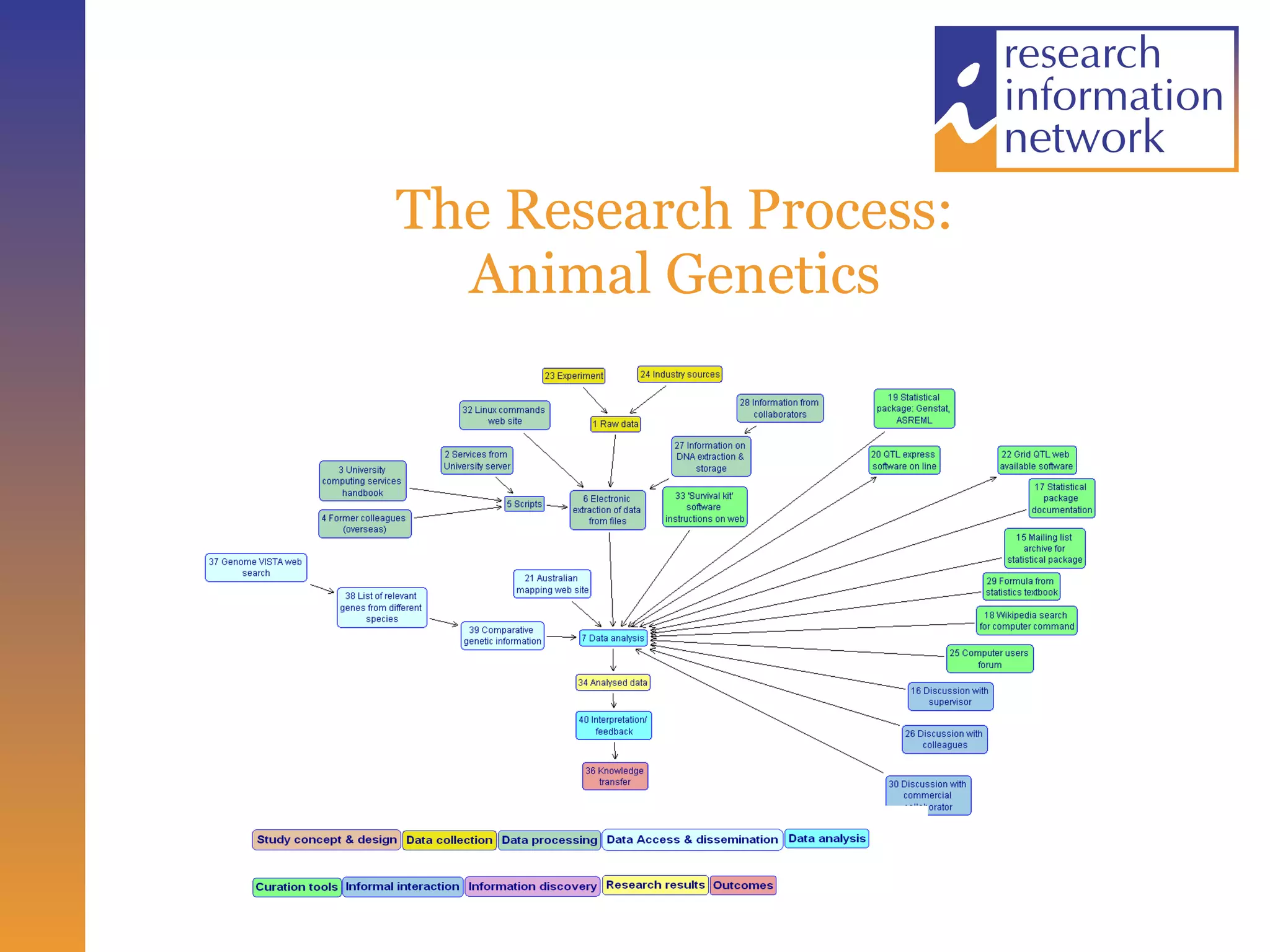
The Research Process: Animal Genetics
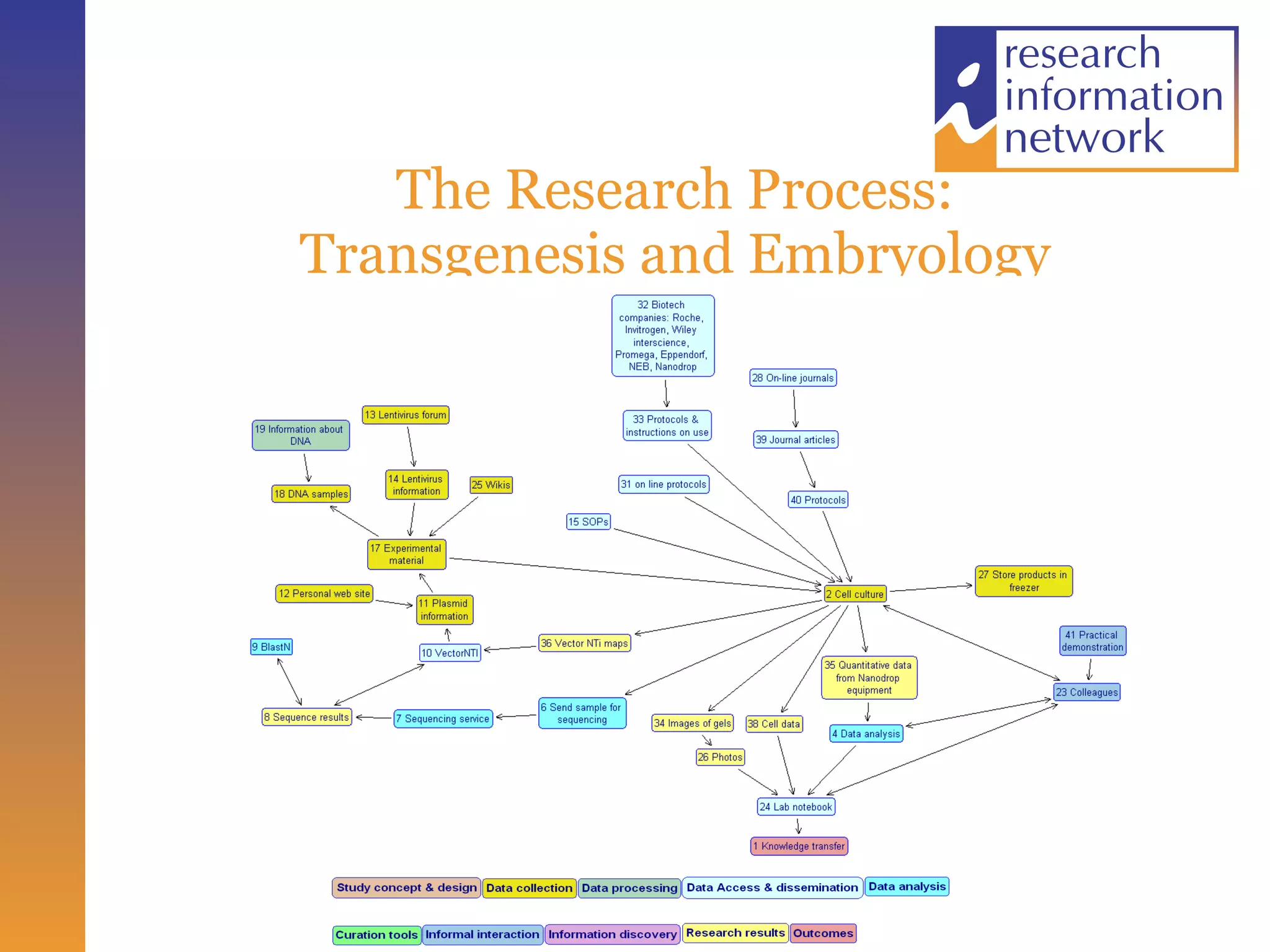
The Research Process: Transgenesis and Embryology
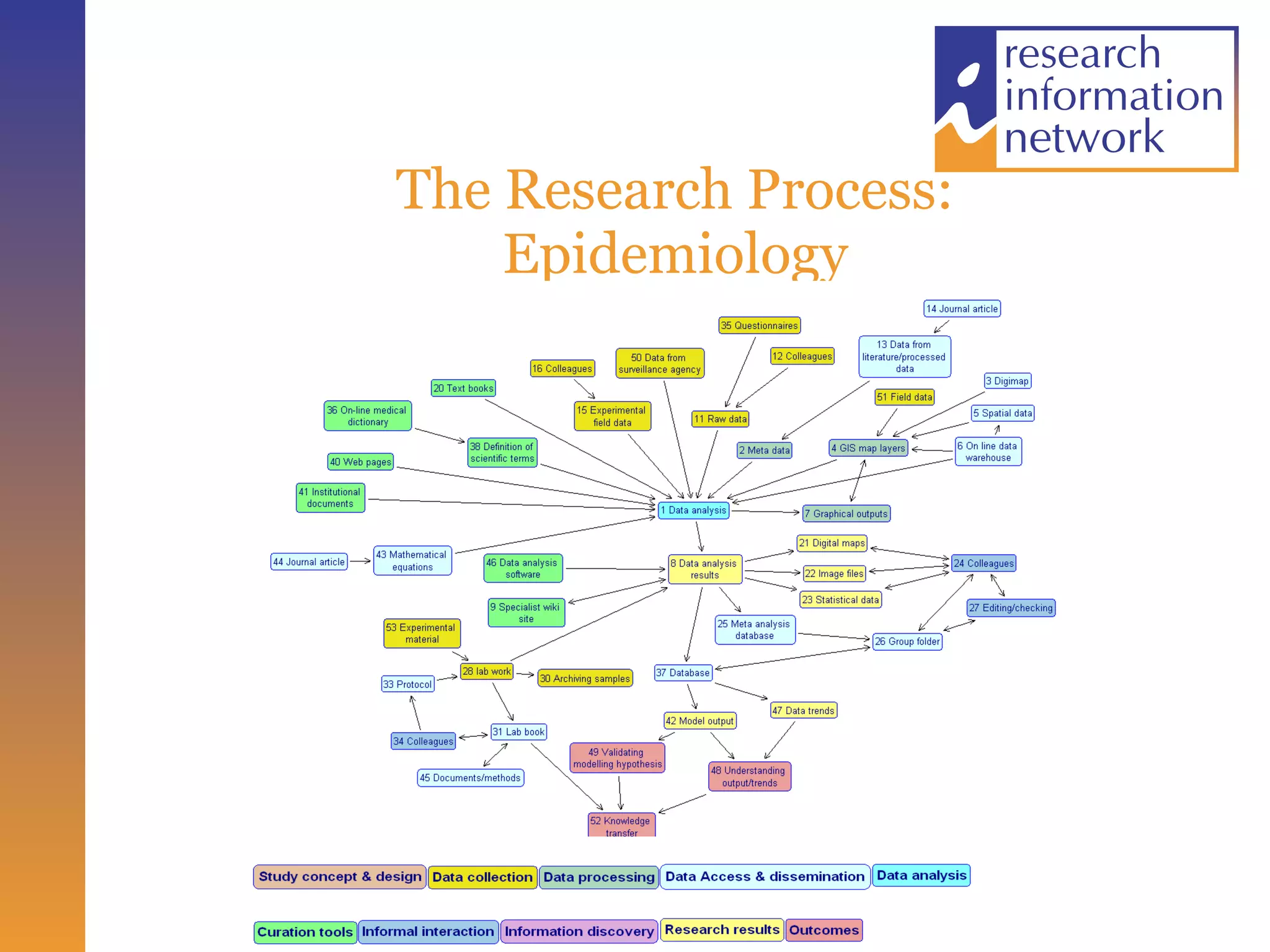
The Research Process: Epidemiology
The Research Process differs even in apparently similar areas of work, and also between teams………
Composition of Research Groups big science vs small science small teams typical in life sciences amorphous and overlapping associations with other teams “ primary research engagements tend to be local” divisions of expertise, labour  and knowledge exchange PI/leader, senior researchers/lecturers, associates, computational specialists, postdocs, PhDs, technicians………  dangers of surveys that look at individual responses divorced from context
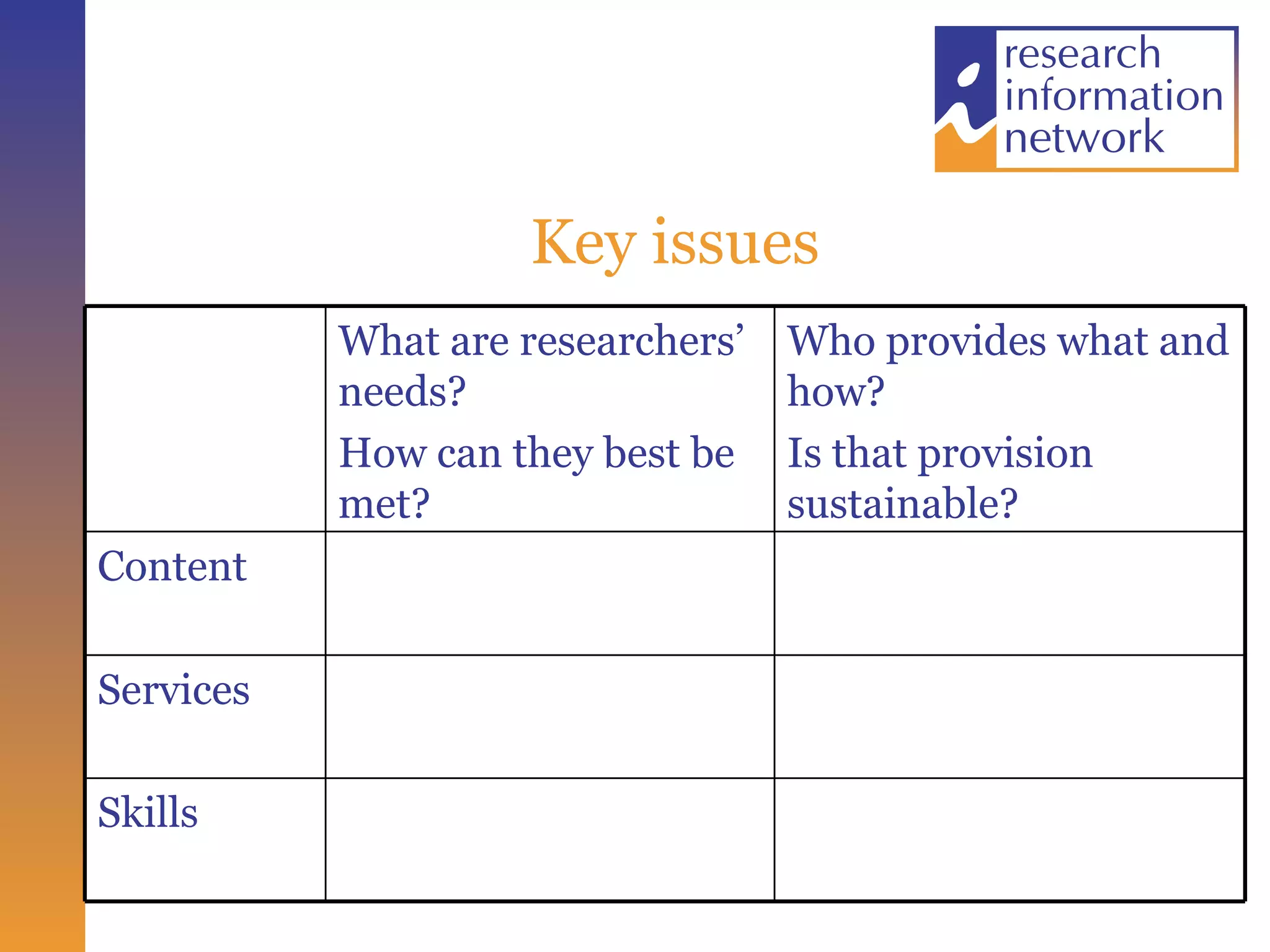
Key issues Skills Services Content Who provides what and how?  Is that provision sustainable?  What are researchers’ needs?  How can they best be met?
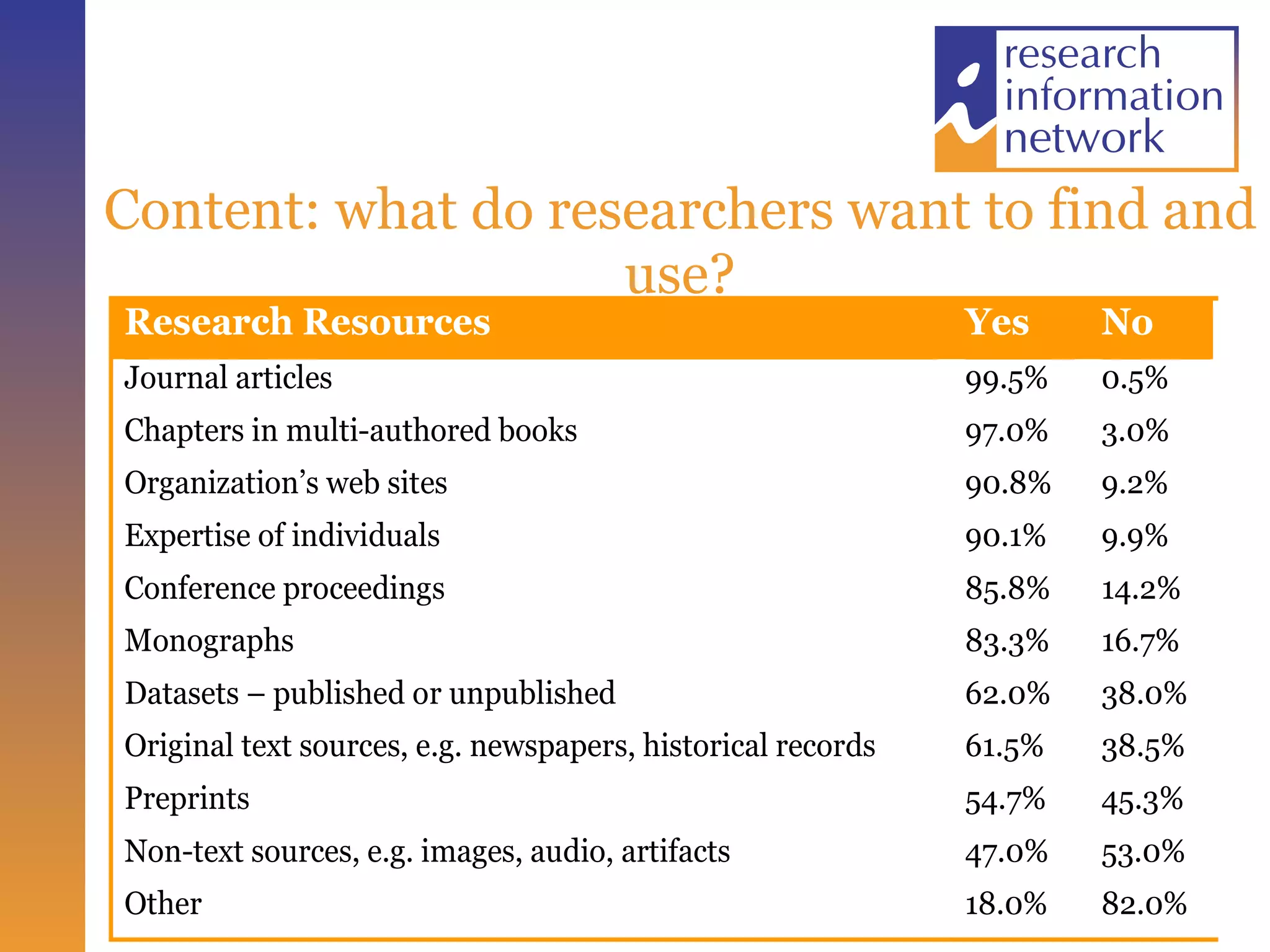
Content: what do researchers want to find and use?
Content: user expectations and needs published and non-”published”  grey literature, reports, working papers data: raw or refined? mine or yours? websites, blogs, wikis, emails quality-assured and non-”quality-assured”? the good-enough source and/or version? pre or post-publication peer review? digital and non-digital perdurance of the book? role of digitisation
Content: who provides? changing roles of  researchers and research institutions personal websites, repositories etc publishers and aggregators direct relationship with authors and readers who aggregates? libraries from ownership to licensing consortia as aggregators?
Content: costs and sustainability continued growth in the volumes of research  constrained university budgets sustainability of the publishing business under challenges of  “ green” OA “ gold” OA
Services: user expectations and needs researchers as creators quality assurance and enhancement distribution and marketing researchers and others as consumers quality assurance search and navigation services access, 24x7 and permanent links and interoperability text mining (published text as data) funders and research institutions assessment and evaluation services
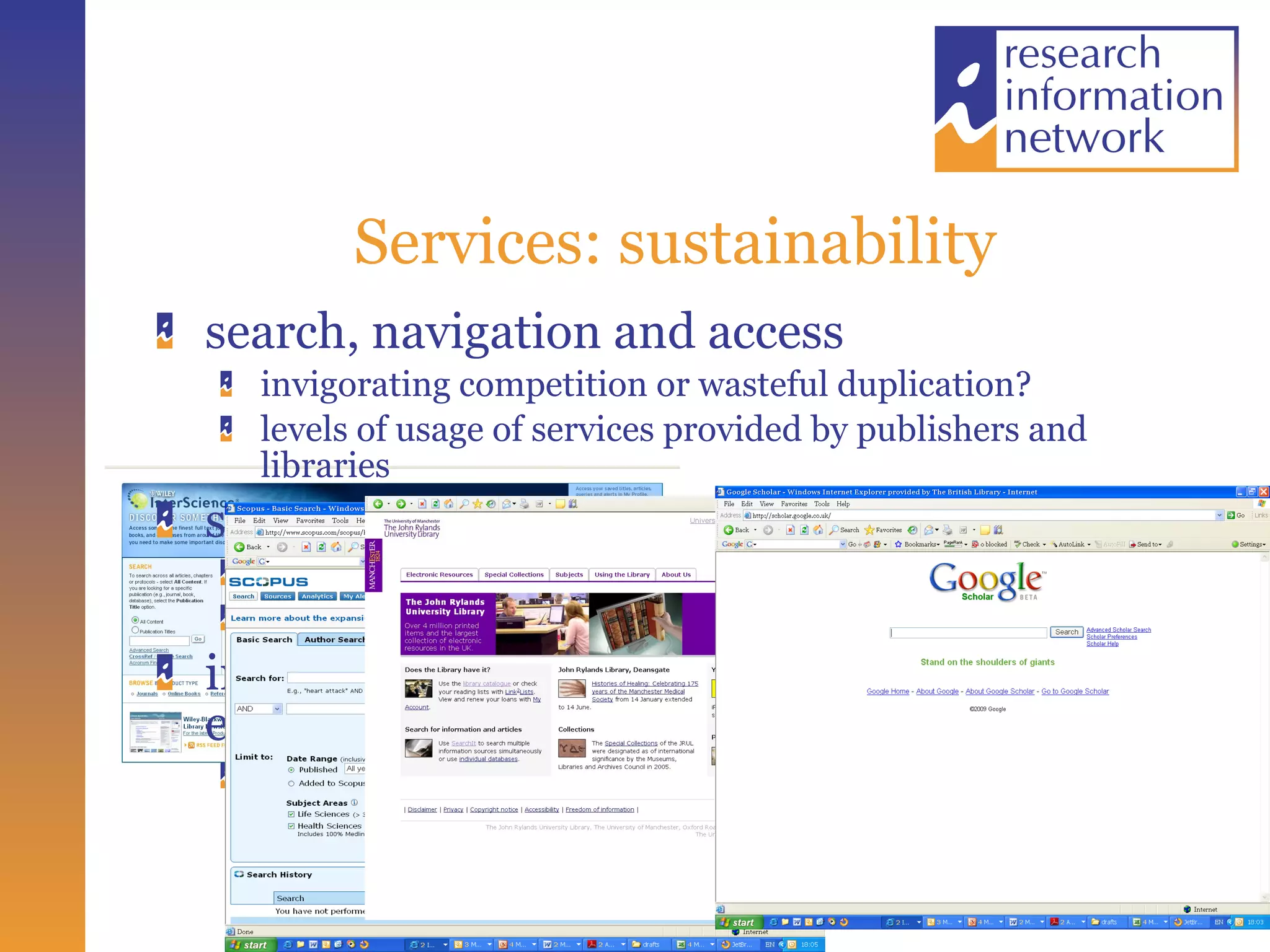
Services: who provides? publishing services still needed? competition from other providers search, navigation, access & preservation  overlapping roles of  search engines  individual libraries and consortia individual publishers, aggregators etc
Services: sustainability search, navigation and access invigorating competition or wasteful duplication? levels of usage of services provided by publishers and libraries sustainability/preservation of digital content roles of publishers and libraries grey literature, websites, blogs, wikis, emails……. increasing interest in assessment and evaluation services RAE/REF in the UK; ERA in Australia
Skills, expertise and competences:  user expectations and needs specialist research skills and specialist information skills what’s easy, and what’s not and how that changes ‘ information literacy’ approaches and their limitations enhanced needs in some areas eg business, management and communication skills; bibliometrics
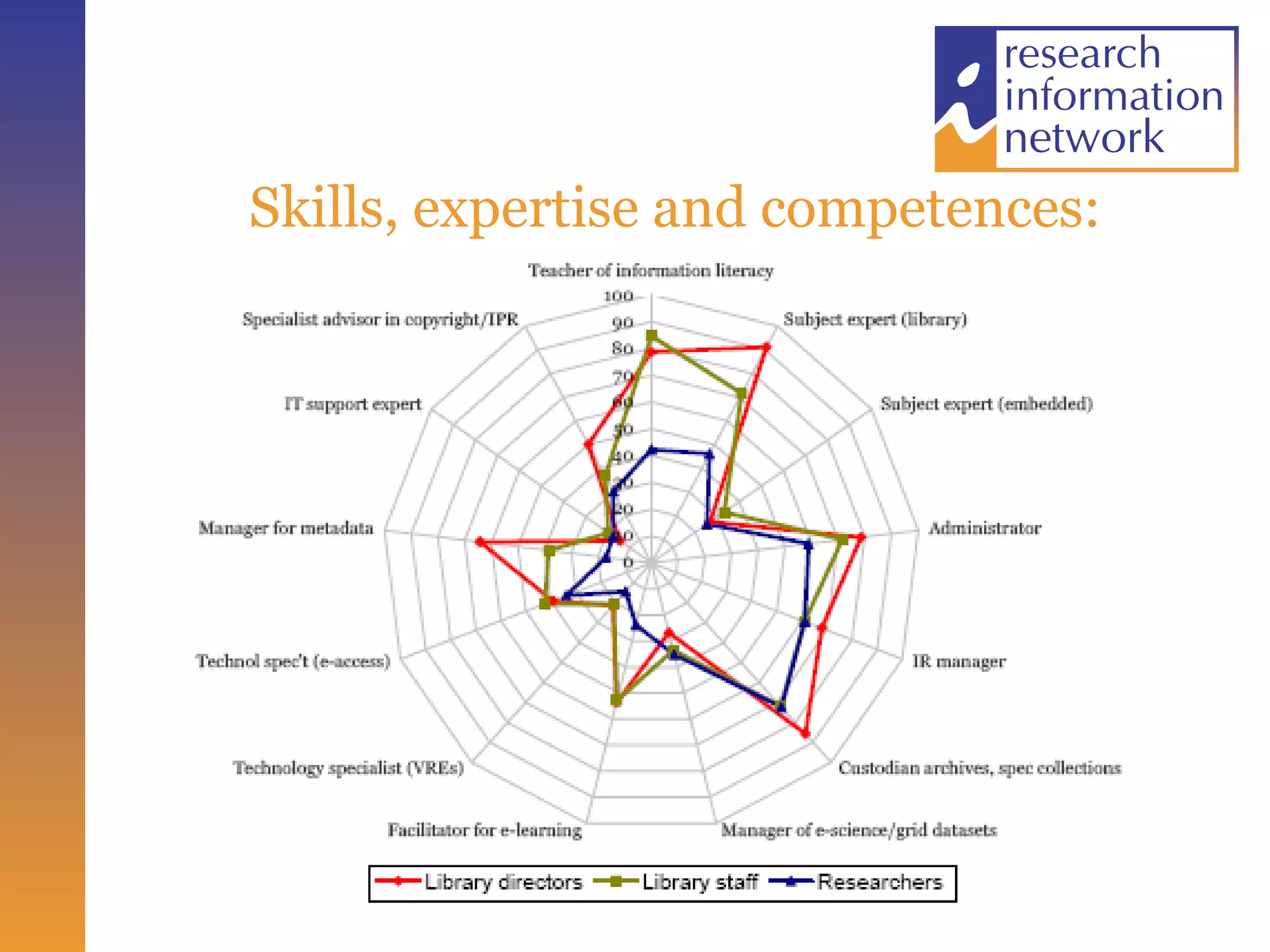
Skills, expertise and competences: who provides? differences of view as between researchers, librarians and publishers changes in views over time de-skilling, up-skilling and complementarity
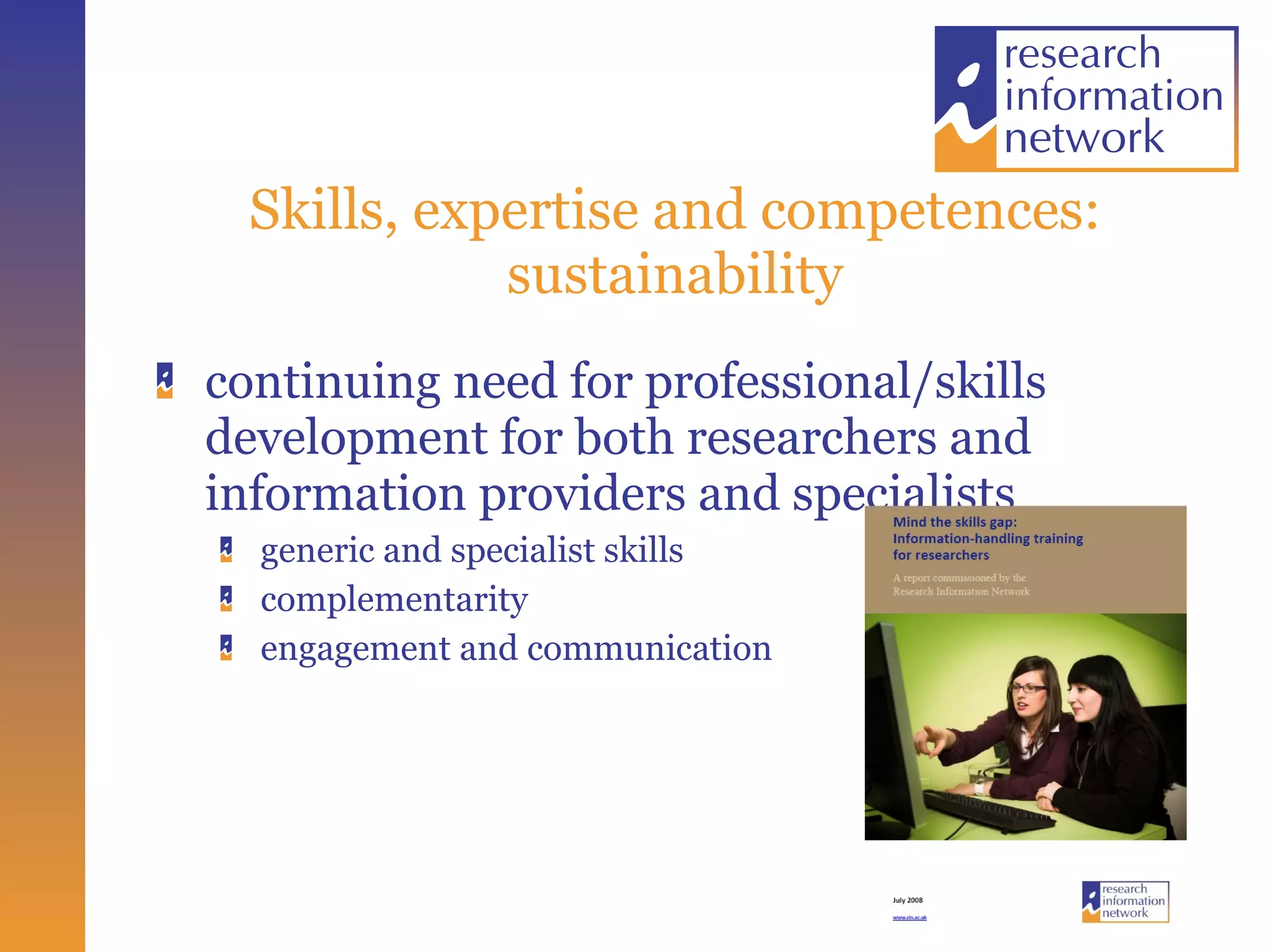
Skills, expertise and competences: sustainability continuing need for professional/skills development for both researchers and information providers and specialists generic and specialist skills complementarity  engagement and communication
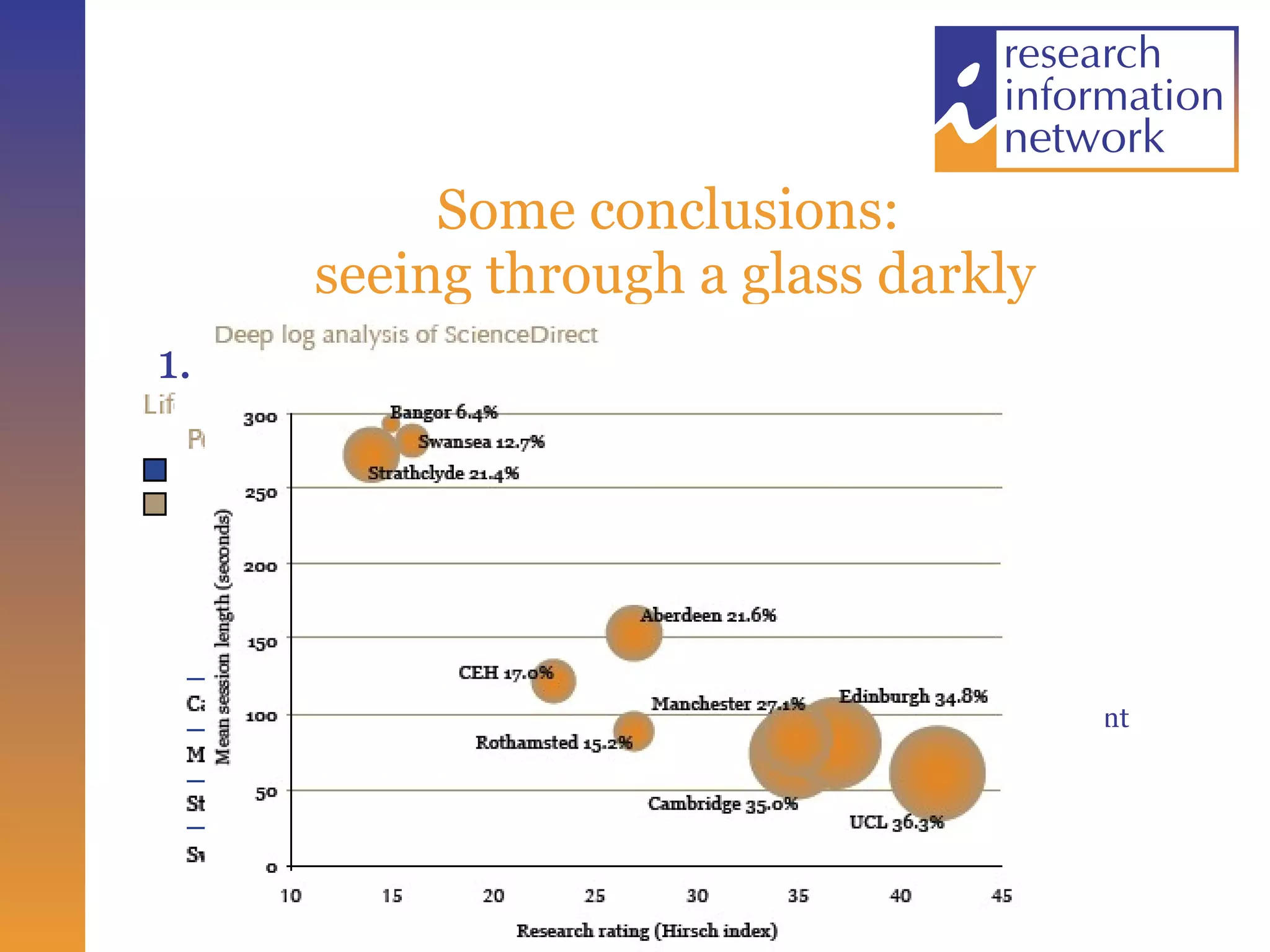
Some conclusions:  seeing through a glass darkly 1. Users  (creators and consumers)  they are (or should be) the drivers but we are only beginning to understand how they use information resources and services imperfect understanding of the digital information environment; but they want content and services that are quick and simple to use  are as comprehensive and interoperable as possible provide for both quality-assured and non-quality-assured content there’s an increasing demand for assessment and evaluation services
Some conclusions:  seeing through a glass darkly 2. Providers growth in concentration of resources and services growth in overlaps (and competition?) between different  types  of provider researchers and research institutions libraries and library consortia publishers and aggregators search and navigation services complementarity and skill sets
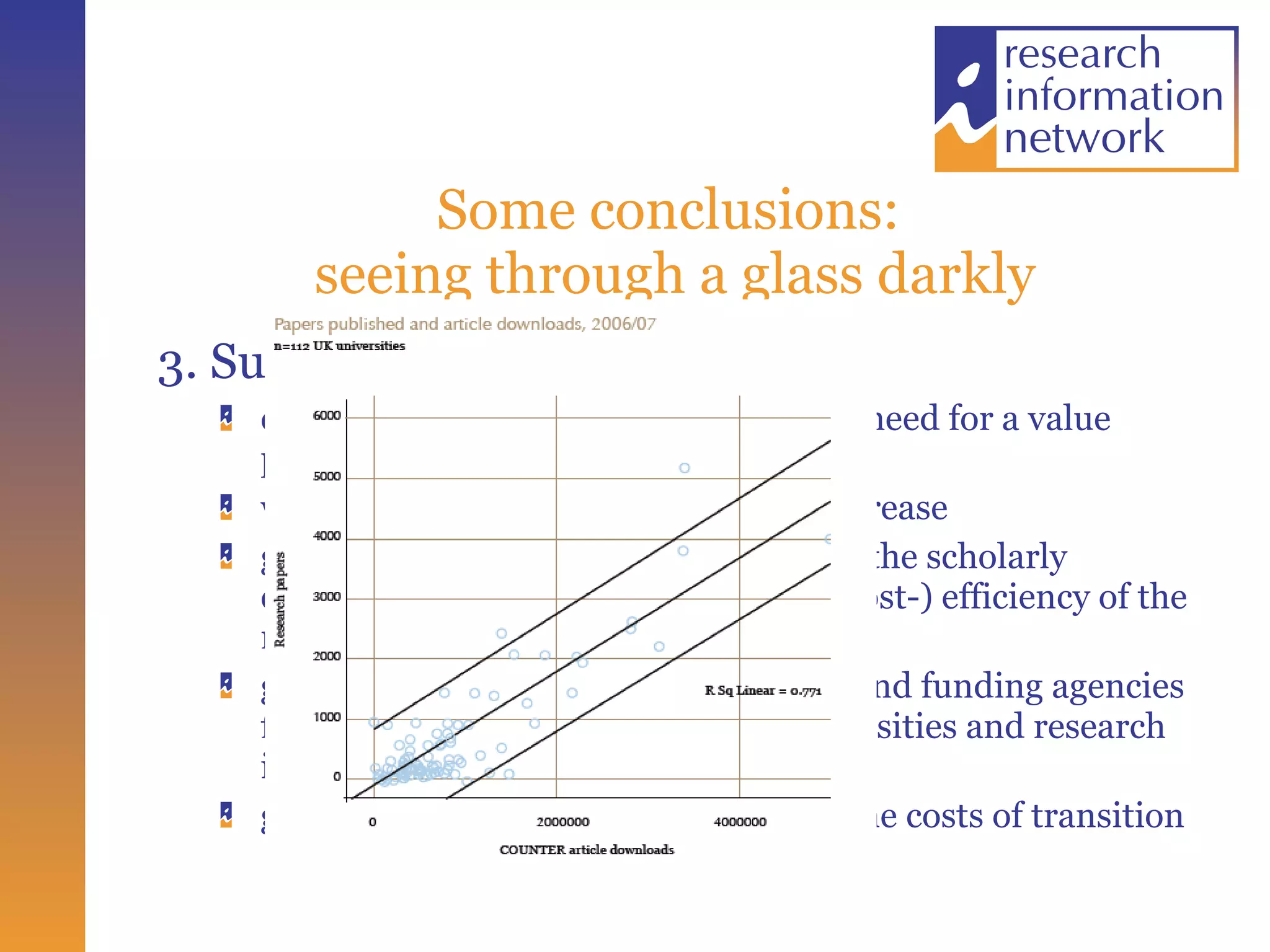
Some conclusions:  seeing through a glass darkly 3. Sustainability constraints on university funding, and need for a value proposition while research volumes continue to increase growing interest in the  overall  costs of the scholarly communications process, and in the (cost-) efficiency of the research process as a whole growth in support from Governments and funding agencies for “gold” OA policies;  and from universities and research institutions for “green” OA growing concerns about the pace and the costs of transition
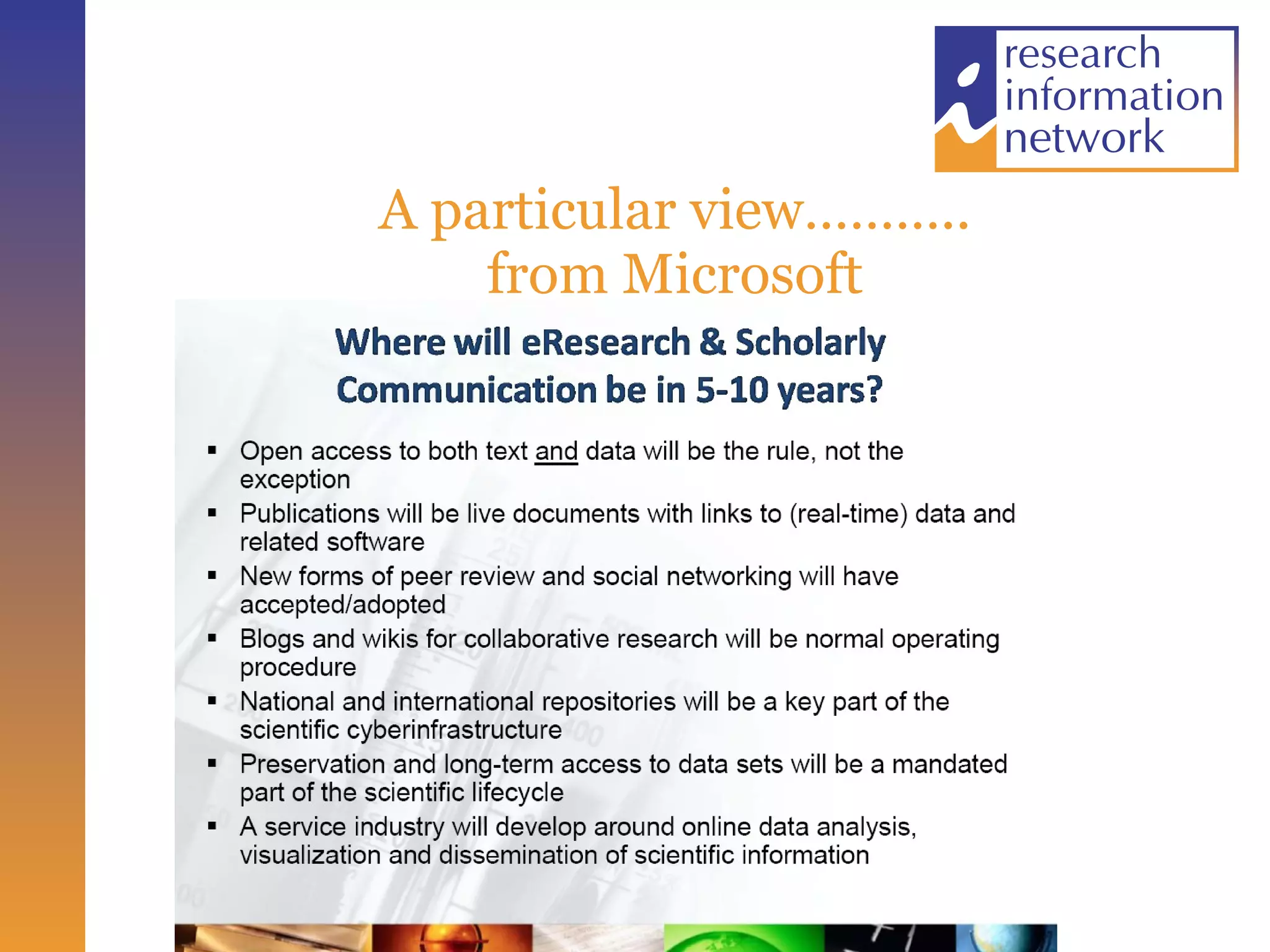
A particular view……….. from Microsoft
Questions?   Thanks Michael Jubb www.rin.ac.uk

Learned Society Libraries 5 Aug 09

  • 1.
    Researchers’ Behaviours, Needsand Expectations: Some Challenges Michael Jubb Research Information Network The Changing Face of Learned and Professional Society Libraries 5 August 2009
  • 2.
    Some propositions thevolume of research undertaken worldwide has increased, is increasing, and will continue to increase and more of it will be done collaboratively researchers are both producers and consumers of research outputs but they don’t necessarily share the same interests Governments invest in research because they believe it has a positive impact on society and the economy and they want to maximise that impact the costs of research, and of higher education, have increased, are increasing (and ought to be diminished?) cost-effectiveness an increasingly-dominant theme in current economic climate
  • 3.
    The Role ofInformation in Research: a crude model defining a set of research questions, issues or problems identifying relevant existing knowledge accessing, analysing, and evaluating existing knowledge and data designing a methodology for generating new knowledge applying the methodology and discovering new knowledge combining old and new knowledge to answer research questions and to enhance understanding disseminating the outcomes of research in a form that is both sustainable and retrievable
  • 4.
    Information in theResearch Process gather evaluate create analyse manage transform present and communicate
  • 5.
    The Research Process:Animal Genetics
  • 6.
    The Research Process:Transgenesis and Embryology
  • 7.
  • 8.
    The Research Processdiffers even in apparently similar areas of work, and also between teams………
  • 9.
    Composition of ResearchGroups big science vs small science small teams typical in life sciences amorphous and overlapping associations with other teams “ primary research engagements tend to be local” divisions of expertise, labour and knowledge exchange PI/leader, senior researchers/lecturers, associates, computational specialists, postdocs, PhDs, technicians……… dangers of surveys that look at individual responses divorced from context
  • 10.
    Key issues SkillsServices Content Who provides what and how? Is that provision sustainable? What are researchers’ needs? How can they best be met?
  • 11.
    Content: what doresearchers want to find and use?
  • 12.
    Content: user expectationsand needs published and non-”published” grey literature, reports, working papers data: raw or refined? mine or yours? websites, blogs, wikis, emails quality-assured and non-”quality-assured”? the good-enough source and/or version? pre or post-publication peer review? digital and non-digital perdurance of the book? role of digitisation
  • 13.
    Content: who provides?changing roles of researchers and research institutions personal websites, repositories etc publishers and aggregators direct relationship with authors and readers who aggregates? libraries from ownership to licensing consortia as aggregators?
  • 14.
    Content: costs andsustainability continued growth in the volumes of research constrained university budgets sustainability of the publishing business under challenges of “ green” OA “ gold” OA
  • 15.
    Services: user expectationsand needs researchers as creators quality assurance and enhancement distribution and marketing researchers and others as consumers quality assurance search and navigation services access, 24x7 and permanent links and interoperability text mining (published text as data) funders and research institutions assessment and evaluation services
  • 16.
    Services: who provides?publishing services still needed? competition from other providers search, navigation, access & preservation overlapping roles of search engines individual libraries and consortia individual publishers, aggregators etc
  • 17.
    Services: sustainability search,navigation and access invigorating competition or wasteful duplication? levels of usage of services provided by publishers and libraries sustainability/preservation of digital content roles of publishers and libraries grey literature, websites, blogs, wikis, emails……. increasing interest in assessment and evaluation services RAE/REF in the UK; ERA in Australia
  • 18.
    Skills, expertise andcompetences: user expectations and needs specialist research skills and specialist information skills what’s easy, and what’s not and how that changes ‘ information literacy’ approaches and their limitations enhanced needs in some areas eg business, management and communication skills; bibliometrics
  • 19.
    Skills, expertise andcompetences: who provides? differences of view as between researchers, librarians and publishers changes in views over time de-skilling, up-skilling and complementarity
  • 20.
    Skills, expertise andcompetences: sustainability continuing need for professional/skills development for both researchers and information providers and specialists generic and specialist skills complementarity engagement and communication
  • 21.
    Some conclusions: seeing through a glass darkly 1. Users (creators and consumers) they are (or should be) the drivers but we are only beginning to understand how they use information resources and services imperfect understanding of the digital information environment; but they want content and services that are quick and simple to use are as comprehensive and interoperable as possible provide for both quality-assured and non-quality-assured content there’s an increasing demand for assessment and evaluation services
  • 22.
    Some conclusions: seeing through a glass darkly 2. Providers growth in concentration of resources and services growth in overlaps (and competition?) between different types of provider researchers and research institutions libraries and library consortia publishers and aggregators search and navigation services complementarity and skill sets
  • 23.
    Some conclusions: seeing through a glass darkly 3. Sustainability constraints on university funding, and need for a value proposition while research volumes continue to increase growing interest in the overall costs of the scholarly communications process, and in the (cost-) efficiency of the research process as a whole growth in support from Governments and funding agencies for “gold” OA policies; and from universities and research institutions for “green” OA growing concerns about the pace and the costs of transition
  • 24.
  • 25.
    Questions? Thanks Michael Jubb www.rin.ac.uk

Editor's Notes

  • #4 This an elaboration of the AHRC’s definition of the research process, based around the defining of research questions, the specification of a research context (why are these qns important and how do they relate to what we already know or understand), the specifying of research methods, and the generation of research outputs So access to and dissemination of information are the lifeblood of the research process; and fundamental to the reasons why research is funded as a public good. And researchers are both producers and users of information; but they are on the whole little interested in exploiting IP in their own work; and worried about the consequences of others (from outside the research community) seeking to exploit their IP Aside 1 : there are tensions in public policy between the support of research as a public good, and many of the measures used by Govt of the success of the UK research base, which tend to focus on things such as patenting, licensing, spin-out companies etc. But some signs of increasing interest in knowledge transfer as distinct from exploitation Aside 2: there are issues about the definition (lack of) of research in copyright law, and the distinction in particular between commercial and non-commercial research. Not wholly in agreement with BA report here, since it seems to me that there is no real distinction in the doing of the research itself; rather, it is how the results of the research are exploited once the research has been done (focus on the post-hoc activity rather than the intention of the researcher in starting off the research)