Strategies for learning with and via technologyTeaching and Learning CentreLingnan UniversityDavid M. Kennedy, PhD甘明德  博士Associate Professor, CDSDirector, TLC
OutlineLingnan ContextIssues around evidenceOpportunitiesSome observationsClosing2Albert EinsteinWe can't solve problems by using the same kind of thinking we used when we created them.
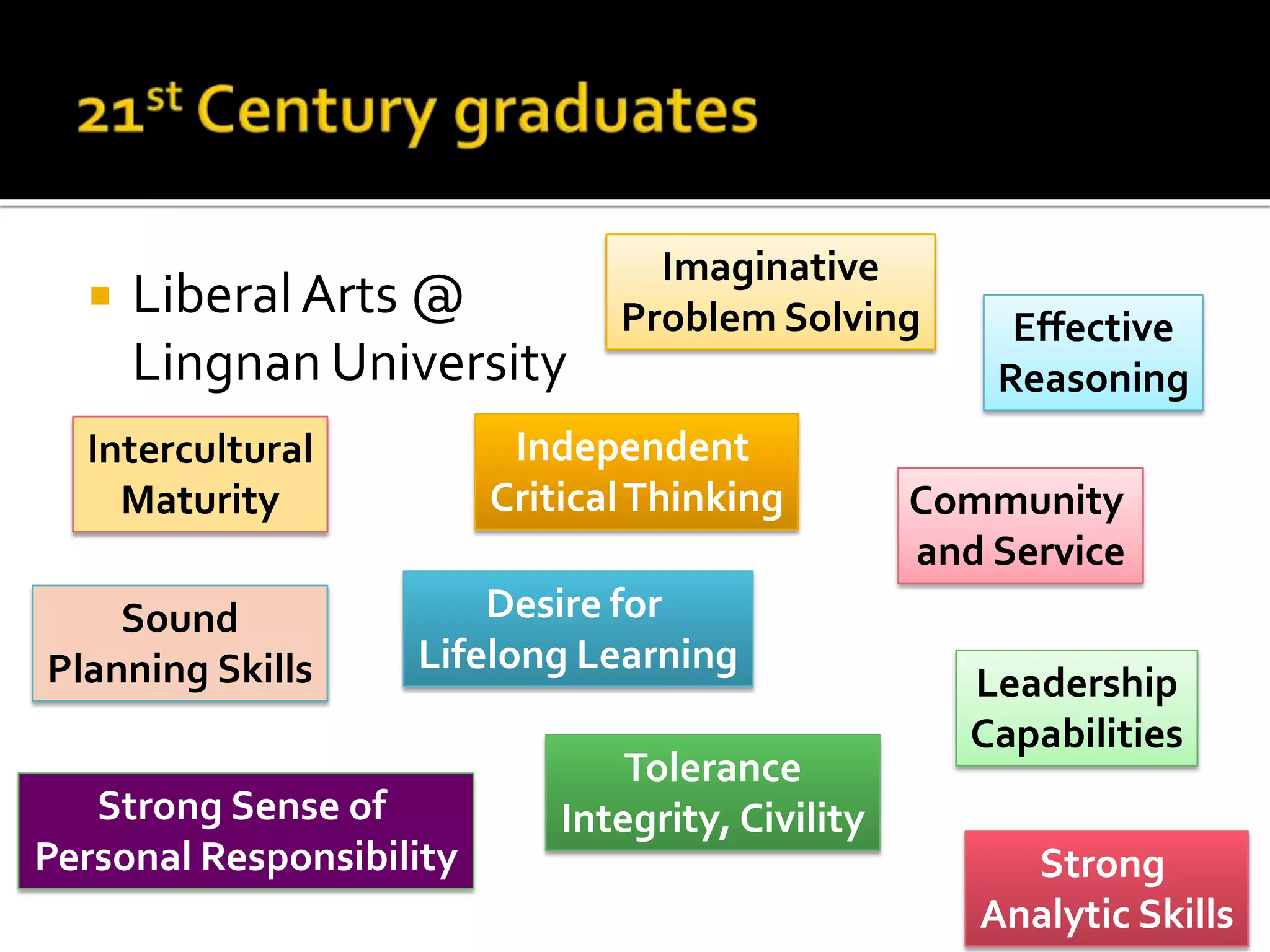
21st Century graduatesImaginativeProblem SolvingLiberal Arts @ Lingnan UniversityEffectiveReasoningIndependent Critical ThinkingInterculturalMaturityCommunity and ServiceDesire for Lifelong LearningSoundPlanning SkillsLeadershipCapabilitiesToleranceIntegrity, CivilityStrong Sense of Personal ResponsibilityStrong Analytic Skills
Policy driven by evidenceCreation of an eLearning strategycurrent activityResearch into student uses of technologyrecent report just completed (later)Trialing alternative(s) to WebCTMoodle and MaharaDevelopment of a workshop programme Developing an Assessment strategy
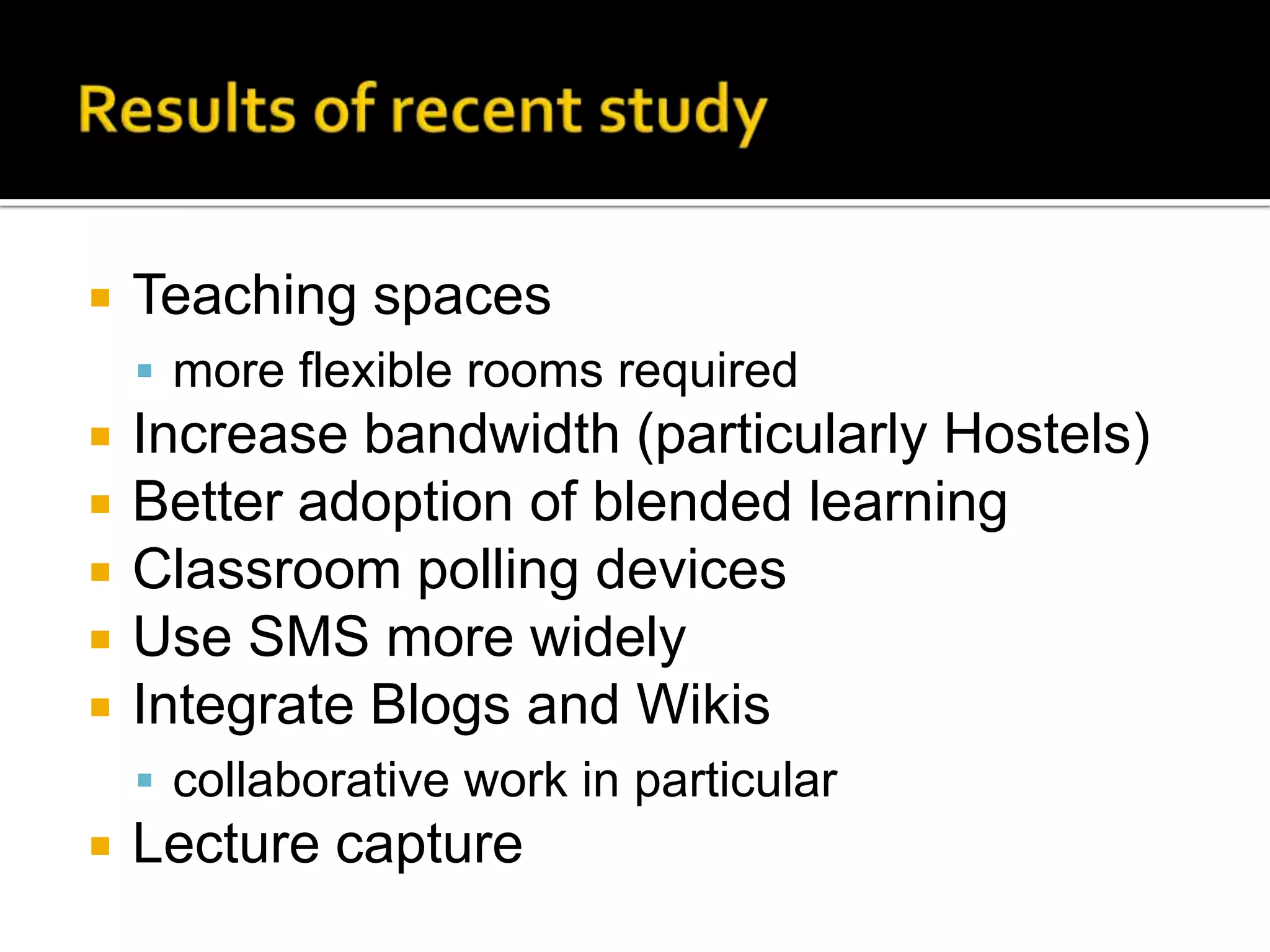
Results of recent studyTeaching spacesmore flexible rooms requiredIncrease bandwidth (particularly Hostels)Better adoption of blended learningClassroom polling devicesUse SMS more widelyIntegrate Blogs and Wikiscollaborative work in particularLecture capture
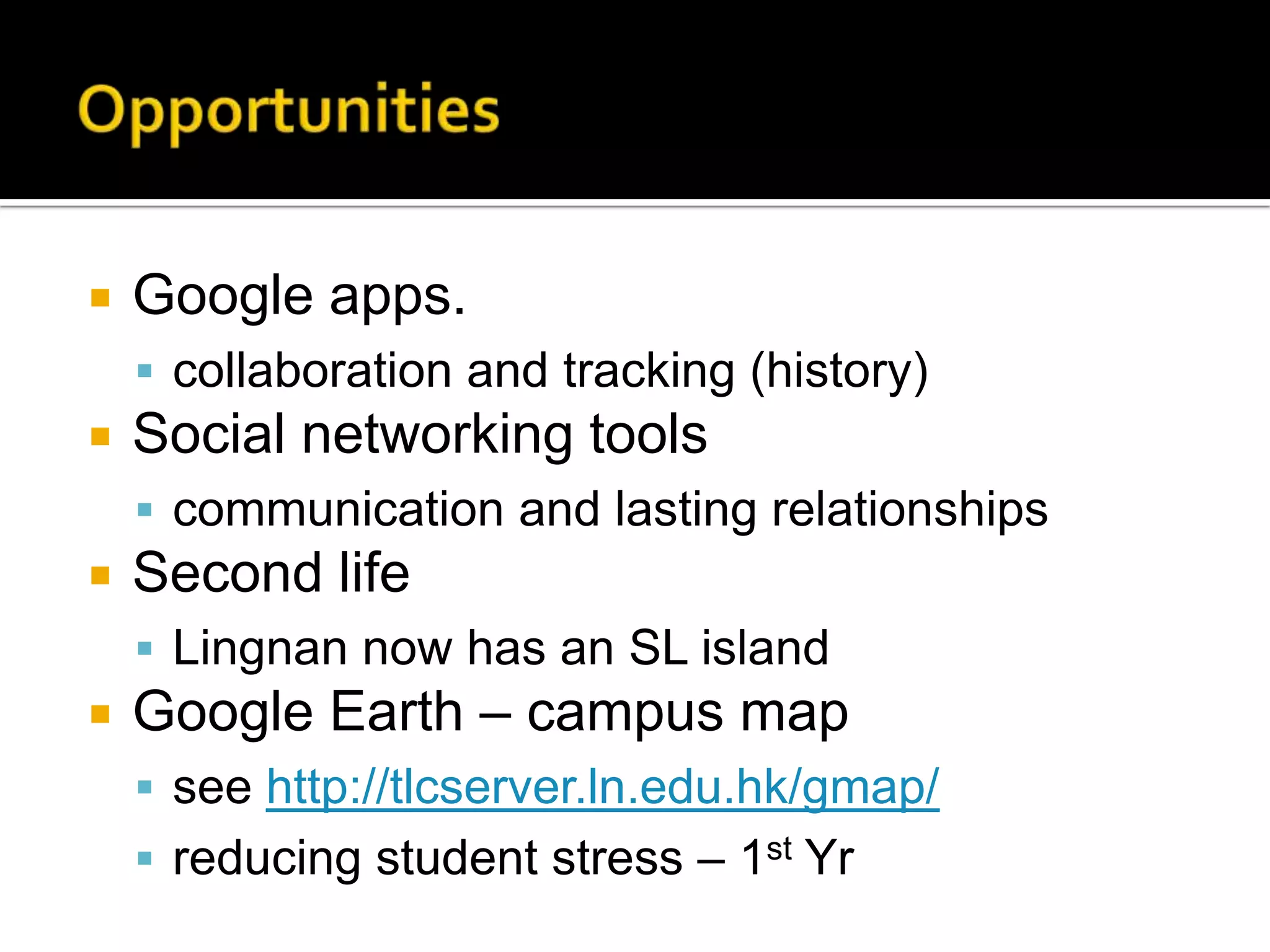
OpportunitiesGoogle apps.collaboration and tracking (history)Social networking toolscommunication and lasting relationshipsSecond lifeLingnan now has an SL islandGoogle Earth – campus mapsee http://tlcserver.ln.edu.hk/gmap/reducing student stress – 1st Yr
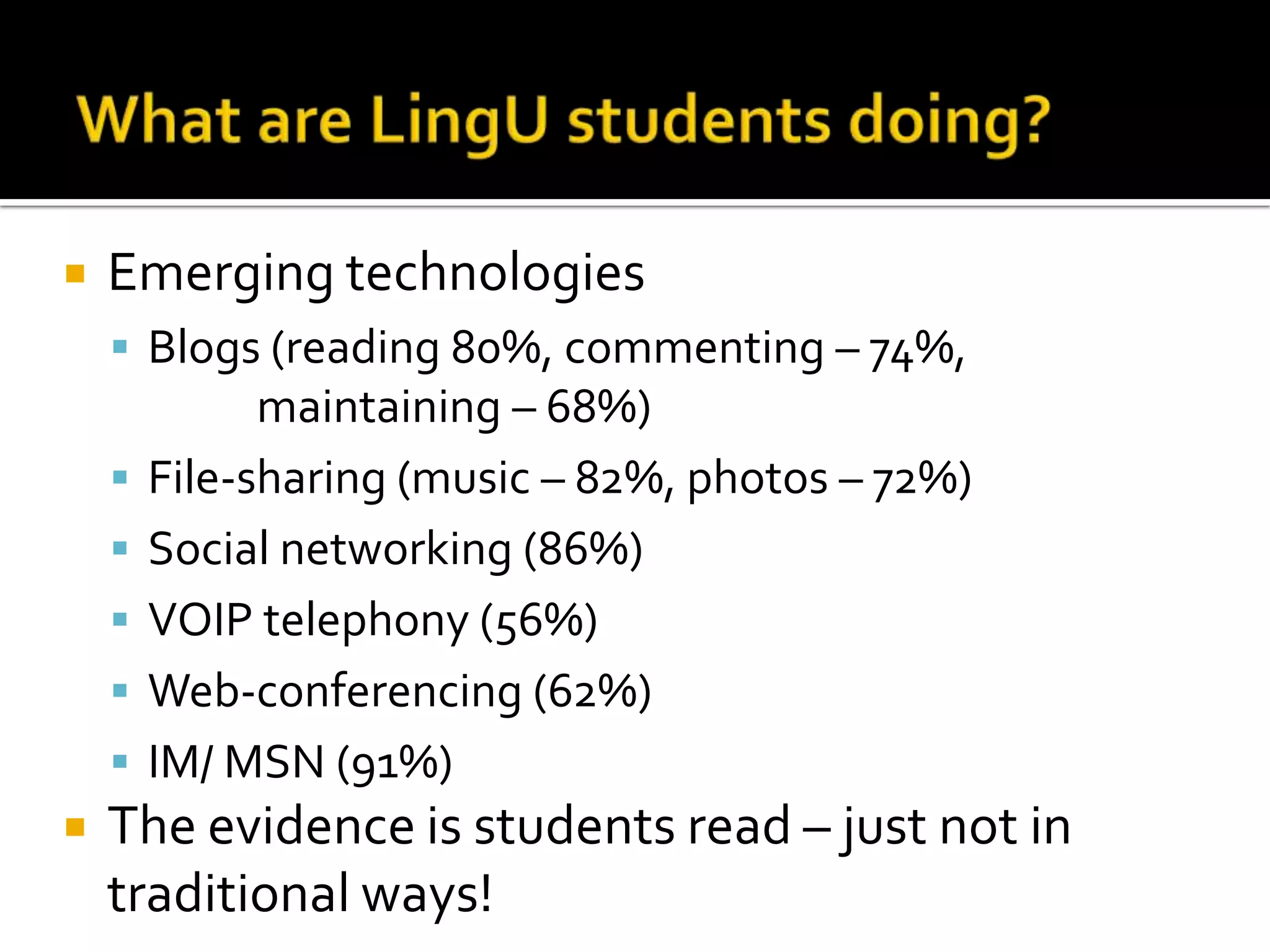
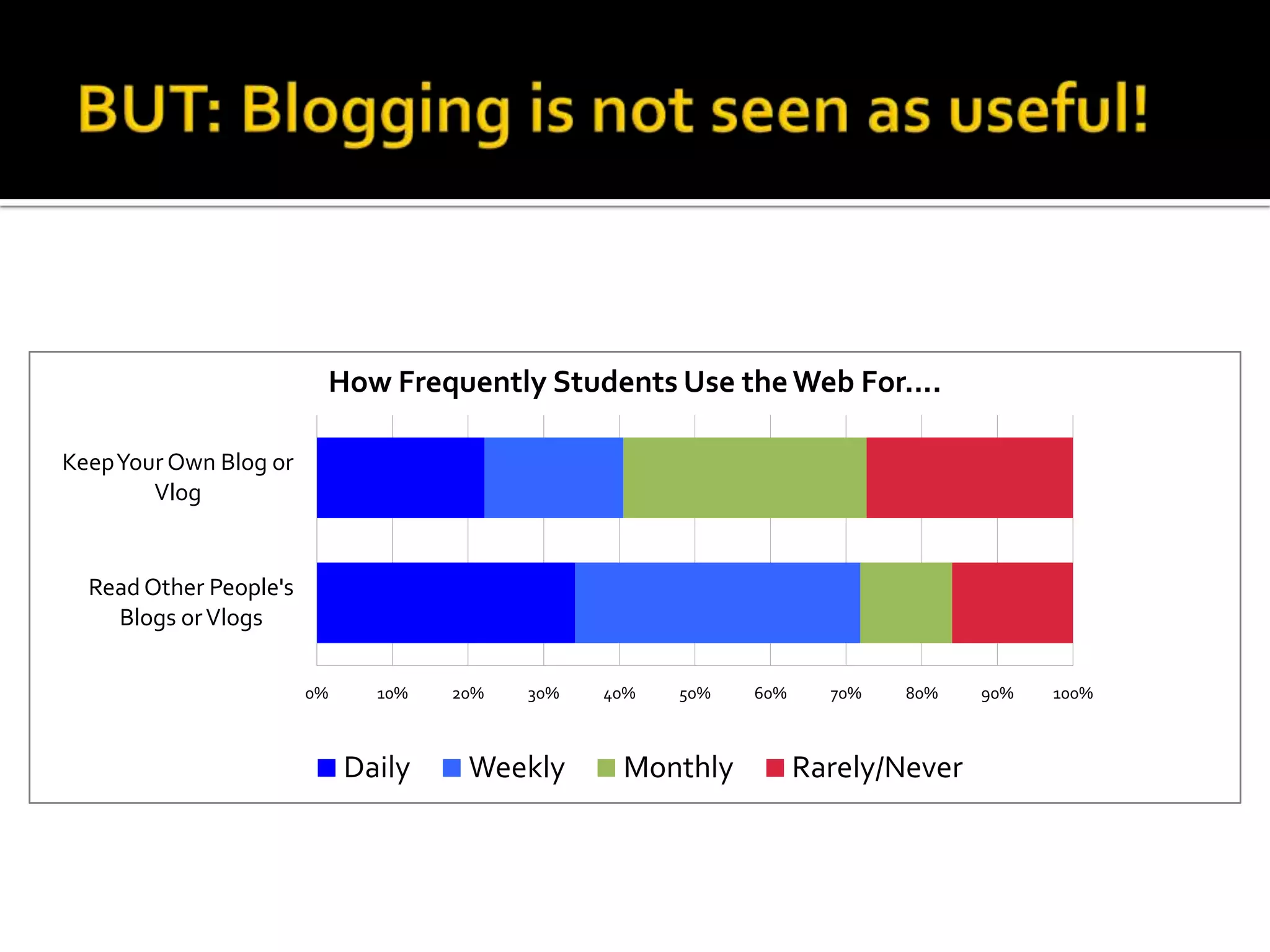
What areLingU students doing?Emerging technologiesBlogs (reading 80%, commenting – 74%,             maintaining – 68%)File-sharing (music – 82%, photos – 72%)Social networking (86%)VOIP telephony (56%)Web-conferencing (62%)IM/ MSN (91%)The evidence is students read – just not in traditional ways!
BUT: Blogging is not seen as useful!
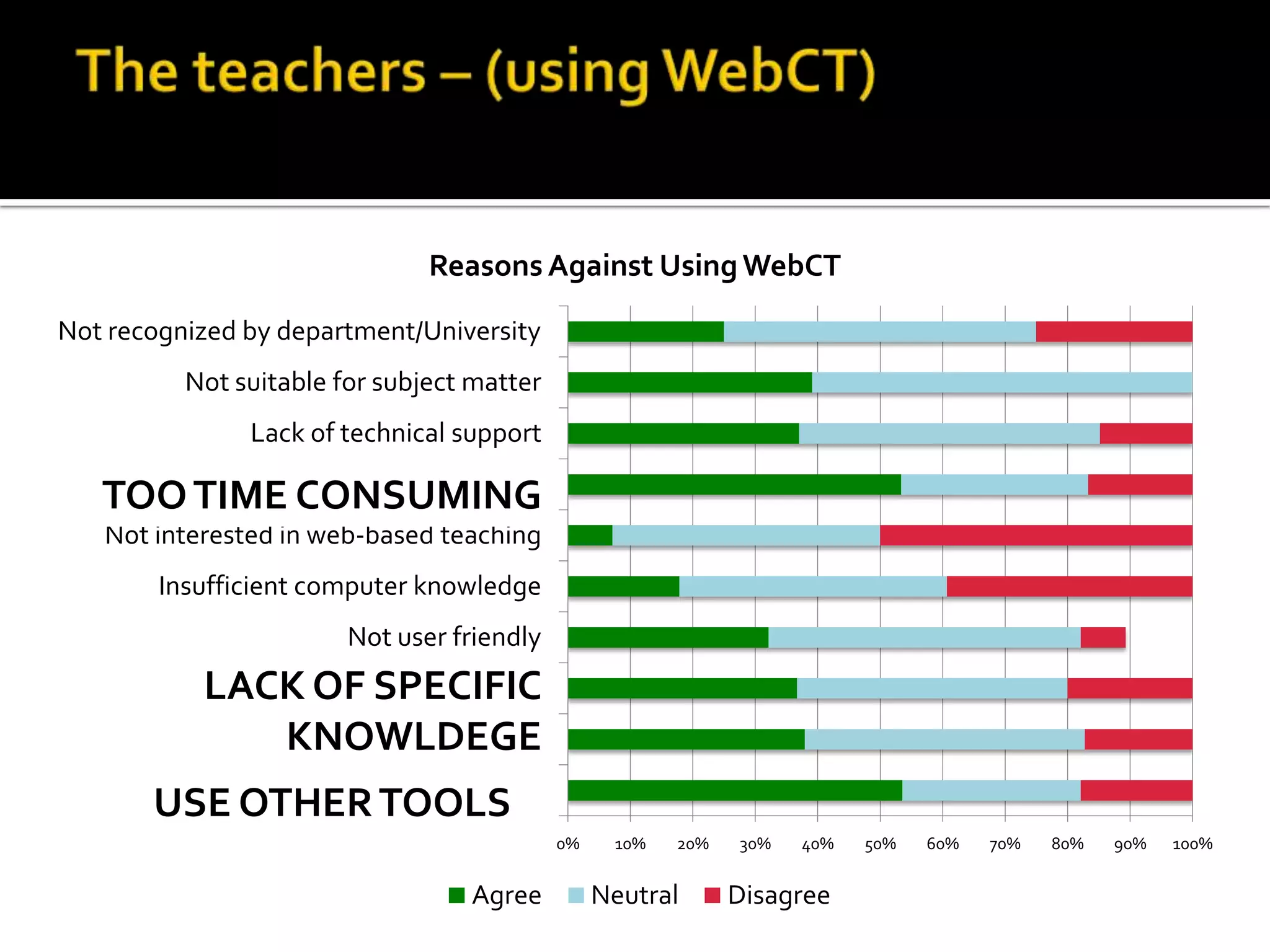
The teachers – (using WebCT)TOO TIME CONSUMINGLACK OF SPECIFIC KNOWLDEGEUSE OTHER TOOLS
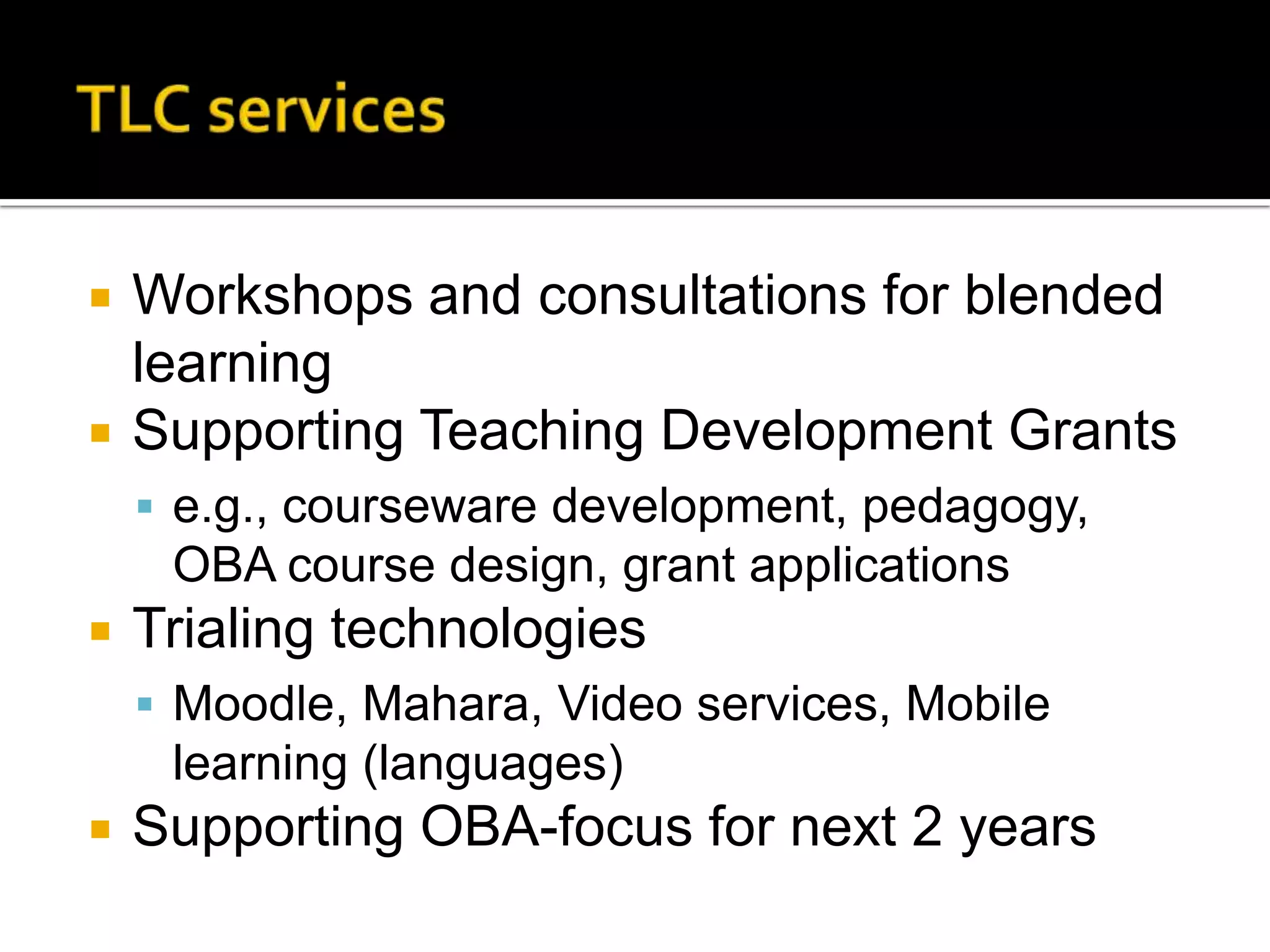
TLC servicesWorkshops and consultations for blended learningSupporting Teaching Development Grantse.g., courseware development, pedagogy, OBA course design, grant applicationsTrialing technologiesMoodle, Mahara, Video services, Mobile learning (languages)Supporting OBA-focus for next 2 years
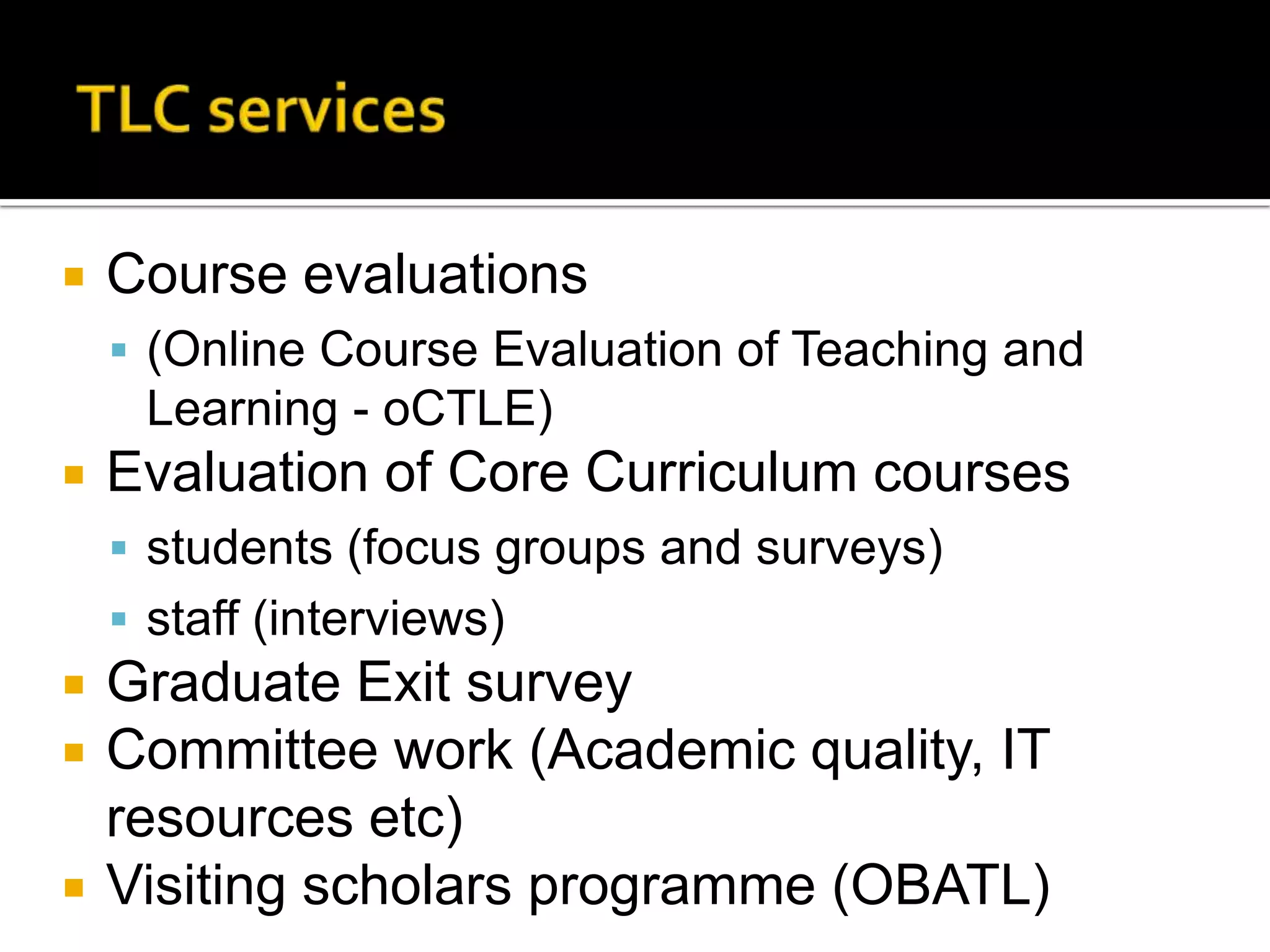
TLC servicesCourse evaluations (Online Course Evaluation of Teaching and Learning - oCTLE)Evaluation of Core Curriculum coursesstudents (focus groups and surveys)staff (interviews)Graduate Exit surveyCommittee work (Academic quality, IT resources etc)Visiting scholars programme (OBATL)
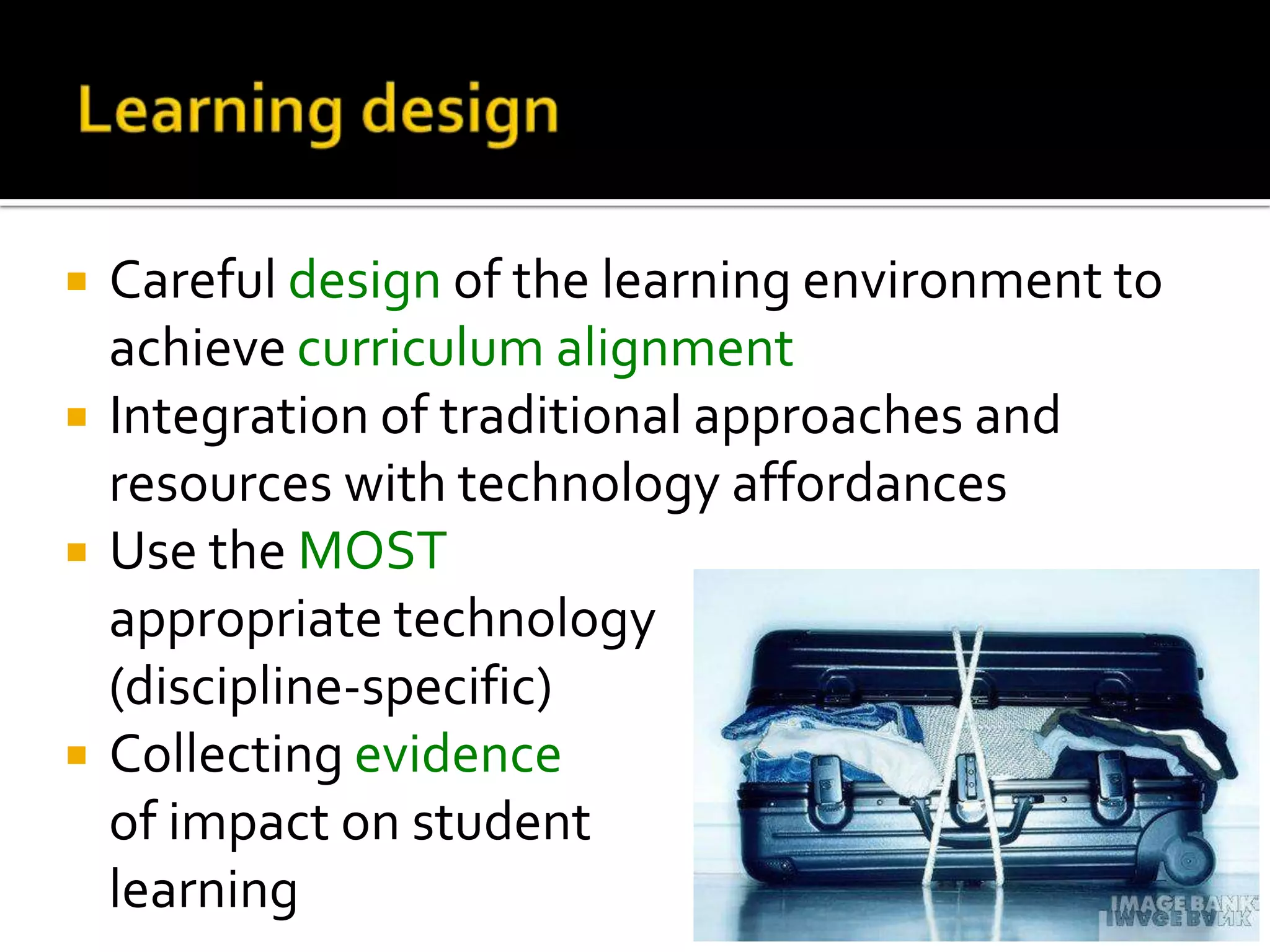
Learning designCareful design of the learning environment to achieve curriculum alignmentIntegration of traditional approaches and resources with technology affordancesUse the MOSTappropriate technology (discipline-specific)Collecting evidenceof impact on studentlearning13
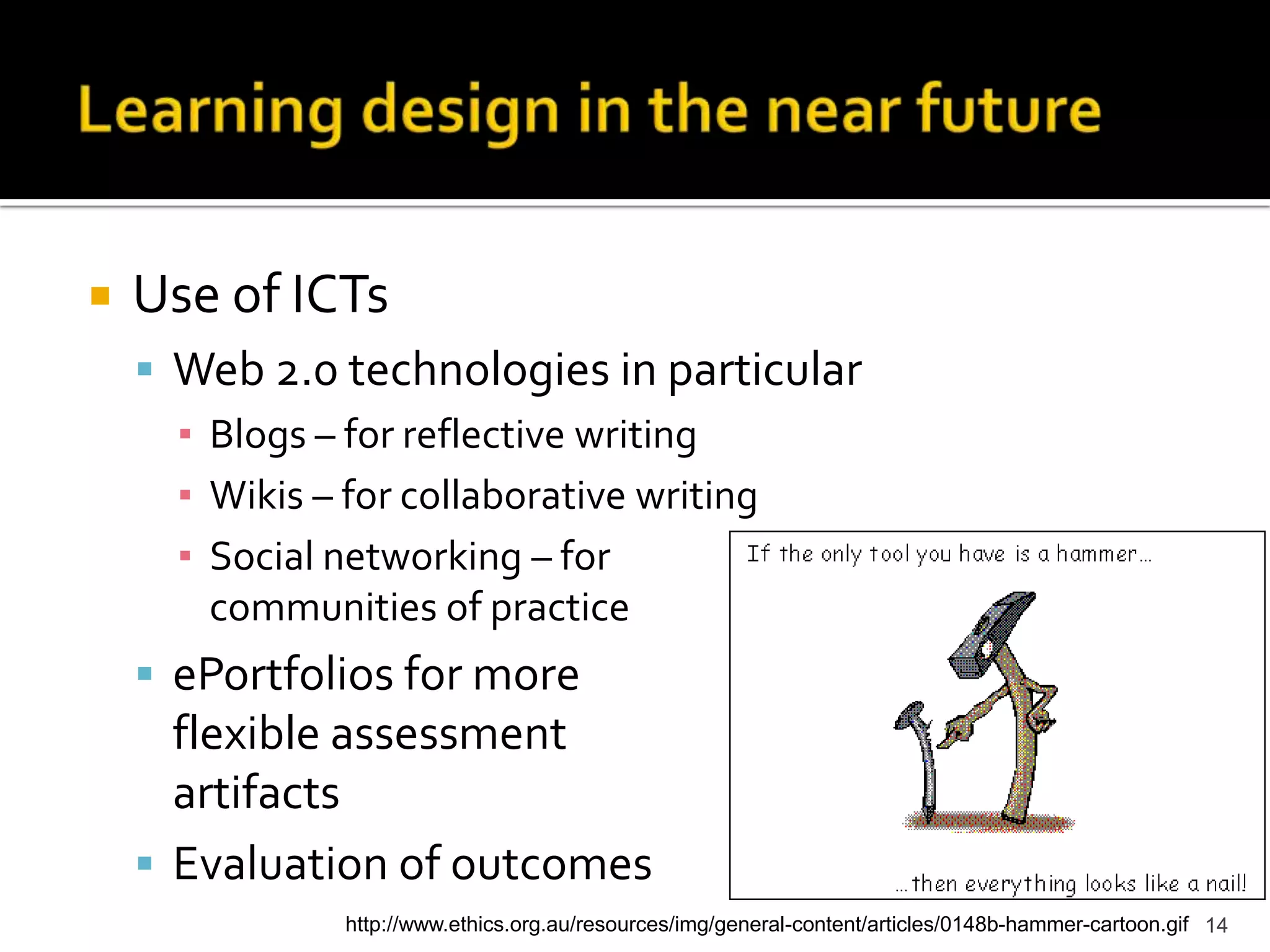
Learning design in the near futureUse of ICTsWeb 2.0 technologies in particularBlogs – for reflective writingWikis – for collaborative writingSocial networking – forcommunities of practiceePortfolios for moreflexible assessmentartifactsEvaluation of outcomes14http://www.ethics.org.au/resources/img/general-content/articles/0148b-hammer-cartoon.gif
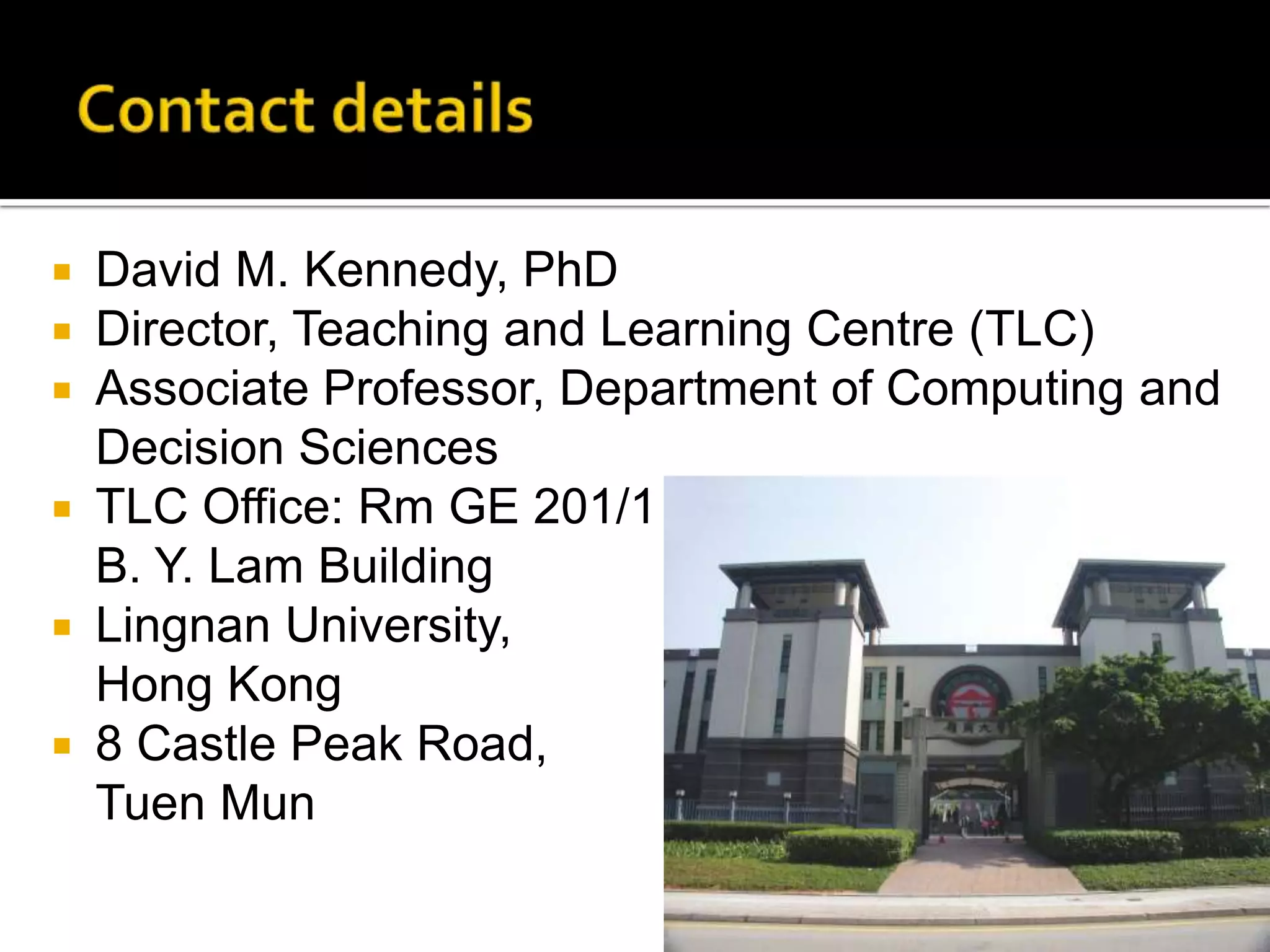
Contact detailsDavid M. Kennedy, PhDDirector, Teaching and Learning Centre (TLC)Associate Professor, Department of Computing and Decision SciencesTLC Office: Rm GE 201/1 B. Y. Lam BuildingLingnan University, Hong Kong8 Castle Peak Road, TuenMun

Leading e-Learning Integration in Higher Education: Challenges and Strategies

  • 1.
    Strategies for learningwith and via technologyTeaching and Learning CentreLingnan UniversityDavid M. Kennedy, PhD甘明德 博士Associate Professor, CDSDirector, TLC
  • 2.
    OutlineLingnan ContextIssues aroundevidenceOpportunitiesSome observationsClosing2Albert EinsteinWe can't solve problems by using the same kind of thinking we used when we created them.
  • 3.
    21st Century graduatesImaginativeProblemSolvingLiberal Arts @ Lingnan UniversityEffectiveReasoningIndependent Critical ThinkingInterculturalMaturityCommunity and ServiceDesire for Lifelong LearningSoundPlanning SkillsLeadershipCapabilitiesToleranceIntegrity, CivilityStrong Sense of Personal ResponsibilityStrong Analytic Skills
  • 4.
    Policy driven byevidenceCreation of an eLearning strategycurrent activityResearch into student uses of technologyrecent report just completed (later)Trialing alternative(s) to WebCTMoodle and MaharaDevelopment of a workshop programme Developing an Assessment strategy
  • 5.
    Results of recentstudyTeaching spacesmore flexible rooms requiredIncrease bandwidth (particularly Hostels)Better adoption of blended learningClassroom polling devicesUse SMS more widelyIntegrate Blogs and Wikiscollaborative work in particularLecture capture
  • 6.
    OpportunitiesGoogle apps.collaboration andtracking (history)Social networking toolscommunication and lasting relationshipsSecond lifeLingnan now has an SL islandGoogle Earth – campus mapsee http://tlcserver.ln.edu.hk/gmap/reducing student stress – 1st Yr
  • 7.
    What areLingU studentsdoing?Emerging technologiesBlogs (reading 80%, commenting – 74%, maintaining – 68%)File-sharing (music – 82%, photos – 72%)Social networking (86%)VOIP telephony (56%)Web-conferencing (62%)IM/ MSN (91%)The evidence is students read – just not in traditional ways!
  • 9.
    BUT: Blogging isnot seen as useful!
  • 10.
    The teachers –(using WebCT)TOO TIME CONSUMINGLACK OF SPECIFIC KNOWLDEGEUSE OTHER TOOLS
  • 11.
    TLC servicesWorkshops andconsultations for blended learningSupporting Teaching Development Grantse.g., courseware development, pedagogy, OBA course design, grant applicationsTrialing technologiesMoodle, Mahara, Video services, Mobile learning (languages)Supporting OBA-focus for next 2 years
  • 12.
    TLC servicesCourse evaluations(Online Course Evaluation of Teaching and Learning - oCTLE)Evaluation of Core Curriculum coursesstudents (focus groups and surveys)staff (interviews)Graduate Exit surveyCommittee work (Academic quality, IT resources etc)Visiting scholars programme (OBATL)
  • 13.
    Learning designCareful designof the learning environment to achieve curriculum alignmentIntegration of traditional approaches and resources with technology affordancesUse the MOSTappropriate technology (discipline-specific)Collecting evidenceof impact on studentlearning13
  • 14.
    Learning design inthe near futureUse of ICTsWeb 2.0 technologies in particularBlogs – for reflective writingWikis – for collaborative writingSocial networking – forcommunities of practiceePortfolios for moreflexible assessmentartifactsEvaluation of outcomes14http://www.ethics.org.au/resources/img/general-content/articles/0148b-hammer-cartoon.gif
  • 15.
    Contact detailsDavid M.Kennedy, PhDDirector, Teaching and Learning Centre (TLC)Associate Professor, Department of Computing and Decision SciencesTLC Office: Rm GE 201/1 B. Y. Lam BuildingLingnan University, Hong Kong8 Castle Peak Road, TuenMun