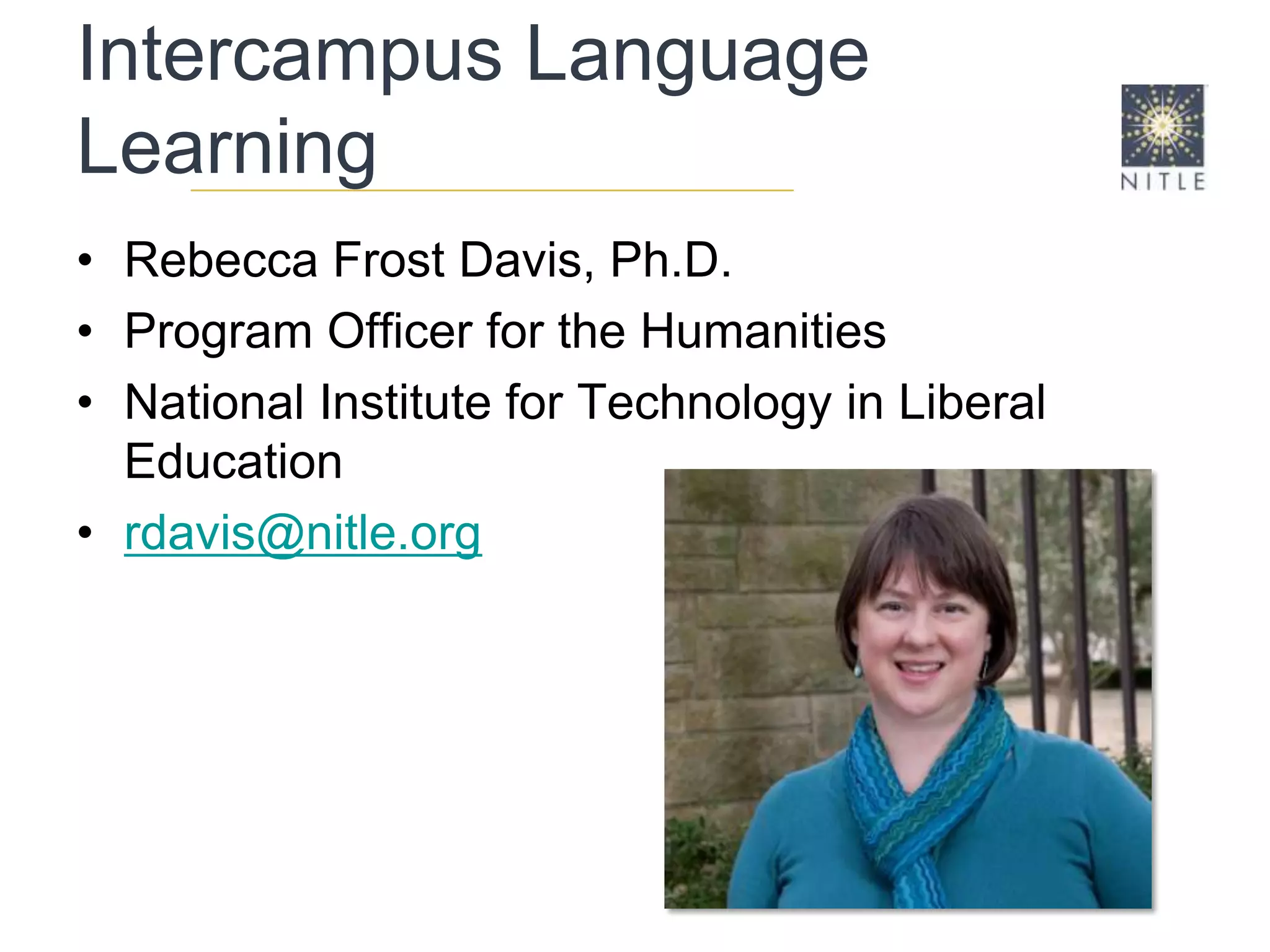
Intercampus Language LearningRebecca Frost Davis, Ph.D.Program Officer for the HumanitiesNational Institute for Technology in Liberal Educationrdavis@nitle.org
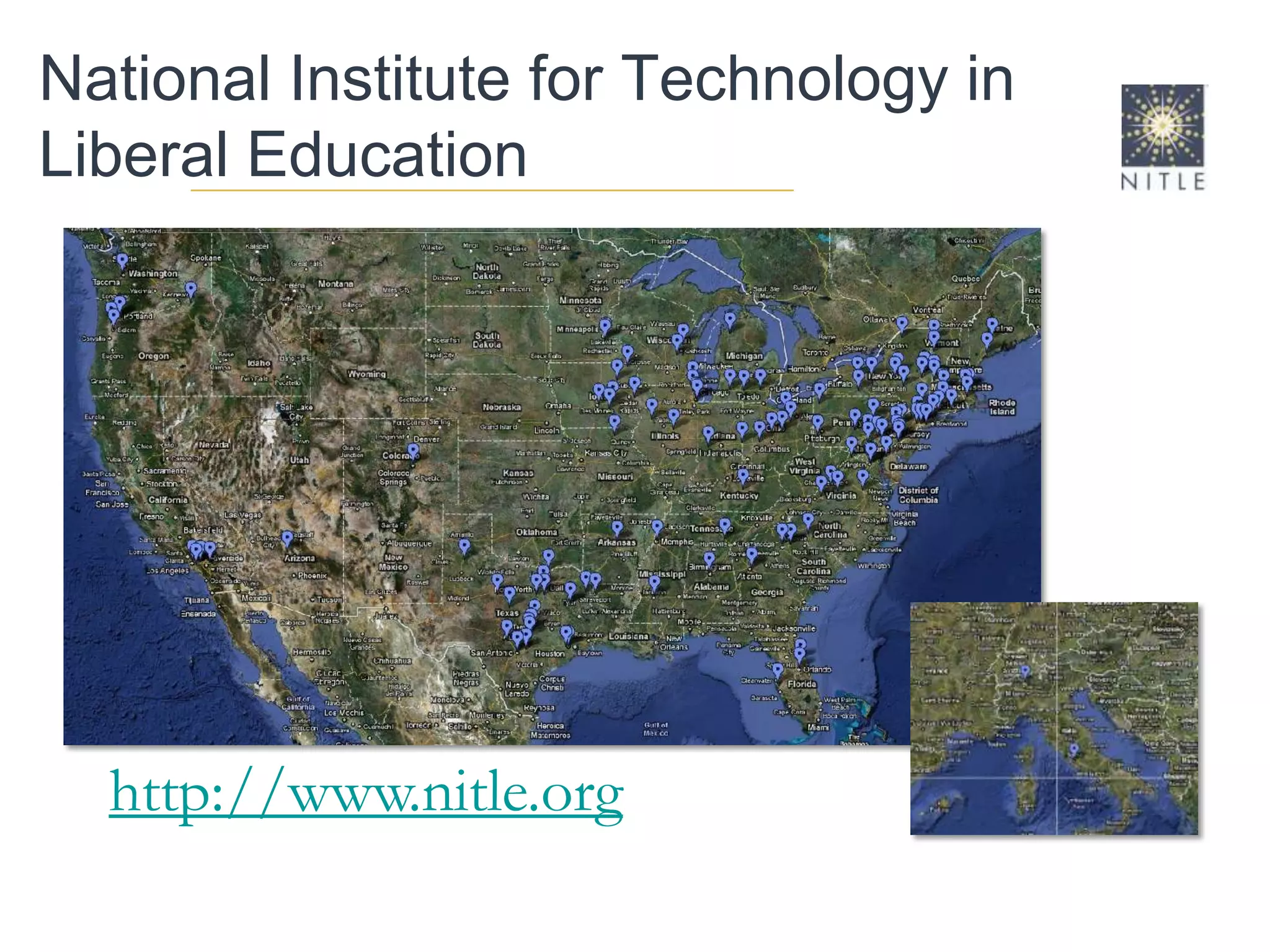
National Institute for Technology in Liberal Educationhttp://www.nitle.org
Intercampus Language Learning Lessons Learned from Previous Experiments Shared Academics: SunoikisisGlobal EducationHigh Definition VideoconferencingCurrent ExperimentsVirtual Language Learning ProjectGlobal Cities ProgramShared Academics project
Case STUdiesShared Academics and Global Education
Shared AcademicsSunoikisis, Virtual Department of Classical Studieshttp://www.sunoikisis.orgIntercampus Team Taught CoursesWeekly live online sessions using desktop videoconferencingRemaining course meetings on individual campusesSummer Course Planning Seminars
Program EvaluationPIs: Susan Frost, Emory University & Deborah Olsen, Virginia Tech Model design for how to evaluate this type of programEvaluation Report and How to guide available at:  http://www.colleges.org/techcenter/Archives/reports.html
Sunoikisis Evaluation ConclusionsFurthers a core goal of liberal educationSuccessful collaboration of formerly competitive collegesUnbundling of instructional components to pool instructional resources
Sunoikisis Lessons LearnedHybrid model: include asynchronous interactionNeed for collaboration leadModels for academic creditSunoikisis: Each campus offers courseCGMA: GIS in Mediterranean ArchaeologyDePauw University, Millsaps College, Rhodes College, The College of WoosterRotating teaching responsibilities and course offering
Sunoikisis ChallengesChallengesPoor student engagement with faculty and students on other campusesNeed to adapt teaching & learning to virtual classroomTechnology infrastructureInadequate recognition for faculty work
Global EducationSmall Liberal Arts CollegesResidential, LocalClose Personal Interaction Face-to-Face FocusTraditional study abroad with complete immersion in another cultureGlobally Networked WorldAlways connectedAccess to global resources & informationHigh-speed digital networksHigh-definition video
Pitzer College and global studyCollaborative coursework with South AfricaBased on study abroad relationshipsSynchronous class sessionsIntercampus collaborative projects
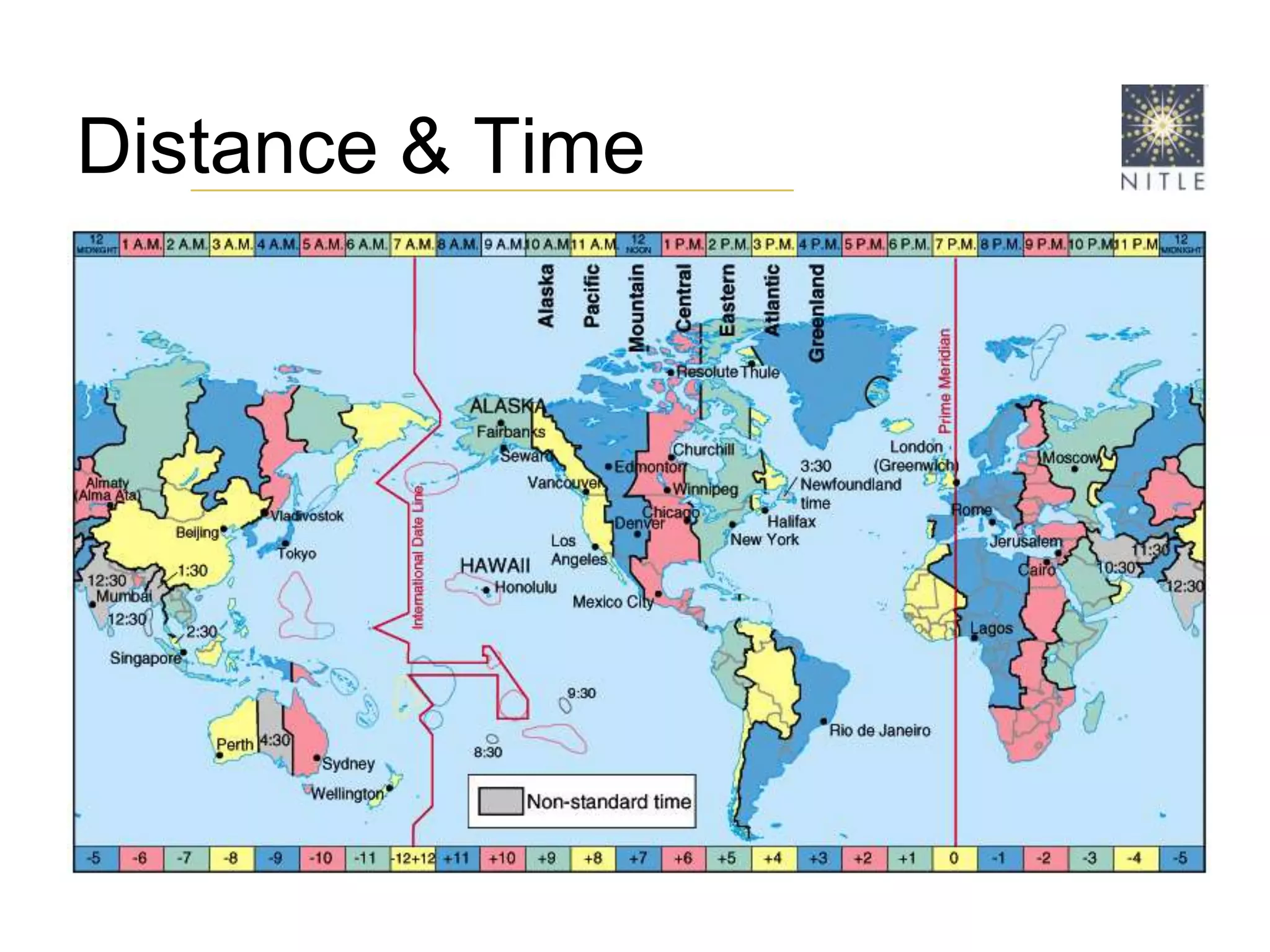
Distance & Time
ChallengesLogisticsRoom schedulingIT support after hoursIntercultural understandingValue of grades
Technology TodayNew Opportunities
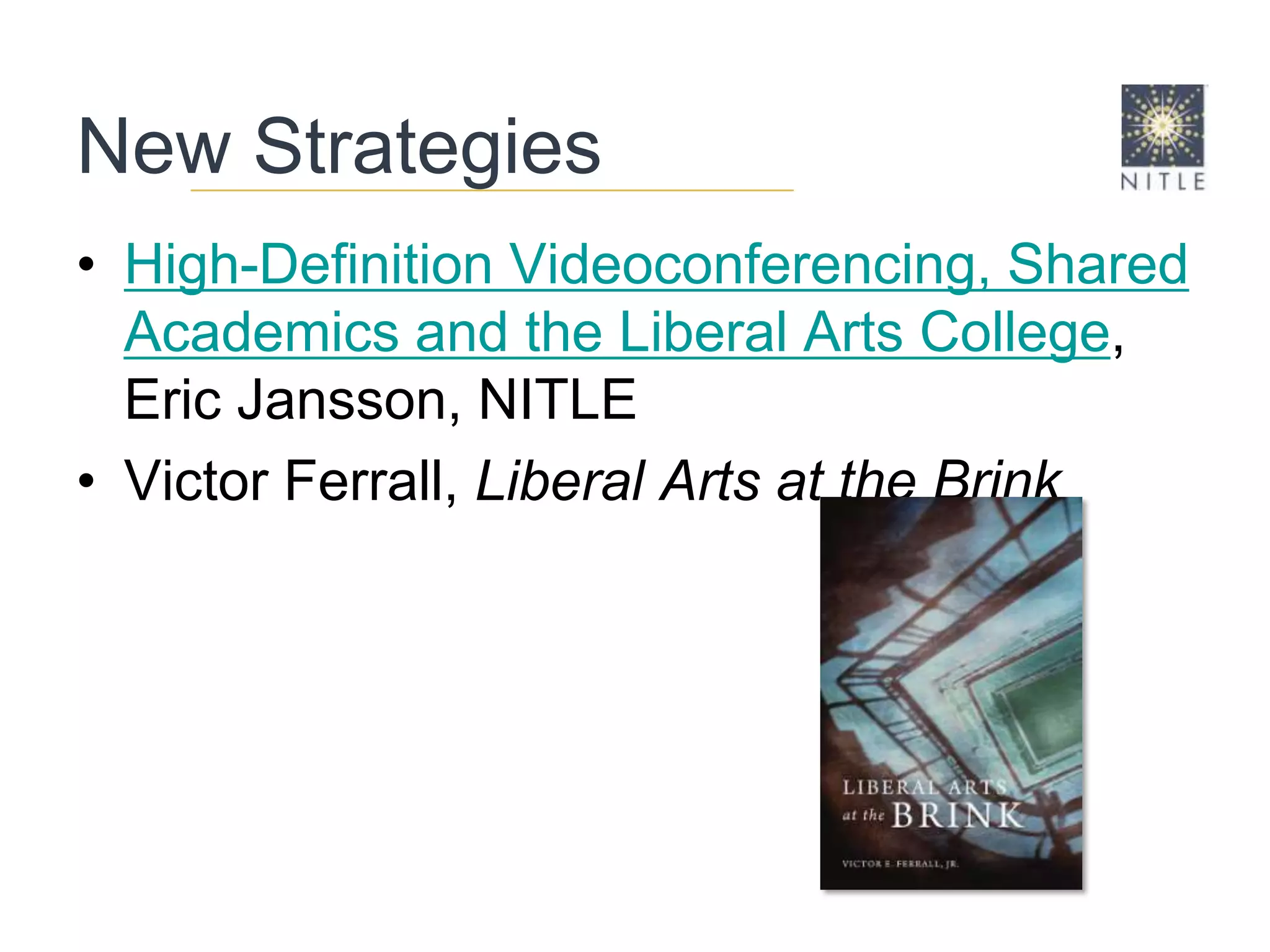
New StrategiesHigh-Definition Videoconferencing, Shared Academics and the Liberal Arts College, Eric Jansson, NITLEVictor Ferrall,Liberal Arts at the Brink
Experience High Definition Video Conferencinghttp://www.youtube.com/watch?v=bLQa6qtIK5c
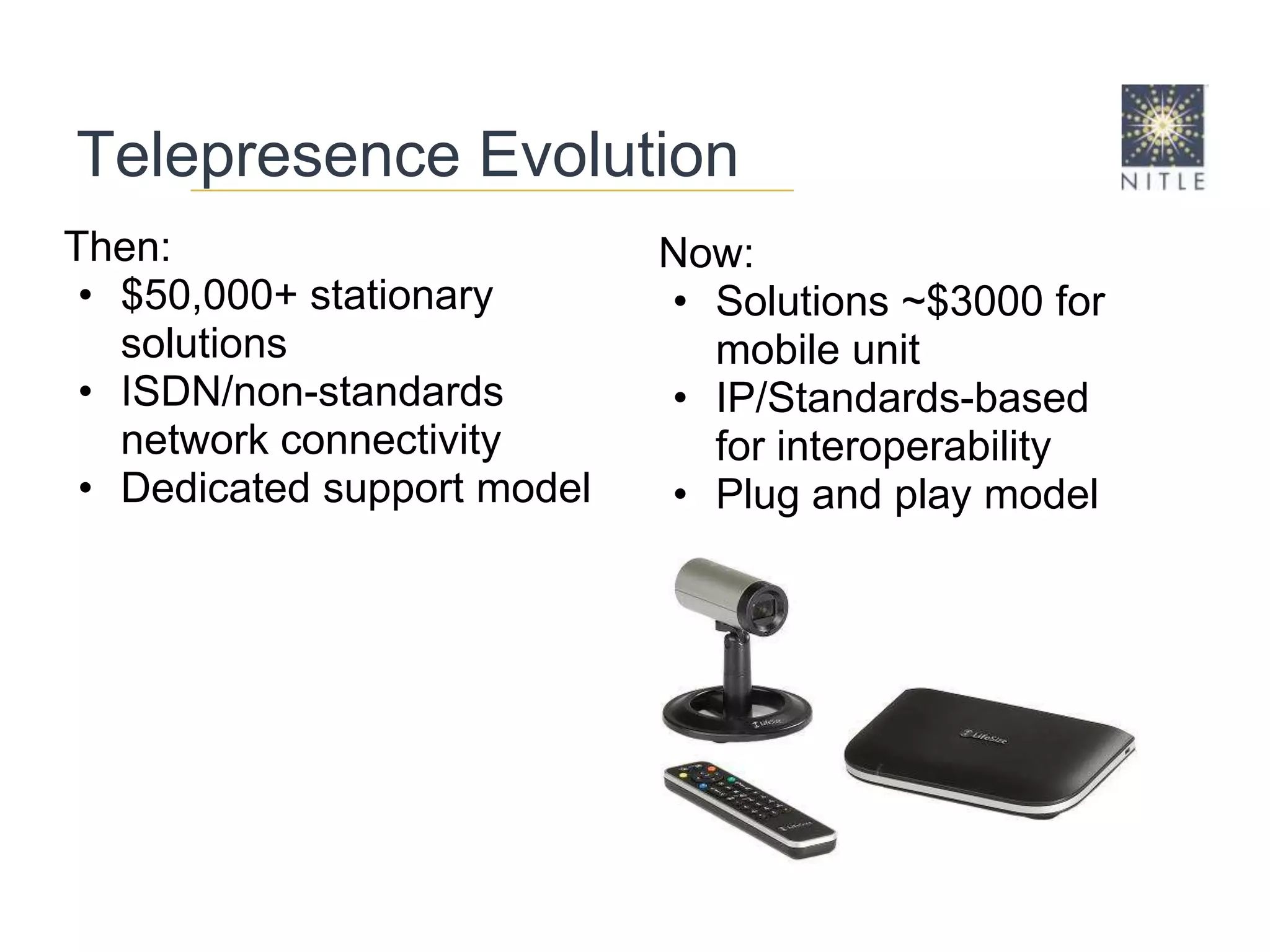
Telepresence EvolutionThen:$50,000+ stationary solutions
ISDN/non-standards network connectivity
Dedicated support modelNow:Solutions ~$3000 for mobile unit
IP/Standards-based for interoperability
Plug and play modelQuality of the ExperienceThen:Standard definition (704x480 pixel density) video quality
High latency
Out of sync audio and videoNow:High definition (1280x720 pixel density) video quality

Collaborative Language Learning Online

  • 1.
    Intercampus Language LearningRebeccaFrost Davis, Ph.D.Program Officer for the HumanitiesNational Institute for Technology in Liberal Educationrdavis@nitle.org
  • 2.
    National Institute forTechnology in Liberal Educationhttp://www.nitle.org
  • 3.
    Intercampus Language LearningLessons Learned from Previous Experiments Shared Academics: SunoikisisGlobal EducationHigh Definition VideoconferencingCurrent ExperimentsVirtual Language Learning ProjectGlobal Cities ProgramShared Academics project
  • 4.
    Case STUdiesShared Academicsand Global Education
  • 5.
    Shared AcademicsSunoikisis, VirtualDepartment of Classical Studieshttp://www.sunoikisis.orgIntercampus Team Taught CoursesWeekly live online sessions using desktop videoconferencingRemaining course meetings on individual campusesSummer Course Planning Seminars
  • 6.
    Program EvaluationPIs: SusanFrost, Emory University & Deborah Olsen, Virginia Tech Model design for how to evaluate this type of programEvaluation Report and How to guide available at: http://www.colleges.org/techcenter/Archives/reports.html
  • 7.
    Sunoikisis Evaluation ConclusionsFurthersa core goal of liberal educationSuccessful collaboration of formerly competitive collegesUnbundling of instructional components to pool instructional resources
  • 8.
    Sunoikisis Lessons LearnedHybridmodel: include asynchronous interactionNeed for collaboration leadModels for academic creditSunoikisis: Each campus offers courseCGMA: GIS in Mediterranean ArchaeologyDePauw University, Millsaps College, Rhodes College, The College of WoosterRotating teaching responsibilities and course offering
  • 9.
    Sunoikisis ChallengesChallengesPoor studentengagement with faculty and students on other campusesNeed to adapt teaching & learning to virtual classroomTechnology infrastructureInadequate recognition for faculty work
  • 10.
    Global EducationSmall LiberalArts CollegesResidential, LocalClose Personal Interaction Face-to-Face FocusTraditional study abroad with complete immersion in another cultureGlobally Networked WorldAlways connectedAccess to global resources & informationHigh-speed digital networksHigh-definition video
  • 11.
    Pitzer College andglobal studyCollaborative coursework with South AfricaBased on study abroad relationshipsSynchronous class sessionsIntercampus collaborative projects
  • 12.
  • 13.
    ChallengesLogisticsRoom schedulingIT supportafter hoursIntercultural understandingValue of grades
  • 14.
  • 15.
    New StrategiesHigh-Definition Videoconferencing,Shared Academics and the Liberal Arts College, Eric Jansson, NITLEVictor Ferrall,Liberal Arts at the Brink
  • 16.
    Experience High DefinitionVideo Conferencinghttp://www.youtube.com/watch?v=bLQa6qtIK5c
  • 17.
  • 18.
  • 19.
  • 20.
  • 21.
    Plug and playmodelQuality of the ExperienceThen:Standard definition (704x480 pixel density) video quality
  • 22.
  • 23.
    Out of syncaudio and videoNow:High definition (1280x720 pixel density) video quality
  • 24.
  • 25.
    Life-like audio/video experienceVirtualLanguage Learning Project (VLLP)Consortium for Innovative Environments in Learning (CIEL)Enrich language learning opportunities for students of all its schools; Enable faculty to connect expanded virtual and immersive place-based language learning; Increase the Consortium’s capacity for aligned technological infrastructure, and the ability to support high definition videoconferencing among all campuses and international field sites.
  • 26.
    Shared AcademicsAmerican Universityof ParisEugene Lang CollegeProgramsGlobal CitiesGlobal CommunicationsGlobal Literary StudiesTransatlantic Seminars
  • 27.
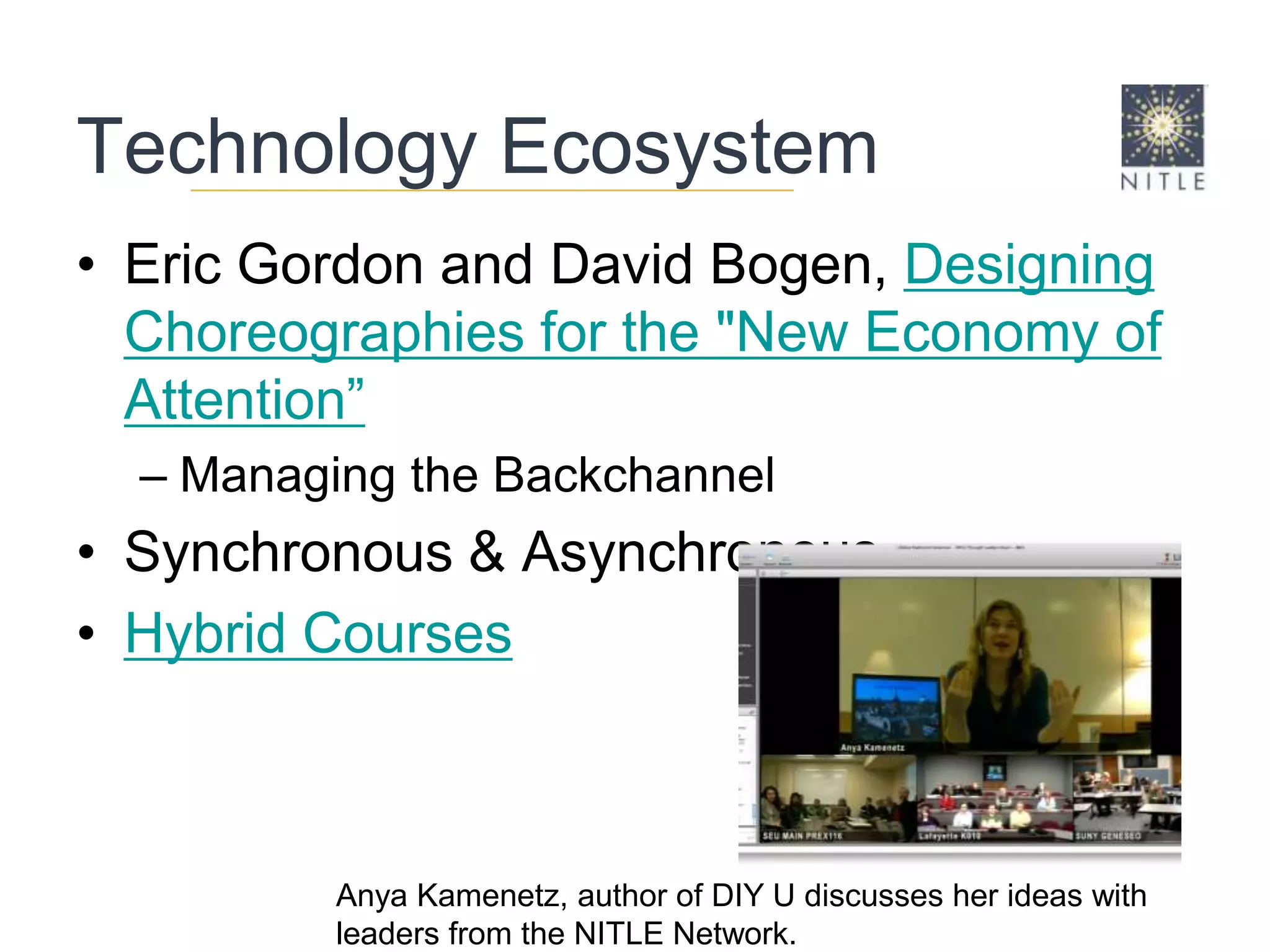
    Technology EcosystemEric Gordonand David Bogen,Designing Choreographies for the "New Economy of Attention”Managing the BackchannelSynchronous & AsynchronousHybrid CoursesAnya Kamenetz, author of DIY U discusses her ideas with leaders from the NITLE Network.
  • 28.
    Strategic Areas forCollaborationUsing digital technologies to expand opportunities for students via international partnerships, service learning, and study abroadCreating more flexible approaches to tenure and promotion aimed at supporting risk-taking and innovationUsing an evidence-based approach to blended learning and balancing the residential model with use of digital environmentsCreating heightened exchange and connections between institutions to leverage unique strengths within a collectiveFinding a Place for Liberal Arts in a Networked World
  • 29.
    National Institute forTechnology in Liberal EducationThe National Institute for Technology in Liberal Education (NITLE) helps liberal arts colleges and universities integrate inquiry, pedagogy, and technology. With its NITLE Network members, NITLE works to enrich undergraduate education and strengthen the liberal arts tradition. Established in 2001, NITLE is the key organization for liberal arts colleges and universities seeking to engage students in the unique learning experience that liberal education provides and to use technology strategically to advance the liberal-arts mission.www.nitle.org

Editor's Notes

  • #17 Virtually travelingImmediacy of interactionCultural informationFace to face interactionThis is what we mean by a globally networked worldPlus, don’t we all want to teach without our pants on? ;)Video is about 2 minutes