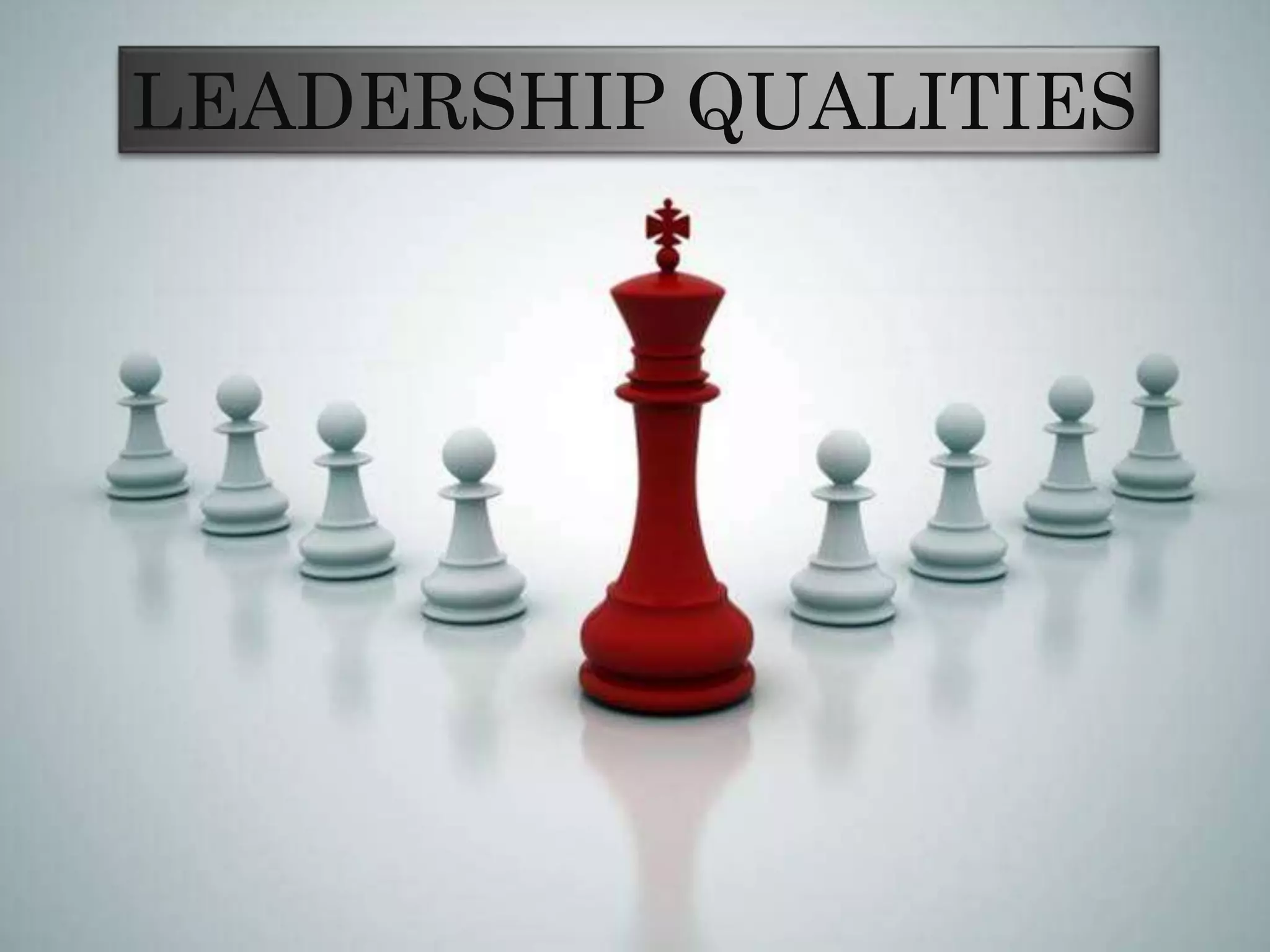
LEADERSHIP QUALITIES
PRESENTED BY :-
o Name :-Sounak Pramanik
o Department :- BCA
o Semester :- 2nd
o Year :- 1st
o Subject :- English Language and Communication
o Subject Code :- HU291
o Registration No. :- 152641010045
o Roll No. :- 26401215043
o College Name :- Swami Vivekananda Institute Of
Modern Science
o College Code :- 264
ACKNOWLEDGEMENT :-
Peoples I am thankful to, for helping me making this
project on, “LEADERSHIP QUALITY” is as follows :-
• Dr. Nandan Gupta
Director, Swami Vivekananda Institute Of Modern Science
• Prof. Gargi Gupta
Vice Principal, Swami Vivekananda Institute Of Modern
Science
• Prof. Suvo Chakraborty (HOD)
Assistant Professor, Swami Vivekananda Institute Of
Modern Science
• Prof. S Majumder (Subject Teacher)
Assistant Professor, Swami Vivekananda Institute Of
Modern Science
 What is Leadership?
 Ingredients of a good leader
 Myths about Leadership
 Qualities of leaders
 Types of Leaders
 India…A nation of Youth
 Achievements
 Conclusion
 Bibliography
o Organizing a group of people or a team to
achieve a common goal.
o Ability to direct the people in the right direction
 A good teacher
 Doesn’t put down his/her team
 Gets the most from them
 Works with the framework of rules
 A leader may/mayn’t have a formal authority
 Persons who are leaders in one situation mayn’t necessarily
be the leaders in other situations
 The qualities of a leader are demonstrated from his/her
behaviour, not their position
 There is no any written rigid rule for being a leader
 The style of a leader depends on his/her
 Philosophy
 Personality
 Past experience
 Leader by position/power achieved
 Leader by personality and charisma
 Leader by moral example
 Leader because of the ability to
accomplish things
 Autocratic Leadership: Retains the power and
decision-making authority.
 Bureaucratic Leadership: Leads “by the book”. Does
things according to the procedure or policy.
 Laissez-faire Leadership: This means ‘let it be’.
Detached and far removed from the people he/she is
supposed to serve.
 Democratic Leadership: Develops plans to help
the team members evaluate their own performance.
 Transformational Leadership: The leader has
Charisma(ability to uniquely inspire people). Inspire
people with words, personality and thoughts.
o About 45% of Indian population is
YOUTH
o The Hindu says, “India is set to become
the YOUNGEST COUNTRY by 2020”
o But still def.icient of efficient leaders
 Nationalisation of banks
 Took good decision during Indo-Pak war
 World’s longest serving woman Prime
Minister
 Launching of India’s first satellite
 Development in Nuclear Technology
It is really a very nice project. Leadership
Quality is teaching me many things. There are
various types of Leadership Quality. In this
quality a team is taken leadership to control
everything.
 Google
 wikipedia
Leadership quality

Leadership quality

  • 1.
  • 2.
    PRESENTED BY :- oName :-Sounak Pramanik o Department :- BCA o Semester :- 2nd o Year :- 1st o Subject :- English Language and Communication o Subject Code :- HU291 o Registration No. :- 152641010045 o Roll No. :- 26401215043 o College Name :- Swami Vivekananda Institute Of Modern Science o College Code :- 264
  • 3.
    ACKNOWLEDGEMENT :- Peoples Iam thankful to, for helping me making this project on, “LEADERSHIP QUALITY” is as follows :- • Dr. Nandan Gupta Director, Swami Vivekananda Institute Of Modern Science • Prof. Gargi Gupta Vice Principal, Swami Vivekananda Institute Of Modern Science • Prof. Suvo Chakraborty (HOD) Assistant Professor, Swami Vivekananda Institute Of Modern Science • Prof. S Majumder (Subject Teacher) Assistant Professor, Swami Vivekananda Institute Of Modern Science
  • 4.
     What isLeadership?  Ingredients of a good leader  Myths about Leadership  Qualities of leaders  Types of Leaders  India…A nation of Youth  Achievements  Conclusion  Bibliography
  • 5.
    o Organizing agroup of people or a team to achieve a common goal. o Ability to direct the people in the right direction
  • 6.
     A goodteacher  Doesn’t put down his/her team  Gets the most from them  Works with the framework of rules
  • 7.
     A leadermay/mayn’t have a formal authority  Persons who are leaders in one situation mayn’t necessarily be the leaders in other situations  The qualities of a leader are demonstrated from his/her behaviour, not their position  There is no any written rigid rule for being a leader  The style of a leader depends on his/her  Philosophy  Personality  Past experience
  • 8.
     Leader byposition/power achieved  Leader by personality and charisma  Leader by moral example  Leader because of the ability to accomplish things
  • 9.
     Autocratic Leadership:Retains the power and decision-making authority.  Bureaucratic Leadership: Leads “by the book”. Does things according to the procedure or policy.  Laissez-faire Leadership: This means ‘let it be’. Detached and far removed from the people he/she is supposed to serve.  Democratic Leadership: Develops plans to help the team members evaluate their own performance.  Transformational Leadership: The leader has Charisma(ability to uniquely inspire people). Inspire people with words, personality and thoughts.
  • 10.
    o About 45%of Indian population is YOUTH o The Hindu says, “India is set to become the YOUNGEST COUNTRY by 2020” o But still def.icient of efficient leaders
  • 11.
     Nationalisation ofbanks  Took good decision during Indo-Pak war  World’s longest serving woman Prime Minister  Launching of India’s first satellite  Development in Nuclear Technology
  • 12.
    It is reallya very nice project. Leadership Quality is teaching me many things. There are various types of Leadership Quality. In this quality a team is taken leadership to control everything.
  • 13.