Knowledge and Wisdom: A
Practitioner's Path to Flight
Written By: Shannon Shultz
"Knowledge is knowing that tomato is a fruit.
Wisdom is not putting it in fruit salad.”
~ Unknown
While The Leadership Circle framework can be a
powerful foundation for transformation, knowing its
ins-and-outs—and being able to bring it to life with
clients—is as different as knowledge and wisdom. This
article will highlight three distinct and subtle shifts that
increase the impact with the leaders and teams I serve.
Move from talking about it to "being about it."
This first subtle shift reminds me of
how my personal trainer invites me to
stop reporting my progress and
actually start lifting weights. Getting to
know the Leadership Circle framework
starts with a gradual deepening and
eventual up leveling of each person's
personal relationship to Reactive
Tendencies.
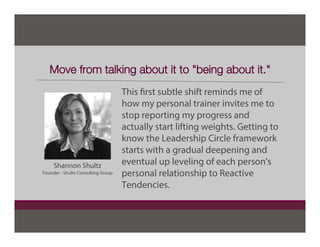
Shannon Shultz
Founder - Shultz Consulting Group
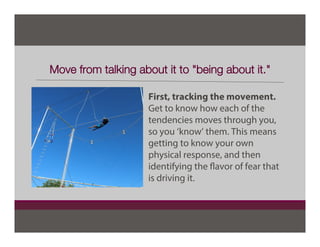
Move from talking about it to "being about it."
First, tracking the movement.
Get to know how each of the
tendencies moves through you,
so you ‘know’ them. This means
getting to know your own
physical response, and then
identifying the flavor of fear that
is driving it.
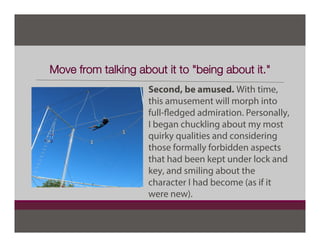
Move from talking about it to "being about it."
Second, be amused. With time,
this amusement will morph into
full-fledged admiration. Personally,
I began chuckling about my most
quirky qualities and considering
those formally forbidden aspects
that had been kept under lock and
key, and smiling about the
character I had become (as if it
were new).
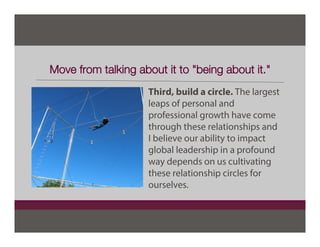
Move from talking about it to "being about it."
Third, build a circle. The largest
leaps of personal and
professional growth have come
through these relationships and
I believe our ability to impact
global leadership in a profound
way depends on us cultivating
these relationship circles for
ourselves.
Move from ‘figuring it out’ to ‘inviting it out’.
Effective development work has required a major shift from ‘figuring it
out’ to ‘inviting it out,’ especially in the realm of exploring beliefs and
assumptions. The reasons this shift is challenging are not surprising:
1) Being the expert is seductive. My desire to help others get out of their
own way or to ‘see the light’ through insights that have made themselves
clear to me, is often present.
2) Being the expert is often preferred and expected by clients. It is not
uncommon for clients to want to be told how to think and what to do.
3) Being the expert appeals to one's sense of efficiency. We have a bias
for action, and a natural urge to just tell someone instead of fostering
discovery about it.
Move from ‘figuring it out’ to ‘inviting it out’.
The most effective strategy to move from "figuring it
out" to "inviting it out" is getting clear about roles. The
coach's role is to join the client as a fellow traveler in
the exploration of what this means for her, be present
and listen deeply, and build the habit of exploring
with--not for--the client.
Move from owning the results to sharing the experience.
A coach's ability to do this constellates around trust in a
creative intelligence greater than the problems,
challenges, and complications they are working. Believe
that the client is naturally intelligent, creative, resourceful,
and whole. Whenever you find yourself unconsciously
doubting a client’s resourcefulness, recalibrate, as it
probably means you are taking on more than your share of
the responsibility.
By making these three subtle shifts (1 - Move from
talking about it to being about it, 2 - move from
figuring it out to inviting it out, and 3 - move from
owning the results to sharing the experience), a
practitioner or coach of The Leadership Circle
profile can be more effective in helping their
clients achieve the lasting change they're after.
Read more and comment by visiting
www.TheLeadershipCircle.com
And clicking on “Leadership Quarterly”
- OR -
Get there directly at
www.theleadershipcircle.com/knowledge-and-wisdom-a-
practitioners-path-to-flight

Leadership - Knowledge and Wisdom: A Practitioner's Path to Flight

  • 1.
    Knowledge and Wisdom:A Practitioner's Path to Flight Written By: Shannon Shultz
  • 2.
    "Knowledge is knowingthat tomato is a fruit. Wisdom is not putting it in fruit salad.” ~ Unknown While The Leadership Circle framework can be a powerful foundation for transformation, knowing its ins-and-outs—and being able to bring it to life with clients—is as different as knowledge and wisdom. This article will highlight three distinct and subtle shifts that increase the impact with the leaders and teams I serve.
  • 3.
    Move from talkingabout it to "being about it." This first subtle shift reminds me of how my personal trainer invites me to stop reporting my progress and actually start lifting weights. Getting to know the Leadership Circle framework starts with a gradual deepening and eventual up leveling of each person's personal relationship to Reactive Tendencies. Shannon Shultz Founder - Shultz Consulting Group
  • 4.
    Move from talkingabout it to "being about it." First, tracking the movement. Get to know how each of the tendencies moves through you, so you ‘know’ them. This means getting to know your own physical response, and then identifying the flavor of fear that is driving it.
  • 5.
    Move from talkingabout it to "being about it." Second, be amused. With time, this amusement will morph into full-fledged admiration. Personally, I began chuckling about my most quirky qualities and considering those formally forbidden aspects that had been kept under lock and key, and smiling about the character I had become (as if it were new).
  • 6.
    Move from talkingabout it to "being about it." Third, build a circle. The largest leaps of personal and professional growth have come through these relationships and I believe our ability to impact global leadership in a profound way depends on us cultivating these relationship circles for ourselves.
  • 7.
    Move from ‘figuringit out’ to ‘inviting it out’. Effective development work has required a major shift from ‘figuring it out’ to ‘inviting it out,’ especially in the realm of exploring beliefs and assumptions. The reasons this shift is challenging are not surprising: 1) Being the expert is seductive. My desire to help others get out of their own way or to ‘see the light’ through insights that have made themselves clear to me, is often present. 2) Being the expert is often preferred and expected by clients. It is not uncommon for clients to want to be told how to think and what to do. 3) Being the expert appeals to one's sense of efficiency. We have a bias for action, and a natural urge to just tell someone instead of fostering discovery about it.
  • 8.
    Move from ‘figuringit out’ to ‘inviting it out’. The most effective strategy to move from "figuring it out" to "inviting it out" is getting clear about roles. The coach's role is to join the client as a fellow traveler in the exploration of what this means for her, be present and listen deeply, and build the habit of exploring with--not for--the client.
  • 9.
    Move from owningthe results to sharing the experience. A coach's ability to do this constellates around trust in a creative intelligence greater than the problems, challenges, and complications they are working. Believe that the client is naturally intelligent, creative, resourceful, and whole. Whenever you find yourself unconsciously doubting a client’s resourcefulness, recalibrate, as it probably means you are taking on more than your share of the responsibility.
  • 10.
    By making thesethree subtle shifts (1 - Move from talking about it to being about it, 2 - move from figuring it out to inviting it out, and 3 - move from owning the results to sharing the experience), a practitioner or coach of The Leadership Circle profile can be more effective in helping their clients achieve the lasting change they're after.
  • 11.
    Read more andcomment by visiting www.TheLeadershipCircle.com And clicking on “Leadership Quarterly” - OR - Get there directly at www.theleadershipcircle.com/knowledge-and-wisdom-a- practitioners-path-to-flight