






Navigating Turbulent Times
               Navigating the 5 C’s
                   July 6, 2012


                     Tom Hood, CPA, CITP, CGMA


MACPA-­‐Logo-­‐medium.jpg	
  
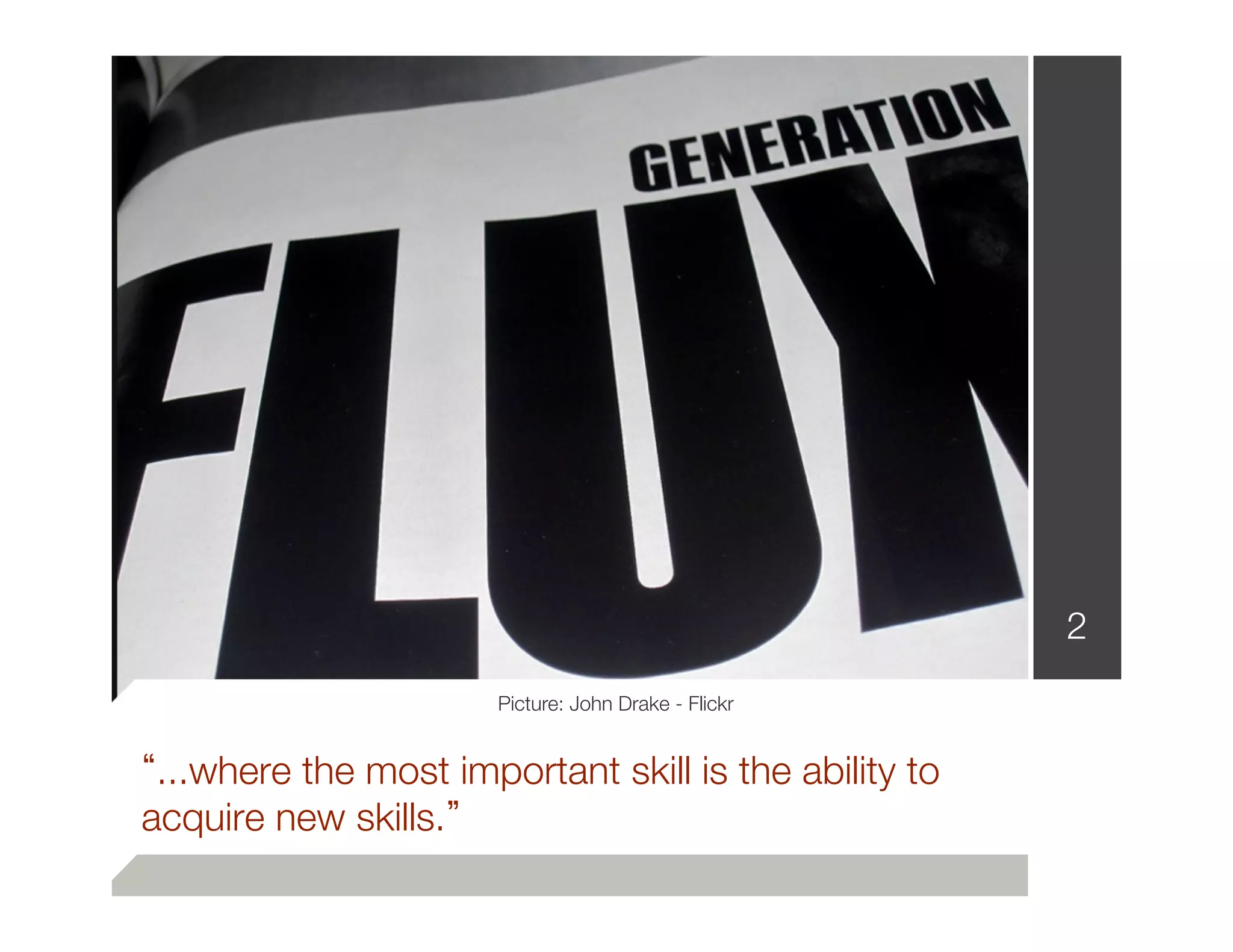
2
                       Picture: John Drake - Flickr


 ...where the most important skill is the ability to
acquire new skills.
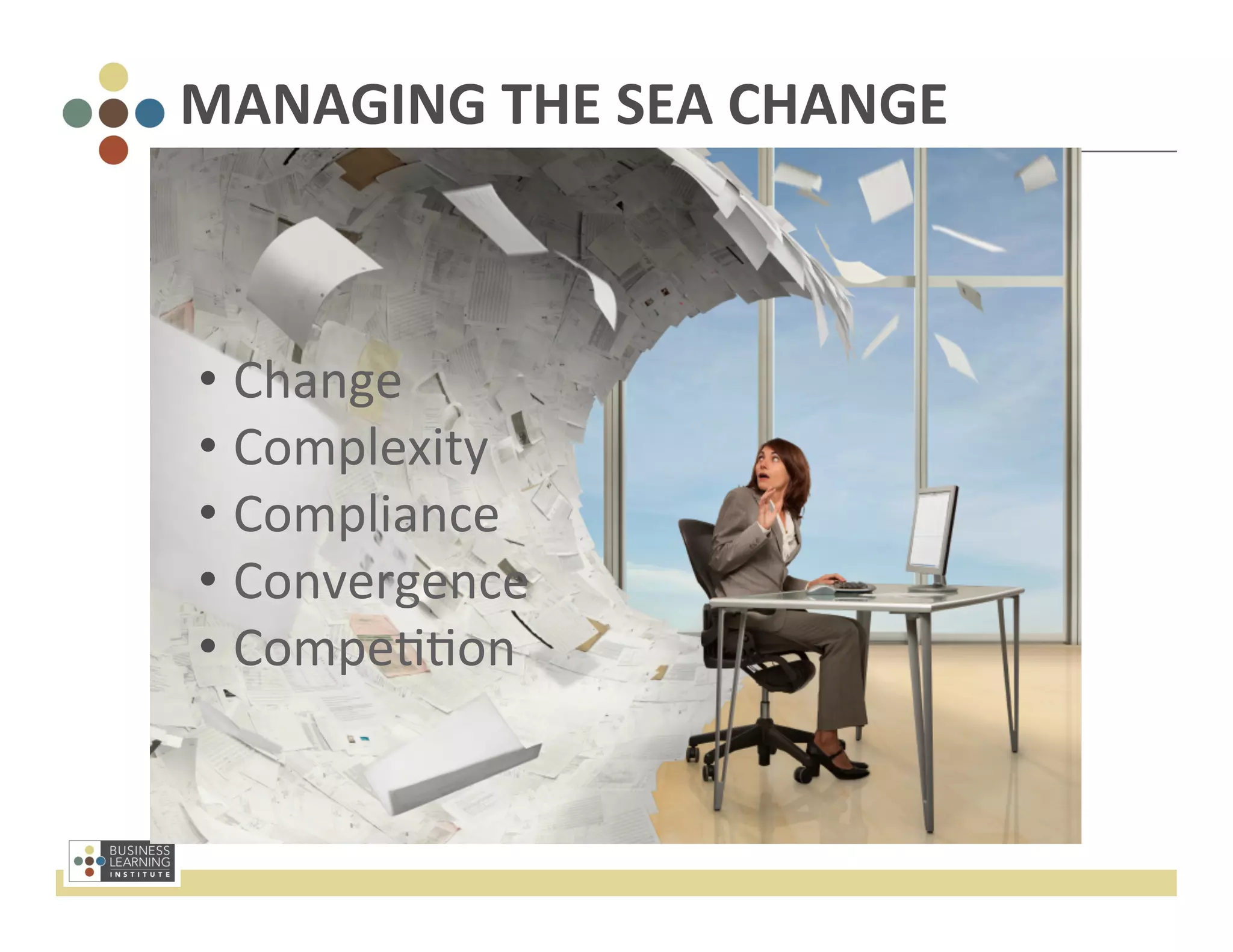
MANAGING	
  THE	
  SEA	
  CHANGE	


•  Change	
  
•  Complexity	
  
•  Compliance	
  
•  Convergence	
  
•  Compe<<on	
  
The	
  “New	
  Normal”	


          h=p://www.endoAusiness.com	


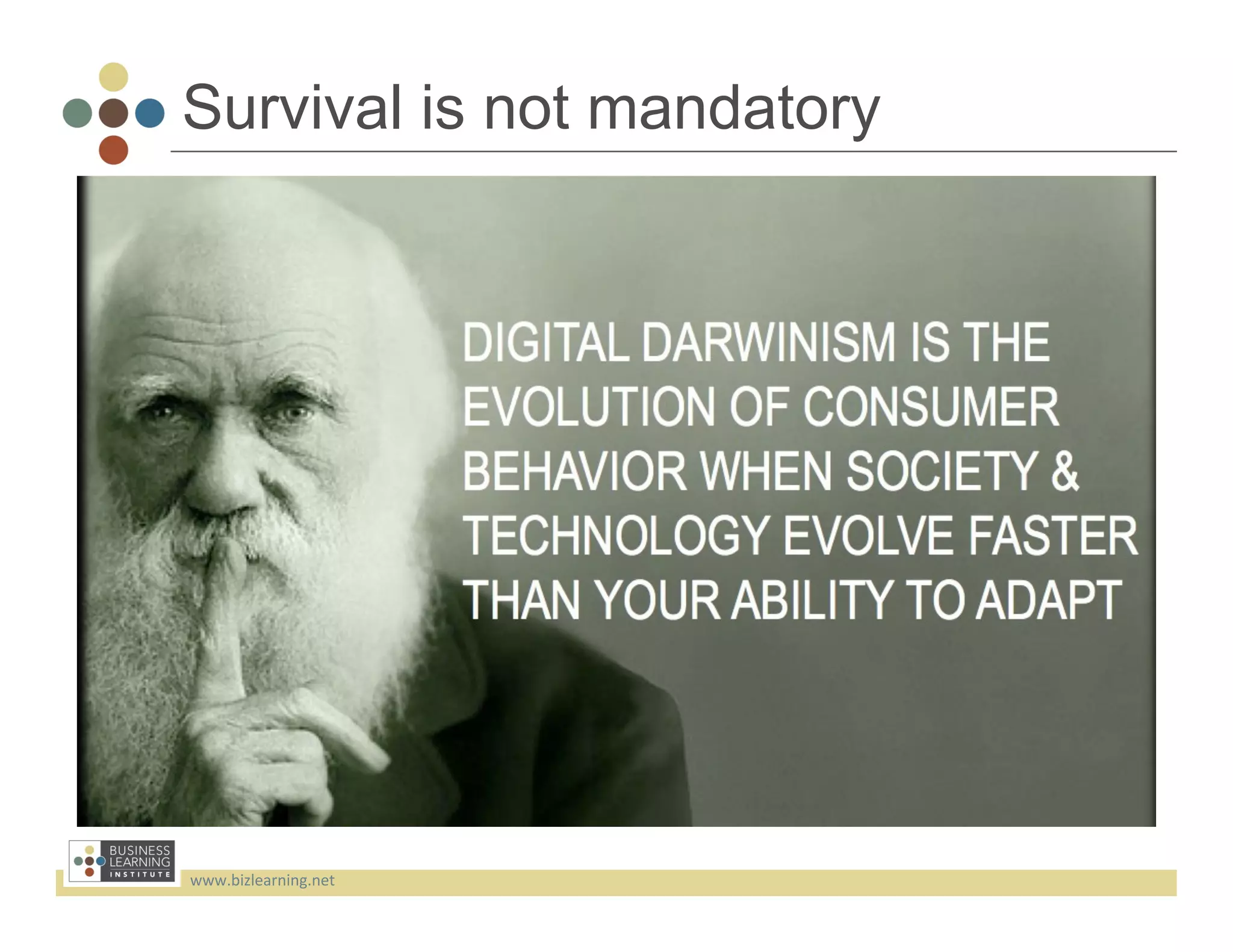
Survival is not mandatory


www.bizlearning.net	
  
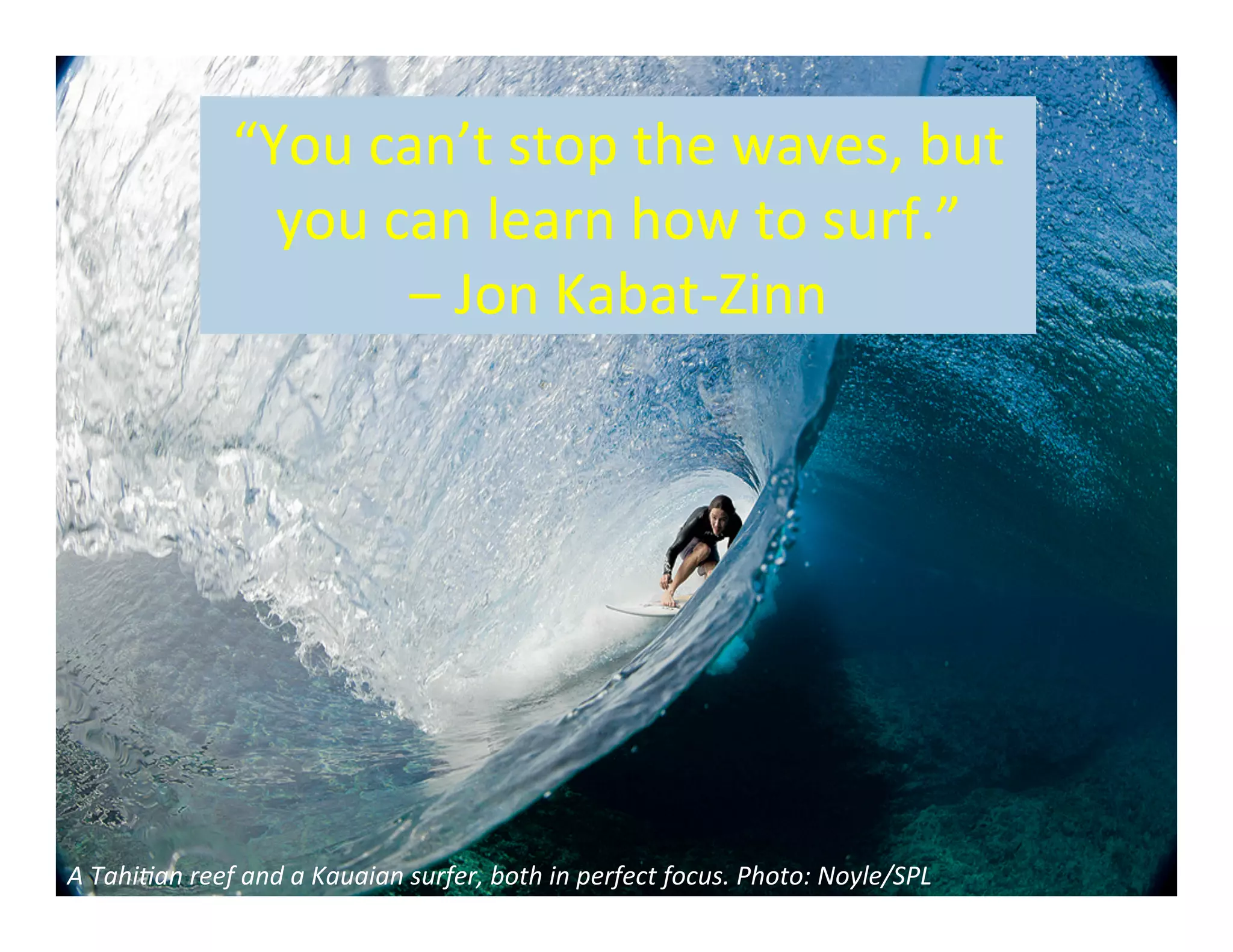
“You	
  can’t	
  stop	
  the	
  waves,	
  but	
  
                       you	
  can	
  learn	
  how	
  to	
  surf.”	
  	
  
                               –	
  Jon	
  Kabat-­‐Zinn	


A	
  Tahi'an	
  reef	
  and	
  a	
  Kauaian	
  surfer,	
  both	
  in	
  perfect	
  focus.	
  Photo:	
  Noyle/SPL	
  
                www.bizlearning.net	
  
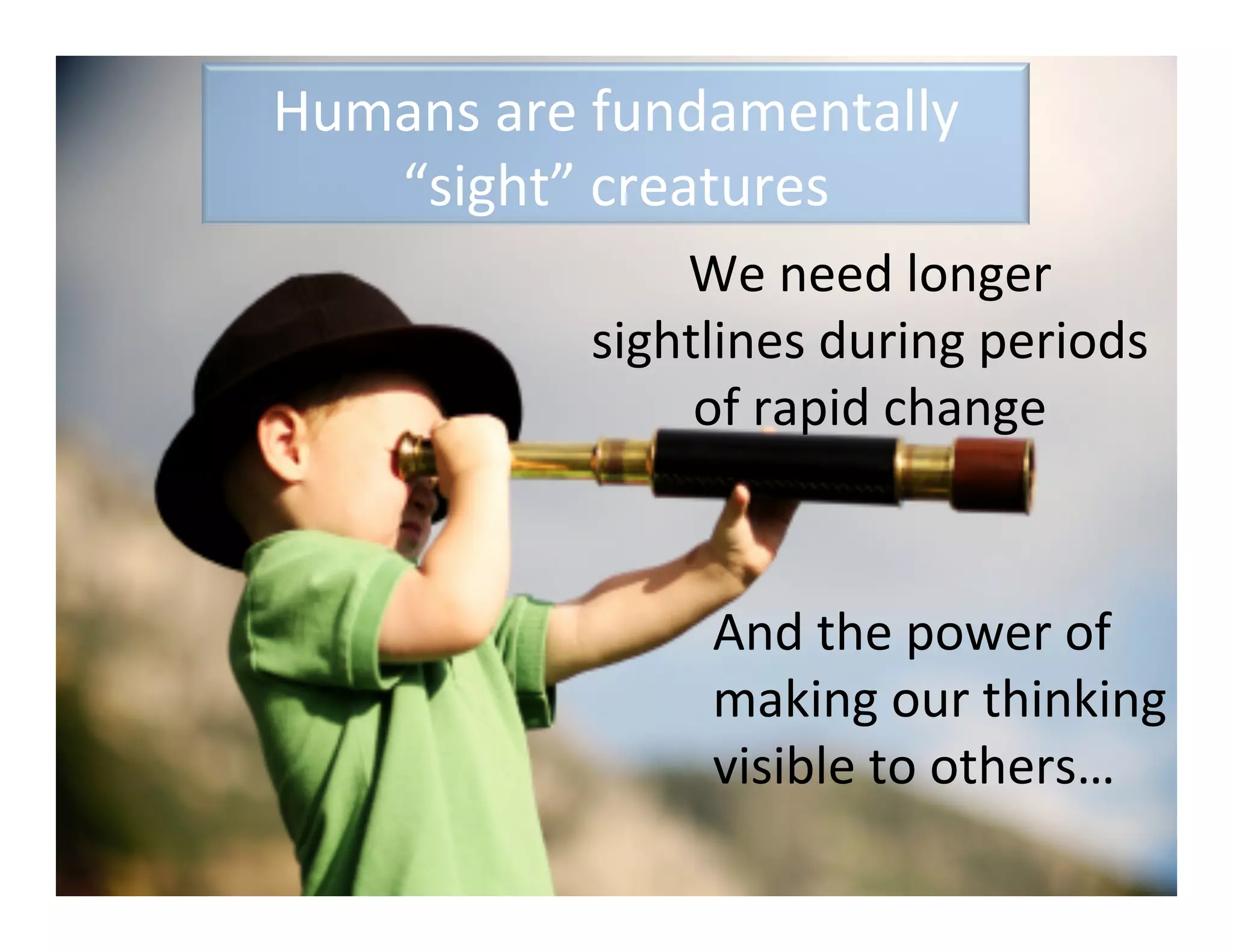
Humans	
  are	
  fundamentally	
  
   “sight”	
  creatures	
  
                   We	
  need	
  longer	
  
               sightlines	
  during	
  periods	
  
                    of	
  rapid	
  change	


                      And	
  the	
  power	
  of	
  
                      making	
  our	
  thinking	
  
                      visible	
  to	
  others…	
  
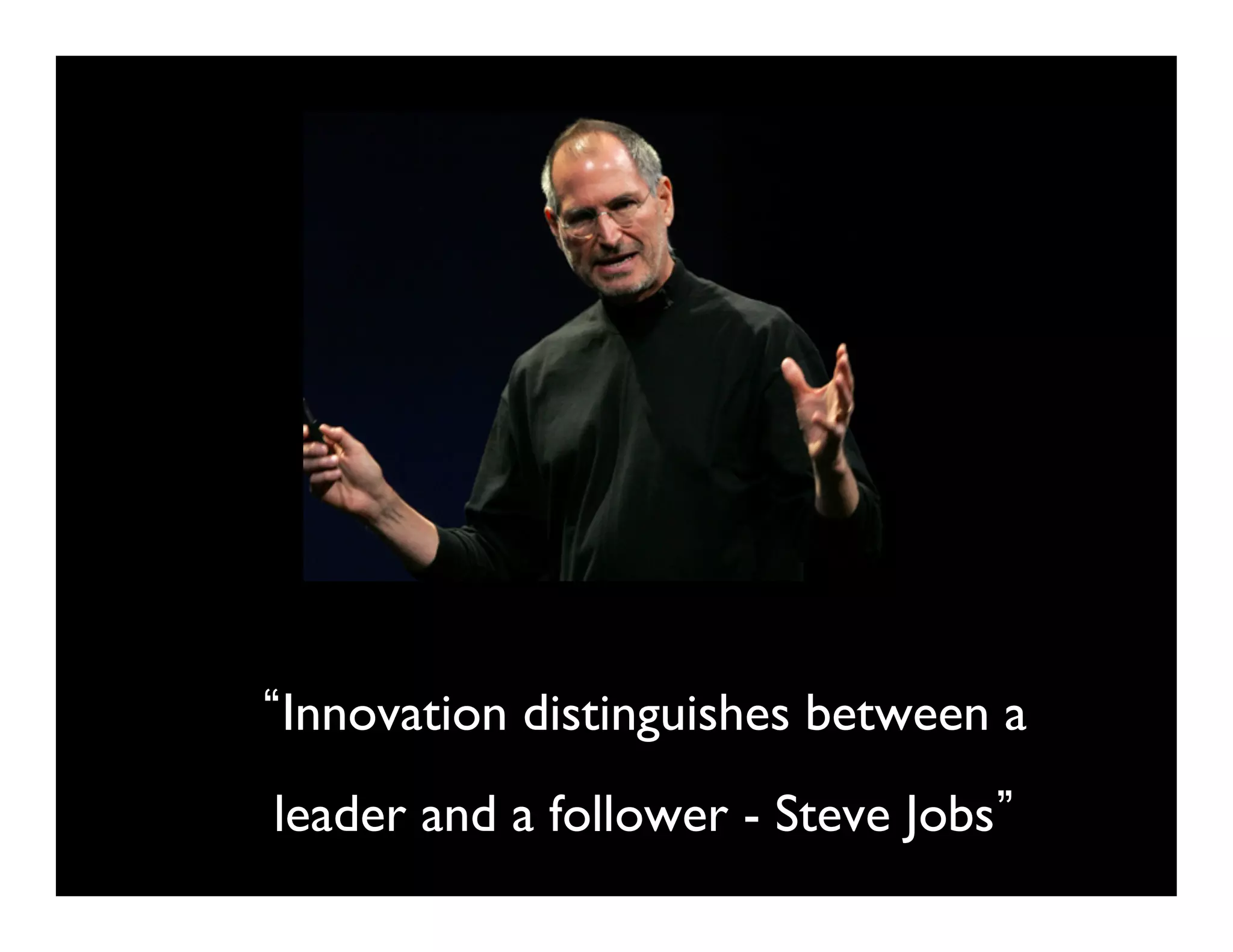
Innovation distinguishes between a
leader and a follower - Steve Jobs
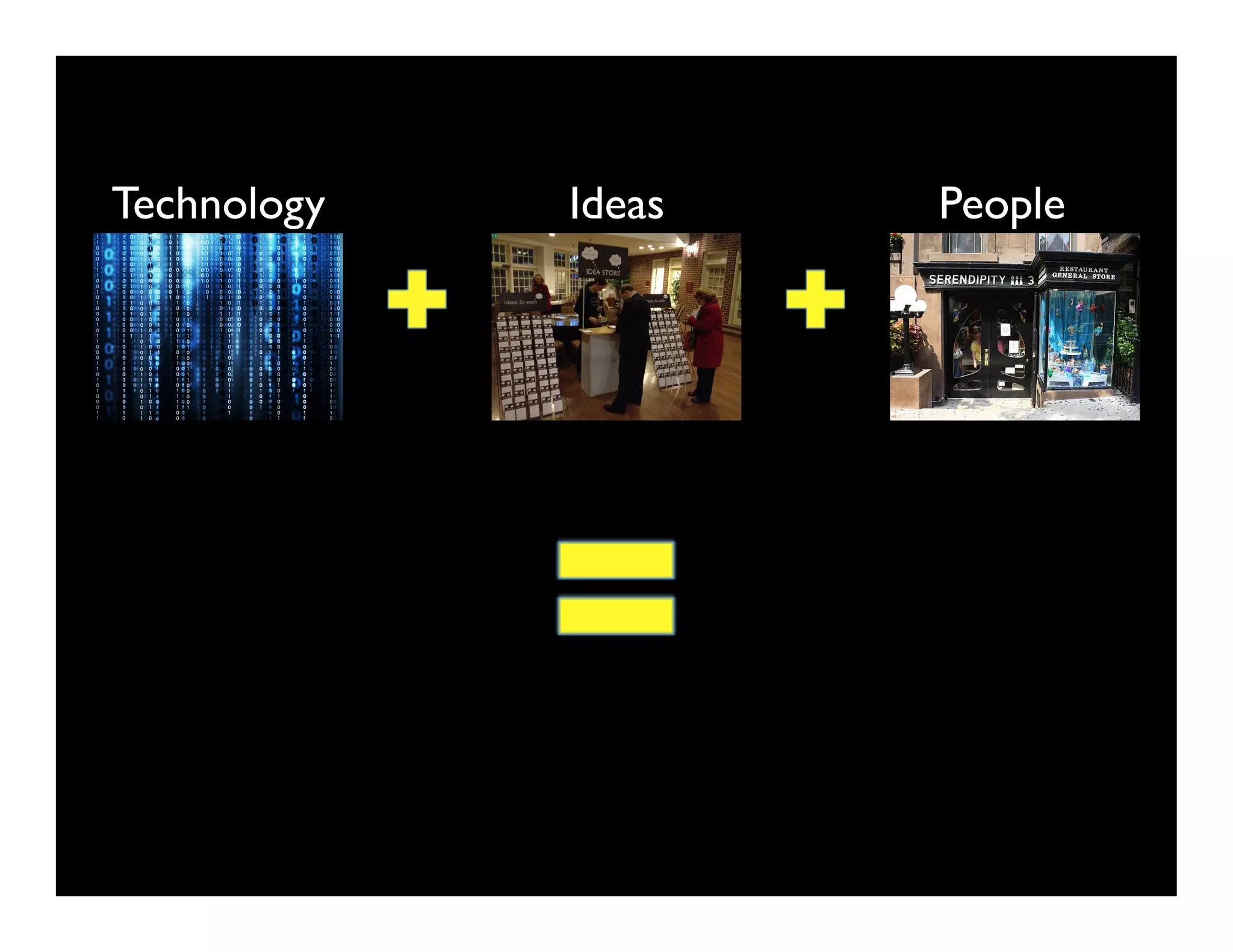
Technology
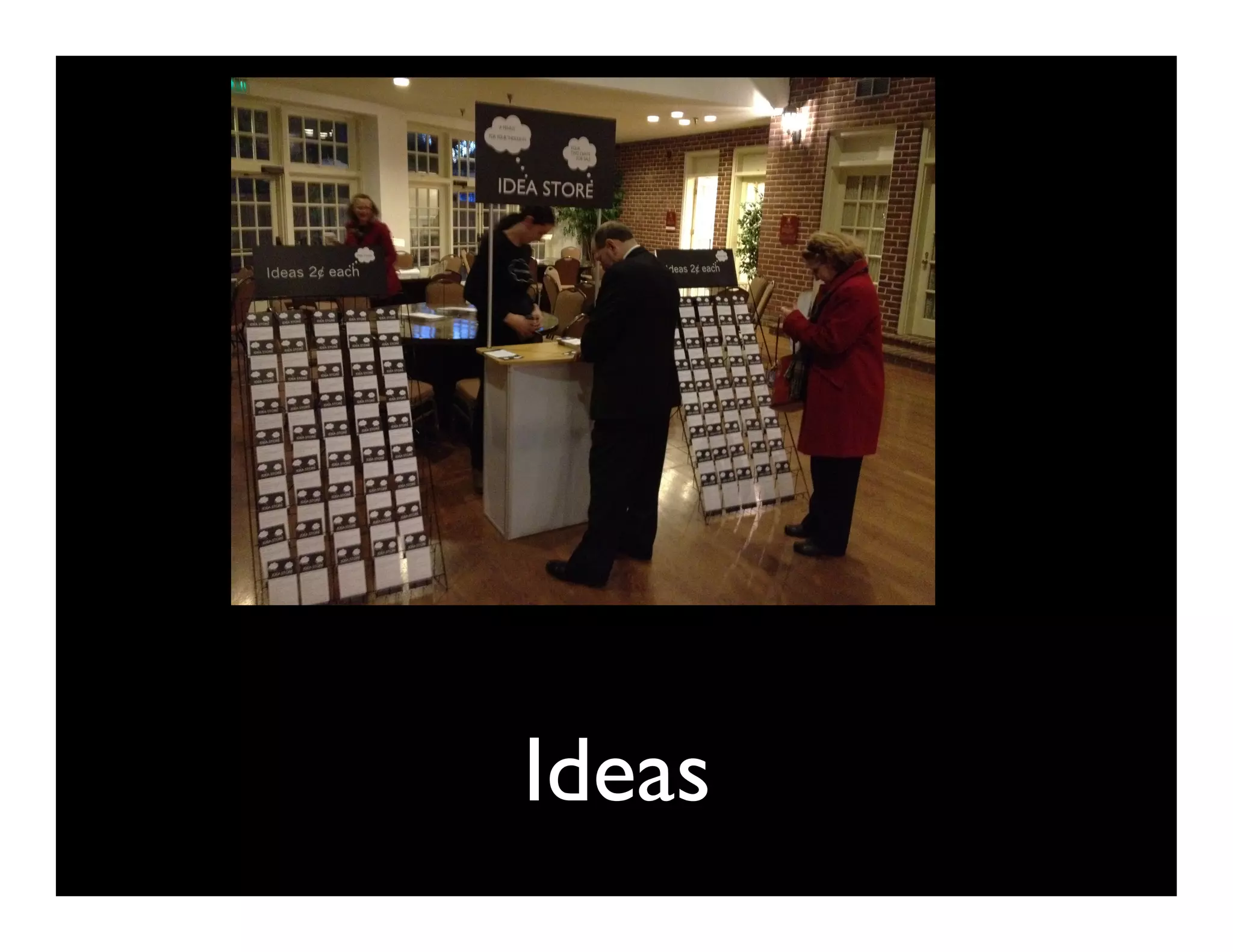
Ideas
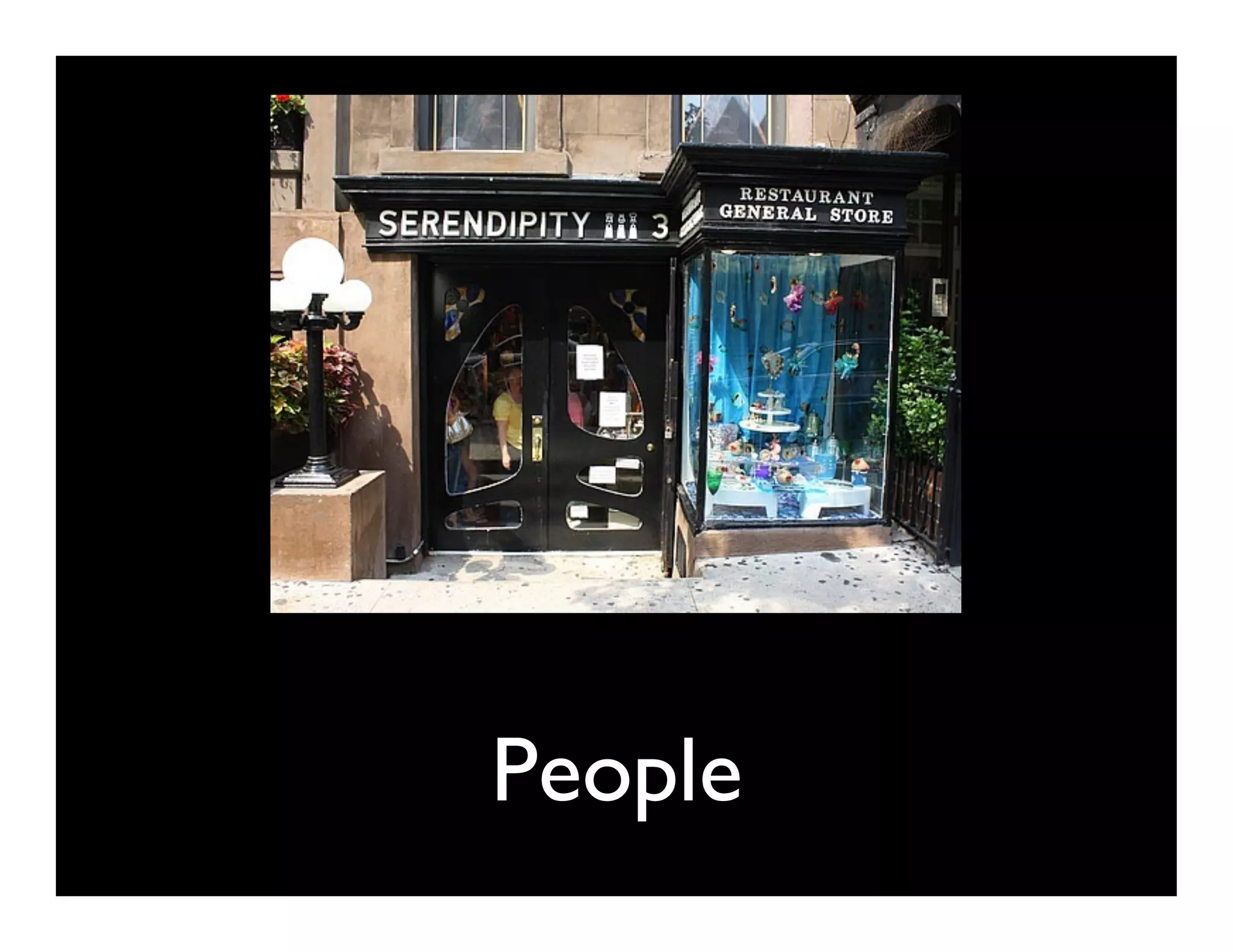
People
Technology	

   Ideas	

   People
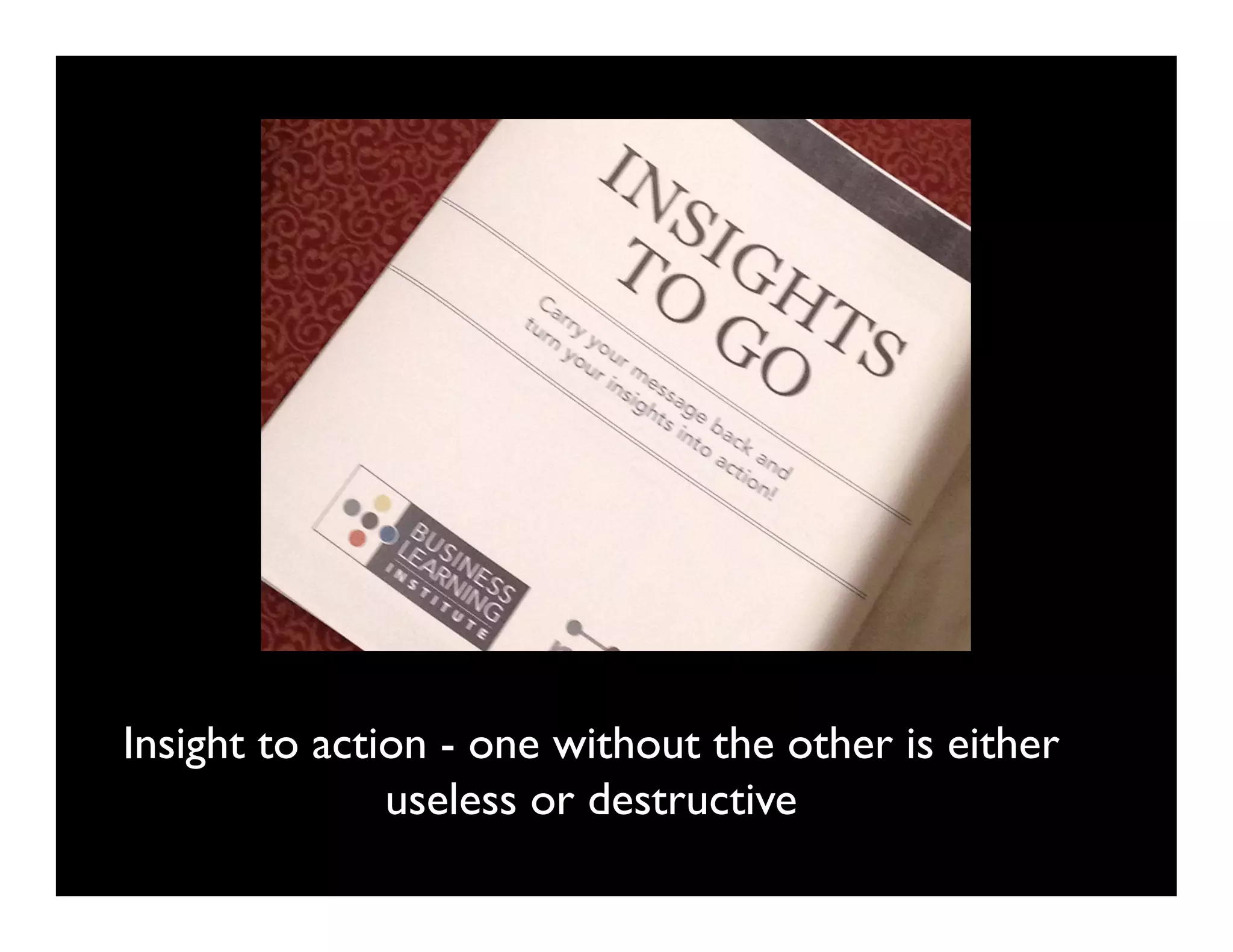
Insight to action - one without the other is either
               useless or destructive
What we see…
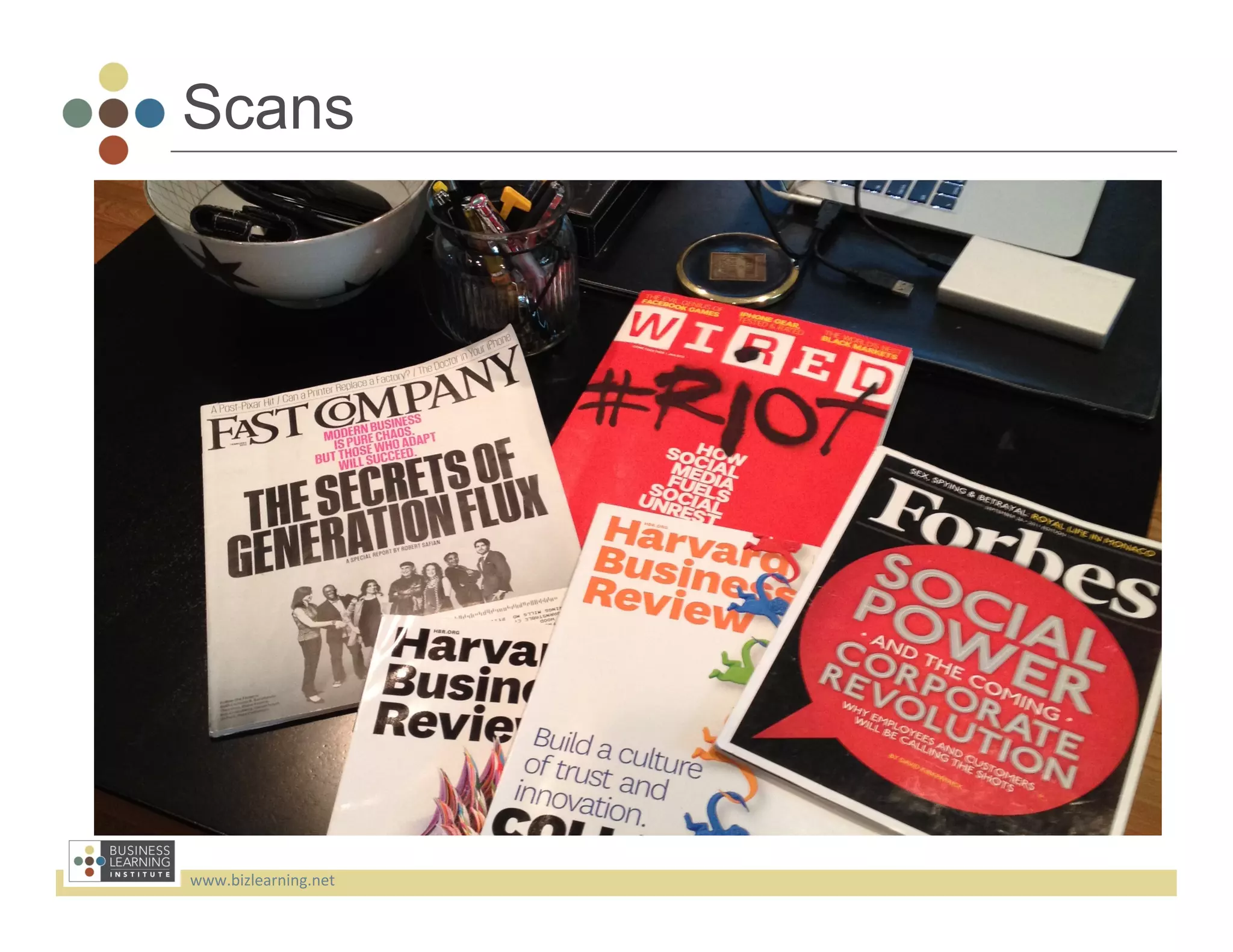
Scans


www.bizlearning.net	
  
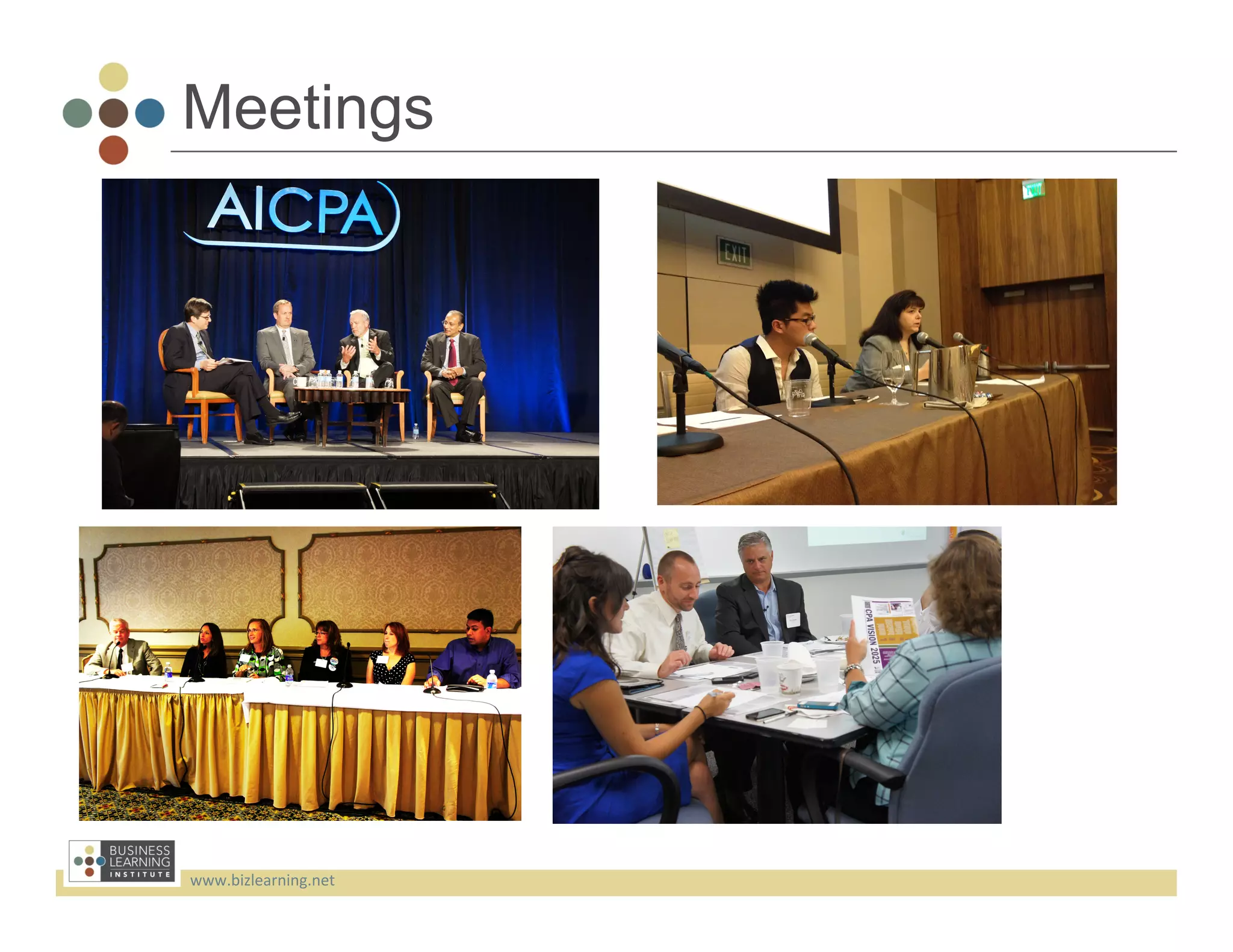
Meetings


www.bizlearning.net	
  
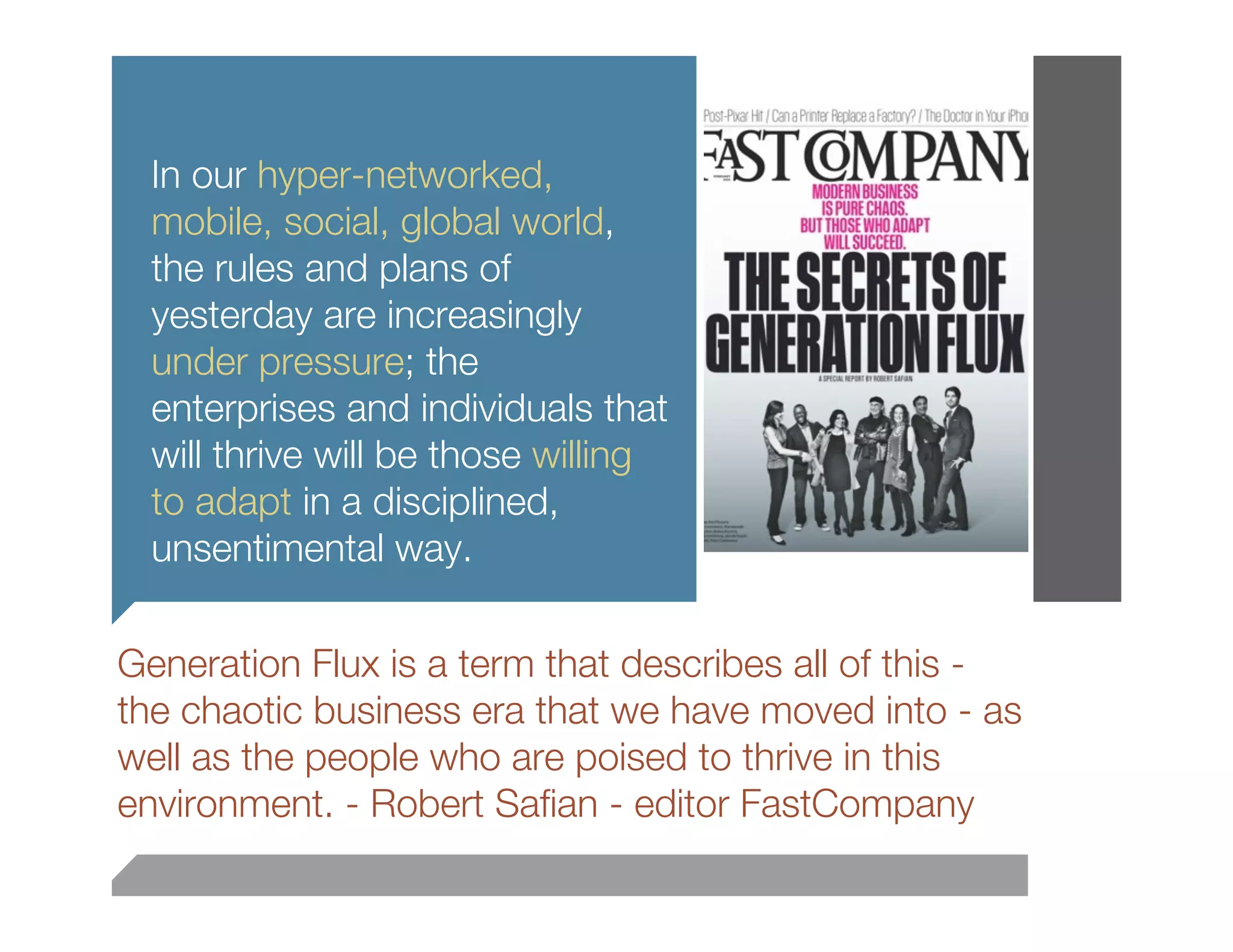
In our hyper-networked,
  mobile, social, global world,
  the rules and plans of
  yesterday are increasingly
  under pressure; the
  enterprises and individuals that
  will thrive will be those willing
  to adapt in a disciplined,
  unsentimental way.

Generation Flux is a term that describes all of this -
the chaotic business era that we have moved into - as
well as the people who are poised to thrive in this
environment. - Robert Safian - editor FastCompany
www.bizlearning.net	
  
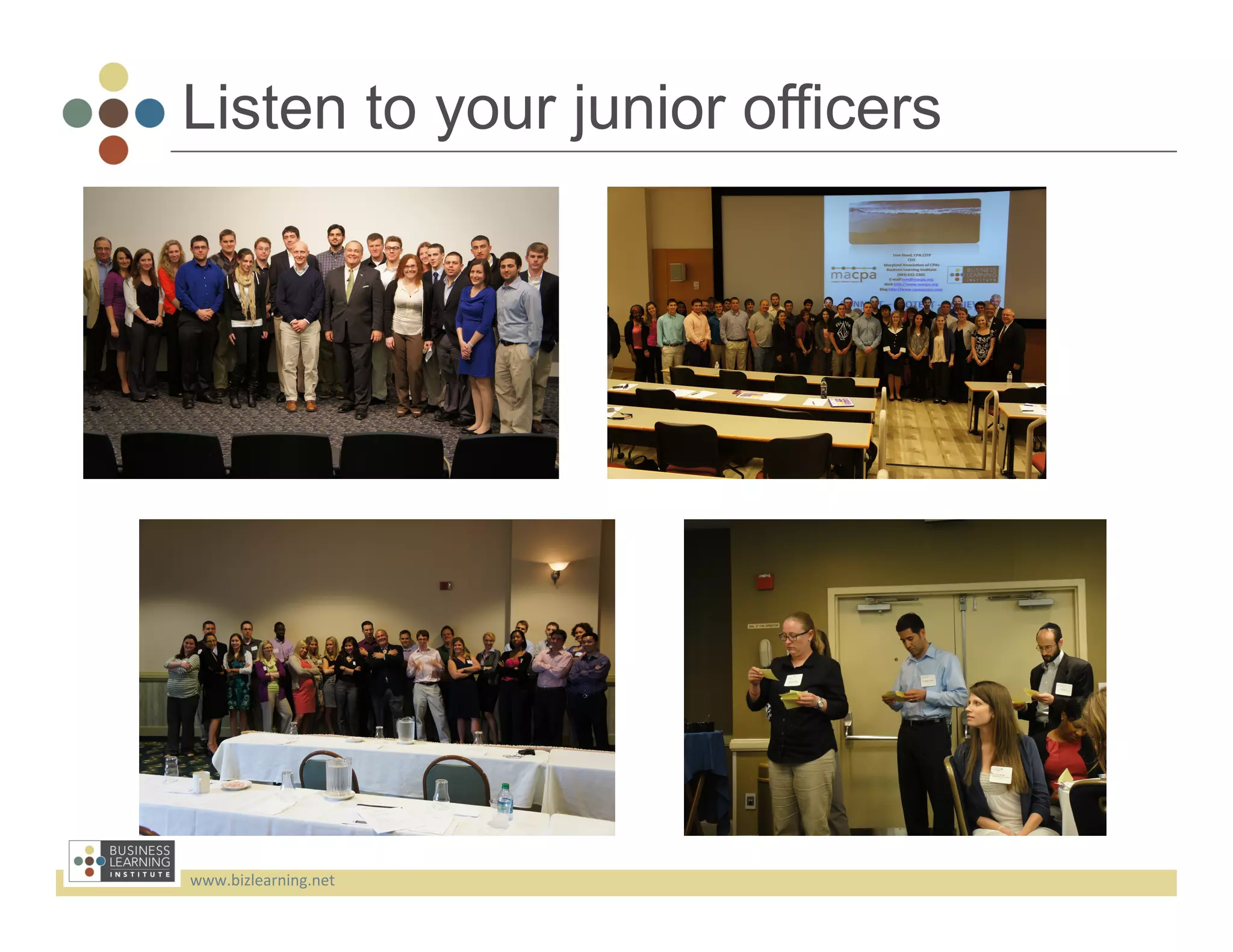
Listen to your junior officers


www.bizlearning.net	
  
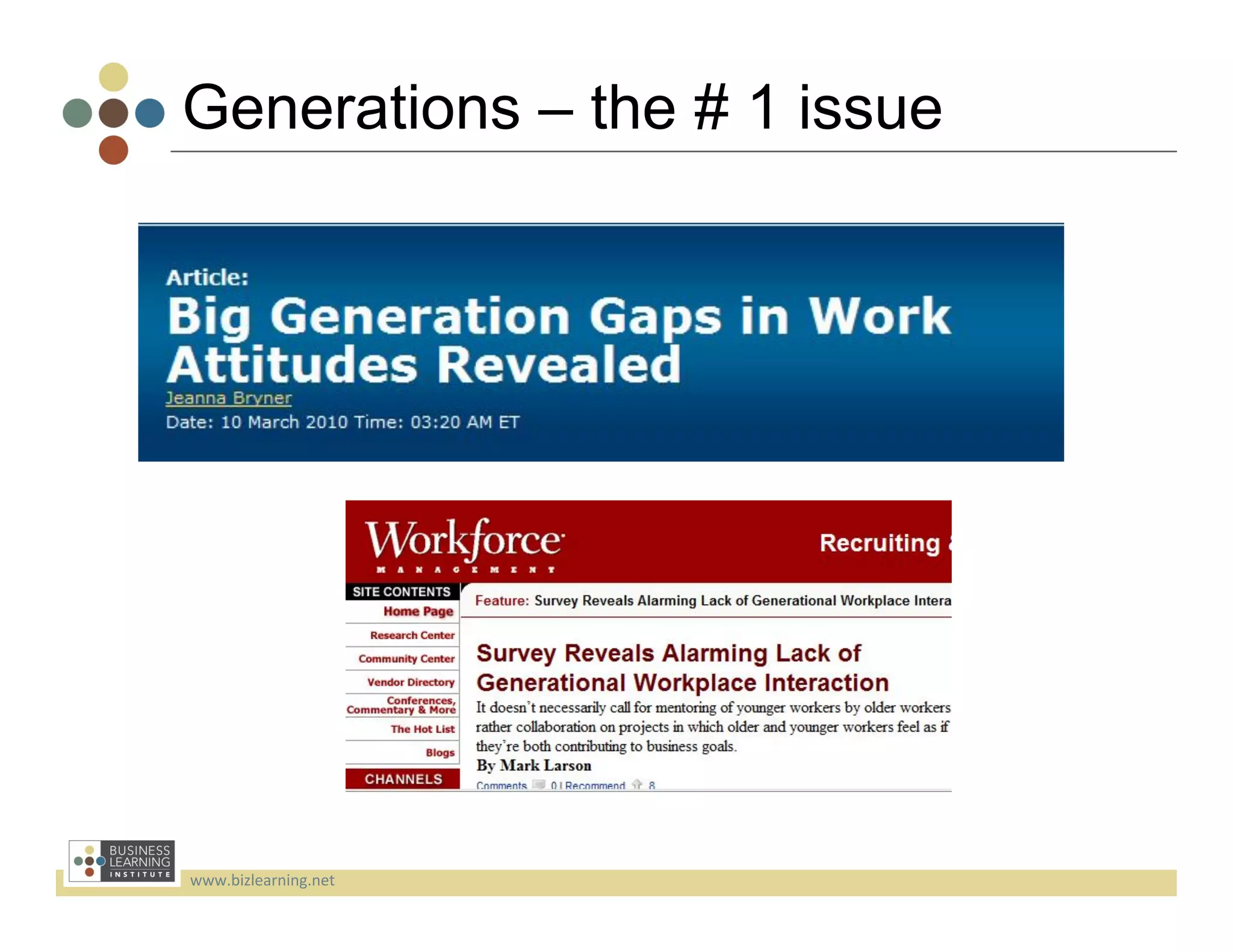
Generations – the # 1 issue


www.bizlearning.net	
  
www.bizlearning.net	
  
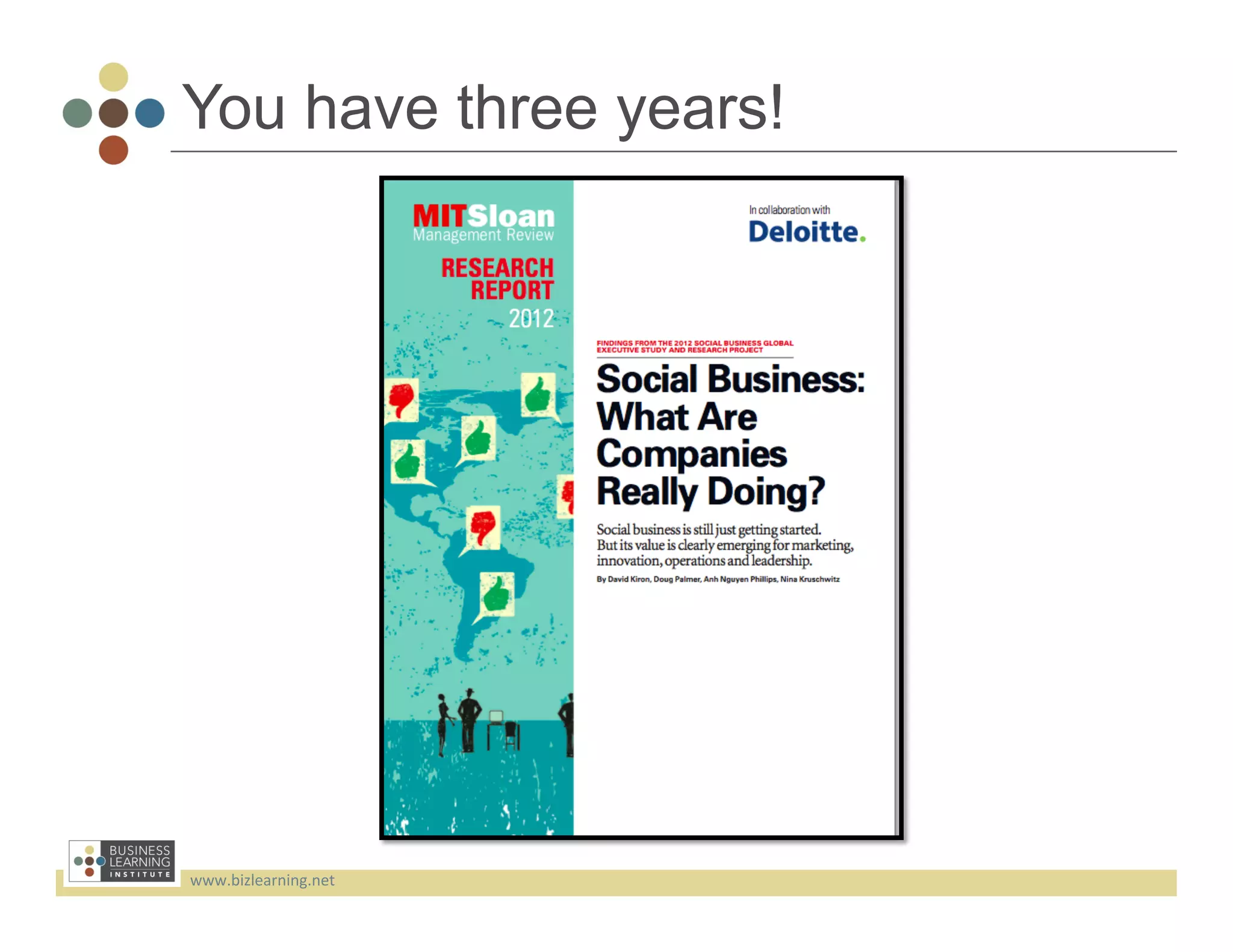
You have three years!


www.bizlearning.net	
  
Go social, Go native!


www.bizlearning.net	
  
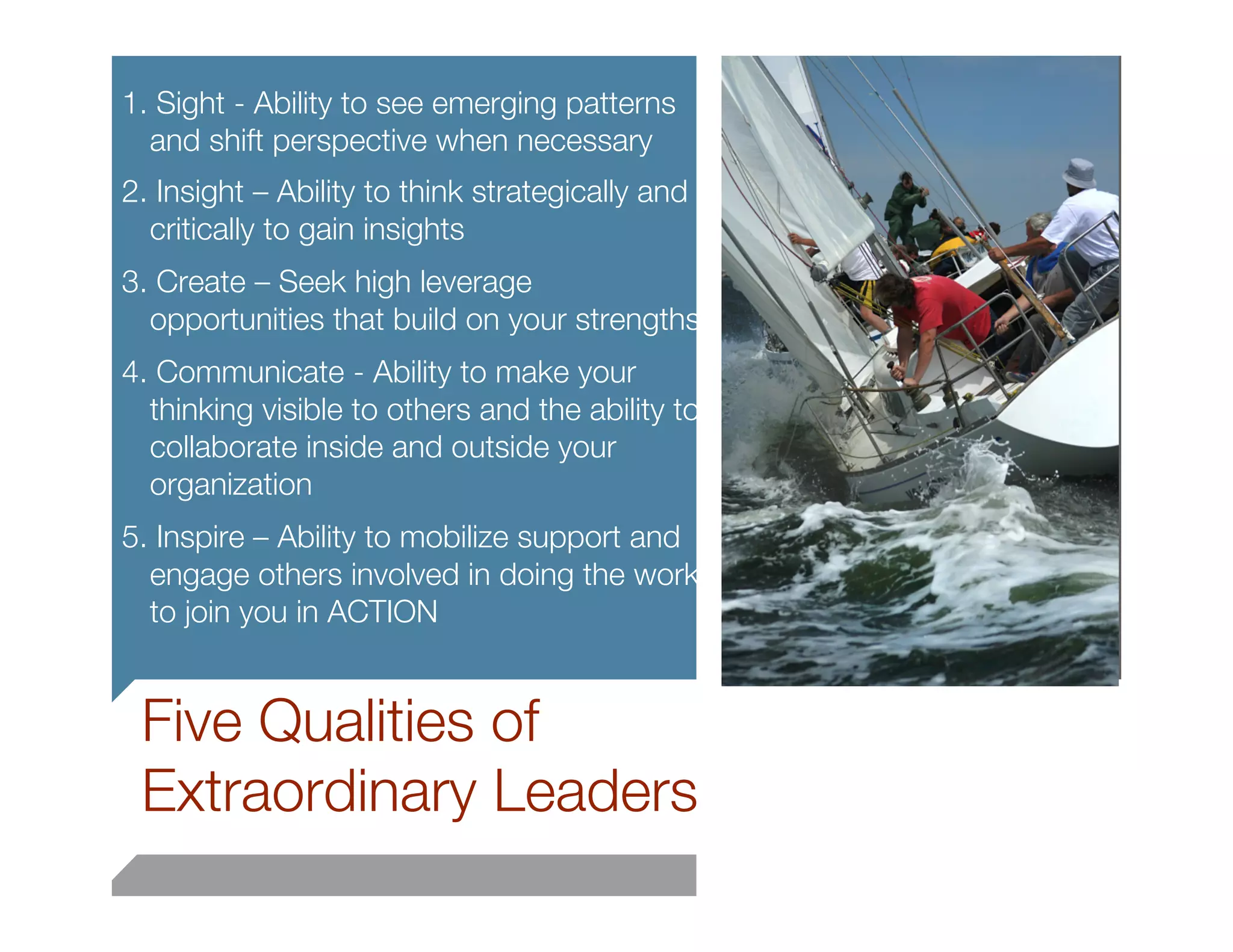
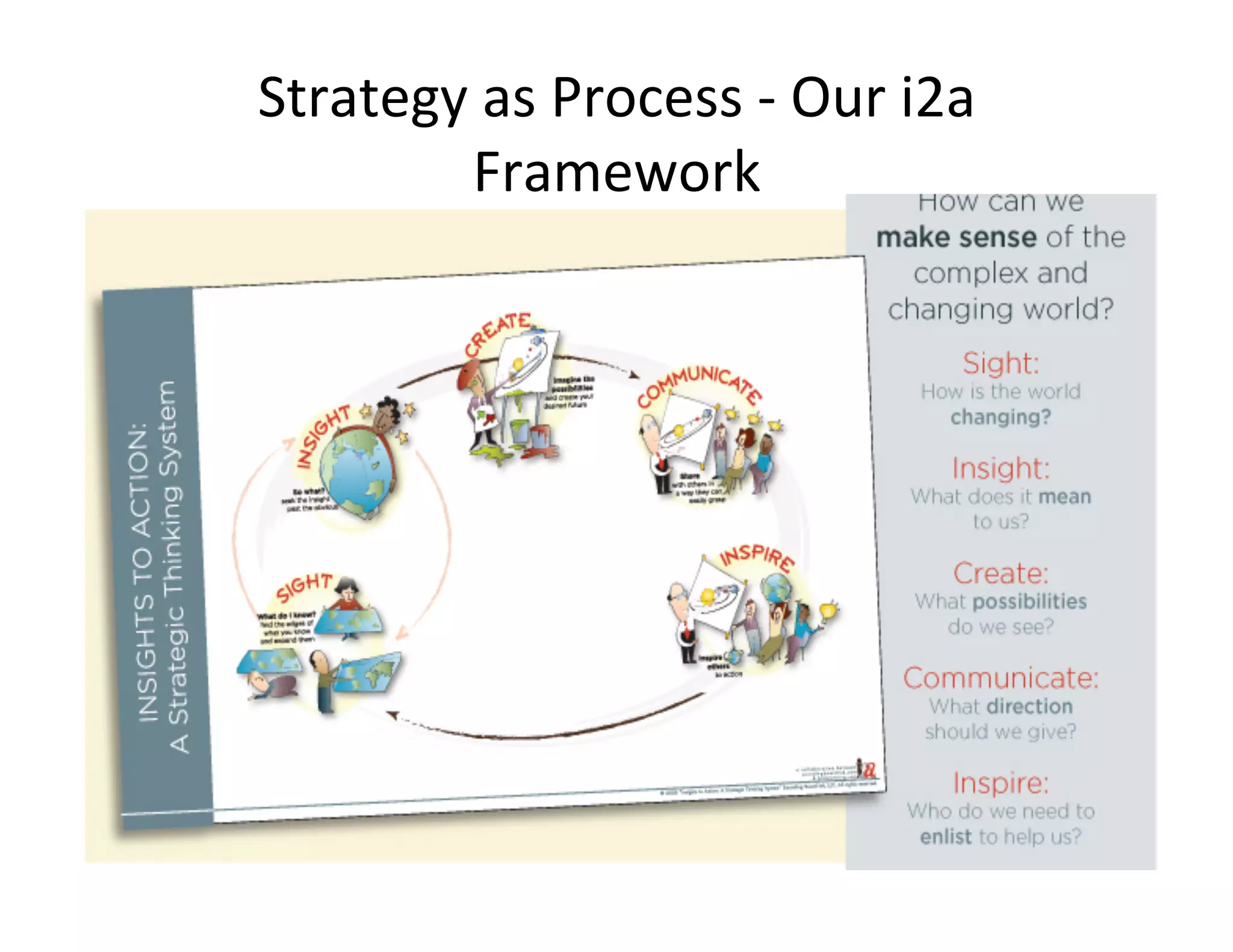
1. Sight - Ability to see emerging patterns
  and shift perspective when necessary
2. Insight – Ability to think strategically and
  critically to gain insights 
3. Create – Seek high leverage
  opportunities that build on your strengths
4. Communicate - Ability to make your
  thinking visible to others and the ability to
  collaborate inside and outside your
  organization
5. Inspire – Ability to mobilize support and
  engage others involved in doing the work
  to join you in ACTION
                                                  27


    Five Qualities of
    Extraordinary Leaders
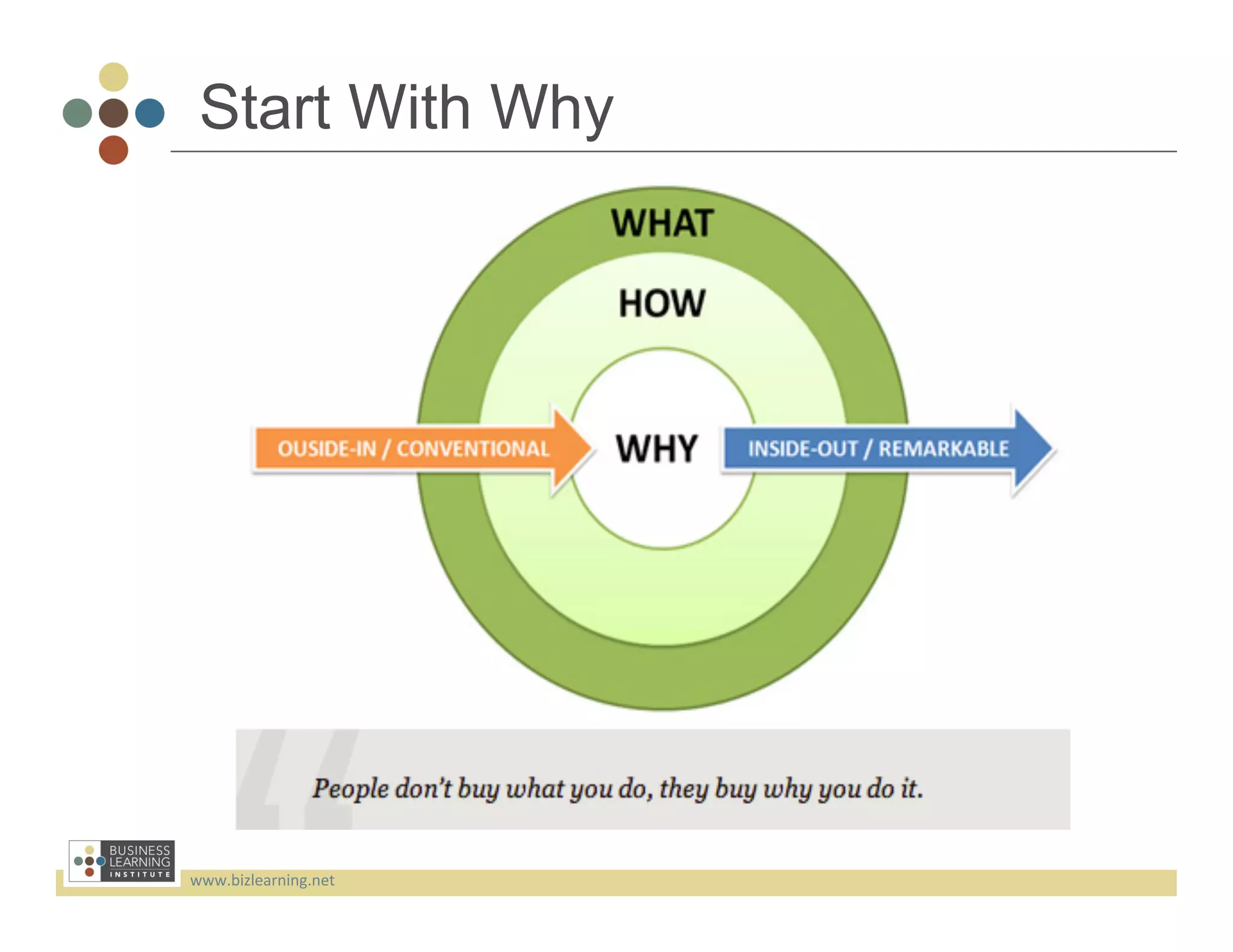
Start With Why


www.bizlearning.net	
  
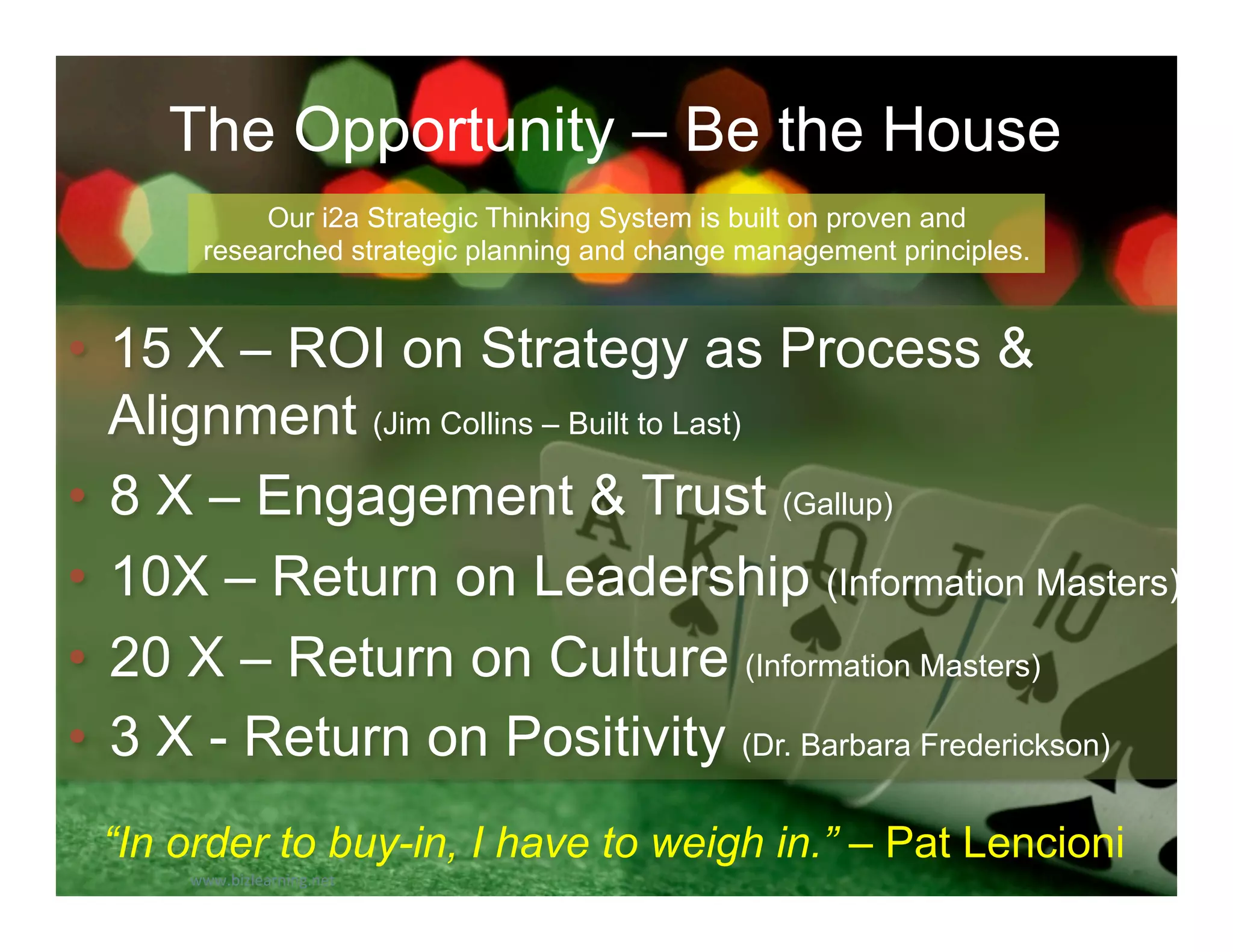
The Opportunity – Be the House
             Our i2a Strategic Thinking System is built on proven and
        researched strategic planning and change management principles.


•  15 X – ROI on Strategy as Process &
   Alignment (Jim Collins – Built to Last)
•  8 X – Engagement & Trust (Gallup)
•  10X – Return on Leadership (Information Masters)
•  20 X – Return on Culture (Information Masters)
•  3 X - Return on Positivity (Dr. Barbara Frederickson)
 “In order to buy-in, I have to weigh in.” – Pat Lencioni
      www.bizlearning.net	
  
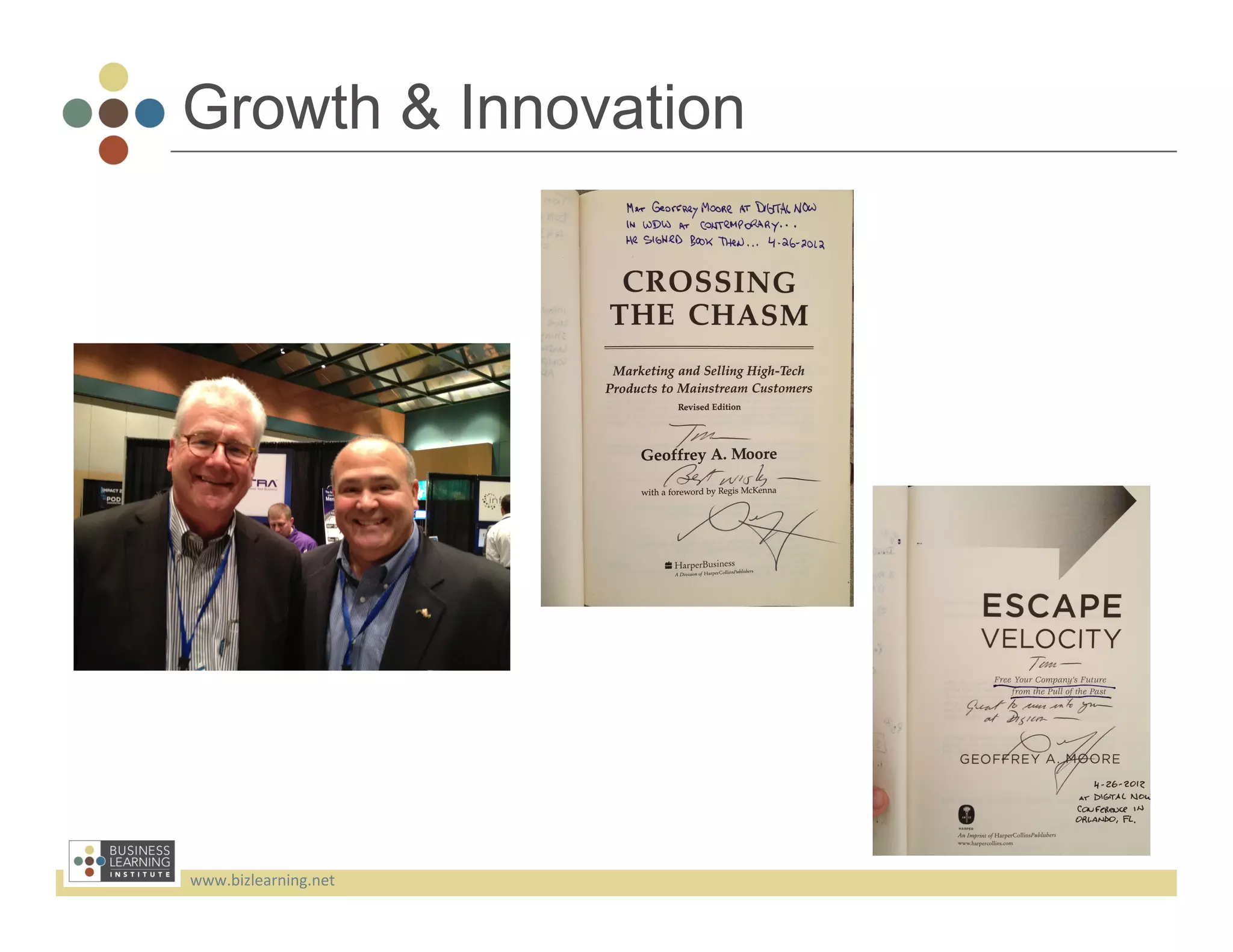
Growth & Innovation


www.bizlearning.net	
  
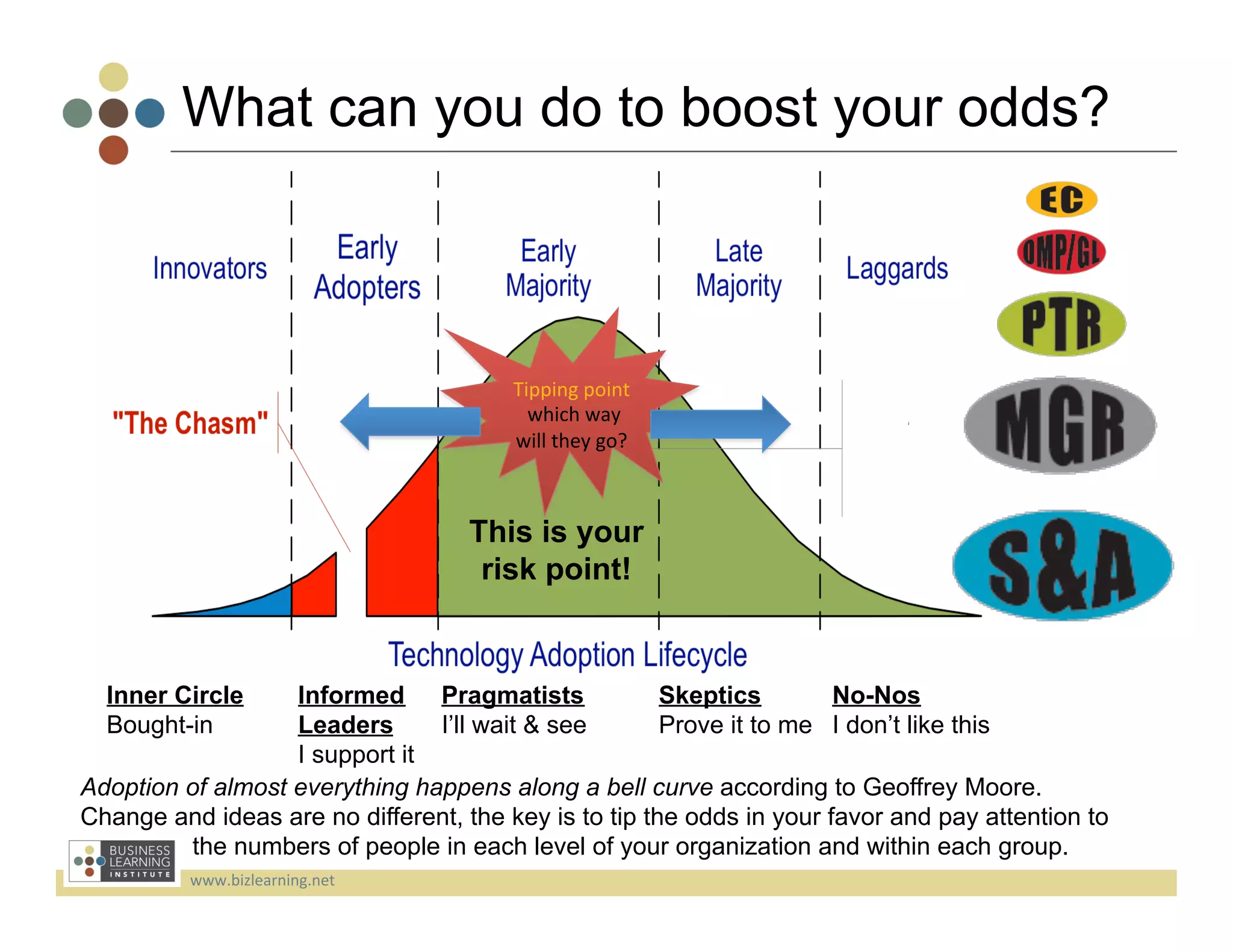
What can you do to boost your odds?


                                        Tipping	
  point	
  
                                         	
  which	
  way	
  
                                        will	
  they	
  go?	


                                    This is your
                                     risk point!


  Inner Circle     Informed Pragmatists                Skeptics        No-Nos
  Bought-in        Leaders      I’ll wait & see        Prove it to me I don’t like this
                   I support it
Adoption of almost everything happens along a bell curve according to Geoffrey Moore.
Change and ideas are no different, the key is to tip the odds in your favor and pay attention to
         the numbers of people in each level of your organization and within each group.
          www.bizlearning.net	
  
Strategy	
  as	
  Process	
  -­‐	
  Our	
  i2a	
  
         Framework	
  
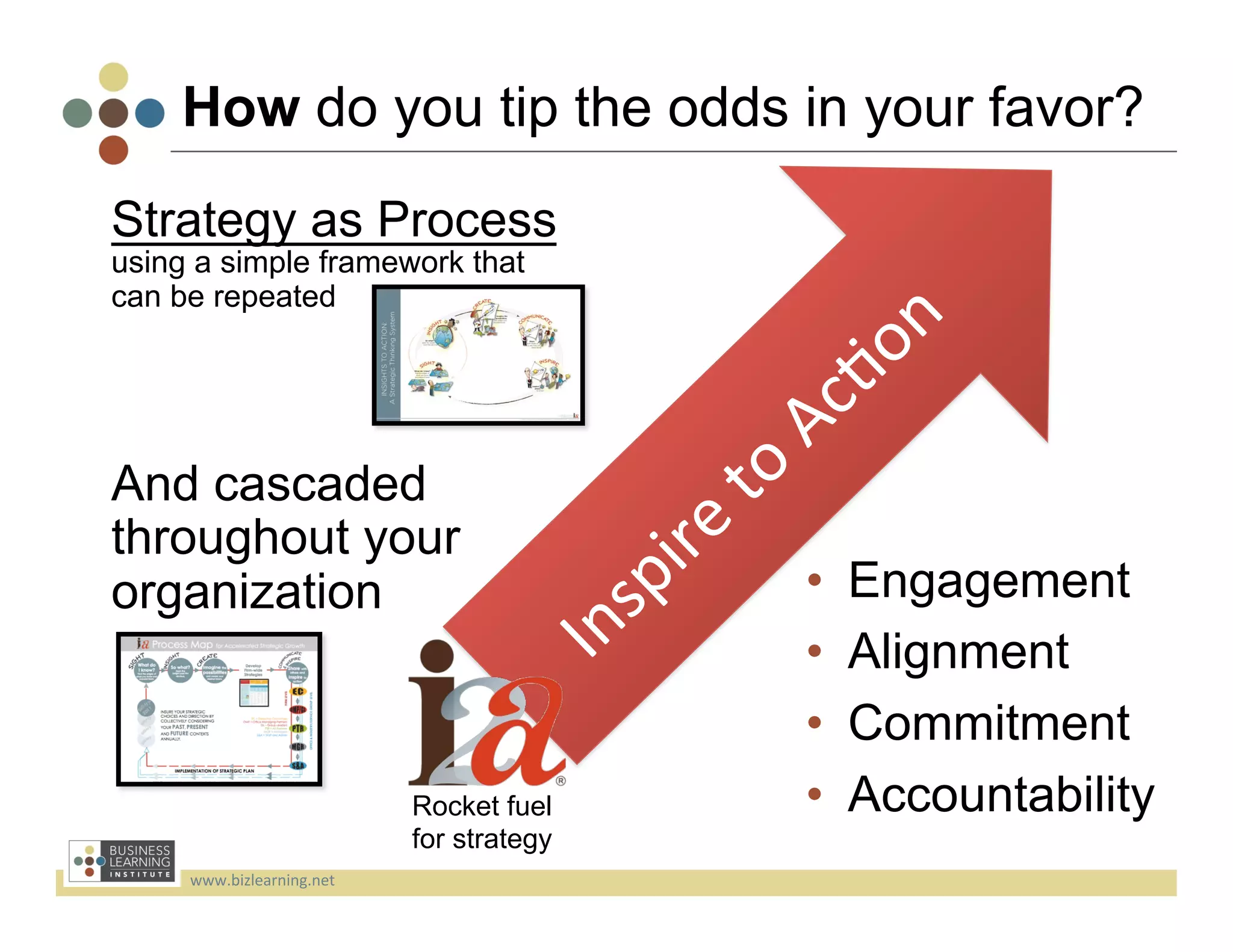
How do you tip the odds in your favor?
Strategy as Process
using a simple framework that
can be repeated


And cascaded
throughout your
organization                                  •    Engagement
                                              •    Alignment
                                              •    Commitment
                               Rocket fuel    •    Accountability
                               for strategy
     www.bizlearning.net	
  
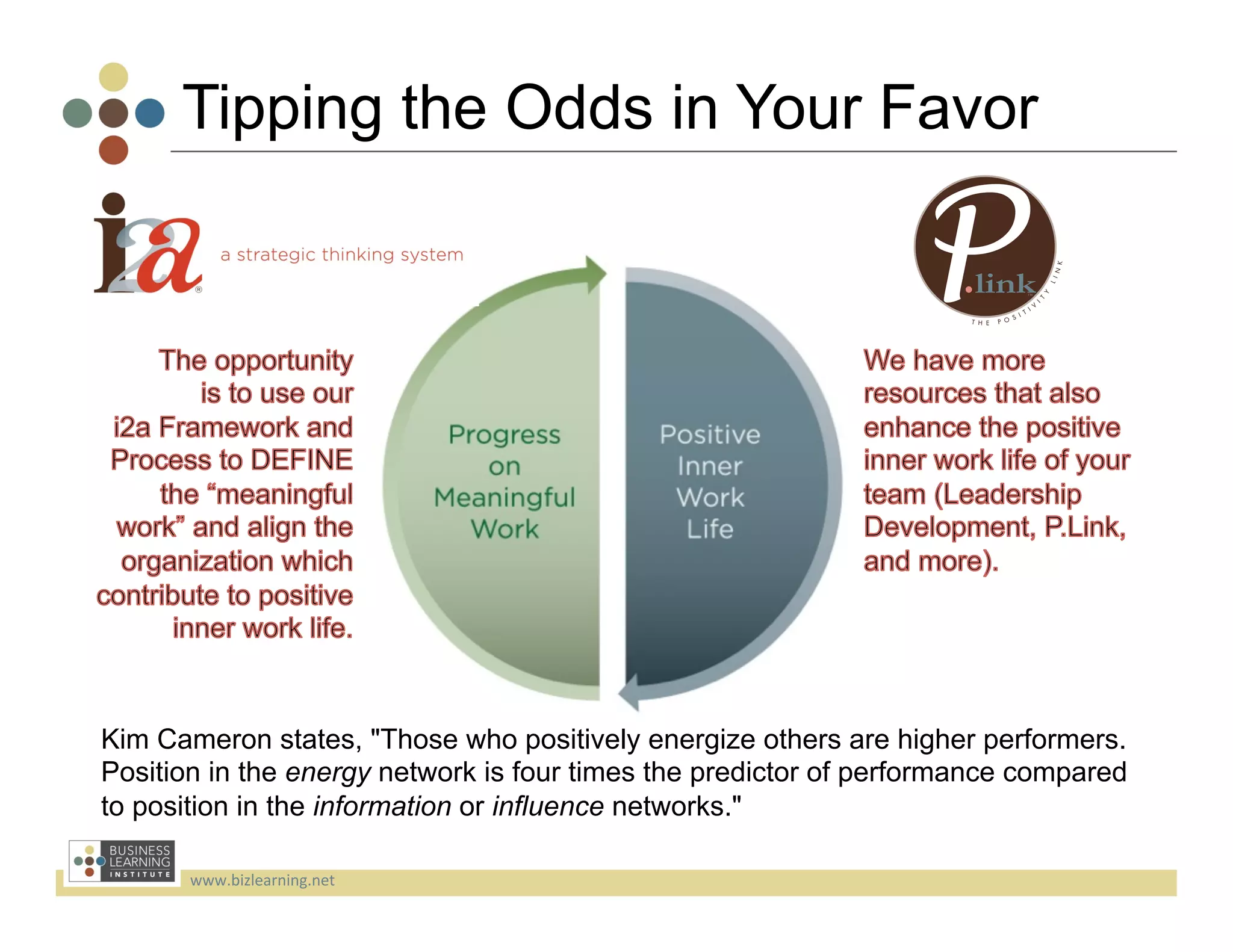
Tipping the Odds in Your Favor


Kim Cameron states, "Those who positively energize others are higher performers.
Position in the energy network is four times the predictor of performance compared
to position in the information or influence networks."

       www.bizlearning.net	
  
Why executives should care about
    Employee Engagement
Gallup studies proved that corporations with higher
engagement levels generated:
•  27% higher profits
•  50% higher sales
•  50% higher customer loyalty
•  38% above average productivity

“Employee Engagement is an outcome-based concept.
It is the term which is used to describe the degree to which
employees can be ascribed as aligned and committed to their
organization such that they are at the most productive.”
                               -The International School of Human Capital Management
     www.bizlearning.net	
  
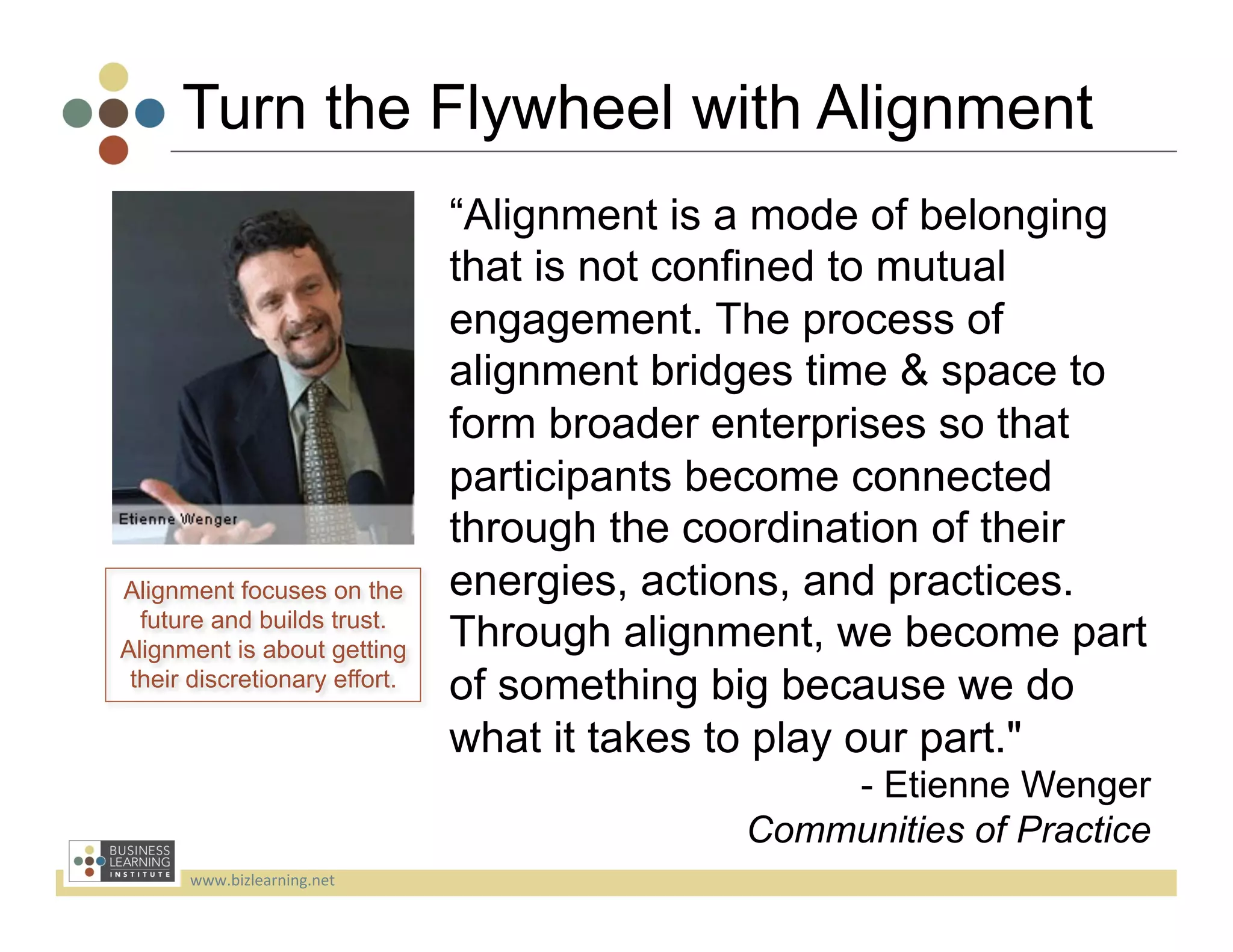
Turn the Flywheel with Alignment
                                “Alignment is a mode of belonging
                                that is not confined to mutual
                                engagement. The process of
                                alignment bridges time & space to
                                form broader enterprises so that
                                participants become connected
                                through the coordination of their
Alignment focuses on the        energies, actions, and practices.
  future and builds trust.
Alignment is about getting      Through alignment, we become part
 their discretionary effort.    of something big because we do
                                what it takes to play our part."
                                                  - Etienne Wenger
                                              Communities of Practice
      www.bizlearning.net	
  
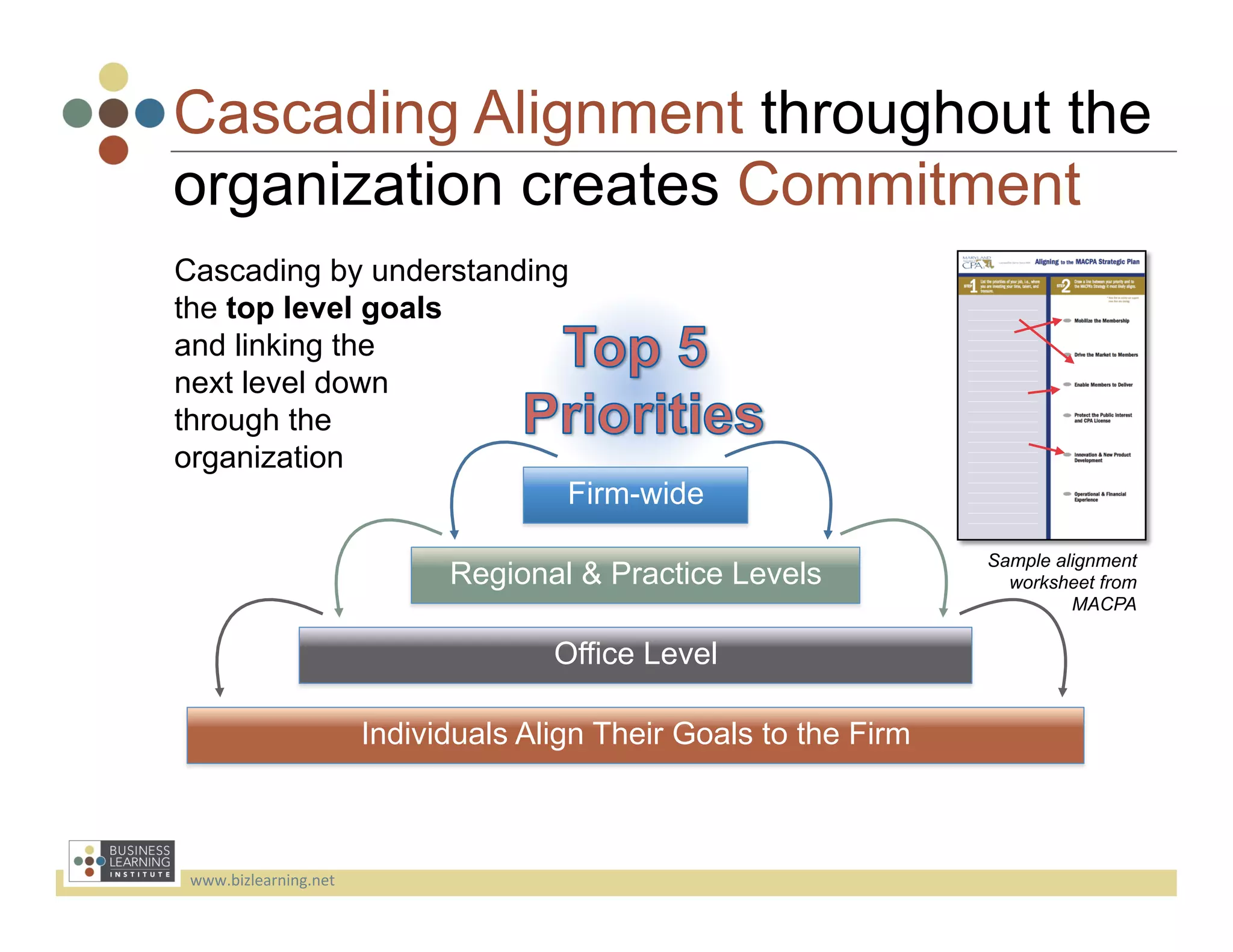
Cascading Alignment throughout the
organization creates Commitment
Cascading by understanding
the top level goals
and linking the
next level down
through the
organization
                          Firm-wide

                                                                       Sample alignment
                                 Regional & Practice Levels              worksheet from
                                                                                MACPA

                                         Office Level

                           Individuals Align Their Goals to the Firm


 www.bizlearning.net	
  
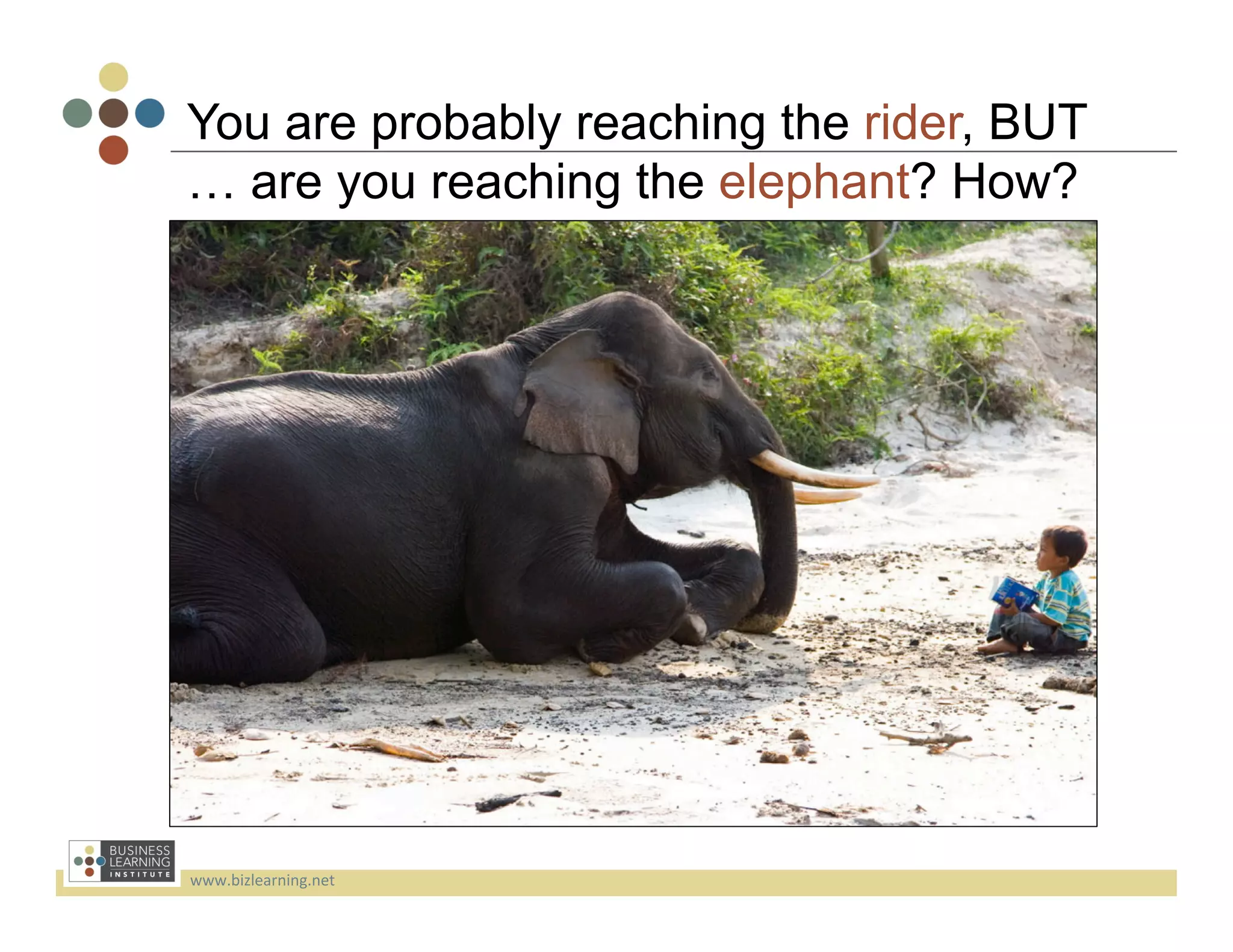
You are probably reaching the rider, BUT
… are you reaching the elephant? How?


www.bizlearning.net	
  
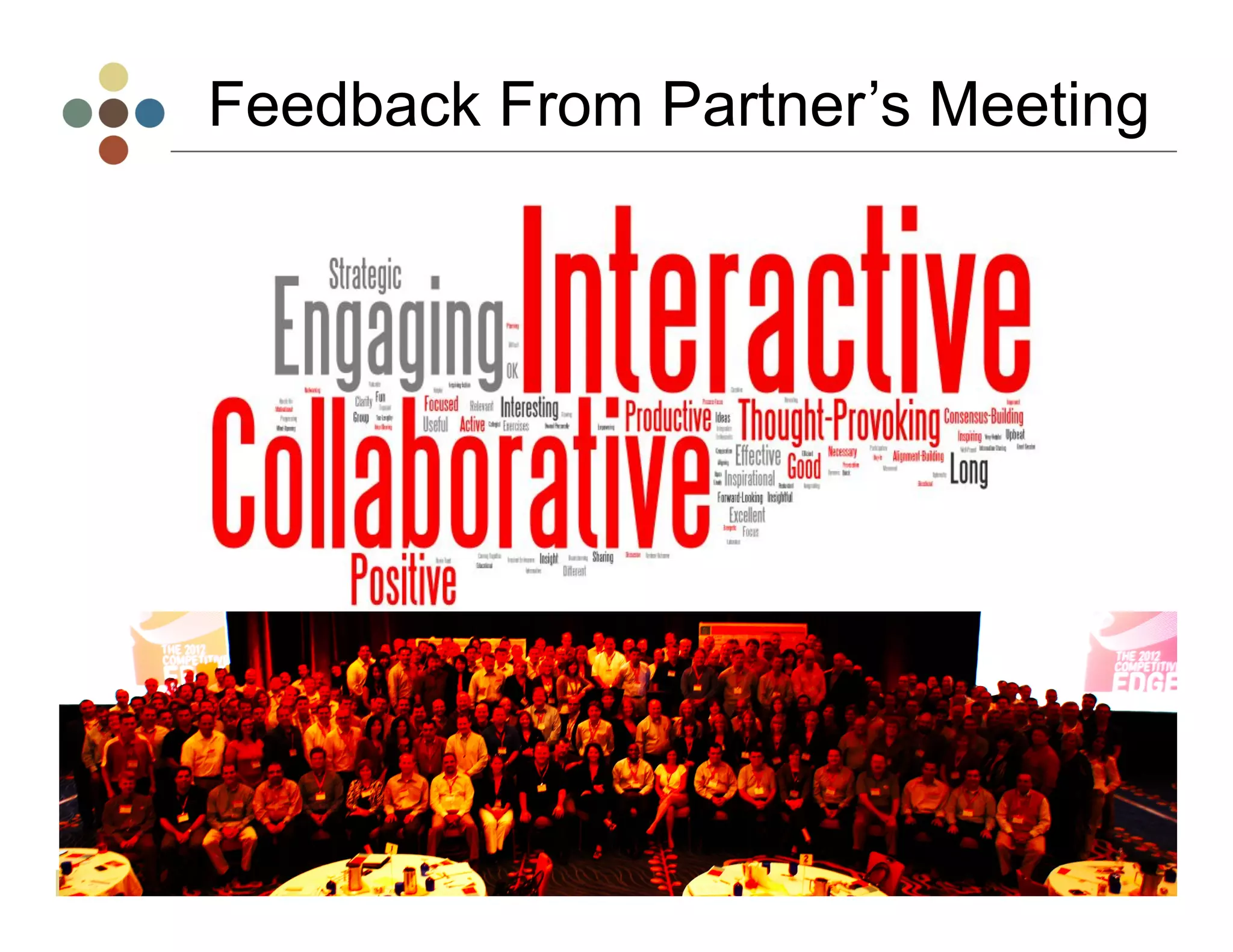
Feedback From Partner’s Meeting


www.bizlearning.net	
  
www.bizlearning.net	
  
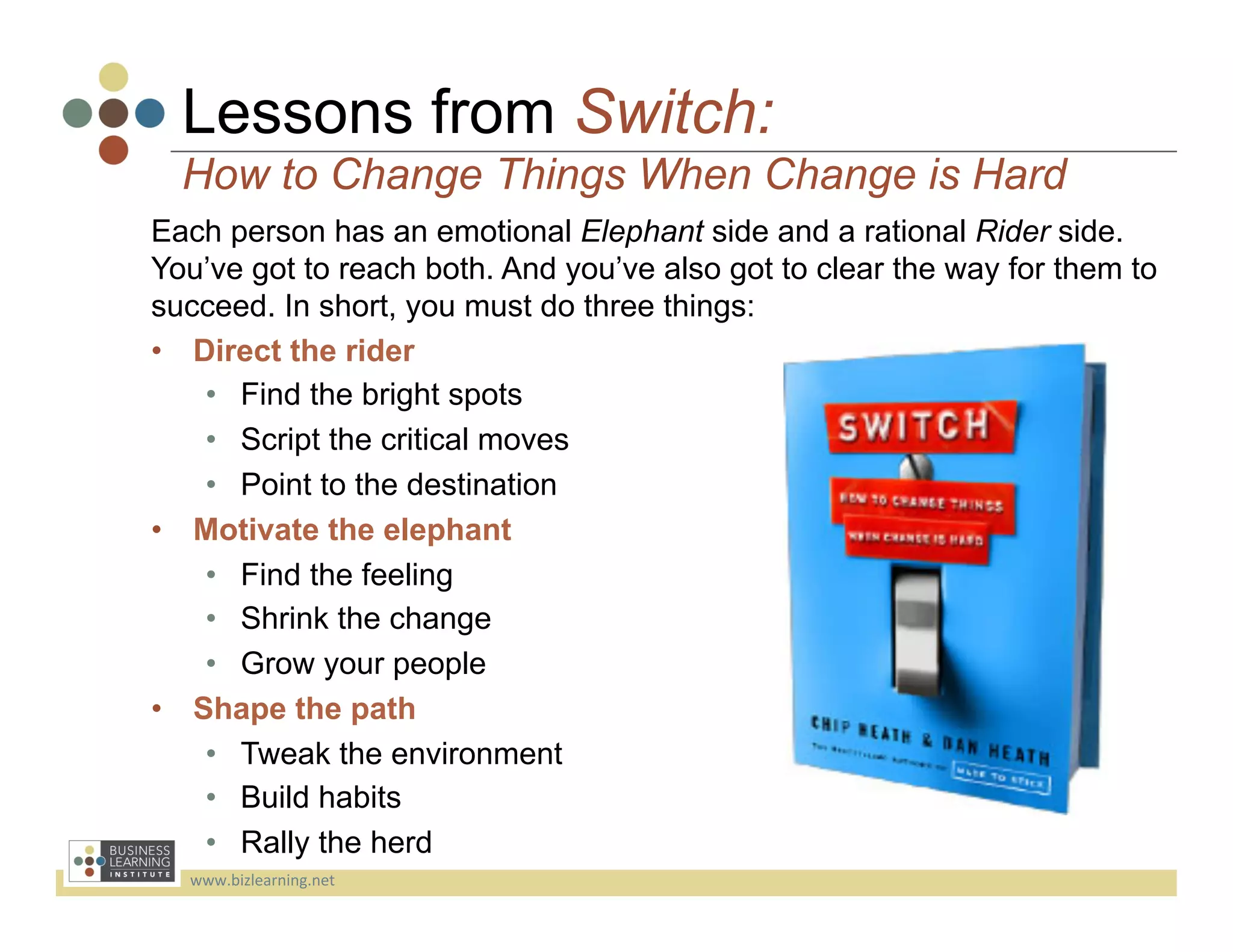
Lessons from Switch:
  How to Change Things When Change is Hard
Each person has an emotional Elephant side and a rational Rider side.
You’ve got to reach both. And you’ve also got to clear the way for them to
succeed. In short, you must do three things:
•  Direct the rider
    •  Find the bright spots
    •  Script the critical moves
    •  Point to the destination
•  Motivate the elephant
    •  Find the feeling
    •  Shrink the change
    •  Grow your people
•  Shape the path
    •  Tweak the environment
    •  Build habits
    •  Rally the herd
  www.bizlearning.net	
  
It is more important to have your team:
•  Thinking strategically than having a strategic plan.
•  Understanding the direction and foundation (vision, values
   & strategic intent) of the firm than having a detailed
   five-year plan.
•  Engaging in the firm’s future as a whole organization, not
   just the partners.
•  Aligning and on the same page than working
   independently in their own silos.
•  Engaging and participating than being idle observers.
•  Focusing on the future than questioning the past.
Our 12a: Insights to Action framework allows you to engage and align
your firm and engage your people in the meaningful work of your
organization. This increases buy-in and discretionary effort that
defines high performing organizations.
      www.bizlearning.net	
  
Learning & Leadership


www.bizlearning.net	
  
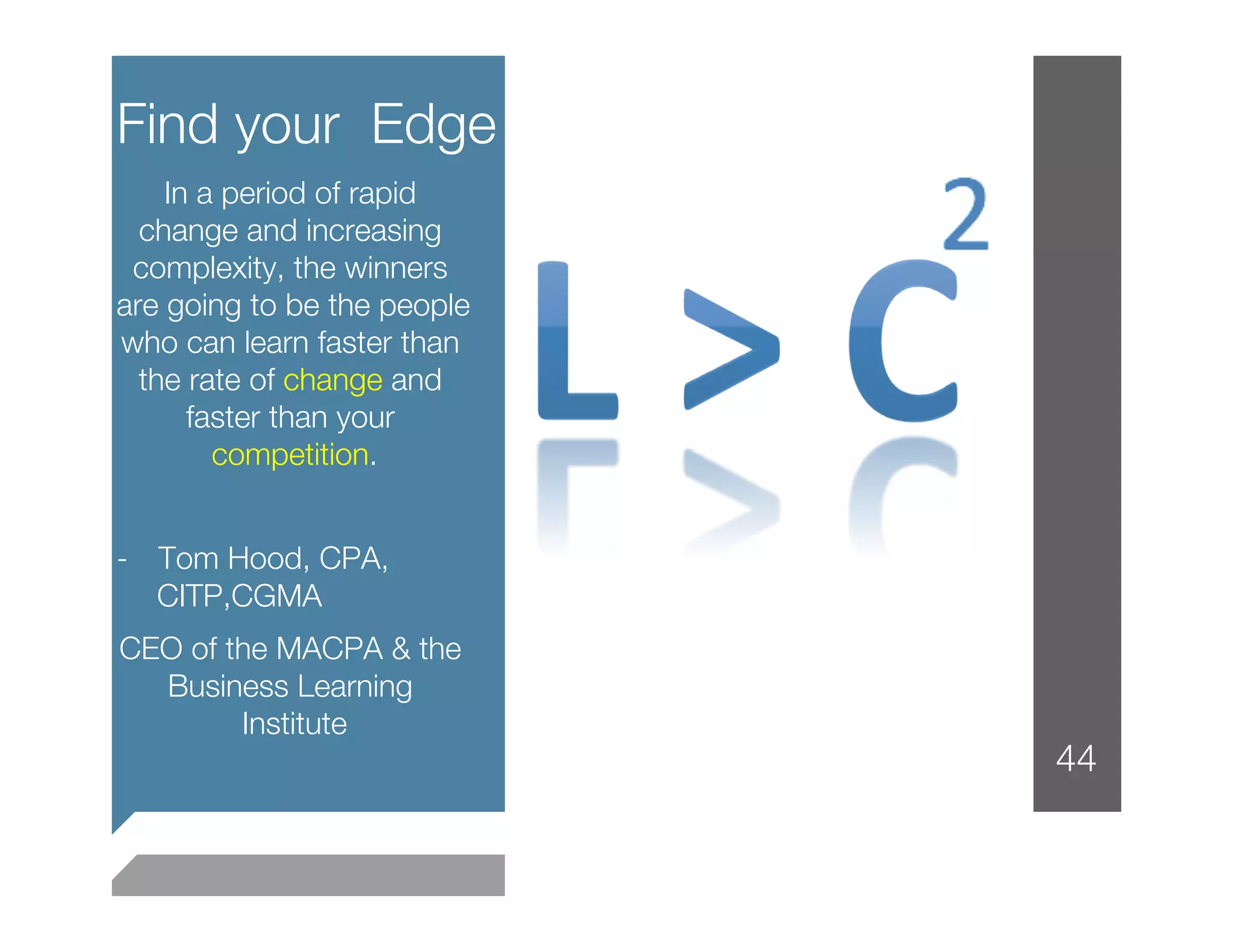
Find your Edge
    In a period of rapid
  change and increasing
 complexity, the winners
are going to be the people
who can learn faster than
  the rate of change and
      faster than your
        competition. 

-  Tom Hood, CPA,
   CITP,CGMA
CEO of the MACPA & the
  Business Learning
        Institute
                
                             44
Tom Peters advice on keeping your L > C
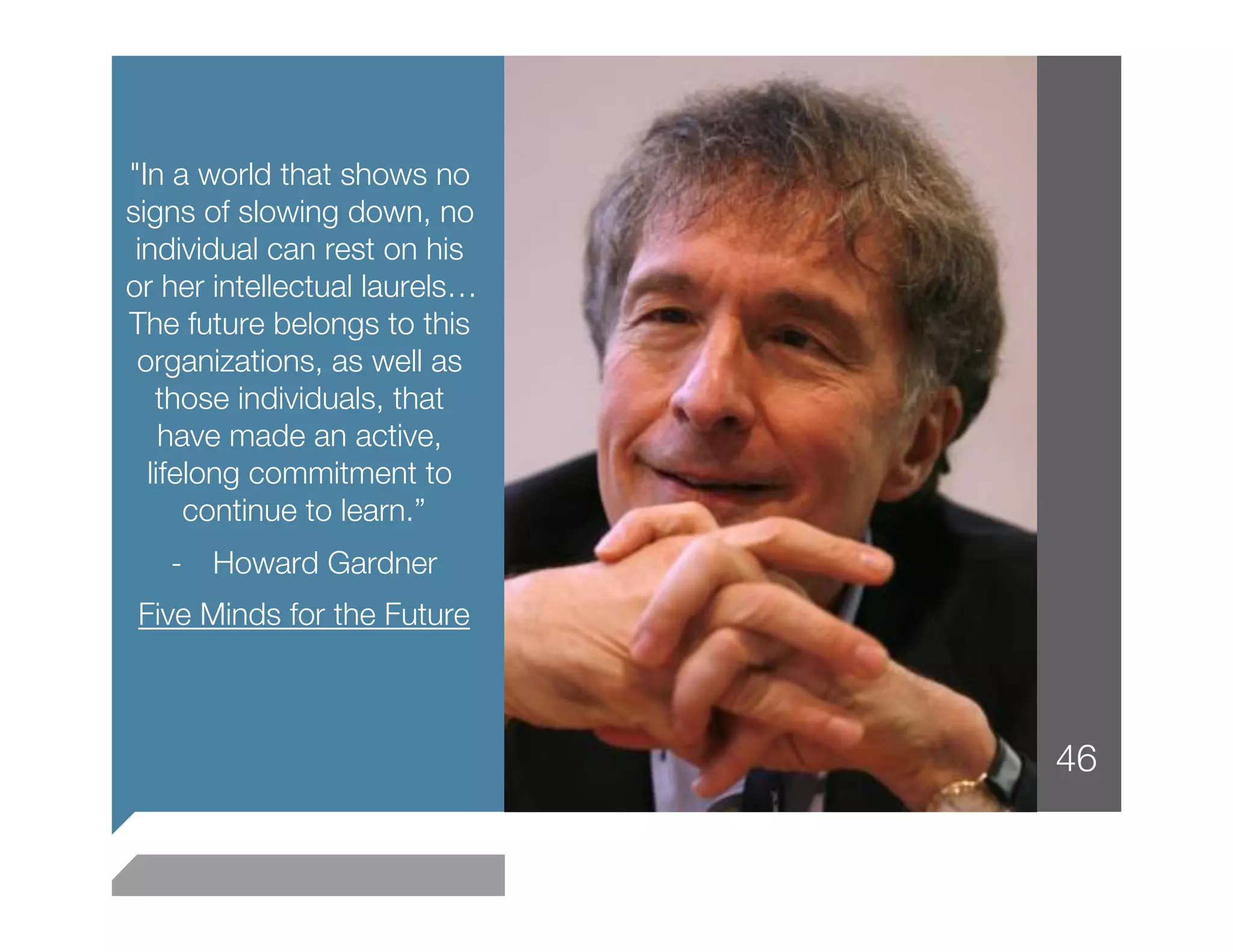
"In a world that shows no
signs of slowing down, no
 individual can rest on his
or her intellectual laurels…
The future belongs to this
 organizations, as well as
   those individuals, that
    have made an active,
  lifelong commitment to
      continue to learn.”
                        
   -  Howard Gardner
                   
Five Minds for the Future


                               46
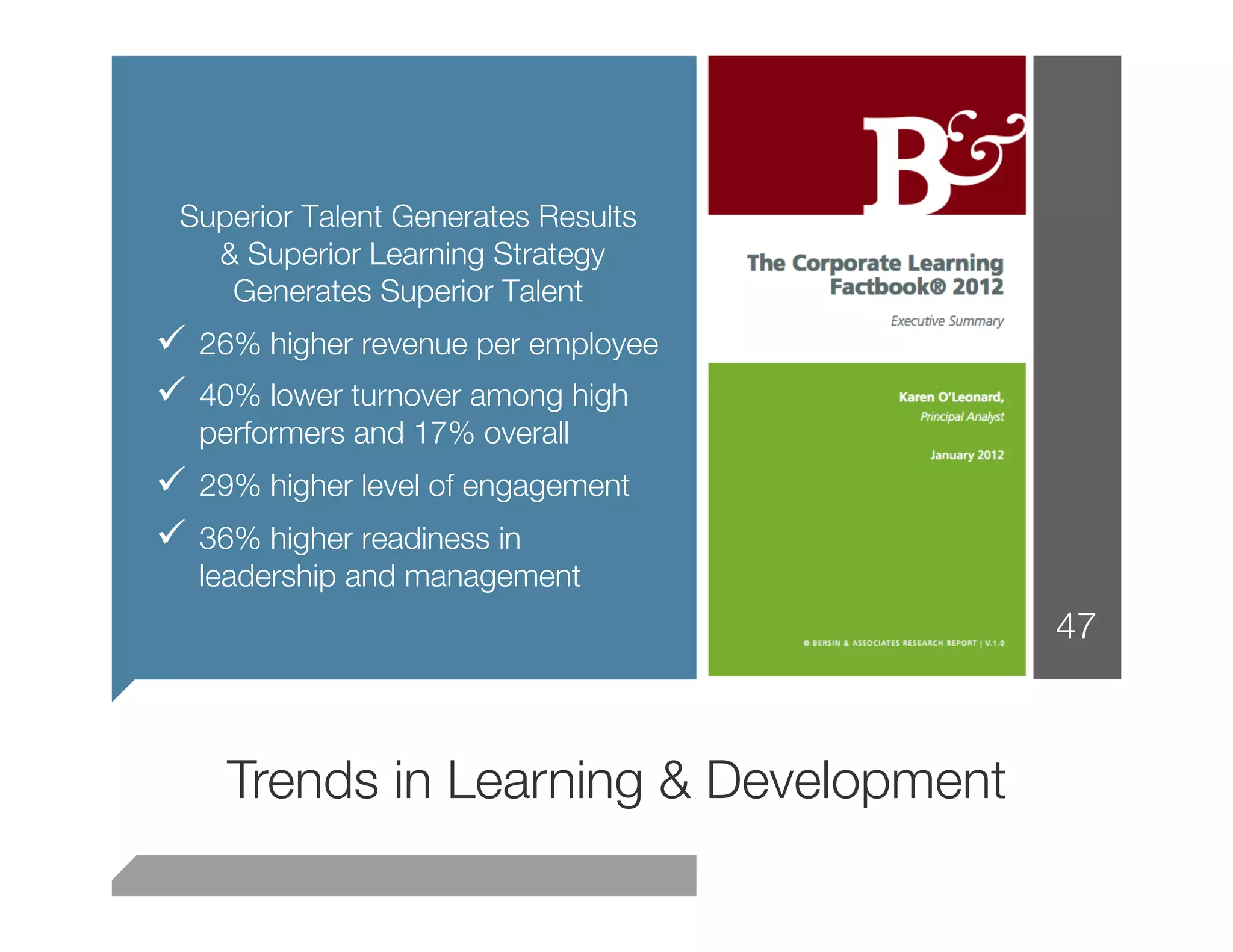
Superior Talent Generates Results"
   & Superior Learning Strategy
    Generates Superior Talent
  26% higher revenue per employee
  40% lower turnover among high
   performers and 17% overall
  29% higher level of engagement 
  36% higher readiness in
   leadership and management
                                         47


     Trends in Learning & Development
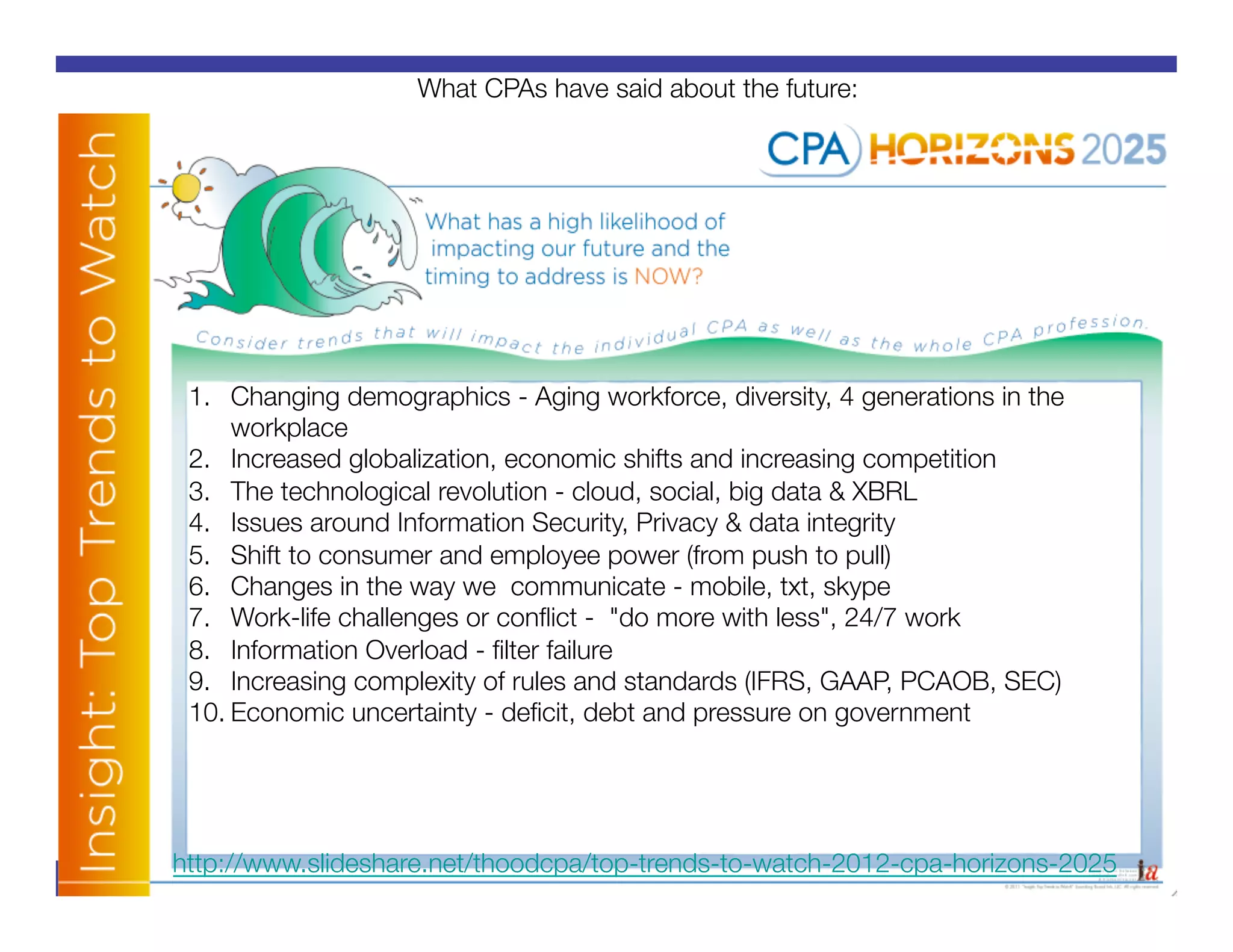
What CPAs have said about the future:


 1.  Changing demographics - Aging workforce, diversity, 4 generations in the
     workplace
 2.  Increased globalization, economic shifts and increasing competition
 3.  The technological revolution - cloud, social, big data & XBRL
 4.  Issues around Information Security, Privacy & data integrity
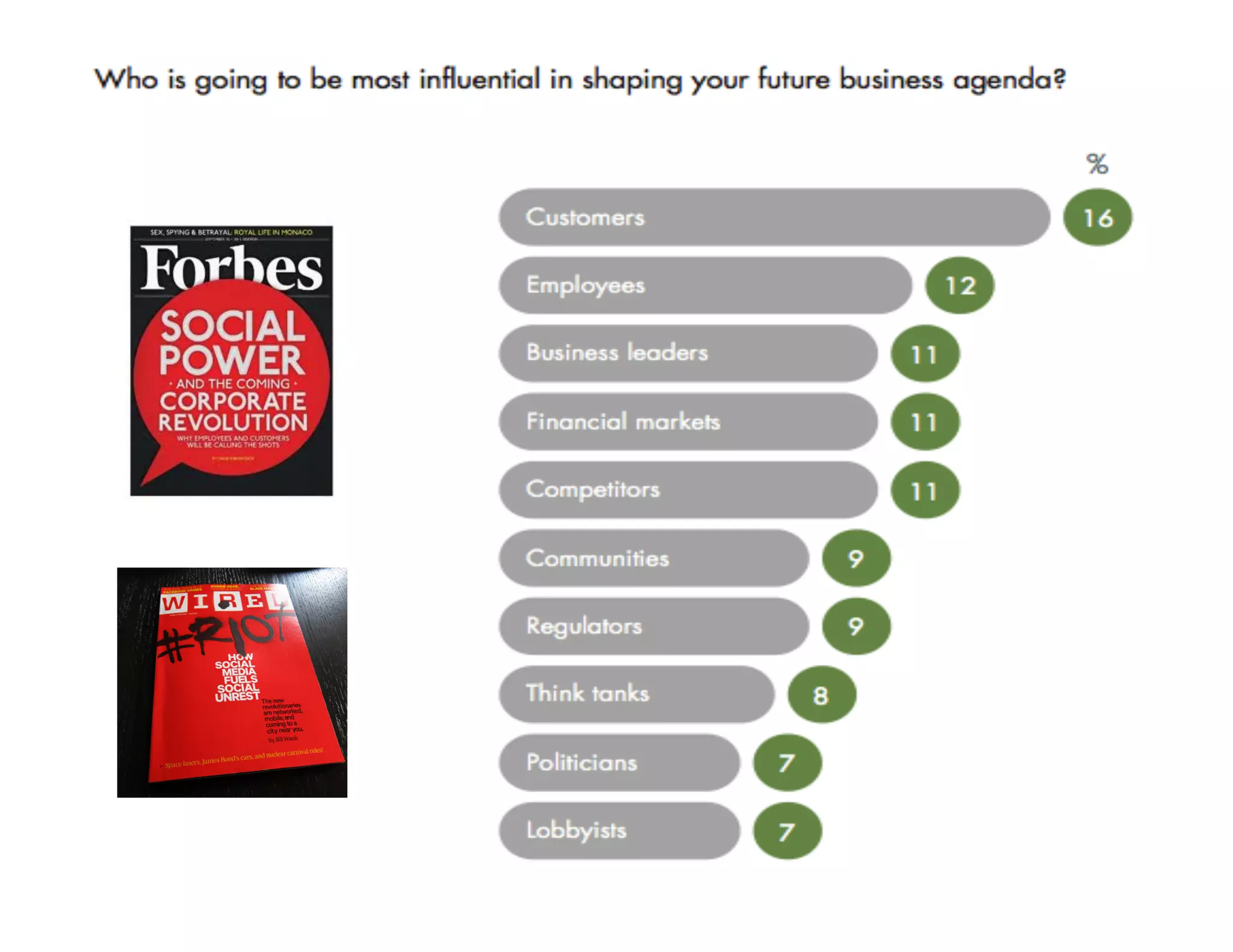
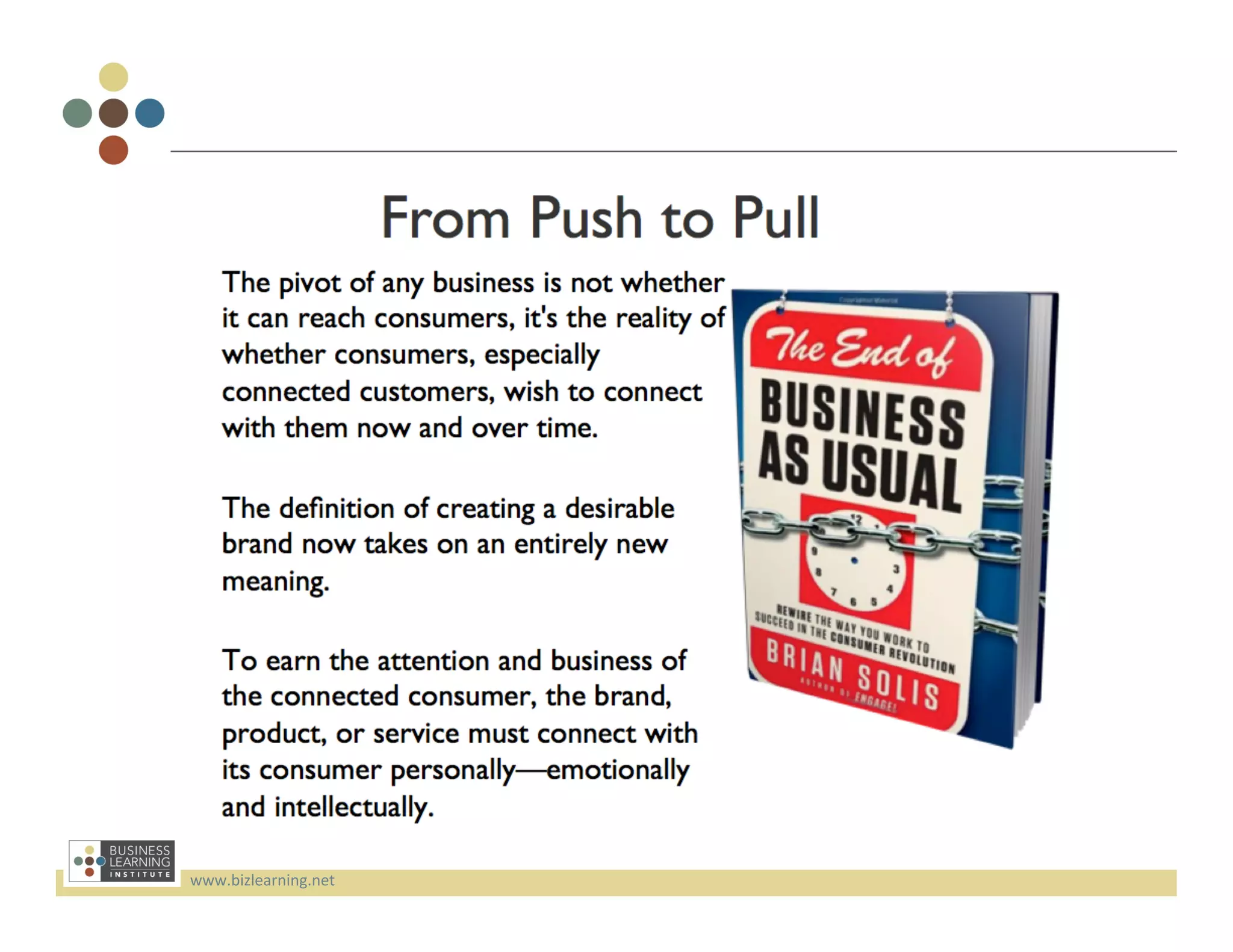
 5.  Shift to consumer and employee power (from push to pull)
 6.  Changes in the way we communicate - mobile, txt, skype
 7.  Work-life challenges or conflict - "do more with less", 24/7 work
 8.  Information Overload - filter failure
 9.  Increasing complexity of rules and standards (IFRS, GAAP, PCAOB, SEC)
 10. Economic uncertainty - deficit, debt and pressure on government


http://www.slideshare.net/thoodcpa/top-trends-to-watch-2012-cpa-horizons-2025
                                   American Institute of CPAs
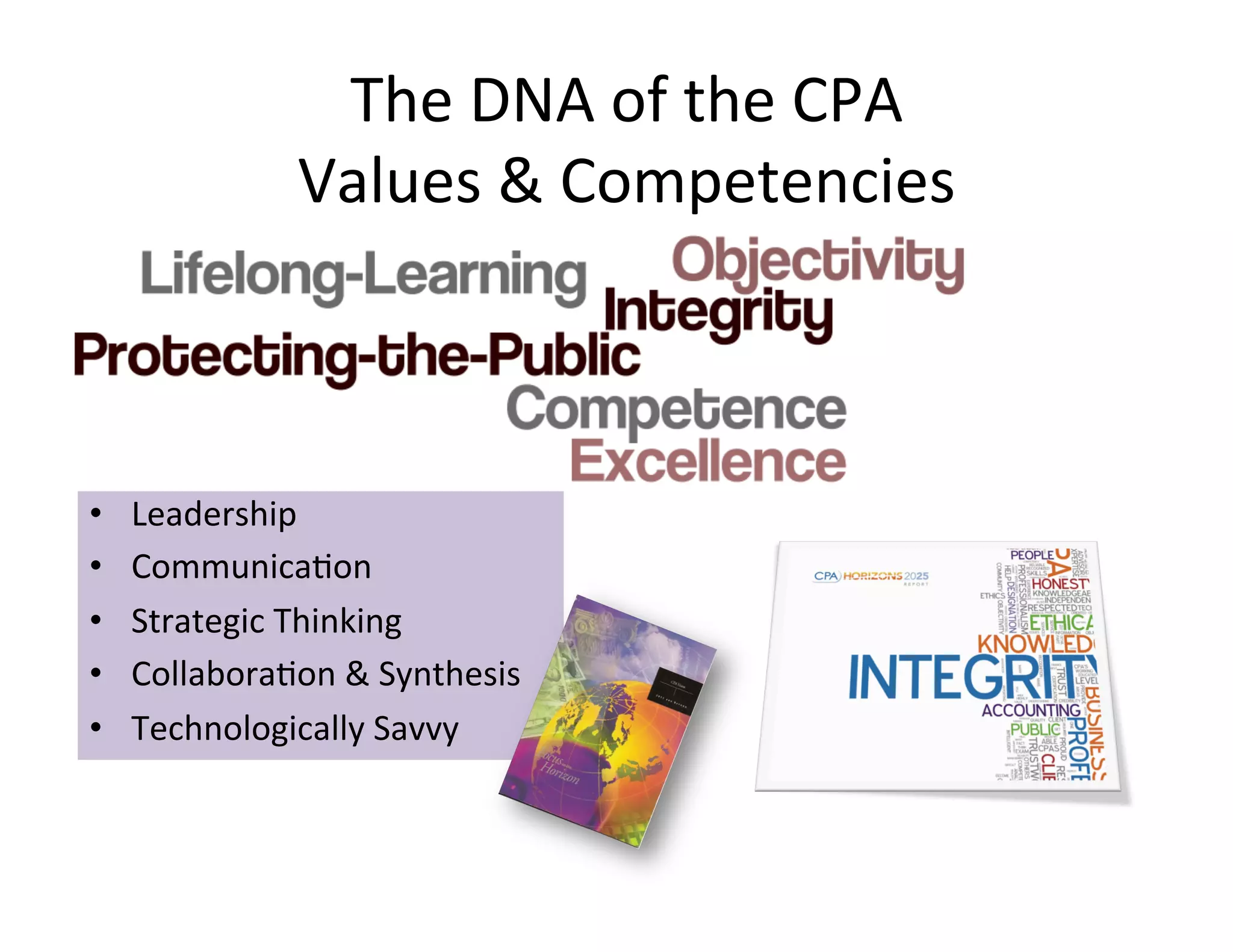
The	
  DNA	
  of	
  the	
  CPA	
  
                   Values	
  &	
  Competencies	


•    Leadership	
  
•    Communica<on	
  
•    Strategic	
  Thinking	
  
•    Collabora<on	
  &	
  Synthesis	
  
•    Technologically	
  Savvy	
  
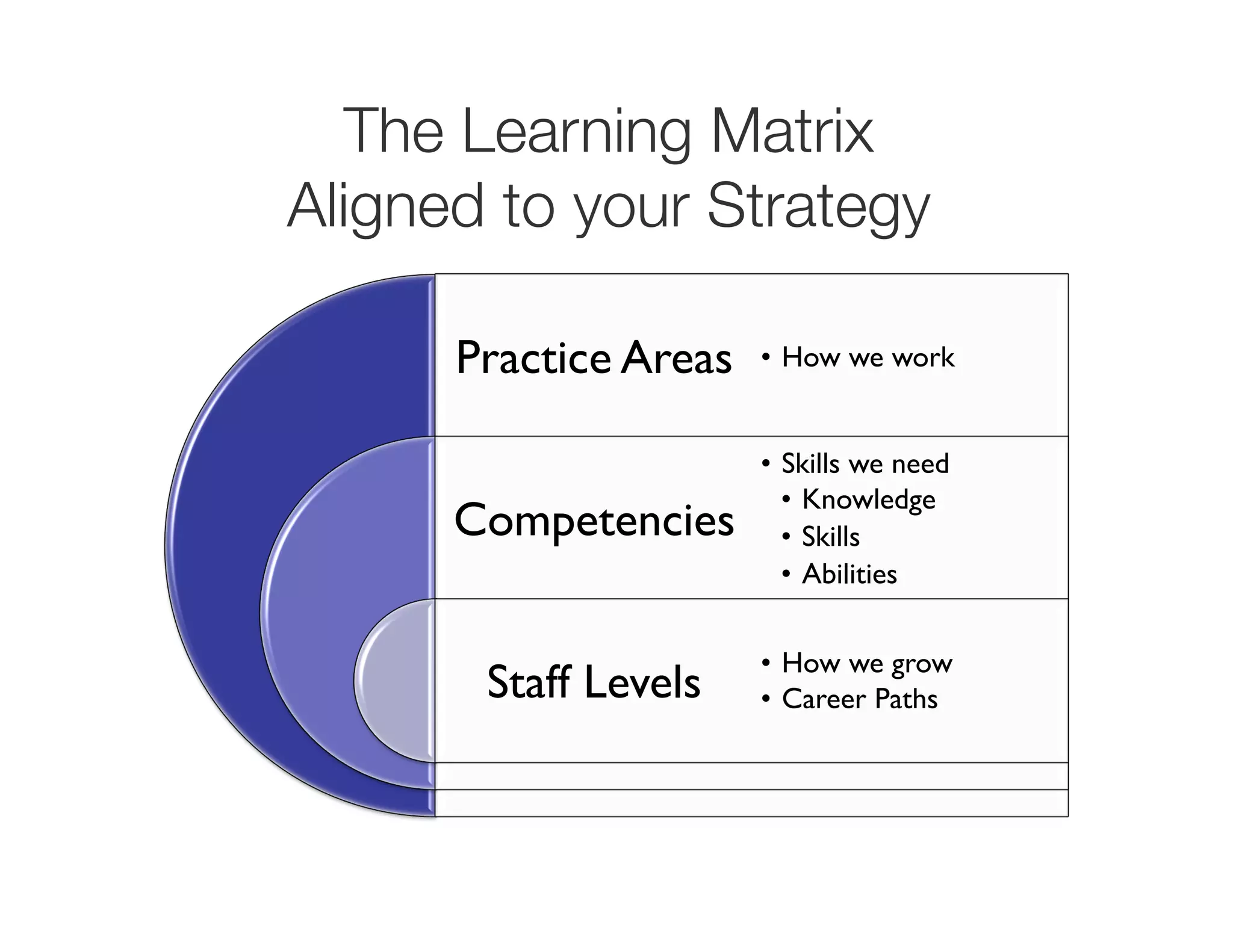
The Learning Matrix
Aligned to your Strategy

      Practice Areas	

 •  How we work	


                           •  Skills we need	

                              •  Knowledge	

      Competencies 	

        •  Skills	

                              •  Abilities	


                           •  How we grow	

        Staff Levels	

    •  Career Paths
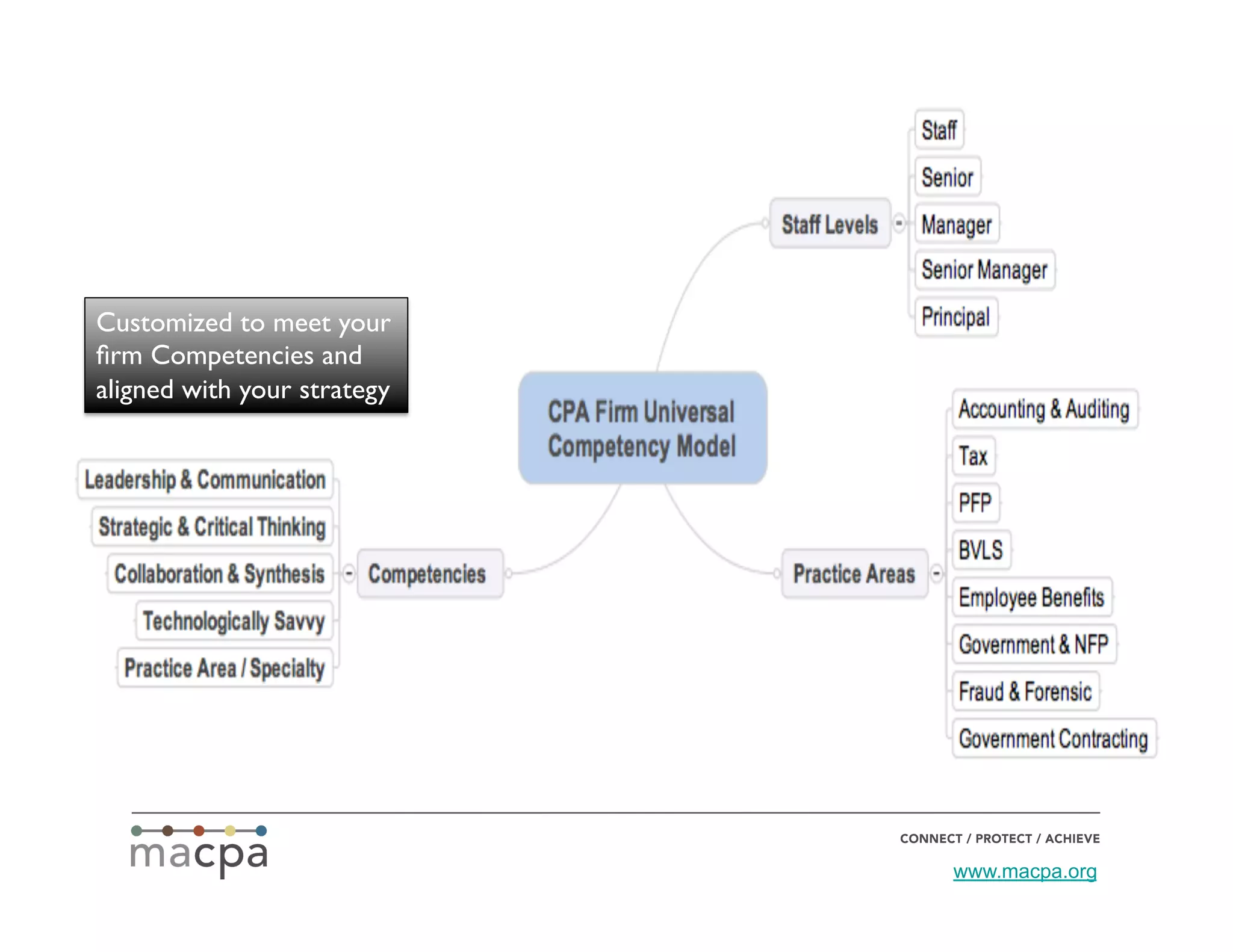
Customized to meet your
firm Competencies and
aligned with your strategy	


                                www.macpa.org
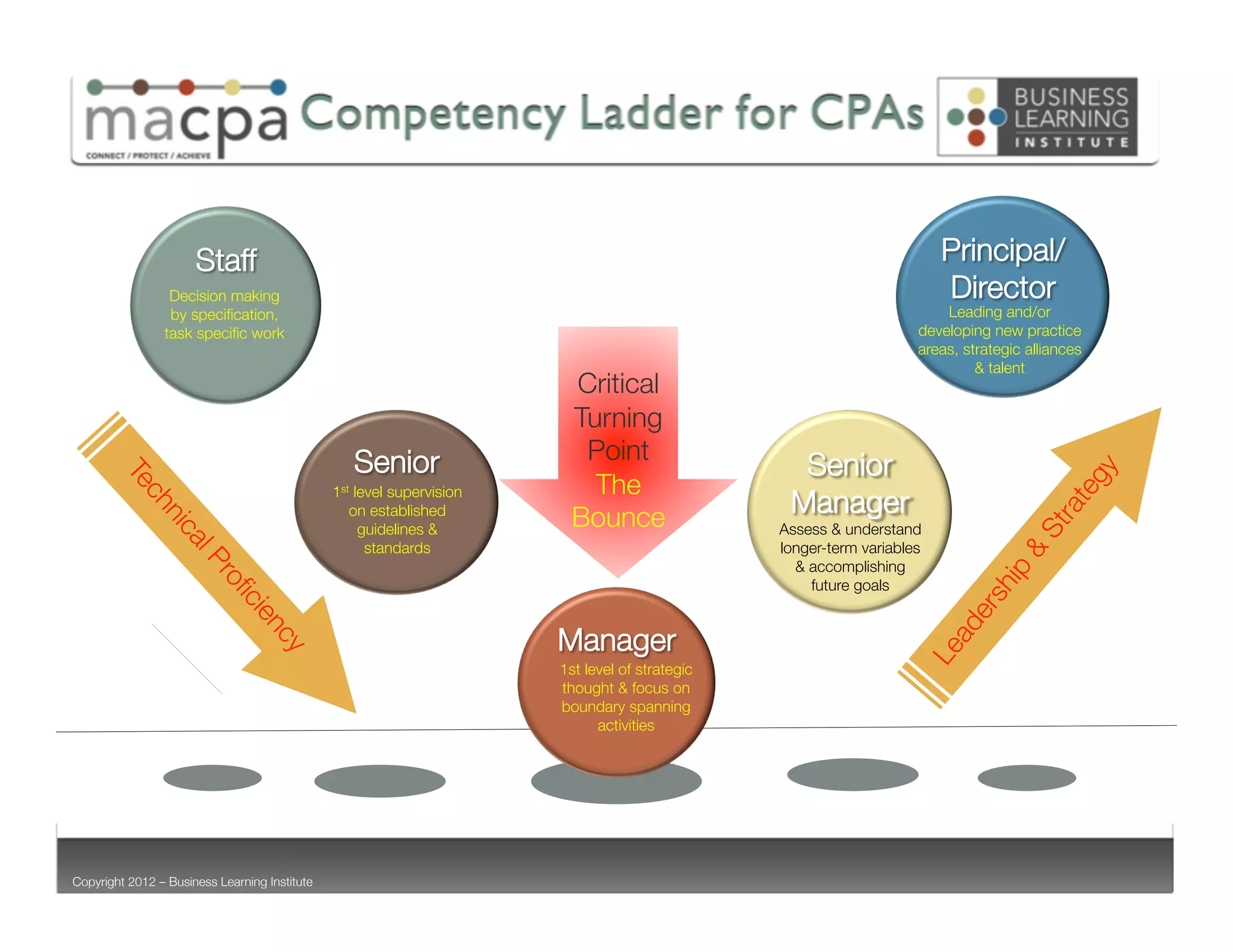
Staff
                                                                                             Principal/
                 Decision making                                                                                         Director
                 by specification,                                                                                        Leading and/or
                task specific work
                                                                                   developing new practice
                                                                                                                     areas, strategic alliances
                                                                                                                              & talent
                                                                         Critical
                                                                         Turning
                                                   Senior
                Point
                                                                                                   Senior
                                                1st level supervision      The
                                                   on established
                                                                         Bounce
                                                                                                  Manager
                                                     guidelines &                                Assess & understand
                                                      standards
                                 longer-term variables
                                                                                                   & accomplishing
                                                                                                     future goals


                                                                        Manager
                                                                        1st level of strategic
                                                                        thought & focus on
                                                                        boundary spanning
                                                                              activities


Copyright 2012 – Business Learning Institute
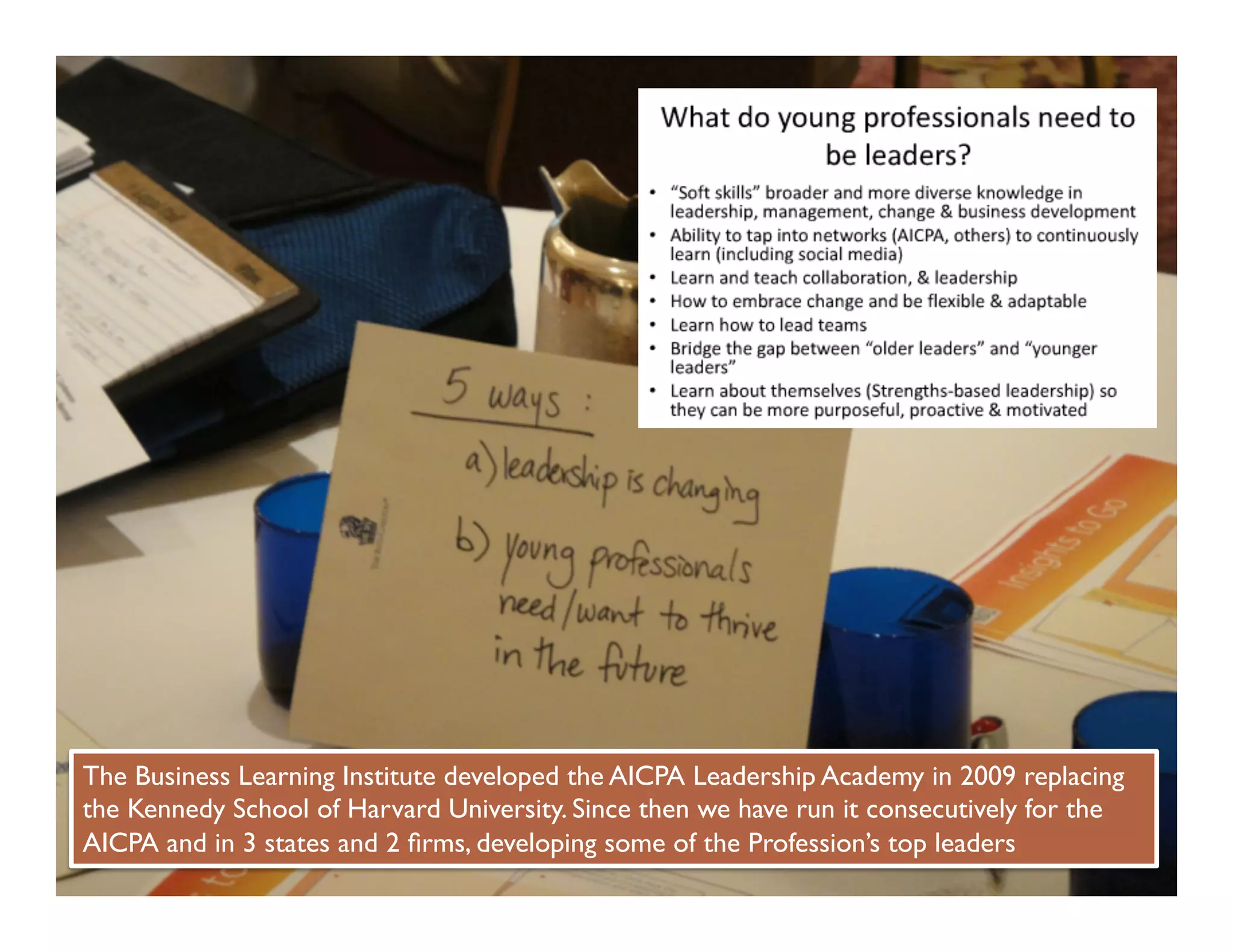
The Business Learning Institute developed the AICPA Leadership Academy in 2009 replacing
the Kennedy School of Harvard University. Since then we have run it consecutively for the
AICPA and in 3 states and 2 firms, developing some of the Profession’s top leaders
Why	
  CEOs	
  should	
  care	
  about	
  Social	
  
                  Media	
  
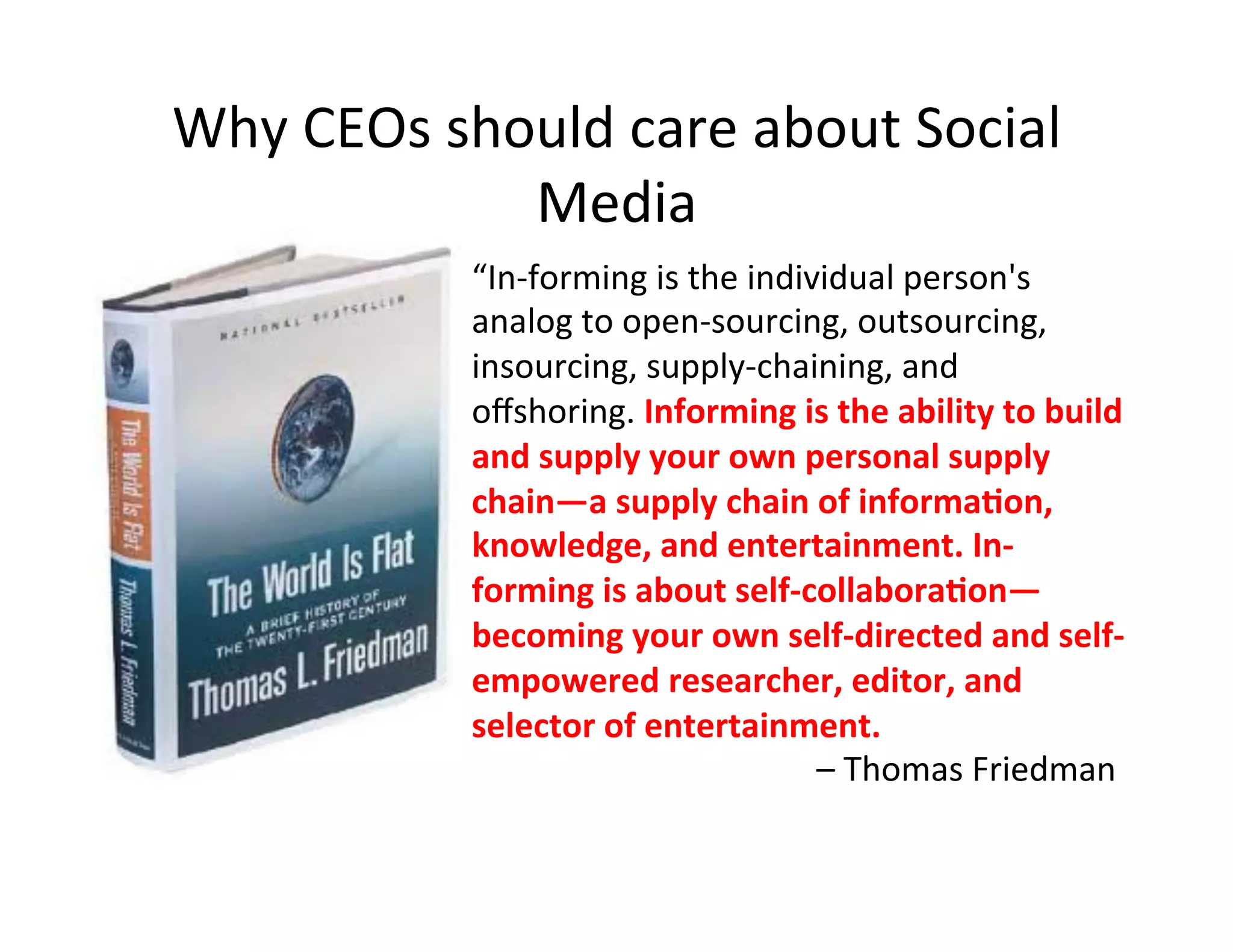
                 “In-­‐forming	
  is	
  the	
  individual	
  person's	
  
                 analog	
  to	
  open-­‐sourcing,	
  outsourcing,	
  
                 insourcing,	
  supply-­‐chaining,	
  and	
  
                 offshoring.	
  Informing	
  is	
  the	
  ability	
  to	
  build	
  
                 and	
  supply	
  your	
  own	
  personal	
  supply	
  
                 chain—a	
  supply	
  chain	
  of	
  informaCon,	
  
                 knowledge,	
  and	
  entertainment.	
  In-­‐
                 forming	
  is	
  about	
  self-­‐collaboraCon—
                 becoming	
  your	
  own	
  self-­‐directed	
  and	
  self-­‐
                 empowered	
  researcher,	
  editor,	
  and	
  
                 selector	
  of	
  entertainment.	


  –	
  Thomas	
  Friedman	
  
Why CEOs should blog?

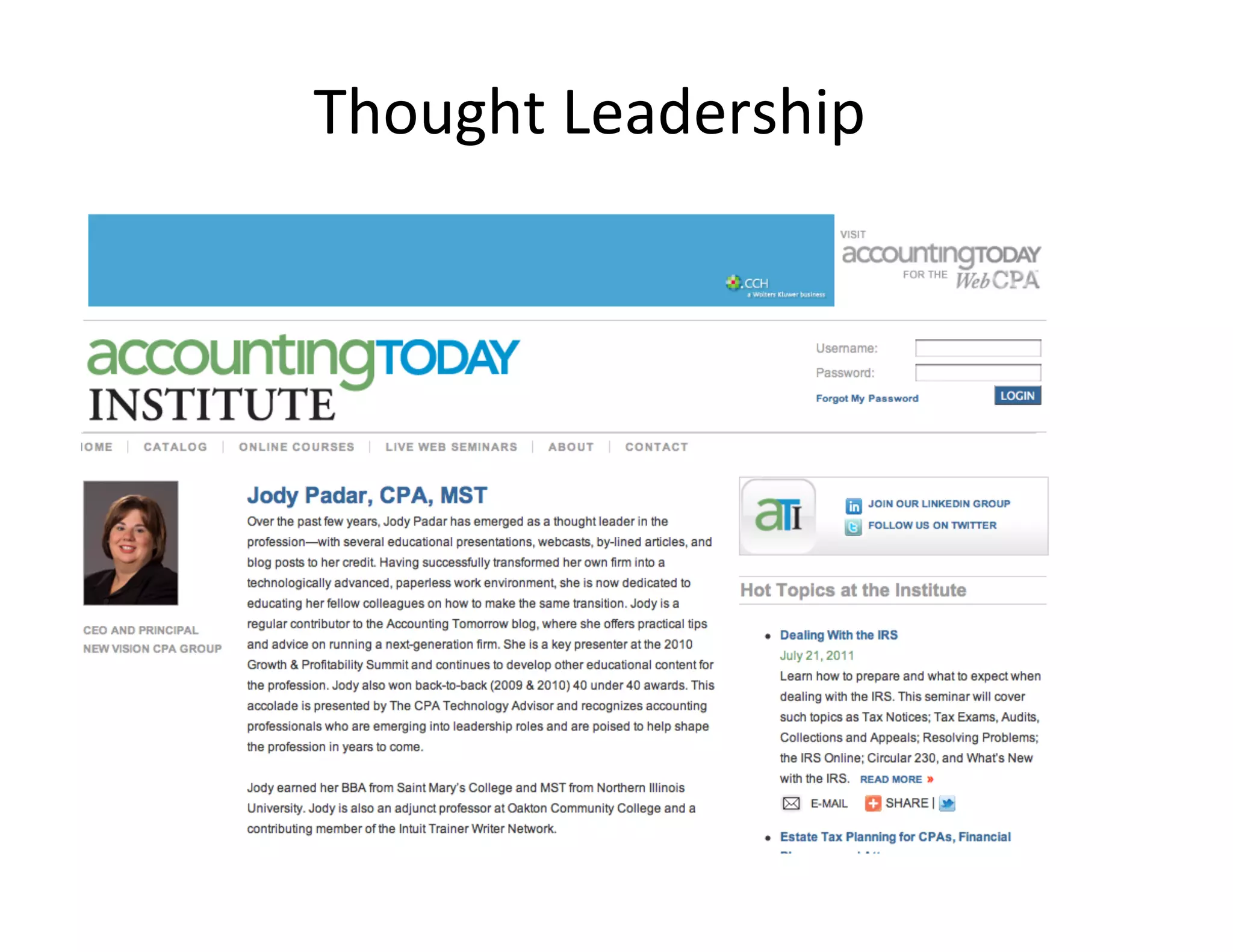
1.  Thought Leadership (Jody Padar example)
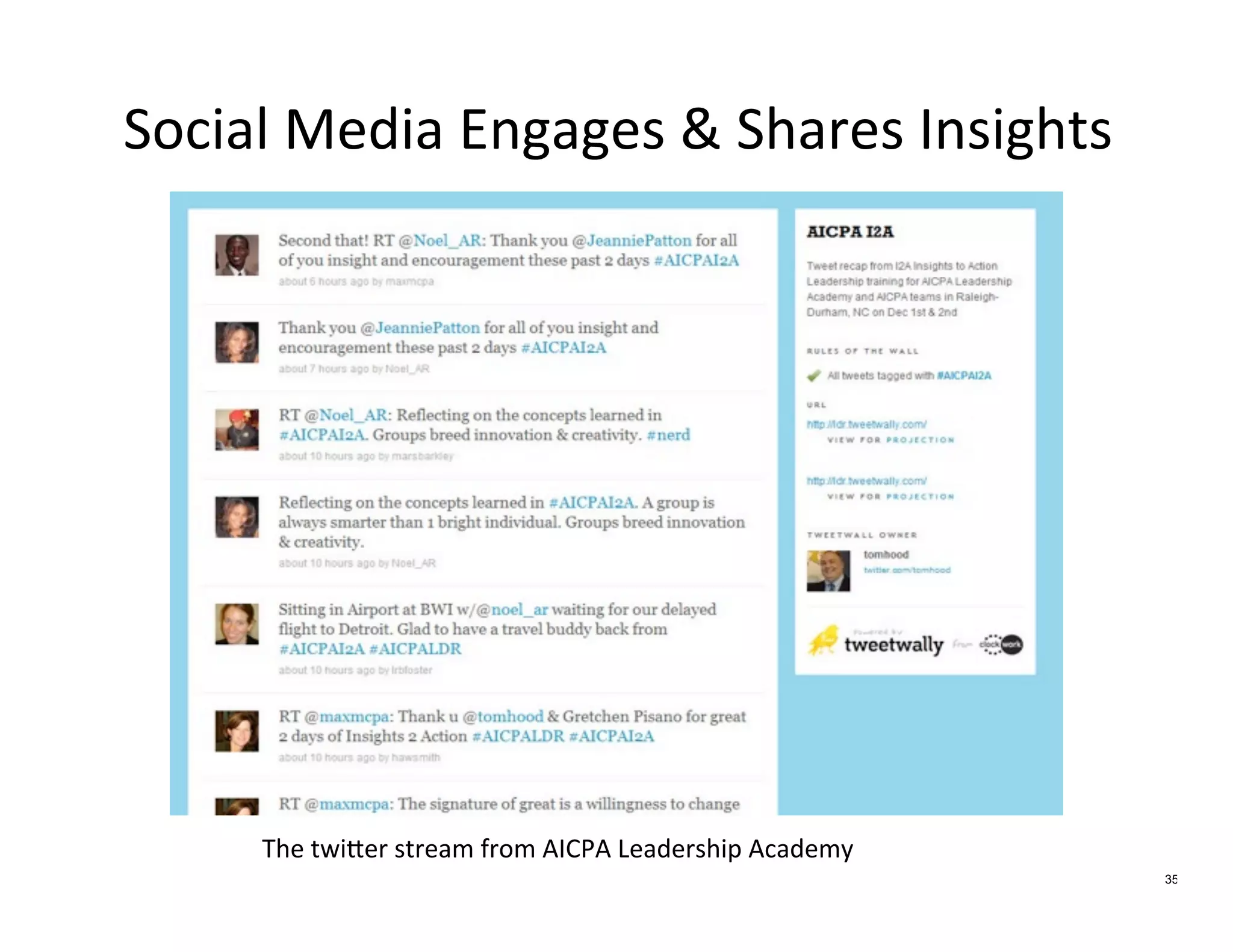
2.  Engagement with more members and shared
    insights (AICPA Leadership Academy)
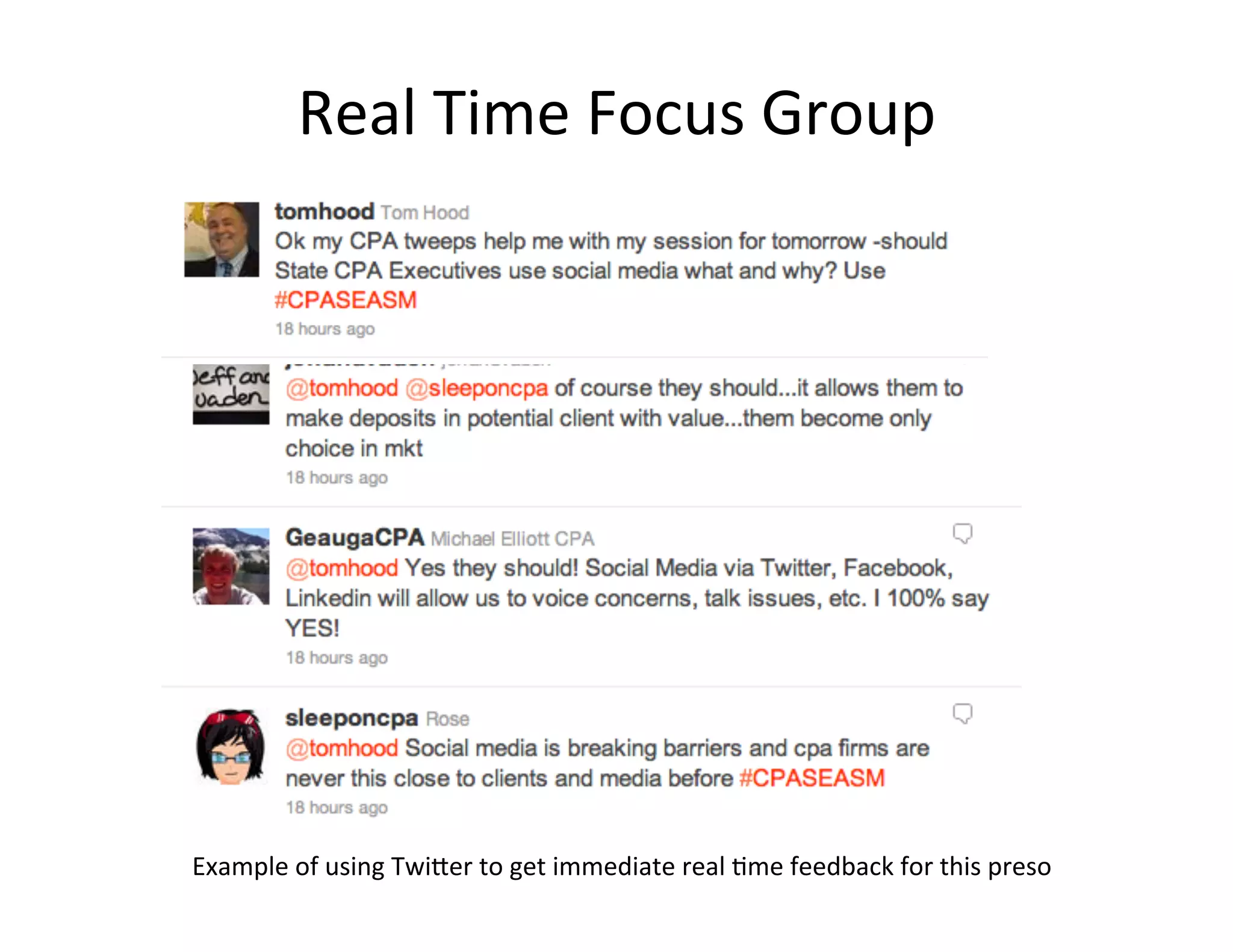
3.  Real Time Focus group
4.  Communication and connecting your organization
       (Marriott Story & MACPA CFO Conference)
5.  MACPA uses of social media
6.  The Power of Blogging
7.  Case Studies (Connecting to Thought Leaders, Connecting to Members –
       Books, MACPA Beach Retreat & NE CPE Conference)
8.     Top Ten (Social) Learning Technologies
9.     Risk Management
10.    It is bigger than you think - Social Organizations
11.    Getting Started
12.    If you Need Help & Resources
Seth Godin & Tom Peters


www.bizlearning.net	
  
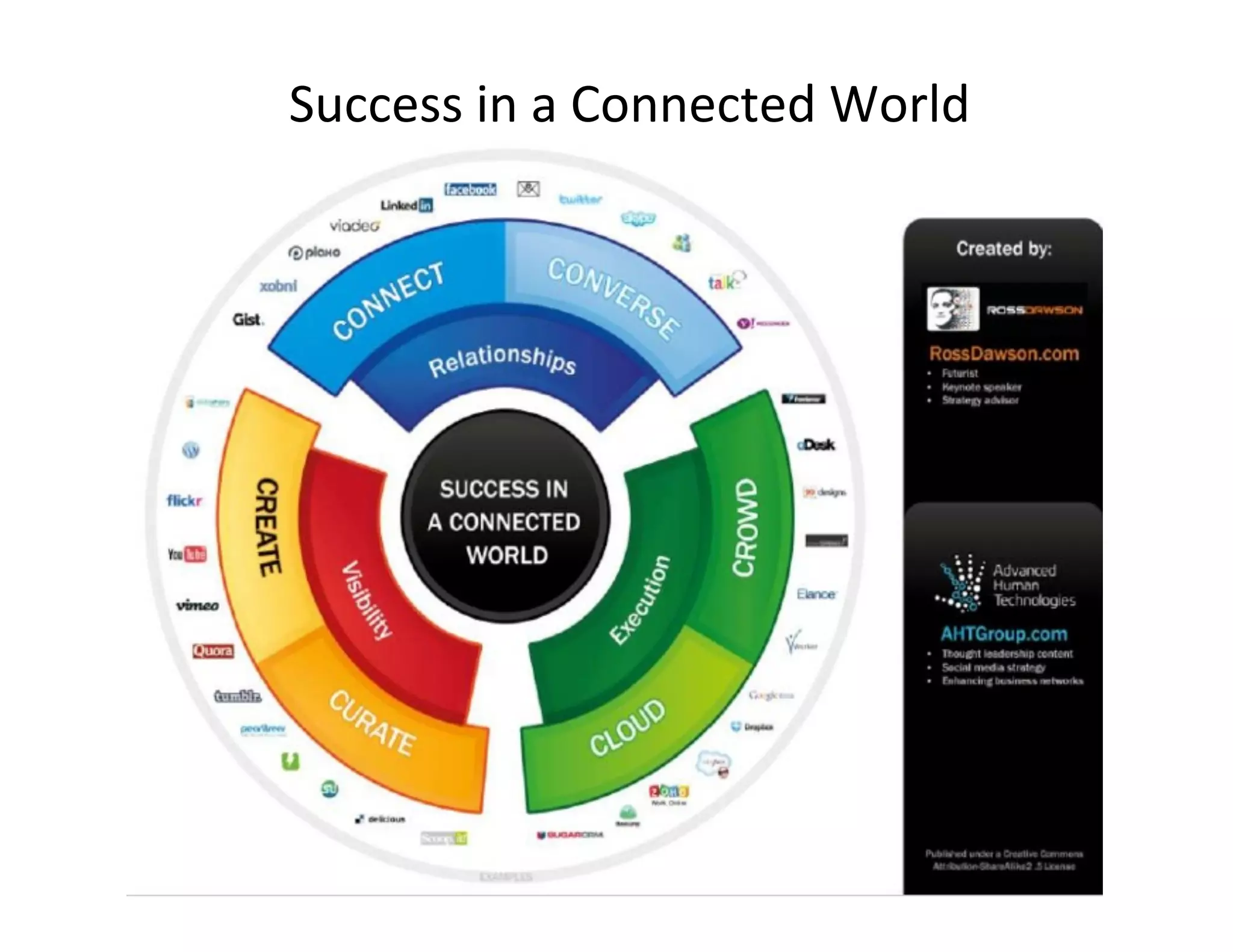
Success	
  in	
  a	
  Connected	
  World	
  
Thought	
  Leadership	
  
Social	
  Media	
  Engages	
  &	
  Shares	
  Insights	


       The	
  twi=er	
  stream	
  from	
  AICPA	
  Leadership	
  Academy	
  
                                                                               35
Real	
  Time	
  Focus	
  Group	


Example	
  of	
  using	
  Twi=er	
  to	
  get	
  immediate	
  real	
  <me	
  feedback	
  for	
  this	
  preso	
  
The	
  Marrio=	
  Story	
  

“Bill’s	
  blog	
  makes	
  me	
  feel	
  
connected	
  to	
  the	
  organiza'on	
  
in	
  a	
  way	
  I	
  had	
  not	
  felt	
  before.	
  I	
  
feel	
  more	
  informed	
  and	
  closer	
  
to	
  the	
  organiza'on	
  than	
  ever	
  
before.”	
  –	
  from	
  a	
  Marrio=	
  
Finance	
  Team	
  member	
  during	
  
an	
  MACPA	
  Professional	
  Issues	
  
update	
  at	
  their	
  HQ	
  in	
  
Bethesda,	
  MD	
  ].	


           What	
  if	
  you	
  could	
  keep	
  your	
  organiza<on	
  informed	
  and	
  inspired	
  
                                             by	
  your	
  thoughts?	
  
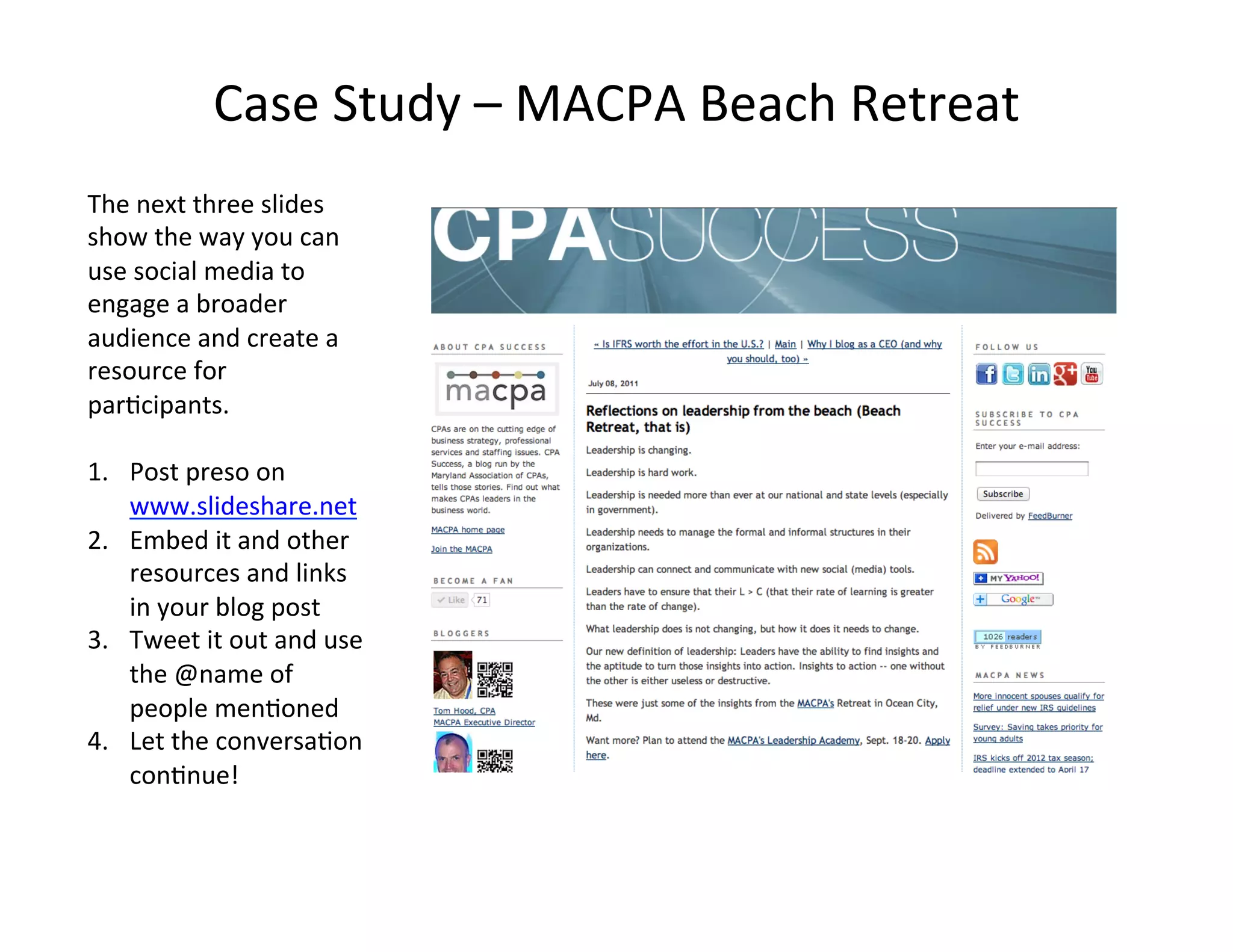
Case	
  Study	
  –	
  MACPA	
  Beach	
  Retreat	
  
The	
  next	
  three	
  slides	
  
show	
  the	
  way	
  you	
  can	
  
use	
  social	
  media	
  to	
  
engage	
  a	
  broader	
  
audience	
  and	
  create	
  a	
  
resource	
  for	
  
par<cipants.	


1.  Post	
  preso	
  on	
  
     www.slideshare.net	
  
2.  Embed	
  it	
  and	
  other	
  
     resources	
  and	
  links	
  
     in	
  your	
  blog	
  post	
  
3.  Tweet	
  it	
  out	
  and	
  use	
  
     the	
  @name	
  of	
  
     people	
  men<oned	
  
4.  Let	
  the	
  conversa<on	
  
     con<nue!	
  
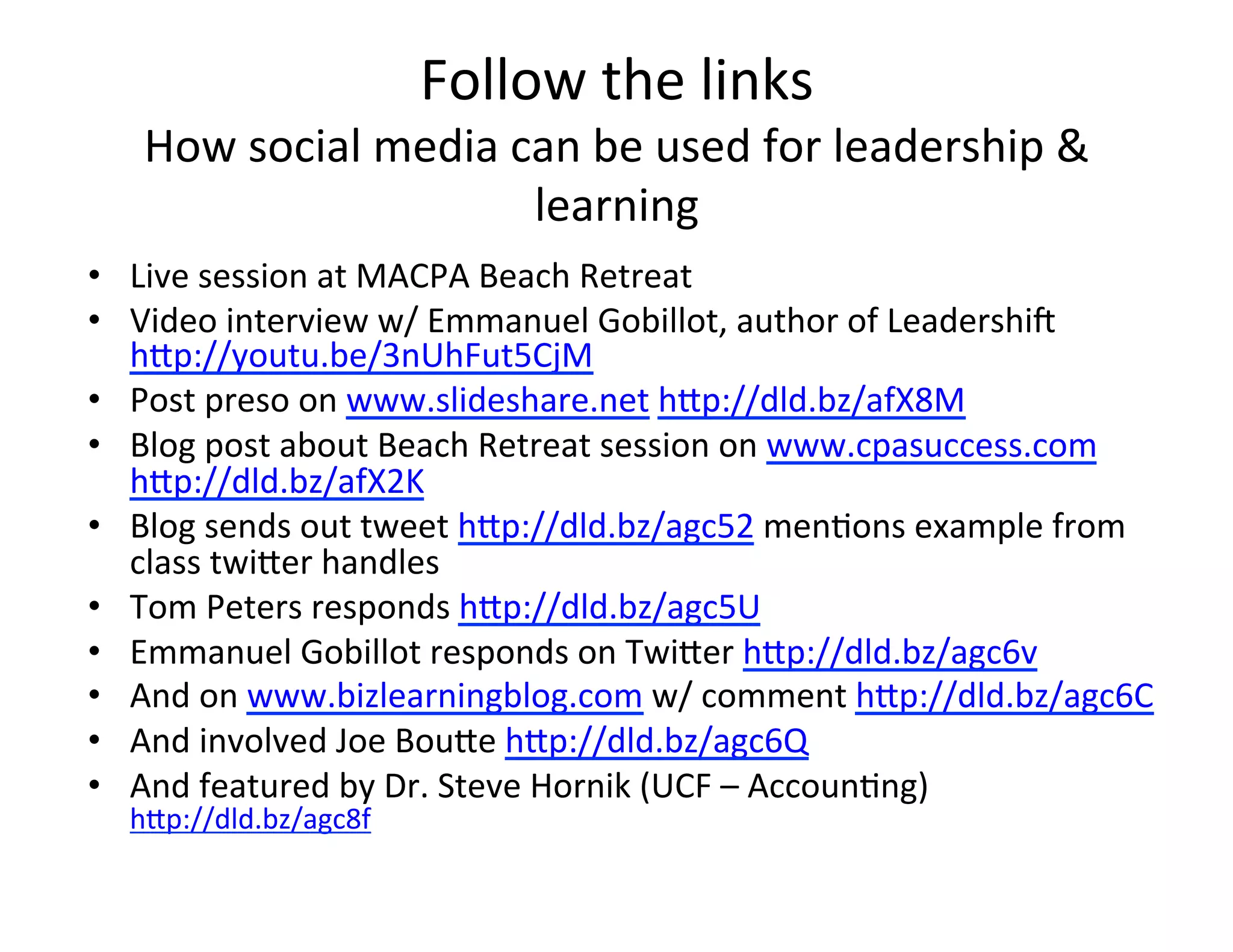
Follow	
  the	
  links	
  
    How	
  social	
  media	
  can	
  be	
  used	
  for	
  leadership	
  &	
  
                               learning	
  
•  Live	
  session	
  at	
  MACPA	
  Beach	
  Retreat	
  
•  Video	
  interview	
  w/	
  Emmanuel	
  Gobillot,	
  author	
  of	
  Leadershik	
  
   h=p://youtu.be/3nUhFut5CjM	
  
•  Post	
  preso	
  on	
  www.slideshare.net	
  h=p://dld.bz/afX8M	
  
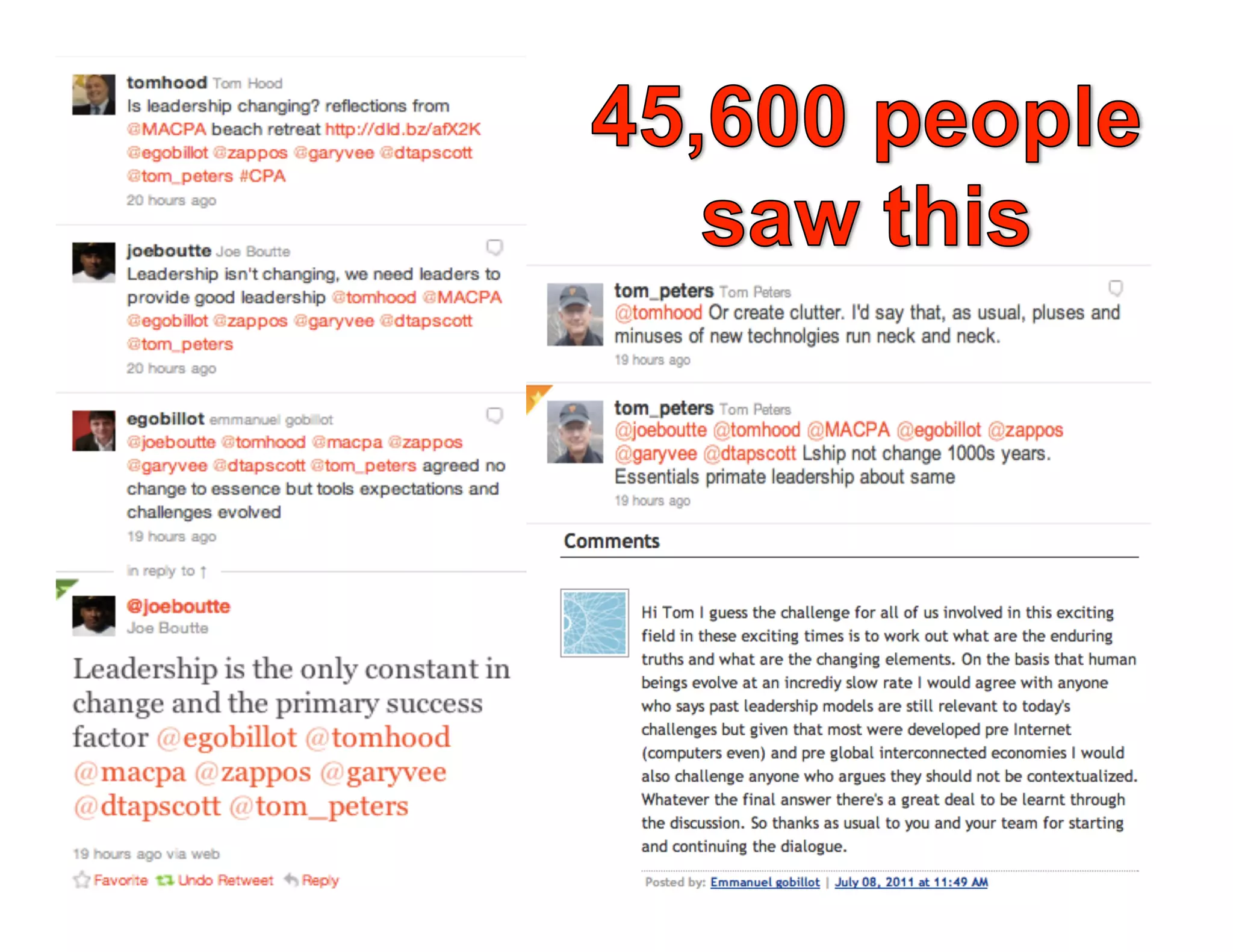
•  Blog	
  post	
  about	
  Beach	
  Retreat	
  session	
  on	
  www.cpasuccess.com	
  	
  
   h=p://dld.bz/afX2K	
  
•  Blog	
  sends	
  out	
  tweet	
  h=p://dld.bz/agc52	
  men<ons	
  example	
  from	
  
   class	
  twi=er	
  handles	
  
•  Tom	
  Peters	
  responds	
  h=p://dld.bz/agc5U	
  
•  Emmanuel	
  Gobillot	
  responds	
  on	
  Twi=er	
  h=p://dld.bz/agc6v	
  
•  And	
  on	
  www.bizlearningblog.com	
  w/	
  comment	
  h=p://dld.bz/agc6C	
  
•  And	
  involved	
  Joe	
  Bou=e	
  h=p://dld.bz/agc6Q	
  
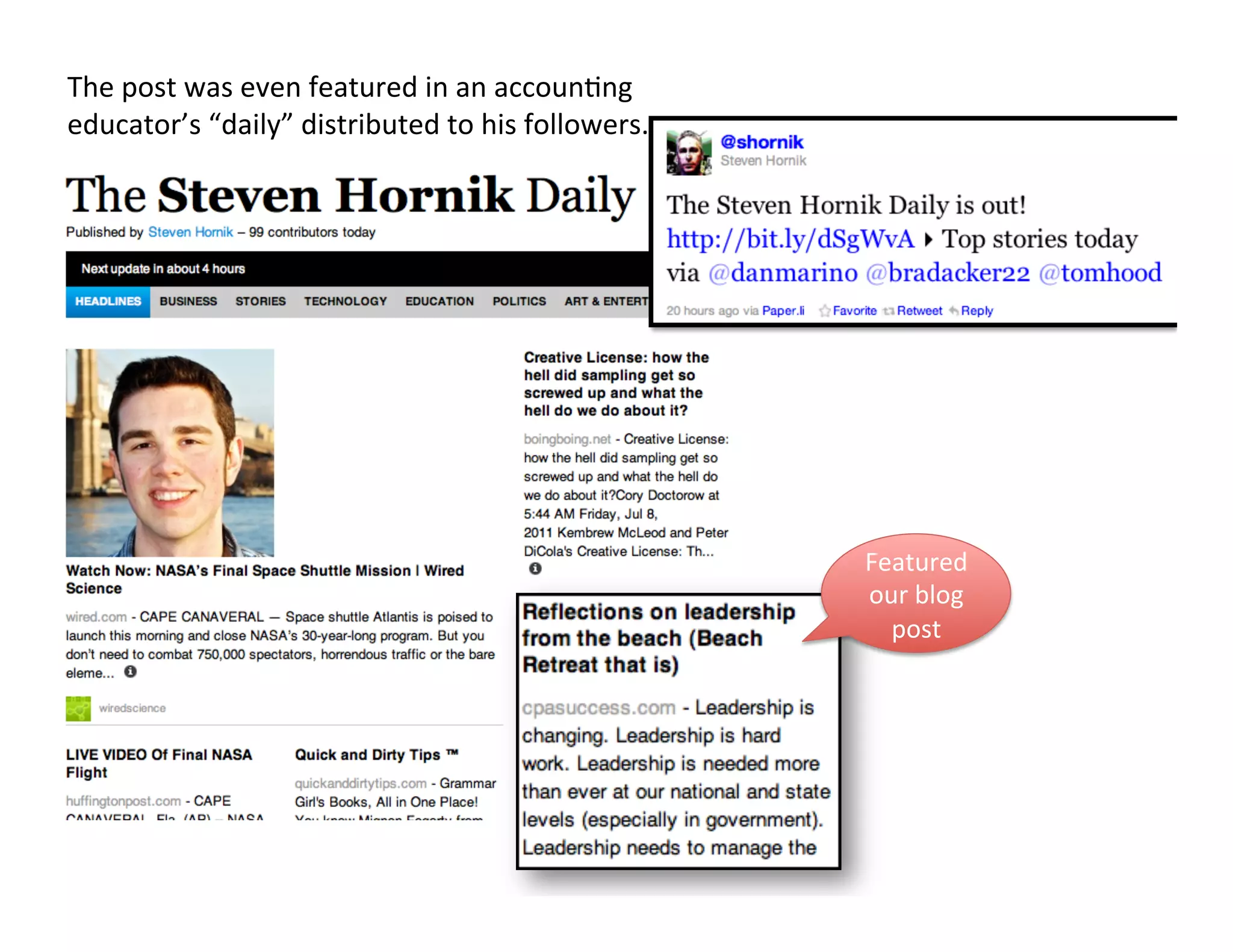
•  And	
  featured	
  by	
  Dr.	
  Steve	
  Hornik	
  (UCF	
  –	
  Accoun<ng)	
  
   h=p://dld.bz/agc8f	
  
The	
  post	
  was	
  even	
  featured	
  in	
  an	
  accoun<ng	
  
educator’s	
  “daily”	
  distributed	
  to	
  his	
  followers.	


                                                                      http://dld.bz/agc8f


                                                                       Featured	
  
                                                                       our	
  blog	
  
                                                                         post	
  
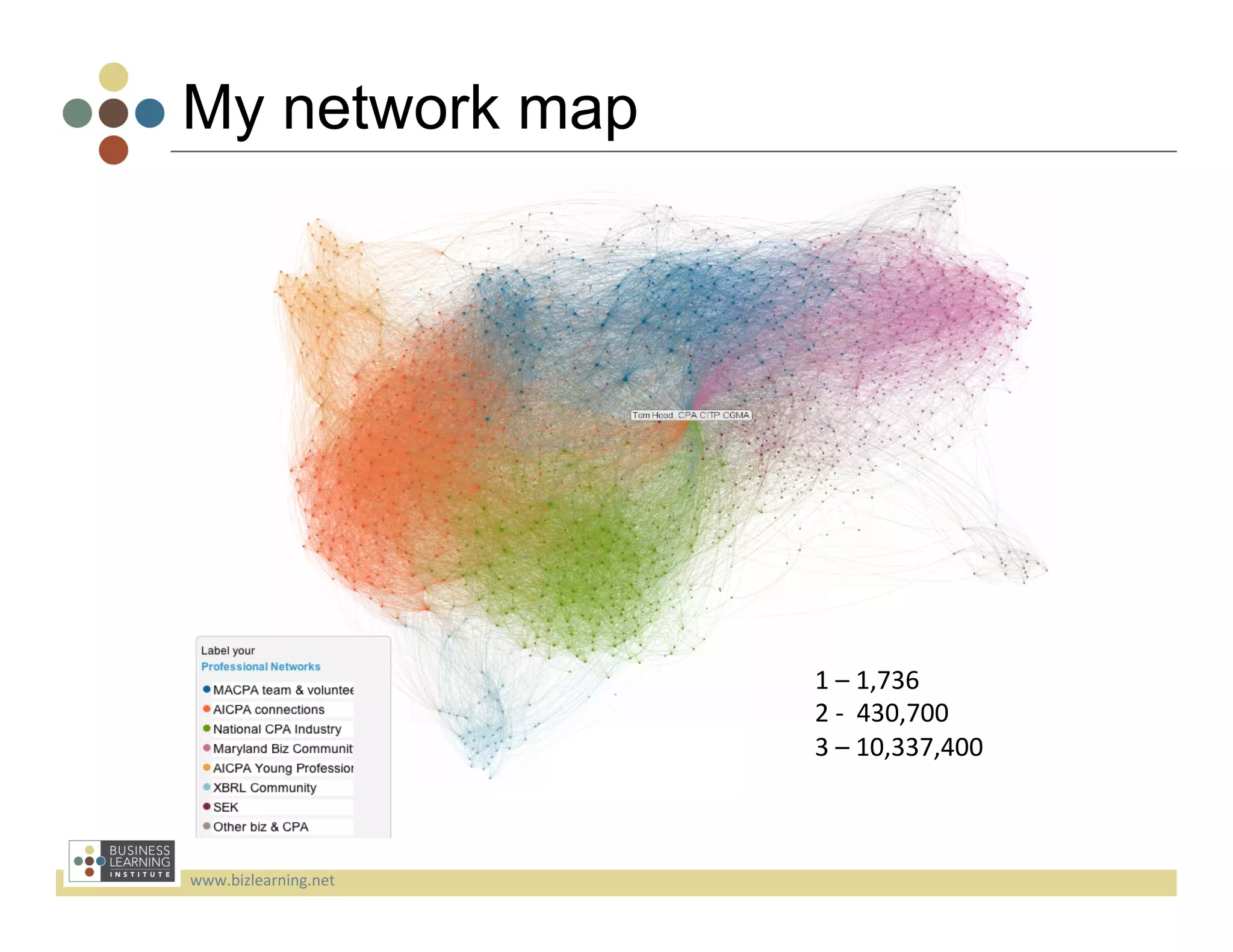
My network map


                          1	
  –	
  1,736	
  
                          2	
  -­‐	
  	
  430,700	
  
                          3	
  –	
  10,337,400	


www.bizlearning.net	
  
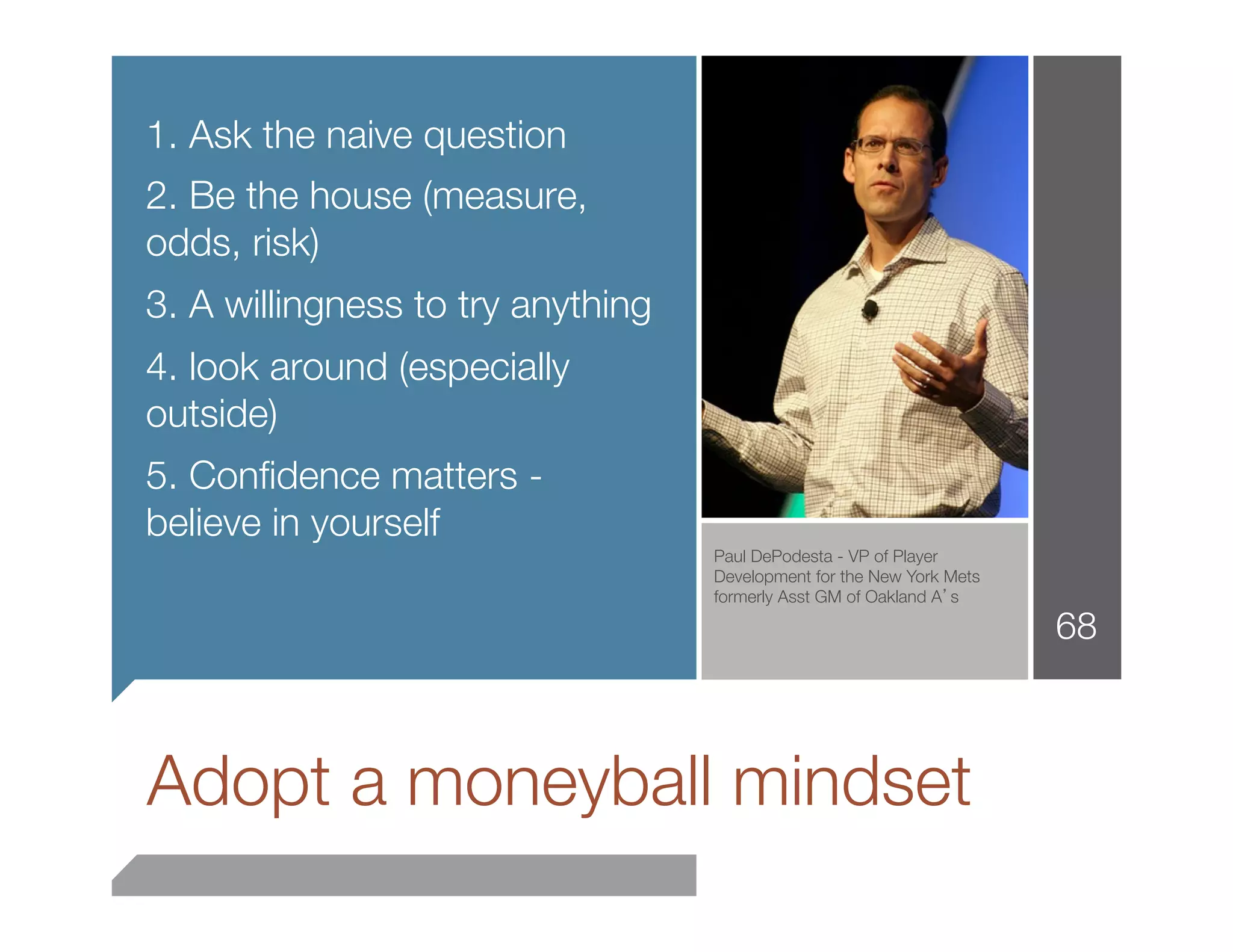
1. Ask the naive question
2. Be the house (measure,
odds, risk)
3. A willingness to try anything
4. look around (especially
outside)
5. Confidence matters -
believe in yourself
                                    Paul DePodesta - VP of Player

                                   Development for the New York Mets
                                    formerly Asst GM of Oakland A’s

                                                                        68


Adopt a moneyball mindset

Navigating the 5 c's - 2012 Beach Retreat

  • 1.
    Navigating Turbulent Times Navigating the 5 C’s July 6, 2012 Tom Hood, CPA, CITP, CGMA MACPA-­‐Logo-­‐medium.jpg  
  • 2.
    2 Picture: John Drake - Flickr ...where the most important skill is the ability to acquire new skills.
  • 3.
    MANAGING  THE  SEA  CHANGE   •  Change   •  Complexity   •  Compliance   •  Convergence   •  Compe<<on  
  • 4.
    The  “New  Normal”   h=p://www.endoAusiness.com    
  • 5.
    Survival is notmandatory www.bizlearning.net  
  • 6.
    “You  can’t  stop  the  waves,  but   you  can  learn  how  to  surf.”     –  Jon  Kabat-­‐Zinn   A  Tahi'an  reef  and  a  Kauaian  surfer,  both  in  perfect  focus.  Photo:  Noyle/SPL   www.bizlearning.net  
  • 8.
    Humans  are  fundamentally   “sight”  creatures   We  need  longer   sightlines  during  periods   of  rapid  change   And  the  power  of   making  our  thinking   visible  to  others…  
  • 10.
    Innovation distinguishes betweena leader and a follower - Steve Jobs
  • 11.
  • 12.
  • 13.
  • 14.
    Technology Ideas People
  • 15.
    Insight to action- one without the other is either useless or destructive
  • 16.
  • 17.
  • 18.
  • 19.
    In our hyper-networked, mobile, social, global world, the rules and plans of yesterday are increasingly under pressure; the enterprises and individuals that will thrive will be those willing to adapt in a disciplined, unsentimental way. Generation Flux is a term that describes all of this - the chaotic business era that we have moved into - as well as the people who are poised to thrive in this environment. - Robert Safian - editor FastCompany
  • 20.
  • 21.
    Listen to yourjunior officers www.bizlearning.net  
  • 22.
    Generations – the# 1 issue www.bizlearning.net  
  • 24.
  • 25.
    You have threeyears! www.bizlearning.net  
  • 26.
    Go social, Gonative! www.bizlearning.net  
  • 27.
    1. Sight -Ability to see emerging patterns and shift perspective when necessary 2. Insight – Ability to think strategically and critically to gain insights 3. Create – Seek high leverage opportunities that build on your strengths 4. Communicate - Ability to make your thinking visible to others and the ability to collaborate inside and outside your organization 5. Inspire – Ability to mobilize support and engage others involved in doing the work to join you in ACTION 27 Five Qualities of Extraordinary Leaders
  • 28.
  • 29.
    The Opportunity –Be the House Our i2a Strategic Thinking System is built on proven and researched strategic planning and change management principles. •  15 X – ROI on Strategy as Process & Alignment (Jim Collins – Built to Last) •  8 X – Engagement & Trust (Gallup) •  10X – Return on Leadership (Information Masters) •  20 X – Return on Culture (Information Masters) •  3 X - Return on Positivity (Dr. Barbara Frederickson) “In order to buy-in, I have to weigh in.” – Pat Lencioni www.bizlearning.net  
  • 30.
  • 31.
    What can youdo to boost your odds? Tipping  point    which  way   will  they  go?   This is your risk point! Inner Circle Informed Pragmatists Skeptics No-Nos Bought-in Leaders I’ll wait & see Prove it to me I don’t like this I support it Adoption of almost everything happens along a bell curve according to Geoffrey Moore. Change and ideas are no different, the key is to tip the odds in your favor and pay attention to the numbers of people in each level of your organization and within each group. www.bizlearning.net  
  • 32.
    Strategy  as  Process  -­‐  Our  i2a   Framework  
  • 33.
    How do youtip the odds in your favor? Strategy as Process using a simple framework that can be repeated And cascaded throughout your organization •  Engagement •  Alignment •  Commitment Rocket fuel •  Accountability for strategy www.bizlearning.net  
  • 34.
    Tipping the Oddsin Your Favor Kim Cameron states, "Those who positively energize others are higher performers. Position in the energy network is four times the predictor of performance compared to position in the information or influence networks." www.bizlearning.net  
  • 35.
    Why executives shouldcare about Employee Engagement Gallup studies proved that corporations with higher engagement levels generated: •  27% higher profits •  50% higher sales •  50% higher customer loyalty •  38% above average productivity “Employee Engagement is an outcome-based concept. It is the term which is used to describe the degree to which employees can be ascribed as aligned and committed to their organization such that they are at the most productive.” -The International School of Human Capital Management www.bizlearning.net  
  • 36.
    Turn the Flywheelwith Alignment “Alignment is a mode of belonging that is not confined to mutual engagement. The process of alignment bridges time & space to form broader enterprises so that participants become connected through the coordination of their Alignment focuses on the energies, actions, and practices. future and builds trust. Alignment is about getting Through alignment, we become part their discretionary effort. of something big because we do what it takes to play our part." - Etienne Wenger Communities of Practice www.bizlearning.net  
  • 37.
    Cascading Alignment throughoutthe organization creates Commitment Cascading by understanding the top level goals and linking the next level down through the organization Firm-wide Sample alignment Regional & Practice Levels worksheet from MACPA Office Level Individuals Align Their Goals to the Firm www.bizlearning.net  
  • 38.
    You are probablyreaching the rider, BUT … are you reaching the elephant? How? www.bizlearning.net  
  • 39.
    Feedback From Partner’sMeeting www.bizlearning.net  
  • 40.
  • 41.
    Lessons from Switch: How to Change Things When Change is Hard Each person has an emotional Elephant side and a rational Rider side. You’ve got to reach both. And you’ve also got to clear the way for them to succeed. In short, you must do three things: •  Direct the rider •  Find the bright spots •  Script the critical moves •  Point to the destination •  Motivate the elephant •  Find the feeling •  Shrink the change •  Grow your people •  Shape the path •  Tweak the environment •  Build habits •  Rally the herd www.bizlearning.net  
  • 42.
    It is moreimportant to have your team: •  Thinking strategically than having a strategic plan. •  Understanding the direction and foundation (vision, values & strategic intent) of the firm than having a detailed five-year plan. •  Engaging in the firm’s future as a whole organization, not just the partners. •  Aligning and on the same page than working independently in their own silos. •  Engaging and participating than being idle observers. •  Focusing on the future than questioning the past. Our 12a: Insights to Action framework allows you to engage and align your firm and engage your people in the meaningful work of your organization. This increases buy-in and discretionary effort that defines high performing organizations. www.bizlearning.net  
  • 43.
  • 44.
    Find your Edge In a period of rapid change and increasing complexity, the winners are going to be the people who can learn faster than the rate of change and faster than your competition. -  Tom Hood, CPA, CITP,CGMA CEO of the MACPA & the Business Learning Institute 44
  • 45.
    Tom Peters adviceon keeping your L > C
  • 46.
    "In a worldthat shows no signs of slowing down, no individual can rest on his or her intellectual laurels… The future belongs to this organizations, as well as those individuals, that have made an active, lifelong commitment to continue to learn.” -  Howard Gardner Five Minds for the Future 46
  • 47.
    Superior Talent GeneratesResults" & Superior Learning Strategy Generates Superior Talent   26% higher revenue per employee   40% lower turnover among high performers and 17% overall   29% higher level of engagement   36% higher readiness in leadership and management 47 Trends in Learning & Development
  • 48.
    What CPAs havesaid about the future: 1.  Changing demographics - Aging workforce, diversity, 4 generations in the workplace 2.  Increased globalization, economic shifts and increasing competition 3.  The technological revolution - cloud, social, big data & XBRL 4.  Issues around Information Security, Privacy & data integrity 5.  Shift to consumer and employee power (from push to pull) 6.  Changes in the way we communicate - mobile, txt, skype 7.  Work-life challenges or conflict - "do more with less", 24/7 work 8.  Information Overload - filter failure 9.  Increasing complexity of rules and standards (IFRS, GAAP, PCAOB, SEC) 10. Economic uncertainty - deficit, debt and pressure on government http://www.slideshare.net/thoodcpa/top-trends-to-watch-2012-cpa-horizons-2025 American Institute of CPAs
  • 49.
    The  DNA  of  the  CPA   Values  &  Competencies   •  Leadership   •  Communica<on   •  Strategic  Thinking   •  Collabora<on  &  Synthesis   •  Technologically  Savvy  
  • 50.
    The Learning Matrix Alignedto your Strategy Practice Areas •  How we work •  Skills we need •  Knowledge Competencies •  Skills •  Abilities •  How we grow Staff Levels •  Career Paths
  • 51.
    Customized to meetyour firm Competencies and aligned with your strategy www.macpa.org
  • 52.
    Staff Principal/ Decision making Director by specification, Leading and/or task specific work developing new practice areas, strategic alliances & talent Critical Turning Senior Point Senior 1st level supervision The on established Bounce Manager guidelines & Assess & understand standards longer-term variables & accomplishing future goals Manager 1st level of strategic thought & focus on boundary spanning activities Copyright 2012 – Business Learning Institute
  • 53.
    The Business LearningInstitute developed the AICPA Leadership Academy in 2009 replacing the Kennedy School of Harvard University. Since then we have run it consecutively for the AICPA and in 3 states and 2 firms, developing some of the Profession’s top leaders
  • 54.
    Why  CEOs  should  care  about  Social   Media   “In-­‐forming  is  the  individual  person's   analog  to  open-­‐sourcing,  outsourcing,   insourcing,  supply-­‐chaining,  and   offshoring.  Informing  is  the  ability  to  build   and  supply  your  own  personal  supply   chain—a  supply  chain  of  informaCon,   knowledge,  and  entertainment.  In-­‐ forming  is  about  self-­‐collaboraCon— becoming  your  own  self-­‐directed  and  self-­‐ empowered  researcher,  editor,  and   selector  of  entertainment.                –  Thomas  Friedman  
  • 55.
    Why CEOs shouldblog? 1.  Thought Leadership (Jody Padar example) 2.  Engagement with more members and shared insights (AICPA Leadership Academy) 3.  Real Time Focus group 4.  Communication and connecting your organization (Marriott Story & MACPA CFO Conference) 5.  MACPA uses of social media 6.  The Power of Blogging 7.  Case Studies (Connecting to Thought Leaders, Connecting to Members – Books, MACPA Beach Retreat & NE CPE Conference) 8.  Top Ten (Social) Learning Technologies 9.  Risk Management 10.  It is bigger than you think - Social Organizations 11.  Getting Started 12.  If you Need Help & Resources
  • 56.
    Seth Godin &Tom Peters www.bizlearning.net  
  • 57.
    Success  in  a  Connected  World  
  • 58.
  • 59.
    Social  Media  Engages  &  Shares  Insights   The  twi=er  stream  from  AICPA  Leadership  Academy   35
  • 60.
    Real  Time  Focus  Group   Example  of  using  Twi=er  to  get  immediate  real  <me  feedback  for  this  preso  
  • 61.
    The  Marrio=  Story   “Bill’s  blog  makes  me  feel   connected  to  the  organiza'on   in  a  way  I  had  not  felt  before.  I   feel  more  informed  and  closer   to  the  organiza'on  than  ever   before.”  –  from  a  Marrio=   Finance  Team  member  during   an  MACPA  Professional  Issues   update  at  their  HQ  in   Bethesda,  MD  ].   What  if  you  could  keep  your  organiza<on  informed  and  inspired   by  your  thoughts?  
  • 62.
    Case  Study  –  MACPA  Beach  Retreat   The  next  three  slides   show  the  way  you  can   use  social  media  to   engage  a  broader   audience  and  create  a   resource  for   par<cipants.       1.  Post  preso  on   www.slideshare.net   2.  Embed  it  and  other   resources  and  links   in  your  blog  post   3.  Tweet  it  out  and  use   the  @name  of   people  men<oned   4.  Let  the  conversa<on   con<nue!  
  • 63.
    Follow  the  links   How  social  media  can  be  used  for  leadership  &   learning   •  Live  session  at  MACPA  Beach  Retreat   •  Video  interview  w/  Emmanuel  Gobillot,  author  of  Leadershik   h=p://youtu.be/3nUhFut5CjM   •  Post  preso  on  www.slideshare.net  h=p://dld.bz/afX8M   •  Blog  post  about  Beach  Retreat  session  on  www.cpasuccess.com     h=p://dld.bz/afX2K   •  Blog  sends  out  tweet  h=p://dld.bz/agc52  men<ons  example  from   class  twi=er  handles   •  Tom  Peters  responds  h=p://dld.bz/agc5U   •  Emmanuel  Gobillot  responds  on  Twi=er  h=p://dld.bz/agc6v   •  And  on  www.bizlearningblog.com  w/  comment  h=p://dld.bz/agc6C   •  And  involved  Joe  Bou=e  h=p://dld.bz/agc6Q   •  And  featured  by  Dr.  Steve  Hornik  (UCF  –  Accoun<ng)   h=p://dld.bz/agc8f  
  • 65.
    The  post  was  even  featured  in  an  accoun<ng   educator’s  “daily”  distributed  to  his  followers.   http://dld.bz/agc8f Featured   our  blog   post  
  • 66.
    My network map 1  –  1,736   2  -­‐    430,700   3  –  10,337,400   www.bizlearning.net  
  • 68.
    1. Ask thenaive question 2. Be the house (measure, odds, risk) 3. A willingness to try anything 4. look around (especially outside) 5. Confidence matters - believe in yourself Paul DePodesta - VP of Player Development for the New York Mets formerly Asst GM of Oakland A’s 68 Adopt a moneyball mindset