Growing Ourselves
Presentation to Emerging Leaders
Mark Barratt
Unsuccessful leaders work as hard
as successful ones…
And it’s not that you don’t need to work!
Becoming
self aware…
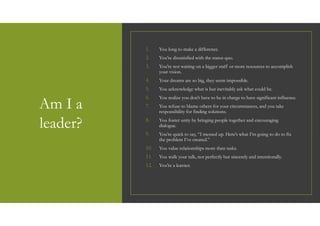
Am I a
leader?
1. You long to make a difference.
2. You’re dissatisfied with the status quo.
3. You’re not waiting on a bigger staff or more resources to accomplish
your vision.
4. Your dreams are so big, they seem impossible.
5. You acknowledge what is but inevitably ask what could be.
6. You realize you don’t have to be in charge to have significant influence.
7. You refuse to blame others for your circumstances, and you take
responsibility for finding solutions.
8. You foster unity by bringing people together and encouraging
dialogue.
9. You’re quick to say, “I messed up. Here’s what I’m going to do to fix
the problem I’ve created.”
10. You value relationships more than tasks.
11. You walk your talk, not perfectly but sincerely and intentionally.
12. You’re a learner.
How might leaders evaluate their
leadership?
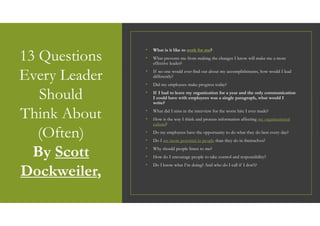
13 Questions
Every Leader
Should
Think About
(Often)
By Scott
Dockweiler,
• What is it like to work for me?
• What prevents me from making the changes I know will make me a more
effective leader?
• If no one would ever find out about my accomplishments, how would I lead
differently?
• Did my employees make progress today?
• If I had to leave my organization for a year and the only communication
I could have with employees was a single paragraph, what would I
write?
• What did I miss in the interview for the worst hire I ever made?
• How is the way I think and process information affecting my organizational
culture?
• Do my employees have the opportunity to do what they do best every day?
• Do I see more potential in people than they do in themselves?
• Why should people listen to me?
• How do I encourage people to take control and responsibility?
• Do I know what I’m doing? And who do I call if I don’t?
What’s your
unfair
advantage?
• What unique talent were you born with?
• What is one skill that you have and continue to craft each
day?
• What are the top three experiences that would allow you to
connect with someone?
• What are you most knowledgeable about?
• What is it about your unique character people fall in love
with?
• Can you think of three people that have changed your life
because of your connection?
How are you
actively
seeking
feedback?
• Open yourself to 360 degree evaluations.
What might those closest to you say, if they
were completely safe?
• Don’t tell teammates what you’re doing. Ask
them to explain your goals and priorities
based on your behaviours.
• What questions do you ask others about your
leadership?
Every successful leader I’ve met is hungry to
learn, grow, and adapt.
“If you stop learning, you might as well lie
down and let them throw the dirt on you.”
Ken Blanchard
Using
disruptions
• Lean toward taking action. Do something as
long as you’re reasonably confident it won’t do
harm. Inaction seldom makes you remarkable.
• Believe negative interventions produce
positive benefits. Ask the darkness, “Who are
you calling me to become?”
• Maintain an outward focus. Don’t close down
or sink into yourself. Remarkable life is always about
the value you bring others.
• Gather a team of advisers, mentors, and/or
coaches.
• Keep asking, what if and what about.
Three
anchors to
release
before you
fly:
• #1. Release the anchor of expecting ease. Make life
easier for others, especially those with heavy responsibility.
Service has value when it meets pressing needs or
makes life better for others.
• S#2. Release the anchor of holding on to
offenses. People disappoint. People won’t
notice some of the great stuff you do. You might
not get the credit, even though you did most of
the work.
• #3. Release the anchor of waiting for the perfect
moment. Step out before things are “just right.”
Imperfect progress trumps the myth of perfection
every time. Explain what you’re trying, not why
you’re waiting.
7 ways to be
less than you
could be:
• Think, “They need to change.”
• Ignore feedback because, “They don’t understand.”
• Justify weaknesses by saying, “That’s just the way I
am.”
• Over-value your good qualities. Under-value hard
work.
• Need the approval of others.
• Stay busy doing busywork.
• Wait for opportunity to come to you.
The dedication required to change our
mind and behaviour is the fight of our
lives.
It is extremely difficult to humbly admit a shortcoming instead
of fabricating a tale to mitigate the blow.
Top 10
excuses:
1. I forgot.
2. I was busy.
3. It’s not my job.
4. I intended to….
5. I didn’t mean to.
6. I didn’t know how to.
7. You didn’t tell me to ….
8. I tried and it didn’t work.
9. They didn’t do their part so I couldn’t do mine.
10. I was waiting. (If I never hear, “I was waiting
for …,” again, it will be too soon!)
Self-
talk…No!
• But
• Should
• Try
• Busy
• Can’t
‘It’s about whether you’re willing to experience the discomfort,
risk, and uncertainty of saying or doing it.’
In other words, the critical challenge of leadership is, mostly,
the challenge of emotional courage.
Addressing
Leadership
Development
1. Integrate leadership development into the work
itself.
2. Teach leadership in a way that requires emotional
courage.
Balancing
…
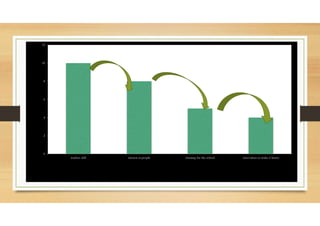
What got you here won’t get you there…
0
2
4
6
8
10
12
teacher skill interest in people winning for the school innovation to make it better
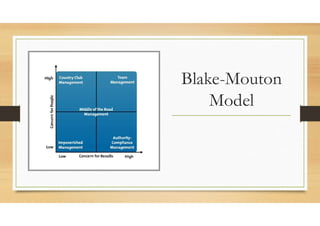
Blake-Mouton
Model
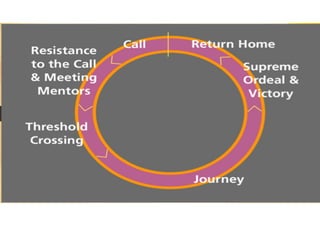
Embrace the heroic journey
• If not you, who?
• What will your ROI be?
• How did you do that?
Giving Your
Best Self
• Release yourself for more by delegating easy tasks. Fools cling to familiarity
and ease. What’s easy for you is challenging to others. Help others do what you
do well. One way to develop yourself is to develop others.
• Explore the irritating behaviours of others. Irritations are often mirrors. How
are you like the people you don’t like? Loud voices irritate me.
• Spend more time reflecting on your performance and less on others. When your
performance improves, the people around you improve.
• Challenge yourself. You stop growing when you stop taking on new challenges.
• Evaluate your performance mercilessly. Nitpick little things. Chances are the

little things are bigger than you believe.
• Make a difference right now. This whole “change the world thing,” often
becomes an excuse to neglect small opportunities.
• Record daily insights and observations. Keep a notebook handy and write
things down. When you hear something curious or surprising, explore it.
• Swim against the current. Doing what everyone else does obscures your
potential.
• Think better not perfect. How might you be a better listener today, for
example?
• Pursue relationships with people who are better than you.
Have a philosophical foundation to
return to…
“To be a philosopher is not merely to have subtle thoughts, nor even to found a school . .
. it is to solve some of the problems of life, not only theoretically, but practically.”
Henry David Thoreau
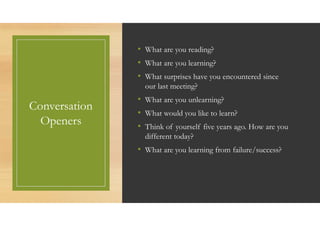
Conversation
Openers
• What are you reading?
• What are you learning?
• What surprises have you encountered since
our last meeting?
• What are you unlearning?
• What would you like to learn?
• Think of yourself five years ago. How are you
different today?
• What are you learning from failure/success?
“Not all readers are leaders,
but all leaders are readers.”
Harry Truman
"In my whole life, I have known no wise people
who didn't read all the time - none, zero."
Charlie Munger
Books…
“Read 500 pages like this every day. That’s how knowledge
works. It builds up, like compound interest. All of you can
do it, but I guarantee not many of you will do it.”
Warren Buffett
TED talks…
Behaviours
and
activities…
Performance that collapses after a single person is
removed from the equation is fragile indeed.
‘If the path before you is clear, you
are probably on someone else’s’
Campbell
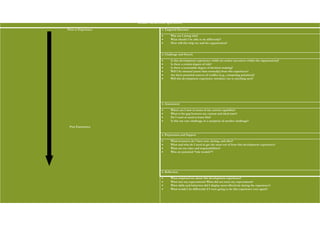
Leader Reflection Questions
Prior to Experience
Post Experience
1. Targeted Outcome
 Why am I doing this?
 What should I be able to do differently?
 How will this help me and the organization?
2. Challenge and Stretch
 Is this development experience visible (to senior executives within the organization)?
 Is there a certain degree of risk?
 Is there a reasonable degree of decision making?
 Will I be stressed (more than normally) from this experience?
 Are there potential sources of conflict (e.g., competing priorities)?
 Will this development experience introduce me to anything new?
3. Assessment
 Where am I now in terms of my current capability?
 What is the gap between my current and ideal state?
 Do I want or need to learn this?
 Is this my core challenge or a symptom of another challenge?
4. Preparation and Support
 What resources do I have now, during, and after?
 What and who do I need to get the most out of from this development experience?
 What are my roles and responsibilities?
 Who are potential “role models”?
5. Reflection
 What surprised me about this development experience?
 What met my expectations? What did not meet my expectations?
 What skills and behaviors did I display most effectively during the experience?
 What would I do differently if I were going to do this experience over again?
The productivity algorithm: "sleep, plus diet,
plus work outs, plus meditation, minus stress,
minus distractions, equals productivity,"
Andrew Hill
UCLA
Via The
Genius in All
of Us: New
Insights into
Genetics,
Talent, and
IQ:
Any person lucky enough to have had one great
teacher who inspired, advised, critiqued, and had
endless faith in her student’s ability will tell you what
a difference that person has made in her life.
“Most students who become interested in an academic subject
do so because they have met a teacher who was able to pique
their interest,”
write Csikszentmihályi, Rathunde, and Whalen.
It is yet another great irony of the giftedness myth:
in the final analysis, the true road to success lies not
in a person’s molecular structure, but in his
developing the most productive attitudes and
identifying magnificent external resources.
Growing as a Leader
Growing as a Leader

Growing as a Leader

  • 1.
    Growing Ourselves Presentation toEmerging Leaders Mark Barratt
  • 4.
    Unsuccessful leaders workas hard as successful ones… And it’s not that you don’t need to work!
  • 6.
  • 7.
    Am I a leader? 1.You long to make a difference. 2. You’re dissatisfied with the status quo. 3. You’re not waiting on a bigger staff or more resources to accomplish your vision. 4. Your dreams are so big, they seem impossible. 5. You acknowledge what is but inevitably ask what could be. 6. You realize you don’t have to be in charge to have significant influence. 7. You refuse to blame others for your circumstances, and you take responsibility for finding solutions. 8. You foster unity by bringing people together and encouraging dialogue. 9. You’re quick to say, “I messed up. Here’s what I’m going to do to fix the problem I’ve created.” 10. You value relationships more than tasks. 11. You walk your talk, not perfectly but sincerely and intentionally. 12. You’re a learner.
  • 8.
    How might leadersevaluate their leadership?
  • 9.
    13 Questions Every Leader Should ThinkAbout (Often) By Scott Dockweiler, • What is it like to work for me? • What prevents me from making the changes I know will make me a more effective leader? • If no one would ever find out about my accomplishments, how would I lead differently? • Did my employees make progress today? • If I had to leave my organization for a year and the only communication I could have with employees was a single paragraph, what would I write? • What did I miss in the interview for the worst hire I ever made? • How is the way I think and process information affecting my organizational culture? • Do my employees have the opportunity to do what they do best every day? • Do I see more potential in people than they do in themselves? • Why should people listen to me? • How do I encourage people to take control and responsibility? • Do I know what I’m doing? And who do I call if I don’t?
  • 10.
    What’s your unfair advantage? • Whatunique talent were you born with? • What is one skill that you have and continue to craft each day? • What are the top three experiences that would allow you to connect with someone? • What are you most knowledgeable about? • What is it about your unique character people fall in love with? • Can you think of three people that have changed your life because of your connection?
  • 13.
    How are you actively seeking feedback? •Open yourself to 360 degree evaluations. What might those closest to you say, if they were completely safe? • Don’t tell teammates what you’re doing. Ask them to explain your goals and priorities based on your behaviours. • What questions do you ask others about your leadership?
  • 14.
    Every successful leaderI’ve met is hungry to learn, grow, and adapt.
  • 15.
    “If you stoplearning, you might as well lie down and let them throw the dirt on you.” Ken Blanchard
  • 17.
    Using disruptions • Lean towardtaking action. Do something as long as you’re reasonably confident it won’t do harm. Inaction seldom makes you remarkable. • Believe negative interventions produce positive benefits. Ask the darkness, “Who are you calling me to become?” • Maintain an outward focus. Don’t close down or sink into yourself. Remarkable life is always about the value you bring others. • Gather a team of advisers, mentors, and/or coaches. • Keep asking, what if and what about.
  • 19.
    Three anchors to release before you fly: •#1. Release the anchor of expecting ease. Make life easier for others, especially those with heavy responsibility. Service has value when it meets pressing needs or makes life better for others. • S#2. Release the anchor of holding on to offenses. People disappoint. People won’t notice some of the great stuff you do. You might not get the credit, even though you did most of the work. • #3. Release the anchor of waiting for the perfect moment. Step out before things are “just right.” Imperfect progress trumps the myth of perfection every time. Explain what you’re trying, not why you’re waiting.
  • 20.
    7 ways tobe less than you could be: • Think, “They need to change.” • Ignore feedback because, “They don’t understand.” • Justify weaknesses by saying, “That’s just the way I am.” • Over-value your good qualities. Under-value hard work. • Need the approval of others. • Stay busy doing busywork. • Wait for opportunity to come to you.
  • 21.
    The dedication requiredto change our mind and behaviour is the fight of our lives. It is extremely difficult to humbly admit a shortcoming instead of fabricating a tale to mitigate the blow.
  • 22.
    Top 10 excuses: 1. Iforgot. 2. I was busy. 3. It’s not my job. 4. I intended to…. 5. I didn’t mean to. 6. I didn’t know how to. 7. You didn’t tell me to …. 8. I tried and it didn’t work. 9. They didn’t do their part so I couldn’t do mine. 10. I was waiting. (If I never hear, “I was waiting for …,” again, it will be too soon!)
  • 23.
  • 25.
    ‘It’s about whetheryou’re willing to experience the discomfort, risk, and uncertainty of saying or doing it.’ In other words, the critical challenge of leadership is, mostly, the challenge of emotional courage.
  • 26.
    Addressing Leadership Development 1. Integrate leadershipdevelopment into the work itself. 2. Teach leadership in a way that requires emotional courage.
  • 28.
  • 29.
    What got youhere won’t get you there… 0 2 4 6 8 10 12 teacher skill interest in people winning for the school innovation to make it better
  • 30.
  • 31.
  • 32.
    • If notyou, who? • What will your ROI be? • How did you do that?
  • 33.
    Giving Your Best Self •Release yourself for more by delegating easy tasks. Fools cling to familiarity and ease. What’s easy for you is challenging to others. Help others do what you do well. One way to develop yourself is to develop others. • Explore the irritating behaviours of others. Irritations are often mirrors. How are you like the people you don’t like? Loud voices irritate me. • Spend more time reflecting on your performance and less on others. When your performance improves, the people around you improve. • Challenge yourself. You stop growing when you stop taking on new challenges. • Evaluate your performance mercilessly. Nitpick little things. Chances are the little things are bigger than you believe. • Make a difference right now. This whole “change the world thing,” often becomes an excuse to neglect small opportunities. • Record daily insights and observations. Keep a notebook handy and write things down. When you hear something curious or surprising, explore it. • Swim against the current. Doing what everyone else does obscures your potential. • Think better not perfect. How might you be a better listener today, for example? • Pursue relationships with people who are better than you.


  • 36.
    Have a philosophicalfoundation to return to… “To be a philosopher is not merely to have subtle thoughts, nor even to found a school . . . it is to solve some of the problems of life, not only theoretically, but practically.” Henry David Thoreau
  • 38.
    Conversation Openers • What areyou reading? • What are you learning? • What surprises have you encountered since our last meeting? • What are you unlearning? • What would you like to learn? • Think of yourself five years ago. How are you different today? • What are you learning from failure/success?
  • 39.
    “Not all readersare leaders, but all leaders are readers.” Harry Truman
  • 41.
    "In my wholelife, I have known no wise people who didn't read all the time - none, zero." Charlie Munger
  • 42.
  • 43.
    “Read 500 pageslike this every day. That’s how knowledge works. It builds up, like compound interest. All of you can do it, but I guarantee not many of you will do it.” Warren Buffett
  • 44.
  • 46.
  • 47.
    Performance that collapsesafter a single person is removed from the equation is fragile indeed.
  • 48.
    ‘If the pathbefore you is clear, you are probably on someone else’s’ Campbell
  • 49.
    Leader Reflection Questions Priorto Experience Post Experience 1. Targeted Outcome  Why am I doing this?  What should I be able to do differently?  How will this help me and the organization? 2. Challenge and Stretch  Is this development experience visible (to senior executives within the organization)?  Is there a certain degree of risk?  Is there a reasonable degree of decision making?  Will I be stressed (more than normally) from this experience?  Are there potential sources of conflict (e.g., competing priorities)?  Will this development experience introduce me to anything new? 3. Assessment  Where am I now in terms of my current capability?  What is the gap between my current and ideal state?  Do I want or need to learn this?  Is this my core challenge or a symptom of another challenge? 4. Preparation and Support  What resources do I have now, during, and after?  What and who do I need to get the most out of from this development experience?  What are my roles and responsibilities?  Who are potential “role models”? 5. Reflection  What surprised me about this development experience?  What met my expectations? What did not meet my expectations?  What skills and behaviors did I display most effectively during the experience?  What would I do differently if I were going to do this experience over again?
  • 50.
    The productivity algorithm:"sleep, plus diet, plus work outs, plus meditation, minus stress, minus distractions, equals productivity," Andrew Hill UCLA
  • 51.
    Via The Genius inAll of Us: New Insights into Genetics, Talent, and IQ: Any person lucky enough to have had one great teacher who inspired, advised, critiqued, and had endless faith in her student’s ability will tell you what a difference that person has made in her life. “Most students who become interested in an academic subject do so because they have met a teacher who was able to pique their interest,” write Csikszentmihályi, Rathunde, and Whalen. It is yet another great irony of the giftedness myth: in the final analysis, the true road to success lies not in a person’s molecular structure, but in his developing the most productive attitudes and identifying magnificent external resources.