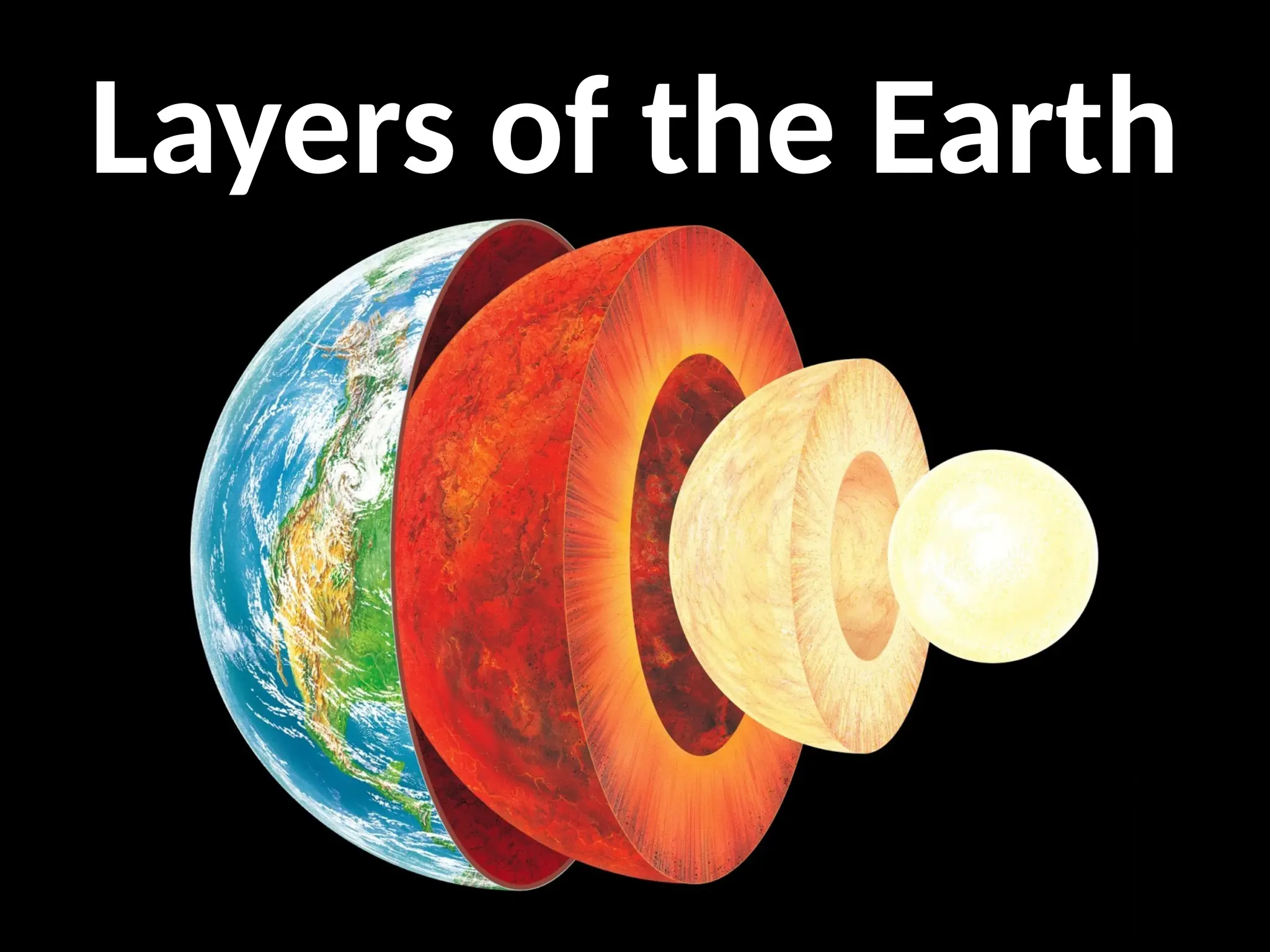
Layers of the Earth
Watch the movie trailer for Journey to the
Center of the Earth. Identify characteristics
that you think are true and those you think
are not true. Be prepared to share.
https://www.youtube.com/watch?v=r
Qx2wLyagk4
Essential Question:
How are layers of the Earth
different from one another?
Compare and contrast the Earth’s crust,
mantle, and core including temperature,
density, and composition.
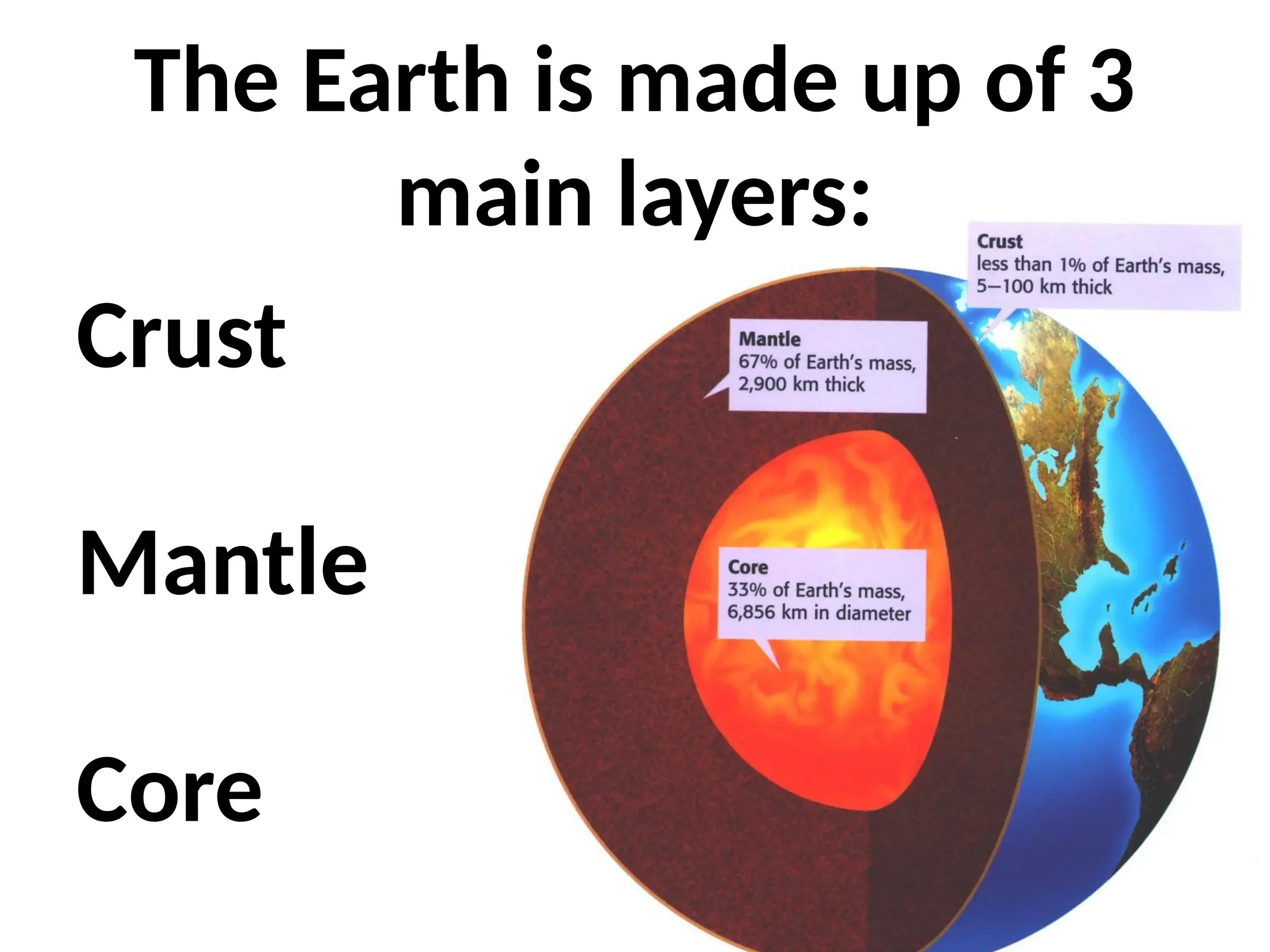
The Earth is made up of 3
main layers:
Crust
Mantle
Core
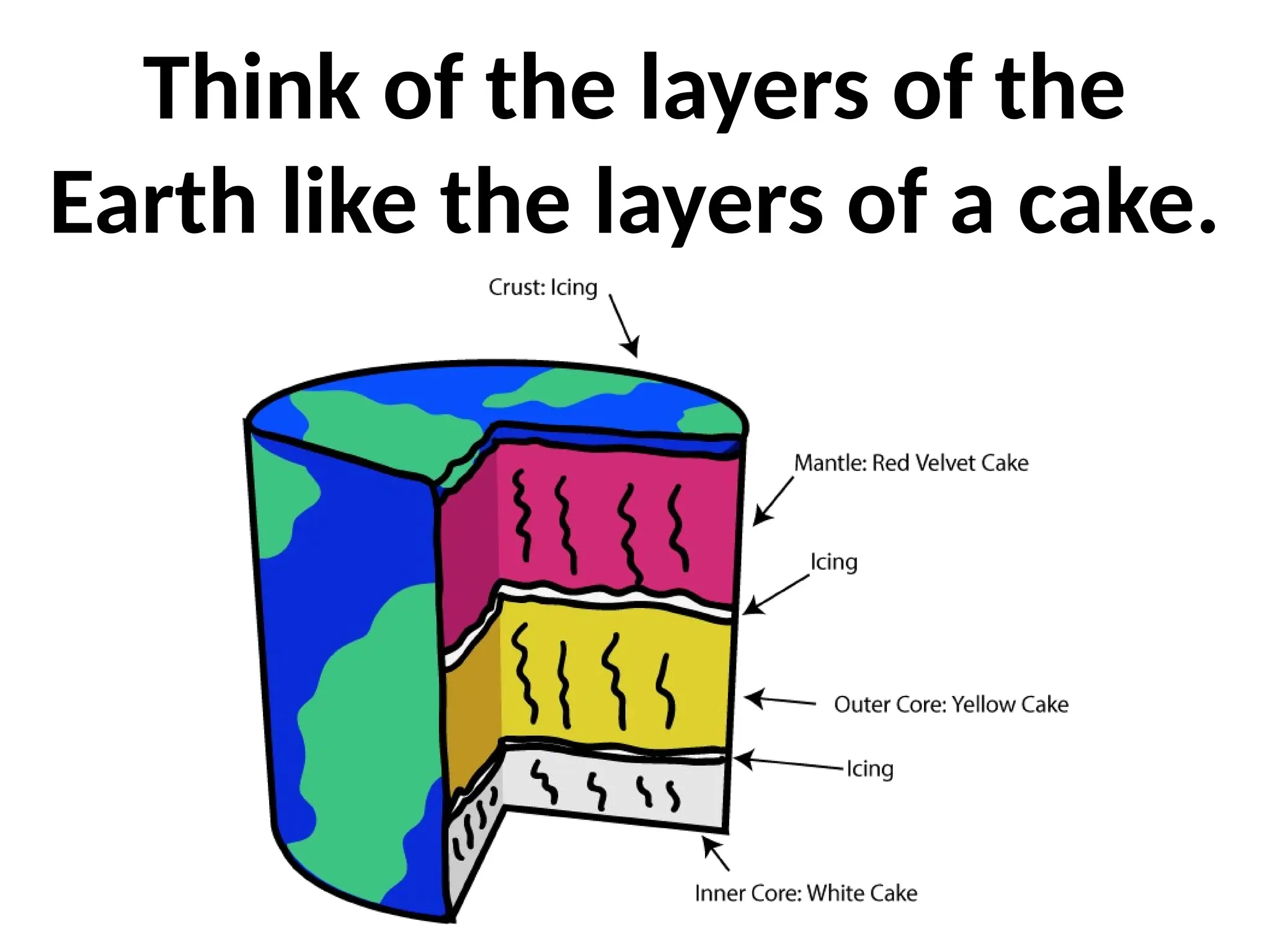
Think of the layers of the
Earth like the layers of a cake.
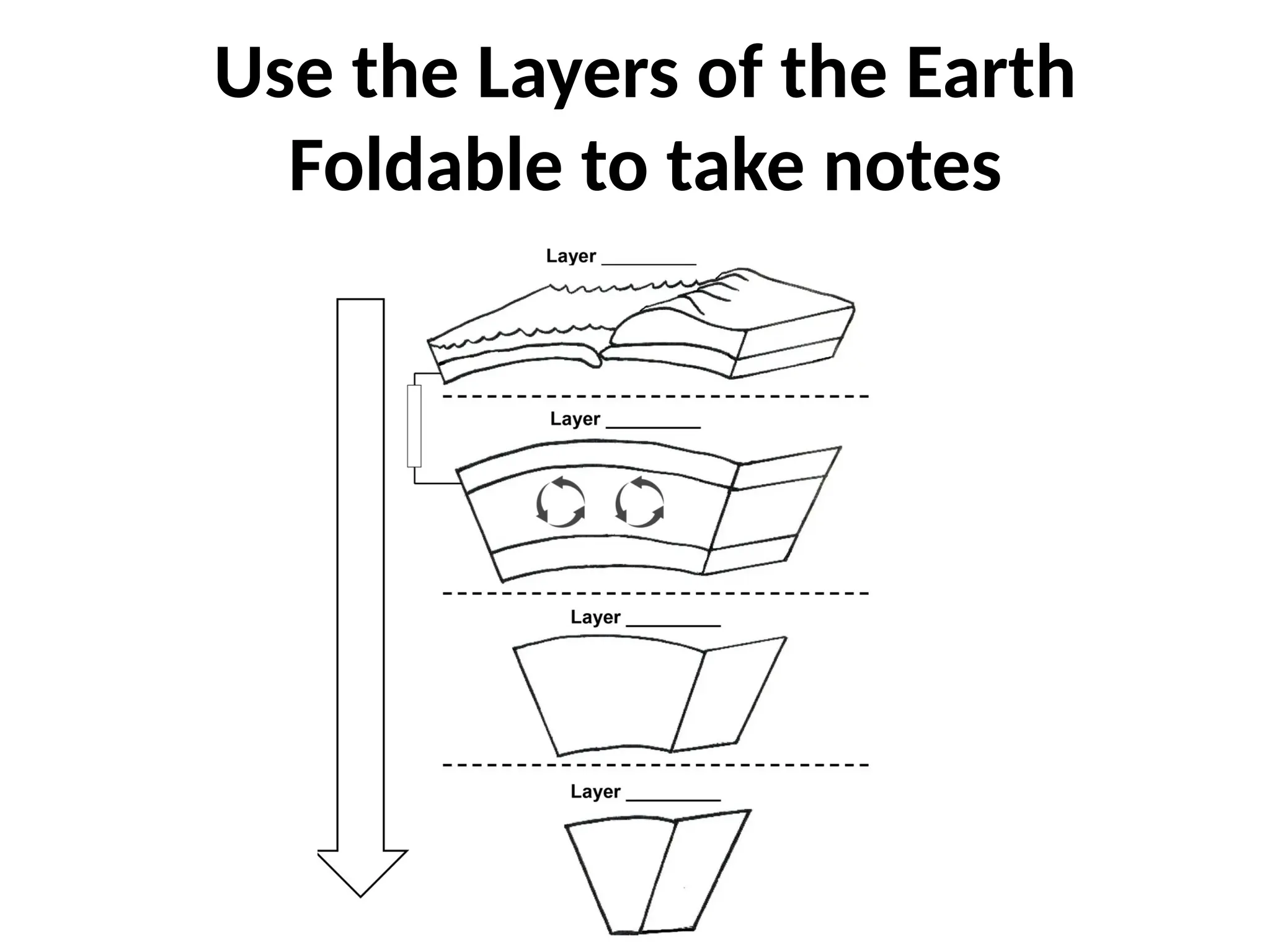
Use the Layers of the Earth
Foldable to take notes
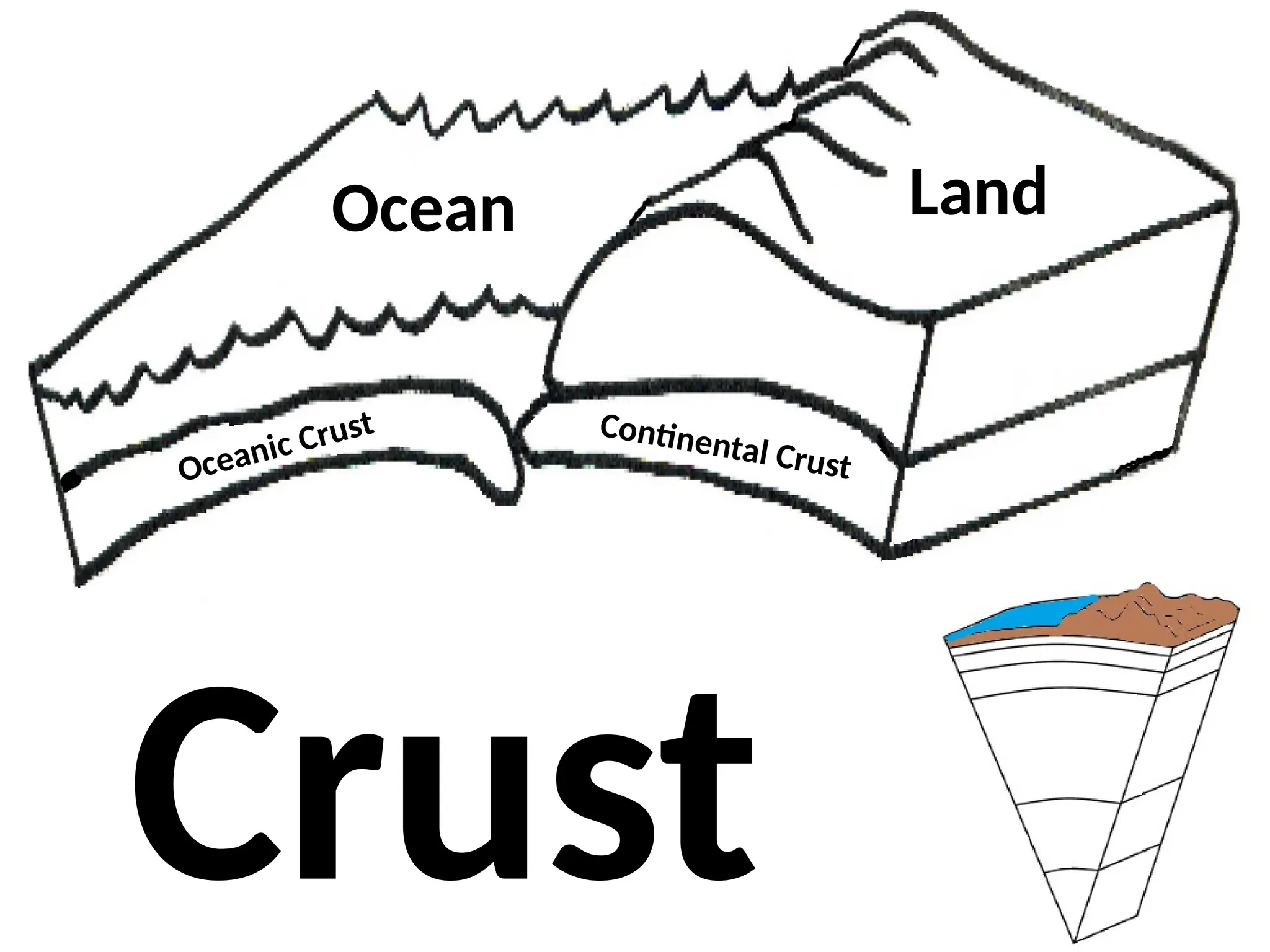
Crust
Ocean Land
Oceanic Crust Continental Crust
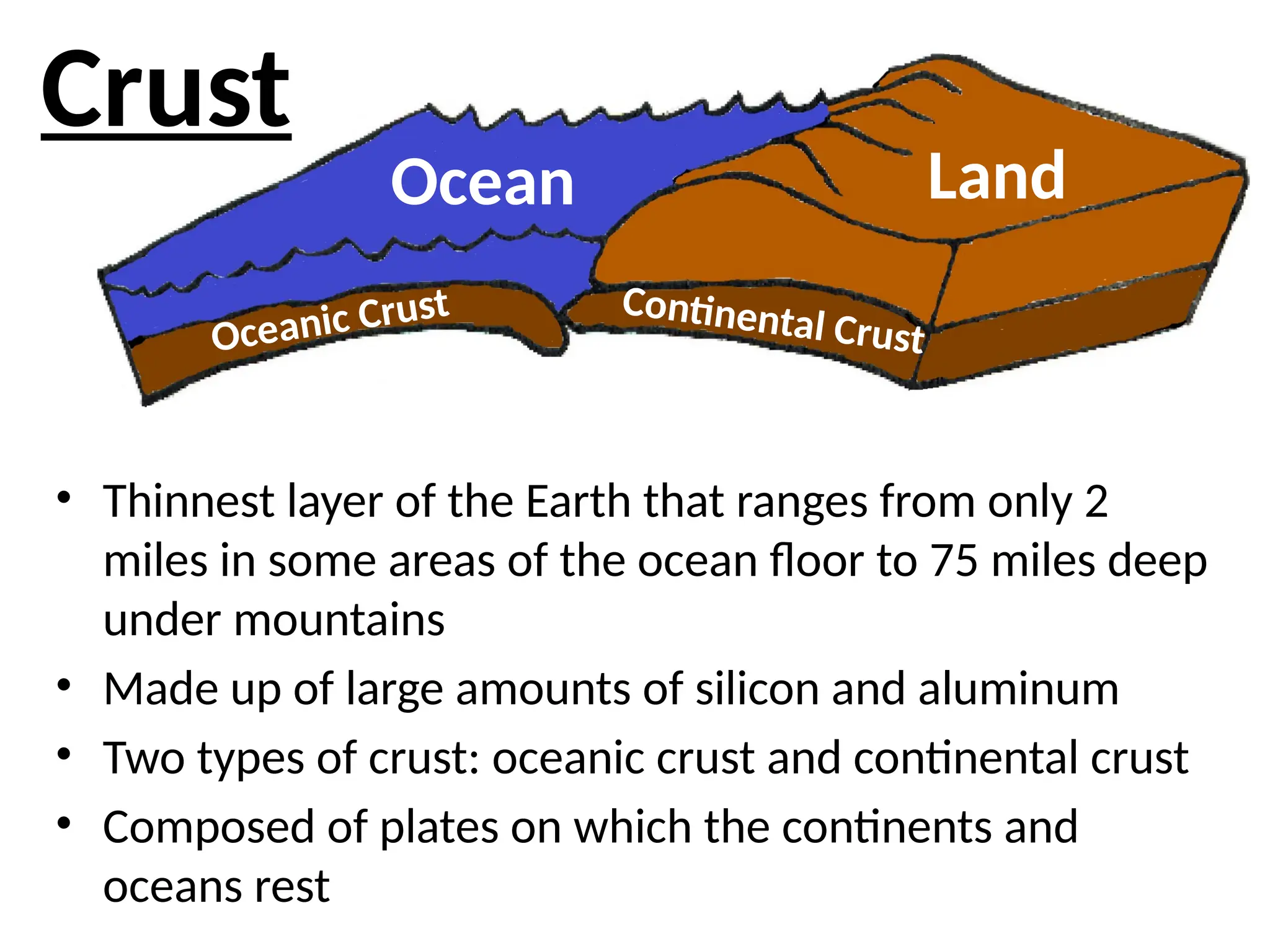
• Thinnest layer of the Earth that ranges from only 2
miles in some areas of the ocean floor to 75 miles deep
under mountains
• Made up of large amounts of silicon and aluminum
• Two types of crust: oceanic crust and continental crust
• Composed of plates on which the continents and
oceans rest
Ocean Land
Oceanic Crust Continental Crust
Crust
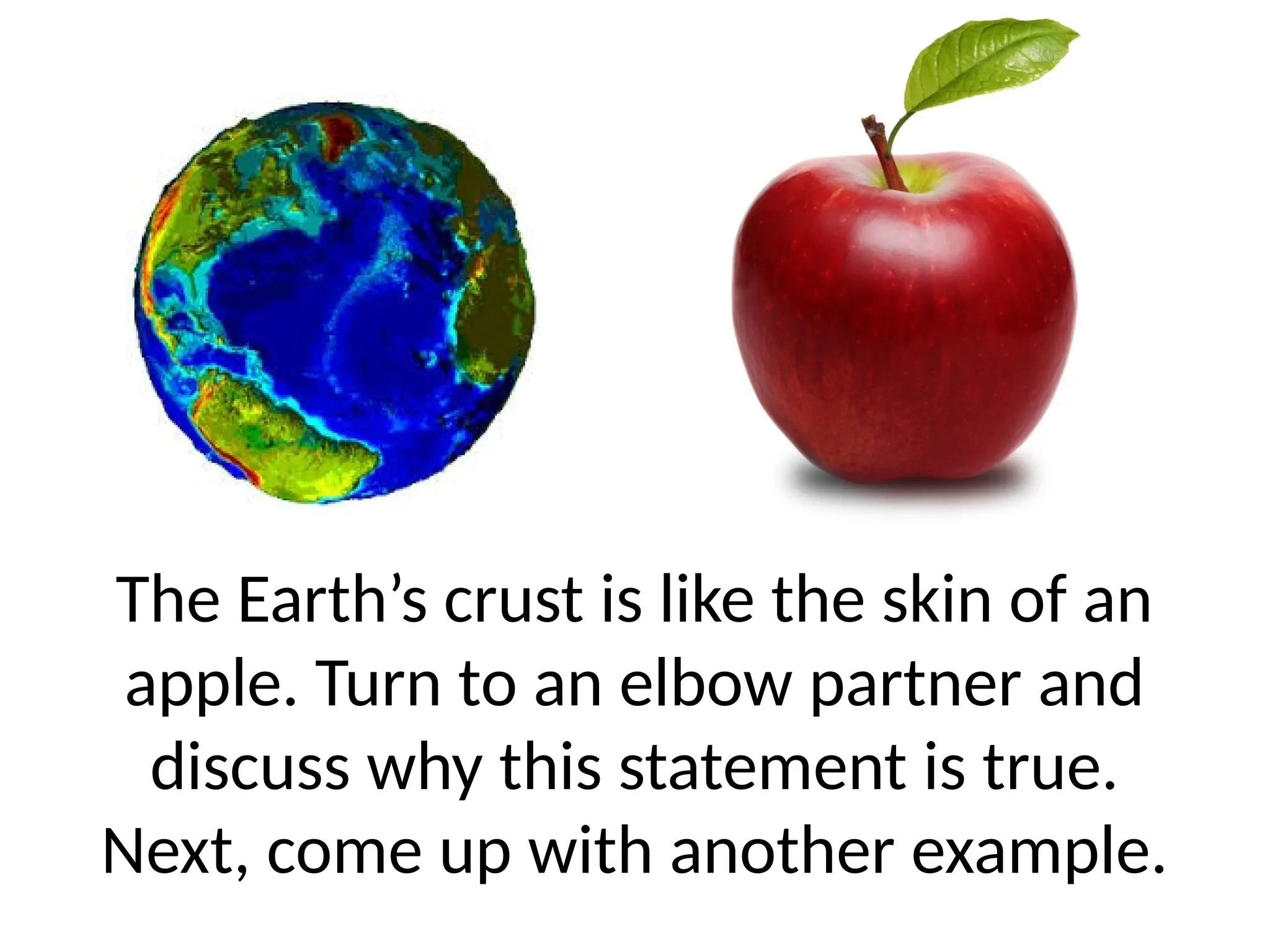
The Earth’s crust is like the skin of an
apple. Turn to an elbow partner and
discuss why this statement is true.
Next, come up with another example.
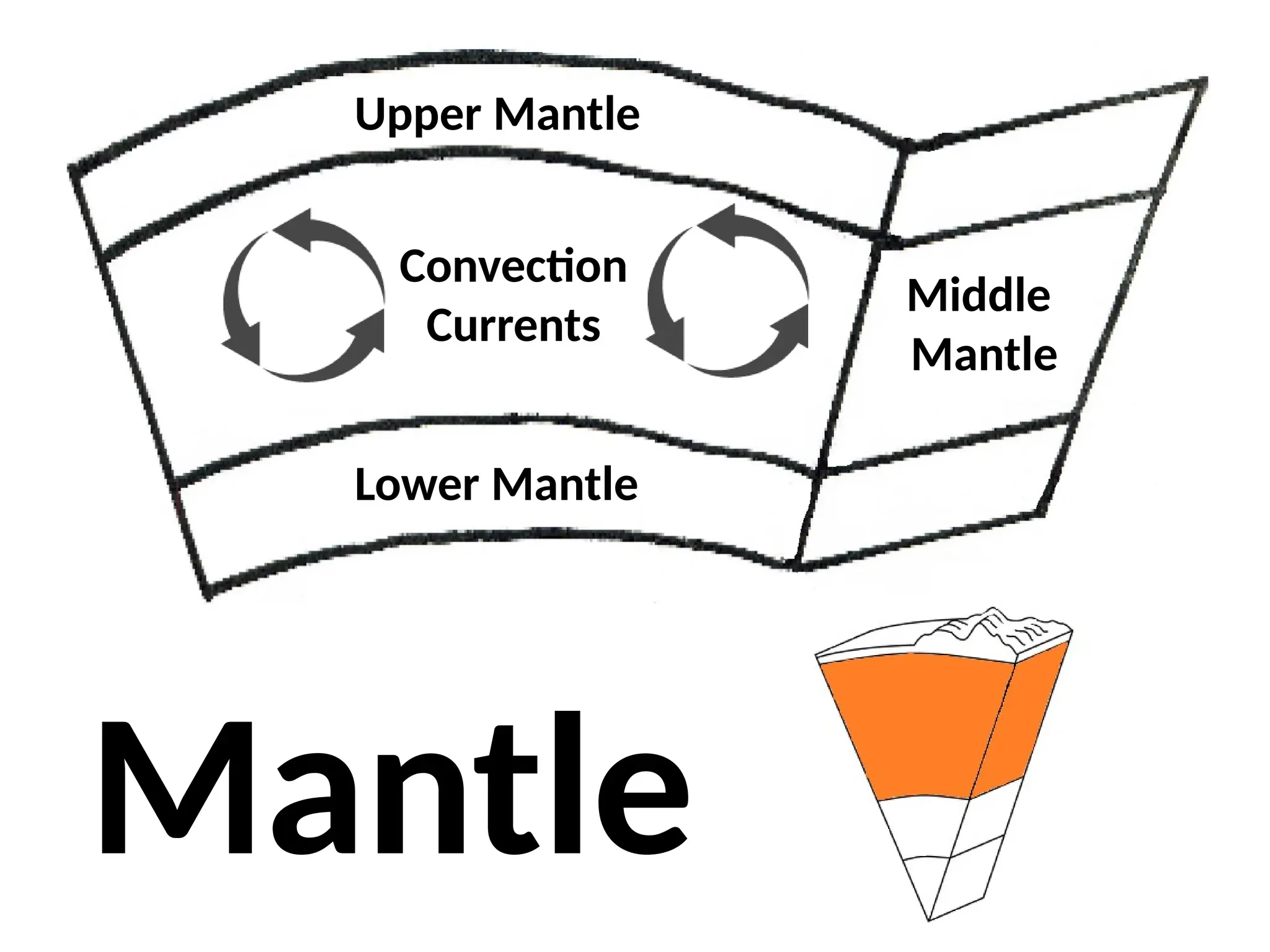
Mantle
Upper Mantle
Lower Mantle
Middle
Mantle
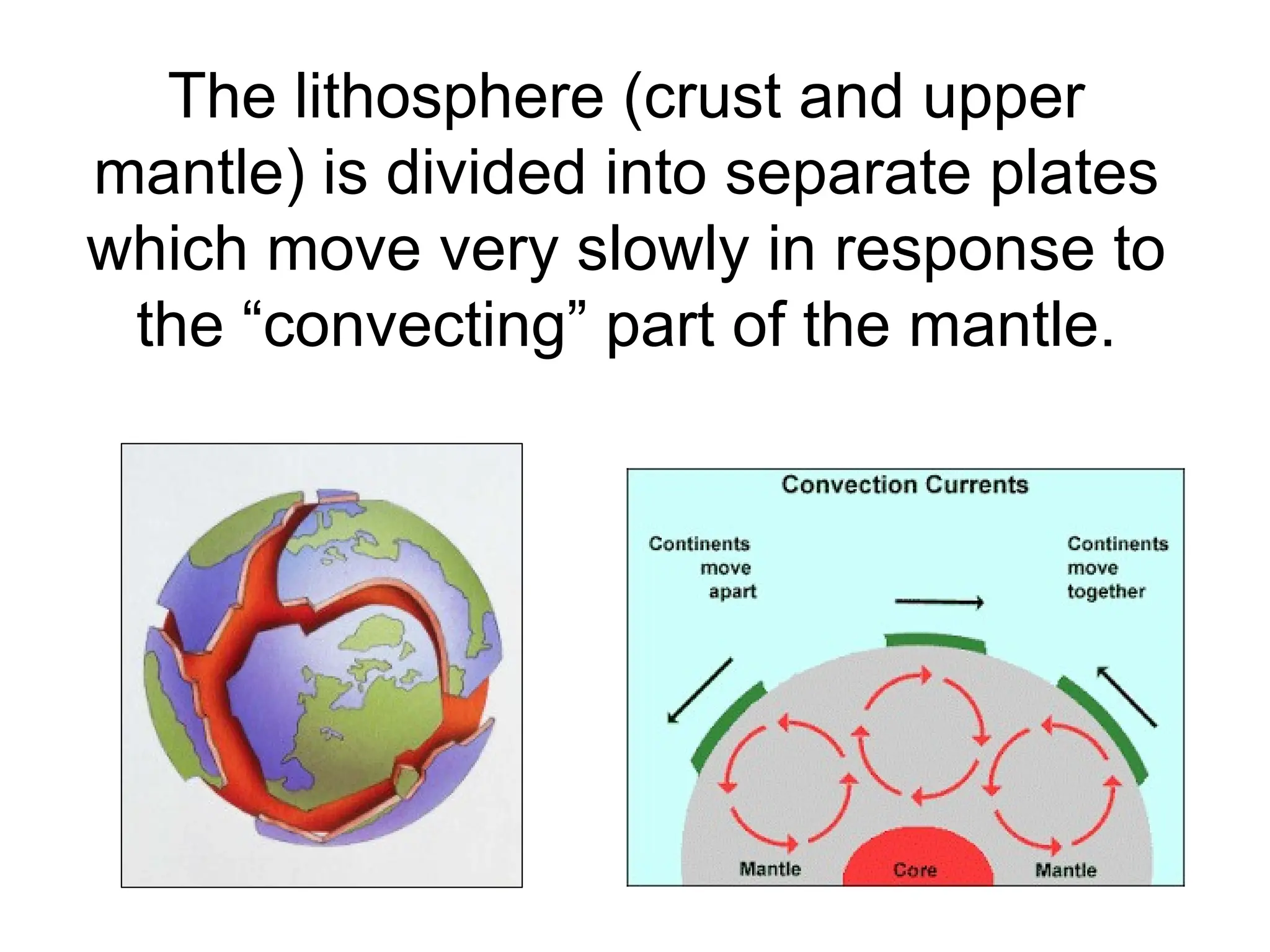
Convection
Currents
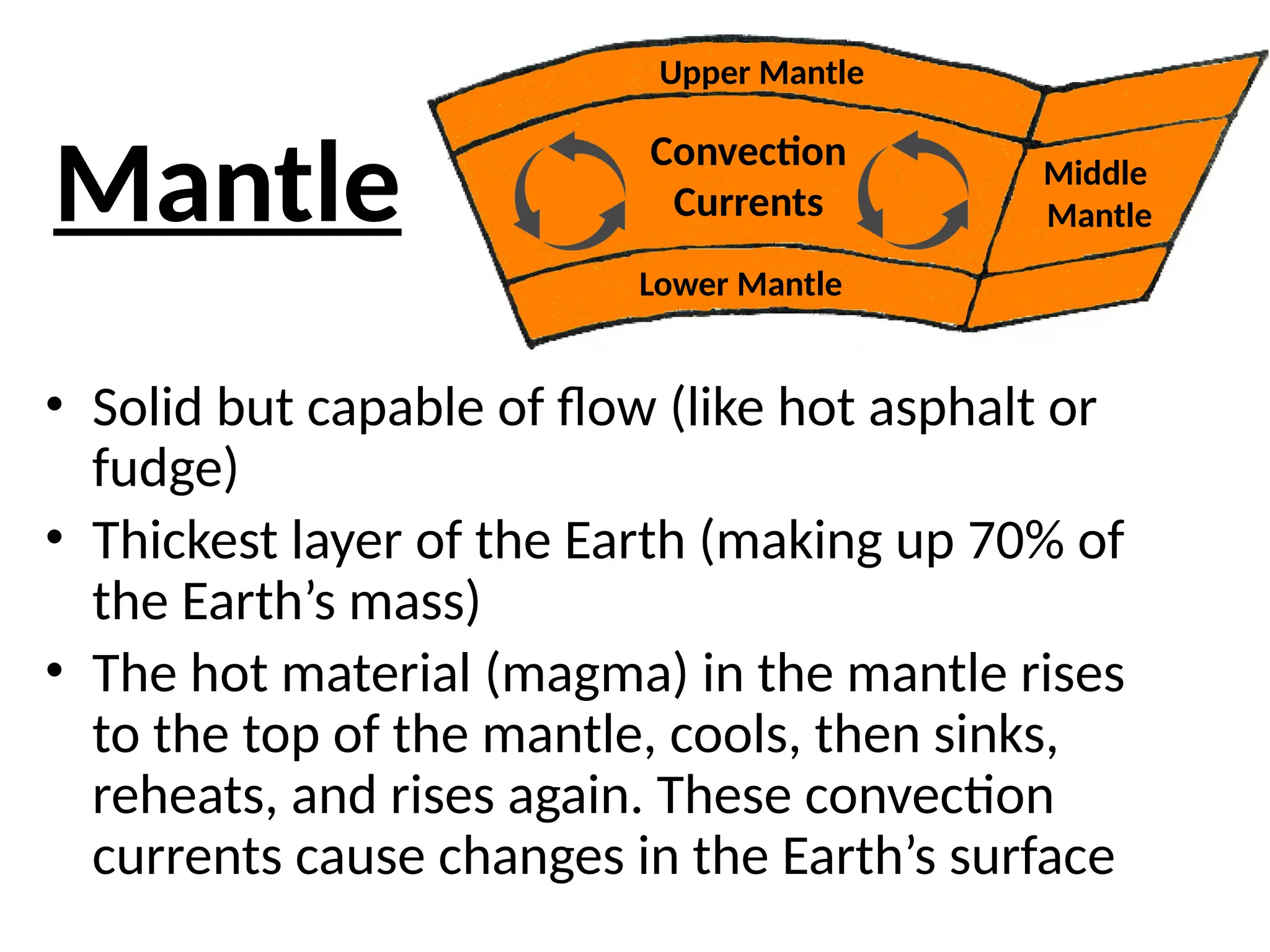
• Solid but capable of flow (like hot asphalt or
fudge)
• Thickest layer of the Earth (making up 70% of
the Earth’s mass)
• The hot material (magma) in the mantle rises
to the top of the mantle, cools, then sinks,
reheats, and rises again. These convection
currents cause changes in the Earth’s surface
Upper Mantle
Convection
Currents
Middle
Mantle
Lower Mantle
Mantle
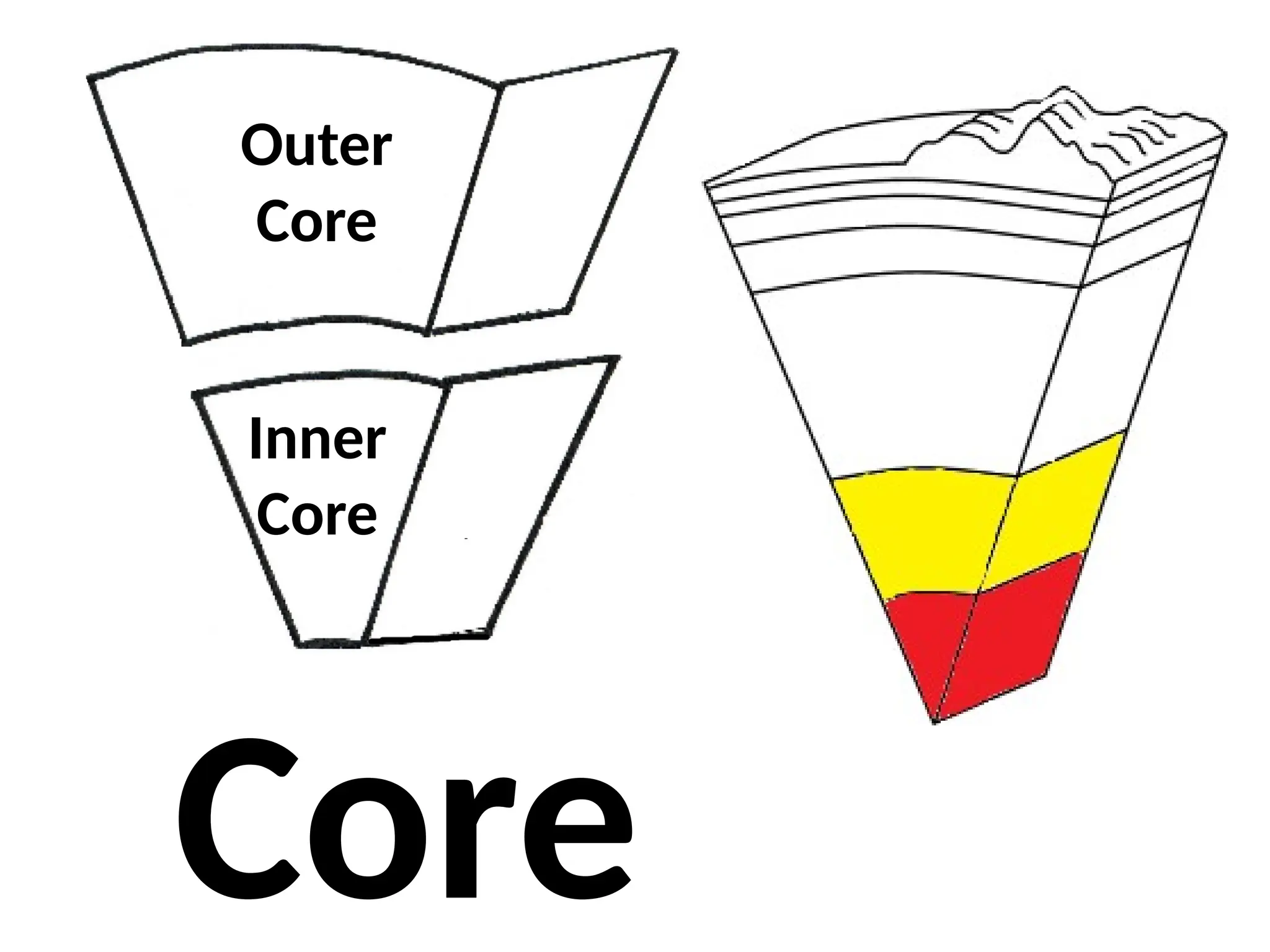
Core
Inner
Core
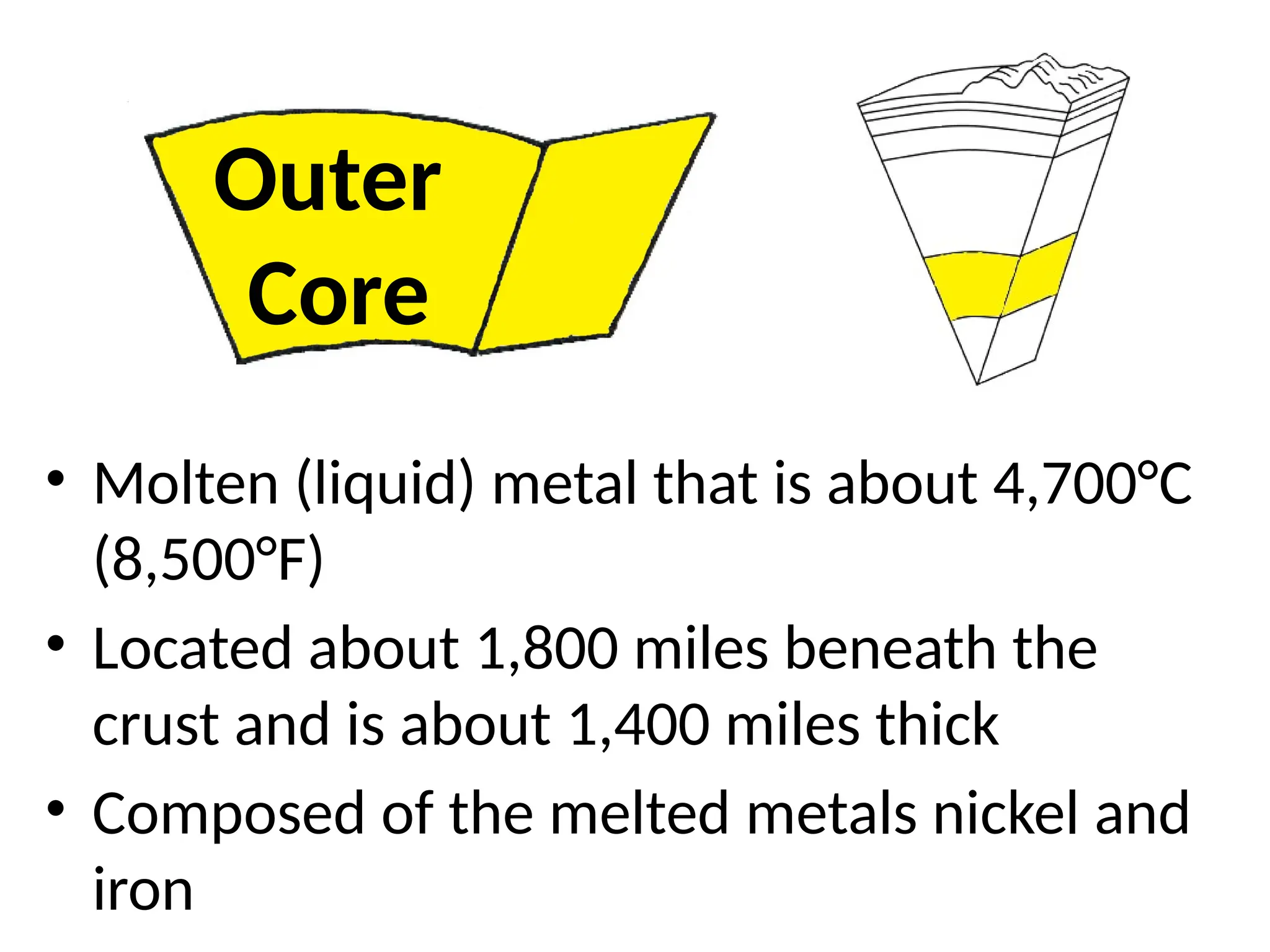
Outer
Core
Outer
Core
• Molten (liquid) metal that is about 4,700°C
(8,500°F)
• Located about 1,800 miles beneath the
crust and is about 1,400 miles thick
• Composed of the melted metals nickel and
iron
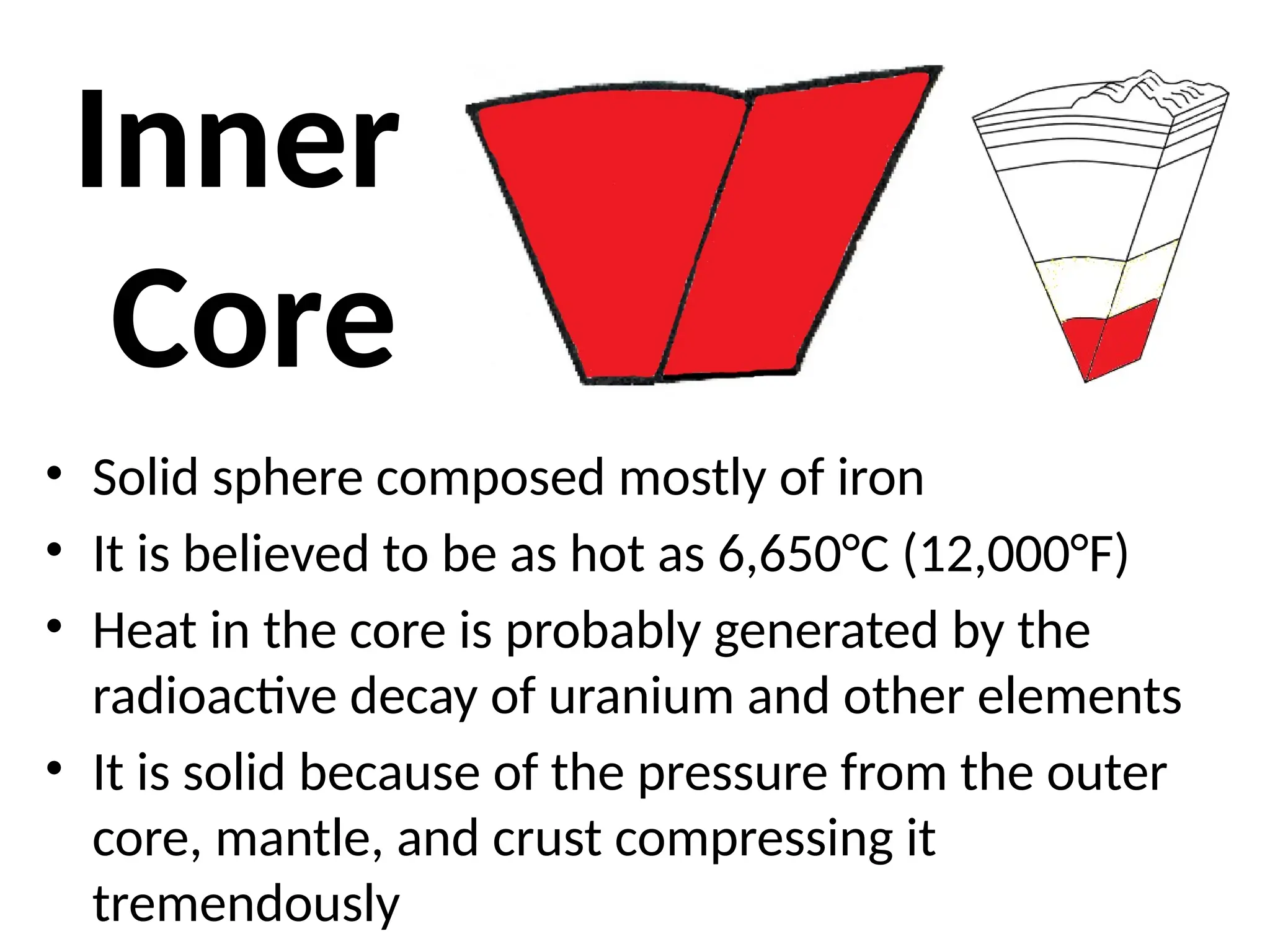
Inner
Core
• Solid sphere composed mostly of iron
• It is believed to be as hot as 6,650°C (12,000°F)
• Heat in the core is probably generated by the
radioactive decay of uranium and other elements
• It is solid because of the pressure from the outer
core, mantle, and crust compressing it
tremendously
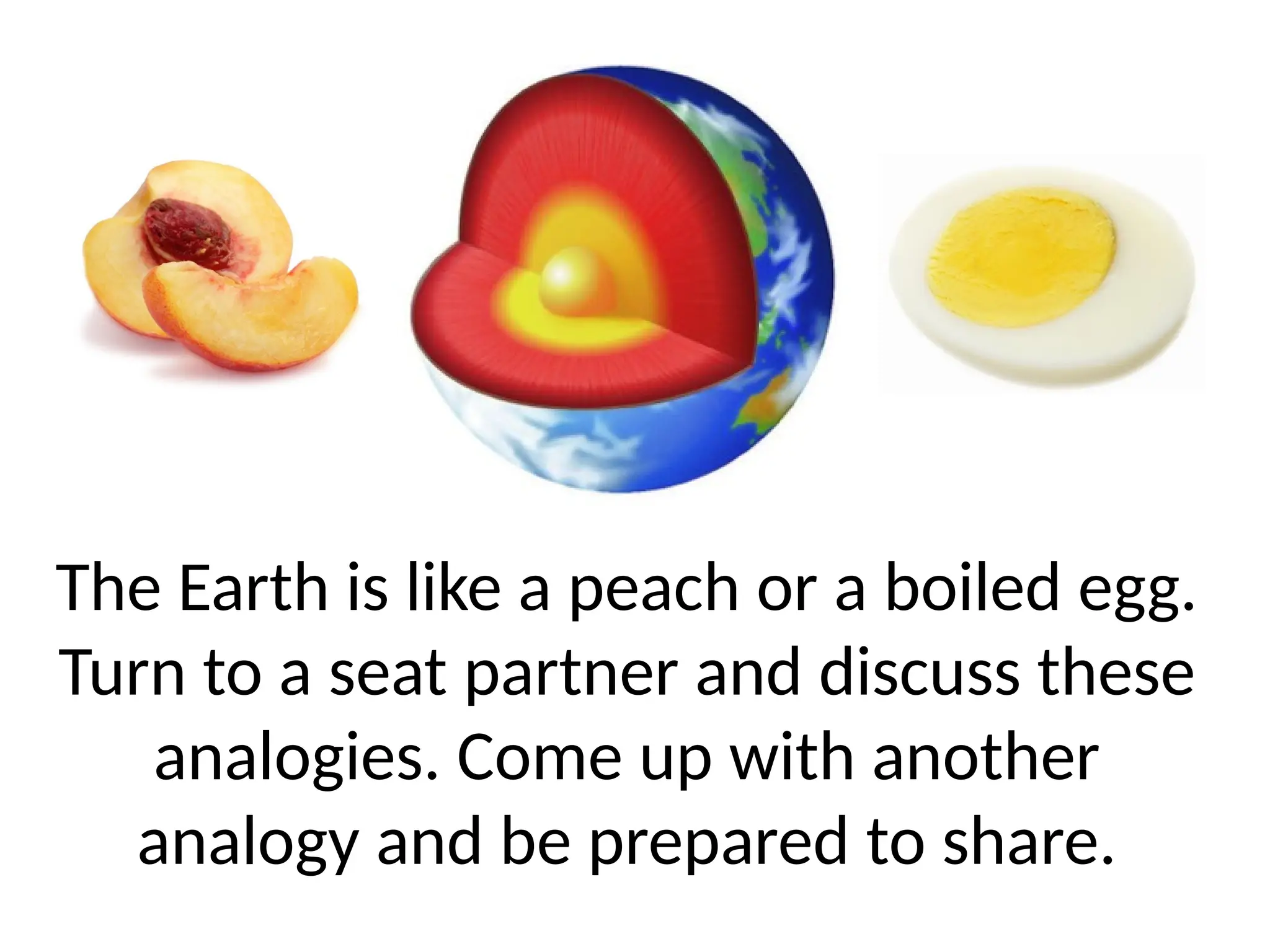
The Earth is like a peach or a boiled egg.
Turn to a seat partner and discuss these
analogies. Come up with another
analogy and be prepared to share.
Inner Core
Solid
Outer Core
Liquid
Mantle
Crust
Lithosphere – Crust and
Upper Layer of the
Mantle
Layer of the Mantle
(asthenosphere) that
consists of hot rock of
tar-like consistency,
which slowly moves
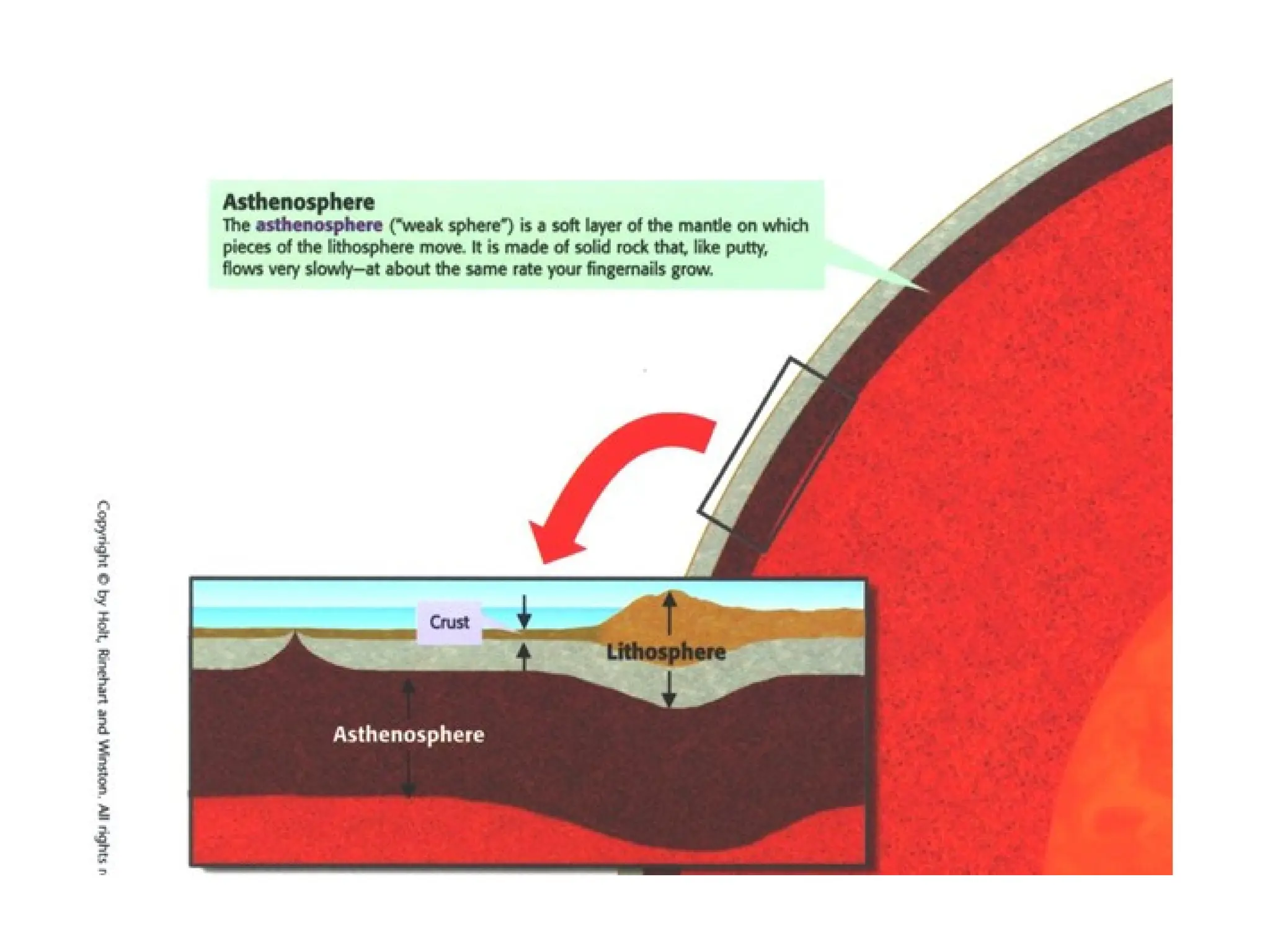
The lithosphere (crust and upper
mantle) is divided into separate plates
which move very slowly in response to
the “convecting” part of the mantle.
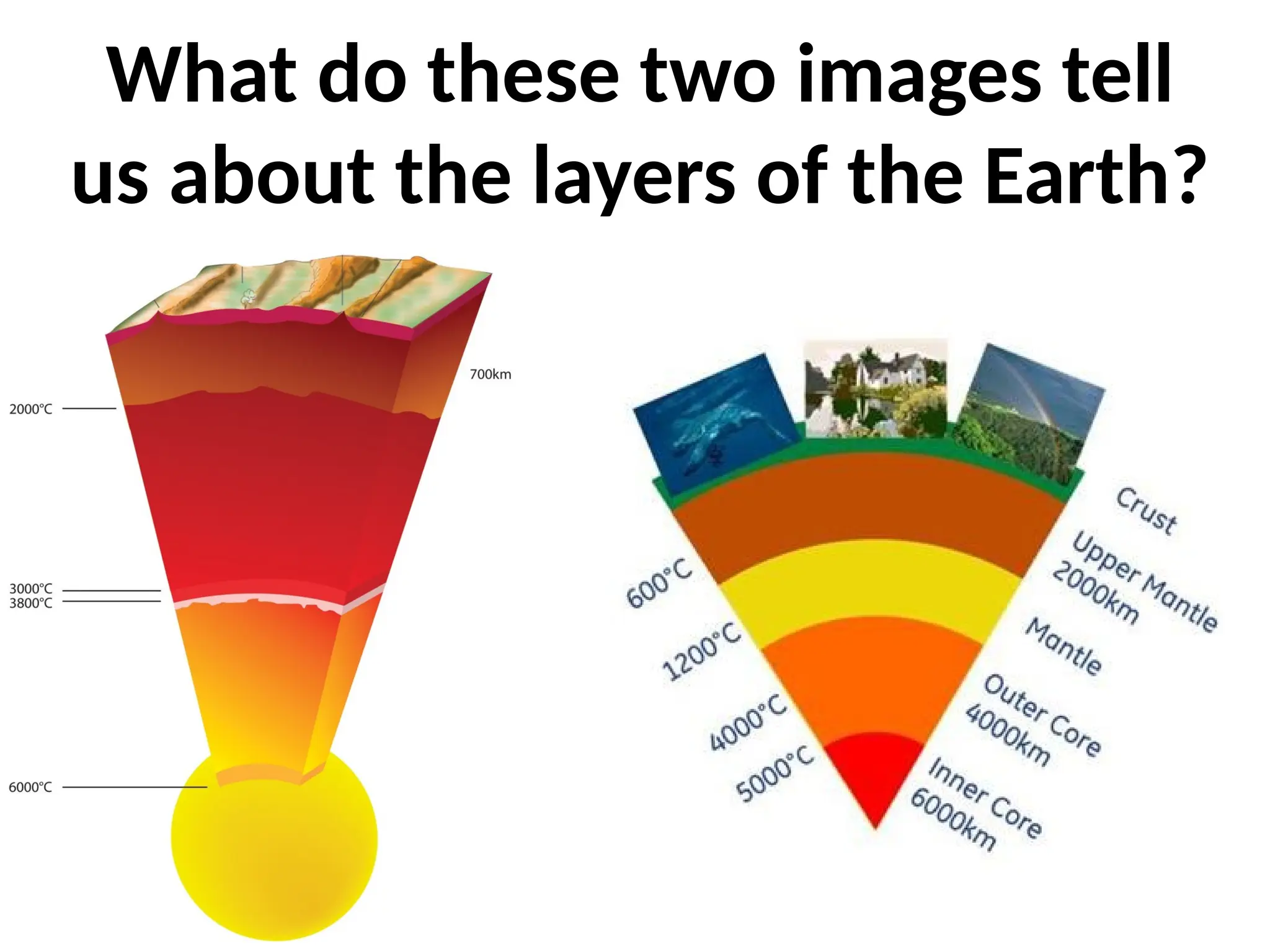
What do these two images tell
us about the layers of the Earth?
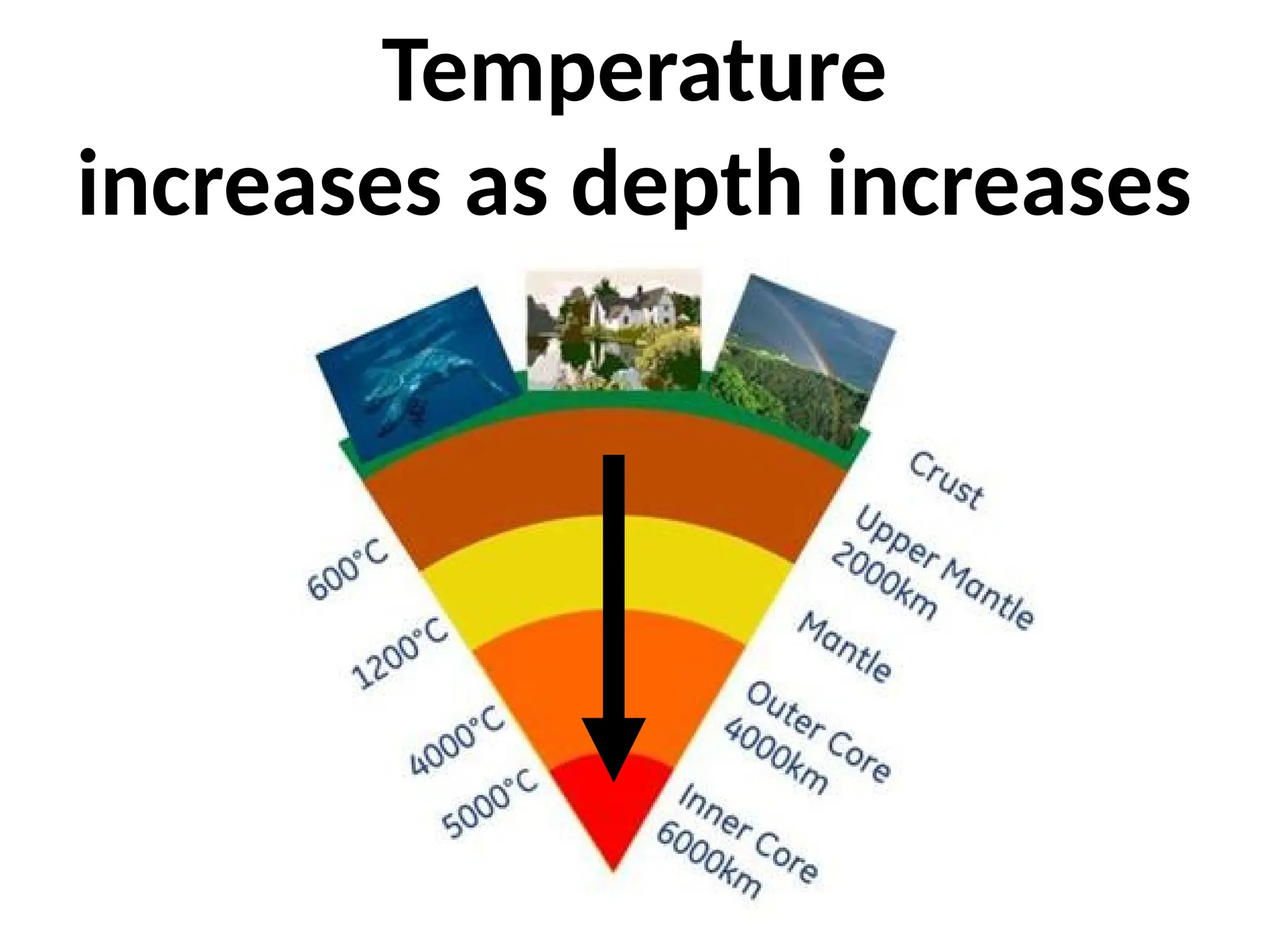
Temperature
increases as depth increases
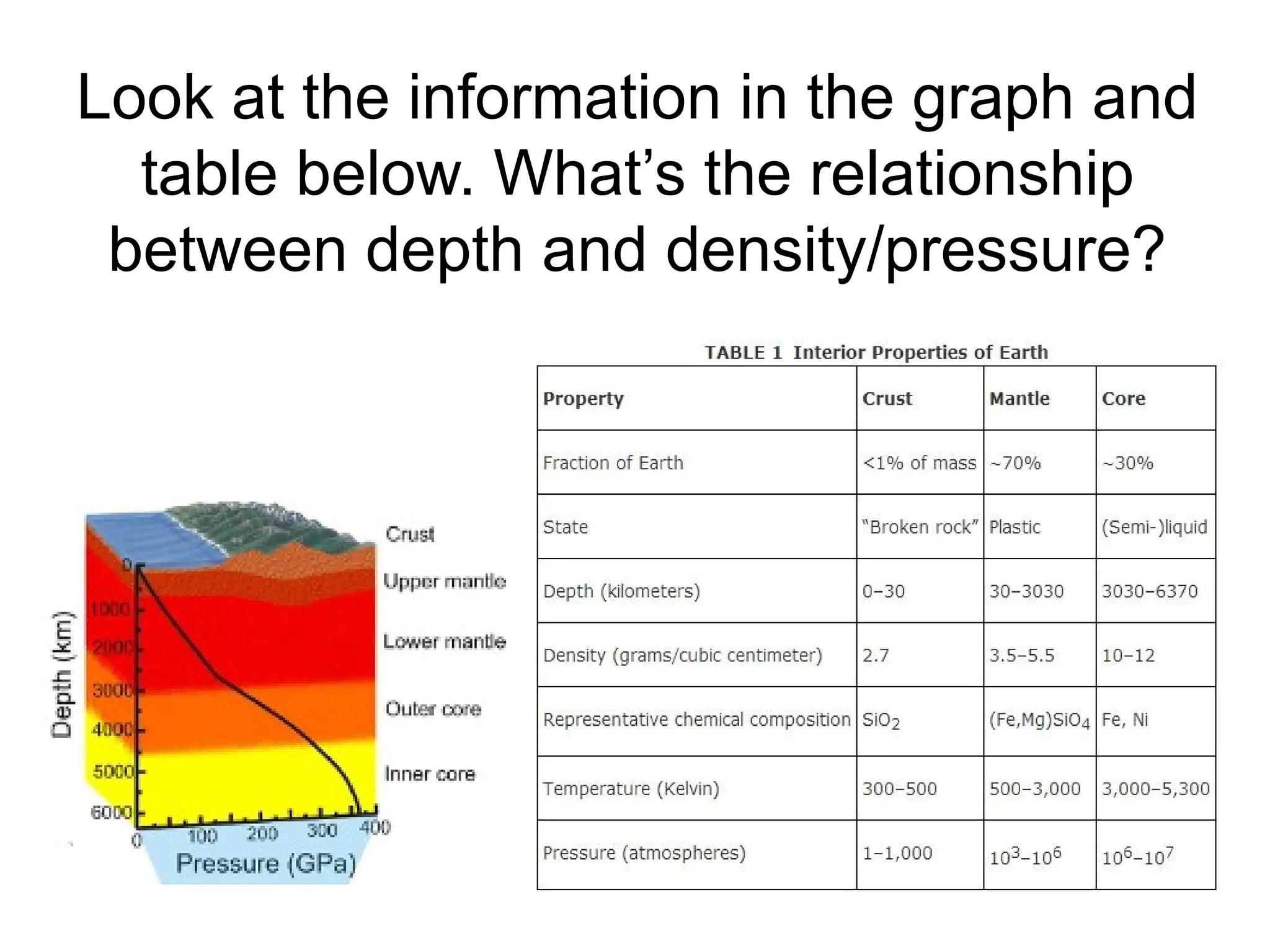
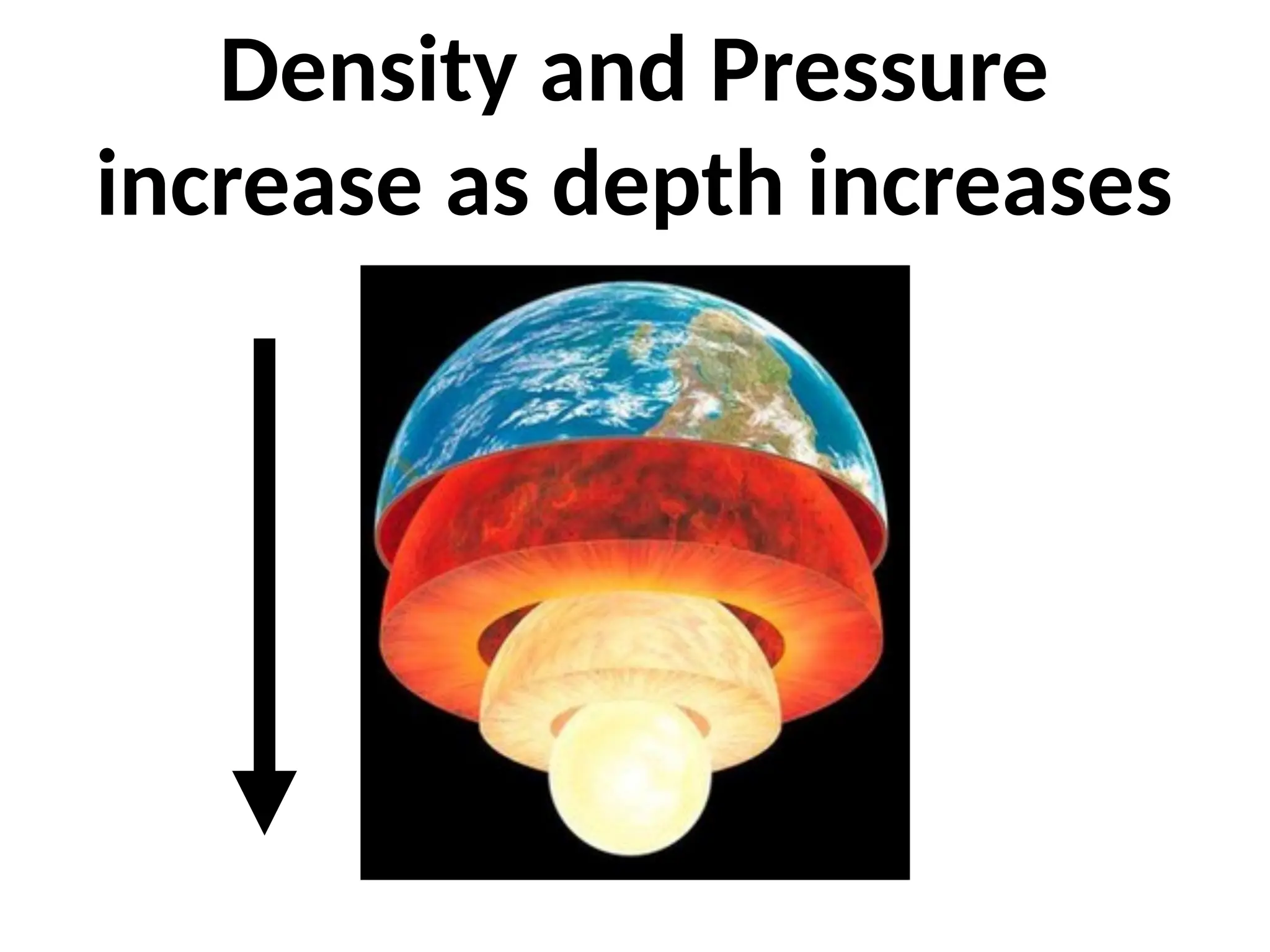
Look at the information in the graph and
table below. What’s the relationship
between depth and density/pressure?
Density and Pressure
increase as depth increases
Add this statement to the
arrow going down on your
foldable.
Temperature,
Density and
Pressure increases
as depth increases
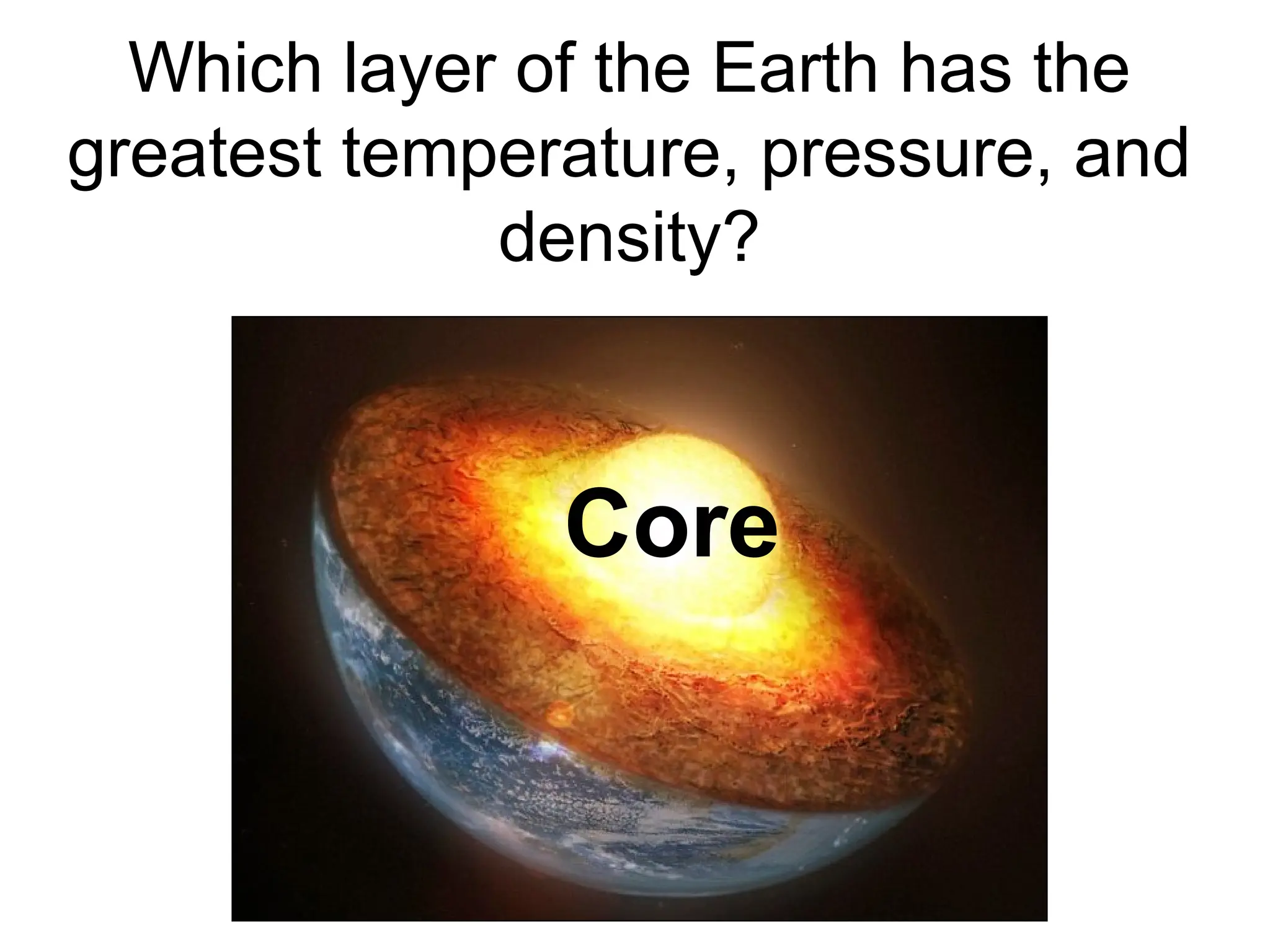
Which layer of the Earth has the
greatest temperature, pressure, and
density?
Core
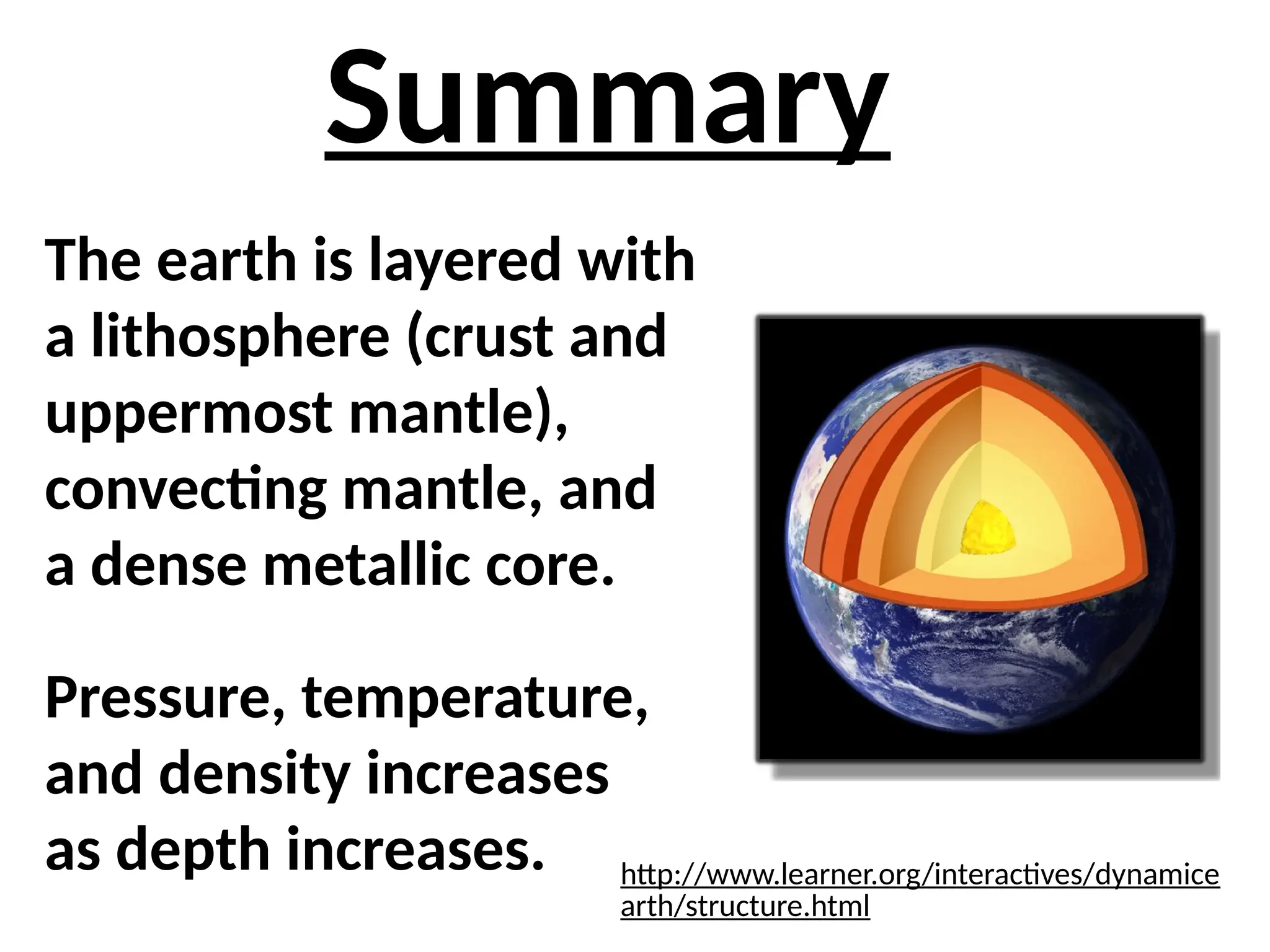
The earth is layered with
a lithosphere (crust and
uppermost mantle),
convecting mantle, and
a dense metallic core.
Summary
http://www.learner.org/interactives/dynamice
arth/structure.html
Pressure, temperature,
and density increases
as depth increases.
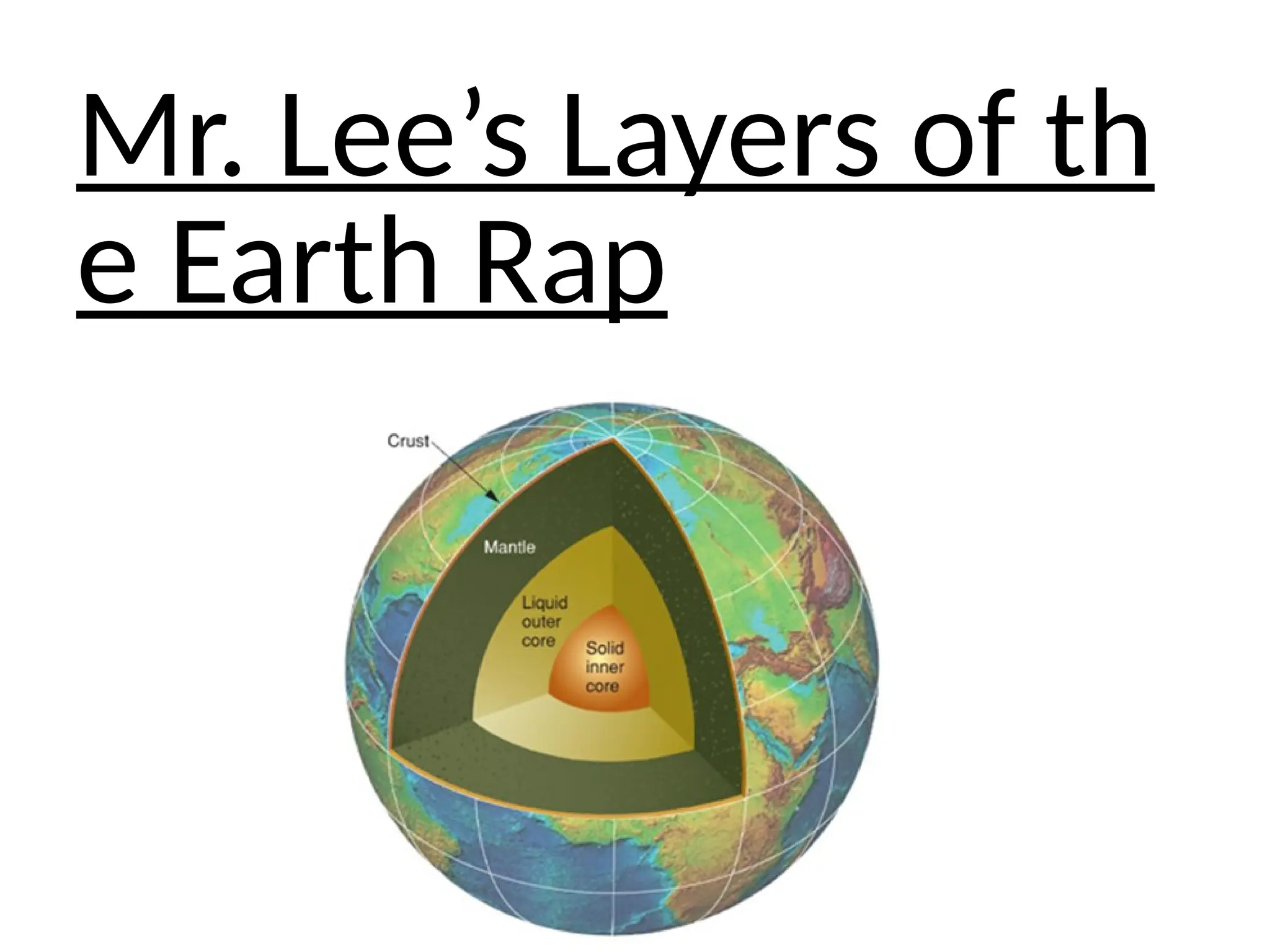
Mr. Lee’s Layers of th
e Earth Rap
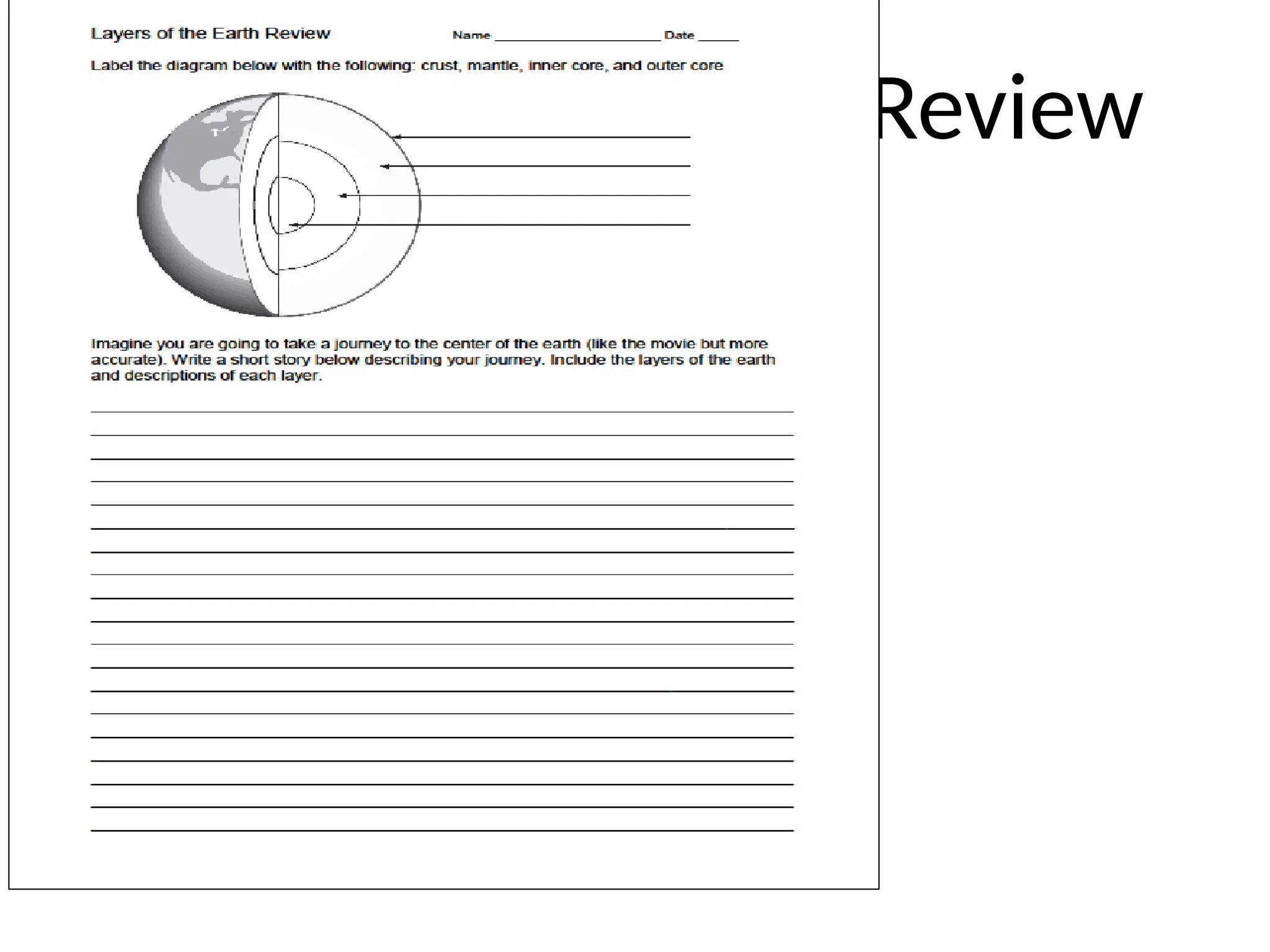
Layers of the Earth Review
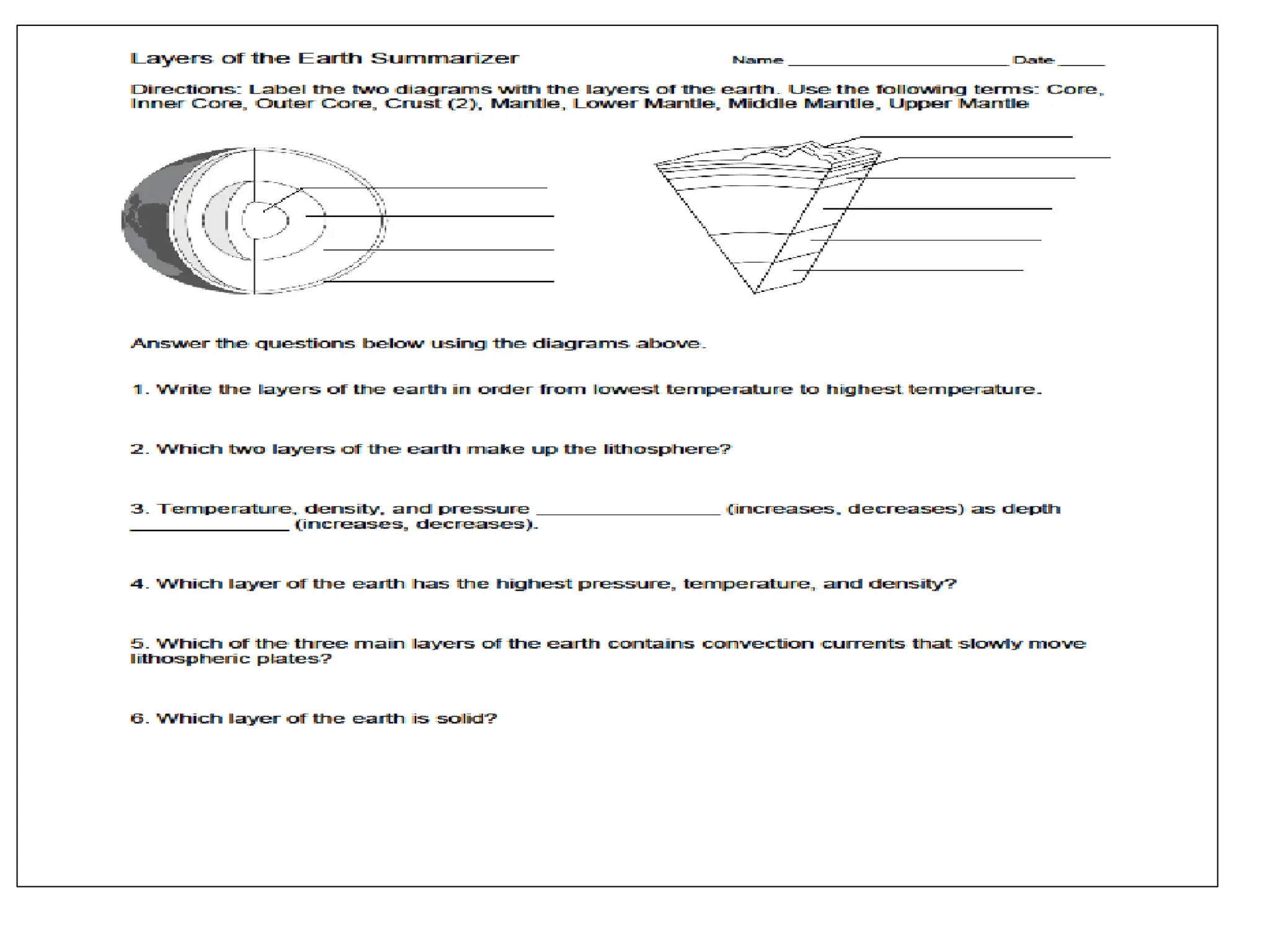
Summarizing
Strategy

Layers of the Earth- Crust, Mantle and core

  • 1.
  • 2.
    Watch the movietrailer for Journey to the Center of the Earth. Identify characteristics that you think are true and those you think are not true. Be prepared to share. https://www.youtube.com/watch?v=r Qx2wLyagk4
  • 3.
    Essential Question: How arelayers of the Earth different from one another? Compare and contrast the Earth’s crust, mantle, and core including temperature, density, and composition.
  • 4.
    The Earth ismade up of 3 main layers: Crust Mantle Core
  • 5.
    Think of thelayers of the Earth like the layers of a cake.
  • 6.
    Use the Layersof the Earth Foldable to take notes
  • 7.
  • 8.
    • Thinnest layerof the Earth that ranges from only 2 miles in some areas of the ocean floor to 75 miles deep under mountains • Made up of large amounts of silicon and aluminum • Two types of crust: oceanic crust and continental crust • Composed of plates on which the continents and oceans rest Ocean Land Oceanic Crust Continental Crust Crust
  • 9.
    The Earth’s crustis like the skin of an apple. Turn to an elbow partner and discuss why this statement is true. Next, come up with another example.
  • 10.
  • 11.
    • Solid butcapable of flow (like hot asphalt or fudge) • Thickest layer of the Earth (making up 70% of the Earth’s mass) • The hot material (magma) in the mantle rises to the top of the mantle, cools, then sinks, reheats, and rises again. These convection currents cause changes in the Earth’s surface Upper Mantle Convection Currents Middle Mantle Lower Mantle Mantle
  • 12.
  • 13.
    Outer Core • Molten (liquid)metal that is about 4,700°C (8,500°F) • Located about 1,800 miles beneath the crust and is about 1,400 miles thick • Composed of the melted metals nickel and iron
  • 14.
    Inner Core • Solid spherecomposed mostly of iron • It is believed to be as hot as 6,650°C (12,000°F) • Heat in the core is probably generated by the radioactive decay of uranium and other elements • It is solid because of the pressure from the outer core, mantle, and crust compressing it tremendously
  • 15.
    The Earth islike a peach or a boiled egg. Turn to a seat partner and discuss these analogies. Come up with another analogy and be prepared to share.
  • 16.
    Inner Core Solid Outer Core Liquid Mantle Crust Lithosphere– Crust and Upper Layer of the Mantle Layer of the Mantle (asthenosphere) that consists of hot rock of tar-like consistency, which slowly moves
  • 18.
    The lithosphere (crustand upper mantle) is divided into separate plates which move very slowly in response to the “convecting” part of the mantle.
  • 19.
    What do thesetwo images tell us about the layers of the Earth?
  • 20.
  • 21.
    Look at theinformation in the graph and table below. What’s the relationship between depth and density/pressure?
  • 22.
  • 23.
    Add this statementto the arrow going down on your foldable. Temperature, Density and Pressure increases as depth increases
  • 24.
    Which layer ofthe Earth has the greatest temperature, pressure, and density? Core
  • 25.
    The earth islayered with a lithosphere (crust and uppermost mantle), convecting mantle, and a dense metallic core. Summary http://www.learner.org/interactives/dynamice arth/structure.html Pressure, temperature, and density increases as depth increases.
  • 26.
    Mr. Lee’s Layersof th e Earth Rap
  • 27.
    Layers of theEarth Review
  • 28.

Editor's Notes

  • #8 In depth teaching about the plates and their movement will occur in the next essential question
  • #11 The movement of the lithospheric plates and the convection currents will be covered more in-depth during the next essential question.