Lateral Epicondylitis
Tennis Elbow
Lateral Epicondylitis
Epicondylitis – Overuse of the medial
and lateral musculotendinous
structures causing microscopic tears
and inflammation
Lateral Epicondylitis
Also called tennis elbow, lateral
epicondylalgia, or lateral epicondylosis
Lateral Epicondylitis
Lateral epicondylitis is a painful
condition involving the tendons that
attach to the bone on the outside
(lateral) part of the elbow.
Lateral Epicondylitis
The forearm muscles and tendons become
damaged from overuse — repeating the
same motions again and again. This leads
to pain and tenderness on the outside of
the elbow.
There are many treatment options for
tennis elbow. In most cases, treatment
involves a team approach. Primary doctors,
physical therapists, and, in some cases,
surgeons work together to provide the most
effective care.
The elbow joint is a joint made up of three
bones: the upper arm bone (humerus) and
the two bones in the forearm (radius and
ulna). There are bony bumps at the bottom
of the humerus called epicondyles. The
bony bump on the outside (lateral side) of
the elbow is called the lateral epicondyle.
Muscles, ligaments, and tendons hold the
elbow joint together.
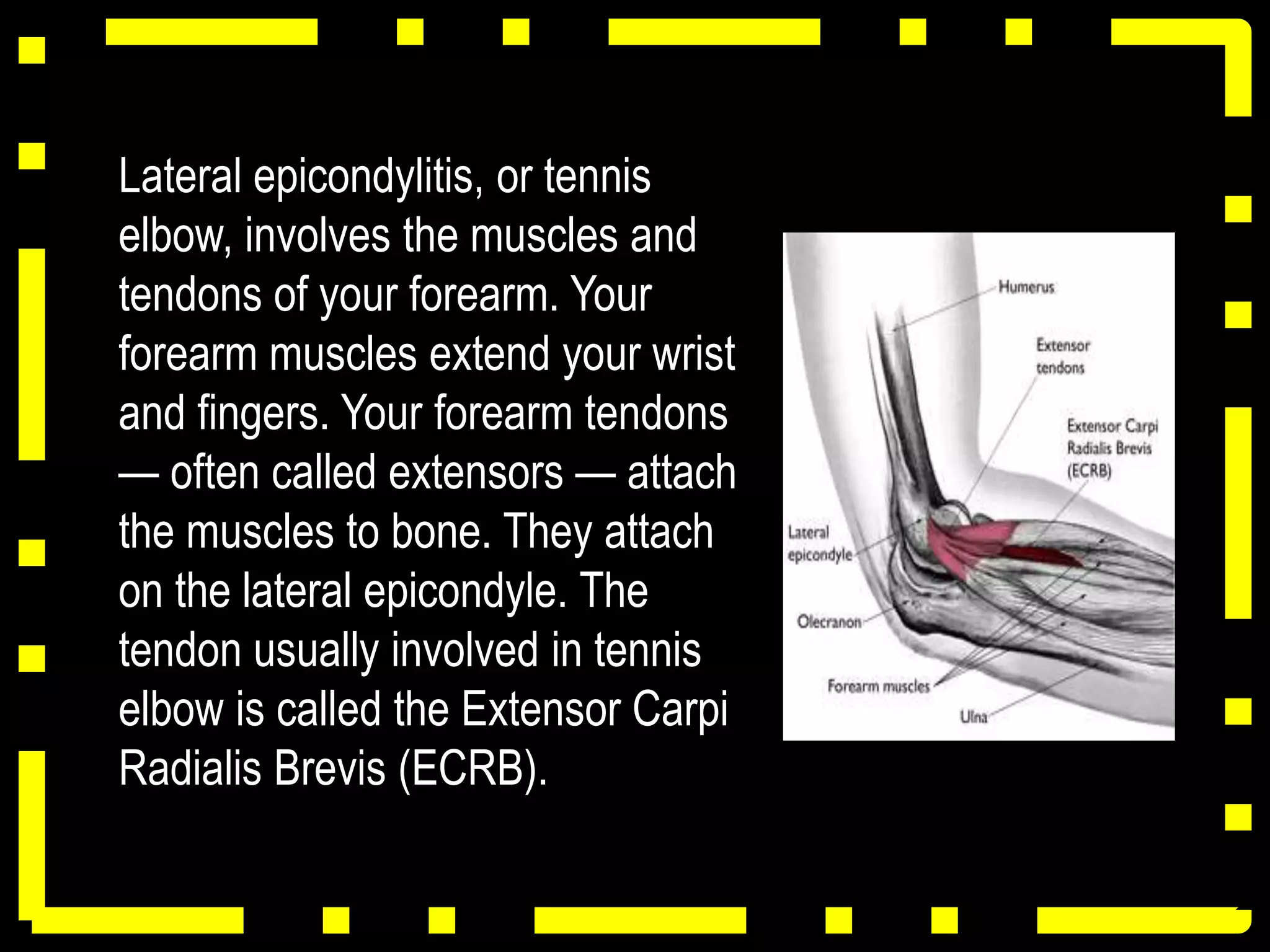
Lateral epicondylitis, or tennis
elbow, involves the muscles and
tendons of your forearm. Your
forearm muscles extend your wrist
and fingers. Your forearm tendons
— often called extensors — attach
the muscles to bone. They attach
on the lateral epicondyle. The
tendon usually involved in tennis
elbow is called the Extensor Carpi
Radialis Brevis (ECRB).
CAUSES
-Overuse
- Activities
- Age
- Unknown
overuse
Recent studies show that tennis elbow is often
due to damage to a specific forearm muscle.
The extensor carpi radialis brevis (ECRB)
muscle helps stabilize the wrist when the
elbow is straight. When the ECRB is
weakened from overuse, microscopic tears
form in the tendon where it attaches to the
lateral epicondyle. This leads to inflammation
and pain.
activities
Painters, plumbers, and carpenters are
particularly prone to developing tennis elbow.
Studies have shown that auto workers, cooks,
and even butchers get tennis elbow more often
than the rest of the population. It is thought
that the repetition and weight lifting required in
these occupations leads to injury.
age
Most people who get tennis elbow are
between the ages of 30 and 50, although
anyone can get tennis elbow if they have
the risk factors. In racquet sports like
tennis, improper stroke technique and
improper equipment may be risk factors.
unknown
Lateral epicondylitis can occur without any
recognized repetitive injury. This
occurence is called "insidious" or of an
unknown cause.
TREATMENT
- Surgical
- Nonsurgical
NON- SURGICAL
TREATMENT
- Rest
- NSAIDS
- Equipment check
- Physical Therapy
REST
-The first step toward recovery is to give
your arm proper rest. This means that you
will have to stop participation in sports or
heavy work activities for several weeks.
NSAIDS
-Drugs like aspirin or ibuprofen reduce
pain and swelling.
EQUIPMENT CHECK
If the patient participates in a racquet sport, the
doctor may encourage to have the equipment
checked for proper fit. Stiffer racquets and
looser-strung racquets often can reduce the
stress on the forearm, which means that the
forearm muscles do not have to work as hard. If
the patient uses an oversized racquet, changing
to a smaller head may help prevent symptoms
from recurring.
SURGICAL TREATMENT
If your symptoms do not respond after 6
to 12 months of nonsurgical treatments,
your doctor may recommend surgery.
Most surgical procedures for tennis
elbow involve removing diseased
muscle and reattaching healthy muscle
back to bone.
OPEN SURGERY
The most common approach to tennis
elbow repair is open surgery. This
involves making an incision over the
elbow.
Open surgery is usually performed as an
outpatient surgery. It rarely requires an
overnight stay at the hospital.
ARTHROSCOPIC
Tennis elbow can also be repaired using
miniature instruments and small
incisions. Like open surgery, this is a
same-day or outpatient procedure.
SURGICAL RISKS
As with any surgery, there are risks with tennis
elbow surgery. The most common things to consider
include:
 Infection
 Nerve and blood vessel damage
 Possible prolonged rehabilitation
 Loss of strength
 Loss of flexibility
 The need for further surgery

Lateral Epicondylitis

  • 1.
  • 2.
    Lateral Epicondylitis Epicondylitis –Overuse of the medial and lateral musculotendinous structures causing microscopic tears and inflammation
  • 3.
    Lateral Epicondylitis Also calledtennis elbow, lateral epicondylalgia, or lateral epicondylosis
  • 4.
    Lateral Epicondylitis Lateral epicondylitisis a painful condition involving the tendons that attach to the bone on the outside (lateral) part of the elbow.
  • 5.
    Lateral Epicondylitis The forearmmuscles and tendons become damaged from overuse — repeating the same motions again and again. This leads to pain and tenderness on the outside of the elbow.
  • 6.
    There are manytreatment options for tennis elbow. In most cases, treatment involves a team approach. Primary doctors, physical therapists, and, in some cases, surgeons work together to provide the most effective care.
  • 7.
    The elbow jointis a joint made up of three bones: the upper arm bone (humerus) and the two bones in the forearm (radius and ulna). There are bony bumps at the bottom of the humerus called epicondyles. The bony bump on the outside (lateral side) of the elbow is called the lateral epicondyle. Muscles, ligaments, and tendons hold the elbow joint together.
  • 8.
    Lateral epicondylitis, ortennis elbow, involves the muscles and tendons of your forearm. Your forearm muscles extend your wrist and fingers. Your forearm tendons — often called extensors — attach the muscles to bone. They attach on the lateral epicondyle. The tendon usually involved in tennis elbow is called the Extensor Carpi Radialis Brevis (ECRB).
  • 9.
  • 10.
    overuse Recent studies showthat tennis elbow is often due to damage to a specific forearm muscle. The extensor carpi radialis brevis (ECRB) muscle helps stabilize the wrist when the elbow is straight. When the ECRB is weakened from overuse, microscopic tears form in the tendon where it attaches to the lateral epicondyle. This leads to inflammation and pain.
  • 11.
    activities Painters, plumbers, andcarpenters are particularly prone to developing tennis elbow. Studies have shown that auto workers, cooks, and even butchers get tennis elbow more often than the rest of the population. It is thought that the repetition and weight lifting required in these occupations leads to injury.
  • 12.
    age Most people whoget tennis elbow are between the ages of 30 and 50, although anyone can get tennis elbow if they have the risk factors. In racquet sports like tennis, improper stroke technique and improper equipment may be risk factors.
  • 13.
    unknown Lateral epicondylitis canoccur without any recognized repetitive injury. This occurence is called "insidious" or of an unknown cause.
  • 14.
  • 15.
    NON- SURGICAL TREATMENT - Rest -NSAIDS - Equipment check - Physical Therapy
  • 16.
    REST -The first steptoward recovery is to give your arm proper rest. This means that you will have to stop participation in sports or heavy work activities for several weeks.
  • 17.
    NSAIDS -Drugs like aspirinor ibuprofen reduce pain and swelling.
  • 18.
    EQUIPMENT CHECK If thepatient participates in a racquet sport, the doctor may encourage to have the equipment checked for proper fit. Stiffer racquets and looser-strung racquets often can reduce the stress on the forearm, which means that the forearm muscles do not have to work as hard. If the patient uses an oversized racquet, changing to a smaller head may help prevent symptoms from recurring.
  • 19.
    SURGICAL TREATMENT If yoursymptoms do not respond after 6 to 12 months of nonsurgical treatments, your doctor may recommend surgery. Most surgical procedures for tennis elbow involve removing diseased muscle and reattaching healthy muscle back to bone.
  • 20.
    OPEN SURGERY The mostcommon approach to tennis elbow repair is open surgery. This involves making an incision over the elbow. Open surgery is usually performed as an outpatient surgery. It rarely requires an overnight stay at the hospital.
  • 21.
    ARTHROSCOPIC Tennis elbow canalso be repaired using miniature instruments and small incisions. Like open surgery, this is a same-day or outpatient procedure.
  • 22.
    SURGICAL RISKS As withany surgery, there are risks with tennis elbow surgery. The most common things to consider include:  Infection  Nerve and blood vessel damage  Possible prolonged rehabilitation  Loss of strength  Loss of flexibility  The need for further surgery