Laparoscopic Sigmoid  Colon Resection: Supine and Lateral George Ferzli, MD, FACS Professor of Surgery, SUNY Downstate Health Science Center, Brooklyn, NY
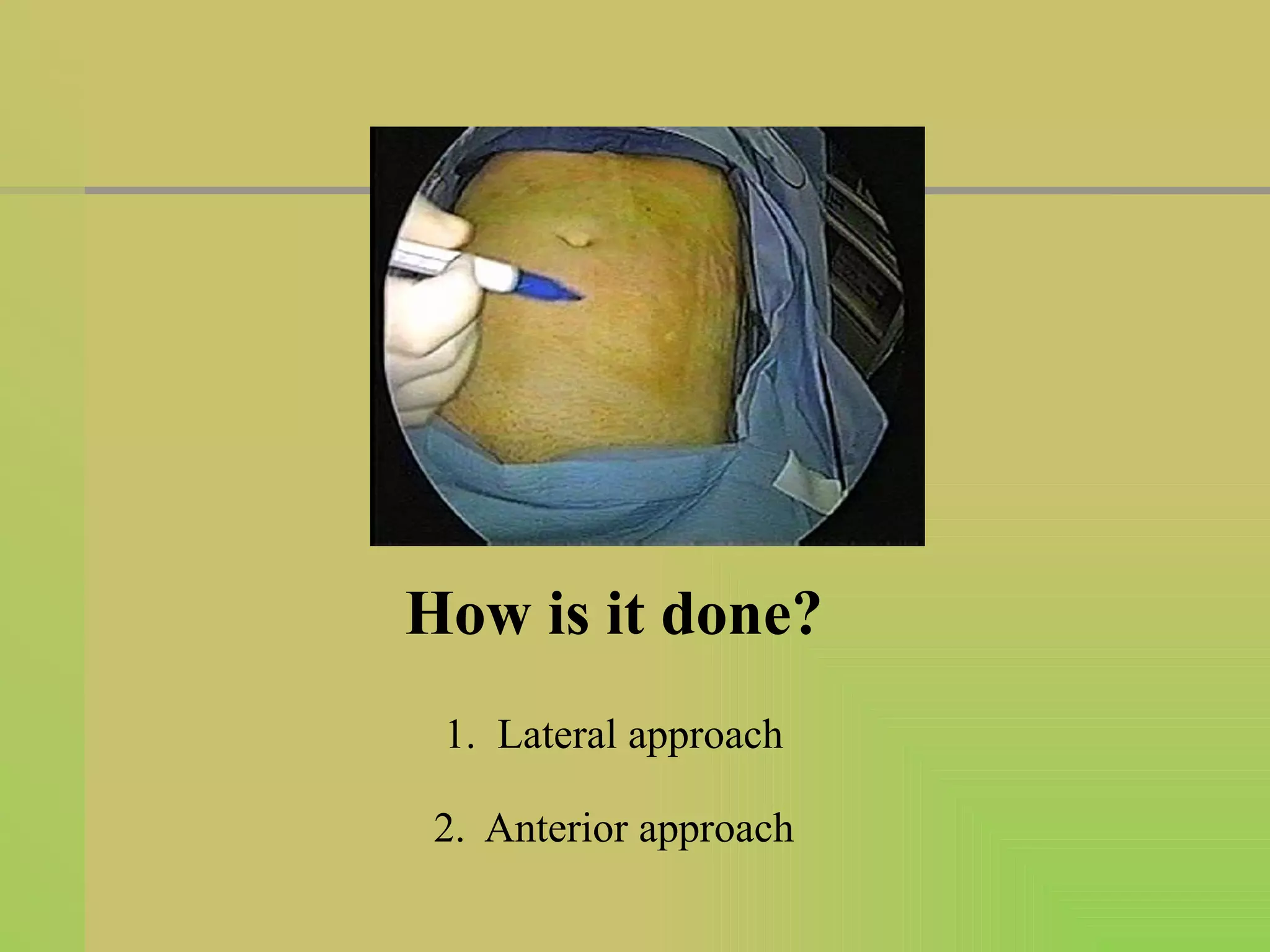
How is it done? 1.  Lateral approach 2.  Anterior approach
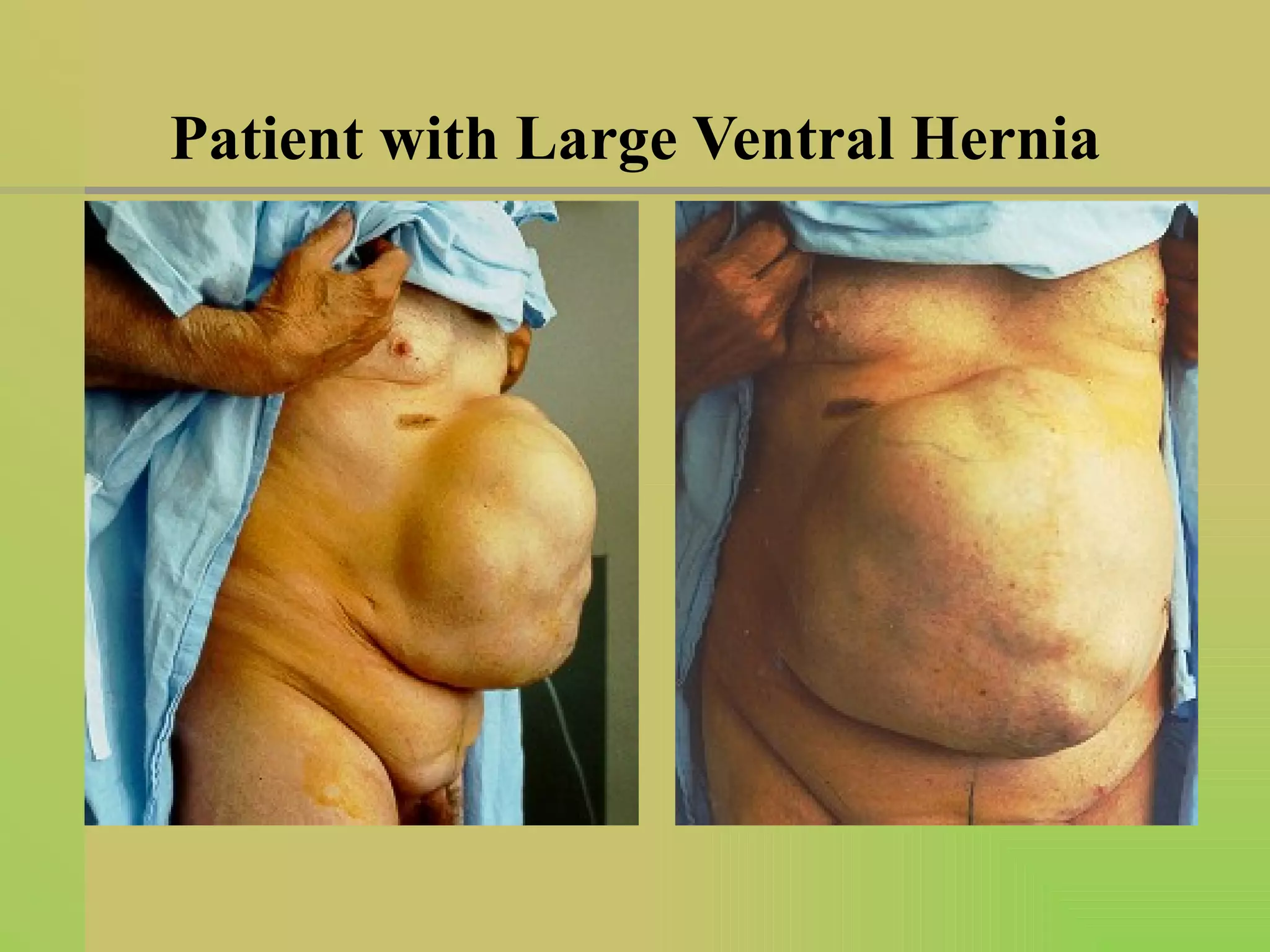
Patient with Large Ventral Hernia
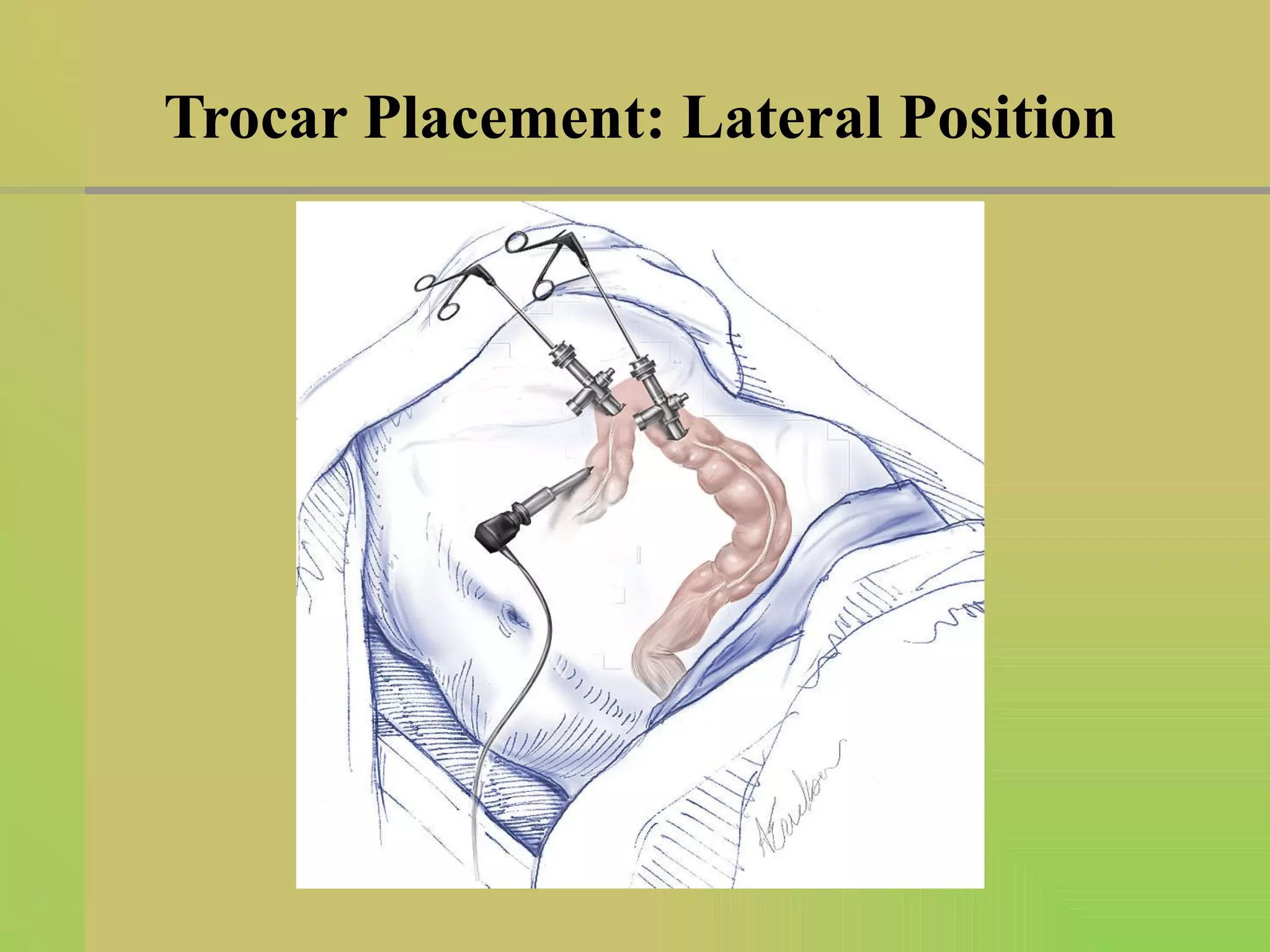
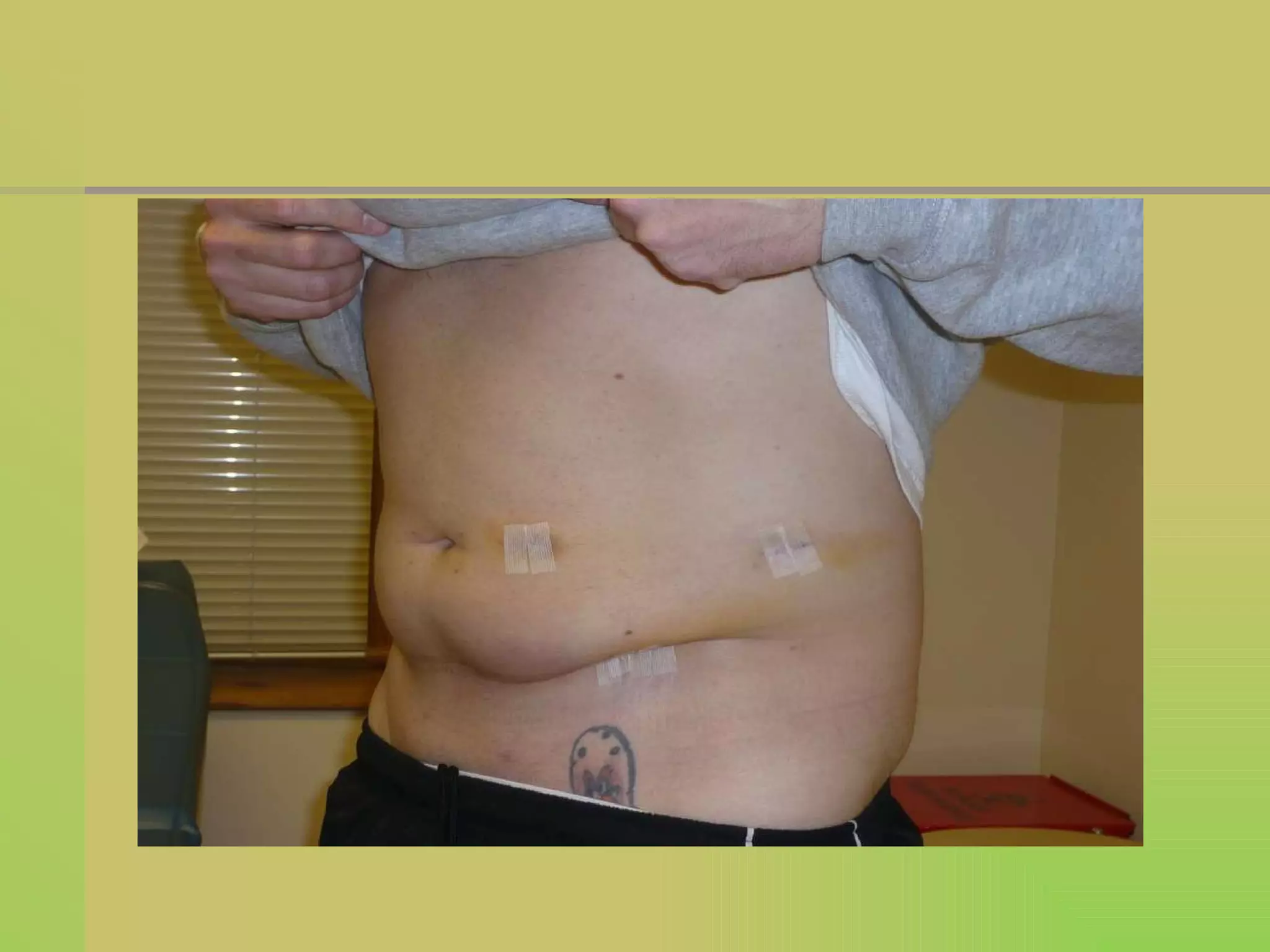
Lateral Patient Position Patient positioned on right side Hand rotated in semicircle over sigmoid for trocar placement  (more like triangle)
Trocar Placement: Lateral Position
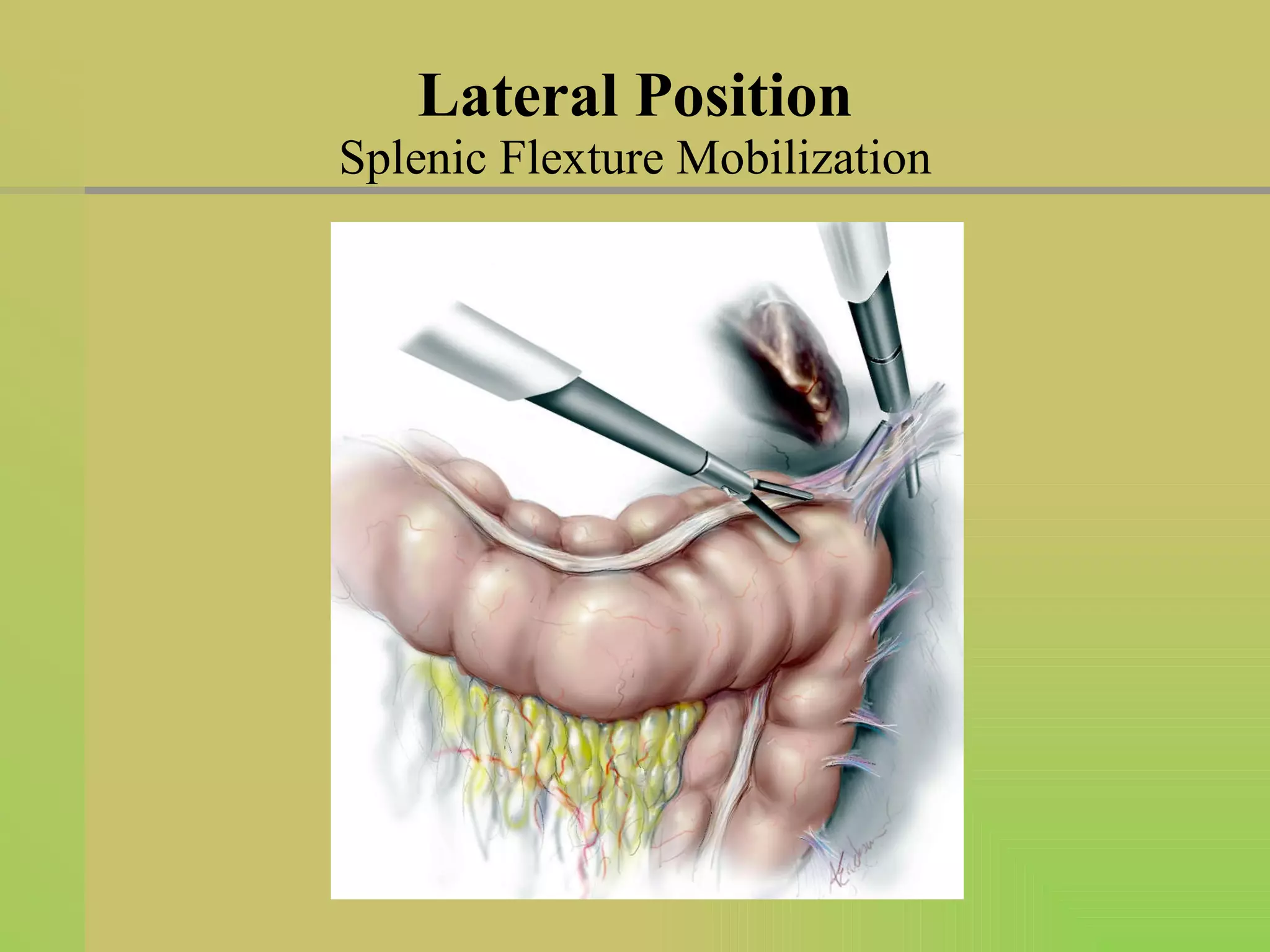
Lateral Position Splenic Flexture Mobilization
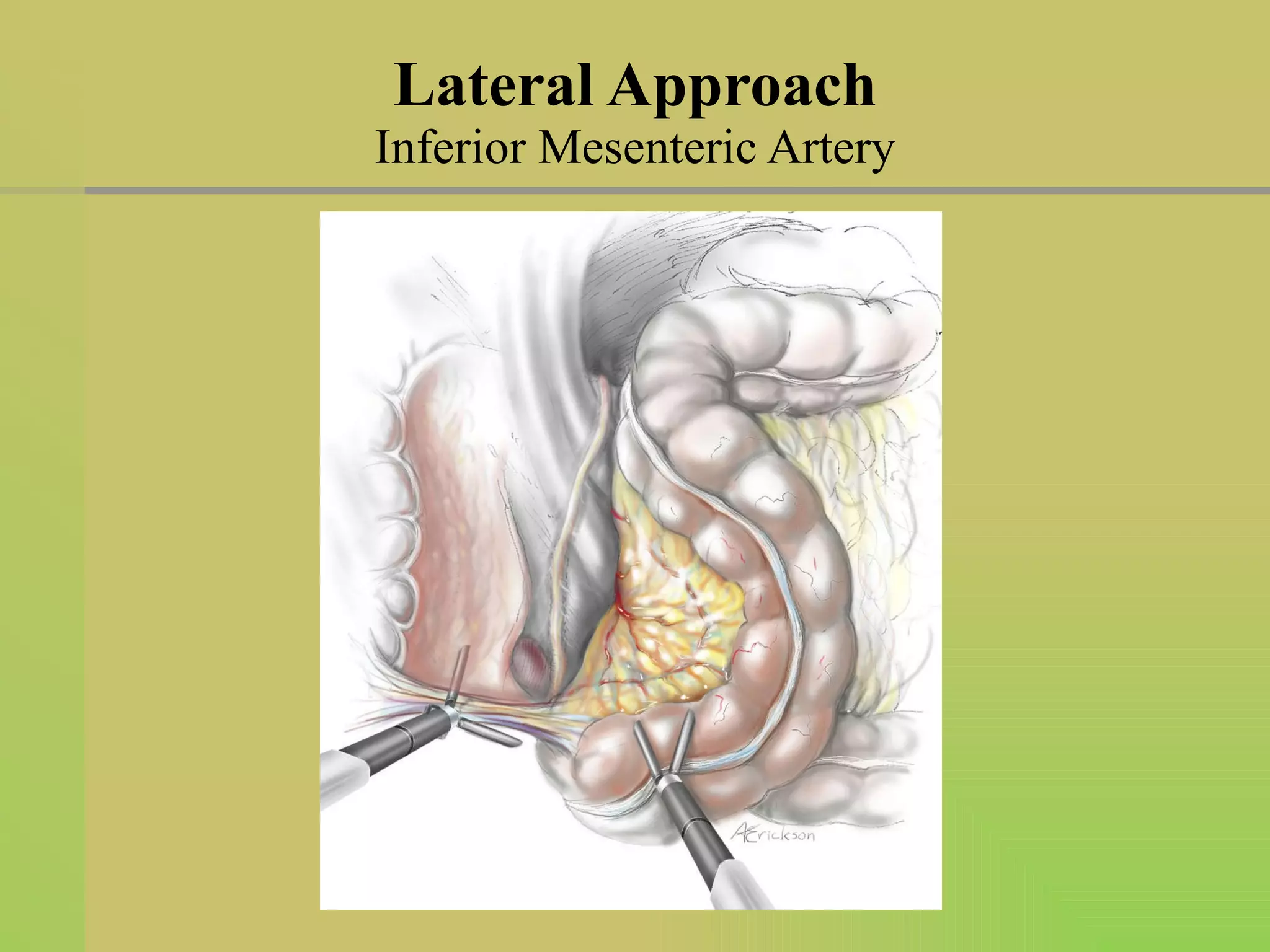
Lateral Approach Inferior Mesenteric Artery
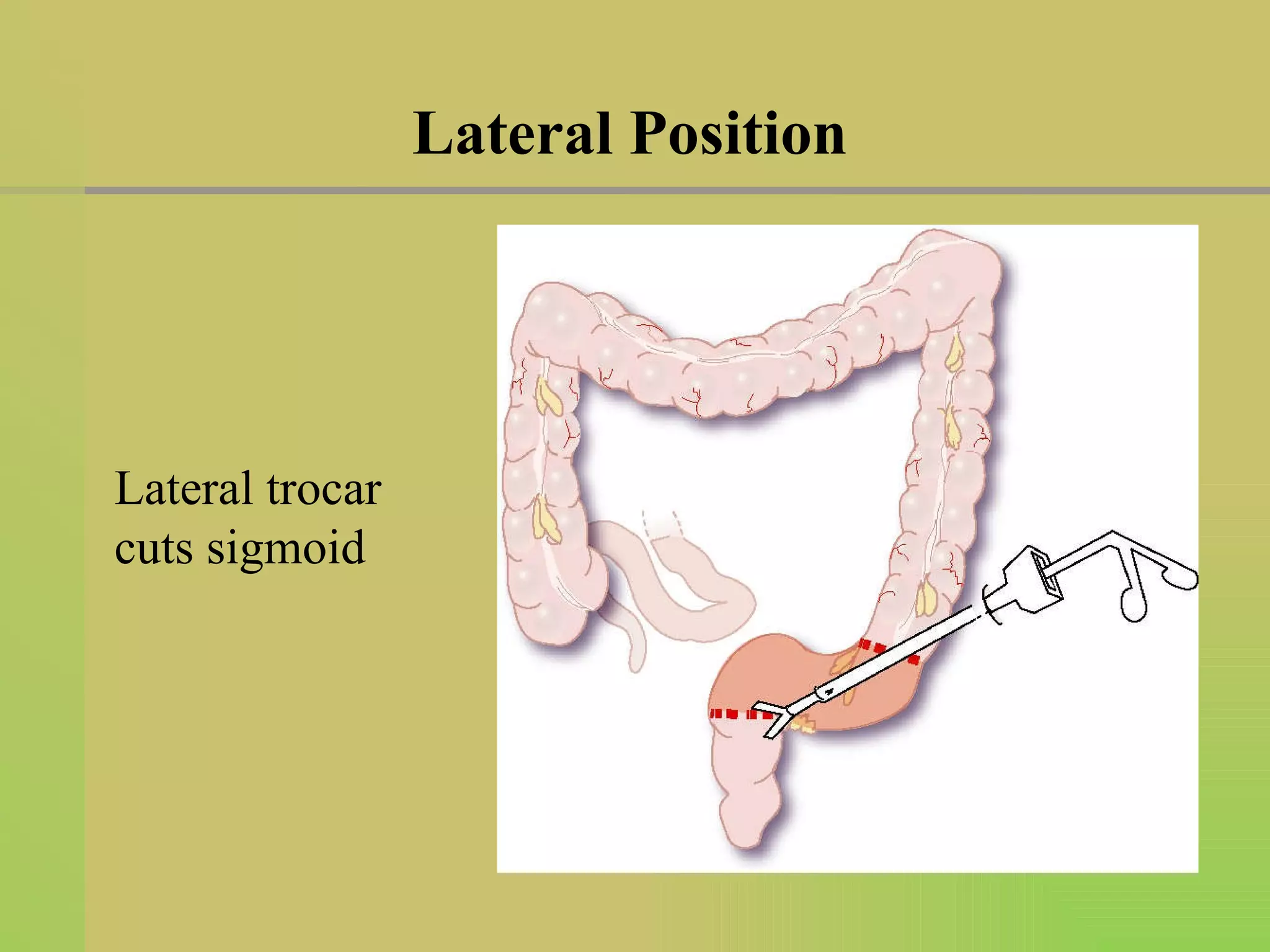
Lateral Position Lateral trocar  cuts sigmoid
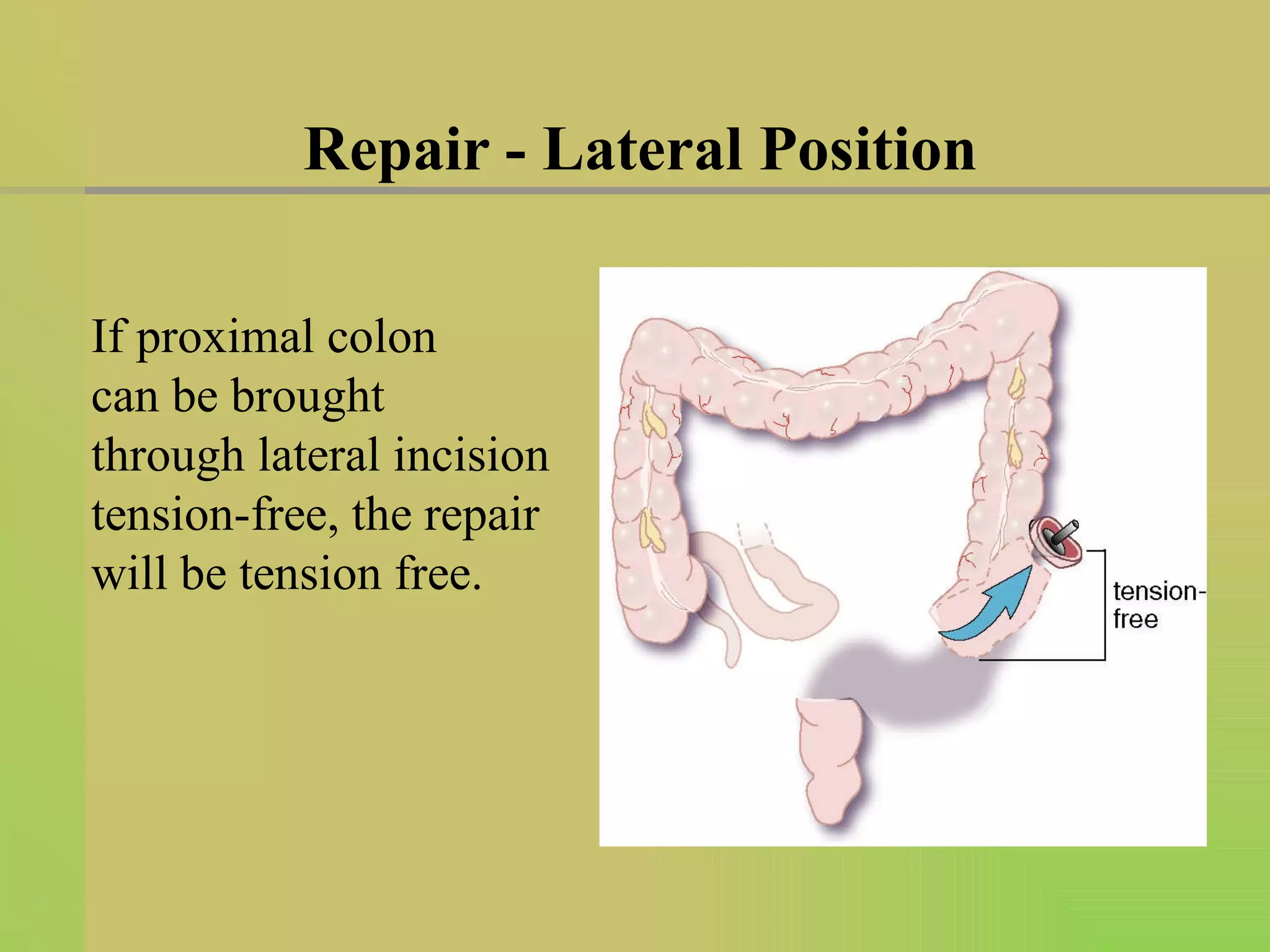
Repair - Lateral Position If proximal colon  can be brought  through lateral incision  tension-free, the repair  will be tension free.
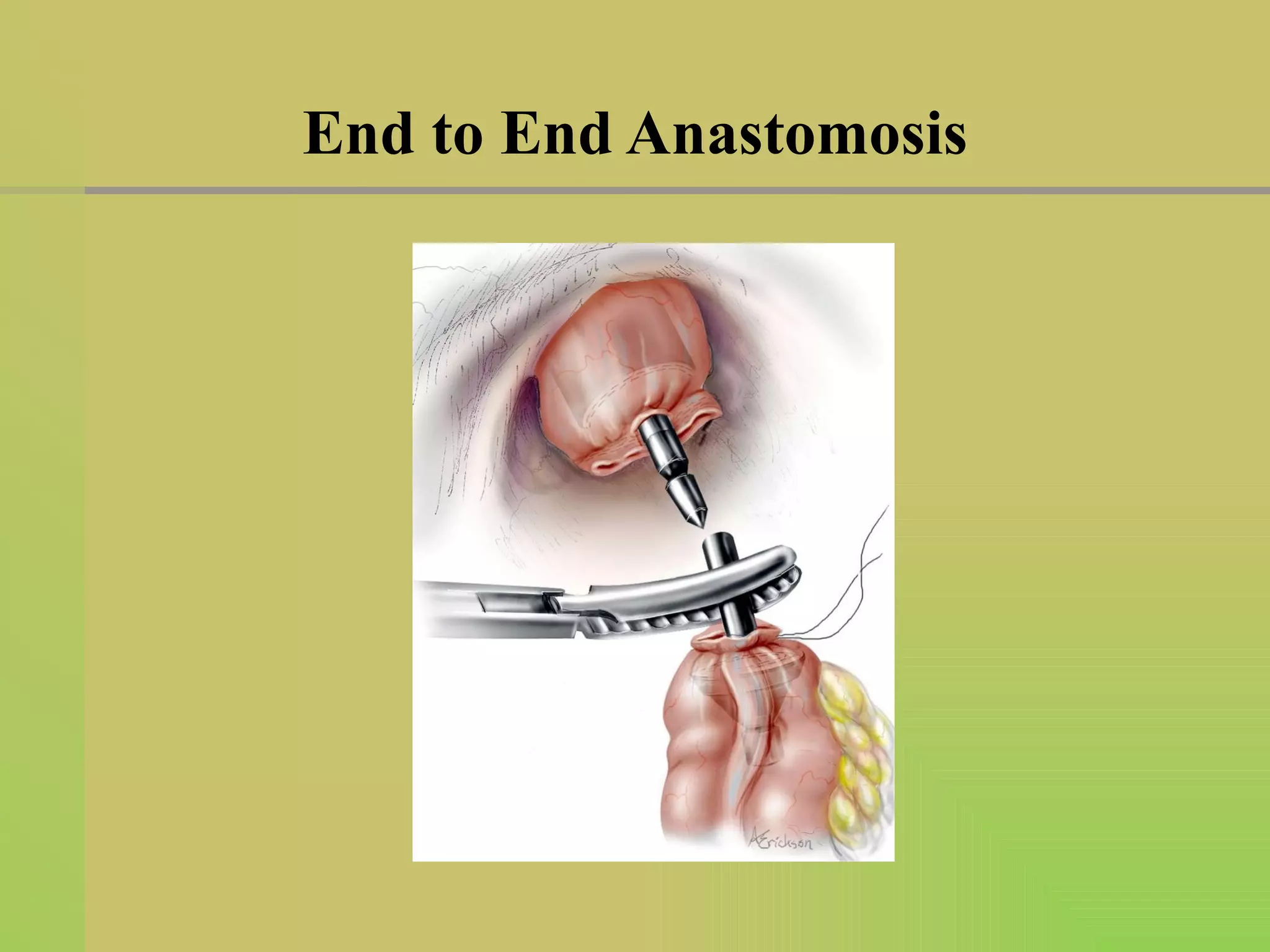
End to End Anastomosis
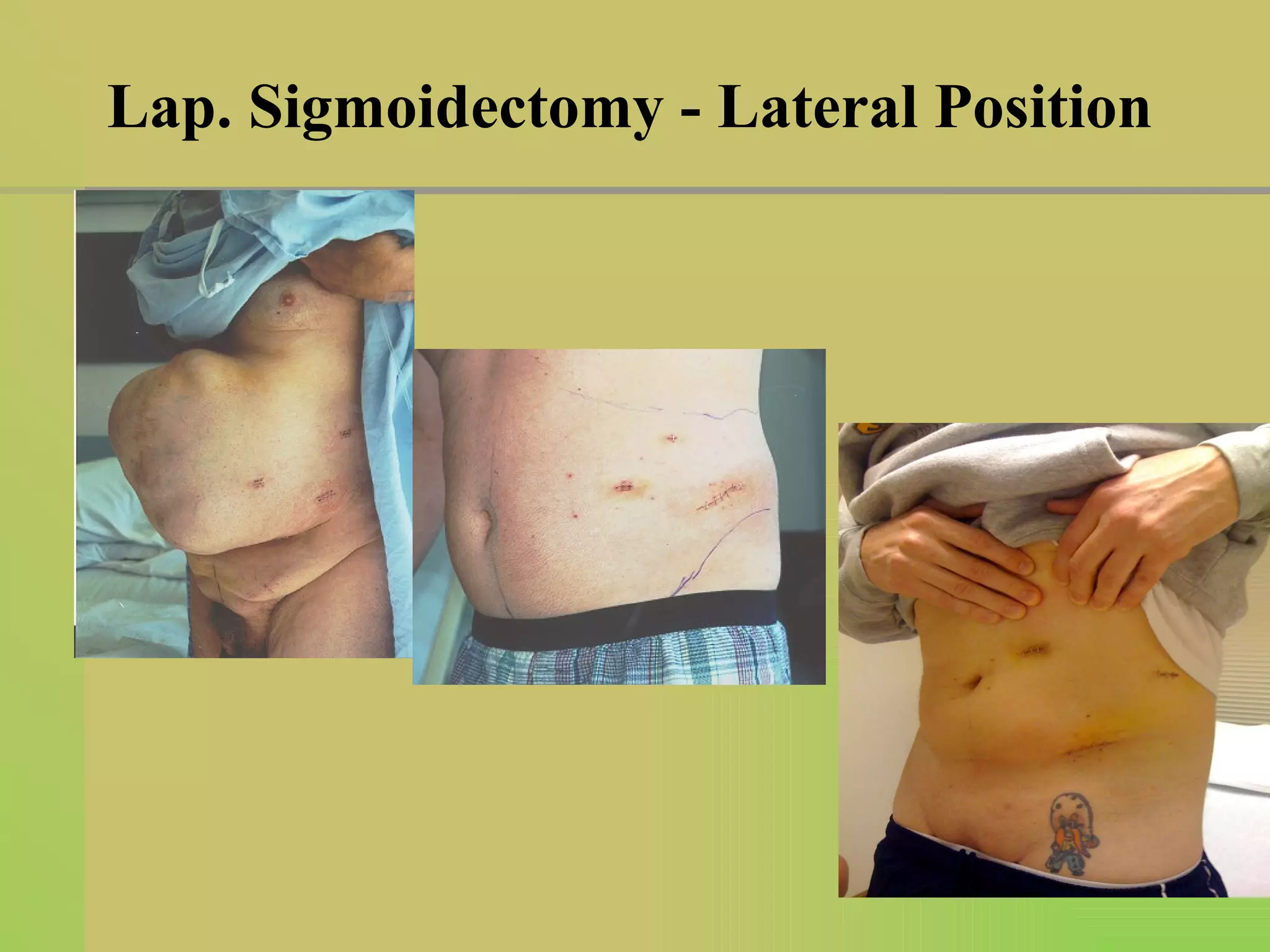
Lap. Sigmoidectomy - Lateral Position
Lateral Approach Advantages Easy mobilization of splenic flexture Easier identification of ureter Small bowel out of the way in case of ventral hernia  Disadvantages Inability to evaluate liver Poor access to adhesions or lesions on the right side of the recto-sigmoid In females, ovary may interfere
 
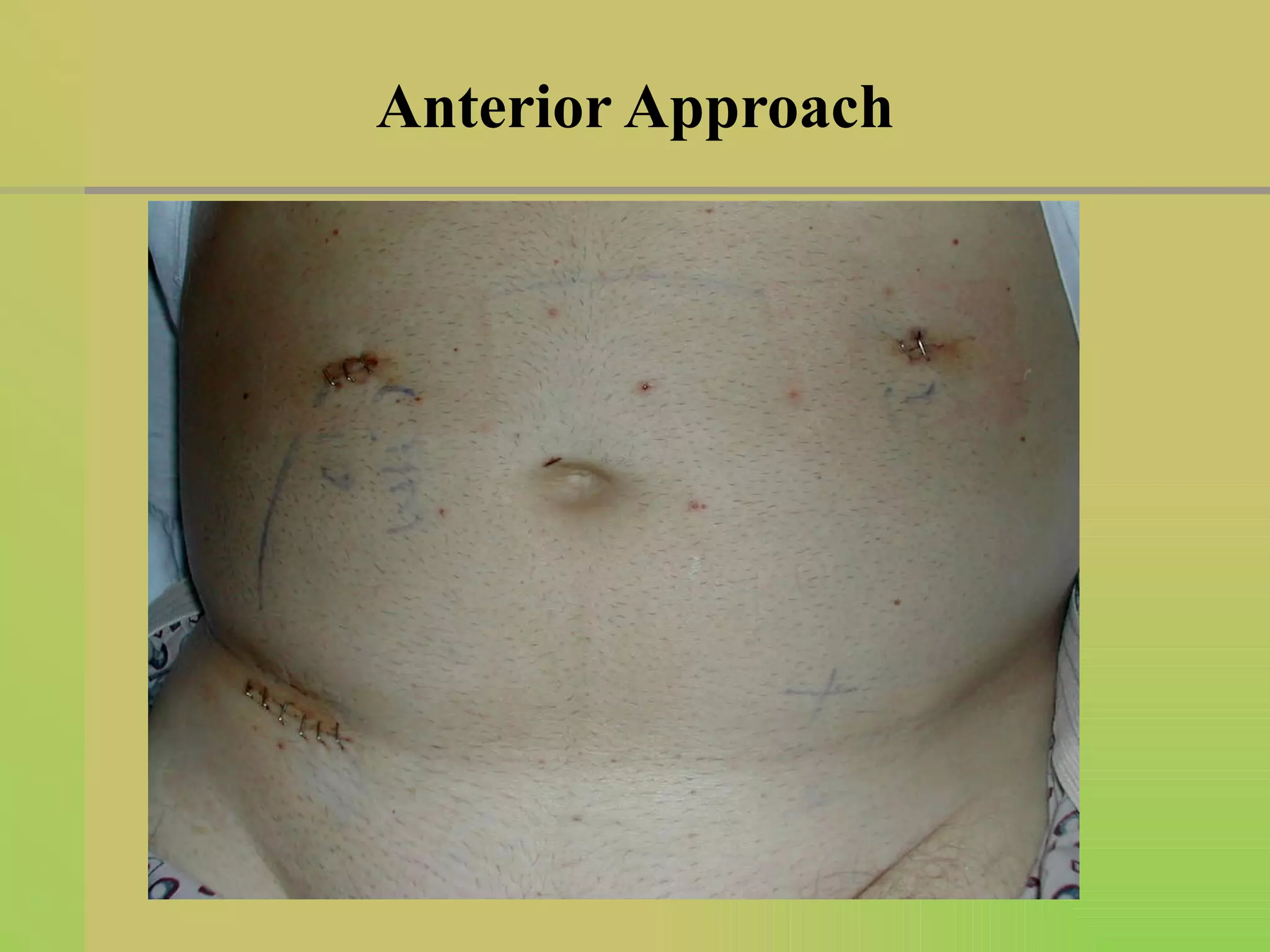
Anterior Approach Patient supine Position hand over sigmoid and rotate in semi-circle to place trocars (3)
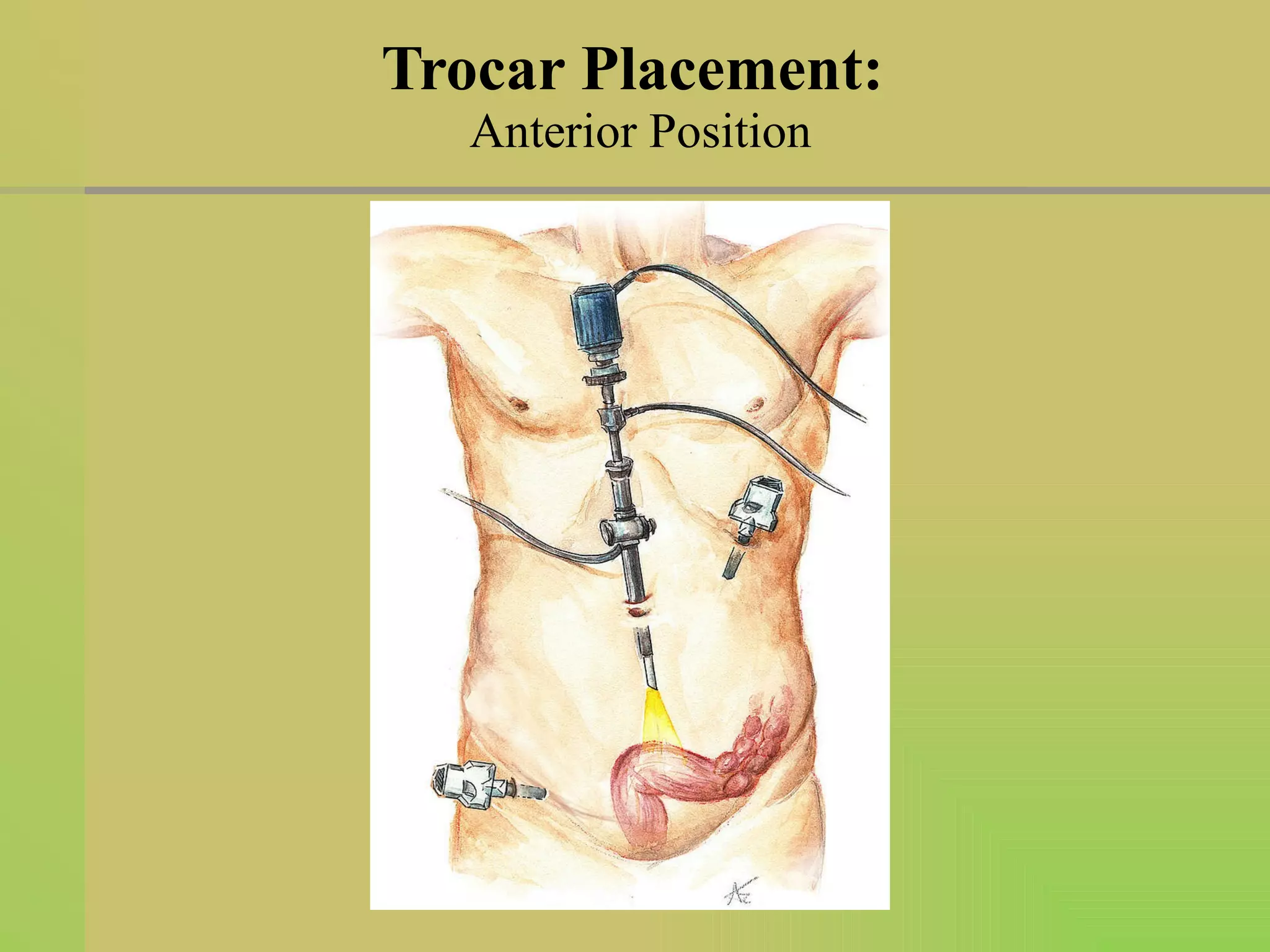
Trocar Placement:  Anterior Position
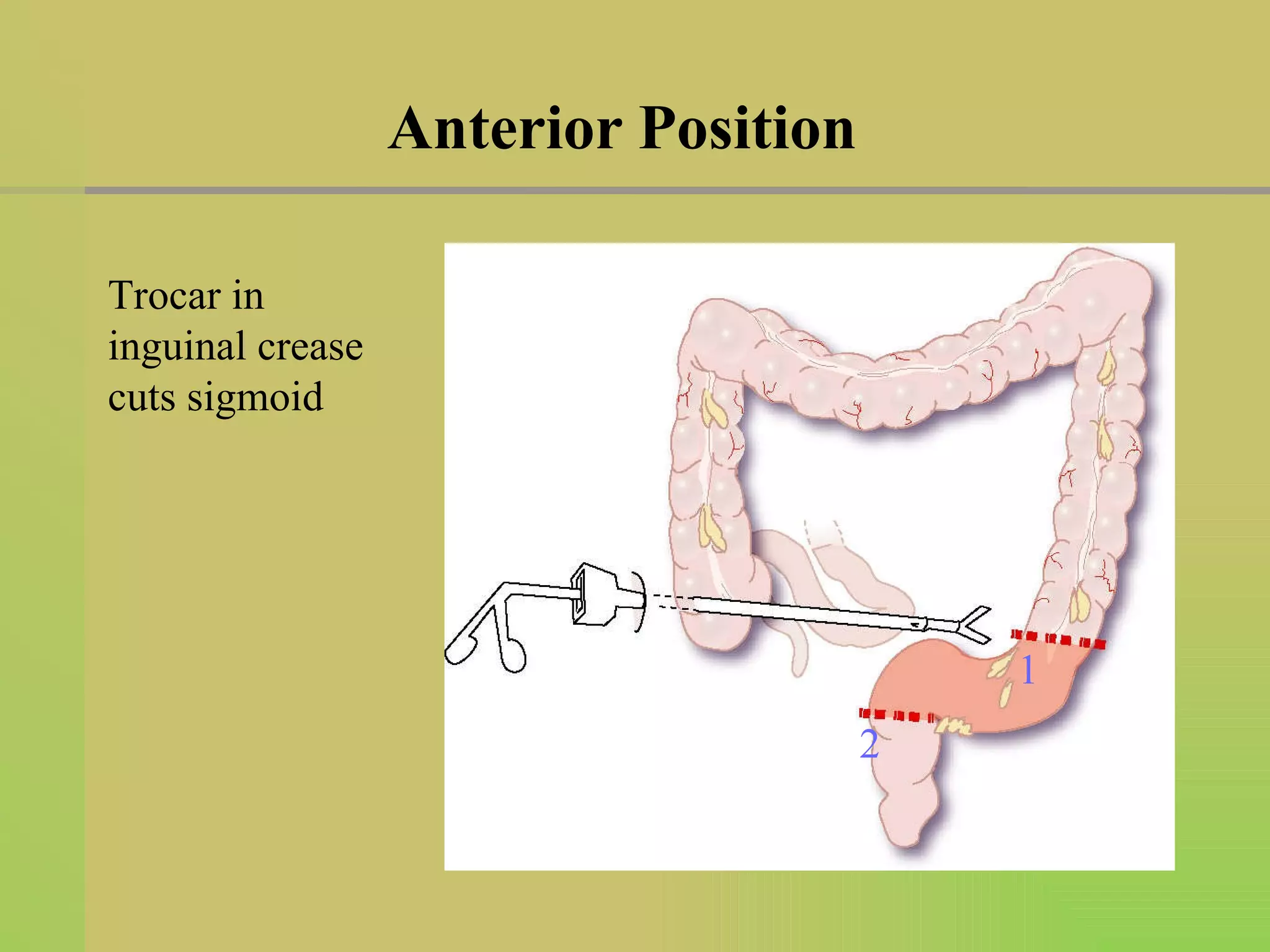
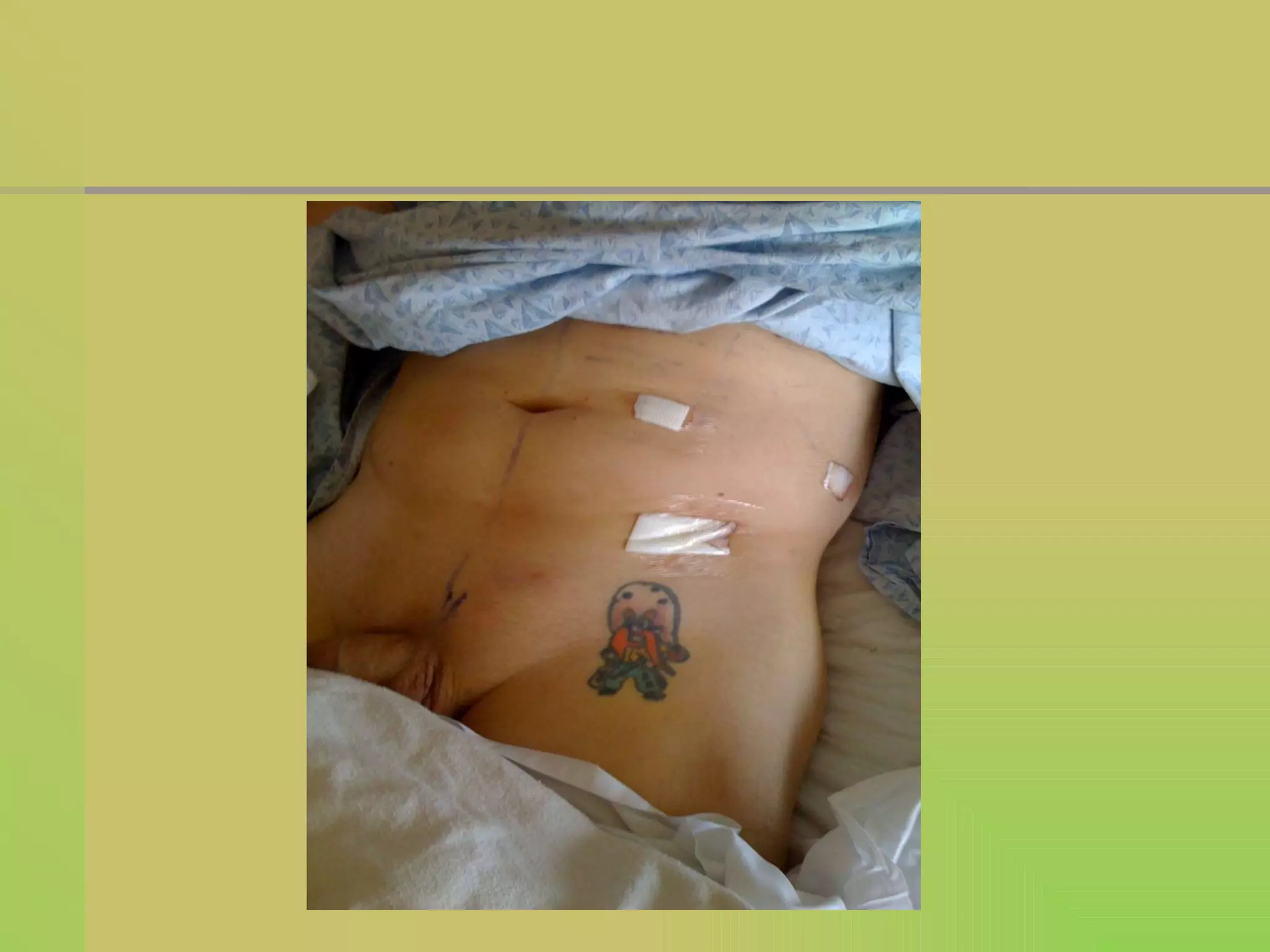
Anterior Position  1 2 Trocar in inguinal crease cuts sigmoid
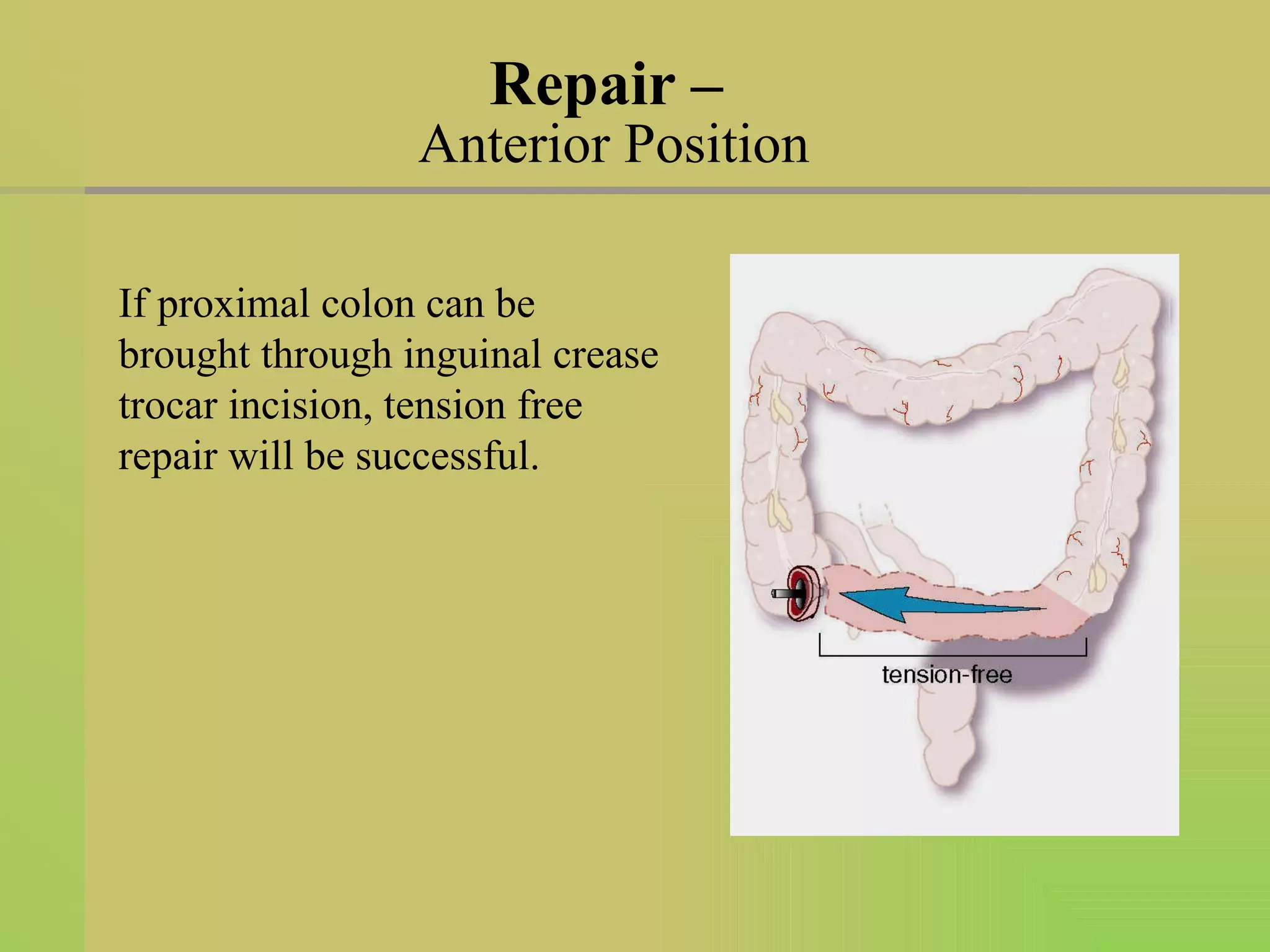
Repair –  Anterior Position If proximal colon can be brought through inguinal crease trocar incision, tension free repair will be successful.
Anterior Approach
 
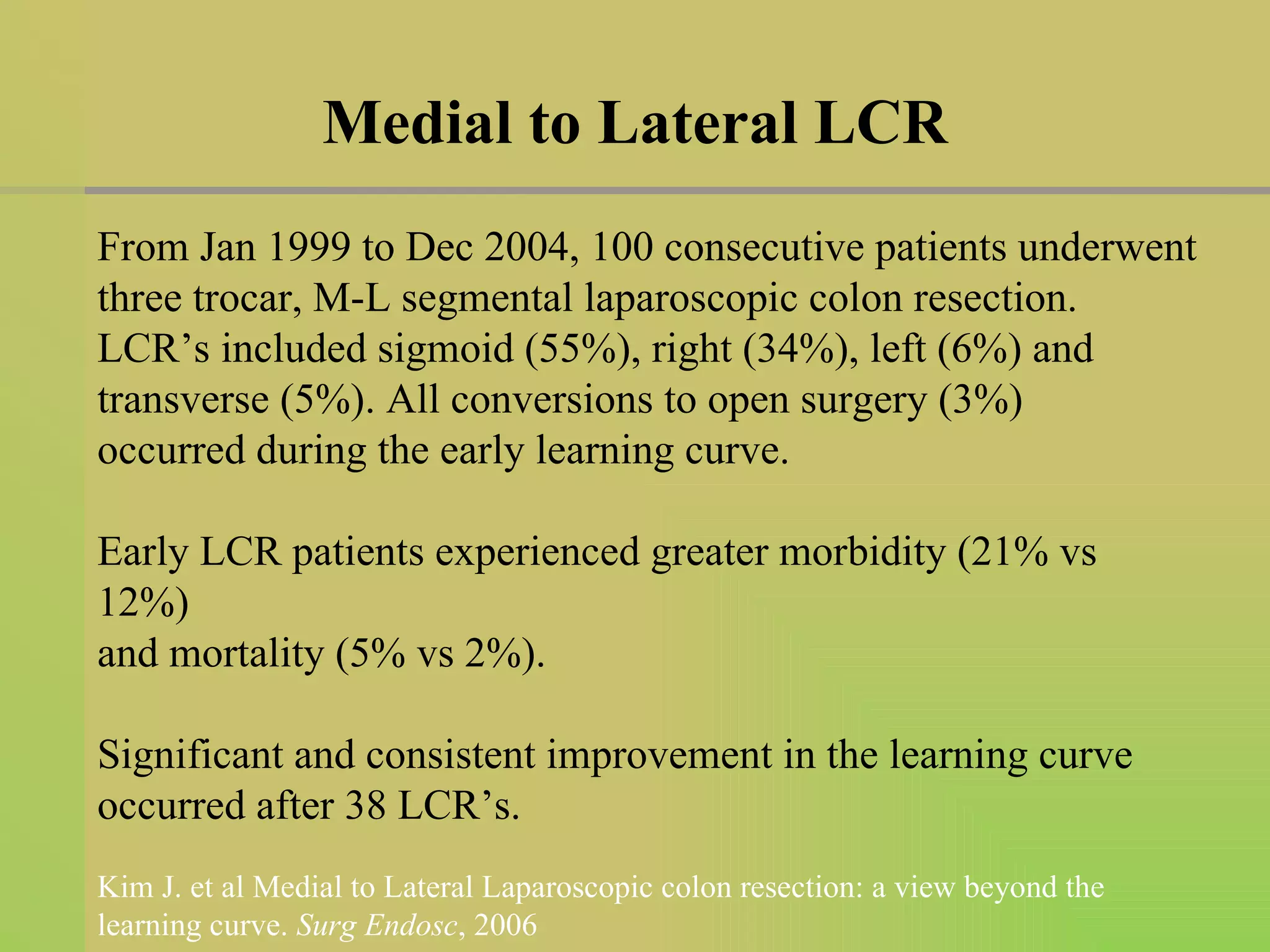
Medial to Lateral LCR From Jan 1999 to Dec 2004, 100 consecutive patients underwent three trocar, M-L segmental laparoscopic colon resection. LCR’s included sigmoid (55%), right (34%), left (6%) and transverse (5%). All conversions to open surgery (3%)  occurred during the early learning curve. Early LCR patients experienced greater morbidity (21% vs 12%) and mortality (5% vs 2%). Significant and consistent improvement in the learning curve occurred after 38 LCR’s. Kim J. et al Medial to Lateral Laparoscopic colon resection: a view beyond the learning curve.  Surg Endosc , 2006
Questions?
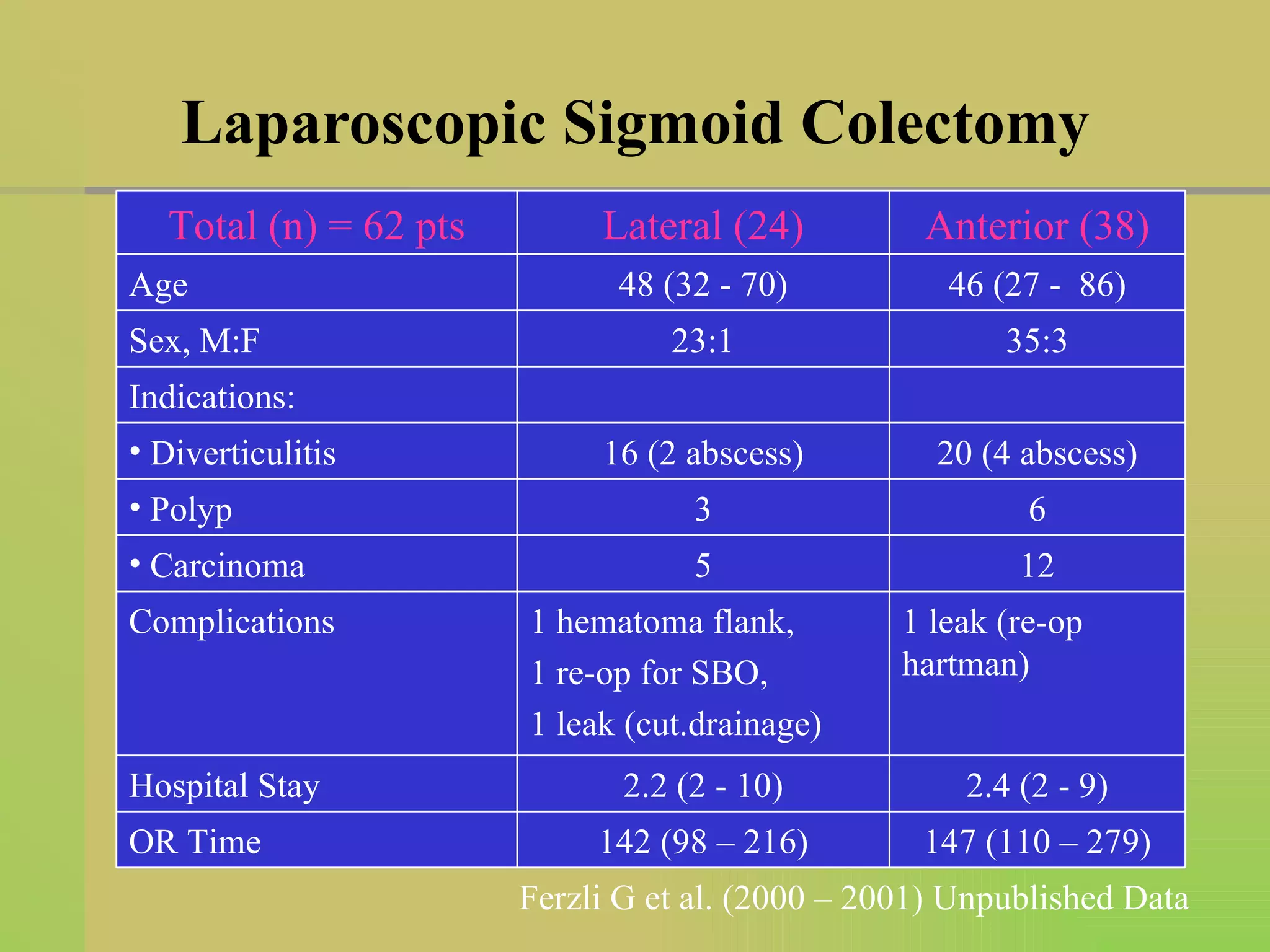
Laparoscopic Sigmoid Colectomy Ferzli G et al. (2000 – 2001) Unpublished Data Total (n) = 62 pts Lateral (24) Anterior (38) Age 48 (32 - 70) 46 (27 -  86) Sex, M:F 23:1 35:3 Indications: Diverticulitis  16 (2 abscess) 20 (4 abscess) Polyp 3 6 Carcinoma 5 12 Complications 1 hematoma flank,  1 re-op for SBO,  1 leak (cut.drainage)  1 leak (re-op hartman) Hospital Stay 2.2 (2 - 10) 2.4 (2 - 9) OR Time 142 (98 – 216) 147 (110 – 279)


Laparoscopic Sigmoid Colon Resection: Supine and Lateral

  • 1.
    Laparoscopic Sigmoid Colon Resection: Supine and Lateral George Ferzli, MD, FACS Professor of Surgery, SUNY Downstate Health Science Center, Brooklyn, NY
  • 2.
    How is itdone? 1. Lateral approach 2. Anterior approach
  • 3.
    Patient with LargeVentral Hernia
  • 4.
    Lateral Patient PositionPatient positioned on right side Hand rotated in semicircle over sigmoid for trocar placement (more like triangle)
  • 5.
  • 6.
    Lateral Position SplenicFlexture Mobilization
  • 7.
    Lateral Approach InferiorMesenteric Artery
  • 8.
    Lateral Position Lateraltrocar cuts sigmoid
  • 9.
    Repair - LateralPosition If proximal colon can be brought through lateral incision tension-free, the repair will be tension free.
  • 10.
    End to EndAnastomosis
  • 11.
    Lap. Sigmoidectomy -Lateral Position
  • 12.
    Lateral Approach AdvantagesEasy mobilization of splenic flexture Easier identification of ureter Small bowel out of the way in case of ventral hernia Disadvantages Inability to evaluate liver Poor access to adhesions or lesions on the right side of the recto-sigmoid In females, ovary may interfere
  • 13.
  • 14.
    Anterior Approach Patientsupine Position hand over sigmoid and rotate in semi-circle to place trocars (3)
  • 15.
    Trocar Placement: Anterior Position
  • 16.
    Anterior Position 1 2 Trocar in inguinal crease cuts sigmoid
  • 17.
    Repair – Anterior Position If proximal colon can be brought through inguinal crease trocar incision, tension free repair will be successful.
  • 18.
  • 19.
  • 20.
    Medial to LateralLCR From Jan 1999 to Dec 2004, 100 consecutive patients underwent three trocar, M-L segmental laparoscopic colon resection. LCR’s included sigmoid (55%), right (34%), left (6%) and transverse (5%). All conversions to open surgery (3%) occurred during the early learning curve. Early LCR patients experienced greater morbidity (21% vs 12%) and mortality (5% vs 2%). Significant and consistent improvement in the learning curve occurred after 38 LCR’s. Kim J. et al Medial to Lateral Laparoscopic colon resection: a view beyond the learning curve. Surg Endosc , 2006
  • 21.
  • 22.
    Laparoscopic Sigmoid ColectomyFerzli G et al. (2000 – 2001) Unpublished Data Total (n) = 62 pts Lateral (24) Anterior (38) Age 48 (32 - 70) 46 (27 - 86) Sex, M:F 23:1 35:3 Indications: Diverticulitis 16 (2 abscess) 20 (4 abscess) Polyp 3 6 Carcinoma 5 12 Complications 1 hematoma flank, 1 re-op for SBO, 1 leak (cut.drainage) 1 leak (re-op hartman) Hospital Stay 2.2 (2 - 10) 2.4 (2 - 9) OR Time 142 (98 – 216) 147 (110 – 279)
  • 23.
  • 24.