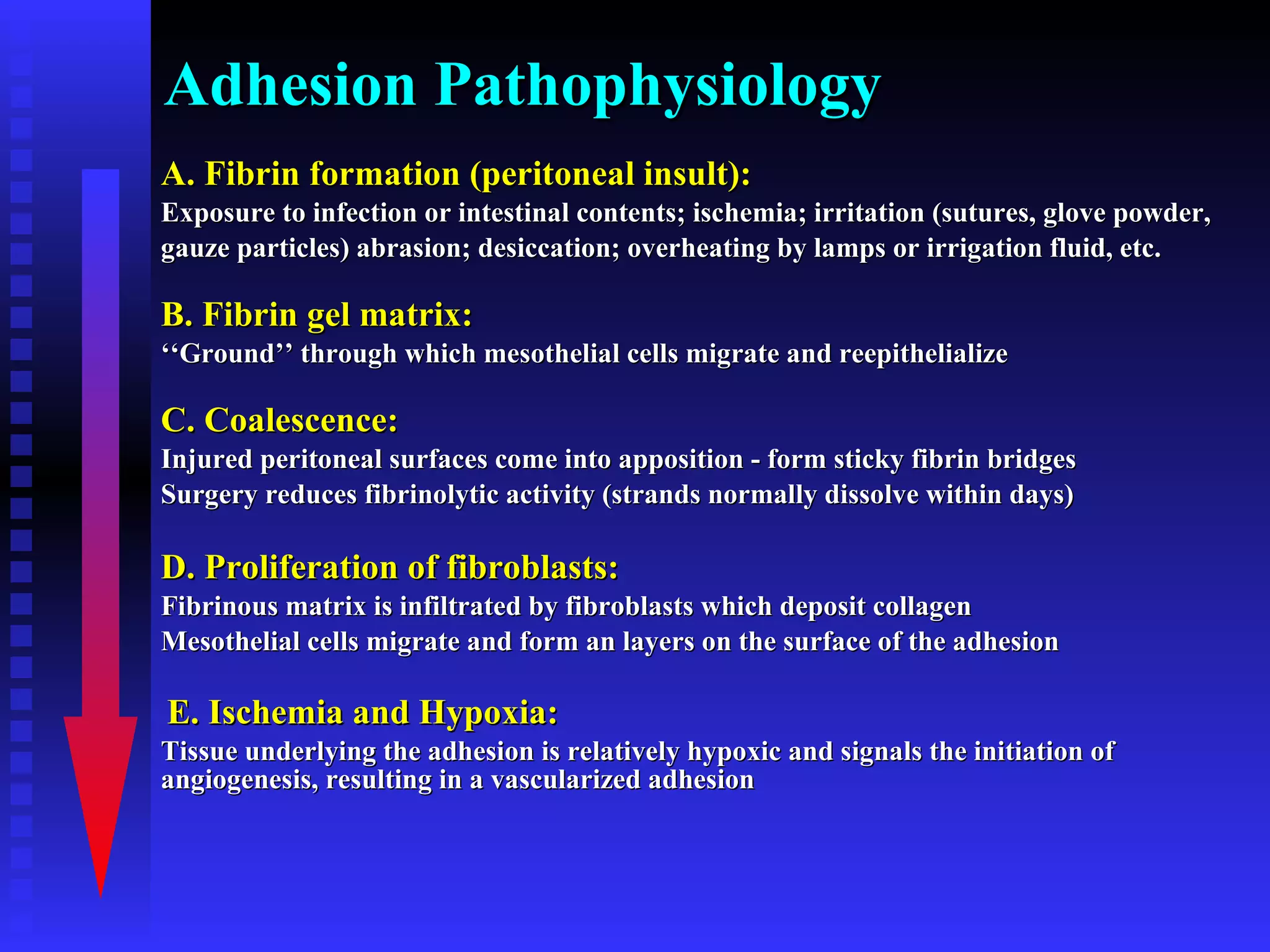
Tips and Tricks in Laparoscopic Dissection  of Adhesions George Khoury, MD George Ferzli, MD, FACS LUTHERAN MEDICAL CENTER SUNY DOWNSTATE MEDICAL CENTER Venice June  2005
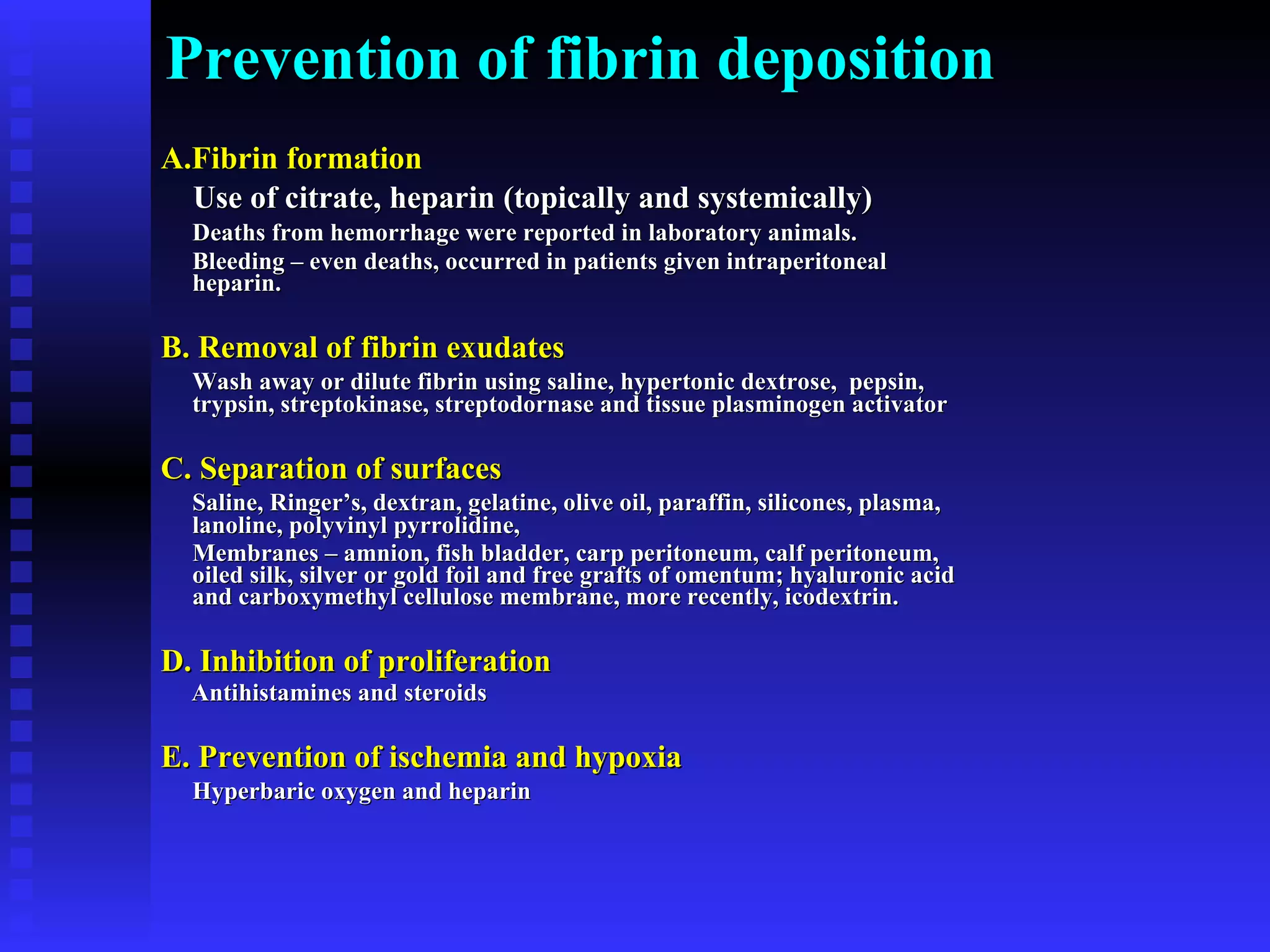
Historical Perspectives 1836 - Thomas Hodgkin:  Matted bowel at autopsy in patients with  tuberculous peritonitis  Lower abdominal adhesions in patients  dying of pelvic sepsis 1872 - Thomas Bryant (Guy’s Hospital, London) Fatal small bowel obstruction from a band formed after removal of an ovarian cyst  1883 - Thomas’ Hospital (London) William Battle (published in the  Lancet)   Thomas’s Hospital, London – the first account of a laparotomy for adhesive obstruction. The patient, a 43-year-old woman, had bilateral ovarian tumors removed 4 years earlier. She was admitted with intestinal obstruction. Matted adhesions of terminal ileum in the region of the cecum were found at laparotomy and a terminal ileostomy was performed. Sadly, she died 3 weeks later. Harold Ellis,CBE,FACS (Hon),FRCS,  JACS  vol 200, #5 May 2005
Adhesion Pathophysiology A. Fibrin formation (peritoneal insult): Exposure to infection or intestinal contents; ischemia; irritation (sutures, glove powder, gauze particles) abrasion; desiccation; overheating by lamps or irrigation fluid, etc. B. Fibrin gel matrix:   ‘‘ Ground’’ through which mesothelial cells migrate and reepithelialize C. Coalescence: Injured peritoneal surfaces come into apposition - form sticky fibrin bridges  Surgery reduces fibrinolytic activity (strands normally dissolve within days)  D. Proliferation of fibroblasts:   Fibrinous matrix is infiltrated by fibroblasts which deposit collagen  Mesothelial cells migrate and form an layers on the surface of the adhesion  E. Ischemia and Hypoxia: Tissue underlying the adhesion is relatively hypoxic and signals the initiation of angiogenesis, resulting in a vascularized adhesion
Prevention of fibrin deposition A.Fibrin formation Use of citrate, heparin (topically and systemically)   Deaths from hemorrhage were reported in laboratory animals.  Bleeding – even deaths, occurred in patients given intraperitoneal heparin. B. Removal of fibrin exudates Wash away or dilute fibrin using saline, hypertonic dextrose,  pepsin, trypsin, streptokinase, streptodornase and tissue plasminogen activator C. Separation of surfaces   Saline, Ringer’s, dextran, gelatine, olive oil, paraffin, silicones, plasma, lanoline, polyvinyl pyrrolidine,  Membranes – amnion, fish bladder, carp peritoneum, calf peritoneum, oiled silk, silver or gold foil and free grafts of omentum; hyaluronic acid and carboxymethyl cellulose membrane, more recently, icodextrin. D. Inhibition of proliferation   Antihistamines and steroids E. Prevention of ischemia and hypoxia Hyperbaric oxygen and heparin
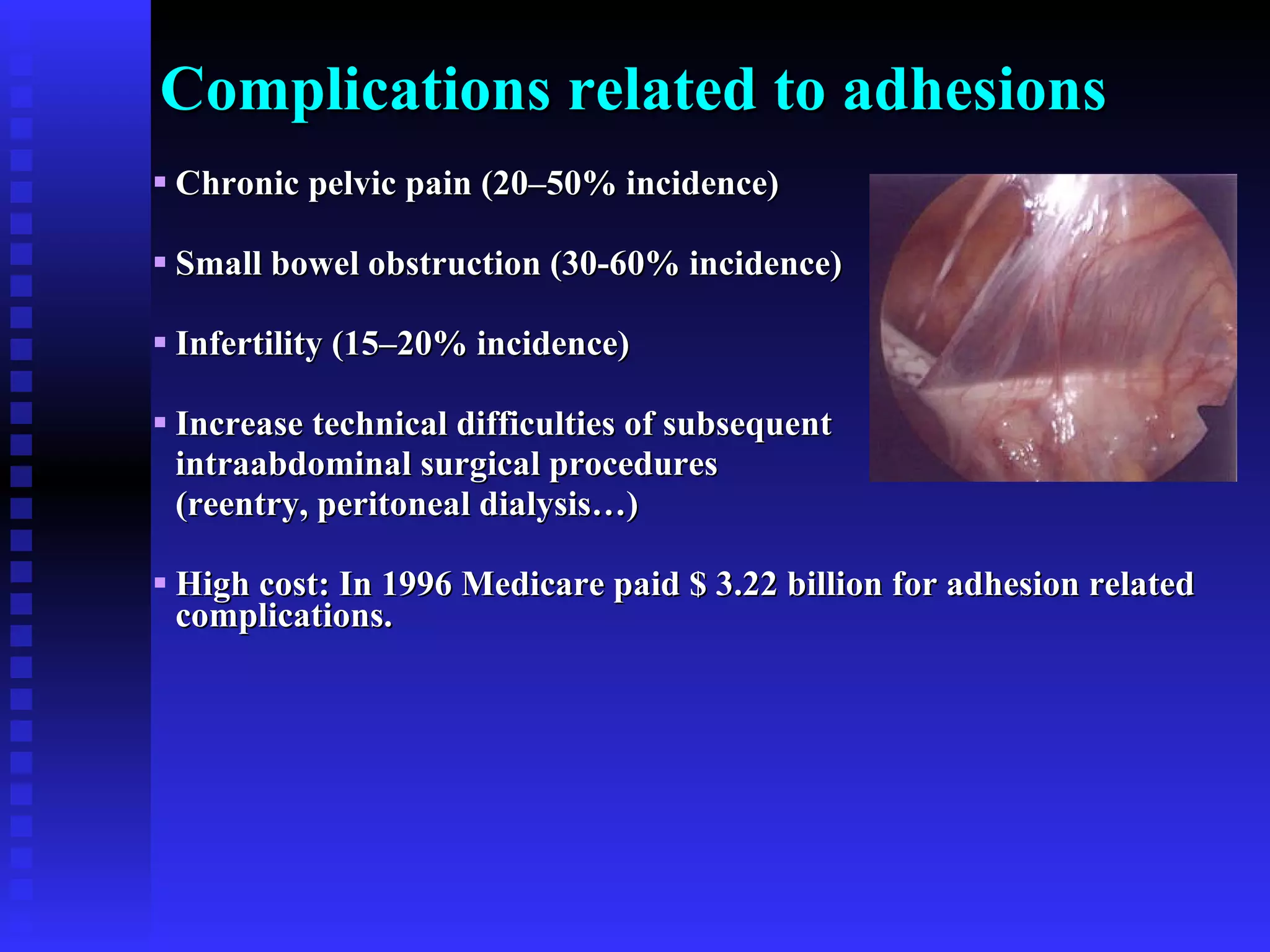
Complications related to adhesions Chronic pelvic pain (20–50% incidence) Small bowel obstruction (30-60% incidence) Infertility (15–20% incidence) Increase technical difficulties of subsequent intraabdominal surgical procedures  (reentry, peritoneal dialysis…) High cost: In 1996 Medicare paid $ 3.22 billion for adhesion related complications.
Laparoscopic adhesiolysis for  intestinal obstruction Statistics: Adhesions are leading cause of intestinal obstruction (30 to 60% of cases).  Data from the Scottish National Service revealed 280 readmissions (0.67%) necessitating operative treatment for adhesive small-bowel obstruction in a cohort of 41,841 patients who underwent initial abdominal surgery 10 years  before.  A review of 18,912 patients with open surgery found that 2.6% required surgery for adhesive intestinal obstruction within 2 years.  Another study followed 2,708 laparotomies for an average of 14.5 months and counted 26 cases (1%) that developed intestinal obstruction due to postoperative adhesions within 1 year. 0.5 and 2.6% appear low but worldwide – results in a considerable number of patients readmitted and re-operated on an emergency basis. Fewer adhesions induced by laparoscopic surgery? CN Gutt, T Oniu, P Schemmer, A Mehrabi,  MW Buchler  Surg Endosc  (2004) 18: 898–906.
Can laparoscopy reduce adhesion formation? A. Fibrin formation (peritoneal insult):   Laparoscopy is thought to reduce trauma to the abdominal wall, intraabdominal  operative site and organs, potentially reducing postoperative adhesion formation B. Removal of fibrin exudates (matrix gel):   Less tissue trauma and hemmorhage C.  Separation of surfaces (coalescence ): Early return of bowel activity and early ambulation D.  Inhibition of fibroblast proliferation E.  Ischemia and Hypoxia:   CO 2  effect and high pressures may cause more adhesions? Fewer adhesions induced by laparoscopic surgery? CN Gutt, T Oniu, P Schemmer, A Mehrabi,  M W Buchler  Surg Endosc  (2004) 18: 898–906 Laparoscopic adhesiolysis for small bowel obstruction. Alexander Nagle, MD, Michael Ujiki, MD, Woody Denham, MD, Kenric Murayama, MD*  The American Journal of Surgery  187 (2004)  464–470 Laparoscopic adhesiolysis in patients with chronic abdominal pain: a blinded randomised  controlled multi-centre trial D J Swank, S C G Swank-Bordewijk, W C J Hop, W F M van Erp,  I M C Janssen, HBonjer, J Jeekel  THE LANCET  • Vol 361 • April 12, 2003
Results of laparoscopic adhesiolysis  for small bowel obstruction Chosidow  et al :  Emergency laparoscopic adhesiolysis in 39 patients;  36% conversion rate compared with 7% in elective cases Suter  et al :  Bowel diameter exceeding 4 cm is associated with an increased rate of  conversion: 55% versus 32% ( P  0.02) Leon  et al :  A documented history of severe or extensive dense adhesions is a  contraindication to laparoscopy Franklin:  23 patients 13% conversion Strickland:  40 patients 32.5% conversion Ibrahim:  33 patients  33% conversion Laparoscopic adhesiolysis for small bowel obstruction. Alexander Nagle, MD, Michael Ujiki, MD,  Woody Denham, MD, Kenric Murayama, MD*  The American Journal of Surgery  187 (2004)  464–470.
Reasons for Conversion Inability to identify origin of the obstruction (reduced working space  because of intestinal distension) is the most common Inability to relieve obstruction because of unique anatomic features  Adhesions are too extensive Accidental bowel perforation   Bowel necrosis Causes not amenable to laparoscopic treatment (tumor, incarcerated hernia) Laparoscopic management of mechanical small bowel obstruction Are there predictors of success or  failure?  M Suter, P Zermatten, N Halkic, O Martinet, V Bettschart  Surg Endosc  (2000) 14: 478–483.
Operating Room OR table  –  full tilt range (extreme positions may be necessary) Patient’s arms by side to allow the surgical team ample room  Two movable video monitors: video monitor to the patient’s right positioned inferiorly at the hip and the monitor to the left positioned superiorly at the shoulder (positioning forms a plane parallel to the root of the small bowel mesentery allowing the surgeon to look and work in the same direction as the camera orientation)  Flexible configuration of the operating room arrangement permits modifications during the operation Patients prepared and draped to allow conversion to an open procedure when necessary Interventions performed under general endotracheal anesthesia with a nasogastric tube and urinary catheter in place.  Because nitrous oxide as an anesthetic gas has been found to produce bowel  dilatation, its use was specifically avoided in most patients.
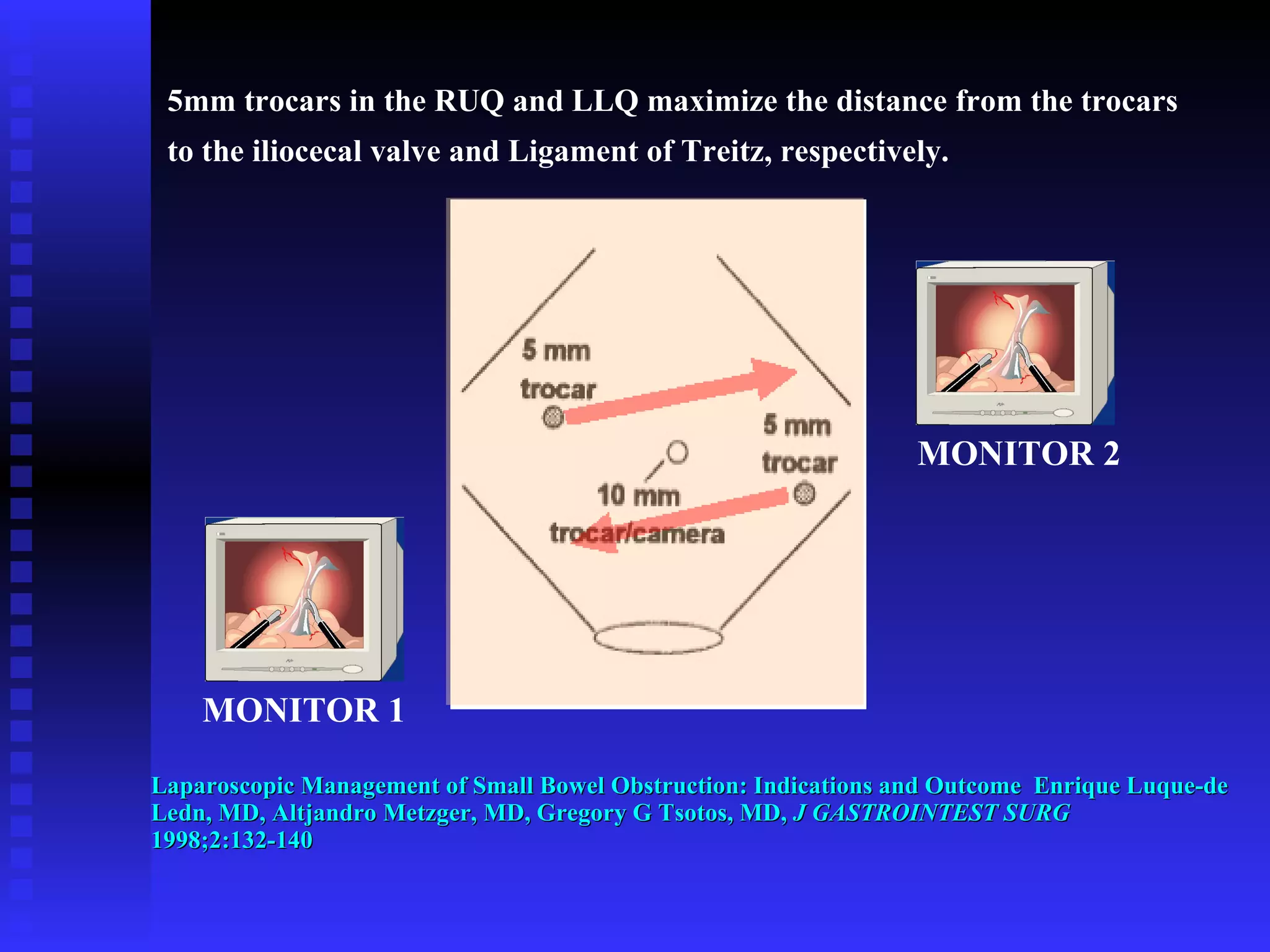
Laparoscopic Management of Small Bowel Obstruction: Indications and Outcome  Enrique Luque-de Ledn, MD, Altjandro Metzger, MD, Gregory G Tsotos, MD,  J GASTROINTEST SURG  1998;2:132-140 5mm trocars in the RUQ and LLQ maximize the distance from the trocars  to the iliocecal valve and Ligament of Treitz, respectively. MONITOR 1 MONITOR 2
Laparoscopic approach to postoperative adhesive obstruction G Borzellino, S Tasselli, G Zerman, C Pedrazzani, G Manzoni   Surg Endosc  (2004) 18: 686–690 Preoperative ultrasonographic mapping of abdominal wall adhesions has an important role to play in the selection of patients and for first trocar placement. In their experience, this evaluation eliminates the risk of visceral injuries and enables the best location for successive trocars.
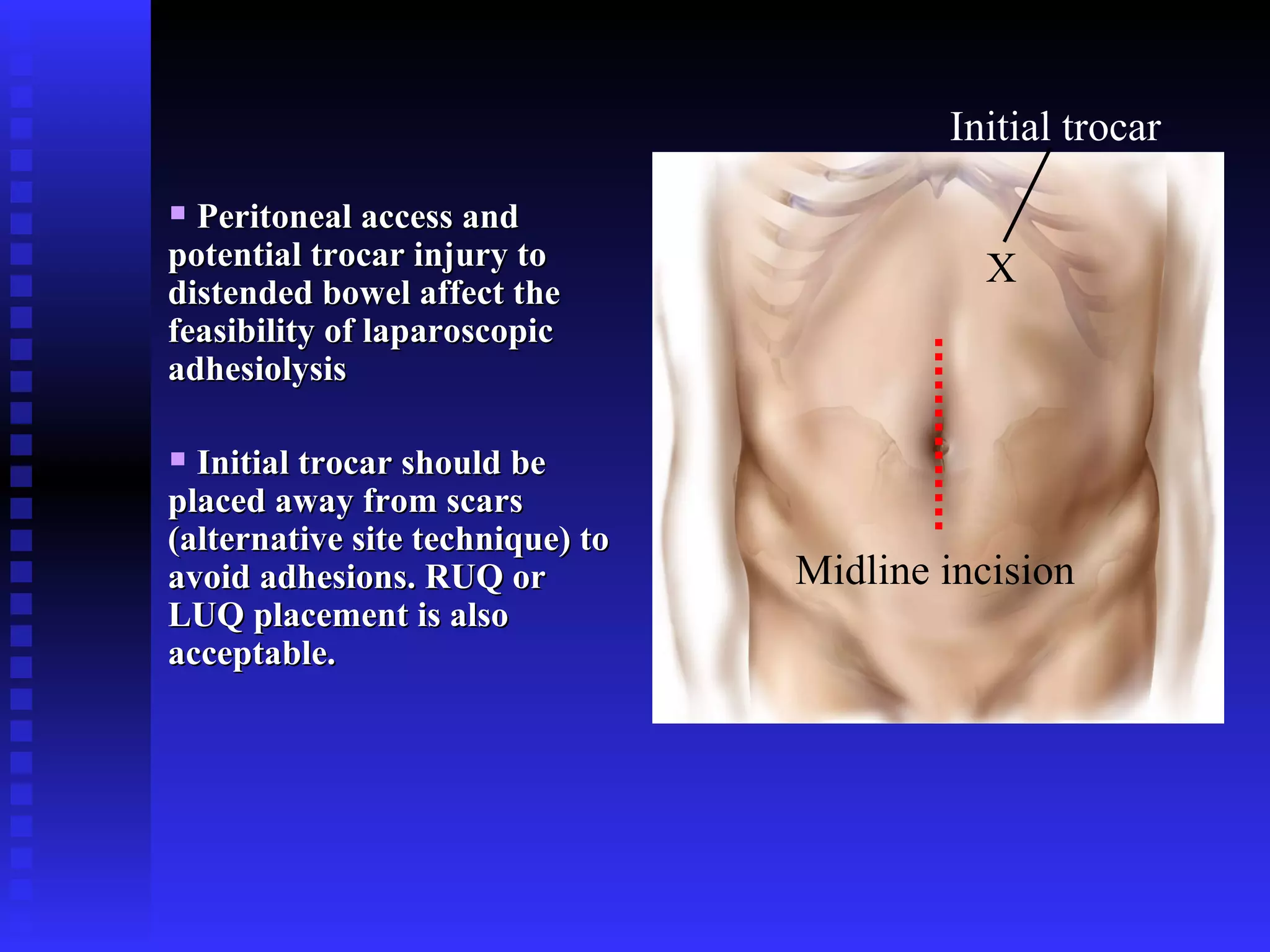
Peritoneal access and potential trocar injury to distended bowel affect the feasibility of laparoscopic adhesiolysis Initial trocar should be placed away from scars (alternative site technique) to avoid adhesions. RUQ or LUQ placement is also acceptable. Midline incision Initial trocar X
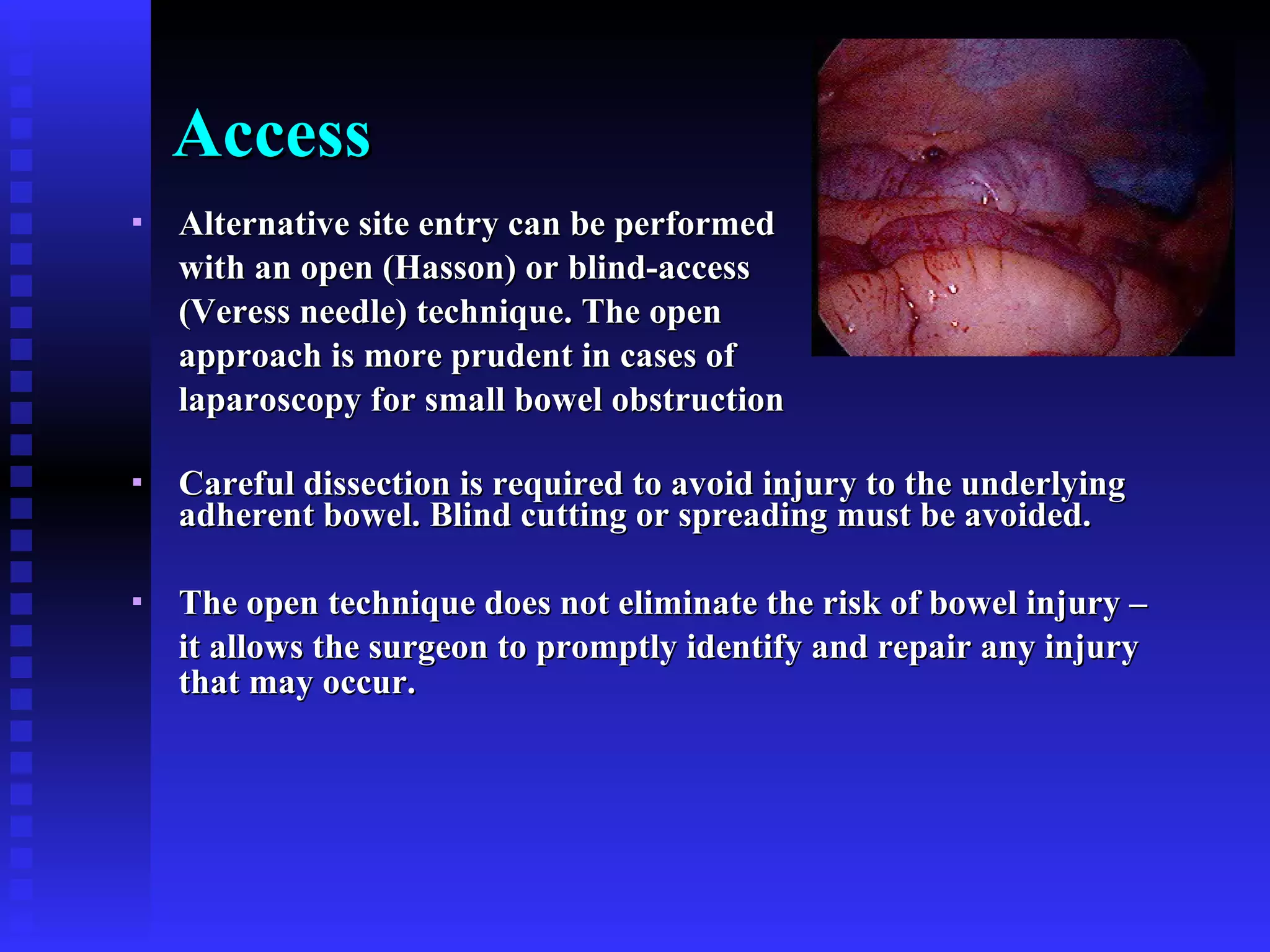
Access Alternative site entry can be performed  with an open (Hasson) or blind-access  (Veress needle) technique. The open  approach is more prudent in cases of  laparoscopy for small bowel obstruction Careful dissection is required to avoid injury to the underlying adherent bowel. Blind cutting or spreading must be avoided. The open technique does not eliminate the risk of bowel injury –  it allows the surgeon to promptly identify and repair any injury that may occur.
Optical access  trocars In experienced hands, optical access  trocars are safe and facilitate rapid  entry into the peritoneal cavity  A 0-degree laparoscope is inserted through a transparent cannula  as the trocar is advanced through the abdominal wall enabling  visualization of consecutive tissue layers This allows identification of the bowel wall before possible trocar  puncture occurs If an injury does occur, it is recognized immediately and  managed appropriately
Tools Adhesiolysis with scissors  is inconvenient due to bleeding  but remains the best method  Electrodissection causes charring of  tissue and delayed perforations because of excessive heat production Bipolar electrosurgery has the advantage of reducing the electrosurgical complications but has delayed thermal lesions The ultrasonically activated scalpel causes less heat production compared with electrocautery dissection, theoretically lowering the risk of delayed perforations Laser is another modality used more by gynecologists Aqua dissection and Suction irrigation dissection
Visualization Some degree of adhesiolysis is needed along  the anterior abdominal wall. Techniques  include finger dissection through the initial  trocar site and using the camera to bluntly  dissect the adhesions Gentle retraction of adhesions may separate the tissue planes – most often sharp adhesiolysis is required. The best technique is to follow the line of tissue adherence, resulting in less bleeding and risk for bowel injury. A traction-countertraction technique as used for open adhesiolysis is effective. When dense adhesions are present, the plane between bowel and peritoneum is often obliterated. It is then necessary to dissect in the preperitoneal fat.  Usually at least two additional trocars are needed, placed along (not against) the sights of the camera and added as needed.
Dissection Sharp dissection with laparoscopic scissors  should be used to cut the adhesions Cautery should be avoided to prevent potential  thermal injury to adjacent bowel. It also causes  tissue ischemia (a potent adhesion promoter)  leading to the formation of more  intraabdominal adhesions. Only pathologic adhesions should be lysed Additional adhesiolysis adds to OR time and surgical risks without benefit If the point of obstruction is not clearly identified adhesiolysis should continue until all suspicious adhesions or bands are transected If all adhesions cannot be lysed conversion to an open procedure must be considered Once adequate adhesiolysis is completed the area lysed should be thoroughly  inspected for possible bleeding, bowel injury, bladder and ureteral injury. Small bleeding points may be controlled with clips, sutures, or careful cautery
Technique Using atraumatic laparoscopic forceps, the  surgeon follows the distended loops of bowel  to identify the zone of transition from  dilated to collapsed loops. This maneuver  requires patience and both hands. We recommend beginning the exploration  from collapsed bowel loops to prevent incidental bowel injury. The need for enterotomy can be reduced only if meticulous care is taken using atraumatic graspers and if the manipulation of friable, distended bowel is minimized by handling the mesentery whenever possible. Grasping the mesentery in order to manipulate the bowel decreases the likelihood of direct trauma. Changing the scope port is crucial at times allowing visualization from different angles Overzealous retraction of thin-walled small bowel fixed intraperitoneally during manipulation may also lead to iatrogenic enterotomies
Technique,  continued When “running” bowel between the two  manipulating bowel clamps,  both  clamps  must remain in view (if a clamp leaves the  visual field it is difficult to appreciate the  amount of traction being applied), also if an  enterotomy should occur it may not be appreciated.  Repair of an iatrogenic enterotomy may not require conversion to open celiotomy – it can be accomplished either by intracorporeal suturing’* or extracorporeal repair, exteriorizing the involved bowel. If an enterotomy occurs during dissection, it should be marked with an endoloop for later addressing. If there is a question whether an enterotomy has occurred:  desufflate, then shake the abdomen. Several minutes later reinssufflate and reinspect the area and check for the presence of bile. If a bladder injury is suspected check for CO 2  distension of the foley bag. If a ureteral injury is suspected inject methylene blue or perform cystoscopy.
Conclusion Safe adhesiolysis requires proper surgical meticulous techniques and skills. Conversion to a laparotomy should not be considered a failure or complication, but rather a recognition of limitations posed by technology, the surgical expertise, or factors unique to a particular patient or disease process.

Tips and Tricks in Laparoscopic Dissection of Adhesions

  • 1.
    Tips and Tricksin Laparoscopic Dissection of Adhesions George Khoury, MD George Ferzli, MD, FACS LUTHERAN MEDICAL CENTER SUNY DOWNSTATE MEDICAL CENTER Venice June 2005
  • 2.
    Historical Perspectives 1836- Thomas Hodgkin: Matted bowel at autopsy in patients with tuberculous peritonitis Lower abdominal adhesions in patients dying of pelvic sepsis 1872 - Thomas Bryant (Guy’s Hospital, London) Fatal small bowel obstruction from a band formed after removal of an ovarian cyst 1883 - Thomas’ Hospital (London) William Battle (published in the Lancet) Thomas’s Hospital, London – the first account of a laparotomy for adhesive obstruction. The patient, a 43-year-old woman, had bilateral ovarian tumors removed 4 years earlier. She was admitted with intestinal obstruction. Matted adhesions of terminal ileum in the region of the cecum were found at laparotomy and a terminal ileostomy was performed. Sadly, she died 3 weeks later. Harold Ellis,CBE,FACS (Hon),FRCS, JACS vol 200, #5 May 2005
  • 3.
    Adhesion Pathophysiology A.Fibrin formation (peritoneal insult): Exposure to infection or intestinal contents; ischemia; irritation (sutures, glove powder, gauze particles) abrasion; desiccation; overheating by lamps or irrigation fluid, etc. B. Fibrin gel matrix: ‘‘ Ground’’ through which mesothelial cells migrate and reepithelialize C. Coalescence: Injured peritoneal surfaces come into apposition - form sticky fibrin bridges Surgery reduces fibrinolytic activity (strands normally dissolve within days) D. Proliferation of fibroblasts: Fibrinous matrix is infiltrated by fibroblasts which deposit collagen Mesothelial cells migrate and form an layers on the surface of the adhesion E. Ischemia and Hypoxia: Tissue underlying the adhesion is relatively hypoxic and signals the initiation of angiogenesis, resulting in a vascularized adhesion
  • 4.
    Prevention of fibrindeposition A.Fibrin formation Use of citrate, heparin (topically and systemically) Deaths from hemorrhage were reported in laboratory animals. Bleeding – even deaths, occurred in patients given intraperitoneal heparin. B. Removal of fibrin exudates Wash away or dilute fibrin using saline, hypertonic dextrose, pepsin, trypsin, streptokinase, streptodornase and tissue plasminogen activator C. Separation of surfaces Saline, Ringer’s, dextran, gelatine, olive oil, paraffin, silicones, plasma, lanoline, polyvinyl pyrrolidine, Membranes – amnion, fish bladder, carp peritoneum, calf peritoneum, oiled silk, silver or gold foil and free grafts of omentum; hyaluronic acid and carboxymethyl cellulose membrane, more recently, icodextrin. D. Inhibition of proliferation Antihistamines and steroids E. Prevention of ischemia and hypoxia Hyperbaric oxygen and heparin
  • 5.
    Complications related toadhesions Chronic pelvic pain (20–50% incidence) Small bowel obstruction (30-60% incidence) Infertility (15–20% incidence) Increase technical difficulties of subsequent intraabdominal surgical procedures (reentry, peritoneal dialysis…) High cost: In 1996 Medicare paid $ 3.22 billion for adhesion related complications.
  • 6.
    Laparoscopic adhesiolysis for intestinal obstruction Statistics: Adhesions are leading cause of intestinal obstruction (30 to 60% of cases). Data from the Scottish National Service revealed 280 readmissions (0.67%) necessitating operative treatment for adhesive small-bowel obstruction in a cohort of 41,841 patients who underwent initial abdominal surgery 10 years before. A review of 18,912 patients with open surgery found that 2.6% required surgery for adhesive intestinal obstruction within 2 years. Another study followed 2,708 laparotomies for an average of 14.5 months and counted 26 cases (1%) that developed intestinal obstruction due to postoperative adhesions within 1 year. 0.5 and 2.6% appear low but worldwide – results in a considerable number of patients readmitted and re-operated on an emergency basis. Fewer adhesions induced by laparoscopic surgery? CN Gutt, T Oniu, P Schemmer, A Mehrabi, MW Buchler Surg Endosc (2004) 18: 898–906.
  • 7.
    Can laparoscopy reduceadhesion formation? A. Fibrin formation (peritoneal insult): Laparoscopy is thought to reduce trauma to the abdominal wall, intraabdominal operative site and organs, potentially reducing postoperative adhesion formation B. Removal of fibrin exudates (matrix gel): Less tissue trauma and hemmorhage C. Separation of surfaces (coalescence ): Early return of bowel activity and early ambulation D. Inhibition of fibroblast proliferation E. Ischemia and Hypoxia: CO 2 effect and high pressures may cause more adhesions? Fewer adhesions induced by laparoscopic surgery? CN Gutt, T Oniu, P Schemmer, A Mehrabi, M W Buchler Surg Endosc (2004) 18: 898–906 Laparoscopic adhesiolysis for small bowel obstruction. Alexander Nagle, MD, Michael Ujiki, MD, Woody Denham, MD, Kenric Murayama, MD* The American Journal of Surgery 187 (2004) 464–470 Laparoscopic adhesiolysis in patients with chronic abdominal pain: a blinded randomised controlled multi-centre trial D J Swank, S C G Swank-Bordewijk, W C J Hop, W F M van Erp, I M C Janssen, HBonjer, J Jeekel THE LANCET • Vol 361 • April 12, 2003
  • 8.
    Results of laparoscopicadhesiolysis for small bowel obstruction Chosidow et al : Emergency laparoscopic adhesiolysis in 39 patients; 36% conversion rate compared with 7% in elective cases Suter et al : Bowel diameter exceeding 4 cm is associated with an increased rate of conversion: 55% versus 32% ( P 0.02) Leon et al : A documented history of severe or extensive dense adhesions is a contraindication to laparoscopy Franklin: 23 patients 13% conversion Strickland: 40 patients 32.5% conversion Ibrahim: 33 patients 33% conversion Laparoscopic adhesiolysis for small bowel obstruction. Alexander Nagle, MD, Michael Ujiki, MD, Woody Denham, MD, Kenric Murayama, MD* The American Journal of Surgery 187 (2004) 464–470.
  • 9.
    Reasons for ConversionInability to identify origin of the obstruction (reduced working space because of intestinal distension) is the most common Inability to relieve obstruction because of unique anatomic features Adhesions are too extensive Accidental bowel perforation Bowel necrosis Causes not amenable to laparoscopic treatment (tumor, incarcerated hernia) Laparoscopic management of mechanical small bowel obstruction Are there predictors of success or failure? M Suter, P Zermatten, N Halkic, O Martinet, V Bettschart Surg Endosc (2000) 14: 478–483.
  • 10.
    Operating Room ORtable – full tilt range (extreme positions may be necessary) Patient’s arms by side to allow the surgical team ample room Two movable video monitors: video monitor to the patient’s right positioned inferiorly at the hip and the monitor to the left positioned superiorly at the shoulder (positioning forms a plane parallel to the root of the small bowel mesentery allowing the surgeon to look and work in the same direction as the camera orientation) Flexible configuration of the operating room arrangement permits modifications during the operation Patients prepared and draped to allow conversion to an open procedure when necessary Interventions performed under general endotracheal anesthesia with a nasogastric tube and urinary catheter in place. Because nitrous oxide as an anesthetic gas has been found to produce bowel dilatation, its use was specifically avoided in most patients.
  • 11.
    Laparoscopic Management ofSmall Bowel Obstruction: Indications and Outcome Enrique Luque-de Ledn, MD, Altjandro Metzger, MD, Gregory G Tsotos, MD, J GASTROINTEST SURG 1998;2:132-140 5mm trocars in the RUQ and LLQ maximize the distance from the trocars to the iliocecal valve and Ligament of Treitz, respectively. MONITOR 1 MONITOR 2
  • 12.
    Laparoscopic approach topostoperative adhesive obstruction G Borzellino, S Tasselli, G Zerman, C Pedrazzani, G Manzoni Surg Endosc (2004) 18: 686–690 Preoperative ultrasonographic mapping of abdominal wall adhesions has an important role to play in the selection of patients and for first trocar placement. In their experience, this evaluation eliminates the risk of visceral injuries and enables the best location for successive trocars.
  • 13.
    Peritoneal access andpotential trocar injury to distended bowel affect the feasibility of laparoscopic adhesiolysis Initial trocar should be placed away from scars (alternative site technique) to avoid adhesions. RUQ or LUQ placement is also acceptable. Midline incision Initial trocar X
  • 14.
    Access Alternative siteentry can be performed with an open (Hasson) or blind-access (Veress needle) technique. The open approach is more prudent in cases of laparoscopy for small bowel obstruction Careful dissection is required to avoid injury to the underlying adherent bowel. Blind cutting or spreading must be avoided. The open technique does not eliminate the risk of bowel injury – it allows the surgeon to promptly identify and repair any injury that may occur.
  • 15.
    Optical access trocars In experienced hands, optical access trocars are safe and facilitate rapid entry into the peritoneal cavity A 0-degree laparoscope is inserted through a transparent cannula as the trocar is advanced through the abdominal wall enabling visualization of consecutive tissue layers This allows identification of the bowel wall before possible trocar puncture occurs If an injury does occur, it is recognized immediately and managed appropriately
  • 16.
    Tools Adhesiolysis withscissors is inconvenient due to bleeding but remains the best method Electrodissection causes charring of tissue and delayed perforations because of excessive heat production Bipolar electrosurgery has the advantage of reducing the electrosurgical complications but has delayed thermal lesions The ultrasonically activated scalpel causes less heat production compared with electrocautery dissection, theoretically lowering the risk of delayed perforations Laser is another modality used more by gynecologists Aqua dissection and Suction irrigation dissection
  • 17.
    Visualization Some degreeof adhesiolysis is needed along the anterior abdominal wall. Techniques include finger dissection through the initial trocar site and using the camera to bluntly dissect the adhesions Gentle retraction of adhesions may separate the tissue planes – most often sharp adhesiolysis is required. The best technique is to follow the line of tissue adherence, resulting in less bleeding and risk for bowel injury. A traction-countertraction technique as used for open adhesiolysis is effective. When dense adhesions are present, the plane between bowel and peritoneum is often obliterated. It is then necessary to dissect in the preperitoneal fat. Usually at least two additional trocars are needed, placed along (not against) the sights of the camera and added as needed.
  • 18.
    Dissection Sharp dissectionwith laparoscopic scissors should be used to cut the adhesions Cautery should be avoided to prevent potential thermal injury to adjacent bowel. It also causes tissue ischemia (a potent adhesion promoter) leading to the formation of more intraabdominal adhesions. Only pathologic adhesions should be lysed Additional adhesiolysis adds to OR time and surgical risks without benefit If the point of obstruction is not clearly identified adhesiolysis should continue until all suspicious adhesions or bands are transected If all adhesions cannot be lysed conversion to an open procedure must be considered Once adequate adhesiolysis is completed the area lysed should be thoroughly inspected for possible bleeding, bowel injury, bladder and ureteral injury. Small bleeding points may be controlled with clips, sutures, or careful cautery
  • 19.
    Technique Using atraumaticlaparoscopic forceps, the surgeon follows the distended loops of bowel to identify the zone of transition from dilated to collapsed loops. This maneuver requires patience and both hands. We recommend beginning the exploration from collapsed bowel loops to prevent incidental bowel injury. The need for enterotomy can be reduced only if meticulous care is taken using atraumatic graspers and if the manipulation of friable, distended bowel is minimized by handling the mesentery whenever possible. Grasping the mesentery in order to manipulate the bowel decreases the likelihood of direct trauma. Changing the scope port is crucial at times allowing visualization from different angles Overzealous retraction of thin-walled small bowel fixed intraperitoneally during manipulation may also lead to iatrogenic enterotomies
  • 20.
    Technique, continuedWhen “running” bowel between the two manipulating bowel clamps, both clamps must remain in view (if a clamp leaves the visual field it is difficult to appreciate the amount of traction being applied), also if an enterotomy should occur it may not be appreciated. Repair of an iatrogenic enterotomy may not require conversion to open celiotomy – it can be accomplished either by intracorporeal suturing’* or extracorporeal repair, exteriorizing the involved bowel. If an enterotomy occurs during dissection, it should be marked with an endoloop for later addressing. If there is a question whether an enterotomy has occurred: desufflate, then shake the abdomen. Several minutes later reinssufflate and reinspect the area and check for the presence of bile. If a bladder injury is suspected check for CO 2 distension of the foley bag. If a ureteral injury is suspected inject methylene blue or perform cystoscopy.
  • 21.
    Conclusion Safe adhesiolysisrequires proper surgical meticulous techniques and skills. Conversion to a laparotomy should not be considered a failure or complication, but rather a recognition of limitations posed by technology, the surgical expertise, or factors unique to a particular patient or disease process.