Lactose Intolerance
Dr. Yousef Elshrek
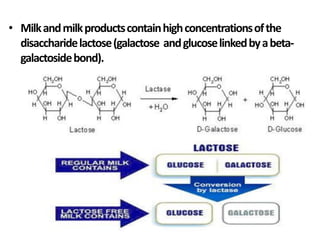
• Milkandmilkproductscontainhighconcentrationsofthe
disaccharidelactose(galactose andglucoselinkedbyabeta-
galactosidebond).
• Intestinalabsorptionoflactoserequiresthatthedisaccharide
behydrolyzedtoitscomponentmonosaccharaides,bothof
whicharerapidlytransportedacrossthesmallbowelmucosa.
• Lactase nonpersistence results in incomplete
digestion of an ingested load of lactose; hence
lactose is malabsorbed and reaches the colon.
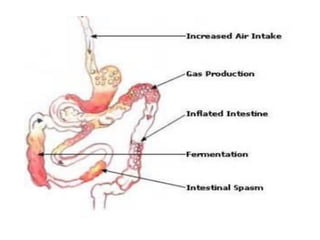
• If sufficient lactose enters the colon, the
subject may experience symptoms of
abdominal pain, bloating, excess flatulence,
and diarrhea, a condition known as lactose
intolerance (LI).
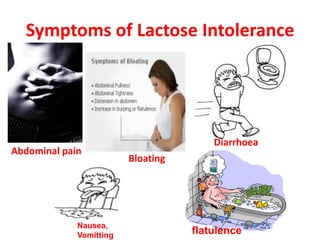
Symptoms of Lactose Intolerance
Abdominal pain
Bloating
Diarrhoea
Nausea,
Vomitting flatulence
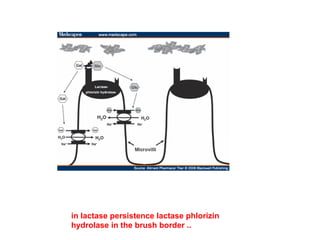
• A brush border beta- galactosidase, lactase, carries
outthishydrolysis.
• While infants virtually always have high
concentrations of lactase, sometime after weaning a
genetically programmed reduction in lactase
synthesis results in very low lactase activity in some
adult subjects, a situation known as lactase
nonpersistence.
• Diseases of the small bowel mucosa (infection, celiac
disease) may also be associated with low brush
border lactase, with resultant lactose malabsorption
(LM)andLI.
in lactase persistence lactase phlorizin
hydrolase in the brush border ..
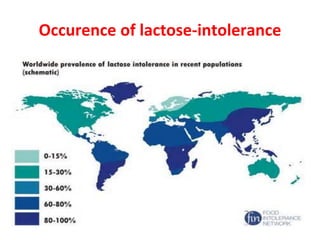
World wide of populations that have
primary lactase deficiency
• The percentage of populations that have
primary lactase deficiency are considerable
throughout the world
• It Estimated that the following percentage of
specific ethnic are considered to be lactase
deficient
1. 85 – 100 of Asian
2. 80 – 100% of American Indians
3. 60 – 80 % of Africans
4. 50 – 60 % of Latinos
5. 2 - 15 % of Northern Europeans
Occurence of lactose-intolerance
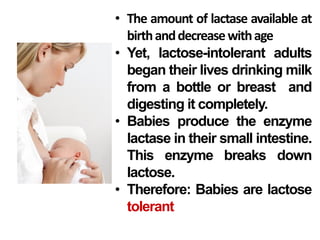
• The amount of lactase available at
birthanddecreasewithage
• Yet, lactose-intolerant adults
began their lives drinking milk
from a bottle or breast and
digesting it completely.
• Babies produce the enzyme
lactase in their small intestine.
This enzyme breaks down
lactose.
• Therefore: Babies are lactose
tolerant
• Secondary lactase deficiency canoccur atthe
following:-
1. Disease andInfection
2. Injury tosmallIntestine
3. Surgery
4. Malnutrition
How is lactose intolerance managed?
• You can change your diet to manage your
symptoms.
• Most people with lactose intolerance do not
have to give up milk or milk products.
• You may be able to tolerate milk and milk
products if you
• Drink small amounts of milk—4 ounces or less—
at a time
• Drink small amounts of milk with meals
• Gradually add small amounts of milk and milk
products to your diet and see how you feel
• Eat milk products that are easier for people
with lactose intolerance to digest, such as
yogurt and hard cheeses like cheddar and
Swiss
• You can also use over-the-counter products
that may help you digest milk and milk
products.
• You can take a tablet that contains the lactase
enzyme when you eat foods that contain
lactose Add liquid lactase drops to liquid milk
products
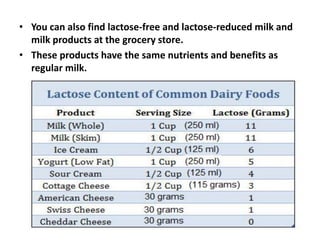
• You can also find lactose-free and lactose-reduced milk and
milk products at the grocery store.
• These products have the same nutrients and benefits as
regular milk.
How will I know if a food has lactose?
• Lactose is found in milk and all foods made with
milk, such as
1. Ice cream
2. Cream
3. Butter
4. Cheese
5. Cottage cheese
6. Yogurt
• Rarely, people with lactose intolerance are
bothered by small amounts of lactose.
• Canned, frozen, packaged, and prepared foods
contain small amounts of lactose.
• Thesefoodsinclude
1. Breadandotherbakedgoods,pancakes,biscuits,
cookies
2. Preparedorfrozenbreakfastfoodssuchasdoughnuts,
frozenwafflesandpancakes,toasterpastries,and
sweetrolls
3. Boxedbreakfastcereals
4. Instantpotatoes,soups,andbreakfastdrinks
5. Potatochips,cornchips,andotherpackagedsnacks
6. Preparedmeats,suchsausage,hotdogs,andlunch
meats
7. Margarine
8. Saladdressings
9. Liquid and powdered milk-based meal replacements
10. Protein powders and bars
11. Candies
12. Non-dairy liquid and powdered coffee creamers
13. Non-dairy whipped toppings
14. Look for certain words on food labels. These words
mean the food has lactose in it:
• Milk
• Lactose
• Whey
• Curds
• Milk by-products
• Dry milk solids
• Non-fat dry milk powder
How will I get the calcium I need?
• Milk and milk products are the most common
sources of calcium. Calcium is a mineral the body
needs for strong bones and teeth. If you are
lactose intolerant, make sure you get enough
calcium each day. Other foods contain calcium,
such as
1. Canned salmon or sardines with bones
2. Broccoli and other leafy green vegetables
3. Oranges
4. Almonds, Brazil nuts, and dried beans
5. Soy milk and tofu
6. Products with added calcium, such as orange juice
• Toabsorbcalcium,yourbodyneedsvitaminD.
• BesuretoeatfoodsthatcontainvitaminD,suchaseggs,
liver,andcertainkindsoffishlikesalmon andtuna.Also,
gettingenoughsunhelpsyourbodymakevitaminD.
• VitaminDisaddedtosomemilkandmilkproducts.
• Ifyou’reabletodrinksmallamountsofmilkoreatyogurt,
choosevarietiesthathavevitaminDadded.
• It’shardtogetenoughcalciumandvitaminDevenifyou
eatanddrinkmilkandmilkproducts.
• Talkwithyourdoctorabouthowtogetcalciumandvitamin
Dinyourdiet.
• Askifyoushouldalsotakeasupplementtogetenough
calcium,vitaminD,orothernutrients.
Points to Remember
1. Lactoseintolerancemeansyouhavetroubledigestinglactose.
2. If youhavelactose intolerance,youmaynotfeelwellafteryou
eat or drink milk and milk products. Many people with lactose
intolerance can tolerate small amounts of milk—4 ounces or
less—atatime,especiallywithmeals.
3. You may be able to gradually add small amounts of milk and
milkproductstoyourdiet.
4. You can use over-the-counter products that may help you
digestmilkandmilkproducts.
5. If you are lactose intolerant, make sure you get enough
calcium each day. Talk with your doctor about how to get
enough calcium in your diet. Ask if you should take a calcium
supplement.

Lactose intolerance 3

  • 1.
  • 2.
  • 3.
    • Intestinalabsorptionoflactoserequiresthatthedisaccharide behydrolyzedtoitscomponentmonosaccharaides,bothof whicharerapidlytransportedacrossthesmallbowelmucosa. • Lactasenonpersistence results in incomplete digestion of an ingested load of lactose; hence lactose is malabsorbed and reaches the colon. • If sufficient lactose enters the colon, the subject may experience symptoms of abdominal pain, bloating, excess flatulence, and diarrhea, a condition known as lactose intolerance (LI).
  • 4.
    Symptoms of LactoseIntolerance Abdominal pain Bloating Diarrhoea Nausea, Vomitting flatulence
  • 5.
    • A brushborder beta- galactosidase, lactase, carries outthishydrolysis. • While infants virtually always have high concentrations of lactase, sometime after weaning a genetically programmed reduction in lactase synthesis results in very low lactase activity in some adult subjects, a situation known as lactase nonpersistence. • Diseases of the small bowel mucosa (infection, celiac disease) may also be associated with low brush border lactase, with resultant lactose malabsorption (LM)andLI.
  • 6.
    in lactase persistencelactase phlorizin hydrolase in the brush border ..
  • 8.
    World wide ofpopulations that have primary lactase deficiency • The percentage of populations that have primary lactase deficiency are considerable throughout the world • It Estimated that the following percentage of specific ethnic are considered to be lactase deficient 1. 85 – 100 of Asian 2. 80 – 100% of American Indians 3. 60 – 80 % of Africans 4. 50 – 60 % of Latinos 5. 2 - 15 % of Northern Europeans
  • 9.
  • 10.
    • The amountof lactase available at birthanddecreasewithage • Yet, lactose-intolerant adults began their lives drinking milk from a bottle or breast and digesting it completely. • Babies produce the enzyme lactase in their small intestine. This enzyme breaks down lactose. • Therefore: Babies are lactose tolerant
  • 11.
    • Secondary lactasedeficiency canoccur atthe following:- 1. Disease andInfection 2. Injury tosmallIntestine 3. Surgery 4. Malnutrition
  • 12.
    How is lactoseintolerance managed? • You can change your diet to manage your symptoms. • Most people with lactose intolerance do not have to give up milk or milk products. • You may be able to tolerate milk and milk products if you • Drink small amounts of milk—4 ounces or less— at a time • Drink small amounts of milk with meals • Gradually add small amounts of milk and milk products to your diet and see how you feel
  • 13.
    • Eat milkproducts that are easier for people with lactose intolerance to digest, such as yogurt and hard cheeses like cheddar and Swiss • You can also use over-the-counter products that may help you digest milk and milk products. • You can take a tablet that contains the lactase enzyme when you eat foods that contain lactose Add liquid lactase drops to liquid milk products
  • 14.
    • You canalso find lactose-free and lactose-reduced milk and milk products at the grocery store. • These products have the same nutrients and benefits as regular milk.
  • 15.
    How will Iknow if a food has lactose? • Lactose is found in milk and all foods made with milk, such as 1. Ice cream 2. Cream 3. Butter 4. Cheese 5. Cottage cheese 6. Yogurt • Rarely, people with lactose intolerance are bothered by small amounts of lactose. • Canned, frozen, packaged, and prepared foods contain small amounts of lactose.
  • 16.
    • Thesefoodsinclude 1. Breadandotherbakedgoods,pancakes,biscuits, cookies 2.Preparedorfrozenbreakfastfoodssuchasdoughnuts, frozenwafflesandpancakes,toasterpastries,and sweetrolls 3. Boxedbreakfastcereals 4. Instantpotatoes,soups,andbreakfastdrinks 5. Potatochips,cornchips,andotherpackagedsnacks 6. Preparedmeats,suchsausage,hotdogs,andlunch meats 7. Margarine 8. Saladdressings
  • 17.
    9. Liquid andpowdered milk-based meal replacements 10. Protein powders and bars 11. Candies 12. Non-dairy liquid and powdered coffee creamers 13. Non-dairy whipped toppings 14. Look for certain words on food labels. These words mean the food has lactose in it: • Milk • Lactose • Whey • Curds • Milk by-products • Dry milk solids • Non-fat dry milk powder
  • 18.
    How will Iget the calcium I need? • Milk and milk products are the most common sources of calcium. Calcium is a mineral the body needs for strong bones and teeth. If you are lactose intolerant, make sure you get enough calcium each day. Other foods contain calcium, such as 1. Canned salmon or sardines with bones 2. Broccoli and other leafy green vegetables 3. Oranges 4. Almonds, Brazil nuts, and dried beans 5. Soy milk and tofu 6. Products with added calcium, such as orange juice
  • 19.
    • Toabsorbcalcium,yourbodyneedsvitaminD. • BesuretoeatfoodsthatcontainvitaminD,suchaseggs, liver,andcertainkindsoffishlikesalmonandtuna.Also, gettingenoughsunhelpsyourbodymakevitaminD. • VitaminDisaddedtosomemilkandmilkproducts. • Ifyou’reabletodrinksmallamountsofmilkoreatyogurt, choosevarietiesthathavevitaminDadded. • It’shardtogetenoughcalciumandvitaminDevenifyou eatanddrinkmilkandmilkproducts. • Talkwithyourdoctorabouthowtogetcalciumandvitamin Dinyourdiet. • Askifyoushouldalsotakeasupplementtogetenough calcium,vitaminD,orothernutrients.
  • 20.
    Points to Remember 1.Lactoseintolerancemeansyouhavetroubledigestinglactose. 2. If youhavelactose intolerance,youmaynotfeelwellafteryou eat or drink milk and milk products. Many people with lactose intolerance can tolerate small amounts of milk—4 ounces or less—atatime,especiallywithmeals. 3. You may be able to gradually add small amounts of milk and milkproductstoyourdiet. 4. You can use over-the-counter products that may help you digestmilkandmilkproducts. 5. If you are lactose intolerant, make sure you get enough calcium each day. Talk with your doctor about how to get enough calcium in your diet. Ask if you should take a calcium supplement.