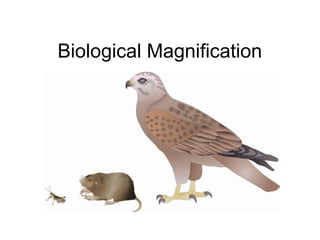
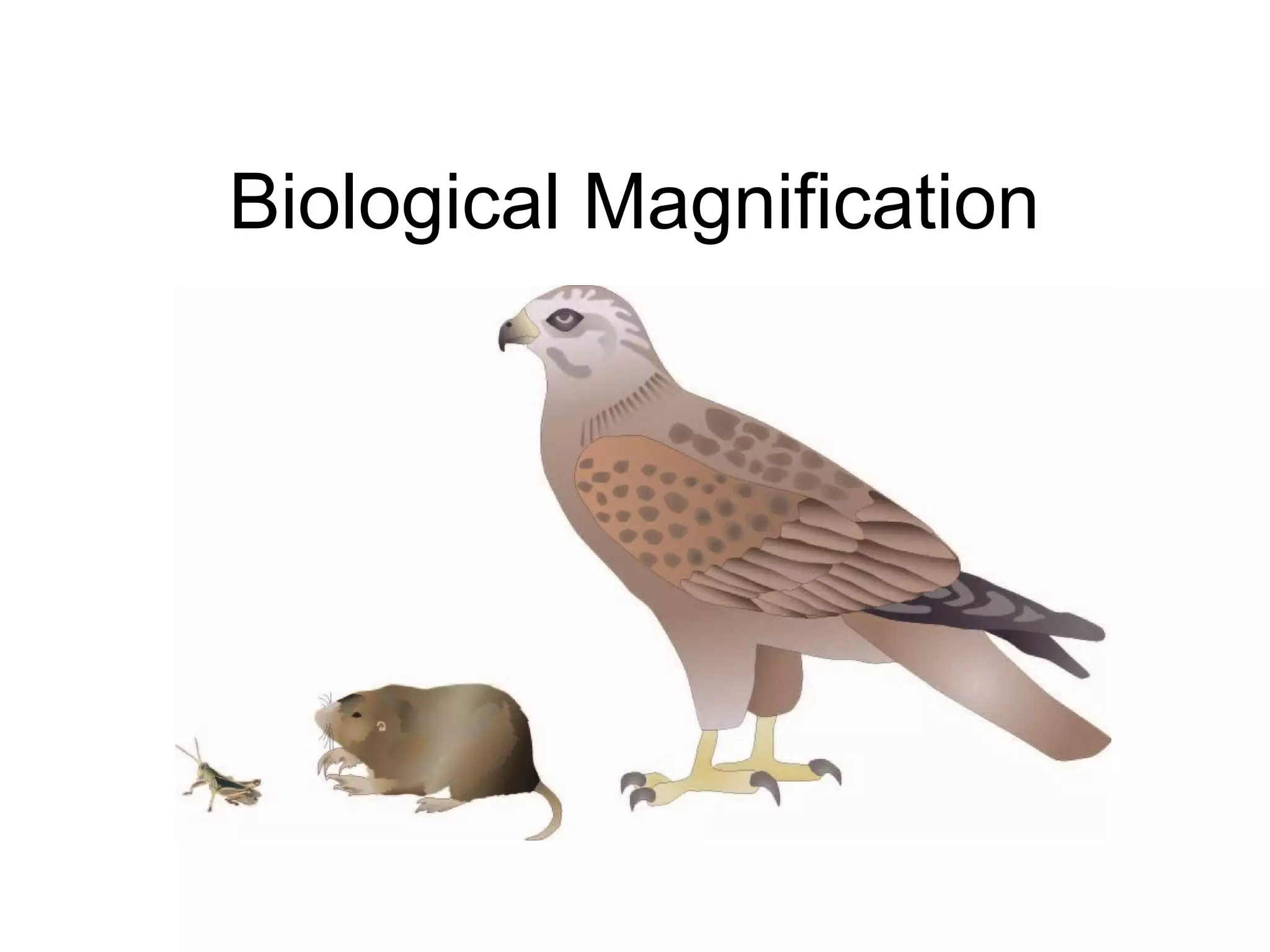
Biological Magnification
After successfully participating 
in this lab, you will be able to: 
• Describe the reasons DDT was used in 
America. 
• Identify the biological impact of DDT. 
• Explain biomagnification. 
• Compare herbicides, insecticides, 
pesticides, and organic products. 
• Contrast food chains and food webs.
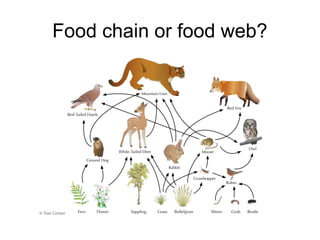
Food chain or food web?
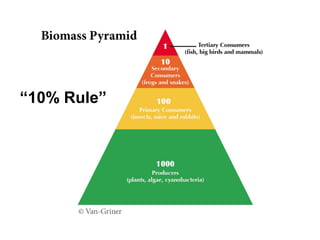
“10% Rule”
10% Rule 
• https://www.youtube.com/watch?v=ScizkxMlEOM 
• This rule specifically refers to energy 
transfer in a food chain. According to the 
rule, only 10% of energy is transferred to 
the next level of food chain, out of the 
remaining 90%, some is used up 
metabolically for survival and the rest is 
lost as body heat.
What is DDT? 
• Chlorinated hydrocarbon 
• Considered highly toxic to insects, but 
didn’t (immediately) kill mammals or 
humans. 
• Popular because it killed mosquitoes (who 
spread malaria) and cockroaches (which 
are human pests).
Background Information 
• DDT was discovered in the 1930’s by Paul 
Muller, a Swiss chemist 
• It was inexpensive, broad-spectrum, 
persistent chemical that was extremely 
toxic to insects but not to humans and 
other mammals 
• It was used to control lice, mosquitoes, 
spruce budworm and beetles, and to help 
grow more economically productive crops.
• In the 1950’s Rachel Carson investigated the 
effects of DDT on wildlife. Her book, Silent 
Spring, chronicles a message that insecticides 
can have dangerous environmental effects. 
• Rachel Carson has been credited with the 
creation of the Environmental Protection Agency 
(EPA). 
• The EPA worked to ban DDT in the early 1970’s 
• DDT is still believed to be entering the Great 
Lakes ecosystem through rainfall and dust 
sources from halfway around the world, to this 
day.
• The study of DDT provides a good 
example of biological magnification or 
“biomagnification” of the chemicals in the 
ecosystem 
• Biomagnification is the accumulation of 
higher and higher concentrations of 
chemicals in individual organisms. 
• It occurs when a chemical is ingested and 
cannot be broken down or excreted, 
leading to accumulation of chemical that 
they pass along a food chain.
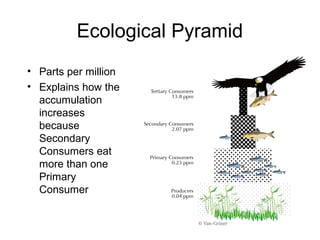
Ecological Pyramid 
• Parts per million 
• Explains how the 
accumulation 
increases 
because 
Secondary 
Consumers eat 
more than one 
Primary 
Consumer
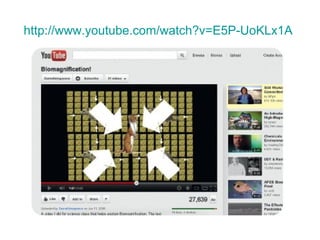
http://www.youtube.com/watch?v=E5P-UoKLx1A
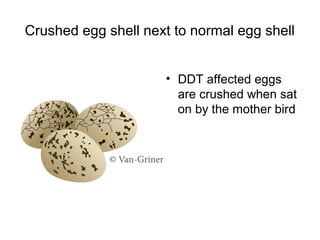
Crushed egg shell next to normal egg shell 
• DDT affected eggs 
are crushed when sat 
on by the mother bird
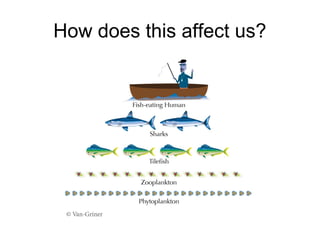
How does this affect us?
http://www.youtube.com/watch?v=LQ64sV0nSVU&
The Present 
• Many new pesticides are biologically based and 
breakdown readily upon contact with soil or in 
reaction to sunlight 
• Much more target-specific and less likely to 
damage on-target organisms. 
• Persistence of a chemical is tested during the 
pesticide registration process by the Pest 
Management Regulatory Agency. 
• Long term effects and overall impact of new and 
existing chemicals on ecosystems can only be 
partially evaluated by current laboratory testing 
procedures.
The Biomagnification Game 
• Grasshoppers 
• Shrews 
• Hawks 
• Two difference “food sources” (hence, two 
different colored Hershey’s Kisses)

Lab 12 biological magnification fall 2014

  • 1.
  • 2.
    After successfully participating in this lab, you will be able to: • Describe the reasons DDT was used in America. • Identify the biological impact of DDT. • Explain biomagnification. • Compare herbicides, insecticides, pesticides, and organic products. • Contrast food chains and food webs.
  • 3.
    Food chain orfood web?
  • 4.
  • 5.
    10% Rule •https://www.youtube.com/watch?v=ScizkxMlEOM • This rule specifically refers to energy transfer in a food chain. According to the rule, only 10% of energy is transferred to the next level of food chain, out of the remaining 90%, some is used up metabolically for survival and the rest is lost as body heat.
  • 6.
    What is DDT? • Chlorinated hydrocarbon • Considered highly toxic to insects, but didn’t (immediately) kill mammals or humans. • Popular because it killed mosquitoes (who spread malaria) and cockroaches (which are human pests).
  • 7.
    Background Information •DDT was discovered in the 1930’s by Paul Muller, a Swiss chemist • It was inexpensive, broad-spectrum, persistent chemical that was extremely toxic to insects but not to humans and other mammals • It was used to control lice, mosquitoes, spruce budworm and beetles, and to help grow more economically productive crops.
  • 8.
    • In the1950’s Rachel Carson investigated the effects of DDT on wildlife. Her book, Silent Spring, chronicles a message that insecticides can have dangerous environmental effects. • Rachel Carson has been credited with the creation of the Environmental Protection Agency (EPA). • The EPA worked to ban DDT in the early 1970’s • DDT is still believed to be entering the Great Lakes ecosystem through rainfall and dust sources from halfway around the world, to this day.
  • 9.
    • The studyof DDT provides a good example of biological magnification or “biomagnification” of the chemicals in the ecosystem • Biomagnification is the accumulation of higher and higher concentrations of chemicals in individual organisms. • It occurs when a chemical is ingested and cannot be broken down or excreted, leading to accumulation of chemical that they pass along a food chain.
  • 10.
    Ecological Pyramid •Parts per million • Explains how the accumulation increases because Secondary Consumers eat more than one Primary Consumer
  • 11.
  • 12.
    Crushed egg shellnext to normal egg shell • DDT affected eggs are crushed when sat on by the mother bird
  • 13.
    How does thisaffect us?
  • 14.
  • 15.
    The Present •Many new pesticides are biologically based and breakdown readily upon contact with soil or in reaction to sunlight • Much more target-specific and less likely to damage on-target organisms. • Persistence of a chemical is tested during the pesticide registration process by the Pest Management Regulatory Agency. • Long term effects and overall impact of new and existing chemicals on ecosystems can only be partially evaluated by current laboratory testing procedures.
  • 16.
    The Biomagnification Game • Grasshoppers • Shrews • Hawks • Two difference “food sources” (hence, two different colored Hershey’s Kisses)