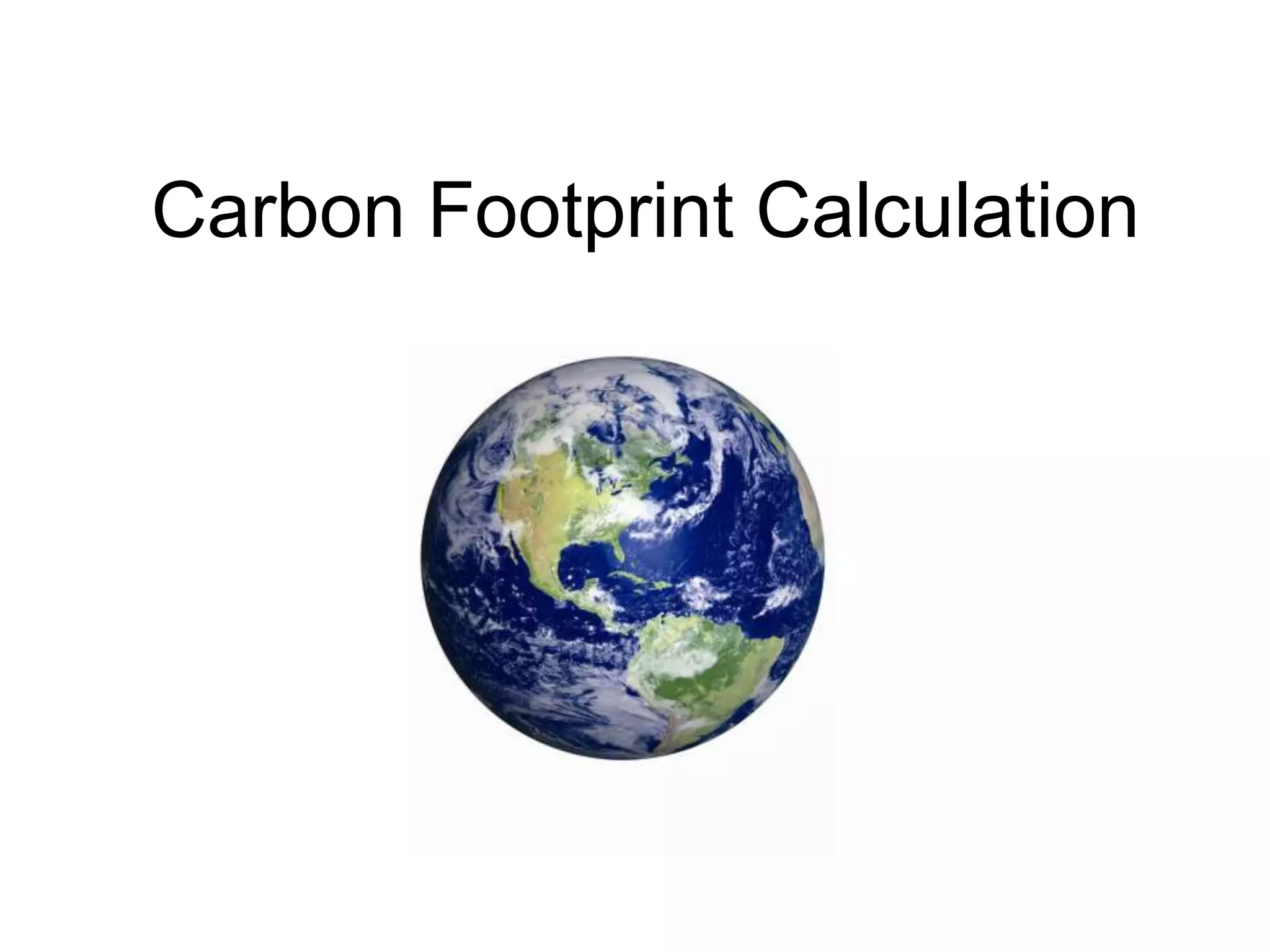
Carbon Footprint Calculation
Learning Objectives 
• Determine your carbon footprint using a 
calculator online 
• Relate use of fossil fuels to your carbon footprint 
• Compare your carbon footprint to that of your 
classmates, school, community, and nation 
• Describe the components or factors associated 
with a carbon footprint 
• Predict ways to reduce your carbon footprint 
• Discuss political ramifications of “climate 
change” or “global warming”
Background Information 
• A carbon footprint describes the amount 
of carbon dioxide that is released into the 
atmosphere as a result of your activities 
such as travel, preparing food, and cooling 
or heating your home 
• Most of the carbon dioxide that results 
from your activities is produced by the 
burning of fossil fuels (coal, natural gas, 
oil)
Carbon vs Ecological 
• An ecological footprint compares the total resources 
people consume with the land and water area that is 
needed to replace those resources. 
• A carbon footprint also deals with resource usage but 
focuses strictly on the greenhouse gases released due 
to burning of fossil fuels. 
• Greenhouse gas calculations make up a portion of an 
ecological footprint, but are not used in the same way as 
those in a carbon footprint. Both calculations illustrate 
the impact of human activity on the environment.
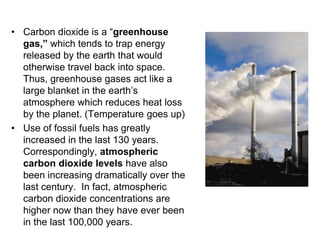
• Carbon dioxide is a “greenhouse 
gas,” which tends to trap energy 
released by the earth that would 
otherwise travel back into space. 
Thus, greenhouse gases act like a 
large blanket in the earth’s 
atmosphere which reduces heat loss 
by the planet. (Temperature goes up) 
• Use of fossil fuels has greatly 
increased in the last 130 years. 
Correspondingly, atmospheric 
carbon dioxide levels have also 
been increasing dramatically over the 
last century. In fact, atmospheric 
carbon dioxide concentrations are 
higher now than they have ever been 
in the last 100,000 years.
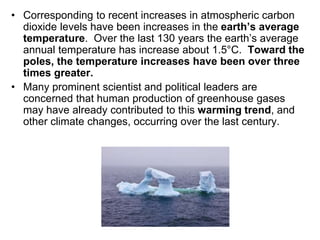
• Corresponding to recent increases in atmospheric carbon 
dioxide levels have been increases in the earth’s average 
temperature. Over the last 130 years the earth’s average 
annual temperature has increase about 1.5°C. Toward the 
poles, the temperature increases have been over three 
times greater. 
• Many prominent scientist and political leaders are 
concerned that human production of greenhouse gases 
may have already contributed to this warming trend, and 
other climate changes, occurring over the last century.
Reduce your carbon footprint 
In the USA, there may be one 
car per person – which 
contributes greatly to 
pollution. 
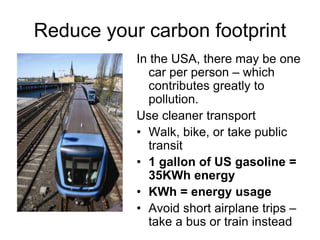
Use cleaner transport 
• Walk, bike, or take public 
transit 
• 1 gallon of US gasoline = 
35KWh energy 
• KWh = energy usage 
• Avoid short airplane trips – 
take a bus or train instead
Add energy saving features to your home 
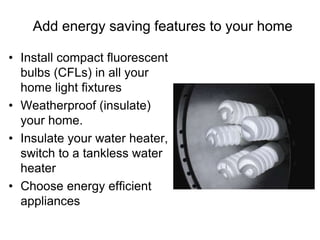
• Install compact fluorescent 
bulbs (CFLs) in all your 
home light fixtures 
• Weatherproof (insulate) 
your home. 
• Insulate your water heater, 
switch to a tankless water 
heater 
• Choose energy efficient 
appliances
Adopt energy-saving habits 
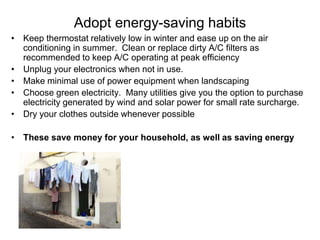
• Keep thermostat relatively low in winter and ease up on the air 
conditioning in summer. Clean or replace dirty A/C filters as 
recommended to keep A/C operating at peak efficiency 
• Unplug your electronics when not in use. 
• Make minimal use of power equipment when landscaping 
• Choose green electricity. Many utilities give you the option to purchase 
electricity generated by wind and solar power for small rate surcharge. 
• Dry your clothes outside whenever possible 
• These save money for your household, as well as saving energy
Reduce your Food Footprint 
• Eat more local, organic, in-season 
foods 
• Plant a garden – it doesn’t get more 
local than that 
• Shop at your local farmer’s market 
or natural foods store. Look for 
local, in-season foods that haven’t 
traveled long distances to reach you 
• Choose foods with less packaging 
to reduce waste 
• Eat food lower on the food chain – 
going meatless for just one meal a 
week can make a difference. 
Globally, it has been estimated that 
18% of all greenhouse gas 
emission are associated with meat 
consumption.
Reduce your Housing Footprint 
• Choose sustainable building 
materials, furnishings, and 
cleaning products 
• Explore green design features 
for your building, like passive 
solar heating, a rainwater 
catchment or grey water 
recycling system, and 
recycled materials 
• Choose efficient appliances, 
including low flow shower 
heads, faucets, and toilets 
• Plant drought-tolerant plants 
in your garden and yard. 
• Use biodegradable, non-toxic 
cleaning products
Adopt water-saving habits 
• Don’t use the garbage disposal. Compost 
instead. 
• Run the dishwasher and the laundry machine 
only when full 
• Wash cars rarely, or better yet, take them to a 
carwash. 
• Avoid hosing down or power-washing your deck, 
walkways, or driveway. 
• Take shorter, less frequent showers – this not 
only saves water, but the energy necessary to 
heat it. 
• Regularly look for and fix leaks.
Reduce your Goods and Services Footprint 
• Buy less. Replace items only when you really 
need to. 
• Recycle all your paper, glass, aluminum, and 
plastic. Don’t forget electronics. 
• Buy recycled products, particularly those labeled 
“post-consumer waste”. 
• Compost food waste for the garden. Garbage 
that is not contaminated with degradable 
(biological) waste can be more easily recycled 
and sorted, and doesn’t produce methane gases 
(a significant greenhouse gas contributor) when 
stored in a landfill.
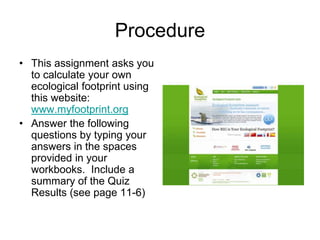
Procedure 
• This assignment asks you 
to calculate your own 
ecological footprint using 
this website: 
www.myfootprint.org 
• Answer the following 
questions by typing your 
answers in the spaces 
provided in your 
workbooks. Include a 
summary of the Quiz 
Results (see page 11-6)

Lab 11 carbon footprint calculation fall 2014

  • 1.
  • 2.
    Learning Objectives •Determine your carbon footprint using a calculator online • Relate use of fossil fuels to your carbon footprint • Compare your carbon footprint to that of your classmates, school, community, and nation • Describe the components or factors associated with a carbon footprint • Predict ways to reduce your carbon footprint • Discuss political ramifications of “climate change” or “global warming”
  • 3.
    Background Information •A carbon footprint describes the amount of carbon dioxide that is released into the atmosphere as a result of your activities such as travel, preparing food, and cooling or heating your home • Most of the carbon dioxide that results from your activities is produced by the burning of fossil fuels (coal, natural gas, oil)
  • 4.
    Carbon vs Ecological • An ecological footprint compares the total resources people consume with the land and water area that is needed to replace those resources. • A carbon footprint also deals with resource usage but focuses strictly on the greenhouse gases released due to burning of fossil fuels. • Greenhouse gas calculations make up a portion of an ecological footprint, but are not used in the same way as those in a carbon footprint. Both calculations illustrate the impact of human activity on the environment.
  • 5.
    • Carbon dioxideis a “greenhouse gas,” which tends to trap energy released by the earth that would otherwise travel back into space. Thus, greenhouse gases act like a large blanket in the earth’s atmosphere which reduces heat loss by the planet. (Temperature goes up) • Use of fossil fuels has greatly increased in the last 130 years. Correspondingly, atmospheric carbon dioxide levels have also been increasing dramatically over the last century. In fact, atmospheric carbon dioxide concentrations are higher now than they have ever been in the last 100,000 years.
  • 6.
    • Corresponding torecent increases in atmospheric carbon dioxide levels have been increases in the earth’s average temperature. Over the last 130 years the earth’s average annual temperature has increase about 1.5°C. Toward the poles, the temperature increases have been over three times greater. • Many prominent scientist and political leaders are concerned that human production of greenhouse gases may have already contributed to this warming trend, and other climate changes, occurring over the last century.
  • 7.
    Reduce your carbonfootprint In the USA, there may be one car per person – which contributes greatly to pollution. Use cleaner transport • Walk, bike, or take public transit • 1 gallon of US gasoline = 35KWh energy • KWh = energy usage • Avoid short airplane trips – take a bus or train instead
  • 8.
    Add energy savingfeatures to your home • Install compact fluorescent bulbs (CFLs) in all your home light fixtures • Weatherproof (insulate) your home. • Insulate your water heater, switch to a tankless water heater • Choose energy efficient appliances
  • 9.
    Adopt energy-saving habits • Keep thermostat relatively low in winter and ease up on the air conditioning in summer. Clean or replace dirty A/C filters as recommended to keep A/C operating at peak efficiency • Unplug your electronics when not in use. • Make minimal use of power equipment when landscaping • Choose green electricity. Many utilities give you the option to purchase electricity generated by wind and solar power for small rate surcharge. • Dry your clothes outside whenever possible • These save money for your household, as well as saving energy
  • 10.
    Reduce your FoodFootprint • Eat more local, organic, in-season foods • Plant a garden – it doesn’t get more local than that • Shop at your local farmer’s market or natural foods store. Look for local, in-season foods that haven’t traveled long distances to reach you • Choose foods with less packaging to reduce waste • Eat food lower on the food chain – going meatless for just one meal a week can make a difference. Globally, it has been estimated that 18% of all greenhouse gas emission are associated with meat consumption.
  • 11.
    Reduce your HousingFootprint • Choose sustainable building materials, furnishings, and cleaning products • Explore green design features for your building, like passive solar heating, a rainwater catchment or grey water recycling system, and recycled materials • Choose efficient appliances, including low flow shower heads, faucets, and toilets • Plant drought-tolerant plants in your garden and yard. • Use biodegradable, non-toxic cleaning products
  • 12.
    Adopt water-saving habits • Don’t use the garbage disposal. Compost instead. • Run the dishwasher and the laundry machine only when full • Wash cars rarely, or better yet, take them to a carwash. • Avoid hosing down or power-washing your deck, walkways, or driveway. • Take shorter, less frequent showers – this not only saves water, but the energy necessary to heat it. • Regularly look for and fix leaks.
  • 13.
    Reduce your Goodsand Services Footprint • Buy less. Replace items only when you really need to. • Recycle all your paper, glass, aluminum, and plastic. Don’t forget electronics. • Buy recycled products, particularly those labeled “post-consumer waste”. • Compost food waste for the garden. Garbage that is not contaminated with degradable (biological) waste can be more easily recycled and sorted, and doesn’t produce methane gases (a significant greenhouse gas contributor) when stored in a landfill.
  • 14.
    Procedure • Thisassignment asks you to calculate your own ecological footprint using this website: www.myfootprint.org • Answer the following questions by typing your answers in the spaces provided in your workbooks. Include a summary of the Quiz Results (see page 11-6)