CARBON FOOTPRINT 
PRESENTED BY-PRIYABRATA 
SAHU 
MBA(ABM) 1ST YR 
SABM,PJTSAU
WHAT IS CARBON FOOTPRINT????? 
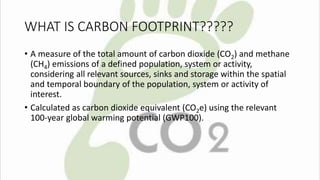
• A measure of the total amount of carbon dioxide (CO2) and methane 
(CH4) emissions of a defined population, system or activity, 
considering all relevant sources, sinks and storage within the spatial 
and temporal boundary of the population, system or activity of 
interest. 
• Calculated as carbon dioxide equivalent (CO2e) using the relevant 
100-year global warming potential (GWP100).
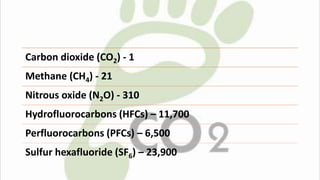
Carbon dioxide (CO2) - 1 
Methane (CH4) - 21 
Nitrous oxide (N2O) - 310 
Hydrofluorocarbons (HFCs) – 11,700 
Perfluorocarbons (PFCs) – 6,500 
Sulfur hexafluoride (SF6) – 23,900
HOW DO WE LEAVE A CARBON FOOTPRINT 
Direct emissions of an item 
• Manufacturing process 
• Electricity 
• Transportation 
Indirect emissions 
• Everything else 
• Example: food,clothings buildings
SOME EXAMPLES 
• A WEB SEARCH: 
• Goggle estimates 0.2 g CO2e for the electricity it uses when you enter 
a search term 
• 0.1g CO2e for 20 seconds of use from an efficient 20 watt laptop 
• Local network and servers would use 0.1 g CO2e 
• Maintenance on the whole system (replacing parts ect.) doubles the 
above figures 
• Total = 0.8 g CO2e 
• FOR A YR-5 TONS CO2E / YEAR / PERSON
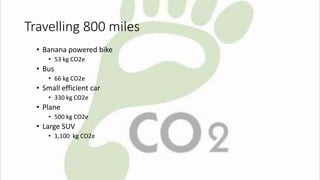
Travelling 800 miles 
• Banana powered bike 
• 53 kg CO2e 
• Bus 
• 66 kg CO2e 
• Small efficient car 
• 330 kg CO2e 
• Plane 
• 500 kg CO2e 
• Large SUV 
• 1,100 kg CO2e
SOME FIGURES 
• THE GLOBAL AVERAGE CARBON FOOTPRINT IS ~6 TONS CO2E / YEAR / 
PERSON 
• INDIAN AVARAGE-2.009 TONS CO2E / YEAR / PERSON 
• GREEN HOUSE GAS EMISSION BY INDIA-2432.18 MT CO2E(5.7%) 
• SOURCE(WORLD RESOURCES INSTITUTE 2010)
IMPACTS OF A BIGGER CARBON FOOTPRINT 
Environmental impacts 
• Overall average annual temperatures are expected to increase. 
• Global warming will decrease snow, sea ice and glacier coverage, 
resulting in rising sea levels and increased coastal flooding. Rising 
temperatures will also thaw permafrost in the Arctic. 
• Storms and heat waves are likely to increase in frequency and 
severity. 
• Many wild species will have difficulty adapting to a warmer climate 
and will likely experience greater stress from diseases and invasive 
species.
Human health impacts 
• Increased temperatures and more frequent and severe extreme weather 
events could lead to increased risks of death from dehydration and heat 
stroke, and injuries from intense local weather changes. 
• There may be an increased risk of respiratory and cardiovascular problems 
and certain types of cancers, as temperatures rise and exacerbate air 
pollution. 
• The risk of water-, food-, vector- and rodent-borne diseases may increase. 
Economic impacts 
• Agriculture, forestry, tourism and recreation could be affected by changing 
weather patterns. 
• Human health impacts are expected to place additional economic stress on 
health and social support systems. 
• Damage to infrastructure (e.g., roads and bridges) from extreme weather 
events is expected to increase.
What Can We Do to Reduce 
Our Footprints 
• TAKE ACTION @OFFICE; 
• Recycle glass, paper, aluminum and plastics. 
• Buy recycled paper products and supplies. 
• Telecommute if possible. 
• Turn down the air conditioning. 
• Install a programmable light timer that reduces light usage during off-peak 
hours.
TAKE ACTION@HOME; 
• Replace a regular incandescent light bulb with a compact fluorescent 
bulb (CFL). Check for possible rebates from your utility company. 
• Clean or replace filters on your furnace and air conditioner. 
• Install window shading. 
• Look for the Energy Star® label when choosing appliances. 
• Use less hot water, by installing a low flow showerhead and washing 
your clothes in cold or warm water, instead of hot water. 
• Turn off and unplug appliances not in use
THANK YOU

CARBON FOOTPRINT

  • 1.
    CARBON FOOTPRINT PRESENTEDBY-PRIYABRATA SAHU MBA(ABM) 1ST YR SABM,PJTSAU
  • 3.
    WHAT IS CARBONFOOTPRINT????? • A measure of the total amount of carbon dioxide (CO2) and methane (CH4) emissions of a defined population, system or activity, considering all relevant sources, sinks and storage within the spatial and temporal boundary of the population, system or activity of interest. • Calculated as carbon dioxide equivalent (CO2e) using the relevant 100-year global warming potential (GWP100).
  • 4.
    Carbon dioxide (CO2)- 1 Methane (CH4) - 21 Nitrous oxide (N2O) - 310 Hydrofluorocarbons (HFCs) – 11,700 Perfluorocarbons (PFCs) – 6,500 Sulfur hexafluoride (SF6) – 23,900
  • 6.
    HOW DO WELEAVE A CARBON FOOTPRINT Direct emissions of an item • Manufacturing process • Electricity • Transportation Indirect emissions • Everything else • Example: food,clothings buildings
  • 8.
    SOME EXAMPLES •A WEB SEARCH: • Goggle estimates 0.2 g CO2e for the electricity it uses when you enter a search term • 0.1g CO2e for 20 seconds of use from an efficient 20 watt laptop • Local network and servers would use 0.1 g CO2e • Maintenance on the whole system (replacing parts ect.) doubles the above figures • Total = 0.8 g CO2e • FOR A YR-5 TONS CO2E / YEAR / PERSON
  • 9.
    Travelling 800 miles • Banana powered bike • 53 kg CO2e • Bus • 66 kg CO2e • Small efficient car • 330 kg CO2e • Plane • 500 kg CO2e • Large SUV • 1,100 kg CO2e
  • 10.
    SOME FIGURES •THE GLOBAL AVERAGE CARBON FOOTPRINT IS ~6 TONS CO2E / YEAR / PERSON • INDIAN AVARAGE-2.009 TONS CO2E / YEAR / PERSON • GREEN HOUSE GAS EMISSION BY INDIA-2432.18 MT CO2E(5.7%) • SOURCE(WORLD RESOURCES INSTITUTE 2010)
  • 13.
    IMPACTS OF ABIGGER CARBON FOOTPRINT Environmental impacts • Overall average annual temperatures are expected to increase. • Global warming will decrease snow, sea ice and glacier coverage, resulting in rising sea levels and increased coastal flooding. Rising temperatures will also thaw permafrost in the Arctic. • Storms and heat waves are likely to increase in frequency and severity. • Many wild species will have difficulty adapting to a warmer climate and will likely experience greater stress from diseases and invasive species.
  • 14.
    Human health impacts • Increased temperatures and more frequent and severe extreme weather events could lead to increased risks of death from dehydration and heat stroke, and injuries from intense local weather changes. • There may be an increased risk of respiratory and cardiovascular problems and certain types of cancers, as temperatures rise and exacerbate air pollution. • The risk of water-, food-, vector- and rodent-borne diseases may increase. Economic impacts • Agriculture, forestry, tourism and recreation could be affected by changing weather patterns. • Human health impacts are expected to place additional economic stress on health and social support systems. • Damage to infrastructure (e.g., roads and bridges) from extreme weather events is expected to increase.
  • 15.
    What Can WeDo to Reduce Our Footprints • TAKE ACTION @OFFICE; • Recycle glass, paper, aluminum and plastics. • Buy recycled paper products and supplies. • Telecommute if possible. • Turn down the air conditioning. • Install a programmable light timer that reduces light usage during off-peak hours.
  • 16.
    TAKE ACTION@HOME; •Replace a regular incandescent light bulb with a compact fluorescent bulb (CFL). Check for possible rebates from your utility company. • Clean or replace filters on your furnace and air conditioner. • Install window shading. • Look for the Energy Star® label when choosing appliances. • Use less hot water, by installing a low flow showerhead and washing your clothes in cold or warm water, instead of hot water. • Turn off and unplug appliances not in use
  • 18.