Download as PDF, PPTX
![Kubernetes Secrets Management
How to use Kubernetes Secrets
apiVersion: v1
kind: Secret
metadata:
name: rabbitmq
namespace: default
type: Opaque
data:
RabbitPass: cmFiYml0bXE=
stringData:
RabbitPlain: P@ssw0rd
apiVersion: apps/v1
kind: Pod
metadata:
name: nginx
namespace: default
spec:
containers:
- name: nginx
image: nginx:latest
env:
- name: RABBITMQ_PASSWORD
valueFrom:
secretKeyRef:
name: rabbitmq
key: RabbitPass
Create Secret Inject Secret into Container
Environment Variable
Read Secret from Code
[NodeJS]
process.env.RABBITMQ_PASSWORD;
[Python]
import os
os.getenv('RABBITMQ_PASSWORD')
[Golang]
package main
import (
"os"
)
os.Getenv("RABBITMQ_PASSWORD")](https://image.slidesharecdn.com/20221029kubernetessecretsmanagementonproductionwithdemo-230112102036-18dde700/75/Kubernetes-Secrets-Management-on-Production-with-Demo-21-2048.jpg)
![Kubernetes Secrets Management
Sample Kyverno Policy
validationFailureAction: enforce
background: true
rules:
- name: privileged-containers
match:
any:
- resources:
kinds:
- Pod
validate:
message: >-
Privileged mode is disallowed. The fields
spec.containers[*].securityContext.privileged
and spec.initContainers[*].securityContext.privileged
must be unset or set to `false`.
pattern:
spec:
containers:
- =(securityContext):
=(privileged): "false"
apiVersion: kyverno.io/v1
kind: ClusterPolicy
metadata:
name: unmatched-key
spec:
validationFailureAction: enforce
rules:
- name: check-unmatch-namespace-and-key
match:
resources:
kinds:
- ExternalSecret
validate:
message: "key must prefix with namespace name"
pattern:
spec:
dataFrom:
- extract:
key: "{{request.namespace}}/?*"](https://image.slidesharecdn.com/20221029kubernetessecretsmanagementonproductionwithdemo-230112102036-18dde700/75/Kubernetes-Secrets-Management-on-Production-with-Demo-33-2048.jpg)

The document outlines an open house presentation by Jirayut Nimsaeng, CEO of Opsta (Thailand), on Kubernetes secrets management, focusing on best practices in a DevSecOps environment. Key topics include the utilization of HashiCorp Vault for managing sensitive data, integrating with various secret management systems, and auto-injecting values into Kubernetes secrets. It also highlights security measures, multi-tenancy, and the role of policy engines like Kyverno in managing Kubernetes environments.
Jirayut Nimsaeng introduces the concept and importance of Secrets management in Kubernetes at TD Tech Open House.
Jirayut presents his expertise in DevSecOps and outlines the session's agenda for Secrets management.
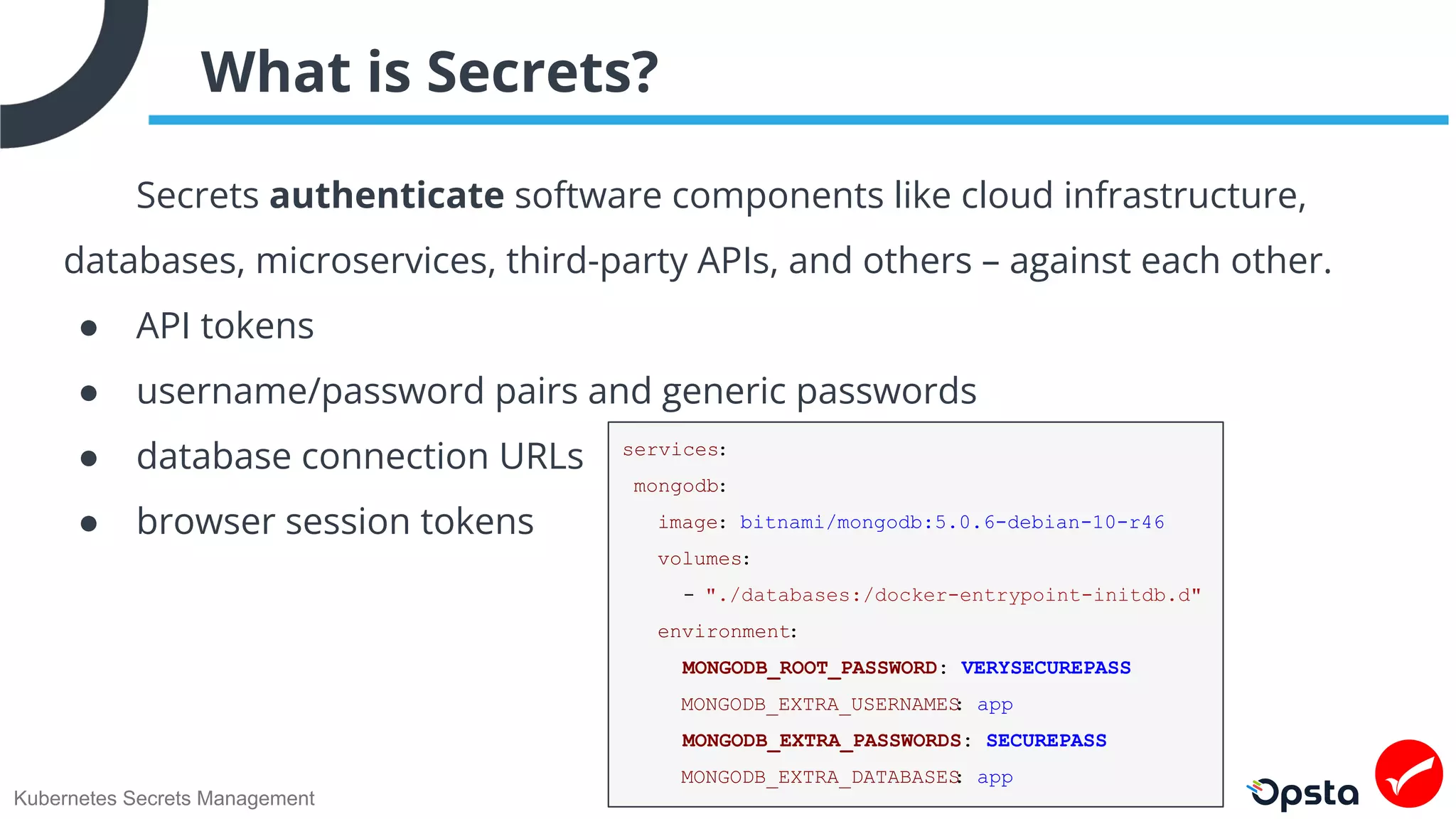
The definition of secrets in DevSecOps, focusing on the types of secrets like API tokens and database URLs.
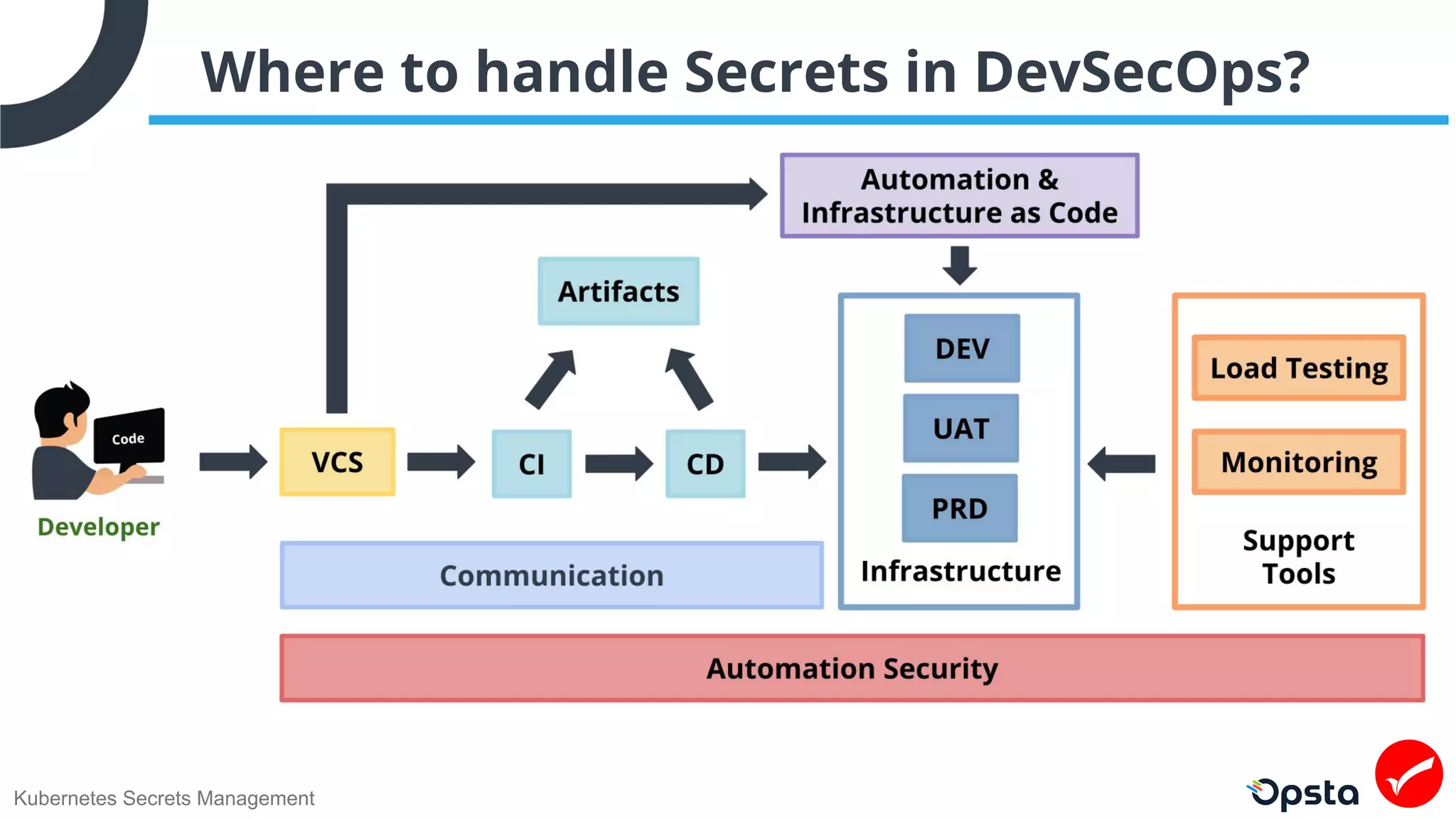
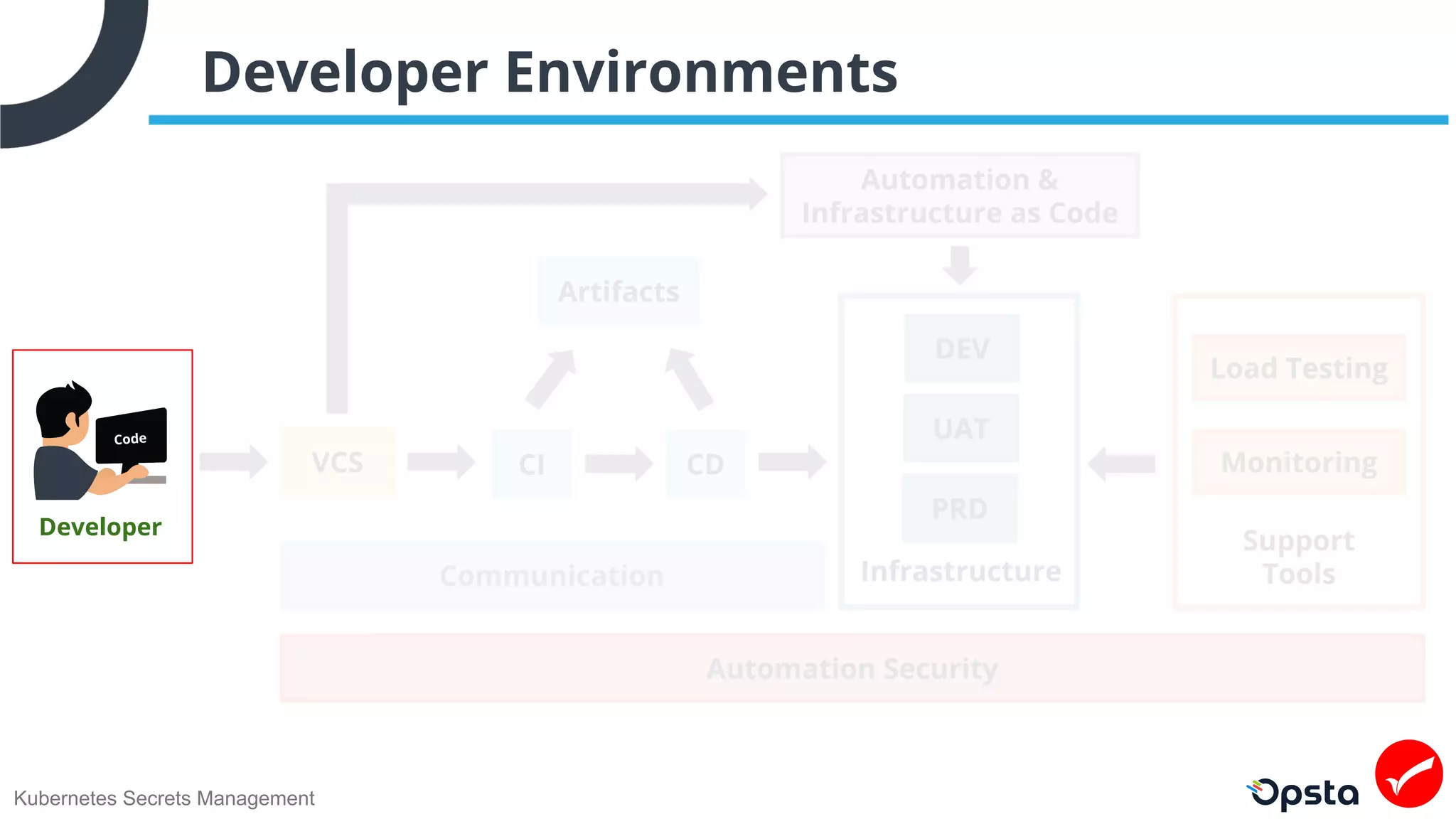
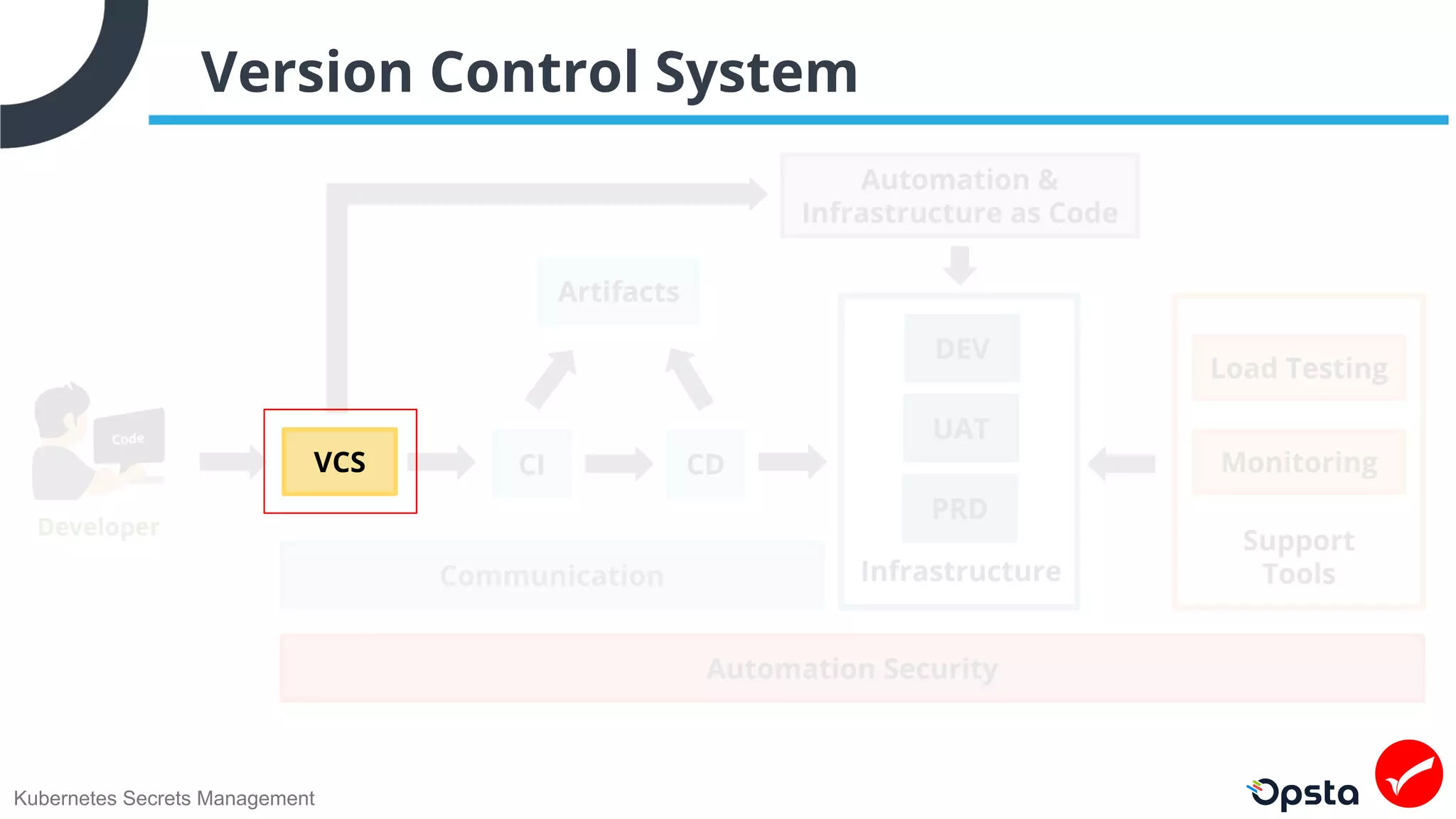
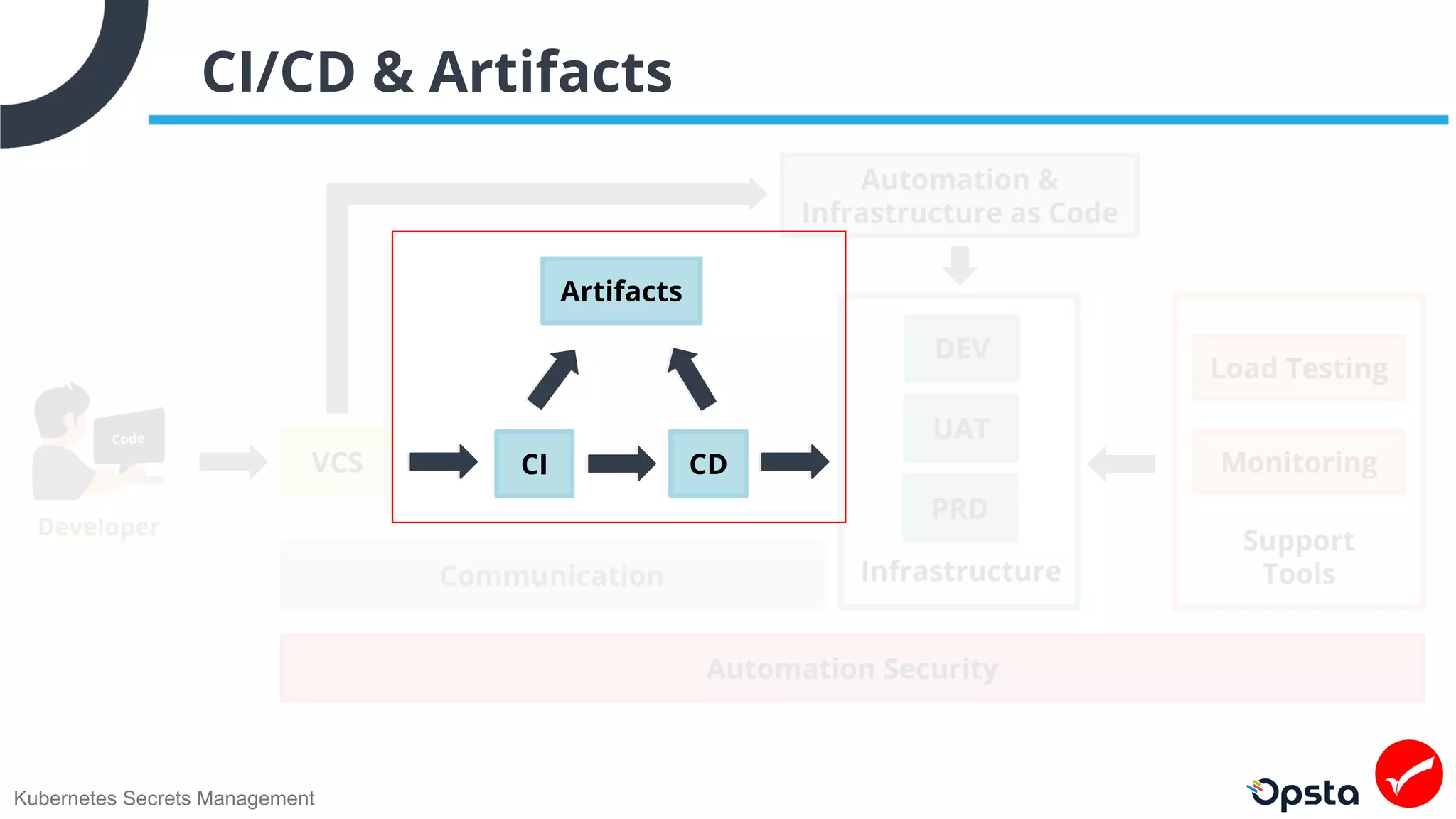
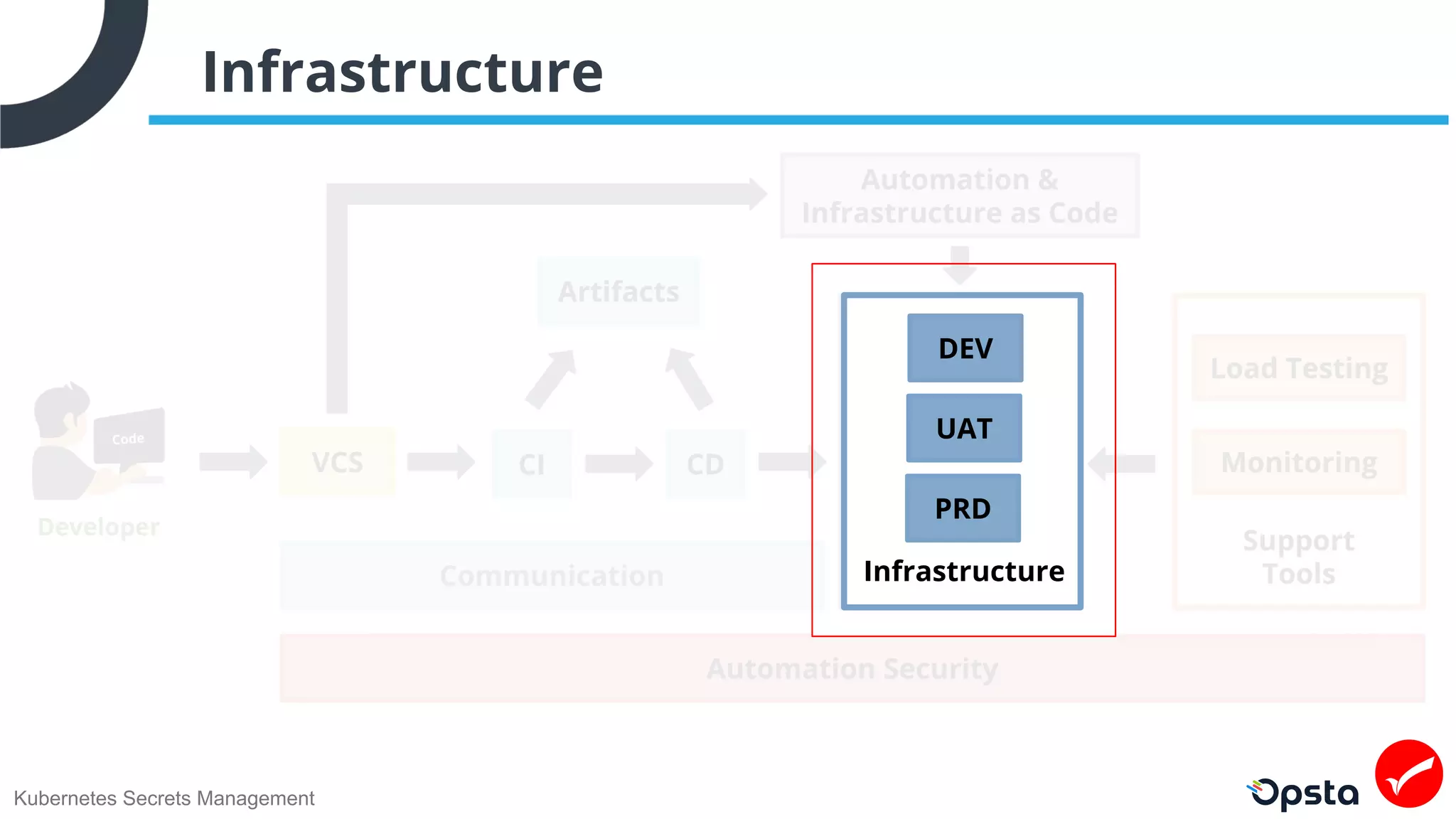
Discusses managing secrets across various environments including Dev, UAT, and Production and introduces tools used.
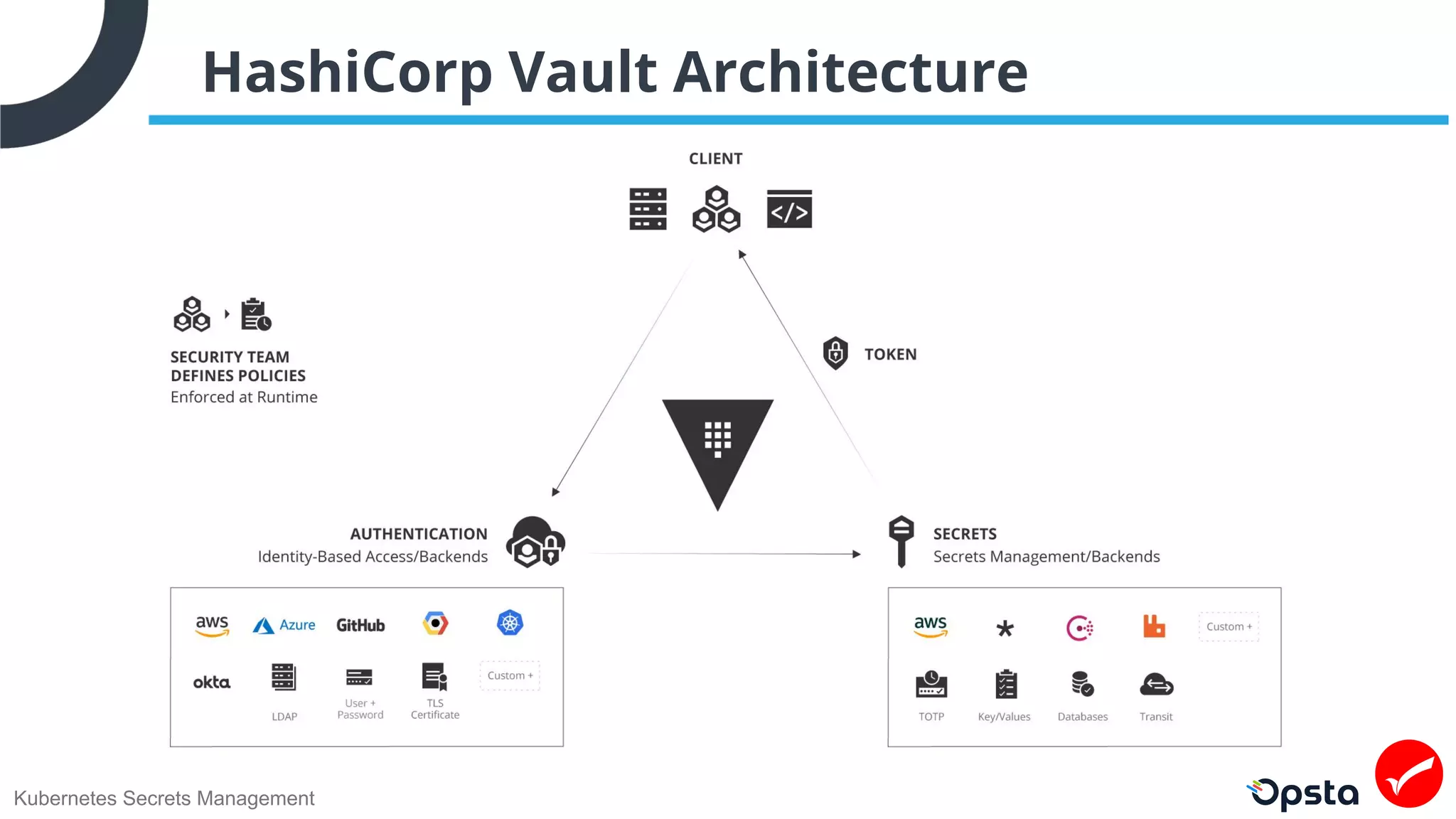
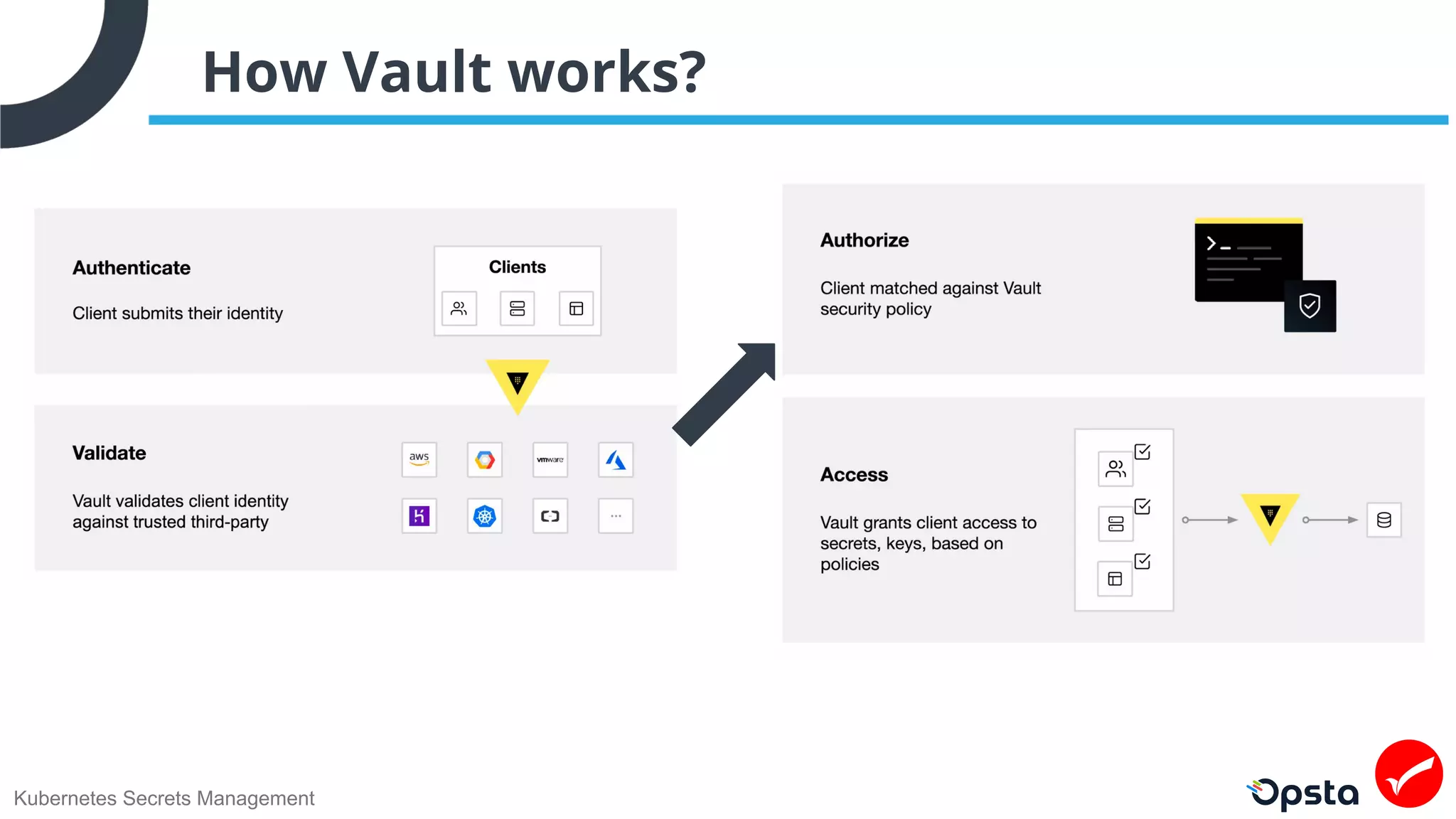
Focus on managing secrets with HashiCorp Vault, detailing its services and architectural overview.
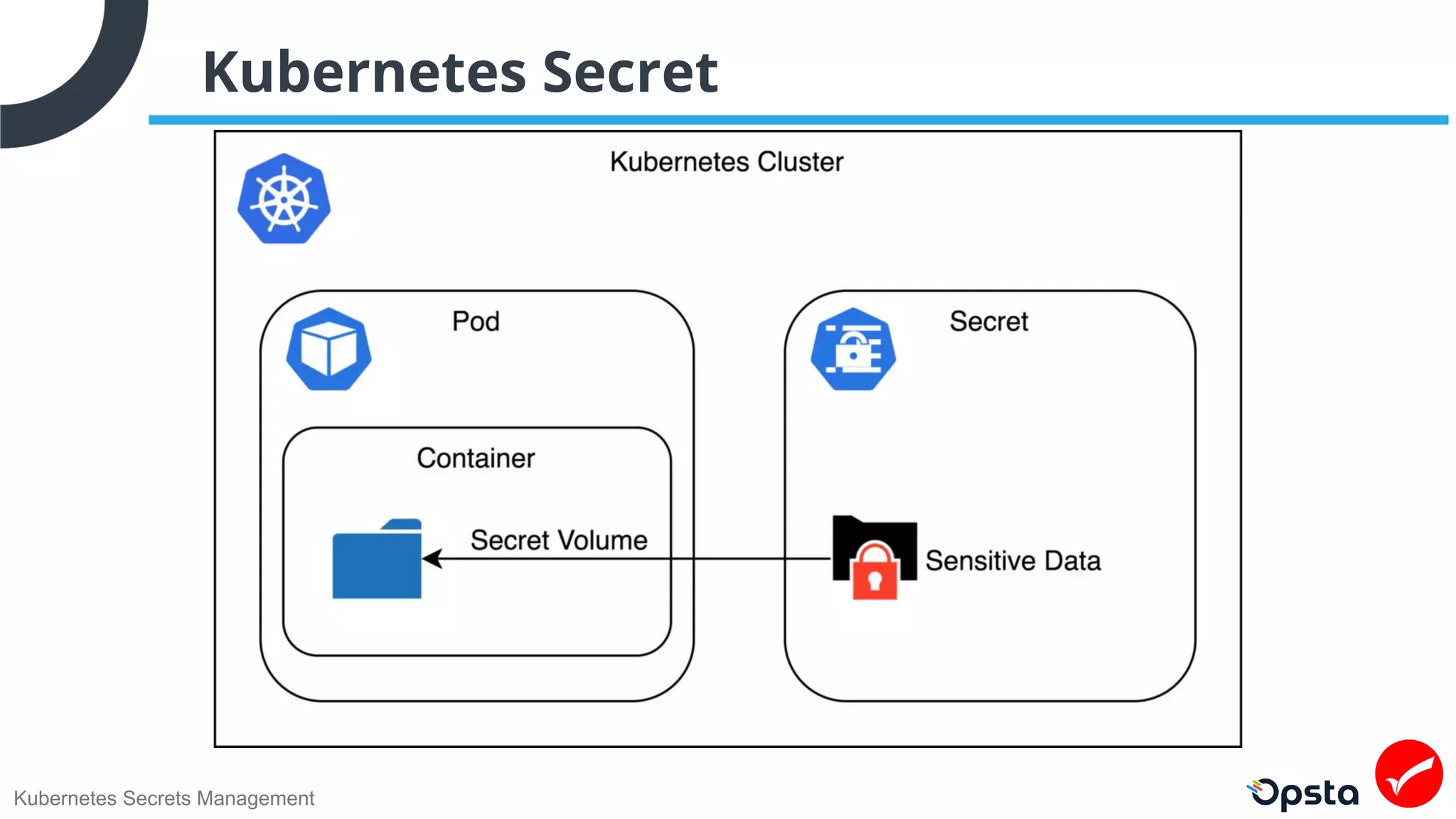
Explanation of how to create and use Kubernetes secrets in applications, with sample configurations.
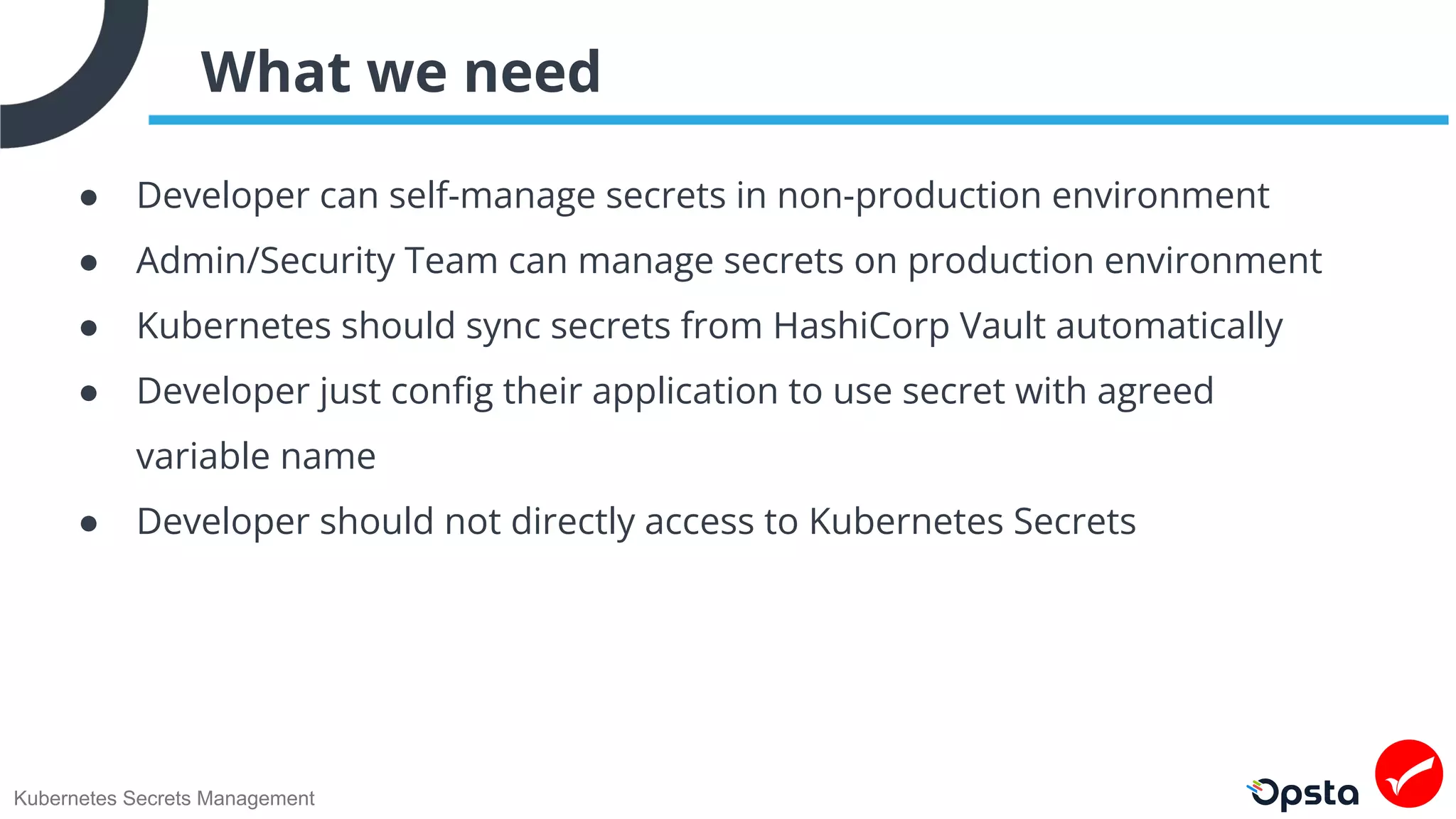
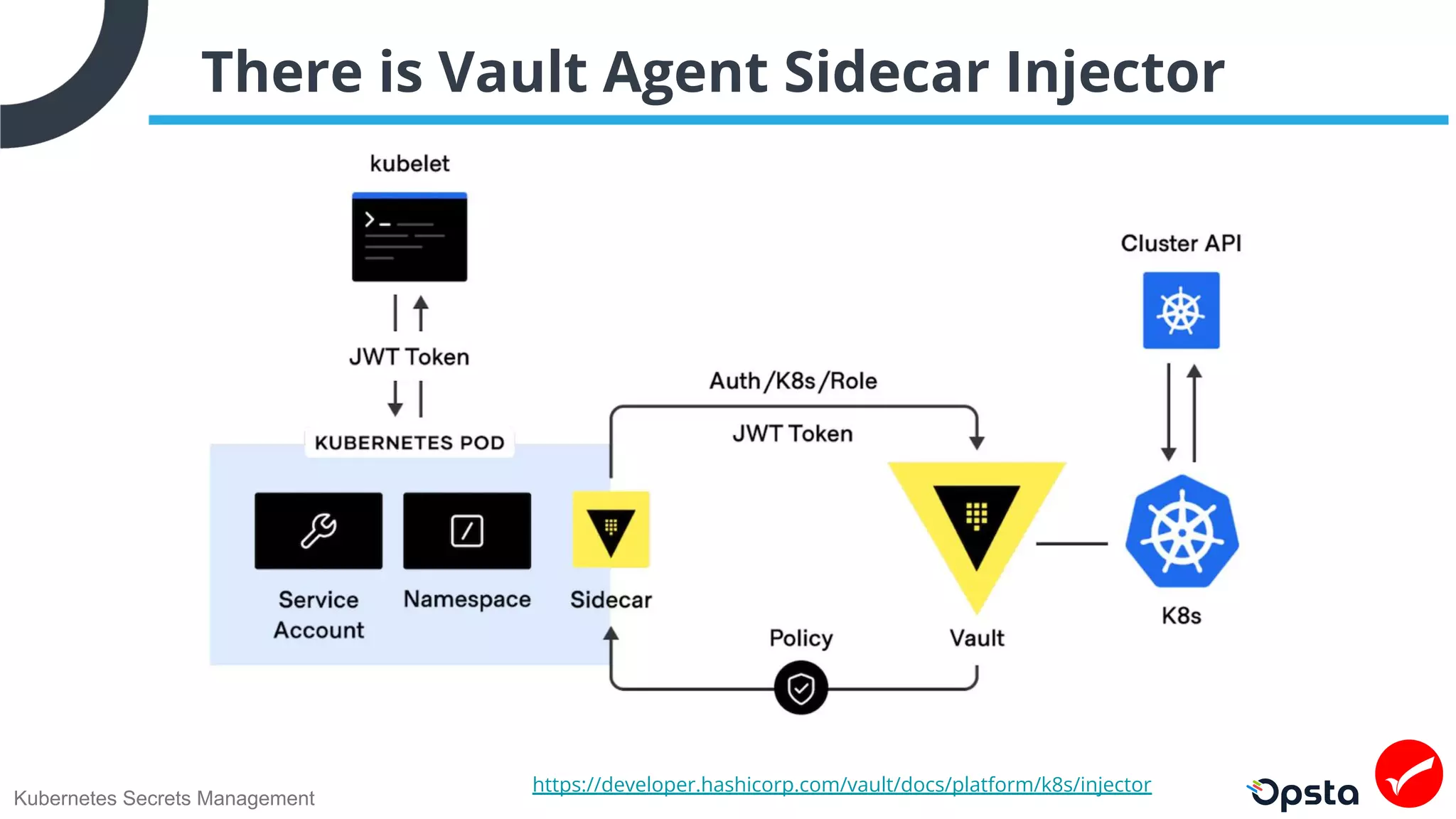
Outlines needs for effective secrets management and introduces the Vault Agent Sidecar Injector.
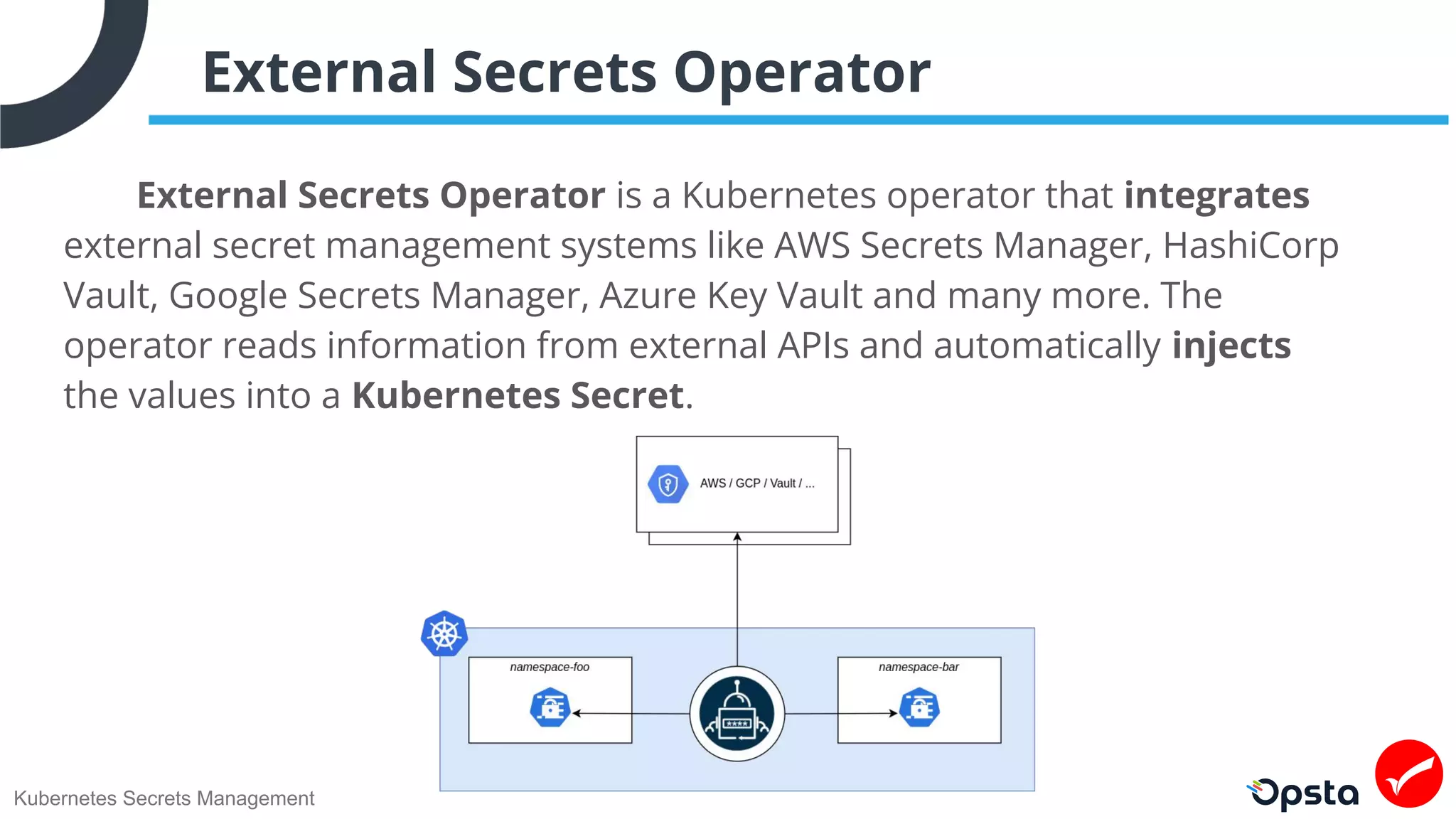
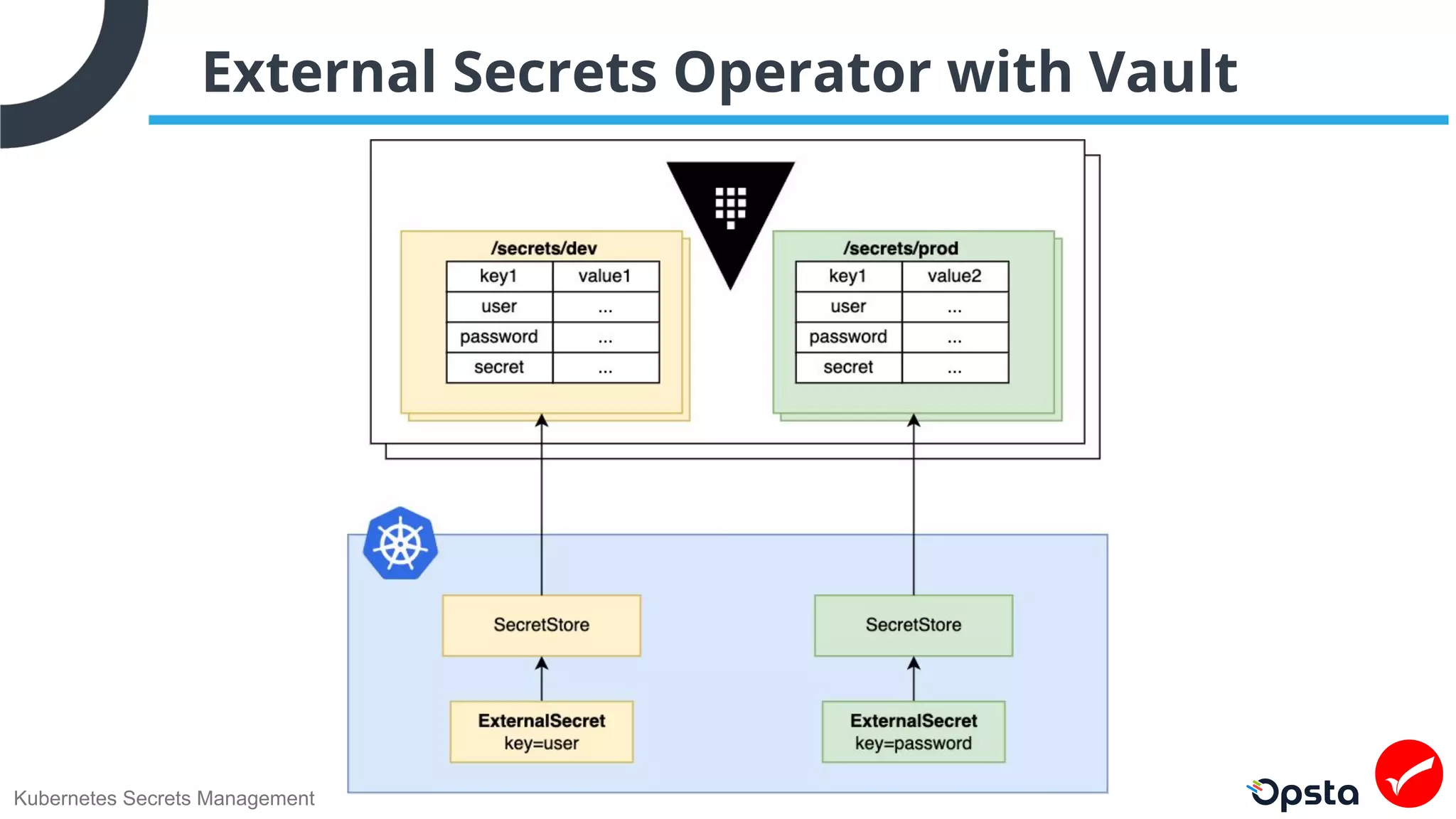
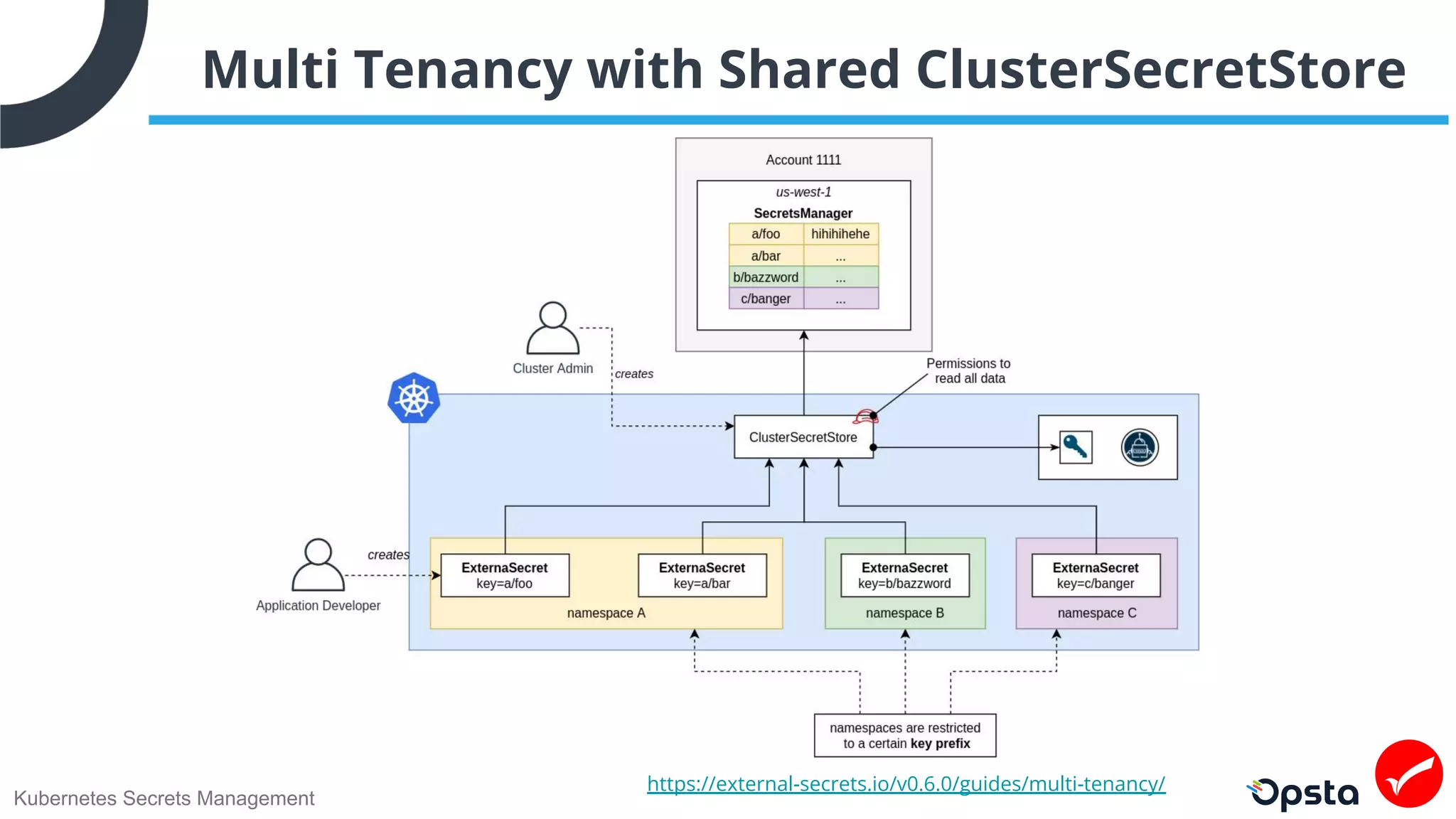
Overview of the External Secrets Operator for Kubernetes, its benefits, and support for multiple secret management systems.
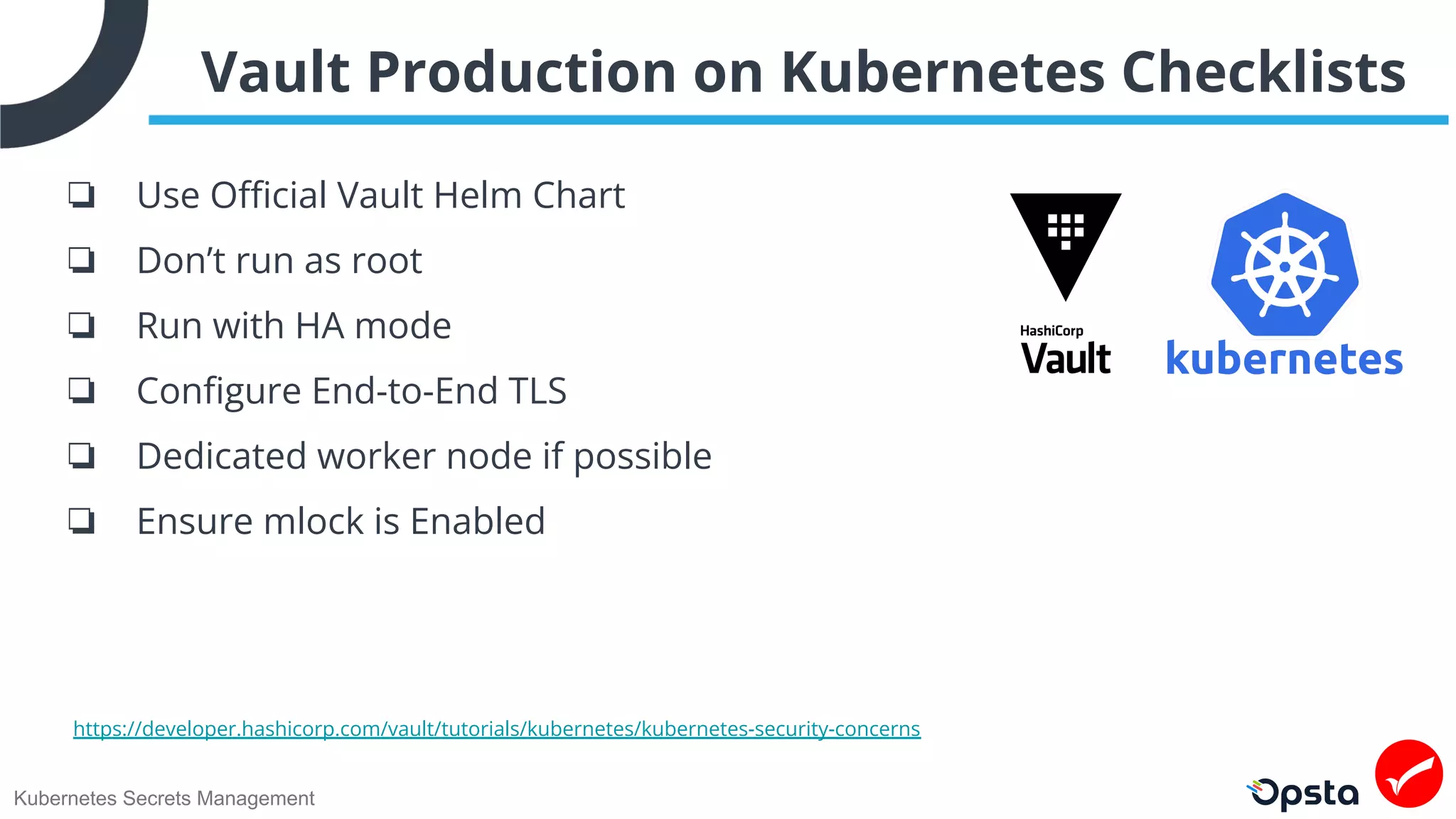
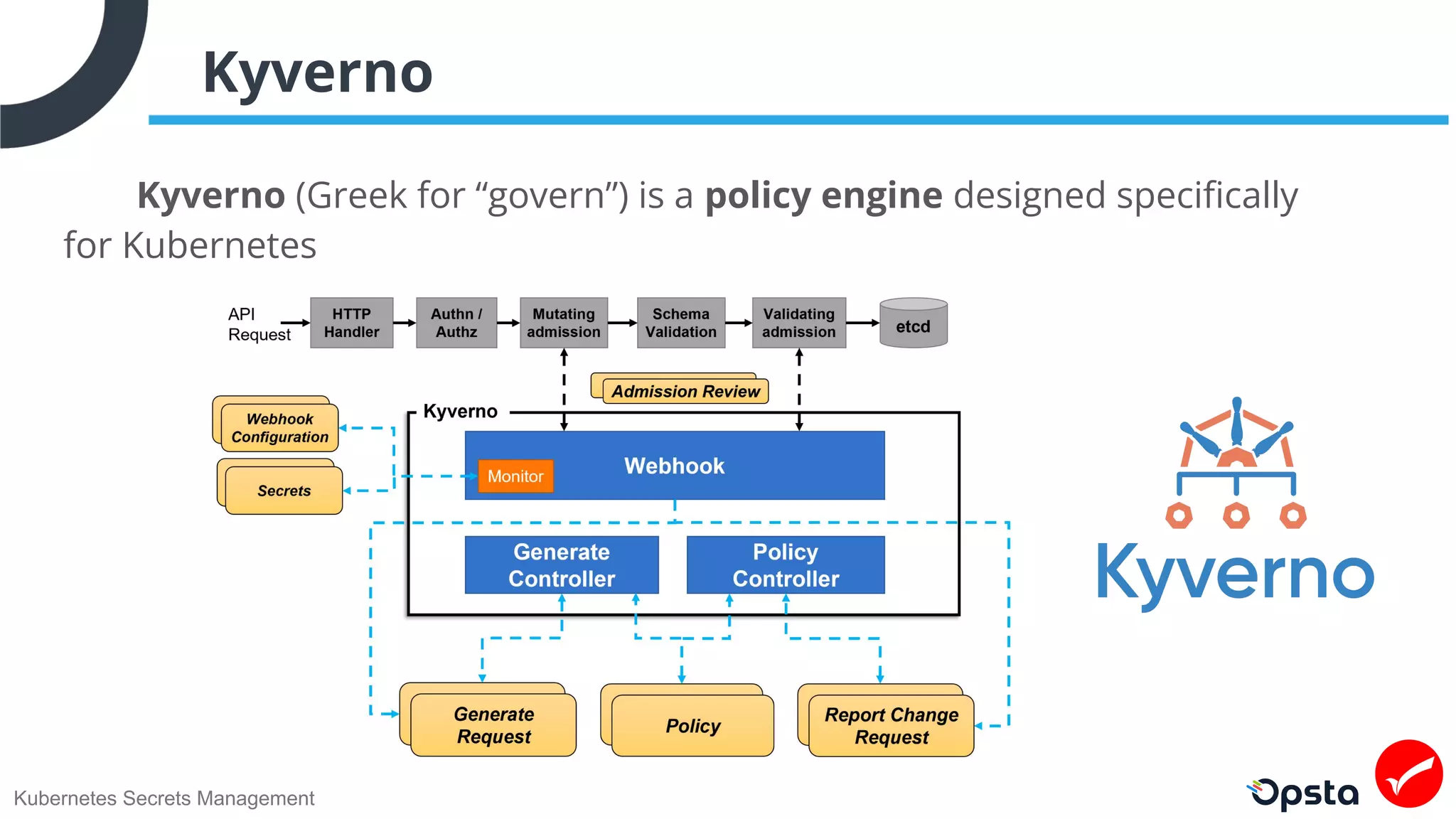
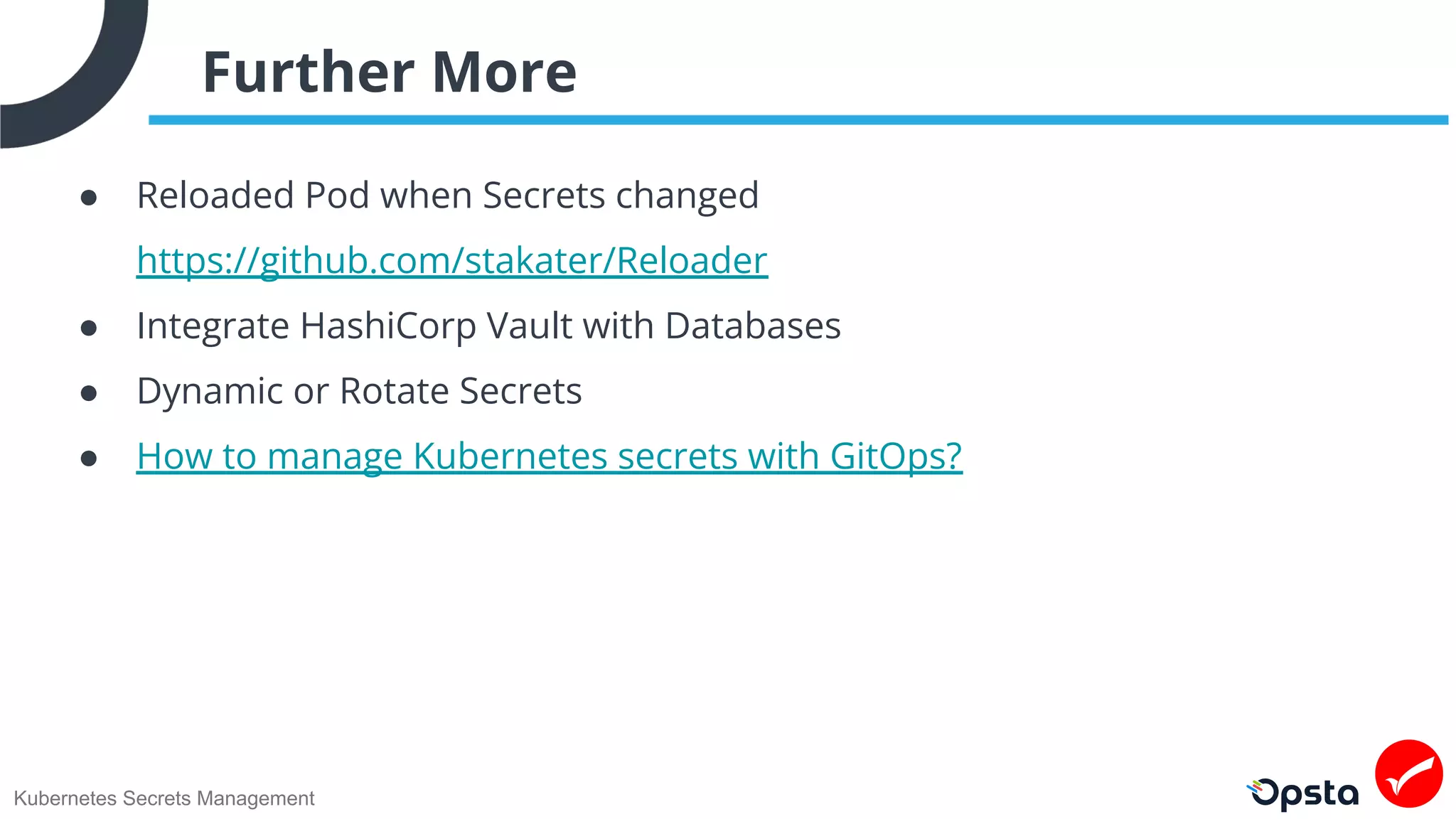
Encourages showing code and discusses best practices for Vault deployment including security policies with Kyverno.
Further discussion on dynamic secrets management, integration with databases, and managing secrets using GitOps.
Providing contact details for further inquiries and connections with Jirayut Nimsaeng.


