EXERCISE
Why, Where, What, When & How?


          Pradnya Pisolkar
                Fitness Expert
Director (BFIT & Tejas Fitness Centres, PCMC)

               LIMIT Your Risk Initiative
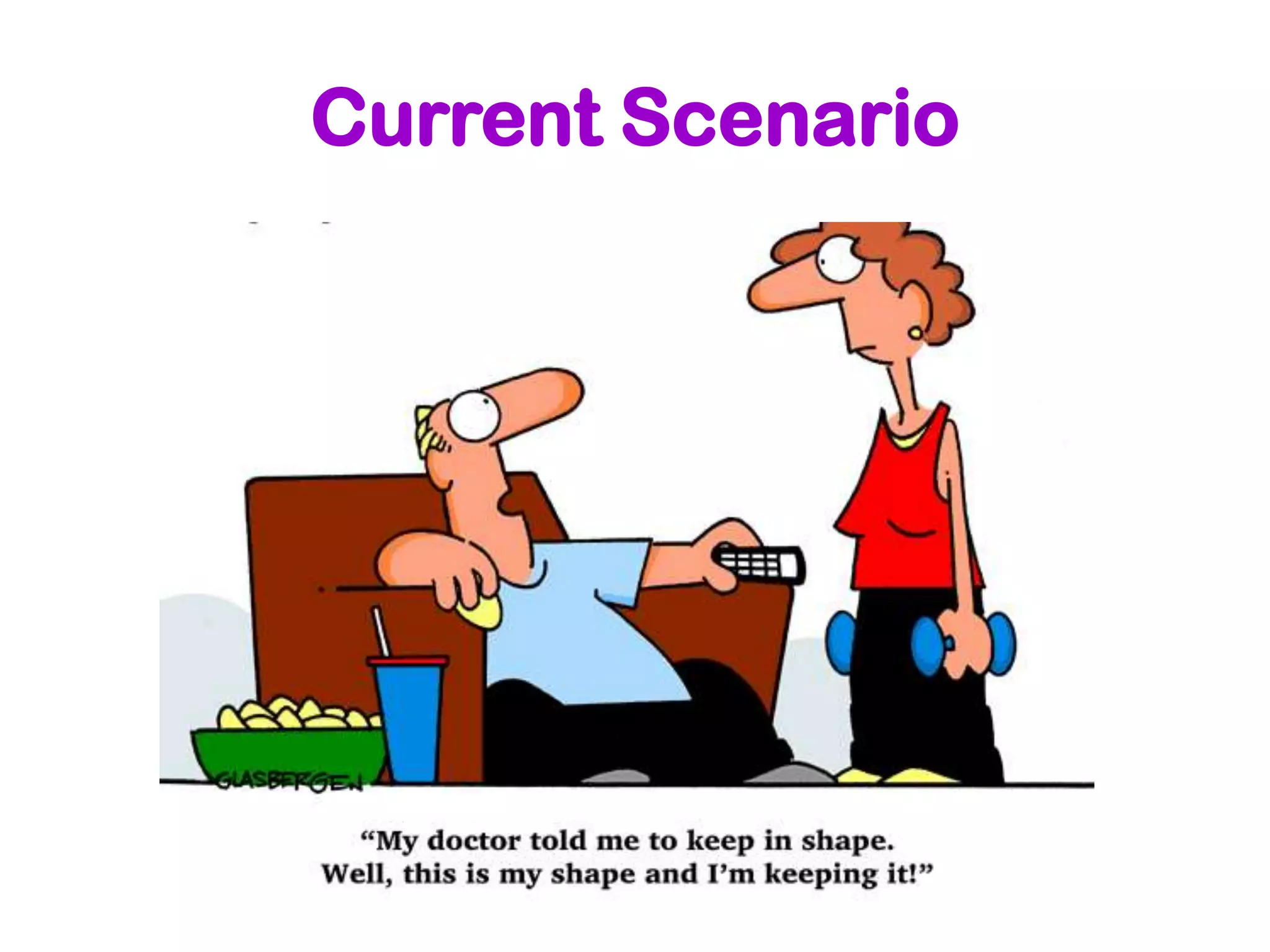
Current Scenario…
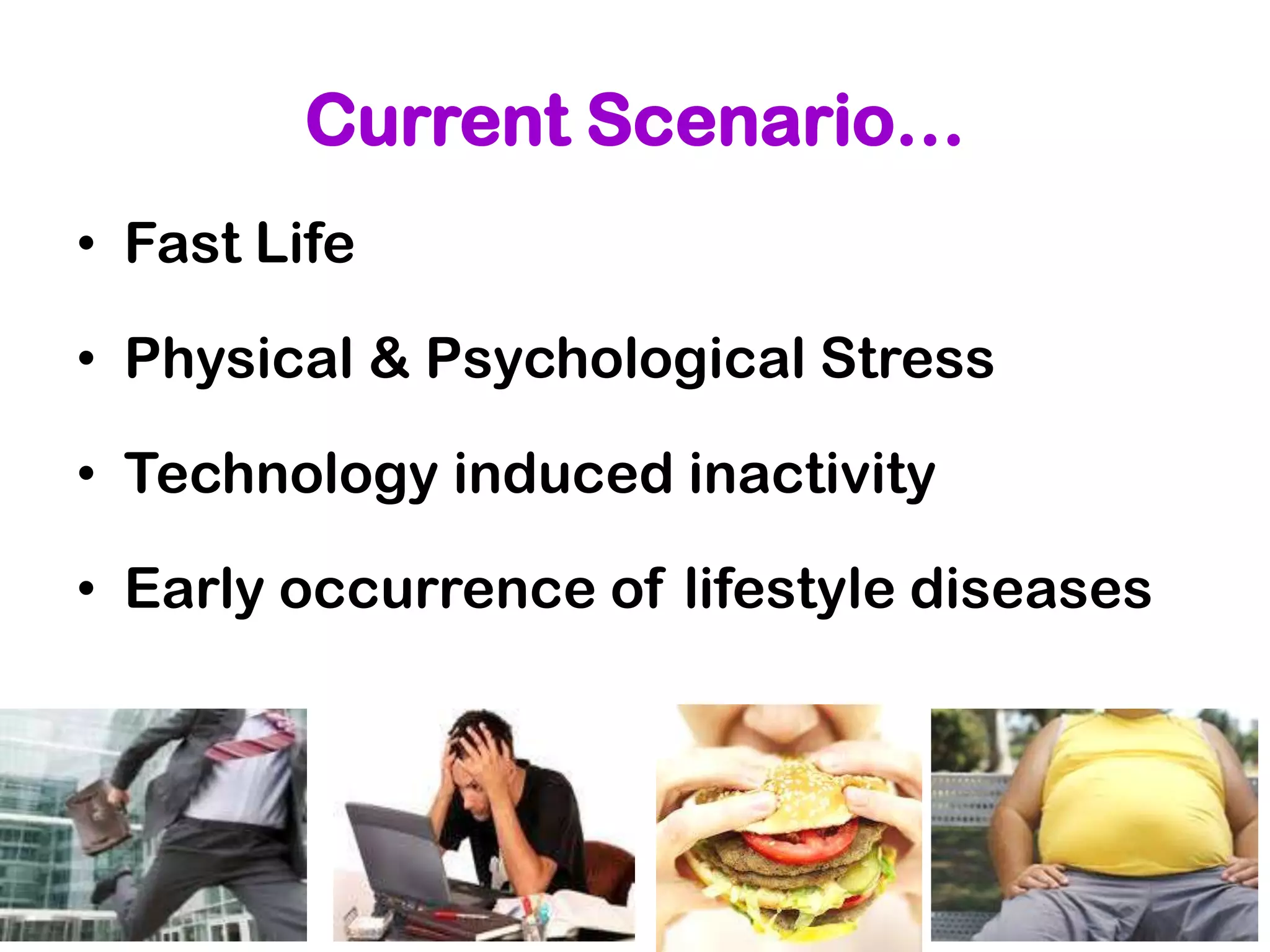
• Fast Life

• Physical & Psychological Stress

• Technology induced inactivity

• Early occurrence of lifestyle diseases
Current Scenario
Exercise: Why?
Exercise: Why?
• Increases endurance & strength

• Increases flexibility

• Increases energy levels

• Helps weight management

• Stress buster

• Improves sleep!!

• Stabilizes BP, blood sugar

• Strengthens heart

• Improves blood cholesterol

• Improves quality of life
Exercise: What?
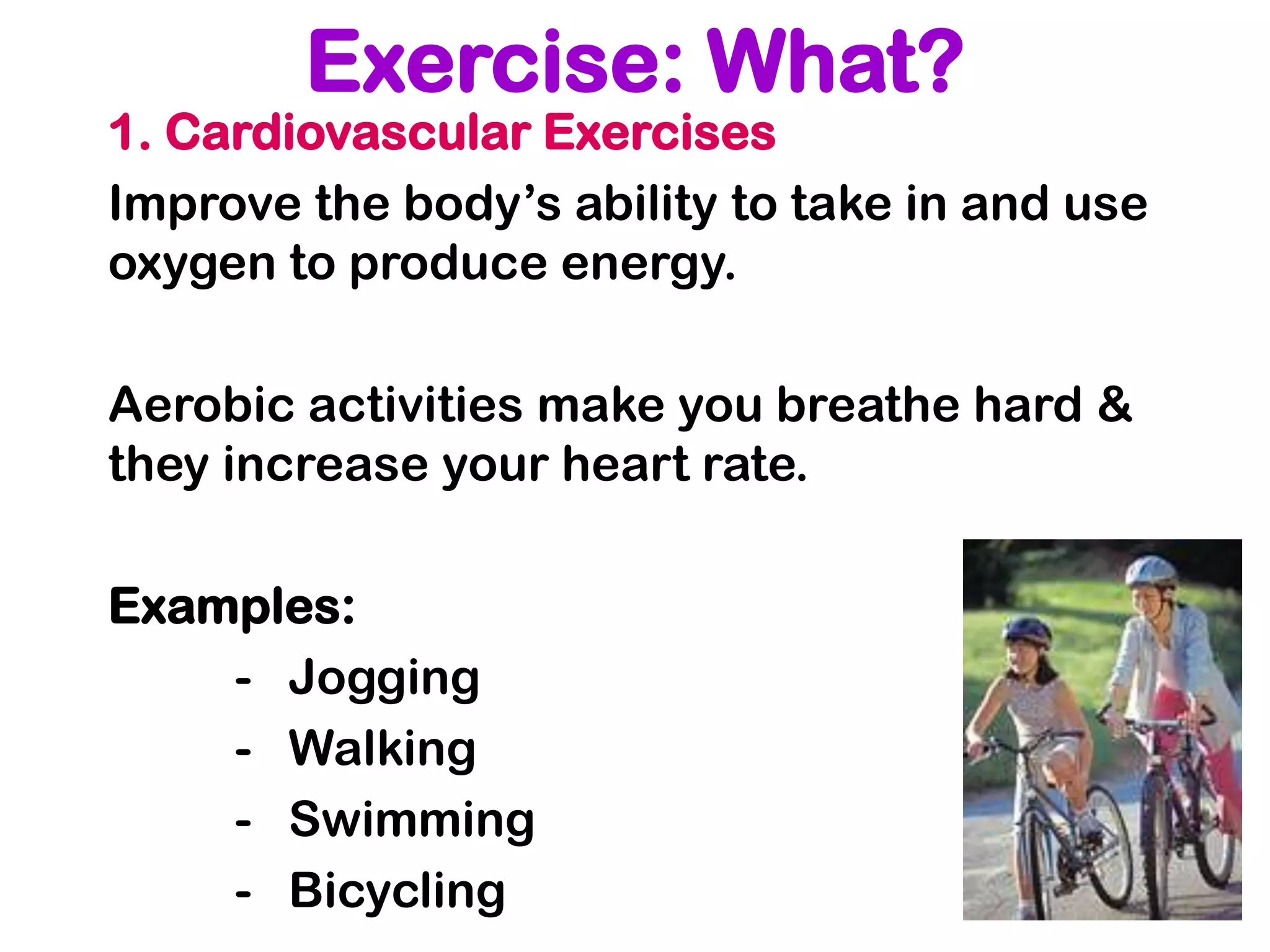
1. Cardiovascular Exercises
Improve the body’s ability to take in and use
oxygen to produce energy.

Aerobic activities make you breathe hard &
they increase your heart rate.

Examples:
    - Jogging
    - Walking
    - Swimming
    - Bicycling
Exercise: What?
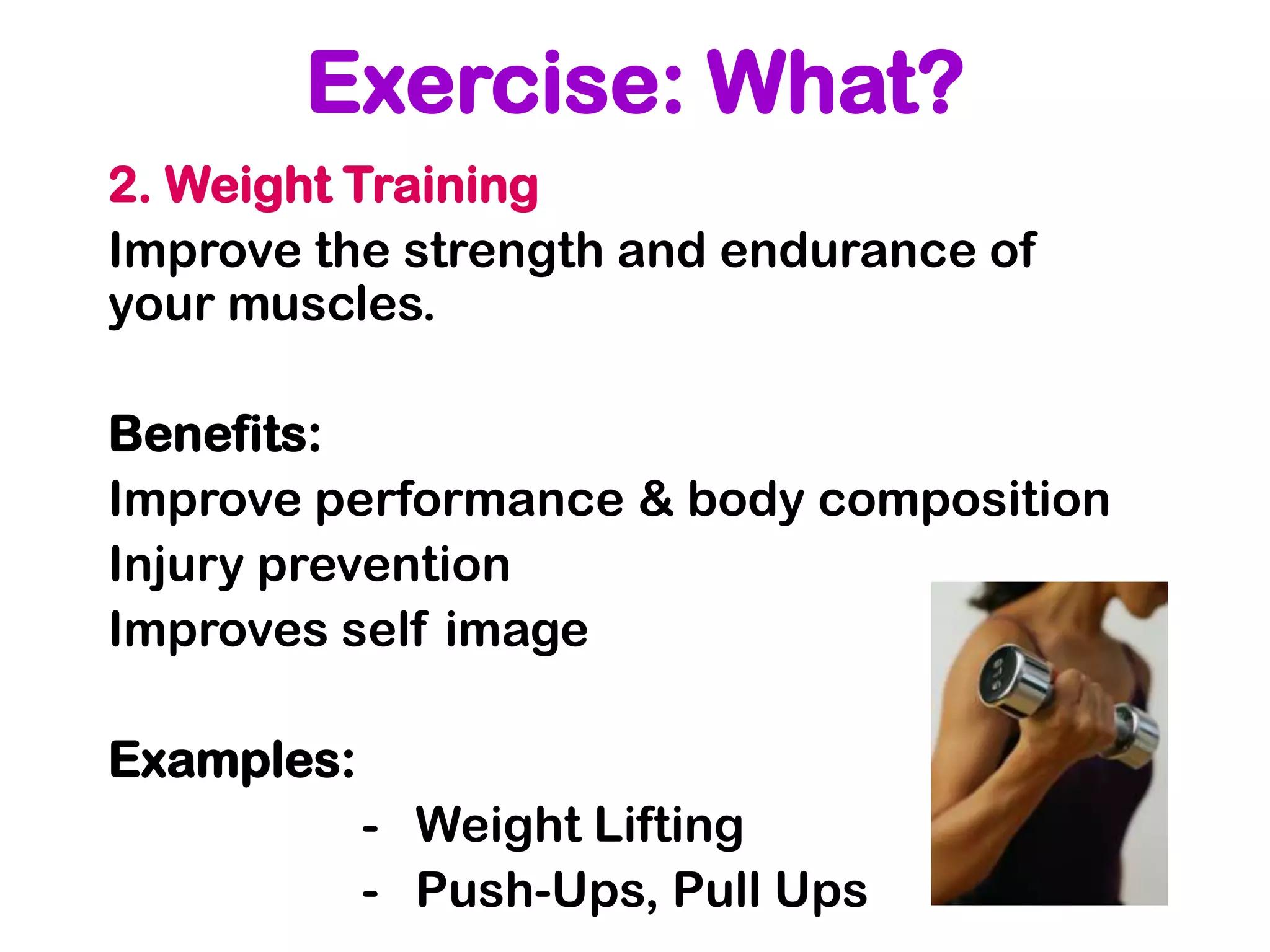
2. Weight Training
Improve the strength and endurance of
your muscles.

Benefits:
Improve performance & body composition
Injury prevention
Improves self image

Examples:
            - Weight Lifting
            - Push-Ups, Pull Ups
Exercise: What?
Exercise: What?
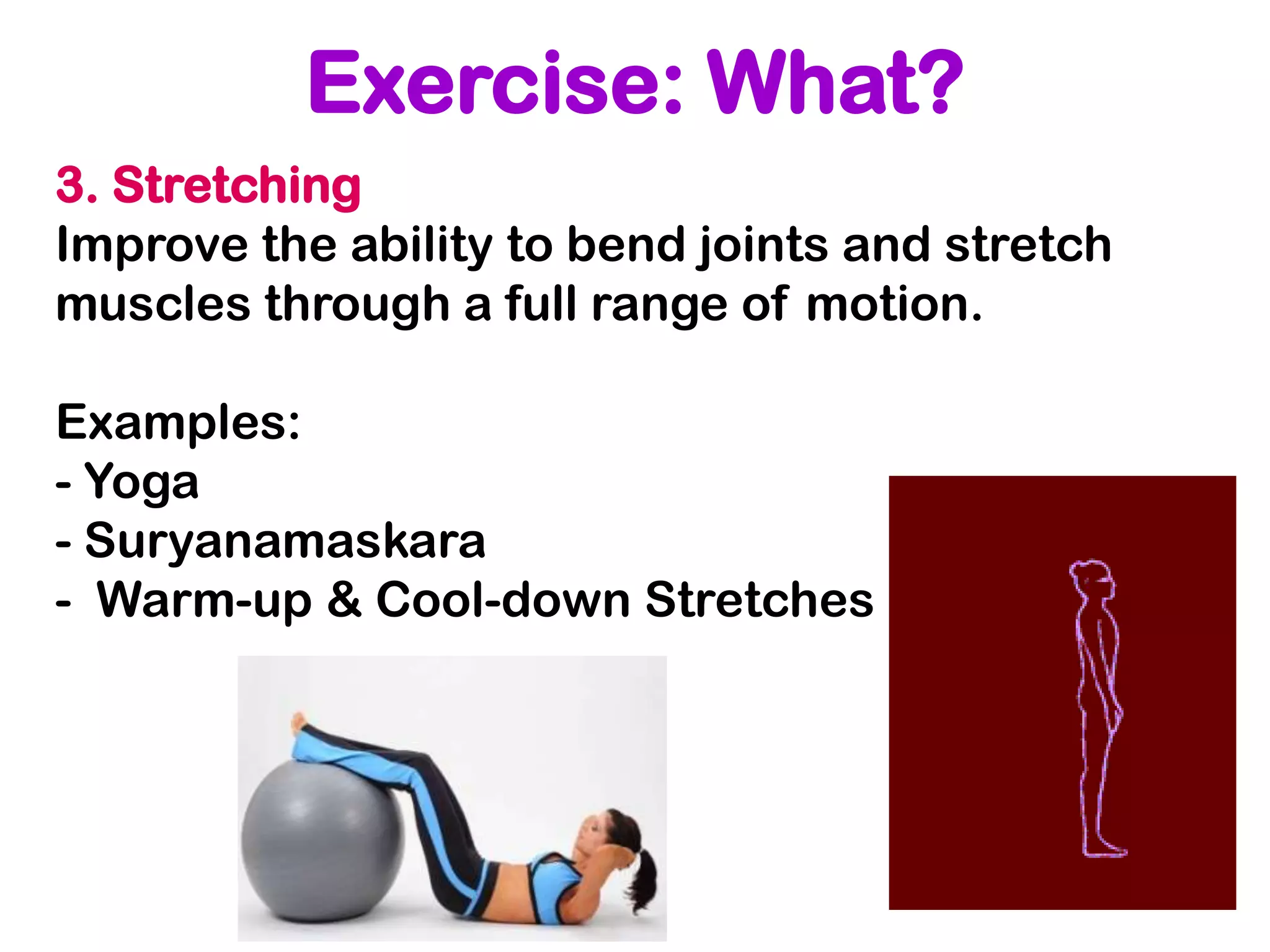
3. Stretching
Improve the ability to bend joints and stretch
muscles through a full range of motion.

Examples:
- Yoga
- Suryanamaskara
- Warm-up & Cool-down Stretches
Stretching Exercises
Exercise: What?
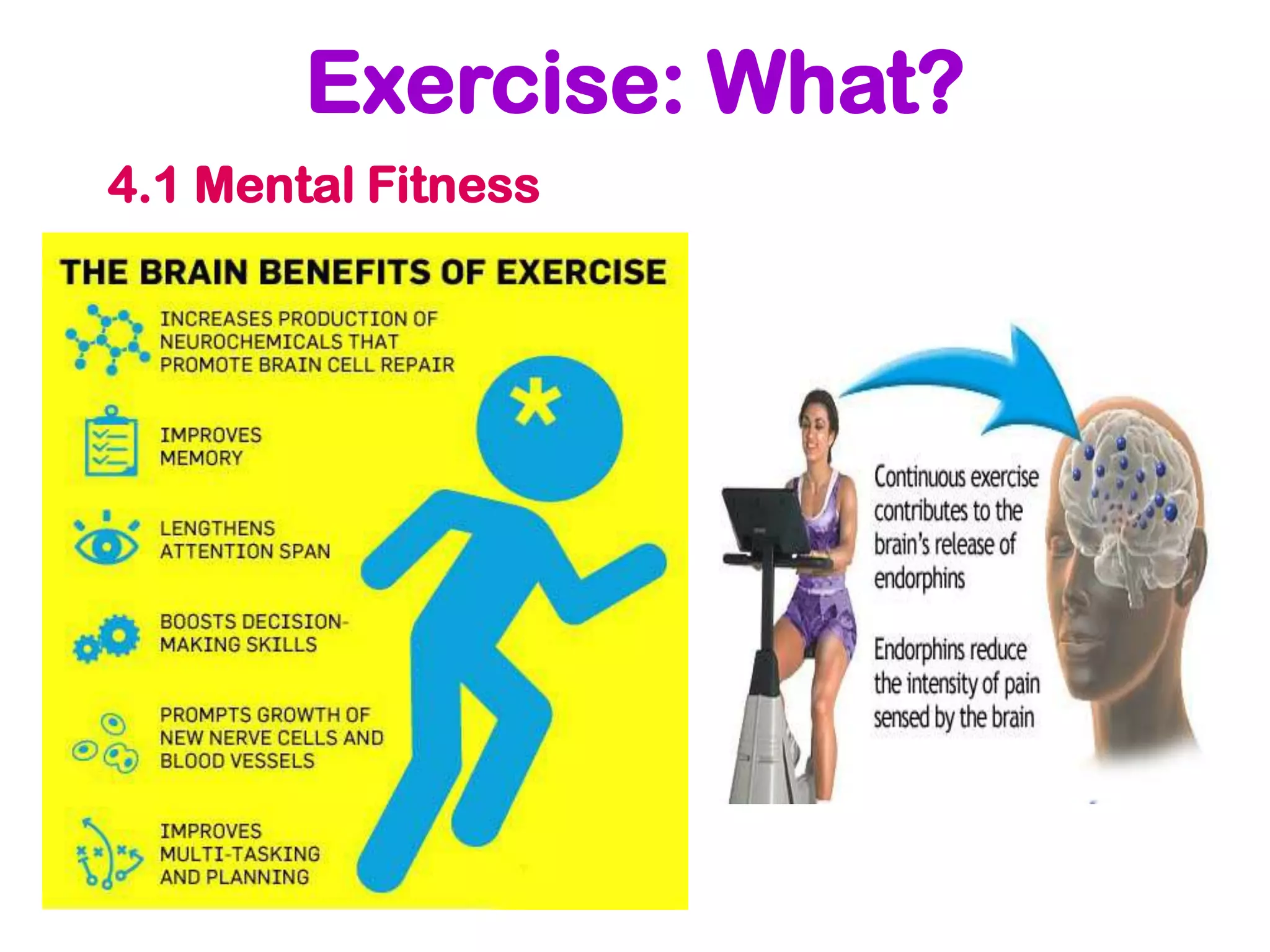
4.1 Mental Fitness
Exercise: What?
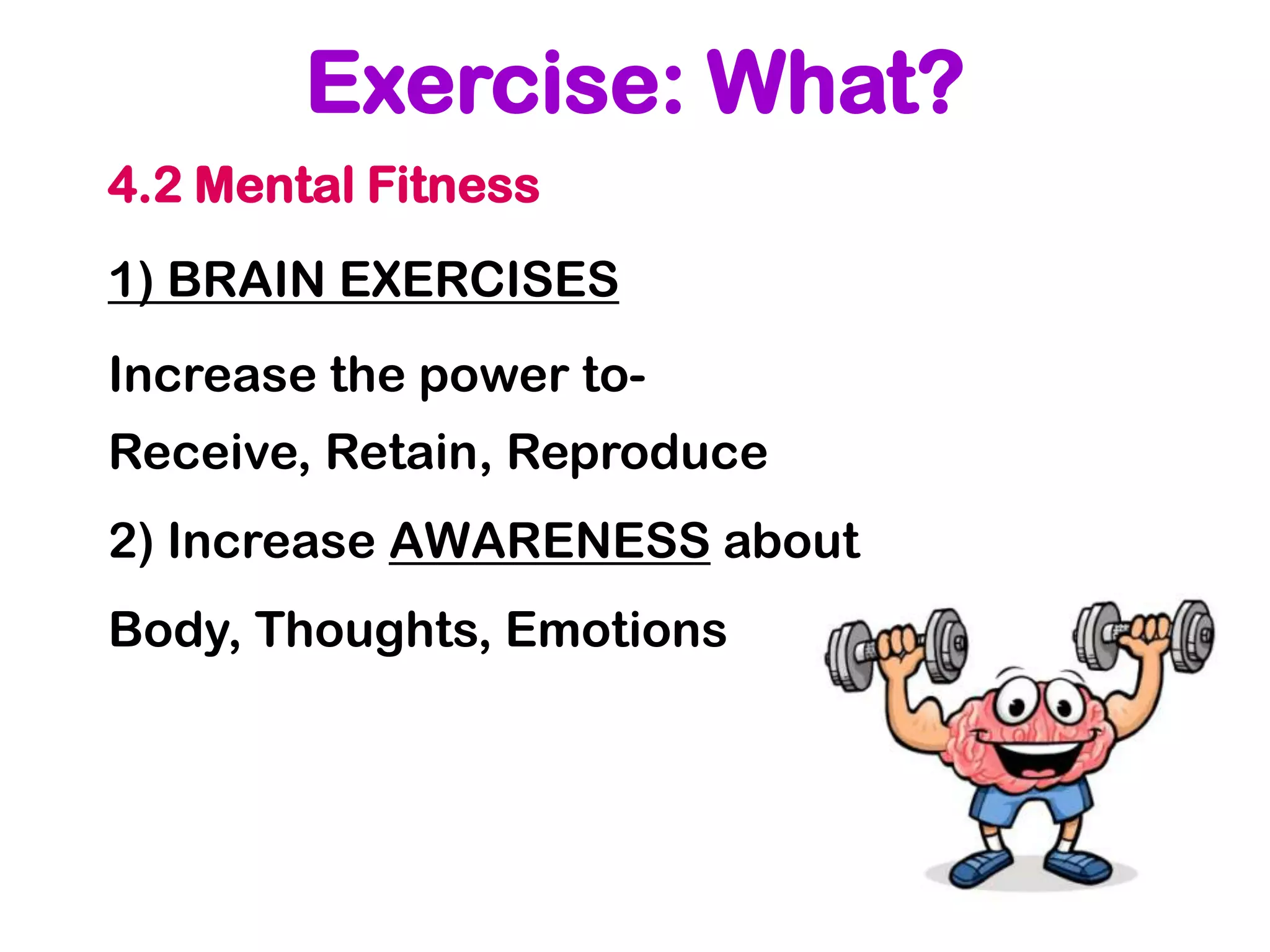
4.2 Mental Fitness
1) BRAIN EXERCISES
Increase the power to-
Receive, Retain, Reproduce
2) Increase AWARENESS about
Body, Thoughts, Emotions
Be Cool!
• Don’t React.

• Improve Relationships.

• Avoid gossips & labeling.

• Be with yourself at least ½ hour daily.
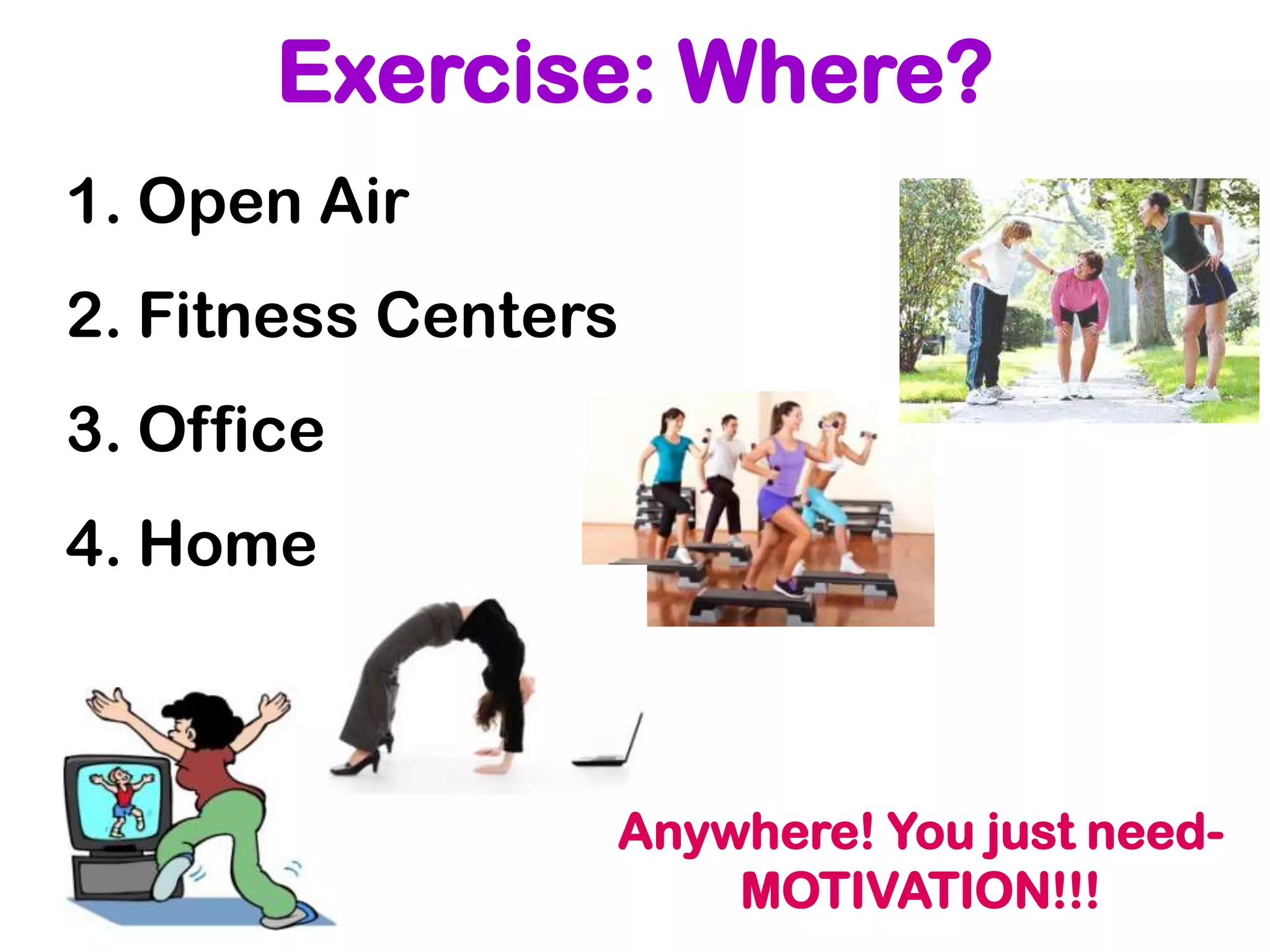
Exercise: Where?
1. Open Air
2. Fitness Centers
3. Office
4. Home


                 Anywhere! You just need-
                     MOTIVATION!!!
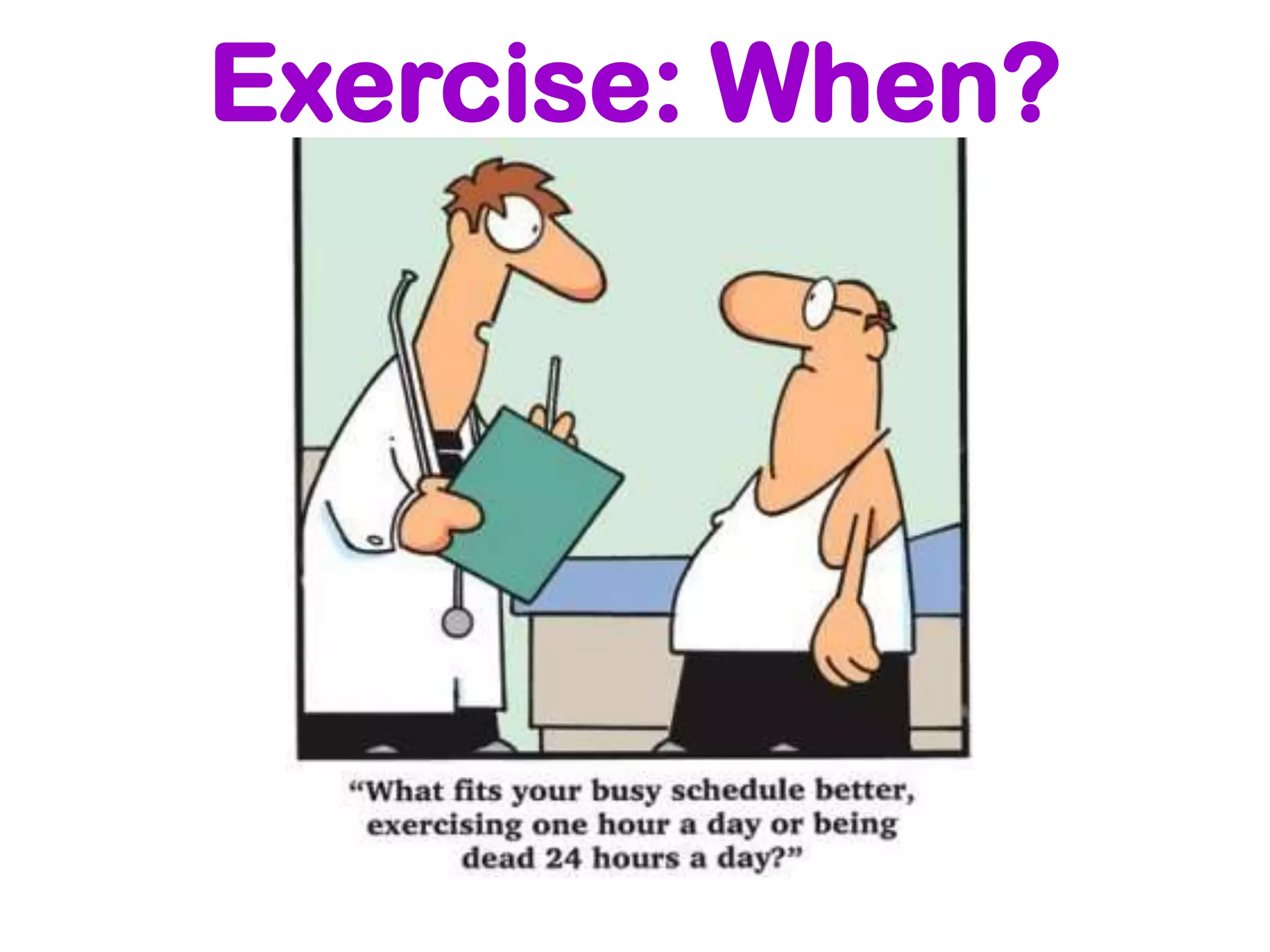
Exercise: When?
Exercise: When?
•Body is capable of exercising at any hour
•Early morning- More Regularity
•Evening- More Flexibility
•The best time to exercise is-
when it works for you.
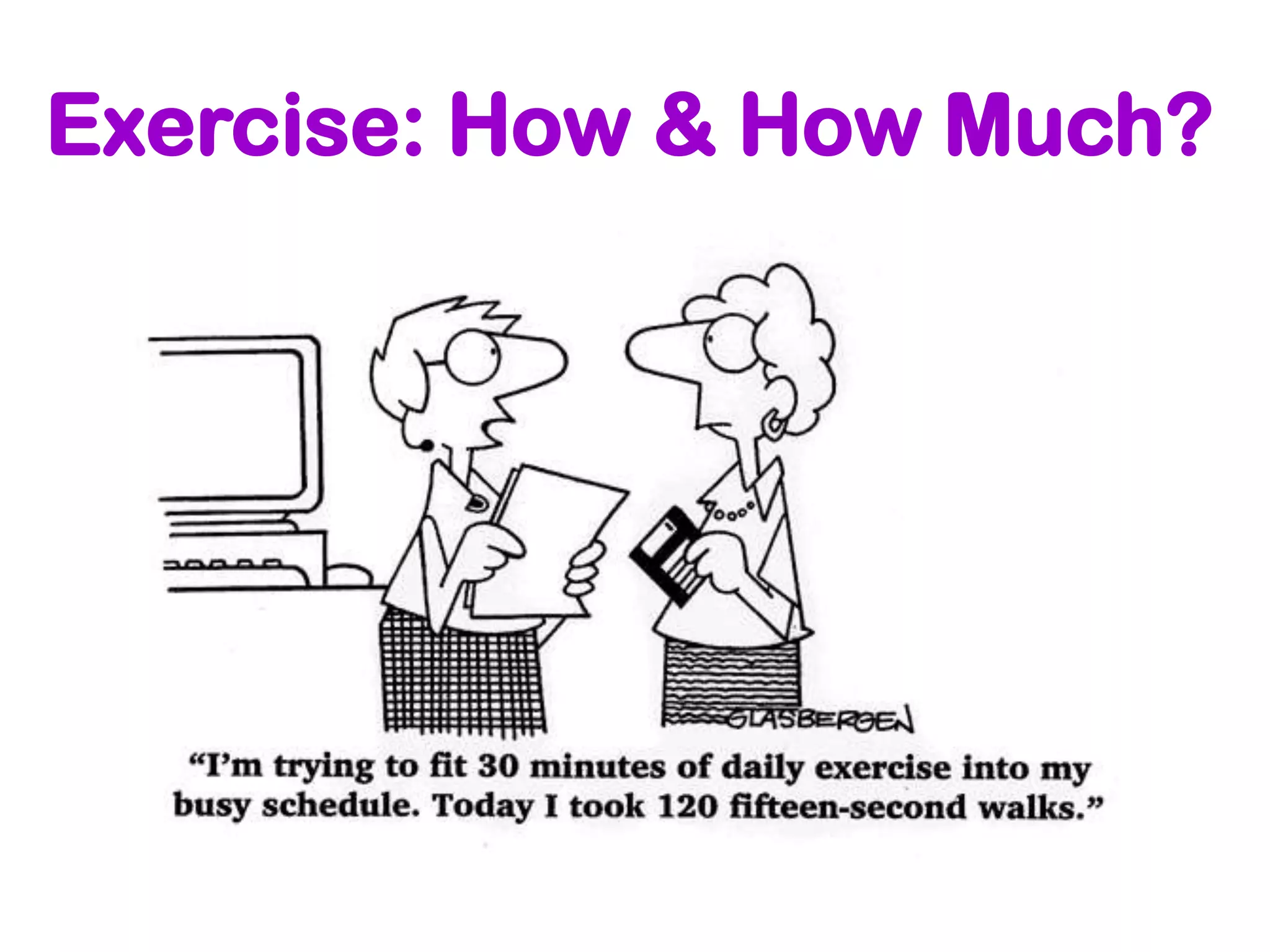
Exercise: How & How Much?
Exercise: How?
• Consult your doctor & trainer

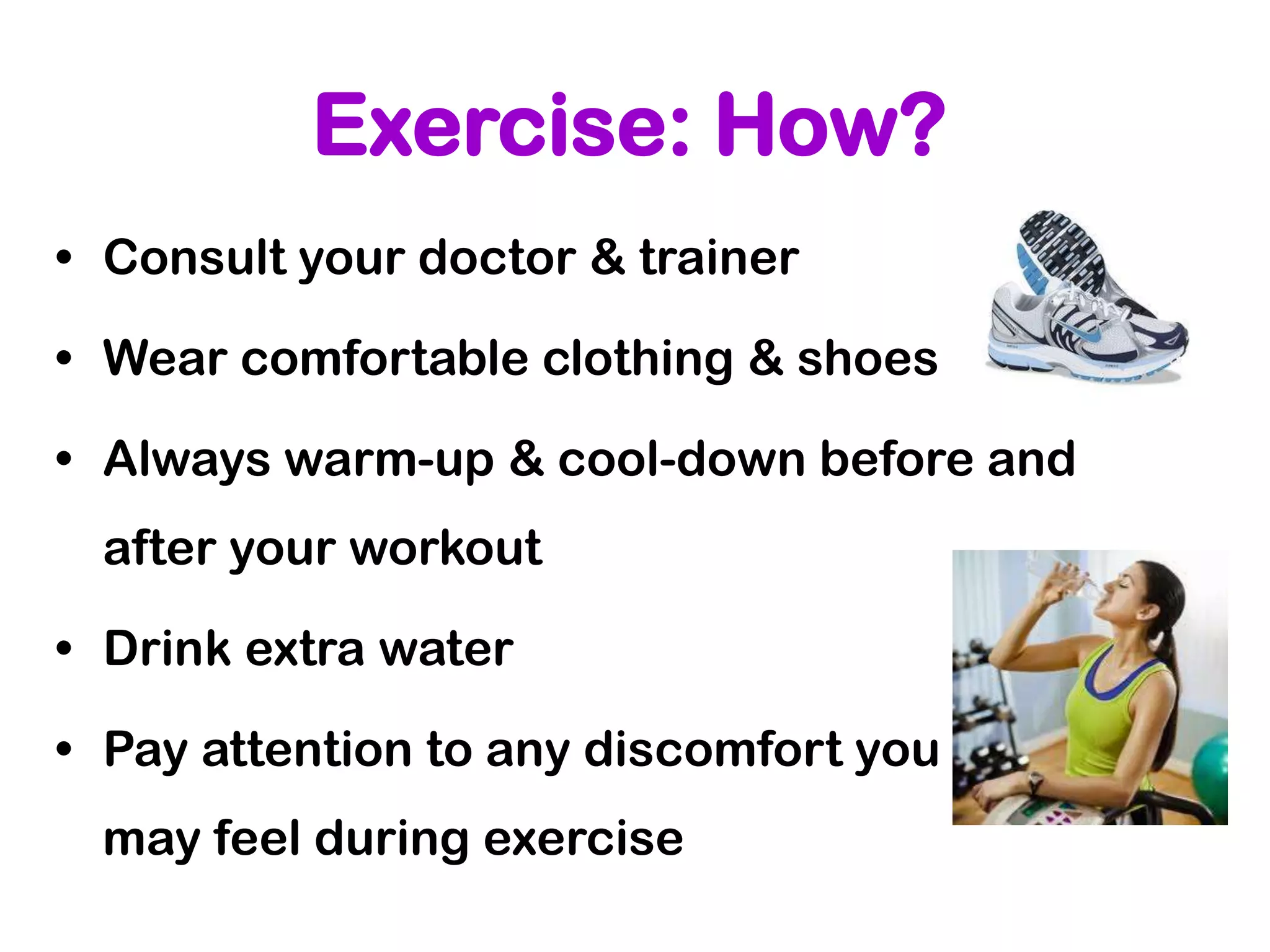
• Wear comfortable clothing & shoes

• Always warm-up & cool-down before and
 after your workout

• Drink extra water

• Pay attention to any discomfort you
 may feel during exercise
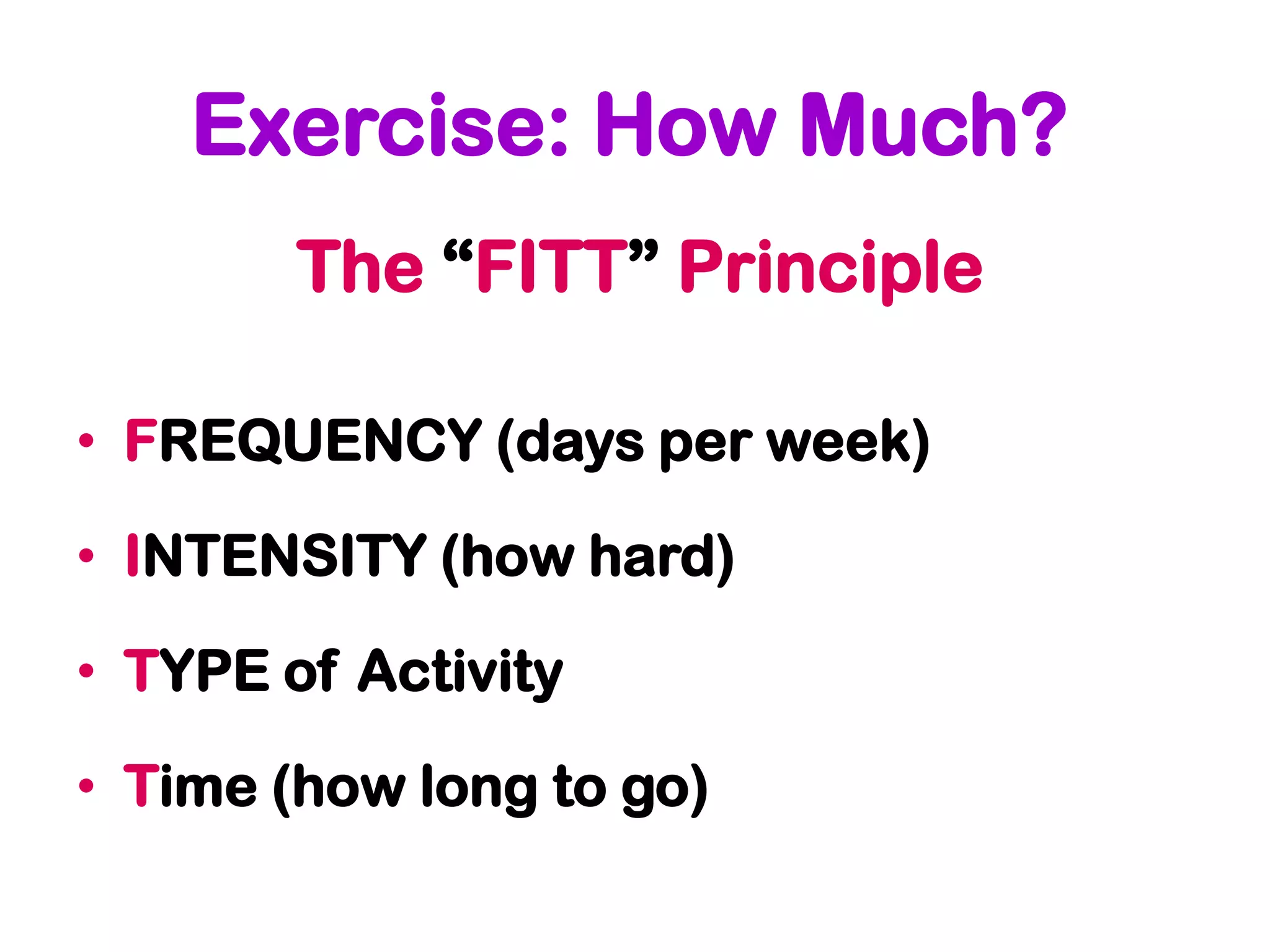
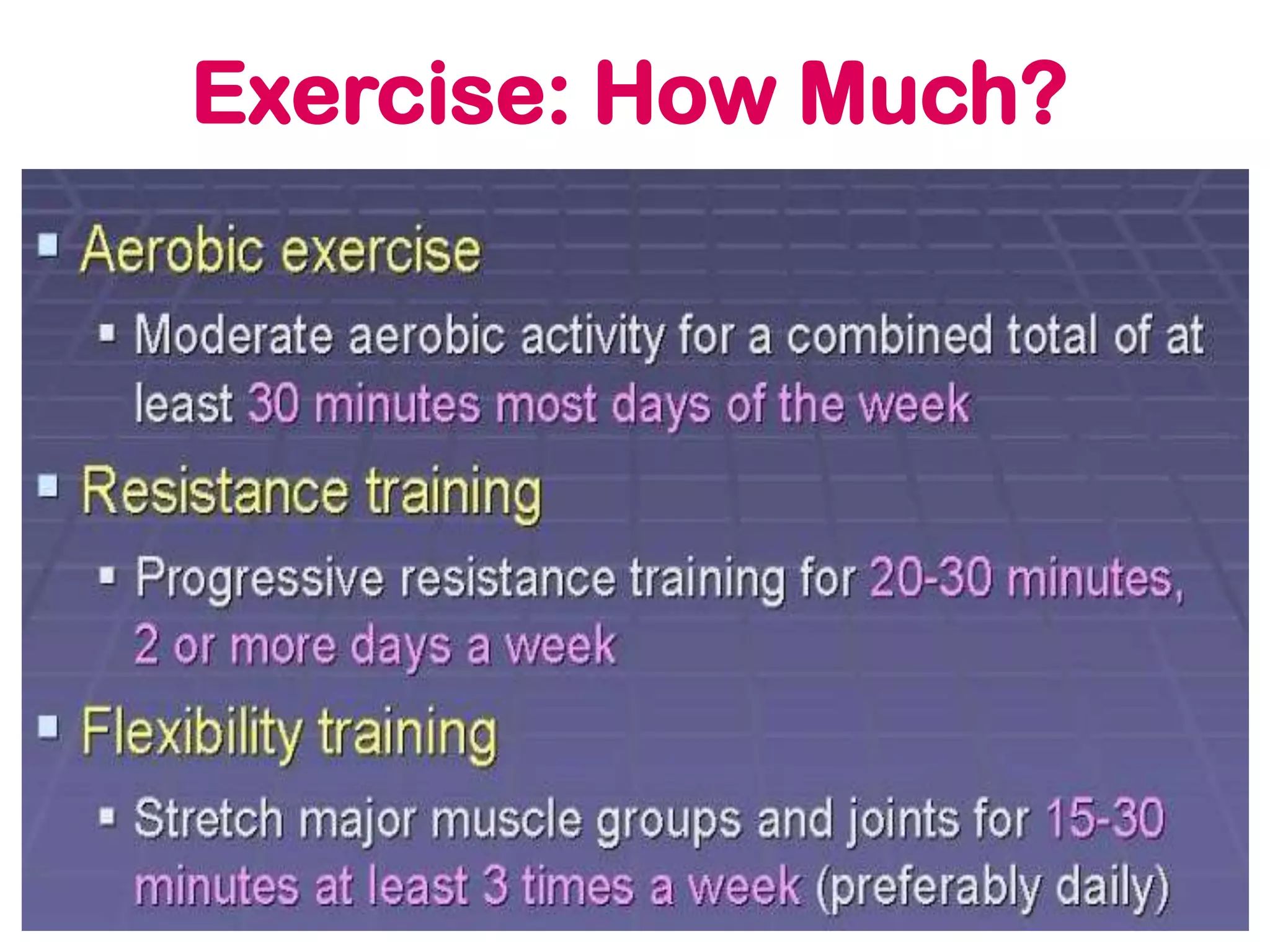
Exercise: How Much?
        The “FITT” Principle

• FREQUENCY (days per week)

• INTENSITY (how hard)

• TYPE of Activity

• Time (how long to go)
Exercise: How Much?
The training must be-
1. Goal oriented

2. Progressive

3. Keep an exercise diary
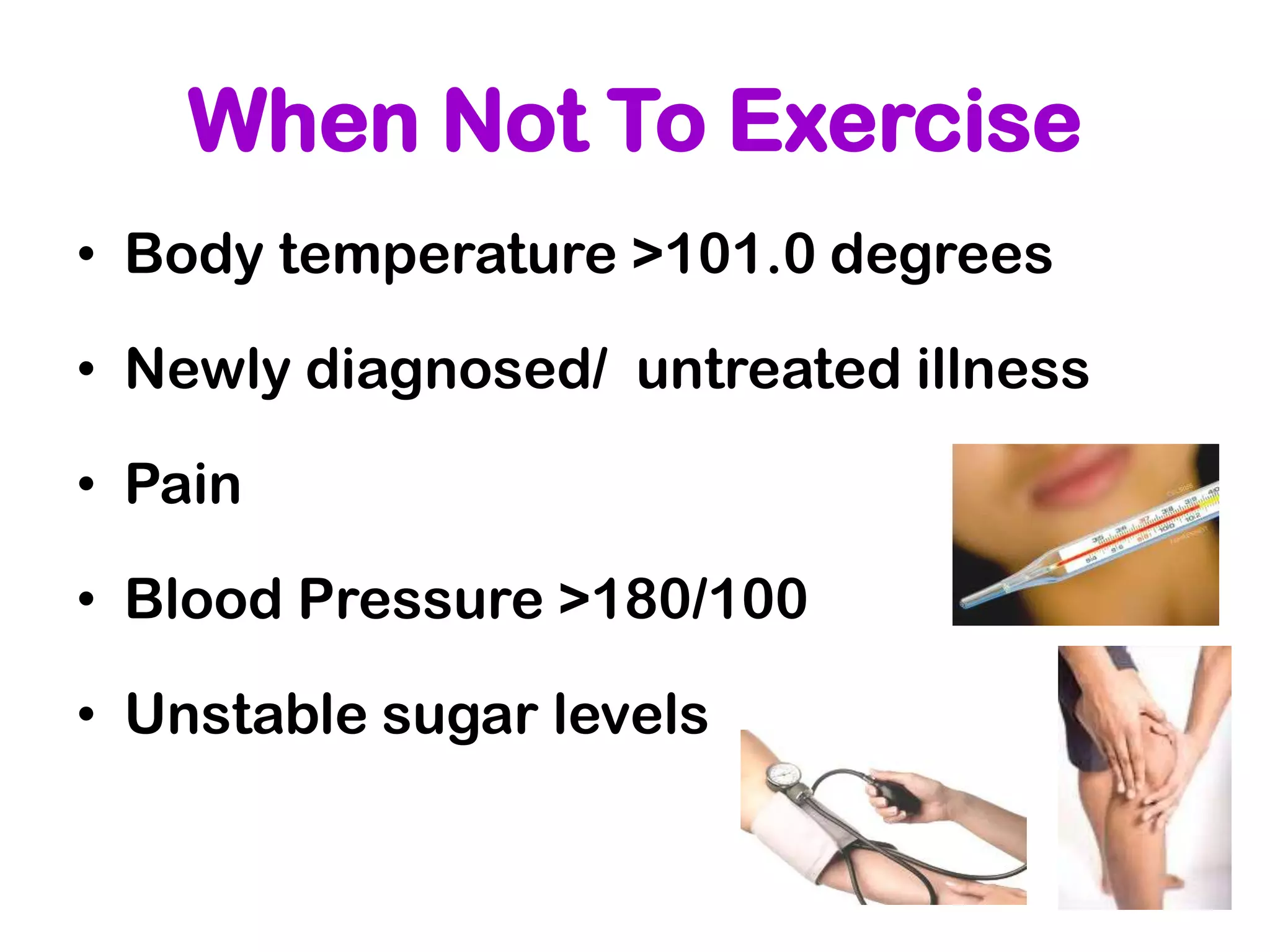
When Not To Exercise
• Body temperature >101.0 degrees

• Newly diagnosed/ untreated illness

• Pain

• Blood Pressure >180/100

• Unstable sugar levels
Exercise Myths
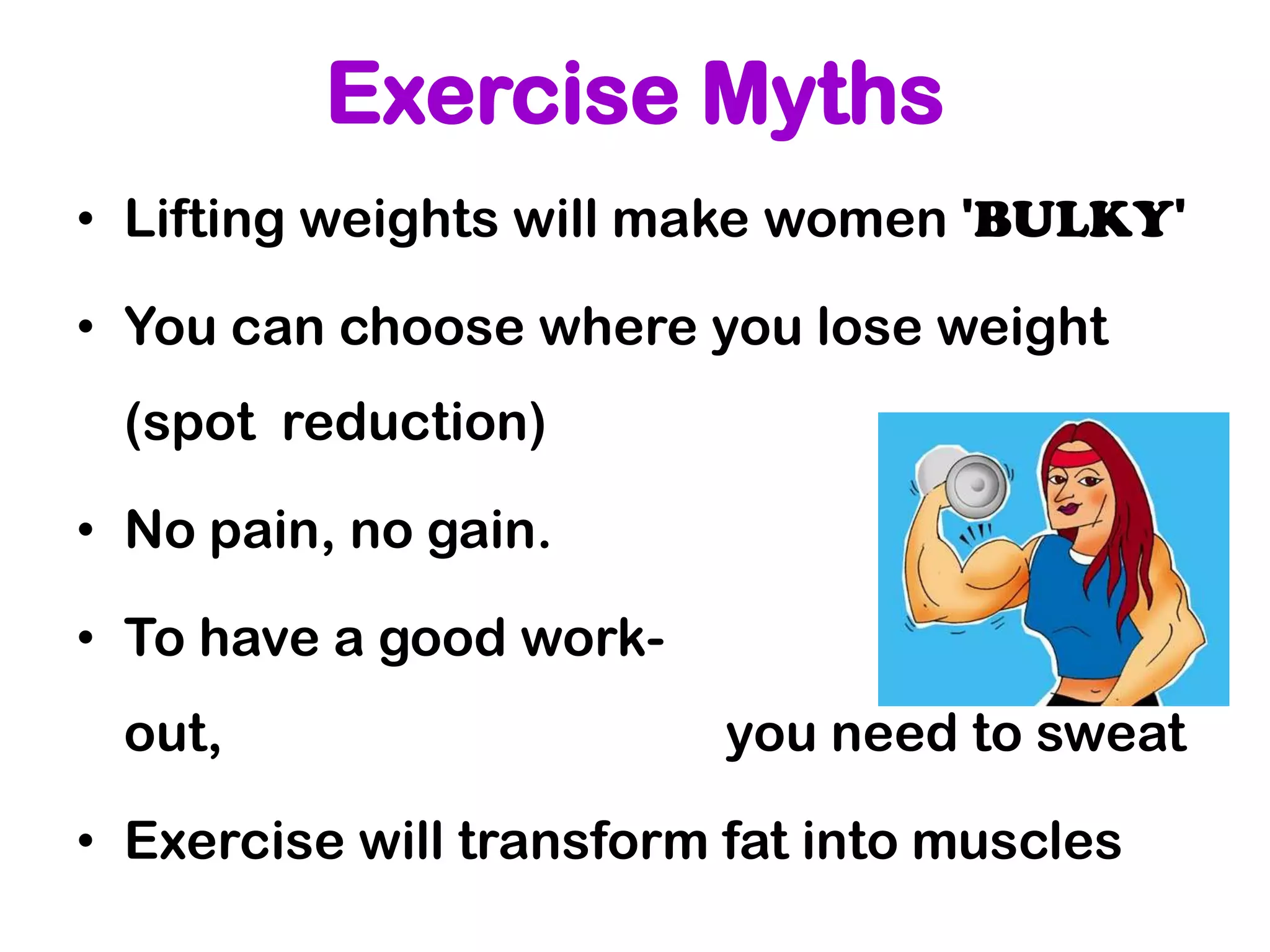
• Lifting weights will make women 'BULKY'

• You can choose where you lose weight
 (spot reduction)

• No pain, no gain.

• To have a good work-
 out,                     you need to sweat

• Exercise will transform fat into muscles
Queries?
Thank You!


Your Feedback is valuable!

Know all about 'EXERCISE'

  • 1.
    EXERCISE Why, Where, What,When & How? Pradnya Pisolkar Fitness Expert Director (BFIT & Tejas Fitness Centres, PCMC) LIMIT Your Risk Initiative
  • 2.
    Current Scenario… • FastLife • Physical & Psychological Stress • Technology induced inactivity • Early occurrence of lifestyle diseases
  • 3.
  • 4.
  • 5.
    Exercise: Why? • Increasesendurance & strength • Increases flexibility • Increases energy levels • Helps weight management • Stress buster • Improves sleep!! • Stabilizes BP, blood sugar • Strengthens heart • Improves blood cholesterol • Improves quality of life
  • 6.
    Exercise: What? 1. CardiovascularExercises Improve the body’s ability to take in and use oxygen to produce energy. Aerobic activities make you breathe hard & they increase your heart rate. Examples: - Jogging - Walking - Swimming - Bicycling
  • 7.
    Exercise: What? 2. WeightTraining Improve the strength and endurance of your muscles. Benefits: Improve performance & body composition Injury prevention Improves self image Examples: - Weight Lifting - Push-Ups, Pull Ups
  • 8.
  • 9.
    Exercise: What? 3. Stretching Improvethe ability to bend joints and stretch muscles through a full range of motion. Examples: - Yoga - Suryanamaskara - Warm-up & Cool-down Stretches
  • 10.
  • 11.
  • 12.
    Exercise: What? 4.2 MentalFitness 1) BRAIN EXERCISES Increase the power to- Receive, Retain, Reproduce 2) Increase AWARENESS about Body, Thoughts, Emotions
  • 13.
    Be Cool! • Don’tReact. • Improve Relationships. • Avoid gossips & labeling. • Be with yourself at least ½ hour daily.
  • 14.
    Exercise: Where? 1. OpenAir 2. Fitness Centers 3. Office 4. Home Anywhere! You just need- MOTIVATION!!!
  • 15.
  • 16.
    Exercise: When? •Body iscapable of exercising at any hour •Early morning- More Regularity •Evening- More Flexibility •The best time to exercise is- when it works for you.
  • 17.
    Exercise: How &How Much?
  • 18.
    Exercise: How? • Consultyour doctor & trainer • Wear comfortable clothing & shoes • Always warm-up & cool-down before and after your workout • Drink extra water • Pay attention to any discomfort you may feel during exercise
  • 19.
    Exercise: How Much? The “FITT” Principle • FREQUENCY (days per week) • INTENSITY (how hard) • TYPE of Activity • Time (how long to go)
  • 20.
  • 21.
    The training mustbe- 1. Goal oriented 2. Progressive 3. Keep an exercise diary
  • 22.
    When Not ToExercise • Body temperature >101.0 degrees • Newly diagnosed/ untreated illness • Pain • Blood Pressure >180/100 • Unstable sugar levels
  • 23.
    Exercise Myths • Liftingweights will make women 'BULKY' • You can choose where you lose weight (spot reduction) • No pain, no gain. • To have a good work- out, you need to sweat • Exercise will transform fat into muscles
  • 24.
  • 26.