Pull System & Kanban Cards

a Tool of Lean Manufacturing
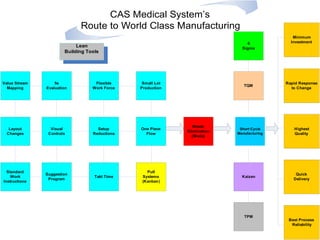
CAS Medical System’s
                             Route to World Class Manufacturing
                                                                                             Minimum
                                                                               6            Investment
                            Lean                                            Sigma
                       Building Tools


Value Stream       5s              Flexible     Small Lot                                 Rapid Response
                                                                             TQM
  Mapping      Evaluation         Work Force   Production                                   to Change


                                                               Waste
   Layout        Visual             Setup      One Piece                   Short Cycle       Highest
                                                            Elimination
  Changes       Controls          Reductions     Flow                     Manufacturing      Quality
                                                              (Muda)


  Standard                                        Pull
               Suggestion                                                                     Quick
    Work                           Takt Time    Systems                     Kaizen
                Program                                                                      Delivery
Instructions                                    (Kanban)


                                                                             TPM
                                                                                           Best Process
                                                                                            Reliability
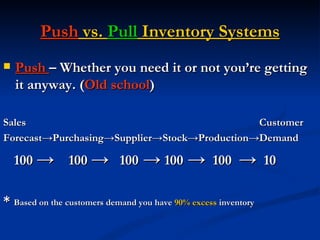
Push vs. Pull Inventory Systems
   Push – Whether you need it or not you’re getting
    it anyway. (Old school)

Sales                                         Customer
Forecast→Purchasing→Supplier→Stock→Production→Demand

    100 → 100 → 100 → 100 → 100                          → 10

* Based on the customers demand you have 90% excess inventory
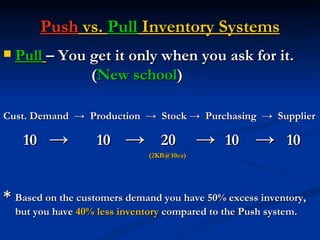
Push vs. Pull Inventory Systems
   Pull – You get it only when you ask for it.
               (New school)

Cust. Demand → Production → Stock → Purchasing → Supplier

     10    →         10    → 20 → 10 → 10
                                (2KB@10ea)


* Based on the customers demand you have 50% excess inventory,
    but you have 40% less inventory compared to the Push system.
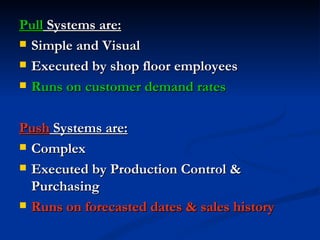
Pull Systems are:
 Simple and Visual

 Executed by shop floor employees

 Runs on customer demand rates


Push Systems are:
 Complex

 Executed by Production Control &
  Purchasing
 Runs on forecasted dates & sales history
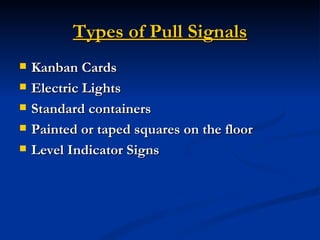
Types of Pull Signals
   Kanban Cards
   Electric Lights
   Standard containers
   Painted or taped squares on the floor
   Level Indicator Signs
Kanban Card
   Is considered to be the best Pull Signal
    system you can use to control your inventory
    dollars, prevent part shortages and improve
    your cash flow.
So what is Kanban?
   Kanban is a Japanese word that means “card”

   It was originated by Japan’s Toyota Co.

   It is a tool of lean manufacturing that’s used to apply JIT
    (Just In time) inventory.

   It is a type of reorder point system.

   It is not a zero inventory system

   It is a manual technique that is in the hands & controlled
    by the production workers.
Keys to a successful Kanban system

   It’s not the cards themselves, but the
    discipline performed by the employees

   Material is not moved or produced without
    Kanban cards

   The emphasis is not to balance capacity, but
    to balance flow
Examples of different types of
      Kanban Cards
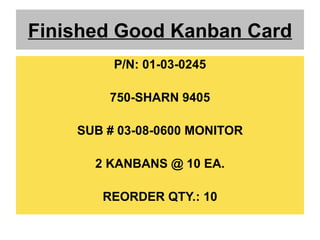
Finished Good Kanban Card
         P/N: 01-03-0245

        750-SHARN 9405

    SUB # 03-08-0600 MONITOR

      2 KANBANS @ 10 EA.

       REORDER QTY.: 10
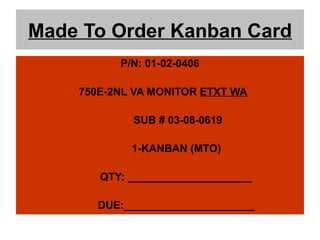
Made To Order Kanban Card
          P/N: 01-02-0406

    750E-2NL VA MONITOR ETXT WA

            SUB # 03-08-0619

            1-KANBAN (MTO)

       QTY: _____________________

       DUE:______________________
Today’s Purchasing Card
           PURCHASING INVENTORY KANBAN CARD

P/N:   28-02-0122                                        Buyer Code: 01

                     Description: Foam Pad 2 x ¼”

                              Used On: 511’s

                            # of KB Cards:     1
                            Reorder Point:    25
                             Reorder Qty:          100

       Date Ordered:                                       Vendor: EAR Specialty

         Lead Time:     42 days                            Vendor#:

           Delivery Date:                                   Notes:

                    **Issue to Work Center:
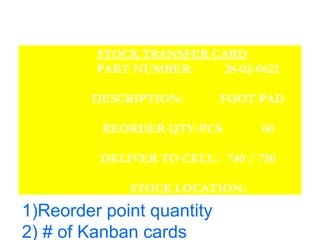
What 2 items are missing on this Internal work cell
                  Kanban card?
              STOCK TRANSFER CARD
              PART NUMBER:    28-02-0422

             DESCRIPTION:         FOOT PAD

              REORDER QTY-PCS:           60

              DELIVER TO CELL: 740 / 750

                   STOCK LOCATION:
 1)Reorder point quantity
 2) # of Kanban cards
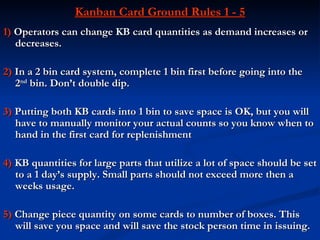
Kanban Card Ground Rules 1 - 5
1) Operators can change KB card quantities as demand increases or
   decreases.

2) In a 2 bin card system, complete 1 bin first before going into the
   2nd bin. Don’t double dip.

3) Putting both KB cards into 1 bin to save space is OK, but you will
   have to manually monitor your actual counts so you know when to
   hand in the first card for replenishment

4) KB quantities for large parts that utilize a lot of space should be set
   to a 1 day’s supply. Small parts should not exceed more then a
   weeks usage.

5) Change piece quantity on some cards to number of boxes. This
   will save you space and will save the stock person time in issuing.
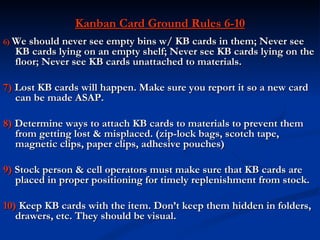
Kanban Card Ground Rules 6-10
6) We should never see empty bins w/ KB cards in them; Never see
  KB cards lying on an empty shelf; Never see KB cards lying on the
  floor; Never see KB cards unattached to materials.

7) Lost KB cards will happen. Make sure you report it so a new card
   can be made ASAP.

8) Determine ways to attach KB cards to materials to prevent them
   from getting lost & misplaced. (zip-lock bags, scotch tape,
   magnetic clips, paper clips, adhesive pouches)

9) Stock person & cell operators must make sure that KB cards are
   placed in proper positioning for timely replenishment from stock.

10) Keep KB cards with the item. Don’t keep them hidden in folders,
   drawers, etc. They should be visual.
Conclude this presentation with:

The Family Milk Story

Kanban Cards & Pull Systems

  • 1.
    Pull System &Kanban Cards a Tool of Lean Manufacturing
  • 2.
    CAS Medical System’s Route to World Class Manufacturing Minimum 6 Investment Lean Sigma Building Tools Value Stream 5s Flexible Small Lot Rapid Response TQM Mapping Evaluation Work Force Production to Change Waste Layout Visual Setup One Piece Short Cycle Highest Elimination Changes Controls Reductions Flow Manufacturing Quality (Muda) Standard Pull Suggestion Quick Work Takt Time Systems Kaizen Program Delivery Instructions (Kanban) TPM Best Process Reliability
  • 3.
    Push vs. PullInventory Systems  Push – Whether you need it or not you’re getting it anyway. (Old school) Sales Customer Forecast→Purchasing→Supplier→Stock→Production→Demand 100 → 100 → 100 → 100 → 100 → 10 * Based on the customers demand you have 90% excess inventory
  • 4.
    Push vs. PullInventory Systems  Pull – You get it only when you ask for it. (New school) Cust. Demand → Production → Stock → Purchasing → Supplier 10 → 10 → 20 → 10 → 10 (2KB@10ea) * Based on the customers demand you have 50% excess inventory, but you have 40% less inventory compared to the Push system.
  • 5.
    Pull Systems are: Simple and Visual  Executed by shop floor employees  Runs on customer demand rates Push Systems are:  Complex  Executed by Production Control & Purchasing  Runs on forecasted dates & sales history
  • 6.
    Types of PullSignals  Kanban Cards  Electric Lights  Standard containers  Painted or taped squares on the floor  Level Indicator Signs
  • 7.
    Kanban Card  Is considered to be the best Pull Signal system you can use to control your inventory dollars, prevent part shortages and improve your cash flow.
  • 8.
    So what isKanban?  Kanban is a Japanese word that means “card”  It was originated by Japan’s Toyota Co.  It is a tool of lean manufacturing that’s used to apply JIT (Just In time) inventory.  It is a type of reorder point system.  It is not a zero inventory system  It is a manual technique that is in the hands & controlled by the production workers.
  • 9.
    Keys to asuccessful Kanban system  It’s not the cards themselves, but the discipline performed by the employees  Material is not moved or produced without Kanban cards  The emphasis is not to balance capacity, but to balance flow
  • 10.
    Examples of differenttypes of Kanban Cards
  • 11.
    Finished Good KanbanCard P/N: 01-03-0245 750-SHARN 9405 SUB # 03-08-0600 MONITOR 2 KANBANS @ 10 EA. REORDER QTY.: 10
  • 12.
    Made To OrderKanban Card P/N: 01-02-0406 750E-2NL VA MONITOR ETXT WA SUB # 03-08-0619 1-KANBAN (MTO) QTY: _____________________ DUE:______________________
  • 13.
    Today’s Purchasing Card PURCHASING INVENTORY KANBAN CARD P/N: 28-02-0122 Buyer Code: 01 Description: Foam Pad 2 x ¼” Used On: 511’s # of KB Cards: 1 Reorder Point: 25 Reorder Qty: 100 Date Ordered: Vendor: EAR Specialty Lead Time: 42 days Vendor#: Delivery Date: Notes: **Issue to Work Center:
  • 14.
    What 2 itemsare missing on this Internal work cell Kanban card? STOCK TRANSFER CARD PART NUMBER: 28-02-0422 DESCRIPTION: FOOT PAD REORDER QTY-PCS: 60 DELIVER TO CELL: 740 / 750 STOCK LOCATION: 1)Reorder point quantity 2) # of Kanban cards
  • 15.
    Kanban Card GroundRules 1 - 5 1) Operators can change KB card quantities as demand increases or decreases. 2) In a 2 bin card system, complete 1 bin first before going into the 2nd bin. Don’t double dip. 3) Putting both KB cards into 1 bin to save space is OK, but you will have to manually monitor your actual counts so you know when to hand in the first card for replenishment 4) KB quantities for large parts that utilize a lot of space should be set to a 1 day’s supply. Small parts should not exceed more then a weeks usage. 5) Change piece quantity on some cards to number of boxes. This will save you space and will save the stock person time in issuing.
  • 16.
    Kanban Card GroundRules 6-10 6) We should never see empty bins w/ KB cards in them; Never see KB cards lying on an empty shelf; Never see KB cards lying on the floor; Never see KB cards unattached to materials. 7) Lost KB cards will happen. Make sure you report it so a new card can be made ASAP. 8) Determine ways to attach KB cards to materials to prevent them from getting lost & misplaced. (zip-lock bags, scotch tape, magnetic clips, paper clips, adhesive pouches) 9) Stock person & cell operators must make sure that KB cards are placed in proper positioning for timely replenishment from stock. 10) Keep KB cards with the item. Don’t keep them hidden in folders, drawers, etc. They should be visual.
  • 17.
    Conclude this presentationwith: The Family Milk Story