KALMAN FILTERING &
ITS APPLICATIONS
PREPARED BY:
Y.MADHAVASAI
17A51A04B8
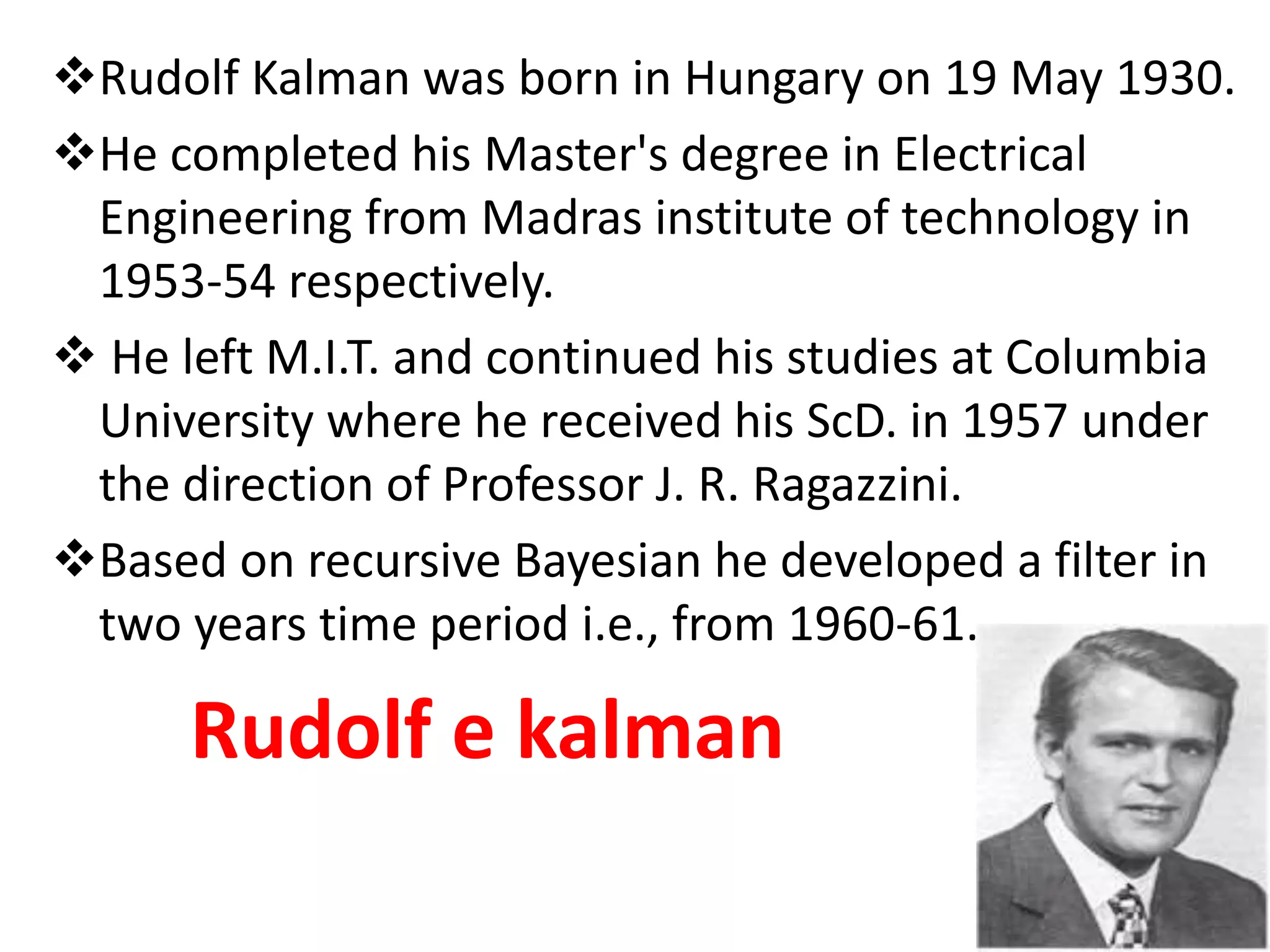
Rudolf Kalman was born in Hungary on 19 May 1930.
He completed his Master's degree in Electrical
Engineering from Madras institute of technology in
1953-54 respectively.
 He left M.I.T. and continued his studies at Columbia
University where he received his ScD. in 1957 under
the direction of Professor J. R. Ragazzini.
Based on recursive Bayesian he developed a filter in
two years time period i.e., from 1960-61.
Rudolf e kalman
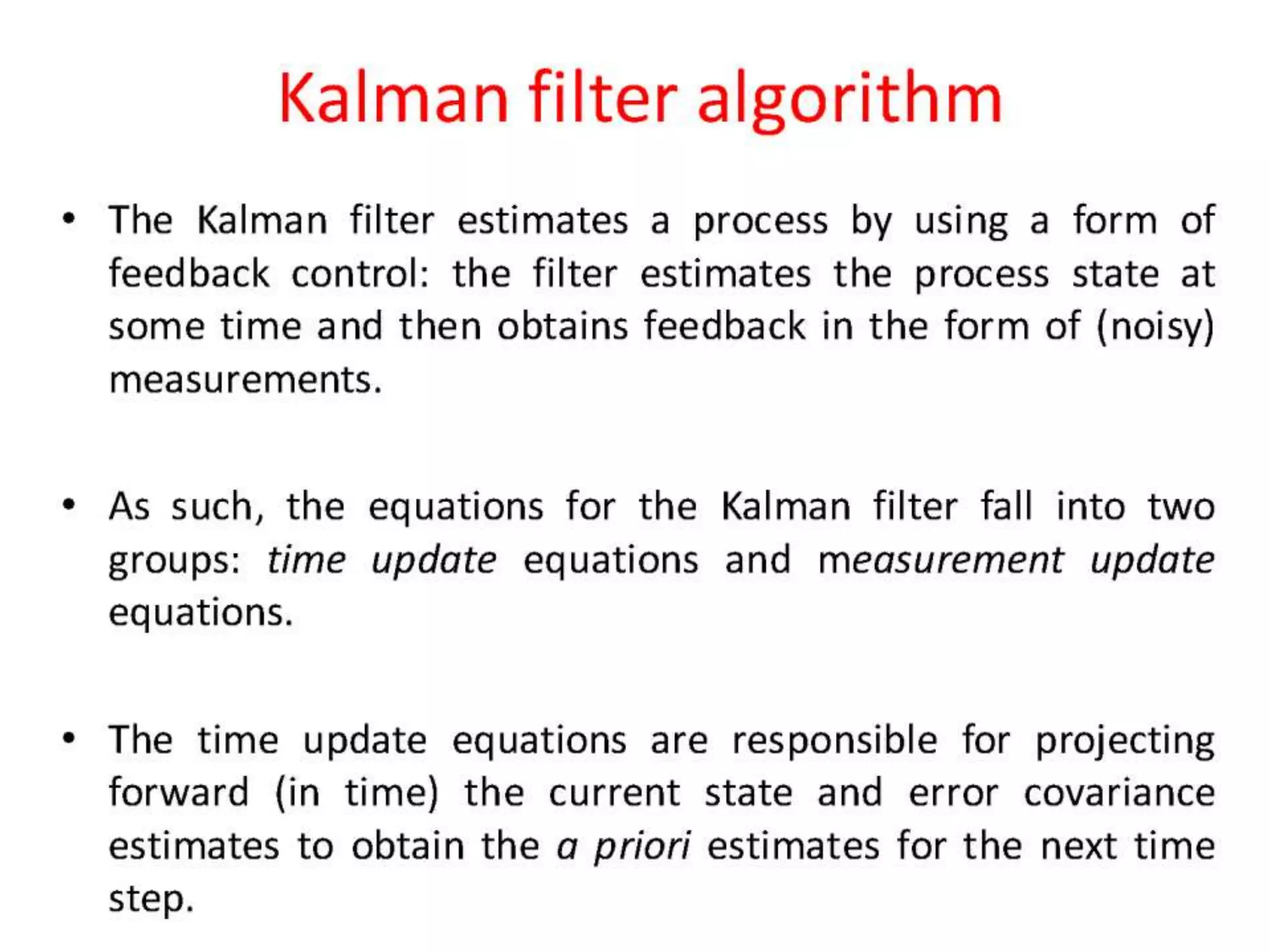
 In statistics and control theory, Kalman filtering,
also known as linear quadratic estimation (LQE),
 It is an algorithm that uses a series of
measurements observed over time,
containing statistical noise and other inaccuracies
 It produces estimates of unknown variables that
tend to be more accurate than those based on a
single measurement alone, by estimating a joint
probability distribution over the variables for each
timeframe.
 The filter is named after Rudolf E. Kálmán , one of
the primary developers of its theory.
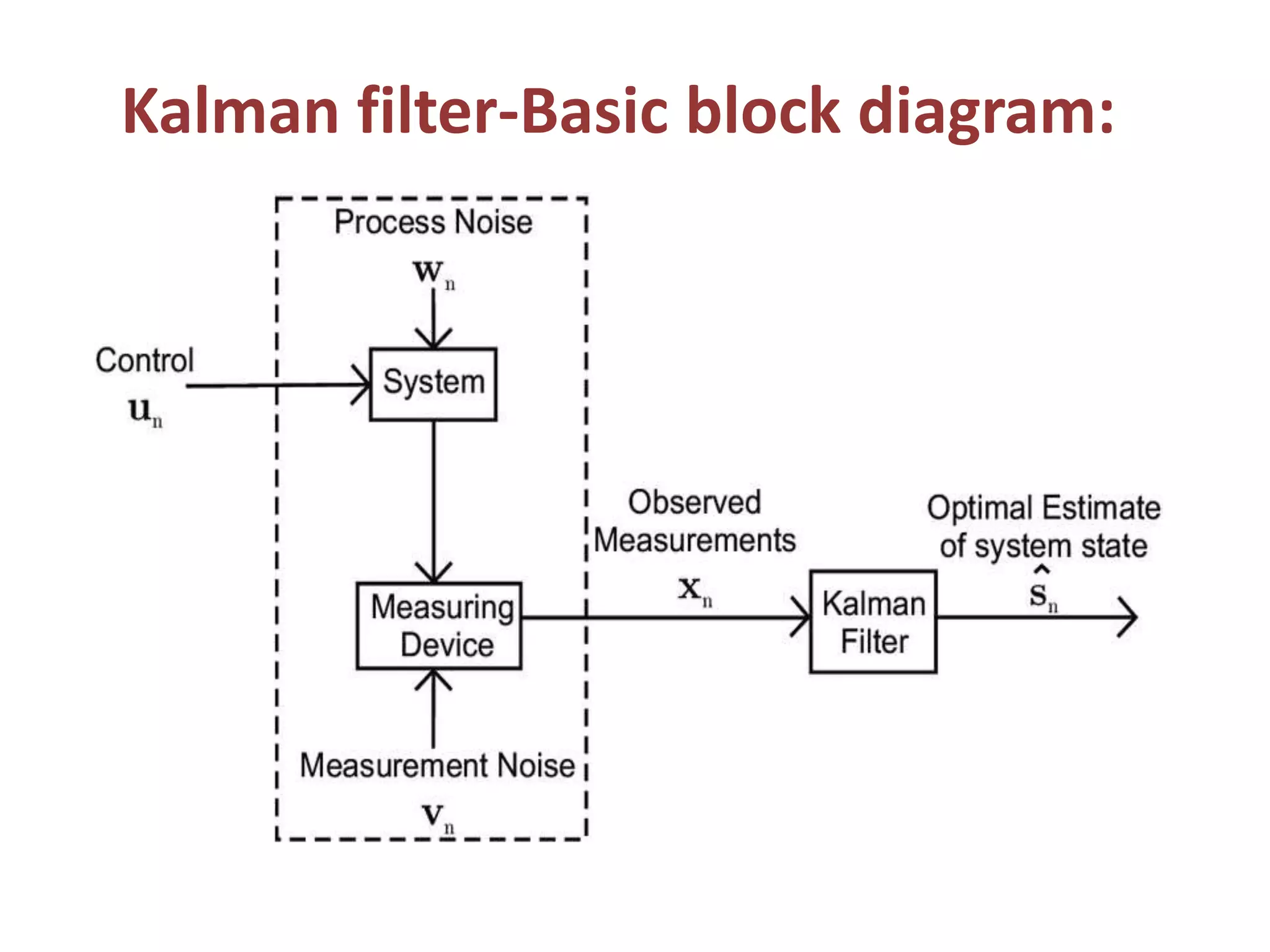
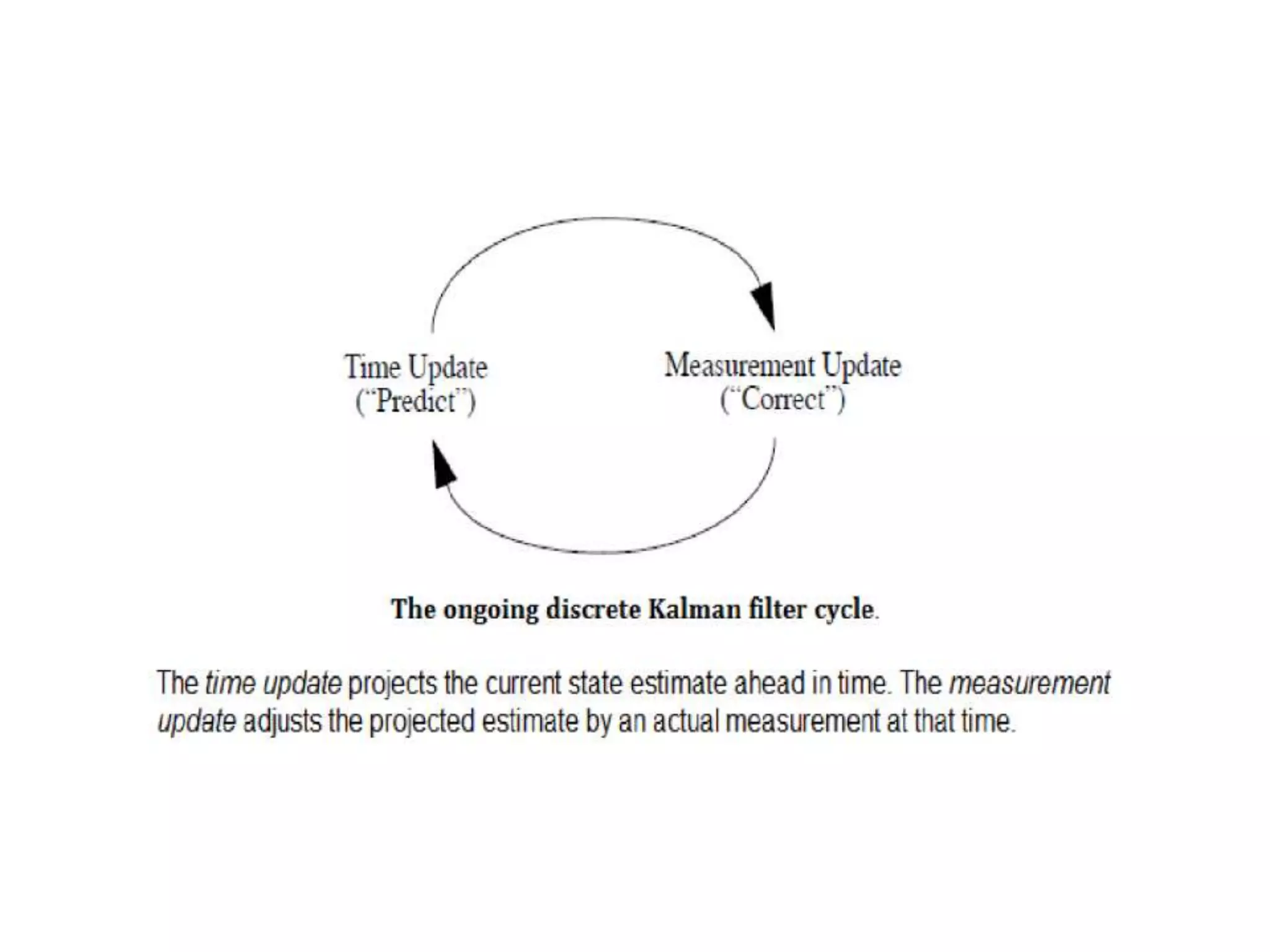
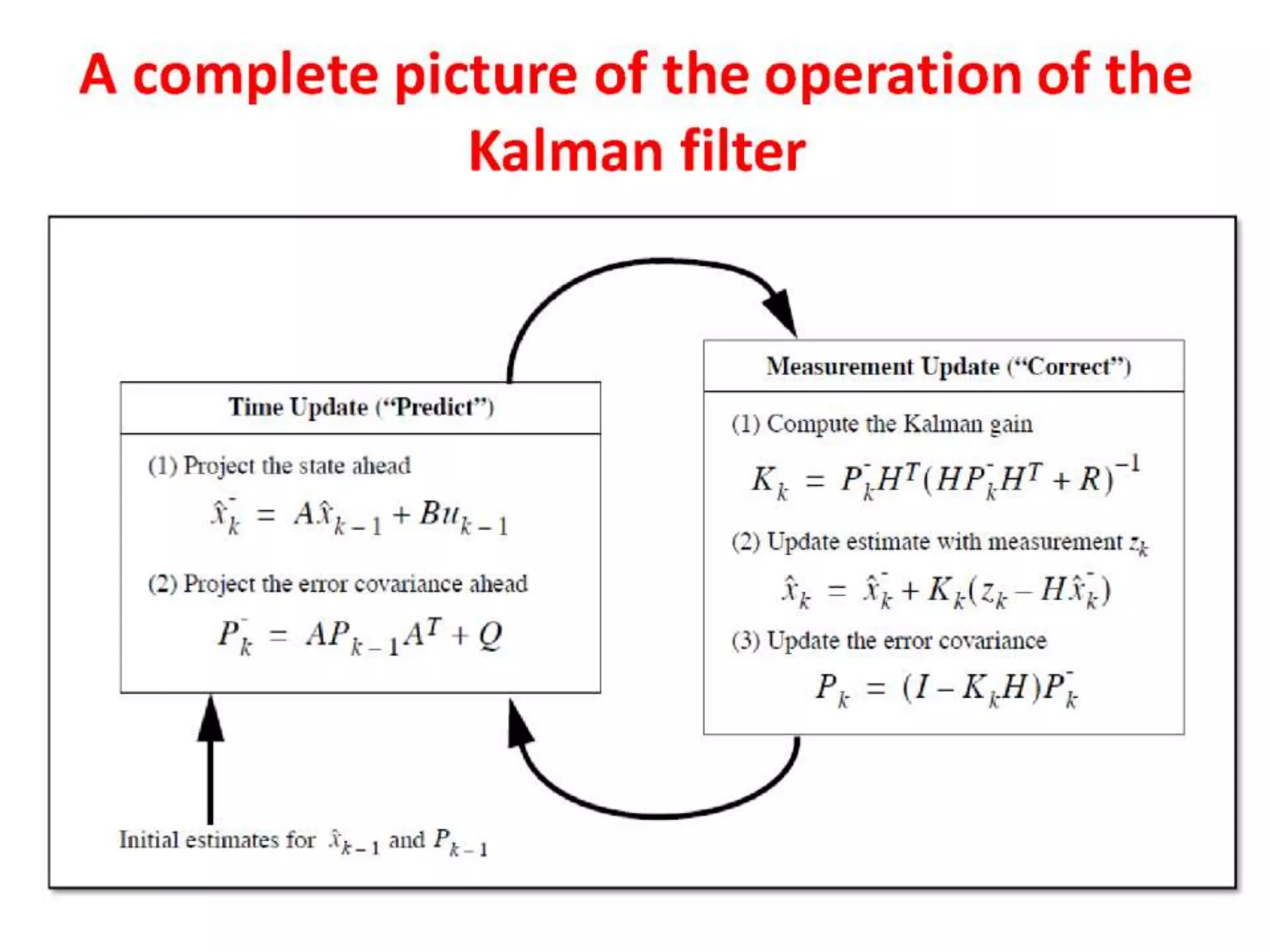
Kalman filter-Basic block diagram:
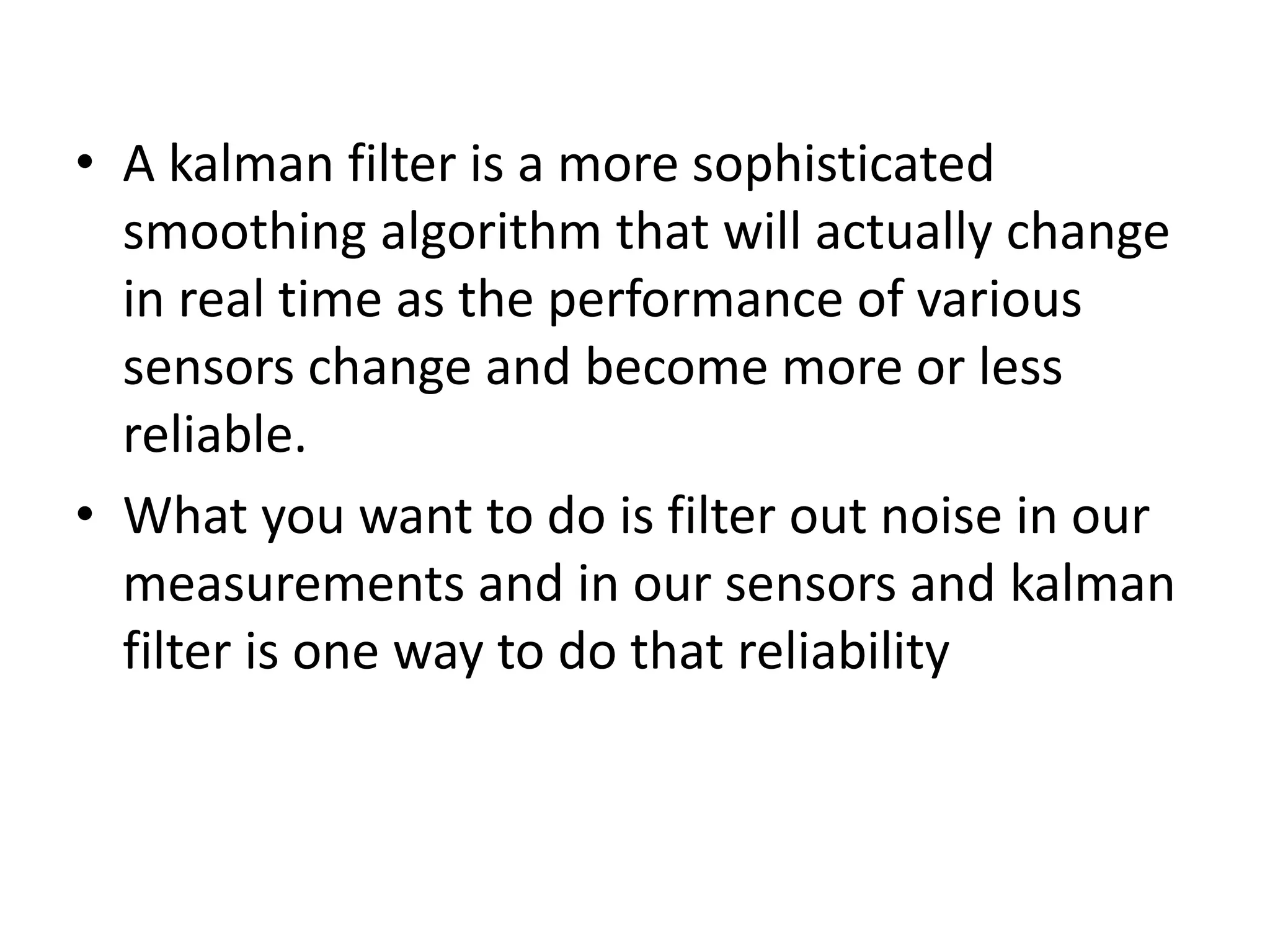
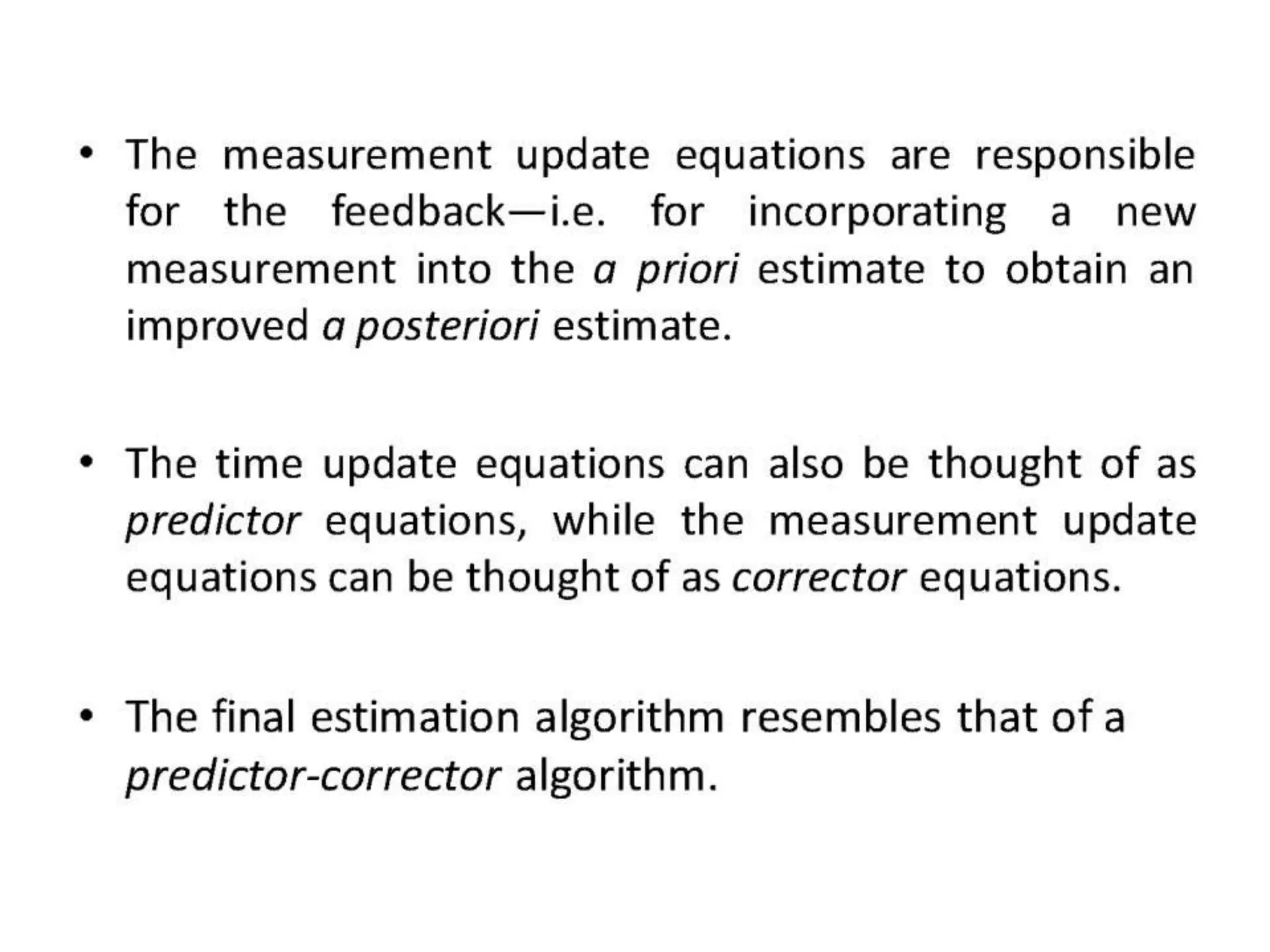
• A kalman filter is a more sophisticated
smoothing algorithm that will actually change
in real time as the performance of various
sensors change and become more or less
reliable.
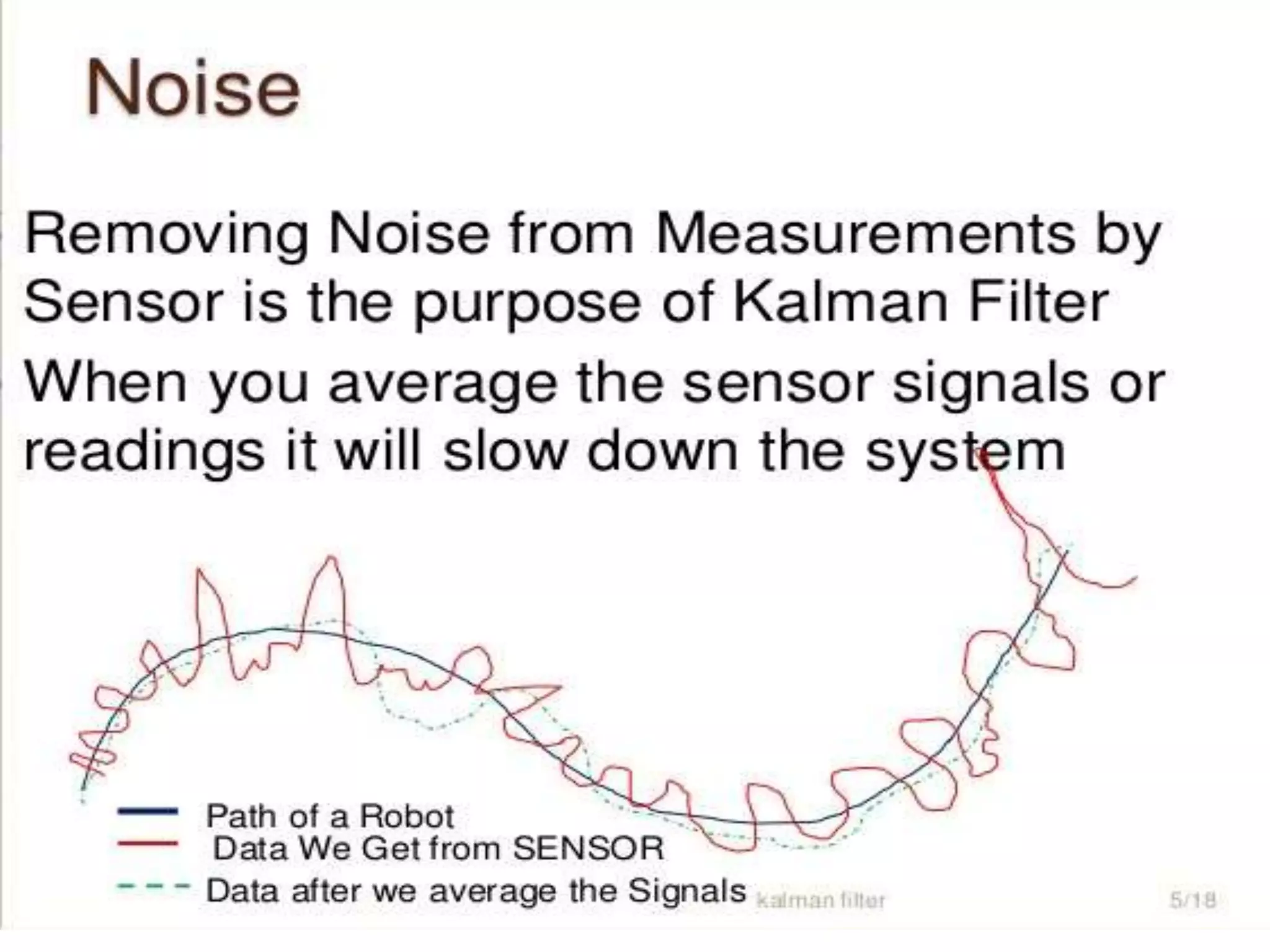
• What you want to do is filter out noise in our
measurements and in our sensors and kalman
filter is one way to do that reliability
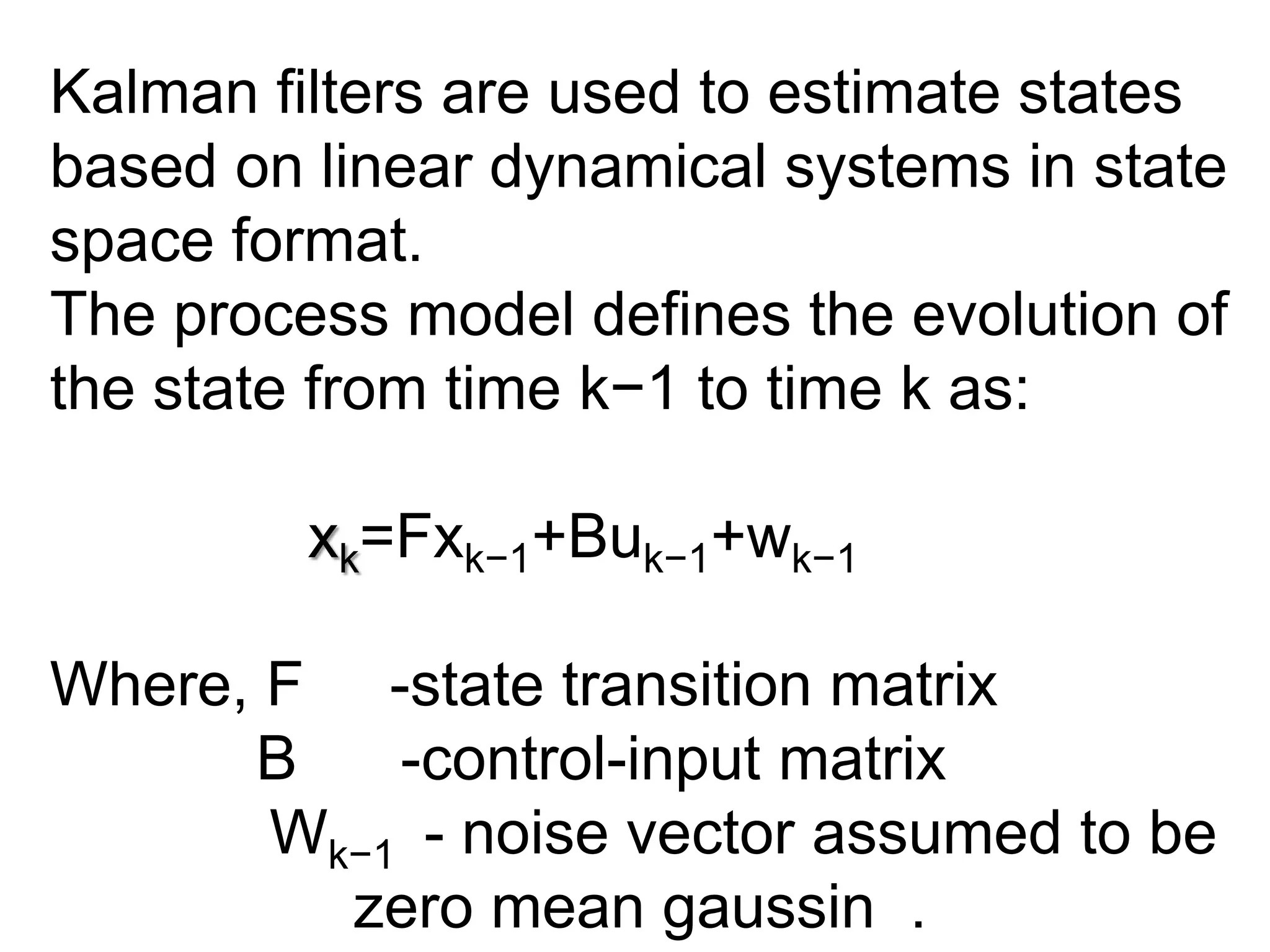
Kalman filters are used to estimate states
based on linear dynamical systems in state
space format.
The process model defines the evolution of
the state from time k−1 to time k as:
xk=Fxk−1+Buk−1+wk−1
Where, F -state transition matrix
B -control-input matrix
Wk−1 - noise vector assumed to be
zero mean gaussin .
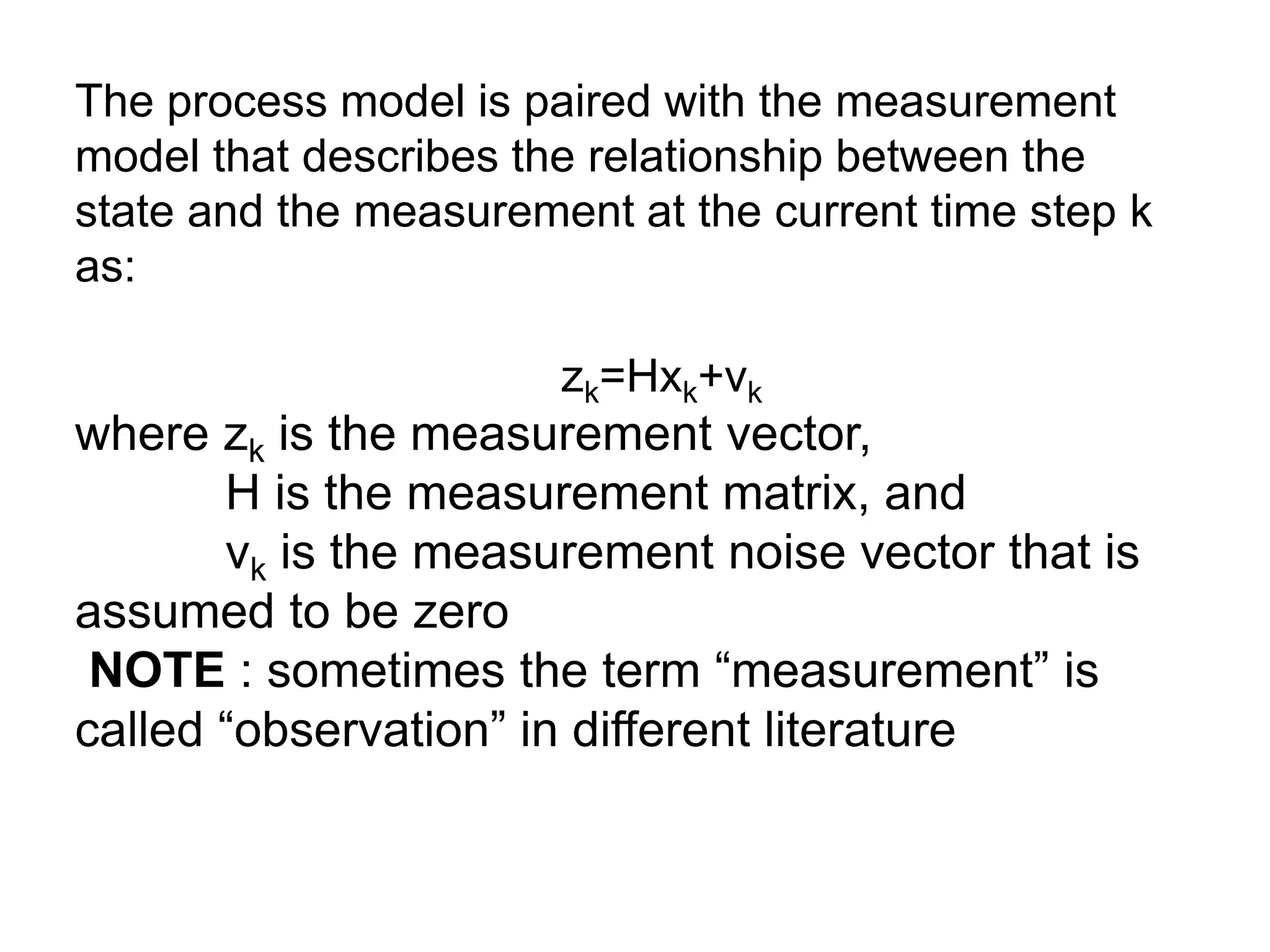
The process model is paired with the measurement
model that describes the relationship between the
state and the measurement at the current time step k
as:
zk=Hxk+νk
where zk is the measurement vector,
H is the measurement matrix, and
νk is the measurement noise vector that is
assumed to be zero
NOTE : sometimes the term “measurement” is
called “observation” in different literature
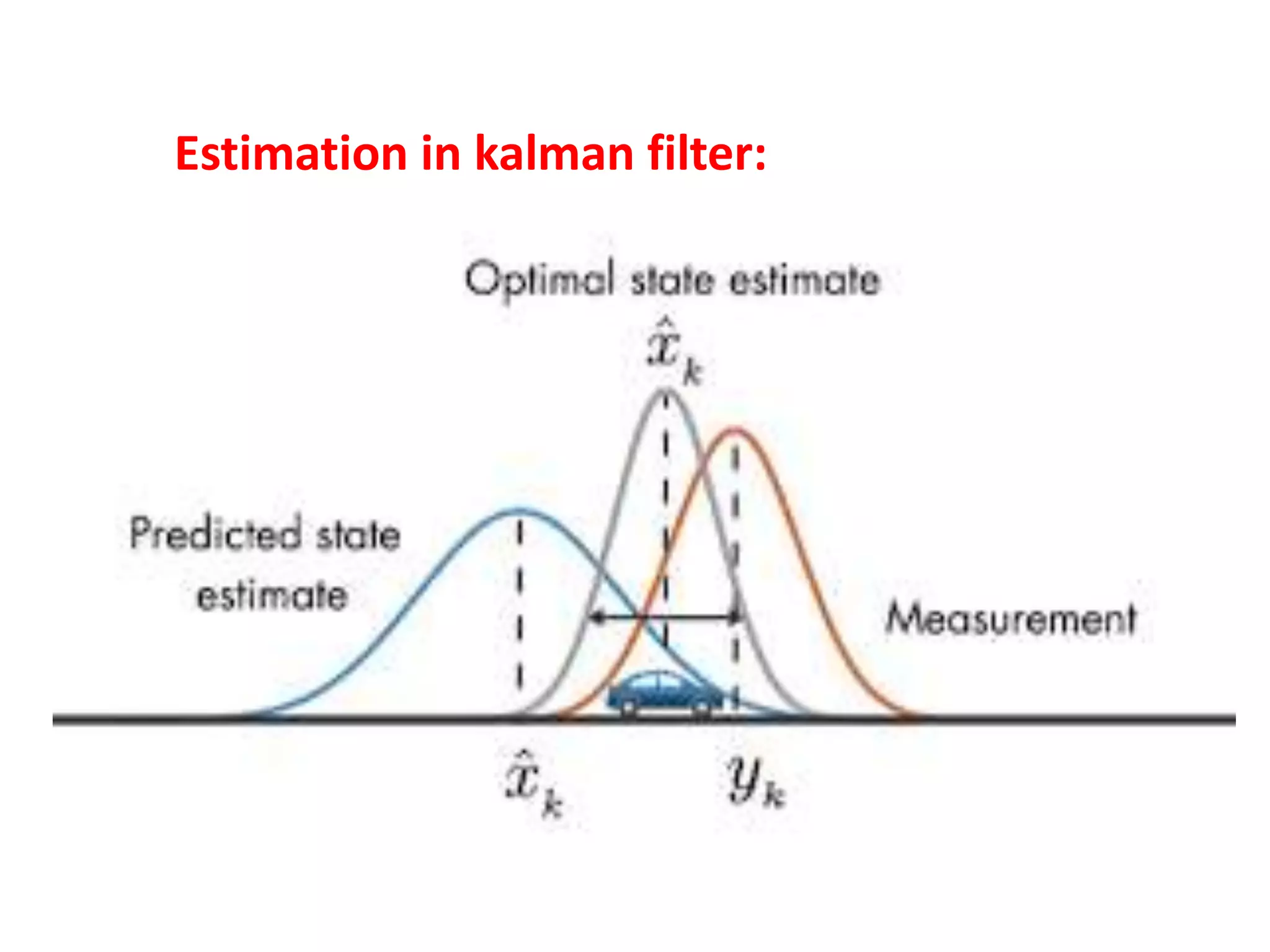
Estimation in kalman filter:
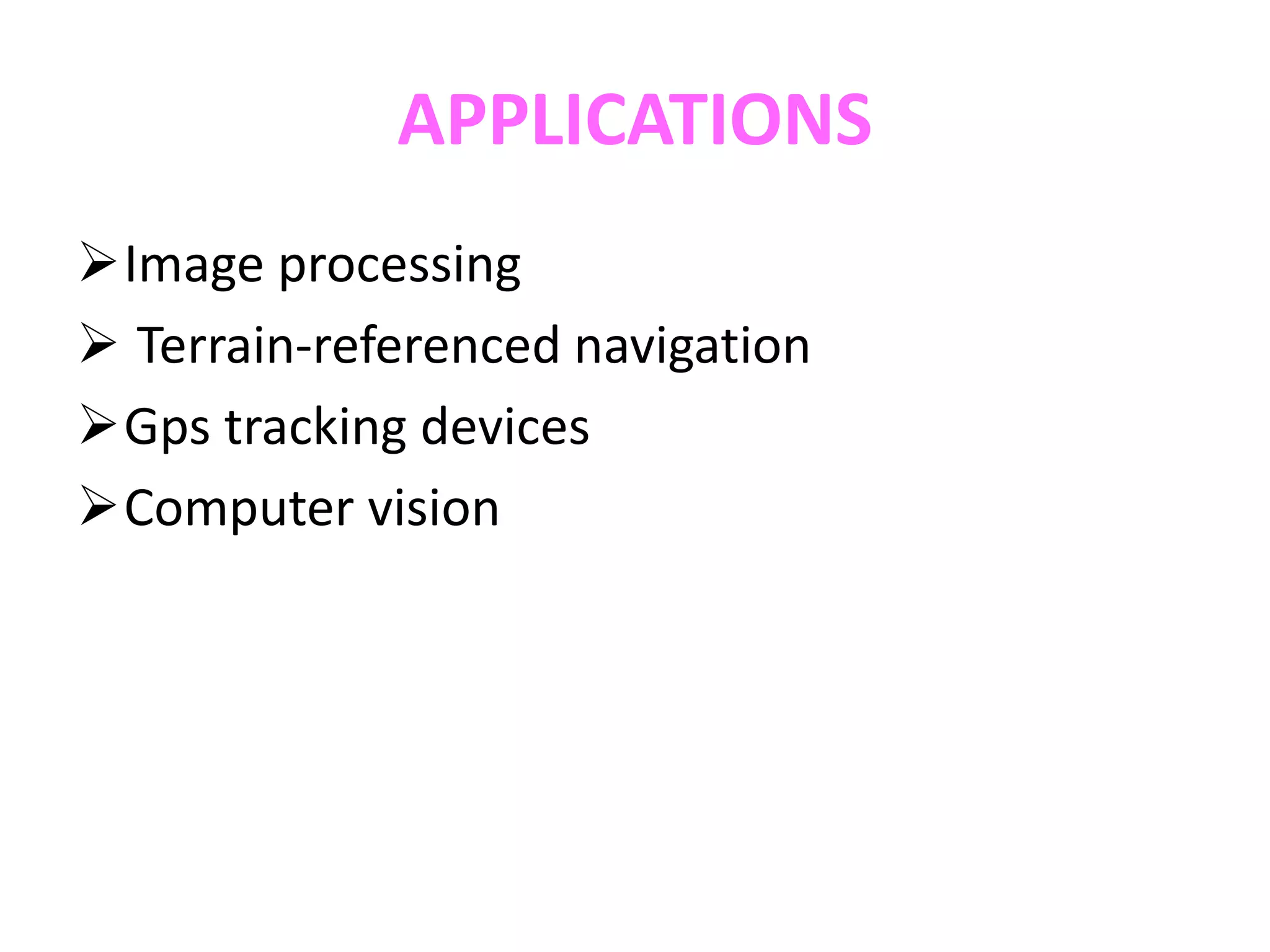
APPLICATIONS
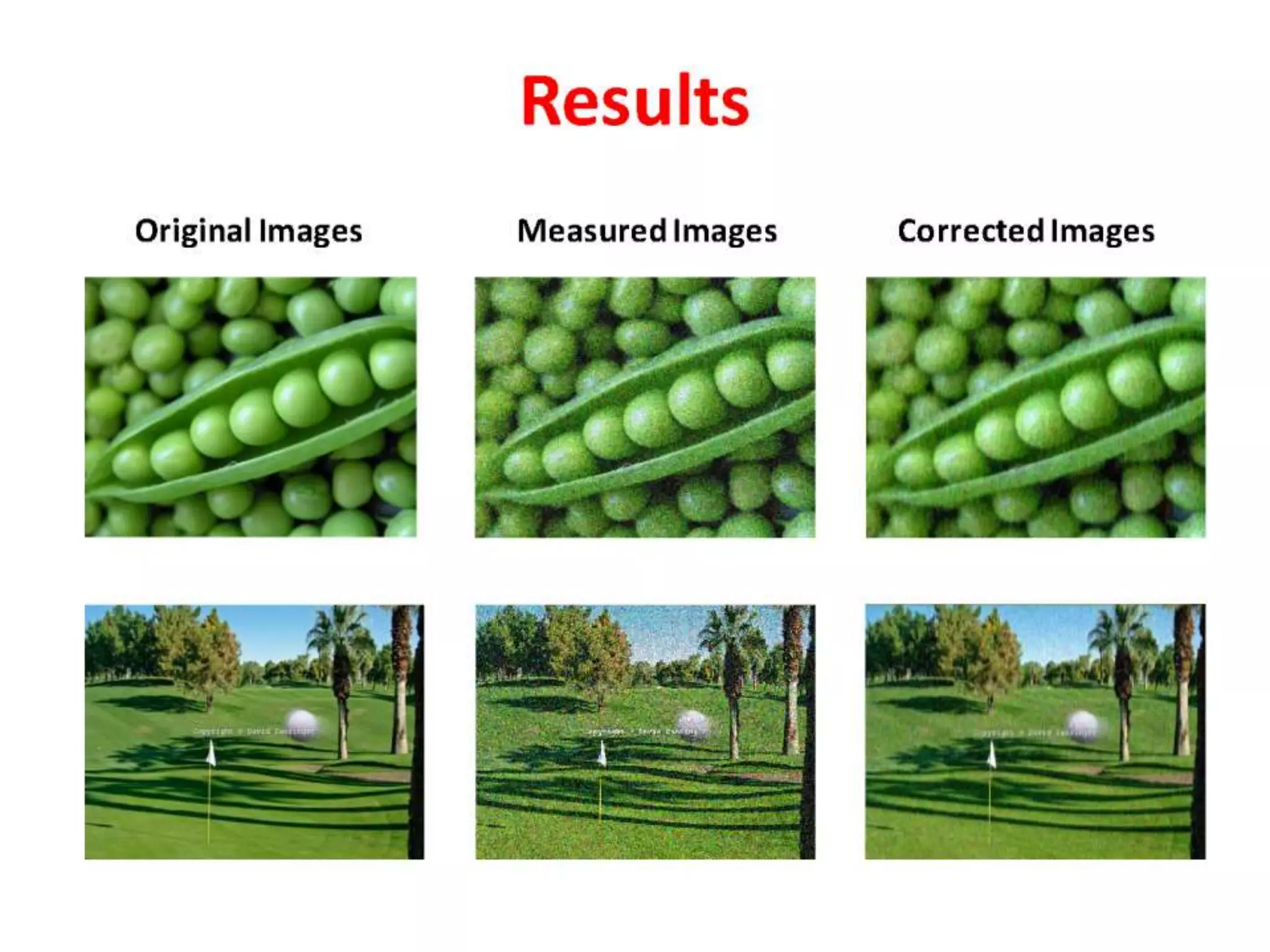
Image processing
 Terrain-referenced navigation
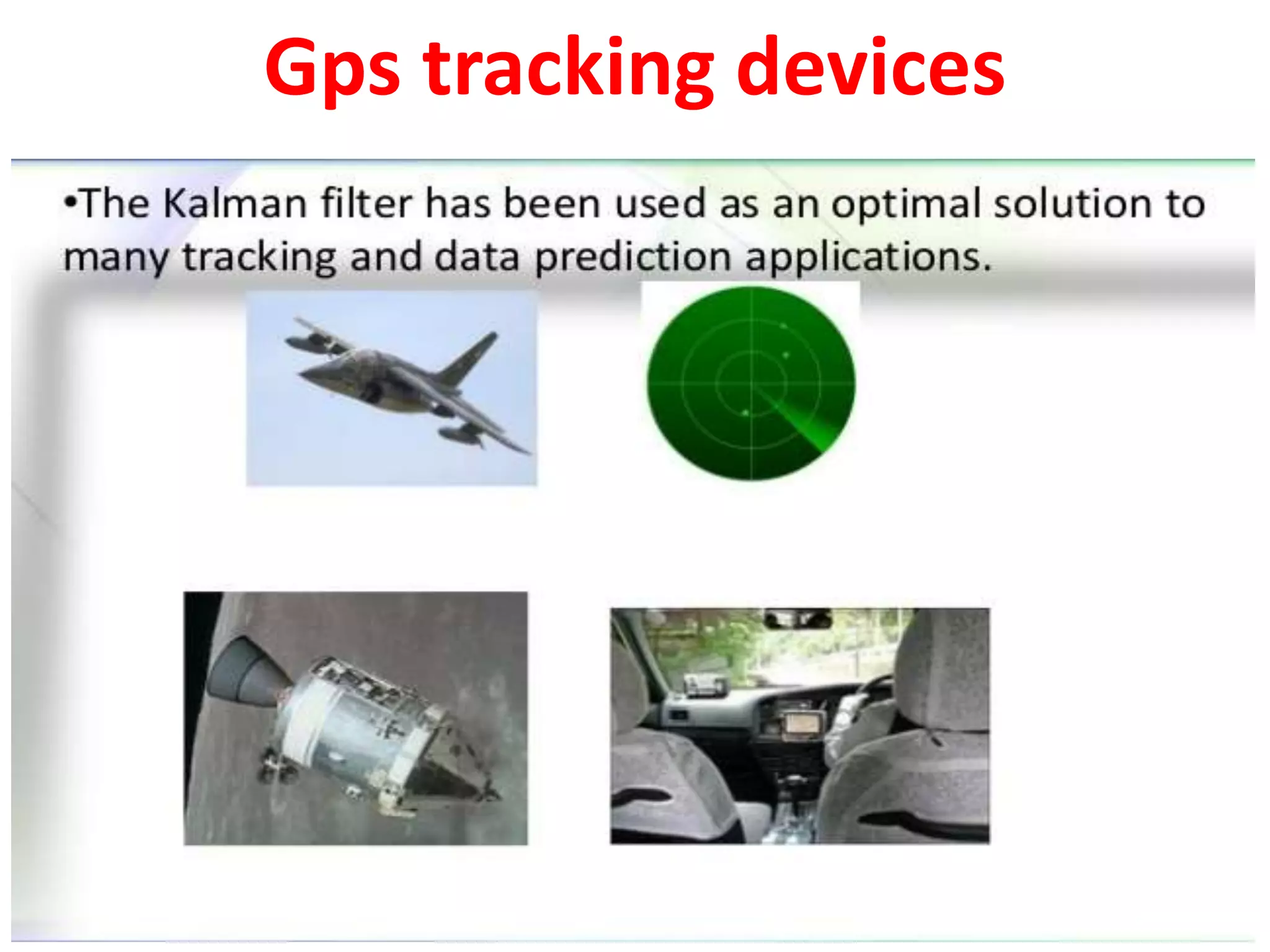
Gps tracking devices
Computer vision
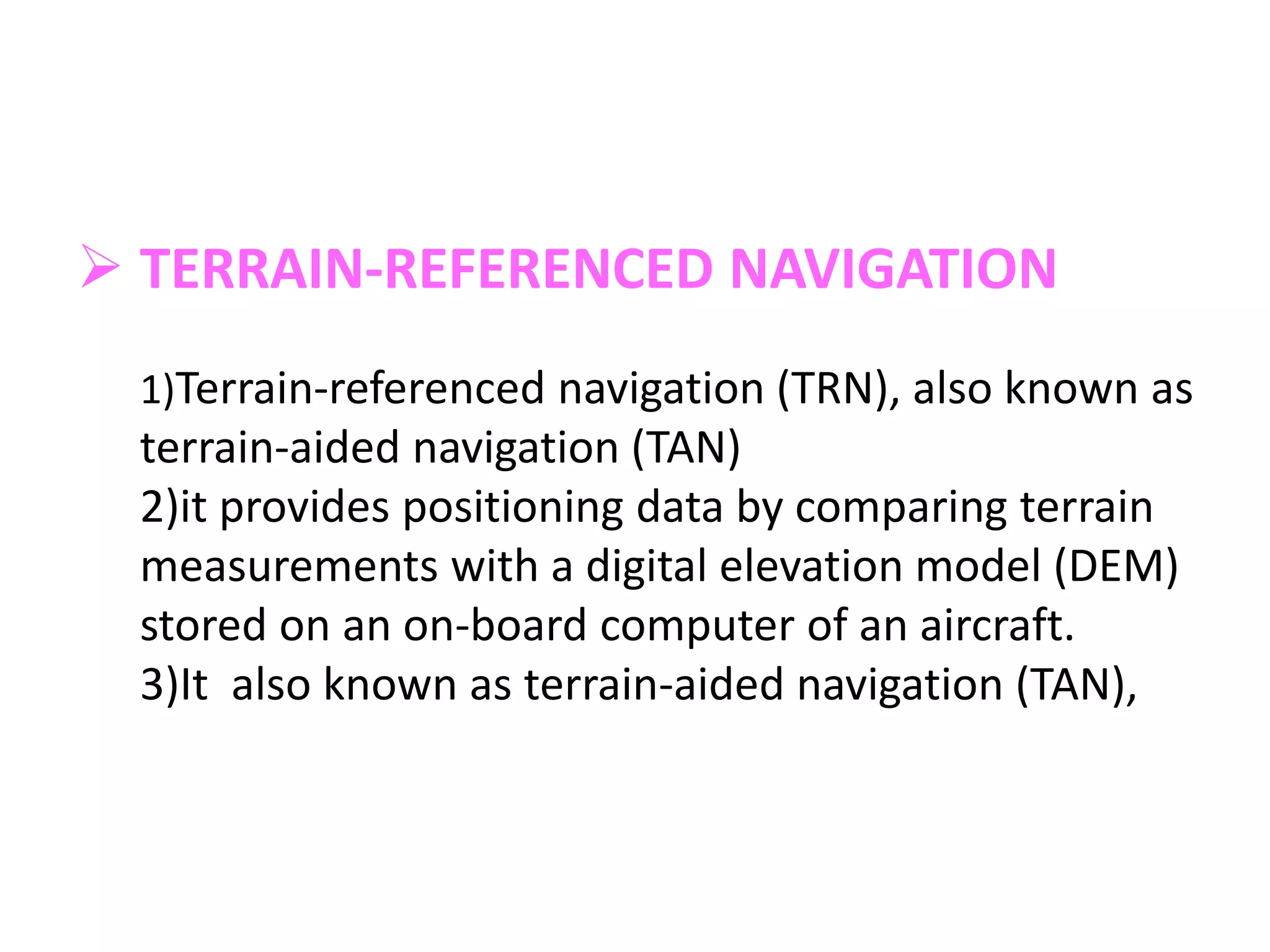
 TERRAIN-REFERENCED NAVIGATION
1)Terrain-referenced navigation (TRN), also known as
terrain-aided navigation (TAN)
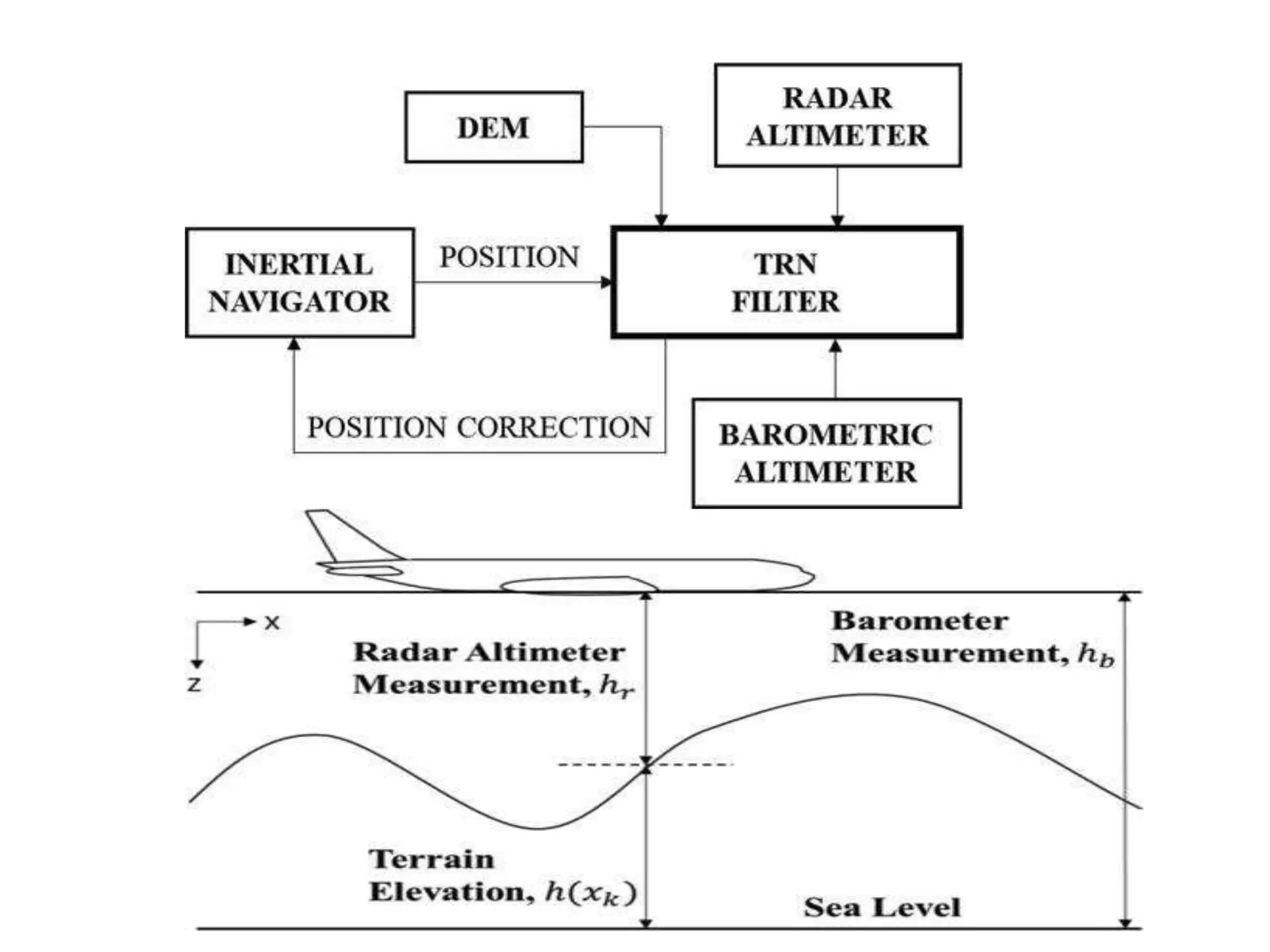
2)it provides positioning data by comparing terrain
measurements with a digital elevation model (DEM)
stored on an on-board computer of an aircraft.
3)It also known as terrain-aided navigation (TAN),
Gps tracking devices
Kalman filtering and it's applications

Kalman filtering and it's applications

  • 1.
    KALMAN FILTERING & ITSAPPLICATIONS PREPARED BY: Y.MADHAVASAI 17A51A04B8
  • 2.
    Rudolf Kalman wasborn in Hungary on 19 May 1930. He completed his Master's degree in Electrical Engineering from Madras institute of technology in 1953-54 respectively.  He left M.I.T. and continued his studies at Columbia University where he received his ScD. in 1957 under the direction of Professor J. R. Ragazzini. Based on recursive Bayesian he developed a filter in two years time period i.e., from 1960-61. Rudolf e kalman
  • 3.
     In statisticsand control theory, Kalman filtering, also known as linear quadratic estimation (LQE),  It is an algorithm that uses a series of measurements observed over time, containing statistical noise and other inaccuracies  It produces estimates of unknown variables that tend to be more accurate than those based on a single measurement alone, by estimating a joint probability distribution over the variables for each timeframe.  The filter is named after Rudolf E. Kálmán , one of the primary developers of its theory.
  • 4.
  • 5.
    • A kalmanfilter is a more sophisticated smoothing algorithm that will actually change in real time as the performance of various sensors change and become more or less reliable. • What you want to do is filter out noise in our measurements and in our sensors and kalman filter is one way to do that reliability
  • 6.
    Kalman filters areused to estimate states based on linear dynamical systems in state space format. The process model defines the evolution of the state from time k−1 to time k as: xk=Fxk−1+Buk−1+wk−1 Where, F -state transition matrix B -control-input matrix Wk−1 - noise vector assumed to be zero mean gaussin .
  • 7.
    The process modelis paired with the measurement model that describes the relationship between the state and the measurement at the current time step k as: zk=Hxk+νk where zk is the measurement vector, H is the measurement matrix, and νk is the measurement noise vector that is assumed to be zero NOTE : sometimes the term “measurement” is called “observation” in different literature
  • 12.
  • 14.
    APPLICATIONS Image processing  Terrain-referencednavigation Gps tracking devices Computer vision
  • 18.
     TERRAIN-REFERENCED NAVIGATION 1)Terrain-referencednavigation (TRN), also known as terrain-aided navigation (TAN) 2)it provides positioning data by comparing terrain measurements with a digital elevation model (DEM) stored on an on-board computer of an aircraft. 3)It also known as terrain-aided navigation (TAN),
  • 20.