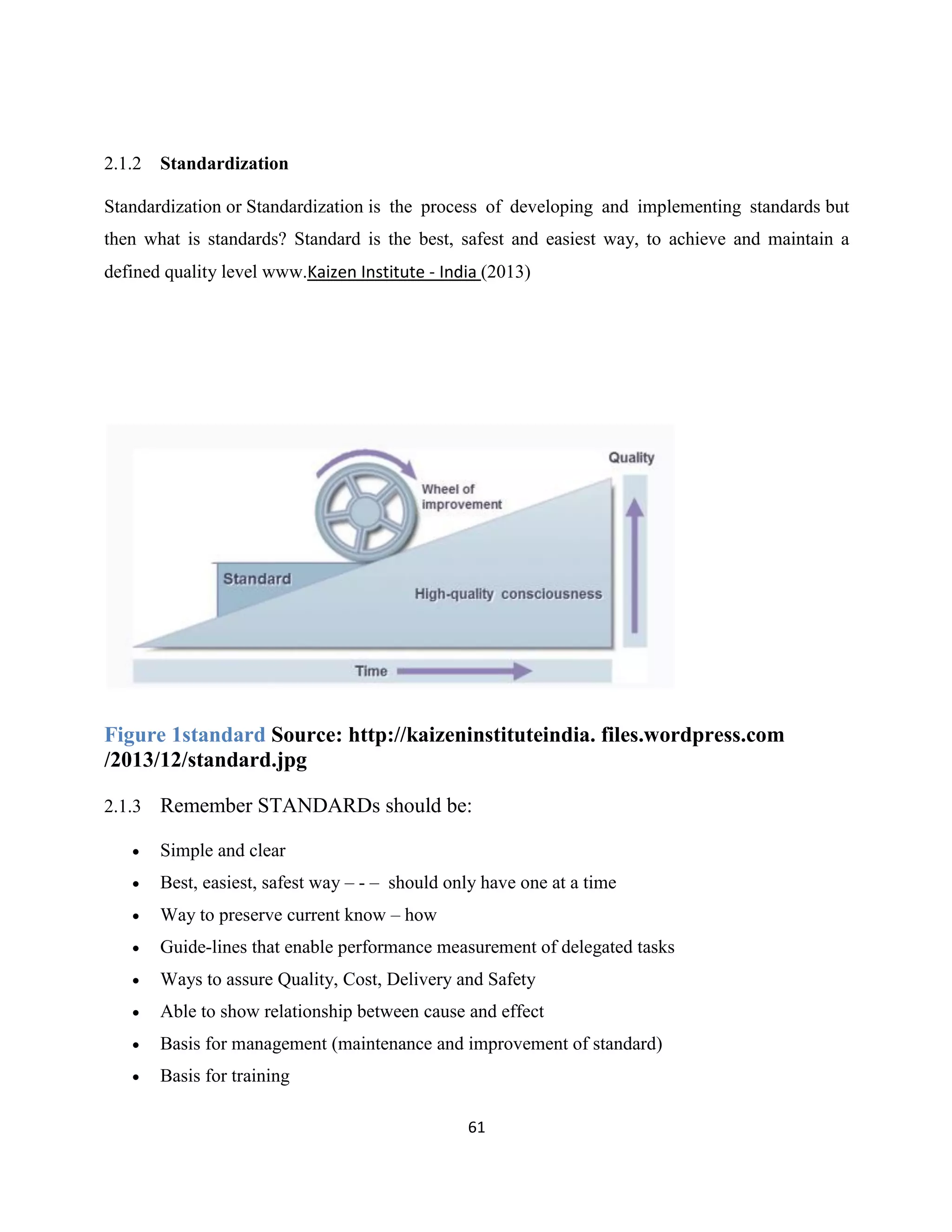
For TVET level Trainees Tuesday April, 2019 By Berhanu
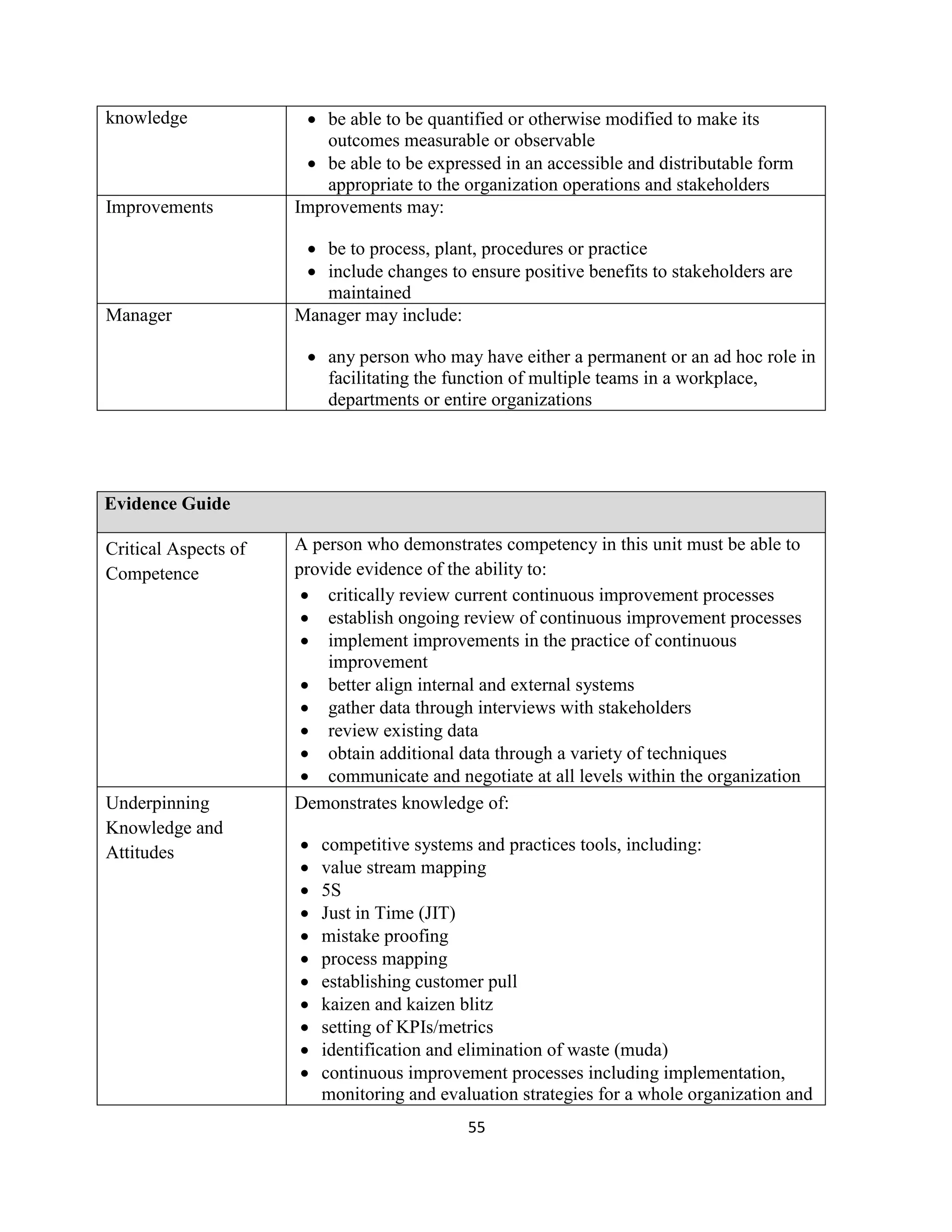
Tadesse Taye Job Sheet and information sheet level UC Kaizen
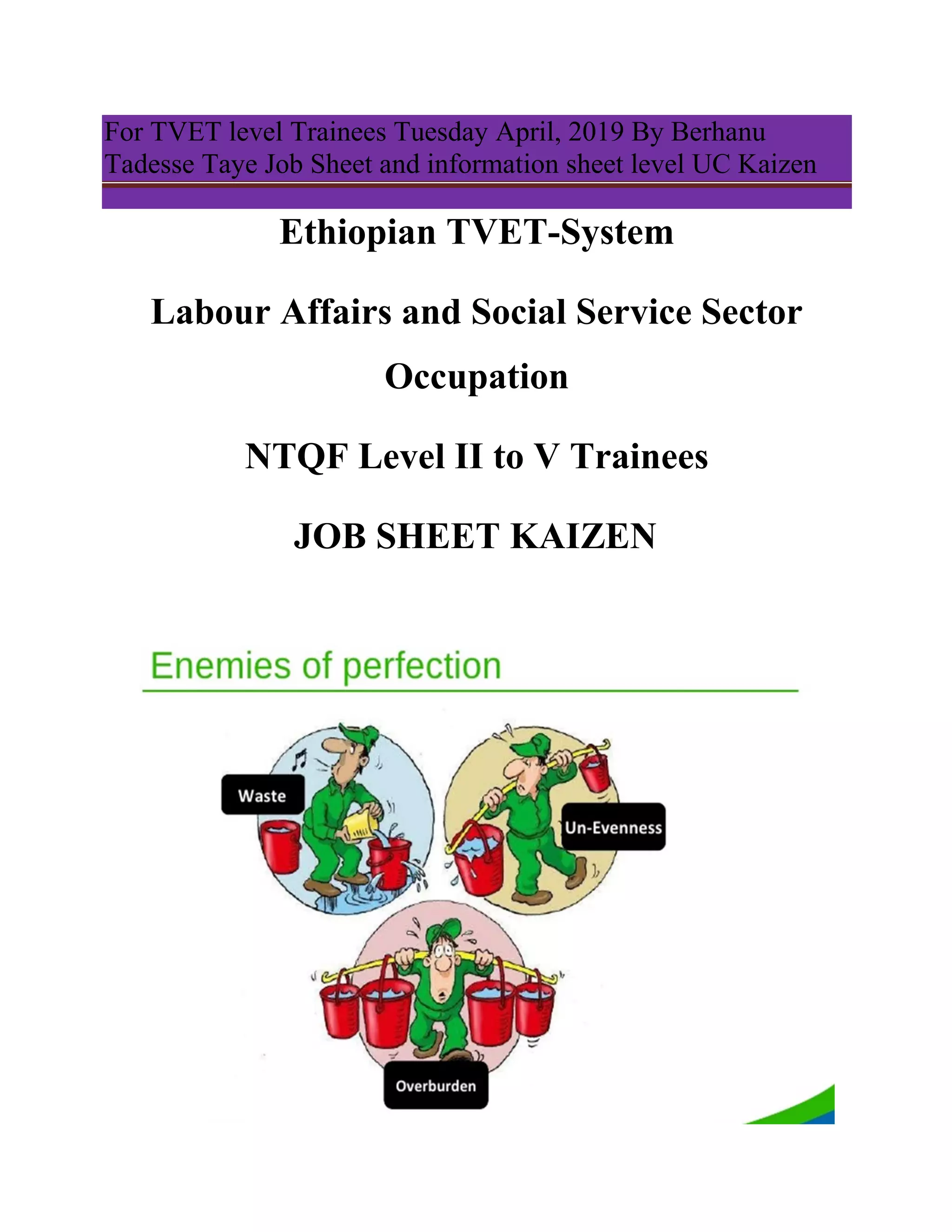
Ethiopian TVET-System
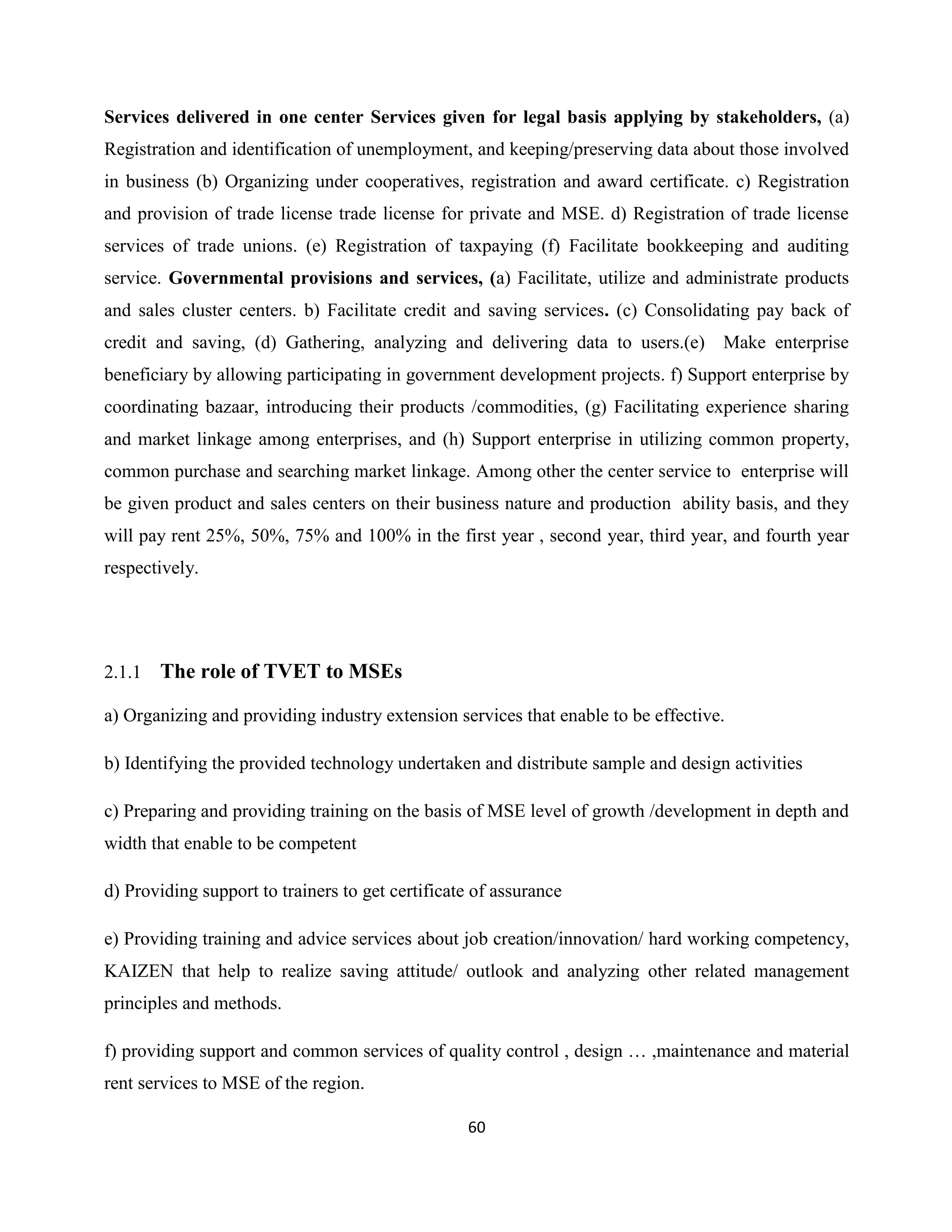
Labour Affairs and Social Service Sector
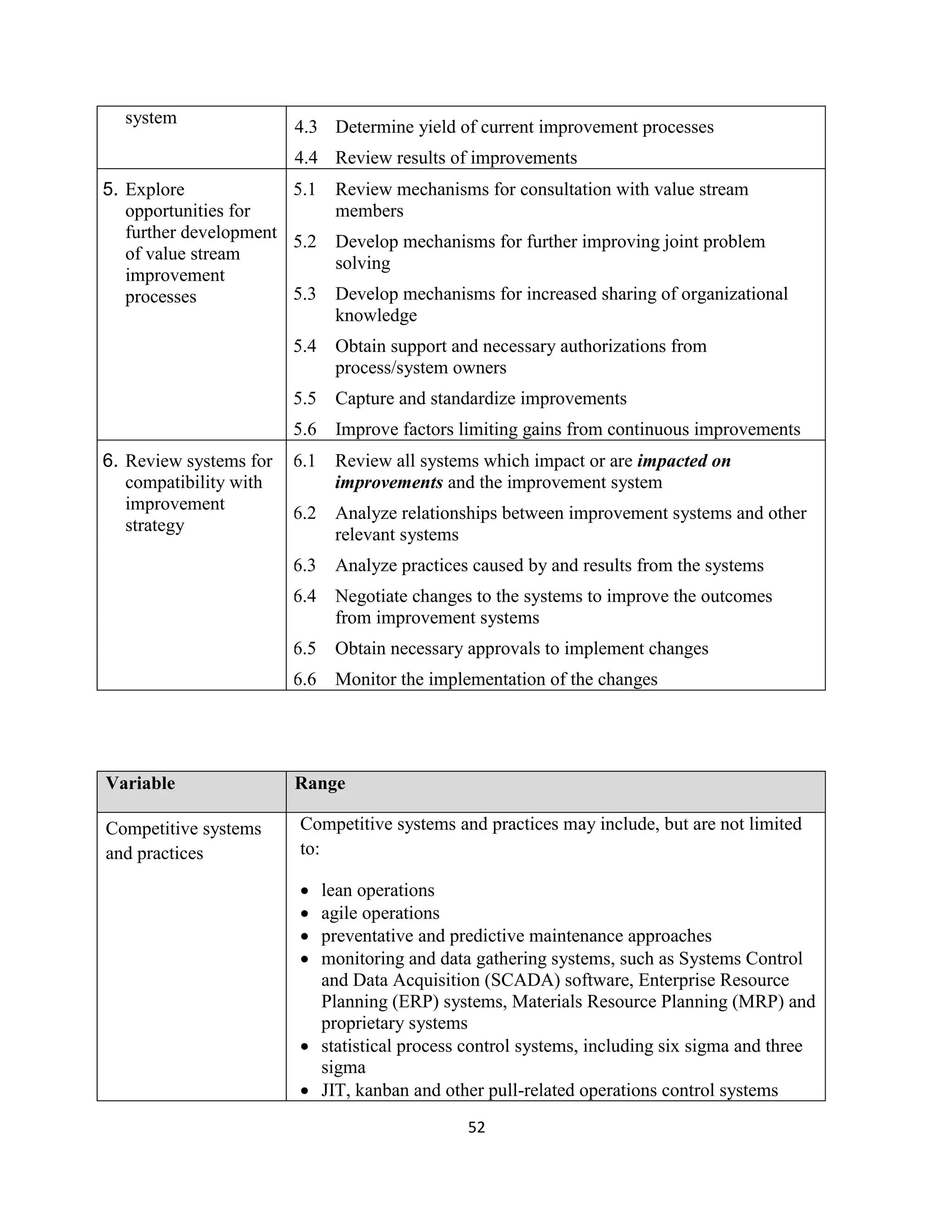
Occupation
NTQF Level II to V Trainees
JOB SHEET KAIZEN
Tableof contants
Introduction 4
1.1 ORGANIZATION OF THE REFERENCE BOOK.....................................................9
1.2 ORGANIZATIONAL PERFORMANCE AND EFFECTIVENESS KAIZEN ............9
1.3 TOTAL QUALITY MANAGEMENT (TQM)..........................................................10
1.3.1 Implementation ................................................................................................................... 11
1.3.2 TQM and Related Reward Practices .................................................................................... 12
1.3.3 KAIZEN.................................................................................................................................. 12
1.3.4 Six Sigma .............................................................................................................................. 13
1.3.5 Effects of company culture .................................................................................................. 17
1.4 UNIT OF COMPETENCE APPLY CONTINUOUS IMPROVEMENT PROCESSES
(KAIZEN)........................................................................................................................18
1.4.1 Introduction ......................................................................................................................... 18
1.4.2 Continuous Improvement Processes (Kaizen) ..................................................................... 20
STANDARDIZATION ....................................................................................................61
ENVIRONMENTAL HEALTH AND SAFETY ON KAIZEN EVENTS ....................63
Phase two: - Implementation phase - Implementing 5S..........Error! Bookmark not defined.
Kaizen board........................................................................................................................108
The Deming improvement cycle ..........................................................................................113
What Is Kaizen?.............................................................................................................................. 151
Case Study....................................................................................................................................... 155
Review of Current Situation/Process ............................................................................................ 156
Brainstorming and Consideration of Possible Alternatives........................................................ 159
Evaluation and Selection of Process.............................................................................................. 160
Prototype and Simulation .............................................................................................................. 161
Cell Design....................................................................................................................................... 163
Worker Responsibilities ................................................................................................................. 163
Presentation and Implementation ................................................................................................. 165
Results 165
Conclusion ....................................................................................................................................... 166
TO WHOM IT MAY CONCERN...............................................................................58
Table
Table 1 ............................................................................................................................................................ 20
Table 2Kaizen and prevent and eliminate 3MU (MUDA, MURI and MURA).................................................. 25
Table 3LSA CSW3 22 0211 Level III Maintain Quality System and Continuous Improvement Processes
(Kaizen) ........................................................................................................................................................... 29
Table 4Apply Problem Solving Techniques and Tools Level III ....................................................................... 36
Table 5Manage Continuous Improvement System level LSA CSW4 23 0211................................................. 40
Table 6Manage Continuous Improvement Process (Kaizen).......................................................................... 44
Table 7Develop and Refine Systems for Continuous Improvement in Operations level LSA CSW5 21 021150
Table 8Diagrammatic Sketch of 5S implementation ......................................... Error! Bookmark not defined.
Table 9Kaizen board KAIZEN continuous improvement board .............................................................. 109
Table 10SPMT (Sample Staff Performance Maintenance Tool) ................................................................... 112
Table 11The Deming improvement cycle ..................................................................................................... 113
Introduction
Toyota Production System (TPS) History Sakichi Toyoda founded the Toyoda Spinning and Weaving
Company in 1918. He developed the first steam-powered loom that could detect a broken thread and
stop itself automatically. This innovation led to the wider principle of jidoka, or automation with a
human touch – later to become one of the two pillars of TPS.
Some years later in 1937, Sakichi’s son Kiichiro founded the Toyota Motor Corporation. Kiichiro took
his father’s concept of jidoka and developed his own complementary philosophy – just- in-time –
which would become the other pillar of TPS. He visited Ford’s mass production plants in Michigan to
study their use of assembly lines.
After World War II, the need to be able to manufacture vehicles efficiently was greater than ever.
Kiichiro’s younger cousin, Eiji – later to become president and chairman of Toyota Motor
Manufacturing – tasked one of Toyota’s young engineers, Taiichi Ohno, with the job of increasing
productivity.
Taiichi Ohno
Ohno’s achievement was to marry the just-in-time concept with the principle of jidoka. In 1953, Ohno
also visited the USA to study Ford’s production methods, but he was much more inspired by American
supermarkets. He noticed how customers would take from the shelves only what they needed at that
time, and how those stocks were quickly and precisely replenished. Ohno had the insight that a
supermarket was essentially a well-run warehouse, with ‘goods-in’ closely matching ‘goods-out’, and
no space for long-term storage. On his return to Japan, Ohno developed the same idea into the kanban
concept. Ohno also learnt from the American pioneer of quality control, Dr. W. Edwards Deming.
The aim of Deming’s method was to improve quality at every stage of a business, from product design,
through manufacturing, to after sales service. Deming taught that each stage in a manufacturing
process should be thought of as the previous stage’s customer, which fitted very well with Kiichiro’s
just-in-time philosophy, and the principle of kaizen. Today, Ohno is considered the true architect of
TPS, having developed it into a practical method and, crucially, having made it work on the shop
floor.
The Toyota Production System as it is today has been developed and refined over several decades.
However, the benefits that can be derived from the techniques and management processes at its heart
can equally be applied to other types of business as we progress further into the 21st century.
TPS has been implemented throughout Toyota, giving tangible benefits in the quality and reliability
of Toyota’s products and services.
The Toyota Production System has established a global reputation as a leading business philosophy
that delivers measurable benefits in terms of efficiency and quality in manufacturing. Many
manufacturers have aimed to adopt TPS principles, and academics and management consultants
worldwide have developed strategies and business improvement programmes based on TPS.
6
Education enables citizens to be more productive both at work places and at their homes.
Kirstensen (1974) remarks that a new development has come about with the explosive growth of
knowledge in the present century, and that knowledge is progressively replacing capital as a
dominant factor for economic development.
Federal TVET Agency was kaizen implementer in the TVET agencies, bureaus and woreda level
all over the country including institute and polytechnic college as cluster leaders. For the first
time, Ethiopia kaizen institute prepared training and provide training. Kaizen training is being
implemented in public and private business enterprises via TVET Institutions. Federal TVET
Agency design kaizen as a curriculum TVET student after joined formal TVET on obliged
fulfilling national qualification frame work they are starting from level one 5s it resume level 2
up to level 5 accordingly from simple Apply i.e. Continuous Improvement Processes (Kaizen) to
Manage Continuous Improvement System and Develop and Refine Systems for Continuous
Improvement in Operations. Therefore, Kaizen is new philosophy and applications for
Ethiopians provided as formal TVET training in the TVET institute and polytechnic college.
One of the primary benefits of globalization is bringing the whole world together for sharing
technological equipment and other human innovations to ease the lives of humans in terms of
business communication, e-learning, e-business/e-commerce among other devices for exchanging
ICT, medical, and transportation devices with one another. In this era, the world gets organized in
the form of economic unity, benchmarking the positive experiences of other countries with regard
to innovation. A number of business organizations and firms are craving to be effective entities in
order to enable them to compete effectively in the ever changing globalized market-based
economy. Owing to globalization, those organizations can no longer purport to be competing
locally; they have to strive to be in the same economic status with the world best if they are to
survive the tough business competition. A continuous improvement is, therefore, an essential
requirement for sustaining and gaining a competitive advantage for any business organizations.
According to GRIPS development forum (Aug, 2009), the beauty of kaizen is that it can realize
productivity improvements with little additional investments. Thus simplicity and cost
effectiveness are the major reasons why kaizen is well appreciated globally. There are large
numbers of related and often overlapping components that belong to the kaizen toolkit such as 5S,
7
7 wastage/muda/ reduction principle, safety rules, Total Quality Control (TQC), Just-In-Time (JIT).
Among these, 5s (Sort, Set in order, Shine, Standardize, and Sustain) is generally considered to be
the most basic step for improving quality and productivity.
Generally speaking, kaizen is a low-cost approach to productivity improvement for two reasons.
First, it does not require huge capital investment & expensive technology since it seeks to use
existing equipment and human resources in a more efficient—less wasteful—way. Second, the key
goal of kaizen is to generate the internal capability of college trainers. In fact, if kaizen
implementers leave the colleges after one or two years, improvement efforts should be considered a
failure. Thus, kaizen is particularly suited for enterprises in low-income countries which face
financial access problems like Ethiopia.
EKI yearly booklet (Aug, 2011) indicates that, the Kaizen project in Ethiopia consisted of three
phases. Phase one, “Planning and preparation”, Phase two, “Implementation” and Phase three,
“Presentation, celebration, dissemination and follow up”. Therefore, in order to understand the
mechanisms needed for the transference of the Japanese kaizen management system from Japan to
Ethiopia, it is worthwhile to identify the important variable needed for the transferability of the
Japanese kaizen management techniques to other countries.
Against these backdrops, a number of countries in the world, including Ethiopia have been
convinced by the positive contributions of the Kaizen Total Quality Management System to the
quality of business management and improving products from the firms. The Government of
Ethiopia, inspired by the practicality of the Kaizen Policy in the business firms, adopted it as an
exemplary approach and tool of growth and development in July 2008. Through the initiation of a
Bilateral Policy Dialogue between the Japanese Government and the Ethiopian Government
undertaken memorandum of understanding in 2008, a preparation was made for the implementation
of the Policy at a pilot project level. After the Ethiopian Government had prepared itself for two
years (2009 2010), after saw the enterprises productivity improvement Ethiopian Kaizen Institute
was established in 2011. The Institute thus chose a total of 30 companies (i.e., 10 from Metal, 6
from Agro-processing, 6 from Chemicals, 4 from Leather, and 4 from Textile Companies) to serve
as its Pilot Kaizen Projects. In what follows, the Institute evaluated those Pilot Companies and
awarded them for good, best and excellent statuses for ten, five and three Companies, in increasing
order of success respectively (EKI, 2010).
8
The Ethiopian Kaizen Institute (2012:36&39) defines Kaizen as follows:
Kaizen is ―continuous improvement‖. It is using common sense and is both a rigorous,
scientific method using statistical quality control and an adaptive framework of
organizational values and belief that keeps workers and management focused on Zero
defects. It is a philosophy of never being satisfied with what was accomplished last
week or last year. The business lessen of 1980 was that Japanese firms, in their quest for
global competitiveness, demonstrated a greater commitment to the philosophy of
continuous improvement than western companies did. As Kaizen is a collective term of
productivity improvement, creative idea and innovation expected from entire workers
by following a bottom- up management; it has a procedure and problem solving
mechanism suggestion system.
As Imai (1986:32) noted, kaizen-oriented suggestion systems are transferable to Non-Japanese
cultural environments. But he asserts that:
To increase the chances of a successful transfer, four organization-culture conditions are
necessary: (I)A clear employee orientation, supported by a (contractually or verbally
assured) non-lay-off policy; (II) Employees committed to the company’s long-term
viability; (III) A free flow of information, both along the vertical axis and between units
of the same hierarchical level; (IV) Empowered employees, i.e., employees that have
the information and skills needed to make decisions on a wide range of issues
concerning their own working environment.
Finally, by sharing kaizen management philosophy, Federal TVET Agency was kaizen
implementer in the TVET agencies and bureaus all over the country. For the first time, Ethiopia
kaizen institute prepared training for 380 sugar cooperation managers and supervisors. During
training session Federal TVET presented its kaizen implementation experience for the trainees
(EKI Yearly Booklet, 2011). After the training of “sugar cooperation managers and supervisors”
Federal TVET Agency was the facilitator of the implementation of kaizen in sugar cooperation by
selecting the implementer from all regional TVET trainers and regional TVET Agency experts,
who participated in former kaizen implementation, and employees of the corporation. Finally,
Federal TVET Agency expanded its experience to the different regional TVET agencies and
bureaus. From those Addis Ababa TVET agency was the one which took the responsibility to
implement kaizen in respective colleges and in some selected Micro Finance and small business
enterprises (MBEs) to improve their quality production (trainees) in their workshops. Then, the
implementation was started in twenty-three government institutions and five government TVET
9
colleges by holding the trainers who were participated in the sugar cooperation implementation
program. Now a day’s almost all TVET institutions and colleges, Small and Micro finance
Business Enterprises (SMEs) implement kaizen by assisted AATVET Agency and respective
regional sub cities of TVET offices. Hence, the purpose of this study was to investigate current
practices of kaizen implementation.
1.1 Organization of the reference book
This reference book is divided into --------- chapters as follows: Chapter One provide a introduction
to the reference book, Organizational performance and effectiveness kaizen, Total Quality
Management (TQM), kaizen, Six Sigma, BPR, TVET curriculum unit of competition with element,
variable, range, evidence, from level two to level five adopted for the purposes of this reference
book. Chapter Two standardization, environmental health and safety on kaizen events, Phase two: -
Implementation phase - Implementing 5S, Kaizen board, The Deming improvement cycle, What Is
Kaizen? Perceptual Difference between western nations and Japan regarding job function, Provide
kaizen as theoretical framework within which the reference book conducted, as well as the theories
associated with current practical application of kaizen. Chapter Three, Case Study, Review of
Current Situation/Process, Brainstorming and Consideration of Possible Alternatives, Evaluation
and Selection of Process, Prototype and Simulation, Cell Design the reference book and design are
discusses in detail. Chapter Four, Worker Responsibilities, Presentation and Implementation,
Results, Conclusion, to whom it may concern the reference book are presents and the discussion of
the how to use the kaizen checklist format and sample format that emerged from the reference book
are highlighted. Finally, the references materials included kaizen checklist, sample questions as
appendices are attached at the end of this reference book.
1.2 Organizational performance and effectiveness kaizen
Under Organizational performance effectiveness it has, Total Quality Management (TQM) and
Business Process Re-Engineering (BPR) and it has also a debate between the two, Several 6authors
10
write about the themes of TQM according to LARIE J. MULLINES (2010). These are generally
expressed in terms of a way of life for an organization as a whole, committed to total customer
satisfaction through continues process of improvement, and the contribution and involvement of
people. A major influence on the establishment and development of TQM was the work of Deming
who emphasized the importance of visionary leadership and the responsibility of top management
for.
1.3 Total Quality Management (TQM)
One particular approach to improved organizational performance and effectiveness is the concept
of the Japanese inspired total quality management (TQM). There are numerous definitions of
TQM. These are generally expressed in terms of a way of life for an organization as a whole,
committed to total customer satisfaction through a continuous process of improvement and the
contribution and involvement of people according to LARIE J. MULLINES (2010).
A major influence on the establishment and development of TQM was the work of Deming, who
emphasized the importance of visionary leadership and the responsibility of top management for
initiating change. A mathematician by training, he was interested in statistical measurement of
industrial processes and attempted to persuade the American manufacturing industry to improve
quality, and to create constancy of purpose for improvement of products and service. Deming cited
in LARIE J. MULLINES (2010) drew attention to the importance of pride in work and process
control, and made constant reference to the importance of ‘good management’ including the human
side of quality improvement and how employees should be treated.
The successful organization should as a matter of policy be constantly seeking opportunities to
improve the quality of its products and/or services and processes. The organization must also
couple quality with a required level of productivity. The chartered management institute gives the
following definition: according to LARIE J. MULLINES (2010)
TQM is a way of managing which gives everyone in the organization responsibility
for delivering quality to the final customer; quality being described as ‘fitness for
purpose’ or as ‘delighting the customer’. TQM views each task in the organization
as fundamentally a process which is in a customer/supplier relationship with the
11
next process. The aim at each stage is to define and meet the customer’s
requirements with the aim of maximizing the satisfaction of the final consumer at
the lowest possible cost.
1.3.1 Implementation
If IQM is to be implemented successfully it must be seen as a total process involving all operations
of the organization and the active participation of top management. It demands a supportive
organizational culture and a programme of management change. TQM places emphasis on the
involvement of people as the key to improved quality. It involves changes to the traditional
structure with greater emphasis on natural work groups, multi-discipline working and team-based
management. Attention must be given to effective education and training, empowerment and the
motivation to take ownership of quality, and systems of communications at all levels of the
organization. A related successor to TQM is the balanced scorecard. According to Drummond cited
in LARIE J. MULLINES (2010), puts forward an interesting debate on comparing the philosophies
and ideas of Deming with Taylor’s Scientific Management, and questions whether Deming’s ideas
are as radical as they seem. Drummond suggests: cited in LARIE J. MULLINES (2010),
Clearly, ‘total quality management’ offers some new ideas. Whether these ideas
have proved successful is unclear …. Moreover, much depends upon how success is
measured. Different measures can suggest different conclusions. Another difficulty
in assessing the effectiveness of ‘total quality management programmes’ is that
organizations have implemented Deming’s ideas selectively.
work groups, multi-discipline working and team-based management. Attention must be given to
effective education and training, empowerment and the motivation to take ownership of quality,
and systems of communications at all levels of the organization. A related strategy to achieve a
long-term aim, hence, management authors’ and researchers agreed that the successor of TQM is
the balanced scorecard. According to Drummond cited in, Ibid, puts forward an interesting debate
on comparing the philosophies and ideas of Deming with Taylor‘s Scientific Management, and
questions whether Deming‘s ideas are as radical as they seem. Drummond suggests: cited in
(Mullins, 2010)
12
The theme Kaizen is integral part of a total quality approach is the Japanese concept
of Kaizen, which literally means ‗improvement‘or is often interpreted as gradual
progress or incremental change. Kaizen was introduced in several Japanese
organizations after the Second World War and is particularly associated with
Toyota. The approach analyses every part of a process down to the smallest detail;
Sees how every part of the process can be improved; Looks at how employees‘
actions, equipment and materials can be improved; and Looks at ways of saving
time and reducing waste it includes social life outside the working environment
according to (Mullins, 2010).
1.3.2 TQM and Related Reward Practices
Allen and Kilmann cited in LARIE J. MULLINES (2010) raise the question: why aren’t TQM
practices as effective as they could be? The rise of total quality management represents one of the
biggest changes in the past two decades in the way companies are managed. However, while many
studies have found that in general TQM has had positive effects on company performance, reports
of failure are surprisingly common in the press. Allen and Kilmann suggest that the alignment of a
company’s system of rewards is a critical ingredient in successful organizational change and they
investigate the relationship between reward practices and TQM. From a survey of managers, non-
managerial and professional/technical staff in a wide variety of organizations they conclude that the
commonly held wisdom of supporting TQM with only non-monetary rewards-such as certificates,
letters of appreciation, merchandise or celebration events-is not enough. If managers want better
performance from TQM they must implement supportive monetary reward practices. Firms with
such practices in place report stronger organizational performance.
1.3.3 KAIZEN
An integral part of a total quality approach is the Japanese concept of Kaizen, which literally
means ‘improvement’ or is often interpreted as gradual progress or incremental change. Kaizen
was introduced in several Japanese organizations after the Second World War and is particularly
associated with Toyota. It is not a methodology for large-scale change or the introduction of new
13
processes but focuses on the people aspect of improvement and the acceptance of change. The
concept is based on a daily activity of continual evolutionary change and on the belief that the
individual workers know more about their own jobs than anyone else. Cane suggests that the
traditional Kaizen approach embeds it in a hierarchical structure, although it gives considerable
responsibility to employees within certain fixed boundaries. The approach: LARIE J. MULLINES
(2010),
 Analyses every part of a process down to the smallest detail;
 Sees how every part of the process can be improved;
 Looks at how employees’ actions, equipment and materials can be improved; and
 Looks at ways of saving time and reducing waste.
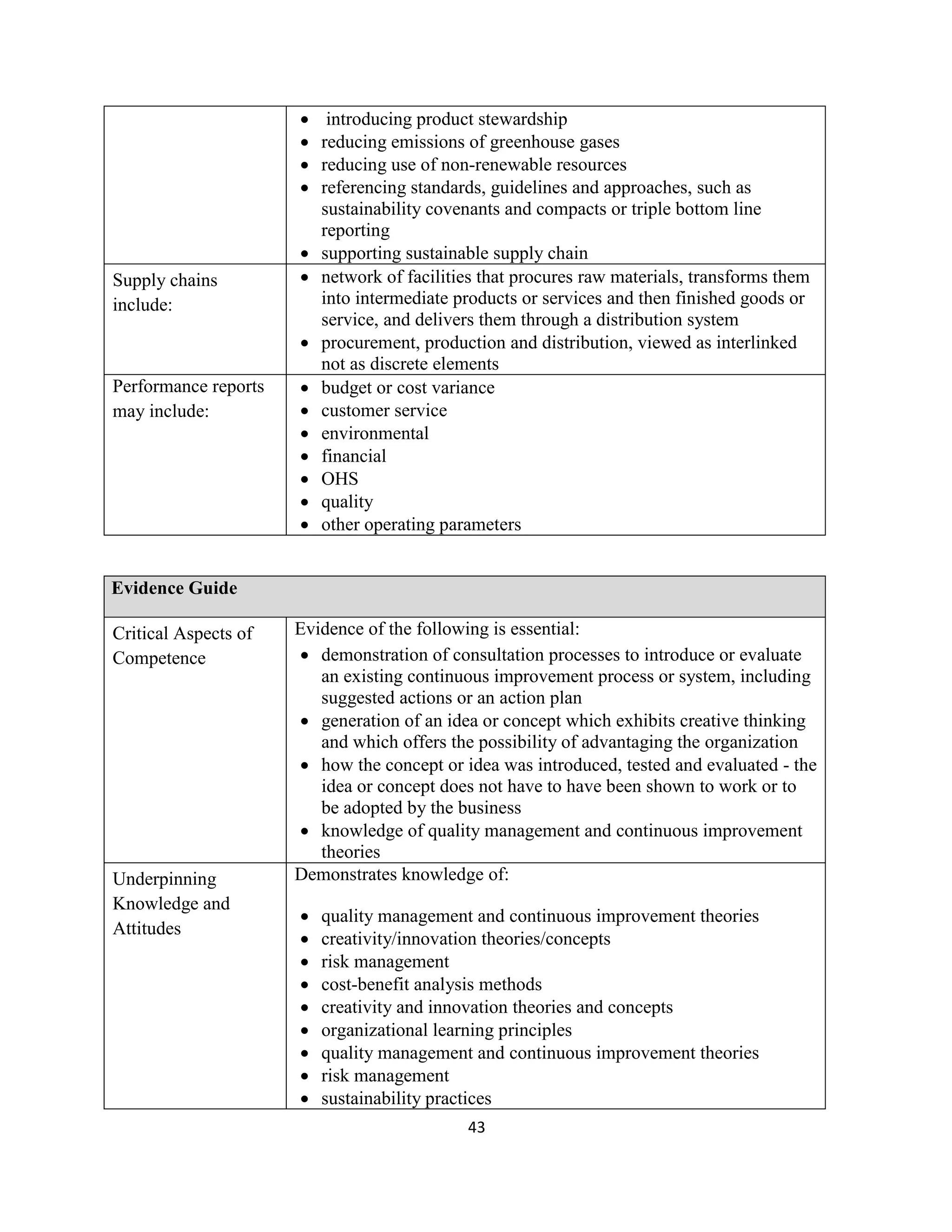
Kaizen organization culture is based on three super-ordinate principles, what are they?
According to the Kaizen is a Japanese term meaning ‘change for the better’. Applied to business
organizations, it implies continuing improvement involving everyone that does not cost much.
Kaizen organization culture is based on three super-ordinate principles: process and results;
systematic thinking; and non-judgmental, non-blaming. Kaizen strategy begins with customers’
needs concerning quality, cost and delivery and is founded on a people-oriented culture.
1.3.4 Six Sigma
Another quality initiative programme for change and continuous improvement is the concept of Six
Sigma, based on the use of statistical analysis and computer simulation for the definition,
measurement and reduction of defects and waste (Sigma is the Greek letter used as a statistical
term to denote standard deviation or variations from the mean). The principle of Six Sigma is the
establishment of optimum specifications for processes and products, and an improvement in quality
through a continuous reduction of variations that result in defects. If you can measure the number
of defects in a process you can then attempt systematically to eliminate them. Each level of sigma
(six being the highest) indicates a reduction in the extent of defects. A true Six Sigma quality
organization implies a defect rate of only 3.4 defects per million opportunities for each process or
14
product. The aim is not only to reduce existing variations but also to design new processes and
products so that there is as little variation as possible according to LARIE J. MULLINES (2010).
1.3.4.1 Importance of Six Sigma
Hayler and Nichols cited in LARIE J. MULLINES (2010), maintain that using Six Sigma based
approaches to achieve process management, so appealing in theory, actually pays off in practice.
Six Sigma process managements are crucial for business success.
Managing processes for optimal performance has always been important. Today’s
global business environment is characterized by increasingly extended supply chains
across multiple organizational functions, third-party partners, and suppliers, in many
cases operating across different cultures, time zones and geographies. Thus it is
even more challenging and important for leaders to optimally manage their
organizational processes.
Doubts may be expressed over whether Six Sigma works in service industries as well as in
manufacturing. However, according to Patton, cited in LARIE J. MULLINES (2010), despite such
doubts about the emphasis on sophisticated statistics, the reservations of employees in serve
organizations, and their reluctance to undertake training. Six Sigma is equally applicable to either
environment. ‘Achieving consistency and meeting financial goals in service quality can be as
challenging as delivering defect free products to a manufacturing customers.’
1.3.4.2 Business Process Re-Engineering (BPR)
Another concept to have received much attention in recent years is that of business process re-
engineering (BPR). The pioneers of BPR are generally acknowledged as Hammer and Champy,
who define it as: cited in LARIE J. MULLINES (2010),
The fundamental rethinking and radical redesign of business processes to achieve
dramatic improvements in critical, contemporary measures of performance, such as
cost, quality, service and speed.
Their approach has two principal features: (I) a completely fresh start, or blank sheet of paper
approach, to organizational redesign, ignoring past history or present structure or practices, and (II)
15
a process-orientation approach to organizational analysis centered around a horizontal review of all
activities involved in the process, or set of activities, in the delivery of a product or service to the
customer. BPR is concerned with the total restructuring of the organization. It starts from how one
would like the organization to be and works backward in an effort to achieve real gains in
organizational performance and delivery of products or services.
1.3.4.3 Relationship with TQM
What is the relationship between BPR and TQM? Both are concerned with organizational
processes that lead to customer satisfaction. However, while TQM tends to seek continuous
incremental improvement within a specific framework, BPR seeks major advances in performance
from a horizontal, cross-functional anatomy of performance perspective. It involves a challenge to
traditional structure, relationships, boundaries or barriers. TQM requires a supportive environment
and relies on teamwork, participation and commitment BPR takes a more strategic approach and
needs to be driven, at least initially, by top management. Some commentators appear to suggest
that TQM has been taken over by BPR although others argue that it can be seen as complementary
to and/or a forerunner for BPR.
1.3.4.4 Kaizen and Re-Engineering
The aim is to do what we already do, only to do it better. Quality improvement seeks steady
incremental improvement to process performance. Reengineering, as we have seen, seeks
breakthroughs, not by enhancing existing processes, but by discarding them and replacing them
with entirely new ones. (Michael Hammer and James Champy, Reengineering the Corporation: A
Manifesto for Business Revolution [New York: HarperBusiness, 1993], 49.) The logic of kaizen is
that breakthroughs result not from massive reorganizations or large-scale investment projects but
from the cumulative effects of successive incremental improvements. "Rebuilding a factory," wrote
William H. Davidow and Michael S. Malone (The Virtual Corporation [New York: Harper
Business, 1992], 118), "requires replacing almost every brick in the old plant. Do that too quickly
and the structure will collapse. The only practical way is through kaizen."
16
The difference between kaizen and business process reengineering is fundamentally a difference in
duration and magnitude of change; kaizen posits change as a sustained series of incremental
adjustments, reengineering as an all-out commitment to wrenching reconstitution.
Kaizen charges management to prioritize, standardize, and improve. Standardization and
measurement are the keys to kaizen. Without detailed and specific metrics of quality and
performance, there is no basis for moving forward; goals that cannot be measured are just rallying
cries.
That kaizen and business process reengineering are explicitly different philosophies is apparent in
the contrast between the foregoing observation and Hammer and Champy's assessment of kaizen.
To be sure that, quality programs and reengineering share a number of common themes. They both
recognize the importance of processes, and they both start from the needs of the process customer
and work backwards from there. However, the two programs differ fundamentally. Quality
programs work within the framework of a company's existing processes and seek to enhance them
by means of what the Japanese call kaizen, or continuous incremental improvement according to
www.freeleansite.com.
1.3.4.5 Decline of Re-Engineering (BPR)
In a discussion on outdated motivational patterns utilized to maintain role performance in
organizations. Risk and Pena link this with what they maintain is a failure in re-engineering.
Although the originators of re-engineering insisted it was about rethinking work not eliminating
jobs, managers equated re-engineering with downsizing. Despite early successes, with each passing
year fewer and fewer projects appeared to be producing the desired results and doubts have
surfaced about the effectiveness of re-engineering. Reis and Pena suggest that theories of
motivation might offer an important observation and point to the decline in re-engineering based on
its lack of concern for people and its takeover by managers wishing to downsize.
In a subsequent publication, Hammer cited in LARIE J. MULLINES (2010), restates that BPR is
just as valid today but acknowledges that in the light of experience re-engineering needs to be
complemented with a range of other changes, a focus on a corporate objectives and building
collaborative partnership with suppliers. Stern, however suggests that downsizing and
restructurings of immense size were justified by BPR and:
17
The internet-inspired, emotionally intelligent ‘new economy’ of the late 1990s was
the great reaction against BPR’s brutalism. All pool tables and skateboards, the new
economy was great fun while it lasted-which was not very long. Someone forgot to
tell the geeks about the iron laws of business-those boring old things such as profits
and cash. Critical Reflection: “Effective organizational performance is about a
shared vision, inspired leadership and the quality of its managers. Concepts such as
total quality management or techniques such as business process re-engineering are
just passing fads that offer little real long-term value to the business organization.”
Inspired by the excellent performance of Toyota, many companies would be interested in
looking for more knowledge about Lean and the conditions required for implementation of
the system in their own organizations. Most firms are actively working on improving their
operational processes and develop their capabilities. The main purpose for everybody in
the business world is to respond quickly to the demands of their customers. To stay
competitive on the market managers today need to choose the best one of a great number
of innovative tools and techniques. The real challenge is the question concerning how to
incorporate these tools into day-to-day activities of the company towards successful
implementation of these improvement programs in a long run. According to Ana
Valentinova Kovacheva(2010)
1.3.5 Effects of company culture
Changes of mindset gives people an aim in their working life and have the potential to change
attitudes, so that the employees begin to think differently and are more willing to contribute to
company’s improvement initiatives. Stronger management control makes the organization
structure bureaucratic, which makes difficult the change from the existing ways of doing things.
Organizational culture is an essential element in lean implementation process and high- performing
companies are those with a culture of sustainable and proactive improvement efforts. Culture
readiness Organizational culture facilitates the integration of individual learning by influencing the
organizations’ ability to learn, share information and make decisions according to Ana Valentinova
18
Kovacheva(2010)
Benefits of Kaizen: The benefits of Kaizen include the participation of all collaborators in
improving and transforming (evolving) the organization in small, every day, incremental steps that
do not lose effectiveness over time. Some of the elements utilized to support Kaizen are: Visual
Management Kaizen Boards, Kaizen proposal format, Proposal scoring matrix, Kaizen rewards
system, Monthly metrics reporting, etc. Besides the tangible benefits, Kaizen is regarded as a most
effective technique to improve engagement and culture within a company.
Benefits of implementing Kaizen Teian accordingly IKI further added about, Improves profit,
Improves customer satisfaction, Discovers hidden talents, Promotes self-development Improves the
motivation and morale of employees at each level, Enhances communication between top bottom
level, Helps to build and improve team work, Creates ownership and trust within each other,
Engages and empowers employees at all levels, And improves the overall work environment
Kaizen Reduces Waste: in areas such as inventory, waiting times, transportation, worker motion,
employee skills gap, over production, excess quality and in processes.
Kaizen Improves: space utilization, product quality, use of capital, communications, production
capacity and employee retention.
Kaizen Provides: immediate results. Instead of focusing on large, capital intensive improvements,
Kaizen focuses on creative investments that continually solve large numbers of small problems.
Large, capital projects and major changes will still be needed, and Kaizen will also improve the
capital projects process, but the real power of Kaizen is in the on-going process of continually
making small improvements that improve processes and reduce waste.
1.4 UNIT OF COMPETENCE Apply Continuous Improvement Processes
(Kaizen)
1.4.1 Introduction
Ethiopia has embarked on a process of reforming its TVET-System. Within the policies and
strategies of the Ethiopian Government, technology transformation – by using international
standards and international best practices as the basis, and, adopting, adapting and verifying them
19
in the Ethiopian context – is a pivotal element. TVET is given an important role with regard to
technology transfer. The new paradigm in the outcome-based TVET system is the orientation at the
current and anticipated future demand of the economy and the labor market.
The Ethiopia Occupational Standards (EOS) is the core element of the Ethiopian National TVET-
Strategy and an important factor within the context of the National TVET-Qualification
Framework (NTQF). They are national Ethiopian standards, which define the occupational
requirements and expected outcome related to a specific occupation without taking TVET delivery
into account.
This document details the mandatory format, sequencing, wording and layout for the Ethiopia
Occupational Standard which comprised of Units of Competence.
A Unit of Competence describes a distinct work activity. It is documented in a standard format
that comprises:
 Occupational title and NTQF level
 Unit title
 Unit code
 Unit descriptor
 Elements and Performance criteria
 Variables and Range statement
 Evidence guide
Together all the parts of a Unit of Competence guide the assessor in determining whether the
candidate is competent.
The ensuing sections of this EOS document comprise a description of the occupation with all the
key components of a Unit of Competence:
 chart with an overview of all Units of Competence for the respective level including the Unit
Codes and the Unit Titles
 contents of each Unit of Competence (competence standard)
20
 occupational map providing the technical and vocational education and training (TVET)
providers with information and important requirements to consider when designing training
programs for this standards and for the individual, a career path
1.4.2 Continuous Improvement Processes (Kaizen)
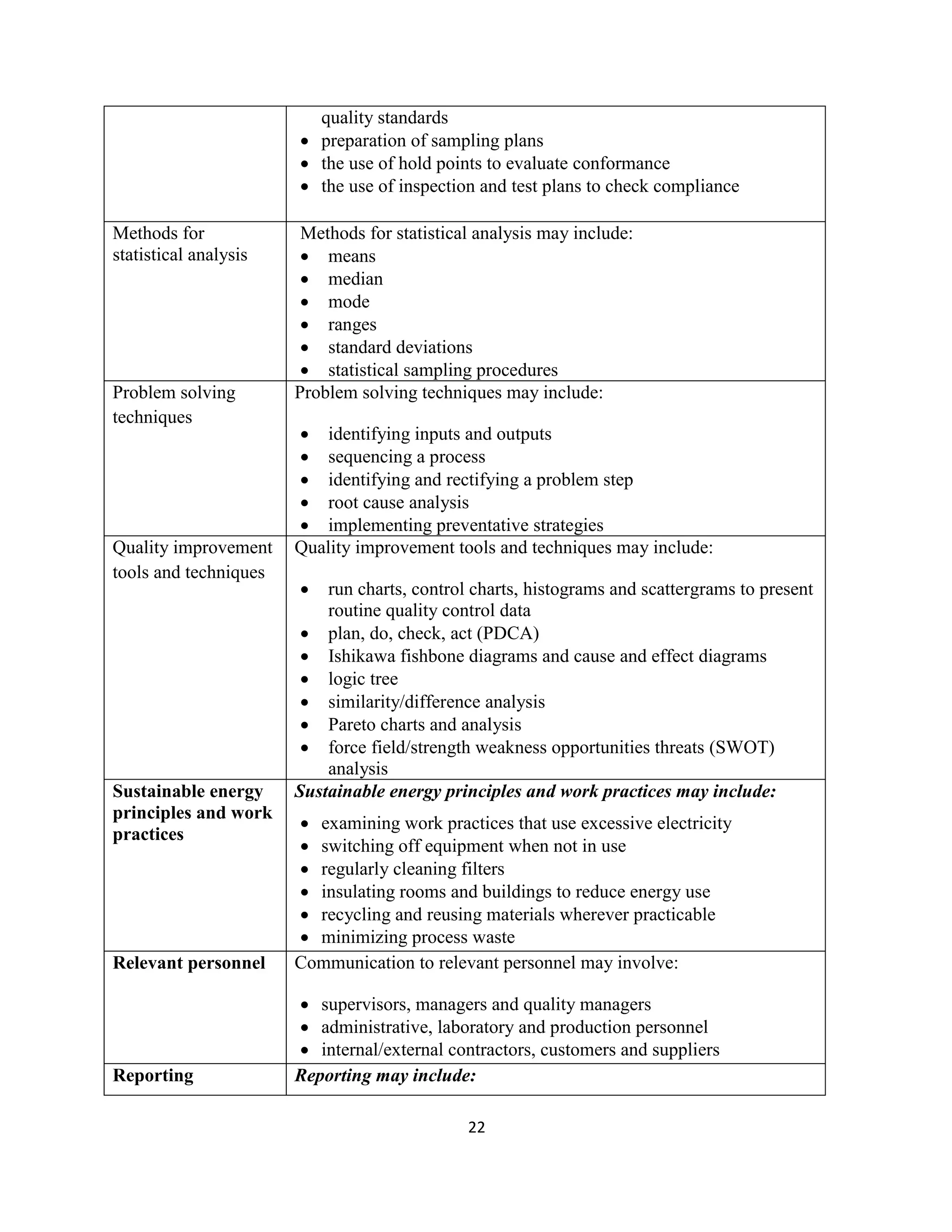
Table 1 Apply Continuous Improvement Processes (Kaizen) LSA HHS2 11 1012 level II
Occupational Standard: Household Services Level I& II
Unit Title Apply Continuous Improvement Processes (Kaizen)
Unit Code LSA HHS2 11 1012
Unit Descriptor This unit of competence covers the exercise of good workplace
practice and effective participation in quality improvement teams.
Personnel are required to ensure the quality and integrity of their own
work, detect non-conformances and work with others to suggest
improvements in productivity and quality.
Elements Performance Criteria
1. Satisfy quality
system
requirements in
daily work
1.1 Access information on quality system requirements for own
job function
1.2 Record and report quality control data in accordance with
quality system
1.3 Follow quality control procedures to ensure products, or data,
are of a defined quality as an aid to acceptance or rejection
1.4 Recognize and report non-conformances or problems
1.5 Conduct work in accordance with sustainable energy work
practices
1.6 Promote sustainable energy principles and work practices to
other workers
2. Analyze
opportunities for
corrective and/or
optimization action
2.1 Compare current work practices, procedures and process or
equipment performance with requirements and/or historical
data or records
2.2 Recognize variances that indicate abnormal or sub-optimal
performance
21
2.3 Collect and/or evaluate batch and/or historical records to
determine possible causes for sub-optimal performance
2.4 Use appropriate quality improvement techniques to rank the
probabilities of possible causes
3. Recommend
corrective and/or
optimization
actions
3.1 Analyze causes to predict likely impacts of changes and decide
on the appropriate actions
3.2 Identify required changes to standards and procedures and
training
3.3 Report recommendations to designated personnel
4. Participate in the
implementation of
recommended
actions
4.1 Implement approved actions and monitor performance
following changes to evaluate results
4.2 Implement changes to systems and procedures to eliminate
possible causes
4.3 Document outcomes of actions and communicate them to
relevant personnel
5. Participate in the
development of
continuous
improvement
strategies
5.1 Review all relevant features of work practice to identify
possible contributing factors leading to sub-optimal
performance
5.2 Identify options for removing or controlling the risk of sub-
optimal performance
5.3 Assess the adequacy of current controls, quality methods and
systems
5.4 Identify opportunities to continuously improve performance
5.5 Develop recommendations for continual improvements of
work practices, methods, procedures and equipment
effectiveness
5.6 Consult with appropriate personnel to refine recommendations
before implementation of approved improvement strategies
5.7 Document outcomes of strategies and communicate them to
relevant personnel
Variable Range
Quality control
procedures
Quality control procedures may include:
 standards imposed by regulatory and licensing bodies
 enterprise quality procedures
 working to a customer brief or batch card and associated quality
procedures
 checklists to monitor job progress against agreed time, costs and
22
quality standards
 preparation of sampling plans
 the use of hold points to evaluate conformance
 the use of inspection and test plans to check compliance
Methods for
statistical analysis
Methods for statistical analysis may include:
 means
 median
 mode
 ranges
 standard deviations
 statistical sampling procedures
Problem solving
techniques
Problem solving techniques may include:
 identifying inputs and outputs
 sequencing a process
 identifying and rectifying a problem step
 root cause analysis
 implementing preventative strategies
Quality improvement
tools and techniques
Quality improvement tools and techniques may include:
 run charts, control charts, histograms and scattergrams to present
routine quality control data
 plan, do, check, act (PDCA)
 Ishikawa fishbone diagrams and cause and effect diagrams
 logic tree
 similarity/difference analysis
 Pareto charts and analysis
 force field/strength weakness opportunities threats (SWOT)
analysis
Sustainable energy
principles and work
practices
Sustainable energy principles and work practices may include:
 examining work practices that use excessive electricity
 switching off equipment when not in use
 regularly cleaning filters
 insulating rooms and buildings to reduce energy use
 recycling and reusing materials wherever practicable
 minimizing process waste
Relevant personnel Communication to relevant personnel may involve:
 supervisors, managers and quality managers
 administrative, laboratory and production personnel
 internal/external contractors, customers and suppliers
Reporting Reporting may include:
23
 verbal responses
 data entry into laboratory or enterprise database
 brief written reports using enterprise proformas
Quality
improvement
opportunities
Quality improvement opportunities could include improved:
 production processes
 hygiene and sanitation procedures
 reductions in waste and re-work
 laboratory layout and work flow
 safety procedures
 communication with customers
 methods for sampling, testing and recording data
Occupational health
and safety (OHS)
and environmental
management
requirements
OHS and environmental management requirements:
 all operations must comply with enterprise OHS and
environmental management requirements, which may be imposed
through regional or federal legislation - these requirements must
not be compromised at any time
 all operations assume the potentially hazardous nature of samples
and require standard precautions to be applied
 where relevant, users should access and apply current industry
understanding of infection control issued by the Ministry of
Health
Evidence Guide
Critical Aspects of
Competence
Assessors should ensure that candidates can:
 use the enterprise's quality systems and business goals as a basis
for decision making and action
 apply all relevant procedures and regulatory requirements to
ensure the quality and integrity of the products/services or data
provided
 apply and promote sustainable energy principles and work
practices
 detect non-conforming products or services in the work area
 follow enterprise procedures for documenting and reporting
information about quality
 contribute effectively within a team to recognize and recommend
improvements in productivity and quality
 apply effective problem solving strategies
 implement and monitor improved practices and procedures
Underpinning
Knowledge and
Demonstrates knowledge of:
 specifications for laboratory products and services in the
24
Attitudes candidate's work area
 quality requirements associated with the individual's job function
and/or work area
 scientific and technical knowledge underpinning the processes,
procedures, equipment and instrumentation associated with the
candidate's work tasks and duties
 workplace procedures associated with the candidate's regular
technical duties
 sustainable energy principles
 relevant health, safety and environment requirements
 layout of the enterprise, divisions and laboratory
 organizational structure of the enterprise
 lines of communication
 role of laboratory services to the enterprise and customers
 methods of making/recommending improvements
 Standards, procedures and/or enterprise requirements
Underpinning Skills Demonstrates skills to:
 applying problem solving techniques and strategies
 applying statistical analysis and statistical sampling procedures
 detecting non-conforming products or services in the work area
 documenting and reporting information about quality
 contributing effectively within a team to recognize and
recommend improvements in productivity and quality
 implementing and monitoring improved practices and procedures
 organizing, prioritizing activities and items
 reading and interpreting documents describing procedures
 recording activities and results against templates and other
prescribed formats
 working with others
Resources
Implication
Access may be required to:
 workplace procedures and plans relevant to work area
 specifications and documentation relating to planned, currently
being implemented, or implemented changes to work processes
and procedures relevant to the candidate
 documentation and information in relation to production, waste,
overheads and hazard control/management
 reports from supervisors/managers
 case studies and scenarios to assess responses to contingencies
 enterprise quality manual and procedures
 quality control data/records
 customer complaints and rectifications
25
Methods of
Assessment
Competence in this unit may be assessed by using a combination of
the following to generate evidence:
 demonstration in the workplace
 suitable simulation
 case studies/scenarios (particularly for assessment of
contingencies, improvement scenarios, and so on)
 verified reports of improvements suggested and implemented by
the candidate individually
Those aspects of competence dealing with improvement processes
could be assessed by the use of suitable simulations and/or a pilot
plant and/or a range of case studies and scenarios.
In all cases, practical assessment should be supported by questions to
assess essential knowledge and those aspects of competence which
are difficult to assess directly.
Context of
Assessment
Competence may be assessed in the work place or in a simulated
workplace setting / environment.
Table 2Kaizen and prevent and eliminate 3MU (MUDA, MURI and MURA)
Occupational Standard: Level II
Unit Title Prevent and Eliminate 3MU
Unit Code
Unit Descriptor This unit of competence covers the knowledge, skills and attitude
required to prevent and eliminate 3MU (MUDA, MURI and
MURA) in his/her their workplace. It covers responsibility for the
day-to-day operation of the work and ensures Kaizen elements are
continuously improved and institutionalized.
Elements Performance Criteria
1. Prepare for work.
1.1. Work instructions are used to determine job requirements,
including method, material and equipment.
1.2. Job specifications are read and interpreted following working
manual.
1.3. OHS requirements, including dust and fume collection,
26
breathing apparatus and eye and ear personal protection needs
are observed throughout the work.
1.4. Appropriate material is selected for work.
1.5. Safety equipment and tools are identified and checked for safe
and effective operation.
2. Identify 3MU.
2.1. Plan of 3MU identification is prepared and implemented.
2.2. Causes and effects of 3MU are discussed.
2.3. Tools and techniques are used to draw and analyze current
situation of the work place.
2.4. 3M are identified and measured based on relevant procedures.
2.5. Identified and measured wastes are reported to relevant
personnel.
3. Eliminate 3MU.
3. 1. Plan of 3MU elimination is prepared and implemented.
3. 2. Necessary attitude and the ten basic principles for
improvement are adopted to eliminate waste/MUDA.
3. 3. Tools and techniques are used to eliminate wastes/MUDA
based on the procedures and OHS.
3. 4. Wastes/MUDA are reduced and eliminated in accordance with
OHS and organizational requirements.
3. 5. Improvements gained by elimination of waste/MUDA are
reported to relevant bodies.
4. Prevent occurrence of
3M.
4.1. Plan of 3M prevention is prepared and implemented.
4.2. Standards required for machines, operations, defining normal
and abnormal conditions, clerical procedures and procurement
are discussed and prepared.
4.3. Occurrences of 3M are prevented by using visual and auditory
control methods.
4.4. Waste-free workplace is created using 5W and 1H sheet.
4.5. The completion of required operation is done in accordance
with standard procedures and practices.
4.6. The updating of standard procedures and practices is facilitated.
4.7. The capability of the work team that aligns with the
requirements of the procedure is ensured.
Variable Range
27
OHS requirements May include, but not limited to:
 Protective clothing and equipment, use of tooling and
equipment, workplace environment and safety, handling of
material, use of firefighting equipment, enterprise first aid,
hazard control and hazardous materials and substances.
 Personal protective equipment is to include that prescribed
under legislation/regulations/codes of practice and workplace
policies and practices.
 Safe operating procedures are to include, but are not limited to
the conduct of operational risk assessment and treatments
associated with workplace organization.
 Emergency procedures related to this unit are to include but
may not be limited to emergency shutdown and stopping of
equipment, extinguishing fires, enterprise first aid requirements
and site evacuation.
Safety equipment and tools May include, but not limited to:
 Dust masks/goggles
 Glove
 Working cloth
 First aid and safety shoes
3MU May include, but not limited to:
 MUDA (waste)
 MURI (over burden)
 MURA (un-evenness)
Tools and techniques May include, but not limited to:
 Plant Layout
 Process flow
 Other Analysis tools
 Do time study by work element
 Measure Travel distance
 Take a photo of workplace
 Measure Total steps
 Make list of items/products, who produces them and who uses
them & those in warehouses, storages etc.
 Focal points to Check and find out existing problems
 5S
 Layout improvement
 Brainstorming
 Andon
 U-line
 In-lining
28
 Unification
 Multi-process handling & Multi-skilled operators
 A.B. control (Two point control)
 Cell production line
 TPM (Total Productive Maintenance)
Relevant procedures May include, but not limited to:
 Make waste visible
 Be conscious of the waste
 Be accountable for the waste and Measure the waste.
The ten basic principles for
improvement
May include,:
 Throw out all of your fixed ideas about how to do things.
 Think of how the new method will work- not how it won.
 Don’t accept excuses. Totally deny the status quo.
 Don’t seek perfection. A 50 percent implementation rate is fine
as long as it’s done on the spot.
 Correct mistakes the moment they are found.
 Don’t spend a lot of money on improvements.
 Problems give you a chance to use your brain.
 Ask “why?” at least five times until you find the ultimate
cause.
 Ten people’s ideas are better than one person’s.
 Improvement knows no limits.
Visual and auditory control
methods
May include, but not limited to:
 Red Tagging
 Sign boards
 Outlining
 Andons
 Kanban, etc.
5W and 1H May include, but not limited to:
 Who
 What
 Where
 When
 Why and How
Evidence Guide
Critical Aspects of
Competence
Demonstrates skills and knowledge to:
 Discuss why 3MU occur in the workplace
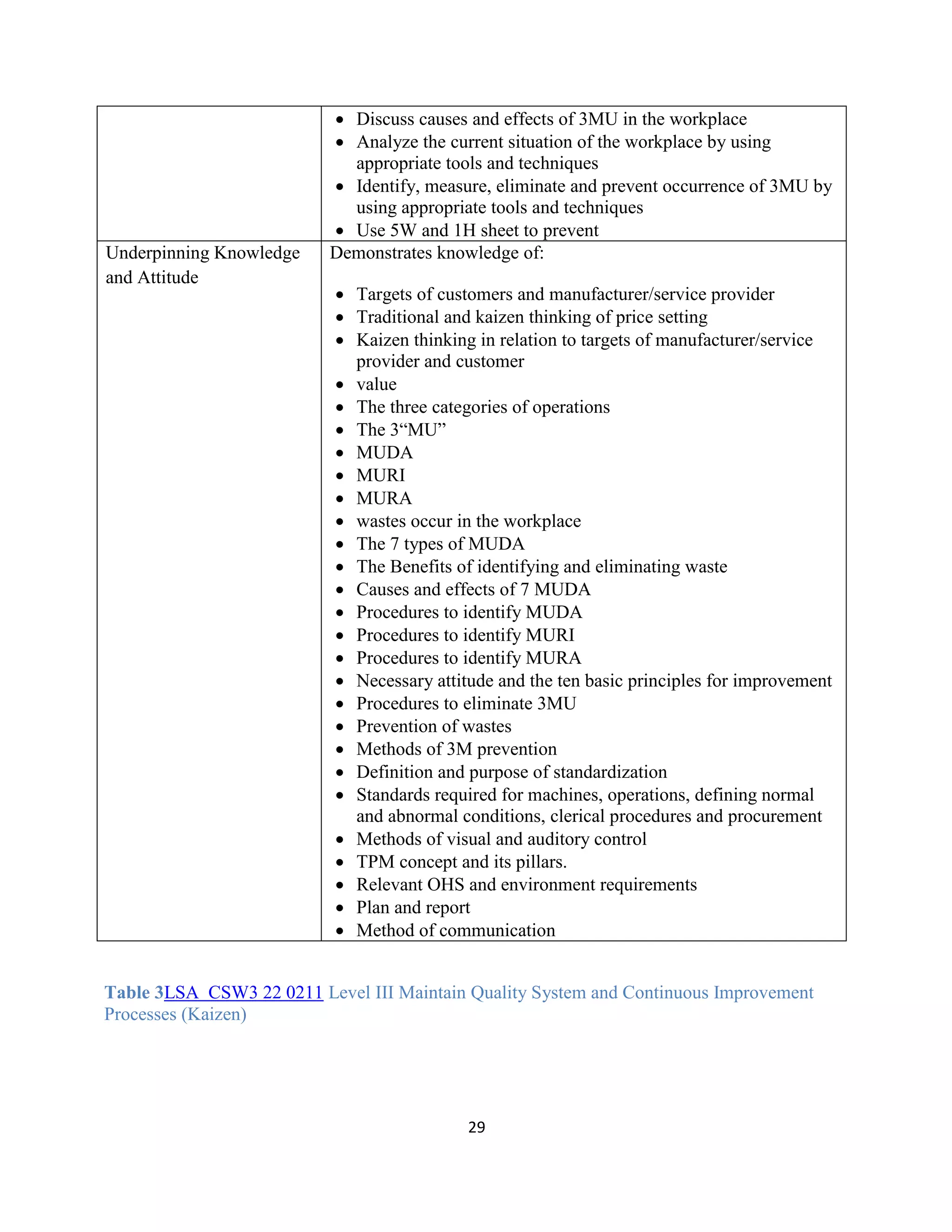
29
 Discuss causes and effects of 3MU in the workplace
 Analyze the current situation of the workplace by using
appropriate tools and techniques
 Identify, measure, eliminate and prevent occurrence of 3MU by
using appropriate tools and techniques
 Use 5W and 1H sheet to prevent
Underpinning Knowledge
and Attitude
Demonstrates knowledge of:
 Targets of customers and manufacturer/service provider
 Traditional and kaizen thinking of price setting
 Kaizen thinking in relation to targets of manufacturer/service
provider and customer
 value
 The three categories of operations
 The 3“MU”
 MUDA
 MURI
 MURA
 wastes occur in the workplace
 The 7 types of MUDA
 The Benefits of identifying and eliminating waste
 Causes and effects of 7 MUDA
 Procedures to identify MUDA
 Procedures to identify MURI
 Procedures to identify MURA
 Necessary attitude and the ten basic principles for improvement
 Procedures to eliminate 3MU
 Prevention of wastes
 Methods of 3M prevention
 Definition and purpose of standardization
 Standards required for machines, operations, defining normal
and abnormal conditions, clerical procedures and procurement
 Methods of visual and auditory control
 TPM concept and its pillars.
 Relevant OHS and environment requirements
 Plan and report
 Method of communication
Table 3LSA CSW3 22 0211 Level III Maintain Quality System and Continuous Improvement
Processes (Kaizen)
30
Occupational Standard: Community Service Work Level III
Unit Title
Maintain Quality System and Continuous Improvement
Processes (Kaizen)
Unit Code LSA CSW3 22 0211
Unit Descriptor This unit of competence covers the skills and knowledge required to
prevent process improvements in their own work from slipping back
to former practices or digressing to less efficient practices. It covers
responsibility for the day- to-day operation of the work/functional
area and ensuring that quality system requirements are met and that
continuous improvements are initiated and institutionalized.
Elements Performance Criteria
1. Develop and
maintain quality
framework within
work area
1.1 Distribute and explain information about the enterprise's quality
system to personnel
1.2 Encourage personnel to participate in improvement processes
and to assume responsibility and authority
1.3 Allocate responsibilities for quality within work area in
accordance with quality system
1.4 Provide coaching and mentoring to ensure that personnel are
able to meet their responsibilities and quality requirements
2. Maintain quality
documentation
2.1 Identify required quality documentation, including records of
improvement plans and initiatives
2.2 Prepare and maintain quality documentation and keep accurate
data records
2.3 Maintain document control system for work area
2.4 Contribute to the development and revision of quality manuals
and work instructions for the work area
2.5 Develop and implement inspection and test plans for quality
controlled products
31
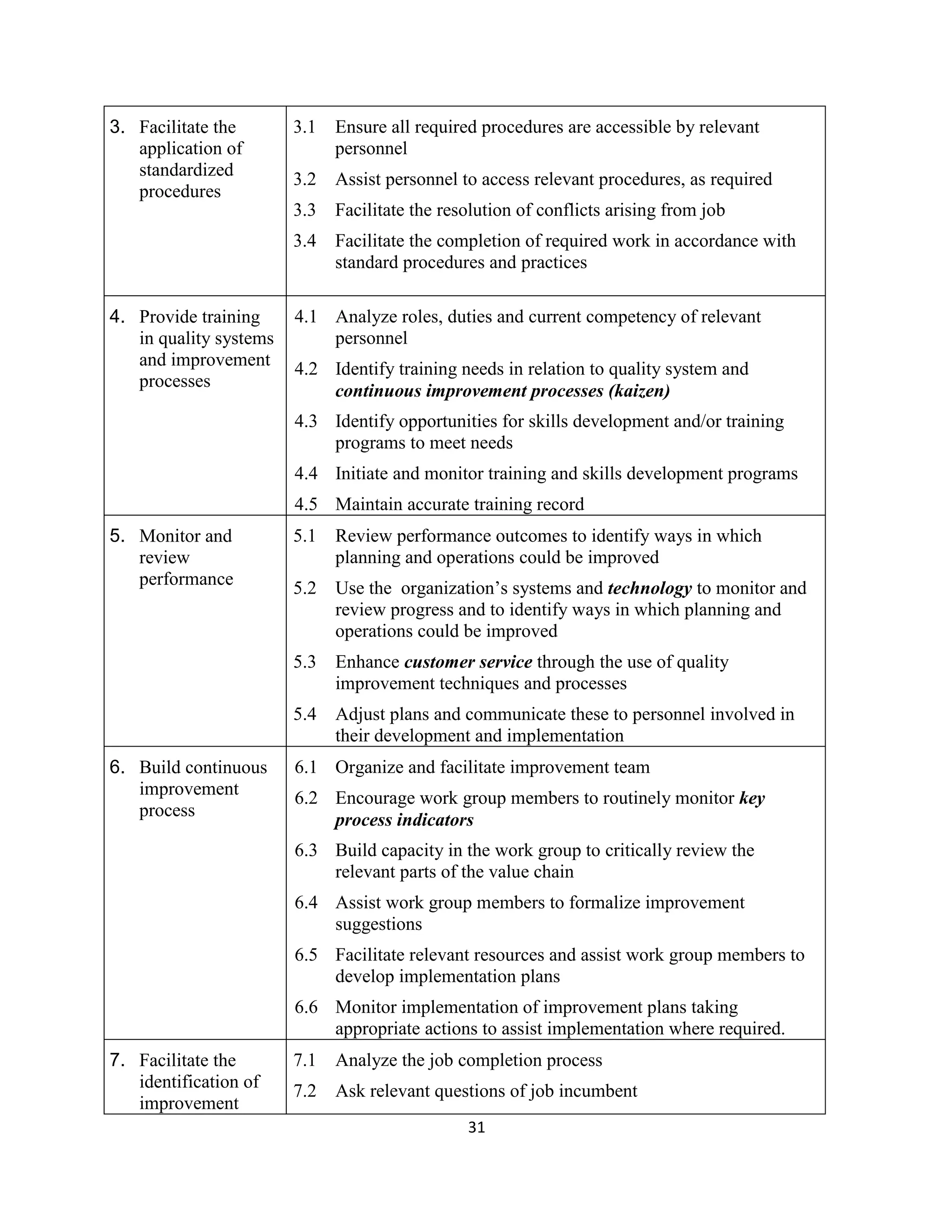
3. Facilitate the
application of
standardized
procedures
3.1 Ensure all required procedures are accessible by relevant
personnel
3.2 Assist personnel to access relevant procedures, as required
3.3 Facilitate the resolution of conflicts arising from job
3.4 Facilitate the completion of required work in accordance with
standard procedures and practices
4. Provide training
in quality systems
and improvement
processes
4.1 Analyze roles, duties and current competency of relevant
personnel
4.2 Identify training needs in relation to quality system and
continuous improvement processes (kaizen)
4.3 Identify opportunities for skills development and/or training
programs to meet needs
4.4 Initiate and monitor training and skills development programs
4.5 Maintain accurate training record
5. Monitor and
review
performance
5.1 Review performance outcomes to identify ways in which
planning and operations could be improved
5.2 Use the organization’s systems and technology to monitor and
review progress and to identify ways in which planning and
operations could be improved
5.3 Enhance customer service through the use of quality
improvement techniques and processes
5.4 Adjust plans and communicate these to personnel involved in
their development and implementation
6. Build continuous
improvement
process
6.1 Organize and facilitate improvement team
6.2 Encourage work group members to routinely monitor key
process indicators
6.3 Build capacity in the work group to critically review the
relevant parts of the value chain
6.4 Assist work group members to formalize improvement
suggestions
6.5 Facilitate relevant resources and assist work group members to
develop implementation plans
6.6 Monitor implementation of improvement plans taking
appropriate actions to assist implementation where required.
7. Facilitate the
identification of
improvement
7.1 Analyze the job completion process
7.2 Ask relevant questions of job incumbent
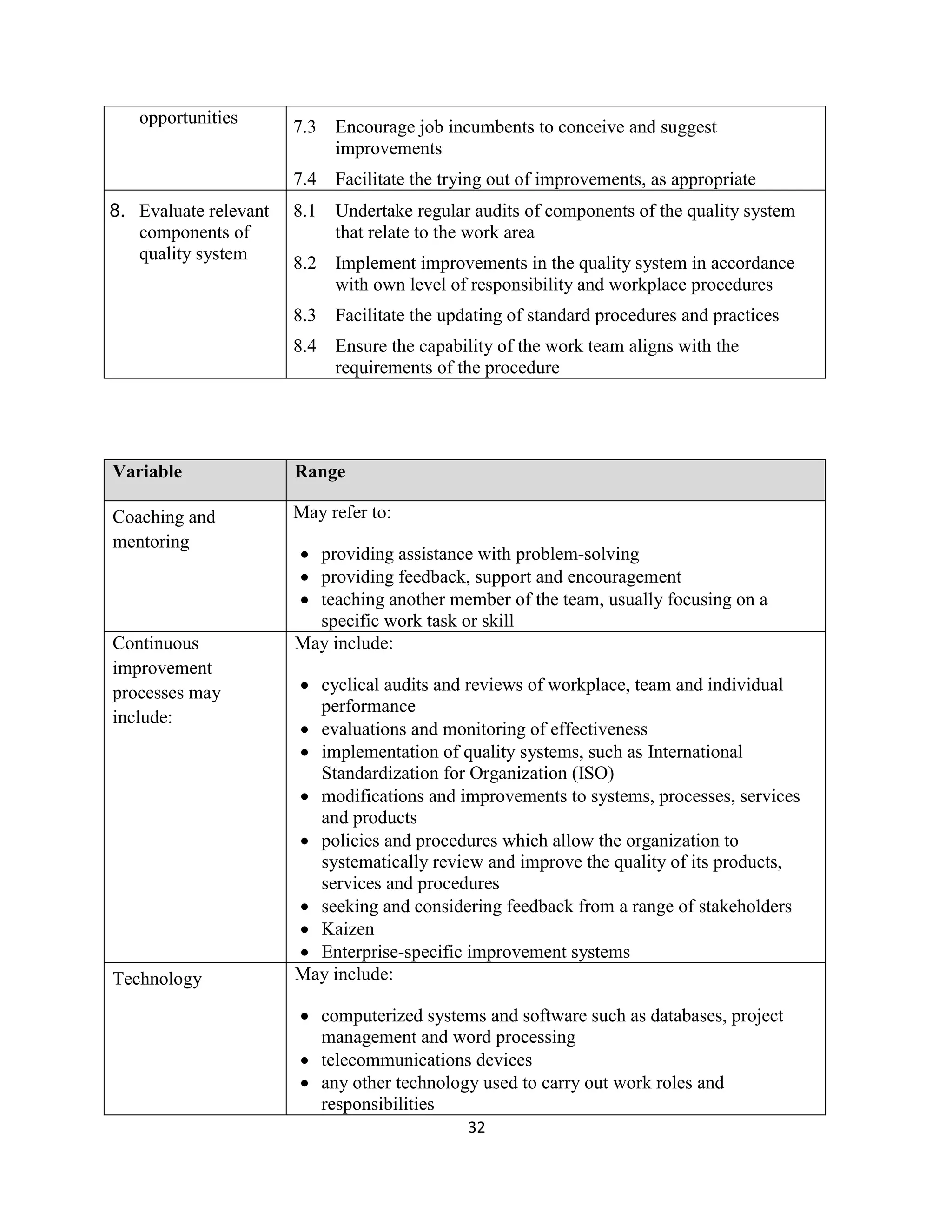
32
opportunities
7.3 Encourage job incumbents to conceive and suggest
improvements
7.4 Facilitate the trying out of improvements, as appropriate
8. Evaluate relevant
components of
quality system
8.1 Undertake regular audits of components of the quality system
that relate to the work area
8.2 Implement improvements in the quality system in accordance
with own level of responsibility and workplace procedures
8.3 Facilitate the updating of standard procedures and practices
8.4 Ensure the capability of the work team aligns with the
requirements of the procedure
Variable Range
Coaching and
mentoring
May refer to:
 providing assistance with problem-solving
 providing feedback, support and encouragement
 teaching another member of the team, usually focusing on a
specific work task or skill
Continuous
improvement
processes may
include:
May include:
 cyclical audits and reviews of workplace, team and individual
performance
 evaluations and monitoring of effectiveness
 implementation of quality systems, such as International
Standardization for Organization (ISO)
 modifications and improvements to systems, processes, services
and products
 policies and procedures which allow the organization to
systematically review and improve the quality of its products,
services and procedures
 seeking and considering feedback from a range of stakeholders
 Kaizen
 Enterprise-specific improvement systems
Technology May include:
 computerized systems and software such as databases, project
management and word processing
 telecommunications devices
 any other technology used to carry out work roles and
responsibilities
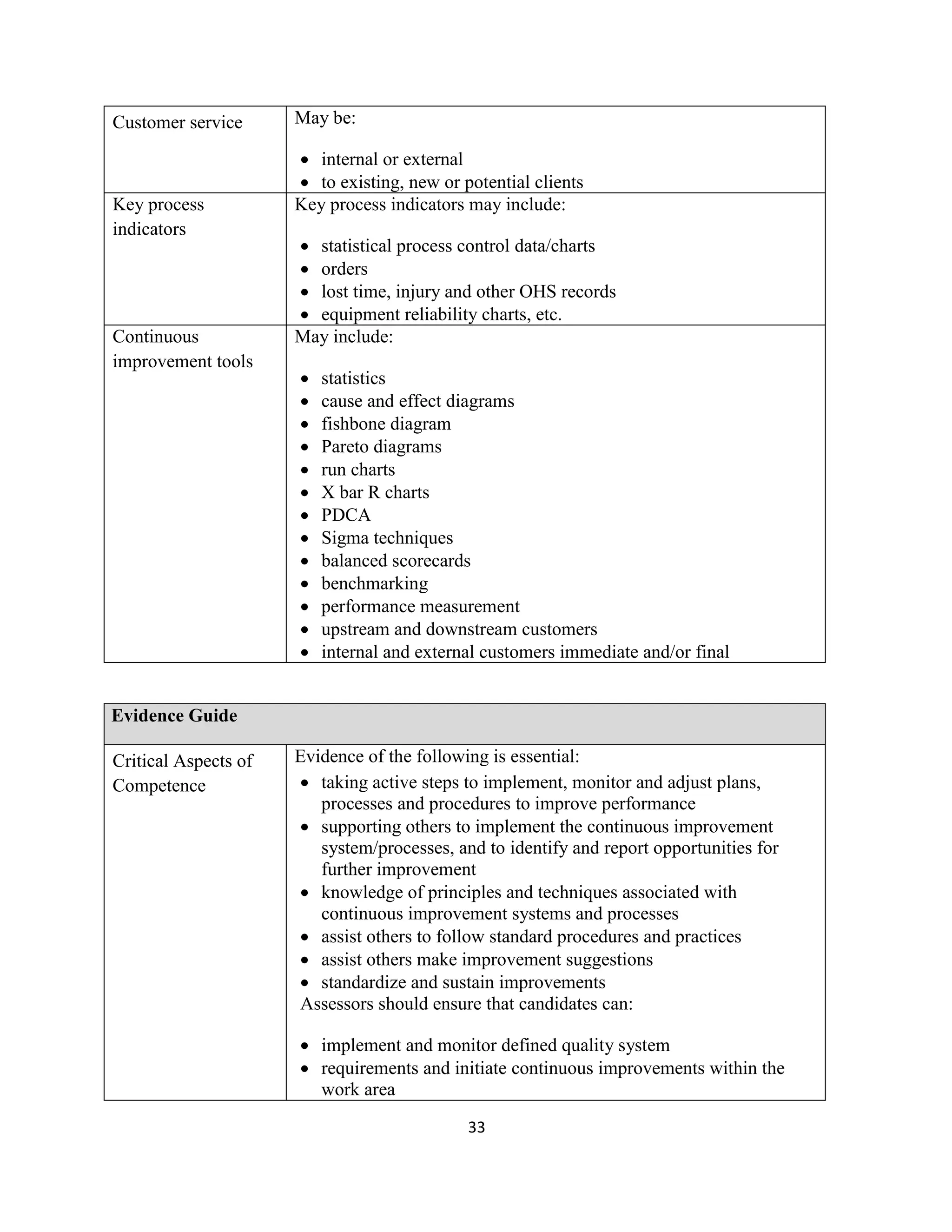
33
Customer service May be:
 internal or external
 to existing, new or potential clients
Key process
indicators
Key process indicators may include:
 statistical process control data/charts
 orders
 lost time, injury and other OHS records
 equipment reliability charts, etc.
Continuous
improvement tools
May include:
 statistics
 cause and effect diagrams
 fishbone diagram
 Pareto diagrams
 run charts
 X bar R charts
 PDCA
 Sigma techniques
 balanced scorecards
 benchmarking
 performance measurement
 upstream and downstream customers
 internal and external customers immediate and/or final
Evidence Guide
Critical Aspects of
Competence
Evidence of the following is essential:
 taking active steps to implement, monitor and adjust plans,
processes and procedures to improve performance
 supporting others to implement the continuous improvement
system/processes, and to identify and report opportunities for
further improvement
 knowledge of principles and techniques associated with
continuous improvement systems and processes
 assist others to follow standard procedures and practices
 assist others make improvement suggestions
 standardize and sustain improvements
Assessors should ensure that candidates can:
 implement and monitor defined quality system
 requirements and initiate continuous improvements within the
work area
34
 apply effective problem identification and problem solving
techniques
 strengthen customer service through a focus on continuous
improvement
 implement, monitor and evaluate quality systems in the work area
 initiate quality processes to enhance the quality of performance of
individuals and teams in the work area
 gain commitment of individuals/teams to quality principles and
practices
 implement effective communication strategies
 encourage ideas and feedback from team members when
developing and refining techniques and processes
 analyze training needs and implement training programs
 prepare and maintain quality and audit documentation
Underpinning
Knowledge and
Attitudes
Demonstrates knowledge of:
 principles and techniques associated with:
 benchmarking
 best practice
 change management
 continuous improvement systems and processes
 quality systems
 range of procedures available and their application to different
jobs
 applicability of takt time and muda to jobs
 identification and possible causes of variability in jobs
 continuous improvement process for organization
 questioning techniques
 methods of conceiving improvements
 suggestion and try out procedures
 relevant OHS
 quality measurement tools for use in continuous improvement
processes
 established communication channels and protocols
 communication/reporting protocols
 continuous improvement principles and process
 enterprise business goals and key performance indicators
 enterprise information systems management
 enterprise organizational structure, delegations and
responsibilities
 policy and procedure development processes
 relevant health, safety and environment requirements
 relevant national and international quality standards and protocols
 standard operating procedures (SOPs) for the technical work
35
performed in work area
 enterprise quality system
Underpinning Skills Demonstrates skills to:
 coach and mentor team members
 gain the commitment of individuals and teams to continuously
improve
 innovate or design better ways of performing work
 communicate with relevant people
 prioritize and plan tasks related to encouraging and improving use
of standardized procedures
 negotiate with others to resolve conflicts and gain commitment to
standardized procedures
 facilitate other employees in improvement activities
 implement and monitor defined quality system requirements
 initiate continuous improvements within the work area
 apply effective problem identification and problem solving
techniques
 strengthen customer service through a focus on continuous
improvement
 implement, monitor and evaluate quality systems
 implement effective communication strategies
 encourage ideas and feedback from team members when
developing and refining techniques and processes
 analyze training needs and implementing training programs
 prepare and maintain quality and audit documentation
Resources
Implication
Access may be required to:
 workplace procedures and plans relevant to work area
 specifications and documentation relating to planned, currently
being implemented, or implemented changes to work processes
and procedures relevant to the candidate
 documentation and information in relation to production, waste,
overheads and hazard control/management
 enterprise quality manual and procedures
 quality control data/records
Methods of
Assessment
Competence in this unit may be assessed by using a combination of
the following to generate evidence:
 demonstration in the workplace
 suitable simulation
 oral or written questioning to assess knowledge of procedures and
contingency management; principles and techniques associated
with change management
 review of the audit process and outcomes generated by the
36
candidates
Those aspects of competence dealing with improvement processes
could be assessed by the use of suitable simulations and/or a pilot
plant and/or a range of case studies and scenarios.
In all cases, practical assessment should be supported by questions to
assess underpinning knowledge and those aspects of competence
which are difficult to assess directly.
Context of
Assessment
Competence may be assessed in the work place or in a simulated
workplace setting / environment.
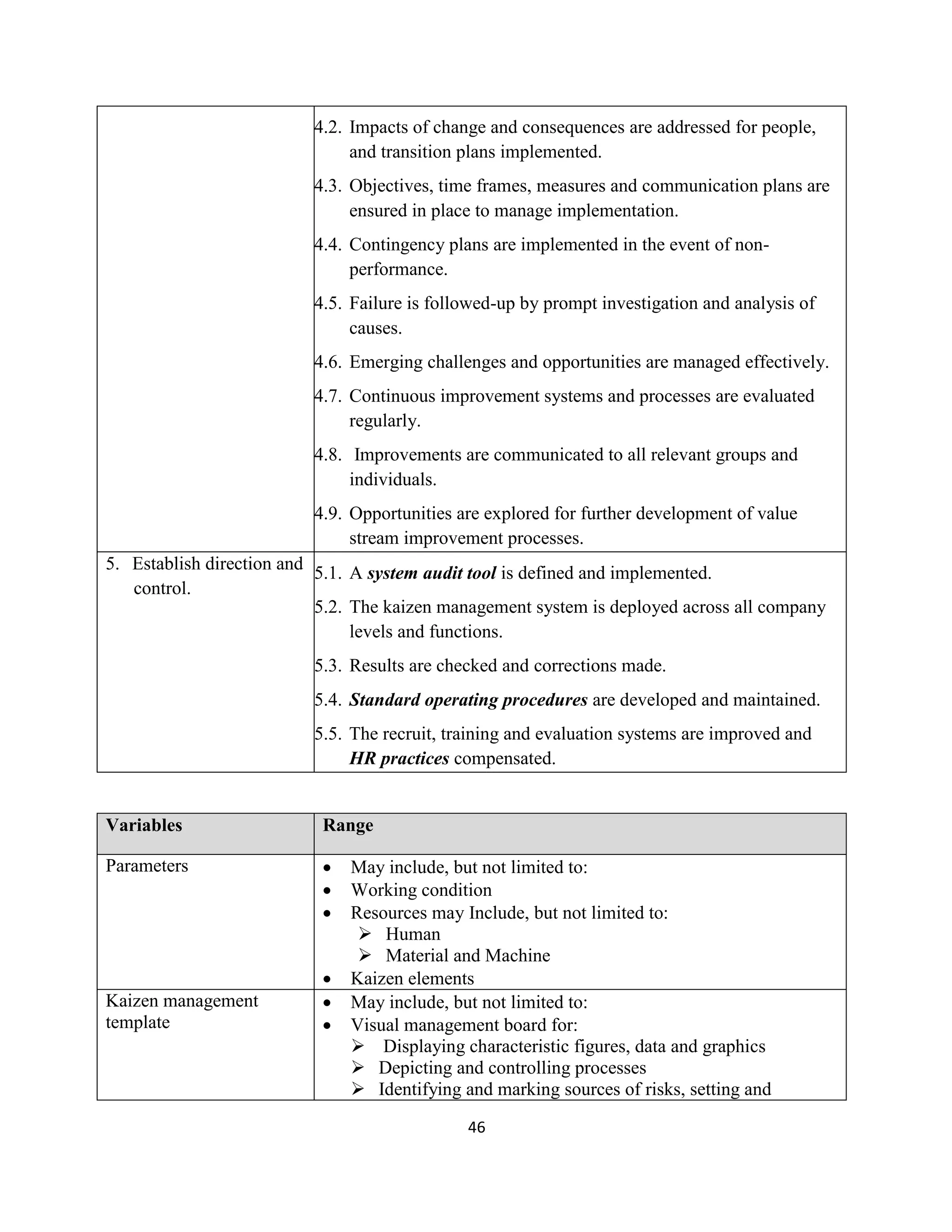
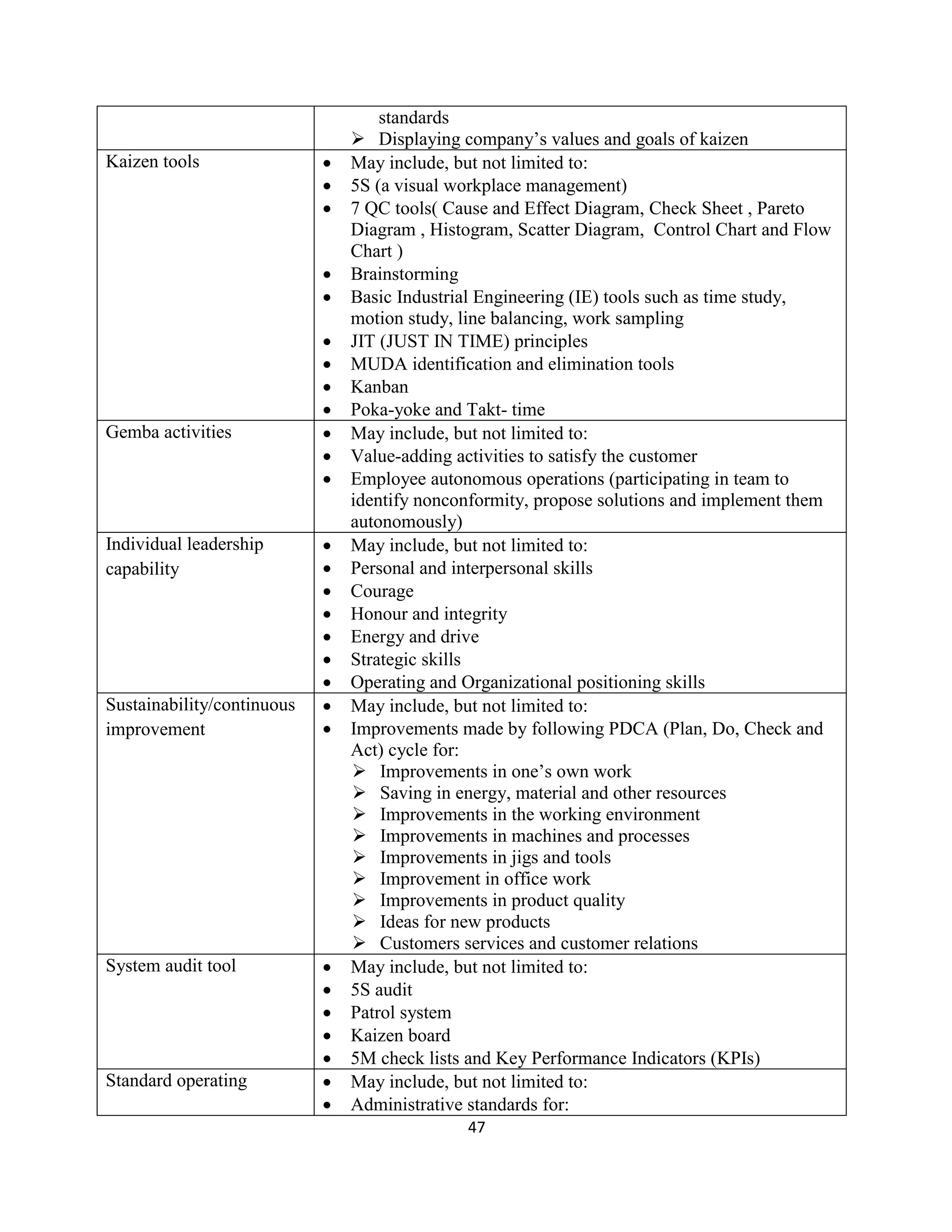
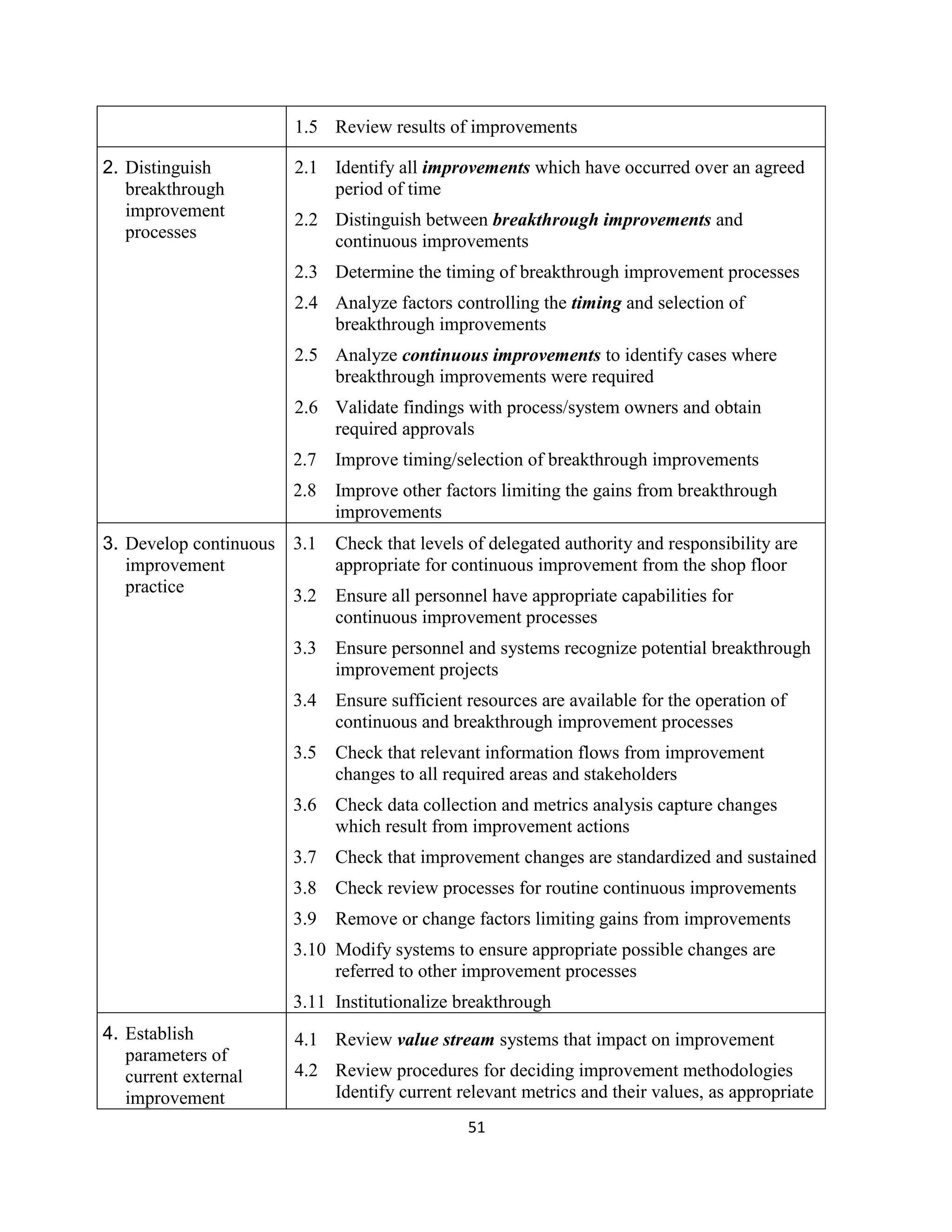
Table 4Apply Problem Solving Techniques and Tools Level III
Occupational Standard: Level III
Unit Title Apply Problem Solving Techniques and Tools
Unit Code
Unit Descriptor This unit of competency covers the knowledge, skills and attitude
required to apply scientific problem solving techniques and tools to
enhance quality, productivity and other kaizen elements on continual
basis.
Elements Performance criteria
1. Identify and select
theme/problem.
1.1. Safety requirements are followed in accordance with safety
plans and procedures.
1.2. All possible problems related to the process /Kaizen elements
are listed using statistical tools and techniques.
1.3. All possible problems related to kaizen elements are identified
and listed on Visual Management Board/Kaizen Board.
1.4. Problems are classified based on obviousness of cause and
action.
1.5. Critical factors like the number of customers affected, potentials
for bottlenecks, and number of complaints etc… are selected.
1.6. Problems related to priorities of Kaizen elements are given due
37
emphasis and selected.
2. Grasp current status
and set goal.
2.1. The extent of the problem is defined.
2.2. Appropriate and achievable goal is set.
3. Establish activity
plan.
3.1. The problem is confirmed.
3.2. High priority problem is selected.
3.3. The extent of the problem is defined.
3.4. Activity plan is established as per 5W 1H.
4. Analyse causes of a
problem.
4.1. All possible causes of a problem are listed.
4.2. Cause relationships are analysed using4M1E.
4.3. Causes of the problems are identified.
4.4. Root causes are selected.
4.5. The root cause which is most directly related to the problem is
selected.
4.6. All possible ways are listed using creative idea generation to
eliminate the most critical root cause.
4.7. The suggested solutions are carefully tested and evaluated for
potential complications.
4.8. Detailed summaries of the action plan are prepared to
implement the suggested solution.
5. Examine
countermeasures and
their implementation.
5.1. Action plan is implemented by medium KPT members.
5.2. Implementation is monitored according to the agreed procedure
and activities are checked with preset plan.
6. Assess effectiveness
of the solution.
6.1. Tangible and intangible results are identified.
6.2. The results are verified over time.
6.3. Tangible results are compared with targets using various types
of diagram.
7. Standardize and
sustain operation.
7.1. If the goal is achieved, the new procedures are standardized
and made part of daily activities.
7.2. All employees are trained on the new Standard Operating
Procedures (SOPs).
7.3. SOP is verified and followed by all employees.
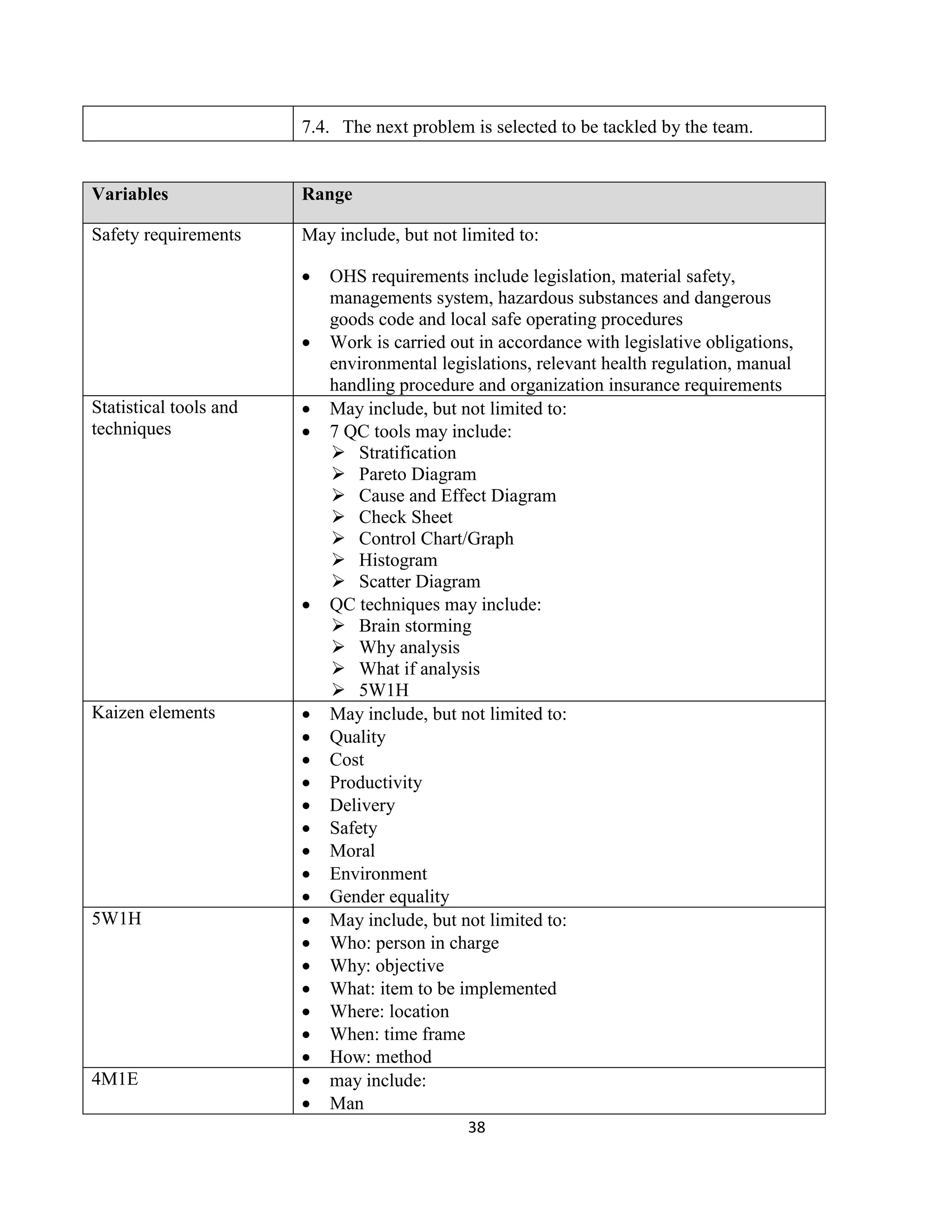
38
7.4. The next problem is selected to be tackled by the team.
Variables Range
Safety requirements May include, but not limited to:
 OHS requirements include legislation, material safety,
managements system, hazardous substances and dangerous
goods code and local safe operating procedures
 Work is carried out in accordance with legislative obligations,
environmental legislations, relevant health regulation, manual
handling procedure and organization insurance requirements
Statistical tools and
techniques
 May include, but not limited to:
 7 QC tools may include:
 Stratification
 Pareto Diagram
 Cause and Effect Diagram
 Check Sheet
 Control Chart/Graph
 Histogram
 Scatter Diagram
 QC techniques may include:
 Brain storming
 Why analysis
 What if analysis
 5W1H
Kaizen elements  May include, but not limited to:
 Quality
 Cost
 Productivity
 Delivery
 Safety
 Moral
 Environment
 Gender equality
5W1H  May include, but not limited to:
 Who: person in charge
 Why: objective
 What: item to be implemented
 Where: location
 When: time frame
 How: method
4M1E  may include:
 Man
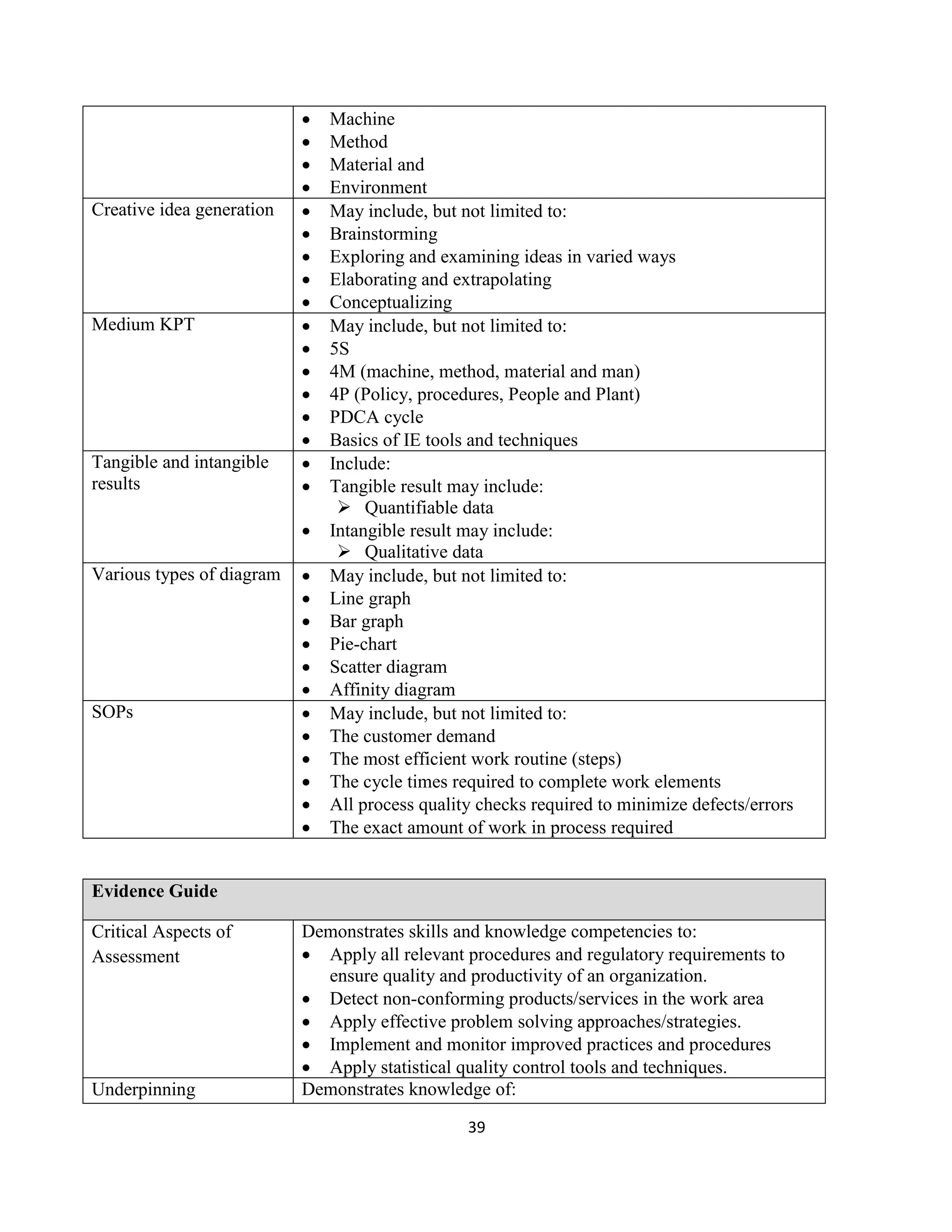
39
 Machine
 Method
 Material and
 Environment
Creative idea generation  May include, but not limited to:
 Brainstorming
 Exploring and examining ideas in varied ways
 Elaborating and extrapolating
 Conceptualizing
Medium KPT  May include, but not limited to:
 5S
 4M (machine, method, material and man)
 4P (Policy, procedures, People and Plant)
 PDCA cycle
 Basics of IE tools and techniques
Tangible and intangible
results
 Include:
 Tangible result may include:
 Quantifiable data
 Intangible result may include:
 Qualitative data
Various types of diagram  May include, but not limited to:
 Line graph
 Bar graph
 Pie-chart
 Scatter diagram
 Affinity diagram
SOPs  May include, but not limited to:
 The customer demand
 The most efficient work routine (steps)
 The cycle times required to complete work elements
 All process quality checks required to minimize defects/errors
 The exact amount of work in process required
Evidence Guide
Critical Aspects of
Assessment
Demonstrates skills and knowledge competencies to:
 Apply all relevant procedures and regulatory requirements to
ensure quality and productivity of an organization.
 Detect non-conforming products/services in the work area
 Apply effective problem solving approaches/strategies.
 Implement and monitor improved practices and procedures
 Apply statistical quality control tools and techniques.
Underpinning Demonstrates knowledge of:
40
Knowledge and Attitude  QC story/PDCA cycle
 QC story/Problem solving steps
 QCC techniques
 7 QC tools
 Basic IE tools and techniques.
 SOP
 Quality requirements associated with the individual's job
function and/or work area
 Workplace procedures associated with the candidate's regular
technical duties
 Relevant health, safety and environment requirements
 organizational structure of the enterprise
 Lines of communication
 Methods of making/recommending improvements.
 Reporting procedures
Underpinning Skills Demonstrates skills to:
 Apply problem solving techniques and tools
 Apply statistical analysis tools
 Apply Visual Management Board/Kaizen Board.
 Detect non-conforming products or services in the work area
 Document and report information about quality, productivity and
other kaizen elements.
 Contribute effectively within a team to recognize and
recommend improvements in quality, productivity and other
kaizen elements.
 Implement and monitor improved practices and procedures.
 Organize and prioritize activities and items.
 Read and interpret documents describing procedures
 Record activities and results against templates and other
prescribed formats.
Resources Implication Access is required to real or appropriately simulated situations,
including work areas, materials and equipment, and to information
on workplace practices and OHS practices.
Methods of Assessment Competence may be assessed through:
 Interview/Written Test
 Observation/Demonstration with Oral Questioning
Context of Assessment Competence may be assessed in the work place or in a simulated
work place setting.
Table 5Manage Continuous Improvement System level LSA CSW4 23 0211
41
Occupational Standard: Community Service Works Level IV
Unit Title Manage Continuous Improvement System
Unit Code LSA CSW4 23 0211
Unit Descriptor This unit describes the performance outcomes, skills and knowledge
required to sustain and develop an environment in which continuous
improvement, innovation and learning are promoted and rewarded.
Elements Performance Criteria
1. Review programs,
systems and
processes
1.1 Establish strategies to monitor and evaluate performance of key
systems and processes
1.2 Undertake detailed analyses of supply chains, operational and
product/service delivery systems
1.3 Identify performance measures, and assessment tools and
techniques, and evaluate their effectiveness
1.4 Analyze performance reports and variance from plans for all
key result areas of the organization
1.5 Identify and analyze changing trends and opportunities relevant
to the organization
1.6 Seek advice from specialists, where appropriate, to identify
technology and electronic commerce opportunities
2. Develop options
for continuous
improvement
2.1 Brief groups on performance improvement strategies and
innovation as an essential element of competition
2.2 Foster creative climate and organizational learning through the
promotion of interaction within and between work groups
2.3 Encourage, test and recognize new ideas and entrepreneurial
behavior where successful
2.4 Accept failure of an idea during trialing, and recognize,
celebrate and embed success into systems
2.5 Undertake risk management and cost benefit analyses for each
option/idea approved for trial
42
2.6 Approve innovations through agreed organizational processes
3. Implement
innovative
processes
3.1 Promote continuous improvement as an essential part of doing
business
3.2 Address impact of change and consequences for people, and
implement transition plans
3.3 Ensure objectives, timeframes, measures and communication
plans are in place to manage implementation
3.4 Implement contingency plans in the event of non-performance
3.5 Follow-up failure by prompt investigation and analysis of
causes
3.6 Manage emerging challenges and opportunities effectively
3.7 Evaluate continuous improvement systems and processes
regularly
3.8 Communicate costs and benefits of innovations and
improvements to all relevant groups and individuals
Variable Range
Sustainability may
include:
 addressing environmental and resource sustainability initiatives,
such as environmental management systems, action plans, green
office programs, surveys and audits
 applying the waste management hierarchy in the workplace
 complying with regulations and corporate social responsibility
considerations for sustainability to enhance the organization’s
standing in business and community environments
 determining organization’s most appropriate waste treatment,
including waste to landfill, recycling, re-use, recoverable
resources and wastewater treatment
 implementing ecological footprint
 implementing environmental management systems, e.g. ISO
14001:1996 Environmental management systems life cycle
analyses
 implementing government initiatives,
 improving resource and energy efficiency
 initiating and maintaining appropriate organizational procedures
for operational energy consumption
 introducing a green office program - a cultural change program
 introducing green purchasing
 introducing national and international reporting initiatives,
43
 introducing product stewardship
 reducing emissions of greenhouse gases
 reducing use of non-renewable resources
 referencing standards, guidelines and approaches, such as
sustainability covenants and compacts or triple bottom line
reporting
 supporting sustainable supply chain
Supply chains
include:
 network of facilities that procures raw materials, transforms them
into intermediate products or services and then finished goods or
service, and delivers them through a distribution system
 procurement, production and distribution, viewed as interlinked
not as discrete elements
Performance reports
may include:
 budget or cost variance
 customer service
 environmental
 financial
 OHS
 quality
 other operating parameters
Evidence Guide
Critical Aspects of
Competence
Evidence of the following is essential:
 demonstration of consultation processes to introduce or evaluate
an existing continuous improvement process or system, including
suggested actions or an action plan
 generation of an idea or concept which exhibits creative thinking
and which offers the possibility of advantaging the organization
 how the concept or idea was introduced, tested and evaluated - the
idea or concept does not have to have been shown to work or to
be adopted by the business
 knowledge of quality management and continuous improvement
theories
Underpinning
Knowledge and
Attitudes
Demonstrates knowledge of:
 quality management and continuous improvement theories
 creativity/innovation theories/concepts
 risk management
 cost-benefit analysis methods
 creativity and innovation theories and concepts
 organizational learning principles
 quality management and continuous improvement theories
 risk management
 sustainability practices
44
Underpinning Skills Demonstrates skills to:
 analytical skills to identify improvement opportunities in relation
to
 the services/products delivered or concepts/ideas developed
 flexibility and creativity skills to think laterally
 leadership skills to foster a commitment to quality and an
openness to innovation
 teamwork and leadership skills to foster a commitment to quality
and an openness to innovation
Resources
Implication
Access may be required to:
 workplace procedures and plans relevant to work area
 appropriate documentation and resources normally used in the
workplace
Methods of
Assessment
Competence in this unit may be assessed by using a combination of
the following to generate evidence:
 demonstration in the workplace
 suitable simulation
 oral or written questioning to assess knowledge of principles and
techniques associated with change management
 evaluation of strategies established to monitor and evaluate
performance of key systems and processes
 review of briefing of groups on performance improvement
strategies and innovation
Those aspects of competence dealing with improvement processes
could be assessed by the use of suitable simulations and/or a pilot
plant and/or a range of case studies and scenarios.
In all cases, practical assessment should be supported by questions to
assess essential knowledge and those aspects of competence which
are difficult to assess directly.
Context of
Assessment
Competence may be assessed in the work place or in a simulated
workplace setting / environment.
Table 6Manage Continuous Improvement Process (Kaizen)
Occupational Standard: Level IV
45
Unit Title Manage Continuous Improvement Process (Kaizen)
Unit Code
Unit Descriptor This unit describes the performance, outcomes, knowledge, attitude
and skills required to sustain and develop an environment in which
continuous improvement, innovation and learning are promoted,
rewarded and managed.
Elements Performance Criteria
1. Diagnose the current
status.
1.1. Parameters used for study current situation are obtained.
1.2. Internal and external environment is analyzed.
1.3. Problems related to targeted environment is recognized and
identified.
1.4. Problems regarding to current situation are analyzed.
1.5. Alternatives are generated.
1.6. Best alternatives are selected.
2. Design an effective
continuous
improvement process
(kaizen).
2.1. The values, mission and goals of kaizen management system are
clarified.
2.2. The kaizen management template and a visual management
logo full of purpose and meaning are developed.
2.3. A clear action strategy (master and detailed plans) is defined.
2.4. The most effective and proven kaizen tools are chosen and
applied.
2.5. A practical way is identified to involve all employees in Gemba
activities (top, middle and bottom).
3. Develop change
capability.
3. 1. Kaizen Promotion Team Structure is developed.
3. 2. The Kaizen Training Plan is defined and started.
3. 3. Supervisors’ kaizen capability and habits are developed.
3. 4.Key people are developed in terms of individual leadership
capability.
4. Implement improved
processes.
4.1. Sustainability/continuous improvement are promoted as an
essential part of doing business.
46
4.2. Impacts of change and consequences are addressed for people,
and transition plans implemented.
4.3. Objectives, time frames, measures and communication plans are
ensured in place to manage implementation.
4.4. Contingency plans are implemented in the event of non-
performance.
4.5. Failure is followed-up by prompt investigation and analysis of
causes.
4.6. Emerging challenges and opportunities are managed effectively.
4.7. Continuous improvement systems and processes are evaluated
regularly.
4.8. Improvements are communicated to all relevant groups and
individuals.
4.9. Opportunities are explored for further development of value
stream improvement processes.
5. Establish direction and
control.
5.1. A system audit tool is defined and implemented.
5.2. The kaizen management system is deployed across all company
levels and functions.
5.3. Results are checked and corrections made.
5.4. Standard operating procedures are developed and maintained.
5.5. The recruit, training and evaluation systems are improved and
HR practices compensated.
Variables Range
Parameters  May include, but not limited to:
 Working condition
 Resources may Include, but not limited to:
 Human
 Material and Machine
 Kaizen elements
Kaizen management
template
 May include, but not limited to:
 Visual management board for:
 Displaying characteristic figures, data and graphics
 Depicting and controlling processes
 Identifying and marking sources of risks, setting and
47
standards
 Displaying company’s values and goals of kaizen
Kaizen tools  May include, but not limited to:
 5S (a visual workplace management)
 7 QC tools( Cause and Effect Diagram, Check Sheet , Pareto
Diagram , Histogram, Scatter Diagram, Control Chart and Flow
Chart )
 Brainstorming
 Basic Industrial Engineering (IE) tools such as time study,
motion study, line balancing, work sampling
 JIT (JUST IN TIME) principles
 MUDA identification and elimination tools
 Kanban
 Poka-yoke and Takt- time
Gemba activities  May include, but not limited to:
 Value-adding activities to satisfy the customer
 Employee autonomous operations (participating in team to
identify nonconformity, propose solutions and implement them
autonomously)
Individual leadership
capability
 May include, but not limited to:
 Personal and interpersonal skills
 Courage
 Honour and integrity
 Energy and drive
 Strategic skills
 Operating and Organizational positioning skills
Sustainability/continuous
improvement
 May include, but not limited to:
 Improvements made by following PDCA (Plan, Do, Check and
Act) cycle for:
 Improvements in one’s own work
 Saving in energy, material and other resources
 Improvements in the working environment
 Improvements in machines and processes
 Improvements in jigs and tools
 Improvement in office work
 Improvements in product quality
 Ideas for new products
 Customers services and customer relations
System audit tool  May include, but not limited to:
 5S audit
 Patrol system
 Kaizen board
 5M check lists and Key Performance Indicators (KPIs)
Standard operating  May include, but not limited to:
 Administrative standards for:
48
procedures  Managing the business
 Administration
 Personnel Guidelines
 Job Descriptions
 Guidelines for preparing cost information
 Operation standards for:
 Describing the way a job is done.
 Help realising Quality, cost, delivery.
 Addressing the need to satisfy customers.
 Using the process that’s the best.
 Producing work in the most cost effective manner.
 Assuring total quality for the customer.
HR practices  May include, but not limited to:
 Resources May Include, but not limited to:
 Recruit and retain high quality people with innovative skills
and a good track, record in innovation
 HR development is used for:
 Strategic capability and provide encouragement and
facilities for enhancing innovating skills and enhancing the
intellectual capital of the organization
 Reward will:
 Provide financial incentives and rewards and recognition for
successful innovation
Evidence Guide
Critical Aspects of
Assessment
Demonstrates skills and knowledge competencies to:
 Establish policy and cross-functional goals for kaizen
 Deploy and implement goals as directed through policy
deployment and cross-functional management.
 Realize goals through deployment and audits.
 Build systems, procedures, and structures conducive to kaizen.
 Use kaizen in functional capabilities.
 Introduce Kaizen as a corporate strategy
 Provide support and direction between allocating resources
 Establish, maintain and upgrade standards.
 Make employees conscious through training programs.
 Assist employees develop skills and tools for problem solving.
Underpinning Knowledge
and Attitude
Demonstrates knowledge of:
 Quality management and continuous improvement theories
 Creativity/Innovation theories/concepts
 Competitive systems and practices tools, including:
 5S
 JUST IN Time (JIT)
49
 Mistake proofing
 Process mapping
 Establishing customer pull
 Setting of KPIs/metrics
 SOP
 Kaizen elements/targets.
 Identification and elimination of waste/MUDA
 Continuous improvement processes including
implementation, monitoring and evaluation strategies for a
whole organization and its value stream
 Difference between breakthrough improvement and
continuous improvement
 Organizational goals, processes and structure
 Approval processes within organization
 Methods of determining the impact of a change
 Customer perception of value
 Define, Measure, Analyze, Improve and Control (DMAIC)
to sustain process
Underpinning Skills Demonstrates Skills to:
 Use leadership skills to foster a commitment to quality and
openness to improvement.
 Analyze training needs and implementing training programs
 Prepare and maintain quality and audit documentation
 Undertake self-directed problem solving and decision-making on
issues of a broad and/or highly specialized nature and in highly
varied and/or highly specialized contexts
 Communicate at all levels in the organization and to audiences of
different levels of literacy and numeracy
 Analyze current state/situation of the organization.
 Analyze individually and collectively the implementation of
competitive systems and practices tools in the organization and
determining strategies for improved implementation
 Solve highly varied and highly specialized problems related to
competitive systems and practices implementation and
continuous improvement to root cause
 Negotiate with stakeholders, where required, to obtain
information required for implementation and refinement of
continuous improvements, including management, unions,
employees and members of the community.
 Review relevant metrics, including all those measures which
might be used to determine the performance of the improvement
system, including:
 Key Performance Indicators (KPIs) for existing
processes
 Quality statistics
 Delivery timing and quantity statistics
50
 Process/equipment reliability (‘uptime’)
Resources Implication Access is required to real or appropriately simulated situations,
including work areas, materials and equipment, and to information
on workplace practices and OHS practices.
Methods of Assessment Competence may be assessed through:
 Interview/Written Test
 Observation/Demonstration with Oral Questioning
Context of Assessment Competence may be assessed in the work place or in a simulated
work place setting.
Table 7Develop and Refine Systems for Continuous Improvement in Operations level LSA
CSW5 21 0211
Occupational Standard: Community Service Work Level V
Unit Title
Develop and Refine Systems for Continuous Improvement in
Operations
Unit Code LSA CSW5 21 0211
Unit Descriptor This unit of competency covers the skills, knowledge and processes
required to ensure that continuous improvement systems do not
stultify and continue to improve along with other operational systems
in an organization. This unit is about improving the process yield/unit
of effort or cost, reducing process variation and increasing process
reliability, upgrading, enhancing or refining process outputs, and
includes developing a culture of reviewing and sustaining change
ensuring improvements are maintained and built on.
Elements Performance Criteria
1. Establish
parameters of
current internal
improvement
systems
1.1 Describe organization systems that impact on continuous
improvement
1.2 Identify current relevant metrics and their values
1.3 Check that metrics are collected for all improvements
1.4 Determine yield of current improvement processes
51
1.5 Review results of improvements
2. Distinguish
breakthrough
improvement
processes
2.1 Identify all improvements which have occurred over an agreed
period of time
2.2 Distinguish between breakthrough improvements and
continuous improvements
2.3 Determine the timing of breakthrough improvement processes
2.4 Analyze factors controlling the timing and selection of
breakthrough improvements
2.5 Analyze continuous improvements to identify cases where
breakthrough improvements were required
2.6 Validate findings with process/system owners and obtain
required approvals
2.7 Improve timing/selection of breakthrough improvements
2.8 Improve other factors limiting the gains from breakthrough
improvements
3. Develop continuous
improvement
practice
3.1 Check that levels of delegated authority and responsibility are
appropriate for continuous improvement from the shop floor
3.2 Ensure all personnel have appropriate capabilities for
continuous improvement processes
3.3 Ensure personnel and systems recognize potential breakthrough
improvement projects
3.4 Ensure sufficient resources are available for the operation of
continuous and breakthrough improvement processes
3.5 Check that relevant information flows from improvement
changes to all required areas and stakeholders
3.6 Check data collection and metrics analysis capture changes
which result from improvement actions
3.7 Check that improvement changes are standardized and sustained
3.8 Check review processes for routine continuous improvements
3.9 Remove or change factors limiting gains from improvements
3.10 Modify systems to ensure appropriate possible changes are
referred to other improvement processes
3.11 Institutionalize breakthrough
4. Establish
parameters of
current external
improvement
4.1 Review value stream systems that impact on improvement
4.2 Review procedures for deciding improvement methodologies
Identify current relevant metrics and their values, as appropriate
52
system
4.3 Determine yield of current improvement processes
4.4 Review results of improvements
5. Explore
opportunities for
further development
of value stream
improvement
processes
5.1 Review mechanisms for consultation with value stream
members
5.2 Develop mechanisms for further improving joint problem
solving
5.3 Develop mechanisms for increased sharing of organizational
knowledge
5.4 Obtain support and necessary authorizations from
process/system owners
5.5 Capture and standardize improvements
5.6 Improve factors limiting gains from continuous improvements
6. Review systems for
compatibility with
improvement
strategy
6.1 Review all systems which impact or are impacted on
improvements and the improvement system
6.2 Analyze relationships between improvement systems and other
relevant systems
6.3 Analyze practices caused by and results from the systems
6.4 Negotiate changes to the systems to improve the outcomes
from improvement systems
6.5 Obtain necessary approvals to implement changes
6.6 Monitor the implementation of the changes
Variable Range
Competitive systems
and practices
Competitive systems and practices may include, but are not limited
to:
 lean operations
 agile operations
 preventative and predictive maintenance approaches
 monitoring and data gathering systems, such as Systems Control
and Data Acquisition (SCADA) software, Enterprise Resource
Planning (ERP) systems, Materials Resource Planning (MRP) and
proprietary systems
 statistical process control systems, including six sigma and three
sigma
 JIT, kanban and other pull-related operations control systems
53
 supply, value, and demand chain monitoring and analysis
 5S
 continuous improvement (kaizen)
 breakthrough improvement (kaizen blitz)
 cause/effect diagrams
 overall equipment effectiveness (OEE)
 takt time
 process mapping
 problem solving
 run charts
 standard procedures
 current reality tree
 Competitive systems and practices should be interpreted so as to
take into account:
 stage of implementation of competitive systems and practices
 the size of the enterprise
 the work organization, culture, regulatory environment and
the industry sector
Code of practice and
standards
Where reference is made to industry codes of practice, and/or
Ethiopian/international standards, the latest version must be used
Organization systems Organization systems may include:
 problem recognition and solving
 operational/process improvement
 improvement projects
 product/process design and development
 processes for making incremental improvements
Relevant metrics Relevant metrics include all those measures which might be used to
determine the performance of the improvement system and may
include:
 hurdle rates for new investments
 KPIs for existing processes
 quality statistics
 delivery timing and quantity statistics
 process/equipment reliability (‘uptime’)
 incident and non-conformance reports
 complaints, returns and rejects
Process improvement
yield
Improvement process yield may be regarded as:
 the benefit achieved for the effort invested
Breakthrough Breakthrough improvements include:
54
improvements  those which result from a kaizen blitz or other improvement
project or event and are a subset of all improvements
Timing of
breakthrough
improvements
Timing of breakthrough improvements includes:
 frequency (which should be maximized) and duration (which
should be minimized) of events/projects
Continuous
improvement
Continuous improvement is part of normal work and does not require
a special event to occur (although may still require authorizations)
and contrasts with breakthrough improvement/kaizen blitz which
occurs by way of an event or project
Resources for
improvement
Resources for improvements include:
 improvement budget
 guidelines for trialing of possible improvements
 mechanism for approvals for possible improvements
 business case guidelines for proposed improvements
 indicators of success of proposed improvement
 mechanisms for tracking and evaluation of changes
 forum for the open discussion of the results of the
implementation
 mechanisms for the examination of the improvement for
additional improvements
 organization systems to sustain beneficial changes
Capturing value
stream improvements
Capturing value stream improvements includes:
 revised contractual arrangements
 revised specifications
 signed agreements
 other documented arrangements which formalize the raised base
line
Systems impacting
improvements
Systems which impact/are impacted on improvements and the
improvement system include:
 office
 purchasing
 rewards (individual or team at all levels)
 sales
 marketing
 maintenance
 process/product
 transport and logistics
Organizational Organizational knowledge should:
55
knowledge  be able to be quantified or otherwise modified to make its
outcomes measurable or observable
 be able to be expressed in an accessible and distributable form
appropriate to the organization operations and stakeholders
Improvements Improvements may:
 be to process, plant, procedures or practice
 include changes to ensure positive benefits to stakeholders are
maintained
Manager Manager may include:
 any person who may have either a permanent or an ad hoc role in
facilitating the function of multiple teams in a workplace,
departments or entire organizations
Evidence Guide
Critical Aspects of
Competence
A person who demonstrates competency in this unit must be able to
provide evidence of the ability to:
 critically review current continuous improvement processes
 establish ongoing review of continuous improvement processes
 implement improvements in the practice of continuous
improvement
 better align internal and external systems
 gather data through interviews with stakeholders
 review existing data
 obtain additional data through a variety of techniques
 communicate and negotiate at all levels within the organization
Underpinning
Knowledge and
Attitudes
Demonstrates knowledge of:
 competitive systems and practices tools, including:
 value stream mapping
 5S
 Just in Time (JIT)
 mistake proofing
 process mapping
 establishing customer pull
 kaizen and kaizen blitz
 setting of KPIs/metrics
 identification and elimination of waste (muda)
 continuous improvement processes including implementation,
monitoring and evaluation strategies for a whole organization and
56
its value stream
 difference between breakthrough improvement and continuous
improvement
 organizational goals, processes and structure
 approval processes within organization
 cost/benefit analysis methods
 methods of determining the impact of a change
 advantages and disadvantages of communication media, methods
and formats for different messages and audiences
 customer perception of value
 define, measure, analyze, improve, and control and sustain
(DMAIC) process
Underpinning Skills Demonstrates skills to:
 undertaking self-directed problem solving and decision-making
on issues of a broad and/or highly specialized nature and in highly
varied and/or highly specialized contexts
 communicating at all levels in the organization and value stream
and to audiences of different levels of literacy and numeracy
 analyzing current state/situation of the organization and value
stream
 determining and implementing the most appropriate method for
capturing value stream improvements
 collecting and interpreting data and qualitative information from a
variety of sources
 analyzing individually and collectively the implementation of
competitive systems and practices tools in the organization and
determining strategies for improved implementation
 relating implementation and use of competitive systems and
practices and continuous improvement to customer benefit
 solving highly varied and highly specialized problems related to
competitive systems and practices implementation and continuous
improvement to root cause
 negotiating with stakeholders, where required, to obtain
information required for implementation and refinement of
continuous improvements, including management, unions, value
stream members, employees and members of the community
 reviewing relevant metrics, including all those measures which
might be used to determine the performance of the improvement
system, including:
 key performance indicators (KPIs) for existing processes
 quality statistics
 delivery timing and quantity statistics
 process/equipment reliability (‘uptime’)
 incident and non-conformance reports
57
 implementing continuous improvement to support systems and
areas, including maintenance, office, training and human
resources
Resources Implication Access may be required to:
 workplace procedures and plans relevant to work area
 specifications and documentation relating to planned, currently
being implemented, or implemented changes to work processes
and procedures relevant to the assessee
 documentation and information in relation to production, waste,
overheads and hazard control/management
 reports from supervisors/managers
 case studies and scenarios to assess responses to contingencies
Methods of
Assessment
Competence in this unit may be assessed by using a combination of
the following to generate evidence:
 demonstration in the workplace
 suitable simulation
 oral or written questioning to assess knowledge of principles and
techniques associated with change management
In all cases it is expected that practical assessment will be combined
with targeted questioning to assess underpinning knowledge
Context of Assessment Assessment of performance must be undertaken in a workplace using
or implementing one or more competitive systems and practices.
2. Industry extension service
The industry extension service provided to MSE must be first based on the direction of industry
development strategy and then on research/study that identify MSE problems and
implemented/organize service within the plan. The industrial extension must be wise and wide than
supports provided by medium and higher industry development institution. The supports should
include activities such as organizing information, providing training on entrepreneurship and trade
management, technological development and growth selection of technological transfer, marketing
productivity quality improvement and ISO and include analyzing and transfer best experience.
Accordingly the services are provided through TVET institutions in organized form.
a) The industry extension service will be given prior attention to the existed enterprise and
growth oriented sectors until capacitate all enterprises; especially to those supply for export
58
market, produce import goods domestically, in manufacturing and constructions or/and in
cluster centers.
b) Use BDS and KAIZEN services as main tool in industry extension services as methods of
identifying enterprise problem in advance.
c) Training centers in which all experts of industry extension equip/build their capacity are
selected from all regions’ TVET. Training curriculum, trainees of training curriculum and
manuals that help for develop attitude, knowledge and skill of the industry extension
experts are set at federal level.
d) Training modules and manuals to MSE found at various growth levels are set by federal
TVET agency.
e) TVET institutions are responsible to preserve Information about number of enterprises
delivered industry extension service, sector and impacts of the service provision, successful
and not successful of MSE at various levels with justification.
f) In the process, TVET are responsible to keep information and introducing about income of
the products, available job opportunities on the basis of value chain.
g) Enterprises to be trained at regions are assigned to TVET by Regional MSE development
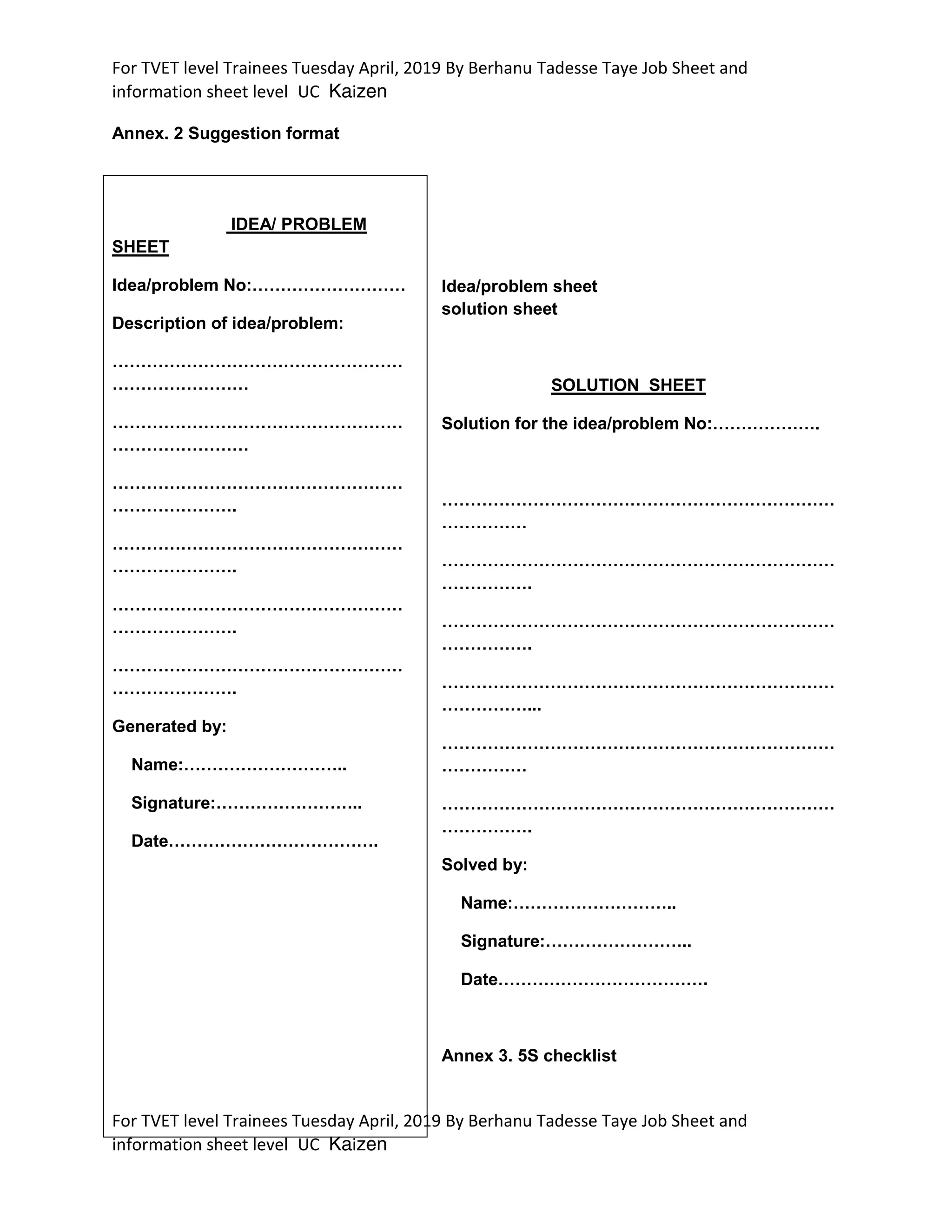
agency
h) Officials who run the industry extension activities in TVET are assigned based on their
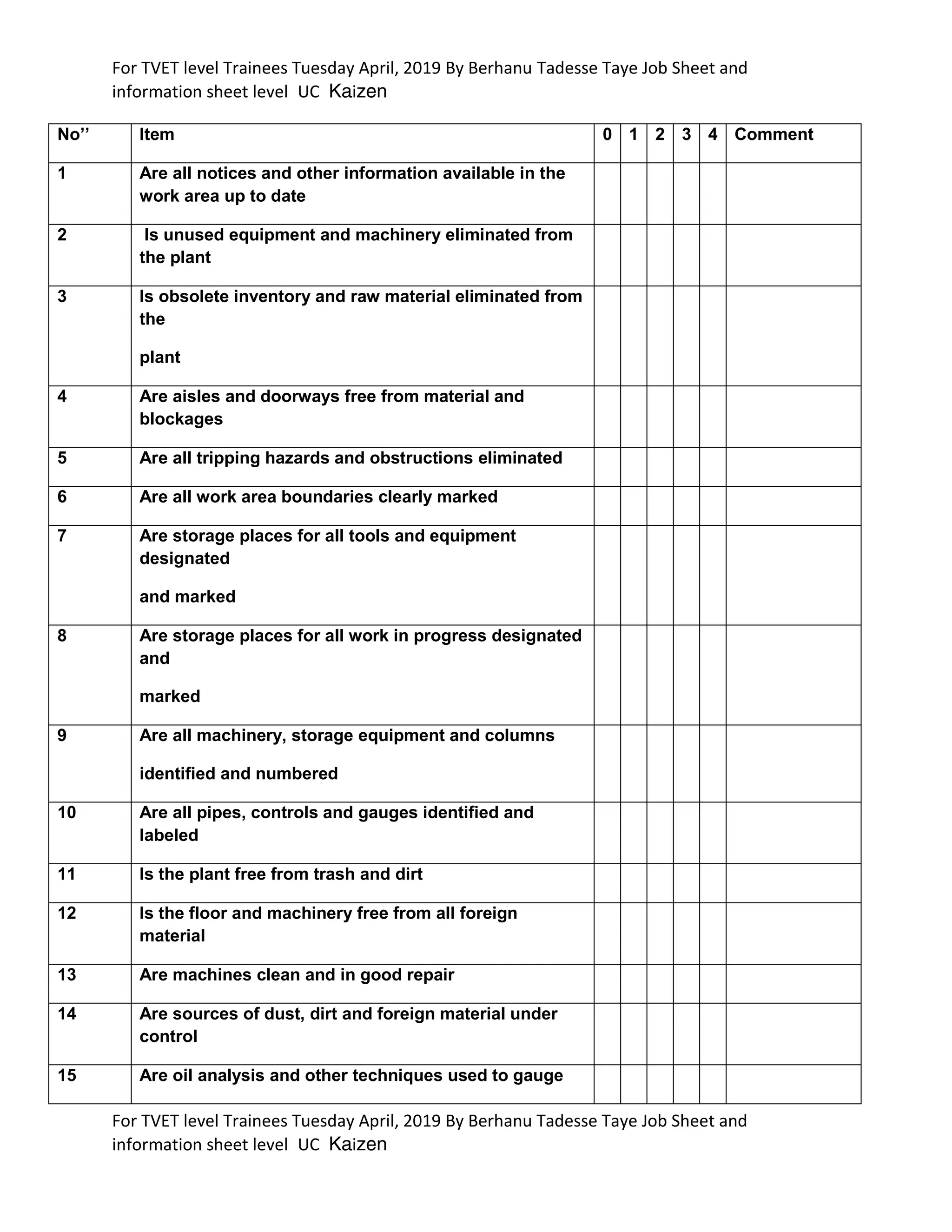
qualification and commitment
i) The industry extension advice/consultancy service provide at regional TVET is on the basis
of value chain.
j) Incentive schemes that increase enterprises’ initiation to achieve best result are set by
TVET and implemented.
k) Budgets for industrial extension prepared by TVET are allocated by the regional
government. System of cost sharing focuses mainly on common services.
l) The services provide to MSE would be based on study/research in order to keep the quality
and effectiveness.
2.1 Directions of the industry extension service
Capacity building of TVET, The TVET teachers and leaders should be given training about the
sector as they are responsible for equipping the enterprises. The training and awareness creation
should redress the wrong perception about MSE’s history related to trainings, technology transfer
59
and enable to understand development directions of the sector, and goals of the industry
development and GTP. The training will also equip teachers and officials with the necessary ability
that enables to deliver the industrial extension services. Accordingly the activities to be done are:
a) Industry extension service will be given to MSE by TVET institutions.
b) TVET institutions will work jointly with other supporters of the sector so as to improve the
modern management capacity & technological level of the MSE, and to expand and make ready
the industry extension service.
Strengthen support providers: Various capacity building activities will be undertaken in order to
make development of the sector sustainable and bring about developmental investor and create
industrialists, to strength capacity of governmental support providers and executive of the sector.
Accordingly the program includes the following.
a) The federal MSE development agency will be reorganized in new form. The agency will
accomplish tasks of capacity building of the agency itself and the regions. Similarly
institutions that implement MSE’s development strategy will be encouraged.
b) The National Bank of Ethiopia /NBE/ will organize department that build and support the
capacity of Micro Finance Institution /MFI/. And it would capacitate the MFI in integration
with other domestic MFI.
c) Center services for capacity building will be established by selecting the best TVET from
each region.
d) Since an integrated support is vital, responsible bodies to implement such as MSE
development agency, MFI, and TVET will work jointly
e) Consultation forum of executive bodies, stakeholders and major actors of the MSE will be
established at various levels. Policies, rules and regulations issued by government will be
ensured by inputs of consultation forum and through participation in planning and
implementation.
f) Strength MSE & creating strong linkage with government projects, and enable actors to
solve their problems by themselves through strong organization.
60
Services delivered in one center Services given for legal basis applying by stakeholders, (a)
Registration and identification of unemployment, and keeping/preserving data about those involved
in business (b) Organizing under cooperatives, registration and award certificate. c) Registration
and provision of trade license trade license for private and MSE. d) Registration of trade license
services of trade unions. (e) Registration of taxpaying (f) Facilitate bookkeeping and auditing
service. Governmental provisions and services, (a) Facilitate, utilize and administrate products
and sales cluster centers. b) Facilitate credit and saving services. (c) Consolidating pay back of
credit and saving, (d) Gathering, analyzing and delivering data to users.(e) Make enterprise
beneficiary by allowing participating in government development projects. f) Support enterprise by
coordinating bazaar, introducing their products /commodities, (g) Facilitating experience sharing
and market linkage among enterprises, and (h) Support enterprise in utilizing common property,
common purchase and searching market linkage. Among other the center service to enterprise will
be given product and sales centers on their business nature and production ability basis, and they
will pay rent 25%, 50%, 75% and 100% in the first year , second year, third year, and fourth year
respectively.
2.1.1 The role of TVET to MSEs
a) Organizing and providing industry extension services that enable to be effective.
b) Identifying the provided technology undertaken and distribute sample and design activities
c) Preparing and providing training on the basis of MSE level of growth /development in depth and
width that enable to be competent
d) Providing support to trainers to get certificate of assurance
e) Providing training and advice services about job creation/innovation/ hard working competency,
KAIZEN that help to realize saving attitude/ outlook and analyzing other related management
principles and methods.
f) providing support and common services of quality control , design … ,maintenance and material
rent services to MSE of the region.
61
2.1.2 Standardization
Standardization or Standardization is the process of developing and implementing standards but
then what is standards? Standard is the best, safest and easiest way, to achieve and maintain a
defined quality level www.Kaizen Institute - India (2013)
Figure 1standard Source: http://kaizeninstituteindia. files.wordpress.com
/2013/12/standard.jpg
2.1.3 Remember STANDARDs should be:
 Simple and clear
 Best, easiest, safest way – - – should only have one at a time
 Way to preserve current know – how
 Guide-lines that enable performance measurement of delegated tasks
 Ways to assure Quality, Cost, Delivery and Safety
 Able to show relationship between cause and effect
 Basis for management (maintenance and improvement of standard)
 Basis for training
62
 Basis for audit or diagnosis
 Way to prevent recurrence of problems and control variability
2.1.4 SDCA Cycle
A refinement of the PDCA cycle aimed at stabilization of production processes prior to making
attempts to improve.
Figure 2 sdcs-cycle
Source: http://kaizeninstituteindia.files.wordpress.com/2013/12/sdcs-cycle.jpg
Standardized work is one of the most powerful but least used KAIZEN/Lean tool. If current best
practices are documented, standardized work forms the baseline for kaizen (continuous
improvement). Once the standard is formed it is further improved and helps to form new standard
and so on. Improving standardized work is a never-ending process therefore. Standards can help
organizations to reduce time, effort and money. It can help to assess the processes, allowing
organizations to take steps to increase efficiency and become more profitable. It can help to
provide a reliable benchmark against which performance can be judged. Standardization provides a
solid foundation upon which to develop new technologies and to enhance existing practices.
Specifically standards help to:
63
 Open up market access
 Provide economies of scale
 Encourage innovation
 Increase awareness of developments and initiatives
Where there are no standard there won’t be standardized work and organizations may suffer or
experience below given problems:
 Products/services might not work as per the expectation
 The quality of product or service may be inferior
 Products/services may not even connect with the customers requirement
 Non-standardized products/services may be dangerous in the customers or society as a
whole
 Customers would be restricted to one manufacturer or supplier
 Limited opportunity to compete with others and therefore grow in the market
2.2 Environmental Health and Safety on Kaizen Events
Kaizen events are a team-based activity to eliminate waste and make rapid changes in the
workplace through the targeted use of Lean methods. If not properly managed, the operational
changes made through kaizen events could harm the health and safety of workers, or result in
violations of regulatory compliance requirements according to Robert B. Pojasek (2004).
To prevent these problems, it is important to establish an effective EHS change management
system for Lean events. This can involve four steps.
1. Train kaizen event team leaders to identify operational changes that may trigger EHS
involvement. These include changes that affect chemical exposure, compliance with
regulations and permits, pollution control management capacity, and work practice
requirements.
2. Identify a responsive EHS contact that Lean managers and kaizen team leaders can contact
with EHS questions and needs.
64
3. Fill out a Lean Event EHS Checklist for each Lean event. This simple tool identifies
operational changes planned during a kaizen event that may warrant the involvement of
EHS expertise.
4. Involve EHS representatives in Lean events early on to anticipate and address potential
EHS compliance issues and avoid risks to workers.
Tools to support the planning and implementation of kaizen events include:
 Questions to identify Lean-environment opportunities in kaizen events;
 Hierarchical process mapping, which can drill down from value stream maps to uncover
specific sources of waste within a single process; and
 Process-specific pollution prevention resources to improve business results and cause less
harm to human health and the environment.
(1) This section draws on pioneering work on process mapping by Robert B. Pojasek
(www.pojasek-associates.com). See Robert B. Pojasek, “Mapping Information Flow Through the
Production Process,” Environmental Quality Management, 13 (3), 2004.
2.2.1 6S (5S + Safety)
6S is modeled after the 5S system designed to reduce waste and optimize productivity through
maintaining a clean, orderly workplace and using visual cues to achieve more consistent
operational results. 6S uses the 5S pillars with an additional pillar for safety. The six pillars of 6S
are according to IKI (2014):
 Sort (Get rid of it);
 Set in order (Organize);
 Shine (Clean and solve);
 Safety (Respect workplace and employee);
 Standardize (Make consistent); and
 Sustain (Keep it up).
65
The pillars work together to increase productivity, reduce defects, make accidents less likely, save
time, and reduce costs. When expanded to include EHS issues, they can also help reduce hazards
and improve environmental performance.
The following four steps provide an example of how EHS issues can be identified and addressed
through 6S using yellow tags along with red tags in the Sort process. The objective of this strategy
is to identify environmental wastes in the work area with a yellow tag, evaluate their need and
potential alternatives, and address them accordingly.
1. Identify yellow-tag targets such as EHS hazards, chemicals and other hazardous materials,
and environmental wastes. Also, agree on criteria for evaluating yellow-tagged items.
2. Make and attach yellow tags to identified items and include data to allow for evaluation of
performance improvements.
3. Evaluate and address yellow-tagged items.
4. Document results.
By explicitly incorporating EHS issues into all six pillars during 6S inspections, you can eliminate
more waste and risk. Inspection checklists and audit questions are powerful tools to sustain 6S
improvements and to prompt identification of new improvement opportunities. (2) Based on an
example from Robert B. Pojasek, “Asking ‘Why?’ Five Times,” Environmental Quality
Management” Autumn (2000: 83). Implementation Strategies Summary of Key Points in the
Toolkit Lean practitioners have an opportunity to realize greater business value by learning to see
and eliminate environmental waste in Lean initiatives. Environmental wastes, such as pollution and
wasted raw materials, can carry large financial burdens, create health and safety hazards, and
require time-consuming support activities.
Effective integration of Lean and environmental management efforts can allow organizations to
avoid risks from non-compliance with regulatory requirements, as well as to discover new ways to
improve operational and environmental performance. The Lean and environment strategy outlined
in this toolkit includes five main components.
1. Commit to eliminate environmental waste through Lean implementation.
66
2. Recognize new improvement opportunities by incorporating EHS icons and data into value
stream maps.
3. Involve staff with EHS expertise in planning for and implementing Lean events on
processes with environmental opportunities.
4. Find and drive out environmental wastes in specific processes by asking key questions and
using new process-improvement tools.
5. Empower and enable workers to eliminate environmental wastes in their work areas
through training, 6S (5S+Safety) workplace evaluation checklists, and colored tags to
identify EHS hazards and issues.
2.2.2 Management Function in KAIZEN
Roles of Management and Employees in Implementing Kaizen
When we see bureaucratic application of the management system it has perceptual difference
between Western nations and Japan regarding job function. These includes: (1). Western
Approach: Importance to systems and procedures are, through systems in that organizational level
and functions are established. Here, the focus is on control i.e. functioning within chance cause
variation level. In order to take action when assign causes creep in the context. Changes are mainly
through innovations. They are top and middle management responsibilities. This leads to the
existence of two types of organizations. (A). Status-quo organization has attempt to improvement
or innovation till market condition forces ;(B). Innovation centred organization: is high technology
industry. Eventually it disappeared after sometime (Imai, 1986). (2). Japanese Approach focuses on
technological and process innovation fall largely in the domain of top and middle management, but
improvements are an all pervasive activity from top to bottom with varying degrees according to
(Imai,1986). Management has two major functions in kaizen (i) Create a conducive environment
and encourages continuous improvement (technological, managerial and operative) and establishes
standards; (ii) maintaining the standards established; as we go from the bottom, the improvement
67
function increases and the top and middle management have a greater role in it. Similarly, as we
come down from the top, the supervisors and workers have a greater role in maintenance function.
The important role for management in maintenance function is to establish the standards, policies
and procedures so that they can be followed by everybody and they could be monitored and
reviewed. Management also has the responsibility to educate and train the people to
Management has two major functions in KAIZEN
I) Create a conducive environment and encourages continuous improvement
(technological, managerial and operative) and establishes standards.
II) Maintain the standards established
Figure 3Job function perception of the above function category wise.
As can be seen from the picture, as we go from the bottom, the improvement
function increases and the top and middle management have a greater role in it.
Similarly, as we come down from the top, the supervisors and workers have a
greater role in maintenance function. The important role for management in
maintenance function is to establish the standards, policies and procedures so
that they are followed by everybody and they could be monitored and reviewed.
Management also has the responsibility to educate and train the people to enable
68
them to follow the standards. Thus, in the Japanese perception, one action
follows the other in succession.
The point to be noted here is that the workmen, though most of the times are
expected to maintain established standards by religiously following them, can
also suggest improvements.
2.3 PERCEPTUAL Difference between western nations and Japan
regarding job function:
2.3.1 Western Approach:
Western approach Importance to systems and procedures, through systems an
organizational level and functions are established. Focus is on control i.e. functioning
within chance cause variation level. Take action when assignable causes creep in. Changes
are mainly through innovations. They are top and middle management responsibilities. This
leads to two types of organizations. a. Status quo organization: No attempt to improvement
or innovation till market condition forces. b. Innovation centered organization: High
technology industry. Eventually disappear after sometime.
69
Figure 4western perception
2.1.1 Japanese Approach:
Technological and process innovation fall largely in the domain of top and
middle management but improvements are an all pervasive activity from top to
bottom with varying degrees.
70
Figure 5The Japanese perception on succession.
The roles of various level under KAIZEN
2.1.1.1 Top Management:
They work as a establish kaizen as a corporate policy, and (a) to work out strategies for
implementation of kaizen management philosophy Establish Kaizen as a corporate policy or
MSEs; (b) to allocate resources, extend, support guidance and provide direction (c) establish
clear policies on kaizen and provide cross functional management goals for achieving kaizen;
(d) Evolve systems and procedures and organizational structures for promotion of kaizen (Imai,
1986).
2.1.1.2 . Middle Management:
a. Deploy and implement Kaizen goals directed by Top Management. Use
KAIZEN in cross functional management activities.
b. Effect improvements (KAIZEN) in functional capacity.
c. Maintain and upgrade existing standards through improvements.
d. Provide assistance to workers to develop skills and acquire knowledge on
problem solving tools.
2.1.1.3 . Supervisors:
Follow Kaizen in the functional role
(a) Deploying and implementing Kaizen goals directed by top management. Use kaizen
in cross functional management activities; (b.) Sustain high morale of workers; keep
continuous communication links; assist in KAIZEN Improving (kaizen) in
71
functional capacity; (c.) Involve in and support SGA like QC circles and also
suggestion system. Maintaining and upgrading existing standards through
improvements;
(d.) Providing assistance to involve workers to in KAIZEN activities develop
skills and acquire knowledge on problem solving tools.
2.1.1.4 Supervisors:
(a.) Follow Kaizen in the functional role (b.) Sustain high morale of workers; keep continuous
communication links; assist in kaizen. (c.) Involve in and support SGA like QC circles and also
suggestion system. (d.) Provide assistance and involve workers in kaizen activities (Imai, 1986).
2.1.1.5 Workers
a. Through small group activities and suggestion system involve in KAIZEN
b. Be disciplined to follow standards. Think of KAIZEN in day to day activities.
c. Concentrate on self-development continuously and increase capabilities for problem solving.
The System, Technique and Implementation of Kaizen Family
Indeed an integral part of Total Quality Management (TQM) is Kaizen therefore the term is
reciprocally related. When an organization/company want to maintain a level of quality that satisfy
their customers at the appropriate time and price then that organization must follow some quality
management techniques to fulfill those principles and planning. According to Imai (1986) the
techniques associated with Kaizen included are, total quality control (TQC)/TQM, just in time
(JIT), total productivity maintenance (TPM), five ‖s‖ (5s), Benchmarking, skill gap analysis, six
sigma the information about it found under TQM, Policy Deployment, a Suggestion System,
Small-group activity, etc. For this research only use some of them than all organizational
performance and effectiveness.
72
Under Organizational performance and effectiveness also it has, TQM/Kaizen, Six Sigma and BPR
are the meager ones according to (Mullines, 2010). These are generally expressed in terms of a way
of life for an organization as a whole, committed in total customer satisfaction through continues
process of improvement or an application of radical change, and the contribution and involvement
of people. This topic also emphasize on explanation about the features of TQM and kaizen in
detail.
Many U.S. firms now take for granted that these tools and techniques are worthy of emulation. All
of the U.S. Big Three auto makers, for example, have committed publicly to implementing versions
of TPS in their worldwide manufacturing operations (Liker, 1997). However, ten or twenty years
ago, the strengths of JMSs’ tools and techniques were not so obvious to American managers. Big
Three auto makers, for example, knew about TPS for at least 15 years before making serious
efforts at its implementation. And the process of implementing these methods is far from
straightforward in these companies (Liker, 1997). Robert Cole's chapter in this volume provides a
vivid account of the initial resistance of Hewlett-Packard managers to TQM as it was presented to
them in the course of learning from Yokogawa-Hewlett-Packard, their Japanese joint venture;
moreover, this resistance occurred despite in many ways an ideal set of circumstances for
borrowing.
One reason for this slow acceptance by U.S. firms was that some of the core technical features of
JMSs contradict taken-for-granted tenets of American mass production (Womack et al., 1990;
Koenigsaeker, 1997). For example, just-in-time production is diametrically opposed to the
economic order quantity principles of American manufacturing and to reliance on technologies
such as MRP II for shop floor scheduling. In JIT, material is pulled through plants to replenish
downstream processes. Advance scheduling of raw and intermediate inputs is eliminated to the
extent possible.
A second reason for U.S. firms’ difficulty in adopting these tools and techniques lies in their
relation to some of the basic principles underlying the broader management system that constitute
Layer 2 of our model. According to one interpretation, these tools and techniques function far more
effectively when implemented in an organization that is significantly less autocratic and more
participative than has been the norm in the Big Three plants and many other sectors of U.S.
manufacturing. Allowing shop floor workers to do their own methods engineering for example flies
73
in the face of the traditional form of Taylorism, which was based on the assumption that only
engineering experts can develop scientifically accurate work methods (Adler, 1993).
A second interpretation of JMSs as tools and techniques argues that the source of their performance
benefits lies in the resulting intensification of work. Some observers (Babson,1995; Rinehart,
Huxley, and Robertson, 1997; Graham, 1995; Fucini and Fucini, 1990) argue that continuous
improvement leads to a continuous elimination of the “pores” in the working day that represent rest
times for labor but lost time for capital. In part, the accuracy of this alternative interpretation
depends on how the production system is implemented (whether work is in fact intensified or
unproductive work is replaced by productive work) and how the resulting gains are distributed.
Under either interpretation, however, it is clear that much of the challenge of implementing JMSs
tools and techniques lies in their dependence on the broader organizational context to “involve”
workers: such involvement requires considerable change to traditional U.S. management, worker,
and union orientations.
This technical theory of JMSs’ effectiveness also highlights a third difficulty in transfer to the U.S.:
their industry-specificity. Efforts on the part of U.S. firms to emulate successful Japanese practices
were sometimes handicapped by lack of information concerning these more subtle differences
across industries. Several chapters in this volume, most notably the chapters by Kenney, Jenkins
and Florida, and Nakamura, Schroeder and Sakakibara, analyze these issues, comparing
configurations of technical production systems found in different industries.
2.2 JMSs as knowledge-creating small-group activity
Some authors have argued that the success of JMSs is due not to the efficiency properties of the
production system’s tools and techniques but rather to JMS’s superior ability to create practical
knowledge (Kenney and Florida, 1993; Adler, 1993; Fruin, 1997a). In very broad strokes, we might
say that the basis of wealth and power over the last few centuries has progressed from land, to
labor, to capital, and finally, at the end of the 20th century, to knowledge. From this perspective,
JMSs have succeeded because they re-integrate the old manual/mental labor divide and allow for
more effective factory-based knowledge creation in the form of both continuous improvement and
more radical product-process innovation. JMSs’ effectiveness -- and indeed, the effectiveness of
74
the tools and techniques embodied in the production system -- derive in great part from the way
they encourage organizations to continually augment their knowledge stocks.
A key feature of JMSs highlighted in this view is the commitment to small-group activities as
processes that integrate individual and organizational learning (Cole, 1979; Lillrank and Kano,
1989; Fruin, 1998a). It is standard practice to involve many different kinds of employees in across-
the-board efforts to identify new and better routines and to diffuse them throughout the
organization. On-line teams encourage team-level sharing of best practices, and off-line teams --
quality circles, new model changeover teams, kaizen teams, and so on -- strengthen factory
knowledge-creation capabilities. Thus, in this perspective, JMSs are distinctive in their ability to
integrate knowledge from workers, technical specialists, researchers, and suppliers, since
everybody involved with designing, making and marketing products is linked together in small-
group activities.
Small-group activities promote learning in three ways. First, they are a powerful vehicle for
generating new knowledge that is likely to lead to operational improvements. Second, such
activities help diffuse this knowledge across the organization. Within teams knowledge can be
shared by apprenticeship-like practices (“socialization” in Nonaka and Takeuchi’s (1995)
terminology): when employees are mobilized in teams, they bring with them their augmented
knowledge-base and impart it to new team members. Third, small-group activities are important for
creating a sense of belonging, involvement, and participation. These values are essential for
maintaining a workplace environment that is open to knowledge creation and diffusion.
We should note that small-group activity has sometimes been interpreted more negatively. Graham
(1995) for example, describes one auto transplant’s team-based structure as a means of
encouraging compliance by both the internalization of management values and peer pressure.
Graham interprets the “human relations” aspects of small-group activity as its only rationale --
arguing that the teams she studied generated little kaizen -- and that this human relations strategy is
essentially manipulative rather than collaborative.
Whether interpreted positively or negatively, there are numerous problems in attempting to transfer
Japan’s small-group activities to the U.S. Here we mention one difficulty that is discussed in
several of the following chapters. Small-group activity in Japan often involves a significant
amount of top-down direction on the part of management to focus the goals toward management’s
business priorities (Fruin and Nakamura, 1997). Cole thus notes (1979) that in Japan small-group
75
activities rely on strong first-line supervisors. In the U.S., by contrast, efforts to strengthen
employee involvement often deliberately bypass shop-floor supervisors to “empower” production
workers in ways foreign to Japanese organizations. In the chapter on NSK we learn that Japanese
managers attributed the failure of quality circles at their U.S. operations to giving too much power
to workers to choose their own projects -- projects that generally focused on “creature comforts”
rather than productivity and quality. Several other chapters discuss the challenges to traditional
forms of authority from attempts to use small-group activities for knowledge creation.
2.2.1 JMSs as enabling bureaucracies
If on the one hand, Japanese firms seem to rely on small-group processes to stimulate learning,
many also evidence a rather high degree of vertical hierarchy formalization, and standardization, at
least in their production cores. (Other parts of their management systems may be far less
bureaucratic.) Standardized work sheets, for example, lay out in great detail exactly how each job
is to be done and these standardized methods are taken far more seriously than in comparable U.S.
firms. Japanese firms can mobilize production workers to perform preventive maintenance because
these tasks have been extensively documented and standardized. Unlike the American enthusiasm
for “flat” organizational structures, Japanese organizations typically have finely graduated and
thickly populated vertical hierarchies.
However, the form of bureaucracy found in JMSs is strikingly different from that found in
traditional U.S. firms and echoed in traditional organization theory. The traditional form of
bureaucracy is designed for the purposes of control and compliance. The imposition of formal
procedures, standards, and hierarchy is a way of assuring that potentially recalcitrant and
irresponsible employees do the right thing. When bureaucracy is designed and implemented with
this coercive rationale, its efficiency comes at great cost to lost worker commitment, operational
flexibility, and improvement momentum. But the bureaucratic features of at least some Japanese
firms appear to have a different rationale and different effects: formal procedures and standards are
designed with the participation of line personnel rather than imposed by staff specialists. These
procedures and standards serve to identify best practices and opportunities for improvement, rather
than merely setting performance standards for the purpose of deterring shirkers. The hierarchy is
primarily based on expertise rather than positional authority and hierarchically differentiated layers
collaborate rather than battle it out. When bureaucracy takes this “enabling” form (Adler and
76
Borys, 1996), it does not undercut commitment, flexibility, and innovation. It can simultaneously
assist in the collaborative control of routine tasks and in collaborative creativity on non-routine
tasks.
Here too, we should note that JMSs’ bureaucratic features have been interpreted more negatively,
as a more refined, pervasive, and invasive form of coercion (Babson, 1995; Fucini and Fucini,
1990). Some critics dispute the positive assessment of commitment and performance outcomes
presented above, and argue that Japanese firms’ successes are obtained despite, not because of,
their bureaucratic form. Other critics accept that at least in some Japanese bureaucracy takes this
more benign form, but argue that this only happens because workers’ compliance is assured by
other, more structural means. When the cost of losing one’s job is very high -- as is the case in
systems of lifetime employment (Sullivan and Peterson, 1991) -- then it is not surprising, the critics
argue, that the details of procedures, standards, and reporting relationships do not have to take a
strongly coercive form. Workers will naturally acquiesce to the discipline of an apparently
enabling bureaucracy and may indeed evidence a range of commitment behaviors that mask an
underlying indifference or hostility.
Under either of these interpretations of the enabling bureaucracy view, new hurdles to the transfer
of JMSs are identified. Japanese firms’ success with this approach would appear to be very
dependent on the internalization by workers and managers at all levels of certain values of
discipline and group affiliation. Their re-creation in a foreign society with fundamentally different
concepts of individual rights and democracy is unlikely without some fundamental rethinking.
2.2.2 JMSs as a multi-stakeholder model of governance
The three views we have summarized up to this point have focused our attention inside the factory.
But the effectiveness of JMSs, it could be argued, depends even more strongly on broader
governance structures. Corporations in Japan link stakeholders like communities, unions, banks,
suppliers and shareholders in distinctive ways (Aoki and Patrick, 1994; Dore 1988; Fruin, 1983;
Miyashita and Russell, 1992; Odagiri, 1992; Morikawa, 1992). Many of the agency, property
rights, and transaction cost models of governance that are based on the experience of Western firms
do not apply very well in Japan:
77
* Management and unions are not determined adversaries. The asymmetries between
managers and regular employees in terms of wages, authority, voice, rights, and benefits are
significantly muted.
* Close and long-standing relations with creditors and debtors encourage a long-term view of
the nature of competition and cooperation. Board members and top executives are generally
promoted from within firms. Hostile takeovers are rare and corporate control is not contested
(Kester, 1989; Gerlach, 1992).
* Suppliers cooperate closely and without great concern for the appropriation of intellectual
property, the risk of losing key employees to competitors, or partners’ opportunism
(Nishiguchi, 1994). Top executives of supplier firms are often dispatched from or recently
retired from large manufacturing firms. Suppliers are an integral part of the Japanese system
of production; they are part of a core firm’s operations in spite of their legal independence.
Production systems are integrated across the supply chain, organizational learning spans
company boundaries, and network position often defines the evolution of technical
capabilities (Fruin and Nishiguchi, 1993; Stuart and Podolny, 1996).
It should be noted that this stakeholder model, too, affords a more negative interpretation.
In the eyes of some observers, the influence of multiple stakeholders limits the flexibility of
individual firms (Sakai, 1990). This model may have served Japanese firms well in the past, argue
these critics, but only because Japanese industry was enjoying the advantages of late development.
Now that Japanese firms must begin to innovate rather than imitate, they will no longer be able to
afford this handicap.
Whatever the merits of this critique, many of the following chapters show that the more
successful Japanese transplants are indeed attempting to recreate something akin to the Japanese
model in the U.S., at least with respect to unions and suppliers (less so with banks). This represents
a huge challenge, since it requires reshaping the expectations and norms of local actors --
expectations and norms that have been formed by a long and very different industrial, legal, and
social history. The empirical research reported in this volume casts light on the opportunities and
constraints in the process.
2.2.3 TRANSFER: TRANSPLANTING AND TRANSFORMING
78
One empirical goal of the present volume is to identify the parts of JMSs that can be transferred to
the U.S. relatively intact, the parts that undergo significant transformation in transfer, and those
that must be created anew. Once we frame this question in terms of our layer model, a pattern
emerges from the chapters of this volume and other research on this question: it is easiest to
transfer shop-floor production systems, somewhat more difficult to transfer the wider factory
organization, and far more difficult to transfer the institutional linkages that underpin a corporate
system.
A key theoretical goal of this book is to understand why such a pattern should prevail. Here, we
outline three broad perspectives that help situate the contributions of the various chapters to our
understanding of this pattern. Like the various theories of JMSs’ effectiveness, these perspectives
are largely complementary.
2.2.4 The innovation diffusion perspective
In this dependence on receiving countries, the diffusion of new management approaches is similar
to the diffusion of social and technical innovations in general. A large literature on innovations has
shown that the speed and extent of their diffusion depends on sender and receiver characteristics,
the communication process between senders and receivers, and on what is being sent (Rogers,
1983; Tornatzky and Fleischer, 1990; Damanpour, 1991; Wolfe, 1994).
2.3 Preface
This article of the first section discusses organizational effectiveness and approaches used to
measure organization effectiveness. The second Section for Kaizen and Kaizen’s Just- In-Time
system, Kaizen’s Quality Circle System, Kaizen’s Total Productive Maintenance, and Kaizen’s
Strategic Management System. A conceptual framework for the study was also be discussed in
this chapter and then a summary of the literature review discussed
79
2.3.1 The Concept of Organization Effectiveness
Organization is an entity set up for a purpose. The reason for any going concern is to create
utility. The satisfaction of customers is by way of creation of goods and delivery of quality
service from any enterprise. For enterprises to remain economically viable and virile, they must
attain organizational effectiveness particularly in today’s turbulent business environment (Uche,
2012). Generally, organizational effectiveness is understood as how quickly an organization
responds to the changes, how swiftly organizations launch new product in market, how
effectively they acquire resources and how economically the input turns to output. In other
words, it is the process of value addition at every step that causes an organization to survive
(Bamel, Rangnekar, Rastogi, & Kumar, 2012). To Bamel, Rangnekar, Rastogi, & Kumar(2012),
effectiveness of organizations could be a source of strategic advantage and may facilitate their
growth. Organizational effectiveness has been serving as sole theme for performance
enhancement of organizations since early industrialization era. It is a broad concept and refers to
a range of variables at different organizational levels (Malekakhlagh, Hossein, Ramezanineghad,
Yosefi, & Sajjadi, 2011)
Although there is no definitive meaning of organizational effectiveness, the majority of authors
agree that organizational effectiveness requires measuring multiple criteria and the evaluation of
different organizational functions requires using different characteristics. It should also consider
both means (processes) and ends (outcomes) (Hossein, Ramezanineghad, Yosefi, Sajjadi, &
Malekakhlagh, 2011). This means that organization effectiveness will be defined differently and
measured differently from organization to organization.
2.3.2 Overview of the Kaizen Concept
The concept of continuous improvement was originally developed in the USA and transferred to
Japan (Yokozawa, 2012). The creator of the concept of kaizen, or continuous improvement, was
the late Dr. W. Edwards Deming, an American statistician who made many visits to Japan in the
years following World War II. Dr. Deming’s work was so widely regarded as the driving force
behind the resurgence of the Japanese economy (Khan, 2011). At that time, “Made-in-Japan”
80
was perceived as “low-price and low quality,” and quality and productivity improvement was
high on the national agenda (Ohno, et al., 2009). Kaizen is a system that involves every
employee, where every employee is encouraged to come up with small improvement suggestions
on regular basis (Daiya, 2012). It is a system of continuous improvement in quality, technology,
processes, company culture, productivity, safety and leadership (Mishra, 2010). This means that
every system, process, product has an opportunity for improvement and that these opportunities
must be sought by all within an organization. The idea does not have to be a ground breaking one
since Kaizen is a continuous process.
(Masaaki, 1986) Presents Kaizen as an umbrella as shown in figure two. He asserts that if used
correctly, it is a process that humanizes the workplace, eliminates unnecessarily hard work (both
mental and physical), teaches people how to do rapid experiments using scientific methods, and
how to eliminate waste in business processes.
81
Figure 6 : Kaizen Umbrella courtesy of (Imai, 1986)
2.3.3 Kaizen’s Just-In-Time (JIT) System and organization effectiveness
The Just-In-Time concept was founded in Japan in part due to the contribution of Dr. Shingo
Shigeo and Mr. Taichii Ohio of Toyota Motor Co. from 1949 to 1975. During this period, Dr.
Shigeo took charge of industrial engineering and factory improvement training at Toyota Motor
Corporation. The essential element in developing JIT was the use of the Ford System along with
the realization that factory workers had more to contribute than just muscle power (Strategos,
2013). Hitherto, enormous defects existed in the manufacturing systems in Japan that related to
inventory problem, product defects, rising cost of production through wastes and production
delays (Adeyemi, 2010). In the late 1970s and early 1980s, many non-Japanese firms began
adopting the Just-in-Time philosophy and subsequently, many studies dealing with Just-in-Time
implementation in several countries have been conducted and reported (Moreira & Alves, 2008)
82
According to Teeravaraprug, Kitiwanwong, & SaeTong (2011), JIT is a manufacturing system
with the primary goal of continuously reducing and ultimately eliminating all forms of waste
with a focus on minimizing raw material, work-in-process, and finished goods inventory with a
view to cutting inventory costs and helping to expose other more serious inefficiencies in the
manufacturing cycle. (Kisemb, 2007), refers to JIT as a management philosophy, rather than
another production technique, composed of collection of concepts and techniques for improving
productivity which has widely been implemented in both supply and manufacturing industries as
a survival strategy against global market competition with remarkable success
JIT emphasizes waste reduction, continuous improvement and customer responsiveness. There
are seven wastes in JIT, which are waste from overproduction, waste of waiting time,
transportation
Waste, inventory waste, waste of motion, and waste from product defects (Teeravaraprug,
Kitiwanwong, & SaeTong, 2011). It is the elimination of these wastes that make JIT a reality by
eliminating bottlenecks in the manufacturing process. According to Gupta(2012) and (Gupta,
2011), JIT focuses on the process and not on the product. It can therefore be applied to any
group of processes whether manufacturing or service. The philosophy behind JIT is continuous
improvement of processes. The ultimate goal of JIT is to attack waste.JIT is a business
approach/philosophy of supplying a product or service when it is needed, how it is needed and in
the exact quantity it is needed. however for JIT to work, the following elements need to be put in
place as enumerated by (Nameer, 2008) they are 5S, pull system, Leveled Production, Pull
System, Continuous Flow Processing, , Flexible Work Force (Shojinka), 5Ss (Sifting, Sorting,
Sweeping, Spick-n-Span and Sustenance).
Balakrishnan, Linsmeier, & Venkatachalam, (1996), analyzed a sample of 46 firms that publicly
disclosed adoption of JIT production. Using a matched pair sample of non-JIT firms, they found
no significant differences in inventory utilization for the two samples prior to JIT adoption. JIT
firms, however, showed superior utilization of overall and work in process inventories relative to
their control firm counterparts after adopting JIT production.
Another study carried out in Nigeria by Adeyemi (2010) among 16 firms practicing JIT found
83
that 69% of the firms experienced significant reduction in Inventory Cost, 69% of the firms’
experienced large space saving while 50% experienced increased flexibility. In Portugal, a study
carried out by Moreira & Alves(2008) showed that Portuguese firms have the following basic
perspectives about the Just-in-Time system: it is perceived as a tool to reduce inventories, to
increase quality and to eliminate waste, it highly depends on suppliers’ performance, it helps
improve quality and thus reduce scrap and defectives, and it is a tool for production planning and
control.
2.3.4 Kaizen’s Strategic management and organization effectiveness
Employee Strategic Managements (or employee suggestion schemes) are the oldest form of
employee involvement. Management about 100 years ago in Scotland first used the practice of
soliciting suggestions from workers. William Denny, a Scottish shipbuilder, asked his workers to
suggest methods for building ships at low cost to (Cuc & Tripa, 2008), and (Arif M. , Aburas, Al
Kuwaiti, & Kulonda, 2010). In the United States, records show that an Easman Kodak employee
named William Connors received a price of two dollars in 1898 for suggesting that windows be
washed to keep the workplace brighter (Cuc & Tripa, 2008).
One of the main vehicles for involving all employees in kaizen is using the suggestion system,
but the suggestion system does not always provide immediate economic payback, but is looked
at as more of a morale booster. (Arif M. , Aburas, Al Kuwaiti, & Kulonda, 2010). According to
(Verdinejad, Mughari, & Ghasemi, 2010), The best ideas can come from any employee, anytime,
anywhere; people naturally think of ways to make their jobs easier, faster, and more productive.
Although these words are a truism, few organizations have effective systems to solicit ideas and
then implement the best ones. In many Companies when ideas are accepted from employees, it
happens because the idea creator was persistent and vocal, and exerted a lot of personal energy.
(Neagoe & KLEIN, 2009), argues that when a constant stream of small improvements flows
from all the employees, a powerful force is set in motion.
Suggestion system plays an important role on increasing management capabilities on learning
through feedback received and improving the entire system. An effective suggestion system
84
could easily unveil any existing shortcomings in the system and helps management team find
better solutions to overcome troubles (Nouri & Ahanchi, 2012). In many Japanese companies,
the number of suggestions made by each worker is looked at as a reflection of the supervisor’s
kaizen efforts. It is a goal of managers and supervisors to come up with ways to help generate
more suggestions by the personnel (Arif M. , Aburas, Al Kuwaiti, & Kulonda, 2010).
Employees’ ideas and innovations are so important in any organization because they are on the
shop floor and are experiencing the advantages or disadvantages of what they are doing (Wilson,
DuPlessis, & Marx, 2010)
The success factors related to suggestion systems according to (Arif M. , Aburas, Al Kuwaiti, &
Kulonda, 2010) can be divided into the following six main areas: 1) Ease of use; 2) Supervisory
support; 3) Colleague support; 4) Clarity of scope; 5) Rewards and 6) Feedback. As stated by
Charles & Chucks(2012), long term and short-term benefits of adopting suggestion system are
customer satisfaction, improved productivity index, attainment of world-class system, improved
satisfaction and employees’ citizenship and growth in corporate revenue. It is imperative that
several key elements of employee suggestion programs include senior staff support, a simple
easy process for submitting suggestions, a process for evaluating and implementing them, an
effective program for publicizing and communicating the program and a fair and motivating
award scheme. (Wilson, DuPlessis, & Marx, 2010)
2.3.5 Kaizen’s Quality Circle System and Organization Effectiveness
A kaizen strategy includes small-group activities informal, voluntary, intra company groups
organized to carry out specific tasks in a workshop environment. The most popular type of small
group activity is quality circles, designed to address not only quality issues but also such issues
as cost, safety, and productivity, quality circles may be regarded as group-oriented kaizen
activities (Imai, 1997).The origin of Quality Circle can be traced to lectures of J. Juran Starting
in 1954, which emphasized participation of middle and top management in the implementation
of quality control systems. The Japanese studied these lecturers recommendations and put them
into practice on large scale basis from 1955 to 1960, with an important modification: instead of
allowing quality control to remain the province of quality control engineers, management made it
85
the responsibility of all rank and file employees as well (Munchus, 1983).
Kannan & Rajan (2011) says that quality circles consists of small group of employees from all
levels of the existing hierarchical structure within an organization, voluntarily involved in the
process of identifying, analyzing and formulating solutions to various technical, manual and
automation related problems encountered in daily work life. Another definition of Quality
Circles by Khond, Devatwal, & Gorade (2012) refers to quality circles as a small group of
employees of the same work area, doing similar work that meets voluntarily and regularly to
identify, analyze and resolve work related problems. Quality Circle revolves around the
principles of voluntary participation and collaborative decision making.
According to Chaudhary & Yadav (2012), the basic principles behind quality circle activities are
to contribute for improvement & development of the organization, to exercise human capability
fully and to explore hidden capabilities and to respect humanity & build a worthwhile to live in
happy positive environment. The main tools used to solve problems using quality circles are
brainstorming, collection of data, cause-effect diagram, pareto analysis and cumulative line
diagram (Chaudhary & Yadav, 2012)Included among the extensive list of organizational and
individual outcomes that are claimed to be affected by the quality circle process are productivity,
quality, absenteeism, grievance rates, job satisfaction, organization commitment, and morale.
(Barrick & Alexander, 1987). A study carried out by Chaudhary& Yadav(2012) at M/s. Sangam
Spinners Ltd., Bhilwara in India to determine the Impact of Quality Circle Towards Employees
& Organization reported that practicing quality circle increased productivity by 2%, an outcome
benefit totaling Rs. 22.16million/annum, increasing positive attitude of the employee, morale of
the employees was boosted, and job satisfaction boosted. In another unrelated study, done to
examine the relationship of organizational effectiveness and employee performance and
motivation in the telecommunication and banking sector of Pakistan, A sample of 103
respondents was taken and Pearson correlation was applied. The results showed that there exists
significant positive correlation (0.287) between employee motivation and organizational
effectiveness (Manzoor, 2012).
86
2.3.6 Kaizen’s Total Productive Maintenance (TPM) System and
organization effectiveness
The concept of TPM was developed in Denso, A tier one automotive supplier in the Toyota
group of suppliers, during 1960s and 70s in Japan. The central thrust of the program was the
complete elimination of the “six major equipment losses”. The key concept behind effective
improvements was autonomous maintenance (Dogra, Sharma, Anish, & Dureja, 2011).
Nakajima, a major contributor of TPM, has defined TPM as an innovative approach to
maintenance that optimizes equipment effectiveness, eliminates breakdowns, and promotes
autonomous maintenance by operators through day-to-day activities involving the total
workforce (Ahuja & Khamba, 2008). It focuses on improving equipment quality and seeks to
maximize equipment efficiency through a total system of preventive maintenance spanning the
lifetime of the equipment (Imai, 1997).
Figure 7 : Pillars of Total Productive Maintenance; Source (Ahmed, Ali, Allama, & Parvez,
(2010)
TPM concepts involve commitments to long-range planning, especially on the part of senior
management. Typically, TPM is initiated as a “top-down” exercise, but only implemented
successfully via “bottom-up” participation. (Dogra, Sharma, Anish, & Dureja, 2011).The four
key components of TPM are worker training, operator involvement, teams and preventive
maintenance (Ahuja & Khamba, 2008).The aim of the program is to markedly increase
87
production while at the same time increasing employee morale and job satisfaction. It brings
maintenance into focus as a necessary and vitally important part of the business. It is no longer
regarded as a non-profit activity (Ahmed, Ali, Allama, & Parvez, 2010).
2.3.7 Theoretical Framework
This study is based on the Conflicting Values Framework. The framework was developed by
Quinn and Rohrbaugh and it integrates many indicators of effectiveness into a single framework
to produce dimensions of effectiveness criteria that represent competing management values in
organizations (Oghojafor, Muo, & Aduloju, 2012). It has been used by hundreds of firms around
the world and named as one of the 40 most important frameworks in the history of business, the
Competing Values Framework emerged from studies of the factors that account for highly
effective organizational performance. It was developed in response to the need for a broadly
applicable model that would foster successful leadership, improve organizational effectiveness,
and promote value creation. It has been studied and tested in organizations for more than 25
years by a group of thought leaders from leading business schools and corporations (Cameron,
Quinn, DeGraff, & Thakor, 2006). For this reason and the fact that this model is able to evaluate
different aspects of the organization, this study will utilize this framework. The framework is
depicted in figure one.
88
Figure 8: The Competing Values Framework Source: (Cameron, Quinn, DeGraff, & Thakor,
(2006)
Each quadrant is labeled with an action verb connoting the kinds of value creating activities that
characterize it – Collaborate, Create, Compete, and Control. Leaders and organizations that
create the greatest amount of value have developed high degrees of competency in one or more
of these four quadrants. That is, each quadrant represents a way of thinking about opportunities
and challenges, an approach to address them, and a set of strategies and tactics that foster value
creation in organizations (Cameron, Quinn, DeGraff, & Thakor, 2006).
Examples of activities relating to value creation in the Control quadrant include quality
enhancements such as statistical process control and other quality control processes like six-
sigma, cost and productivity improvements, reduction in manufacturing cycle time, and
efficiency enhancement measures. These activities help make organizations function more
smoothly and efficiently (Cameron, Quinn, DeGraff, & Thakor, 2006). Value creating activities
belonging to the Compete quadrant include implementing aggressive measures to expand
working capital, outsourcing selected aspects of production or services, acquiring other firms,
89
investing in customer acquisition and customer service activities, and attacking competitor
organization’s market position. The strategies in this quadrant help position the firm to have a
strong standing with investors by creating a superior reputation for delivering excellent financial
performance in the immediate term (Cameron, Quinn, DeGraff, & Thakor, 2006).
Employee Performance fundamentally depend on many factors like performance appraisals,
employee motivation, Employee satisfaction, compensation, Training and development, job
security, Organizational structure, joint decision making , empowerment, training , safe working
environment among others. A motivated employee is responsive of the definite goals and
objectives he/she must achieve, therefore he/she directs its efforts in that direction (Manzoor,
2012) Examples of activities in collaboration quadrant include clarifying and reinforcing
organizational values, norms, and expectations; developing employees and cross-functional work
groups; implementing programs to enhance employee retention; and fostering teamwork and
decentralized decision making (Cameron, Quinn, DeGraff, & Thakor, 2006). Employee
empowerment and participation consists of contribution of employees in administration and
decision making associated to policies, objectives and strategies of the organization.
Empowerment results in motivating employees that leads to constant expansion and
organizational growth (Manzoor, 2012).
2.3.8 Conceptual Framework
The motivation of this study is to find out whether Kaizen Tools can be used to promote
organization effectiveness. The conceptual framework for this study is depicted in the Figure 4.
It shows Strategic Management, Just-In-Time, Total Productive Maintenance, and Quality Circle
as independent variables and organization effectiveness as the dependent variables. Both
independent and dependent variables have also been depicted with their indicator. This Study
will therefore look at effect of the independent variables on the dependent variables. Two
intervening variables have been identified and they are change management and management
support. Kaizen being a change process will thrive in an environment where change is managed
properly. Kaizen is a participatory process and therefore requires full support of management.
Two moderating variables have also been indicated and they are willingness to change and
willingness to participate in the Kaizen activities
90
Independent Variables
Just-In-Time
 Pull system (One piece
flow)
 Flexible work force
 5S
 Training
Strategic Management
 Ideas generation program
 Rewards scheme
 Management Support
 Training
Intervening Variables
 Change
management
 management
support
Dependent Variable
Organization effectiveness
 Increased Productivity
 Reduced Work in
Progress
 Reduced Cost
Total Productive maintenance
 5s Program
 Planned Maintenance
 Training
Quality Circle
 organized small groups
activities and meetings
 Voluntary Participation
 Training
 willingness to
change
 Willingness to
participate
Moderating variables
Figure 9: Conceptual Framework
[ T y p e t h e c o m p a n y a d d r e s s ]
Chapter Two Summary
From this reference book, there is very scanty information on Kaizen implementation and
accruing benefits especially concerning promotion of organization effectiveness in any
organization. How to use kaizen from level one to application to managing kaizen as level V
curriculum as a modular approach?
3.1 Meaning and concept
According to Wikipedia, Kaizen, Japanese for "improvement", or "change for the better" refers to
philosophy or practices that focus upon continuous improvement of processes in manufacturing,
engineering, and business management. It has been applied in healthcare, psychotherapy, life-
coaching, government, banking, and other industries. When used in the business sense and applied
to the workplace, kaizen refers to activities that continually improve all functions, and involves all
employees from the chief executive to the assembly line workers. It also applies to processes, such
as purchasing and logistics, which cross organizational boundaries into the supply chain. By
improving standardized activities and processes, kaizen aims to eliminate waste. Kaizen was first
implemented in several Japanese businesses after the Second World War, influenced in part by
American business and quality management teachers who visited the country. It has since spread
throughout the world and is now being implemented in many other venues besides just business and
productivity
Kaizen is a system of continual undertaking by an enterprise to improve its business activities and
processes with the goal to always improve quality of products and services so that the organization
can meet fully customer satisfaction. KAIZEN can be built in and run with an integrated and
company-wide approach through collaboration of all the levels of the organization that are top
management, middle managers and front-line employees. Commitment, genuine participation and
motivation of all the three actors are critical factors. KAIZEN normally places the foremost
importance in improvements at the front-line workplaces as the foundation of all the improvements
efforts.
[ T y p e t h e c o m p a n y a d d r e s s ]
KAIZEN encompasses all the areas that are related to quality, cost, and delivery, whose
simultaneous improvements are essential in achieving customer satisfaction and success of the
organization, KAIZEN, as undertaken by an enterprise, involves continual, dynamic and self-
disciplined practice in the quest of improvements towards ever higher quality and productivity. In
this perspective, the practice of KAIZEN is conducive to creation of a corporate culture in which
the organization’s members are endogenously self-motivated to work together to continually self-
innovative and improve their organization. It also promotes the realization of human potentials of
all the members of the organization.
Kaizen is a philosophy and approach for the continuous incremental improvement of performance.
The main thing you need to know to begin a continuous improvement program is how important it
is- how the smallest ideas can lead to the greatest results. Kaizen involves every employee in
making change—in most cases small, incremental changes. It focuses on identifying problems at
their source, solving them at their source, and changing standards to ensure the problem stays
solved.
These continual small improvements add up to major benefits. They result in improved
productivity, improved quality, better safety, faster delivery, lower costs, and greater customer
satisfaction. On top of these benefits to the company, employees working in Kaizen-based
companies generally find work to be easier and more enjoyable—resulting in higher employee
moral and job satisfaction, and lower turn-over. Kaizen is a system that involves every employee -
from upper management to the cleaning crew. Everyone is encouraged to come up with small
improvement suggestions on a regular basis. This is not a once a month or once a year activity. It is
continuous. Japanese companies, such as Toyota and Canon, a total of 60 to 70 suggestions per
employee per year are written down, shared and implemented.
In most cases these are not ideas for major changes. Kaizen is based on making little changes on a
regular basis: always improving productivity, safety and effectiveness while reducing waste.
Suggestions are not limited to a specific area such as production or marketing. Kaizen is based on
making changes anywhere that improvements can be made. Western philosophy may be
summarized as, “if it isn’t broke, don't fix it.” The Kaizen philosophy is to do it better, make it
[ T y p e t h e c o m p a n y a d d r e s s ]
better, and improve it even if it isn't broken, because if we don't, we can't compete with those who
do.
Kaizen involves setting standards and then continually improving those standards. To support the
higher standards Kaizen also involves providing the training, materials and supervision that is
needed for employees to achieve the higher standards and maintain their ability to meet those
standards on an on-going basis.
The ten principles for improvement shown below describe the spirit you need to have in order to
be successful in your kaizen activities.
3.1.1 Phase one: - Planning and preparation phase
This phase leads you thorough the steps of preparing for Kaizen event. Upper management will
have given guidelines to the event coordinator. The coordinator and the plant manager, dividing
responsibilities as appropriate, schedule the event, select the area and the problem for improvement,
and choose the team leader (or leaders, if the event will include more than one area.)
3.2 Select an area
The first step is to choose where you will conduct your first Kaizen event. You want to choose an
area that will have an impact but not pose too many difficult problems to solve in the beginning.
Each event will teach you things that will make the next event smoother and easier to run
successfully. Also, each event provides a training ground for new team leaders. As people gain
experience in running events, and as measureable results accumulate in the areas where events have
been run, it will become possible to tackle more complex lines and difficult problems. Start slowly
and build momentum as you gain confidence and experience. You will get each time you do an
event and so will your teams.
You can choose several areas where you would like to start and compare the merits of each. But
during the implementation of the Kaizen event in the selected area the enterprise can disseminate to
other work station, and finally the enterprise will have the all compound Kaizen implemented. This
will ensure that you start with the best one first, based on several criteria, and help you determine
[ T y p e t h e c o m p a n y a d d r e s s ]
what will be next. Each Kaizen event should be chosen in order to create a progression of results
that support the enterprise the implementation of Kaizen. There are a number of things to consider
during area selection.
3.2.1 Toyota Production System
The idea of integration of production processes in a continuous flow came from Henry Ford in
the beginning of the 20the
Century. His practices were benchmarked by Kiichiro Toyoda, Taiichi
Ohno and others at Toyota, and further developed the concept know as Toyota Production
System (TPS).
KAIZEN EVENT AREA SELECTION MATRIX
Criteria Area/line A Area/line B Area/Line C
Deluged with WIP
Activities occur all over the plant
Significant bottlenecks
Frequent, major production stoppages
Everything is mess
Product is medium to high volume
Cell of no more than 12 operators
Complete, not a partial process
4-6 processes to complete the part
Visible, robust process
Process can be copied in other areas
Significant market or financial impact
Operational problems(not management issues)
to resolve
Operators have already been cross-trained
Operators have been exposed to kaizen events
Most employees are familiar with the area
[ T y p e t h e c o m p a n y a d d r e s s ]
Table 8 Kaizen Event Area Selection Matrix
Toyota Production System is based on the idea of optimization of production through complete
elimination of waste, which leads to work efficiency and lower costs. Its name and origin come
from the Japanese Toyota Motor Corporation and is also referred to as ‘’Lean Manufacturing
system’’ or ‘’Just-In-Time (JIT) system’’. The term also became known as ‘’Lean Thinking’’ or
‘’Lean Philosophy’’, which is due to the wide-optional nature of applicability of the improvement
concept. Examples of the implementation of the concept come from, but are not restricted to
health care sector, service sector, sales, maintenance, and government.
The fundamentals of TPS are visualized in the model developed by Toyota, known as Toyota
Production System House (Figure 2-2).
[ T y p e t h e c o m p a n y a d d r e s s ]
Figure 10 Toyota Production System House
(Source: http://www.gembutsu.com/system_files/library/15.pdf )
TPS is based on two concepts – ‘’Jidoka’’ and ‘’Just –In-Time’’, which are occupied with the
elimination of the defective products and wasteful practices. The first concept is translated as
‘’automation with a human touch’’ and referrers to the visualization of the problems during
production, i.e. the ability of the machine to recognize and stop the production in case defects occur,
which ultimately leads to improved quality in the production. The concept of JIT refers to the
consistency and reliability of production in a continuous flow with elimination of waste e.g. extra
[ T y p e t h e c o m p a n y a d d r e s s ]
inventory, extra material handling et cetera.
TPS lays ground on stability - through work standardization and the tools of continuous improvement
(Kaizen), and waste reduction - through production leveling (Heijunka). Toyota’s business
philosophy is based on motivation and training of the personnel, therefore central role in Toyota
Production System, Source: http://www2.toyota.co.jp/en/vision/production_system/ (07.03.2010) the success
of the processes, the continuous improvement, and the system sustainability play the commitment and
good training of the personnel. Continuous improvement and stability can be sustained through
techniques such as 5S, Standardization, Visual control and management. Liker (2004) suggests that
Lean has four dimensions and in order to create a Lean organization, all of them have to be applied.
These four dimensions are captured in the Toyota model of successful management style and
uniqueness known as the ‘’4P’’ model (Liker 2004).
[ T y p e t h e c o m p a n y a d d r e s s ]
Figure 11 The Toyota Way - '4P Model' (Liker 2004, p.6)
Liker (2004) asserts further, that despite employing variety of TPS tools, it is possible to follow
only a select few of the Toyota Way principles, which will lead to short-term, non-stable jumps
on performance measure, while truly practice of the full set of Toyota Way principles will be in
accordance with TPS and will lead to sustainable competitive advantage.
TPS has become well known and studied worldwide. Toyota 4P model has been applied
successfully in different types of organizations for the improvement not only of production
but also of various business processes, and despite the fact that is a relatively new
philosophy it has already been proven as efficient. The Toyota model and TPS have laid the
foundation of a completely new paradigm - Lean Thinking and Lean Production.
3.2.2 Select the team members
The team leader’s first responsibility is to select the team members. The team members are the people
who actually conduct the kaizen event. There should be a maximum of 15 people on the team. Team
members must be created depend on the task that each member is doing and also chosen for their ability
to work together and also because they understand and support the potential of the kaizen event. Those
who complain or belittle the potential will slow down or even block success, especially for the first few
events you implement.
3.2.3 Select the team leaders
After choosing the area and the problem focus for the team leader must be identified. The team leader
lead conducting event; he or she chooses the team members prepare for the event, creates the schedules,
gathers the materials and tools, and follows all event activities, reobstacles and helping with
documentation and report leader keeps the team on target, ensuring that they make objectives of the
event. Team leaders should be selected enough ahead of the event so that they can rearrange their
schedules to make leading the event their top priority.
[ T y p e t h e c o m p a n y a d d r e s s ]
3.2.4 Prepare the Team Leader
Team leaders will need to know the goals and objectives of the event, the production requirements, and
the expectations of team members. Information from past events should be shared with the team leader,
such as past problems encountered and gains achieved. The team leader should also be given information
about what to do in an emergency, safety rules related to the area, what to do when things bog down,
how to handle personality conflicts, and where to access needed data. In addition to sustain the team
members, the leader has a number of response and activities before, during, and after the event.
In order to have a big impact right away choose an area:
 That is deluged with WIP
 That has activities that occur all over the plant
 That has a significant bottleneck or other major hindrance production flow
 Where everything is a mess
3.2.5 Train the team
Potential team members with a positive outlook may in the fundamentals of Kaizen. All team members
and the team leader need to be trained in the methods that will be used or implemented during the event.
Team leader is responsible for scheduling and coordinating required training in advance of the event and
for provision for the team members to discuss and absorb what they learned. Training will be conducted
mainly by the human resources but it can also conducted by the training coordinator and team leader
also.
3.2.6 Select a problem for improvement
Once the area has been selected, the focus for the kaizen event must be decided. Be sure that you mark
the boundaries of the chosen area clearly and that you set and maintain the boundaries during the kaizen
event. Talk to the people who work in the selected area about the project and work with them in deciding
on the problem to be improved.
[ T y p e t h e c o m p a n y a d d r e s s ]
The reasons you chose this particular area for a Kaizen event probably included some understanding of
what is needed in this area. Now it is time to check your assumptions and examine the conditions and the
process used in this area more closely. In selecting a focus for the Kaizen event several things need to be
considered. Has 5S been conducted there? Should that be the focus of the first event in this area or do
you want to implement 5S more gradually before conducting the event?
Seven types of waste
The main seven types of waste are-
1. Overproduction
2. Excess Inventory
3. Waiting
4. Transporting
5. Defect-making
6. Unnecessary Motion
7. Excess Processing
3.2.6.1 Overproduction
Cause
 Workforce and facilities in excess of production needs
 Big lot production
 Anticipatory production
 Machines that turn out parts too quickly
 Big and fast production machine
[ T y p e t h e c o m p a n y a d d r e s s ]
 Products are produced on and on
3.2.6.2 Outcome
 Disturbance of flow
 Increase in inventory(products, stock in- progress)
 Outbreak of defects
 Deterioration of turn-over ratio of funds
 Advance preparation of materials and parts
 Disturbance of flexibility in planning
3.2.6.3 How to Eliminate Overproduction
 Full work
 Line balancing
 One-piece flow
 Pull production
 Quick-change over productions
 Level production
3.2.6.4 Excess Inventory
Cause
 Weak inventory control awareness
 Bad facility layout
 Big lot production
[ T y p e t h e c o m p a n y a d d r e s s ]
 Bottle-neck process
 Anticipation production
 Speculative production
Outcome
 Lengthened delivery time
 Nipping an improvement in the bud
 Waste of space
 Needs for inspection for transportation
 Expansion of working capital needs
How to eliminate excess inventory
 U-shaped manufacturing cells, layout of equipment by process instead of operation
 Production leveling
 Regulatory the flow of production
 Pull production using Kaizen
 Quick changeover productions
3.2.6.5 Waiting
Idle time caused by both human and machine waiting. The need to wait may be caused by many things,
including conveyance delays, machine failures, or some operators working too fast or too slow. It is
important to examine the causes of idle time.
Cause
[ T y p e t h e c o m p a n y a d d r e s s ]
 Bottle-neck process
 Bad facility layout
 Obstruction of flow
 Trouble at previous process
 Capacity imbalance
 Big lot production
Outcome
 Waste of manpower, time, and machines.
 Increase in the In-process Inventory
How to eliminate waiting (idle time)
 production leveling
 product-specific layout
 Mistake-proofing
 Human automation
 Quick changeover
 Automation maintenance
 Line balancing
1. Transporting
Cause
[ T y p e t h e c o m p a n y a d d r e s s ]
 Bad facility layout
 Big lot production
 Single-skilled worker (over-specialization)
 Sedentary operation
 Low morale
Outcome
 Waste of space
 Production deterioration
 Increase I transportation processing
 Expansion of transportation
 Occurrence of scratches and dents
How to eliminate transporting waste
 U-shaped manufacturing cells, layout of equipment by process instead of operation
3.2.6.6 Defect-Making
Defect waste includes the defects themselves, the costs of inspecting for defects, responding to customer
complaints, and making repairs all of which increase because of the defects themselves. Human errors
create defects, as does variance in upper/lower tolerances in machine operations. When defects occur,
customer complaints increase. This is one measure of defect rate. Stockpiles of defective products are
another measure of this type of waste. When defects occur at a significant rate, inspection staff is often
[ T y p e t h e c o m p a n y a d d r e s s ]
increased so that the defects are not passed on to the customer and inventory may be increased to make
up for the defective part produced. In addition, productivity decreases and the cost of materials rise.
Cause
 Emphasizing down-stream processes by inspection
 Poor methods and standards for inspection
 Excessive quality requirements
 Material handling and conveyance
 Lack of standard operation
Outcome
 Increase in material cost
 Productivity deterioration
 Increase in personnel and processes for inspection
 Increase in defects and claims
How to eliminate Defects
 Standard operations
 Mistake-proofing devices
 Full-lot inspection
 Building quality in at each process
 Flow production
 Elimination of the need to pick up and set down work pieces
[ T y p e t h e c o m p a n y a d d r e s s ]
 Improvement of jigs using human automation
 Promotion of value analysis and value engineering.
3.2.6.7 Unnecessary Motion
More inventories naturally leads to more motion. Motion refers to any transport or transference of
materials, parts, finished goods, from one place to another for any case. Material handling is one part of
motion.
Causes
 Isolated operation
 Craftsmanship traits prevail
 Bad layout
 Large lot production
 No education or training
Outcome
 Increase in manpower and processing
 Minimization of skills
 Unstable operation
 Unnecessary movement
How to eliminate unnecessary motion
 U-shaped manufacturing cells
[ T y p e t h e c o m p a n y a d d r e s s ]
 Flow production
 Multi-skilled operations
 Standing to perform operations
 Higher utilization rate
3.2.6.8 Excess Processing
Processing waste refers to operations and processes that may not be necessary. An increase in defects
may result from inappropriate or outdated operations or processes. Increased worker hours may result in
process waste and defects. Lack of training or standardization may also produce process waste. Design
changes may eliminate the need for certain operations, yet workers may continue to do those operations
because they don’t yet understand the change. For instance, screw holes may continue to be drilled even
though the fastening method has changed to welding or glue, or too many screws may be used.
Outcome
 Unnecessary processing and operation
 Incomplete standardization
 Materials are not studied
 Increasing in manpower and processing
 Lower work efficiency
 Increase in defects
Cause
 Lack of analysis of proper order of processing
 Inadequate study of processes
[ T y p e t h e c o m p a n y a d d r e s s ]
 Inadequate study of operations
 Lack of analysis of contents of operation
 Improper jig and its use
 Insufficient standardization
 Lack of analysis of materials
How to eliminate excess processing
 U-shaped manufacturing cells
 Flow production
 Multi-skilled operations
 Standing to perform operations
 Higher utilization rate
3.3 Kaizen board
KAIZEN continuous improvement board
[ T y p e t h e c o m p a n y a d d r e s s ]
STAFF PERFORMANCE
RECORD
IMPOROVEMENT/SUCCESS
CORNER
Picture of well performing
employee...
PROBLEM/IDEA CORNER
One weeK>>>
SOLUTION CORNER
One week>>>
Table 9Kaizen board KAIZEN continuous improvement board
N.B. The size of the stand should be 2 times a flipchart paper.
Additional to the stand we need space for:
 Green;blue;red sticker
 Marker
 Idea and solutions formats
 Tape
How to use the “KAIZEN continuous improvement board”?
0%
100%
C…
C…
S
e
r
i…
Idea
A
Problem
2
Idea
B
Idea
C
Problem
1
Solution
A
Solution
B
[ T y p e t h e c o m p a n y a d d r e s s ]
This board is the main source of information regarding KAIZEN and the actual status of improvement
and activities leading to further improvements. For every working group or team such a board has to be
developed and kept up to date. Therefore an enterprise can be divided in many small units which should
be encouraged to work “as independent as possible”. A team has to focus on how they can contribute to
the company’s overall set of targets. As long as the team is able to transform their ideas and small
problems into solution, they should do this immediately without asking for help from outside the team.
This is real KAIZEN!!! Only if a problem is too big, too much money needed or other departments or
experts needed for realizing a solution, the team has to transfer the idea/problem (a reason how a solution
contributes to improvement should be part) to the next higher hierarchy level.
As soon as every small unit or team is with such a KAIZEN board, it’s easy for the whole management
to be informed at any time, just be walking around and check the information given on the KAIZEN
boards. This is the 5th
s – sustain!!! Make sure that the reached improvement level will stay in future.
The information on the board is divided into four corners:
 The “Staff performance record corner” shows the actual staff performance as well as the gaps and
need of training on the actual task of the process flow
 The “Improvement/success corner” shows the actual status of the three to five most important
improvement targets for this team. Additional you can put samples of success (picture of best
performer from this team, letter of thanks from the GM and the comment from GM (see the
format in the annex)
 The “Idea/problem corner” is the place where every team member is expected to place his ideas
or small problems(see the format in the annex)
 The “Solution corner” covers the solution actually developing by the team(see the format in the
annex)
Roles for using the board:
[ T y p e t h e c o m p a n y a d d r e s s ]
1. The staff performance is visible by three different colours red = newcomer; blue = average
performer with space of improvement; green = best performer able to do his process step
independent without outside help)
2. The improvement graphs have to be updated on a weekly basis. As soon as the result is below the
target, the team has to search for a reason why and find an idea or solution for improvement
3. Everybody from the team is invited to put his ideas on the board! After maximum one week time,
the idea/problem should be transferred into a solution! So the Idea paper has to go to the solution
corner!
4. After another week, small solutions have to be put into reality! Bigger solutions/problems have to
be sent to the next hierarchy level for realisation.
[ T y p e t h e c o m p a n y a d d r e s s ]
3.3.1 SPMT (Sample Staff Performance Maintenance Tool)
Enterprise logo
Record of staff performance
Maintenance Department Electrical
Employee is able to do the job independent
Employee is able to do the job under supervision
Employee not trained on this job
/ Employee not involved in this job
Name of workers
Name of occupation /job
Managi
ng
depart
ment
Machi
ne
operat
ion
Elec
trica
l/ele
ctro
nic
mai
nten
anc
e
Buildi
ng
electr
icity
win
din
g
M
ac
hin
e
ins
tall
ati
on
Elect
rical
supe
rvisio
n
Mech
anic
supe
rvisio
n
Utility
supe
rvisio
n
Tsegazeab Mehari green / / / / / green green green
Rezene Alemayehu Red Blue Red Blue / / green / Red
Weldeyas Abraha / Blue Blue Blue Blue Red / / /
Gezahegn Libanos / Blue Blue green Blue Red / / /
No of trained staff 1 0 0 1 0 0 2 1 1
No of need staff 2 3 3 3 2 2 2 1 2
Date when trained staff is
needed
Jan oct oct dec feb oct jan jan oct
Gap 1 3 3 2 2 2 0 0 1
Table 10SPMT (Sample Staff Performance Maintenance Tool)
[ T y p e t h e c o m p a n y a d d r e s s ]
3.3.2 The Deming improvement cycle
Table 11the Deming improvement cycle
Plan – Kaizen Lead works with management to gather information and objectives for improvement.
This includes process area of focus, resources, management and customer complaints about the
process, and any current process performance data that is available.
Do – Kaizen Lead facilitates “Kaizen Event” with assigned resources to analyze current process and
implement improvements to meet management objectives.
Check – Kaizen Lead and team members gather data on the effects of the changes and present results to
management and organization.
Plan
Do
Act
Check
[ T y p e t h e c o m p a n y a d d r e s s ]
Act – Kaizen Lead and team members document and standardize new process and develop a
monitoring plan to ensure improvement gains are sustained.
3.3.3 Ten basic principles for improvement
1. Throw out all of your fixed ideas about how to do things.
2. Think of how the new method will work-not how it won’t
3. Don’t accept excuses. Totally deny the status quo.
4. Don’t seek perfection. A 50-percent implementation rate is first as long as it’s done on the spot.
5. Correct mistakes the moment they are found.
6. Don’t spend a lot of money on improvements.
7. Problems give you a chance to use your brain.
8. Ask ‘why? ‘at least five times until you find the ultimate cause.
9. Ten people’s ideas are better than one person’s.
3.3.4 ‘Improvement knows no limits Kaizen approach the steps that we have to follow
during Kaizen approach are:
1. Project selection - Projects should be selected that are important and have the right scope to
ensure success
2. Owner involvement – owners are involved in the decision making and implementation
3. Data driven – out comes are driven by facts and data, not opinions and assumptions
4. Quick wins – implement quick wins immediately to show success and generate momentum
5. Simple calculations – always provide feedback and praise to team members
[ T y p e t h e c o m p a n y a d d r e s s ]
6. Celebrate success – always provide feedback and praise to team members
3.3.4.1 Importance of kaizen
1. Kaizen eliminates the hidden costs that result from the seven types of waste that can exist in the
production process.
2. Kaizen improves the value-added operations in the production process so that the product
delivered to the customer is of the high quality, lowest cost, and shortest delivery time possible.
3. A kaizen event allows major changes to be made in practical area quickly and ‘with minimum
loss of production time.
4. ‘Kaizen Improves space utilization, product quality, use of capital, communications, production
capacity and employee retention.
5. Kaizen provides immediate results. Instead of focusing on large, capital intensive improvements,
Kaizen focuses on creative investments that continually solve large numbers of small problems.
Large, capital projects and major changes will still be needed, and Kaizen will also improve the
capital projects process, but the real power of Kaizen is in the on-going process of continually
making small improvements that improve processes and reduce waste.
6. Kaizen Reduces Waste in areas such as inventory, waiting times, transportation, worker motion,
employee skills, over production, excess quality and in processes.
7. Employees working in Kaizen-based companies generally find work to be easier and more
enjoyable-resulting in higher employee moral and job satisfaction, and lower turn-over
8. Kaizen provides immediate results; creative investments that continually solve large numbers of
small problems.
9. The real power of Kaizen is in the on-going process of continually making small improvements
that improve processes.
[ T y p e t h e c o m p a n y a d d r e s s ]
Table 12Kaizen events
There are a number of important things to consider in determining the people who will be involved in
making Kaizen events a success. Of course, the team and the team leader are the principal participants,
but there are many others whose roles will provide the necessaries backup and follow-through that the
team will need before, during and after the event so that their efforts take hold and bring measurable and
lasting result. Everyone involved will need a general commitment to Kaizen event to make it return
optimal improvements to the plant.
KAIZEN
EVENTS
MANAGEMENT
KAIZEN LEAD
(TEAM LEADER)
COORDINATOR
EVENT TEAM
MEMBERS
[ T y p e t h e c o m p a n y a d d r e s s ]
Roles and responsibilities-Management
Management is comprised of executive, process owners, managers of the process being improved.
3.3.4.2 Main responsibilities are
 The plant manager’s primary role is to communicate wholehearted support for the kaizen teams
 Driven Kaizen or continuous improvement culture
 Work with Kaizen lead to identify the process area to be improved and objectives of Kaizen
activities
 Attend all kick-off Kaizen events and participates in Kaizen Events as needed for
approval/feedback by the team
 Identify resources and provide time and materials to execute activities
 Publicly endorse Kaizen improvements activities
 Remove barriers to Kaizen team success and empower the kaizen team
 Recognize the team for their efforts
 Keep on eye on the continues availability of employees ideas and make sure that is implemented
 Be committed to give feedback on the implementation of Kaizen continuously and to make the
given solutions implemented according to their schedule.
 Knowing that the whole company is backing you up makes it possible for you to put your whole
attention and best thinking it in to a Kaizen event.
3.3.4.3 Roles and responsibilities-The human resource manager
[ T y p e t h e c o m p a n y a d d r e s s ]
Human resources should participate from the start in identifying team members and helping with pre-
training. This pre-training should occur before the event to help team members be prepared for the
changes that will take place in their work areas during and after the event. They can be given guide lines
about how to handle those changes, and how to help the co-workers do so as well.
3.3.4.4 Roles and responsibilities – Coordinator
 He/she is the responsible person for the implementation of Kaizen event in the whole compound
of the enterprise.
 Lead the team leaders
 Has to organize the training equipment, facilities and handouts
 Is the way between team leaders and executive managers
 Participate in Kaizen Events as needed
 Team player in application of Kaizen methodology
 Provide process expertise and feedback during all Kaizen activities
 Help manage implementation of solutions and ensure transition of improved process to the
business
 Act as a change catalyst
 He she is the responsible person for the never ending P-D-C-A circle
3.3.4.5 Roles and Responsibilities – Kaizen Lead (team leader)
 Lead all Kaizen activities and facilities the Kaizen event
 Train team members in Kaizen principles and techniques
 Work with management to define process area, resources, and problem and goal statements for
Kaizen improvements efforts
 Schedule all meetings for completing Kaizen deliverables
[ T y p e t h e c o m p a n y a d d r e s s ]
 Clearly define desired outcomes of Kaizen activities with management and team members
 Accountable for reporting event progress and coordinating communication to management and
stakeholders
 Manage implementation of solutions and ensure transition of improved process to the business
 Maintain all documentation from the event, prepare and submit all deliverables
 Train the team members about the Kaizen event
 Keep the staff performance record sheet up to date permanently
 Hand over the training need information to the training coordinator
 Carry out assessment after a defined period of time
3.3.4.6 Roles and responsibilities – Team members
 Participatory in all Kaizen activities(recommended number of team members does not exceed 15)
 Team player in application of the Kaizen methodology
 Provide process expertise and feedback during all Kaizen activities
 Are responsible for tasks within the team action plan
 Delivery regular updates to team and management on status of action steps
 Help manage implementation of solutions and ensure transition of improved process to the
business
 Act as a change catalysts
[ T y p e t h e c o m p a n y a d d r e s s ]
Toyota Production System and what it means for business
TOYOTA MATERIAL HANDLING EUROPE,
MANAGING THE TOYOTA AND BT MATERIALS
HANDLING BRANDS IN EUROPE.
Introduction
This project covers starting from Toyota production system and what it means from business perspective,
Toyota material handling Europe, managing the Toyota and BT materials handling brands in Europe.
Toyota way, Toyota production system definition, and TPS history, Just-in-Time Jidoka, Kaizen, The
Environment, Health and Safety, What TPS Means for your Business the Toyota Way
This unit of competence covers the exercise of good workplace practice and effective participation in
quality improvement teams. Personnel are required to ensure the quality and integrity of their own work,
detect non-conformances and work with others to suggest improvements in productivity and quality.
Satisfy quality system requirements in daily work, Access information on quality system requirements
for own job function, Record and report quality control data in accordance with quality system, Follow
quality control procedures to ensure products, or data, are of a defined quality as an aid to acceptance or
rejection, Recognize and report non-conformances or problems, Conduct work in accordance
with sustainable energy work practices, Promote sustainable energy principles and work practices to
other workers, Analyze opportunities for corrective and/or optimization action, Compare current work
practices, procedures and process or equipment performance with requirements and/or historical data or
records, Recognize variances that indicate abnormal or sub-optimal performance, Collect and/or evaluate
batch and/or historical records to determine possible causes for sub-optimal performance, Use
[ T y p e t h e c o m p a n y a d d r e s s ]
appropriate quality improvement tools and techniques to rank the probabilities of possible causes,
Recommend corrective and/or optimization actions, Analyze causes to predict likely impacts of changes
and decide on the appropriate actions, Identify required changes to standards and procedures and
training, Report recommendations to designated personnel, Participate in the implementation of
recommended actions,Implement approved actions and monitor performance following changes to
evaluate results, Implement changes to systems and procedures to eliminate possible causes,
Document outcomes of actions and communicate them to relevant personnel, Participate in the
development of continuous improvement strategies, Review all relevant features of work practice to
identify possible contributing factors leading to sub-optimal performance, Identify options for removing
or controlling the risk of sub-optimal performance, Assess the adequacy of current controls, quality
methods and systems, Identify quality improvement opportunities to continuously improve performance,
Develop recommendations for continual improvements of work practices, methods, procedures
and equipment effectiveness, Consult with appropriate personnel to refine recommendations before
implementation of approved improvement strategies, Document outcomes of strategies and communicate
them to relevant personnel.
Toyota Production System and what it means for business
Toyota Motor Corporation is the largest automobile manufacturer (by sales) in the world. The workforce
of the company over 314,000 “To maintain a long-term vision and meet all challenges with the courage
and creativity needed to realize that vision.” KAIZEN“ Continuous improvement. As no process can
ever be declared perfect, there is always room for improvement.”
GENCHI GENBUTSU
“Going to the source to find the facts to make correct decisions build consensus and achieve goals.”
RESPECT
“Toyota respects others, makes every effort to understand others, accepts responsibility and does its best
to build mutual trust.”
[ T y p e t h e c o m p a n y a d d r e s s ]
TEAMWORK
“Toyota stimulates personal and professional growth, shares opportunities for development and
maximizes individual and team performance.”
Toyota Production System Definition
The Toyota Production System empowers team members to optimize quality by constantly improving
processes and eliminating unnecessary waste in natural, human and corporate resources. TPS influences
every aspect of Toyota’s organization and includes a common set of values, knowledge and procedures.
It entrusts employees with well-defined responsibilities in each production step and encourages every
team member to strive for overall improvement.
TPS History
Sakichi Toyoda founded the Toyoda Spinning and Weaving Company in 1918. He developed the first
steam-powered loom that could detect a broken thread and stop itself automatically. This innovation led
[ T y p e t h e c o m p a n y a d d r e s s ]
to the wider principle of jidoka, or automation with a human touch – later to become one of the two
pillars of TPS.
Some years later in 1937, Sakichi’s son Kiichiro founded the Toyota Motor Corporation. Kiichiro took
his father’s concept of jidoka and developed his own complementary philosophy – just in time –,
which would become the other pillar of TPS. He visited Ford’s mass production plants in Michigan to
study their use of assembly lines.
Taiichi Ohno
After World War II, the need to be able to manufacture vehicles efficiently was greater than ever.
Kiichiro’s younger cousin, Eiji – later to become president and chairman of Toyota Motor
Manufacturing – tasked one of Toyota’s young engineers, Taiichi Ohno, with the job of increasing
productivity.
Ohno’s achievement was to marry the just-in-time concept with the principle of jidoka. In 1953, Ohno
also visited the USA to study Ford’s production methods, but he was much more inspired by American
supermarkets. He noticed how customers would take from the shelves only what they needed at that
time, and how those stocks were quickly and precisely replenished. Ohno had the insight that a
supermarket was essentially a well-run warehouse, with ‘goods-in’ closely matching ‘goods-out’, and
[ T y p e t h e c o m p a n y a d d r e s s ]
no space for long-term storage. On his return to Japan, Ohno developed the same idea into the kanban
concept. Ohno also learnt from the American pioneer of quality control, Dr. W. Edwards Deming.
The aim of Deming’s method was to improve quality at every stage of a business, from product design,
through manufacturing, to aftersales service. Deming taught that each stage in a manufacturing process
should be thought of as the previous stage’s customer, which fitted very well with Kiichiro’s just-in-time
philosophy, and the principle of kaizen. Today, Ohno is considered the true architect of TPS, having
developed it into a practical method and, crucially, having made it work on the shop floor.
The Toyota Production System as it is today has been developed and refined over several decades.
However, the benefits that can be derived from the techniques and management processes at its heart
can equally be applied to other types of business as we progress further into the 21st century. TPS has
been implemented throughout Toyota, giving tangible benefits in the quality and reliability of Toyota’s
products and services.
The Toyota Production System has established a global reputation as a leading business philosophy that
delivers measurable benefits in terms of efficiency and quality in manufacturing. Many manufacturers
have aimed to adopt TPS principles, and academics and management consultants worldwide have
developed strategies and business improvement programmes based on TPS.
Just in Time – smooth, continuous, optimized workflows
The Toyota Production System fulfils customer demand efficiently and promptly by linking all
production activity to real marketplace demand. Just-in-time production relies on finely tuned processes
in the assembly sequence using only the quantities of items required, only when they are needed.
Imagine a process designed to produce six different types of product, where the total weekly demand for
the range of products varies up and down by 25%, and the daily mix of product types is continuously
changing.
A planning challenge, but also a typical scenario in many types of business in which the process
(manufacturing or otherwise) has to continuously respond to demand. TPS has responded to this reality
of life by developing an approach that can meet the challenge in an efficient, cost-effective way.
[ T y p e t h e c o m p a n y a d d r e s s ]
HEIJUNKA – LEVELLING THE FLOW
The term heijunka describes the foundation of the TPS approach to just-in-time processes – ones in
which inventory costs are minimised by having the parts required arrive at their point of use only as they
are needed.
Unevenness in workload is known as mura. Heijunka is the elimination of mura by levelling the
volumes to allow a smooth, continuous and efficient flow. It is the opposite of mass- production series,
in which high volumes of a single product are produced, often significantly unrelated to demand.
With heijunka a process is designed to switch products easily, producing what is needed when it is
needed, and relying on production. Any variations in volumes are accommodated by establishing a
level-average demand rate.
The practice of heijunka also eliminates Muri – overburden or strenuous work that can also lead to safety
and quality problems. Both Mura and Muri are thought of as types of Muda, or waste, and should be
eliminated.
Push and TPS pull-system
ELIMINATION OF WASTE – MUDA
[ T y p e t h e c o m p a n y a d d r e s s ]
Waste – defined as anything that does not add value – includes things that might not normally be
considered as waste such as overproduction, holding too great an inventory, the need for rework, and
unnecessary movement, processing and waiting.
TAKT TIME – THE HEARTBEAT OF PRODUCTION
Time planning is central to TPS. Takt is the rate of customer demand – essentially, what the market is
requiring be produced. Takt time is the term given to a work-cycle that fulfils each customer’s demand.
The key is that the work-cycle should be synchronized with demand to avoid under- or overproduction.
Takt time determines the flow-rate and allows the calculation of how much work can be accomplished.
Optimisation of takt time reduces waste and inefficiency by eliminating the risk of time delays, or excess
production, throughout the process. Takt time and heijunka mean having the ability to be flexible
according to demand and ensuring the process is smooth, continuous and measurable.
KANBAN CARD
In order to have flexibility and efficient, smooth workflows, it is necessary to have the right things at the
right place at the right time. In TPS it means having just the right components to build the product.
The kanban card is the simple, highly visible device that TPS uses to call-up components, as they are
required. This means only a minimum stock of components is held in the assembly area. Before stocks
need replenishing, a kanban card instruction from the operator ensures a just-in-time delivery. The
process is based on a ‘pull’ principle – with items called only as they are required, as opposed to a ‘push’
principle that may not take account of actual need.
Kanban card… and what it means for business
A smooth, continuous and optimised workflow, with carefully planned and measured work-cycle times
and on-demand movement of goods, reduces the cost of wasted time, materials and capacity. Team
[ T y p e t h e c o m p a n y a d d r e s s ]
members can concentrate on their tasks without interruption, which leads to better quality, timely
delivery, and peace-of-mind for Toyota’s customers.
Jidoka – building in quality
When it comes to quality, there is no room for compromise in the Toyota Production System. The TPS
principle of jidoka builds quality checks into each step of the production process. By ensuring that all
processes are visible, jidoka helps ensure that abnormalities are made visible and addressed immediately.
Andon board
Jidoka translates as “autonomation” and can be described as “automation with a human touch”. Quality
is monitored throughout, with each team member being responsible for performing quality checks before
[ T y p e t h e c o m p a n y a d d r e s s ]
delivering the goods-in-process to the next point in the production line. If a defect or error is identified it
is addressed immediately – even if this means temporarily stopping production.
GENCHI GENBUTSU – GOING TO THE SOURCE
Improvements are often made as a result of discovering problems. Therefore, problems need to be
properly understood through genchi genbutsu, which means ‘going to the source’ of the problem and
assessing it for yourself rather than relying on information supplied by others, in order to gain a
complete and accurate understanding.
ANDON BOARD
The andon board is a simple but highly-visible electronic sign displaying the status of production lines.
It notifies management immediately if a worker has identified a fault, precisely identifying its location.
Workers take responsibility for production quality, with the power to stop the production line as
required. The production line will not be restarted until the reason for the fault has been resolved.
STANDARDIZATION
Another key element for quality assurance is a focus on standardization. Developing and relying on
standardized work tasks not only ensures consistently high levels of quality, but also maintains
production pace and provides a benchmark for implementing continuous improvement.
[ T y p e t h e c o m p a n y a d d r e s s ]
MISTAKE-PROOFING AND LABELING
Devices that make it difficult or impossible for a worker to make typical errors at his or her workstation
are a common sight on Toyota production lines. Known as poka-yoke, this principle is a simple but
creative and reliable way to reduce errors and maintain quality. Furthermore, all commonly used items
are clearly labelled so that they can be found and used by everyone with the same ease… and what it
means for business
Maintaining quality throughout the production process has helped to build its reputation for quality. TPS
empowers each Toyota team member to check for quality, to point out and fix any inconsistencies or
defects, and to prevent inferior quality products from being passed on to the customer. And the TPS
advantage does not end when the customer takes delivery. Toyota’s high-quality products mean
customers benefit from better productivity, less downtime and a greater return on their investment.
Kaizen – improvement is a continuous process
In many organizations, the process of change can be challenging. At Toyota change is a way of life,
thanks to the company’s fundamental philosophy of continuous improvement known as kaizen. Kaizen
means that all team members throughout the organization are continuously looking for ways to improve
operations and people at all levels in the company support this process of improvement.
[ T y p e t h e c o m p a n y a d d r e s s ]
Kaizen also requires clarity in terms of what is to be achieved – setting clear objectives and targets for
improvement. It is very much a matter of positive attitude, with the focus on what should be done rather
than what can be done.
TPS – THE ‘THINKING PEOPLE SYSTEM’
In TPS, team members are invited to think about the process and make timely decisions in order to keep
it running smoothly, rather than merely operating like machines. This involvement creates responsibility
for the success of the process, increasing both morale and quality. This is also essential for the success
of kaizen. Every morning an asa-ichi meeting is held to discuss quality deviations and eliminate their
causes.
Kaizen is not just based on improvements only being developed and implemented by experts or
management. Instead, it involves everybody, relying on the extensive knowledge, skills and experience
of the people working directly in the process.
For example, at Toyota Material Handling Europe’s production sites about 3,000 proposals for
improvements are made in a typical year.
TESTING THE LOGIC – ‘5 WHYS?’
[ T y p e t h e c o m p a n y a d d r e s s ]
Kaizen requires the logic and benefit of all improvements to be carefully evaluated before
implementation. The concept of ‘5 whys?’ is employed to achieve this. Every planned improvement
needs to be tested by questioning ‘why?’ at five levels to ensure that the logic and value of the
improvement is clear. This reduces the risk of making changes without sufficient justification.
A CULTURE OF CONTINUOUS IMPROVEMENT – ‘5S’
The Toyota Production System goes beyond principles that are purely related to production processes. It
also extends to the whole organization – sales and marketing, administration, product development and
management.
Every employee, regardless of position, receives the same treatment. Toyota takes care to nurture a sense
of pride and efficiency in the workplace. This is supported by ‘5S’:
• SEIRI – Sifting
• SEITON – Sorting
• SEISO – Sweeping and cleaning
• SEIKETSU – Spic-and-span
• SHITSUKE – Sustain
These principles ensure that every team member is actively involved in keeping processes as effective
and efficient as possible… and what it means for business
[ T y p e t h e c o m p a n y a d d r e s s ]
Kaizen is one of the foundations of the Toyota Production System – not only a process but also an
attitude. Toyota’s constant striving for improvement ensures that its customers will always enjoy
excellent products that use the most advanced and reliable technologies. Toyota also works with its
customers to achieve improvements in its services to them, to optimize their investment in Toyota
products.
The Environment – Toyota’s commitment
Throughout its wide range of activities Toyota always considers the environment as part of its daily
operations. Its policy is to analyse the effects of every stage in its products’ lives: development,
manufacturing, operation, and recycling.
TPS philosophy also includes the 3Rs – reduce, reuse, recycle. With respect to manufacturing, the
reduction of waste (muda) is one of the key principles and, therefore, benefits of TPS. Reduction of
waste in processing, inventory, conveyance, overproduction, motion, waiting, and manufacturing defects
delivers direct environmental benefits.
[ T y p e t h e c o m p a n y a d d r e s s ]
At a lower level, waste sorting has long been practised at Toyota Material Handling Europe’s
manufacturing plants. TMHE’s manufacturing sites have all achieved ISO 14001 certification… and
what it means for business Toyota has a policy in place to reduce CO2 emissions, use resources more
efficiently, and reduce environmental risk factors. Considering the environment at all four stages of a
product’s life is the responsible approach and leads to real environmental benefits for Toyota’s
customers with respect to their responsibilities towards environmental issues.
TPS is concerned with Health and Safety
Safety is always the focus in all of the complementary philosophies and practices that make up TPS. Not
just a priority but a necessity. The tireless effort to do things in the best possible way could never
progress if safety were to be compromised by apparent efficiencies. When processes are improved to
increase quality, safety is also improved.
[ T y p e t h e c o m p a n y a d d r e s s ]
Manufacturing sites have achieved OHSAS 18001 certification – the international standard for
occupational health and safety management. They work to anticipate and reduce potential risks factors
efficiently and strive to prevent workplace accidents.
The maintenance or improvement of health, safety and ergonomy are essential when processes are
revised or new equipment is considered.
This is not new, however. TPS has always used automation and process improvement to protect workers.
The flexibility required of team members in TPS helps them to be alert and better focused as their tasks
change. In all cases, workstations are designed to be easy-to-use, making work quick, comfortable and
efficient.
As with kaizen, all team members, from management to the shop floor, participate in safety training and
in making suggestions for improvements in safety across all processes… and what it means for business
Toyota maintains health and safety for its team members so they can concentrate on their jobs delivering
the best quality products and be more efficient.
[ T y p e t h e c o m p a n y a d d r e s s ]
What TPS Means for your Business
TPS is an essential part of what makes Toyota different and makes Toyota’s products a profitable
investment for its customers’ businesses. Toyota’s customers know what to expect when they buy from
Toyota – a business partner with the strength and flexibility to meet the needs of a changing market.
• Quality inherent in Toyota’s products, thanks to the company’s constant striving for
improvement, has direct benefits for their customers…
• Costs are kept to a minimum thanks to a good return on investment based on the productivity and
reliability of Toyota’s products…
• Delivery is on time, and to the expected standard, allowing Toyota’s customers to plan and
maintain their operations successfully…
• Environmental concerns are shared by Toyota and its customers, from manufacturing through to
recycling at end-of-life. Choosing Toyota products is a good choice for the environment…
• Safety is Toyota’s constant concern – both for its employees and for those of its customers.
Toyota’s processes and products have safety built-in, with clear benefits for productivity and cost
[ T y p e t h e c o m p a n y a d d r e s s ]
The Toyota Production System – a proven excellent system– benefiting all of Toyota’s products – and all
of its clients. TPS – an Excellent System
Conceptual Overview and Definitions of Kaizen
Kaizen is a Japanese word that has become common in many Western companies. Kaizen culture an
organizational culture based on the three super ordinate principles namely process and results, systemic
thinking, nonjudgmental and non-blaming (Mullins, 2010). The word indicates a process of continuous
improvement of the standard way of work. It is a compound word involving two concepts: Kai (mean
change) and Zen (mean for the better). The term also comes from ‘Gemba Kaizen‘meaning ‗continuous
improvement‘(CI). Continuous Improvement is one of the core strategies for excellence in production,
and is considered vital in today‘s competitive environment (Robinson, 1991). It calls for endless effort
for improvement involving everyone in the organization.
Principle1: Kaizen is process oriented. Processes need to be improved before results can be improved.
Principle2: Improving and maintaining standards. Combining innovations with the on-going effort to
maintain and improve standard performance levels is the only way to achieve permanent improvements.
Here, kaizen focuses on small improvements of work standards coming from on-going efforts. There can
be no improvement if there are no standards. The PDCA Cycle (Plan-Do-Check-Act) is used to support
the desired behaviours. This cycle of continuous improvement has become a common method in Kaizen;
it is used to generate improvement‘s habits in employees. Principle3: People Orientation. Kaizen should
involve everyone in the organization, from top management to workers. One of the strongest
mechanisms aligning with this third principle is Group-oriented Kaizen. Kaizen teams focus primarily on
improving work methods, routines and procedures usually identified by management (Imai, 1986).
Kaizen Application and Implementation Kaizen implementation is not once in a month or once in a year
activity. It is continuous. Imai (1997) expressed that the rate of the worker participation in terms of
providing important suggestion for their organization and Japanese companies, (such as Toyota and
[ T y p e t h e c o m p a n y a d d r e s s ]
Canon, a total of 60 to 70 suggestions per employee per year are written down, shared and implemented).
In most cases these are not ideas for major changes. Kaizen is however, based on making little changes
on a regular basis namely, always improving productivity, safety and effectiveness while reducing waste.
Suggestions are not limited to a specific area such as production or marketing. Kaizen is generally based
on making changes anywhere that improvements can be made. A Western philosophy may be
summarized as; they say goes if it isn‘t broken, don't fix it." The Kaizen philosophy is to "do it better,
make it better, and improve it even if it isn't broken, because if we don't, we can't compete with those
who do." Kaizen in Japan is a system of improvement that includes both home and business life. Kaizen
even includes social activities. It is a concept that is applied in every aspect of a person's life. In business
Kaizen encompasses many of the components of Japanese businesses that have been seen as a part of
their success. Quality circles, automation, suggestion systems, Just-In-Time delivery, Kanban and 5S are
all included within the kaizen system of running a business. Kaizen involves setting standards and then
continually improving those standards. To support the higher standards kaizen also involves providing
the training, materials and supervision that is needed for employees to achieve the higher standards and
maintain their ability to meet those standards on an on-going basis. Kaizen is focused on making small
improvements on a continuous basis (Imai, 1997). Many scholars in the field believe that there are
certain minimal conditions which have to be met for successful implementation of kaizen. This includes
conducive political framework, harmonious social relations, compassionate and sympathetic attitude, and
capacity to take individual, as well as collective responsibility, and ability to work collectively or high
social capital (Ohno, I., Ohno, K., Uesu, S., Ishiwata, A., Hosono, A., Kikuchi, T., et al., 2009)
The System, Technique and Implementation of Kaizen Family
Indeed an integral part of Total Quality Management (TQM) is Kaizen therefore the term is
reciprocally related. When an organization/company want to maintain a level of quality that satisfy their
customers at the appropriate time and price then that organization must follow some quality management
techniques to fulfill those principles and planning. According to Imai (1986) the techniques associated
[ T y p e t h e c o m p a n y a d d r e s s ]
with Kaizen included are, total quality control (TQC)/TQM, just in time (JIT), total productivity
maintenance (TPM), five ‖s‖ (5s), Benchmarking, skill gap analysis, six sigma the information about it
found under TQM, Policy Deployment, a Suggestion System, Small-group activity, etc. For this research
only use some of them than all organizational performance and effectiveness.
Under Organizational performance and effectiveness also it has, TQM/Kaizen, Six Sigma and BPR are
the meagre ones according to (Mullines, 2010). These are generally expressed in terms of a way of life
for an organization as a whole, committed in total customer satisfaction through continues process of
improvement or an application of radical change, and the contribution and involvement of people. This
topic also emphasize on explanation about the features of TQM and kaizen in detail.
Total Quality Management (TQM)
One particular approach to improved organizational performance and effectiveness is the concept of the
Japanese inspired total quality management (TQM). There are numerous definitions about TQM. These
are generally expressed in terms of a way of life for an organization as a whole, committed to total
customer satisfaction through a continuous process of improvement and the contribution and
involvement of people according to (Mullines,2010)5. A major influence on the establishment and
development of TQM was the work of Deming, who emphasized the importance of visionary leadership
and the responsibility of top management for initiating change. A mathematician by training, he was
interested in statistical measurement of industrial processes and attempted to persuade the American
manufacturing industry to improve quality, and to create constancy of purpose for improvement of
products and service. Deming cited in, (Ibid), drew attention to the importance of pride in work and
process control, and made constant reference to the importance of ‗good management‘ including the
human side of quality improvement and how employees should be treated. The successful organization
should perform effectively with organizational matter on policy issues it is constantly seeking
opportunities to improve the quality of its products and/or services and processes. The organization must
also couple quality with a required level of productivity. The chartered management institute gives the
following definition: (Ibid: 782.) TQM is a way of managing which gives everyone in the organization
responsibility for delivering quality to the final customer; quality being described as ‗fitness for purpose‘
or as ‗delighting the customer‘. TQM views each task in the organization as fundamentally a process
[ T y p e t h e c o m p a n y a d d r e s s ]
which is in a customer/supplier relationship with the next process. The aim at each stage is to
define and meet the customer‘s requirements with the aim of maximizing the satisfaction of the
final consumer at the lowest possible cost.
Implementation of TQM and Kaizen
If TQM is to be implemented successfully it must be seen as a total process involving all operations of
the organization and the active participation including top management. It demands a supportive
organizational culture and a programme of management change. TQM places emphasis on the
involvement of people as
the key to improved quality. It involves changes to the traditional structure with greater emphasis on
natural 5 Laurie J. Mullins is lecturer in Portsmouth University of United Kingdom (UK) he wrote a book Management and
organizational Behavior, the TQM information can get in the themes of organizational performance and effectiveness. work
groups, multi-discipline working and team-based management. Attention must be given to effective
education and training, empowerment and the motivation to take ownership of quality, and systems of
communications at all levels of the organization. A related strategy to achieve a long-term aim, hence,
management authors‘and researchers agreed that the successor of TQM is the balanced scorecard.
According to Drummond cited in, Ibid, puts forward an interesting debate on comparing the philosophies
and ideas of Deming with Taylor‘s Scientific Management, and questions whether Deming‘s ideas are as
radical as they seem. Drummond suggests: cited in (Mullins, 2010)
The theme Kaizen is integral part of a total quality approach is the Japanese concept of Kaizen, which
literally means ‗improvement‘ or is often interpreted as gradual progress or incremental change. Kaizen
was introduced in several Japanese organizations after the Second World War and is particularly
associated with Toyota. The approach analyses every part of a process down to the smallest detail; Sees
how every part of the process can be improved; Looks at how employees‘ actions, equipment and
materials can be improved; and Looks at ways of saving time and reducing waste it includes social life
outside the working environment according to (Mullins, 2010).
Kaizen’s Just-In-Time (JIT) System and organization effectiveness
[ T y p e t h e c o m p a n y a d d r e s s ]
The Just-In-Time concept was founded in Japan in part due to the contribution of Dr. Shingo Shigeo and
Mr. Taichii Ohio of Toyota Motor Co. from 1949 to 1975. During this period, Dr. Shigeo took charge of
industrial engineering and factory improvement training at Toyota Motor Corporation. The essential
element in developing JIT was the use of the Ford System along with the realization that factory workers
had more to contribute than just muscle power (Strategos,
2013). Hitherto, enormous defects existed in the manufacturing systems in Japan that related to inventory
problem, product defects, rising cost of production through wastes and production delays (Adeyemi,
2010). In the late 1970s and early 1980s, many non-Japanese firms began adopting the Just-in-Time
philosophy and subsequently, many studies dealing with Just-in-Time implementation in several
countries have been conducted and reported (Moreira & Alves, 2008)
According to Teeravaraprug, Kitiwanwong, & SaeTong (2011), JIT is a manufacturing system with the
primary goal of continuously reducing and ultimately eliminating all forms of waste with a focus on
minimizing raw material, work-in-process, and finished goods inventory with a view to cutting inventory
costs and helping to expose other more serious inefficiencies in the manufacturing cycle. (Kisemb,
2007), refers to JIT as a management philosophy, rather than another production technique, composed of
collection of concepts and techniques for improving productivity which has widely been implemented in
both supply and manufacturing industries as a survival strategy against global market competition with
remarkable success
JIT emphasizes waste reduction, continuous improvement and customer responsiveness. There are seven
wastes in JIT, which are waste from overproduction, waste of waiting time, transportation
Waste, inventory waste, waste of motion, and waste from product defects (Teeravaraprug, Kitiwanwong,
& SaeTong, 2011). It is the elimination of these wastes that make JIT a reality by eliminating bottlenecks
in the manufacturing process. According to Gupta(2012) and (Gupta,
2011), JIT focuses on the process and not on the product. It can therefore be applied to any
[ T y p e t h e c o m p a n y a d d r e s s ]
group of processes whether manufacturing or service. The philosophy behind JIT is continuous
improvement of processes. The ultimate goal of JIT is to attack waste.JIT is a business
approach/philosophy of supplying a product or service when it is needed, how it is needed and in the
exact quantity it is needed. however for JIT to work, the following elements need to be put in place as
enumerated by (Nameer, 2008) they are 5S, pull system, Leveled Production, Pull System, Continuous
Flow Processing, , Flexible Work Force (Shojinka), 5Ss (Sifting, Sorting, Sweeping, Spick-n-Span and
Sustenance).
Balakrishnan, Linsmeier, & Venkatachalam, (1996), analyzed a sample of 46 firms that publicly
disclosed adoption of JIT production. Using a matched pair sample of non-JIT firms, they found no
significant differences in inventory utilization for the two samples prior to JIT adoption. JIT firms,
however, showed superior utilization of overall and work in process inventories relative to their control
firm counterparts after adopting JIT production.
Another study carried out in Nigeria by Adeyemi (2010) among 16 firms practicing JIT found that 69%
of the firms experienced significant reduction in Inventory Cost, 69% of the firms’ experienced large
space saving while 50% experienced increased flexibility. In Portugal, a study carried out by Moreira &
Alves(2008) showed that Portuguese firms have the following basic perspectives about the Just-in-Time
system: it is perceived as a tool to reduce inventories, to increase quality and to eliminate waste, it highly
depends on suppliers’ performance, it helps improve quality and thus reduce scrap and defectives, and it
is a tool for production planning and control.
Kaizen’s Strategic management and organization effectiveness
Employee Strategic Managements (or employee suggestion schemes) are the oldest form of employee
involvement. Management about 100 years ago in Scotland first used the practice of soliciting
suggestions from workers. William Denny, a Scottish shipbuilder, asked his workers to suggest methods
[ T y p e t h e c o m p a n y a d d r e s s ]
for building ships at low cost to (Cuc & Tripa, 2008), and (Arif M. , Aburas, Al Kuwaiti, & Kulonda,
2010). In the United States, records show that an Easman Kodak employee named William Connors
received a price of two dollars in 1898 for suggesting that windows be washed to keep the workplace
brighter (Cuc & Tripa, 2008).
One of the main vehicles for involving all employees in kaizen is using the suggestion system, but the
suggestion system does not always provide immediate economic payback, but is looked at as more of a
morale booster. (Arif M. , Aburas, Al Kuwaiti, & Kulonda, 2010). According to (Verdinejad, Mughari,
& Ghasemi, 2010), The best ideas can come from any employee, anytime, anywhere; people naturally
think of ways to make their jobs easier, faster, and more productive. Although these words are a truism,
few organizations have effective systems to solicit ideas and then implement the best ones. In many
Companies when ideas are accepted from employees, it happens because the idea creator was persistent
and vocal, and exerted a lot of personal energy. (Neagoe & KLEIN, 2009), argues that when a constant
stream of small improvements flows from all the employees, a powerful force is set in motion.
Suggestion system plays an important role on increasing management capabilities on learning through
feedback received and improving the entire system. An effective suggestion system could easily unveil
any existing shortcomings in the system and helps management team find better solutions to overcome
troubles (Nouri & Ahanchi, 2012). In many Japanese companies, the number of suggestions made by
each worker is looked at as a reflection of the supervisor’s kaizen efforts. It is a goal of managers and
supervisors to come up with ways to help generate more suggestions by the personnel (Arif M. ,
Aburas, Al Kuwaiti, & Kulonda, 2010). Employees’ ideas and innovations are so important in any
organization because they are on the shop floor and are experiencing the advantages or disadvantages of
what they are doing (Wilson, DuPlessis, & Marx, 2010)
[ T y p e t h e c o m p a n y a d d r e s s ]
The success factors related to suggestion systems according to (Arif M. , Aburas, Al Kuwaiti, &
Kulonda, 2010) can be divided into the following six main areas: 1) Ease of use; 2) Supervisory support;
3) Colleague support; 4) Clarity of scope; 5) Rewards and 6) Feedback. As stated by Charles & Chucks
(2012), long term and short-term benefits of adopting suggestion system are customer satisfaction,
improved productivity index, attainment of world-class system, improved satisfaction and employees’
citizenship and growth in corporate revenue. It is imperative that several key elements of employee
suggestion programs include senior staff support, a simple easy process for submitting suggestions, a
process for evaluating and implementing them, an effective program for publicizing and communicating
the program and a fair and motivating award scheme. (Wilson, DuPlessis, & Marx, 2010)
Kaizen’s Quality Circle System and Organization Effectiveness
A kaizen strategy includes small-group activities informal, voluntary, intra company groups organized to
carry out specific tasks in a workshop environment. The most popular type of small group activity is
quality circles, designed to address not only quality issues but also such issues as cost, safety, and
productivity, quality circles may be regarded as group-oriented kaizen activities (Imai, 1997).The origin
of Quality Circle can be traced to lectures of J. Juran Starting in 1954, which emphasized participation of
middle and top management in the implementation of quality control systems. The Japanese studied
these lecturers recommendations and put them into practice on large scale basis from 1955 to 1960, with
an important modification: instead of allowing quality control to remain the province of quality control
engineers, management made it the responsibility of all rank and file employees as well (Munchus,
1983).
Kannan & Rajan (2011) says that quality circles consists of small group of employees from all levels of
the existing hierarchical structure within an organization, voluntarily involved in the process of
identifying, analyzing and formulating solutions to various technical, manual and automation related
problems encountered in daily work life. Another definition of Quality Circles by Khond, Devatwal,
& Gorade (2012) refers to quality circles as a small group of employees of the same work area, doing
[ T y p e t h e c o m p a n y a d d r e s s ]
similar work that meets voluntarily and regularly to identify, analyze and resolve work related
problems. Quality Circle revolves around the principles of voluntary participation and collaborative
decision making.
According to Chaudhary & Yadav (2012), the basic principles behind quality circle activities are to
contribute for improvement & development of the organization, to exercise human capability fully and to
explore hidden capabilities and to respect humanity & build a worthwhile to live in happy positive
environment. The main tools used to solve problems using quality circles are brainstorming, collection
of data, cause-effect diagram, pareto analysis and cumulative line diagram (Chaudhary & Yadav,
2012)Included among the extensive list of organizational and individual outcomes that are claimed to be
affected by the quality circle process are productivity, quality, absenteeism, grievance rates, job
satisfaction, organization commitment, and morale. (Barrick & Alexander, 1987). A study carried out by
Chaudhary& Yadav(2012) at M/s. Sangam Spinners Ltd., Bhilwara in India to determine the Impact of
Quality Circle Towards Employees
& Organization reported that practicing quality circle increased productivity by 2%, an outcome benefit
totaling Rs. 22.16million/annum, increasing positive attitude of the employee, morale of the employees
was boosted, and job satisfaction boosted. In another unrelated study, done to examine the relationship of
organizational effectiveness and employee performance and motivation in the telecommunication and
banking sector of Pakistan, A sample of 103 respondents was taken and Pearson correlation was
applied. The results showed that there exists significant positive correlation (0.287) between employee
motivation and organizational effectiveness (Manzoor, 2012).
Kaizen’s Total Productive Maintenance (TPM) System and organization effectiveness
The concept of TPM was developed in Denso, A tier one automotive supplier in the Toyota
[ T y p e t h e c o m p a n y a d d r e s s ]
group of suppliers, during 1960s and 70s in Japan. The central thrust of the program was the complete
elimination of the “six major equipment losses”. The key concept behind effective improvements was
autonomous maintenance (Dogra, Sharma, Anish, & Dureja, 2011).
Nakajima, a major contributor of TPM, has defined TPM as an innovative approach to maintenance that
optimizes equipment effectiveness, eliminates breakdowns, and promotes autonomous maintenance by
operators through day-to-day activities involving the total workforce (Ahuja & Khamba, 2008). It
focuses on improving equipment quality and seeks to maximize equipment efficiency through a total
system of preventive maintenance spanning the lifetime of the equipment (Imai, 1997).
Figure: Pillars of Total Productive Maintenance; Source (Ahmed, Ali, Allama, & Parvez,
2010)
TPM concepts involve commitments to long-range planning, especially on the part of senior
management. Typically, TPM is initiated as a “top-down” exercise, but only implemented successfully
via “bottom-up” participation. (Dogra, Sharma, Anish, & Dureja, 2011).The four key components of
TPM are worker training, operator involvement, teams and preventive maintenance (Ahuja & Khamba,
[ T y p e t h e c o m p a n y a d d r e s s ]
2008).The aim of the program is to markedly increase production while at the same time increasing
employee morale and job satisfaction. It brings maintenance into focus as a necessary and vitally
important part of the business. It is no longer regarded as a non-profit activity (Ahmed, Ali, Allama, &
Parvez, 2010).
Quality Management
Quality management is a set of ‘coordinated activities that direct and control an organisation with regard
to quality’ (International Organization for Standardization 2000a, p. 8). Quality management is a generic
term used collectively to describe different philosophies, phenomena and methodologies, such as quality
planning, quality improvement (QI) and quality control (QC). The scope of quality management extends
from simple techniques such as inspection, a suggestion system, quality circles and Kaizen, to advanced
concepts such as
Lean, Six Sigma, TQM and the Balance Scorecard. Hence, managing quality is significant for the
success of businesses (Dale 1999). Quality management received immense attention in the post-war
reconstruction of Japan (Fisher & Nair 2009). Fisher and Nair (2009) state that quality management
turned out to be the most significant economic contribution for Japan. Experts such as Dr Shewhart and
Dr Deming introduced the concepts of quality and statistics (Petersen 1999; Wilcox 2004), which later
proved to be the backbone of Japan’s surprisingly improved and developed economy (Glassop 1995).
Extensive focus on quality assisted Japan not only to recover from the devastating effects of the war, but
it also facilitated the country’s emergence as a leading world economy. This also resulted in turning the
focus of the entire world to quality and quality management (Dahlgaard & Dahlgaard-Park 2006).
Quality is a relative term and no one definition exists (Dale 1994, 1999; Van der Wiele, Dale & Williams
1997). Garvin (1984) presented eight product quality dimensions: performance, features, reliability,
conformance, durability, serviceability, aesthetics and perceived quality. Further, it is important to note
that any product can be checked for quality against these dimensions singly or collectively. As for the
conceptual development of quality, Dale (1999) and van der Wiele, Dale and Williams (1997) present a
[ T y p e t h e c o m p a n y a d d r e s s ]
transitional model. According to Dale (1999) and van der Wiele, Dale and Williams (1997), the
evolutionary steps of the quality concept show a complete conceptual transition,
moving from inspection to QC to QA, and then to TQM. However, as shown in Figure 2.1, quality
evolution can also be described as starting from inspection and moving to QC, then to QA, and then
perhaps to quality management Phase I (QM Phase I), quality management Phase II (QM Phase II) and
possibly quality management Phase III (QM Phase III), thus highlighting how all these stages are closely
interrelated (Khurshid, Waddell & Glassop 2010). In other words, the journey to measure and improve
quality begins with product inspection and leads to process control, system management, incorporating
cultural change and, finally, performance management or, perhaps, sustainable organisation, (see Figure
2.1).
Figure 2.1: Evolution of Quality as Collated by Author from Dale (1994, 1999); van der Wiele, Dale
and Williams (1997); and Khurshid, Waddell and Glassop (2010)
[ T y p e t h e c o m p a n y a d d r e s s ]
In examining the sequence, one can perceive that, to achieve performance enhancement effectively, it is
essential to follow the sequence. This is because all the transitional stages are interlinked and omission of
any stage could result in the development of an ineffective quality management system. For example, at
the stage of process control, QC cannot be carried out without product inspection; similarly, QA activity
includes QC and so on. Most of the time, the industry adopts the latest version of quality management
without proper execution of the prior stages, which is why the majority of implementations turn out to be
sour experiences and the methodology is usually termed as a fad (Ponzi & Koenig 2002; Ramberg 2000;
Zhivago 2007). This seems to be true in the case of SMEs in which quality management adoption is
largely the result of push by their customers and not by choice of the SMEs themselves (Brown, van der
Wiele & Loughton 1998). Further, the absence of theoretical foundations for the implementation of
quality management in SMEs is another gap to be considered. Although Anderson, Rungtusanatham and
Schroeder (1994) tried to establish the theoretical basis for quality management, overall the literature is
silent. As a result, most often, SMEs show an absence of proper conceptual understanding of quality
management; thus, an ineffective quality management system, without any proper strategy to improve
the performance, is established and implemented. Critical analysis suggests that, for the most part, in
SMEs, there is nothing wrong with any of the quality management techniques and much is dependent on
the intention behind its adoption along with the commitment of the top management. As discussed
earlier, the term quality management is quite broad and it includes a variety of methodologies and
philosophies. Among various quality management programs, ISO 9000, discussed in the next passage
and are overviewed in the following sections.
ISO 9000 Standard
The ISO 9000 standard series is the most implemented quality management standard in the world
(British Standards Institution [BSI] 2011), across all types of organisations, large as well as SMEs. BSI
(2011) reports that over one million organisations in 178 countries are using the ISO 9000 standard to
address their quality management needs. The implementation of ISO 9000 standard is more as compared
to other quality management programs in organisations belonging to Organisation for Economic Co-
Operation and Development (OECD) countries, as identified by Mellor and Hyland (2005). The ISO
[ T y p e t h e c o m p a n y a d d r e s s ]
9000 standard series has also received recognition in the literature (Antony, Kumar & Madu 2005;
Wessel & Burcher 2004). ISO 9000 is helpful and essential for understanding the basic philosophy of
quality management. ISO 9000 is based on a process approach model with the intention of implementing
it with the help of the Deming Cycle that is, Plan (P), Do (D), Check (C) and Act (A) (ISO 2008; Moosa
& Sajid 2010). The International Organization for Standardization (ISO) describes eight quality
management principles that provide a basis for establishing and implementing quality management in
any organisation, regardless of type, size and product they produce (ISO 2008; Pfeifer, Reissiger &
Canales 2004). Table 2.1 presents the eight quality management principles mentioned in the ISO 9000
standard (ISO 2000a, pp. v–vi).
Table 1: Quality Management Principles
EIGHT QUALITY MANAGEMENT PRINCIPLES
1) Customer focus: Organizations depend on their customers and therefore should
understand current and future customer needs, should meet customer
requirements and strive to exceed customer expectations.
2)Leadership: Leaders establish unity of purpose and direction of the organization.
They should create and maintain the internal environment in which
people can become fully involved in achieving the organization's
objectives.
3) Involvement
of people:
People at all levels are the essence of an organization and their full
involvement enables their abilities to be used for the organization's
benefit.
4) Process approach: A desired result is achieved more efficiently when activities and related
resources are managed as a process.
[ T y p e t h e c o m p a n y a d d r e s s ]
EIGHT QUALITY MANAGEMENT PRINCIPLES
5) System approach
to Management:
Identifying, understanding and managing interrelated processes as a
system contributes to the organization's effectiveness and efficiency in
achieving its objectives.
6) Continual
improvement: Continual improvement of the organization's overall performance
should be a permanent objective of the organization.
7) Factual approach
to decision making: Effective decisions are based on the analysis of data and information.
8) Mutually
beneficial supplier
relationships:
An organization and its suppliers are interdependent and a mutually
beneficial relationship enhances the ability of both to create value.
Source: Adapted from “Quality Management Systems—Fundamentals & Vocabulary (ISO
9000:2000)” by International Organisation for Standardization (2000)
Organizations are currently encountering a necessity to respond to rapidly changing consumer
needs, desires, and tastes. To compete in this continuously changing environment, these organizations
must seek out new methods allowing them to remain competitive and flexible simultaneously, enabling
their companies to respond rapidly to new demands. The contemporary industrial world is in a new era
termed the "third industrial revolution" (Black, 1991). The effect of this new era is dramatic to most
businesses because they have been forced into the global economy by emerging global competition. In
order for companies to remain competitive, retain their market share in this global economy, and satisfy
both external and internal customers, continuous improvement of manufacturing system processes has
become necessary (Kokuo, 1992; Shingeo, 1988; Yaruhiro, 1993). The method used to design a flexible,
[ T y p e t h e c o m p a n y a d d r e s s ]
unique, controllable, and efficient cellular manufacturing system has become a topic that modern
industrial operations are eager to learn and implement. The Kaizen technique has been proven as an
effective tool for process improvement (Yung, 1996), process reengineering (Lyu, 1996), and even for
organizational designs (Berger, 1997). Kaizen now is further implemented in industries for designing
cellular manufacturing system to reduce cost and working space.
As an example of the successful implementation of Kaizen, take the case of a U.S. wood window
company in the state of Iowa. This company has been using Kaizen since 1991 to redesign their shop
floor, replacing expensive, nonflexible automation with low cost, highly flexible cellular applications.
This company uses Kaizen to respond rapidly to consumer needs and to resolve problems in their
manufacturing processes. Kaizen is used extensively in Product, Process, and Production (PPP)
development. The major strategy of this development is to design a new product while considering the
functions of products, the production processes used, and efficient production practices on the shop floor.
This approach is similar to concurrent engineering; however, the distinction between concurrent
engineering and Kaizen is that the latter calls for the creation of a team that includes cross-functional
employees, such as engineers, shop managers, and operators, working together on targeted areas. With a
set of goals and a series of brainstorming processes, this team is expected to obtain a solution for
resolving the problem within a week's time. During this week, the team concentrates on nothing but the
project at-hand. This wood window company has successfully undertaken hundreds of projects over the
past eight years. Achieving success in this way, the company has become a model for many local
industries.
The Kaizen process is successful because it employs the lean thinking approach of designing a
flexible, controllable, efficient, and unique manufacturing process (Womack & Jones, 1996). This article
describes an example of Kaizen's success in a pull cellular manufacturing system and addresses this
success in terms of cost, space, and improved worker satisfaction.
What Is Kaizen?
[ T y p e t h e c o m p a n y a d d r e s s ]
Kaizen is a Japanese word that has become common in many Western companies; the word
indicates a process of continuous, incremental improvement of the "standard" way of work. This kind of
creative improvement is something that every employee is capable of contributing to. The front-line
employee is, in fact, most familiar with the actual work; there may be no one person to ask for
improvement ideas.
Kaizen thrives by being adopted into the organizational culture. Successful implementation results
in a cooperative atmosphere where everyone is aware of the key goals and measures of success. In this
type of environment, implementation of new concepts is readily achieved with a high degree of success.
Kaizen can be applied to any area in need of improvement. Kaizen is more than just a means of
improvement because it represents the daily struggles occurring in the workplace and the manner in
which those struggles are overcome (Kaizen Teian 1, 1992; Kaizen Teian 2, 1992). The flexibility
inherent in this approach makes it applicable to myriad corporate situations with only a few basic
requirements necessary before full implementation can be realized.
The Kaizen approach requires that all employees participate; therefore, everyone in the company is
encouraged to play a role in Kaizen activities. Kaizen has three major components:
Figure 1
The Kaizen Process Overview.
[ T y p e t h e c o m p a n y a d d r e s s ]
.
1. Perceptiveness: All Kaizen projects are based on identified problems. If no
problem has been identified, there is no use for Kaizen.
[ T y p e t h e c o m p a n y a d d r e s s ]
2. Idea development: This stage requires more than one person to provide better
innovative ideas; therefore, forming a Kaizen focus team for the identified
problem is very important. In this team-assembly process, one key is putting
employees who work in the problem area together in order to interact in this
innovative team.
3. Decision, implementation, and effect: Kaizen is only valuable if and when it is
implemented. In the decision-making process, the team identifies what appears to
be the best solution to the problem being dealt with, and then begins the
implementation process. Following implementation, the team is also responsible
for evaluating the effect of the Kaizen process once it has been implemented in the
shop flow of a factory.
Transferring these three stages into a systematic approach, Figure 1 shows the flow chart of the
Kaizen process employed in this case study. The following section of this article introduces, step-by-
step, how a Kaizen approach has been used to implement a pull cell design. The steps of this approach
are summarized as follows:
1. Identify a problem.
2. Form a team.
3. Gather information from internal and external customers, and determine goals for
the project.
4. Review the current situation or process.
5. Brainstorm and consider seven possible alternatives.
6. Decide the three best alternatives of the seven.
7. Simulate and evaluate these alternatives before implementation.
8. Present the idea and suggestions to managers.
9. Physically implement the Kaizen results and take account of the effects.
The following case study demonstrates the Kaizen practice.
[ T y p e t h e c o m p a n y a d d r e s s ]
Case Study
The focus of this project is the virtual manufacture of meat tenderizers. The full de sign of a meat
tenderizer is shown in Figure 2. The problem identified in this virtual situation is that the product is
currently too expensive to produce. After the cellular manufacturing system was introduced, a Kaizen
team was formed to design a cellular manufacturing system to reduce production costs and improve the
quality of every product. In order to address this system design problem, a design engineer, a
manufacturing engineer, a quality engineer, and two machining operators were invited to be team
members in this Kaizen project.[JCD1]
After identifying the problem, forming the team, and discussing the problem with all the employees
in that production area, the team met to discuss the goal of this project. A brainstorming process was
used to explore the team's goals. For this particular project, there were three goals: (a) reduce 25% of the
unit cost, (b) design a cellular manufacturing system, and (c) reduce floor space by 15%. With setting
these goals, the team could begin to review the current process of the product.
Figure 2
A Final Assembly Drawing for the Meat Tenderizer.
[ T y p e t h e c o m p a n y a d d r e s s ]
Review of Current Situation/Process
Meat tenderizer production consists of machining four basic components followed by a final
assembly process (Figure 2). The facility is organized as a job shop with a separate assembly line. Flow
of material follows a push model: the up-stream operation pushes the work-in-progress (WIP) to the
down-stream operation and requests information from the down-stream operator. The current process
needs to be determined and developed into a Process at a Glance (Figure 3), displaying the current
method in a step-by-step flow.
The sequence of the manufacturing process begins with the cutting of raw stock. The operator is
given a cut sheet and a cut quantity for each part. Some setup time is necessary between the production
[ T y p e t h e c o m p a n y a d d r e s s ]
of each part and is considered as internal setup time. Referring to Figure 2, the first cutting operation
produces the aluminum handle, the second produces the aluminum dowel, the third produces the plastic
grip, and the fourth produces the aluminum head. After a specified quantity of aluminum is cut for the
handle, it is delivered to the lathe operator, where the drilling and reaming operation is performed,
allowing the handle to accept the dowel insert. Then, the relief cut, diameter reduction, and threading
operations are performed. The proper length for the handle is established at this time. This process is
repeated until the batch quantity delivered from the cutting operation is completed. The operator then
performs the necessary setup required for the next operation.
The next part of the meat tenderizer to arrive at the lathe is the dowel. Both ends are faced, with one
end center-drilled to facilitate a milling operation later in the manufacturing process. Straight knurling is
also applied at this time.[j2] Once the batch quantity is completed, the setup for production of the plastic
grip is done. At the lathe, the plastic grip is faced on one end, drilled, and reamed[j3]. The grip is also
rotated to the opposite end to prepare it for a later machining operation. This operation is repeated until
the required batch size is produced. At this time, the operator returns to the first operation for turning the
aluminum handle.
Once the lathe operations on the aluminum handle and the dowel have been completed, the parts go
to a press operation in the assembly area. At the press, the aluminum dowel is inserted into the handle to
a specified depth of 2.375 inches. This operation is repeated until the predetermined batch size has been
produced. From this point, the handle and dowel move to the milling operation, where the nine flutes are
applied. When the complete batch is finished, the parts are moved to a polishing center where the
handles receive a final finish. These finished parts are then inventoried until delivered to the assembly
area.
Figure 3
The Process at a Glance of Production of the Meat Tenderizer.
[ T y p e t h e c o m p a n y a d d r e s s ]
The next component to move through the process is the plastic grip (Figure 2). After being prepared
by the lathe operation, the grip is delivered to a milling process where 10 flutes are machined. Once this
process has been done on the batch quantity, the plastic grips are taken back to the lathe to go through
the final ball end-milling operation. From this point, the grips are cleaned and de-burred. Once this
deburring procedure is complete, the parts are passed to an inventory location, awaiting final assembly.
The meat tenderizer head (Figure 2) is produced concurrently with other parts of the product. Once
the cutting operation is complete, the batch quantity is delivered to the milling operation where the block
is faced on all sides and a pattern is cut on each end. Once the milling operation has been performed, the
head is transferred to the drilling and tapping process, where the hole is drilled and tapped. After this
[ T y p e t h e c o m p a n y a d d r e s s ]
operation is finished, the meat tenderizer head is delivered to a de-burring and polishing station, and then
to inventory to await final assembly.
The assembly process operates around an assembly station consisting of four work-stations for each
of the meat tenderizer's four components (aluminum handles, dowels, plastic grips, and the tenderizer
head) with one worker at each station. First, the aluminum handle is threaded into a fixture to protect the
threads and align the part. The dowel is then pressed into the handle and the assembly is removed from
the fixture. This process is repeated until the lot size is complete. Next, the assembly is delivered to the
milling operation where the nine flutes are milled onto the handle. After the handle is milled and
polished, it is returned to the assembly area for final assembly. The aluminum handle is threaded into the
fixture as before, in order to protect the threads. To ensure proper alignment, the plastic grip is pressed
onto the handle. The assembly is then removed from the fixture and the tenderizer head is threaded onto
the handle assembly. The completed product is cleaned, packaged, and prepared for shipment to a retail
outlet.
Brainstorming and Consideration of Possible Alternatives
Once everyone on the team understands the current method, a brainstorming phase begins in order
to accumulate ideas determining seven new processes to be evaluated. No ideas are too bizarre, ranging
from doing nothing at all to viewing various ways to completely redesign the process. The number of
new processes changes depending on the project, but seven is the number typically used because it
creates a high degree of stimulation during the limited time allotted for the brainstorming phase.
Figure 4
The Seven Alternative Methods after Kaizen Brainstroming Process.
[ T y p e t h e c o m p a n y a d d r e s s ]
The seven proposed methods should be displayed in a chart that allows everyone to view them
quickly and easily. The information provided also needs to be clear and concise, including a process
sketch, a brief explanation of the operation, a measuring gauge, a list of necessary tools, and required
fixtures. The seven methods for this project are summarized in Figure 4. Once these methods are
developed, an evaluation of these proposed processes must be undertaken.
Evaluation and Selection of Process
A group approach was implemented based on the three goals of this project to develop evaluation
criteria. The decision was made to evaluate this project based on the following criteria: (a) flexibility:
with two subcriteria: simplicity and ease of repetition; (b) cost: with five subcriteria: capital investment,
labor costs, tooling costs, known technology, and required maintenance costs; and (c) safety: with seven
subcriteria: safe, clean, ergonomic, of desired quality, required skills, defects per shift, and meets
customer specifications. The first column in Table 1 shows the criteria for evaluating the seven
[ T y p e t h e c o m p a n y a d d r e s s ]
alternatives. In addition, the weight of each criterion and the value of the subcriteria are also determined
and shown in the second and third columns of Table 1.
The evaluation sheet determines how the seven proposed methods will be assessed. This sheet
should consist of categories that are appropriate for the project. Once the evaluation sheet is prepared,
each member of the team independently rates the seven proposed methods on a scale from 1 to 5, with 1
indicating strongly disagree and 5 indicating strongly agree. A value of X can be entered if the team
member feels that one of the proposed methods is not an acceptable solution. After each member has
voted, the results are tallied and entered into a chart as shown in the last seven columns of Table 1. From
this chart, the three best methods can be selected for simulation. The top three methods selected in this
study were Methods 5, 4, and 1. At this point, one method was chosen for simulation to determine how
effective it might be when implemented.
Prototype and Simulation
Alternative number 5 shown in Figure 4 was chosen for prototyping and simulation because it had
the highest score in the decision matrix (Table 2). The design of the cell was developed and carefully laid
out using measurements from actual machines involved. Tables, chairs, cardboard boxes, or any other
readily available material can be used to simulate the cell design. Members of the team used stop
watches to simulate the cycle time of each station in the cell. The workers in the cell could not move to
the next assignment in the process until signaled by the timekeeper. By following this example, the cycle
time of the cell was predicted very accurately relative to real-time values.
Table 1
The Evaluation Criteria, Weights, Values, and Overall Scores for the Seven
Alternatives.
Evaluation Weight Value Category
Proposed Process
1 2 3 4 5 6 7
[ T y p e t h e c o m p a n y a d d r e s s ]
Flexible 25 5
1)
Simplicity
4 1 1 3 5 4 4
5
2) Easily
Repeatable
2 2 1 2 5 4 4
10
3)
Inexpensive
2 2 1 3 5 3 4
SUBTOTAL 50 35 20 55 100 75 50
Cost 25 10
1) Capitol
Investment
4 2 x 5 5 4 1
2 2) Labor 4 4 2 4 5 4 4
5 3) Tooling 3 2 1 4 4 3 1
5
4) Known
Technology
3 3 1 5 4 4 2
5
5)
Maintenance
Required
3 2 2 4 5 2 3
SUBTOTAL 105 75 ###### 135 140 105 60
Safety 25 10 1) Safe 4 3 1 4 4 4 2
5 2) Clean 4 3 1 4 5 3 2
5
3)
Ergonomic
3 3 1 4 4 1 3
SUBTOTAL 75 60 20 80 85 60 40
Quality 25 5
1) Skill
Required
3 2 2 4 5 3 2
10 2) Defects 2 3 1 4 5 4 5
[ T y p e t h e c o m p a n y a d d r e s s ]
per Shift
10
3) Meets
Customer
Specs.
1 4 3 4 5 4 5
SUBTOTAL 45 80 50 100 125 95 110
TOTAL 227 217 ###### 317 355 263 214
Another important key to success under the Kaizen methodology is to generate a written description
of worker responsibilities. This key must be provided in order for everyone involved to be acutely aware
of what is going on in the process. A pictorial representation of the cell design can be seen in Figure 5.
Before worker responsibilities can be addressed, a few explanations of the cell are necessary.
Cell Design
The cell is a U-shaped pull design with a one-piece flow. A de-coupler is used between the workers
to break the dependency of the process and relax the need for precise line balancing (Black, 1991). It
holds one part with a specific input and output, and is not a storage area or buffer. Every part of the cell,
in each machine and in each de-coupler, is ready to be advanced. Work begins at the last process, and no
part can advance through the cell until the part is removed from the de-coupler. This signals the other
worker to begin. In other words, the work is "pulled" through the cell. The assignment of the work is as
follows.
Worker Responsibilities
WORKER 1
Starts at Station 4, and pulls the cleaned part from the de-coupler, signaling Worker 2 to begin the
process at Station 3. Worker 1 places the clean part in Station 4 and packages it, then walks to Station 1
and waits until the de-coupler is empty to begin work. When Worker 2 pulls the part from the de-
[ T y p e t h e c o m p a n y a d d r e s s ]
coupler, Worker 1 places the finished part that was in Station 1 into the decoupler and begins this
process. When the operation at Station 1 has been completed, the worker walks back to Station 4 and
pulls the cleaned part from the de-coupler. The process is then repeated.
WORKER 2
Begins at Station 3 when Worker 1 pulls the part from the de-coupler. Worker 2 will move the
already cleaned part to the decoupler and will then move the part from Station 2 to Station 3 and clean it.
After it is cleaned, Worker 2 will move to Station 2 and pull the part from the de-coupler, signaling
Worker 1 to begin work at Station 1. Worker 2 will perform the process at Station 2 and then move back
to Station 3. When the de-coupler is emptied, Worker 2 repeats this procedure.
Figure 5
The Proposed Two-Worker Cell Layout.
[ T y p e t h e c o m p a n y a d d r e s s ]
After physical simulation with this cell implementation, a cycle time of 27 to 29 seconds was
obtained through measurement. These results exceeded the goal of the team, allowing them to plan for
the presentation of this new alternative to upper management for approval before this approach could be
fully adopted on the shop floor.
Presentation and Implementation
Presentation to upper management is crucial for Kaizen to succeed because it allows upper
management to observe the impact Kaizen is having on the success of the organization while keeping
them in the information loop. Additionally, it provides an excellent method to train the entire
organization on Kaizen implementation. The presentation can also be used to provide feedback to
improve the implementation of the Kaizen methodology, resulting in the continuous improvement the
name Kaizen implies. This increase in visibility between upper management and the workforce
establishes a high level of communication, creating trust and understanding, eventually resulting in
improved employee relations and morale.
Results
The existing cycle time per assembly was 62 seconds. The new cycle time was about 28 seconds,
which constitutes an approximate 44% reduction in cycle time. The existing assembly area consisting of
workstations occupied 192 square feet. The proposed assembly area requires two cells, which use a space
of 160 square feet. The new plan reduces the workspace by 37%. Quality to the consumer is 100%
because the "make one check one pass one on" method provides 100% inspection, ensuring that no
inferior-quality products are passed on to the consumer. Scrap and re-work are minimized because
quality problems become visible immediately and can be addressed before additional defects may be
produced. Employee morale is improved because the cellular design makes it possible for workers to fill
multiple jobs. With Kaizen, workers rotate the tasks they undertake, raising satisfaction and morale.
Higher worker satisfaction and morale decrease boredom, resulting in increased productivity and higher
quality workmanship.
[ T y p e t h e c o m p a n y a d d r e s s ]
Conclusion
The Kaizen process acknowledges the information at all levels of an organization through the
incorporation of a special type of intense teamwork. In addition, process steps that require seven
alternatives force teams to think "outside the box," which often results in major innovations. Finally, the
general guidelines are fundamentally sound manufacturing practices, such as "one piece flow" and the
elimination of non-value added practices.
When implementing the Kaizen approach, much of the responsibility lies with upper management.
Pitfalls include the tendency of upper management to micromanage the teams and a lack of initial
training in teamwork effectiveness.
The ability of an organization to respond to the rapidly changing global marketplace will eventually
determine the ultimate success of that organization. The implementation of Kaizen addresses many of the
needs that modern organizations face. While Kaizen brings continuous improvement, it also develops a
communications network throughout the organization that intrinsically supports a method of checks and
balances within daily operations. The daily trials and tribulations that upper management once
confronted on their own are now solved by the workforce, increasing morale and allowing upper
management to concentrate efforts on strategic planning.
[ T y p e t h e c o m p a n y a d d r e s s ]
Warehouse
Management
Name:
Position:
Contact info:
 What is/are the company’s goals/aims in connection with the
ongoing changes in the warehouse? (Comment: the goals will help
in/will support the choice of the KPIs. A KPI is a financial and non-
financial measure used to help an organization measure progress
towards a stated organizational goal or objective.)
 How is the inventory of the warehouse tracked? (Comment: match
between the counted inventory v.s. the booked inventory?)
 Is there a set time-frame for the implementation of 5S in the
warehouse? If the implementation of 5S is scheduled, describe the
Promotion Plan (e.g. steps/month).
 Who is/are the implementation agent(s) of 5S? (Comment: apart
form the warehouse employees is there an appointed leader?)
 How will/was the personnel prepared for the implementation of
the 5S and the changes? (Comments: materials created, in-house
education etc.?)
 How will the innovation and continuous improvement be
supported?
 How is the staff motivated for the (future) changes?
Warehouse
Operators
Name:
Position:
Contact info:
 What are the daily maintaining tasks of the warehouse personnel
and is there a prearranged daily schedule of the workday?
(Comment: any responsibility for the technical equipment for e.g.?)
 Are there routines in registering and storing of the items?
(Comment: deciding upon the storage location, random storage,
zoning)
 How is the inventory of the warehouse traced? (Comment: match
between the counted inventory v.s. the booked inventory?)
 Is there a set time-frame for the implementation of 5S in the
warehouse?
 Who is/are the implementation agent(s) of 5S?
 How is the staff motivated for the (future) changes?
 How was the personnel prepared for the implementation of the 5S
and the changes? (Comments: materials created, in-house education
etc.?)
Maintenance
Department
Management
Name:
Position:
Contact info:
 How was the process of the implementation of 5S performed ?(the
steps of the implementation of 5S)
 What obstacles appeared during the changing processes?
 How was the staff prepared/motivated for the changes?
 What are the benefits achieved by the changes?
81
Maintenance
Department
Operators
Name:
Position:
Contact info:
 How was the process of the implementation of 5S performed?(the
steps of the implementation of 5S). They were introduced to the
project and they were told what the plan was and how the plan is
supposed to work and how they should get to the result. There was a
time-plan but it wasn’t that easy to follow but they couldn’t follow it
because of other tasks on the way. Most of them had were sceptic
about the result. Some of the people were very positive, the are very
negative. The department is complex because they have a lot of parts.
Sorted according to knowledge. Tried to use the tags but but it wasn’t
useful because of the specificity of the parts. The most important thing
in the process was to find what they have and what to keep and what
to throw away. They were not aware of the inventory. Still working on
finding routines.
 What obstacles appeared during the changing processes?
Time issues, mindset of the people were a problem, small conflicts. They
have no settled working days – the tasks might be unexpected.
Difficult to schedule the working responisibilites
 How was the staff prepared/motivated for the changes?
Not prepared, but they had some meeting with Reidun. Rolf was the
82
83
project leader. Reidun was following up the project, ‘’pushing Rolf’’.
She started to push herself into the situation.
 What are the benefit achieved by the changes?
They found out a lot of spare parts that they actually use and they didn’t
know they have them and they know where to find them. They have
some routines to try and clean up every day with what they are
working with, and last week day they make a basic work up. They got
rid of approx. of 30-40% in the electrical part. Positive experience –
cleaner workshop and people are more aware of how things should be
and there is a system, people are more focused. They are willing to be
dedicated but it is difficult due to the lack of space and time. Overall
they learned a lot of the project and made a change in how they think.
1
Abbreviations and Acronyms
AA TVET: Addis Ababa Technical and Vocational Education and Training
AOTS: Association for Overseas Technical Scholarship
APP: Annual Performance Plan
BMSE: Bureau of Micro and Small Enterprises
BTEP: Phase Training Professional Development Training in Outcomes Based Education and
Training for Curriculum Development Officers
CBT: Competency-Based Training
CoC: Center of occupational competency
Co-op: Cooperative
CPD: Continuing Professional Development
CSA: Central Statistical Authority
CTE: Career Training and Education
DTVET: Department of Technical Vocational Education and Training
EKI: Ethiopia Kaizen Institute
ESDP: Education Sector Development Program
ETP: Education and Training Policy
EFQM: European Foundation for Quality Management
GIZ: The German Society of International Cooperation (Gesellschaft für Internationale
Zusammenarbeit)
GTP: Growth and Transformation Plan
[ T y p e t h e c o m p a n y a d d r e s s ]
ICT: Information Communication Technology
IGAs: Income Generating Activities
ILO: International Labour Organization
ISO: International Organization for Standardization
JICA: Japanese International and Cooperation Agency
JIKA: Japan International Kaizen Agency
JIT: Just in Time
JUSE: Union of Japanese Scientists and Engineers
MDGs: Millennium Development Goals
MFCSA: Micro Finance Credit and Saving Association
MSEs: Micro and Small Enterprises
KAB: Know about Business
MBE: Small Business & Enterprises
MoE: Ministry of Education
ODA: Official Development Assistance
OJT: On the Job Training
PDCA: Plan-Do-Check-Act
QA: Quality assurance
QC: Quality control
QC: Quality Circle
QCC: Quality Control Cycle
QFD: Quality function deployment
QI: Quality improvement
[ T y p e t h e c o m p a n y a d d r e s s ]
QM Phase I: Quality management Phase I
QM Phase II: Quality management Phase II
QM Phase III: Quality management Phase III
R&R: Reward and Recognitions
MOTI: Ministry of Trade and Industry
NGO: Non-Governmental Organization
SMED: Single-Minute Exchange of Dies
SMEs: Small and Micro Enterprises
SQC: Statistical Quality Control
SDCA: Standardization-Do-Check-Act
SDPs: sustainable development plans
SPSS: Statistical Package for the Social Sciences
TICAD: Tokyo International Conference for African Development
TPM: Total Productive Maintenance
TQC: Total Quality Control
TQM: Total Quality Management
TPM: Total Productive Maintenance
TVETA: Technical and Vocational Education and Training Agency
UC: UNIT OF COMPETENCE
UNIDO: United Nations Industrial Development Organization
UNESCO: United Nations Educational, Science and Cultural Organization
WIE: Work-Integrated Learning
WACE: World Association for Cooperative Education
[ T y p e t h e c o m p a n y a d d r e s s ]
ZD: Zero Defects
3Mu: three Mu, Muda (wastefulness), Muri (excessiveness), Mura (dispersion)
5S: Five S, (Sort, Set in Order, Shine, Standardize, and Sustain)
Japan’s words in to English language
On 5S
 Seiri – Sorting
• Seiton – Stabilize
• Seiso – Shine
• Seiketsu – Standardization
• Shitsuke – sustain
Japanese 5Ss terms: translation in to English words
 seiri - eliminating everything not required for the work being performed
(sort)
 seiton - efficient placement and arrangement of equipment and material (set
in order)
 seison - tidiness and cleanliness (shine)
 seiketsu - ongoing, standardized, continually improving, standardize
[ T y p e t h e c o m p a n y a d d r e s s ]
 seiton, continue the situation in proper manner sustain
shitsuke - discipline with leadership
For TVET level Trainees Tuesday April, 2019 By Berhanu Tadesse Taye Job Sheet and
information sheet level UC Kaizen
For TVET level Trainees Tuesday April, 2019 By Berhanu Tadesse Taye Job Sheet and
information sheet level UC Kaizen
For TVET level Trainees Tuesday April, 2019 By Berhanu Tadesse Taye Job Sheet and
information sheet level UC Kaizen
For TVET level Trainees Tuesday April, 2019 By Berhanu Tadesse Taye Job Sheet and
information sheet level UC Kaizen
References
AACA TVET Agency. (2011). Quality and productivity capacity building /kaizen
implementation manual. Industry extension service and technology transfer Addis
Ababa Ethiopian.
__________________. (2012). Strategic plan of City Government of Addis Ababa technical
&vocational education and training (TVET) Agency Ethiopia.
__________________. (2009). Proclamation establishing the Addis Ababa City Administration
Technical and Vocational Education and Training Agency. Proc No. 11/2009. Addis
Ababa Ethiopia Birhanena Selam Printing press.
Alemu, D. (2012). The implementation of an apprenticeship training programme in the Addis
Ababa technical vocational educational training (TVET) colleges and enterprises (PhD
thesis unpublished). Addis Ababa University.
Assayehgn, D. (2013). Kaizen initiatives as the Ethiopian Wonji Sugar Manufacturing
Company. Dominican University of California.
Asayehgn, D. (2013). Why self-proclaimed kaizen management is becoming very fashionable
in Ethiopia An observation? Dominican University of California www.Tigrai
Online.com 12, 2014.
Atchoarena, D. (1994). Policy and planning for vocational education and training: The
Caribbean network of educational innovation. Paris: UNESCO Publication.
A.U. (2007). Strategy to revitalize technical and vocational education and training (TVET) in
Africa. In: Meeting of Ministers of Education the African Union, Addis Ababa, 29-31
May 2007. Addis Ababa: African Union.
Baker and Foy, (2008). Business management research: how to complete your research (2nd
edition) Westburn Scotland.
Baker, Edward, Martin (1999). Scoring a whole in one: People in Enterprise Playing in
Concert. Crisp Learning. www.amazon.com 1-56052-549-5.
Bamel, U. K., Rangnekar, S., Rastogi, R., & Kumar, S. (2012). Organisational effectiveness: A
Review. National Conference on Emerging Challenges for Sustainable Business,
(pp.960-970).
Benson, C. (1987). The planning of vocational education: Economics of educational research
and studies. Oxford: Pergamon Press.
Barton, P.E (1996) Cooperative education in high school: promise and neglect. Princcetion, NJ:
Educational Testing service)
Becker, K. and Snow, J. (Winter 1997). American "KAIZEN"- a perspective on American
management theories. Journal of Industrial Technology (13) 1, p. 9-12.
Berge, L.I., Bjorvatn, K., and Tungodden, B. (2011). “Human and financial capital for
For TVET level Trainees Tuesday April, 2019 By Berhanu Tadesse Taye Job Sheet and
information sheet level UC Kaizen
For TVET level Trainees Tuesday April, 2019 By Berhanu Tadesse Taye Job Sheet and
information sheet level UC Kaizen
microenterprise development: Evidence from a Field and Lab Experiment,” Lars Ivar
Oppedal. working paper2011:www.cmi.no/publications/file/3937-h
Berhanu, T. (2011). Kaizen implementation and other capacity building: report of Woreda
three to Gulele Sub-City. www.slideshare.net.berhanu tadesse (Unpublished Woreda
Monthly report) Addis Ababa Ethiopia.
Berns, R.B. & Erickson, P.M. (2001). Contextual teaching and learning: preparing students for
the New Economy. Columbus, Ohio: Career and Technical Education National
Dissemination Centre.
Berger, A., (1997). Continuous improvement and kaizen: standardizations and organizational
designs. Integrated Manufacturing System, 8(2), 110-117.
Berihu (2010). Examination of some Western versus Japanese management techniques in the
context of Ethiopia. Ethiopian development research institute. Addis Ababa.
Berger, A. (1997). Continuous improvement and Kaizen: Standardization and organizational
designs. Journal of Integrated Manufacturing Systems, 8(2), 110-117.
Black, J .T. (1991). The design of the factory with a future. New York: McGraw-Hill.
Best. J. And Kahan .J (2003). Research in education: 9th
edition. New Delhi: prentice-Hall of
India.
Bogdan, R.C. & Biklen S.K. (2006). Qualitative research in education: An introduction to
theory
and methods fourth edition Allyn & Balon Michigan USA
Brunet, A. P. and New, S. (2003), Kaizen in Japan: an empirical study. International Journal of
Operations & Production Management, V.23(12), 1426-1446.
Carnoy, M. (1977). Education and employment: A critical appraisal. Paris: UNESCO
Publication.
Carnoy, M. (Ed.) (1995). International encyclopedia of economics of education (2nd
ed.).
Kidlington: Elsevier Science Ltd.
Carpinetti, L., Buosi, T., and Gerolamo, M. (2003), Quality management and improvement. A
framework and a business-process reference model. Business Process Management
Journal, 9(4), 543-554.
Charles, A. A., & Chucks, O. K. (2012). Adopting the kaizen suggestion system in South
African lean automotive components companies. Science Journal of Business
Management , 1-10.
CSA, (2006). Report on small scale manufacturing Industries survey. Central Statistic Authority,
(Unpublished Annual Report). Addis Ababa, Ethiopia
CSA, (2008) Large and medium scale manufacturing and electrcity Industries
For TVET level Trainees Tuesday April, 2019 By Berhanu Tadesse Taye Job Sheet and
information sheet level UC Kaizen
For TVET level Trainees Tuesday April, 2019 By Berhanu Tadesse Taye Job Sheet and
information sheet level UC Kaizen
Survey, Central Statistic Agency, (Unpublished Annual Report) Addis Ababa,
Ethiopia
Cohen, L. & Manion, L. (1989). Research methods in the education: 3rd edition. London:
Routlegde.
Cressey & Kelleher, (1999). Advances and paradoxes of corporate learning strategies. in
Learning Organizations, Evora, Jornal No. 1-199
Creswell, J.W.(1994) Research designs: qualitative approaches: London: sage Publication Ltd.
Creswell, John (2009) Research design qualitative and quantitative and mixed methods
Approaches: London; Sage Publication Ltd.
Dahan, Ely, and John R. Hauser. (2002). Product development: managing a dispersed process.
Handbook of marketing: 179-222.
Dahlgaard, J. J., and Dahlgaard-Park, S. M., (2006). Lean production, six sigma qualities,
TQM and company culture. The TQM Magazine, 18 (3), 263-281.
Daniel K, (2011). Experience of kaizen in Ethiopia and the way forward. Tokyo Japan GRIPS.
Ac.jp (Unpublished GRIPS initial report) Tokyo Japan.
Daymon, C., & Holloway, I.2 (2002). Qualitative research methods in public relations and
marketing and communications. New York: Routledge.
Davenport, T. H., and Short, J. E., (1990). The new industrial engineering: Information
technology and business process redesign. Sloan Management Review, 31(4), 11-27.
Davenport, T. H., (1993). Process innovation. reengineering work through information
technology. Academy of Management Executive (1993-2005), Vol. 7, No. 2 (May,
1993), pp. 100-103. Harvard Business School Press Boston, USA.
Debela, T. (2009). Business process re-engineering in Ethiopian public organizations: The
relationship between theory and practice. Journal of Business and Administrative
Studies, Vol. 1, No. 2.
De Gobbi, M.S. (2006/1). Labour market flexibility and employment and income security in
Ethiopia: Alternative considerations. ILO: Employment Policy Unit; Employment
Strategy Department. Employment strategy paper retrieved from
www.ilo.org/mcmsp5/groups/ public/.../wcms_114025.pdf.
Desta, A. (2011). A Conceptual framework for assessing the transferability of the Japanese
kaizen management techniques to manufacturing plants in Ethiopia. Asian Journal of
Business and Management Sciences, 9-19.
Dr. Joseph Chen is an Associate Professor in the Department of Industrial Education and
Technology at Iowa State University (ISU). He is a member of Alpha Xi Chapter of Epsilon Pi
Tau.
Dr. John C. Dugger is Dean of the College of Technology at Eastern Michigan University. He is
a member of Alpha Xi Chapter and received a Laureate Citation in 1997.
For TVET level Trainees Tuesday April, 2019 By Berhanu Tadesse Taye Job Sheet and
information sheet level UC Kaizen
For TVET level Trainees Tuesday April, 2019 By Berhanu Tadesse Taye Job Sheet and
information sheet level UC Kaizen
Mr. Rob Hammer is a Technical and Resource Manager at Control Installation, Inc. in Des
Moines, Iowa. He is a member of Alpha Xi Chapter.
ECCSA. (2010/11). Ethiopian technical vocational education and training directorate.
Addis Ababa: ECCSA, PP.71-135.
Educans Foundation. (2009). Technical vocational education and training in Ethiopia mapping:
Learn4work Schokland programme on TVET. Addis Ababa.
_____________ (2012). Technical vocational education and training in Ethiopia mapping:
Learn4work Schokland programme on TVET. Addis Ababa.
Eisenhardt, K. M. (1989). Building theories from case study research: Academy of Management
Review, Vol. 14, No. 4: 532 - 550.
Entoto, TVET college, (1989). The historical development of Entoto Academic, Vocational
and
Technical School/Unpublished/. Addis Ababa.PP.115.
Entoto TVET College, (2011). Support of Kaizen implementation for SMEs Gulele Sub
(Unpublished Monthly Report), Industrial Extension and Technology Transfer Main Job
Process1-10) Addis Ababa Ethiopia.
Entoto TVET College, (2013). The activity of Yearly Entot TVET polytechnic cluster College.
(pamphlets 1-10). Addis Ababa Ethiopia.
EKI, (2010) Pamphlet on Kaizen implementation in Addis Ababa Company and industries
Ethiopian Kaizen Institute (2012:36&39)
Elbo, R.A.H., (2000). Inside’s Japan kaizen power houses. Business world Philippines,
volume 13,p. 1- 2.
EMI and JicA, (2011). Quality and productivity improvement (kaizen).
http://www.jica.go.jp/project/ethiopia/002/pdf/newsletter_07_01.pdf training manual
Addis Ababa.
Farley, C., (1999). Despliegue de Políticas del KAIZEN. In: CINTERMEX, ed. XI Congreso
Internacional de Calidad Total, noviembre 1999. Monterrey Nuevo León México:
Fundación Mexicana de la Calidad Total y Centro de Productividad de Monterrey.
FBTVET, (2008). National technical and vocational education and training (TVET) Strategy.
Addis Ababa Ethiopia Unpublished
FDRE (2004). TVET Proclamation. Pro No.391/2004 Addis Ababa: Ethiopia.
FDRETIM (1997). Micro and small enterprise development strategy. Federal Democratic
Republic of Ethiopia Ministry of Trade and Industry November Addis Ababa, Ethiopia
For TVET level Trainees Tuesday April, 2019 By Berhanu Tadesse Taye Job Sheet and
information sheet level UC Kaizen
For TVET level Trainees Tuesday April, 2019 By Berhanu Tadesse Taye Job Sheet and
information sheet level UC Kaizen
Gasskov,V. (2000). Managing vocational training systems: A handbook for senior
administrators. Geneva: International Labour Office.
Gemechis, T. (2007). Attitude of college students towards entrepreneurship. A case study of
Addis Ababa University and Rift Valley university college Addis Ababa, Ethiopia
(Unpublished thesis).
Gembutsu Consulting, (2011). Lean manufacturing: Glossary, definitions and terms.
http://www.gembutsu.com/articles/leanmanufacturingglossary.html#l.
George, A.N. (2001). A Model for encouraging private sector collaboration in VET: A
developing world perspective. Jamaica: University of Technology.
Gondhalekar, S., Babu, S., and Godrej, N., (1995), Towards using kaizen process dynamics: a
Case study, International Journal of Quality & Reliability Management, V 12 (9),
pp.192-209. ,
Grierson, J.P. (1988). Vocational training and self employment: lessons from the field.
Cranfield/
London: Cranfield school of management/ ODA.
Gummesson, E. (1993). Case study research in management: Methods for Generating
Qualitative Data. Stockholm Sweden : Preliminary Script. Second Revised Version.
Hammer M., (1990). Re-engineering work: don’t automate, obliterate. Harvard Business
Review, Vol. 68, No. 4, pp. 104-112.
Hammer M. and Champy J., (1993). Re-engineering the corporation. Nicholas Brealey,
London.
Hammer M. and Champy J. (1993). Reengineering the corporation: A Manifesto for
Business Revolution. New York: HarperCallins.
Henery, D. W. Wand Michael S. Malone(1992). Free lean site. (The Virtual Corporation [New
York:], 118),www.free hyperlink "http://www.freeleansite.com/.../freeleansite_The
Kaizen
Attitude 12/08/2014
Huntzinger, J. (2002), The roots of lean. Training Within Industry: The origin of Kaizen,
Association for Manufacturing Excellence, 18, No. 2. pg. 9 - 22. Available on line at:
http://www.tdo.org/twi/RootsofLean.pdf, viewed February 10, 20013.
Hultgren, P. (2008). The motivating suggestion system. (Unpublished Master thesis). Blekinge
Institute of technology (BTH), Sweden
ILO.(2001). Modernization in vocational education and training in Latin and the
Caribbean Region. Montevideo.
ImaI, M., (1986). Masaaki Imai, Kaizen The Key to Japan's Competitive Success: New York:
McGraw Hill, Inc.
ImaI, M., (1997), Gemba kaizen. a common sense, low cost approach to management:.
For TVET level Trainees Tuesday April, 2019 By Berhanu Tadesse Taye Job Sheet and
information sheet level UC Kaizen
For TVET level Trainees Tuesday April, 2019 By Berhanu Tadesse Taye Job Sheet and
information sheet level UC Kaizen
Kaizen Institute, Ltd. New York McGaraw-Hill.
Innopia, (2014). Solar power mobile clinic: Concept note of MOH. Innopia Electromechanical
Solutions PLC, Addis Ababa, Ethiopia, advertisement pp 1-6. WEB:
http://innopias.wordpress.com January , 2014.
James P. Womack, Daniel T. Jones, (2012). Lean production: How to get rid of the waste and
to achieve prosperity of your company. Trans. From English. Moscow, Alpina Business
Books, 2004. 473 p. (rus).
Johnson, B. and Christensen, L. (2004). Educational research: Quantitative, Qualitative, and
Mixed Approaches, Research (2nd
Ed.). New York: Boston: Pearson Education Inc
Johnson, R.K. and Adams, A.V. (2004). Skill development in sub Saharan Africa. Washington:
World Bank.
Jones, B.A. (2000). Educational leadership: Policy Dimensions in the 21st century,
Connecticut: Ablexp unblushing corporation green wood publisher. http://amazon.com
July 2013
Jonson and Christensen, (2004). Educational research: quantitative, qualitative and mixed
approach. 2nd
. New York: Pearson Education INC.
Joseph C. Chen, John Dugger Bob Hammer (2001) A Kaizen Based
Approach for Cellular Manufacturing System Design: A Case. The journal of
technology studies a refereed edited by Marvin I. Sarapin, Mihaela Vorvoreanu
Juran, J., (1990)., Juran y el liderazgo para la calidad. un manual para directivos. Madrid:
Editorial Díaz Santos.
Jun Yamazaki, (2010). A comparative analysis of one village one product (OVOP) and Its
Reliability in International Development (MA Thesis). Netherlands University. Hague,
Kaizen Teian 1. (1992). Developing systems for continuous improvement through employee
suggestions. Portland, OR: Productivity Press.
Kaizen Teian 2. (1992). Guiding continuous improvement through employee suggestions.
Portland, OR: Productivity Press.
Kokuo, S. (1992). Eliminating minor stoppages on automated lines. Cambridge, MA:
Productivity Press.
Karn P., (2009). Kaizen” development in Thailand’s industries -A Comparative Study between
Japan and Thailand.(MA Thesis), Waseda University
Karn, G. Bulsuk, (2009). Warping forward with kaizen: An introduction to kaizen, the concept
of continuous improvement, and first in a series of how to practically implement it
within your service-industry organization. http://www.bulsuk.com/2009/01/how-to-
really-implement-kaizen.html. Australia Accessed: ret. 21-Mar-2013).
Kelly,C. (2000). From policy to performance: Weaving policy and leadership strategies to
improve student achievement. In Jones, B.A. 2000. Educational leadership. Policy
dimension in the 21st
century. Connecticut: (pp175) (70-71) Ablex Publisher
For TVET level Trainees Tuesday April, 2019 By Berhanu Tadesse Taye Job Sheet and
information sheet level UC Kaizen
For TVET level Trainees Tuesday April, 2019 By Berhanu Tadesse Taye Job Sheet and
information sheet level UC Kaizen
corporation.
Kovacha, (2010). Challenges in lean implementation successful transformation towards lean
Enterprise Supervisor MSC in strategy. (Thesis) AARHUS School of Business University
Aarhus.
Kumar, R. (2005). Research methodology: A step-by-step guide for beginners (2nd
ed.)
London. SAGE Publications Ltd.
Lee G. L. and Oakes I. K., (1996), “Templates for Change with Supply Chain Rationalisation”,
International Journal of Operations & Production Management,Vol.16, No.2, pp.197-209
Lillrank, P., and Kano, N., (1989). Continuous Improvement: Quality Control Circles in
Japanese
industries. (Michigan papers in Japanese studies) Ann Arbor MI: University of
Michigan. Longman, (2007). Business English Dictionary: New Edition. England:
Pearson
Education Limited. Over 30,000 words and phrase.
Long, C., and Zhang, X. (2011) “Cluster-based industrialization in china: Financing and
Performance,” Journal of International Economics, 84(1), 112-23.
Lynch, R.L., & Harnish, D. (1998). Preparing pre-service teacher education students to use
work- based strategies to improve instruction. In Contextual Teaching and Learning:
Preparing Teachers to Enhance Student Success in the Workplace and Beyond (p. 127-
158). Columbus, OH: ERIC Clearinghouse on Adult, Career, and Vocational
Education.
Lyu, J. J. (1996). Applying Kaizen and automation to process engineering. Journal of
Manufacturing Systems, 15(2), 125-132.
Maree, K (ed) (2007) First steps in research: Pretoria, Van schaik Publishers.
Merriam, S.B & Simpson, E. (1995). A guide to research for educators and training of adult:
Krieger Publication Company: USA
Merriam, S.B and Simpson, E. (1995) A guide to research for educators and training of adult:
USA: Krieger publishing company, long man.
McKone, K.E., Schroeder, R.G. & Cua, K.O. (2001), 'The impact of total productive
maintenance
practices on manufacturing performance', Journal of Operations Management, vol.19,
issue 1, pp.39-58.
McMillan, J. and Schumacher,S.(2010). Research in education: Evidence-Based Inquiry. 7th ed.
New Jersey: Pearson Education, Inc.
Milford, and Willem, (2010). Review of the most recent literature on entrepreneurship and SMEs
For TVET level Trainees Tuesday April, 2019 By Berhanu Tadesse Taye Job Sheet and
information sheet level UC Kaizen
For TVET level Trainees Tuesday April, 2019 By Berhanu Tadesse Taye Job Sheet and
information sheet level UC Kaizen
Input to DFID’s wealth creation agenda: Making British International Development
Policy more focused on Boosting Economic Growth and Wealth ODI overseas
development institute.
MoE (2006). TVET Financing frame work, MoE,2006. Dire Dawa Ethiopia. Unpublished
MoE. (1999). Education Sector development program: Acton Plan, A. A. Central Printings
Press.
MoE. (2010a). Labour market information system for TVET providers. (Unpublished manual).
Addis Ababa
-----------(1994). Education and training policy: Addis Ababa: Berhanena Selam Printing
Enterprises.
------------(2008). National technical and vocational education and training strategy 2nd
edition 3/52
------------(2010). Education sector development program IV (ESDP-IV) (2010/11 – 2014/15).
program action plan. Addis Ababa.
MoE (2007) Co-operative training handbook. Addis Ababa: MoE.
MoE, (2007). National technical and vocational education and training. Addis Ababa Ethiopia
(MoE) EMPDE.
MoFED. (2010). Growth and transformation plan, 2010/11 – 2014/15: Volue II. Addis Ababa.
MSE (2011). Micro small enterprises development strategy, Provision Framework and
Methods of Implementation Addis Ababa University.
MSEO, (2011). Woreda three growth states of MSEs and SMEs in all sector directories 1-17
Addis Ababa Ethiopia woreda three. Unpublished.
Mullins, (2010). Management and organizational Behaviour: Ninth Edition Portsmouth UK:
Laurie J. Mullins. published by Rotolito Lombada, Italy.
Mureithi, M. A. (2013). Effects of kaizen tool on organization effectiveness: a Case of Davis &
Shirtliff LTD. (Unpublished Masters of Arts), in Project Planning and Management of
the University of Nairobi.
Murray, J. (1998). Qualitative methods. International Review of Psychiatry, 11(5), 312-322.
Myers, M.D. (2009). Qualitative research in business and management: principles of conducting
critical research (pp. 67-93). London: Sage publication.
Nadia, Bhuiyan, Amit, Baghel, (2005). An overview of continuous improvement: from the past
to
the present, management decision, volume 43 Iss: 5, pp. 761-771
Negussie, T, and Emnet A, (2009). Kaizen revolutionary principle. A marriage of opposing
world, Addis standard page 5, 21 Jan 2013.
For TVET level Trainees Tuesday April, 2019 By Berhanu Tadesse Taye Job Sheet and
information sheet level UC Kaizen
For TVET level Trainees Tuesday April, 2019 By Berhanu Tadesse Taye Job Sheet and
information sheet level UC Kaizen
Nesra Seid (2012). The role of Ethiopian Government in kaizen implementation as a modern
management tool for quality and productivity. Proceeding the 4th International
conference Leadership institute with the collaboration of University of Green which.
Unpublished.
Neuman, W.L. (2003). Social research methods: Qualitative and Quantitative Approaches.
ach: 4. Aufl Boston, Allyn and Bacon,
Newitt, D.J.,(1996). Beyond BPR & TQM managing through processes: is Kaizen enough? In:
proceedings Industrial engineering, London; UK: institution of Electric Engineers.
Ohno, I., Ohno, K., Uesu, S., Ishiwata, A., Hosono, A., Kikuchi, T., et al. (2009). Introducing
kaizen in Africa. Tokyo: GRIPS Development Forum. Policy Studies 7-22-1 Roppongi,
Minato-ku, Tokyo.
Ohno, T. (1988). Toyota production system. Beyond large-scale production. Productivity
Press. Saito, Mamoru. (1995). Appealing QC circle activities toward the twenty-first
century. International-
Oxfam GB. (1999). Debt relief, development AID and financing Education.
Paris and ILO. (2001). Modernization in vocational education and training in Latin
And the Caribbean Region. Montevideo.
Pettigrew, A. M. (1990). Longitudinal field research. Theory and Practice. Organization
Science, 1(3), 267-292.
Philip, Hallinger (1993) A Business simulation designed. Version 2.1-c
Ploeg, J. (1999). Identifying the best research design to fit the question .Mc Master University:
Hammilton, Canada.
Punch, K. (2005). Introduction to social research: Quantitative and Qualitative approaches
(2nd ed). New Delhi: SAGE Publications Ltd.
Rahman, Z. (2009). Total quality management on principle and applications and on synergy for
agility. Journal of information Technology, 231, 105-124.
Robinson, A. (1991), Continuous improvement in operations. Cambridge, (Unpublished MA
thesis): Productivity Press.
Robert B. Pojasek (2014). “Mapping information flow through the production process,”
Environmental Quality Management, 13 (3), 2004.
Sarantakos, S. (1998). Social research. 2nd ed. London: Macmilan press Ltd.
Saundelowski, M. & Barroso, J. (2002). Reading qualitative studies. International Journal of
Qualitative Methods. Volume 1, Number 1.
Saunders, M; Lewis, P. & Thormhill, A.(2000). Research methods for business students.
Harlow: pears Educational Limited.
Sharma, (2012). Kaizen tool and organizational effectiveness. Repository Home India
For TVET level Trainees Tuesday April, 2019 By Berhanu Tadesse Taye Job Sheet and
information sheet level UC Kaizen
For TVET level Trainees Tuesday April, 2019 By Berhanu Tadesse Taye Job Sheet and
information sheet level UC Kaizen
Sheridan, J., (1997). Kaizen blitz. Industry Week, 246(16), 19-27.
Shigeo Shingo (1992).The Shingo production management system: Improving Process
Functions (Manufacturing & Production), Productivity Press, (English), ISBN 0-
915299-52-6
Shingeo, S. (1988). Non-stock production: The Shingo system for continuous improvements.
Cambridge, MA: Productivity Press.
Silverman, D. (1993). Interpreting qualitative data: Methods for Analysing Talk,
Text and Interaction. London: Sage Publications. ISBN 0-8039-8758-7.
Simons, H. (2009). Case research in practice. London: SAGE Publication
Smith, C.L. (2000). Work-based learning program standards and Indicators. Paper Presented at
Association for Career and Technical Education Conference, San Diego.
Singh, J., & Singh, H. (2009). Kaizen philosophy. A Review of Literature. The Icfai University
Journal of Operations Management , 51-72.
Tanner, C., and Roncarti, R., (1994). Kaizen leads to breakthroughs in responsiveness and the
Shingo Prize at Critikon, National Productivity Review. 13(4), 517-531.
Titu, A., Oprean, C., & Grecu, D. (2010). Applying the kaizen method and the 5S technique in
the activity of post-sale services in the knowledge-based organization. Proceedings of
the International Multi Conference of Engineers and Computer Scientists. Hong Kong:
IMECS.
Thorne, s. (2000). Data analysis in qualitative researcher. Evidence-based Nursing 2000,3: 63-
70
UNESCO. (1998).The development of technical and vocational education in Africa, Dakar,
Senegal.
UNESCO-UNEVOC. (2000). Learning for life, work and future: Stimulating reform in
Southern Africa through Sub-regional Co-operation. Bonn. Germany.
--------------(2011). Promoting skill development report of international seminar, Unpublished.
Utari W. (2011). Application of kaizen costing as a tool of efficiency in cost of production. at pt.
coca cola bottling Indonesia accounting department faculty of economics (Thesis Andalas
University Central) Sumatra, Indonesia
Van de Ven, A. H., and Poole, M. S. (1995), Explaining developments change in organizations.
Academy of Management Review, 20(3), 510-540.
Varty, J.W (1994). “Cooperative education for the ‘90s and Beyond” co-op/experience / C
Walonick, S, (2010). Statistics calculator user guide: statpac inc, the Johns Hopkins Universty
press Verginia
Waleed Al-Ghemlas,(2004). Master of engineering report on safety management program
constriction engineering & management King Fahd University of Petroleum Minerals.
For TVET level Trainees Tuesday April, 2019 By Berhanu Tadesse Taye Job Sheet and
information sheet level UC Kaizen
For TVET level Trainees Tuesday April, 2019 By Berhanu Tadesse Taye Job Sheet and
information sheet level UC Kaizen
Weed, Julie (2010). "Factory Efficiency Comes to the Hospital". The New. http:nytimes.com
/20 business.Jun, 2013.
William, H. Davidow and Michael S. Malone (1992). ”Rebuilding a factory," kaizen attitude
free
lean site Harper (The Virtual Corporation [New York:], 118),
Wong Kam Loi, (2001). Total productive maintenance and effectiveness of Occupational
Health and Safety Management Systems University of Western Sydney. The Hong
Kong
Polytechnic University Master of Applied Science (Safety Management)
World Bank. (2007a). Ethiopia―urban labour market in Ethiopia: Challenges and prospects.
Volume I: Synthesis Report. Poverty reduction and economic management unit: Africa
Region. Retrieved from http://schoklandtvet.pbworks.com/f/Labour +market +vol+
1+feb +23.07.pdf
Worku M. (2009). Assessment of strategic management on Kale Advertising and Promotion
PLC.
Unity University School of Graduates Studies MBA Program, January 1-27
Unpublished
www.free HYPERLINK "http://www.freeleansite.com/.../freeleansite_The Kaizen Attitude
12/08/2014
www.dti.gov.uk/quality/benchmarking page 2 of 3 from Quality to Excellence Department of trade and
industry (DTI) United Kingdom retrieved September, 13, 2014 .
Yaruhiro, M. (1993). Toyota production system (2nd ed.). Norcross, GA: Industrial Engineering
and Management Press, Institute of Industrial Engineers.
Yin, R.K. (1989). Case study research: design and methods, Sage Publications, Newbury Park,
C.A.
Yin, R. K. (1994). Case study research: Design and Methods. Applied Social
Research Methods Series, Volume 5. 2nd Edition. Thousand Oaks. Sage Publications
Yin, R. K. (2004). Case study methods. COSMOS Corporation. Washington DC.
Yin, R. K. (2008) Case study research: Design and methods (Vol.5). Sage Publications,
Incorporated.
Yung, W. K. C. (1996). An integrated model for manufacturing process improvement. Journal
of Materials Processing Technology, 61(1), 39-43.
Womack, J. P., & Jones, D. T. (1996). Lean thinking. New York: Simon & Schuster.
For TVET level Trainees Tuesday April, 2019 By Berhanu Tadesse Taye Job Sheet and
information sheet level UC Kaizen
For TVET level Trainees Tuesday April, 2019 By Berhanu Tadesse Taye Job Sheet and
information sheet level UC Kaizen
Ziderman (2003) Financing vocational training in Sub-Saharan African, Washington D.C the
World Bank
Glossaries of Terms
 Attitude:
A way of thinking either positive or hostility behaviours over what somebody react on
it or appraisal of impression in one‘s mind by making
 Abnormality Management
Also called Ijo-kanri. It is the process of identifying and immediately responding to
activities that are outside of the standard method of operation
 Activity Sheet
Lists the team, objectives, current situation, problems, and charts for a kaizen topic. A
summary sheet (an activity sheet) should be filled out well before the start of the kaizen.
It should carefully define the scope and breadth of the kaizen, illustrating why the topic is
important and how it fits into the scheme of goals of the company. It should be
communicated at the kick-off among all company leaders who may have processed
affected by the kaizen
For TVET level Trainees Tuesday April, 2019 By Berhanu Tadesse Taye Job Sheet and
information sheet level UC Kaizen
For TVET level Trainees Tuesday April, 2019 By Berhanu Tadesse Taye Job Sheet and
information sheet level UC Kaizen
 Affinity Diagram
Tool used in initial stages of brainstorming to get the most thinking out a diverse group of
people
 Agile Manufacturing
Agile manufacturing strategies — tools, techniques, and initiatives that enable a plant or
company to thrive under conditions of unpredictable change. Agile manufacturing not
only enables a plant to achieve rapid response to customer needs, but also includes the
ability to quickly reconfigure operations — and strategic alliances — to respond rapidly
to unforeseen shifts in the marketplace. In some instances, it also incorporates
"mass customisation" concepts to satisfy unique customer requirements. And, in the
broadest sense, it includes the ability to react quickly to technical or environmental
surprises
 Andon
An andon is a tool of visual management, originating from the Japanese for 'lamp' and is
a set of lights placed on machines or processes to indicate their operational status. The
lights are commonly colour-coded green for normal operations, yellow for a changeover
or planned maintenance, and red for abnormal down time. The red light is often
combined with an audible signal such as music or an alarm
• Andon Board
The facility for workers to signal problems to supervisors for immediate remedy,
stopping the production line can activate a warning on an illuminated central display
board, which constantly displays productivity levels.
 Annual Inventory Turns – Stock Turn
Annual inventory turns -- A measure of asset management that is calculated by dividing
the annual cost of goods sold (for the most recent full year) by the average on-hand total
For TVET level Trainees Tuesday April, 2019 By Berhanu Tadesse Taye Job Sheet and
information sheet level UC Kaizen
For TVET level Trainees Tuesday April, 2019 By Berhanu Tadesse Taye Job Sheet and
information sheet level UC Kaizen
inventory value at plant cost. Total inventory includes raw materials, work in process and
finished goods. Plant cost includes material, labour, and plant overhead
• Asa-ichi Meeting
A meeting held every morning in Toyota plants to discuss quality deviations and eliminate their
causes. An essential part of the practice of kaizen.
 Auto Time
The time when a machine is running on automatic cycle and a person is not needed to
operate the machine. It is commonly applied to NC machine cycles, oven cycles, wash
cycles , etc.
 Automatic Time
Same as Auto Time
 Autonomation
Also called Jidoka. autonomation is automation with 'the human touch', capable of
detecting and preventing defects, and stopping a machine or process when an abnormality
occurs. It is a pillar of the Toyota Production System
 Authority
The right of subordinates to take action or make decisions that the manager would
otherwise have done.
 Away days
An approach to management development that uses activity-based exercises undertaken
away from the workplace. The main objective is often building team spirit and working
relationships.
 Balanced scorecard
For TVET level Trainees Tuesday April, 2019 By Berhanu Tadesse Taye Job Sheet and
information sheet level UC Kaizen
For TVET level Trainees Tuesday April, 2019 By Berhanu Tadesse Taye Job Sheet and
information sheet level UC Kaizen
An attempt to combine a range of both qualitative and quantitative measures of
performance which recognise the expectations of various stakeholders.
 Blast
Rapid Process Improvement following a standard format
 Bottleneck
Bottleneck -- Any point in manufacturing operations at which movement is slowed
because demand placed on a resource is equal to or more than capacity
 Brainstorming
A confirmed process to creatively and efficiently generate a high volume of ideas through
an approach that is free of criticism and judgment
 Cluster:
Is a closely organized group of peoples and sectors etc to do similar work and who work
closely together on the same purpose and nonlinear activity that generates ideas, images
and feelings around stimulus word ―Good desired information is the key to good
decisions‖.
 Cellular Manufacturing
Cellular manufacturing -- A manufacturing approach in which equipment and
workstations are arranged to facilitate small-lot, continuous-flow production -- often in a
U-shaped cell. In a manufacturing "cell," all operations necessary to produce a
component or subassembly are performed in close proximity, thus allowing for quick
feedback between operators when quality problems and other issues arise. Workers in a
manufacturing cell typically are cross-trained and, hence, able to perform multiple tasks
as needed
For TVET level Trainees Tuesday April, 2019 By Berhanu Tadesse Taye Job Sheet and
information sheet level UC Kaizen
For TVET level Trainees Tuesday April, 2019 By Berhanu Tadesse Taye Job Sheet and
information sheet level UC Kaizen
 Check Sheet
A deceptively simple device to accurately record easy-to-understand data, forcing
agreement on the definition of each condition — various people observing record the
same information. A complete check sheet includes complete source description (time,
date, conditions, etc.) and content in columns by categories of what is being counted. The
count itself is marked at each instance. A four-sided box with a line through the middle is
a more accurate tally than the traditional hash marks — easy to overstrike a hash mark
 Chaku-chaku line
A production line where the only human activity is to 'chaku' or 'load' the machines. The
machines eject the finished parts automatically using hanedashi
 Contingency approach
An extension of the systems approach to management that implies that the structure of an
organisation and its success are dependent upon the nature of tasks which are undertaken
and the nature of environmental influences. There is, therefore, no one best way to
structure or manage organisations; rather, it must be dependent upon the contingencies of
the situation.
 Continuing professional development (CPD)
The process of planned, continuing development of individuals throughout their career.
 Control
Within an organisation control is primarily a process for motivating and inspiring people
to perform organisational activities and monitoring those activities to ensure that they
will further the organisation’s goals.
For TVET level Trainees Tuesday April, 2019 By Berhanu Tadesse Taye Job Sheet and
information sheet level UC Kaizen
For TVET level Trainees Tuesday April, 2019 By Berhanu Tadesse Taye Job Sheet and
information sheet level UC Kaizen
 Corporate social responsibilities
This concept gives rise to how a company should conduct itself within society, and
different views on what a business is for and how it should act. Social responsibilities
arise from the interdependence of organisations, society and the environment.
 Corporate strategy
Corporate strategy formalises the objectives and policy of an organisation and serves to
describe its sense of purpose together with its direction and scope over the long term.
 Counter-clockwise flow
A basic principle of lean production cell layout is that the flow of material and the motion
of people should be from right to left, or counter clockwise. The origin of this idea came
from the design of lathes and machine tools with the chuck facing right, making it easier
for right-handed people to load from the right
 Creativity
The application of imaginative thought which may lead to new ways of seeing things and
results in innovative solutions to a problem or the initiation of change.
 Cycle Time
Manufacturing cycle time is often confused with production lead-time. Cycle time is the
time it takes to do one repetition of any particular task.
Cycle time can be categorised into
1. manual cycle time
2. machine cycle time
3. auto cycle time that is also referred to as touch time or hands-on time
 Decentralisation
For TVET level Trainees Tuesday April, 2019 By Berhanu Tadesse Taye Job Sheet and
information sheet level UC Kaizen
For TVET level Trainees Tuesday April, 2019 By Berhanu Tadesse Taye Job Sheet and
information sheet level UC Kaizen
Where specific delegation is given to sub-units or groups within an organisation such that
they enjoy a measure of autonomy or independence.
 Decentralised network
A network of communication where there is no link person at the centre of the network
but communication takes place freely between all members of the network.
 Decision-making (decision theory) approach
An approach to management that focuses on managerial decision-making and how
organisations process and use information in making decisions.
 Delegation
The process of entrusting authority and responsibility to others throughout the various
levels of the organisation, and the creation of a special manager–subordinate relationship.
 Delphi technique
A technique based on multiple, anonymous inputs from individual members of a group.
Ideas and suggestions are recorded by a central manager and then recirculated to other
members for their feedback.
 Democratic style of leadership
Where the focus of power is more with the group as a whole than with the manager.
Leadership functions are shared with members of the group and the manager is more part
of a team.
 Downstream Pull System
For TVET level Trainees Tuesday April, 2019 By Berhanu Tadesse Taye Job Sheet and
information sheet level UC Kaizen
For TVET level Trainees Tuesday April, 2019 By Berhanu Tadesse Taye Job Sheet and
information sheet level UC Kaizen
See Pull System
 Entrepreneur-
An innovative individual, who organizes, owns, manages & assumes the risks of an
economic venture (business). Quality control circle (QCC) is “a small group of frontline
operators who continually control and improve the quality of their work, products, and
services
 Enterprise:
It indicates a company or business that makes or sells goods or services in order to make
profit. It also refers institutions which hold all forms of training jointly with TVET
providers (MoE, 2007). In this research, an enterprise refers to apprenticeship training
provider at service, production and trade sectors that admit and train (in agreement with
the TVETCs) apprentices for a fixed period of time (Longman, 2007 cited in Alemu,
2012). Refers to institutions which hold all forms of training jointly with TVET providers
(MOE, 2007). An enterprise refers to the sector wise institution in which kaizen is
implemented jointly with TVET colleges.
 Elements of work
The elements of work are
· value-added work
· non value-added work
· waste
Thoroughly understanding the elements of work is a key first step to becoming lean
 External Set-Up
All set-up tasks that can be done while the machine is still running, such as collecting
tools, the next piece of material, or fixture. Transferring set-up activities from internal to
external in order to reduce machine down time is a central activity of set-up reduction
and SMED
For TVET level Trainees Tuesday April, 2019 By Berhanu Tadesse Taye Job Sheet and
information sheet level UC Kaizen
For TVET level Trainees Tuesday April, 2019 By Berhanu Tadesse Taye Job Sheet and
information sheet level UC Kaizen
 Fixation
When an individual is frustrated but persists in a form of behaviour which has no
adaptive value and actions are continued which have no positive results.
 Flat hierarchical structure
An organization that has broad spans of control and few levels of authority.
 Flexible working arrangements
A range of flexible working practices designed to help employees balance work and
home life.
 Flow Production
One of the 3 Elements of JIT, flow production is defined as moving the product or
information from one value-added step to the next continuously. See also One-Piece
Flow
 Formal goals
Goals of an organization set out in broad terms as the purpose of the organization.
 Formal group
Formal groups are created to achieve specific organizational objectives and are concerned
with the co-ordination of work activities. Group members have defined roles and the
nature of tasks to be undertaken is a predominant feature of the group.
 Formal organization
For TVET level Trainees Tuesday April, 2019 By Berhanu Tadesse Taye Job Sheet and
information sheet level UC Kaizen
For TVET level Trainees Tuesday April, 2019 By Berhanu Tadesse Taye Job Sheet and
information sheet level UC Kaizen
A planned co-ordination of the activities of a number of people for the achievement of
some common, explicit purpose or goal, through the division of labour and function, and
through a hierarchy of authority and responsibility.
 Forming
The initial formation of a group and the first stage in group development.
 Gemba
Gemba is Japanese for 'actual place' or 'the place where it happens'. In manufacturing,
gemba is the shop floor. The gemba is where value is created
 Gembutsu
It is Japanese for 'actual thing' or 'actual product'. The tools, materials, machines, parts,
and fixtures that both add value and cause problems are your gembutsu
 Genjitsu
It is Japanese for 'the facts' or 'the truth'. The actual facts or the reality of what is
happening on the shop floor and in the business
 Genchi Genbutsu
Going to the source to find the facts to make correct decisions build consensus and
achieve goals.
For TVET level Trainees Tuesday April, 2019 By Berhanu Tadesse Taye Job Sheet and
information sheet level UC Kaizen
For TVET level Trainees Tuesday April, 2019 By Berhanu Tadesse Taye Job Sheet and
information sheet level UC Kaizen
 Hanedashi
An auto-eject device that unloads the part from the machine once the cycle is complete.
This allows the operators to go from one machine to the next, picking up and loading. It
is a key component of chaku-chaku lines
• Heijunka – Levelling
The production schedule in both volume and variety. A precondition for just-in-time and
elimination of mura, muri and muda.
 Hierarchy of needs
A theory of motivation developed by Maslow which states that people’s behaviour is
determined by their desire to satisfy a progression of physiological, social and
psychological needs.
 Human capital management
The measurement and value of employees (human capital) to the organization and as a
key indicator of a company’s success.
 Human relations approach
A management approach based on the consideration of and attention to the social factors
at work and the behaviour of employees within an organisation. Particular importance is
paid to the informal organisation and the satisfaction of individuals’ needs through
groups at work.
Human resource management (HRM)
For TVET level Trainees Tuesday April, 2019 By Berhanu Tadesse Taye Job Sheet and
information sheet level UC Kaizen
For TVET level Trainees Tuesday April, 2019 By Berhanu Tadesse Taye Job Sheet and
information sheet level UC Kaizen
 The design, implementation and maintenance of strategies to manage people for optimum
business performance including the development of policies and processes to support
these strategies.
 Hygiene (maintenance) factors
Factors within a job that serve to prevent dissatisfaction. They are related to the job
environment, are extrinsic to the job itself and include job security, working conditions
and salary.
 Implementation:
Is the carrying out, execution, or practice of a plan, a method, or any design for doing
something. As such, implementation is the action that must follow any preliminary
thinking in order for something to actually happen.
 Ijo-kanri
It is Japanese for 'abnormality management'. The goal of standardisation and visual
management is ijo-kanri, allowing the supervisor or manager to monitor abnormalities in
order to take quick action to correct them. Continuous waste elimination and problem
solving through kaizen are only possible when the abnormalities are clearly visible
 Index:
It is a combination of several individual measures combined in some way to result in a
single, overall indicator of performance.
 Internal Set-Up
Internal set-up tasks can only be done when the machine is stopped, such as changing the
fixture or changing the tools. After as much of the internal tasks have been externalised,
the remaining internal changeover time is reduced through use of quick-change
mechanisms
 Internal environment
For TVET level Trainees Tuesday April, 2019 By Berhanu Tadesse Taye Job Sheet and
information sheet level UC Kaizen
For TVET level Trainees Tuesday April, 2019 By Berhanu Tadesse Taye Job Sheet and
information sheet level UC Kaizen
Relates to the culture and climate of an organization and to the prevailing atmosphere
surrounding the organization.
 Intrinsic motivation
Related to psychological rewards such as achieving appreciation, positive recognition and
being given the opportunity to use one’s ability. These psychological rewards can usually
be determined by the actions and behaviour of individual managers.
 Introduction phase
The second main phase in the adoption and introduction of new technology into an
organization.
• Jidoka
Jidoka is making problems visible so that they can be immediately addressed.
• Just-in-Time
Making only what is needed, when it is needed, and in the amount needed, delivered just
as they are needed (a continuous ‘pulling’ flow of standardized operations).
 Just-In-Time Production
A production system to make what the customer needs when the customer needs it in the
quantity needed, using minimal resources of man, material, and machinery. The three
elements to making Just-in-Time possible are Takt time, Flow production, and the Pull
system. Just-in Time (JIT): A System whose primary goal of continuously reducing and
ultimately eliminating all forms of waste with a focus on minimizing raw material, work-
in-process, and finished goods inventory with a view to cutting inventory costs and also
helping to expose other more serious inefficiencies in the manufacturing cycle
 Kaiaku
For TVET level Trainees Tuesday April, 2019 By Berhanu Tadesse Taye Job Sheet and
information sheet level UC Kaizen
For TVET level Trainees Tuesday April, 2019 By Berhanu Tadesse Taye Job Sheet and
information sheet level UC Kaizen
Kaikau si the opposite of kaizen. Change for the worse. Bad change.
• Kaizen
Kaizen is Japanese for 'change for the better' or 'improvement'. A methodology of
continuous cost reduction, quality improvement, and delivery time reduction through
shop floor involvement and rapid action now practiced in businesses worldwide. Kaizen
in Toyota production system continuous improvement. As no process can ever be
declared perfect, there is always room for improvement.
 Kaizen:
Is a Japanese word that loosely translates to ‗change for the good.‘ So, kaizen simply
means to make improvements through long process. Forms of Kaizen a week-long
Kaizen event and sustained forever. Also known as Kaizen blitz, rapid improvement
process, or continuous improvement workshop. This is what people traditionally think of
when they hear the term
 Kaizen (Imai, 1986). Is a management philosophy and is a “continuous improvement”
involving the entire workforce from the top management to middle managers and
workers. Is a system of continuous improvement in quality, technology, process,
company culture, productivity, safety and leadership?
 Kaizen Tool: Kaizen in Japanese means improvement (“kai” –change, “zen” – good)
the word can therefore be said to mean change for the better. It implies improvement
that involves everyone both managers and workers and entails relatively little expense.
 Kanban
Japanese for 'sign'. The kanban system is a tool of the pull system to signal that the
customer has 'pulled' or bought the product from the producer. Cards, carts, boxes,
electronic signals are examples of kanban. Squares painted on the floor to indicate
storage areas are often mistakenly referred to as kanbans.
• Kanban Card
For TVET level Trainees Tuesday April, 2019 By Berhanu Tadesse Taye Job Sheet and
information sheet level UC Kaizen
For TVET level Trainees Tuesday April, 2019 By Berhanu Tadesse Taye Job Sheet and
information sheet level UC Kaizen
An instruction in the process that parts need to be replenished for production to continue
uninterrupted.
 Knowledge management
The promotion and formalization of learning within the workplace with the aim of
aligning training with the needs of the business.
 Laissez-faire (genuine) style of leadership
It depends of the worker; where the manager consciously makes a decision to pass the
focus of power to members of the group allowing them freedom of action. The manager
has observed that the members of the group work well on their own and does not
interfere.
 Lateral relationships
Formal relationships within an organization which exist between individuals in different
departments or sections, especially between individuals on the same level.
 Leadership
A relationship through which one person influences the behaviour or actions of other
people.
 Leadership Grid
A grid which compares the varying styles of management based on the concern for
production against the concern for people.
 Learndirect
For TVET level Trainees Tuesday April, 2019 By Berhanu Tadesse Taye Job Sheet and
information sheet level UC Kaizen
For TVET level Trainees Tuesday April, 2019 By Berhanu Tadesse Taye Job Sheet and
information sheet level UC Kaizen
A teaching organization that uses technology to provide high quality learning to people
over the age of 16.
 Learning
A change of a relatively permanent kind which may result in new behaviours and actions
or new understanding and knowledge gained through a formal process or spontaneously
and incidentally through life experiences.
 Learning organization
An organization that encourages and facilitates the learning and development of people at
all levels of the organization, values the learning and simultaneously transforms itself.
 Legitimate (organizational) power
Based on the subordinate’s perception that the leader has a right to exercise influence
because of the leader’s role or position in the organization. This power is based on
authority and related to a person’s position within an organization.
 Lifelong learning
Changes and learning that continue throughout life, and takes place in a variety of ways
and range of situations.
 Line organization
For TVET level Trainees Tuesday April, 2019 By Berhanu Tadesse Taye Job Sheet and
information sheet level UC Kaizen
For TVET level Trainees Tuesday April, 2019 By Berhanu Tadesse Taye Job Sheet and
information sheet level UC Kaizen
Relates to those functions within an organization concerned with specific responsibility
for achieving the objectives of the organization and to those people in the direct chain of
command.
 Line relationships
A formal relationship within an organization between individual positions where
authority flows vertically down through the structure.
 LIFO
The result of a typical material or information flow system without FIFO, resulting in
earlier orders being perpetually delayed by new orders arriving on top of them. Also Last
In First Out
 Lead-Time
Typically, the time from customer order to shipment of the product ordered. The lead-
time includes actual cycle time, order-processing time, and time lost by the 7 wastes of
production. Lead-time can be measured as
· production lead-time
· inventory lead-time, or
· customer lead-time
 Lean Manufacturing
The authors James Womack and Dan Jones coined ‘Lean production’. Lean is a
competitive strategy focusing on delivering greater value to the customer by eliminating
wasteful steps through continuous improvement activities, based on the Toyota
Production System
 Levelling
For TVET level Trainees Tuesday April, 2019 By Berhanu Tadesse Taye Job Sheet and
information sheet level UC Kaizen
For TVET level Trainees Tuesday April, 2019 By Berhanu Tadesse Taye Job Sheet and
information sheet level UC Kaizen
Smoothing out the production schedule by averaging out both the volume and mix of
products. Production levelling allows a consistent workflow, which makes it possible to
set standards and identify abnormalities. Level loading is the foundation of the Toyota
Production System
 Machine Work
Work that is done by a machine. Machine work can overlap with manual work, if the
machine is manually operated
 Managerial effectiveness Concerned with ‘doing the right things’ and relates to
the outputs of the job and what the manager actually achieves.
 Managerial efficiency
Concerned with ‘doing things right’ and relates to inputs and what the manager does.
 Managerial (organizational) level
The level within an organization that is concerned with the co-ordination and integration
of work at the technical level.
 Managerial roles
Organised sets of behaviour associated with a manager. Arise as a result of the formal
authority, status and activities of a manager.
 Manual Work
Work that is done by people, without the aid of machinery. The human tasks of operating
or loading machines are also called manual work
 Matrix structure
For TVET level Trainees Tuesday April, 2019 By Berhanu Tadesse Taye Job Sheet and
information sheet level UC Kaizen
For TVET level Trainees Tuesday April, 2019 By Berhanu Tadesse Taye Job Sheet and
information sheet level UC Kaizen
Where there is a two-way flow of authority and responsibility within an organisation due
to the vertical flow of authority and responsibility from the functional departments and
the horizontal flow of authority and responsibility from project teams.
 Mechanistic system
A rigid system of management practice and structure which is characterised by a clear
hierarchical structure, specialisation of task,
 Micro and Small Enterprises:
Are those business enterprises, in the formal and informal sector, with paid up capital not
exceeding Birr 20,000 and excluding tech consultancy firms and other tech
establishments (MSEB, 2011).
 Motivation-
The condition of being motivated & possessing high morale to act upon the task at hand.
Skill- Ability such as an art, craft, or science, which can be expressed practically.
 Muda
Japanese for 'waste'. Elimination of the muda inherent in production and office processes
leads to improved profitability. See also 7 Wastes. According to Toyota production
system Muda Waste in all its forms (things that do not add value to the final product):
overproduction, surplus inventory, rework/correction, motion, processing, waiting and
conveyance.
• Mura
• Unevenness (in workload). Heijunka eliminates mura, muri and muda.
• Muri
Overburden or strenuous work, leading to safety and quality problems – more waste.
For TVET level Trainees Tuesday April, 2019 By Berhanu Tadesse Taye Job Sheet and
information sheet level UC Kaizen
For TVET level Trainees Tuesday April, 2019 By Berhanu Tadesse Taye Job Sheet and
information sheet level UC Kaizen
 Multi-machine Handling
When a machine operator is running more than one machine of a certain type, this is
called multi-machine handling
 Multi-process Handling
When a machine operator is doing tasks multiple processes, this is called multi-process
handling
 Non Value-Added Work
Activities that may be necessary but do not add value in a way that the customer is
willing to pay for. Examples are packaging, paperwork, and inspection. Non value-added
tasks can create value if their function is to identify and eliminate waste
 One-Piece Flow
One-piece flow production is when parts are made one at a time and passed on to the next
process. Among the benefits of one-piece flow are
1. the quick detection of defects to prevent a large batch of defects
2. short lead-times of production
3. reduced material and inventory costs
4. design of equipment and workstations to minimal size
 Open Room Effect
This common practice in Japanese offices involves taking down the walls of an office and
laying all of the desks out into one big 'open room'. This saves space and improves
communication between those performing related tasks and creates a sense of teamwork
 Organizational climate
Relating to the prevailing atmosphere surrounding the organisation, to the level of
morale, and to the strength of feelings or belonging, care and goodwill among members.
Organizational climate is based on the perceptions of members towards the organization.
For TVET level Trainees Tuesday April, 2019 By Berhanu Tadesse Taye Job Sheet and
information sheet level UC Kaizen
For TVET level Trainees Tuesday April, 2019 By Berhanu Tadesse Taye Job Sheet and
information sheet level UC Kaizen
 Organizational culture
The collection of traditional values, policies, beliefs and attitudes that constitute a
pervasive context for everything we do and think in an organization.
 Organization effectiveness: Organization effectiveness captures organizational
performance plus the plethora of internal performance outcomes, normally associated
with more efficient or effective operations and other external measures that relate to
considerations that are broader than those that are simply associated with economic
valuation
 Organizational goals
Something that the organization is striving to achieve, a future expectation, a desired
future state and something towards which the activities of the organization are directed in
an effort to attain this state.
 Organizational ideology
Based on the beliefs, values and attitudes of the individuals, determines the culture of the
organization and provides a set of principles which govern the overall conduct of the organisation.
 Organizational stakeholders
Those individuals or groups who have an interest in and/or are affected by the goals,
operations or activities of the organisation or the behaviour of its members.
 Organizational structure
Structure is the pattern of relationships among positions in the organisation and among
members of the organization. It defines tasks and responsibilities, work roles and
relationships and channels of communication.
 Organizational sub-systems
The interrelated sub-systems of an organisation: tasks, technology, structure, people
and management. These sub-systems need to be co-ordinated to ensure that the
For TVET level Trainees Tuesday April, 2019 By Berhanu Tadesse Taye Job Sheet and
information sheet level UC Kaizen
For TVET level Trainees Tuesday April, 2019 By Berhanu Tadesse Taye Job Sheet and
information sheet level UC Kaizen
activities of an organisation are directed towards the achievement of aims and
objectives.
 Organisations
Structures of people that exist in order to achieve specific purposes, common aims
and objectives by means of planned and co-ordinated activities.
 Parkinson’s Law
The concept of the ‘Rising Pyramid’ and the idea that ‘work expands so as to fill the
time available for its completion’.
 Path–goal theory
A contingency model based on the belief that the individual’s motivation is dependent
upon expectations that increased effort to achieve an improved level of performance will
be successful.
 People-moulding organisations
Concerned with human beings as the basis of work carried out – for example a school
or leisure centre.
 Perception
The dynamic and complex way in which individuals select information (stimuli) from
the environment, interpret and translate it so that a meaning is assigned which will
result in a pattern of behaviour or thought.
For TVET level Trainees Tuesday April, 2019 By Berhanu Tadesse Taye Job Sheet and
information sheet level UC Kaizen
For TVET level Trainees Tuesday April, 2019 By Berhanu Tadesse Taye Job Sheet and
information sheet level UC Kaizen
 Performance Measure:
An indicator of performance that show how successful we are in achieving our outcomes.
 Performance management:
Is a systematic process for improving organizational performance by developing the
performance of individual and teams? It is a means of getting better results from the
organizational, teams and individuals by understating and managing performance with an
agreed framework of planned goals, standards and competence requirements. In addition
to Performance management is A method of reviewing the performance and potential of
employees that is usually undertaken formally and systematically at regular intervals.
 PDCA
PDCA stands for 'Plan-Do-Check-Act'. This is a basic principle followed for effective
problem solving during kaizen
 Pokayoke
Pokayoke or poka-yoke is Japanese for 'goof-proof'. Mistake proofing and fool proof
devices made by designing parts, processes, or procedures so that mistakes physically or
procedurally cannot happen. Toyota production system Poka-Yoke means Mistake-
proofing – devices that make it difficult or impossible for a worker to make common
errors at his or her workstation. A simple but creative and reliable way to reduce errors
and maintain quality.
 PRODUCTIVITY-
Productivity implies development of attitude of mind and constant urge to find better,
cheaper, easier, quicker, and safer means of doing a job, manufacturing a product and
providing services.
• Public sector organizations
For TVET level Trainees Tuesday April, 2019 By Berhanu Tadesse Taye Job Sheet and
information sheet level UC Kaizen
For TVET level Trainees Tuesday April, 2019 By Berhanu Tadesse Taye Job Sheet and
information sheet level UC Kaizen
Organizations created by the government which do not generally have profit as their goal
but have political purposes. They include municipal undertakings financed by rates,
taxes, government grants and loans; and central government departments which are ‘state
owned’ and financed by funds granted by Parliament.
 Pull System
One of the 3 Elements of JIT. In the pull system, the downstream process takes the
product they need and 'pulls' it from the producer. This 'customer pull' is a signal to the
producer that the product is sold. The pull system links accurate information with the
process to minimises waiting and overproduction, according to Toyota production Pull-
System – Items called only as they are needed, as opposed to a ‘push-system’ that may
not take account of actual need.
 Push System
In contrast to the pull system, product is pushed into a process, regardless of whether it is
needed. The pushed product goes into inventory, and lacking a pull signal from the
customer indicating that it has been bought, more of the same product could be
'overproduced' and put in inventory
 QCD (Quality, Cost and delivery)
Quality, Cost, and Delivery are the 3 Elements of Demand. Kaizen activity focuses on
improving QCD metrics
 QUALITY-
Is product or service that fulfils an aggregate requirement of Customers, at present, and
in the future, which the customers can buy it. Technical &Vocational Educational
Training (TVET)-refers to all forms and levels of educational process involving, in
addition to general knowledge, the study of technologies, & related sciences &
acquisitions of practical skill, knowledge, attitudes and understanding relating to
occupation in the various sectors of economic and social life, UNESCO,(1989:2).
For TVET level Trainees Tuesday April, 2019 By Berhanu Tadesse Taye Job Sheet and
information sheet level UC Kaizen
For TVET level Trainees Tuesday April, 2019 By Berhanu Tadesse Taye Job Sheet and
information sheet level UC Kaizen
 Quality Circle: Quality Circle Small group of employees from all levels of the existing
hierarchical structure within an organization voluntarily involved in the process of
identifying, analyzing and formulating solutions to various technical, manual and
automation related problems encountered in daily work life. A group of people within
an organisation who meet together on a regular basis to identify, analyse and solve
problems relating to quality, productivity or other aspects of day-to-day working
arrangements using problem-solving techniques.
• Responsibility
Involves an obligation by a subordinate to perform certain duties or make certain
decisions and having to accept possible reprimand for unsatisfactory performance.
• Reward power
Based on the subordinate’s perception that the leader has the ability and resources to
obtain rewards for those who comply with directives (e.g. pay or promotion).
• Risky-shift
Where a group decides to take a riskier course of action rather than the more conservative
or safer option.
• Role
The expected pattern of behaviours associated with members occupying a particular
position within the structure of the organisation.
• Role ambiguity
For TVET level Trainees Tuesday April, 2019 By Berhanu Tadesse Taye Job Sheet and
information sheet level UC Kaizen
For TVET level Trainees Tuesday April, 2019 By Berhanu Tadesse Taye Job Sheet and
information sheet level UC Kaizen
This occurs when there is a lack of clarity as to the precise requirements of the role and
the individual is unsure what to do.
• Role conflict
Arises from inadequate or inappropriate role definition and results in a person behaving
in a way which may not be consistent with their expected pattern of behaviour.
 Sequential Changeover
Also sequential set-up. When changeover times are within Takt time, changeovers can be
performed one after another in a flow line. Sequential changeover assures that the lost
time for each process in the line is minimised to one 'Takt' beat. A set-up team or expert
follows the operator, so that by the time the operator has made one round of the flow line
(at Takt time), it has been completely changed over to the next product
• Six Sigma
The use of statistical analysis and computer simulation for the definition, measurement
and reduction of defects and waste.
 SMED
SMED is an acronym for Single Minute Exchange of Dies. A system of set-up reduction
and quick changeover pioneered and developed by Shigeo Shingo
• Span of control
The number of subordinates who report directly to a given manager or supervisor.
• Staff organisation
Relates to those functions within an organisation which provide specialist and support
functions for the line organisation, creating an advisory relationship.
For TVET level Trainees Tuesday April, 2019 By Berhanu Tadesse Taye Job Sheet and
information sheet level UC Kaizen
For TVET level Trainees Tuesday April, 2019 By Berhanu Tadesse Taye Job Sheet and
information sheet level UC Kaizen
• Staff relationships
These formal relationships within an organisation arise from the appointment of personal
assistants to senior members of staff. Someone in a staff position usually has little or no
direct authority in his or her own right but acts as an extension of his or her superior.
• Stakeholder theory
A business is for its stakeholders and the actions of management should be designed to
balance stakeholder interests.
 Standard Work
Standard Work is the most efficient combination of man, machine, and material. The
three elements of standard work are
1. Takt Time
2. work sequence
3. standard work-in-process
 Performing standard work allows for a clear and visible 'standard' operation. Deviation
from standard work indicates a problem, which is then an opportunity for improvement
 Standard Work In Process
Also Standard WIP. The minimum work-in-process required to maintain standard work.
Standard WIP parts are
1. parts completed and in the machine after auto cycle
2. parts placed in equipment with cycle times exceeding Takt Time
3. parts currently being worked on or handled by the operators performing standard
work
 Stop-the-line authority
For TVET level Trainees Tuesday April, 2019 By Berhanu Tadesse Taye Job Sheet and
information sheet level UC Kaizen
For TVET level Trainees Tuesday April, 2019 By Berhanu Tadesse Taye Job Sheet and
information sheet level UC Kaizen
When workers are able stop the line to indicate a problem, this is stop-the-line authority.
The production line or machine remains stopped until the supervisor, manager, engineer,
maintenance personnel, or support staff have identified the problem and taken corrective
action
 Strategic management: This is a system through which employees are encouraged to
suggest better ways of doing things within an organization
 Suggestion System
In a suggestion system workers are encouraged to identify wastes, safety, and
environmental concerns and submit improvement ideas formally. Rewards are given for
suggestions resulting in cost savings. These rewards are typically shared among the
production line or the kaizen team
 Supermarket
A supermarket is typically located at the end of a production line (or the entrance of a u-
shaped cell). In a supermarket, a fixed amount of raw material, work in process, or
finished material is kept. The supermarket is a tool of the pull system that helps signal
demand for the product
 Stakeholders-
All role players at different levels in the TVET system, including training providers,
trainers employees, employees, trade unions, NGO & others who involve in training &
HRM & etc.
 Strategic management system:
Describes the use of the balanced scorecard in aligning organization short time actions
with strategy often accomplished by cascading the balanced scorecard to all levels of the
organization, aligning budgets and business plans to strategy, and using the scorecard as
feedback and learning mechanism.
For TVET level Trainees Tuesday April, 2019 By Berhanu Tadesse Taye Job Sheet and
information sheet level UC Kaizen
For TVET level Trainees Tuesday April, 2019 By Berhanu Tadesse Taye Job Sheet and
information sheet level UC Kaizen
 SME:
Improved definition of small enterprises Industrial sectors that in comprises
manufacturing and constructions. It operates with 6-30 persons and/or with a paid up
capital of total asset Birr 100,000(one hundred thousand) and not exceeding Birr 1.5
million (FDRE MSEB, 2011).
• Synergy
A concept developed in management applications by Ansoff. Synergy results when the
whole is greater than the sum of its component parts, expressed for example as the 2 + 2
= 5 effect.
 Takt Time
German word for 'beat' or 'rhythm'. Takt time is the pace at which the customer is buying
a particular product or service. Takt time is calculated by taking the available time to
work and dividing it by demand for that period of time. Takt time is not how long it takes
to perform a task. Takt time cannot be reduced or increased except by changes in sales or
available time to work. All cycle times must be within Takt time for customer demand to
be met. Takt time is one of the 3 Elements of JIT. According to Toyota production Takt
Time – The rate of customer demand – producing only what the market requires, and
thereby achieving the optimum duration of the work-cycle that fulfils each customer’s
demand.
 Tebanare
Japanese for 'hands-off'. The goal of tebanare is to inexpensively automate manual
machines to allow people to do work that is more valuable that only a person can do
 Total Productive maintenance (TPM): TPM is an innovative approach to maintenance
that optimizes equipment effectiveness, eliminates breakdowns, and promotes
autonomous maintenance by operators through day-to-day activities involving the total
workforce. In addition, TPM aims at maximizing equipment effectiveness and uptime
throughout the entire life of the equipment. Often the operator is involved in simple,
For TVET level Trainees Tuesday April, 2019 By Berhanu Tadesse Taye Job Sheet and
information sheet level UC Kaizen
For TVET level Trainees Tuesday April, 2019 By Berhanu Tadesse Taye Job Sheet and
information sheet level UC Kaizen
regular tasks such as cleaning, checking, and oiling the machine
• Total quality management (TQM)
An approach to quality within an organisation which is committed to total customer
satisfaction through a continuous process of improvement, and the contribution and
involvement of people.
• Transactional leadership
Based on legitimate authority within the bureaucratic structure of the organisation. The
emphasis is on the clarification of goals and objectives, work task and outcomes, and
organisational rewards and punishment.
• Transformational leadership
Based on the objective of transforming the performance or fortunes of a business. The
emphasis is on generating a vision for the organisation and the leader’s ability to appeal to
the values of followers in attempting to create a feeling of justice, loyalty and trust.
 Training:
Is the formal teaching of skills and is often undertaken by an organization as a strategic
activity aimed at improving the performance of the business by improving the
performance of its employees.
 Trainees:
‘Trainee’ refers to the learners who are enrolled at government TVET institutes and
colleges.
 Trainer:
Refers to the instructor who is employed in different field of study to train the trainees in
government TVET institutes and colleges.
For TVET level Trainees Tuesday April, 2019 By Berhanu Tadesse Taye Job Sheet and
information sheet level UC Kaizen
For TVET level Trainees Tuesday April, 2019 By Berhanu Tadesse Taye Job Sheet and
information sheet level UC Kaizen
 TVET institutes and Colleges:
Are institutions that orient trainees with the acquisition of knowledge, skill and attitude
for the world of work (UNESCO and ILO, 2002). In the Government NGOs and privates
TVET institutes and Colleges which offers Technical Vocational Education Training
from level 1 up to level 5 and short term training only the selected unite of competency.
 Two-Bin System
An example of both visual management and the pull system, whereby two bins or
containers are used trigger reorder of parts or materials. The each bin contains enough
parts to last during the delivery lead-time. When one bin is empty, it is time to reorder the
two-bin quantity
 Value-Added Work
Work that the customer is willing to pay for. Any activity that transforms the shape or
function of the material or information in a way that the customer wants
 Vertical Handling
When machines or operations are integrated into a production line in such a way that the
material progresses through the process towards completion, this is called vertical
handling. Also, vertical integration
 Visual controls
Various tools of visual management such as colour coding, charts, andons, schedule
boards, labels and flow lines
 Visual Management
When the normal state and abnormal state can be clearly and visually defined, visual
management is possible. In visual management, simple visual tools are used to identify
the target state, and any deviance is met with corrective action
For TVET level Trainees Tuesday April, 2019 By Berhanu Tadesse Taye Job Sheet and
information sheet level UC Kaizen
For TVET level Trainees Tuesday April, 2019 By Berhanu Tadesse Taye Job Sheet and
information sheet level UC Kaizen
 Water spider
The water spider is a skilled and well-trained person who makes the rounds supplying
parts, assisting with changeover, providing tools and materials, and any additional help
needed. The water spider has a routine and knows all processes thoroughly enough to
step in if needed. At Toyota, performing water spider role is a prerequisite for
management positions. Named after the whirligig beetle that swims about agilely in the
water
 Work Sequence
The defined steps and activities that need to be performed in order for the work to be
completed
 3 Elements of Demand
The three drivers of customer satisfaction are:
· Quality
· Cost
· Delivery
 3 ‘G’ Principles
· Gemba - shop floor
· Gembutsu - the actual product
· Genjitsu - the facts
The key to successful kaizen is to go to the shop floor, work with the actual product and
get the facts (reality)
 3Ms
Muda - waste, Mura - irregular actions, and Muri - strain make up the 3 M's. Existing
perception of factory work is that it is dangerous, dirty and stressful, full of waste and
unpredictable events
For TVET level Trainees Tuesday April, 2019 By Berhanu Tadesse Taye Job Sheet and
information sheet level UC Kaizen
For TVET level Trainees Tuesday April, 2019 By Berhanu Tadesse Taye Job Sheet and
information sheet level UC Kaizen
 3 Principles of Lean
· Takt time
· One piece flow production
· Downstream pull system (from the customer)
 5Cs
American equivalent of 5S — see below
 5M of Production
· Man
· Machine
· Material
· Method
· Measure
The understanding of these factors and the establishment of standards are key steps in
strengthening the production processes
 5S
5S is the principle of waste elimination through workplace organization. It is derived
from the Japanese starting the words in “S”:
· Seiri - sort
· Seiton - straighten
· Seiso - sweep
· Seiketsu - standardise
· Shitsuke - sustain
 7 Tools of QC
For TVET level Trainees Tuesday April, 2019 By Berhanu Tadesse Taye Job Sheet and
information sheet level UC Kaizen
For TVET level Trainees Tuesday April, 2019 By Berhanu Tadesse Taye Job Sheet and
information sheet level UC Kaizen
Data gathering and analysis tools used for kaizen activities originally by QC Circles.
They are flow charts, histograms, Pareto diagrams, scatter diagrams, cause and effect
diagrams (fishbone charts), control charts, and check sheets
 7 Wastes of Production
There are types of waste that describe all wasteful activity in a production environment.
No more, no less. Anything that does not add value is considered waste. Elimination of
the 7 wastes leads to improved profits. The 7 wastes are
· Overproduction
· Transportation
· Motion
· Waiting
· Processing
· Inventory
· Defects
 7 Flows
Flow of: People, Raw Material, Sub Parts, Final Products, Equipment, Information and
Engineering. All of these must be evaluated in setting up a flow layout
 14 Points
The 14 points could be called founding factors of transformation of manufacturing to
flow production systems — the original lean compass by Dr. W. Edwards Deming
1. Create Constancy of Purpose toward improvement of product and service
2. Adopt the model across the board
3. Cease dependence on mass inspection
4. End the practice of awarding business on price tag
5. Constantly and forever improve the system of production and service to improve
quality and productivity and thus constantly decrease costs
For TVET level Trainees Tuesday April, 2019 By Berhanu Tadesse Taye Job Sheet and
information sheet level UC Kaizen
For TVET level Trainees Tuesday April, 2019 By Berhanu Tadesse Taye Job Sheet and
information sheet level UC Kaizen
6. Institute value adding methods of training
7. Institute value enhancing methods of leadership both in supervision and in
management — leaders whose purpose is to help people and machines and fixtures do a
better job
8. Drive out Fear
9. Break down barriers between departments
10. Eliminate slogans, exhortations and meaningless "fads of the month"
11. Eliminate quotas
12. Remove barriers that rob the hourly worker of pride of workmanship
13. Make education and continuous training and retraining part of company's institution
14. Put everybody in the company to work to accomplish the transformation. Kaizen is
everyone's job
 80/20 rule (Pareto principle)
Italian mathematician, Pareto, showed that 80% of frequency is caused by 20% of the
issues.
English words of 5Ss Amharic Translation
Sort:- የማያስፈልጉ ቁሶችን እንደሚያስፈልጉበት ጊዜ ለይቶ አርቆ ማስቀመጥ
ወይም ማስወገድ
Stabilize:- እቃዎችን በስርአት ማስቀመጥ/ ለአንድ እቃ አንድ ቦታ
Shine:- አካባቢያችንና መገልገያዎቻችንን ማጽዳት
Standardize:- ከላይ የተጠቀሱትን ስራዎች እንደ አሰራር ደረጃ መመደብና
መተገበር
Sustain / self discipline:- ሁሉም ሰራተኛ 4ቱን ስራዎች እንደ መደበኛ ስራ
ማከናወኑን ማረጋገጥ
For TVET level Trainees Tuesday April, 2019 By Berhanu Tadesse Taye Job Sheet and
information sheet level UC Kaizen
For TVET level Trainees Tuesday April, 2019 By Berhanu Tadesse Taye Job Sheet and
information sheet level UC Kaizen
Waste /muda/ elimination: BKnTN ¥SwgD
Office kaizen bx-”§Y µYzN btlYM (bb!éãC y¸µÿD µYzN) mr¬êE ›§¥
qN bqN bMÂkÂWÂcW tGƉT y¸f-R BKnTN ¥SwgD nWÝÝ
Waste (BKnT) SNL _‰T ÃlW xgLGlÖT ¼MRT bmS-T ydNb®C F§¯T
b¥à§T ym¼b@t$N ¼yDRJt$N¼ ‰:Y tL:÷ ›§¥ l¥úµT MNM ›YnT
:s@T y¥Y=MR ¥N¾WNM XNQS”s@ ¼|‰ Ymlk¬L¼ YH BKnT btlÆ
mLk# l!gl{ YC§LÝÝ
ANNEX. 1 Management comment format
no management name and position date comment signature
1
2
3
For TVET level Trainees Tuesday April, 2019 By Berhanu Tadesse Taye Job Sheet and
information sheet level UC Kaizen
For TVET level Trainees Tuesday April, 2019 By Berhanu Tadesse Taye Job Sheet and
information sheet level UC Kaizen
4
For TVET level Trainees Tuesday April, 2019 By Berhanu Tadesse Taye Job Sheet and
information sheet level UC Kaizen
For TVET level Trainees Tuesday April, 2019 By Berhanu Tadesse Taye Job Sheet and
information sheet level UC Kaizen
Annex. 2 Suggestion format
Idea/problem sheet
solution sheet
SOLUTION SHEET
Solution for the idea/problem No:……………….
……………………………………………………………
……………
……………………………………………………………
…………….
……………………………………………………………
…………….
……………………………………………………………
……………...
……………………………………………………………
……………
……………………………………………………………
…………….
Solved by:
Name:………………………..
Signature:……………………..
Date……………………………….
Annex 3. 5S checklist
IDEA/ PROBLEM
SHEET
Idea/problem No:………………………
Description of idea/problem:
……………………………………………
……………………
……………………………………………
……………………
……………………………………………
………………….
……………………………………………
………………….
……………………………………………
………………….
……………………………………………
………………….
Generated by:
Name:………………………..
Signature:……………………..
Date……………………………….
For TVET level Trainees Tuesday April, 2019 By Berhanu Tadesse Taye Job Sheet and
information sheet level UC Kaizen
For TVET level Trainees Tuesday April, 2019 By Berhanu Tadesse Taye Job Sheet and
information sheet level UC Kaizen
No’’ Item 0 1 2 3 4 Comment
1 Are all notices and other information available in the
work area up to date
2 Is unused equipment and machinery eliminated from
the plant
3 Is obsolete inventory and raw material eliminated from
the
plant
4 Are aisles and doorways free from material and
blockages
5 Are all tripping hazards and obstructions eliminated
6 Are all work area boundaries clearly marked
7 Are storage places for all tools and equipment
designated
and marked
8 Are storage places for all work in progress designated
and
marked
9 Are all machinery, storage equipment and columns
identified and numbered
10 Are all pipes, controls and gauges identified and
labeled
11 Is the plant free from trash and dirt
12 Is the floor and machinery free from all foreign
material
13 Are machines clean and in good repair
14 Are sources of dust, dirt and foreign material under
control
15 Are oil analysis and other techniques used to gauge
For TVET level Trainees Tuesday April, 2019 By Berhanu Tadesse Taye Job Sheet and
information sheet level UC Kaizen
For TVET level Trainees Tuesday April, 2019 By Berhanu Tadesse Taye Job Sheet and
information sheet level UC Kaizen
No’’ Item 0 1 2 3 4 Comment
machine condition
16 Are cleaning and checking schedules available and in
documented use
17 Are up to date work instructions, including quality
checks,
available and in use at all work stations
18 Are all bins and parts properly identified and tagged
19 Are gauges and indicators labeled to clearly show the
normal operating range
20 Are all start-up safety checks carried out and
documented
21 Is everyone wearing proper safety gear
22 Are all unused tools and equipment properly stored
23 Are all raw materials and work in progress properly
stored
24 Are all personnel fully trained in the tasks they are
responsible for, and regularly tested
25 Is there a regular auditing process to verify
compliance
with all elements of the production and safety systems
total
= 100
Scoring method:
0 = ‘No’, where the only choice is ‘0’ or ‘4’, otherwise it means ‘not at all’
1 = Some evidence of a plan, but very little conformance
2 = About half the instances noted were in conformance
For TVET level Trainees Tuesday April, 2019 By Berhanu Tadesse Taye Job Sheet and
information sheet level UC Kaizen
For TVET level Trainees Tuesday April, 2019 By Berhanu Tadesse Taye Job Sheet and
information sheet level UC Kaizen
No’’ Item 0 1 2 3 4 Comment
3 = Instances noted were mostly in conformance, but one or more problems were found
4 = ‘Yes’, where the only choice is ‘0’ or ‘4’, otherwise complete conformance with no problems
noted
Total possible score is 100.
Please see the instructions to the auditor for detailed information about how to carry out a
particular check.
In 1998 E.C or in 2005 G.C, Save the Children United
Kingdom (SC UK) attested me by writing the following letter
of accreditation:
To Whom It May Concern
This is to certify that Ato Berhanu Tadesse Taye has
delivered a ten-day energy efficient stoves production /EES/
training for trainer TOT training organized by SC-UK. He
has performed a very good knowledge transfer both
theoretical and practical aspects for woman who have
intended to establish an IGA in Sekota Woreda. During the
training and post production of the EES he has been very
concerned and cooperative.
We wish him all the best.
With regards,
For TVET level Trainees Tuesday April, 2019 By Berhanu Tadesse Taye Job Sheet and
information sheet level UC Kaizen
For TVET level Trainees Tuesday April, 2019 By Berhanu Tadesse Taye Job Sheet and
information sheet level UC Kaizen
Including unread signature
Haile Mulualem
Project Manager the scand document bring as follows
Figure 12 To Whom It May Concern This is to certify that
Ato Berhanu Tadesse Taye
For TVET level Trainees Tuesday April, 2019 By Berhanu Tadesse Taye Job Sheet and
information sheet level UC Kaizen
For TVET level Trainees Tuesday April, 2019 By Berhanu Tadesse Taye Job Sheet and
information sheet level UC Kaizen
For TVET level Trainees Tuesday April, 2019 By Berhanu Tadesse Taye Job Sheet and
information sheet level UC Kaizen
For TVET level Trainees Tuesday April, 2019 By Berhanu Tadesse Taye Job Sheet and
information sheet level UC Kaizen
Appendix 1 Empirical evidence on income generating activity
on energy efficient stove production in rural area.
About modern fuel saving pot “mitad” at that time our beneficiaries
who were more than 300 female farmers obtained the production
energy efficient stoves training. During the training delivery almost
99% of the trainees attuned the training successfully. Despite the
usual working habit they had before, for example, attending churches
for they have had religious convictions, they strictly attended the
training as I seriously took attendances due to the case if someone
misses the classes; no longer understand the production steps of the
devise. The attendance was so strict; if they missed one session
they would be penalized their per diem of SC UK. The aim of the
training was empowering woman in terms of income problems,
modern way of doing household activities; reducing air pollution...
The production appliance shape also Circle Mold caste which
produce block product by using cements and refined sand by taking
into consideration proper ratio. Hence, one can produce fuel efficient
stove “Lakech Mitade”. Even after complete their training the donor
purchased and provided for each farmers production machineries i.e.
mould cast production device and provided start-up money for the
purpose of sustaining their business. We can easily understand how
woman farmers were healthier and we can also calculate the
reduction of air pollution by using single family consumption of Bread
"Injera". According to population and Housing Census of Ethiopia in
For TVET level Trainees Tuesday April, 2019 By Berhanu Tadesse Taye Job Sheet and
information sheet level UC Kaizen
For TVET level Trainees Tuesday April, 2019 By Berhanu Tadesse Taye Job Sheet and
information sheet level UC Kaizen
1999, family members having 6.9 per heads, (total fertility rate is
estimated to be 6.9) since each family consists of 6 members, they
destroy 0.000398 per hectare after baking single “Injera” as they use
fire wood traditionally. But after training they started using energy
efficient stove device, they reduced using the fire wood 0.00023 per
hectares of land when we calculate the consumption of the entire
families who started using the energy efficient device), little amount
of wood per hectare of land has been saved. When we calculate
entire family (300 heads) consumption per day, per month and per
year we can get significant amount of wood per hectare of land has
been saved. Both the above number standards set by the researcher
due to make the scientific square root calculation used by the
researcher were make simplicity for their level of understanding.
As I first witnessed the natural beauty, the kindness of the people,
and the small huts in the rural life after crossing 60 km on foot, I
was filled with awe. Past from Ziquala town, farmers of the village
greeted me with a warm welcome and a full course traditional
cuisine, serve me by using “Mesob” as a tray this show their
generosity and open-handedness. Despite their impressive kindness
and the original nature of the environs, the deserted landscape
which is at risks of severe drought in case of rain shortage put me
in agony.
For TVET level Trainees Tuesday April, 2019 By Berhanu Tadesse Taye Job Sheet and
information sheet level UC Kaizen
For TVET level Trainees Tuesday April, 2019 By Berhanu Tadesse Taye Job Sheet and
information sheet level UC Kaizen
The kerosene torch struggling to kindle through the darkness during
the night was kind of funny to me as I just came from city, till I
realized it gave me a smoked spit in the morning. I spent the night
worrying about what might happen to these people if the rain fails to
meet the regular cycle since the area drought affected area.
However, the good nature and sympathy of the people with the
blinking torchlight was entertaining, the susceptibility of the area to
drought is so disturbing which drives away my sleep till midnight and
further than. Crossing long distance on foot due to this problem my
body was completely exhausted. In contrary, the farmers’ show no
sign of fear as they devotedly believe in God, which later strengthen
my spirit and relinquish repeated stress to rest myself. The situation
I saw there has left me with homework to do better things for them.
UNESCO-UNEVOC
Dear Berhanu Tadesse,
Many thanks for your interesting message. We would like to invite
you to share your views on the UNEVOC e-Forum. This is an online
mailing list of more than 2,300 TVET experts that discuss the
challenges of TVET and among other things, sustainable
development. Perhaps you would be interested in sharing your ideas
For TVET level Trainees Tuesday April, 2019 By Berhanu Tadesse Taye Job Sheet and
information sheet level UC Kaizen
For TVET level Trainees Tuesday April, 2019 By Berhanu Tadesse Taye Job Sheet and
information sheet level UC Kaizen
on solar-cooking with the other members? You can sign up for the
e-Forum by filling out the form attached in this email.
http://www.unevoc.unesco.org/subscribe.php. If you have any
questions, please email us at info@unevoc.unesco.org.
With kind regards,
 Readers Comment on the article
Samuel Tamene This is a brilliant idea forwarded by one of the
bright intellectual who got a firsthand exposure in his expertise. We
value his commendable contribution in shaping a safe future of our
fair nation Ethiopia whose prosperity meant everything for us. July
22 at 8:37am
Berhanu Tadesse About modern fuel saving pon “mitad” at that time
our beneficiaries who were more than 300 female farmers obtained
the production energy efficient stoves training. During the training
delivery almost 99% of the trainees attuned the training successfully.
Despite the usual working habit they had before, for example,
attending churches for they have had religious convictions, they
strictly attended the training as I seriously took attendances due to
the case if someone misses the classes; no longer understand the
production stapes of the devise. The attendance was so strict; if
they missed one session they would be penalized their per diem of
SC UK.
For TVET level Trainees Tuesday April, 2019 By Berhanu Tadesse Taye Job Sheet and
information sheet level UC Kaizen
For TVET level Trainees Tuesday April, 2019 By Berhanu Tadesse Taye Job Sheet and
information sheet level UC Kaizen
The aim of the training was empowering woman in terms of income
problems, modern way of doing household activities; reducing air
pollution as well as keeping their health safe... The production
appliance shape also Circle Mold caste which produce block product
by using cements and refined sand by taking into consideration
proper ratio. Hence, one can produce fuel efficient stove “Lakech
Mitade”. Even after complete their training the donor purchased and
provided for each farmers production machineries i.e. mould cast
production device and provided start-up money for the purpose of
sustaining their business. We can easily understand how woman
farmers were healthier and we can also calculate the reduction of air
pollution by using single family consumption of boiling “Shiro wote”
and Bread "Injera".
According to population and Housing Census of Ethiopia in 1999,
family members having 6.9 per heads, (total fertility rate is estimated
to be 6.9) since each family consists of 6 members, they destroy
0.000398 per hectare after baking single “Injera” as they use fire
wood traditionally. But after training they started using energy
efficient stove device, they reduced using the fire wood 0.00023 per
hectares of land when we calculate the consumption of the entire
families who started using the energy efficient device), little amount
of wood per hectare of land has been saved. When we calculate
entire family (300 heads) consumption per day, per month and per
year we can get significant amount of wood per hectare of land has
For TVET level Trainees Tuesday April, 2019 By Berhanu Tadesse Taye Job Sheet and
information sheet level UC Kaizen
For TVET level Trainees Tuesday April, 2019 By Berhanu Tadesse Taye Job Sheet and
information sheet level UC Kaizen
been saved. Both the above number standards set by the researcher
due to make the scientific square root calculation used by the
researcher were make simplicity for their level of understanding. July
22 at 8:48am
Samuel Tamene Mitigating climate change in general and air
pollution in particular demands efficient, effective and sustainable use
of different alternatives like solar harvesting and clean energy
solutions. So, your effort is a cutting edge approach in building a
green economy July 22 at 8:58am
Berhanu Tadesse You are also a person who lives with ambitions
(strong desire to achieve this theme) which means that strange
desire to achieve green area of land concerned with protecting the
environmental pollution. Let me tell you one great achievement.
While sitting in his bath, the Greek scientist Archimedes suddenly
shouted our "EUREKA" (I have found it) when he had a flash of
inspiration which enable him to formulate his famous principle
concerning the displacement of water, hence, we'll be both inventor
and innovative.
For TVET level Trainees Tuesday April, 2019 By Berhanu Tadesse Taye Job Sheet and
information sheet level UC Kaizen
For TVET level Trainees Tuesday April, 2019 By Berhanu Tadesse Taye Job Sheet and
information sheet level UC Kaizen
Mesfin Haile your idea is really fantastic. But doesn’t WORRY b/s
after the completions of great Renaissance dam your threat will be
destroyed. July 23 at 4:33am
Berhanu Tadesse Dear Mesfin really thanks for your comment. But
what I want to write is about invention and innovation paradigm and
importance adduced.
Do you think the dam project alone fulfils our need of Energy need
(light power consumption)?
Is the Dam project alone fulfilling our need of light power entirely?
What about government intention concerning the light power to sell
for neighbouring country or distributing every corner of our country?
Please Ato Mesfin make cost benefit analysis because for every
corner of rural area people demand whome living scattered every
where in our country, not live in organized manner, can the
government address all citizen who live every corners of our
country? What about entrepreneurs and enterprises work concerning
producing and generating their own income? Or are you saying it is
the only works of the government? Read the demands of innovation
concerning light including that of more developed countries like USA
more interesting to accolade both invention and innovation individual
innovation work. I would like to give you example in USA I don’t
know the name of the inventor but he/she/they create in animal
For TVET level Trainees Tuesday April, 2019 By Berhanu Tadesse Taye Job Sheet and
information sheet level UC Kaizen
For TVET level Trainees Tuesday April, 2019 By Berhanu Tadesse Taye Job Sheet and
information sheet level UC Kaizen
farms how to use cyclical method animal production feeding and
using their waste maters by changing it in to bio-gas fired and also
using fertilizer in addition to generating their own income. In India
also making solar light at rural India as I have mentioned above
really they did it which country is well developed India or Ethiopia in
terms of technology and others?. I almost always appreciate both
invention and innovation, you know very well rural town more than
me because you came from there but I understand that you don’t
know rural area more than me because that you know my
experience related to rural areas. Be prepared for all contingency
plan be driving forces than restraining forces, be one of social
problem solver, be critical thinker than resistant to change Since you
are one of TVET executives believe that innovation is related to
social problems and instrument for problem solving. Understand that
research and development require rigorous and specific functions.
Thanks to inventers and innovators to accomplish professional
missions,
Know that knowledge is developed through discussion criticism and
self-criticism
Acquire knowledge through scientific methods and understand that
self deception is anti development. Don’t forget use only as a slogan
i.e. “expected programme outcomes of TVET provide and institutions
strengthened to be centers for technology capabilities’ accumulation
For TVET level Trainees Tuesday April, 2019 By Berhanu Tadesse Taye Job Sheet and
information sheet level UC Kaizen
For TVET level Trainees Tuesday April, 2019 By Berhanu Tadesse Taye Job Sheet and
information sheet level UC Kaizen
and transfer”. I would like to add neither one nor more doubtful
“there is nothing more difficult to carry out more doubtful of success
or more dangerous to handle the initiate of a new order of this”.
(Machiavelli) July 24 at 4:08am ·
Samuel Tamene Dear Birhanu, I read your comments carefully with
regard to using renewable clean energy solutions. U replied that
innovation and entrepreneurship must be our driving forces to attain
clean energy security. To reach this level we need a paradigm shift
July 31 at 1:17am
Samuel Tamene Not only this, the government ought to encourage
private sector active involvement in every direction if we want clean
energy alternatives visible growth and sustainable achievement’s a
fish can't leave without water; this initiative should deploy local
talentJuly 31 at 1:25am]
Samuel Tamene Dear Mesfin, energy alone can't make any visible
difference w/o human capital. I want to remember you that once
Marx said that to have a production u need to have land, capital,
utilities, and labour. Now in the 21st century, u must have intuitive
idea. Face bookJuly 31 at 1:34am
For TVET level Trainees Tuesday April, 2019 By Berhanu Tadesse Taye Job Sheet and
information sheet level UC Kaizen
For TVET level Trainees Tuesday April, 2019 By Berhanu Tadesse Taye Job Sheet and
information sheet level UC Kaizen
Berhanu Tadesse Appraise on the Uses of our natural resource
Indeed, his problem was stick only on one project. Indeed he can
suggest but this is not the solution, we can do several projects at a
time there is clearly no single, widely accepted version of best
practice stick on government or private alone the strength of Mesefin
is he know after the completion of the dam several farmers, village
workers, towns and cities workers or entrepreneurs will be
beneficiaries from this project in different ways. What I want to
express is as a citizen I contributed initial project lintel notion
provided one of top government officials his name is Professor
Andrias Esheta. in 1998 E.C. I was attended a meeting on climate
change in Bhardar my work were at ministry of Agriculture as
disaster prevention and preparedness act as department head during
that time I perceived several things i.e. we can’t use our natural
resources properly or by avoiding poor systems of handling our
resource. Hence in 1998EC I gave for him before he got sick 17
pages of paper on my observation of desert area of our country and
evaluate, appraise and assessment on politician and policy makers
about problem alleviation. Top officials problems in terms of making
and using proper policy for their country and their society the paper
also included source of finance for making that big dam, how to pull
out the water from the lower place to higher place, and also all
cities water supply problem alleviation including regional level. I
For TVET level Trainees Tuesday April, 2019 By Berhanu Tadesse Taye Job Sheet and
information sheet level UC Kaizen
For TVET level Trainees Tuesday April, 2019 By Berhanu Tadesse Taye Job Sheet and
information sheet level UC Kaizen
brought from Addis Ababa but I saw the problem of rural and desert
area of our country I felt thirst, feel everything really like them and
more than them during my visit on my feet more than 60km to
250km and above starting from 5 days to one month and above for
almost for 3 years work experience frequent time tour with related to
Agriculture work on farmers, I’ll published this paper after get time to
write. August 2 at 8:21am ·
Jantirar Guangul your initiation is so incredible and a great step to
show your concerns to the generation to follow up your footsteps but
how much does Ethiopia contributes carbon dioxide emission to the
atmosphere??? What I know is Africa emission is just one percent, I
would like to recommend to u that we Ethiopian should focus on
deforestation rather than talking about co2 emission, keep it up bro
August 2 at 10:00pm via mobile
Berhanu Tadesse Dear Jantirar Guangul Indeed, what I a sure is
our contribution is insignificant amount pollute the air when
comparing to that of developed nation but we should have to be
enthusiastic and paradigm (model to other country) country combat
even for little emission of air pollution because it'll affected mother
health and soil erosion what I have mentioned it in the first parts.
Let you clear your notion about the issues of deforestation and Co2.
For TVET level Trainees Tuesday April, 2019 By Berhanu Tadesse Taye Job Sheet and
information sheet level UC Kaizen
For TVET level Trainees Tuesday April, 2019 By Berhanu Tadesse Taye Job Sheet and
information sheet level UC Kaizen
Really thanks allot about your constructive idea. August 3 at
10:55am via mobile ·
Timothy Issa Mtiti My friend Berhanu you are right, and I know that,
but the problem the ones which polluted are the powerful countries,
such as USA, China, South Africa...so we should do nothing until
they sign those accords, is why I suggest to start with the practice
which must reduce pollution for possible to reduce it out of any
accord yet signed, for the actions is the imperative; when the
accords are signed all we are going to benefit the money from
them, and then do more than before, that is my advocacy, for
children, women and adults (people) still to die, to suffer, to lose
their heritages, family members, beloved ones, is so sad my friend,
let me to weep and cry in my inner (pause)! Bye for the
remembrance September·
Berhanu Tadesse Indeed, I appreciate the qualities and
characteristics of my all friends which present your interesting
message. Me also, I don't deny about African wealth. But the
responsible bodies can't stop migration. I strongly agree with
Thimothy ideas i.e. Africans should develop itself; we have potential
live with comfortable and making wealth but not enough skills,
expertise, invention, innovations, to reach the MDG. If the God give
For TVET level Trainees Tuesday April, 2019 By Berhanu Tadesse Taye Job Sheet and
information sheet level UC Kaizen
For TVET level Trainees Tuesday April, 2019 By Berhanu Tadesse Taye Job Sheet and
information sheet level UC Kaizen
a chance peace, tranquility and respecting critical thinkers we will be
the only continent lead and comfortable place for the entire human
beings by using the only continent Africa than the remaining
continent comfortable for human binges. If we are allow to live
together. But we don't have love and affection with each other, due
to hostility, selfishness, corruption, etc we can't help with each other
and quarrel even the family members quarrel due to mother and
father wealth hear in Africa, most of new comer want to inheritance
owners wealth than making his own or her own asset, discriminating
with each other and oppress their own family members. We should
have to cry from the bottom of our heart to cure from this problem.
The victims break our heart. Let us to weep and cry until to get
God punishment. Respectfully yours my friends! September 9 at
6:02pm via mobile ·
Timothy Issa Mtiti Thanks, another wait the will of God in Jesus
Christ, when He can desire to rise up Africa continent as a world
power as in the last time with the Egypt! For with the will of our
God in Jesus Christ all is possible, for makes impossible to be
possible! I believe in that; but even so, the partnership, globalization
aspect is imperative my dearest friends and brothers! September 10
at 11:53am
For TVET level Trainees Tuesday April, 2019 By Berhanu Tadesse Taye Job Sheet and
information sheet level UC Kaizen
For TVET level Trainees Tuesday April, 2019 By Berhanu Tadesse Taye Job Sheet and
information sheet level UC Kaizen
Berhanu Tadesse I know Bruk is always strives to overcome the
problems of unemployment and under employment. He works day
and night; he is restless and sleeps less, to know the exact problem
and to solve the entire problem of youth, adult, special need
unemployment. Let me conclude one scholar written evidence with
Beruk endeavors “An effective TVET system within a country is
critical pillar of any successful economy. It can serve as the impetus
to boost the value the nation and it's GDP in global market places.
Effective TVET also recognizes that education and training in any
country needs to be based on reliable labor market information and
demand employer needs, particularly in priority trades and
occupations" (MacDonald, Nink, and Duggan 2010, p.2).
Implementing demand oriented goals training system into actual
training practice is not easy for the TVET institution in the Africa
region. The quality of the TVET institutions facilities, workshops and
buildings, well organized training plans and cooperative training with
industries, qualified trainers, and adequate financial resources are
important indicators upon which a successful outcome-based TVET
programme. On the other hand the above mention it result.
September 12 at 2:55pm via mobile
Dear Berhanu I am both sad at the loss of your beloved mom
caused by carbon emission related cancer, on the one hand, and
extremely elated that you set out to support others not to fall traps
to same problem, on the other.
For TVET level Trainees Tuesday April, 2019 By Berhanu Tadesse Taye Job Sheet and
information sheet level UC Kaizen
For TVET level Trainees Tuesday April, 2019 By Berhanu Tadesse Taye Job Sheet and
information sheet level UC Kaizen
Keep up your efforts to solve problems of our moms; it is great idea
and hope one day you will emerge a great leader and solution man
Regards Tsegay Berhe (PhD)
My instructor Tsegay Berhe (PhD) really thanks for your constructive
comment! I am a product of you, you spent a lot time for me to
teach and guide me, and hence, this work is a contribution of your
effort. Respectfully yours!!!
Dear Bro:
Received with acknowledgments!
I appreciate your great efforts.
Regards,
Berhanu Abera (PhD)
Researcher and Copy- editor, IER, AAU
P.O.Box 150535, Addis Ababa,Ethiopia
Tel. +251- 111239654 (Office)
http://ejol.aau.edu.et/aauojs/index.php/EJE1
Figure 13 Old (traditional) way of cooking and baking Injera.
For TVET level Trainees Tuesday April, 2019 By Berhanu Tadesse Taye Job Sheet and
information sheet level UC Kaizen
For TVET level Trainees Tuesday April, 2019 By Berhanu Tadesse Taye Job Sheet and
information sheet level UC Kaizen
Figure 14 Old (traditional) way of cooking and baking Injera.
For TVET level Trainees Tuesday April, 2019 By Berhanu Tadesse Taye Job Sheet and
information sheet level UC Kaizen
For TVET level Trainees Tuesday April, 2019 By Berhanu Tadesse Taye Job Sheet and
information sheet level UC Kaizen
Figure 15 Modern way of cooking, baking Injera by solar.
For TVET level Trainees Tuesday April, 2019 By Berhanu Tadesse Taye Job Sheet and
information sheet level UC Kaizen
For TVET level Trainees Tuesday April, 2019 By Berhanu Tadesse Taye Job Sheet and
information sheet level UC Kaizen
For TVET level Trainees Tuesday April, 2019 By Berhanu Tadesse Taye Job Sheet and
information sheet level UC Kaizen
For TVET level Trainees Tuesday April, 2019 By Berhanu Tadesse Taye Job Sheet and
information sheet level UC Kaizen
For TVET level Trainees Tuesday April, 2019 By Berhanu Tadesse Taye Job Sheet and
information sheet level UC Kaizen
For TVET level Trainees Tuesday April, 2019 By Berhanu Tadesse Taye Job Sheet and
information sheet level UC Kaizen
Figure 16 from trash car tire made beautiful seat sofa and
table
For TVET level Trainees Tuesday April, 2019 By Berhanu Tadesse Taye Job Sheet and
information sheet level UC Kaizen
For TVET level Trainees Tuesday April, 2019 By Berhanu Tadesse Taye Job Sheet and
information sheet level UC Kaizen
For TVET level Trainees Tuesday April, 2019 By Berhanu Tadesse Taye Job Sheet and
information sheet level UC Kaizen
For TVET level Trainees Tuesday April, 2019 By Berhanu Tadesse Taye Job Sheet and
information sheet level UC Kaizen
For TVET level Trainees Tuesday April, 2019 By Berhanu Tadesse Taye Job Sheet and
information sheet level UC Kaizen
For TVET level Trainees Tuesday April, 2019 By Berhanu Tadesse Taye Job Sheet and
information sheet level UC Kaizen
Kaizen training calibration for ToT Schedule
Date
Time
Activities Responsible Facilitator Remark
Morning Afternoon
Monday
3:00-3:15 Registration As required
3:15-3:35 Opening Speach
Appropriate pr’n As required
3:35-4:30 introductory
Appropriate pr’n As required
4:30-5:00 Tea break
Appropriate pr’n As required
5:00-6:30 general direction
Appropriate pr’n As required
6:30-8:00 lunch time
Appropriate pr’n As required
8:00-9:30
Kaizen overview
presentation
Appropriate pr’n As required
9:30-9:45 Tea break
Appropriate pr’n As required
9:45-11:00
Kaizen overview
presentation
Appropriate pr’n As required
Teusday
3:00-4:30
Muda (7 Types of wastes)
presentation and discusion
Appropriate pr’n As required
4:30-4:45 Tea break
Appropriate pr’n As required
4:45-6:30
Muda (7 Types of wastes)
presentation and discusion
Appropriate pr’n As required
6:30-8:00 lunch time
Appropriate pr’n As required
8:00-9:30 5s starter of kaizen
Appropriate pr’n As required
9:30-9:45 Tea break
Appropriate pr’n As required
9:45-11:00 5s starter of kaizen
Appropriate pr’n As required
Wodnesda
y
3:00-4:30 5s starter of kaizen
Appropriate pr’n As required
4:30-4:45 Tea break
Appropriate pr’n As required
For TVET level Trainees Tuesday April, 2019 By Berhanu Tadesse Taye Job Sheet and
information sheet level UC Kaizen
For TVET level Trainees Tuesday April, 2019 By Berhanu Tadesse Taye Job Sheet and
information sheet level UC Kaizen
4:45-6:30 5s starter of kaizen
Appropriate pr’n As required
6:30-8:00 lunch time
Appropriate pr’n As required
8:00-9:30 7 QC tools
Appropriate pr’n As required
9:30-9:45 Tea break
Appropriate pr’n As required
9:45-11:00 7QC tools
Appropriate pr’n As required
Tharsday
3:00-4:30 7QC tools
Appropriate pr’n As required
4:30-4:45 Tea break
Appropriate pr’n As required
4:45-6:30 7QC tools
Appropriate pr’n As required
6:30-8:00 lunch time
Appropriate pr’n As required
8:00-9:30 why why analysis
Appropriate pr’n As required
9:30-9:45 Tea break
Appropriate pr’n As required
9:45-11:00 why why analysis
Appropriate pr’n As required
Friday
3:00-4:30 standardazation
Appropriate pr’n As required
4:30-4:45 Tea break
Appropriate pr’n As required
4:45-6:30 standardazation
Appropriate pr’n As required
6:30-8:00 lunch time
Appropriate pr’n As required
8:00-9:30 TPM
Appropriate pr’n As required
9:30-9:45 Tea break
Appropriate pr’n As required
9:45-11:00 TPM
Appropriate pr’n As required
Monday
3:00-4:30 examination
Appropriate pr’n As required
4:30-4:45 Tea break
Appropriate pr’n As required
4:45-6:30 examination
Appropriate pr’n As required
6:30-8:00 lunch time
Appropriate pr’n As required
For TVET level Trainees Tuesday April, 2019 By Berhanu Tadesse Taye Job Sheet and
information sheet level UC Kaizen
For TVET level Trainees Tuesday April, 2019 By Berhanu Tadesse Taye Job Sheet and
information sheet level UC Kaizen
8:00-9:30 IE BASICS
Appropriate pr’n As required
9:30-9:45 Tea break
Appropriate pr’n As required
9:45-11:00 IE BASICS
Appropriate pr’n As required
Teusday
3:00-4:30 IE BASICS
Appropriate pr’n As required
4:30-4:45 Tea break
Appropriate pr’n As required
4:45-6:30 IE BASICS
Appropriate pr’n As required
6:30-8:00 lunch time
Appropriate pr’n As required
8:00-9:30 time study
Appropriate pr’n As required
9:30-9:45 Tea break
Appropriate pr’n As required
9:45-11:00 time study
Appropriate pr’n As required
Wodnesday
3:00-4:30 time study
Appropriate pr’n As required
4:30-4:45 Tea break
Appropriate pr’n As required
4:45-6:30 time study
Appropriate pr’n As required
6:30-8:00 lunch time
Appropriate pr’n As required
8:00-9:30 motion study
Appropriate pr’n As required
9:30-9:45 Tea break
Appropriate pr’n As required
9:45-11:00 motion study
Appropriate pr’n As required
Tharsday
3:00-4:30 plant layout
Appropriate pr’n As required
4:30-4:45 Tea break
Appropriate pr’n As required
4:45-6:30 plant layout
Appropriate pr’n As required
6:30-8:00 lunch time
Appropriate pr’n As required
8:00-9:30 line balancing
Appropriate pr’n As required
9:30-9:45 Tea break
Appropriate pr’n As required
For TVET level Trainees Tuesday April, 2019 By Berhanu Tadesse Taye Job Sheet and
information sheet level UC Kaizen
For TVET level Trainees Tuesday April, 2019 By Berhanu Tadesse Taye Job Sheet and
information sheet level UC Kaizen
9:45-11:00 line balancing
Appropriate pr’n As required
Friday
3:00-4:30 work sampling
Appropriate pr’n As required
4:30-4:45 Tea break
Appropriate pr’n As required
4:45-6:30 work sampling
Appropriate pr’n As required
6:30-8:00 lunch time
Appropriate pr’n As required
8:00-9:30 QCC
Appropriate pr’n As required
9:30-9:45 Tea break
Appropriate pr’n As required
9:45-11:00 QCC
Appropriate pr’n As required
Monday
3:00-4:30 examination/kick of meeting
Appropriate pr’n As required
4:30-4:45 Tea break
Appropriate pr’n As required
4:45-6:30 examination/kick of meeting
Appropriate pr’n As required
6:30-8:00 lunch time
Appropriate pr’n As required
8:00-9:30 ICT PROCEDURE
Appropriate pr’n As required
9:30-9:45 Tea break
Appropriate pr’n As required
9:45-11:00 ICT PROCEDURE
Appropriate pr’n As required
For TVET level Trainees Tuesday April, 2019 By Berhanu Tadesse Taye Job Sheet and information sheet level UC Kaizen
Group No. Assignment table
Company name
Day of the week
to visit
Preliminary diagnosis
sheet PQ analysis
Flow process chart Layout Picture/Video
(Required number of person) 1 1 2 1
Monday
Tuesday
Wednsaday
Thursday
Friday
1. Preliminary diagonosis and PQ analysis is conducted by person in charge of each company.
2. Each trainee has different assignment by company.
Objective of 1st visiting
1. Grasping outline of the company
a) Interview based on preliminary diagnosis sheet
b) Preparation of flow process chart regarding main product
c) Preparation of PQ analysis sheet
d) Preparation of layout chart before KAIZEN
e) Taking picture (or video)
2. Grasping problems to be solved
a) Interview with the owner regarding problems to be solved
For TVET level Trainees Tuesday April, 2019 By Berhanu Tadesse Taye Job Sheet and information sheet level UC Kaizen
b) Confirmation of the place in which problems occur
c) Decision on analysis methods of the place in which problems
occur
d) Decision on indicators for comarison with before and after
KAIZEN
e) Estimation of target of each incdicator
3. Preparation of KAIZEN plan
a) Data gathering to prepare KAIZEN
b) Preparation of KAIZEN plan based on QC story
For TVET level Trainees Tuesday April, 2019 By Berhanu Tadesse Taye Job Sheet and information sheet level UC Kaizen
Self Diagnosis Sheet for Enterprise Owners
Company name:
Described by:
Tick (✓) the applicable items.
Check Item Self Evaluation
1. Designated raw materials are stored in designated areas.
Not
doing
Doing a little Doing well
2. There are raw materials that have not been used for a year or more. May occasionally few or
nothing
3. Passage and work areas are clearly demarcated.
Not
doing
Partially Completely
4. Only items that will be immediately used are placed in work areas.
Not
doing
Doing a little Doing well
5. Cleaning after work is properly done.
Not
doing
Doing a little Doing well
6. Cleaning untensils are stored in designated places inside work areas.
Not
doing
Doing a little Doing well
7. The same material is put in one space.
Not
doing
Doing a little Doing well
8. Tool, jig and die are put in fixed place and have indicators.
Not
doing
Doing a little Doing well
9. After working, machine and equipment is cleaned and checked.
Not
doing
Doing a little Doing well
10. Products that were manufactured one month or more ago are stored. Many Occasinally few or
nothing
11.
Parts and work in progress that were processed one month or more ago
are stored.
Many Occasinally few or
nothing
12. There is store of work-in-process between processes.
Many Occasinally few or
nothing
13. It can be accurately said when products will be completed. Cannot Occasinally
can
Can
14. Machines are arranged in line with the flow of work. No Occasinally Yes
15. Distance between each machine is close.. No Ocassionally Yes
16. The company promotes corresponding customer demand quickly rather
than to reduce material cost by mass production.
For TVET level Trainees Tuesday April, 2019 By Berhanu Tadesse Taye Job Sheet and information sheet level UC Kaizen
17. There are hardly any situations where certain processes are overworked
and other processes are idle.
18. During machine operation, operators perform other tasks in addition to
monitoring the machines.
19.
Machine settings during work changeovers can be performed in 5 minutes
or less.
20. Necessary work time is estimated acqurateky according to work volume.
21. Multiskilled workers are brought out conciously.
22.
Difference in productivity among same operation workers is within 30
percent.
23.
Machines hardly break down and there are hardly any impediments to
process control.
24. Nonconformities occurring in processes are kept to a minimum.
25.
There are hardly any nonconformities caused by poor quality of raw
materials.
26. There are hardly any nonconformities caused by poor machine operation.
27. There are hardly any nonconformities caused by operators.
28. The individual costs of products are understood.
29. Work procedure is standardized.
30. Layout is changed corresponding to demand situation.
Criteria of selection
Evaluation
(1: bad to 5: exellent)
1. Room for improvement
2. Willingness of owner to improvement
3. Possibilty of KAIZEN team building in the company (relationship
between the owner and employees)
Total
For TVET level Trainees Tuesday April, 2019 By Berhanu Tadesse Taye Job Sheet and
information sheet level UC Kaizen
For TVET level Trainees Tuesday April, 2019 By Berhanu Tadesse Taye Job Sheet and
information sheet level UC Kaizen
MUDA (Waste) Finding Sheet
Company Name:
Date:
Writer:
Category
of MUDA .
Overproducti
on 2. Waiting
3.
Conveyance
1. Overproduction 2. Waiting 3. Conveyance 4.
Overprocessing
5. Inventry 6. Motion 7. Defects 8. Scrap 9.
Others
No.
Place of
MUDA
Detail of MUDA
Category
of MUDA
Example
Between
process
a lot of work in process 5
1.
2.
3.
4.
5.
6.
7.
8.
9.
10.
11.
12.
13.
14.
For TVET level Trainees Tuesday April, 2019 By Berhanu Tadesse Taye Job Sheet and
information sheet level UC Kaizen
For TVET level Trainees Tuesday April, 2019 By Berhanu Tadesse Taye Job Sheet and
information sheet level UC Kaizen
15.
16.
17.
18.
19.
20.
21.
22.
23.
24.
25.
(Back side)
The 7 types of MUDA (Waste)
1.
Overproduction: Overproduction of things not demanded by actual
customers.
2. Waiting: Waiting for an upstream process to deliver, or for a
machine to finish processing, or for a supporting function to be
completed, or for an interrupted worker to get back to work
3.
Coveyance: Unnecessary transport and handling of
goods
4. Overprocessing: Unnecessary overprocessing (for example, relying
on inspections rather than designing the process to eliminate
problems)
5.
Inventory: Inventories awaiting further processing or
consumption
6. Motion: Unnecessary motion of employees
7.
Defects: Defects of raw material, work in process and
products
For TVET level Trainees Tuesday April, 2019 By Berhanu Tadesse Taye Job Sheet and
information sheet level UC Kaizen
For TVET level Trainees Tuesday April, 2019 By Berhanu Tadesse Taye Job Sheet and
information sheet level UC Kaizen
For TVET level Trainees Tuesday April, 2019 By Berhanu Tadesse Taye Job Sheet and information sheet level UC Kaizen
Preliminary Diagnosis Sheet
Interview date:8. 3. 2012
Writer: Addis Abebe
Name of enterprise Azew Wood Works
Address Alto Hailu
Name of representative Azew Alemu
(Gender: Male Female)
Tel 09103-17-1448
e-mail address
Company
oraganization
Individual company Joint stock company Cooperative (No. of cooperative member: )
Public compamy National company
Business category Wood work
Main products Sofa set, kichen cabinet
Annual sales 480,000 Birr Sales trend in the past 3 years
Number of employees Parmanent 8, temporary 5 No.of women in parmanet worker: )
Wage system Parmanent worker:fixed wage(90%), incentive wage(10%), temporary worker:fixed wage(0%), incentive wage(100%)
Manufacturing personnel Parmanent: 6, temporary:5
Capital 120,000 Birr
Number of factory 1 Factory area
160
㎡
Establishment year 1998
Main raw materials timber, leather sheet, paint, peg, adhesive
Source of raw materials Domestic (80%) , Imported (20%)
Outsourcing Process outsourcing: dyeing of leather
Sales channels
Direct sale to users (56%) , Retail outlets (44%) , Wholesalers and trading companies (0%) ,
Direct exporting (0%) , Others (0%)
Market
For TVET level Trainees Tuesday April, 2019 By Berhanu Tadesse Taye Job Sheet and information sheet level UC Kaizen
Local (10%) , Main cities
(90%) , Nationwide ( %)
, Overseas ( %)
Sales fluctuation
Peak month (May, assuming the average month to be 100: 150%) ,
Bottom month (March, assuming the average month to be 100: 65%)
Type of production
Production on order (90%) Production based on forecast (10%)
High-mix low-volume production Medium-mix medium-volume production Low-mix high-volume production
Individual production (80%) Lot production (20%) Continuous production ( %)
Processing production (50%) Assembly production (50%)
Manual production (100%) Apparatus industry production ( %)
View of
company
Strengths
As to sofa set manufacturing, the companhy has an advantage of short lead time compared with competitors by 30%.
Excellent design aptitude.
Weaknesses
As to price of sofa set, the company's price is higher than competitors' by 10%.
Opportunities
Demand for high-quality furinituture is increasing according to increase in construction.
Threats
Import of cheaper sofa set from China is increasing.
Production
problems
Large fluctuation of production quantity.
Machine failure is often.
Production problems
seen by EKI and JICA
expert
1. Leveling operating ratio.
2. Reduction of machine failure.
3. Improvement of bottle neck process.
4. Standardization of parts.
Agreed Kaizen
subeject
1. Introduction of Preventive maintenance system.
2. Standardization of parts.
For TVET level Trainees Tuesday April, 2019 By Berhanu Tadesse Taye Job Sheet and
information sheet level UC Kaizen
For TVET level Trainees Tuesday April, 2019 By Berhanu Tadesse Taye Job Sheet and
information sheet level UC Kaizen
For TVET level Trainees Tuesday April, 2019 By Berhanu Tadesse Taye Job Sheet and information sheet level UC Kaizen
Preliminary Diagnosis Sheet
Interview date:
Preparer:
Name of enterprise
Address
Name of representative (Gender: Male Female)
Tel
e-mail address
Company
oraganization
Individual company Joint stock company CooperativeCooperative (No. of cooperative member: )
Public compamy National company
Business category
Main products
Annual sales Birr Sales trend in the past 3 years
Number of employees Parmanent: , temporary :
(No.of women in parmanet worker:
)
Wage system Parmanent worker: fixed wage( %), incentive wage( %) Temporary worker: fixed wage( %), incentive wage( %)
Manufacturing personnel
Capital
Number of factory Factory area ㎡
Establishment year
Main raw materials
Source of raw materials Domestic ( %) , Imported ( %)
Subcontracting Process outsourcing: )
Sales channels
Direct sale to users ( %) , Retail outlets ( %) , Wholesalers and trading companies ( %) ,
Direct exporting ( %) , Others ( %)
Market Local ( %) , Main cities ( %) , Nationwide ( %) , Overseas ( %)
Sales fluctuation
Peak month ( , assuming the average month to be 100: %) ,
Bottom month ( , assuming the average month to be 100: %)
For TVET level Trainees Tuesday April, 2019 By Berhanu Tadesse Taye Job Sheet and information sheet level UC Kaizen
Type of production
Production to order ( %) Production to stock ( %)
High-mix low-volume production Medium-mix medium-volume production Low-mix high-volume production
Individual production ( %) Lot production ( %) Continuous production ( %)
Processing production ( %) Assembly production ( %)
Manual production ( %)
Apparatus industry production (
%)
View of
company
Strengths
Weaknesses
Opportunities
Threats
Production
problems
Production problems
seen by EKI and JICA
experts
Agreed Kaizen subject
For TVET level Trainees Tuesday April, 2019 By Berhanu Tadesse Taye Job Sheet and information sheet level UC Kaizen
PQ analysis table
No. Type of product Unit
Month, year
Total
Jan. Feb. Mar. Apr. May Jun. Jul. Aug. Sep. Oct. Nov. Dec.
(Sample) Chair Piece 16 25 9 14 13 15 17 12 15 24 14 15 189
1.
2.
3.
4.
5.
6.
7.
8.
9.
10.
11.
12.
13.
14.
15.
* Almost company has fluctuation of sales or production quantity by season. So it is recommended to collect sales or production quantity data for one
year.
** If data is not prepared by the companhy, we need to calculate the quantity according to invoice, packing list or order list with the support of
companhy.
For TVET level Trainees Tuesday April, 2019 By Berhanu Tadesse Taye Job Sheet and information sheet level UC Kaizen
Company name: Tesfatsion Wood
Works
Prepared by: Bisrat
Gezahegn
Dat
e:
08.03.2012
1
5
10 15 20 25 30
5 5
Offic
e
10 10
For TVET level Trainees Tuesday April, 2019 By Berhanu Tadesse Taye Job Sheet and information sheet level UC Kaizen
15 15
5 10 15 20 25 30
Flow Process Chart (sample)
Current method Improvement plan Difference Company name: Sakura Film Co.
No. Second No.
Secon
d No. Second Operation name: Film production
○ Operation 9 □
for operator
□for 作業者型
□
fo
r
o
p
er
at
or
Transportatio
n 6 Analyst: Seiji Sugimoto
□ Inspection 3 Date: 08.03.2012
D Stoppagde 2
▽ Storage 1
For TVET level Trainees Tuesday April, 2019 By Berhanu Tadesse Taye Job Sheet and information sheet level UC Kaizen
Transport
distance m m m
Detail of process
Operation
Transportation
Inspection
Stoppage
Storage
Distance
Time
Why?
Problem
Action
Purpose?
Place?
Order?
Operator?
Method?
Eliminate
Combine
Change
Improve
m
S
e
c
.
Order
Place
Operation
1
Raw material chip kept in
storage ○
□ D ▽ ✓ 2 day's quantity to workplace ✓ ✓
2 Get out ○ □ D ▽
1
0
✓ ✓
Problem is to pick up every I
lot ✓ ✓✓
3 Weigh ○ □ D ▽ ✓ Automated quantitation ✓
4 Set in silo ○ □ D ▽ ✓ Slot is high ✓
5 Waite for stock in ○ □ D ▽
6
Transport to blender trough
pipe ○ □ D ▽
7 put in all ○ □ D ▽
8 Heating and melting ○ □ D ▽
9 Extrusion ○ □ D ▽
1
0
Strech ○ □ D ▽
#
# Reimburse off-sooring ○ □ D ▽ ✓
When reimburse off-
sooring ✓
#
# Transport to raw material chip ○ □ D ▽5 ✓ ✓
#
# Blend with chip ○ □ D ▽ Are there quality problems
#
# No.3 weigh ○ □ D ▽
1
1
Surface finishing ○ □ D ▽
1
2
Winde up ○ □ D ▽
#
# cut by about 10cm width ○ □ D ▽ Able to measure withou cutting?
For TVET level Trainees Tuesday April, 2019 By Berhanu Tadesse Taye Job Sheet and information sheet level UC Kaizen
#
# Transport to laboratry ○ □ D ▽
Able to measure close to
workplace?
1
9
Determination of thickness ○ □ D ▽
1
3
Hoist by chain to storage ○ □ D ▽ ✓ ✓
Able to cut width
immediately? ✓ ✓
1
4
Interim storage til cutting ○ □ D ▽ ✓ ditto
○ □ D ▽
○ □ D ▽
○ □ D ▽
○ □ D ▽
○ □ D ▽
○ □ D ▽
* Flow process chart should be prepared as to main products.
** If there is blanch of flow line in the chart, the chart can be prepared for more than one sheet.
Flow Process Chart (in-line)
Current method Improvement plan Difference Company name:
No. Second No. Second No. Second Operation name:
○
Operatio
n □
for operator
□for 作業者型 □
fo
r
o
p
er
at
or
Transpor
tation Analyst:
□
Inspectio
n Date:
D Stoppagd
For TVET level Trainees Tuesday April, 2019 By Berhanu Tadesse Taye Job Sheet and information sheet level UC Kaizen
e
▽ Storage
Transport
distance m m m
Detail of process
Operation
Transportation
Inspection
Stoppage
Storage
Distance
Time
Why?
Problem
Action
Purpose?
Place?
Order?
Operator?
Method?
Eliminate
Combine
Change
Improve
m Se
c.
Order
Place
Operation
1 ○ □ D ▽
2 ○ □ D ▽
3 ○ □ D ▽
4 ○ □ D ▽
5 ○ □ D ▽
6 ○ □ D ▽
7 ○ □ D ▽
8 ○ □ D ▽
9 ○ □ D ▽
10 ○ □ D ▽
11 ○ □ D ▽
12 ○ □ D ▽
13 ○ □ D ▽
14 ○ □ D ▽
15 ○ □ D ▽
16 ○ □ D ▽
17 ○ □ D ▽
18 ○ □ D ▽
19 ○ □ D ▽
For TVET level Trainees Tuesday April, 2019 By Berhanu Tadesse Taye Job Sheet and information sheet level UC Kaizen
20 ○ □ D ▽
21 ○ □ D ▽
22 ○ □ D ▽
23 ○ □ D ▽
24 ○ □ D ▽
25 ○ □ D ▽
26 ○ □ D ▽
27 ○ □ D ▽
* Flow process chart should be prepared as to main products.
** If there is blanch of flow line in the chart, the chart can be prepared for more than one sheet.
Flow Process Chart (parallel)
Current
method Improvement plan Difference Company name:
No. Second No. Second No. Second Operation name:
○ Operation 9 □
for operator □for 作
業者型 □ for operator
Transportat
ion 6 Analyst:
□ Inspection 3 Date:
D Stoppagde 2
▽ Storage 1
Transport
distance m m m m
For TVET level Trainees Tuesday April, 2019 By Berhanu Tadesse Taye Job Sheet and information sheet level UC Kaizen
Flow Process Chart (parallel)
Current
method
Improvement
plan Difference Company name:
No. Second No. Second No. Second Operation name:
○ Operation 9 □
for operator □for 作
業者型 □ for operator
Transportati
on 6 Analyst:
For TVET level Trainees Tuesday April, 2019 By Berhanu Tadesse Taye Job Sheet and information sheet level UC Kaizen
□ Inspection 3 Date:
D Stoppagde 2
▽ Storage 1
Transport
distance m m m m
Route Analysis Sheet
Company name: Date:
Product name Parts name Parts skeltch
Process/machine name
Route Analysis Sheet (sample)
Company name: Date:
Produ
ct
name
Parts
name
Parts
sketch
No. of
parts
Process/machine name
row
material
Measur
e
Cuttin
g
Griding Surfacing Assembling
Polishin
g
Paintin
g
Final
product
Door Knob 1
①
② ③ ④ ⑤
Top
board
2 ① ② ③ ④ ⑤ ⑥ ⑦ ⑧
For TVET level Trainees Tuesday April, 2019 By Berhanu Tadesse Taye Job Sheet and information sheet level UC Kaizen
Lamina
intermedi
a
5 ① ② ③
For TVET level Trainees Tuesday April, 2019 By Berhanu Tadesse Taye Job Sheet and
information sheet level UC Kaizen
For TVET level Trainees Tuesday April, 2019 By Berhanu Tadesse Taye Job Sheet and
information sheet level UC Kaizen
KAIZEN Daily Report (sample)
Model company name Azew Wood Works
Visiting date 8. 03. 2012
Prepared by
Addis
Abebde
Participant
Company
Mr. A
Trainee
Mr. B (in charge) Meghamed Hussin
Mr. C Abdururezak Kedir
Mr. D
EKI consultant Mr. E Feta Consultant Mr. V
Today's subject
Pre-diagnosis, Observation of current situation
KAIZEN activity and finding fact on this time
1. Hearing with the owner based on preliminary diagnosis sheet (see preliminary diagnosis sheet)
2. Preparing layout chart (see current layout chart)
3. Data gathering for PQ anlysis (see PQ analysis table)
4. Data gathering for flow process chart (see flow process chart No.1, 2, 3)
5. Taking pictures and video
For TVET level Trainees Tuesday April, 2019 By Berhanu Tadesse Taye Job Sheet and
information sheet level UC Kaizen
For TVET level Trainees Tuesday April, 2019 By Berhanu Tadesse Taye Job Sheet and
information sheet level UC Kaizen
KAIZEN Daily Report
Model company name
Visiting
date
Prepared
by
Participant
Company
Trainee
(in charge)
EKI
consultant
JICA expert
Today's subject
KAIZEN activity and finding fact on this time
Subject promised to implement by client company and trainee in charge by the next visiting
Company
Trainee
Subject for the next visiting
Remarks (stage of completion, change of internal and external condition, etc)
Annex
For TVET level Trainees Tuesday April, 2019 By Berhanu Tadesse Taye Job Sheet and information sheet level UC Kaizen
Theory X - authoritarian, repressive
style. Tight control, no development.
Produces limited, depressed culture.
management
staff
Staff
management
Staff
staff
Theory Y - liberating and developmental. Control,
achievement and continuous improvement
achieved by enabling, empowering and giving
responsibility.
‘Theory X’ ‘Theory Y’
© alan chapman 2001-4 based on Douglas McGregor's X-Y Theory. More free online learning materials are at www.businessballs.com.
Not to be sold or published. Sole risk with user. Author accepts no liability.
For TVET level Trainees Tuesday April, 2019 By Berhanu Tadesse Taye Job Sheet and
information sheet level UC Kaizen
For TVET level Trainees Tuesday April, 2019 By Berhanu Tadesse Taye Job Sheet and
information sheet level UC Kaizen
For TVET level Trainees Tuesday April, 2019 By Berhanu Tadesse Taye Job Sheet and information sheet level UC Kaizen

Kaizen berhanu tadess taye edited

  • 1.
    For TVET levelTrainees Tuesday April, 2019 By Berhanu Tadesse Taye Job Sheet and information sheet level UC Kaizen Ethiopian TVET-System Labour Affairs and Social Service Sector Occupation NTQF Level II to V Trainees JOB SHEET KAIZEN
  • 2.
    Tableof contants Introduction 4 1.1ORGANIZATION OF THE REFERENCE BOOK.....................................................9 1.2 ORGANIZATIONAL PERFORMANCE AND EFFECTIVENESS KAIZEN ............9 1.3 TOTAL QUALITY MANAGEMENT (TQM)..........................................................10 1.3.1 Implementation ................................................................................................................... 11 1.3.2 TQM and Related Reward Practices .................................................................................... 12 1.3.3 KAIZEN.................................................................................................................................. 12 1.3.4 Six Sigma .............................................................................................................................. 13 1.3.5 Effects of company culture .................................................................................................. 17 1.4 UNIT OF COMPETENCE APPLY CONTINUOUS IMPROVEMENT PROCESSES (KAIZEN)........................................................................................................................18 1.4.1 Introduction ......................................................................................................................... 18 1.4.2 Continuous Improvement Processes (Kaizen) ..................................................................... 20 STANDARDIZATION ....................................................................................................61 ENVIRONMENTAL HEALTH AND SAFETY ON KAIZEN EVENTS ....................63 Phase two: - Implementation phase - Implementing 5S..........Error! Bookmark not defined. Kaizen board........................................................................................................................108 The Deming improvement cycle ..........................................................................................113 What Is Kaizen?.............................................................................................................................. 151 Case Study....................................................................................................................................... 155 Review of Current Situation/Process ............................................................................................ 156 Brainstorming and Consideration of Possible Alternatives........................................................ 159 Evaluation and Selection of Process.............................................................................................. 160 Prototype and Simulation .............................................................................................................. 161 Cell Design....................................................................................................................................... 163 Worker Responsibilities ................................................................................................................. 163 Presentation and Implementation ................................................................................................. 165 Results 165 Conclusion ....................................................................................................................................... 166 TO WHOM IT MAY CONCERN...............................................................................58
  • 3.
    Table Table 1 ............................................................................................................................................................20 Table 2Kaizen and prevent and eliminate 3MU (MUDA, MURI and MURA).................................................. 25 Table 3LSA CSW3 22 0211 Level III Maintain Quality System and Continuous Improvement Processes (Kaizen) ........................................................................................................................................................... 29 Table 4Apply Problem Solving Techniques and Tools Level III ....................................................................... 36 Table 5Manage Continuous Improvement System level LSA CSW4 23 0211................................................. 40 Table 6Manage Continuous Improvement Process (Kaizen).......................................................................... 44 Table 7Develop and Refine Systems for Continuous Improvement in Operations level LSA CSW5 21 021150 Table 8Diagrammatic Sketch of 5S implementation ......................................... Error! Bookmark not defined. Table 9Kaizen board KAIZEN continuous improvement board .............................................................. 109 Table 10SPMT (Sample Staff Performance Maintenance Tool) ................................................................... 112 Table 11The Deming improvement cycle ..................................................................................................... 113
  • 4.
    Introduction Toyota Production System(TPS) History Sakichi Toyoda founded the Toyoda Spinning and Weaving Company in 1918. He developed the first steam-powered loom that could detect a broken thread and stop itself automatically. This innovation led to the wider principle of jidoka, or automation with a human touch – later to become one of the two pillars of TPS. Some years later in 1937, Sakichi’s son Kiichiro founded the Toyota Motor Corporation. Kiichiro took his father’s concept of jidoka and developed his own complementary philosophy – just- in-time – which would become the other pillar of TPS. He visited Ford’s mass production plants in Michigan to study their use of assembly lines. After World War II, the need to be able to manufacture vehicles efficiently was greater than ever. Kiichiro’s younger cousin, Eiji – later to become president and chairman of Toyota Motor Manufacturing – tasked one of Toyota’s young engineers, Taiichi Ohno, with the job of increasing productivity. Taiichi Ohno Ohno’s achievement was to marry the just-in-time concept with the principle of jidoka. In 1953, Ohno also visited the USA to study Ford’s production methods, but he was much more inspired by American supermarkets. He noticed how customers would take from the shelves only what they needed at that time, and how those stocks were quickly and precisely replenished. Ohno had the insight that a supermarket was essentially a well-run warehouse, with ‘goods-in’ closely matching ‘goods-out’, and no space for long-term storage. On his return to Japan, Ohno developed the same idea into the kanban concept. Ohno also learnt from the American pioneer of quality control, Dr. W. Edwards Deming. The aim of Deming’s method was to improve quality at every stage of a business, from product design, through manufacturing, to after sales service. Deming taught that each stage in a manufacturing
  • 5.
    process should bethought of as the previous stage’s customer, which fitted very well with Kiichiro’s just-in-time philosophy, and the principle of kaizen. Today, Ohno is considered the true architect of TPS, having developed it into a practical method and, crucially, having made it work on the shop floor. The Toyota Production System as it is today has been developed and refined over several decades. However, the benefits that can be derived from the techniques and management processes at its heart can equally be applied to other types of business as we progress further into the 21st century. TPS has been implemented throughout Toyota, giving tangible benefits in the quality and reliability of Toyota’s products and services. The Toyota Production System has established a global reputation as a leading business philosophy that delivers measurable benefits in terms of efficiency and quality in manufacturing. Many manufacturers have aimed to adopt TPS principles, and academics and management consultants worldwide have developed strategies and business improvement programmes based on TPS.
  • 6.
    6 Education enables citizensto be more productive both at work places and at their homes. Kirstensen (1974) remarks that a new development has come about with the explosive growth of knowledge in the present century, and that knowledge is progressively replacing capital as a dominant factor for economic development. Federal TVET Agency was kaizen implementer in the TVET agencies, bureaus and woreda level all over the country including institute and polytechnic college as cluster leaders. For the first time, Ethiopia kaizen institute prepared training and provide training. Kaizen training is being implemented in public and private business enterprises via TVET Institutions. Federal TVET Agency design kaizen as a curriculum TVET student after joined formal TVET on obliged fulfilling national qualification frame work they are starting from level one 5s it resume level 2 up to level 5 accordingly from simple Apply i.e. Continuous Improvement Processes (Kaizen) to Manage Continuous Improvement System and Develop and Refine Systems for Continuous Improvement in Operations. Therefore, Kaizen is new philosophy and applications for Ethiopians provided as formal TVET training in the TVET institute and polytechnic college. One of the primary benefits of globalization is bringing the whole world together for sharing technological equipment and other human innovations to ease the lives of humans in terms of business communication, e-learning, e-business/e-commerce among other devices for exchanging ICT, medical, and transportation devices with one another. In this era, the world gets organized in the form of economic unity, benchmarking the positive experiences of other countries with regard to innovation. A number of business organizations and firms are craving to be effective entities in order to enable them to compete effectively in the ever changing globalized market-based economy. Owing to globalization, those organizations can no longer purport to be competing locally; they have to strive to be in the same economic status with the world best if they are to survive the tough business competition. A continuous improvement is, therefore, an essential requirement for sustaining and gaining a competitive advantage for any business organizations. According to GRIPS development forum (Aug, 2009), the beauty of kaizen is that it can realize productivity improvements with little additional investments. Thus simplicity and cost effectiveness are the major reasons why kaizen is well appreciated globally. There are large numbers of related and often overlapping components that belong to the kaizen toolkit such as 5S,
  • 7.
    7 7 wastage/muda/ reductionprinciple, safety rules, Total Quality Control (TQC), Just-In-Time (JIT). Among these, 5s (Sort, Set in order, Shine, Standardize, and Sustain) is generally considered to be the most basic step for improving quality and productivity. Generally speaking, kaizen is a low-cost approach to productivity improvement for two reasons. First, it does not require huge capital investment & expensive technology since it seeks to use existing equipment and human resources in a more efficient—less wasteful—way. Second, the key goal of kaizen is to generate the internal capability of college trainers. In fact, if kaizen implementers leave the colleges after one or two years, improvement efforts should be considered a failure. Thus, kaizen is particularly suited for enterprises in low-income countries which face financial access problems like Ethiopia. EKI yearly booklet (Aug, 2011) indicates that, the Kaizen project in Ethiopia consisted of three phases. Phase one, “Planning and preparation”, Phase two, “Implementation” and Phase three, “Presentation, celebration, dissemination and follow up”. Therefore, in order to understand the mechanisms needed for the transference of the Japanese kaizen management system from Japan to Ethiopia, it is worthwhile to identify the important variable needed for the transferability of the Japanese kaizen management techniques to other countries. Against these backdrops, a number of countries in the world, including Ethiopia have been convinced by the positive contributions of the Kaizen Total Quality Management System to the quality of business management and improving products from the firms. The Government of Ethiopia, inspired by the practicality of the Kaizen Policy in the business firms, adopted it as an exemplary approach and tool of growth and development in July 2008. Through the initiation of a Bilateral Policy Dialogue between the Japanese Government and the Ethiopian Government undertaken memorandum of understanding in 2008, a preparation was made for the implementation of the Policy at a pilot project level. After the Ethiopian Government had prepared itself for two years (2009 2010), after saw the enterprises productivity improvement Ethiopian Kaizen Institute was established in 2011. The Institute thus chose a total of 30 companies (i.e., 10 from Metal, 6 from Agro-processing, 6 from Chemicals, 4 from Leather, and 4 from Textile Companies) to serve as its Pilot Kaizen Projects. In what follows, the Institute evaluated those Pilot Companies and awarded them for good, best and excellent statuses for ten, five and three Companies, in increasing order of success respectively (EKI, 2010).
  • 8.
    8 The Ethiopian KaizenInstitute (2012:36&39) defines Kaizen as follows: Kaizen is ―continuous improvement‖. It is using common sense and is both a rigorous, scientific method using statistical quality control and an adaptive framework of organizational values and belief that keeps workers and management focused on Zero defects. It is a philosophy of never being satisfied with what was accomplished last week or last year. The business lessen of 1980 was that Japanese firms, in their quest for global competitiveness, demonstrated a greater commitment to the philosophy of continuous improvement than western companies did. As Kaizen is a collective term of productivity improvement, creative idea and innovation expected from entire workers by following a bottom- up management; it has a procedure and problem solving mechanism suggestion system. As Imai (1986:32) noted, kaizen-oriented suggestion systems are transferable to Non-Japanese cultural environments. But he asserts that: To increase the chances of a successful transfer, four organization-culture conditions are necessary: (I)A clear employee orientation, supported by a (contractually or verbally assured) non-lay-off policy; (II) Employees committed to the company’s long-term viability; (III) A free flow of information, both along the vertical axis and between units of the same hierarchical level; (IV) Empowered employees, i.e., employees that have the information and skills needed to make decisions on a wide range of issues concerning their own working environment. Finally, by sharing kaizen management philosophy, Federal TVET Agency was kaizen implementer in the TVET agencies and bureaus all over the country. For the first time, Ethiopia kaizen institute prepared training for 380 sugar cooperation managers and supervisors. During training session Federal TVET presented its kaizen implementation experience for the trainees (EKI Yearly Booklet, 2011). After the training of “sugar cooperation managers and supervisors” Federal TVET Agency was the facilitator of the implementation of kaizen in sugar cooperation by selecting the implementer from all regional TVET trainers and regional TVET Agency experts, who participated in former kaizen implementation, and employees of the corporation. Finally, Federal TVET Agency expanded its experience to the different regional TVET agencies and bureaus. From those Addis Ababa TVET agency was the one which took the responsibility to implement kaizen in respective colleges and in some selected Micro Finance and small business enterprises (MBEs) to improve their quality production (trainees) in their workshops. Then, the implementation was started in twenty-three government institutions and five government TVET
  • 9.
    9 colleges by holdingthe trainers who were participated in the sugar cooperation implementation program. Now a day’s almost all TVET institutions and colleges, Small and Micro finance Business Enterprises (SMEs) implement kaizen by assisted AATVET Agency and respective regional sub cities of TVET offices. Hence, the purpose of this study was to investigate current practices of kaizen implementation. 1.1 Organization of the reference book This reference book is divided into --------- chapters as follows: Chapter One provide a introduction to the reference book, Organizational performance and effectiveness kaizen, Total Quality Management (TQM), kaizen, Six Sigma, BPR, TVET curriculum unit of competition with element, variable, range, evidence, from level two to level five adopted for the purposes of this reference book. Chapter Two standardization, environmental health and safety on kaizen events, Phase two: - Implementation phase - Implementing 5S, Kaizen board, The Deming improvement cycle, What Is Kaizen? Perceptual Difference between western nations and Japan regarding job function, Provide kaizen as theoretical framework within which the reference book conducted, as well as the theories associated with current practical application of kaizen. Chapter Three, Case Study, Review of Current Situation/Process, Brainstorming and Consideration of Possible Alternatives, Evaluation and Selection of Process, Prototype and Simulation, Cell Design the reference book and design are discusses in detail. Chapter Four, Worker Responsibilities, Presentation and Implementation, Results, Conclusion, to whom it may concern the reference book are presents and the discussion of the how to use the kaizen checklist format and sample format that emerged from the reference book are highlighted. Finally, the references materials included kaizen checklist, sample questions as appendices are attached at the end of this reference book. 1.2 Organizational performance and effectiveness kaizen Under Organizational performance effectiveness it has, Total Quality Management (TQM) and Business Process Re-Engineering (BPR) and it has also a debate between the two, Several 6authors
  • 10.
    10 write about thethemes of TQM according to LARIE J. MULLINES (2010). These are generally expressed in terms of a way of life for an organization as a whole, committed to total customer satisfaction through continues process of improvement, and the contribution and involvement of people. A major influence on the establishment and development of TQM was the work of Deming who emphasized the importance of visionary leadership and the responsibility of top management for. 1.3 Total Quality Management (TQM) One particular approach to improved organizational performance and effectiveness is the concept of the Japanese inspired total quality management (TQM). There are numerous definitions of TQM. These are generally expressed in terms of a way of life for an organization as a whole, committed to total customer satisfaction through a continuous process of improvement and the contribution and involvement of people according to LARIE J. MULLINES (2010). A major influence on the establishment and development of TQM was the work of Deming, who emphasized the importance of visionary leadership and the responsibility of top management for initiating change. A mathematician by training, he was interested in statistical measurement of industrial processes and attempted to persuade the American manufacturing industry to improve quality, and to create constancy of purpose for improvement of products and service. Deming cited in LARIE J. MULLINES (2010) drew attention to the importance of pride in work and process control, and made constant reference to the importance of ‘good management’ including the human side of quality improvement and how employees should be treated. The successful organization should as a matter of policy be constantly seeking opportunities to improve the quality of its products and/or services and processes. The organization must also couple quality with a required level of productivity. The chartered management institute gives the following definition: according to LARIE J. MULLINES (2010) TQM is a way of managing which gives everyone in the organization responsibility for delivering quality to the final customer; quality being described as ‘fitness for purpose’ or as ‘delighting the customer’. TQM views each task in the organization as fundamentally a process which is in a customer/supplier relationship with the
  • 11.
    11 next process. Theaim at each stage is to define and meet the customer’s requirements with the aim of maximizing the satisfaction of the final consumer at the lowest possible cost. 1.3.1 Implementation If IQM is to be implemented successfully it must be seen as a total process involving all operations of the organization and the active participation of top management. It demands a supportive organizational culture and a programme of management change. TQM places emphasis on the involvement of people as the key to improved quality. It involves changes to the traditional structure with greater emphasis on natural work groups, multi-discipline working and team-based management. Attention must be given to effective education and training, empowerment and the motivation to take ownership of quality, and systems of communications at all levels of the organization. A related successor to TQM is the balanced scorecard. According to Drummond cited in LARIE J. MULLINES (2010), puts forward an interesting debate on comparing the philosophies and ideas of Deming with Taylor’s Scientific Management, and questions whether Deming’s ideas are as radical as they seem. Drummond suggests: cited in LARIE J. MULLINES (2010), Clearly, ‘total quality management’ offers some new ideas. Whether these ideas have proved successful is unclear …. Moreover, much depends upon how success is measured. Different measures can suggest different conclusions. Another difficulty in assessing the effectiveness of ‘total quality management programmes’ is that organizations have implemented Deming’s ideas selectively. work groups, multi-discipline working and team-based management. Attention must be given to effective education and training, empowerment and the motivation to take ownership of quality, and systems of communications at all levels of the organization. A related strategy to achieve a long-term aim, hence, management authors’ and researchers agreed that the successor of TQM is the balanced scorecard. According to Drummond cited in, Ibid, puts forward an interesting debate on comparing the philosophies and ideas of Deming with Taylor‘s Scientific Management, and questions whether Deming‘s ideas are as radical as they seem. Drummond suggests: cited in (Mullins, 2010)
  • 12.
    12 The theme Kaizenis integral part of a total quality approach is the Japanese concept of Kaizen, which literally means ‗improvement‘or is often interpreted as gradual progress or incremental change. Kaizen was introduced in several Japanese organizations after the Second World War and is particularly associated with Toyota. The approach analyses every part of a process down to the smallest detail; Sees how every part of the process can be improved; Looks at how employees‘ actions, equipment and materials can be improved; and Looks at ways of saving time and reducing waste it includes social life outside the working environment according to (Mullins, 2010). 1.3.2 TQM and Related Reward Practices Allen and Kilmann cited in LARIE J. MULLINES (2010) raise the question: why aren’t TQM practices as effective as they could be? The rise of total quality management represents one of the biggest changes in the past two decades in the way companies are managed. However, while many studies have found that in general TQM has had positive effects on company performance, reports of failure are surprisingly common in the press. Allen and Kilmann suggest that the alignment of a company’s system of rewards is a critical ingredient in successful organizational change and they investigate the relationship between reward practices and TQM. From a survey of managers, non- managerial and professional/technical staff in a wide variety of organizations they conclude that the commonly held wisdom of supporting TQM with only non-monetary rewards-such as certificates, letters of appreciation, merchandise or celebration events-is not enough. If managers want better performance from TQM they must implement supportive monetary reward practices. Firms with such practices in place report stronger organizational performance. 1.3.3 KAIZEN An integral part of a total quality approach is the Japanese concept of Kaizen, which literally means ‘improvement’ or is often interpreted as gradual progress or incremental change. Kaizen was introduced in several Japanese organizations after the Second World War and is particularly associated with Toyota. It is not a methodology for large-scale change or the introduction of new
  • 13.
    13 processes but focuseson the people aspect of improvement and the acceptance of change. The concept is based on a daily activity of continual evolutionary change and on the belief that the individual workers know more about their own jobs than anyone else. Cane suggests that the traditional Kaizen approach embeds it in a hierarchical structure, although it gives considerable responsibility to employees within certain fixed boundaries. The approach: LARIE J. MULLINES (2010),  Analyses every part of a process down to the smallest detail;  Sees how every part of the process can be improved;  Looks at how employees’ actions, equipment and materials can be improved; and  Looks at ways of saving time and reducing waste. Kaizen organization culture is based on three super-ordinate principles, what are they? According to the Kaizen is a Japanese term meaning ‘change for the better’. Applied to business organizations, it implies continuing improvement involving everyone that does not cost much. Kaizen organization culture is based on three super-ordinate principles: process and results; systematic thinking; and non-judgmental, non-blaming. Kaizen strategy begins with customers’ needs concerning quality, cost and delivery and is founded on a people-oriented culture. 1.3.4 Six Sigma Another quality initiative programme for change and continuous improvement is the concept of Six Sigma, based on the use of statistical analysis and computer simulation for the definition, measurement and reduction of defects and waste (Sigma is the Greek letter used as a statistical term to denote standard deviation or variations from the mean). The principle of Six Sigma is the establishment of optimum specifications for processes and products, and an improvement in quality through a continuous reduction of variations that result in defects. If you can measure the number of defects in a process you can then attempt systematically to eliminate them. Each level of sigma (six being the highest) indicates a reduction in the extent of defects. A true Six Sigma quality organization implies a defect rate of only 3.4 defects per million opportunities for each process or
  • 14.
    14 product. The aimis not only to reduce existing variations but also to design new processes and products so that there is as little variation as possible according to LARIE J. MULLINES (2010). 1.3.4.1 Importance of Six Sigma Hayler and Nichols cited in LARIE J. MULLINES (2010), maintain that using Six Sigma based approaches to achieve process management, so appealing in theory, actually pays off in practice. Six Sigma process managements are crucial for business success. Managing processes for optimal performance has always been important. Today’s global business environment is characterized by increasingly extended supply chains across multiple organizational functions, third-party partners, and suppliers, in many cases operating across different cultures, time zones and geographies. Thus it is even more challenging and important for leaders to optimally manage their organizational processes. Doubts may be expressed over whether Six Sigma works in service industries as well as in manufacturing. However, according to Patton, cited in LARIE J. MULLINES (2010), despite such doubts about the emphasis on sophisticated statistics, the reservations of employees in serve organizations, and their reluctance to undertake training. Six Sigma is equally applicable to either environment. ‘Achieving consistency and meeting financial goals in service quality can be as challenging as delivering defect free products to a manufacturing customers.’ 1.3.4.2 Business Process Re-Engineering (BPR) Another concept to have received much attention in recent years is that of business process re- engineering (BPR). The pioneers of BPR are generally acknowledged as Hammer and Champy, who define it as: cited in LARIE J. MULLINES (2010), The fundamental rethinking and radical redesign of business processes to achieve dramatic improvements in critical, contemporary measures of performance, such as cost, quality, service and speed. Their approach has two principal features: (I) a completely fresh start, or blank sheet of paper approach, to organizational redesign, ignoring past history or present structure or practices, and (II)
  • 15.
    15 a process-orientation approachto organizational analysis centered around a horizontal review of all activities involved in the process, or set of activities, in the delivery of a product or service to the customer. BPR is concerned with the total restructuring of the organization. It starts from how one would like the organization to be and works backward in an effort to achieve real gains in organizational performance and delivery of products or services. 1.3.4.3 Relationship with TQM What is the relationship between BPR and TQM? Both are concerned with organizational processes that lead to customer satisfaction. However, while TQM tends to seek continuous incremental improvement within a specific framework, BPR seeks major advances in performance from a horizontal, cross-functional anatomy of performance perspective. It involves a challenge to traditional structure, relationships, boundaries or barriers. TQM requires a supportive environment and relies on teamwork, participation and commitment BPR takes a more strategic approach and needs to be driven, at least initially, by top management. Some commentators appear to suggest that TQM has been taken over by BPR although others argue that it can be seen as complementary to and/or a forerunner for BPR. 1.3.4.4 Kaizen and Re-Engineering The aim is to do what we already do, only to do it better. Quality improvement seeks steady incremental improvement to process performance. Reengineering, as we have seen, seeks breakthroughs, not by enhancing existing processes, but by discarding them and replacing them with entirely new ones. (Michael Hammer and James Champy, Reengineering the Corporation: A Manifesto for Business Revolution [New York: HarperBusiness, 1993], 49.) The logic of kaizen is that breakthroughs result not from massive reorganizations or large-scale investment projects but from the cumulative effects of successive incremental improvements. "Rebuilding a factory," wrote William H. Davidow and Michael S. Malone (The Virtual Corporation [New York: Harper Business, 1992], 118), "requires replacing almost every brick in the old plant. Do that too quickly and the structure will collapse. The only practical way is through kaizen."
  • 16.
    16 The difference betweenkaizen and business process reengineering is fundamentally a difference in duration and magnitude of change; kaizen posits change as a sustained series of incremental adjustments, reengineering as an all-out commitment to wrenching reconstitution. Kaizen charges management to prioritize, standardize, and improve. Standardization and measurement are the keys to kaizen. Without detailed and specific metrics of quality and performance, there is no basis for moving forward; goals that cannot be measured are just rallying cries. That kaizen and business process reengineering are explicitly different philosophies is apparent in the contrast between the foregoing observation and Hammer and Champy's assessment of kaizen. To be sure that, quality programs and reengineering share a number of common themes. They both recognize the importance of processes, and they both start from the needs of the process customer and work backwards from there. However, the two programs differ fundamentally. Quality programs work within the framework of a company's existing processes and seek to enhance them by means of what the Japanese call kaizen, or continuous incremental improvement according to www.freeleansite.com. 1.3.4.5 Decline of Re-Engineering (BPR) In a discussion on outdated motivational patterns utilized to maintain role performance in organizations. Risk and Pena link this with what they maintain is a failure in re-engineering. Although the originators of re-engineering insisted it was about rethinking work not eliminating jobs, managers equated re-engineering with downsizing. Despite early successes, with each passing year fewer and fewer projects appeared to be producing the desired results and doubts have surfaced about the effectiveness of re-engineering. Reis and Pena suggest that theories of motivation might offer an important observation and point to the decline in re-engineering based on its lack of concern for people and its takeover by managers wishing to downsize. In a subsequent publication, Hammer cited in LARIE J. MULLINES (2010), restates that BPR is just as valid today but acknowledges that in the light of experience re-engineering needs to be complemented with a range of other changes, a focus on a corporate objectives and building collaborative partnership with suppliers. Stern, however suggests that downsizing and restructurings of immense size were justified by BPR and:
  • 17.
    17 The internet-inspired, emotionallyintelligent ‘new economy’ of the late 1990s was the great reaction against BPR’s brutalism. All pool tables and skateboards, the new economy was great fun while it lasted-which was not very long. Someone forgot to tell the geeks about the iron laws of business-those boring old things such as profits and cash. Critical Reflection: “Effective organizational performance is about a shared vision, inspired leadership and the quality of its managers. Concepts such as total quality management or techniques such as business process re-engineering are just passing fads that offer little real long-term value to the business organization.” Inspired by the excellent performance of Toyota, many companies would be interested in looking for more knowledge about Lean and the conditions required for implementation of the system in their own organizations. Most firms are actively working on improving their operational processes and develop their capabilities. The main purpose for everybody in the business world is to respond quickly to the demands of their customers. To stay competitive on the market managers today need to choose the best one of a great number of innovative tools and techniques. The real challenge is the question concerning how to incorporate these tools into day-to-day activities of the company towards successful implementation of these improvement programs in a long run. According to Ana Valentinova Kovacheva(2010) 1.3.5 Effects of company culture Changes of mindset gives people an aim in their working life and have the potential to change attitudes, so that the employees begin to think differently and are more willing to contribute to company’s improvement initiatives. Stronger management control makes the organization structure bureaucratic, which makes difficult the change from the existing ways of doing things. Organizational culture is an essential element in lean implementation process and high- performing companies are those with a culture of sustainable and proactive improvement efforts. Culture readiness Organizational culture facilitates the integration of individual learning by influencing the organizations’ ability to learn, share information and make decisions according to Ana Valentinova
  • 18.
    18 Kovacheva(2010) Benefits of Kaizen:The benefits of Kaizen include the participation of all collaborators in improving and transforming (evolving) the organization in small, every day, incremental steps that do not lose effectiveness over time. Some of the elements utilized to support Kaizen are: Visual Management Kaizen Boards, Kaizen proposal format, Proposal scoring matrix, Kaizen rewards system, Monthly metrics reporting, etc. Besides the tangible benefits, Kaizen is regarded as a most effective technique to improve engagement and culture within a company. Benefits of implementing Kaizen Teian accordingly IKI further added about, Improves profit, Improves customer satisfaction, Discovers hidden talents, Promotes self-development Improves the motivation and morale of employees at each level, Enhances communication between top bottom level, Helps to build and improve team work, Creates ownership and trust within each other, Engages and empowers employees at all levels, And improves the overall work environment Kaizen Reduces Waste: in areas such as inventory, waiting times, transportation, worker motion, employee skills gap, over production, excess quality and in processes. Kaizen Improves: space utilization, product quality, use of capital, communications, production capacity and employee retention. Kaizen Provides: immediate results. Instead of focusing on large, capital intensive improvements, Kaizen focuses on creative investments that continually solve large numbers of small problems. Large, capital projects and major changes will still be needed, and Kaizen will also improve the capital projects process, but the real power of Kaizen is in the on-going process of continually making small improvements that improve processes and reduce waste. 1.4 UNIT OF COMPETENCE Apply Continuous Improvement Processes (Kaizen) 1.4.1 Introduction Ethiopia has embarked on a process of reforming its TVET-System. Within the policies and strategies of the Ethiopian Government, technology transformation – by using international standards and international best practices as the basis, and, adopting, adapting and verifying them
  • 19.
    19 in the Ethiopiancontext – is a pivotal element. TVET is given an important role with regard to technology transfer. The new paradigm in the outcome-based TVET system is the orientation at the current and anticipated future demand of the economy and the labor market. The Ethiopia Occupational Standards (EOS) is the core element of the Ethiopian National TVET- Strategy and an important factor within the context of the National TVET-Qualification Framework (NTQF). They are national Ethiopian standards, which define the occupational requirements and expected outcome related to a specific occupation without taking TVET delivery into account. This document details the mandatory format, sequencing, wording and layout for the Ethiopia Occupational Standard which comprised of Units of Competence. A Unit of Competence describes a distinct work activity. It is documented in a standard format that comprises:  Occupational title and NTQF level  Unit title  Unit code  Unit descriptor  Elements and Performance criteria  Variables and Range statement  Evidence guide Together all the parts of a Unit of Competence guide the assessor in determining whether the candidate is competent. The ensuing sections of this EOS document comprise a description of the occupation with all the key components of a Unit of Competence:  chart with an overview of all Units of Competence for the respective level including the Unit Codes and the Unit Titles  contents of each Unit of Competence (competence standard)
  • 20.
    20  occupational mapproviding the technical and vocational education and training (TVET) providers with information and important requirements to consider when designing training programs for this standards and for the individual, a career path 1.4.2 Continuous Improvement Processes (Kaizen) Table 1 Apply Continuous Improvement Processes (Kaizen) LSA HHS2 11 1012 level II Occupational Standard: Household Services Level I& II Unit Title Apply Continuous Improvement Processes (Kaizen) Unit Code LSA HHS2 11 1012 Unit Descriptor This unit of competence covers the exercise of good workplace practice and effective participation in quality improvement teams. Personnel are required to ensure the quality and integrity of their own work, detect non-conformances and work with others to suggest improvements in productivity and quality. Elements Performance Criteria 1. Satisfy quality system requirements in daily work 1.1 Access information on quality system requirements for own job function 1.2 Record and report quality control data in accordance with quality system 1.3 Follow quality control procedures to ensure products, or data, are of a defined quality as an aid to acceptance or rejection 1.4 Recognize and report non-conformances or problems 1.5 Conduct work in accordance with sustainable energy work practices 1.6 Promote sustainable energy principles and work practices to other workers 2. Analyze opportunities for corrective and/or optimization action 2.1 Compare current work practices, procedures and process or equipment performance with requirements and/or historical data or records 2.2 Recognize variances that indicate abnormal or sub-optimal performance
  • 21.
    21 2.3 Collect and/orevaluate batch and/or historical records to determine possible causes for sub-optimal performance 2.4 Use appropriate quality improvement techniques to rank the probabilities of possible causes 3. Recommend corrective and/or optimization actions 3.1 Analyze causes to predict likely impacts of changes and decide on the appropriate actions 3.2 Identify required changes to standards and procedures and training 3.3 Report recommendations to designated personnel 4. Participate in the implementation of recommended actions 4.1 Implement approved actions and monitor performance following changes to evaluate results 4.2 Implement changes to systems and procedures to eliminate possible causes 4.3 Document outcomes of actions and communicate them to relevant personnel 5. Participate in the development of continuous improvement strategies 5.1 Review all relevant features of work practice to identify possible contributing factors leading to sub-optimal performance 5.2 Identify options for removing or controlling the risk of sub- optimal performance 5.3 Assess the adequacy of current controls, quality methods and systems 5.4 Identify opportunities to continuously improve performance 5.5 Develop recommendations for continual improvements of work practices, methods, procedures and equipment effectiveness 5.6 Consult with appropriate personnel to refine recommendations before implementation of approved improvement strategies 5.7 Document outcomes of strategies and communicate them to relevant personnel Variable Range Quality control procedures Quality control procedures may include:  standards imposed by regulatory and licensing bodies  enterprise quality procedures  working to a customer brief or batch card and associated quality procedures  checklists to monitor job progress against agreed time, costs and
  • 22.
    22 quality standards  preparationof sampling plans  the use of hold points to evaluate conformance  the use of inspection and test plans to check compliance Methods for statistical analysis Methods for statistical analysis may include:  means  median  mode  ranges  standard deviations  statistical sampling procedures Problem solving techniques Problem solving techniques may include:  identifying inputs and outputs  sequencing a process  identifying and rectifying a problem step  root cause analysis  implementing preventative strategies Quality improvement tools and techniques Quality improvement tools and techniques may include:  run charts, control charts, histograms and scattergrams to present routine quality control data  plan, do, check, act (PDCA)  Ishikawa fishbone diagrams and cause and effect diagrams  logic tree  similarity/difference analysis  Pareto charts and analysis  force field/strength weakness opportunities threats (SWOT) analysis Sustainable energy principles and work practices Sustainable energy principles and work practices may include:  examining work practices that use excessive electricity  switching off equipment when not in use  regularly cleaning filters  insulating rooms and buildings to reduce energy use  recycling and reusing materials wherever practicable  minimizing process waste Relevant personnel Communication to relevant personnel may involve:  supervisors, managers and quality managers  administrative, laboratory and production personnel  internal/external contractors, customers and suppliers Reporting Reporting may include:
  • 23.
    23  verbal responses data entry into laboratory or enterprise database  brief written reports using enterprise proformas Quality improvement opportunities Quality improvement opportunities could include improved:  production processes  hygiene and sanitation procedures  reductions in waste and re-work  laboratory layout and work flow  safety procedures  communication with customers  methods for sampling, testing and recording data Occupational health and safety (OHS) and environmental management requirements OHS and environmental management requirements:  all operations must comply with enterprise OHS and environmental management requirements, which may be imposed through regional or federal legislation - these requirements must not be compromised at any time  all operations assume the potentially hazardous nature of samples and require standard precautions to be applied  where relevant, users should access and apply current industry understanding of infection control issued by the Ministry of Health Evidence Guide Critical Aspects of Competence Assessors should ensure that candidates can:  use the enterprise's quality systems and business goals as a basis for decision making and action  apply all relevant procedures and regulatory requirements to ensure the quality and integrity of the products/services or data provided  apply and promote sustainable energy principles and work practices  detect non-conforming products or services in the work area  follow enterprise procedures for documenting and reporting information about quality  contribute effectively within a team to recognize and recommend improvements in productivity and quality  apply effective problem solving strategies  implement and monitor improved practices and procedures Underpinning Knowledge and Demonstrates knowledge of:  specifications for laboratory products and services in the
  • 24.
    24 Attitudes candidate's workarea  quality requirements associated with the individual's job function and/or work area  scientific and technical knowledge underpinning the processes, procedures, equipment and instrumentation associated with the candidate's work tasks and duties  workplace procedures associated with the candidate's regular technical duties  sustainable energy principles  relevant health, safety and environment requirements  layout of the enterprise, divisions and laboratory  organizational structure of the enterprise  lines of communication  role of laboratory services to the enterprise and customers  methods of making/recommending improvements  Standards, procedures and/or enterprise requirements Underpinning Skills Demonstrates skills to:  applying problem solving techniques and strategies  applying statistical analysis and statistical sampling procedures  detecting non-conforming products or services in the work area  documenting and reporting information about quality  contributing effectively within a team to recognize and recommend improvements in productivity and quality  implementing and monitoring improved practices and procedures  organizing, prioritizing activities and items  reading and interpreting documents describing procedures  recording activities and results against templates and other prescribed formats  working with others Resources Implication Access may be required to:  workplace procedures and plans relevant to work area  specifications and documentation relating to planned, currently being implemented, or implemented changes to work processes and procedures relevant to the candidate  documentation and information in relation to production, waste, overheads and hazard control/management  reports from supervisors/managers  case studies and scenarios to assess responses to contingencies  enterprise quality manual and procedures  quality control data/records  customer complaints and rectifications
  • 25.
    25 Methods of Assessment Competence inthis unit may be assessed by using a combination of the following to generate evidence:  demonstration in the workplace  suitable simulation  case studies/scenarios (particularly for assessment of contingencies, improvement scenarios, and so on)  verified reports of improvements suggested and implemented by the candidate individually Those aspects of competence dealing with improvement processes could be assessed by the use of suitable simulations and/or a pilot plant and/or a range of case studies and scenarios. In all cases, practical assessment should be supported by questions to assess essential knowledge and those aspects of competence which are difficult to assess directly. Context of Assessment Competence may be assessed in the work place or in a simulated workplace setting / environment. Table 2Kaizen and prevent and eliminate 3MU (MUDA, MURI and MURA) Occupational Standard: Level II Unit Title Prevent and Eliminate 3MU Unit Code Unit Descriptor This unit of competence covers the knowledge, skills and attitude required to prevent and eliminate 3MU (MUDA, MURI and MURA) in his/her their workplace. It covers responsibility for the day-to-day operation of the work and ensures Kaizen elements are continuously improved and institutionalized. Elements Performance Criteria 1. Prepare for work. 1.1. Work instructions are used to determine job requirements, including method, material and equipment. 1.2. Job specifications are read and interpreted following working manual. 1.3. OHS requirements, including dust and fume collection,
  • 26.
    26 breathing apparatus andeye and ear personal protection needs are observed throughout the work. 1.4. Appropriate material is selected for work. 1.5. Safety equipment and tools are identified and checked for safe and effective operation. 2. Identify 3MU. 2.1. Plan of 3MU identification is prepared and implemented. 2.2. Causes and effects of 3MU are discussed. 2.3. Tools and techniques are used to draw and analyze current situation of the work place. 2.4. 3M are identified and measured based on relevant procedures. 2.5. Identified and measured wastes are reported to relevant personnel. 3. Eliminate 3MU. 3. 1. Plan of 3MU elimination is prepared and implemented. 3. 2. Necessary attitude and the ten basic principles for improvement are adopted to eliminate waste/MUDA. 3. 3. Tools and techniques are used to eliminate wastes/MUDA based on the procedures and OHS. 3. 4. Wastes/MUDA are reduced and eliminated in accordance with OHS and organizational requirements. 3. 5. Improvements gained by elimination of waste/MUDA are reported to relevant bodies. 4. Prevent occurrence of 3M. 4.1. Plan of 3M prevention is prepared and implemented. 4.2. Standards required for machines, operations, defining normal and abnormal conditions, clerical procedures and procurement are discussed and prepared. 4.3. Occurrences of 3M are prevented by using visual and auditory control methods. 4.4. Waste-free workplace is created using 5W and 1H sheet. 4.5. The completion of required operation is done in accordance with standard procedures and practices. 4.6. The updating of standard procedures and practices is facilitated. 4.7. The capability of the work team that aligns with the requirements of the procedure is ensured. Variable Range
  • 27.
    27 OHS requirements Mayinclude, but not limited to:  Protective clothing and equipment, use of tooling and equipment, workplace environment and safety, handling of material, use of firefighting equipment, enterprise first aid, hazard control and hazardous materials and substances.  Personal protective equipment is to include that prescribed under legislation/regulations/codes of practice and workplace policies and practices.  Safe operating procedures are to include, but are not limited to the conduct of operational risk assessment and treatments associated with workplace organization.  Emergency procedures related to this unit are to include but may not be limited to emergency shutdown and stopping of equipment, extinguishing fires, enterprise first aid requirements and site evacuation. Safety equipment and tools May include, but not limited to:  Dust masks/goggles  Glove  Working cloth  First aid and safety shoes 3MU May include, but not limited to:  MUDA (waste)  MURI (over burden)  MURA (un-evenness) Tools and techniques May include, but not limited to:  Plant Layout  Process flow  Other Analysis tools  Do time study by work element  Measure Travel distance  Take a photo of workplace  Measure Total steps  Make list of items/products, who produces them and who uses them & those in warehouses, storages etc.  Focal points to Check and find out existing problems  5S  Layout improvement  Brainstorming  Andon  U-line  In-lining
  • 28.
    28  Unification  Multi-processhandling & Multi-skilled operators  A.B. control (Two point control)  Cell production line  TPM (Total Productive Maintenance) Relevant procedures May include, but not limited to:  Make waste visible  Be conscious of the waste  Be accountable for the waste and Measure the waste. The ten basic principles for improvement May include,:  Throw out all of your fixed ideas about how to do things.  Think of how the new method will work- not how it won.  Don’t accept excuses. Totally deny the status quo.  Don’t seek perfection. A 50 percent implementation rate is fine as long as it’s done on the spot.  Correct mistakes the moment they are found.  Don’t spend a lot of money on improvements.  Problems give you a chance to use your brain.  Ask “why?” at least five times until you find the ultimate cause.  Ten people’s ideas are better than one person’s.  Improvement knows no limits. Visual and auditory control methods May include, but not limited to:  Red Tagging  Sign boards  Outlining  Andons  Kanban, etc. 5W and 1H May include, but not limited to:  Who  What  Where  When  Why and How Evidence Guide Critical Aspects of Competence Demonstrates skills and knowledge to:  Discuss why 3MU occur in the workplace
  • 29.
    29  Discuss causesand effects of 3MU in the workplace  Analyze the current situation of the workplace by using appropriate tools and techniques  Identify, measure, eliminate and prevent occurrence of 3MU by using appropriate tools and techniques  Use 5W and 1H sheet to prevent Underpinning Knowledge and Attitude Demonstrates knowledge of:  Targets of customers and manufacturer/service provider  Traditional and kaizen thinking of price setting  Kaizen thinking in relation to targets of manufacturer/service provider and customer  value  The three categories of operations  The 3“MU”  MUDA  MURI  MURA  wastes occur in the workplace  The 7 types of MUDA  The Benefits of identifying and eliminating waste  Causes and effects of 7 MUDA  Procedures to identify MUDA  Procedures to identify MURI  Procedures to identify MURA  Necessary attitude and the ten basic principles for improvement  Procedures to eliminate 3MU  Prevention of wastes  Methods of 3M prevention  Definition and purpose of standardization  Standards required for machines, operations, defining normal and abnormal conditions, clerical procedures and procurement  Methods of visual and auditory control  TPM concept and its pillars.  Relevant OHS and environment requirements  Plan and report  Method of communication Table 3LSA CSW3 22 0211 Level III Maintain Quality System and Continuous Improvement Processes (Kaizen)
  • 30.
    30 Occupational Standard: CommunityService Work Level III Unit Title Maintain Quality System and Continuous Improvement Processes (Kaizen) Unit Code LSA CSW3 22 0211 Unit Descriptor This unit of competence covers the skills and knowledge required to prevent process improvements in their own work from slipping back to former practices or digressing to less efficient practices. It covers responsibility for the day- to-day operation of the work/functional area and ensuring that quality system requirements are met and that continuous improvements are initiated and institutionalized. Elements Performance Criteria 1. Develop and maintain quality framework within work area 1.1 Distribute and explain information about the enterprise's quality system to personnel 1.2 Encourage personnel to participate in improvement processes and to assume responsibility and authority 1.3 Allocate responsibilities for quality within work area in accordance with quality system 1.4 Provide coaching and mentoring to ensure that personnel are able to meet their responsibilities and quality requirements 2. Maintain quality documentation 2.1 Identify required quality documentation, including records of improvement plans and initiatives 2.2 Prepare and maintain quality documentation and keep accurate data records 2.3 Maintain document control system for work area 2.4 Contribute to the development and revision of quality manuals and work instructions for the work area 2.5 Develop and implement inspection and test plans for quality controlled products
  • 31.
    31 3. Facilitate the applicationof standardized procedures 3.1 Ensure all required procedures are accessible by relevant personnel 3.2 Assist personnel to access relevant procedures, as required 3.3 Facilitate the resolution of conflicts arising from job 3.4 Facilitate the completion of required work in accordance with standard procedures and practices 4. Provide training in quality systems and improvement processes 4.1 Analyze roles, duties and current competency of relevant personnel 4.2 Identify training needs in relation to quality system and continuous improvement processes (kaizen) 4.3 Identify opportunities for skills development and/or training programs to meet needs 4.4 Initiate and monitor training and skills development programs 4.5 Maintain accurate training record 5. Monitor and review performance 5.1 Review performance outcomes to identify ways in which planning and operations could be improved 5.2 Use the organization’s systems and technology to monitor and review progress and to identify ways in which planning and operations could be improved 5.3 Enhance customer service through the use of quality improvement techniques and processes 5.4 Adjust plans and communicate these to personnel involved in their development and implementation 6. Build continuous improvement process 6.1 Organize and facilitate improvement team 6.2 Encourage work group members to routinely monitor key process indicators 6.3 Build capacity in the work group to critically review the relevant parts of the value chain 6.4 Assist work group members to formalize improvement suggestions 6.5 Facilitate relevant resources and assist work group members to develop implementation plans 6.6 Monitor implementation of improvement plans taking appropriate actions to assist implementation where required. 7. Facilitate the identification of improvement 7.1 Analyze the job completion process 7.2 Ask relevant questions of job incumbent
  • 32.
    32 opportunities 7.3 Encourage jobincumbents to conceive and suggest improvements 7.4 Facilitate the trying out of improvements, as appropriate 8. Evaluate relevant components of quality system 8.1 Undertake regular audits of components of the quality system that relate to the work area 8.2 Implement improvements in the quality system in accordance with own level of responsibility and workplace procedures 8.3 Facilitate the updating of standard procedures and practices 8.4 Ensure the capability of the work team aligns with the requirements of the procedure Variable Range Coaching and mentoring May refer to:  providing assistance with problem-solving  providing feedback, support and encouragement  teaching another member of the team, usually focusing on a specific work task or skill Continuous improvement processes may include: May include:  cyclical audits and reviews of workplace, team and individual performance  evaluations and monitoring of effectiveness  implementation of quality systems, such as International Standardization for Organization (ISO)  modifications and improvements to systems, processes, services and products  policies and procedures which allow the organization to systematically review and improve the quality of its products, services and procedures  seeking and considering feedback from a range of stakeholders  Kaizen  Enterprise-specific improvement systems Technology May include:  computerized systems and software such as databases, project management and word processing  telecommunications devices  any other technology used to carry out work roles and responsibilities
  • 33.
    33 Customer service Maybe:  internal or external  to existing, new or potential clients Key process indicators Key process indicators may include:  statistical process control data/charts  orders  lost time, injury and other OHS records  equipment reliability charts, etc. Continuous improvement tools May include:  statistics  cause and effect diagrams  fishbone diagram  Pareto diagrams  run charts  X bar R charts  PDCA  Sigma techniques  balanced scorecards  benchmarking  performance measurement  upstream and downstream customers  internal and external customers immediate and/or final Evidence Guide Critical Aspects of Competence Evidence of the following is essential:  taking active steps to implement, monitor and adjust plans, processes and procedures to improve performance  supporting others to implement the continuous improvement system/processes, and to identify and report opportunities for further improvement  knowledge of principles and techniques associated with continuous improvement systems and processes  assist others to follow standard procedures and practices  assist others make improvement suggestions  standardize and sustain improvements Assessors should ensure that candidates can:  implement and monitor defined quality system  requirements and initiate continuous improvements within the work area
  • 34.
    34  apply effectiveproblem identification and problem solving techniques  strengthen customer service through a focus on continuous improvement  implement, monitor and evaluate quality systems in the work area  initiate quality processes to enhance the quality of performance of individuals and teams in the work area  gain commitment of individuals/teams to quality principles and practices  implement effective communication strategies  encourage ideas and feedback from team members when developing and refining techniques and processes  analyze training needs and implement training programs  prepare and maintain quality and audit documentation Underpinning Knowledge and Attitudes Demonstrates knowledge of:  principles and techniques associated with:  benchmarking  best practice  change management  continuous improvement systems and processes  quality systems  range of procedures available and their application to different jobs  applicability of takt time and muda to jobs  identification and possible causes of variability in jobs  continuous improvement process for organization  questioning techniques  methods of conceiving improvements  suggestion and try out procedures  relevant OHS  quality measurement tools for use in continuous improvement processes  established communication channels and protocols  communication/reporting protocols  continuous improvement principles and process  enterprise business goals and key performance indicators  enterprise information systems management  enterprise organizational structure, delegations and responsibilities  policy and procedure development processes  relevant health, safety and environment requirements  relevant national and international quality standards and protocols  standard operating procedures (SOPs) for the technical work
  • 35.
    35 performed in workarea  enterprise quality system Underpinning Skills Demonstrates skills to:  coach and mentor team members  gain the commitment of individuals and teams to continuously improve  innovate or design better ways of performing work  communicate with relevant people  prioritize and plan tasks related to encouraging and improving use of standardized procedures  negotiate with others to resolve conflicts and gain commitment to standardized procedures  facilitate other employees in improvement activities  implement and monitor defined quality system requirements  initiate continuous improvements within the work area  apply effective problem identification and problem solving techniques  strengthen customer service through a focus on continuous improvement  implement, monitor and evaluate quality systems  implement effective communication strategies  encourage ideas and feedback from team members when developing and refining techniques and processes  analyze training needs and implementing training programs  prepare and maintain quality and audit documentation Resources Implication Access may be required to:  workplace procedures and plans relevant to work area  specifications and documentation relating to planned, currently being implemented, or implemented changes to work processes and procedures relevant to the candidate  documentation and information in relation to production, waste, overheads and hazard control/management  enterprise quality manual and procedures  quality control data/records Methods of Assessment Competence in this unit may be assessed by using a combination of the following to generate evidence:  demonstration in the workplace  suitable simulation  oral or written questioning to assess knowledge of procedures and contingency management; principles and techniques associated with change management  review of the audit process and outcomes generated by the
  • 36.
    36 candidates Those aspects ofcompetence dealing with improvement processes could be assessed by the use of suitable simulations and/or a pilot plant and/or a range of case studies and scenarios. In all cases, practical assessment should be supported by questions to assess underpinning knowledge and those aspects of competence which are difficult to assess directly. Context of Assessment Competence may be assessed in the work place or in a simulated workplace setting / environment. Table 4Apply Problem Solving Techniques and Tools Level III Occupational Standard: Level III Unit Title Apply Problem Solving Techniques and Tools Unit Code Unit Descriptor This unit of competency covers the knowledge, skills and attitude required to apply scientific problem solving techniques and tools to enhance quality, productivity and other kaizen elements on continual basis. Elements Performance criteria 1. Identify and select theme/problem. 1.1. Safety requirements are followed in accordance with safety plans and procedures. 1.2. All possible problems related to the process /Kaizen elements are listed using statistical tools and techniques. 1.3. All possible problems related to kaizen elements are identified and listed on Visual Management Board/Kaizen Board. 1.4. Problems are classified based on obviousness of cause and action. 1.5. Critical factors like the number of customers affected, potentials for bottlenecks, and number of complaints etc… are selected. 1.6. Problems related to priorities of Kaizen elements are given due
  • 37.
    37 emphasis and selected. 2.Grasp current status and set goal. 2.1. The extent of the problem is defined. 2.2. Appropriate and achievable goal is set. 3. Establish activity plan. 3.1. The problem is confirmed. 3.2. High priority problem is selected. 3.3. The extent of the problem is defined. 3.4. Activity plan is established as per 5W 1H. 4. Analyse causes of a problem. 4.1. All possible causes of a problem are listed. 4.2. Cause relationships are analysed using4M1E. 4.3. Causes of the problems are identified. 4.4. Root causes are selected. 4.5. The root cause which is most directly related to the problem is selected. 4.6. All possible ways are listed using creative idea generation to eliminate the most critical root cause. 4.7. The suggested solutions are carefully tested and evaluated for potential complications. 4.8. Detailed summaries of the action plan are prepared to implement the suggested solution. 5. Examine countermeasures and their implementation. 5.1. Action plan is implemented by medium KPT members. 5.2. Implementation is monitored according to the agreed procedure and activities are checked with preset plan. 6. Assess effectiveness of the solution. 6.1. Tangible and intangible results are identified. 6.2. The results are verified over time. 6.3. Tangible results are compared with targets using various types of diagram. 7. Standardize and sustain operation. 7.1. If the goal is achieved, the new procedures are standardized and made part of daily activities. 7.2. All employees are trained on the new Standard Operating Procedures (SOPs). 7.3. SOP is verified and followed by all employees.
  • 38.
    38 7.4. The nextproblem is selected to be tackled by the team. Variables Range Safety requirements May include, but not limited to:  OHS requirements include legislation, material safety, managements system, hazardous substances and dangerous goods code and local safe operating procedures  Work is carried out in accordance with legislative obligations, environmental legislations, relevant health regulation, manual handling procedure and organization insurance requirements Statistical tools and techniques  May include, but not limited to:  7 QC tools may include:  Stratification  Pareto Diagram  Cause and Effect Diagram  Check Sheet  Control Chart/Graph  Histogram  Scatter Diagram  QC techniques may include:  Brain storming  Why analysis  What if analysis  5W1H Kaizen elements  May include, but not limited to:  Quality  Cost  Productivity  Delivery  Safety  Moral  Environment  Gender equality 5W1H  May include, but not limited to:  Who: person in charge  Why: objective  What: item to be implemented  Where: location  When: time frame  How: method 4M1E  may include:  Man
  • 39.
    39  Machine  Method Material and  Environment Creative idea generation  May include, but not limited to:  Brainstorming  Exploring and examining ideas in varied ways  Elaborating and extrapolating  Conceptualizing Medium KPT  May include, but not limited to:  5S  4M (machine, method, material and man)  4P (Policy, procedures, People and Plant)  PDCA cycle  Basics of IE tools and techniques Tangible and intangible results  Include:  Tangible result may include:  Quantifiable data  Intangible result may include:  Qualitative data Various types of diagram  May include, but not limited to:  Line graph  Bar graph  Pie-chart  Scatter diagram  Affinity diagram SOPs  May include, but not limited to:  The customer demand  The most efficient work routine (steps)  The cycle times required to complete work elements  All process quality checks required to minimize defects/errors  The exact amount of work in process required Evidence Guide Critical Aspects of Assessment Demonstrates skills and knowledge competencies to:  Apply all relevant procedures and regulatory requirements to ensure quality and productivity of an organization.  Detect non-conforming products/services in the work area  Apply effective problem solving approaches/strategies.  Implement and monitor improved practices and procedures  Apply statistical quality control tools and techniques. Underpinning Demonstrates knowledge of:
  • 40.
    40 Knowledge and Attitude QC story/PDCA cycle  QC story/Problem solving steps  QCC techniques  7 QC tools  Basic IE tools and techniques.  SOP  Quality requirements associated with the individual's job function and/or work area  Workplace procedures associated with the candidate's regular technical duties  Relevant health, safety and environment requirements  organizational structure of the enterprise  Lines of communication  Methods of making/recommending improvements.  Reporting procedures Underpinning Skills Demonstrates skills to:  Apply problem solving techniques and tools  Apply statistical analysis tools  Apply Visual Management Board/Kaizen Board.  Detect non-conforming products or services in the work area  Document and report information about quality, productivity and other kaizen elements.  Contribute effectively within a team to recognize and recommend improvements in quality, productivity and other kaizen elements.  Implement and monitor improved practices and procedures.  Organize and prioritize activities and items.  Read and interpret documents describing procedures  Record activities and results against templates and other prescribed formats. Resources Implication Access is required to real or appropriately simulated situations, including work areas, materials and equipment, and to information on workplace practices and OHS practices. Methods of Assessment Competence may be assessed through:  Interview/Written Test  Observation/Demonstration with Oral Questioning Context of Assessment Competence may be assessed in the work place or in a simulated work place setting. Table 5Manage Continuous Improvement System level LSA CSW4 23 0211
  • 41.
    41 Occupational Standard: CommunityService Works Level IV Unit Title Manage Continuous Improvement System Unit Code LSA CSW4 23 0211 Unit Descriptor This unit describes the performance outcomes, skills and knowledge required to sustain and develop an environment in which continuous improvement, innovation and learning are promoted and rewarded. Elements Performance Criteria 1. Review programs, systems and processes 1.1 Establish strategies to monitor and evaluate performance of key systems and processes 1.2 Undertake detailed analyses of supply chains, operational and product/service delivery systems 1.3 Identify performance measures, and assessment tools and techniques, and evaluate their effectiveness 1.4 Analyze performance reports and variance from plans for all key result areas of the organization 1.5 Identify and analyze changing trends and opportunities relevant to the organization 1.6 Seek advice from specialists, where appropriate, to identify technology and electronic commerce opportunities 2. Develop options for continuous improvement 2.1 Brief groups on performance improvement strategies and innovation as an essential element of competition 2.2 Foster creative climate and organizational learning through the promotion of interaction within and between work groups 2.3 Encourage, test and recognize new ideas and entrepreneurial behavior where successful 2.4 Accept failure of an idea during trialing, and recognize, celebrate and embed success into systems 2.5 Undertake risk management and cost benefit analyses for each option/idea approved for trial
  • 42.
    42 2.6 Approve innovationsthrough agreed organizational processes 3. Implement innovative processes 3.1 Promote continuous improvement as an essential part of doing business 3.2 Address impact of change and consequences for people, and implement transition plans 3.3 Ensure objectives, timeframes, measures and communication plans are in place to manage implementation 3.4 Implement contingency plans in the event of non-performance 3.5 Follow-up failure by prompt investigation and analysis of causes 3.6 Manage emerging challenges and opportunities effectively 3.7 Evaluate continuous improvement systems and processes regularly 3.8 Communicate costs and benefits of innovations and improvements to all relevant groups and individuals Variable Range Sustainability may include:  addressing environmental and resource sustainability initiatives, such as environmental management systems, action plans, green office programs, surveys and audits  applying the waste management hierarchy in the workplace  complying with regulations and corporate social responsibility considerations for sustainability to enhance the organization’s standing in business and community environments  determining organization’s most appropriate waste treatment, including waste to landfill, recycling, re-use, recoverable resources and wastewater treatment  implementing ecological footprint  implementing environmental management systems, e.g. ISO 14001:1996 Environmental management systems life cycle analyses  implementing government initiatives,  improving resource and energy efficiency  initiating and maintaining appropriate organizational procedures for operational energy consumption  introducing a green office program - a cultural change program  introducing green purchasing  introducing national and international reporting initiatives,
  • 43.
    43  introducing productstewardship  reducing emissions of greenhouse gases  reducing use of non-renewable resources  referencing standards, guidelines and approaches, such as sustainability covenants and compacts or triple bottom line reporting  supporting sustainable supply chain Supply chains include:  network of facilities that procures raw materials, transforms them into intermediate products or services and then finished goods or service, and delivers them through a distribution system  procurement, production and distribution, viewed as interlinked not as discrete elements Performance reports may include:  budget or cost variance  customer service  environmental  financial  OHS  quality  other operating parameters Evidence Guide Critical Aspects of Competence Evidence of the following is essential:  demonstration of consultation processes to introduce or evaluate an existing continuous improvement process or system, including suggested actions or an action plan  generation of an idea or concept which exhibits creative thinking and which offers the possibility of advantaging the organization  how the concept or idea was introduced, tested and evaluated - the idea or concept does not have to have been shown to work or to be adopted by the business  knowledge of quality management and continuous improvement theories Underpinning Knowledge and Attitudes Demonstrates knowledge of:  quality management and continuous improvement theories  creativity/innovation theories/concepts  risk management  cost-benefit analysis methods  creativity and innovation theories and concepts  organizational learning principles  quality management and continuous improvement theories  risk management  sustainability practices
  • 44.
    44 Underpinning Skills Demonstratesskills to:  analytical skills to identify improvement opportunities in relation to  the services/products delivered or concepts/ideas developed  flexibility and creativity skills to think laterally  leadership skills to foster a commitment to quality and an openness to innovation  teamwork and leadership skills to foster a commitment to quality and an openness to innovation Resources Implication Access may be required to:  workplace procedures and plans relevant to work area  appropriate documentation and resources normally used in the workplace Methods of Assessment Competence in this unit may be assessed by using a combination of the following to generate evidence:  demonstration in the workplace  suitable simulation  oral or written questioning to assess knowledge of principles and techniques associated with change management  evaluation of strategies established to monitor and evaluate performance of key systems and processes  review of briefing of groups on performance improvement strategies and innovation Those aspects of competence dealing with improvement processes could be assessed by the use of suitable simulations and/or a pilot plant and/or a range of case studies and scenarios. In all cases, practical assessment should be supported by questions to assess essential knowledge and those aspects of competence which are difficult to assess directly. Context of Assessment Competence may be assessed in the work place or in a simulated workplace setting / environment. Table 6Manage Continuous Improvement Process (Kaizen) Occupational Standard: Level IV
  • 45.
    45 Unit Title ManageContinuous Improvement Process (Kaizen) Unit Code Unit Descriptor This unit describes the performance, outcomes, knowledge, attitude and skills required to sustain and develop an environment in which continuous improvement, innovation and learning are promoted, rewarded and managed. Elements Performance Criteria 1. Diagnose the current status. 1.1. Parameters used for study current situation are obtained. 1.2. Internal and external environment is analyzed. 1.3. Problems related to targeted environment is recognized and identified. 1.4. Problems regarding to current situation are analyzed. 1.5. Alternatives are generated. 1.6. Best alternatives are selected. 2. Design an effective continuous improvement process (kaizen). 2.1. The values, mission and goals of kaizen management system are clarified. 2.2. The kaizen management template and a visual management logo full of purpose and meaning are developed. 2.3. A clear action strategy (master and detailed plans) is defined. 2.4. The most effective and proven kaizen tools are chosen and applied. 2.5. A practical way is identified to involve all employees in Gemba activities (top, middle and bottom). 3. Develop change capability. 3. 1. Kaizen Promotion Team Structure is developed. 3. 2. The Kaizen Training Plan is defined and started. 3. 3. Supervisors’ kaizen capability and habits are developed. 3. 4.Key people are developed in terms of individual leadership capability. 4. Implement improved processes. 4.1. Sustainability/continuous improvement are promoted as an essential part of doing business.
  • 46.
    46 4.2. Impacts ofchange and consequences are addressed for people, and transition plans implemented. 4.3. Objectives, time frames, measures and communication plans are ensured in place to manage implementation. 4.4. Contingency plans are implemented in the event of non- performance. 4.5. Failure is followed-up by prompt investigation and analysis of causes. 4.6. Emerging challenges and opportunities are managed effectively. 4.7. Continuous improvement systems and processes are evaluated regularly. 4.8. Improvements are communicated to all relevant groups and individuals. 4.9. Opportunities are explored for further development of value stream improvement processes. 5. Establish direction and control. 5.1. A system audit tool is defined and implemented. 5.2. The kaizen management system is deployed across all company levels and functions. 5.3. Results are checked and corrections made. 5.4. Standard operating procedures are developed and maintained. 5.5. The recruit, training and evaluation systems are improved and HR practices compensated. Variables Range Parameters  May include, but not limited to:  Working condition  Resources may Include, but not limited to:  Human  Material and Machine  Kaizen elements Kaizen management template  May include, but not limited to:  Visual management board for:  Displaying characteristic figures, data and graphics  Depicting and controlling processes  Identifying and marking sources of risks, setting and
  • 47.
    47 standards  Displaying company’svalues and goals of kaizen Kaizen tools  May include, but not limited to:  5S (a visual workplace management)  7 QC tools( Cause and Effect Diagram, Check Sheet , Pareto Diagram , Histogram, Scatter Diagram, Control Chart and Flow Chart )  Brainstorming  Basic Industrial Engineering (IE) tools such as time study, motion study, line balancing, work sampling  JIT (JUST IN TIME) principles  MUDA identification and elimination tools  Kanban  Poka-yoke and Takt- time Gemba activities  May include, but not limited to:  Value-adding activities to satisfy the customer  Employee autonomous operations (participating in team to identify nonconformity, propose solutions and implement them autonomously) Individual leadership capability  May include, but not limited to:  Personal and interpersonal skills  Courage  Honour and integrity  Energy and drive  Strategic skills  Operating and Organizational positioning skills Sustainability/continuous improvement  May include, but not limited to:  Improvements made by following PDCA (Plan, Do, Check and Act) cycle for:  Improvements in one’s own work  Saving in energy, material and other resources  Improvements in the working environment  Improvements in machines and processes  Improvements in jigs and tools  Improvement in office work  Improvements in product quality  Ideas for new products  Customers services and customer relations System audit tool  May include, but not limited to:  5S audit  Patrol system  Kaizen board  5M check lists and Key Performance Indicators (KPIs) Standard operating  May include, but not limited to:  Administrative standards for:
  • 48.
    48 procedures  Managingthe business  Administration  Personnel Guidelines  Job Descriptions  Guidelines for preparing cost information  Operation standards for:  Describing the way a job is done.  Help realising Quality, cost, delivery.  Addressing the need to satisfy customers.  Using the process that’s the best.  Producing work in the most cost effective manner.  Assuring total quality for the customer. HR practices  May include, but not limited to:  Resources May Include, but not limited to:  Recruit and retain high quality people with innovative skills and a good track, record in innovation  HR development is used for:  Strategic capability and provide encouragement and facilities for enhancing innovating skills and enhancing the intellectual capital of the organization  Reward will:  Provide financial incentives and rewards and recognition for successful innovation Evidence Guide Critical Aspects of Assessment Demonstrates skills and knowledge competencies to:  Establish policy and cross-functional goals for kaizen  Deploy and implement goals as directed through policy deployment and cross-functional management.  Realize goals through deployment and audits.  Build systems, procedures, and structures conducive to kaizen.  Use kaizen in functional capabilities.  Introduce Kaizen as a corporate strategy  Provide support and direction between allocating resources  Establish, maintain and upgrade standards.  Make employees conscious through training programs.  Assist employees develop skills and tools for problem solving. Underpinning Knowledge and Attitude Demonstrates knowledge of:  Quality management and continuous improvement theories  Creativity/Innovation theories/concepts  Competitive systems and practices tools, including:  5S  JUST IN Time (JIT)
  • 49.
    49  Mistake proofing Process mapping  Establishing customer pull  Setting of KPIs/metrics  SOP  Kaizen elements/targets.  Identification and elimination of waste/MUDA  Continuous improvement processes including implementation, monitoring and evaluation strategies for a whole organization and its value stream  Difference between breakthrough improvement and continuous improvement  Organizational goals, processes and structure  Approval processes within organization  Methods of determining the impact of a change  Customer perception of value  Define, Measure, Analyze, Improve and Control (DMAIC) to sustain process Underpinning Skills Demonstrates Skills to:  Use leadership skills to foster a commitment to quality and openness to improvement.  Analyze training needs and implementing training programs  Prepare and maintain quality and audit documentation  Undertake self-directed problem solving and decision-making on issues of a broad and/or highly specialized nature and in highly varied and/or highly specialized contexts  Communicate at all levels in the organization and to audiences of different levels of literacy and numeracy  Analyze current state/situation of the organization.  Analyze individually and collectively the implementation of competitive systems and practices tools in the organization and determining strategies for improved implementation  Solve highly varied and highly specialized problems related to competitive systems and practices implementation and continuous improvement to root cause  Negotiate with stakeholders, where required, to obtain information required for implementation and refinement of continuous improvements, including management, unions, employees and members of the community.  Review relevant metrics, including all those measures which might be used to determine the performance of the improvement system, including:  Key Performance Indicators (KPIs) for existing processes  Quality statistics  Delivery timing and quantity statistics
  • 50.
    50  Process/equipment reliability(‘uptime’) Resources Implication Access is required to real or appropriately simulated situations, including work areas, materials and equipment, and to information on workplace practices and OHS practices. Methods of Assessment Competence may be assessed through:  Interview/Written Test  Observation/Demonstration with Oral Questioning Context of Assessment Competence may be assessed in the work place or in a simulated work place setting. Table 7Develop and Refine Systems for Continuous Improvement in Operations level LSA CSW5 21 0211 Occupational Standard: Community Service Work Level V Unit Title Develop and Refine Systems for Continuous Improvement in Operations Unit Code LSA CSW5 21 0211 Unit Descriptor This unit of competency covers the skills, knowledge and processes required to ensure that continuous improvement systems do not stultify and continue to improve along with other operational systems in an organization. This unit is about improving the process yield/unit of effort or cost, reducing process variation and increasing process reliability, upgrading, enhancing or refining process outputs, and includes developing a culture of reviewing and sustaining change ensuring improvements are maintained and built on. Elements Performance Criteria 1. Establish parameters of current internal improvement systems 1.1 Describe organization systems that impact on continuous improvement 1.2 Identify current relevant metrics and their values 1.3 Check that metrics are collected for all improvements 1.4 Determine yield of current improvement processes
  • 51.
    51 1.5 Review resultsof improvements 2. Distinguish breakthrough improvement processes 2.1 Identify all improvements which have occurred over an agreed period of time 2.2 Distinguish between breakthrough improvements and continuous improvements 2.3 Determine the timing of breakthrough improvement processes 2.4 Analyze factors controlling the timing and selection of breakthrough improvements 2.5 Analyze continuous improvements to identify cases where breakthrough improvements were required 2.6 Validate findings with process/system owners and obtain required approvals 2.7 Improve timing/selection of breakthrough improvements 2.8 Improve other factors limiting the gains from breakthrough improvements 3. Develop continuous improvement practice 3.1 Check that levels of delegated authority and responsibility are appropriate for continuous improvement from the shop floor 3.2 Ensure all personnel have appropriate capabilities for continuous improvement processes 3.3 Ensure personnel and systems recognize potential breakthrough improvement projects 3.4 Ensure sufficient resources are available for the operation of continuous and breakthrough improvement processes 3.5 Check that relevant information flows from improvement changes to all required areas and stakeholders 3.6 Check data collection and metrics analysis capture changes which result from improvement actions 3.7 Check that improvement changes are standardized and sustained 3.8 Check review processes for routine continuous improvements 3.9 Remove or change factors limiting gains from improvements 3.10 Modify systems to ensure appropriate possible changes are referred to other improvement processes 3.11 Institutionalize breakthrough 4. Establish parameters of current external improvement 4.1 Review value stream systems that impact on improvement 4.2 Review procedures for deciding improvement methodologies Identify current relevant metrics and their values, as appropriate
  • 52.
    52 system 4.3 Determine yieldof current improvement processes 4.4 Review results of improvements 5. Explore opportunities for further development of value stream improvement processes 5.1 Review mechanisms for consultation with value stream members 5.2 Develop mechanisms for further improving joint problem solving 5.3 Develop mechanisms for increased sharing of organizational knowledge 5.4 Obtain support and necessary authorizations from process/system owners 5.5 Capture and standardize improvements 5.6 Improve factors limiting gains from continuous improvements 6. Review systems for compatibility with improvement strategy 6.1 Review all systems which impact or are impacted on improvements and the improvement system 6.2 Analyze relationships between improvement systems and other relevant systems 6.3 Analyze practices caused by and results from the systems 6.4 Negotiate changes to the systems to improve the outcomes from improvement systems 6.5 Obtain necessary approvals to implement changes 6.6 Monitor the implementation of the changes Variable Range Competitive systems and practices Competitive systems and practices may include, but are not limited to:  lean operations  agile operations  preventative and predictive maintenance approaches  monitoring and data gathering systems, such as Systems Control and Data Acquisition (SCADA) software, Enterprise Resource Planning (ERP) systems, Materials Resource Planning (MRP) and proprietary systems  statistical process control systems, including six sigma and three sigma  JIT, kanban and other pull-related operations control systems
  • 53.
    53  supply, value,and demand chain monitoring and analysis  5S  continuous improvement (kaizen)  breakthrough improvement (kaizen blitz)  cause/effect diagrams  overall equipment effectiveness (OEE)  takt time  process mapping  problem solving  run charts  standard procedures  current reality tree  Competitive systems and practices should be interpreted so as to take into account:  stage of implementation of competitive systems and practices  the size of the enterprise  the work organization, culture, regulatory environment and the industry sector Code of practice and standards Where reference is made to industry codes of practice, and/or Ethiopian/international standards, the latest version must be used Organization systems Organization systems may include:  problem recognition and solving  operational/process improvement  improvement projects  product/process design and development  processes for making incremental improvements Relevant metrics Relevant metrics include all those measures which might be used to determine the performance of the improvement system and may include:  hurdle rates for new investments  KPIs for existing processes  quality statistics  delivery timing and quantity statistics  process/equipment reliability (‘uptime’)  incident and non-conformance reports  complaints, returns and rejects Process improvement yield Improvement process yield may be regarded as:  the benefit achieved for the effort invested Breakthrough Breakthrough improvements include:
  • 54.
    54 improvements  thosewhich result from a kaizen blitz or other improvement project or event and are a subset of all improvements Timing of breakthrough improvements Timing of breakthrough improvements includes:  frequency (which should be maximized) and duration (which should be minimized) of events/projects Continuous improvement Continuous improvement is part of normal work and does not require a special event to occur (although may still require authorizations) and contrasts with breakthrough improvement/kaizen blitz which occurs by way of an event or project Resources for improvement Resources for improvements include:  improvement budget  guidelines for trialing of possible improvements  mechanism for approvals for possible improvements  business case guidelines for proposed improvements  indicators of success of proposed improvement  mechanisms for tracking and evaluation of changes  forum for the open discussion of the results of the implementation  mechanisms for the examination of the improvement for additional improvements  organization systems to sustain beneficial changes Capturing value stream improvements Capturing value stream improvements includes:  revised contractual arrangements  revised specifications  signed agreements  other documented arrangements which formalize the raised base line Systems impacting improvements Systems which impact/are impacted on improvements and the improvement system include:  office  purchasing  rewards (individual or team at all levels)  sales  marketing  maintenance  process/product  transport and logistics Organizational Organizational knowledge should:
  • 55.
    55 knowledge  beable to be quantified or otherwise modified to make its outcomes measurable or observable  be able to be expressed in an accessible and distributable form appropriate to the organization operations and stakeholders Improvements Improvements may:  be to process, plant, procedures or practice  include changes to ensure positive benefits to stakeholders are maintained Manager Manager may include:  any person who may have either a permanent or an ad hoc role in facilitating the function of multiple teams in a workplace, departments or entire organizations Evidence Guide Critical Aspects of Competence A person who demonstrates competency in this unit must be able to provide evidence of the ability to:  critically review current continuous improvement processes  establish ongoing review of continuous improvement processes  implement improvements in the practice of continuous improvement  better align internal and external systems  gather data through interviews with stakeholders  review existing data  obtain additional data through a variety of techniques  communicate and negotiate at all levels within the organization Underpinning Knowledge and Attitudes Demonstrates knowledge of:  competitive systems and practices tools, including:  value stream mapping  5S  Just in Time (JIT)  mistake proofing  process mapping  establishing customer pull  kaizen and kaizen blitz  setting of KPIs/metrics  identification and elimination of waste (muda)  continuous improvement processes including implementation, monitoring and evaluation strategies for a whole organization and
  • 56.
    56 its value stream difference between breakthrough improvement and continuous improvement  organizational goals, processes and structure  approval processes within organization  cost/benefit analysis methods  methods of determining the impact of a change  advantages and disadvantages of communication media, methods and formats for different messages and audiences  customer perception of value  define, measure, analyze, improve, and control and sustain (DMAIC) process Underpinning Skills Demonstrates skills to:  undertaking self-directed problem solving and decision-making on issues of a broad and/or highly specialized nature and in highly varied and/or highly specialized contexts  communicating at all levels in the organization and value stream and to audiences of different levels of literacy and numeracy  analyzing current state/situation of the organization and value stream  determining and implementing the most appropriate method for capturing value stream improvements  collecting and interpreting data and qualitative information from a variety of sources  analyzing individually and collectively the implementation of competitive systems and practices tools in the organization and determining strategies for improved implementation  relating implementation and use of competitive systems and practices and continuous improvement to customer benefit  solving highly varied and highly specialized problems related to competitive systems and practices implementation and continuous improvement to root cause  negotiating with stakeholders, where required, to obtain information required for implementation and refinement of continuous improvements, including management, unions, value stream members, employees and members of the community  reviewing relevant metrics, including all those measures which might be used to determine the performance of the improvement system, including:  key performance indicators (KPIs) for existing processes  quality statistics  delivery timing and quantity statistics  process/equipment reliability (‘uptime’)  incident and non-conformance reports
  • 57.
    57  implementing continuousimprovement to support systems and areas, including maintenance, office, training and human resources Resources Implication Access may be required to:  workplace procedures and plans relevant to work area  specifications and documentation relating to planned, currently being implemented, or implemented changes to work processes and procedures relevant to the assessee  documentation and information in relation to production, waste, overheads and hazard control/management  reports from supervisors/managers  case studies and scenarios to assess responses to contingencies Methods of Assessment Competence in this unit may be assessed by using a combination of the following to generate evidence:  demonstration in the workplace  suitable simulation  oral or written questioning to assess knowledge of principles and techniques associated with change management In all cases it is expected that practical assessment will be combined with targeted questioning to assess underpinning knowledge Context of Assessment Assessment of performance must be undertaken in a workplace using or implementing one or more competitive systems and practices. 2. Industry extension service The industry extension service provided to MSE must be first based on the direction of industry development strategy and then on research/study that identify MSE problems and implemented/organize service within the plan. The industrial extension must be wise and wide than supports provided by medium and higher industry development institution. The supports should include activities such as organizing information, providing training on entrepreneurship and trade management, technological development and growth selection of technological transfer, marketing productivity quality improvement and ISO and include analyzing and transfer best experience. Accordingly the services are provided through TVET institutions in organized form. a) The industry extension service will be given prior attention to the existed enterprise and growth oriented sectors until capacitate all enterprises; especially to those supply for export
  • 58.
    58 market, produce importgoods domestically, in manufacturing and constructions or/and in cluster centers. b) Use BDS and KAIZEN services as main tool in industry extension services as methods of identifying enterprise problem in advance. c) Training centers in which all experts of industry extension equip/build their capacity are selected from all regions’ TVET. Training curriculum, trainees of training curriculum and manuals that help for develop attitude, knowledge and skill of the industry extension experts are set at federal level. d) Training modules and manuals to MSE found at various growth levels are set by federal TVET agency. e) TVET institutions are responsible to preserve Information about number of enterprises delivered industry extension service, sector and impacts of the service provision, successful and not successful of MSE at various levels with justification. f) In the process, TVET are responsible to keep information and introducing about income of the products, available job opportunities on the basis of value chain. g) Enterprises to be trained at regions are assigned to TVET by Regional MSE development agency h) Officials who run the industry extension activities in TVET are assigned based on their qualification and commitment i) The industry extension advice/consultancy service provide at regional TVET is on the basis of value chain. j) Incentive schemes that increase enterprises’ initiation to achieve best result are set by TVET and implemented. k) Budgets for industrial extension prepared by TVET are allocated by the regional government. System of cost sharing focuses mainly on common services. l) The services provide to MSE would be based on study/research in order to keep the quality and effectiveness. 2.1 Directions of the industry extension service Capacity building of TVET, The TVET teachers and leaders should be given training about the sector as they are responsible for equipping the enterprises. The training and awareness creation should redress the wrong perception about MSE’s history related to trainings, technology transfer
  • 59.
    59 and enable tounderstand development directions of the sector, and goals of the industry development and GTP. The training will also equip teachers and officials with the necessary ability that enables to deliver the industrial extension services. Accordingly the activities to be done are: a) Industry extension service will be given to MSE by TVET institutions. b) TVET institutions will work jointly with other supporters of the sector so as to improve the modern management capacity & technological level of the MSE, and to expand and make ready the industry extension service. Strengthen support providers: Various capacity building activities will be undertaken in order to make development of the sector sustainable and bring about developmental investor and create industrialists, to strength capacity of governmental support providers and executive of the sector. Accordingly the program includes the following. a) The federal MSE development agency will be reorganized in new form. The agency will accomplish tasks of capacity building of the agency itself and the regions. Similarly institutions that implement MSE’s development strategy will be encouraged. b) The National Bank of Ethiopia /NBE/ will organize department that build and support the capacity of Micro Finance Institution /MFI/. And it would capacitate the MFI in integration with other domestic MFI. c) Center services for capacity building will be established by selecting the best TVET from each region. d) Since an integrated support is vital, responsible bodies to implement such as MSE development agency, MFI, and TVET will work jointly e) Consultation forum of executive bodies, stakeholders and major actors of the MSE will be established at various levels. Policies, rules and regulations issued by government will be ensured by inputs of consultation forum and through participation in planning and implementation. f) Strength MSE & creating strong linkage with government projects, and enable actors to solve their problems by themselves through strong organization.
  • 60.
    60 Services delivered inone center Services given for legal basis applying by stakeholders, (a) Registration and identification of unemployment, and keeping/preserving data about those involved in business (b) Organizing under cooperatives, registration and award certificate. c) Registration and provision of trade license trade license for private and MSE. d) Registration of trade license services of trade unions. (e) Registration of taxpaying (f) Facilitate bookkeeping and auditing service. Governmental provisions and services, (a) Facilitate, utilize and administrate products and sales cluster centers. b) Facilitate credit and saving services. (c) Consolidating pay back of credit and saving, (d) Gathering, analyzing and delivering data to users.(e) Make enterprise beneficiary by allowing participating in government development projects. f) Support enterprise by coordinating bazaar, introducing their products /commodities, (g) Facilitating experience sharing and market linkage among enterprises, and (h) Support enterprise in utilizing common property, common purchase and searching market linkage. Among other the center service to enterprise will be given product and sales centers on their business nature and production ability basis, and they will pay rent 25%, 50%, 75% and 100% in the first year , second year, third year, and fourth year respectively. 2.1.1 The role of TVET to MSEs a) Organizing and providing industry extension services that enable to be effective. b) Identifying the provided technology undertaken and distribute sample and design activities c) Preparing and providing training on the basis of MSE level of growth /development in depth and width that enable to be competent d) Providing support to trainers to get certificate of assurance e) Providing training and advice services about job creation/innovation/ hard working competency, KAIZEN that help to realize saving attitude/ outlook and analyzing other related management principles and methods. f) providing support and common services of quality control , design … ,maintenance and material rent services to MSE of the region.
  • 61.
    61 2.1.2 Standardization Standardization orStandardization is the process of developing and implementing standards but then what is standards? Standard is the best, safest and easiest way, to achieve and maintain a defined quality level www.Kaizen Institute - India (2013) Figure 1standard Source: http://kaizeninstituteindia. files.wordpress.com /2013/12/standard.jpg 2.1.3 Remember STANDARDs should be:  Simple and clear  Best, easiest, safest way – - – should only have one at a time  Way to preserve current know – how  Guide-lines that enable performance measurement of delegated tasks  Ways to assure Quality, Cost, Delivery and Safety  Able to show relationship between cause and effect  Basis for management (maintenance and improvement of standard)  Basis for training
  • 62.
    62  Basis foraudit or diagnosis  Way to prevent recurrence of problems and control variability 2.1.4 SDCA Cycle A refinement of the PDCA cycle aimed at stabilization of production processes prior to making attempts to improve. Figure 2 sdcs-cycle Source: http://kaizeninstituteindia.files.wordpress.com/2013/12/sdcs-cycle.jpg Standardized work is one of the most powerful but least used KAIZEN/Lean tool. If current best practices are documented, standardized work forms the baseline for kaizen (continuous improvement). Once the standard is formed it is further improved and helps to form new standard and so on. Improving standardized work is a never-ending process therefore. Standards can help organizations to reduce time, effort and money. It can help to assess the processes, allowing organizations to take steps to increase efficiency and become more profitable. It can help to provide a reliable benchmark against which performance can be judged. Standardization provides a solid foundation upon which to develop new technologies and to enhance existing practices. Specifically standards help to:
  • 63.
    63  Open upmarket access  Provide economies of scale  Encourage innovation  Increase awareness of developments and initiatives Where there are no standard there won’t be standardized work and organizations may suffer or experience below given problems:  Products/services might not work as per the expectation  The quality of product or service may be inferior  Products/services may not even connect with the customers requirement  Non-standardized products/services may be dangerous in the customers or society as a whole  Customers would be restricted to one manufacturer or supplier  Limited opportunity to compete with others and therefore grow in the market 2.2 Environmental Health and Safety on Kaizen Events Kaizen events are a team-based activity to eliminate waste and make rapid changes in the workplace through the targeted use of Lean methods. If not properly managed, the operational changes made through kaizen events could harm the health and safety of workers, or result in violations of regulatory compliance requirements according to Robert B. Pojasek (2004). To prevent these problems, it is important to establish an effective EHS change management system for Lean events. This can involve four steps. 1. Train kaizen event team leaders to identify operational changes that may trigger EHS involvement. These include changes that affect chemical exposure, compliance with regulations and permits, pollution control management capacity, and work practice requirements. 2. Identify a responsive EHS contact that Lean managers and kaizen team leaders can contact with EHS questions and needs.
  • 64.
    64 3. Fill outa Lean Event EHS Checklist for each Lean event. This simple tool identifies operational changes planned during a kaizen event that may warrant the involvement of EHS expertise. 4. Involve EHS representatives in Lean events early on to anticipate and address potential EHS compliance issues and avoid risks to workers. Tools to support the planning and implementation of kaizen events include:  Questions to identify Lean-environment opportunities in kaizen events;  Hierarchical process mapping, which can drill down from value stream maps to uncover specific sources of waste within a single process; and  Process-specific pollution prevention resources to improve business results and cause less harm to human health and the environment. (1) This section draws on pioneering work on process mapping by Robert B. Pojasek (www.pojasek-associates.com). See Robert B. Pojasek, “Mapping Information Flow Through the Production Process,” Environmental Quality Management, 13 (3), 2004. 2.2.1 6S (5S + Safety) 6S is modeled after the 5S system designed to reduce waste and optimize productivity through maintaining a clean, orderly workplace and using visual cues to achieve more consistent operational results. 6S uses the 5S pillars with an additional pillar for safety. The six pillars of 6S are according to IKI (2014):  Sort (Get rid of it);  Set in order (Organize);  Shine (Clean and solve);  Safety (Respect workplace and employee);  Standardize (Make consistent); and  Sustain (Keep it up).
  • 65.
    65 The pillars worktogether to increase productivity, reduce defects, make accidents less likely, save time, and reduce costs. When expanded to include EHS issues, they can also help reduce hazards and improve environmental performance. The following four steps provide an example of how EHS issues can be identified and addressed through 6S using yellow tags along with red tags in the Sort process. The objective of this strategy is to identify environmental wastes in the work area with a yellow tag, evaluate their need and potential alternatives, and address them accordingly. 1. Identify yellow-tag targets such as EHS hazards, chemicals and other hazardous materials, and environmental wastes. Also, agree on criteria for evaluating yellow-tagged items. 2. Make and attach yellow tags to identified items and include data to allow for evaluation of performance improvements. 3. Evaluate and address yellow-tagged items. 4. Document results. By explicitly incorporating EHS issues into all six pillars during 6S inspections, you can eliminate more waste and risk. Inspection checklists and audit questions are powerful tools to sustain 6S improvements and to prompt identification of new improvement opportunities. (2) Based on an example from Robert B. Pojasek, “Asking ‘Why?’ Five Times,” Environmental Quality Management” Autumn (2000: 83). Implementation Strategies Summary of Key Points in the Toolkit Lean practitioners have an opportunity to realize greater business value by learning to see and eliminate environmental waste in Lean initiatives. Environmental wastes, such as pollution and wasted raw materials, can carry large financial burdens, create health and safety hazards, and require time-consuming support activities. Effective integration of Lean and environmental management efforts can allow organizations to avoid risks from non-compliance with regulatory requirements, as well as to discover new ways to improve operational and environmental performance. The Lean and environment strategy outlined in this toolkit includes five main components. 1. Commit to eliminate environmental waste through Lean implementation.
  • 66.
    66 2. Recognize newimprovement opportunities by incorporating EHS icons and data into value stream maps. 3. Involve staff with EHS expertise in planning for and implementing Lean events on processes with environmental opportunities. 4. Find and drive out environmental wastes in specific processes by asking key questions and using new process-improvement tools. 5. Empower and enable workers to eliminate environmental wastes in their work areas through training, 6S (5S+Safety) workplace evaluation checklists, and colored tags to identify EHS hazards and issues. 2.2.2 Management Function in KAIZEN Roles of Management and Employees in Implementing Kaizen When we see bureaucratic application of the management system it has perceptual difference between Western nations and Japan regarding job function. These includes: (1). Western Approach: Importance to systems and procedures are, through systems in that organizational level and functions are established. Here, the focus is on control i.e. functioning within chance cause variation level. In order to take action when assign causes creep in the context. Changes are mainly through innovations. They are top and middle management responsibilities. This leads to the existence of two types of organizations. (A). Status-quo organization has attempt to improvement or innovation till market condition forces ;(B). Innovation centred organization: is high technology industry. Eventually it disappeared after sometime (Imai, 1986). (2). Japanese Approach focuses on technological and process innovation fall largely in the domain of top and middle management, but improvements are an all pervasive activity from top to bottom with varying degrees according to (Imai,1986). Management has two major functions in kaizen (i) Create a conducive environment and encourages continuous improvement (technological, managerial and operative) and establishes standards; (ii) maintaining the standards established; as we go from the bottom, the improvement
  • 67.
    67 function increases andthe top and middle management have a greater role in it. Similarly, as we come down from the top, the supervisors and workers have a greater role in maintenance function. The important role for management in maintenance function is to establish the standards, policies and procedures so that they can be followed by everybody and they could be monitored and reviewed. Management also has the responsibility to educate and train the people to Management has two major functions in KAIZEN I) Create a conducive environment and encourages continuous improvement (technological, managerial and operative) and establishes standards. II) Maintain the standards established Figure 3Job function perception of the above function category wise. As can be seen from the picture, as we go from the bottom, the improvement function increases and the top and middle management have a greater role in it. Similarly, as we come down from the top, the supervisors and workers have a greater role in maintenance function. The important role for management in maintenance function is to establish the standards, policies and procedures so that they are followed by everybody and they could be monitored and reviewed. Management also has the responsibility to educate and train the people to enable
  • 68.
    68 them to followthe standards. Thus, in the Japanese perception, one action follows the other in succession. The point to be noted here is that the workmen, though most of the times are expected to maintain established standards by religiously following them, can also suggest improvements. 2.3 PERCEPTUAL Difference between western nations and Japan regarding job function: 2.3.1 Western Approach: Western approach Importance to systems and procedures, through systems an organizational level and functions are established. Focus is on control i.e. functioning within chance cause variation level. Take action when assignable causes creep in. Changes are mainly through innovations. They are top and middle management responsibilities. This leads to two types of organizations. a. Status quo organization: No attempt to improvement or innovation till market condition forces. b. Innovation centered organization: High technology industry. Eventually disappear after sometime.
  • 69.
    69 Figure 4western perception 2.1.1Japanese Approach: Technological and process innovation fall largely in the domain of top and middle management but improvements are an all pervasive activity from top to bottom with varying degrees.
  • 70.
    70 Figure 5The Japaneseperception on succession. The roles of various level under KAIZEN 2.1.1.1 Top Management: They work as a establish kaizen as a corporate policy, and (a) to work out strategies for implementation of kaizen management philosophy Establish Kaizen as a corporate policy or MSEs; (b) to allocate resources, extend, support guidance and provide direction (c) establish clear policies on kaizen and provide cross functional management goals for achieving kaizen; (d) Evolve systems and procedures and organizational structures for promotion of kaizen (Imai, 1986). 2.1.1.2 . Middle Management: a. Deploy and implement Kaizen goals directed by Top Management. Use KAIZEN in cross functional management activities. b. Effect improvements (KAIZEN) in functional capacity. c. Maintain and upgrade existing standards through improvements. d. Provide assistance to workers to develop skills and acquire knowledge on problem solving tools. 2.1.1.3 . Supervisors: Follow Kaizen in the functional role (a) Deploying and implementing Kaizen goals directed by top management. Use kaizen in cross functional management activities; (b.) Sustain high morale of workers; keep continuous communication links; assist in KAIZEN Improving (kaizen) in
  • 71.
    71 functional capacity; (c.)Involve in and support SGA like QC circles and also suggestion system. Maintaining and upgrading existing standards through improvements; (d.) Providing assistance to involve workers to in KAIZEN activities develop skills and acquire knowledge on problem solving tools. 2.1.1.4 Supervisors: (a.) Follow Kaizen in the functional role (b.) Sustain high morale of workers; keep continuous communication links; assist in kaizen. (c.) Involve in and support SGA like QC circles and also suggestion system. (d.) Provide assistance and involve workers in kaizen activities (Imai, 1986). 2.1.1.5 Workers a. Through small group activities and suggestion system involve in KAIZEN b. Be disciplined to follow standards. Think of KAIZEN in day to day activities. c. Concentrate on self-development continuously and increase capabilities for problem solving. The System, Technique and Implementation of Kaizen Family Indeed an integral part of Total Quality Management (TQM) is Kaizen therefore the term is reciprocally related. When an organization/company want to maintain a level of quality that satisfy their customers at the appropriate time and price then that organization must follow some quality management techniques to fulfill those principles and planning. According to Imai (1986) the techniques associated with Kaizen included are, total quality control (TQC)/TQM, just in time (JIT), total productivity maintenance (TPM), five ‖s‖ (5s), Benchmarking, skill gap analysis, six sigma the information about it found under TQM, Policy Deployment, a Suggestion System, Small-group activity, etc. For this research only use some of them than all organizational performance and effectiveness.
  • 72.
    72 Under Organizational performanceand effectiveness also it has, TQM/Kaizen, Six Sigma and BPR are the meager ones according to (Mullines, 2010). These are generally expressed in terms of a way of life for an organization as a whole, committed in total customer satisfaction through continues process of improvement or an application of radical change, and the contribution and involvement of people. This topic also emphasize on explanation about the features of TQM and kaizen in detail. Many U.S. firms now take for granted that these tools and techniques are worthy of emulation. All of the U.S. Big Three auto makers, for example, have committed publicly to implementing versions of TPS in their worldwide manufacturing operations (Liker, 1997). However, ten or twenty years ago, the strengths of JMSs’ tools and techniques were not so obvious to American managers. Big Three auto makers, for example, knew about TPS for at least 15 years before making serious efforts at its implementation. And the process of implementing these methods is far from straightforward in these companies (Liker, 1997). Robert Cole's chapter in this volume provides a vivid account of the initial resistance of Hewlett-Packard managers to TQM as it was presented to them in the course of learning from Yokogawa-Hewlett-Packard, their Japanese joint venture; moreover, this resistance occurred despite in many ways an ideal set of circumstances for borrowing. One reason for this slow acceptance by U.S. firms was that some of the core technical features of JMSs contradict taken-for-granted tenets of American mass production (Womack et al., 1990; Koenigsaeker, 1997). For example, just-in-time production is diametrically opposed to the economic order quantity principles of American manufacturing and to reliance on technologies such as MRP II for shop floor scheduling. In JIT, material is pulled through plants to replenish downstream processes. Advance scheduling of raw and intermediate inputs is eliminated to the extent possible. A second reason for U.S. firms’ difficulty in adopting these tools and techniques lies in their relation to some of the basic principles underlying the broader management system that constitute Layer 2 of our model. According to one interpretation, these tools and techniques function far more effectively when implemented in an organization that is significantly less autocratic and more participative than has been the norm in the Big Three plants and many other sectors of U.S. manufacturing. Allowing shop floor workers to do their own methods engineering for example flies
  • 73.
    73 in the faceof the traditional form of Taylorism, which was based on the assumption that only engineering experts can develop scientifically accurate work methods (Adler, 1993). A second interpretation of JMSs as tools and techniques argues that the source of their performance benefits lies in the resulting intensification of work. Some observers (Babson,1995; Rinehart, Huxley, and Robertson, 1997; Graham, 1995; Fucini and Fucini, 1990) argue that continuous improvement leads to a continuous elimination of the “pores” in the working day that represent rest times for labor but lost time for capital. In part, the accuracy of this alternative interpretation depends on how the production system is implemented (whether work is in fact intensified or unproductive work is replaced by productive work) and how the resulting gains are distributed. Under either interpretation, however, it is clear that much of the challenge of implementing JMSs tools and techniques lies in their dependence on the broader organizational context to “involve” workers: such involvement requires considerable change to traditional U.S. management, worker, and union orientations. This technical theory of JMSs’ effectiveness also highlights a third difficulty in transfer to the U.S.: their industry-specificity. Efforts on the part of U.S. firms to emulate successful Japanese practices were sometimes handicapped by lack of information concerning these more subtle differences across industries. Several chapters in this volume, most notably the chapters by Kenney, Jenkins and Florida, and Nakamura, Schroeder and Sakakibara, analyze these issues, comparing configurations of technical production systems found in different industries. 2.2 JMSs as knowledge-creating small-group activity Some authors have argued that the success of JMSs is due not to the efficiency properties of the production system’s tools and techniques but rather to JMS’s superior ability to create practical knowledge (Kenney and Florida, 1993; Adler, 1993; Fruin, 1997a). In very broad strokes, we might say that the basis of wealth and power over the last few centuries has progressed from land, to labor, to capital, and finally, at the end of the 20th century, to knowledge. From this perspective, JMSs have succeeded because they re-integrate the old manual/mental labor divide and allow for more effective factory-based knowledge creation in the form of both continuous improvement and more radical product-process innovation. JMSs’ effectiveness -- and indeed, the effectiveness of
  • 74.
    74 the tools andtechniques embodied in the production system -- derive in great part from the way they encourage organizations to continually augment their knowledge stocks. A key feature of JMSs highlighted in this view is the commitment to small-group activities as processes that integrate individual and organizational learning (Cole, 1979; Lillrank and Kano, 1989; Fruin, 1998a). It is standard practice to involve many different kinds of employees in across- the-board efforts to identify new and better routines and to diffuse them throughout the organization. On-line teams encourage team-level sharing of best practices, and off-line teams -- quality circles, new model changeover teams, kaizen teams, and so on -- strengthen factory knowledge-creation capabilities. Thus, in this perspective, JMSs are distinctive in their ability to integrate knowledge from workers, technical specialists, researchers, and suppliers, since everybody involved with designing, making and marketing products is linked together in small- group activities. Small-group activities promote learning in three ways. First, they are a powerful vehicle for generating new knowledge that is likely to lead to operational improvements. Second, such activities help diffuse this knowledge across the organization. Within teams knowledge can be shared by apprenticeship-like practices (“socialization” in Nonaka and Takeuchi’s (1995) terminology): when employees are mobilized in teams, they bring with them their augmented knowledge-base and impart it to new team members. Third, small-group activities are important for creating a sense of belonging, involvement, and participation. These values are essential for maintaining a workplace environment that is open to knowledge creation and diffusion. We should note that small-group activity has sometimes been interpreted more negatively. Graham (1995) for example, describes one auto transplant’s team-based structure as a means of encouraging compliance by both the internalization of management values and peer pressure. Graham interprets the “human relations” aspects of small-group activity as its only rationale -- arguing that the teams she studied generated little kaizen -- and that this human relations strategy is essentially manipulative rather than collaborative. Whether interpreted positively or negatively, there are numerous problems in attempting to transfer Japan’s small-group activities to the U.S. Here we mention one difficulty that is discussed in several of the following chapters. Small-group activity in Japan often involves a significant amount of top-down direction on the part of management to focus the goals toward management’s business priorities (Fruin and Nakamura, 1997). Cole thus notes (1979) that in Japan small-group
  • 75.
    75 activities rely onstrong first-line supervisors. In the U.S., by contrast, efforts to strengthen employee involvement often deliberately bypass shop-floor supervisors to “empower” production workers in ways foreign to Japanese organizations. In the chapter on NSK we learn that Japanese managers attributed the failure of quality circles at their U.S. operations to giving too much power to workers to choose their own projects -- projects that generally focused on “creature comforts” rather than productivity and quality. Several other chapters discuss the challenges to traditional forms of authority from attempts to use small-group activities for knowledge creation. 2.2.1 JMSs as enabling bureaucracies If on the one hand, Japanese firms seem to rely on small-group processes to stimulate learning, many also evidence a rather high degree of vertical hierarchy formalization, and standardization, at least in their production cores. (Other parts of their management systems may be far less bureaucratic.) Standardized work sheets, for example, lay out in great detail exactly how each job is to be done and these standardized methods are taken far more seriously than in comparable U.S. firms. Japanese firms can mobilize production workers to perform preventive maintenance because these tasks have been extensively documented and standardized. Unlike the American enthusiasm for “flat” organizational structures, Japanese organizations typically have finely graduated and thickly populated vertical hierarchies. However, the form of bureaucracy found in JMSs is strikingly different from that found in traditional U.S. firms and echoed in traditional organization theory. The traditional form of bureaucracy is designed for the purposes of control and compliance. The imposition of formal procedures, standards, and hierarchy is a way of assuring that potentially recalcitrant and irresponsible employees do the right thing. When bureaucracy is designed and implemented with this coercive rationale, its efficiency comes at great cost to lost worker commitment, operational flexibility, and improvement momentum. But the bureaucratic features of at least some Japanese firms appear to have a different rationale and different effects: formal procedures and standards are designed with the participation of line personnel rather than imposed by staff specialists. These procedures and standards serve to identify best practices and opportunities for improvement, rather than merely setting performance standards for the purpose of deterring shirkers. The hierarchy is primarily based on expertise rather than positional authority and hierarchically differentiated layers collaborate rather than battle it out. When bureaucracy takes this “enabling” form (Adler and
  • 76.
    76 Borys, 1996), itdoes not undercut commitment, flexibility, and innovation. It can simultaneously assist in the collaborative control of routine tasks and in collaborative creativity on non-routine tasks. Here too, we should note that JMSs’ bureaucratic features have been interpreted more negatively, as a more refined, pervasive, and invasive form of coercion (Babson, 1995; Fucini and Fucini, 1990). Some critics dispute the positive assessment of commitment and performance outcomes presented above, and argue that Japanese firms’ successes are obtained despite, not because of, their bureaucratic form. Other critics accept that at least in some Japanese bureaucracy takes this more benign form, but argue that this only happens because workers’ compliance is assured by other, more structural means. When the cost of losing one’s job is very high -- as is the case in systems of lifetime employment (Sullivan and Peterson, 1991) -- then it is not surprising, the critics argue, that the details of procedures, standards, and reporting relationships do not have to take a strongly coercive form. Workers will naturally acquiesce to the discipline of an apparently enabling bureaucracy and may indeed evidence a range of commitment behaviors that mask an underlying indifference or hostility. Under either of these interpretations of the enabling bureaucracy view, new hurdles to the transfer of JMSs are identified. Japanese firms’ success with this approach would appear to be very dependent on the internalization by workers and managers at all levels of certain values of discipline and group affiliation. Their re-creation in a foreign society with fundamentally different concepts of individual rights and democracy is unlikely without some fundamental rethinking. 2.2.2 JMSs as a multi-stakeholder model of governance The three views we have summarized up to this point have focused our attention inside the factory. But the effectiveness of JMSs, it could be argued, depends even more strongly on broader governance structures. Corporations in Japan link stakeholders like communities, unions, banks, suppliers and shareholders in distinctive ways (Aoki and Patrick, 1994; Dore 1988; Fruin, 1983; Miyashita and Russell, 1992; Odagiri, 1992; Morikawa, 1992). Many of the agency, property rights, and transaction cost models of governance that are based on the experience of Western firms do not apply very well in Japan:
  • 77.
    77 * Management andunions are not determined adversaries. The asymmetries between managers and regular employees in terms of wages, authority, voice, rights, and benefits are significantly muted. * Close and long-standing relations with creditors and debtors encourage a long-term view of the nature of competition and cooperation. Board members and top executives are generally promoted from within firms. Hostile takeovers are rare and corporate control is not contested (Kester, 1989; Gerlach, 1992). * Suppliers cooperate closely and without great concern for the appropriation of intellectual property, the risk of losing key employees to competitors, or partners’ opportunism (Nishiguchi, 1994). Top executives of supplier firms are often dispatched from or recently retired from large manufacturing firms. Suppliers are an integral part of the Japanese system of production; they are part of a core firm’s operations in spite of their legal independence. Production systems are integrated across the supply chain, organizational learning spans company boundaries, and network position often defines the evolution of technical capabilities (Fruin and Nishiguchi, 1993; Stuart and Podolny, 1996). It should be noted that this stakeholder model, too, affords a more negative interpretation. In the eyes of some observers, the influence of multiple stakeholders limits the flexibility of individual firms (Sakai, 1990). This model may have served Japanese firms well in the past, argue these critics, but only because Japanese industry was enjoying the advantages of late development. Now that Japanese firms must begin to innovate rather than imitate, they will no longer be able to afford this handicap. Whatever the merits of this critique, many of the following chapters show that the more successful Japanese transplants are indeed attempting to recreate something akin to the Japanese model in the U.S., at least with respect to unions and suppliers (less so with banks). This represents a huge challenge, since it requires reshaping the expectations and norms of local actors -- expectations and norms that have been formed by a long and very different industrial, legal, and social history. The empirical research reported in this volume casts light on the opportunities and constraints in the process. 2.2.3 TRANSFER: TRANSPLANTING AND TRANSFORMING
  • 78.
    78 One empirical goalof the present volume is to identify the parts of JMSs that can be transferred to the U.S. relatively intact, the parts that undergo significant transformation in transfer, and those that must be created anew. Once we frame this question in terms of our layer model, a pattern emerges from the chapters of this volume and other research on this question: it is easiest to transfer shop-floor production systems, somewhat more difficult to transfer the wider factory organization, and far more difficult to transfer the institutional linkages that underpin a corporate system. A key theoretical goal of this book is to understand why such a pattern should prevail. Here, we outline three broad perspectives that help situate the contributions of the various chapters to our understanding of this pattern. Like the various theories of JMSs’ effectiveness, these perspectives are largely complementary. 2.2.4 The innovation diffusion perspective In this dependence on receiving countries, the diffusion of new management approaches is similar to the diffusion of social and technical innovations in general. A large literature on innovations has shown that the speed and extent of their diffusion depends on sender and receiver characteristics, the communication process between senders and receivers, and on what is being sent (Rogers, 1983; Tornatzky and Fleischer, 1990; Damanpour, 1991; Wolfe, 1994). 2.3 Preface This article of the first section discusses organizational effectiveness and approaches used to measure organization effectiveness. The second Section for Kaizen and Kaizen’s Just- In-Time system, Kaizen’s Quality Circle System, Kaizen’s Total Productive Maintenance, and Kaizen’s Strategic Management System. A conceptual framework for the study was also be discussed in this chapter and then a summary of the literature review discussed
  • 79.
    79 2.3.1 The Conceptof Organization Effectiveness Organization is an entity set up for a purpose. The reason for any going concern is to create utility. The satisfaction of customers is by way of creation of goods and delivery of quality service from any enterprise. For enterprises to remain economically viable and virile, they must attain organizational effectiveness particularly in today’s turbulent business environment (Uche, 2012). Generally, organizational effectiveness is understood as how quickly an organization responds to the changes, how swiftly organizations launch new product in market, how effectively they acquire resources and how economically the input turns to output. In other words, it is the process of value addition at every step that causes an organization to survive (Bamel, Rangnekar, Rastogi, & Kumar, 2012). To Bamel, Rangnekar, Rastogi, & Kumar(2012), effectiveness of organizations could be a source of strategic advantage and may facilitate their growth. Organizational effectiveness has been serving as sole theme for performance enhancement of organizations since early industrialization era. It is a broad concept and refers to a range of variables at different organizational levels (Malekakhlagh, Hossein, Ramezanineghad, Yosefi, & Sajjadi, 2011) Although there is no definitive meaning of organizational effectiveness, the majority of authors agree that organizational effectiveness requires measuring multiple criteria and the evaluation of different organizational functions requires using different characteristics. It should also consider both means (processes) and ends (outcomes) (Hossein, Ramezanineghad, Yosefi, Sajjadi, & Malekakhlagh, 2011). This means that organization effectiveness will be defined differently and measured differently from organization to organization. 2.3.2 Overview of the Kaizen Concept The concept of continuous improvement was originally developed in the USA and transferred to Japan (Yokozawa, 2012). The creator of the concept of kaizen, or continuous improvement, was the late Dr. W. Edwards Deming, an American statistician who made many visits to Japan in the years following World War II. Dr. Deming’s work was so widely regarded as the driving force behind the resurgence of the Japanese economy (Khan, 2011). At that time, “Made-in-Japan”
  • 80.
    80 was perceived as“low-price and low quality,” and quality and productivity improvement was high on the national agenda (Ohno, et al., 2009). Kaizen is a system that involves every employee, where every employee is encouraged to come up with small improvement suggestions on regular basis (Daiya, 2012). It is a system of continuous improvement in quality, technology, processes, company culture, productivity, safety and leadership (Mishra, 2010). This means that every system, process, product has an opportunity for improvement and that these opportunities must be sought by all within an organization. The idea does not have to be a ground breaking one since Kaizen is a continuous process. (Masaaki, 1986) Presents Kaizen as an umbrella as shown in figure two. He asserts that if used correctly, it is a process that humanizes the workplace, eliminates unnecessarily hard work (both mental and physical), teaches people how to do rapid experiments using scientific methods, and how to eliminate waste in business processes.
  • 81.
    81 Figure 6 :Kaizen Umbrella courtesy of (Imai, 1986) 2.3.3 Kaizen’s Just-In-Time (JIT) System and organization effectiveness The Just-In-Time concept was founded in Japan in part due to the contribution of Dr. Shingo Shigeo and Mr. Taichii Ohio of Toyota Motor Co. from 1949 to 1975. During this period, Dr. Shigeo took charge of industrial engineering and factory improvement training at Toyota Motor Corporation. The essential element in developing JIT was the use of the Ford System along with the realization that factory workers had more to contribute than just muscle power (Strategos, 2013). Hitherto, enormous defects existed in the manufacturing systems in Japan that related to inventory problem, product defects, rising cost of production through wastes and production delays (Adeyemi, 2010). In the late 1970s and early 1980s, many non-Japanese firms began adopting the Just-in-Time philosophy and subsequently, many studies dealing with Just-in-Time implementation in several countries have been conducted and reported (Moreira & Alves, 2008)
  • 82.
    82 According to Teeravaraprug,Kitiwanwong, & SaeTong (2011), JIT is a manufacturing system with the primary goal of continuously reducing and ultimately eliminating all forms of waste with a focus on minimizing raw material, work-in-process, and finished goods inventory with a view to cutting inventory costs and helping to expose other more serious inefficiencies in the manufacturing cycle. (Kisemb, 2007), refers to JIT as a management philosophy, rather than another production technique, composed of collection of concepts and techniques for improving productivity which has widely been implemented in both supply and manufacturing industries as a survival strategy against global market competition with remarkable success JIT emphasizes waste reduction, continuous improvement and customer responsiveness. There are seven wastes in JIT, which are waste from overproduction, waste of waiting time, transportation Waste, inventory waste, waste of motion, and waste from product defects (Teeravaraprug, Kitiwanwong, & SaeTong, 2011). It is the elimination of these wastes that make JIT a reality by eliminating bottlenecks in the manufacturing process. According to Gupta(2012) and (Gupta, 2011), JIT focuses on the process and not on the product. It can therefore be applied to any group of processes whether manufacturing or service. The philosophy behind JIT is continuous improvement of processes. The ultimate goal of JIT is to attack waste.JIT is a business approach/philosophy of supplying a product or service when it is needed, how it is needed and in the exact quantity it is needed. however for JIT to work, the following elements need to be put in place as enumerated by (Nameer, 2008) they are 5S, pull system, Leveled Production, Pull System, Continuous Flow Processing, , Flexible Work Force (Shojinka), 5Ss (Sifting, Sorting, Sweeping, Spick-n-Span and Sustenance). Balakrishnan, Linsmeier, & Venkatachalam, (1996), analyzed a sample of 46 firms that publicly disclosed adoption of JIT production. Using a matched pair sample of non-JIT firms, they found no significant differences in inventory utilization for the two samples prior to JIT adoption. JIT firms, however, showed superior utilization of overall and work in process inventories relative to their control firm counterparts after adopting JIT production. Another study carried out in Nigeria by Adeyemi (2010) among 16 firms practicing JIT found
  • 83.
    83 that 69% ofthe firms experienced significant reduction in Inventory Cost, 69% of the firms’ experienced large space saving while 50% experienced increased flexibility. In Portugal, a study carried out by Moreira & Alves(2008) showed that Portuguese firms have the following basic perspectives about the Just-in-Time system: it is perceived as a tool to reduce inventories, to increase quality and to eliminate waste, it highly depends on suppliers’ performance, it helps improve quality and thus reduce scrap and defectives, and it is a tool for production planning and control. 2.3.4 Kaizen’s Strategic management and organization effectiveness Employee Strategic Managements (or employee suggestion schemes) are the oldest form of employee involvement. Management about 100 years ago in Scotland first used the practice of soliciting suggestions from workers. William Denny, a Scottish shipbuilder, asked his workers to suggest methods for building ships at low cost to (Cuc & Tripa, 2008), and (Arif M. , Aburas, Al Kuwaiti, & Kulonda, 2010). In the United States, records show that an Easman Kodak employee named William Connors received a price of two dollars in 1898 for suggesting that windows be washed to keep the workplace brighter (Cuc & Tripa, 2008). One of the main vehicles for involving all employees in kaizen is using the suggestion system, but the suggestion system does not always provide immediate economic payback, but is looked at as more of a morale booster. (Arif M. , Aburas, Al Kuwaiti, & Kulonda, 2010). According to (Verdinejad, Mughari, & Ghasemi, 2010), The best ideas can come from any employee, anytime, anywhere; people naturally think of ways to make their jobs easier, faster, and more productive. Although these words are a truism, few organizations have effective systems to solicit ideas and then implement the best ones. In many Companies when ideas are accepted from employees, it happens because the idea creator was persistent and vocal, and exerted a lot of personal energy. (Neagoe & KLEIN, 2009), argues that when a constant stream of small improvements flows from all the employees, a powerful force is set in motion. Suggestion system plays an important role on increasing management capabilities on learning through feedback received and improving the entire system. An effective suggestion system
  • 84.
    84 could easily unveilany existing shortcomings in the system and helps management team find better solutions to overcome troubles (Nouri & Ahanchi, 2012). In many Japanese companies, the number of suggestions made by each worker is looked at as a reflection of the supervisor’s kaizen efforts. It is a goal of managers and supervisors to come up with ways to help generate more suggestions by the personnel (Arif M. , Aburas, Al Kuwaiti, & Kulonda, 2010). Employees’ ideas and innovations are so important in any organization because they are on the shop floor and are experiencing the advantages or disadvantages of what they are doing (Wilson, DuPlessis, & Marx, 2010) The success factors related to suggestion systems according to (Arif M. , Aburas, Al Kuwaiti, & Kulonda, 2010) can be divided into the following six main areas: 1) Ease of use; 2) Supervisory support; 3) Colleague support; 4) Clarity of scope; 5) Rewards and 6) Feedback. As stated by Charles & Chucks(2012), long term and short-term benefits of adopting suggestion system are customer satisfaction, improved productivity index, attainment of world-class system, improved satisfaction and employees’ citizenship and growth in corporate revenue. It is imperative that several key elements of employee suggestion programs include senior staff support, a simple easy process for submitting suggestions, a process for evaluating and implementing them, an effective program for publicizing and communicating the program and a fair and motivating award scheme. (Wilson, DuPlessis, & Marx, 2010) 2.3.5 Kaizen’s Quality Circle System and Organization Effectiveness A kaizen strategy includes small-group activities informal, voluntary, intra company groups organized to carry out specific tasks in a workshop environment. The most popular type of small group activity is quality circles, designed to address not only quality issues but also such issues as cost, safety, and productivity, quality circles may be regarded as group-oriented kaizen activities (Imai, 1997).The origin of Quality Circle can be traced to lectures of J. Juran Starting in 1954, which emphasized participation of middle and top management in the implementation of quality control systems. The Japanese studied these lecturers recommendations and put them into practice on large scale basis from 1955 to 1960, with an important modification: instead of allowing quality control to remain the province of quality control engineers, management made it
  • 85.
    85 the responsibility ofall rank and file employees as well (Munchus, 1983). Kannan & Rajan (2011) says that quality circles consists of small group of employees from all levels of the existing hierarchical structure within an organization, voluntarily involved in the process of identifying, analyzing and formulating solutions to various technical, manual and automation related problems encountered in daily work life. Another definition of Quality Circles by Khond, Devatwal, & Gorade (2012) refers to quality circles as a small group of employees of the same work area, doing similar work that meets voluntarily and regularly to identify, analyze and resolve work related problems. Quality Circle revolves around the principles of voluntary participation and collaborative decision making. According to Chaudhary & Yadav (2012), the basic principles behind quality circle activities are to contribute for improvement & development of the organization, to exercise human capability fully and to explore hidden capabilities and to respect humanity & build a worthwhile to live in happy positive environment. The main tools used to solve problems using quality circles are brainstorming, collection of data, cause-effect diagram, pareto analysis and cumulative line diagram (Chaudhary & Yadav, 2012)Included among the extensive list of organizational and individual outcomes that are claimed to be affected by the quality circle process are productivity, quality, absenteeism, grievance rates, job satisfaction, organization commitment, and morale. (Barrick & Alexander, 1987). A study carried out by Chaudhary& Yadav(2012) at M/s. Sangam Spinners Ltd., Bhilwara in India to determine the Impact of Quality Circle Towards Employees & Organization reported that practicing quality circle increased productivity by 2%, an outcome benefit totaling Rs. 22.16million/annum, increasing positive attitude of the employee, morale of the employees was boosted, and job satisfaction boosted. In another unrelated study, done to examine the relationship of organizational effectiveness and employee performance and motivation in the telecommunication and banking sector of Pakistan, A sample of 103 respondents was taken and Pearson correlation was applied. The results showed that there exists significant positive correlation (0.287) between employee motivation and organizational effectiveness (Manzoor, 2012).
  • 86.
    86 2.3.6 Kaizen’s TotalProductive Maintenance (TPM) System and organization effectiveness The concept of TPM was developed in Denso, A tier one automotive supplier in the Toyota group of suppliers, during 1960s and 70s in Japan. The central thrust of the program was the complete elimination of the “six major equipment losses”. The key concept behind effective improvements was autonomous maintenance (Dogra, Sharma, Anish, & Dureja, 2011). Nakajima, a major contributor of TPM, has defined TPM as an innovative approach to maintenance that optimizes equipment effectiveness, eliminates breakdowns, and promotes autonomous maintenance by operators through day-to-day activities involving the total workforce (Ahuja & Khamba, 2008). It focuses on improving equipment quality and seeks to maximize equipment efficiency through a total system of preventive maintenance spanning the lifetime of the equipment (Imai, 1997). Figure 7 : Pillars of Total Productive Maintenance; Source (Ahmed, Ali, Allama, & Parvez, (2010) TPM concepts involve commitments to long-range planning, especially on the part of senior management. Typically, TPM is initiated as a “top-down” exercise, but only implemented successfully via “bottom-up” participation. (Dogra, Sharma, Anish, & Dureja, 2011).The four key components of TPM are worker training, operator involvement, teams and preventive maintenance (Ahuja & Khamba, 2008).The aim of the program is to markedly increase
  • 87.
    87 production while atthe same time increasing employee morale and job satisfaction. It brings maintenance into focus as a necessary and vitally important part of the business. It is no longer regarded as a non-profit activity (Ahmed, Ali, Allama, & Parvez, 2010). 2.3.7 Theoretical Framework This study is based on the Conflicting Values Framework. The framework was developed by Quinn and Rohrbaugh and it integrates many indicators of effectiveness into a single framework to produce dimensions of effectiveness criteria that represent competing management values in organizations (Oghojafor, Muo, & Aduloju, 2012). It has been used by hundreds of firms around the world and named as one of the 40 most important frameworks in the history of business, the Competing Values Framework emerged from studies of the factors that account for highly effective organizational performance. It was developed in response to the need for a broadly applicable model that would foster successful leadership, improve organizational effectiveness, and promote value creation. It has been studied and tested in organizations for more than 25 years by a group of thought leaders from leading business schools and corporations (Cameron, Quinn, DeGraff, & Thakor, 2006). For this reason and the fact that this model is able to evaluate different aspects of the organization, this study will utilize this framework. The framework is depicted in figure one.
  • 88.
    88 Figure 8: TheCompeting Values Framework Source: (Cameron, Quinn, DeGraff, & Thakor, (2006) Each quadrant is labeled with an action verb connoting the kinds of value creating activities that characterize it – Collaborate, Create, Compete, and Control. Leaders and organizations that create the greatest amount of value have developed high degrees of competency in one or more of these four quadrants. That is, each quadrant represents a way of thinking about opportunities and challenges, an approach to address them, and a set of strategies and tactics that foster value creation in organizations (Cameron, Quinn, DeGraff, & Thakor, 2006). Examples of activities relating to value creation in the Control quadrant include quality enhancements such as statistical process control and other quality control processes like six- sigma, cost and productivity improvements, reduction in manufacturing cycle time, and efficiency enhancement measures. These activities help make organizations function more smoothly and efficiently (Cameron, Quinn, DeGraff, & Thakor, 2006). Value creating activities belonging to the Compete quadrant include implementing aggressive measures to expand working capital, outsourcing selected aspects of production or services, acquiring other firms,
  • 89.
    89 investing in customeracquisition and customer service activities, and attacking competitor organization’s market position. The strategies in this quadrant help position the firm to have a strong standing with investors by creating a superior reputation for delivering excellent financial performance in the immediate term (Cameron, Quinn, DeGraff, & Thakor, 2006). Employee Performance fundamentally depend on many factors like performance appraisals, employee motivation, Employee satisfaction, compensation, Training and development, job security, Organizational structure, joint decision making , empowerment, training , safe working environment among others. A motivated employee is responsive of the definite goals and objectives he/she must achieve, therefore he/she directs its efforts in that direction (Manzoor, 2012) Examples of activities in collaboration quadrant include clarifying and reinforcing organizational values, norms, and expectations; developing employees and cross-functional work groups; implementing programs to enhance employee retention; and fostering teamwork and decentralized decision making (Cameron, Quinn, DeGraff, & Thakor, 2006). Employee empowerment and participation consists of contribution of employees in administration and decision making associated to policies, objectives and strategies of the organization. Empowerment results in motivating employees that leads to constant expansion and organizational growth (Manzoor, 2012). 2.3.8 Conceptual Framework The motivation of this study is to find out whether Kaizen Tools can be used to promote organization effectiveness. The conceptual framework for this study is depicted in the Figure 4. It shows Strategic Management, Just-In-Time, Total Productive Maintenance, and Quality Circle as independent variables and organization effectiveness as the dependent variables. Both independent and dependent variables have also been depicted with their indicator. This Study will therefore look at effect of the independent variables on the dependent variables. Two intervening variables have been identified and they are change management and management support. Kaizen being a change process will thrive in an environment where change is managed properly. Kaizen is a participatory process and therefore requires full support of management. Two moderating variables have also been indicated and they are willingness to change and willingness to participate in the Kaizen activities
  • 90.
    90 Independent Variables Just-In-Time  Pullsystem (One piece flow)  Flexible work force  5S  Training Strategic Management  Ideas generation program  Rewards scheme  Management Support  Training Intervening Variables  Change management  management support Dependent Variable Organization effectiveness  Increased Productivity  Reduced Work in Progress  Reduced Cost Total Productive maintenance  5s Program  Planned Maintenance  Training Quality Circle  organized small groups activities and meetings  Voluntary Participation  Training  willingness to change  Willingness to participate Moderating variables Figure 9: Conceptual Framework
  • 91.
    [ T yp e t h e c o m p a n y a d d r e s s ] Chapter Two Summary From this reference book, there is very scanty information on Kaizen implementation and accruing benefits especially concerning promotion of organization effectiveness in any organization. How to use kaizen from level one to application to managing kaizen as level V curriculum as a modular approach? 3.1 Meaning and concept According to Wikipedia, Kaizen, Japanese for "improvement", or "change for the better" refers to philosophy or practices that focus upon continuous improvement of processes in manufacturing, engineering, and business management. It has been applied in healthcare, psychotherapy, life- coaching, government, banking, and other industries. When used in the business sense and applied to the workplace, kaizen refers to activities that continually improve all functions, and involves all employees from the chief executive to the assembly line workers. It also applies to processes, such as purchasing and logistics, which cross organizational boundaries into the supply chain. By improving standardized activities and processes, kaizen aims to eliminate waste. Kaizen was first implemented in several Japanese businesses after the Second World War, influenced in part by American business and quality management teachers who visited the country. It has since spread throughout the world and is now being implemented in many other venues besides just business and productivity Kaizen is a system of continual undertaking by an enterprise to improve its business activities and processes with the goal to always improve quality of products and services so that the organization can meet fully customer satisfaction. KAIZEN can be built in and run with an integrated and company-wide approach through collaboration of all the levels of the organization that are top management, middle managers and front-line employees. Commitment, genuine participation and motivation of all the three actors are critical factors. KAIZEN normally places the foremost importance in improvements at the front-line workplaces as the foundation of all the improvements efforts.
  • 92.
    [ T yp e t h e c o m p a n y a d d r e s s ] KAIZEN encompasses all the areas that are related to quality, cost, and delivery, whose simultaneous improvements are essential in achieving customer satisfaction and success of the organization, KAIZEN, as undertaken by an enterprise, involves continual, dynamic and self- disciplined practice in the quest of improvements towards ever higher quality and productivity. In this perspective, the practice of KAIZEN is conducive to creation of a corporate culture in which the organization’s members are endogenously self-motivated to work together to continually self- innovative and improve their organization. It also promotes the realization of human potentials of all the members of the organization. Kaizen is a philosophy and approach for the continuous incremental improvement of performance. The main thing you need to know to begin a continuous improvement program is how important it is- how the smallest ideas can lead to the greatest results. Kaizen involves every employee in making change—in most cases small, incremental changes. It focuses on identifying problems at their source, solving them at their source, and changing standards to ensure the problem stays solved. These continual small improvements add up to major benefits. They result in improved productivity, improved quality, better safety, faster delivery, lower costs, and greater customer satisfaction. On top of these benefits to the company, employees working in Kaizen-based companies generally find work to be easier and more enjoyable—resulting in higher employee moral and job satisfaction, and lower turn-over. Kaizen is a system that involves every employee - from upper management to the cleaning crew. Everyone is encouraged to come up with small improvement suggestions on a regular basis. This is not a once a month or once a year activity. It is continuous. Japanese companies, such as Toyota and Canon, a total of 60 to 70 suggestions per employee per year are written down, shared and implemented. In most cases these are not ideas for major changes. Kaizen is based on making little changes on a regular basis: always improving productivity, safety and effectiveness while reducing waste. Suggestions are not limited to a specific area such as production or marketing. Kaizen is based on making changes anywhere that improvements can be made. Western philosophy may be summarized as, “if it isn’t broke, don't fix it.” The Kaizen philosophy is to do it better, make it
  • 93.
    [ T yp e t h e c o m p a n y a d d r e s s ] better, and improve it even if it isn't broken, because if we don't, we can't compete with those who do. Kaizen involves setting standards and then continually improving those standards. To support the higher standards Kaizen also involves providing the training, materials and supervision that is needed for employees to achieve the higher standards and maintain their ability to meet those standards on an on-going basis. The ten principles for improvement shown below describe the spirit you need to have in order to be successful in your kaizen activities. 3.1.1 Phase one: - Planning and preparation phase This phase leads you thorough the steps of preparing for Kaizen event. Upper management will have given guidelines to the event coordinator. The coordinator and the plant manager, dividing responsibilities as appropriate, schedule the event, select the area and the problem for improvement, and choose the team leader (or leaders, if the event will include more than one area.) 3.2 Select an area The first step is to choose where you will conduct your first Kaizen event. You want to choose an area that will have an impact but not pose too many difficult problems to solve in the beginning. Each event will teach you things that will make the next event smoother and easier to run successfully. Also, each event provides a training ground for new team leaders. As people gain experience in running events, and as measureable results accumulate in the areas where events have been run, it will become possible to tackle more complex lines and difficult problems. Start slowly and build momentum as you gain confidence and experience. You will get each time you do an event and so will your teams. You can choose several areas where you would like to start and compare the merits of each. But during the implementation of the Kaizen event in the selected area the enterprise can disseminate to other work station, and finally the enterprise will have the all compound Kaizen implemented. This will ensure that you start with the best one first, based on several criteria, and help you determine
  • 94.
    [ T yp e t h e c o m p a n y a d d r e s s ] what will be next. Each Kaizen event should be chosen in order to create a progression of results that support the enterprise the implementation of Kaizen. There are a number of things to consider during area selection. 3.2.1 Toyota Production System The idea of integration of production processes in a continuous flow came from Henry Ford in the beginning of the 20the Century. His practices were benchmarked by Kiichiro Toyoda, Taiichi Ohno and others at Toyota, and further developed the concept know as Toyota Production System (TPS). KAIZEN EVENT AREA SELECTION MATRIX Criteria Area/line A Area/line B Area/Line C Deluged with WIP Activities occur all over the plant Significant bottlenecks Frequent, major production stoppages Everything is mess Product is medium to high volume Cell of no more than 12 operators Complete, not a partial process 4-6 processes to complete the part Visible, robust process Process can be copied in other areas Significant market or financial impact Operational problems(not management issues) to resolve Operators have already been cross-trained Operators have been exposed to kaizen events Most employees are familiar with the area
  • 95.
    [ T yp e t h e c o m p a n y a d d r e s s ] Table 8 Kaizen Event Area Selection Matrix Toyota Production System is based on the idea of optimization of production through complete elimination of waste, which leads to work efficiency and lower costs. Its name and origin come from the Japanese Toyota Motor Corporation and is also referred to as ‘’Lean Manufacturing system’’ or ‘’Just-In-Time (JIT) system’’. The term also became known as ‘’Lean Thinking’’ or ‘’Lean Philosophy’’, which is due to the wide-optional nature of applicability of the improvement concept. Examples of the implementation of the concept come from, but are not restricted to health care sector, service sector, sales, maintenance, and government. The fundamentals of TPS are visualized in the model developed by Toyota, known as Toyota Production System House (Figure 2-2).
  • 96.
    [ T yp e t h e c o m p a n y a d d r e s s ] Figure 10 Toyota Production System House (Source: http://www.gembutsu.com/system_files/library/15.pdf ) TPS is based on two concepts – ‘’Jidoka’’ and ‘’Just –In-Time’’, which are occupied with the elimination of the defective products and wasteful practices. The first concept is translated as ‘’automation with a human touch’’ and referrers to the visualization of the problems during production, i.e. the ability of the machine to recognize and stop the production in case defects occur, which ultimately leads to improved quality in the production. The concept of JIT refers to the consistency and reliability of production in a continuous flow with elimination of waste e.g. extra
  • 97.
    [ T yp e t h e c o m p a n y a d d r e s s ] inventory, extra material handling et cetera. TPS lays ground on stability - through work standardization and the tools of continuous improvement (Kaizen), and waste reduction - through production leveling (Heijunka). Toyota’s business philosophy is based on motivation and training of the personnel, therefore central role in Toyota Production System, Source: http://www2.toyota.co.jp/en/vision/production_system/ (07.03.2010) the success of the processes, the continuous improvement, and the system sustainability play the commitment and good training of the personnel. Continuous improvement and stability can be sustained through techniques such as 5S, Standardization, Visual control and management. Liker (2004) suggests that Lean has four dimensions and in order to create a Lean organization, all of them have to be applied. These four dimensions are captured in the Toyota model of successful management style and uniqueness known as the ‘’4P’’ model (Liker 2004).
  • 98.
    [ T yp e t h e c o m p a n y a d d r e s s ] Figure 11 The Toyota Way - '4P Model' (Liker 2004, p.6) Liker (2004) asserts further, that despite employing variety of TPS tools, it is possible to follow only a select few of the Toyota Way principles, which will lead to short-term, non-stable jumps on performance measure, while truly practice of the full set of Toyota Way principles will be in accordance with TPS and will lead to sustainable competitive advantage. TPS has become well known and studied worldwide. Toyota 4P model has been applied successfully in different types of organizations for the improvement not only of production but also of various business processes, and despite the fact that is a relatively new philosophy it has already been proven as efficient. The Toyota model and TPS have laid the foundation of a completely new paradigm - Lean Thinking and Lean Production. 3.2.2 Select the team members The team leader’s first responsibility is to select the team members. The team members are the people who actually conduct the kaizen event. There should be a maximum of 15 people on the team. Team members must be created depend on the task that each member is doing and also chosen for their ability to work together and also because they understand and support the potential of the kaizen event. Those who complain or belittle the potential will slow down or even block success, especially for the first few events you implement. 3.2.3 Select the team leaders After choosing the area and the problem focus for the team leader must be identified. The team leader lead conducting event; he or she chooses the team members prepare for the event, creates the schedules, gathers the materials and tools, and follows all event activities, reobstacles and helping with documentation and report leader keeps the team on target, ensuring that they make objectives of the event. Team leaders should be selected enough ahead of the event so that they can rearrange their schedules to make leading the event their top priority.
  • 99.
    [ T yp e t h e c o m p a n y a d d r e s s ] 3.2.4 Prepare the Team Leader Team leaders will need to know the goals and objectives of the event, the production requirements, and the expectations of team members. Information from past events should be shared with the team leader, such as past problems encountered and gains achieved. The team leader should also be given information about what to do in an emergency, safety rules related to the area, what to do when things bog down, how to handle personality conflicts, and where to access needed data. In addition to sustain the team members, the leader has a number of response and activities before, during, and after the event. In order to have a big impact right away choose an area:  That is deluged with WIP  That has activities that occur all over the plant  That has a significant bottleneck or other major hindrance production flow  Where everything is a mess 3.2.5 Train the team Potential team members with a positive outlook may in the fundamentals of Kaizen. All team members and the team leader need to be trained in the methods that will be used or implemented during the event. Team leader is responsible for scheduling and coordinating required training in advance of the event and for provision for the team members to discuss and absorb what they learned. Training will be conducted mainly by the human resources but it can also conducted by the training coordinator and team leader also. 3.2.6 Select a problem for improvement Once the area has been selected, the focus for the kaizen event must be decided. Be sure that you mark the boundaries of the chosen area clearly and that you set and maintain the boundaries during the kaizen event. Talk to the people who work in the selected area about the project and work with them in deciding on the problem to be improved.
  • 100.
    [ T yp e t h e c o m p a n y a d d r e s s ] The reasons you chose this particular area for a Kaizen event probably included some understanding of what is needed in this area. Now it is time to check your assumptions and examine the conditions and the process used in this area more closely. In selecting a focus for the Kaizen event several things need to be considered. Has 5S been conducted there? Should that be the focus of the first event in this area or do you want to implement 5S more gradually before conducting the event? Seven types of waste The main seven types of waste are- 1. Overproduction 2. Excess Inventory 3. Waiting 4. Transporting 5. Defect-making 6. Unnecessary Motion 7. Excess Processing 3.2.6.1 Overproduction Cause  Workforce and facilities in excess of production needs  Big lot production  Anticipatory production  Machines that turn out parts too quickly  Big and fast production machine
  • 101.
    [ T yp e t h e c o m p a n y a d d r e s s ]  Products are produced on and on 3.2.6.2 Outcome  Disturbance of flow  Increase in inventory(products, stock in- progress)  Outbreak of defects  Deterioration of turn-over ratio of funds  Advance preparation of materials and parts  Disturbance of flexibility in planning 3.2.6.3 How to Eliminate Overproduction  Full work  Line balancing  One-piece flow  Pull production  Quick-change over productions  Level production 3.2.6.4 Excess Inventory Cause  Weak inventory control awareness  Bad facility layout  Big lot production
  • 102.
    [ T yp e t h e c o m p a n y a d d r e s s ]  Bottle-neck process  Anticipation production  Speculative production Outcome  Lengthened delivery time  Nipping an improvement in the bud  Waste of space  Needs for inspection for transportation  Expansion of working capital needs How to eliminate excess inventory  U-shaped manufacturing cells, layout of equipment by process instead of operation  Production leveling  Regulatory the flow of production  Pull production using Kaizen  Quick changeover productions 3.2.6.5 Waiting Idle time caused by both human and machine waiting. The need to wait may be caused by many things, including conveyance delays, machine failures, or some operators working too fast or too slow. It is important to examine the causes of idle time. Cause
  • 103.
    [ T yp e t h e c o m p a n y a d d r e s s ]  Bottle-neck process  Bad facility layout  Obstruction of flow  Trouble at previous process  Capacity imbalance  Big lot production Outcome  Waste of manpower, time, and machines.  Increase in the In-process Inventory How to eliminate waiting (idle time)  production leveling  product-specific layout  Mistake-proofing  Human automation  Quick changeover  Automation maintenance  Line balancing 1. Transporting Cause
  • 104.
    [ T yp e t h e c o m p a n y a d d r e s s ]  Bad facility layout  Big lot production  Single-skilled worker (over-specialization)  Sedentary operation  Low morale Outcome  Waste of space  Production deterioration  Increase I transportation processing  Expansion of transportation  Occurrence of scratches and dents How to eliminate transporting waste  U-shaped manufacturing cells, layout of equipment by process instead of operation 3.2.6.6 Defect-Making Defect waste includes the defects themselves, the costs of inspecting for defects, responding to customer complaints, and making repairs all of which increase because of the defects themselves. Human errors create defects, as does variance in upper/lower tolerances in machine operations. When defects occur, customer complaints increase. This is one measure of defect rate. Stockpiles of defective products are another measure of this type of waste. When defects occur at a significant rate, inspection staff is often
  • 105.
    [ T yp e t h e c o m p a n y a d d r e s s ] increased so that the defects are not passed on to the customer and inventory may be increased to make up for the defective part produced. In addition, productivity decreases and the cost of materials rise. Cause  Emphasizing down-stream processes by inspection  Poor methods and standards for inspection  Excessive quality requirements  Material handling and conveyance  Lack of standard operation Outcome  Increase in material cost  Productivity deterioration  Increase in personnel and processes for inspection  Increase in defects and claims How to eliminate Defects  Standard operations  Mistake-proofing devices  Full-lot inspection  Building quality in at each process  Flow production  Elimination of the need to pick up and set down work pieces
  • 106.
    [ T yp e t h e c o m p a n y a d d r e s s ]  Improvement of jigs using human automation  Promotion of value analysis and value engineering. 3.2.6.7 Unnecessary Motion More inventories naturally leads to more motion. Motion refers to any transport or transference of materials, parts, finished goods, from one place to another for any case. Material handling is one part of motion. Causes  Isolated operation  Craftsmanship traits prevail  Bad layout  Large lot production  No education or training Outcome  Increase in manpower and processing  Minimization of skills  Unstable operation  Unnecessary movement How to eliminate unnecessary motion  U-shaped manufacturing cells
  • 107.
    [ T yp e t h e c o m p a n y a d d r e s s ]  Flow production  Multi-skilled operations  Standing to perform operations  Higher utilization rate 3.2.6.8 Excess Processing Processing waste refers to operations and processes that may not be necessary. An increase in defects may result from inappropriate or outdated operations or processes. Increased worker hours may result in process waste and defects. Lack of training or standardization may also produce process waste. Design changes may eliminate the need for certain operations, yet workers may continue to do those operations because they don’t yet understand the change. For instance, screw holes may continue to be drilled even though the fastening method has changed to welding or glue, or too many screws may be used. Outcome  Unnecessary processing and operation  Incomplete standardization  Materials are not studied  Increasing in manpower and processing  Lower work efficiency  Increase in defects Cause  Lack of analysis of proper order of processing  Inadequate study of processes
  • 108.
    [ T yp e t h e c o m p a n y a d d r e s s ]  Inadequate study of operations  Lack of analysis of contents of operation  Improper jig and its use  Insufficient standardization  Lack of analysis of materials How to eliminate excess processing  U-shaped manufacturing cells  Flow production  Multi-skilled operations  Standing to perform operations  Higher utilization rate 3.3 Kaizen board KAIZEN continuous improvement board
  • 109.
    [ T yp e t h e c o m p a n y a d d r e s s ] STAFF PERFORMANCE RECORD IMPOROVEMENT/SUCCESS CORNER Picture of well performing employee... PROBLEM/IDEA CORNER One weeK>>> SOLUTION CORNER One week>>> Table 9Kaizen board KAIZEN continuous improvement board N.B. The size of the stand should be 2 times a flipchart paper. Additional to the stand we need space for:  Green;blue;red sticker  Marker  Idea and solutions formats  Tape How to use the “KAIZEN continuous improvement board”? 0% 100% C… C… S e r i… Idea A Problem 2 Idea B Idea C Problem 1 Solution A Solution B
  • 110.
    [ T yp e t h e c o m p a n y a d d r e s s ] This board is the main source of information regarding KAIZEN and the actual status of improvement and activities leading to further improvements. For every working group or team such a board has to be developed and kept up to date. Therefore an enterprise can be divided in many small units which should be encouraged to work “as independent as possible”. A team has to focus on how they can contribute to the company’s overall set of targets. As long as the team is able to transform their ideas and small problems into solution, they should do this immediately without asking for help from outside the team. This is real KAIZEN!!! Only if a problem is too big, too much money needed or other departments or experts needed for realizing a solution, the team has to transfer the idea/problem (a reason how a solution contributes to improvement should be part) to the next higher hierarchy level. As soon as every small unit or team is with such a KAIZEN board, it’s easy for the whole management to be informed at any time, just be walking around and check the information given on the KAIZEN boards. This is the 5th s – sustain!!! Make sure that the reached improvement level will stay in future. The information on the board is divided into four corners:  The “Staff performance record corner” shows the actual staff performance as well as the gaps and need of training on the actual task of the process flow  The “Improvement/success corner” shows the actual status of the three to five most important improvement targets for this team. Additional you can put samples of success (picture of best performer from this team, letter of thanks from the GM and the comment from GM (see the format in the annex)  The “Idea/problem corner” is the place where every team member is expected to place his ideas or small problems(see the format in the annex)  The “Solution corner” covers the solution actually developing by the team(see the format in the annex) Roles for using the board:
  • 111.
    [ T yp e t h e c o m p a n y a d d r e s s ] 1. The staff performance is visible by three different colours red = newcomer; blue = average performer with space of improvement; green = best performer able to do his process step independent without outside help) 2. The improvement graphs have to be updated on a weekly basis. As soon as the result is below the target, the team has to search for a reason why and find an idea or solution for improvement 3. Everybody from the team is invited to put his ideas on the board! After maximum one week time, the idea/problem should be transferred into a solution! So the Idea paper has to go to the solution corner! 4. After another week, small solutions have to be put into reality! Bigger solutions/problems have to be sent to the next hierarchy level for realisation.
  • 112.
    [ T yp e t h e c o m p a n y a d d r e s s ] 3.3.1 SPMT (Sample Staff Performance Maintenance Tool) Enterprise logo Record of staff performance Maintenance Department Electrical Employee is able to do the job independent Employee is able to do the job under supervision Employee not trained on this job / Employee not involved in this job Name of workers Name of occupation /job Managi ng depart ment Machi ne operat ion Elec trica l/ele ctro nic mai nten anc e Buildi ng electr icity win din g M ac hin e ins tall ati on Elect rical supe rvisio n Mech anic supe rvisio n Utility supe rvisio n Tsegazeab Mehari green / / / / / green green green Rezene Alemayehu Red Blue Red Blue / / green / Red Weldeyas Abraha / Blue Blue Blue Blue Red / / / Gezahegn Libanos / Blue Blue green Blue Red / / / No of trained staff 1 0 0 1 0 0 2 1 1 No of need staff 2 3 3 3 2 2 2 1 2 Date when trained staff is needed Jan oct oct dec feb oct jan jan oct Gap 1 3 3 2 2 2 0 0 1 Table 10SPMT (Sample Staff Performance Maintenance Tool)
  • 113.
    [ T yp e t h e c o m p a n y a d d r e s s ] 3.3.2 The Deming improvement cycle Table 11the Deming improvement cycle Plan – Kaizen Lead works with management to gather information and objectives for improvement. This includes process area of focus, resources, management and customer complaints about the process, and any current process performance data that is available. Do – Kaizen Lead facilitates “Kaizen Event” with assigned resources to analyze current process and implement improvements to meet management objectives. Check – Kaizen Lead and team members gather data on the effects of the changes and present results to management and organization. Plan Do Act Check
  • 114.
    [ T yp e t h e c o m p a n y a d d r e s s ] Act – Kaizen Lead and team members document and standardize new process and develop a monitoring plan to ensure improvement gains are sustained. 3.3.3 Ten basic principles for improvement 1. Throw out all of your fixed ideas about how to do things. 2. Think of how the new method will work-not how it won’t 3. Don’t accept excuses. Totally deny the status quo. 4. Don’t seek perfection. A 50-percent implementation rate is first as long as it’s done on the spot. 5. Correct mistakes the moment they are found. 6. Don’t spend a lot of money on improvements. 7. Problems give you a chance to use your brain. 8. Ask ‘why? ‘at least five times until you find the ultimate cause. 9. Ten people’s ideas are better than one person’s. 3.3.4 ‘Improvement knows no limits Kaizen approach the steps that we have to follow during Kaizen approach are: 1. Project selection - Projects should be selected that are important and have the right scope to ensure success 2. Owner involvement – owners are involved in the decision making and implementation 3. Data driven – out comes are driven by facts and data, not opinions and assumptions 4. Quick wins – implement quick wins immediately to show success and generate momentum 5. Simple calculations – always provide feedback and praise to team members
  • 115.
    [ T yp e t h e c o m p a n y a d d r e s s ] 6. Celebrate success – always provide feedback and praise to team members 3.3.4.1 Importance of kaizen 1. Kaizen eliminates the hidden costs that result from the seven types of waste that can exist in the production process. 2. Kaizen improves the value-added operations in the production process so that the product delivered to the customer is of the high quality, lowest cost, and shortest delivery time possible. 3. A kaizen event allows major changes to be made in practical area quickly and ‘with minimum loss of production time. 4. ‘Kaizen Improves space utilization, product quality, use of capital, communications, production capacity and employee retention. 5. Kaizen provides immediate results. Instead of focusing on large, capital intensive improvements, Kaizen focuses on creative investments that continually solve large numbers of small problems. Large, capital projects and major changes will still be needed, and Kaizen will also improve the capital projects process, but the real power of Kaizen is in the on-going process of continually making small improvements that improve processes and reduce waste. 6. Kaizen Reduces Waste in areas such as inventory, waiting times, transportation, worker motion, employee skills, over production, excess quality and in processes. 7. Employees working in Kaizen-based companies generally find work to be easier and more enjoyable-resulting in higher employee moral and job satisfaction, and lower turn-over 8. Kaizen provides immediate results; creative investments that continually solve large numbers of small problems. 9. The real power of Kaizen is in the on-going process of continually making small improvements that improve processes.
  • 116.
    [ T yp e t h e c o m p a n y a d d r e s s ] Table 12Kaizen events There are a number of important things to consider in determining the people who will be involved in making Kaizen events a success. Of course, the team and the team leader are the principal participants, but there are many others whose roles will provide the necessaries backup and follow-through that the team will need before, during and after the event so that their efforts take hold and bring measurable and lasting result. Everyone involved will need a general commitment to Kaizen event to make it return optimal improvements to the plant. KAIZEN EVENTS MANAGEMENT KAIZEN LEAD (TEAM LEADER) COORDINATOR EVENT TEAM MEMBERS
  • 117.
    [ T yp e t h e c o m p a n y a d d r e s s ] Roles and responsibilities-Management Management is comprised of executive, process owners, managers of the process being improved. 3.3.4.2 Main responsibilities are  The plant manager’s primary role is to communicate wholehearted support for the kaizen teams  Driven Kaizen or continuous improvement culture  Work with Kaizen lead to identify the process area to be improved and objectives of Kaizen activities  Attend all kick-off Kaizen events and participates in Kaizen Events as needed for approval/feedback by the team  Identify resources and provide time and materials to execute activities  Publicly endorse Kaizen improvements activities  Remove barriers to Kaizen team success and empower the kaizen team  Recognize the team for their efforts  Keep on eye on the continues availability of employees ideas and make sure that is implemented  Be committed to give feedback on the implementation of Kaizen continuously and to make the given solutions implemented according to their schedule.  Knowing that the whole company is backing you up makes it possible for you to put your whole attention and best thinking it in to a Kaizen event. 3.3.4.3 Roles and responsibilities-The human resource manager
  • 118.
    [ T yp e t h e c o m p a n y a d d r e s s ] Human resources should participate from the start in identifying team members and helping with pre- training. This pre-training should occur before the event to help team members be prepared for the changes that will take place in their work areas during and after the event. They can be given guide lines about how to handle those changes, and how to help the co-workers do so as well. 3.3.4.4 Roles and responsibilities – Coordinator  He/she is the responsible person for the implementation of Kaizen event in the whole compound of the enterprise.  Lead the team leaders  Has to organize the training equipment, facilities and handouts  Is the way between team leaders and executive managers  Participate in Kaizen Events as needed  Team player in application of Kaizen methodology  Provide process expertise and feedback during all Kaizen activities  Help manage implementation of solutions and ensure transition of improved process to the business  Act as a change catalyst  He she is the responsible person for the never ending P-D-C-A circle 3.3.4.5 Roles and Responsibilities – Kaizen Lead (team leader)  Lead all Kaizen activities and facilities the Kaizen event  Train team members in Kaizen principles and techniques  Work with management to define process area, resources, and problem and goal statements for Kaizen improvements efforts  Schedule all meetings for completing Kaizen deliverables
  • 119.
    [ T yp e t h e c o m p a n y a d d r e s s ]  Clearly define desired outcomes of Kaizen activities with management and team members  Accountable for reporting event progress and coordinating communication to management and stakeholders  Manage implementation of solutions and ensure transition of improved process to the business  Maintain all documentation from the event, prepare and submit all deliverables  Train the team members about the Kaizen event  Keep the staff performance record sheet up to date permanently  Hand over the training need information to the training coordinator  Carry out assessment after a defined period of time 3.3.4.6 Roles and responsibilities – Team members  Participatory in all Kaizen activities(recommended number of team members does not exceed 15)  Team player in application of the Kaizen methodology  Provide process expertise and feedback during all Kaizen activities  Are responsible for tasks within the team action plan  Delivery regular updates to team and management on status of action steps  Help manage implementation of solutions and ensure transition of improved process to the business  Act as a change catalysts
  • 120.
    [ T yp e t h e c o m p a n y a d d r e s s ] Toyota Production System and what it means for business TOYOTA MATERIAL HANDLING EUROPE, MANAGING THE TOYOTA AND BT MATERIALS HANDLING BRANDS IN EUROPE. Introduction This project covers starting from Toyota production system and what it means from business perspective, Toyota material handling Europe, managing the Toyota and BT materials handling brands in Europe. Toyota way, Toyota production system definition, and TPS history, Just-in-Time Jidoka, Kaizen, The Environment, Health and Safety, What TPS Means for your Business the Toyota Way This unit of competence covers the exercise of good workplace practice and effective participation in quality improvement teams. Personnel are required to ensure the quality and integrity of their own work, detect non-conformances and work with others to suggest improvements in productivity and quality. Satisfy quality system requirements in daily work, Access information on quality system requirements for own job function, Record and report quality control data in accordance with quality system, Follow quality control procedures to ensure products, or data, are of a defined quality as an aid to acceptance or rejection, Recognize and report non-conformances or problems, Conduct work in accordance with sustainable energy work practices, Promote sustainable energy principles and work practices to other workers, Analyze opportunities for corrective and/or optimization action, Compare current work practices, procedures and process or equipment performance with requirements and/or historical data or records, Recognize variances that indicate abnormal or sub-optimal performance, Collect and/or evaluate batch and/or historical records to determine possible causes for sub-optimal performance, Use
  • 121.
    [ T yp e t h e c o m p a n y a d d r e s s ] appropriate quality improvement tools and techniques to rank the probabilities of possible causes, Recommend corrective and/or optimization actions, Analyze causes to predict likely impacts of changes and decide on the appropriate actions, Identify required changes to standards and procedures and training, Report recommendations to designated personnel, Participate in the implementation of recommended actions,Implement approved actions and monitor performance following changes to evaluate results, Implement changes to systems and procedures to eliminate possible causes, Document outcomes of actions and communicate them to relevant personnel, Participate in the development of continuous improvement strategies, Review all relevant features of work practice to identify possible contributing factors leading to sub-optimal performance, Identify options for removing or controlling the risk of sub-optimal performance, Assess the adequacy of current controls, quality methods and systems, Identify quality improvement opportunities to continuously improve performance, Develop recommendations for continual improvements of work practices, methods, procedures and equipment effectiveness, Consult with appropriate personnel to refine recommendations before implementation of approved improvement strategies, Document outcomes of strategies and communicate them to relevant personnel. Toyota Production System and what it means for business Toyota Motor Corporation is the largest automobile manufacturer (by sales) in the world. The workforce of the company over 314,000 “To maintain a long-term vision and meet all challenges with the courage and creativity needed to realize that vision.” KAIZEN“ Continuous improvement. As no process can ever be declared perfect, there is always room for improvement.” GENCHI GENBUTSU “Going to the source to find the facts to make correct decisions build consensus and achieve goals.” RESPECT “Toyota respects others, makes every effort to understand others, accepts responsibility and does its best to build mutual trust.”
  • 122.
    [ T yp e t h e c o m p a n y a d d r e s s ] TEAMWORK “Toyota stimulates personal and professional growth, shares opportunities for development and maximizes individual and team performance.” Toyota Production System Definition The Toyota Production System empowers team members to optimize quality by constantly improving processes and eliminating unnecessary waste in natural, human and corporate resources. TPS influences every aspect of Toyota’s organization and includes a common set of values, knowledge and procedures. It entrusts employees with well-defined responsibilities in each production step and encourages every team member to strive for overall improvement. TPS History Sakichi Toyoda founded the Toyoda Spinning and Weaving Company in 1918. He developed the first steam-powered loom that could detect a broken thread and stop itself automatically. This innovation led
  • 123.
    [ T yp e t h e c o m p a n y a d d r e s s ] to the wider principle of jidoka, or automation with a human touch – later to become one of the two pillars of TPS. Some years later in 1937, Sakichi’s son Kiichiro founded the Toyota Motor Corporation. Kiichiro took his father’s concept of jidoka and developed his own complementary philosophy – just in time –, which would become the other pillar of TPS. He visited Ford’s mass production plants in Michigan to study their use of assembly lines. Taiichi Ohno After World War II, the need to be able to manufacture vehicles efficiently was greater than ever. Kiichiro’s younger cousin, Eiji – later to become president and chairman of Toyota Motor Manufacturing – tasked one of Toyota’s young engineers, Taiichi Ohno, with the job of increasing productivity. Ohno’s achievement was to marry the just-in-time concept with the principle of jidoka. In 1953, Ohno also visited the USA to study Ford’s production methods, but he was much more inspired by American supermarkets. He noticed how customers would take from the shelves only what they needed at that time, and how those stocks were quickly and precisely replenished. Ohno had the insight that a supermarket was essentially a well-run warehouse, with ‘goods-in’ closely matching ‘goods-out’, and
  • 124.
    [ T yp e t h e c o m p a n y a d d r e s s ] no space for long-term storage. On his return to Japan, Ohno developed the same idea into the kanban concept. Ohno also learnt from the American pioneer of quality control, Dr. W. Edwards Deming. The aim of Deming’s method was to improve quality at every stage of a business, from product design, through manufacturing, to aftersales service. Deming taught that each stage in a manufacturing process should be thought of as the previous stage’s customer, which fitted very well with Kiichiro’s just-in-time philosophy, and the principle of kaizen. Today, Ohno is considered the true architect of TPS, having developed it into a practical method and, crucially, having made it work on the shop floor. The Toyota Production System as it is today has been developed and refined over several decades. However, the benefits that can be derived from the techniques and management processes at its heart can equally be applied to other types of business as we progress further into the 21st century. TPS has been implemented throughout Toyota, giving tangible benefits in the quality and reliability of Toyota’s products and services. The Toyota Production System has established a global reputation as a leading business philosophy that delivers measurable benefits in terms of efficiency and quality in manufacturing. Many manufacturers have aimed to adopt TPS principles, and academics and management consultants worldwide have developed strategies and business improvement programmes based on TPS. Just in Time – smooth, continuous, optimized workflows The Toyota Production System fulfils customer demand efficiently and promptly by linking all production activity to real marketplace demand. Just-in-time production relies on finely tuned processes in the assembly sequence using only the quantities of items required, only when they are needed. Imagine a process designed to produce six different types of product, where the total weekly demand for the range of products varies up and down by 25%, and the daily mix of product types is continuously changing. A planning challenge, but also a typical scenario in many types of business in which the process (manufacturing or otherwise) has to continuously respond to demand. TPS has responded to this reality of life by developing an approach that can meet the challenge in an efficient, cost-effective way.
  • 125.
    [ T yp e t h e c o m p a n y a d d r e s s ] HEIJUNKA – LEVELLING THE FLOW The term heijunka describes the foundation of the TPS approach to just-in-time processes – ones in which inventory costs are minimised by having the parts required arrive at their point of use only as they are needed. Unevenness in workload is known as mura. Heijunka is the elimination of mura by levelling the volumes to allow a smooth, continuous and efficient flow. It is the opposite of mass- production series, in which high volumes of a single product are produced, often significantly unrelated to demand. With heijunka a process is designed to switch products easily, producing what is needed when it is needed, and relying on production. Any variations in volumes are accommodated by establishing a level-average demand rate. The practice of heijunka also eliminates Muri – overburden or strenuous work that can also lead to safety and quality problems. Both Mura and Muri are thought of as types of Muda, or waste, and should be eliminated. Push and TPS pull-system ELIMINATION OF WASTE – MUDA
  • 126.
    [ T yp e t h e c o m p a n y a d d r e s s ] Waste – defined as anything that does not add value – includes things that might not normally be considered as waste such as overproduction, holding too great an inventory, the need for rework, and unnecessary movement, processing and waiting. TAKT TIME – THE HEARTBEAT OF PRODUCTION Time planning is central to TPS. Takt is the rate of customer demand – essentially, what the market is requiring be produced. Takt time is the term given to a work-cycle that fulfils each customer’s demand. The key is that the work-cycle should be synchronized with demand to avoid under- or overproduction. Takt time determines the flow-rate and allows the calculation of how much work can be accomplished. Optimisation of takt time reduces waste and inefficiency by eliminating the risk of time delays, or excess production, throughout the process. Takt time and heijunka mean having the ability to be flexible according to demand and ensuring the process is smooth, continuous and measurable. KANBAN CARD In order to have flexibility and efficient, smooth workflows, it is necessary to have the right things at the right place at the right time. In TPS it means having just the right components to build the product. The kanban card is the simple, highly visible device that TPS uses to call-up components, as they are required. This means only a minimum stock of components is held in the assembly area. Before stocks need replenishing, a kanban card instruction from the operator ensures a just-in-time delivery. The process is based on a ‘pull’ principle – with items called only as they are required, as opposed to a ‘push’ principle that may not take account of actual need. Kanban card… and what it means for business A smooth, continuous and optimised workflow, with carefully planned and measured work-cycle times and on-demand movement of goods, reduces the cost of wasted time, materials and capacity. Team
  • 127.
    [ T yp e t h e c o m p a n y a d d r e s s ] members can concentrate on their tasks without interruption, which leads to better quality, timely delivery, and peace-of-mind for Toyota’s customers. Jidoka – building in quality When it comes to quality, there is no room for compromise in the Toyota Production System. The TPS principle of jidoka builds quality checks into each step of the production process. By ensuring that all processes are visible, jidoka helps ensure that abnormalities are made visible and addressed immediately. Andon board Jidoka translates as “autonomation” and can be described as “automation with a human touch”. Quality is monitored throughout, with each team member being responsible for performing quality checks before
  • 128.
    [ T yp e t h e c o m p a n y a d d r e s s ] delivering the goods-in-process to the next point in the production line. If a defect or error is identified it is addressed immediately – even if this means temporarily stopping production. GENCHI GENBUTSU – GOING TO THE SOURCE Improvements are often made as a result of discovering problems. Therefore, problems need to be properly understood through genchi genbutsu, which means ‘going to the source’ of the problem and assessing it for yourself rather than relying on information supplied by others, in order to gain a complete and accurate understanding. ANDON BOARD The andon board is a simple but highly-visible electronic sign displaying the status of production lines. It notifies management immediately if a worker has identified a fault, precisely identifying its location. Workers take responsibility for production quality, with the power to stop the production line as required. The production line will not be restarted until the reason for the fault has been resolved. STANDARDIZATION Another key element for quality assurance is a focus on standardization. Developing and relying on standardized work tasks not only ensures consistently high levels of quality, but also maintains production pace and provides a benchmark for implementing continuous improvement.
  • 129.
    [ T yp e t h e c o m p a n y a d d r e s s ] MISTAKE-PROOFING AND LABELING Devices that make it difficult or impossible for a worker to make typical errors at his or her workstation are a common sight on Toyota production lines. Known as poka-yoke, this principle is a simple but creative and reliable way to reduce errors and maintain quality. Furthermore, all commonly used items are clearly labelled so that they can be found and used by everyone with the same ease… and what it means for business Maintaining quality throughout the production process has helped to build its reputation for quality. TPS empowers each Toyota team member to check for quality, to point out and fix any inconsistencies or defects, and to prevent inferior quality products from being passed on to the customer. And the TPS advantage does not end when the customer takes delivery. Toyota’s high-quality products mean customers benefit from better productivity, less downtime and a greater return on their investment. Kaizen – improvement is a continuous process In many organizations, the process of change can be challenging. At Toyota change is a way of life, thanks to the company’s fundamental philosophy of continuous improvement known as kaizen. Kaizen means that all team members throughout the organization are continuously looking for ways to improve operations and people at all levels in the company support this process of improvement.
  • 130.
    [ T yp e t h e c o m p a n y a d d r e s s ] Kaizen also requires clarity in terms of what is to be achieved – setting clear objectives and targets for improvement. It is very much a matter of positive attitude, with the focus on what should be done rather than what can be done. TPS – THE ‘THINKING PEOPLE SYSTEM’ In TPS, team members are invited to think about the process and make timely decisions in order to keep it running smoothly, rather than merely operating like machines. This involvement creates responsibility for the success of the process, increasing both morale and quality. This is also essential for the success of kaizen. Every morning an asa-ichi meeting is held to discuss quality deviations and eliminate their causes. Kaizen is not just based on improvements only being developed and implemented by experts or management. Instead, it involves everybody, relying on the extensive knowledge, skills and experience of the people working directly in the process. For example, at Toyota Material Handling Europe’s production sites about 3,000 proposals for improvements are made in a typical year. TESTING THE LOGIC – ‘5 WHYS?’
  • 131.
    [ T yp e t h e c o m p a n y a d d r e s s ] Kaizen requires the logic and benefit of all improvements to be carefully evaluated before implementation. The concept of ‘5 whys?’ is employed to achieve this. Every planned improvement needs to be tested by questioning ‘why?’ at five levels to ensure that the logic and value of the improvement is clear. This reduces the risk of making changes without sufficient justification. A CULTURE OF CONTINUOUS IMPROVEMENT – ‘5S’ The Toyota Production System goes beyond principles that are purely related to production processes. It also extends to the whole organization – sales and marketing, administration, product development and management. Every employee, regardless of position, receives the same treatment. Toyota takes care to nurture a sense of pride and efficiency in the workplace. This is supported by ‘5S’: • SEIRI – Sifting • SEITON – Sorting • SEISO – Sweeping and cleaning • SEIKETSU – Spic-and-span • SHITSUKE – Sustain These principles ensure that every team member is actively involved in keeping processes as effective and efficient as possible… and what it means for business
  • 132.
    [ T yp e t h e c o m p a n y a d d r e s s ] Kaizen is one of the foundations of the Toyota Production System – not only a process but also an attitude. Toyota’s constant striving for improvement ensures that its customers will always enjoy excellent products that use the most advanced and reliable technologies. Toyota also works with its customers to achieve improvements in its services to them, to optimize their investment in Toyota products. The Environment – Toyota’s commitment Throughout its wide range of activities Toyota always considers the environment as part of its daily operations. Its policy is to analyse the effects of every stage in its products’ lives: development, manufacturing, operation, and recycling. TPS philosophy also includes the 3Rs – reduce, reuse, recycle. With respect to manufacturing, the reduction of waste (muda) is one of the key principles and, therefore, benefits of TPS. Reduction of waste in processing, inventory, conveyance, overproduction, motion, waiting, and manufacturing defects delivers direct environmental benefits.
  • 133.
    [ T yp e t h e c o m p a n y a d d r e s s ] At a lower level, waste sorting has long been practised at Toyota Material Handling Europe’s manufacturing plants. TMHE’s manufacturing sites have all achieved ISO 14001 certification… and what it means for business Toyota has a policy in place to reduce CO2 emissions, use resources more efficiently, and reduce environmental risk factors. Considering the environment at all four stages of a product’s life is the responsible approach and leads to real environmental benefits for Toyota’s customers with respect to their responsibilities towards environmental issues. TPS is concerned with Health and Safety Safety is always the focus in all of the complementary philosophies and practices that make up TPS. Not just a priority but a necessity. The tireless effort to do things in the best possible way could never progress if safety were to be compromised by apparent efficiencies. When processes are improved to increase quality, safety is also improved.
  • 134.
    [ T yp e t h e c o m p a n y a d d r e s s ] Manufacturing sites have achieved OHSAS 18001 certification – the international standard for occupational health and safety management. They work to anticipate and reduce potential risks factors efficiently and strive to prevent workplace accidents. The maintenance or improvement of health, safety and ergonomy are essential when processes are revised or new equipment is considered. This is not new, however. TPS has always used automation and process improvement to protect workers. The flexibility required of team members in TPS helps them to be alert and better focused as their tasks change. In all cases, workstations are designed to be easy-to-use, making work quick, comfortable and efficient. As with kaizen, all team members, from management to the shop floor, participate in safety training and in making suggestions for improvements in safety across all processes… and what it means for business Toyota maintains health and safety for its team members so they can concentrate on their jobs delivering the best quality products and be more efficient.
  • 135.
    [ T yp e t h e c o m p a n y a d d r e s s ] What TPS Means for your Business TPS is an essential part of what makes Toyota different and makes Toyota’s products a profitable investment for its customers’ businesses. Toyota’s customers know what to expect when they buy from Toyota – a business partner with the strength and flexibility to meet the needs of a changing market. • Quality inherent in Toyota’s products, thanks to the company’s constant striving for improvement, has direct benefits for their customers… • Costs are kept to a minimum thanks to a good return on investment based on the productivity and reliability of Toyota’s products… • Delivery is on time, and to the expected standard, allowing Toyota’s customers to plan and maintain their operations successfully… • Environmental concerns are shared by Toyota and its customers, from manufacturing through to recycling at end-of-life. Choosing Toyota products is a good choice for the environment… • Safety is Toyota’s constant concern – both for its employees and for those of its customers. Toyota’s processes and products have safety built-in, with clear benefits for productivity and cost
  • 136.
    [ T yp e t h e c o m p a n y a d d r e s s ] The Toyota Production System – a proven excellent system– benefiting all of Toyota’s products – and all of its clients. TPS – an Excellent System Conceptual Overview and Definitions of Kaizen Kaizen is a Japanese word that has become common in many Western companies. Kaizen culture an organizational culture based on the three super ordinate principles namely process and results, systemic thinking, nonjudgmental and non-blaming (Mullins, 2010). The word indicates a process of continuous improvement of the standard way of work. It is a compound word involving two concepts: Kai (mean change) and Zen (mean for the better). The term also comes from ‘Gemba Kaizen‘meaning ‗continuous improvement‘(CI). Continuous Improvement is one of the core strategies for excellence in production, and is considered vital in today‘s competitive environment (Robinson, 1991). It calls for endless effort for improvement involving everyone in the organization. Principle1: Kaizen is process oriented. Processes need to be improved before results can be improved. Principle2: Improving and maintaining standards. Combining innovations with the on-going effort to maintain and improve standard performance levels is the only way to achieve permanent improvements. Here, kaizen focuses on small improvements of work standards coming from on-going efforts. There can be no improvement if there are no standards. The PDCA Cycle (Plan-Do-Check-Act) is used to support the desired behaviours. This cycle of continuous improvement has become a common method in Kaizen; it is used to generate improvement‘s habits in employees. Principle3: People Orientation. Kaizen should involve everyone in the organization, from top management to workers. One of the strongest mechanisms aligning with this third principle is Group-oriented Kaizen. Kaizen teams focus primarily on improving work methods, routines and procedures usually identified by management (Imai, 1986). Kaizen Application and Implementation Kaizen implementation is not once in a month or once in a year activity. It is continuous. Imai (1997) expressed that the rate of the worker participation in terms of providing important suggestion for their organization and Japanese companies, (such as Toyota and
  • 137.
    [ T yp e t h e c o m p a n y a d d r e s s ] Canon, a total of 60 to 70 suggestions per employee per year are written down, shared and implemented). In most cases these are not ideas for major changes. Kaizen is however, based on making little changes on a regular basis namely, always improving productivity, safety and effectiveness while reducing waste. Suggestions are not limited to a specific area such as production or marketing. Kaizen is generally based on making changes anywhere that improvements can be made. A Western philosophy may be summarized as; they say goes if it isn‘t broken, don't fix it." The Kaizen philosophy is to "do it better, make it better, and improve it even if it isn't broken, because if we don't, we can't compete with those who do." Kaizen in Japan is a system of improvement that includes both home and business life. Kaizen even includes social activities. It is a concept that is applied in every aspect of a person's life. In business Kaizen encompasses many of the components of Japanese businesses that have been seen as a part of their success. Quality circles, automation, suggestion systems, Just-In-Time delivery, Kanban and 5S are all included within the kaizen system of running a business. Kaizen involves setting standards and then continually improving those standards. To support the higher standards kaizen also involves providing the training, materials and supervision that is needed for employees to achieve the higher standards and maintain their ability to meet those standards on an on-going basis. Kaizen is focused on making small improvements on a continuous basis (Imai, 1997). Many scholars in the field believe that there are certain minimal conditions which have to be met for successful implementation of kaizen. This includes conducive political framework, harmonious social relations, compassionate and sympathetic attitude, and capacity to take individual, as well as collective responsibility, and ability to work collectively or high social capital (Ohno, I., Ohno, K., Uesu, S., Ishiwata, A., Hosono, A., Kikuchi, T., et al., 2009) The System, Technique and Implementation of Kaizen Family Indeed an integral part of Total Quality Management (TQM) is Kaizen therefore the term is reciprocally related. When an organization/company want to maintain a level of quality that satisfy their customers at the appropriate time and price then that organization must follow some quality management techniques to fulfill those principles and planning. According to Imai (1986) the techniques associated
  • 138.
    [ T yp e t h e c o m p a n y a d d r e s s ] with Kaizen included are, total quality control (TQC)/TQM, just in time (JIT), total productivity maintenance (TPM), five ‖s‖ (5s), Benchmarking, skill gap analysis, six sigma the information about it found under TQM, Policy Deployment, a Suggestion System, Small-group activity, etc. For this research only use some of them than all organizational performance and effectiveness. Under Organizational performance and effectiveness also it has, TQM/Kaizen, Six Sigma and BPR are the meagre ones according to (Mullines, 2010). These are generally expressed in terms of a way of life for an organization as a whole, committed in total customer satisfaction through continues process of improvement or an application of radical change, and the contribution and involvement of people. This topic also emphasize on explanation about the features of TQM and kaizen in detail. Total Quality Management (TQM) One particular approach to improved organizational performance and effectiveness is the concept of the Japanese inspired total quality management (TQM). There are numerous definitions about TQM. These are generally expressed in terms of a way of life for an organization as a whole, committed to total customer satisfaction through a continuous process of improvement and the contribution and involvement of people according to (Mullines,2010)5. A major influence on the establishment and development of TQM was the work of Deming, who emphasized the importance of visionary leadership and the responsibility of top management for initiating change. A mathematician by training, he was interested in statistical measurement of industrial processes and attempted to persuade the American manufacturing industry to improve quality, and to create constancy of purpose for improvement of products and service. Deming cited in, (Ibid), drew attention to the importance of pride in work and process control, and made constant reference to the importance of ‗good management‘ including the human side of quality improvement and how employees should be treated. The successful organization should perform effectively with organizational matter on policy issues it is constantly seeking opportunities to improve the quality of its products and/or services and processes. The organization must also couple quality with a required level of productivity. The chartered management institute gives the following definition: (Ibid: 782.) TQM is a way of managing which gives everyone in the organization responsibility for delivering quality to the final customer; quality being described as ‗fitness for purpose‘ or as ‗delighting the customer‘. TQM views each task in the organization as fundamentally a process
  • 139.
    [ T yp e t h e c o m p a n y a d d r e s s ] which is in a customer/supplier relationship with the next process. The aim at each stage is to define and meet the customer‘s requirements with the aim of maximizing the satisfaction of the final consumer at the lowest possible cost. Implementation of TQM and Kaizen If TQM is to be implemented successfully it must be seen as a total process involving all operations of the organization and the active participation including top management. It demands a supportive organizational culture and a programme of management change. TQM places emphasis on the involvement of people as the key to improved quality. It involves changes to the traditional structure with greater emphasis on natural 5 Laurie J. Mullins is lecturer in Portsmouth University of United Kingdom (UK) he wrote a book Management and organizational Behavior, the TQM information can get in the themes of organizational performance and effectiveness. work groups, multi-discipline working and team-based management. Attention must be given to effective education and training, empowerment and the motivation to take ownership of quality, and systems of communications at all levels of the organization. A related strategy to achieve a long-term aim, hence, management authors‘and researchers agreed that the successor of TQM is the balanced scorecard. According to Drummond cited in, Ibid, puts forward an interesting debate on comparing the philosophies and ideas of Deming with Taylor‘s Scientific Management, and questions whether Deming‘s ideas are as radical as they seem. Drummond suggests: cited in (Mullins, 2010) The theme Kaizen is integral part of a total quality approach is the Japanese concept of Kaizen, which literally means ‗improvement‘ or is often interpreted as gradual progress or incremental change. Kaizen was introduced in several Japanese organizations after the Second World War and is particularly associated with Toyota. The approach analyses every part of a process down to the smallest detail; Sees how every part of the process can be improved; Looks at how employees‘ actions, equipment and materials can be improved; and Looks at ways of saving time and reducing waste it includes social life outside the working environment according to (Mullins, 2010). Kaizen’s Just-In-Time (JIT) System and organization effectiveness
  • 140.
    [ T yp e t h e c o m p a n y a d d r e s s ] The Just-In-Time concept was founded in Japan in part due to the contribution of Dr. Shingo Shigeo and Mr. Taichii Ohio of Toyota Motor Co. from 1949 to 1975. During this period, Dr. Shigeo took charge of industrial engineering and factory improvement training at Toyota Motor Corporation. The essential element in developing JIT was the use of the Ford System along with the realization that factory workers had more to contribute than just muscle power (Strategos, 2013). Hitherto, enormous defects existed in the manufacturing systems in Japan that related to inventory problem, product defects, rising cost of production through wastes and production delays (Adeyemi, 2010). In the late 1970s and early 1980s, many non-Japanese firms began adopting the Just-in-Time philosophy and subsequently, many studies dealing with Just-in-Time implementation in several countries have been conducted and reported (Moreira & Alves, 2008) According to Teeravaraprug, Kitiwanwong, & SaeTong (2011), JIT is a manufacturing system with the primary goal of continuously reducing and ultimately eliminating all forms of waste with a focus on minimizing raw material, work-in-process, and finished goods inventory with a view to cutting inventory costs and helping to expose other more serious inefficiencies in the manufacturing cycle. (Kisemb, 2007), refers to JIT as a management philosophy, rather than another production technique, composed of collection of concepts and techniques for improving productivity which has widely been implemented in both supply and manufacturing industries as a survival strategy against global market competition with remarkable success JIT emphasizes waste reduction, continuous improvement and customer responsiveness. There are seven wastes in JIT, which are waste from overproduction, waste of waiting time, transportation Waste, inventory waste, waste of motion, and waste from product defects (Teeravaraprug, Kitiwanwong, & SaeTong, 2011). It is the elimination of these wastes that make JIT a reality by eliminating bottlenecks in the manufacturing process. According to Gupta(2012) and (Gupta, 2011), JIT focuses on the process and not on the product. It can therefore be applied to any
  • 141.
    [ T yp e t h e c o m p a n y a d d r e s s ] group of processes whether manufacturing or service. The philosophy behind JIT is continuous improvement of processes. The ultimate goal of JIT is to attack waste.JIT is a business approach/philosophy of supplying a product or service when it is needed, how it is needed and in the exact quantity it is needed. however for JIT to work, the following elements need to be put in place as enumerated by (Nameer, 2008) they are 5S, pull system, Leveled Production, Pull System, Continuous Flow Processing, , Flexible Work Force (Shojinka), 5Ss (Sifting, Sorting, Sweeping, Spick-n-Span and Sustenance). Balakrishnan, Linsmeier, & Venkatachalam, (1996), analyzed a sample of 46 firms that publicly disclosed adoption of JIT production. Using a matched pair sample of non-JIT firms, they found no significant differences in inventory utilization for the two samples prior to JIT adoption. JIT firms, however, showed superior utilization of overall and work in process inventories relative to their control firm counterparts after adopting JIT production. Another study carried out in Nigeria by Adeyemi (2010) among 16 firms practicing JIT found that 69% of the firms experienced significant reduction in Inventory Cost, 69% of the firms’ experienced large space saving while 50% experienced increased flexibility. In Portugal, a study carried out by Moreira & Alves(2008) showed that Portuguese firms have the following basic perspectives about the Just-in-Time system: it is perceived as a tool to reduce inventories, to increase quality and to eliminate waste, it highly depends on suppliers’ performance, it helps improve quality and thus reduce scrap and defectives, and it is a tool for production planning and control. Kaizen’s Strategic management and organization effectiveness Employee Strategic Managements (or employee suggestion schemes) are the oldest form of employee involvement. Management about 100 years ago in Scotland first used the practice of soliciting suggestions from workers. William Denny, a Scottish shipbuilder, asked his workers to suggest methods
  • 142.
    [ T yp e t h e c o m p a n y a d d r e s s ] for building ships at low cost to (Cuc & Tripa, 2008), and (Arif M. , Aburas, Al Kuwaiti, & Kulonda, 2010). In the United States, records show that an Easman Kodak employee named William Connors received a price of two dollars in 1898 for suggesting that windows be washed to keep the workplace brighter (Cuc & Tripa, 2008). One of the main vehicles for involving all employees in kaizen is using the suggestion system, but the suggestion system does not always provide immediate economic payback, but is looked at as more of a morale booster. (Arif M. , Aburas, Al Kuwaiti, & Kulonda, 2010). According to (Verdinejad, Mughari, & Ghasemi, 2010), The best ideas can come from any employee, anytime, anywhere; people naturally think of ways to make their jobs easier, faster, and more productive. Although these words are a truism, few organizations have effective systems to solicit ideas and then implement the best ones. In many Companies when ideas are accepted from employees, it happens because the idea creator was persistent and vocal, and exerted a lot of personal energy. (Neagoe & KLEIN, 2009), argues that when a constant stream of small improvements flows from all the employees, a powerful force is set in motion. Suggestion system plays an important role on increasing management capabilities on learning through feedback received and improving the entire system. An effective suggestion system could easily unveil any existing shortcomings in the system and helps management team find better solutions to overcome troubles (Nouri & Ahanchi, 2012). In many Japanese companies, the number of suggestions made by each worker is looked at as a reflection of the supervisor’s kaizen efforts. It is a goal of managers and supervisors to come up with ways to help generate more suggestions by the personnel (Arif M. , Aburas, Al Kuwaiti, & Kulonda, 2010). Employees’ ideas and innovations are so important in any organization because they are on the shop floor and are experiencing the advantages or disadvantages of what they are doing (Wilson, DuPlessis, & Marx, 2010)
  • 143.
    [ T yp e t h e c o m p a n y a d d r e s s ] The success factors related to suggestion systems according to (Arif M. , Aburas, Al Kuwaiti, & Kulonda, 2010) can be divided into the following six main areas: 1) Ease of use; 2) Supervisory support; 3) Colleague support; 4) Clarity of scope; 5) Rewards and 6) Feedback. As stated by Charles & Chucks (2012), long term and short-term benefits of adopting suggestion system are customer satisfaction, improved productivity index, attainment of world-class system, improved satisfaction and employees’ citizenship and growth in corporate revenue. It is imperative that several key elements of employee suggestion programs include senior staff support, a simple easy process for submitting suggestions, a process for evaluating and implementing them, an effective program for publicizing and communicating the program and a fair and motivating award scheme. (Wilson, DuPlessis, & Marx, 2010) Kaizen’s Quality Circle System and Organization Effectiveness A kaizen strategy includes small-group activities informal, voluntary, intra company groups organized to carry out specific tasks in a workshop environment. The most popular type of small group activity is quality circles, designed to address not only quality issues but also such issues as cost, safety, and productivity, quality circles may be regarded as group-oriented kaizen activities (Imai, 1997).The origin of Quality Circle can be traced to lectures of J. Juran Starting in 1954, which emphasized participation of middle and top management in the implementation of quality control systems. The Japanese studied these lecturers recommendations and put them into practice on large scale basis from 1955 to 1960, with an important modification: instead of allowing quality control to remain the province of quality control engineers, management made it the responsibility of all rank and file employees as well (Munchus, 1983). Kannan & Rajan (2011) says that quality circles consists of small group of employees from all levels of the existing hierarchical structure within an organization, voluntarily involved in the process of identifying, analyzing and formulating solutions to various technical, manual and automation related problems encountered in daily work life. Another definition of Quality Circles by Khond, Devatwal, & Gorade (2012) refers to quality circles as a small group of employees of the same work area, doing
  • 144.
    [ T yp e t h e c o m p a n y a d d r e s s ] similar work that meets voluntarily and regularly to identify, analyze and resolve work related problems. Quality Circle revolves around the principles of voluntary participation and collaborative decision making. According to Chaudhary & Yadav (2012), the basic principles behind quality circle activities are to contribute for improvement & development of the organization, to exercise human capability fully and to explore hidden capabilities and to respect humanity & build a worthwhile to live in happy positive environment. The main tools used to solve problems using quality circles are brainstorming, collection of data, cause-effect diagram, pareto analysis and cumulative line diagram (Chaudhary & Yadav, 2012)Included among the extensive list of organizational and individual outcomes that are claimed to be affected by the quality circle process are productivity, quality, absenteeism, grievance rates, job satisfaction, organization commitment, and morale. (Barrick & Alexander, 1987). A study carried out by Chaudhary& Yadav(2012) at M/s. Sangam Spinners Ltd., Bhilwara in India to determine the Impact of Quality Circle Towards Employees & Organization reported that practicing quality circle increased productivity by 2%, an outcome benefit totaling Rs. 22.16million/annum, increasing positive attitude of the employee, morale of the employees was boosted, and job satisfaction boosted. In another unrelated study, done to examine the relationship of organizational effectiveness and employee performance and motivation in the telecommunication and banking sector of Pakistan, A sample of 103 respondents was taken and Pearson correlation was applied. The results showed that there exists significant positive correlation (0.287) between employee motivation and organizational effectiveness (Manzoor, 2012). Kaizen’s Total Productive Maintenance (TPM) System and organization effectiveness The concept of TPM was developed in Denso, A tier one automotive supplier in the Toyota
  • 145.
    [ T yp e t h e c o m p a n y a d d r e s s ] group of suppliers, during 1960s and 70s in Japan. The central thrust of the program was the complete elimination of the “six major equipment losses”. The key concept behind effective improvements was autonomous maintenance (Dogra, Sharma, Anish, & Dureja, 2011). Nakajima, a major contributor of TPM, has defined TPM as an innovative approach to maintenance that optimizes equipment effectiveness, eliminates breakdowns, and promotes autonomous maintenance by operators through day-to-day activities involving the total workforce (Ahuja & Khamba, 2008). It focuses on improving equipment quality and seeks to maximize equipment efficiency through a total system of preventive maintenance spanning the lifetime of the equipment (Imai, 1997). Figure: Pillars of Total Productive Maintenance; Source (Ahmed, Ali, Allama, & Parvez, 2010) TPM concepts involve commitments to long-range planning, especially on the part of senior management. Typically, TPM is initiated as a “top-down” exercise, but only implemented successfully via “bottom-up” participation. (Dogra, Sharma, Anish, & Dureja, 2011).The four key components of TPM are worker training, operator involvement, teams and preventive maintenance (Ahuja & Khamba,
  • 146.
    [ T yp e t h e c o m p a n y a d d r e s s ] 2008).The aim of the program is to markedly increase production while at the same time increasing employee morale and job satisfaction. It brings maintenance into focus as a necessary and vitally important part of the business. It is no longer regarded as a non-profit activity (Ahmed, Ali, Allama, & Parvez, 2010). Quality Management Quality management is a set of ‘coordinated activities that direct and control an organisation with regard to quality’ (International Organization for Standardization 2000a, p. 8). Quality management is a generic term used collectively to describe different philosophies, phenomena and methodologies, such as quality planning, quality improvement (QI) and quality control (QC). The scope of quality management extends from simple techniques such as inspection, a suggestion system, quality circles and Kaizen, to advanced concepts such as Lean, Six Sigma, TQM and the Balance Scorecard. Hence, managing quality is significant for the success of businesses (Dale 1999). Quality management received immense attention in the post-war reconstruction of Japan (Fisher & Nair 2009). Fisher and Nair (2009) state that quality management turned out to be the most significant economic contribution for Japan. Experts such as Dr Shewhart and Dr Deming introduced the concepts of quality and statistics (Petersen 1999; Wilcox 2004), which later proved to be the backbone of Japan’s surprisingly improved and developed economy (Glassop 1995). Extensive focus on quality assisted Japan not only to recover from the devastating effects of the war, but it also facilitated the country’s emergence as a leading world economy. This also resulted in turning the focus of the entire world to quality and quality management (Dahlgaard & Dahlgaard-Park 2006). Quality is a relative term and no one definition exists (Dale 1994, 1999; Van der Wiele, Dale & Williams 1997). Garvin (1984) presented eight product quality dimensions: performance, features, reliability, conformance, durability, serviceability, aesthetics and perceived quality. Further, it is important to note that any product can be checked for quality against these dimensions singly or collectively. As for the conceptual development of quality, Dale (1999) and van der Wiele, Dale and Williams (1997) present a
  • 147.
    [ T yp e t h e c o m p a n y a d d r e s s ] transitional model. According to Dale (1999) and van der Wiele, Dale and Williams (1997), the evolutionary steps of the quality concept show a complete conceptual transition, moving from inspection to QC to QA, and then to TQM. However, as shown in Figure 2.1, quality evolution can also be described as starting from inspection and moving to QC, then to QA, and then perhaps to quality management Phase I (QM Phase I), quality management Phase II (QM Phase II) and possibly quality management Phase III (QM Phase III), thus highlighting how all these stages are closely interrelated (Khurshid, Waddell & Glassop 2010). In other words, the journey to measure and improve quality begins with product inspection and leads to process control, system management, incorporating cultural change and, finally, performance management or, perhaps, sustainable organisation, (see Figure 2.1). Figure 2.1: Evolution of Quality as Collated by Author from Dale (1994, 1999); van der Wiele, Dale and Williams (1997); and Khurshid, Waddell and Glassop (2010)
  • 148.
    [ T yp e t h e c o m p a n y a d d r e s s ] In examining the sequence, one can perceive that, to achieve performance enhancement effectively, it is essential to follow the sequence. This is because all the transitional stages are interlinked and omission of any stage could result in the development of an ineffective quality management system. For example, at the stage of process control, QC cannot be carried out without product inspection; similarly, QA activity includes QC and so on. Most of the time, the industry adopts the latest version of quality management without proper execution of the prior stages, which is why the majority of implementations turn out to be sour experiences and the methodology is usually termed as a fad (Ponzi & Koenig 2002; Ramberg 2000; Zhivago 2007). This seems to be true in the case of SMEs in which quality management adoption is largely the result of push by their customers and not by choice of the SMEs themselves (Brown, van der Wiele & Loughton 1998). Further, the absence of theoretical foundations for the implementation of quality management in SMEs is another gap to be considered. Although Anderson, Rungtusanatham and Schroeder (1994) tried to establish the theoretical basis for quality management, overall the literature is silent. As a result, most often, SMEs show an absence of proper conceptual understanding of quality management; thus, an ineffective quality management system, without any proper strategy to improve the performance, is established and implemented. Critical analysis suggests that, for the most part, in SMEs, there is nothing wrong with any of the quality management techniques and much is dependent on the intention behind its adoption along with the commitment of the top management. As discussed earlier, the term quality management is quite broad and it includes a variety of methodologies and philosophies. Among various quality management programs, ISO 9000, discussed in the next passage and are overviewed in the following sections. ISO 9000 Standard The ISO 9000 standard series is the most implemented quality management standard in the world (British Standards Institution [BSI] 2011), across all types of organisations, large as well as SMEs. BSI (2011) reports that over one million organisations in 178 countries are using the ISO 9000 standard to address their quality management needs. The implementation of ISO 9000 standard is more as compared to other quality management programs in organisations belonging to Organisation for Economic Co- Operation and Development (OECD) countries, as identified by Mellor and Hyland (2005). The ISO
  • 149.
    [ T yp e t h e c o m p a n y a d d r e s s ] 9000 standard series has also received recognition in the literature (Antony, Kumar & Madu 2005; Wessel & Burcher 2004). ISO 9000 is helpful and essential for understanding the basic philosophy of quality management. ISO 9000 is based on a process approach model with the intention of implementing it with the help of the Deming Cycle that is, Plan (P), Do (D), Check (C) and Act (A) (ISO 2008; Moosa & Sajid 2010). The International Organization for Standardization (ISO) describes eight quality management principles that provide a basis for establishing and implementing quality management in any organisation, regardless of type, size and product they produce (ISO 2008; Pfeifer, Reissiger & Canales 2004). Table 2.1 presents the eight quality management principles mentioned in the ISO 9000 standard (ISO 2000a, pp. v–vi). Table 1: Quality Management Principles EIGHT QUALITY MANAGEMENT PRINCIPLES 1) Customer focus: Organizations depend on their customers and therefore should understand current and future customer needs, should meet customer requirements and strive to exceed customer expectations. 2)Leadership: Leaders establish unity of purpose and direction of the organization. They should create and maintain the internal environment in which people can become fully involved in achieving the organization's objectives. 3) Involvement of people: People at all levels are the essence of an organization and their full involvement enables their abilities to be used for the organization's benefit. 4) Process approach: A desired result is achieved more efficiently when activities and related resources are managed as a process.
  • 150.
    [ T yp e t h e c o m p a n y a d d r e s s ] EIGHT QUALITY MANAGEMENT PRINCIPLES 5) System approach to Management: Identifying, understanding and managing interrelated processes as a system contributes to the organization's effectiveness and efficiency in achieving its objectives. 6) Continual improvement: Continual improvement of the organization's overall performance should be a permanent objective of the organization. 7) Factual approach to decision making: Effective decisions are based on the analysis of data and information. 8) Mutually beneficial supplier relationships: An organization and its suppliers are interdependent and a mutually beneficial relationship enhances the ability of both to create value. Source: Adapted from “Quality Management Systems—Fundamentals & Vocabulary (ISO 9000:2000)” by International Organisation for Standardization (2000) Organizations are currently encountering a necessity to respond to rapidly changing consumer needs, desires, and tastes. To compete in this continuously changing environment, these organizations must seek out new methods allowing them to remain competitive and flexible simultaneously, enabling their companies to respond rapidly to new demands. The contemporary industrial world is in a new era termed the "third industrial revolution" (Black, 1991). The effect of this new era is dramatic to most businesses because they have been forced into the global economy by emerging global competition. In order for companies to remain competitive, retain their market share in this global economy, and satisfy both external and internal customers, continuous improvement of manufacturing system processes has become necessary (Kokuo, 1992; Shingeo, 1988; Yaruhiro, 1993). The method used to design a flexible,
  • 151.
    [ T yp e t h e c o m p a n y a d d r e s s ] unique, controllable, and efficient cellular manufacturing system has become a topic that modern industrial operations are eager to learn and implement. The Kaizen technique has been proven as an effective tool for process improvement (Yung, 1996), process reengineering (Lyu, 1996), and even for organizational designs (Berger, 1997). Kaizen now is further implemented in industries for designing cellular manufacturing system to reduce cost and working space. As an example of the successful implementation of Kaizen, take the case of a U.S. wood window company in the state of Iowa. This company has been using Kaizen since 1991 to redesign their shop floor, replacing expensive, nonflexible automation with low cost, highly flexible cellular applications. This company uses Kaizen to respond rapidly to consumer needs and to resolve problems in their manufacturing processes. Kaizen is used extensively in Product, Process, and Production (PPP) development. The major strategy of this development is to design a new product while considering the functions of products, the production processes used, and efficient production practices on the shop floor. This approach is similar to concurrent engineering; however, the distinction between concurrent engineering and Kaizen is that the latter calls for the creation of a team that includes cross-functional employees, such as engineers, shop managers, and operators, working together on targeted areas. With a set of goals and a series of brainstorming processes, this team is expected to obtain a solution for resolving the problem within a week's time. During this week, the team concentrates on nothing but the project at-hand. This wood window company has successfully undertaken hundreds of projects over the past eight years. Achieving success in this way, the company has become a model for many local industries. The Kaizen process is successful because it employs the lean thinking approach of designing a flexible, controllable, efficient, and unique manufacturing process (Womack & Jones, 1996). This article describes an example of Kaizen's success in a pull cellular manufacturing system and addresses this success in terms of cost, space, and improved worker satisfaction. What Is Kaizen?
  • 152.
    [ T yp e t h e c o m p a n y a d d r e s s ] Kaizen is a Japanese word that has become common in many Western companies; the word indicates a process of continuous, incremental improvement of the "standard" way of work. This kind of creative improvement is something that every employee is capable of contributing to. The front-line employee is, in fact, most familiar with the actual work; there may be no one person to ask for improvement ideas. Kaizen thrives by being adopted into the organizational culture. Successful implementation results in a cooperative atmosphere where everyone is aware of the key goals and measures of success. In this type of environment, implementation of new concepts is readily achieved with a high degree of success. Kaizen can be applied to any area in need of improvement. Kaizen is more than just a means of improvement because it represents the daily struggles occurring in the workplace and the manner in which those struggles are overcome (Kaizen Teian 1, 1992; Kaizen Teian 2, 1992). The flexibility inherent in this approach makes it applicable to myriad corporate situations with only a few basic requirements necessary before full implementation can be realized. The Kaizen approach requires that all employees participate; therefore, everyone in the company is encouraged to play a role in Kaizen activities. Kaizen has three major components: Figure 1 The Kaizen Process Overview.
  • 153.
    [ T yp e t h e c o m p a n y a d d r e s s ] . 1. Perceptiveness: All Kaizen projects are based on identified problems. If no problem has been identified, there is no use for Kaizen.
  • 154.
    [ T yp e t h e c o m p a n y a d d r e s s ] 2. Idea development: This stage requires more than one person to provide better innovative ideas; therefore, forming a Kaizen focus team for the identified problem is very important. In this team-assembly process, one key is putting employees who work in the problem area together in order to interact in this innovative team. 3. Decision, implementation, and effect: Kaizen is only valuable if and when it is implemented. In the decision-making process, the team identifies what appears to be the best solution to the problem being dealt with, and then begins the implementation process. Following implementation, the team is also responsible for evaluating the effect of the Kaizen process once it has been implemented in the shop flow of a factory. Transferring these three stages into a systematic approach, Figure 1 shows the flow chart of the Kaizen process employed in this case study. The following section of this article introduces, step-by- step, how a Kaizen approach has been used to implement a pull cell design. The steps of this approach are summarized as follows: 1. Identify a problem. 2. Form a team. 3. Gather information from internal and external customers, and determine goals for the project. 4. Review the current situation or process. 5. Brainstorm and consider seven possible alternatives. 6. Decide the three best alternatives of the seven. 7. Simulate and evaluate these alternatives before implementation. 8. Present the idea and suggestions to managers. 9. Physically implement the Kaizen results and take account of the effects. The following case study demonstrates the Kaizen practice.
  • 155.
    [ T yp e t h e c o m p a n y a d d r e s s ] Case Study The focus of this project is the virtual manufacture of meat tenderizers. The full de sign of a meat tenderizer is shown in Figure 2. The problem identified in this virtual situation is that the product is currently too expensive to produce. After the cellular manufacturing system was introduced, a Kaizen team was formed to design a cellular manufacturing system to reduce production costs and improve the quality of every product. In order to address this system design problem, a design engineer, a manufacturing engineer, a quality engineer, and two machining operators were invited to be team members in this Kaizen project.[JCD1] After identifying the problem, forming the team, and discussing the problem with all the employees in that production area, the team met to discuss the goal of this project. A brainstorming process was used to explore the team's goals. For this particular project, there were three goals: (a) reduce 25% of the unit cost, (b) design a cellular manufacturing system, and (c) reduce floor space by 15%. With setting these goals, the team could begin to review the current process of the product. Figure 2 A Final Assembly Drawing for the Meat Tenderizer.
  • 156.
    [ T yp e t h e c o m p a n y a d d r e s s ] Review of Current Situation/Process Meat tenderizer production consists of machining four basic components followed by a final assembly process (Figure 2). The facility is organized as a job shop with a separate assembly line. Flow of material follows a push model: the up-stream operation pushes the work-in-progress (WIP) to the down-stream operation and requests information from the down-stream operator. The current process needs to be determined and developed into a Process at a Glance (Figure 3), displaying the current method in a step-by-step flow. The sequence of the manufacturing process begins with the cutting of raw stock. The operator is given a cut sheet and a cut quantity for each part. Some setup time is necessary between the production
  • 157.
    [ T yp e t h e c o m p a n y a d d r e s s ] of each part and is considered as internal setup time. Referring to Figure 2, the first cutting operation produces the aluminum handle, the second produces the aluminum dowel, the third produces the plastic grip, and the fourth produces the aluminum head. After a specified quantity of aluminum is cut for the handle, it is delivered to the lathe operator, where the drilling and reaming operation is performed, allowing the handle to accept the dowel insert. Then, the relief cut, diameter reduction, and threading operations are performed. The proper length for the handle is established at this time. This process is repeated until the batch quantity delivered from the cutting operation is completed. The operator then performs the necessary setup required for the next operation. The next part of the meat tenderizer to arrive at the lathe is the dowel. Both ends are faced, with one end center-drilled to facilitate a milling operation later in the manufacturing process. Straight knurling is also applied at this time.[j2] Once the batch quantity is completed, the setup for production of the plastic grip is done. At the lathe, the plastic grip is faced on one end, drilled, and reamed[j3]. The grip is also rotated to the opposite end to prepare it for a later machining operation. This operation is repeated until the required batch size is produced. At this time, the operator returns to the first operation for turning the aluminum handle. Once the lathe operations on the aluminum handle and the dowel have been completed, the parts go to a press operation in the assembly area. At the press, the aluminum dowel is inserted into the handle to a specified depth of 2.375 inches. This operation is repeated until the predetermined batch size has been produced. From this point, the handle and dowel move to the milling operation, where the nine flutes are applied. When the complete batch is finished, the parts are moved to a polishing center where the handles receive a final finish. These finished parts are then inventoried until delivered to the assembly area. Figure 3 The Process at a Glance of Production of the Meat Tenderizer.
  • 158.
    [ T yp e t h e c o m p a n y a d d r e s s ] The next component to move through the process is the plastic grip (Figure 2). After being prepared by the lathe operation, the grip is delivered to a milling process where 10 flutes are machined. Once this process has been done on the batch quantity, the plastic grips are taken back to the lathe to go through the final ball end-milling operation. From this point, the grips are cleaned and de-burred. Once this deburring procedure is complete, the parts are passed to an inventory location, awaiting final assembly. The meat tenderizer head (Figure 2) is produced concurrently with other parts of the product. Once the cutting operation is complete, the batch quantity is delivered to the milling operation where the block is faced on all sides and a pattern is cut on each end. Once the milling operation has been performed, the head is transferred to the drilling and tapping process, where the hole is drilled and tapped. After this
  • 159.
    [ T yp e t h e c o m p a n y a d d r e s s ] operation is finished, the meat tenderizer head is delivered to a de-burring and polishing station, and then to inventory to await final assembly. The assembly process operates around an assembly station consisting of four work-stations for each of the meat tenderizer's four components (aluminum handles, dowels, plastic grips, and the tenderizer head) with one worker at each station. First, the aluminum handle is threaded into a fixture to protect the threads and align the part. The dowel is then pressed into the handle and the assembly is removed from the fixture. This process is repeated until the lot size is complete. Next, the assembly is delivered to the milling operation where the nine flutes are milled onto the handle. After the handle is milled and polished, it is returned to the assembly area for final assembly. The aluminum handle is threaded into the fixture as before, in order to protect the threads. To ensure proper alignment, the plastic grip is pressed onto the handle. The assembly is then removed from the fixture and the tenderizer head is threaded onto the handle assembly. The completed product is cleaned, packaged, and prepared for shipment to a retail outlet. Brainstorming and Consideration of Possible Alternatives Once everyone on the team understands the current method, a brainstorming phase begins in order to accumulate ideas determining seven new processes to be evaluated. No ideas are too bizarre, ranging from doing nothing at all to viewing various ways to completely redesign the process. The number of new processes changes depending on the project, but seven is the number typically used because it creates a high degree of stimulation during the limited time allotted for the brainstorming phase. Figure 4 The Seven Alternative Methods after Kaizen Brainstroming Process.
  • 160.
    [ T yp e t h e c o m p a n y a d d r e s s ] The seven proposed methods should be displayed in a chart that allows everyone to view them quickly and easily. The information provided also needs to be clear and concise, including a process sketch, a brief explanation of the operation, a measuring gauge, a list of necessary tools, and required fixtures. The seven methods for this project are summarized in Figure 4. Once these methods are developed, an evaluation of these proposed processes must be undertaken. Evaluation and Selection of Process A group approach was implemented based on the three goals of this project to develop evaluation criteria. The decision was made to evaluate this project based on the following criteria: (a) flexibility: with two subcriteria: simplicity and ease of repetition; (b) cost: with five subcriteria: capital investment, labor costs, tooling costs, known technology, and required maintenance costs; and (c) safety: with seven subcriteria: safe, clean, ergonomic, of desired quality, required skills, defects per shift, and meets customer specifications. The first column in Table 1 shows the criteria for evaluating the seven
  • 161.
    [ T yp e t h e c o m p a n y a d d r e s s ] alternatives. In addition, the weight of each criterion and the value of the subcriteria are also determined and shown in the second and third columns of Table 1. The evaluation sheet determines how the seven proposed methods will be assessed. This sheet should consist of categories that are appropriate for the project. Once the evaluation sheet is prepared, each member of the team independently rates the seven proposed methods on a scale from 1 to 5, with 1 indicating strongly disagree and 5 indicating strongly agree. A value of X can be entered if the team member feels that one of the proposed methods is not an acceptable solution. After each member has voted, the results are tallied and entered into a chart as shown in the last seven columns of Table 1. From this chart, the three best methods can be selected for simulation. The top three methods selected in this study were Methods 5, 4, and 1. At this point, one method was chosen for simulation to determine how effective it might be when implemented. Prototype and Simulation Alternative number 5 shown in Figure 4 was chosen for prototyping and simulation because it had the highest score in the decision matrix (Table 2). The design of the cell was developed and carefully laid out using measurements from actual machines involved. Tables, chairs, cardboard boxes, or any other readily available material can be used to simulate the cell design. Members of the team used stop watches to simulate the cycle time of each station in the cell. The workers in the cell could not move to the next assignment in the process until signaled by the timekeeper. By following this example, the cycle time of the cell was predicted very accurately relative to real-time values. Table 1 The Evaluation Criteria, Weights, Values, and Overall Scores for the Seven Alternatives. Evaluation Weight Value Category Proposed Process 1 2 3 4 5 6 7
  • 162.
    [ T yp e t h e c o m p a n y a d d r e s s ] Flexible 25 5 1) Simplicity 4 1 1 3 5 4 4 5 2) Easily Repeatable 2 2 1 2 5 4 4 10 3) Inexpensive 2 2 1 3 5 3 4 SUBTOTAL 50 35 20 55 100 75 50 Cost 25 10 1) Capitol Investment 4 2 x 5 5 4 1 2 2) Labor 4 4 2 4 5 4 4 5 3) Tooling 3 2 1 4 4 3 1 5 4) Known Technology 3 3 1 5 4 4 2 5 5) Maintenance Required 3 2 2 4 5 2 3 SUBTOTAL 105 75 ###### 135 140 105 60 Safety 25 10 1) Safe 4 3 1 4 4 4 2 5 2) Clean 4 3 1 4 5 3 2 5 3) Ergonomic 3 3 1 4 4 1 3 SUBTOTAL 75 60 20 80 85 60 40 Quality 25 5 1) Skill Required 3 2 2 4 5 3 2 10 2) Defects 2 3 1 4 5 4 5
  • 163.
    [ T yp e t h e c o m p a n y a d d r e s s ] per Shift 10 3) Meets Customer Specs. 1 4 3 4 5 4 5 SUBTOTAL 45 80 50 100 125 95 110 TOTAL 227 217 ###### 317 355 263 214 Another important key to success under the Kaizen methodology is to generate a written description of worker responsibilities. This key must be provided in order for everyone involved to be acutely aware of what is going on in the process. A pictorial representation of the cell design can be seen in Figure 5. Before worker responsibilities can be addressed, a few explanations of the cell are necessary. Cell Design The cell is a U-shaped pull design with a one-piece flow. A de-coupler is used between the workers to break the dependency of the process and relax the need for precise line balancing (Black, 1991). It holds one part with a specific input and output, and is not a storage area or buffer. Every part of the cell, in each machine and in each de-coupler, is ready to be advanced. Work begins at the last process, and no part can advance through the cell until the part is removed from the de-coupler. This signals the other worker to begin. In other words, the work is "pulled" through the cell. The assignment of the work is as follows. Worker Responsibilities WORKER 1 Starts at Station 4, and pulls the cleaned part from the de-coupler, signaling Worker 2 to begin the process at Station 3. Worker 1 places the clean part in Station 4 and packages it, then walks to Station 1 and waits until the de-coupler is empty to begin work. When Worker 2 pulls the part from the de-
  • 164.
    [ T yp e t h e c o m p a n y a d d r e s s ] coupler, Worker 1 places the finished part that was in Station 1 into the decoupler and begins this process. When the operation at Station 1 has been completed, the worker walks back to Station 4 and pulls the cleaned part from the de-coupler. The process is then repeated. WORKER 2 Begins at Station 3 when Worker 1 pulls the part from the de-coupler. Worker 2 will move the already cleaned part to the decoupler and will then move the part from Station 2 to Station 3 and clean it. After it is cleaned, Worker 2 will move to Station 2 and pull the part from the de-coupler, signaling Worker 1 to begin work at Station 1. Worker 2 will perform the process at Station 2 and then move back to Station 3. When the de-coupler is emptied, Worker 2 repeats this procedure. Figure 5 The Proposed Two-Worker Cell Layout.
  • 165.
    [ T yp e t h e c o m p a n y a d d r e s s ] After physical simulation with this cell implementation, a cycle time of 27 to 29 seconds was obtained through measurement. These results exceeded the goal of the team, allowing them to plan for the presentation of this new alternative to upper management for approval before this approach could be fully adopted on the shop floor. Presentation and Implementation Presentation to upper management is crucial for Kaizen to succeed because it allows upper management to observe the impact Kaizen is having on the success of the organization while keeping them in the information loop. Additionally, it provides an excellent method to train the entire organization on Kaizen implementation. The presentation can also be used to provide feedback to improve the implementation of the Kaizen methodology, resulting in the continuous improvement the name Kaizen implies. This increase in visibility between upper management and the workforce establishes a high level of communication, creating trust and understanding, eventually resulting in improved employee relations and morale. Results The existing cycle time per assembly was 62 seconds. The new cycle time was about 28 seconds, which constitutes an approximate 44% reduction in cycle time. The existing assembly area consisting of workstations occupied 192 square feet. The proposed assembly area requires two cells, which use a space of 160 square feet. The new plan reduces the workspace by 37%. Quality to the consumer is 100% because the "make one check one pass one on" method provides 100% inspection, ensuring that no inferior-quality products are passed on to the consumer. Scrap and re-work are minimized because quality problems become visible immediately and can be addressed before additional defects may be produced. Employee morale is improved because the cellular design makes it possible for workers to fill multiple jobs. With Kaizen, workers rotate the tasks they undertake, raising satisfaction and morale. Higher worker satisfaction and morale decrease boredom, resulting in increased productivity and higher quality workmanship.
  • 166.
    [ T yp e t h e c o m p a n y a d d r e s s ] Conclusion The Kaizen process acknowledges the information at all levels of an organization through the incorporation of a special type of intense teamwork. In addition, process steps that require seven alternatives force teams to think "outside the box," which often results in major innovations. Finally, the general guidelines are fundamentally sound manufacturing practices, such as "one piece flow" and the elimination of non-value added practices. When implementing the Kaizen approach, much of the responsibility lies with upper management. Pitfalls include the tendency of upper management to micromanage the teams and a lack of initial training in teamwork effectiveness. The ability of an organization to respond to the rapidly changing global marketplace will eventually determine the ultimate success of that organization. The implementation of Kaizen addresses many of the needs that modern organizations face. While Kaizen brings continuous improvement, it also develops a communications network throughout the organization that intrinsically supports a method of checks and balances within daily operations. The daily trials and tribulations that upper management once confronted on their own are now solved by the workforce, increasing morale and allowing upper management to concentrate efforts on strategic planning.
  • 167.
    [ T yp e t h e c o m p a n y a d d r e s s ] Warehouse Management Name: Position: Contact info:  What is/are the company’s goals/aims in connection with the ongoing changes in the warehouse? (Comment: the goals will help in/will support the choice of the KPIs. A KPI is a financial and non- financial measure used to help an organization measure progress towards a stated organizational goal or objective.)  How is the inventory of the warehouse tracked? (Comment: match between the counted inventory v.s. the booked inventory?)  Is there a set time-frame for the implementation of 5S in the warehouse? If the implementation of 5S is scheduled, describe the Promotion Plan (e.g. steps/month).  Who is/are the implementation agent(s) of 5S? (Comment: apart form the warehouse employees is there an appointed leader?)  How will/was the personnel prepared for the implementation of the 5S and the changes? (Comments: materials created, in-house education etc.?)  How will the innovation and continuous improvement be supported?  How is the staff motivated for the (future) changes?
  • 168.
    Warehouse Operators Name: Position: Contact info:  Whatare the daily maintaining tasks of the warehouse personnel and is there a prearranged daily schedule of the workday? (Comment: any responsibility for the technical equipment for e.g.?)  Are there routines in registering and storing of the items? (Comment: deciding upon the storage location, random storage, zoning)  How is the inventory of the warehouse traced? (Comment: match between the counted inventory v.s. the booked inventory?)  Is there a set time-frame for the implementation of 5S in the warehouse?  Who is/are the implementation agent(s) of 5S?  How is the staff motivated for the (future) changes?  How was the personnel prepared for the implementation of the 5S and the changes? (Comments: materials created, in-house education etc.?) Maintenance Department Management Name: Position: Contact info:  How was the process of the implementation of 5S performed ?(the steps of the implementation of 5S)  What obstacles appeared during the changing processes?  How was the staff prepared/motivated for the changes?  What are the benefits achieved by the changes? 81
  • 169.
    Maintenance Department Operators Name: Position: Contact info:  Howwas the process of the implementation of 5S performed?(the steps of the implementation of 5S). They were introduced to the project and they were told what the plan was and how the plan is supposed to work and how they should get to the result. There was a time-plan but it wasn’t that easy to follow but they couldn’t follow it because of other tasks on the way. Most of them had were sceptic about the result. Some of the people were very positive, the are very negative. The department is complex because they have a lot of parts. Sorted according to knowledge. Tried to use the tags but but it wasn’t useful because of the specificity of the parts. The most important thing in the process was to find what they have and what to keep and what to throw away. They were not aware of the inventory. Still working on finding routines.  What obstacles appeared during the changing processes? Time issues, mindset of the people were a problem, small conflicts. They have no settled working days – the tasks might be unexpected. Difficult to schedule the working responisibilites  How was the staff prepared/motivated for the changes? Not prepared, but they had some meeting with Reidun. Rolf was the 82
  • 170.
    83 project leader. Reidunwas following up the project, ‘’pushing Rolf’’. She started to push herself into the situation.  What are the benefit achieved by the changes? They found out a lot of spare parts that they actually use and they didn’t know they have them and they know where to find them. They have some routines to try and clean up every day with what they are working with, and last week day they make a basic work up. They got rid of approx. of 30-40% in the electrical part. Positive experience – cleaner workshop and people are more aware of how things should be and there is a system, people are more focused. They are willing to be dedicated but it is difficult due to the lack of space and time. Overall they learned a lot of the project and made a change in how they think.
  • 171.
    1 Abbreviations and Acronyms AATVET: Addis Ababa Technical and Vocational Education and Training AOTS: Association for Overseas Technical Scholarship APP: Annual Performance Plan BMSE: Bureau of Micro and Small Enterprises BTEP: Phase Training Professional Development Training in Outcomes Based Education and Training for Curriculum Development Officers CBT: Competency-Based Training CoC: Center of occupational competency Co-op: Cooperative CPD: Continuing Professional Development CSA: Central Statistical Authority CTE: Career Training and Education DTVET: Department of Technical Vocational Education and Training EKI: Ethiopia Kaizen Institute ESDP: Education Sector Development Program ETP: Education and Training Policy EFQM: European Foundation for Quality Management GIZ: The German Society of International Cooperation (Gesellschaft für Internationale Zusammenarbeit) GTP: Growth and Transformation Plan
  • 172.
    [ T yp e t h e c o m p a n y a d d r e s s ] ICT: Information Communication Technology IGAs: Income Generating Activities ILO: International Labour Organization ISO: International Organization for Standardization JICA: Japanese International and Cooperation Agency JIKA: Japan International Kaizen Agency JIT: Just in Time JUSE: Union of Japanese Scientists and Engineers MDGs: Millennium Development Goals MFCSA: Micro Finance Credit and Saving Association MSEs: Micro and Small Enterprises KAB: Know about Business MBE: Small Business & Enterprises MoE: Ministry of Education ODA: Official Development Assistance OJT: On the Job Training PDCA: Plan-Do-Check-Act QA: Quality assurance QC: Quality control QC: Quality Circle QCC: Quality Control Cycle QFD: Quality function deployment QI: Quality improvement
  • 173.
    [ T yp e t h e c o m p a n y a d d r e s s ] QM Phase I: Quality management Phase I QM Phase II: Quality management Phase II QM Phase III: Quality management Phase III R&R: Reward and Recognitions MOTI: Ministry of Trade and Industry NGO: Non-Governmental Organization SMED: Single-Minute Exchange of Dies SMEs: Small and Micro Enterprises SQC: Statistical Quality Control SDCA: Standardization-Do-Check-Act SDPs: sustainable development plans SPSS: Statistical Package for the Social Sciences TICAD: Tokyo International Conference for African Development TPM: Total Productive Maintenance TQC: Total Quality Control TQM: Total Quality Management TPM: Total Productive Maintenance TVETA: Technical and Vocational Education and Training Agency UC: UNIT OF COMPETENCE UNIDO: United Nations Industrial Development Organization UNESCO: United Nations Educational, Science and Cultural Organization WIE: Work-Integrated Learning WACE: World Association for Cooperative Education
  • 174.
    [ T yp e t h e c o m p a n y a d d r e s s ] ZD: Zero Defects 3Mu: three Mu, Muda (wastefulness), Muri (excessiveness), Mura (dispersion) 5S: Five S, (Sort, Set in Order, Shine, Standardize, and Sustain) Japan’s words in to English language On 5S  Seiri – Sorting • Seiton – Stabilize • Seiso – Shine • Seiketsu – Standardization • Shitsuke – sustain Japanese 5Ss terms: translation in to English words  seiri - eliminating everything not required for the work being performed (sort)  seiton - efficient placement and arrangement of equipment and material (set in order)  seison - tidiness and cleanliness (shine)  seiketsu - ongoing, standardized, continually improving, standardize
  • 175.
    [ T yp e t h e c o m p a n y a d d r e s s ]  seiton, continue the situation in proper manner sustain shitsuke - discipline with leadership
  • 176.
    For TVET levelTrainees Tuesday April, 2019 By Berhanu Tadesse Taye Job Sheet and information sheet level UC Kaizen For TVET level Trainees Tuesday April, 2019 By Berhanu Tadesse Taye Job Sheet and information sheet level UC Kaizen
  • 177.
    For TVET levelTrainees Tuesday April, 2019 By Berhanu Tadesse Taye Job Sheet and information sheet level UC Kaizen For TVET level Trainees Tuesday April, 2019 By Berhanu Tadesse Taye Job Sheet and information sheet level UC Kaizen References AACA TVET Agency. (2011). Quality and productivity capacity building /kaizen implementation manual. Industry extension service and technology transfer Addis Ababa Ethiopian. __________________. (2012). Strategic plan of City Government of Addis Ababa technical &vocational education and training (TVET) Agency Ethiopia. __________________. (2009). Proclamation establishing the Addis Ababa City Administration Technical and Vocational Education and Training Agency. Proc No. 11/2009. Addis Ababa Ethiopia Birhanena Selam Printing press. Alemu, D. (2012). The implementation of an apprenticeship training programme in the Addis Ababa technical vocational educational training (TVET) colleges and enterprises (PhD thesis unpublished). Addis Ababa University. Assayehgn, D. (2013). Kaizen initiatives as the Ethiopian Wonji Sugar Manufacturing Company. Dominican University of California. Asayehgn, D. (2013). Why self-proclaimed kaizen management is becoming very fashionable in Ethiopia An observation? Dominican University of California www.Tigrai Online.com 12, 2014. Atchoarena, D. (1994). Policy and planning for vocational education and training: The Caribbean network of educational innovation. Paris: UNESCO Publication. A.U. (2007). Strategy to revitalize technical and vocational education and training (TVET) in Africa. In: Meeting of Ministers of Education the African Union, Addis Ababa, 29-31 May 2007. Addis Ababa: African Union. Baker and Foy, (2008). Business management research: how to complete your research (2nd edition) Westburn Scotland. Baker, Edward, Martin (1999). Scoring a whole in one: People in Enterprise Playing in Concert. Crisp Learning. www.amazon.com 1-56052-549-5. Bamel, U. K., Rangnekar, S., Rastogi, R., & Kumar, S. (2012). Organisational effectiveness: A Review. National Conference on Emerging Challenges for Sustainable Business, (pp.960-970). Benson, C. (1987). The planning of vocational education: Economics of educational research and studies. Oxford: Pergamon Press. Barton, P.E (1996) Cooperative education in high school: promise and neglect. Princcetion, NJ: Educational Testing service) Becker, K. and Snow, J. (Winter 1997). American "KAIZEN"- a perspective on American management theories. Journal of Industrial Technology (13) 1, p. 9-12. Berge, L.I., Bjorvatn, K., and Tungodden, B. (2011). “Human and financial capital for
  • 178.
    For TVET levelTrainees Tuesday April, 2019 By Berhanu Tadesse Taye Job Sheet and information sheet level UC Kaizen For TVET level Trainees Tuesday April, 2019 By Berhanu Tadesse Taye Job Sheet and information sheet level UC Kaizen microenterprise development: Evidence from a Field and Lab Experiment,” Lars Ivar Oppedal. working paper2011:www.cmi.no/publications/file/3937-h Berhanu, T. (2011). Kaizen implementation and other capacity building: report of Woreda three to Gulele Sub-City. www.slideshare.net.berhanu tadesse (Unpublished Woreda Monthly report) Addis Ababa Ethiopia. Berns, R.B. & Erickson, P.M. (2001). Contextual teaching and learning: preparing students for the New Economy. Columbus, Ohio: Career and Technical Education National Dissemination Centre. Berger, A., (1997). Continuous improvement and kaizen: standardizations and organizational designs. Integrated Manufacturing System, 8(2), 110-117. Berihu (2010). Examination of some Western versus Japanese management techniques in the context of Ethiopia. Ethiopian development research institute. Addis Ababa. Berger, A. (1997). Continuous improvement and Kaizen: Standardization and organizational designs. Journal of Integrated Manufacturing Systems, 8(2), 110-117. Black, J .T. (1991). The design of the factory with a future. New York: McGraw-Hill. Best. J. And Kahan .J (2003). Research in education: 9th edition. New Delhi: prentice-Hall of India. Bogdan, R.C. & Biklen S.K. (2006). Qualitative research in education: An introduction to theory and methods fourth edition Allyn & Balon Michigan USA Brunet, A. P. and New, S. (2003), Kaizen in Japan: an empirical study. International Journal of Operations & Production Management, V.23(12), 1426-1446. Carnoy, M. (1977). Education and employment: A critical appraisal. Paris: UNESCO Publication. Carnoy, M. (Ed.) (1995). International encyclopedia of economics of education (2nd ed.). Kidlington: Elsevier Science Ltd. Carpinetti, L., Buosi, T., and Gerolamo, M. (2003), Quality management and improvement. A framework and a business-process reference model. Business Process Management Journal, 9(4), 543-554. Charles, A. A., & Chucks, O. K. (2012). Adopting the kaizen suggestion system in South African lean automotive components companies. Science Journal of Business Management , 1-10. CSA, (2006). Report on small scale manufacturing Industries survey. Central Statistic Authority, (Unpublished Annual Report). Addis Ababa, Ethiopia CSA, (2008) Large and medium scale manufacturing and electrcity Industries
  • 179.
    For TVET levelTrainees Tuesday April, 2019 By Berhanu Tadesse Taye Job Sheet and information sheet level UC Kaizen For TVET level Trainees Tuesday April, 2019 By Berhanu Tadesse Taye Job Sheet and information sheet level UC Kaizen Survey, Central Statistic Agency, (Unpublished Annual Report) Addis Ababa, Ethiopia Cohen, L. & Manion, L. (1989). Research methods in the education: 3rd edition. London: Routlegde. Cressey & Kelleher, (1999). Advances and paradoxes of corporate learning strategies. in Learning Organizations, Evora, Jornal No. 1-199 Creswell, J.W.(1994) Research designs: qualitative approaches: London: sage Publication Ltd. Creswell, John (2009) Research design qualitative and quantitative and mixed methods Approaches: London; Sage Publication Ltd. Dahan, Ely, and John R. Hauser. (2002). Product development: managing a dispersed process. Handbook of marketing: 179-222. Dahlgaard, J. J., and Dahlgaard-Park, S. M., (2006). Lean production, six sigma qualities, TQM and company culture. The TQM Magazine, 18 (3), 263-281. Daniel K, (2011). Experience of kaizen in Ethiopia and the way forward. Tokyo Japan GRIPS. Ac.jp (Unpublished GRIPS initial report) Tokyo Japan. Daymon, C., & Holloway, I.2 (2002). Qualitative research methods in public relations and marketing and communications. New York: Routledge. Davenport, T. H., and Short, J. E., (1990). The new industrial engineering: Information technology and business process redesign. Sloan Management Review, 31(4), 11-27. Davenport, T. H., (1993). Process innovation. reengineering work through information technology. Academy of Management Executive (1993-2005), Vol. 7, No. 2 (May, 1993), pp. 100-103. Harvard Business School Press Boston, USA. Debela, T. (2009). Business process re-engineering in Ethiopian public organizations: The relationship between theory and practice. Journal of Business and Administrative Studies, Vol. 1, No. 2. De Gobbi, M.S. (2006/1). Labour market flexibility and employment and income security in Ethiopia: Alternative considerations. ILO: Employment Policy Unit; Employment Strategy Department. Employment strategy paper retrieved from www.ilo.org/mcmsp5/groups/ public/.../wcms_114025.pdf. Desta, A. (2011). A Conceptual framework for assessing the transferability of the Japanese kaizen management techniques to manufacturing plants in Ethiopia. Asian Journal of Business and Management Sciences, 9-19. Dr. Joseph Chen is an Associate Professor in the Department of Industrial Education and Technology at Iowa State University (ISU). He is a member of Alpha Xi Chapter of Epsilon Pi Tau. Dr. John C. Dugger is Dean of the College of Technology at Eastern Michigan University. He is a member of Alpha Xi Chapter and received a Laureate Citation in 1997.
  • 180.
    For TVET levelTrainees Tuesday April, 2019 By Berhanu Tadesse Taye Job Sheet and information sheet level UC Kaizen For TVET level Trainees Tuesday April, 2019 By Berhanu Tadesse Taye Job Sheet and information sheet level UC Kaizen Mr. Rob Hammer is a Technical and Resource Manager at Control Installation, Inc. in Des Moines, Iowa. He is a member of Alpha Xi Chapter. ECCSA. (2010/11). Ethiopian technical vocational education and training directorate. Addis Ababa: ECCSA, PP.71-135. Educans Foundation. (2009). Technical vocational education and training in Ethiopia mapping: Learn4work Schokland programme on TVET. Addis Ababa. _____________ (2012). Technical vocational education and training in Ethiopia mapping: Learn4work Schokland programme on TVET. Addis Ababa. Eisenhardt, K. M. (1989). Building theories from case study research: Academy of Management Review, Vol. 14, No. 4: 532 - 550. Entoto, TVET college, (1989). The historical development of Entoto Academic, Vocational and Technical School/Unpublished/. Addis Ababa.PP.115. Entoto TVET College, (2011). Support of Kaizen implementation for SMEs Gulele Sub (Unpublished Monthly Report), Industrial Extension and Technology Transfer Main Job Process1-10) Addis Ababa Ethiopia. Entoto TVET College, (2013). The activity of Yearly Entot TVET polytechnic cluster College. (pamphlets 1-10). Addis Ababa Ethiopia. EKI, (2010) Pamphlet on Kaizen implementation in Addis Ababa Company and industries Ethiopian Kaizen Institute (2012:36&39) Elbo, R.A.H., (2000). Inside’s Japan kaizen power houses. Business world Philippines, volume 13,p. 1- 2. EMI and JicA, (2011). Quality and productivity improvement (kaizen). http://www.jica.go.jp/project/ethiopia/002/pdf/newsletter_07_01.pdf training manual Addis Ababa. Farley, C., (1999). Despliegue de Políticas del KAIZEN. In: CINTERMEX, ed. XI Congreso Internacional de Calidad Total, noviembre 1999. Monterrey Nuevo León México: Fundación Mexicana de la Calidad Total y Centro de Productividad de Monterrey. FBTVET, (2008). National technical and vocational education and training (TVET) Strategy. Addis Ababa Ethiopia Unpublished FDRE (2004). TVET Proclamation. Pro No.391/2004 Addis Ababa: Ethiopia. FDRETIM (1997). Micro and small enterprise development strategy. Federal Democratic Republic of Ethiopia Ministry of Trade and Industry November Addis Ababa, Ethiopia
  • 181.
    For TVET levelTrainees Tuesday April, 2019 By Berhanu Tadesse Taye Job Sheet and information sheet level UC Kaizen For TVET level Trainees Tuesday April, 2019 By Berhanu Tadesse Taye Job Sheet and information sheet level UC Kaizen Gasskov,V. (2000). Managing vocational training systems: A handbook for senior administrators. Geneva: International Labour Office. Gemechis, T. (2007). Attitude of college students towards entrepreneurship. A case study of Addis Ababa University and Rift Valley university college Addis Ababa, Ethiopia (Unpublished thesis). Gembutsu Consulting, (2011). Lean manufacturing: Glossary, definitions and terms. http://www.gembutsu.com/articles/leanmanufacturingglossary.html#l. George, A.N. (2001). A Model for encouraging private sector collaboration in VET: A developing world perspective. Jamaica: University of Technology. Gondhalekar, S., Babu, S., and Godrej, N., (1995), Towards using kaizen process dynamics: a Case study, International Journal of Quality & Reliability Management, V 12 (9), pp.192-209. , Grierson, J.P. (1988). Vocational training and self employment: lessons from the field. Cranfield/ London: Cranfield school of management/ ODA. Gummesson, E. (1993). Case study research in management: Methods for Generating Qualitative Data. Stockholm Sweden : Preliminary Script. Second Revised Version. Hammer M., (1990). Re-engineering work: don’t automate, obliterate. Harvard Business Review, Vol. 68, No. 4, pp. 104-112. Hammer M. and Champy J., (1993). Re-engineering the corporation. Nicholas Brealey, London. Hammer M. and Champy J. (1993). Reengineering the corporation: A Manifesto for Business Revolution. New York: HarperCallins. Henery, D. W. Wand Michael S. Malone(1992). Free lean site. (The Virtual Corporation [New York:], 118),www.free hyperlink "http://www.freeleansite.com/.../freeleansite_The Kaizen Attitude 12/08/2014 Huntzinger, J. (2002), The roots of lean. Training Within Industry: The origin of Kaizen, Association for Manufacturing Excellence, 18, No. 2. pg. 9 - 22. Available on line at: http://www.tdo.org/twi/RootsofLean.pdf, viewed February 10, 20013. Hultgren, P. (2008). The motivating suggestion system. (Unpublished Master thesis). Blekinge Institute of technology (BTH), Sweden ILO.(2001). Modernization in vocational education and training in Latin and the Caribbean Region. Montevideo. ImaI, M., (1986). Masaaki Imai, Kaizen The Key to Japan's Competitive Success: New York: McGraw Hill, Inc. ImaI, M., (1997), Gemba kaizen. a common sense, low cost approach to management:.
  • 182.
    For TVET levelTrainees Tuesday April, 2019 By Berhanu Tadesse Taye Job Sheet and information sheet level UC Kaizen For TVET level Trainees Tuesday April, 2019 By Berhanu Tadesse Taye Job Sheet and information sheet level UC Kaizen Kaizen Institute, Ltd. New York McGaraw-Hill. Innopia, (2014). Solar power mobile clinic: Concept note of MOH. Innopia Electromechanical Solutions PLC, Addis Ababa, Ethiopia, advertisement pp 1-6. WEB: http://innopias.wordpress.com January , 2014. James P. Womack, Daniel T. Jones, (2012). Lean production: How to get rid of the waste and to achieve prosperity of your company. Trans. From English. Moscow, Alpina Business Books, 2004. 473 p. (rus). Johnson, B. and Christensen, L. (2004). Educational research: Quantitative, Qualitative, and Mixed Approaches, Research (2nd Ed.). New York: Boston: Pearson Education Inc Johnson, R.K. and Adams, A.V. (2004). Skill development in sub Saharan Africa. Washington: World Bank. Jones, B.A. (2000). Educational leadership: Policy Dimensions in the 21st century, Connecticut: Ablexp unblushing corporation green wood publisher. http://amazon.com July 2013 Jonson and Christensen, (2004). Educational research: quantitative, qualitative and mixed approach. 2nd . New York: Pearson Education INC. Joseph C. Chen, John Dugger Bob Hammer (2001) A Kaizen Based Approach for Cellular Manufacturing System Design: A Case. The journal of technology studies a refereed edited by Marvin I. Sarapin, Mihaela Vorvoreanu Juran, J., (1990)., Juran y el liderazgo para la calidad. un manual para directivos. Madrid: Editorial Díaz Santos. Jun Yamazaki, (2010). A comparative analysis of one village one product (OVOP) and Its Reliability in International Development (MA Thesis). Netherlands University. Hague, Kaizen Teian 1. (1992). Developing systems for continuous improvement through employee suggestions. Portland, OR: Productivity Press. Kaizen Teian 2. (1992). Guiding continuous improvement through employee suggestions. Portland, OR: Productivity Press. Kokuo, S. (1992). Eliminating minor stoppages on automated lines. Cambridge, MA: Productivity Press. Karn P., (2009). Kaizen” development in Thailand’s industries -A Comparative Study between Japan and Thailand.(MA Thesis), Waseda University Karn, G. Bulsuk, (2009). Warping forward with kaizen: An introduction to kaizen, the concept of continuous improvement, and first in a series of how to practically implement it within your service-industry organization. http://www.bulsuk.com/2009/01/how-to- really-implement-kaizen.html. Australia Accessed: ret. 21-Mar-2013). Kelly,C. (2000). From policy to performance: Weaving policy and leadership strategies to improve student achievement. In Jones, B.A. 2000. Educational leadership. Policy dimension in the 21st century. Connecticut: (pp175) (70-71) Ablex Publisher
  • 183.
    For TVET levelTrainees Tuesday April, 2019 By Berhanu Tadesse Taye Job Sheet and information sheet level UC Kaizen For TVET level Trainees Tuesday April, 2019 By Berhanu Tadesse Taye Job Sheet and information sheet level UC Kaizen corporation. Kovacha, (2010). Challenges in lean implementation successful transformation towards lean Enterprise Supervisor MSC in strategy. (Thesis) AARHUS School of Business University Aarhus. Kumar, R. (2005). Research methodology: A step-by-step guide for beginners (2nd ed.) London. SAGE Publications Ltd. Lee G. L. and Oakes I. K., (1996), “Templates for Change with Supply Chain Rationalisation”, International Journal of Operations & Production Management,Vol.16, No.2, pp.197-209 Lillrank, P., and Kano, N., (1989). Continuous Improvement: Quality Control Circles in Japanese industries. (Michigan papers in Japanese studies) Ann Arbor MI: University of Michigan. Longman, (2007). Business English Dictionary: New Edition. England: Pearson Education Limited. Over 30,000 words and phrase. Long, C., and Zhang, X. (2011) “Cluster-based industrialization in china: Financing and Performance,” Journal of International Economics, 84(1), 112-23. Lynch, R.L., & Harnish, D. (1998). Preparing pre-service teacher education students to use work- based strategies to improve instruction. In Contextual Teaching and Learning: Preparing Teachers to Enhance Student Success in the Workplace and Beyond (p. 127- 158). Columbus, OH: ERIC Clearinghouse on Adult, Career, and Vocational Education. Lyu, J. J. (1996). Applying Kaizen and automation to process engineering. Journal of Manufacturing Systems, 15(2), 125-132. Maree, K (ed) (2007) First steps in research: Pretoria, Van schaik Publishers. Merriam, S.B & Simpson, E. (1995). A guide to research for educators and training of adult: Krieger Publication Company: USA Merriam, S.B and Simpson, E. (1995) A guide to research for educators and training of adult: USA: Krieger publishing company, long man. McKone, K.E., Schroeder, R.G. & Cua, K.O. (2001), 'The impact of total productive maintenance practices on manufacturing performance', Journal of Operations Management, vol.19, issue 1, pp.39-58. McMillan, J. and Schumacher,S.(2010). Research in education: Evidence-Based Inquiry. 7th ed. New Jersey: Pearson Education, Inc. Milford, and Willem, (2010). Review of the most recent literature on entrepreneurship and SMEs
  • 184.
    For TVET levelTrainees Tuesday April, 2019 By Berhanu Tadesse Taye Job Sheet and information sheet level UC Kaizen For TVET level Trainees Tuesday April, 2019 By Berhanu Tadesse Taye Job Sheet and information sheet level UC Kaizen Input to DFID’s wealth creation agenda: Making British International Development Policy more focused on Boosting Economic Growth and Wealth ODI overseas development institute. MoE (2006). TVET Financing frame work, MoE,2006. Dire Dawa Ethiopia. Unpublished MoE. (1999). Education Sector development program: Acton Plan, A. A. Central Printings Press. MoE. (2010a). Labour market information system for TVET providers. (Unpublished manual). Addis Ababa -----------(1994). Education and training policy: Addis Ababa: Berhanena Selam Printing Enterprises. ------------(2008). National technical and vocational education and training strategy 2nd edition 3/52 ------------(2010). Education sector development program IV (ESDP-IV) (2010/11 – 2014/15). program action plan. Addis Ababa. MoE (2007) Co-operative training handbook. Addis Ababa: MoE. MoE, (2007). National technical and vocational education and training. Addis Ababa Ethiopia (MoE) EMPDE. MoFED. (2010). Growth and transformation plan, 2010/11 – 2014/15: Volue II. Addis Ababa. MSE (2011). Micro small enterprises development strategy, Provision Framework and Methods of Implementation Addis Ababa University. MSEO, (2011). Woreda three growth states of MSEs and SMEs in all sector directories 1-17 Addis Ababa Ethiopia woreda three. Unpublished. Mullins, (2010). Management and organizational Behaviour: Ninth Edition Portsmouth UK: Laurie J. Mullins. published by Rotolito Lombada, Italy. Mureithi, M. A. (2013). Effects of kaizen tool on organization effectiveness: a Case of Davis & Shirtliff LTD. (Unpublished Masters of Arts), in Project Planning and Management of the University of Nairobi. Murray, J. (1998). Qualitative methods. International Review of Psychiatry, 11(5), 312-322. Myers, M.D. (2009). Qualitative research in business and management: principles of conducting critical research (pp. 67-93). London: Sage publication. Nadia, Bhuiyan, Amit, Baghel, (2005). An overview of continuous improvement: from the past to the present, management decision, volume 43 Iss: 5, pp. 761-771 Negussie, T, and Emnet A, (2009). Kaizen revolutionary principle. A marriage of opposing world, Addis standard page 5, 21 Jan 2013.
  • 185.
    For TVET levelTrainees Tuesday April, 2019 By Berhanu Tadesse Taye Job Sheet and information sheet level UC Kaizen For TVET level Trainees Tuesday April, 2019 By Berhanu Tadesse Taye Job Sheet and information sheet level UC Kaizen Nesra Seid (2012). The role of Ethiopian Government in kaizen implementation as a modern management tool for quality and productivity. Proceeding the 4th International conference Leadership institute with the collaboration of University of Green which. Unpublished. Neuman, W.L. (2003). Social research methods: Qualitative and Quantitative Approaches. ach: 4. Aufl Boston, Allyn and Bacon, Newitt, D.J.,(1996). Beyond BPR & TQM managing through processes: is Kaizen enough? In: proceedings Industrial engineering, London; UK: institution of Electric Engineers. Ohno, I., Ohno, K., Uesu, S., Ishiwata, A., Hosono, A., Kikuchi, T., et al. (2009). Introducing kaizen in Africa. Tokyo: GRIPS Development Forum. Policy Studies 7-22-1 Roppongi, Minato-ku, Tokyo. Ohno, T. (1988). Toyota production system. Beyond large-scale production. Productivity Press. Saito, Mamoru. (1995). Appealing QC circle activities toward the twenty-first century. International- Oxfam GB. (1999). Debt relief, development AID and financing Education. Paris and ILO. (2001). Modernization in vocational education and training in Latin And the Caribbean Region. Montevideo. Pettigrew, A. M. (1990). Longitudinal field research. Theory and Practice. Organization Science, 1(3), 267-292. Philip, Hallinger (1993) A Business simulation designed. Version 2.1-c Ploeg, J. (1999). Identifying the best research design to fit the question .Mc Master University: Hammilton, Canada. Punch, K. (2005). Introduction to social research: Quantitative and Qualitative approaches (2nd ed). New Delhi: SAGE Publications Ltd. Rahman, Z. (2009). Total quality management on principle and applications and on synergy for agility. Journal of information Technology, 231, 105-124. Robinson, A. (1991), Continuous improvement in operations. Cambridge, (Unpublished MA thesis): Productivity Press. Robert B. Pojasek (2014). “Mapping information flow through the production process,” Environmental Quality Management, 13 (3), 2004. Sarantakos, S. (1998). Social research. 2nd ed. London: Macmilan press Ltd. Saundelowski, M. & Barroso, J. (2002). Reading qualitative studies. International Journal of Qualitative Methods. Volume 1, Number 1. Saunders, M; Lewis, P. & Thormhill, A.(2000). Research methods for business students. Harlow: pears Educational Limited. Sharma, (2012). Kaizen tool and organizational effectiveness. Repository Home India
  • 186.
    For TVET levelTrainees Tuesday April, 2019 By Berhanu Tadesse Taye Job Sheet and information sheet level UC Kaizen For TVET level Trainees Tuesday April, 2019 By Berhanu Tadesse Taye Job Sheet and information sheet level UC Kaizen Sheridan, J., (1997). Kaizen blitz. Industry Week, 246(16), 19-27. Shigeo Shingo (1992).The Shingo production management system: Improving Process Functions (Manufacturing & Production), Productivity Press, (English), ISBN 0- 915299-52-6 Shingeo, S. (1988). Non-stock production: The Shingo system for continuous improvements. Cambridge, MA: Productivity Press. Silverman, D. (1993). Interpreting qualitative data: Methods for Analysing Talk, Text and Interaction. London: Sage Publications. ISBN 0-8039-8758-7. Simons, H. (2009). Case research in practice. London: SAGE Publication Smith, C.L. (2000). Work-based learning program standards and Indicators. Paper Presented at Association for Career and Technical Education Conference, San Diego. Singh, J., & Singh, H. (2009). Kaizen philosophy. A Review of Literature. The Icfai University Journal of Operations Management , 51-72. Tanner, C., and Roncarti, R., (1994). Kaizen leads to breakthroughs in responsiveness and the Shingo Prize at Critikon, National Productivity Review. 13(4), 517-531. Titu, A., Oprean, C., & Grecu, D. (2010). Applying the kaizen method and the 5S technique in the activity of post-sale services in the knowledge-based organization. Proceedings of the International Multi Conference of Engineers and Computer Scientists. Hong Kong: IMECS. Thorne, s. (2000). Data analysis in qualitative researcher. Evidence-based Nursing 2000,3: 63- 70 UNESCO. (1998).The development of technical and vocational education in Africa, Dakar, Senegal. UNESCO-UNEVOC. (2000). Learning for life, work and future: Stimulating reform in Southern Africa through Sub-regional Co-operation. Bonn. Germany. --------------(2011). Promoting skill development report of international seminar, Unpublished. Utari W. (2011). Application of kaizen costing as a tool of efficiency in cost of production. at pt. coca cola bottling Indonesia accounting department faculty of economics (Thesis Andalas University Central) Sumatra, Indonesia Van de Ven, A. H., and Poole, M. S. (1995), Explaining developments change in organizations. Academy of Management Review, 20(3), 510-540. Varty, J.W (1994). “Cooperative education for the ‘90s and Beyond” co-op/experience / C Walonick, S, (2010). Statistics calculator user guide: statpac inc, the Johns Hopkins Universty press Verginia Waleed Al-Ghemlas,(2004). Master of engineering report on safety management program constriction engineering & management King Fahd University of Petroleum Minerals.
  • 187.
    For TVET levelTrainees Tuesday April, 2019 By Berhanu Tadesse Taye Job Sheet and information sheet level UC Kaizen For TVET level Trainees Tuesday April, 2019 By Berhanu Tadesse Taye Job Sheet and information sheet level UC Kaizen Weed, Julie (2010). "Factory Efficiency Comes to the Hospital". The New. http:nytimes.com /20 business.Jun, 2013. William, H. Davidow and Michael S. Malone (1992). ”Rebuilding a factory," kaizen attitude free lean site Harper (The Virtual Corporation [New York:], 118), Wong Kam Loi, (2001). Total productive maintenance and effectiveness of Occupational Health and Safety Management Systems University of Western Sydney. The Hong Kong Polytechnic University Master of Applied Science (Safety Management) World Bank. (2007a). Ethiopia―urban labour market in Ethiopia: Challenges and prospects. Volume I: Synthesis Report. Poverty reduction and economic management unit: Africa Region. Retrieved from http://schoklandtvet.pbworks.com/f/Labour +market +vol+ 1+feb +23.07.pdf Worku M. (2009). Assessment of strategic management on Kale Advertising and Promotion PLC. Unity University School of Graduates Studies MBA Program, January 1-27 Unpublished www.free HYPERLINK "http://www.freeleansite.com/.../freeleansite_The Kaizen Attitude 12/08/2014 www.dti.gov.uk/quality/benchmarking page 2 of 3 from Quality to Excellence Department of trade and industry (DTI) United Kingdom retrieved September, 13, 2014 . Yaruhiro, M. (1993). Toyota production system (2nd ed.). Norcross, GA: Industrial Engineering and Management Press, Institute of Industrial Engineers. Yin, R.K. (1989). Case study research: design and methods, Sage Publications, Newbury Park, C.A. Yin, R. K. (1994). Case study research: Design and Methods. Applied Social Research Methods Series, Volume 5. 2nd Edition. Thousand Oaks. Sage Publications Yin, R. K. (2004). Case study methods. COSMOS Corporation. Washington DC. Yin, R. K. (2008) Case study research: Design and methods (Vol.5). Sage Publications, Incorporated. Yung, W. K. C. (1996). An integrated model for manufacturing process improvement. Journal of Materials Processing Technology, 61(1), 39-43. Womack, J. P., & Jones, D. T. (1996). Lean thinking. New York: Simon & Schuster.
  • 188.
    For TVET levelTrainees Tuesday April, 2019 By Berhanu Tadesse Taye Job Sheet and information sheet level UC Kaizen For TVET level Trainees Tuesday April, 2019 By Berhanu Tadesse Taye Job Sheet and information sheet level UC Kaizen Ziderman (2003) Financing vocational training in Sub-Saharan African, Washington D.C the World Bank Glossaries of Terms  Attitude: A way of thinking either positive or hostility behaviours over what somebody react on it or appraisal of impression in one‘s mind by making  Abnormality Management Also called Ijo-kanri. It is the process of identifying and immediately responding to activities that are outside of the standard method of operation  Activity Sheet Lists the team, objectives, current situation, problems, and charts for a kaizen topic. A summary sheet (an activity sheet) should be filled out well before the start of the kaizen. It should carefully define the scope and breadth of the kaizen, illustrating why the topic is important and how it fits into the scheme of goals of the company. It should be communicated at the kick-off among all company leaders who may have processed affected by the kaizen
  • 189.
    For TVET levelTrainees Tuesday April, 2019 By Berhanu Tadesse Taye Job Sheet and information sheet level UC Kaizen For TVET level Trainees Tuesday April, 2019 By Berhanu Tadesse Taye Job Sheet and information sheet level UC Kaizen  Affinity Diagram Tool used in initial stages of brainstorming to get the most thinking out a diverse group of people  Agile Manufacturing Agile manufacturing strategies — tools, techniques, and initiatives that enable a plant or company to thrive under conditions of unpredictable change. Agile manufacturing not only enables a plant to achieve rapid response to customer needs, but also includes the ability to quickly reconfigure operations — and strategic alliances — to respond rapidly to unforeseen shifts in the marketplace. In some instances, it also incorporates "mass customisation" concepts to satisfy unique customer requirements. And, in the broadest sense, it includes the ability to react quickly to technical or environmental surprises  Andon An andon is a tool of visual management, originating from the Japanese for 'lamp' and is a set of lights placed on machines or processes to indicate their operational status. The lights are commonly colour-coded green for normal operations, yellow for a changeover or planned maintenance, and red for abnormal down time. The red light is often combined with an audible signal such as music or an alarm • Andon Board The facility for workers to signal problems to supervisors for immediate remedy, stopping the production line can activate a warning on an illuminated central display board, which constantly displays productivity levels.  Annual Inventory Turns – Stock Turn Annual inventory turns -- A measure of asset management that is calculated by dividing the annual cost of goods sold (for the most recent full year) by the average on-hand total
  • 190.
    For TVET levelTrainees Tuesday April, 2019 By Berhanu Tadesse Taye Job Sheet and information sheet level UC Kaizen For TVET level Trainees Tuesday April, 2019 By Berhanu Tadesse Taye Job Sheet and information sheet level UC Kaizen inventory value at plant cost. Total inventory includes raw materials, work in process and finished goods. Plant cost includes material, labour, and plant overhead • Asa-ichi Meeting A meeting held every morning in Toyota plants to discuss quality deviations and eliminate their causes. An essential part of the practice of kaizen.  Auto Time The time when a machine is running on automatic cycle and a person is not needed to operate the machine. It is commonly applied to NC machine cycles, oven cycles, wash cycles , etc.  Automatic Time Same as Auto Time  Autonomation Also called Jidoka. autonomation is automation with 'the human touch', capable of detecting and preventing defects, and stopping a machine or process when an abnormality occurs. It is a pillar of the Toyota Production System  Authority The right of subordinates to take action or make decisions that the manager would otherwise have done.  Away days An approach to management development that uses activity-based exercises undertaken away from the workplace. The main objective is often building team spirit and working relationships.  Balanced scorecard
  • 191.
    For TVET levelTrainees Tuesday April, 2019 By Berhanu Tadesse Taye Job Sheet and information sheet level UC Kaizen For TVET level Trainees Tuesday April, 2019 By Berhanu Tadesse Taye Job Sheet and information sheet level UC Kaizen An attempt to combine a range of both qualitative and quantitative measures of performance which recognise the expectations of various stakeholders.  Blast Rapid Process Improvement following a standard format  Bottleneck Bottleneck -- Any point in manufacturing operations at which movement is slowed because demand placed on a resource is equal to or more than capacity  Brainstorming A confirmed process to creatively and efficiently generate a high volume of ideas through an approach that is free of criticism and judgment  Cluster: Is a closely organized group of peoples and sectors etc to do similar work and who work closely together on the same purpose and nonlinear activity that generates ideas, images and feelings around stimulus word ―Good desired information is the key to good decisions‖.  Cellular Manufacturing Cellular manufacturing -- A manufacturing approach in which equipment and workstations are arranged to facilitate small-lot, continuous-flow production -- often in a U-shaped cell. In a manufacturing "cell," all operations necessary to produce a component or subassembly are performed in close proximity, thus allowing for quick feedback between operators when quality problems and other issues arise. Workers in a manufacturing cell typically are cross-trained and, hence, able to perform multiple tasks as needed
  • 192.
    For TVET levelTrainees Tuesday April, 2019 By Berhanu Tadesse Taye Job Sheet and information sheet level UC Kaizen For TVET level Trainees Tuesday April, 2019 By Berhanu Tadesse Taye Job Sheet and information sheet level UC Kaizen  Check Sheet A deceptively simple device to accurately record easy-to-understand data, forcing agreement on the definition of each condition — various people observing record the same information. A complete check sheet includes complete source description (time, date, conditions, etc.) and content in columns by categories of what is being counted. The count itself is marked at each instance. A four-sided box with a line through the middle is a more accurate tally than the traditional hash marks — easy to overstrike a hash mark  Chaku-chaku line A production line where the only human activity is to 'chaku' or 'load' the machines. The machines eject the finished parts automatically using hanedashi  Contingency approach An extension of the systems approach to management that implies that the structure of an organisation and its success are dependent upon the nature of tasks which are undertaken and the nature of environmental influences. There is, therefore, no one best way to structure or manage organisations; rather, it must be dependent upon the contingencies of the situation.  Continuing professional development (CPD) The process of planned, continuing development of individuals throughout their career.  Control Within an organisation control is primarily a process for motivating and inspiring people to perform organisational activities and monitoring those activities to ensure that they will further the organisation’s goals.
  • 193.
    For TVET levelTrainees Tuesday April, 2019 By Berhanu Tadesse Taye Job Sheet and information sheet level UC Kaizen For TVET level Trainees Tuesday April, 2019 By Berhanu Tadesse Taye Job Sheet and information sheet level UC Kaizen  Corporate social responsibilities This concept gives rise to how a company should conduct itself within society, and different views on what a business is for and how it should act. Social responsibilities arise from the interdependence of organisations, society and the environment.  Corporate strategy Corporate strategy formalises the objectives and policy of an organisation and serves to describe its sense of purpose together with its direction and scope over the long term.  Counter-clockwise flow A basic principle of lean production cell layout is that the flow of material and the motion of people should be from right to left, or counter clockwise. The origin of this idea came from the design of lathes and machine tools with the chuck facing right, making it easier for right-handed people to load from the right  Creativity The application of imaginative thought which may lead to new ways of seeing things and results in innovative solutions to a problem or the initiation of change.  Cycle Time Manufacturing cycle time is often confused with production lead-time. Cycle time is the time it takes to do one repetition of any particular task. Cycle time can be categorised into 1. manual cycle time 2. machine cycle time 3. auto cycle time that is also referred to as touch time or hands-on time  Decentralisation
  • 194.
    For TVET levelTrainees Tuesday April, 2019 By Berhanu Tadesse Taye Job Sheet and information sheet level UC Kaizen For TVET level Trainees Tuesday April, 2019 By Berhanu Tadesse Taye Job Sheet and information sheet level UC Kaizen Where specific delegation is given to sub-units or groups within an organisation such that they enjoy a measure of autonomy or independence.  Decentralised network A network of communication where there is no link person at the centre of the network but communication takes place freely between all members of the network.  Decision-making (decision theory) approach An approach to management that focuses on managerial decision-making and how organisations process and use information in making decisions.  Delegation The process of entrusting authority and responsibility to others throughout the various levels of the organisation, and the creation of a special manager–subordinate relationship.  Delphi technique A technique based on multiple, anonymous inputs from individual members of a group. Ideas and suggestions are recorded by a central manager and then recirculated to other members for their feedback.  Democratic style of leadership Where the focus of power is more with the group as a whole than with the manager. Leadership functions are shared with members of the group and the manager is more part of a team.  Downstream Pull System
  • 195.
    For TVET levelTrainees Tuesday April, 2019 By Berhanu Tadesse Taye Job Sheet and information sheet level UC Kaizen For TVET level Trainees Tuesday April, 2019 By Berhanu Tadesse Taye Job Sheet and information sheet level UC Kaizen See Pull System  Entrepreneur- An innovative individual, who organizes, owns, manages & assumes the risks of an economic venture (business). Quality control circle (QCC) is “a small group of frontline operators who continually control and improve the quality of their work, products, and services  Enterprise: It indicates a company or business that makes or sells goods or services in order to make profit. It also refers institutions which hold all forms of training jointly with TVET providers (MoE, 2007). In this research, an enterprise refers to apprenticeship training provider at service, production and trade sectors that admit and train (in agreement with the TVETCs) apprentices for a fixed period of time (Longman, 2007 cited in Alemu, 2012). Refers to institutions which hold all forms of training jointly with TVET providers (MOE, 2007). An enterprise refers to the sector wise institution in which kaizen is implemented jointly with TVET colleges.  Elements of work The elements of work are · value-added work · non value-added work · waste Thoroughly understanding the elements of work is a key first step to becoming lean  External Set-Up All set-up tasks that can be done while the machine is still running, such as collecting tools, the next piece of material, or fixture. Transferring set-up activities from internal to external in order to reduce machine down time is a central activity of set-up reduction and SMED
  • 196.
    For TVET levelTrainees Tuesday April, 2019 By Berhanu Tadesse Taye Job Sheet and information sheet level UC Kaizen For TVET level Trainees Tuesday April, 2019 By Berhanu Tadesse Taye Job Sheet and information sheet level UC Kaizen  Fixation When an individual is frustrated but persists in a form of behaviour which has no adaptive value and actions are continued which have no positive results.  Flat hierarchical structure An organization that has broad spans of control and few levels of authority.  Flexible working arrangements A range of flexible working practices designed to help employees balance work and home life.  Flow Production One of the 3 Elements of JIT, flow production is defined as moving the product or information from one value-added step to the next continuously. See also One-Piece Flow  Formal goals Goals of an organization set out in broad terms as the purpose of the organization.  Formal group Formal groups are created to achieve specific organizational objectives and are concerned with the co-ordination of work activities. Group members have defined roles and the nature of tasks to be undertaken is a predominant feature of the group.  Formal organization
  • 197.
    For TVET levelTrainees Tuesday April, 2019 By Berhanu Tadesse Taye Job Sheet and information sheet level UC Kaizen For TVET level Trainees Tuesday April, 2019 By Berhanu Tadesse Taye Job Sheet and information sheet level UC Kaizen A planned co-ordination of the activities of a number of people for the achievement of some common, explicit purpose or goal, through the division of labour and function, and through a hierarchy of authority and responsibility.  Forming The initial formation of a group and the first stage in group development.  Gemba Gemba is Japanese for 'actual place' or 'the place where it happens'. In manufacturing, gemba is the shop floor. The gemba is where value is created  Gembutsu It is Japanese for 'actual thing' or 'actual product'. The tools, materials, machines, parts, and fixtures that both add value and cause problems are your gembutsu  Genjitsu It is Japanese for 'the facts' or 'the truth'. The actual facts or the reality of what is happening on the shop floor and in the business  Genchi Genbutsu Going to the source to find the facts to make correct decisions build consensus and achieve goals.
  • 198.
    For TVET levelTrainees Tuesday April, 2019 By Berhanu Tadesse Taye Job Sheet and information sheet level UC Kaizen For TVET level Trainees Tuesday April, 2019 By Berhanu Tadesse Taye Job Sheet and information sheet level UC Kaizen  Hanedashi An auto-eject device that unloads the part from the machine once the cycle is complete. This allows the operators to go from one machine to the next, picking up and loading. It is a key component of chaku-chaku lines • Heijunka – Levelling The production schedule in both volume and variety. A precondition for just-in-time and elimination of mura, muri and muda.  Hierarchy of needs A theory of motivation developed by Maslow which states that people’s behaviour is determined by their desire to satisfy a progression of physiological, social and psychological needs.  Human capital management The measurement and value of employees (human capital) to the organization and as a key indicator of a company’s success.  Human relations approach A management approach based on the consideration of and attention to the social factors at work and the behaviour of employees within an organisation. Particular importance is paid to the informal organisation and the satisfaction of individuals’ needs through groups at work. Human resource management (HRM)
  • 199.
    For TVET levelTrainees Tuesday April, 2019 By Berhanu Tadesse Taye Job Sheet and information sheet level UC Kaizen For TVET level Trainees Tuesday April, 2019 By Berhanu Tadesse Taye Job Sheet and information sheet level UC Kaizen  The design, implementation and maintenance of strategies to manage people for optimum business performance including the development of policies and processes to support these strategies.  Hygiene (maintenance) factors Factors within a job that serve to prevent dissatisfaction. They are related to the job environment, are extrinsic to the job itself and include job security, working conditions and salary.  Implementation: Is the carrying out, execution, or practice of a plan, a method, or any design for doing something. As such, implementation is the action that must follow any preliminary thinking in order for something to actually happen.  Ijo-kanri It is Japanese for 'abnormality management'. The goal of standardisation and visual management is ijo-kanri, allowing the supervisor or manager to monitor abnormalities in order to take quick action to correct them. Continuous waste elimination and problem solving through kaizen are only possible when the abnormalities are clearly visible  Index: It is a combination of several individual measures combined in some way to result in a single, overall indicator of performance.  Internal Set-Up Internal set-up tasks can only be done when the machine is stopped, such as changing the fixture or changing the tools. After as much of the internal tasks have been externalised, the remaining internal changeover time is reduced through use of quick-change mechanisms  Internal environment
  • 200.
    For TVET levelTrainees Tuesday April, 2019 By Berhanu Tadesse Taye Job Sheet and information sheet level UC Kaizen For TVET level Trainees Tuesday April, 2019 By Berhanu Tadesse Taye Job Sheet and information sheet level UC Kaizen Relates to the culture and climate of an organization and to the prevailing atmosphere surrounding the organization.  Intrinsic motivation Related to psychological rewards such as achieving appreciation, positive recognition and being given the opportunity to use one’s ability. These psychological rewards can usually be determined by the actions and behaviour of individual managers.  Introduction phase The second main phase in the adoption and introduction of new technology into an organization. • Jidoka Jidoka is making problems visible so that they can be immediately addressed. • Just-in-Time Making only what is needed, when it is needed, and in the amount needed, delivered just as they are needed (a continuous ‘pulling’ flow of standardized operations).  Just-In-Time Production A production system to make what the customer needs when the customer needs it in the quantity needed, using minimal resources of man, material, and machinery. The three elements to making Just-in-Time possible are Takt time, Flow production, and the Pull system. Just-in Time (JIT): A System whose primary goal of continuously reducing and ultimately eliminating all forms of waste with a focus on minimizing raw material, work- in-process, and finished goods inventory with a view to cutting inventory costs and also helping to expose other more serious inefficiencies in the manufacturing cycle  Kaiaku
  • 201.
    For TVET levelTrainees Tuesday April, 2019 By Berhanu Tadesse Taye Job Sheet and information sheet level UC Kaizen For TVET level Trainees Tuesday April, 2019 By Berhanu Tadesse Taye Job Sheet and information sheet level UC Kaizen Kaikau si the opposite of kaizen. Change for the worse. Bad change. • Kaizen Kaizen is Japanese for 'change for the better' or 'improvement'. A methodology of continuous cost reduction, quality improvement, and delivery time reduction through shop floor involvement and rapid action now practiced in businesses worldwide. Kaizen in Toyota production system continuous improvement. As no process can ever be declared perfect, there is always room for improvement.  Kaizen: Is a Japanese word that loosely translates to ‗change for the good.‘ So, kaizen simply means to make improvements through long process. Forms of Kaizen a week-long Kaizen event and sustained forever. Also known as Kaizen blitz, rapid improvement process, or continuous improvement workshop. This is what people traditionally think of when they hear the term  Kaizen (Imai, 1986). Is a management philosophy and is a “continuous improvement” involving the entire workforce from the top management to middle managers and workers. Is a system of continuous improvement in quality, technology, process, company culture, productivity, safety and leadership?  Kaizen Tool: Kaizen in Japanese means improvement (“kai” –change, “zen” – good) the word can therefore be said to mean change for the better. It implies improvement that involves everyone both managers and workers and entails relatively little expense.  Kanban Japanese for 'sign'. The kanban system is a tool of the pull system to signal that the customer has 'pulled' or bought the product from the producer. Cards, carts, boxes, electronic signals are examples of kanban. Squares painted on the floor to indicate storage areas are often mistakenly referred to as kanbans. • Kanban Card
  • 202.
    For TVET levelTrainees Tuesday April, 2019 By Berhanu Tadesse Taye Job Sheet and information sheet level UC Kaizen For TVET level Trainees Tuesday April, 2019 By Berhanu Tadesse Taye Job Sheet and information sheet level UC Kaizen An instruction in the process that parts need to be replenished for production to continue uninterrupted.  Knowledge management The promotion and formalization of learning within the workplace with the aim of aligning training with the needs of the business.  Laissez-faire (genuine) style of leadership It depends of the worker; where the manager consciously makes a decision to pass the focus of power to members of the group allowing them freedom of action. The manager has observed that the members of the group work well on their own and does not interfere.  Lateral relationships Formal relationships within an organization which exist between individuals in different departments or sections, especially between individuals on the same level.  Leadership A relationship through which one person influences the behaviour or actions of other people.  Leadership Grid A grid which compares the varying styles of management based on the concern for production against the concern for people.  Learndirect
  • 203.
    For TVET levelTrainees Tuesday April, 2019 By Berhanu Tadesse Taye Job Sheet and information sheet level UC Kaizen For TVET level Trainees Tuesday April, 2019 By Berhanu Tadesse Taye Job Sheet and information sheet level UC Kaizen A teaching organization that uses technology to provide high quality learning to people over the age of 16.  Learning A change of a relatively permanent kind which may result in new behaviours and actions or new understanding and knowledge gained through a formal process or spontaneously and incidentally through life experiences.  Learning organization An organization that encourages and facilitates the learning and development of people at all levels of the organization, values the learning and simultaneously transforms itself.  Legitimate (organizational) power Based on the subordinate’s perception that the leader has a right to exercise influence because of the leader’s role or position in the organization. This power is based on authority and related to a person’s position within an organization.  Lifelong learning Changes and learning that continue throughout life, and takes place in a variety of ways and range of situations.  Line organization
  • 204.
    For TVET levelTrainees Tuesday April, 2019 By Berhanu Tadesse Taye Job Sheet and information sheet level UC Kaizen For TVET level Trainees Tuesday April, 2019 By Berhanu Tadesse Taye Job Sheet and information sheet level UC Kaizen Relates to those functions within an organization concerned with specific responsibility for achieving the objectives of the organization and to those people in the direct chain of command.  Line relationships A formal relationship within an organization between individual positions where authority flows vertically down through the structure.  LIFO The result of a typical material or information flow system without FIFO, resulting in earlier orders being perpetually delayed by new orders arriving on top of them. Also Last In First Out  Lead-Time Typically, the time from customer order to shipment of the product ordered. The lead- time includes actual cycle time, order-processing time, and time lost by the 7 wastes of production. Lead-time can be measured as · production lead-time · inventory lead-time, or · customer lead-time  Lean Manufacturing The authors James Womack and Dan Jones coined ‘Lean production’. Lean is a competitive strategy focusing on delivering greater value to the customer by eliminating wasteful steps through continuous improvement activities, based on the Toyota Production System  Levelling
  • 205.
    For TVET levelTrainees Tuesday April, 2019 By Berhanu Tadesse Taye Job Sheet and information sheet level UC Kaizen For TVET level Trainees Tuesday April, 2019 By Berhanu Tadesse Taye Job Sheet and information sheet level UC Kaizen Smoothing out the production schedule by averaging out both the volume and mix of products. Production levelling allows a consistent workflow, which makes it possible to set standards and identify abnormalities. Level loading is the foundation of the Toyota Production System  Machine Work Work that is done by a machine. Machine work can overlap with manual work, if the machine is manually operated  Managerial effectiveness Concerned with ‘doing the right things’ and relates to the outputs of the job and what the manager actually achieves.  Managerial efficiency Concerned with ‘doing things right’ and relates to inputs and what the manager does.  Managerial (organizational) level The level within an organization that is concerned with the co-ordination and integration of work at the technical level.  Managerial roles Organised sets of behaviour associated with a manager. Arise as a result of the formal authority, status and activities of a manager.  Manual Work Work that is done by people, without the aid of machinery. The human tasks of operating or loading machines are also called manual work  Matrix structure
  • 206.
    For TVET levelTrainees Tuesday April, 2019 By Berhanu Tadesse Taye Job Sheet and information sheet level UC Kaizen For TVET level Trainees Tuesday April, 2019 By Berhanu Tadesse Taye Job Sheet and information sheet level UC Kaizen Where there is a two-way flow of authority and responsibility within an organisation due to the vertical flow of authority and responsibility from the functional departments and the horizontal flow of authority and responsibility from project teams.  Mechanistic system A rigid system of management practice and structure which is characterised by a clear hierarchical structure, specialisation of task,  Micro and Small Enterprises: Are those business enterprises, in the formal and informal sector, with paid up capital not exceeding Birr 20,000 and excluding tech consultancy firms and other tech establishments (MSEB, 2011).  Motivation- The condition of being motivated & possessing high morale to act upon the task at hand. Skill- Ability such as an art, craft, or science, which can be expressed practically.  Muda Japanese for 'waste'. Elimination of the muda inherent in production and office processes leads to improved profitability. See also 7 Wastes. According to Toyota production system Muda Waste in all its forms (things that do not add value to the final product): overproduction, surplus inventory, rework/correction, motion, processing, waiting and conveyance. • Mura • Unevenness (in workload). Heijunka eliminates mura, muri and muda. • Muri Overburden or strenuous work, leading to safety and quality problems – more waste.
  • 207.
    For TVET levelTrainees Tuesday April, 2019 By Berhanu Tadesse Taye Job Sheet and information sheet level UC Kaizen For TVET level Trainees Tuesday April, 2019 By Berhanu Tadesse Taye Job Sheet and information sheet level UC Kaizen  Multi-machine Handling When a machine operator is running more than one machine of a certain type, this is called multi-machine handling  Multi-process Handling When a machine operator is doing tasks multiple processes, this is called multi-process handling  Non Value-Added Work Activities that may be necessary but do not add value in a way that the customer is willing to pay for. Examples are packaging, paperwork, and inspection. Non value-added tasks can create value if their function is to identify and eliminate waste  One-Piece Flow One-piece flow production is when parts are made one at a time and passed on to the next process. Among the benefits of one-piece flow are 1. the quick detection of defects to prevent a large batch of defects 2. short lead-times of production 3. reduced material and inventory costs 4. design of equipment and workstations to minimal size  Open Room Effect This common practice in Japanese offices involves taking down the walls of an office and laying all of the desks out into one big 'open room'. This saves space and improves communication between those performing related tasks and creates a sense of teamwork  Organizational climate Relating to the prevailing atmosphere surrounding the organisation, to the level of morale, and to the strength of feelings or belonging, care and goodwill among members. Organizational climate is based on the perceptions of members towards the organization.
  • 208.
    For TVET levelTrainees Tuesday April, 2019 By Berhanu Tadesse Taye Job Sheet and information sheet level UC Kaizen For TVET level Trainees Tuesday April, 2019 By Berhanu Tadesse Taye Job Sheet and information sheet level UC Kaizen  Organizational culture The collection of traditional values, policies, beliefs and attitudes that constitute a pervasive context for everything we do and think in an organization.  Organization effectiveness: Organization effectiveness captures organizational performance plus the plethora of internal performance outcomes, normally associated with more efficient or effective operations and other external measures that relate to considerations that are broader than those that are simply associated with economic valuation  Organizational goals Something that the organization is striving to achieve, a future expectation, a desired future state and something towards which the activities of the organization are directed in an effort to attain this state.  Organizational ideology Based on the beliefs, values and attitudes of the individuals, determines the culture of the organization and provides a set of principles which govern the overall conduct of the organisation.  Organizational stakeholders Those individuals or groups who have an interest in and/or are affected by the goals, operations or activities of the organisation or the behaviour of its members.  Organizational structure Structure is the pattern of relationships among positions in the organisation and among members of the organization. It defines tasks and responsibilities, work roles and relationships and channels of communication.  Organizational sub-systems The interrelated sub-systems of an organisation: tasks, technology, structure, people and management. These sub-systems need to be co-ordinated to ensure that the
  • 209.
    For TVET levelTrainees Tuesday April, 2019 By Berhanu Tadesse Taye Job Sheet and information sheet level UC Kaizen For TVET level Trainees Tuesday April, 2019 By Berhanu Tadesse Taye Job Sheet and information sheet level UC Kaizen activities of an organisation are directed towards the achievement of aims and objectives.  Organisations Structures of people that exist in order to achieve specific purposes, common aims and objectives by means of planned and co-ordinated activities.  Parkinson’s Law The concept of the ‘Rising Pyramid’ and the idea that ‘work expands so as to fill the time available for its completion’.  Path–goal theory A contingency model based on the belief that the individual’s motivation is dependent upon expectations that increased effort to achieve an improved level of performance will be successful.  People-moulding organisations Concerned with human beings as the basis of work carried out – for example a school or leisure centre.  Perception The dynamic and complex way in which individuals select information (stimuli) from the environment, interpret and translate it so that a meaning is assigned which will result in a pattern of behaviour or thought.
  • 210.
    For TVET levelTrainees Tuesday April, 2019 By Berhanu Tadesse Taye Job Sheet and information sheet level UC Kaizen For TVET level Trainees Tuesday April, 2019 By Berhanu Tadesse Taye Job Sheet and information sheet level UC Kaizen  Performance Measure: An indicator of performance that show how successful we are in achieving our outcomes.  Performance management: Is a systematic process for improving organizational performance by developing the performance of individual and teams? It is a means of getting better results from the organizational, teams and individuals by understating and managing performance with an agreed framework of planned goals, standards and competence requirements. In addition to Performance management is A method of reviewing the performance and potential of employees that is usually undertaken formally and systematically at regular intervals.  PDCA PDCA stands for 'Plan-Do-Check-Act'. This is a basic principle followed for effective problem solving during kaizen  Pokayoke Pokayoke or poka-yoke is Japanese for 'goof-proof'. Mistake proofing and fool proof devices made by designing parts, processes, or procedures so that mistakes physically or procedurally cannot happen. Toyota production system Poka-Yoke means Mistake- proofing – devices that make it difficult or impossible for a worker to make common errors at his or her workstation. A simple but creative and reliable way to reduce errors and maintain quality.  PRODUCTIVITY- Productivity implies development of attitude of mind and constant urge to find better, cheaper, easier, quicker, and safer means of doing a job, manufacturing a product and providing services. • Public sector organizations
  • 211.
    For TVET levelTrainees Tuesday April, 2019 By Berhanu Tadesse Taye Job Sheet and information sheet level UC Kaizen For TVET level Trainees Tuesday April, 2019 By Berhanu Tadesse Taye Job Sheet and information sheet level UC Kaizen Organizations created by the government which do not generally have profit as their goal but have political purposes. They include municipal undertakings financed by rates, taxes, government grants and loans; and central government departments which are ‘state owned’ and financed by funds granted by Parliament.  Pull System One of the 3 Elements of JIT. In the pull system, the downstream process takes the product they need and 'pulls' it from the producer. This 'customer pull' is a signal to the producer that the product is sold. The pull system links accurate information with the process to minimises waiting and overproduction, according to Toyota production Pull- System – Items called only as they are needed, as opposed to a ‘push-system’ that may not take account of actual need.  Push System In contrast to the pull system, product is pushed into a process, regardless of whether it is needed. The pushed product goes into inventory, and lacking a pull signal from the customer indicating that it has been bought, more of the same product could be 'overproduced' and put in inventory  QCD (Quality, Cost and delivery) Quality, Cost, and Delivery are the 3 Elements of Demand. Kaizen activity focuses on improving QCD metrics  QUALITY- Is product or service that fulfils an aggregate requirement of Customers, at present, and in the future, which the customers can buy it. Technical &Vocational Educational Training (TVET)-refers to all forms and levels of educational process involving, in addition to general knowledge, the study of technologies, & related sciences & acquisitions of practical skill, knowledge, attitudes and understanding relating to occupation in the various sectors of economic and social life, UNESCO,(1989:2).
  • 212.
    For TVET levelTrainees Tuesday April, 2019 By Berhanu Tadesse Taye Job Sheet and information sheet level UC Kaizen For TVET level Trainees Tuesday April, 2019 By Berhanu Tadesse Taye Job Sheet and information sheet level UC Kaizen  Quality Circle: Quality Circle Small group of employees from all levels of the existing hierarchical structure within an organization voluntarily involved in the process of identifying, analyzing and formulating solutions to various technical, manual and automation related problems encountered in daily work life. A group of people within an organisation who meet together on a regular basis to identify, analyse and solve problems relating to quality, productivity or other aspects of day-to-day working arrangements using problem-solving techniques. • Responsibility Involves an obligation by a subordinate to perform certain duties or make certain decisions and having to accept possible reprimand for unsatisfactory performance. • Reward power Based on the subordinate’s perception that the leader has the ability and resources to obtain rewards for those who comply with directives (e.g. pay or promotion). • Risky-shift Where a group decides to take a riskier course of action rather than the more conservative or safer option. • Role The expected pattern of behaviours associated with members occupying a particular position within the structure of the organisation. • Role ambiguity
  • 213.
    For TVET levelTrainees Tuesday April, 2019 By Berhanu Tadesse Taye Job Sheet and information sheet level UC Kaizen For TVET level Trainees Tuesday April, 2019 By Berhanu Tadesse Taye Job Sheet and information sheet level UC Kaizen This occurs when there is a lack of clarity as to the precise requirements of the role and the individual is unsure what to do. • Role conflict Arises from inadequate or inappropriate role definition and results in a person behaving in a way which may not be consistent with their expected pattern of behaviour.  Sequential Changeover Also sequential set-up. When changeover times are within Takt time, changeovers can be performed one after another in a flow line. Sequential changeover assures that the lost time for each process in the line is minimised to one 'Takt' beat. A set-up team or expert follows the operator, so that by the time the operator has made one round of the flow line (at Takt time), it has been completely changed over to the next product • Six Sigma The use of statistical analysis and computer simulation for the definition, measurement and reduction of defects and waste.  SMED SMED is an acronym for Single Minute Exchange of Dies. A system of set-up reduction and quick changeover pioneered and developed by Shigeo Shingo • Span of control The number of subordinates who report directly to a given manager or supervisor. • Staff organisation Relates to those functions within an organisation which provide specialist and support functions for the line organisation, creating an advisory relationship.
  • 214.
    For TVET levelTrainees Tuesday April, 2019 By Berhanu Tadesse Taye Job Sheet and information sheet level UC Kaizen For TVET level Trainees Tuesday April, 2019 By Berhanu Tadesse Taye Job Sheet and information sheet level UC Kaizen • Staff relationships These formal relationships within an organisation arise from the appointment of personal assistants to senior members of staff. Someone in a staff position usually has little or no direct authority in his or her own right but acts as an extension of his or her superior. • Stakeholder theory A business is for its stakeholders and the actions of management should be designed to balance stakeholder interests.  Standard Work Standard Work is the most efficient combination of man, machine, and material. The three elements of standard work are 1. Takt Time 2. work sequence 3. standard work-in-process  Performing standard work allows for a clear and visible 'standard' operation. Deviation from standard work indicates a problem, which is then an opportunity for improvement  Standard Work In Process Also Standard WIP. The minimum work-in-process required to maintain standard work. Standard WIP parts are 1. parts completed and in the machine after auto cycle 2. parts placed in equipment with cycle times exceeding Takt Time 3. parts currently being worked on or handled by the operators performing standard work  Stop-the-line authority
  • 215.
    For TVET levelTrainees Tuesday April, 2019 By Berhanu Tadesse Taye Job Sheet and information sheet level UC Kaizen For TVET level Trainees Tuesday April, 2019 By Berhanu Tadesse Taye Job Sheet and information sheet level UC Kaizen When workers are able stop the line to indicate a problem, this is stop-the-line authority. The production line or machine remains stopped until the supervisor, manager, engineer, maintenance personnel, or support staff have identified the problem and taken corrective action  Strategic management: This is a system through which employees are encouraged to suggest better ways of doing things within an organization  Suggestion System In a suggestion system workers are encouraged to identify wastes, safety, and environmental concerns and submit improvement ideas formally. Rewards are given for suggestions resulting in cost savings. These rewards are typically shared among the production line or the kaizen team  Supermarket A supermarket is typically located at the end of a production line (or the entrance of a u- shaped cell). In a supermarket, a fixed amount of raw material, work in process, or finished material is kept. The supermarket is a tool of the pull system that helps signal demand for the product  Stakeholders- All role players at different levels in the TVET system, including training providers, trainers employees, employees, trade unions, NGO & others who involve in training & HRM & etc.  Strategic management system: Describes the use of the balanced scorecard in aligning organization short time actions with strategy often accomplished by cascading the balanced scorecard to all levels of the organization, aligning budgets and business plans to strategy, and using the scorecard as feedback and learning mechanism.
  • 216.
    For TVET levelTrainees Tuesday April, 2019 By Berhanu Tadesse Taye Job Sheet and information sheet level UC Kaizen For TVET level Trainees Tuesday April, 2019 By Berhanu Tadesse Taye Job Sheet and information sheet level UC Kaizen  SME: Improved definition of small enterprises Industrial sectors that in comprises manufacturing and constructions. It operates with 6-30 persons and/or with a paid up capital of total asset Birr 100,000(one hundred thousand) and not exceeding Birr 1.5 million (FDRE MSEB, 2011). • Synergy A concept developed in management applications by Ansoff. Synergy results when the whole is greater than the sum of its component parts, expressed for example as the 2 + 2 = 5 effect.  Takt Time German word for 'beat' or 'rhythm'. Takt time is the pace at which the customer is buying a particular product or service. Takt time is calculated by taking the available time to work and dividing it by demand for that period of time. Takt time is not how long it takes to perform a task. Takt time cannot be reduced or increased except by changes in sales or available time to work. All cycle times must be within Takt time for customer demand to be met. Takt time is one of the 3 Elements of JIT. According to Toyota production Takt Time – The rate of customer demand – producing only what the market requires, and thereby achieving the optimum duration of the work-cycle that fulfils each customer’s demand.  Tebanare Japanese for 'hands-off'. The goal of tebanare is to inexpensively automate manual machines to allow people to do work that is more valuable that only a person can do  Total Productive maintenance (TPM): TPM is an innovative approach to maintenance that optimizes equipment effectiveness, eliminates breakdowns, and promotes autonomous maintenance by operators through day-to-day activities involving the total workforce. In addition, TPM aims at maximizing equipment effectiveness and uptime throughout the entire life of the equipment. Often the operator is involved in simple,
  • 217.
    For TVET levelTrainees Tuesday April, 2019 By Berhanu Tadesse Taye Job Sheet and information sheet level UC Kaizen For TVET level Trainees Tuesday April, 2019 By Berhanu Tadesse Taye Job Sheet and information sheet level UC Kaizen regular tasks such as cleaning, checking, and oiling the machine • Total quality management (TQM) An approach to quality within an organisation which is committed to total customer satisfaction through a continuous process of improvement, and the contribution and involvement of people. • Transactional leadership Based on legitimate authority within the bureaucratic structure of the organisation. The emphasis is on the clarification of goals and objectives, work task and outcomes, and organisational rewards and punishment. • Transformational leadership Based on the objective of transforming the performance or fortunes of a business. The emphasis is on generating a vision for the organisation and the leader’s ability to appeal to the values of followers in attempting to create a feeling of justice, loyalty and trust.  Training: Is the formal teaching of skills and is often undertaken by an organization as a strategic activity aimed at improving the performance of the business by improving the performance of its employees.  Trainees: ‘Trainee’ refers to the learners who are enrolled at government TVET institutes and colleges.  Trainer: Refers to the instructor who is employed in different field of study to train the trainees in government TVET institutes and colleges.
  • 218.
    For TVET levelTrainees Tuesday April, 2019 By Berhanu Tadesse Taye Job Sheet and information sheet level UC Kaizen For TVET level Trainees Tuesday April, 2019 By Berhanu Tadesse Taye Job Sheet and information sheet level UC Kaizen  TVET institutes and Colleges: Are institutions that orient trainees with the acquisition of knowledge, skill and attitude for the world of work (UNESCO and ILO, 2002). In the Government NGOs and privates TVET institutes and Colleges which offers Technical Vocational Education Training from level 1 up to level 5 and short term training only the selected unite of competency.  Two-Bin System An example of both visual management and the pull system, whereby two bins or containers are used trigger reorder of parts or materials. The each bin contains enough parts to last during the delivery lead-time. When one bin is empty, it is time to reorder the two-bin quantity  Value-Added Work Work that the customer is willing to pay for. Any activity that transforms the shape or function of the material or information in a way that the customer wants  Vertical Handling When machines or operations are integrated into a production line in such a way that the material progresses through the process towards completion, this is called vertical handling. Also, vertical integration  Visual controls Various tools of visual management such as colour coding, charts, andons, schedule boards, labels and flow lines  Visual Management When the normal state and abnormal state can be clearly and visually defined, visual management is possible. In visual management, simple visual tools are used to identify the target state, and any deviance is met with corrective action
  • 219.
    For TVET levelTrainees Tuesday April, 2019 By Berhanu Tadesse Taye Job Sheet and information sheet level UC Kaizen For TVET level Trainees Tuesday April, 2019 By Berhanu Tadesse Taye Job Sheet and information sheet level UC Kaizen  Water spider The water spider is a skilled and well-trained person who makes the rounds supplying parts, assisting with changeover, providing tools and materials, and any additional help needed. The water spider has a routine and knows all processes thoroughly enough to step in if needed. At Toyota, performing water spider role is a prerequisite for management positions. Named after the whirligig beetle that swims about agilely in the water  Work Sequence The defined steps and activities that need to be performed in order for the work to be completed  3 Elements of Demand The three drivers of customer satisfaction are: · Quality · Cost · Delivery  3 ‘G’ Principles · Gemba - shop floor · Gembutsu - the actual product · Genjitsu - the facts The key to successful kaizen is to go to the shop floor, work with the actual product and get the facts (reality)  3Ms Muda - waste, Mura - irregular actions, and Muri - strain make up the 3 M's. Existing perception of factory work is that it is dangerous, dirty and stressful, full of waste and unpredictable events
  • 220.
    For TVET levelTrainees Tuesday April, 2019 By Berhanu Tadesse Taye Job Sheet and information sheet level UC Kaizen For TVET level Trainees Tuesday April, 2019 By Berhanu Tadesse Taye Job Sheet and information sheet level UC Kaizen  3 Principles of Lean · Takt time · One piece flow production · Downstream pull system (from the customer)  5Cs American equivalent of 5S — see below  5M of Production · Man · Machine · Material · Method · Measure The understanding of these factors and the establishment of standards are key steps in strengthening the production processes  5S 5S is the principle of waste elimination through workplace organization. It is derived from the Japanese starting the words in “S”: · Seiri - sort · Seiton - straighten · Seiso - sweep · Seiketsu - standardise · Shitsuke - sustain  7 Tools of QC
  • 221.
    For TVET levelTrainees Tuesday April, 2019 By Berhanu Tadesse Taye Job Sheet and information sheet level UC Kaizen For TVET level Trainees Tuesday April, 2019 By Berhanu Tadesse Taye Job Sheet and information sheet level UC Kaizen Data gathering and analysis tools used for kaizen activities originally by QC Circles. They are flow charts, histograms, Pareto diagrams, scatter diagrams, cause and effect diagrams (fishbone charts), control charts, and check sheets  7 Wastes of Production There are types of waste that describe all wasteful activity in a production environment. No more, no less. Anything that does not add value is considered waste. Elimination of the 7 wastes leads to improved profits. The 7 wastes are · Overproduction · Transportation · Motion · Waiting · Processing · Inventory · Defects  7 Flows Flow of: People, Raw Material, Sub Parts, Final Products, Equipment, Information and Engineering. All of these must be evaluated in setting up a flow layout  14 Points The 14 points could be called founding factors of transformation of manufacturing to flow production systems — the original lean compass by Dr. W. Edwards Deming 1. Create Constancy of Purpose toward improvement of product and service 2. Adopt the model across the board 3. Cease dependence on mass inspection 4. End the practice of awarding business on price tag 5. Constantly and forever improve the system of production and service to improve quality and productivity and thus constantly decrease costs
  • 222.
    For TVET levelTrainees Tuesday April, 2019 By Berhanu Tadesse Taye Job Sheet and information sheet level UC Kaizen For TVET level Trainees Tuesday April, 2019 By Berhanu Tadesse Taye Job Sheet and information sheet level UC Kaizen 6. Institute value adding methods of training 7. Institute value enhancing methods of leadership both in supervision and in management — leaders whose purpose is to help people and machines and fixtures do a better job 8. Drive out Fear 9. Break down barriers between departments 10. Eliminate slogans, exhortations and meaningless "fads of the month" 11. Eliminate quotas 12. Remove barriers that rob the hourly worker of pride of workmanship 13. Make education and continuous training and retraining part of company's institution 14. Put everybody in the company to work to accomplish the transformation. Kaizen is everyone's job  80/20 rule (Pareto principle) Italian mathematician, Pareto, showed that 80% of frequency is caused by 20% of the issues. English words of 5Ss Amharic Translation Sort:- የማያስፈልጉ ቁሶችን እንደሚያስፈልጉበት ጊዜ ለይቶ አርቆ ማስቀመጥ ወይም ማስወገድ Stabilize:- እቃዎችን በስርአት ማስቀመጥ/ ለአንድ እቃ አንድ ቦታ Shine:- አካባቢያችንና መገልገያዎቻችንን ማጽዳት Standardize:- ከላይ የተጠቀሱትን ስራዎች እንደ አሰራር ደረጃ መመደብና መተገበር Sustain / self discipline:- ሁሉም ሰራተኛ 4ቱን ስራዎች እንደ መደበኛ ስራ ማከናወኑን ማረጋገጥ
  • 223.
    For TVET levelTrainees Tuesday April, 2019 By Berhanu Tadesse Taye Job Sheet and information sheet level UC Kaizen For TVET level Trainees Tuesday April, 2019 By Berhanu Tadesse Taye Job Sheet and information sheet level UC Kaizen Waste /muda/ elimination: BKnTN ¥SwgD Office kaizen bx-”§Y µYzN btlYM (bb!éãC y¸µÿD µYzN) mr¬êE ›§¥ qN bqN bMÂkÂWÂcW tGƉT y¸f-R BKnTN ¥SwgD nWÝÝ Waste (BKnT) SNL _‰T ÃlW xgLGlÖT ¼MRT bmS-T ydNb®C F§¯T b¥à§T ym¼b@t$N ¼yDRJt$N¼ ‰:Y tL:÷ ›§¥ l¥úµT MNM ›YnT :s@T y¥Y=MR ¥N¾WNM XNQS”s@ ¼|‰ Ymlk¬L¼ YH BKnT btlÆ mLk# l!gl{ YC§LÝÝ ANNEX. 1 Management comment format no management name and position date comment signature 1 2 3
  • 224.
    For TVET levelTrainees Tuesday April, 2019 By Berhanu Tadesse Taye Job Sheet and information sheet level UC Kaizen For TVET level Trainees Tuesday April, 2019 By Berhanu Tadesse Taye Job Sheet and information sheet level UC Kaizen 4
  • 225.
    For TVET levelTrainees Tuesday April, 2019 By Berhanu Tadesse Taye Job Sheet and information sheet level UC Kaizen For TVET level Trainees Tuesday April, 2019 By Berhanu Tadesse Taye Job Sheet and information sheet level UC Kaizen Annex. 2 Suggestion format Idea/problem sheet solution sheet SOLUTION SHEET Solution for the idea/problem No:………………. …………………………………………………………… …………… …………………………………………………………… ……………. …………………………………………………………… ……………. …………………………………………………………… ……………... …………………………………………………………… …………… …………………………………………………………… ……………. Solved by: Name:……………………….. Signature:…………………….. Date………………………………. Annex 3. 5S checklist IDEA/ PROBLEM SHEET Idea/problem No:……………………… Description of idea/problem: …………………………………………… …………………… …………………………………………… …………………… …………………………………………… …………………. …………………………………………… …………………. …………………………………………… …………………. …………………………………………… …………………. Generated by: Name:……………………….. Signature:…………………….. Date……………………………….
  • 226.
    For TVET levelTrainees Tuesday April, 2019 By Berhanu Tadesse Taye Job Sheet and information sheet level UC Kaizen For TVET level Trainees Tuesday April, 2019 By Berhanu Tadesse Taye Job Sheet and information sheet level UC Kaizen No’’ Item 0 1 2 3 4 Comment 1 Are all notices and other information available in the work area up to date 2 Is unused equipment and machinery eliminated from the plant 3 Is obsolete inventory and raw material eliminated from the plant 4 Are aisles and doorways free from material and blockages 5 Are all tripping hazards and obstructions eliminated 6 Are all work area boundaries clearly marked 7 Are storage places for all tools and equipment designated and marked 8 Are storage places for all work in progress designated and marked 9 Are all machinery, storage equipment and columns identified and numbered 10 Are all pipes, controls and gauges identified and labeled 11 Is the plant free from trash and dirt 12 Is the floor and machinery free from all foreign material 13 Are machines clean and in good repair 14 Are sources of dust, dirt and foreign material under control 15 Are oil analysis and other techniques used to gauge
  • 227.
    For TVET levelTrainees Tuesday April, 2019 By Berhanu Tadesse Taye Job Sheet and information sheet level UC Kaizen For TVET level Trainees Tuesday April, 2019 By Berhanu Tadesse Taye Job Sheet and information sheet level UC Kaizen No’’ Item 0 1 2 3 4 Comment machine condition 16 Are cleaning and checking schedules available and in documented use 17 Are up to date work instructions, including quality checks, available and in use at all work stations 18 Are all bins and parts properly identified and tagged 19 Are gauges and indicators labeled to clearly show the normal operating range 20 Are all start-up safety checks carried out and documented 21 Is everyone wearing proper safety gear 22 Are all unused tools and equipment properly stored 23 Are all raw materials and work in progress properly stored 24 Are all personnel fully trained in the tasks they are responsible for, and regularly tested 25 Is there a regular auditing process to verify compliance with all elements of the production and safety systems total = 100 Scoring method: 0 = ‘No’, where the only choice is ‘0’ or ‘4’, otherwise it means ‘not at all’ 1 = Some evidence of a plan, but very little conformance 2 = About half the instances noted were in conformance
  • 228.
    For TVET levelTrainees Tuesday April, 2019 By Berhanu Tadesse Taye Job Sheet and information sheet level UC Kaizen For TVET level Trainees Tuesday April, 2019 By Berhanu Tadesse Taye Job Sheet and information sheet level UC Kaizen No’’ Item 0 1 2 3 4 Comment 3 = Instances noted were mostly in conformance, but one or more problems were found 4 = ‘Yes’, where the only choice is ‘0’ or ‘4’, otherwise complete conformance with no problems noted Total possible score is 100. Please see the instructions to the auditor for detailed information about how to carry out a particular check. In 1998 E.C or in 2005 G.C, Save the Children United Kingdom (SC UK) attested me by writing the following letter of accreditation: To Whom It May Concern This is to certify that Ato Berhanu Tadesse Taye has delivered a ten-day energy efficient stoves production /EES/ training for trainer TOT training organized by SC-UK. He has performed a very good knowledge transfer both theoretical and practical aspects for woman who have intended to establish an IGA in Sekota Woreda. During the training and post production of the EES he has been very concerned and cooperative. We wish him all the best. With regards,
  • 229.
    For TVET levelTrainees Tuesday April, 2019 By Berhanu Tadesse Taye Job Sheet and information sheet level UC Kaizen For TVET level Trainees Tuesday April, 2019 By Berhanu Tadesse Taye Job Sheet and information sheet level UC Kaizen Including unread signature Haile Mulualem Project Manager the scand document bring as follows Figure 12 To Whom It May Concern This is to certify that Ato Berhanu Tadesse Taye
  • 230.
    For TVET levelTrainees Tuesday April, 2019 By Berhanu Tadesse Taye Job Sheet and information sheet level UC Kaizen For TVET level Trainees Tuesday April, 2019 By Berhanu Tadesse Taye Job Sheet and information sheet level UC Kaizen
  • 231.
    For TVET levelTrainees Tuesday April, 2019 By Berhanu Tadesse Taye Job Sheet and information sheet level UC Kaizen For TVET level Trainees Tuesday April, 2019 By Berhanu Tadesse Taye Job Sheet and information sheet level UC Kaizen Appendix 1 Empirical evidence on income generating activity on energy efficient stove production in rural area. About modern fuel saving pot “mitad” at that time our beneficiaries who were more than 300 female farmers obtained the production energy efficient stoves training. During the training delivery almost 99% of the trainees attuned the training successfully. Despite the usual working habit they had before, for example, attending churches for they have had religious convictions, they strictly attended the training as I seriously took attendances due to the case if someone misses the classes; no longer understand the production steps of the devise. The attendance was so strict; if they missed one session they would be penalized their per diem of SC UK. The aim of the training was empowering woman in terms of income problems, modern way of doing household activities; reducing air pollution... The production appliance shape also Circle Mold caste which produce block product by using cements and refined sand by taking into consideration proper ratio. Hence, one can produce fuel efficient stove “Lakech Mitade”. Even after complete their training the donor purchased and provided for each farmers production machineries i.e. mould cast production device and provided start-up money for the purpose of sustaining their business. We can easily understand how woman farmers were healthier and we can also calculate the reduction of air pollution by using single family consumption of Bread "Injera". According to population and Housing Census of Ethiopia in
  • 232.
    For TVET levelTrainees Tuesday April, 2019 By Berhanu Tadesse Taye Job Sheet and information sheet level UC Kaizen For TVET level Trainees Tuesday April, 2019 By Berhanu Tadesse Taye Job Sheet and information sheet level UC Kaizen 1999, family members having 6.9 per heads, (total fertility rate is estimated to be 6.9) since each family consists of 6 members, they destroy 0.000398 per hectare after baking single “Injera” as they use fire wood traditionally. But after training they started using energy efficient stove device, they reduced using the fire wood 0.00023 per hectares of land when we calculate the consumption of the entire families who started using the energy efficient device), little amount of wood per hectare of land has been saved. When we calculate entire family (300 heads) consumption per day, per month and per year we can get significant amount of wood per hectare of land has been saved. Both the above number standards set by the researcher due to make the scientific square root calculation used by the researcher were make simplicity for their level of understanding. As I first witnessed the natural beauty, the kindness of the people, and the small huts in the rural life after crossing 60 km on foot, I was filled with awe. Past from Ziquala town, farmers of the village greeted me with a warm welcome and a full course traditional cuisine, serve me by using “Mesob” as a tray this show their generosity and open-handedness. Despite their impressive kindness and the original nature of the environs, the deserted landscape which is at risks of severe drought in case of rain shortage put me in agony.
  • 233.
    For TVET levelTrainees Tuesday April, 2019 By Berhanu Tadesse Taye Job Sheet and information sheet level UC Kaizen For TVET level Trainees Tuesday April, 2019 By Berhanu Tadesse Taye Job Sheet and information sheet level UC Kaizen The kerosene torch struggling to kindle through the darkness during the night was kind of funny to me as I just came from city, till I realized it gave me a smoked spit in the morning. I spent the night worrying about what might happen to these people if the rain fails to meet the regular cycle since the area drought affected area. However, the good nature and sympathy of the people with the blinking torchlight was entertaining, the susceptibility of the area to drought is so disturbing which drives away my sleep till midnight and further than. Crossing long distance on foot due to this problem my body was completely exhausted. In contrary, the farmers’ show no sign of fear as they devotedly believe in God, which later strengthen my spirit and relinquish repeated stress to rest myself. The situation I saw there has left me with homework to do better things for them. UNESCO-UNEVOC Dear Berhanu Tadesse, Many thanks for your interesting message. We would like to invite you to share your views on the UNEVOC e-Forum. This is an online mailing list of more than 2,300 TVET experts that discuss the challenges of TVET and among other things, sustainable development. Perhaps you would be interested in sharing your ideas
  • 234.
    For TVET levelTrainees Tuesday April, 2019 By Berhanu Tadesse Taye Job Sheet and information sheet level UC Kaizen For TVET level Trainees Tuesday April, 2019 By Berhanu Tadesse Taye Job Sheet and information sheet level UC Kaizen on solar-cooking with the other members? You can sign up for the e-Forum by filling out the form attached in this email. http://www.unevoc.unesco.org/subscribe.php. If you have any questions, please email us at info@unevoc.unesco.org. With kind regards,  Readers Comment on the article Samuel Tamene This is a brilliant idea forwarded by one of the bright intellectual who got a firsthand exposure in his expertise. We value his commendable contribution in shaping a safe future of our fair nation Ethiopia whose prosperity meant everything for us. July 22 at 8:37am Berhanu Tadesse About modern fuel saving pon “mitad” at that time our beneficiaries who were more than 300 female farmers obtained the production energy efficient stoves training. During the training delivery almost 99% of the trainees attuned the training successfully. Despite the usual working habit they had before, for example, attending churches for they have had religious convictions, they strictly attended the training as I seriously took attendances due to the case if someone misses the classes; no longer understand the production stapes of the devise. The attendance was so strict; if they missed one session they would be penalized their per diem of SC UK.
  • 235.
    For TVET levelTrainees Tuesday April, 2019 By Berhanu Tadesse Taye Job Sheet and information sheet level UC Kaizen For TVET level Trainees Tuesday April, 2019 By Berhanu Tadesse Taye Job Sheet and information sheet level UC Kaizen The aim of the training was empowering woman in terms of income problems, modern way of doing household activities; reducing air pollution as well as keeping their health safe... The production appliance shape also Circle Mold caste which produce block product by using cements and refined sand by taking into consideration proper ratio. Hence, one can produce fuel efficient stove “Lakech Mitade”. Even after complete their training the donor purchased and provided for each farmers production machineries i.e. mould cast production device and provided start-up money for the purpose of sustaining their business. We can easily understand how woman farmers were healthier and we can also calculate the reduction of air pollution by using single family consumption of boiling “Shiro wote” and Bread "Injera". According to population and Housing Census of Ethiopia in 1999, family members having 6.9 per heads, (total fertility rate is estimated to be 6.9) since each family consists of 6 members, they destroy 0.000398 per hectare after baking single “Injera” as they use fire wood traditionally. But after training they started using energy efficient stove device, they reduced using the fire wood 0.00023 per hectares of land when we calculate the consumption of the entire families who started using the energy efficient device), little amount of wood per hectare of land has been saved. When we calculate entire family (300 heads) consumption per day, per month and per year we can get significant amount of wood per hectare of land has
  • 236.
    For TVET levelTrainees Tuesday April, 2019 By Berhanu Tadesse Taye Job Sheet and information sheet level UC Kaizen For TVET level Trainees Tuesday April, 2019 By Berhanu Tadesse Taye Job Sheet and information sheet level UC Kaizen been saved. Both the above number standards set by the researcher due to make the scientific square root calculation used by the researcher were make simplicity for their level of understanding. July 22 at 8:48am Samuel Tamene Mitigating climate change in general and air pollution in particular demands efficient, effective and sustainable use of different alternatives like solar harvesting and clean energy solutions. So, your effort is a cutting edge approach in building a green economy July 22 at 8:58am Berhanu Tadesse You are also a person who lives with ambitions (strong desire to achieve this theme) which means that strange desire to achieve green area of land concerned with protecting the environmental pollution. Let me tell you one great achievement. While sitting in his bath, the Greek scientist Archimedes suddenly shouted our "EUREKA" (I have found it) when he had a flash of inspiration which enable him to formulate his famous principle concerning the displacement of water, hence, we'll be both inventor and innovative.
  • 237.
    For TVET levelTrainees Tuesday April, 2019 By Berhanu Tadesse Taye Job Sheet and information sheet level UC Kaizen For TVET level Trainees Tuesday April, 2019 By Berhanu Tadesse Taye Job Sheet and information sheet level UC Kaizen Mesfin Haile your idea is really fantastic. But doesn’t WORRY b/s after the completions of great Renaissance dam your threat will be destroyed. July 23 at 4:33am Berhanu Tadesse Dear Mesfin really thanks for your comment. But what I want to write is about invention and innovation paradigm and importance adduced. Do you think the dam project alone fulfils our need of Energy need (light power consumption)? Is the Dam project alone fulfilling our need of light power entirely? What about government intention concerning the light power to sell for neighbouring country or distributing every corner of our country? Please Ato Mesfin make cost benefit analysis because for every corner of rural area people demand whome living scattered every where in our country, not live in organized manner, can the government address all citizen who live every corners of our country? What about entrepreneurs and enterprises work concerning producing and generating their own income? Or are you saying it is the only works of the government? Read the demands of innovation concerning light including that of more developed countries like USA more interesting to accolade both invention and innovation individual innovation work. I would like to give you example in USA I don’t know the name of the inventor but he/she/they create in animal
  • 238.
    For TVET levelTrainees Tuesday April, 2019 By Berhanu Tadesse Taye Job Sheet and information sheet level UC Kaizen For TVET level Trainees Tuesday April, 2019 By Berhanu Tadesse Taye Job Sheet and information sheet level UC Kaizen farms how to use cyclical method animal production feeding and using their waste maters by changing it in to bio-gas fired and also using fertilizer in addition to generating their own income. In India also making solar light at rural India as I have mentioned above really they did it which country is well developed India or Ethiopia in terms of technology and others?. I almost always appreciate both invention and innovation, you know very well rural town more than me because you came from there but I understand that you don’t know rural area more than me because that you know my experience related to rural areas. Be prepared for all contingency plan be driving forces than restraining forces, be one of social problem solver, be critical thinker than resistant to change Since you are one of TVET executives believe that innovation is related to social problems and instrument for problem solving. Understand that research and development require rigorous and specific functions. Thanks to inventers and innovators to accomplish professional missions, Know that knowledge is developed through discussion criticism and self-criticism Acquire knowledge through scientific methods and understand that self deception is anti development. Don’t forget use only as a slogan i.e. “expected programme outcomes of TVET provide and institutions strengthened to be centers for technology capabilities’ accumulation
  • 239.
    For TVET levelTrainees Tuesday April, 2019 By Berhanu Tadesse Taye Job Sheet and information sheet level UC Kaizen For TVET level Trainees Tuesday April, 2019 By Berhanu Tadesse Taye Job Sheet and information sheet level UC Kaizen and transfer”. I would like to add neither one nor more doubtful “there is nothing more difficult to carry out more doubtful of success or more dangerous to handle the initiate of a new order of this”. (Machiavelli) July 24 at 4:08am · Samuel Tamene Dear Birhanu, I read your comments carefully with regard to using renewable clean energy solutions. U replied that innovation and entrepreneurship must be our driving forces to attain clean energy security. To reach this level we need a paradigm shift July 31 at 1:17am Samuel Tamene Not only this, the government ought to encourage private sector active involvement in every direction if we want clean energy alternatives visible growth and sustainable achievement’s a fish can't leave without water; this initiative should deploy local talentJuly 31 at 1:25am] Samuel Tamene Dear Mesfin, energy alone can't make any visible difference w/o human capital. I want to remember you that once Marx said that to have a production u need to have land, capital, utilities, and labour. Now in the 21st century, u must have intuitive idea. Face bookJuly 31 at 1:34am
  • 240.
    For TVET levelTrainees Tuesday April, 2019 By Berhanu Tadesse Taye Job Sheet and information sheet level UC Kaizen For TVET level Trainees Tuesday April, 2019 By Berhanu Tadesse Taye Job Sheet and information sheet level UC Kaizen Berhanu Tadesse Appraise on the Uses of our natural resource Indeed, his problem was stick only on one project. Indeed he can suggest but this is not the solution, we can do several projects at a time there is clearly no single, widely accepted version of best practice stick on government or private alone the strength of Mesefin is he know after the completion of the dam several farmers, village workers, towns and cities workers or entrepreneurs will be beneficiaries from this project in different ways. What I want to express is as a citizen I contributed initial project lintel notion provided one of top government officials his name is Professor Andrias Esheta. in 1998 E.C. I was attended a meeting on climate change in Bhardar my work were at ministry of Agriculture as disaster prevention and preparedness act as department head during that time I perceived several things i.e. we can’t use our natural resources properly or by avoiding poor systems of handling our resource. Hence in 1998EC I gave for him before he got sick 17 pages of paper on my observation of desert area of our country and evaluate, appraise and assessment on politician and policy makers about problem alleviation. Top officials problems in terms of making and using proper policy for their country and their society the paper also included source of finance for making that big dam, how to pull out the water from the lower place to higher place, and also all cities water supply problem alleviation including regional level. I
  • 241.
    For TVET levelTrainees Tuesday April, 2019 By Berhanu Tadesse Taye Job Sheet and information sheet level UC Kaizen For TVET level Trainees Tuesday April, 2019 By Berhanu Tadesse Taye Job Sheet and information sheet level UC Kaizen brought from Addis Ababa but I saw the problem of rural and desert area of our country I felt thirst, feel everything really like them and more than them during my visit on my feet more than 60km to 250km and above starting from 5 days to one month and above for almost for 3 years work experience frequent time tour with related to Agriculture work on farmers, I’ll published this paper after get time to write. August 2 at 8:21am · Jantirar Guangul your initiation is so incredible and a great step to show your concerns to the generation to follow up your footsteps but how much does Ethiopia contributes carbon dioxide emission to the atmosphere??? What I know is Africa emission is just one percent, I would like to recommend to u that we Ethiopian should focus on deforestation rather than talking about co2 emission, keep it up bro August 2 at 10:00pm via mobile Berhanu Tadesse Dear Jantirar Guangul Indeed, what I a sure is our contribution is insignificant amount pollute the air when comparing to that of developed nation but we should have to be enthusiastic and paradigm (model to other country) country combat even for little emission of air pollution because it'll affected mother health and soil erosion what I have mentioned it in the first parts. Let you clear your notion about the issues of deforestation and Co2.
  • 242.
    For TVET levelTrainees Tuesday April, 2019 By Berhanu Tadesse Taye Job Sheet and information sheet level UC Kaizen For TVET level Trainees Tuesday April, 2019 By Berhanu Tadesse Taye Job Sheet and information sheet level UC Kaizen Really thanks allot about your constructive idea. August 3 at 10:55am via mobile · Timothy Issa Mtiti My friend Berhanu you are right, and I know that, but the problem the ones which polluted are the powerful countries, such as USA, China, South Africa...so we should do nothing until they sign those accords, is why I suggest to start with the practice which must reduce pollution for possible to reduce it out of any accord yet signed, for the actions is the imperative; when the accords are signed all we are going to benefit the money from them, and then do more than before, that is my advocacy, for children, women and adults (people) still to die, to suffer, to lose their heritages, family members, beloved ones, is so sad my friend, let me to weep and cry in my inner (pause)! Bye for the remembrance September· Berhanu Tadesse Indeed, I appreciate the qualities and characteristics of my all friends which present your interesting message. Me also, I don't deny about African wealth. But the responsible bodies can't stop migration. I strongly agree with Thimothy ideas i.e. Africans should develop itself; we have potential live with comfortable and making wealth but not enough skills, expertise, invention, innovations, to reach the MDG. If the God give
  • 243.
    For TVET levelTrainees Tuesday April, 2019 By Berhanu Tadesse Taye Job Sheet and information sheet level UC Kaizen For TVET level Trainees Tuesday April, 2019 By Berhanu Tadesse Taye Job Sheet and information sheet level UC Kaizen a chance peace, tranquility and respecting critical thinkers we will be the only continent lead and comfortable place for the entire human beings by using the only continent Africa than the remaining continent comfortable for human binges. If we are allow to live together. But we don't have love and affection with each other, due to hostility, selfishness, corruption, etc we can't help with each other and quarrel even the family members quarrel due to mother and father wealth hear in Africa, most of new comer want to inheritance owners wealth than making his own or her own asset, discriminating with each other and oppress their own family members. We should have to cry from the bottom of our heart to cure from this problem. The victims break our heart. Let us to weep and cry until to get God punishment. Respectfully yours my friends! September 9 at 6:02pm via mobile · Timothy Issa Mtiti Thanks, another wait the will of God in Jesus Christ, when He can desire to rise up Africa continent as a world power as in the last time with the Egypt! For with the will of our God in Jesus Christ all is possible, for makes impossible to be possible! I believe in that; but even so, the partnership, globalization aspect is imperative my dearest friends and brothers! September 10 at 11:53am
  • 244.
    For TVET levelTrainees Tuesday April, 2019 By Berhanu Tadesse Taye Job Sheet and information sheet level UC Kaizen For TVET level Trainees Tuesday April, 2019 By Berhanu Tadesse Taye Job Sheet and information sheet level UC Kaizen Berhanu Tadesse I know Bruk is always strives to overcome the problems of unemployment and under employment. He works day and night; he is restless and sleeps less, to know the exact problem and to solve the entire problem of youth, adult, special need unemployment. Let me conclude one scholar written evidence with Beruk endeavors “An effective TVET system within a country is critical pillar of any successful economy. It can serve as the impetus to boost the value the nation and it's GDP in global market places. Effective TVET also recognizes that education and training in any country needs to be based on reliable labor market information and demand employer needs, particularly in priority trades and occupations" (MacDonald, Nink, and Duggan 2010, p.2). Implementing demand oriented goals training system into actual training practice is not easy for the TVET institution in the Africa region. The quality of the TVET institutions facilities, workshops and buildings, well organized training plans and cooperative training with industries, qualified trainers, and adequate financial resources are important indicators upon which a successful outcome-based TVET programme. On the other hand the above mention it result. September 12 at 2:55pm via mobile Dear Berhanu I am both sad at the loss of your beloved mom caused by carbon emission related cancer, on the one hand, and extremely elated that you set out to support others not to fall traps to same problem, on the other.
  • 245.
    For TVET levelTrainees Tuesday April, 2019 By Berhanu Tadesse Taye Job Sheet and information sheet level UC Kaizen For TVET level Trainees Tuesday April, 2019 By Berhanu Tadesse Taye Job Sheet and information sheet level UC Kaizen Keep up your efforts to solve problems of our moms; it is great idea and hope one day you will emerge a great leader and solution man Regards Tsegay Berhe (PhD) My instructor Tsegay Berhe (PhD) really thanks for your constructive comment! I am a product of you, you spent a lot time for me to teach and guide me, and hence, this work is a contribution of your effort. Respectfully yours!!! Dear Bro: Received with acknowledgments! I appreciate your great efforts. Regards, Berhanu Abera (PhD) Researcher and Copy- editor, IER, AAU P.O.Box 150535, Addis Ababa,Ethiopia Tel. +251- 111239654 (Office) http://ejol.aau.edu.et/aauojs/index.php/EJE1 Figure 13 Old (traditional) way of cooking and baking Injera.
  • 246.
    For TVET levelTrainees Tuesday April, 2019 By Berhanu Tadesse Taye Job Sheet and information sheet level UC Kaizen For TVET level Trainees Tuesday April, 2019 By Berhanu Tadesse Taye Job Sheet and information sheet level UC Kaizen Figure 14 Old (traditional) way of cooking and baking Injera.
  • 247.
    For TVET levelTrainees Tuesday April, 2019 By Berhanu Tadesse Taye Job Sheet and information sheet level UC Kaizen For TVET level Trainees Tuesday April, 2019 By Berhanu Tadesse Taye Job Sheet and information sheet level UC Kaizen Figure 15 Modern way of cooking, baking Injera by solar.
  • 248.
    For TVET levelTrainees Tuesday April, 2019 By Berhanu Tadesse Taye Job Sheet and information sheet level UC Kaizen For TVET level Trainees Tuesday April, 2019 By Berhanu Tadesse Taye Job Sheet and information sheet level UC Kaizen
  • 249.
    For TVET levelTrainees Tuesday April, 2019 By Berhanu Tadesse Taye Job Sheet and information sheet level UC Kaizen For TVET level Trainees Tuesday April, 2019 By Berhanu Tadesse Taye Job Sheet and information sheet level UC Kaizen
  • 250.
    For TVET levelTrainees Tuesday April, 2019 By Berhanu Tadesse Taye Job Sheet and information sheet level UC Kaizen For TVET level Trainees Tuesday April, 2019 By Berhanu Tadesse Taye Job Sheet and information sheet level UC Kaizen Figure 16 from trash car tire made beautiful seat sofa and table
  • 251.
    For TVET levelTrainees Tuesday April, 2019 By Berhanu Tadesse Taye Job Sheet and information sheet level UC Kaizen For TVET level Trainees Tuesday April, 2019 By Berhanu Tadesse Taye Job Sheet and information sheet level UC Kaizen
  • 252.
    For TVET levelTrainees Tuesday April, 2019 By Berhanu Tadesse Taye Job Sheet and information sheet level UC Kaizen For TVET level Trainees Tuesday April, 2019 By Berhanu Tadesse Taye Job Sheet and information sheet level UC Kaizen
  • 253.
    For TVET levelTrainees Tuesday April, 2019 By Berhanu Tadesse Taye Job Sheet and information sheet level UC Kaizen For TVET level Trainees Tuesday April, 2019 By Berhanu Tadesse Taye Job Sheet and information sheet level UC Kaizen Kaizen training calibration for ToT Schedule Date Time Activities Responsible Facilitator Remark Morning Afternoon Monday 3:00-3:15 Registration As required 3:15-3:35 Opening Speach Appropriate pr’n As required 3:35-4:30 introductory Appropriate pr’n As required 4:30-5:00 Tea break Appropriate pr’n As required 5:00-6:30 general direction Appropriate pr’n As required 6:30-8:00 lunch time Appropriate pr’n As required 8:00-9:30 Kaizen overview presentation Appropriate pr’n As required 9:30-9:45 Tea break Appropriate pr’n As required 9:45-11:00 Kaizen overview presentation Appropriate pr’n As required Teusday 3:00-4:30 Muda (7 Types of wastes) presentation and discusion Appropriate pr’n As required 4:30-4:45 Tea break Appropriate pr’n As required 4:45-6:30 Muda (7 Types of wastes) presentation and discusion Appropriate pr’n As required 6:30-8:00 lunch time Appropriate pr’n As required 8:00-9:30 5s starter of kaizen Appropriate pr’n As required 9:30-9:45 Tea break Appropriate pr’n As required 9:45-11:00 5s starter of kaizen Appropriate pr’n As required Wodnesda y 3:00-4:30 5s starter of kaizen Appropriate pr’n As required 4:30-4:45 Tea break Appropriate pr’n As required
  • 254.
    For TVET levelTrainees Tuesday April, 2019 By Berhanu Tadesse Taye Job Sheet and information sheet level UC Kaizen For TVET level Trainees Tuesday April, 2019 By Berhanu Tadesse Taye Job Sheet and information sheet level UC Kaizen 4:45-6:30 5s starter of kaizen Appropriate pr’n As required 6:30-8:00 lunch time Appropriate pr’n As required 8:00-9:30 7 QC tools Appropriate pr’n As required 9:30-9:45 Tea break Appropriate pr’n As required 9:45-11:00 7QC tools Appropriate pr’n As required Tharsday 3:00-4:30 7QC tools Appropriate pr’n As required 4:30-4:45 Tea break Appropriate pr’n As required 4:45-6:30 7QC tools Appropriate pr’n As required 6:30-8:00 lunch time Appropriate pr’n As required 8:00-9:30 why why analysis Appropriate pr’n As required 9:30-9:45 Tea break Appropriate pr’n As required 9:45-11:00 why why analysis Appropriate pr’n As required Friday 3:00-4:30 standardazation Appropriate pr’n As required 4:30-4:45 Tea break Appropriate pr’n As required 4:45-6:30 standardazation Appropriate pr’n As required 6:30-8:00 lunch time Appropriate pr’n As required 8:00-9:30 TPM Appropriate pr’n As required 9:30-9:45 Tea break Appropriate pr’n As required 9:45-11:00 TPM Appropriate pr’n As required Monday 3:00-4:30 examination Appropriate pr’n As required 4:30-4:45 Tea break Appropriate pr’n As required 4:45-6:30 examination Appropriate pr’n As required 6:30-8:00 lunch time Appropriate pr’n As required
  • 255.
    For TVET levelTrainees Tuesday April, 2019 By Berhanu Tadesse Taye Job Sheet and information sheet level UC Kaizen For TVET level Trainees Tuesday April, 2019 By Berhanu Tadesse Taye Job Sheet and information sheet level UC Kaizen 8:00-9:30 IE BASICS Appropriate pr’n As required 9:30-9:45 Tea break Appropriate pr’n As required 9:45-11:00 IE BASICS Appropriate pr’n As required Teusday 3:00-4:30 IE BASICS Appropriate pr’n As required 4:30-4:45 Tea break Appropriate pr’n As required 4:45-6:30 IE BASICS Appropriate pr’n As required 6:30-8:00 lunch time Appropriate pr’n As required 8:00-9:30 time study Appropriate pr’n As required 9:30-9:45 Tea break Appropriate pr’n As required 9:45-11:00 time study Appropriate pr’n As required Wodnesday 3:00-4:30 time study Appropriate pr’n As required 4:30-4:45 Tea break Appropriate pr’n As required 4:45-6:30 time study Appropriate pr’n As required 6:30-8:00 lunch time Appropriate pr’n As required 8:00-9:30 motion study Appropriate pr’n As required 9:30-9:45 Tea break Appropriate pr’n As required 9:45-11:00 motion study Appropriate pr’n As required Tharsday 3:00-4:30 plant layout Appropriate pr’n As required 4:30-4:45 Tea break Appropriate pr’n As required 4:45-6:30 plant layout Appropriate pr’n As required 6:30-8:00 lunch time Appropriate pr’n As required 8:00-9:30 line balancing Appropriate pr’n As required 9:30-9:45 Tea break Appropriate pr’n As required
  • 256.
    For TVET levelTrainees Tuesday April, 2019 By Berhanu Tadesse Taye Job Sheet and information sheet level UC Kaizen For TVET level Trainees Tuesday April, 2019 By Berhanu Tadesse Taye Job Sheet and information sheet level UC Kaizen 9:45-11:00 line balancing Appropriate pr’n As required Friday 3:00-4:30 work sampling Appropriate pr’n As required 4:30-4:45 Tea break Appropriate pr’n As required 4:45-6:30 work sampling Appropriate pr’n As required 6:30-8:00 lunch time Appropriate pr’n As required 8:00-9:30 QCC Appropriate pr’n As required 9:30-9:45 Tea break Appropriate pr’n As required 9:45-11:00 QCC Appropriate pr’n As required Monday 3:00-4:30 examination/kick of meeting Appropriate pr’n As required 4:30-4:45 Tea break Appropriate pr’n As required 4:45-6:30 examination/kick of meeting Appropriate pr’n As required 6:30-8:00 lunch time Appropriate pr’n As required 8:00-9:30 ICT PROCEDURE Appropriate pr’n As required 9:30-9:45 Tea break Appropriate pr’n As required 9:45-11:00 ICT PROCEDURE Appropriate pr’n As required
  • 257.
    For TVET levelTrainees Tuesday April, 2019 By Berhanu Tadesse Taye Job Sheet and information sheet level UC Kaizen For TVET level Trainees Tuesday April, 2019 By Berhanu Tadesse Taye Job Sheet and information sheet level UC Kaizen Group No. Assignment table Company name Day of the week to visit Preliminary diagnosis sheet PQ analysis Flow process chart Layout Picture/Video (Required number of person) 1 1 2 1 Monday Tuesday Wednsaday Thursday Friday 1. Preliminary diagonosis and PQ analysis is conducted by person in charge of each company. 2. Each trainee has different assignment by company. Objective of 1st visiting 1. Grasping outline of the company a) Interview based on preliminary diagnosis sheet b) Preparation of flow process chart regarding main product c) Preparation of PQ analysis sheet d) Preparation of layout chart before KAIZEN e) Taking picture (or video) 2. Grasping problems to be solved a) Interview with the owner regarding problems to be solved
  • 258.
    For TVET levelTrainees Tuesday April, 2019 By Berhanu Tadesse Taye Job Sheet and information sheet level UC Kaizen For TVET level Trainees Tuesday April, 2019 By Berhanu Tadesse Taye Job Sheet and information sheet level UC Kaizen b) Confirmation of the place in which problems occur c) Decision on analysis methods of the place in which problems occur d) Decision on indicators for comarison with before and after KAIZEN e) Estimation of target of each incdicator 3. Preparation of KAIZEN plan a) Data gathering to prepare KAIZEN b) Preparation of KAIZEN plan based on QC story
  • 259.
    For TVET levelTrainees Tuesday April, 2019 By Berhanu Tadesse Taye Job Sheet and information sheet level UC Kaizen For TVET level Trainees Tuesday April, 2019 By Berhanu Tadesse Taye Job Sheet and information sheet level UC Kaizen Self Diagnosis Sheet for Enterprise Owners Company name: Described by: Tick (✓) the applicable items. Check Item Self Evaluation 1. Designated raw materials are stored in designated areas. Not doing Doing a little Doing well 2. There are raw materials that have not been used for a year or more. May occasionally few or nothing 3. Passage and work areas are clearly demarcated. Not doing Partially Completely 4. Only items that will be immediately used are placed in work areas. Not doing Doing a little Doing well 5. Cleaning after work is properly done. Not doing Doing a little Doing well 6. Cleaning untensils are stored in designated places inside work areas. Not doing Doing a little Doing well 7. The same material is put in one space. Not doing Doing a little Doing well 8. Tool, jig and die are put in fixed place and have indicators. Not doing Doing a little Doing well 9. After working, machine and equipment is cleaned and checked. Not doing Doing a little Doing well 10. Products that were manufactured one month or more ago are stored. Many Occasinally few or nothing 11. Parts and work in progress that were processed one month or more ago are stored. Many Occasinally few or nothing 12. There is store of work-in-process between processes. Many Occasinally few or nothing 13. It can be accurately said when products will be completed. Cannot Occasinally can Can 14. Machines are arranged in line with the flow of work. No Occasinally Yes 15. Distance between each machine is close.. No Ocassionally Yes 16. The company promotes corresponding customer demand quickly rather than to reduce material cost by mass production.
  • 260.
    For TVET levelTrainees Tuesday April, 2019 By Berhanu Tadesse Taye Job Sheet and information sheet level UC Kaizen For TVET level Trainees Tuesday April, 2019 By Berhanu Tadesse Taye Job Sheet and information sheet level UC Kaizen 17. There are hardly any situations where certain processes are overworked and other processes are idle. 18. During machine operation, operators perform other tasks in addition to monitoring the machines. 19. Machine settings during work changeovers can be performed in 5 minutes or less. 20. Necessary work time is estimated acqurateky according to work volume. 21. Multiskilled workers are brought out conciously. 22. Difference in productivity among same operation workers is within 30 percent. 23. Machines hardly break down and there are hardly any impediments to process control. 24. Nonconformities occurring in processes are kept to a minimum. 25. There are hardly any nonconformities caused by poor quality of raw materials. 26. There are hardly any nonconformities caused by poor machine operation. 27. There are hardly any nonconformities caused by operators. 28. The individual costs of products are understood. 29. Work procedure is standardized. 30. Layout is changed corresponding to demand situation. Criteria of selection Evaluation (1: bad to 5: exellent) 1. Room for improvement 2. Willingness of owner to improvement 3. Possibilty of KAIZEN team building in the company (relationship between the owner and employees) Total
  • 261.
    For TVET levelTrainees Tuesday April, 2019 By Berhanu Tadesse Taye Job Sheet and information sheet level UC Kaizen For TVET level Trainees Tuesday April, 2019 By Berhanu Tadesse Taye Job Sheet and information sheet level UC Kaizen MUDA (Waste) Finding Sheet Company Name: Date: Writer: Category of MUDA . Overproducti on 2. Waiting 3. Conveyance 1. Overproduction 2. Waiting 3. Conveyance 4. Overprocessing 5. Inventry 6. Motion 7. Defects 8. Scrap 9. Others No. Place of MUDA Detail of MUDA Category of MUDA Example Between process a lot of work in process 5 1. 2. 3. 4. 5. 6. 7. 8. 9. 10. 11. 12. 13. 14.
  • 262.
    For TVET levelTrainees Tuesday April, 2019 By Berhanu Tadesse Taye Job Sheet and information sheet level UC Kaizen For TVET level Trainees Tuesday April, 2019 By Berhanu Tadesse Taye Job Sheet and information sheet level UC Kaizen 15. 16. 17. 18. 19. 20. 21. 22. 23. 24. 25. (Back side) The 7 types of MUDA (Waste) 1. Overproduction: Overproduction of things not demanded by actual customers. 2. Waiting: Waiting for an upstream process to deliver, or for a machine to finish processing, or for a supporting function to be completed, or for an interrupted worker to get back to work 3. Coveyance: Unnecessary transport and handling of goods 4. Overprocessing: Unnecessary overprocessing (for example, relying on inspections rather than designing the process to eliminate problems) 5. Inventory: Inventories awaiting further processing or consumption 6. Motion: Unnecessary motion of employees 7. Defects: Defects of raw material, work in process and products
  • 263.
    For TVET levelTrainees Tuesday April, 2019 By Berhanu Tadesse Taye Job Sheet and information sheet level UC Kaizen For TVET level Trainees Tuesday April, 2019 By Berhanu Tadesse Taye Job Sheet and information sheet level UC Kaizen
  • 264.
    For TVET levelTrainees Tuesday April, 2019 By Berhanu Tadesse Taye Job Sheet and information sheet level UC Kaizen For TVET level Trainees Tuesday April, 2019 By Berhanu Tadesse Taye Job Sheet and information sheet level UC Kaizen Preliminary Diagnosis Sheet Interview date:8. 3. 2012 Writer: Addis Abebe Name of enterprise Azew Wood Works Address Alto Hailu Name of representative Azew Alemu (Gender: Male Female) Tel 09103-17-1448 e-mail address Company oraganization Individual company Joint stock company Cooperative (No. of cooperative member: ) Public compamy National company Business category Wood work Main products Sofa set, kichen cabinet Annual sales 480,000 Birr Sales trend in the past 3 years Number of employees Parmanent 8, temporary 5 No.of women in parmanet worker: ) Wage system Parmanent worker:fixed wage(90%), incentive wage(10%), temporary worker:fixed wage(0%), incentive wage(100%) Manufacturing personnel Parmanent: 6, temporary:5 Capital 120,000 Birr Number of factory 1 Factory area 160 ㎡ Establishment year 1998 Main raw materials timber, leather sheet, paint, peg, adhesive Source of raw materials Domestic (80%) , Imported (20%) Outsourcing Process outsourcing: dyeing of leather Sales channels Direct sale to users (56%) , Retail outlets (44%) , Wholesalers and trading companies (0%) , Direct exporting (0%) , Others (0%) Market
  • 265.
    For TVET levelTrainees Tuesday April, 2019 By Berhanu Tadesse Taye Job Sheet and information sheet level UC Kaizen For TVET level Trainees Tuesday April, 2019 By Berhanu Tadesse Taye Job Sheet and information sheet level UC Kaizen Local (10%) , Main cities (90%) , Nationwide ( %) , Overseas ( %) Sales fluctuation Peak month (May, assuming the average month to be 100: 150%) , Bottom month (March, assuming the average month to be 100: 65%) Type of production Production on order (90%) Production based on forecast (10%) High-mix low-volume production Medium-mix medium-volume production Low-mix high-volume production Individual production (80%) Lot production (20%) Continuous production ( %) Processing production (50%) Assembly production (50%) Manual production (100%) Apparatus industry production ( %) View of company Strengths As to sofa set manufacturing, the companhy has an advantage of short lead time compared with competitors by 30%. Excellent design aptitude. Weaknesses As to price of sofa set, the company's price is higher than competitors' by 10%. Opportunities Demand for high-quality furinituture is increasing according to increase in construction. Threats Import of cheaper sofa set from China is increasing. Production problems Large fluctuation of production quantity. Machine failure is often. Production problems seen by EKI and JICA expert 1. Leveling operating ratio. 2. Reduction of machine failure. 3. Improvement of bottle neck process. 4. Standardization of parts. Agreed Kaizen subeject 1. Introduction of Preventive maintenance system. 2. Standardization of parts.
  • 266.
    For TVET levelTrainees Tuesday April, 2019 By Berhanu Tadesse Taye Job Sheet and information sheet level UC Kaizen For TVET level Trainees Tuesday April, 2019 By Berhanu Tadesse Taye Job Sheet and information sheet level UC Kaizen
  • 267.
    For TVET levelTrainees Tuesday April, 2019 By Berhanu Tadesse Taye Job Sheet and information sheet level UC Kaizen For TVET level Trainees Tuesday April, 2019 By Berhanu Tadesse Taye Job Sheet and information sheet level UC Kaizen Preliminary Diagnosis Sheet Interview date: Preparer: Name of enterprise Address Name of representative (Gender: Male Female) Tel e-mail address Company oraganization Individual company Joint stock company CooperativeCooperative (No. of cooperative member: ) Public compamy National company Business category Main products Annual sales Birr Sales trend in the past 3 years Number of employees Parmanent: , temporary : (No.of women in parmanet worker: ) Wage system Parmanent worker: fixed wage( %), incentive wage( %) Temporary worker: fixed wage( %), incentive wage( %) Manufacturing personnel Capital Number of factory Factory area ㎡ Establishment year Main raw materials Source of raw materials Domestic ( %) , Imported ( %) Subcontracting Process outsourcing: ) Sales channels Direct sale to users ( %) , Retail outlets ( %) , Wholesalers and trading companies ( %) , Direct exporting ( %) , Others ( %) Market Local ( %) , Main cities ( %) , Nationwide ( %) , Overseas ( %) Sales fluctuation Peak month ( , assuming the average month to be 100: %) , Bottom month ( , assuming the average month to be 100: %)
  • 268.
    For TVET levelTrainees Tuesday April, 2019 By Berhanu Tadesse Taye Job Sheet and information sheet level UC Kaizen For TVET level Trainees Tuesday April, 2019 By Berhanu Tadesse Taye Job Sheet and information sheet level UC Kaizen Type of production Production to order ( %) Production to stock ( %) High-mix low-volume production Medium-mix medium-volume production Low-mix high-volume production Individual production ( %) Lot production ( %) Continuous production ( %) Processing production ( %) Assembly production ( %) Manual production ( %) Apparatus industry production ( %) View of company Strengths Weaknesses Opportunities Threats Production problems Production problems seen by EKI and JICA experts Agreed Kaizen subject
  • 269.
    For TVET levelTrainees Tuesday April, 2019 By Berhanu Tadesse Taye Job Sheet and information sheet level UC Kaizen For TVET level Trainees Tuesday April, 2019 By Berhanu Tadesse Taye Job Sheet and information sheet level UC Kaizen PQ analysis table No. Type of product Unit Month, year Total Jan. Feb. Mar. Apr. May Jun. Jul. Aug. Sep. Oct. Nov. Dec. (Sample) Chair Piece 16 25 9 14 13 15 17 12 15 24 14 15 189 1. 2. 3. 4. 5. 6. 7. 8. 9. 10. 11. 12. 13. 14. 15. * Almost company has fluctuation of sales or production quantity by season. So it is recommended to collect sales or production quantity data for one year. ** If data is not prepared by the companhy, we need to calculate the quantity according to invoice, packing list or order list with the support of companhy.
  • 270.
    For TVET levelTrainees Tuesday April, 2019 By Berhanu Tadesse Taye Job Sheet and information sheet level UC Kaizen For TVET level Trainees Tuesday April, 2019 By Berhanu Tadesse Taye Job Sheet and information sheet level UC Kaizen Company name: Tesfatsion Wood Works Prepared by: Bisrat Gezahegn Dat e: 08.03.2012 1 5 10 15 20 25 30 5 5 Offic e 10 10
  • 271.
    For TVET levelTrainees Tuesday April, 2019 By Berhanu Tadesse Taye Job Sheet and information sheet level UC Kaizen For TVET level Trainees Tuesday April, 2019 By Berhanu Tadesse Taye Job Sheet and information sheet level UC Kaizen 15 15 5 10 15 20 25 30 Flow Process Chart (sample) Current method Improvement plan Difference Company name: Sakura Film Co. No. Second No. Secon d No. Second Operation name: Film production ○ Operation 9 □ for operator □for 作業者型 □ fo r o p er at or Transportatio n 6 Analyst: Seiji Sugimoto □ Inspection 3 Date: 08.03.2012 D Stoppagde 2 ▽ Storage 1
  • 272.
    For TVET levelTrainees Tuesday April, 2019 By Berhanu Tadesse Taye Job Sheet and information sheet level UC Kaizen For TVET level Trainees Tuesday April, 2019 By Berhanu Tadesse Taye Job Sheet and information sheet level UC Kaizen Transport distance m m m Detail of process Operation Transportation Inspection Stoppage Storage Distance Time Why? Problem Action Purpose? Place? Order? Operator? Method? Eliminate Combine Change Improve m S e c . Order Place Operation 1 Raw material chip kept in storage ○ □ D ▽ ✓ 2 day's quantity to workplace ✓ ✓ 2 Get out ○ □ D ▽ 1 0 ✓ ✓ Problem is to pick up every I lot ✓ ✓✓ 3 Weigh ○ □ D ▽ ✓ Automated quantitation ✓ 4 Set in silo ○ □ D ▽ ✓ Slot is high ✓ 5 Waite for stock in ○ □ D ▽ 6 Transport to blender trough pipe ○ □ D ▽ 7 put in all ○ □ D ▽ 8 Heating and melting ○ □ D ▽ 9 Extrusion ○ □ D ▽ 1 0 Strech ○ □ D ▽ # # Reimburse off-sooring ○ □ D ▽ ✓ When reimburse off- sooring ✓ # # Transport to raw material chip ○ □ D ▽5 ✓ ✓ # # Blend with chip ○ □ D ▽ Are there quality problems # # No.3 weigh ○ □ D ▽ 1 1 Surface finishing ○ □ D ▽ 1 2 Winde up ○ □ D ▽ # # cut by about 10cm width ○ □ D ▽ Able to measure withou cutting?
  • 273.
    For TVET levelTrainees Tuesday April, 2019 By Berhanu Tadesse Taye Job Sheet and information sheet level UC Kaizen For TVET level Trainees Tuesday April, 2019 By Berhanu Tadesse Taye Job Sheet and information sheet level UC Kaizen # # Transport to laboratry ○ □ D ▽ Able to measure close to workplace? 1 9 Determination of thickness ○ □ D ▽ 1 3 Hoist by chain to storage ○ □ D ▽ ✓ ✓ Able to cut width immediately? ✓ ✓ 1 4 Interim storage til cutting ○ □ D ▽ ✓ ditto ○ □ D ▽ ○ □ D ▽ ○ □ D ▽ ○ □ D ▽ ○ □ D ▽ ○ □ D ▽ * Flow process chart should be prepared as to main products. ** If there is blanch of flow line in the chart, the chart can be prepared for more than one sheet. Flow Process Chart (in-line) Current method Improvement plan Difference Company name: No. Second No. Second No. Second Operation name: ○ Operatio n □ for operator □for 作業者型 □ fo r o p er at or Transpor tation Analyst: □ Inspectio n Date: D Stoppagd
  • 274.
    For TVET levelTrainees Tuesday April, 2019 By Berhanu Tadesse Taye Job Sheet and information sheet level UC Kaizen For TVET level Trainees Tuesday April, 2019 By Berhanu Tadesse Taye Job Sheet and information sheet level UC Kaizen e ▽ Storage Transport distance m m m Detail of process Operation Transportation Inspection Stoppage Storage Distance Time Why? Problem Action Purpose? Place? Order? Operator? Method? Eliminate Combine Change Improve m Se c. Order Place Operation 1 ○ □ D ▽ 2 ○ □ D ▽ 3 ○ □ D ▽ 4 ○ □ D ▽ 5 ○ □ D ▽ 6 ○ □ D ▽ 7 ○ □ D ▽ 8 ○ □ D ▽ 9 ○ □ D ▽ 10 ○ □ D ▽ 11 ○ □ D ▽ 12 ○ □ D ▽ 13 ○ □ D ▽ 14 ○ □ D ▽ 15 ○ □ D ▽ 16 ○ □ D ▽ 17 ○ □ D ▽ 18 ○ □ D ▽ 19 ○ □ D ▽
  • 275.
    For TVET levelTrainees Tuesday April, 2019 By Berhanu Tadesse Taye Job Sheet and information sheet level UC Kaizen For TVET level Trainees Tuesday April, 2019 By Berhanu Tadesse Taye Job Sheet and information sheet level UC Kaizen 20 ○ □ D ▽ 21 ○ □ D ▽ 22 ○ □ D ▽ 23 ○ □ D ▽ 24 ○ □ D ▽ 25 ○ □ D ▽ 26 ○ □ D ▽ 27 ○ □ D ▽ * Flow process chart should be prepared as to main products. ** If there is blanch of flow line in the chart, the chart can be prepared for more than one sheet. Flow Process Chart (parallel) Current method Improvement plan Difference Company name: No. Second No. Second No. Second Operation name: ○ Operation 9 □ for operator □for 作 業者型 □ for operator Transportat ion 6 Analyst: □ Inspection 3 Date: D Stoppagde 2 ▽ Storage 1 Transport distance m m m m
  • 276.
    For TVET levelTrainees Tuesday April, 2019 By Berhanu Tadesse Taye Job Sheet and information sheet level UC Kaizen For TVET level Trainees Tuesday April, 2019 By Berhanu Tadesse Taye Job Sheet and information sheet level UC Kaizen Flow Process Chart (parallel) Current method Improvement plan Difference Company name: No. Second No. Second No. Second Operation name: ○ Operation 9 □ for operator □for 作 業者型 □ for operator Transportati on 6 Analyst:
  • 277.
    For TVET levelTrainees Tuesday April, 2019 By Berhanu Tadesse Taye Job Sheet and information sheet level UC Kaizen For TVET level Trainees Tuesday April, 2019 By Berhanu Tadesse Taye Job Sheet and information sheet level UC Kaizen □ Inspection 3 Date: D Stoppagde 2 ▽ Storage 1 Transport distance m m m m Route Analysis Sheet Company name: Date: Product name Parts name Parts skeltch Process/machine name Route Analysis Sheet (sample) Company name: Date: Produ ct name Parts name Parts sketch No. of parts Process/machine name row material Measur e Cuttin g Griding Surfacing Assembling Polishin g Paintin g Final product Door Knob 1 ① ② ③ ④ ⑤ Top board 2 ① ② ③ ④ ⑤ ⑥ ⑦ ⑧
  • 278.
    For TVET levelTrainees Tuesday April, 2019 By Berhanu Tadesse Taye Job Sheet and information sheet level UC Kaizen For TVET level Trainees Tuesday April, 2019 By Berhanu Tadesse Taye Job Sheet and information sheet level UC Kaizen Lamina intermedi a 5 ① ② ③
  • 279.
    For TVET levelTrainees Tuesday April, 2019 By Berhanu Tadesse Taye Job Sheet and information sheet level UC Kaizen For TVET level Trainees Tuesday April, 2019 By Berhanu Tadesse Taye Job Sheet and information sheet level UC Kaizen KAIZEN Daily Report (sample) Model company name Azew Wood Works Visiting date 8. 03. 2012 Prepared by Addis Abebde Participant Company Mr. A Trainee Mr. B (in charge) Meghamed Hussin Mr. C Abdururezak Kedir Mr. D EKI consultant Mr. E Feta Consultant Mr. V Today's subject Pre-diagnosis, Observation of current situation KAIZEN activity and finding fact on this time 1. Hearing with the owner based on preliminary diagnosis sheet (see preliminary diagnosis sheet) 2. Preparing layout chart (see current layout chart) 3. Data gathering for PQ anlysis (see PQ analysis table) 4. Data gathering for flow process chart (see flow process chart No.1, 2, 3) 5. Taking pictures and video
  • 280.
    For TVET levelTrainees Tuesday April, 2019 By Berhanu Tadesse Taye Job Sheet and information sheet level UC Kaizen For TVET level Trainees Tuesday April, 2019 By Berhanu Tadesse Taye Job Sheet and information sheet level UC Kaizen KAIZEN Daily Report Model company name Visiting date Prepared by Participant Company Trainee (in charge) EKI consultant JICA expert Today's subject KAIZEN activity and finding fact on this time Subject promised to implement by client company and trainee in charge by the next visiting Company Trainee Subject for the next visiting Remarks (stage of completion, change of internal and external condition, etc) Annex
  • 281.
    For TVET levelTrainees Tuesday April, 2019 By Berhanu Tadesse Taye Job Sheet and information sheet level UC Kaizen For TVET level Trainees Tuesday April, 2019 By Berhanu Tadesse Taye Job Sheet and information sheet level UC Kaizen Theory X - authoritarian, repressive style. Tight control, no development. Produces limited, depressed culture. management staff Staff management Staff staff Theory Y - liberating and developmental. Control, achievement and continuous improvement achieved by enabling, empowering and giving responsibility. ‘Theory X’ ‘Theory Y’ © alan chapman 2001-4 based on Douglas McGregor's X-Y Theory. More free online learning materials are at www.businessballs.com. Not to be sold or published. Sole risk with user. Author accepts no liability.
  • 282.
    For TVET levelTrainees Tuesday April, 2019 By Berhanu Tadesse Taye Job Sheet and information sheet level UC Kaizen For TVET level Trainees Tuesday April, 2019 By Berhanu Tadesse Taye Job Sheet and information sheet level UC Kaizen
  • 283.
    For TVET levelTrainees Tuesday April, 2019 By Berhanu Tadesse Taye Job Sheet and information sheet level UC Kaizen For TVET level Trainees Tuesday April, 2019 By Berhanu Tadesse Taye Job Sheet and information sheet level UC Kaizen