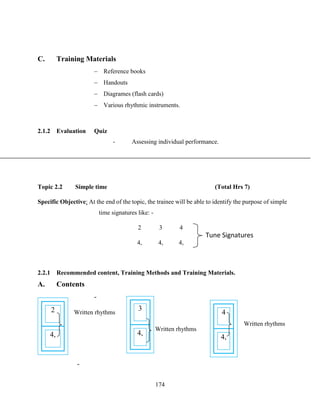
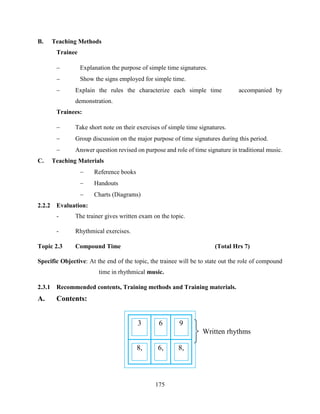
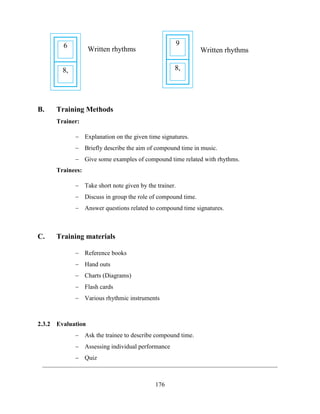
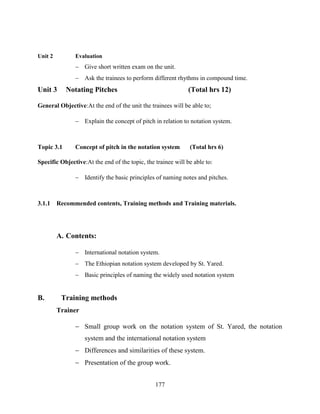
Abele Begena Traditional
Musical Instruments Training
Institute
Middle Level TVET PROGRAM
LEVEL I for Short term Training
Learner Guide and Assessment
Unit Title: Krar player
Module title: Playing Krar
Course Code CUS MIP1 04 1022
TTLM Code: CUS MIP1 04 1022
July 2024
Table 1 First Part Course Outline
1 Introduction
2 The krar
3 Occupational Standard profile
4 Occupational Standard Title-Krar Player
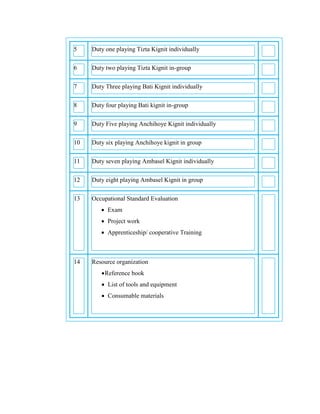
5 Duty one playing Tizta Kignit individually
6 Duty two playing Tizta Kignit in-group
7 Duty Three playing Bati Kignit individually
8 Duty four playing Bati kignit in-group
9 Duty Five playing Anchihoye Kignit individually
10 Duty six playing Anchihoye kignit in group
11 Duty seven playing Ambasel Kignit individually
12 Duty eight playing Ambasel Kignit in group
13 Occupational Standard Evaluation
 Exam
 Project work
 Apprenticeship/ cooperative Training
14 Resource organization
Reference book
 List of tools and equipment
 Consumable materials
Table of Contents
Learner Guide and Assessment...................................................................................................................14
Table of Contents....................................................................................................................................72
Introduction ............................................................................................................................................75
Based on the needs appropriate training programs have been designed and their implementation has been
made............................................................................................................................................................75
Middle Level Technical Vocational Education and Training (MLTVET) program is highly valuable. ...75
The guide encompasses basic By and large it is hoped that trainers are expected to enrich this guide
effectively in their day–to-day activity while implementing the different tasks.........................................75
Simply 1LO=1SP=1LG Instruction Sheet Information Sheet Self check Operation Sheet......................76
facts, explanations, examples, discussions, concepts or principles............................................................76
The Krar ......................................................................................................................................................78
Occupational Standard profile................................................................................................................79
A. Final examination............................................................................................................................113
OCCUPATIONAL STANDARD 2...................................................................................................................118
UNIT TITLE: - DRUM PLAYER .................................................................................................................118
Introduction ..........................................................................................................................................120
Drums....................................................................................................................................................121
Occupational Standard Profile..............................................................................................................122
C. Training materials .........................................................................................................................126
Occupational Standard Evaluation........................................................................................................131
..................................................................................................................................................................136
Traditional music band.............................................................................................................................139
Occupational Standard Profile..........................................................................................................139
Resource Organization.............................................................................................................................146
A. Reference......................................................................................................................................146
Unit Title: History of music ...................................................................................................................147
Course outline...........................................................................................................................................148
Introduction ..........................................................................................................................................148
History of Ethiopian music....................................................................................................................148
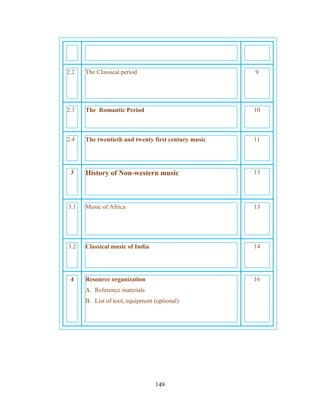
History of Non-western music ..............................................................................................................149
Introduction ..........................................................................................................................................150
Unit Title: History of music: .................................................................................................................151
Ethiopia, Western and Non-western (Africa and India) Total hours 60 ...............................................151
Unit 1: History Ethiopian music (24 hrs.).............................................................................151
1.1. Topic 1: The life of Yared and his compositions (5 hrs.) .....................................151
Trainer:..................................................................................................................................................152
Trainees:................................................................................................................................................152
C. Training materials: ............................................................................................................................152
Trainer:..................................................................................................................................................153
Trainees:................................................................................................................................................153
Unit 2: History of Western music 24 hrs..............................................................155
Specific objective: At the end of the session the trainee recognizes the main features of the Baroque
period and the life and works of the prominent composers of this era...............................................156
2.1.2. Evaluation of topic 1 .............................................................................................................157
 Specific objective: At the end of the session the trainee recognizes the main features of the
classical period and the life and works of the prominent composers of this era................................157
2.2.3. Evaluation of topic 1 .............................................................................................................158
Specific objective: At the end of the session the trainee recognizes the main features of the Romantic
period and the life and works of the prominent composers of this era...............................................158
2.3.2. Evaluation of topic 1 .............................................................................................................159
Specific objective: At the end of the session the trainee recognizes the main features of the Romantic
period and the life and works of the prominent composers of this era...............................................159
Trainees:................................................................................................................................................160
2.5.2. Evaluation of topic 1 .............................................................................................................160
3.1. Topic 1: Music of Africa (7 hrs.).................................................................160
B. raining materials: ..........................................................................................................................161
3.2. Topic 1: Classical music of India ( 5 hrs.)..........................................161
Trainer:..................................................................................................................................................162
Trainees:................................................................................................................................................162
C. Training materials: ........................................................................................................................162
INTRODUCTION ........................................................................................................................................168
Chapter One..............................................................................................................................................169
A. Contents............................................................................................................................................170
B. Training Methods..........................................................................................................................170
C. Training Materials.....................................................................................................................171
A. Contents............................................................................................................................................171
B. Training Methods .............................................................................................................................172
A. Contents............................................................................................................................................173
B. Training Methods..........................................................................................................................173
Trainer.......................................................................................................................................................184
Chapter Two .............................................................................................................................................186
Training Methods..................................................................................................................................186
A. Contents............................................................................................................................................187
B. Training Methods .............................................................................................................................187
C. Training Materials ............................................................................................................................187
A. Contents............................................................................................................................................188
B. Training Methods .............................................................................................................................188
C. Training Materials ............................................................................................................................188
A. Contents............................................................................................................................................189
B. Training Methods .............................................................................................................................189
A. Contents............................................................................................................................................191
Trainer...................................................................................................................................................194
Trainees.................................................................................................................................................194
Training materials .................................................................................................................................195
Evaluation .............................................................................................................................................195
Unit 3 Evaluation..............................................................................................................................195
Evaluation of the course .......................................................................................................................195
References ................................................................................................................................................195
Table of contents
Table 1 First Part Course Outline............................................................................................................15
Table 2 B. List of tools and equipment required Item, Specifications, Unit etc. .........................114
Table 3 Consumable materials Item, Specifications, Unit etc.............................................................117
Table 4 Second Part Course Outline......................................................................................................119
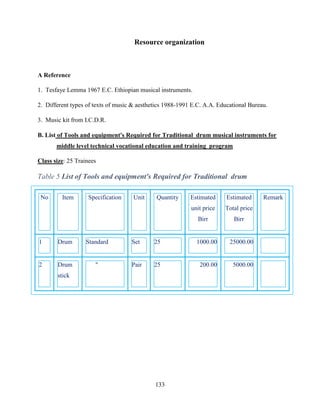
Table 5 List of Tools and equipment's Required for Traditional drum............................................133
Table 6 Third part of course outline .....................................................................................................137
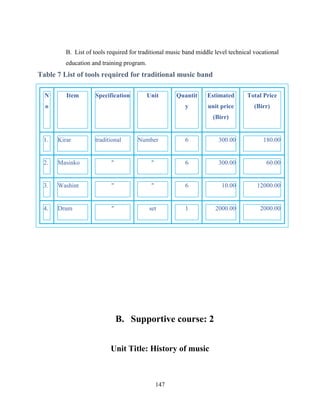
Table 7 List of tools required for traditional music band ...................................................................147
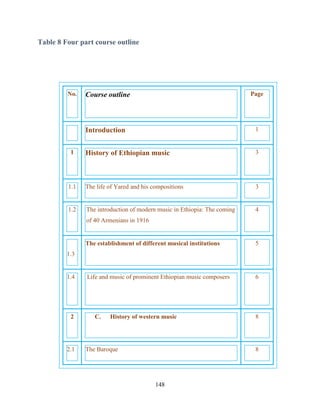
Table 8 Four part course outline ...........................................................................................................148
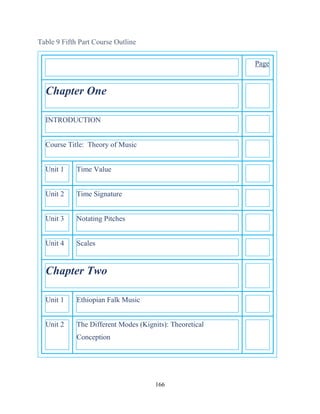
Table 9 Fifth Part Course Outline.............................................................................................................166
75
Introduction
The education and training policy (ETP) of Ethiopia envisages satisfying the country’s need for
skilled manpower by providing training in various skills at different levels. To this effect, the
Ministry of skill and labor has taken measures through identifying the needs for middle level
technical personnel in the various socio-economic undertakings. Based on the needs appropriate
training programs have been designed and their implementation has been made.
One of the vocational areas identified and found to be of social importance in the programs is
traditional music. In this area lack of trained personnel (musicians) who both play traditional
music instruments adequately and organize musical events are some of the major problems in
existence. One of the mechanisms to overcome these problems is to ensure sustainable supply
through training. In fact, traditional instruments are available and cheap to buy. Trainers in this
area are available in the country. Providing emphasis for traditional instruments promotes the
Ethiopian culture. In this regard, the inclusion of music in the Middle Level Technical Vocational
Education and Training (MLTVET) program is highly valuable.
Through this program like any other field, interested trainees with general education background
will get the opportunity to be trained as Krar player. The training could contribute to providing
employment opportunity in the different governmental or private sector or through self-
employment.
Hence, this curriculum guide is prepared to fulfill this objective. The guide encompasses basic
information regarding training objectives, training content, time allotment, training methodology,
evaluation and resource organization. By and large it is hoped that trainers are expected to enrich
this guide effectively in their day–to-day activity while implementing the different tasks.
Learning Guide Self-contained or resource – based packet of information and learning activities It
tells the trainee what need to do, when and how to do it and what the teacher expects from him/her
76
to know and be able to do once the learning activities are completed One Learning Guide is
prepared for one learning outcome E.g if 1 Learning module has 5 LOs, their will be 5 LGs
Simply 1LO=1SP=1LG Instruction Sheet Information Sheet Self check Operation Sheet
LAP test (Learninig Activity Performance test). References Information Sheet contains the
background information (knowledge) necessary to understand the subject/topic or task. Presents
information such as facts, explanations, examples, discussions, concepts or principles.
can be supplemented with audio, video, text, illustrations, drawings, etc
 No OF Inf.sheets for a LG depends on the No of contents the LO has
e.g. LO-1 has 5 contents so that their will be 5 Information Sheets
 Make sure Range of variable is totally addressed
Self-check provides the self-assessment activity give the trainee a chance to apply or determine
what have just learned from reading the information sheet. It is never used as a basis for
awarding marks or grades.
 Are prepared for each Information Sheet Operation Sheet
 is a task sheet containing a set of instructions or a step-by-step procedures on ‘how’
to perform a specific operation, process, task or skill that is required in the learning
outcome
 it instruct the trainee to do a task or series of tasks that may involve one or more
operations and that may be supplemented with a video, audio, book, pictures, illustrations
or text, etc.
There may or may not be operation sheet for all contents of the LO some contents may end on
the information sheet Refer UC’S underpinning skill
 Assessment Packet Contains the necessary information that guides the teacher in
designing a teacher-made assessment tools
It can be in the form of –
 practical simulation/demonstration with oral questioning or
 observation of trainee/learner performing the actual task in the workplace
 Written test
77
Occupational Standard: Musical Instrument Playing Level I
Unit Title: - Apply Simple Ethiopian Traditional Instrument Techniques
Unit Code: - CUS MIP1 04 1022
Learning Outcomes
LO 1. Classify Ethiopian traditional music instruments
LO 2. Tune Ethiopian traditional music instruments.
LO 3. Play Ethiopian traditional instrument techniques.
LO 4. Play simple written note exercise
Unit Descriptor:- This unit covers the required knowledge, skills and attitudes to play three
simple technical exercises and play at least two pentatonic modes { Tizta and Bati kignet } with
melody on Ethiopian traditional musical instrument.
LO1. Classify Ethiopian traditional music instruments
Ethiopian traditional music instruments are classified.
Ethiopian traditional music instruments tone color are identified.
Ethiopian Traditional music Instrument characteristics are identified according to their nature
and purposes.
LO 2. Tune Ethiopian traditional music instruments.
The mouth and fingers are positioned in the right way.
The musical instrument is tuned with required parameters
The sound of the instrument is checked for performance.
The knowledge’s of Ethiopian traditional musical instruments are applied.
LO3. Play Ethiopian traditional instrument techniques.
Ethiopian traditional music instruments Warm-up exercises are
Performed.
Traditional music Instrument performance techniques are
Checked.
78
Basic steps in Ethiopian traditional music instruments exercises incorporated.
Traditional music Instrument performance technique observed.
LO4. Play simple written note exercise
The fundamental techniques and necessary steps are used.
Play at least two Songs in tizta and bati modes/Kignits are played
Rhythmical patterns and scales are performed using sheet music.
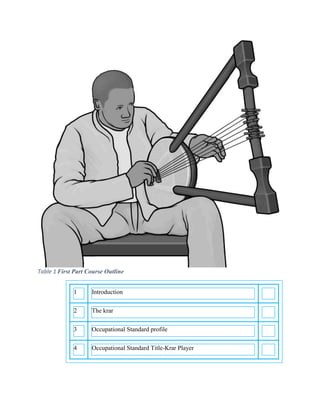
The Krar
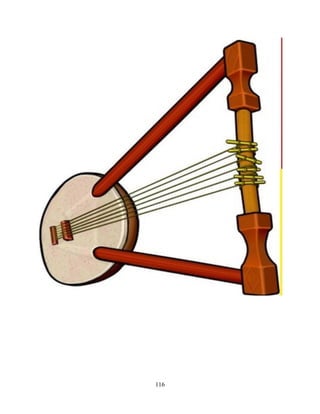
The krar is a six stringed instrument small enough to be held on the lap or against the hip. Its body
consists of a shallow circular bowl. Formerly this was hollowed out of a single piece of wood, but
nowadays it is often merely an enamel plate. The underside of the bowl may or may not be cut off
wood. The front or opening of the bowl is a piece of roughly- made parchment, stretched by a
wire threaded through holes in its edge and tightened under the lip of the bowl. A second piece of
parchment covers the underside, in mast cases, and is fastened to the wire with thongs.
Out of the bowl there protrude horizontally the two arms of the instrument. These are joined
together where they are held against the inner rim of the bowl, under the parchment, by a wire that
loops over to the tightening-wire beneath the outer lip. The arms are splayed out an angle from
each other and emerge through the parchment at points on the circumference diagonally opposite
were they are joined to each other and to the bowl.
The six gut or plastic strings fastened at the bottom to a wire loop that passes immediately above
the base of the arms and is fastened in its turn to the parchment -wire. They pass in the center of
the very taut parchment sound - board, and hence straight up to the center section of the yoke.
Here they are wound round several times and held by pegs. These pegs are not inserted into the
neck. They work in much the same way as a cross-bow saw, are tensioned and held from slipping
by the pressure of the strings that would round them -- round the yoke in a special way.
The role Krar plays in Ethiopian music is an entirely secular. It is more of a popular instrument
than other Ethiopian Traditional musical instruments. It is very much easier to play. Men and
79
women usually play the Krar. It can be played together with Masinko, Washint and Kebero as
traditional orchestra.
Occupational Standard profile
After completing the course the trainee will be able:
- To comprehend the basic principles of playing Krar.
- To prepare guideline for krar player.

- To apply basic training principles in planning and organizing musical activities related to
washint.
- To become productive citizenship as wage employed or self-employed.
Occupational Standard title: Krar player Total hours: 320
Course title: Playing Krar
Course objective: After completing this course the trainee will be able:
- To understand the basic skills and knowledge of playing Krar thoroughly.
- To perform the techniques of Krar playing both individually and in group adequately
- To plan and organize various activities of Krar playing.
80
1.1. Duty 1: Playing Tizta kignit individually Total hours 40
General objective: At the end of this instruction, the trainee will be able to perform simple
exercises and melodies (at least 20) using Krar based on Tizita Kignit individually.
1.1.1. Task 1: Playing open string using left hand fingers without Kignit (2 hrs.)
Specific objective: At the end of the instruction the trainee will be able to produce pitch using
the appropriate position of fingers on the six strings individually.
1.1.1.1. Recommended Contents, Training Methods and Training Materials.
A. Contents
 Theory
- Explanation about the principles of Krar playing
 Practice
- Producing pitch.
- Plucking the string with left hand fingers (Thumb, pointing, big, ring and little
fingers)
B. Training methods
- Demonstration
- Individual work (practice)
- Perform
- Explanation
- Watching video or listening to Krar music.
C. Training materials
- Krars
- Video recorder, cassette, Smart TV with recorder, recorded videocassettes or tape
cassettes of Krar music.
81
1.1.1.2 Task Evaluation
Check the performance of each trainee on playing Krar
-----------------------------------------------------------------------------------------------
1.1.2. Task 2: Playing Tizta kignit individually using left hand fingers (7 hrs)
Specific objective: At the end of this instruction the trainee will be able to play Tizta kignit
individually using left hand fingers.
1.1.2.1. Recommended Contents, Training Methods and Training Materials.
A. Contents
Theory
- Explanation about the characteristics of tizta kignit.
Practice
- Keeping position of left hand fingers on the string.
- Plucking each six strings with left hand fingers
- Different kinds of fingers practicing.
- Practicing and study each tune of tizita kignit
B. Training methods.
- Demonstration
- Individual practice (practice)
- Explanation
- Listening Krar music and watching video
C. Training materials
- Video recorder, cassette, Smart TV with recorder, recorded video cassettes or tape
cassettes of Krar music.
1.1.2.2 Task Evaluation
82
Check the performance of each trainee on playing Tizita Kignit
----------------------------------------------------------------------------------------------------------------
1.1.3. Task 3: Playing 10 simple songs (melodies) individually in Tizta kignit (12 hrs.)
Specific objective: At the end of this instruction the trainee will be able to play 10 simple songs
(melodies) in Tizta kignit individually.
1.1.3.1. Recommended Contents, Training Methods and Training Materials
A. Content
Theory
- General explanation of songs
Practice
- Listening the original recorded songs.
- Selecting 10 simple melodies in Tizta kignit
- Practicing each song individually until playing exactly (melody, Rhythm,
Dynamic and Characteristics) to the original song listened.
B. Training methods
- Brain storm
- Explanation
- Demonstration
- Perform
- Watching video and listening to Krar music.
C.Training materials
- Video recorder, cassette, Smart TV with recorder, recorded videocassettes or tape
cassettes of Krar music.
83
1.1.3.2. Task Evaluation
Observe and record the performance of each trainee regarding playing 10
simple songs in tizta kignit individually.
----------------------------------------------------------------------------------------------------------------
1.1.4 Task 4: Playing difficult songs (melodies) in Tizta kignit (12 hrs)
Individually
Specific objective: At the end of this instruction the trainee will be able to play some difficult
songs (Melodies) in Tizta kignit individually and be able to explain the characteristics.
1.1.4.1. Recommended Contents, Training Methods and Training Materials
A. Contents
Theory
- Explanation about some difficult songs in the Tizita kignit.
- Listening the original recorded songs and analyzing them.
Practice
- Selecting difficult songs (melodies) in Tizta kignit.
- Practicing according to the general characteristics of each songs.
B. Training methods
- Brain storm
- Explanation
- Demonstration
- Performance
- Watching video and listening to Krar music
C. Training materials
- Krar
- Selected songs in Tizta kignit
- Tape recorder and recorder cassette.
- Video cassette and video recorder
1.1.4.2. Task Evaluation
84
- Assess the performance of each trainee regarding the quality of their playing the
difficult songs in Tizta Kignit
-------------------------------------------------------------------------------------------------------------
1.1.5. Task 5: Playing all kinds of songs in tizta kignit using pick individually (girff style).
(7 hrs)
Specific objective: At the end of this instruction the trainee will be able to play tizta kignit and all
kinds of songs in tizta kignit using pick individually (girff style).
1.1.5.1. Recommended Contents, Training Method and Training Materials
A. Contents
Theory
- Explanation about using picks
Practice
- Holding pick with right hand in between the thumb and pointing fingers.
- Practicing and study the melody, rhythm, dynamics and other characteristics of the
songs correctly.
B. Training Materials
- Krar
- Pick
- Selected songs in tizta kignit
- Other appropriate training materials such as Smart TV with recorder, cassettes
1.1.4.3. Task Evaluation
Assess each trainee’s performance in playing songs in tizta kignit using pick individually.
----------------------------------------------------------------------------------------------------------------
Evaluation of Duty 1:
Assessing the performance of each trainee with regard to:
 Playing simple exercises adequately
 Playing melodies (the given) using Tizita kignit individually
1.2. Duty 2: Playing Tizta Kignit in group Total 40 hrs
General objective: At the end of this instruction the trainee will be able to play to perform simple
exercises and play at least 20 melodies using krar based on Tizita kignit in group.
85
1.2.1 Task 1: Playing tizta kignit in-group with different rhythms (5 hrs)
Specific objective: At the end of this instruction the trainee will be able to play tizta kignit in-
group based on different rhythms.
1.2.1.1. Recommended Contents, Training Methods and Training Materials
A. Content
Theory
- Explanation about different kinds of rhythm.
- Explanation about group tuning.
Practice
- Tuning Tizta kignit in-group
- Practicing each tone of the kignit in-group.
- Practicing the kignit in different rhythms in group
B. Training method
- Display
- Demonstration
- Explanation
- Brainstorm
C. Training materials
- Krars, Video recorder, cassette, Smart TV with recorder, recorded videocassettes or tape
cassettes of Krar music.
1.2.1.2. Task Evaluation
List the performance of the trainees in-group on the quality of their playing the Tizta kignit
and various kinds of songs using different kinds of rhythm.
----------------------------------------------------------------------------------------------------------------
Task 2: Playing different kinds of songs (melodies) in group using (10 hrs)
Tizta Kignit
Specific objectives: At the end of this instruction the trainees will be able to play different kinds
of songs in-group using tizta kignit
1.2.2.1. Recommended Contents, Training Methods and Training Materials
A. Contents
86
Theory
- Explanation about group performance.
Practice
- Tuning Tizta kignit in group
- Selecting songs produced in Tizta kignit and practice in group
- Playing songs in accordance with the appropriate dynamic, rhythm and
characteristics in-group.
B. Training Methods.
- Brainstorm
- Demonstration
- Explanations
- Perform
C. Training materials
- Krars, Video recorder, cassette, Smart TV with recorder, recorded video cassettes or tape
cassettes of Krar music.
1.2.2.2. Task Evaluations
Assess the performance of the group on the quality of playing in Tizita Kignit
----------------------------------------------------------------------------------------------------------------
1.2.3. Task 3: Playing folk songs (produced in Tizta kignit) of the different regions in
group. (15 hrs)
Specific objectives: At the end of this instruction the trainees will be able to play in-
group the different kinds of folk songs of regions produced in tizta kignit.
1.2.3.1. Recommended Contents, Training Methods and Training Materials
A. Content
Theory
- Explanation about regional folksongs.
Practice
- Listening the original folk songs and analyzing them
- Selecting folk songs of regions in Tizta kignit
87
- Applying the characteristics of the songs (melody, rhythm, dynamics) in group
performance.
B. Training methods
- Brainstorm
- Explanation
- Demonstration
- Performance
Training Materials
- Full set Krar
- Selected regional songs contained in the cassette or in videotape
- Tape recorder and recorded cassettes, Video or video recorder.
1.2.3.2. Task Evaluation
Assess the performance of the group in playing folk songs of regions
Ask them to describe group playing and characteristics of regional folksongs.
----------------------------------------------------------------------------------------------------------------
1.2.4. Task 4: Playing tizta kignit using round system in group (5 hrs)
Specific Objective: At the end of this instruction the trainees will be able to play tizta kignit
using round system in-group
1.2.4.1. Recommended Contents, Training Methods and Training Materials
A. Contents
Theory
- Explanation about round system.
Practice
- Tuning Tizta kignit in-group.
- Practicing tizta using round system in group
- Performing songs based on melody rhythm and general characteristics of the
songs
B. Training methods
- Group Performance
- Demonstration
- Explanation
88
C.Training Materials
- Krars
- Selected regional songs contained in the cassette or in videotape
- Tape recorder and recorded cassettes, Video or video recorder.
1.2.4.2. Task Evaluations
Record the performance of the group regarding playing Tizta kignit using round system
in-group.
--------------------------------------------------------------------------------------------------------------
1.2.5 Task 5: Playing in-group the various kinds of songs produced in tizta kignit
using pick (5 hrs)
Specific objective: At the end of this instruction the trainees will be able to play the various
kinds of songs in tizta kignit using pick.
1.1.5.1. Recommended Contents, Training Methods and Training Materials
A.Content
Theory
- Explanation about group performance using pick
Practice
- Practicing in group various kinds of songs in tizta kignit using pick.
- Maintaining group balance in performance (Following the right track while practicing
in-group)
- Listening others (dynamics, characteristics)
B. Training methods
- Performance
- Demonstration
- Display
C. Training Materials
- Krars
- Selected regional songs contained in the cassette or in videotape
- Tape recorder and recorded cassettes, Video or video recorder.
1.2.5.2. Task Evaluations
List the group’s performance in playing the various kinds of songs in Tizta Kignit
89
using picks
----------------------------------------------------------------------------------------------------------------
Evaluation of duty 2
Assessing the performance of each trainee regarding
 Playing simple exercises adequately
 Playing melodies (the given) using Tizita kignit individually
1. 3. Duty 3: Playing Bati kignit individually Total hours 40
General objectives: At the end of the duty the trainee will be able to perform simple exercises
and at least 20 melodies based on Bati kignit individually.
1.3.1. Task 1. Tuning Bati kignit individually (2hrs)
Specific objectives: At the end of this instruction the trainee will be able to tune Bati kignit
individually.
1.3.1.1. Recommended Contents, Training Methods and Training Materials
A. Content
Theory
- Explanation about Bati kignit.
Practice
- Keeping the five fingers of the left hand on the six strings (Position).
- Plucking the six string with the respectively fingers of left hand and tune each
string individually.
- Practice Bati Kignit.
B. Training method
- Brain storm
- Demonstration
- Explanation
- Performance
- Watching video or listening krar music
C. Training materials
- Krars
90
- Selected regional songs contained in the cassette or in videotape
- Tape recorder and recorded cassettes, Video or video recorder.
Task Evaluation:-
Examine the trainee whether he/she can be able to tune the Bati Kignit individually.
----------------------------------------------------------------------------------------------------------------
1.3.2. Task 2: Play Bati Kignit individually using left hand fingers (5 hrs)
Specific objective: At the end of this instruction the trainees will be able to play Bati Kignit
individually using left hand fingers.
1.3.2.1. Recommended Contents, Training Methods and Training Materials
A. Contents
Practice
- Keeping position on the string
- Practicing to play Bati Kignit using left hand fingers.
- Play different kinds of finger exercises on the six strings.
B. Training methods
- Perform
- Demonstration
- Explanation
- Watching video or listening to krar music
C. Training materials
Krars
- Selected regional songs contained in the cassette or in videotape
- Tape recorder and recorded cassettes, Video or video recorder.
1.3.2.2. Task Evaluation
Assess the trainee's skills regarding playing Bait Kignit individually.
----------------------------------------------------------------------------------------------------------------
1.3.3 Task 3: Playing simple songs or melodies (at least 10) produced in Bati kignit
individually (14 hrs)
Specific objective: At the end of this instruction the trainee will be able to play at least 10
simple songs or melodies in Bati kignit individually.
Recommended Contents, Training Methods and Training Materials
91
A.Contents
Practice
- Selecting simple melodies in Bati Kignit
- Practicing the selected melodies appropriately
- Listening some songs played using krar in Bati kignit.
B.Training Methods
- Demonstration
- Performance
- Explanation
- Watching video or listening to krar music
C. Training materials
- Krars
- Selected songs contained in the cassette or in videotape
- Tape recorder and recorded cassettes, Video or video recorder.
1.3.3.2. Task Evaluation
Examine the ability of trainee for the performance in playing 10 simple songs in Bati
kignit
----------------------------------------------------------------------------------------------------------------
1.3.4. Task 4: Playing advanced songs or melodies (20) individually in Bati kignit
(14 hrs)
Specific Objective: At the end of the instructionthe trainee will be able to play advanced songs
or melodies (20) individually in Bati kignit
1.3.4.1. Recommended Contents, Training Methods and Training Materials
Contents
Practice
- Playing the selected advanced songs in Bati Kignit
Training Methods
-Demonstration
-Performance
- Explanation
- Watching video or listening to krar music
92
Training materials
- Krars
- Selected regional songs contained in the cassette or in videotape
- Tape recorder and recorded cassettes, Video or video recorder.
1.3.4.2 Task evaluations
Assess the performance of each trainees in playing the advanced songs or melodies
----------------------------------------------------------------------------------------------------------------
1.3.5 Task: Play simple and advanced songs (melodies) in Bati kignit using
pick (in different style)individually (5 hrs)
Specific objective: At the end of this instruction the trainee will able to perform simple and
advanced songs in Bati Kignit using pick (different style) individually
1.3.5.1 Recommended Contents, Training Methods and Training Materials
A. Contents
Practice
- Practicing the selected simple and advanced songs (melody) in Bati kigint using
pick
- Study the selected songs (melodies) in terms of tone, color and rhythm correctly
by using pick.
B. Training methods
- Display
- Demonstration
- Explanation
- Watching video and tape recorder
C. Training materials
- Krars
- Selected songs contained in the cassette or in videotape
- Tape recorder and recorded cassettes, Video or video recorder.
1.3.5.2. Task Evaluation
Assess whether the trainees are able to play simple and advanced songs in Bati kignit using
pick.
93
------------------------------------------------------------------------------------------------------------------
Evaluation of Duty 3
Assessing the performance of each trainee with regard to playing simple exercises and melodies
(at least 20) based on Bati kignit individually.
1.4. Duty 4: Playing Bati kignit and songs in-group Total 40 hrs
General Objectives: At the end of this instruction the trainees will be able to perform simple
exercises and play at least 20 songs of Bati kignit using krar in-group.
1.4.1. Task 1: Playing Bati kignit (scale) in group ( 5 hrs)
Specific objective: At the end of this instruction the trainee will be able to play Bati kignit
scales in-group.
1.4.1.2. Recommended Contents, Training Methods, Training Materials
A. Contents
Practice
- Tuning Bati kignit in group
- Practicing and study Bati kignit in group
- Practicing the tune of Bati Kignit in-group with different melodic patterns
B. Training methods
- Display
- Demonstration
- Explanation
- Watching Video or listening recorded krar music
C. Training materials
- Krars
- Selected songs contained in the cassette or in videotape
- Tape recorder and recorded cassettes, Video or video recorder.
1.4.1.2 Task Evaluation
Assess skills of tuning and performance in Bati kignit in group.
------------------------------------------------------------------------------------------------------------------
94
1.4.2. Task 2. Playing different kinds of simple songs in Bati kignit
in group (10 hrs)
Specific objective: At the end of this tinstructionthe trainee will be able to play various kinds of
simple songs produced in Bati kignit in-group.
1.4.2.1. Recommended Contents, Training Methods and Training materials
A.Contents
Practice
- Playing the different kinds of songs produced in Bati kignit in groups
B.Training methods
- Perform
- Demonstration
- Explanation
- Watching video or listening krar music
C. Training materials
- Krars
- Selected songs contained in the cassette or in videotape
- Tape recorder and recorded cassettes, Video or video recorder.
1.4.2.4 Task Evaluation
List the performance of the group in playing various kinds of songs in Bait kignit
--------------------------------------------------------------------------------------------------------------
1.4.3. Task 3: Playing folk songs of regions in Bati kigint in group (15 hrs)
Specific objective: At the end of this instruction trainees will be able to play folksongs of
regions in Bati kignit in groups.
1.4.3.4. Recommended Contents, Training Methods and Training Materials
A. Contents
Practice
- Playing Falk songs of regions in Bati kignit in group
- Maintaining balance in playing the different folk songs (Melodies, rhythm
Dynamics and Folk characteristics)
B. Training methods
- Performance
95
- Explanation
- Watching video and listening to music.
C. Training materials
- Krars
- Folk songs of regions (recorded in tape cassette or video cassette)
- Tape recorder or video recorder
- Tape cassette or video cassette
1.4.3.2. Task Evaluation
List the performance of the group in playing the given songs of the regions
-----------------------------------------------------------------------------------------------------------------
1.4.4. Task 4: Playing Bati Kignit using round system in group ( 5 hrs)
Specific objective: At the end of instruction the trainees will be able to play Bati kignit
using round system in-group.
1.4.4.1. Recommended Contents, Training Methods and Training Materials
A. Contents
Practice
- Tuning Bati kignit in group
- Practicing Bati kignit in round system
- Listening each other while performing round system in group
B. Training methods
- Display
- Demonstration
- Explanation
- Watching video or listening to music
C. Training materials
- Krars
- Folk songs of regions
- Tape recorder or video recorder
- Recorded music either in cassette or in video
96
1.4.4.2 Task Evaluation
List the performance of each trainee on playing the given task
--------------------------------------------------------------------------------------------------------------
1.4.5 Task 5: Playing different kinds of songs produced in Bati kignit using pick (grff) in-
group (5 hrs)
Specific objectives: At the end of this instruction the trainees will be able to play Bati kignit
and different kinds of songs produced in Bati kignit using pick in-group.
1.4.5.1 Recommended Contents, Training Methods and Training Materials
A. Content
Practice
- Playing various kinds of songs in Bati kignit using pick in group.
B. Training methods
- Display
- Demonstration
- Explanation
- Watching video or listening to music
C. Training materials
- Krars
- Tape recorder or video recorder
- Recorded music either in cassette or in video
1.4.5.2 Task Evaluation
Assess the skills of the trainees to play Bati Kignit and different kinds of songs in Bati Kighit
using pick in group
-----------------------------------------------------------------------------------------------------------------
Evaluation of Duty 4
Assess the performance of the group as well as each trainee in playing the given exercises and
songs or melodies.
97
1.5. Duty 5: Playing Anchihoye kignit as well as songs produced in Anchihoye kignit
Individually. (40 hrs)
General objective: At the end of this instruction the trainee will be able to play simple exercises
and play at least 20 melodies using krar based on Anchihoye kignit individually.
1.5.1. Task 1: Tuning Anchihoye kignit (4 hrs)
Specific objective: At the end of this instruction the trainee will be able to tune Anchihoye
kignit
1.5.1. Recommended Contents, Training Methods and Training Materials
A. Contents
Theory
- Explanation about Anchihoye kignit.
Practice
- Tuning Anchihoye kignit
- Position of fingers
- Plucking the strings
- Simple exercises
B. Training methods
- Display
- Demonstration
- Explanation
- Watching video or listening to recorded tape music
C. Training materials
- Krars
- Tape recorder or video recorder
- Recorded music either in cassette or in video
1.5.1.3 Task Evaluation
Assess the skill of tuning the kignits
----------------------------------------------------------------------------------------------------------------
1.5.2. Task 2: Playing Anchihoye kignit individually using left hand fingers (5 hrs)
98
Specific objective: At the end of this instruction the trainee will be able to play Anchihoye
kignit individually using left hand fingers.
1.5.2.1 Recommended Contents, Training Methods and Training Materials
A. Contents
Practice
- Keeping position on the string while practicing.
- Identifying and hearing the tune of each string while practicing.
- Practicing the tune one the string using five fingers of left hand.
B. Training methods
- Display
- Demonstration
- Explanation
- Watching video and listening to the recorded tape music.
C. Training materials
- Krars
- Tape recorder or video recorder
- Recorded music either in cassette or in video
1.5.2.2. Task Evaluation
Assess the trainee's performance individually
------------------------------------------------------------------------------------------------------------------
1.5.3 Task 3: Playing simple songs or melodies (at least 10) in Anchihoye kignit
individually. (13 hrs)
Specific objective: At the end of this instruction the trainee will be able to play simple melodies
(at least 10) produced in Anchihoye kignit individually.
1.5.3.1 Recommended Contents, Training Methods and Training Materials
A.Contents
Theory
- Explanation about characteristics of some song, in the Kignit
- Playing simple songs (at least 10) produced in Anchihoye kignit
B. Training methods
99
- Display
- Demonstration
- Explanation
- Watching video or listeneing recorded tape music
C. Training Materials
- Krars
- Tape recorder or video recorder
- Recorded music either in cassette or in video
1.5.3.2 Task Evaluation
List the performance of each trainee in playing simple melodies (songs) in Anchihoye kignit,
individually.
-------------------------------------------------------------------------------------------------------------
1.5.4. Task 4: Playing advanced songs (20) in Anchihoye Kignit individually
(13 hrs)
Specific objective: At the end of this instructionthe trainee will be able to play some advanced
songs (20) in Anchihoye Kingint individually.
1.5.4.1. Recommended Contents, Training Methods and Training Materials
A. Contents
Practice
- Selection of some advanced songs (melodies) in Anchihoye kignit
- Practicing
B. Training methods
- Demonstration
- Display
- Explanation
- Watching video and listening to the recorded tape music.
C. Training materials
- Krar
- Selected songs (advanced) in Anchihoye Kignit
100
Task Evaluation
Ask the trainee to perform some advanced song of Anchihoye Kignit
individually.
------------------------------------------------------------------------------------------------------------------
1.5.5. Task 5: Playing Anchihoye kignit with pick individually (5 hrs)
Specific objective: At the end of this instruction the trainee will be able to play Anchihoye
kignit with pick individually
1.5.5.1. Recommended contents, Training Methods and Training Materials
A. Contents
 Practice
- Holding pick with right hand fingers between the tumb and pointing finger
- Practicing Anchihoye kignit with pick (girff style) individually.
- Exercises of Anchihoye kignit in various finger exercises individually.
B. Training methods
- Brainstorm
- Display
- Demonstration
- Explanation
C. Training materials
- Pick
- Krar
- Other materials appropriate to the training.
1.5.5.2 Task Evaluation
Ask the trainee to tell about performing Anchihoye kignit with a pick individually.
------------------------------------------------------------------------------------------------------------------
Evaluation of Duty 5
- Assessing the performance of the trainee regarding playing songs produced in Anchiyoye
effectively in different ways
101
1.6. Duty 6: Playing Anchihoye kignit in group Total 40 hrs
General objectives: At the end of this instruction the trainee will be able to play simple
exercises and some melodies (at least 20) in anchihoye kignit in group.
1.6.1. Task 1. Playing Anchihoye kignit in different rhythm in group (3 hrs)
Specific objectives: At the end of this instruction the trainee will be able to play Anchihoye
kignit in different rhythm system in-group.
1.6.1.2 Recommended Contents, Training Methods and Training Materials
A. Contents
Practice
- Different kinds of rhythms.
- Tuning Anchihoye Kignit in-group
- Exercises – Group Practicing
B.Training Methods
- Display
- Demonstration
- Explanation
- Group practice
C. Training Materials
- Krars
- Flash cards
1.6.1.3 Task Evaluation
Assess the trainee’s performance in playing Anchihoye kignit in group based on various
rhythm.
-----------------------------------------------------------------------------------------------------------------
1.6.2. Task 2: Playing Anchihoye kignit using different kinds of songs in (8 hrs)
group.
Specific objective: At the end of this instructionthe trainee will be to play Anchihoye kignit
using various kinds of songs in-group.
1.6.2.1 Recommended Contents, Training Methods and Training Materials
102
A. Contents
Practice
- Selecting different kinds of songs in Anchihoye kignit
- Group Practice the selected songs
B. Training methods
- Performance
- Demonstration
- Explanation
C Training materials
- Krar
- Selected songs in Anchihoye kignit
1.6.2.2. Task Evaluation
- List the performance of the group play of songs in Anchihoye together in group.
--------------------------------------------------------------------------------------------------------------
1.6.3. Task 3: Playing Folk songs of regions produced in Anchihoye kignit in
group. (16 hrs)
Specific objective: At the end of this instruction the trainee will be able to play folk songs of
regions in Anchihoye kignit.
1.6.3.1 Recommended Contents, Training Methods and Training Materials
A. Contents
Practice
- Selecting folk songs of regions in Anchiohye kignit
- Exercises
- Group practice
B. Training methods
- Display
- Demonstration
- Explanation
C. Training materials
- Krars
103
- Recorded songs of the regions
1.6.3.2. Task Evaluation
Assess the trainee’s performance regarding playing folk songs of regions in Anchihoye
kignit together with group.
------------------------------------------------------------------------------------------------------------
1.6.4. Task 4: Playing Anchihoye kignit using round system in group (6 hrs)
Specific objective: At the end of this instruction the trainees will be able to play Anchihoye kignnit
using round system in-group.
1.6.4.1 Recommended Contents, Training Methods and Training Materials
A. Contents
- Practice
- Tuning Anchihoye kignit in group
- Practicing Anhihoye kignit in round system in group
- Listening each other while performing round system.
B. Training methods
- Display
- Demonstration
- Explanation
- Group Practice
C. Training materials
- Krar
- Recorded music
1.6.4.2 Task Evaluation
List the trainees performance in playing Anchihoye kignit in round system in group.
-----------------------------------------------------------------------------------------------------------
104
1.6.5 Task 5: Playing Anchihoye kignit using pick in group (7 hrs)
Specific Objective: At the end of this instruction the trainee will be able to play Anchihoye
kignit using pick.
1.6.5.1 Recommended Contents, Training Methods and Training Materials
A. Contents:
Practice
- Practicing different kinds of songs of Anchihoye using pick in group.
Training methods
- Display
- Demonstration
- Explanation
- Discussion
Trainings materials
- Krar
- Pick
- Other materials for this training
6.5.2 Task Evaluation
Ask the trainee to play Anchihoye kignit and different kinds of song in the kignit using pick
together in group.
------------------------------------------------------------------------------------------------------------------
Evaluation of Duty 6
Assess the performance of each trainee with regard to play simple exercises and songs produced
in Anchihoye kignit in groups
105
1.7 Duty 7 -Playing l Ambasel kignit individually Total 40 hrs
General Objective: At the end of this instruction the trainee will be able to
- Play Ambasel kignit individually
- Tune Ambasel kignit individually.
- Play different kinds of songs in Ambasel kignit individually and using pick.
1.7.1 Task 1 - Turning to tune Ambasel Kignit (Scale) (3 hrs)
Specific Objective At the end of the instruction the trainee the will be able to tune Ambasel
kignit individually.
Know some theoretical aspects of Ambasel Kignit
1.7.1.2 Recommended contents, trainings methods and training materials.
A. Contents
Theory
- Explanation about Ambasel Tuning.
Practice
- Practicing and study to tune Ambasel kignit Individually.
- Doing left hand fingers exescise on the strings with Ambasel kignit individually
using different kinds of rhythn.
B. Training methods:-
- Performance (display)
- Demonstration
- Explanation
- Waching Video or listening Krar music
C. Training materials
- Krars
- Video and Tape Recorded Krar music
- Video and Tape Recorder.
17.1.3. Task Evaluation:-
Check the performance of each trainee on turing Krar
------------------------------------------------------------------------------------------------------------------
1.7.2. Task 2 - Playing Ambasel kignit individually using left hand fingers.(3 hrs)
106
Specific Objectives At the end of the instruction the trainee will be able to play Ambasel kignit
using left hand fingers individually.
1.7.2.1 Recommended contents, Training methods and Training materials.
A. Contents:-
Practice
- Practicing and study finger position on the strings.
- Practicing and study the Ambasel kignit using left had finger individually.
- Study the Ambasel kignit in different tempos.
B. Training methods
- Performance (display)
- Demonstration
- Explanation
- Waching Video or listening Krar music
C. Training Materials
- Krars
- Video and Tape Recorded Krar music.
- Video and Tape Recorder
1.7.2.3 Task Evaluation:-
Check the performance of each trainee on playing Krar using left hand fingers.
------------------------------------------------------------------------------------------------------------------
1.7.3. Task 3 - Playing in Ambasel Kignit at least 10 songs individually.(14 hrs)
Specific Objective: At the end of the instruction the trainee will be able to play at least 10 songs
in Ambasel kignit individually.
1.7.3.1 - Recommended contents, Training methods and training materials
A. Contents:-
Theory
- Explanation about some songs.
Practice
- Selecting at least 10 songs in Ambasel kignit
- Practicing and Study each of the songs individually.
B. Training Methods
107
- Perform
- Demonstration
- Explanations
- Watching video or listening Krar music.
C. Training materials
- Krars
- Video and Tape Recorded Krar music
- Video and Tape Recorder.
1.7.3.2. Task Evaluation:-
Check the performance of each trainee on playing Krar in AmBasel Kigint (at least 10
songs).
------------------------------------------------------------------------------------------------------------------
1.7.4 Task 4 Playing at least 20 songs in Ambasel kignit individually (14 hrs).
Specific objective: At the end of the instruction the trainee will be able to play at least 20 songs
in Ambasel kignit individually.
1.7.4.1. Recommended contents, Training methods and training materials.
A. Contents:-
Theory
- Explanation about some songs.
Practice
- Selecting at least 20 songs in Ambasel kignit
- Practicing and study each of the songs individually
B.Training methods
- Display
- Demonstration
- Explanation
- Watching video or listening Krar music.
C. Training materials
- Krars
- Video and Tape Recorded Krar music
- Video and Tape Recorer.
108
1.7.4.2 Task Evaluation
Check performance of each trainee on playing krar in "Ambasel Kignit" (at least 20
songs).
------------------------------------------------------------------------------------------------------------------
1.7.5. Task 5 -- Playing Ambasel Kignit indifferent songs using pick individually. (6 hrs)
Specific objective: At the end of the instruction the trainee will be able to play individually
Ambale kigint and various songs using pick.
1.7.5.1. Recommended contents, training methods and training materials.
A. Contents
Practice
- Practicing and study Ambasel kignit and various kinds of songs in the kignit using
pick individually.
B. Training methods:-
- Display
- Demonstration
- Explanation
- Watching video and listening krar music
C. Training Materials
- Krars
- Picks
- Video and Tape Recorded Krar music
- Video and Tape Recorder.
1.7.5.2.Task Evaluation:
Check the performance of each trainee on playing krar in different songs using pick
individually.
------------------------------------------------------------------------------------------------------------------
Evaluation of Duty 7
Assing the performance of each trainee with regard to : -
- Play simple exercises adequately.
- Play the given melodies using Ambasel Kignit individually.
1.8 Duty 8 - Playing Ambasel kignit in-group Total hrs 40
109
General objectives At the end of the instruction the trainee will be able to perform simple
exercise and play at least 20 melodies using krar based on Ambasel kignit in group.
1.8.1 Task 1 - Playing Ambasel kignit (scale) in different rhythm in-group. (4 hrs)
Specific objective: At the end of the instruction the trainee will be able to perform Ambasel
kignit using different tones and rhythmic patterns.
1.8.1.1. Recommended contents, Training methods, and training materials.
A.Contents:-
Theory
- Explanation about various tones rhythmic patterns.
Practice
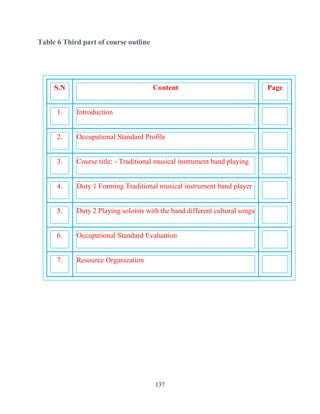
- Practicing and study Ambasel kignit in different rhythm in group.
B. Training methods
- Display
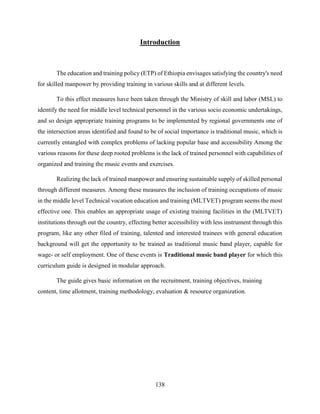
- Demonstration
- Explanation
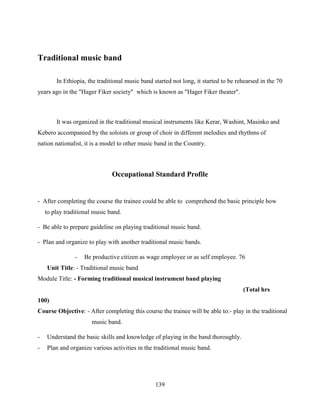
- Watching Video or listening krar music.
C. Training materials
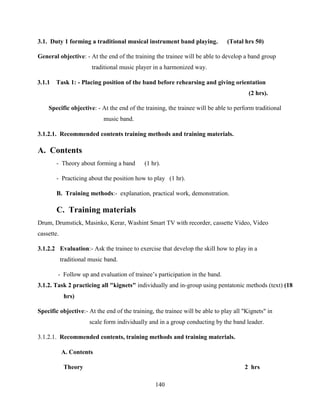
- Krars
- Video and Tape Recorded Krar music
- Video and Tape recorder
1.8.1.2. Task Evaluation:-
Check performance of each trainee on playing krar in different rhythms
------------------------------------------------------------------------------------------------------------------
1.8.2. Task 2 - Playing different kinds of songs in group with Ambasel kignit (12 hrs)
Specific objective:-At the end of the instruction the trainee will be able to play different kinds of
songs in group with in Ambasle kignit.
110
1.8.2.1 Recommended contents, Training methods and training materials.
A.Contents
Practice
- Selecting different kinds of songs in Ambasel kignit
- Practicing and study each of the different kinds of songs in group.
B.Training method
- Display
- Demonstration
- Explanation
- Watching video and krar music
C. Training materials
- Krars
- Video and Tape Recorded krar music
- Video and Tape Recorder.
1.8.2.2 Task Evaluation
Check performance of each trainee different kinds of songs in-group on krar
------------------------------------------------------------------------------------------------------------
1.8.3. Task 3 Playing Folk songs of regions in Ambasel kignit in group (15 hrs)
Specific objective: At the end of the insstruction the trainee will be able to play Folk songs of
different regions in Ambasel kignit together in-group.
1.8.3.1. Recommended contents, training methods and training materials.
A. Contents
Theory
- Explanation about some of the regional Folk songs.
Practice
- Selecting Folk songs from different regions in Ambasel Kignit.
- Practicing and study each of the regional Folk songs in Ambasel kignit together
in group.
B. Training methods
- Display
- Demonstration
111
- Explanation
- Watching and Video or listening krar music
C. Training materials
- Krars
- Vido Tape Recorded krar music
- Video and Tape Rceorder.
1.8.3.2. Task Evaluation
Ask the trainee to play the regional Folk songs with in Ambasel kignit in-group
----------------------------------------------------------------------------------------------------------
1.8.4. Task 4 - Playing Ambasel kignit using round system in-group. (5 hrs)
Specific objective: At the end of the instruction the trainee will be able to play Ambasel Kignit
using round system in-group.
1.8.4.1 Recommended contents, Training Method and Training materials,
A. Contents
Practice
- Practicing and study Ambasel kignit using round system in group
- Listening each other while performing in group using round system.
B. Training Methods
- Display
- Demonstration
- Explanation
- Watching or listing krar music
C. Training materials
- Krars
- Video and Tape Recorded krar music
- Video and Tape recorder.
1.8.4.2. Task Evaluation
Ask the trainee to play Ambasel Kignit in group using round system.
------------------------------------------------------------------------------------------------------------------
112
1.8.4. Task 5 - Playing various kinds of songs in Ambasel Kignit using pickin group.
(4 hrs).
Specific objective: At the end of the instruction the trainee will be able to play in group songs in
Ambasel Kignit by using pick.
1.8.5.1 Recommended contents, Training Methods and training Materials.
A. Contents
Practice
- Selecting various kinds of songs in Ambasel kignit
- Practicing and study each songs in group by using pick.
B. Training Methods
- Display
- Demonstration
- Explanation
- Watching video or listening krar music
C. Training materials
- Krars
- Picks
- Video and Tape Recorded Krar music
- Video and Tape Recorder.
1.8.5.2. Task Evaluation
Ask each trainee to play in-group, songs in Ambasel Kignit by using pick.
-----------------------------------------------------------------------------------------------
Evaluations of Duty 8
Assessing the performance each trainee with regard to :-
- Playing simple exercises adequately.
- Playing the given melodies using Ambasel kigint in group.
113
Occupational Standard evaluation
A. Final examination
At the end of the course the trainee will be evaluated through written and practical
examinations.
B. Project work
45_hrs
Content: -
The trainer send the trainees the near by different private and government institutions with an
assignment of the project.
The project work includes:
- Write on complete traditional instrument player program in a real institutional
environment.
- To select talents for playing traditional instruments (krar).
- To observe and analyze the system of training in the different private and government
institutions.
- To produce an action plan for the training to be conducted during the apprenticeship.
- The trainer will evaluate the clarity of the project.
C. APPRENTICESHIP/ COOPERATIVE TRAINING
_200_hrs
- The trainee will apply the project plan designed to train the selected students in different
private and government institutions.
- At the arrangement, it has to be sure that the trainees involved in assisting the traditional
instrument player training centers or any traditional music activates.
RESOURCE ORGANIZATIONS
A. Reference
Tesfaye Lemma. 1975. Ethiopian musical Instruments
Bisrat Tamene. 1998. Krar Method
Ashenfai Kebede, 1995. Root of Black music
IES. 19th October 1999. Musical Instruments of Ethiopia. IES Ethnographic museum Addis
Ababa.
114
Powne, Michael .1968. Ethiopian music An Introduction
B. List of tools and equipments required for traditional musical (Krar) player level
Technical Vocational Education and Training Program
- Occupational title: Traditional instrument player
- Occupational Standardtitle: Krar palyer
- Class size: Accommodating 25 trainers
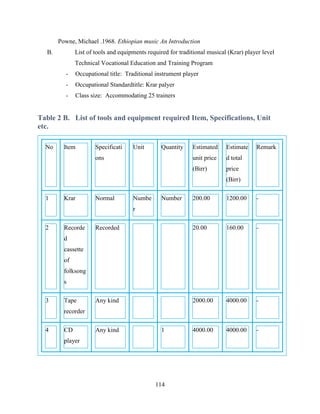
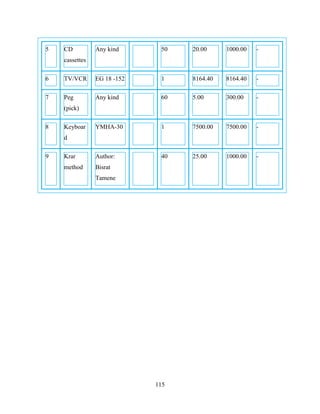
Table 2 B. List of tools and equipment required Item, Specifications, Unit
etc.
No Item Specificati
ons
Unit Quantity Estimated
unit price
(Birr)
Estimate
d total
price
(Birr)
Remark
1 Krar Normal Numbe
r
Number 200.00 1200.00 -
2 Recorde
d
cassette
of
folksong
s
Recorded 20.00 160.00 -
3 Tape
recorder
Any kind 2000.00 4000.00 -
4 CD
player
Any kind 1 4000.00 4000.00 -
115
5 CD
cassettes
Any kind 50 20.00 1000.00 -
6 TV/VCR EG 18 -152 1 8164.40 8164.40 -
7 Peg
(pick)
Any kind 60 5.00 300.00 -
8 Keyboar
d
YMHA-30 1 7500.00 7500.00 -
9 Krar
method
Author:
Bisrat
Tamene
40 25.00 1000.00 -
116
117
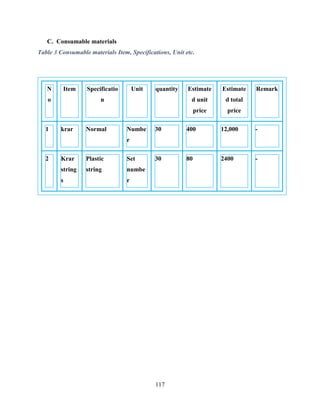
C. Consumable materials
Table 3 Consumable materials Item, Specifications, Unit etc.
N
o
Item Specificatio
n
Unit quantity Estimate
d unit
price
Estimate
d total
price
Remark
1 krar Normal Numbe
r
30 400 12,000 -
2 Krar
string
s
Plastic
string
Set
numbe
r
30 80 2400 -
118
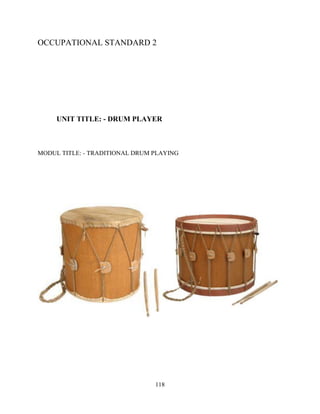
OCCUPATIONAL STANDARD 2
UNIT TITLE: - DRUM PLAYER
MODUL TITLE: - TRADITIONAL DRUM PLAYING
119
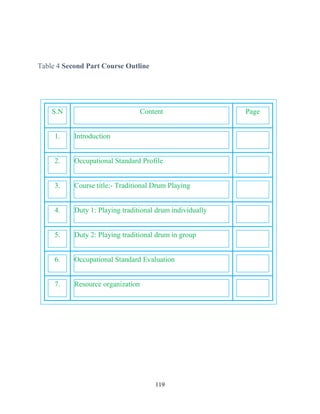
Table 4 Second Part Course Outline
S.N Content Page
1. Introduction
2. Occupational Standard Profile
3. Course title:- Traditional Drum Playing
4. Duty 1: Playing traditional drum individually
5. Duty 2: Playing traditional drum in group
6. Occupational Standard Evaluation
7. Resource organization
120
Introduction
The education and training policy (ETP) of Ethiopia envisages satisfying the country's need
for skilled manpower by providing training in various skills and at different levels.
To this effect measures have been taken through the Ministry of skill and labor (MSL) to
identify the need for middle level technical personnel in the various socio economic undertakings,
and so design appropriate training programs to be implemented by regional governments one of
the intersection areas identified, and found to be of social importance, is traditional music, which
is currently entangled with complex problems of lacking popular base and inaccessibility. Among
the various reasons for these deep- rooted problems is the lack of trained personnel with
capabilities of organized and training the various music events and exercises.
Realizing the lack of trained manpower and ensuring sustainable supply of skilled
personnel through different measures. Among these measures the inclusion of training occupations
a music in the middle level Technical vocation education and training (MLTVET) program seems
the most effective one, this enables an appropriate usage of existing training facilities in the
(MLTVET) institutions through out the country, effecting better accessibility with less instrument.
Through this program, like any other filed of training, talented and interested trainees with
general education background will get the opportunity to be trained as traditional drum player,
capable for wage- or self employment.
One of these events is Traditional drum player for which this curriculum guide is designed
in modular approach.
The guide gives basic information on the recruitment, training objectives, training content,
time allotment, training methodology, evaluation & resource organization.
121
Drums
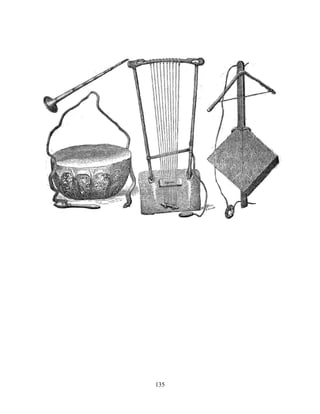
Negarit, Kebero, and atamo are the main Ethiopian Drums, which are used for
accompanying sacred and secular Ethiopian melodies and songs. All the type of kettledrum. The
body of each of the instruments is made of wood, animal skin and other sort of materials. The
manner of playing each of the instruments is beating with wooden stick or with hands.
Some of the description and characteristics of each instrument are as follows.
“The negarit” was entirely used for ceremonial purpose. The name derives from the root
“Negere,” which means, “he spoke” and in effect every proclamation, every public order is
preceded by one or more drum beats. The ceremonial use of negarit, which had been before a
century, came to end today.
“The Kebero” is fairly tall and often slender. The body is made of a hollowed-out section
of free trunk, and has a roughly cylindrical shape, truncated at both ends. In general the body
tapers towards the bottom. Some keberos have circular heads, some are almost oval. Ox-hide is
stretched over each end. The Kebero is played with the hands and only seldom with a stick. In
general the kebero is the kettledrum reserved mainly for religious ceremonies, and found in use in
some places for popular folk song.
“The Atamo: is a drum small enough to held in the hand or under the arm. The body usually
made of wood and cover with ox-hide. Usually the atamo hand inside it some small stones, pieces
of broken pot, or seeds.
The Atamo is held under the arm or between the knees of the player, It is struck with the
fingers or palm or one or both hands according the beats of the given folk songs. The basic rhythm
pattern is always a simple four or three beats. It is used entirely as a secular percussion instrument,
accentuating the beat of folk songs or dance, notably at weddings and family celebrations or at a
big Festival.
There are also other percussion instruments, which are used for accompanying sacred and
secular melodies or songs of Ethiopian, such kinds are Tsanatel, Dewol and Catchel.
122
Occupational Standard Profile
After completing the course the trainee could be able to:- comprehend the basic principle how
to play traditional drum-
- Prepare guideline on playing traditional drum.
- Plan and organize to play with another traditional instruments.
- Be productive citizen as wage employee or as self-employee.
123
Unit Title: - Traditional drum player.
Module Title: - Playing drum. Total (80 hrs)
Course objective:- After completing this course the trainee will be able to:-
play traditional drum in various Rhythms and beats.
- Understand the basic skills and knowledge of playing drum thoroughly.
- Plan and organize various activities of drum playing.
124
2.1. Duty 1 Playing Traditional drum individually. (Total hrs 40).
General objective:- At the end of this duty the trainee will be able to play traditional drum
in different rhythms following note symbols individually.
2.1.1. Task 1 Playing drum with notes and other musical symbols (10 hrs).
Specific objective: - At the end of the Task, the trainee will be able to play traditional drum with note
symbols individually.
2.1.1.1. Recommended contents training methods and training materials
A. Contents.
- Theory about traditional drum (1hr).
- Practice in traditional drum (9 hrs).
- Playing drum in note Values and rest symbols.
- Whole note
- Half note
- Quarter note
- 8th
note
- 16th
note
B. Training methods explanation practical work, demonstration.
C. Training materials: - Traditional drum, Rhythm stick.
2.1.1.2 Evaluation: - Follow up and evaluation of trainee’s participation in individual work,
completion of tasks, observation.
125
2.1.2. Task 2 Playing drum in simple time signatures 2, 3, 4 Individual (10hrs) 4, 4 , 4
Specific objective: - At the end of the task the trainee will be able to play simple time
signatures beats in drum individually.
2.1.2.1. Recommended contents, training methods and Training materials
A. Contents
- Time Values and rests
- Time signatures
B. Training methods:- explanation, demonstration, practical exercises.
C. Training materials
- Drum, drumstick, note methods.
2.1.2.2 Evaluation:- Ask the trainee to exercise that develop the skill of playing drum according
the given time values and time signatures.
2.1.3. Task 3 Playing drum in compound time 3,6 rhythms) Individually (10hrs)
8,8
Specific objective:- At the end of the training the trainee will be able to play in
compound time signatures beats and rhythms.
2.1.3.1. Recommended contents, training methods and training materials.
A. Contents
126
- Time Value & rests
- Compound time signatures
B. Training methods:- Explanation demonstration, practical exercise, correction.
C. Training materials:- Drum, drumstick, Methods (Books Smart TV with recorder,
Vidio set.)
2.1.3.2. Evaluation:- Ask the trainee to exercise that develop the skill how to develop playing
drum in the given time signature.
3.1.4. Task 4 playing drum in an integrated way of rhythms individually (10 hrs).
Specific objective:- At the end of the training the Trainee will be able to play drum
different types of rhythms and beats.
2.1.4.1. Recommended contents, training methods and training materials.
A- Contents,
- Introducing different rhythms
- Playing 2/4 rhythms in notations symbols.
- Playing 4 /4 rhythms in notation symbols.
- Playing compound times in an integrated way in simple time.
- Playing drum in Ethiopian context.
B. Training methods.
- Explanation, demonstration problem solving activites,
C. Training materials
- Note methods, drum, drumstick Smart TV with recorder, Video set.
127
2.1.4.2 Evaluation:- observation, ask the trainee that develop the skill how to play drum in an integrated
way.
Duty I evaluation: - Assessing the performance of each trainee with regard to
- The main rhythms individually.
- The given exercises adequately.
128
2.1. Duty 2 Playing Traditional drum in a group (Total hrs 40)
General objective:- At the end of the instruction the trainee will be able to play traditional
drum in a group that will develop the skill of simple Rhythms.
2.2.1. Task 1. Playing drum in a group accompanied by simple rhyths with "Kirar",
"Masinko" and "Washint" (10 hrs).
Specific objective:- At the end of the instruction the trainee will be able to play in a group with
different types of traditional musical instruments.
2.2.1.1. Recommended contents, Training methods and Training Materials.
A. Contents,
- Theory about drum playing with different types of traditional musical instrument (1 hr).
- Practice in a group (9 hrs).
- 2 beat (rhythm) melodies. 4
- 3 Beat (rhythm) melodies. 4
- 4 beat (rhythm) melodies. 4
- In different types of melodies and beats selected by the trainer.
B. Training methods,
- Explanation, discussion, demonstration, presentation by small group.
C. Training materia
- different type of texts about rhythm and melodies.
- Traditional Instruments.
129
- Smart TV with recorder, Casat
- TV Set deck, Video
3.2.1.2. Evaluation:- Ask the trainee to play simple time signatures and melodies with different
traditional musical instruments.
2.2.2. Task 2 playing drum in a group, together songs with "Kirar", "Masinko" and
"Washint". 10 hrs
Specific objective:- At the end of the instruction the trainee (the drummer) will be able
to play in a group with different types of traditional musical instruments.
2.2.2.1. Recommended contents Training methods and training materials.
A. Content
- Theory how to play drum with different traditional instruments (2 hrs).
- Practice with Kerar, Masinko and Washint different songs (8 hrs).
- Playing by accompanied simple songs.
- Listening accompanied songs by drum and tray to practice.
B. Training methods
- Explanation, demonstration, Practical exercise, correction.
C. Training materials
- Text related with the content
- Tape recorder Cassette
- TV set deck, Video.
- Traditional materials, drum Kerar, washint, masinko, drum stick.
2.2.2.2. Evaluation:- Ask the trainee to demonstrate how to play with drum in a group,
participation in a group work,
130
- Research Project.
2.2.1.2.1 Task 3 Playing drum in a group Marching, Twisting, 6 Rhythms with traditional
instruments 8 (10 hrs).
Specific objective: At the end of the instruction the trainee will be able to play drum in a
group different types of rhythms and melodies like twisting,
marching and 6 rhythms, 8
2.2.3.1. Recommended contents, Training methods and Training materials
A. Contents,
- Theory about different types of rhythms that help to play drum (2hrs)
- Practice in a group with traditional instruments (8 hrs).
- Marching rhythm with melodies
- Twisting rhythm with melodies
- 6 rhythms with melodies 8
B. Training methods
- Explanation, Practical work, demonstration, giving exercises
C. Training materials
- Kerar, Masinko, Drum, Drumstick text or note methods.
2.2.3.2. Evaluation
- Ask the trainee to demonstrate different rhythms and melodies.
2.2.2 Task 4 playing drum in a group, with complex rhythms accompanied by traditional
instruments (10 hrs)
131
- Specific objective: At the end of the instruction, the trainee will be able to play
different nation and nationalist rhythms and melodies and beats
using drum accompanied by traditional instruments.
2.2.4.1. Recommended contents, Training methods and Training materials.
A. Contents,
- Theory about playing complex rhythms and melodies (1 hr).
- Practice (9 hrs)
- North part of Ethiopia rhythms. and melodies
- South part of Ethiopia rhythms and melodies
- West part of Ethiopia rhythms and melodies
- East part of Ethiopia rhythms and melodies
B. Training methods
- Explanation demonstration, showing Video film, Correction.
C. Training materials
- Drum, drum stick Traditional Instruments, Deck, Video films and TV set.
3.2.4.2 Evaluation:- Ask the trainee to play and demonstrate complex rhythms and melodies of
different regions.
Duty 2 evaluation:- Ask the trainee to perform traditional drum with the other traditional
musical instruments.
- Observe the trainee while performing traditional drum with other instruments.
Occupational Standard Evaluation
A. Final examination: - At the end of the training on the Occupational
Standard final examination will be given
132
B Project work 11 hrs
Content
- The trainer send the trainees to the near by music schools (clubs) with an assignment
of the project work.
The project work includes:
- To observe and analyze the systems of training and (or teaching in music schools or
clubs) and write a report.
- To select talented students for traditional drum playing
- To produce an action-plan for the training to be conducted during the apprenticeship
Point to be noted during the project work
- The time given for this project work is 16 hrs.
- Family and music history, names and address of the students selected should be
recorded.
- The selection mechanisms and performance has to be listed properly.
The trainer will evaluate the project according to: -
- The appropriateness of the selection mechanisms.
- The clarity of the action plan for the training.
- The accuracy of the analyze given by the trainee during the observation made in music
schools or clubs.
C. Apprentice ship (50 hrs)
- The trainee will apply the project plan designed to train the selected students during
the 40 hrs in schools or clubs.
- The training work can also be conducted in music school, art centers, colleges, clubs,
kebel and wereda level.
133
Resource organization
A Reference
1. Tesfaye Lemma 1967 E.C. Ethiopian musical instruments.
2. Different types of texts of music & aesthetics 1988-1991 E.C. A.A. Educational Bureau.
3. Music kit from I.C.D.R.
B. List of Tools and equipment's Required for Traditional drum musical instruments for
middle level technical vocational education and training program
Class size: 25 Trainees
Table 5 List of Tools and equipment's Required for Traditional drum
No Item Specification Unit Quantity Estimated
unit price
Birr
Estimated
Total price
Birr
Remark
1 Drum Standard Set 25 1000.00 25000.00
2 Drum
stick
" Pair 25 200.00 5000.00
134
A. OCCUPATIONAL STANDARD3
Unit of Competency:- TRADITIONAL MUSIC
INSTRUMENT BAND PLAYING
135
136
137
Table 6 Third part of course outline
S.N Content Page
1. Introduction
2. Occupational Standard Profile
3. Course title: - Traditional musical instrument band playing
4. Duty 1 Forming Traditional musical instrument band player
5. Duty 2 Playing soloists with the band different cultural songs
6. Occupational Standard Evaluation
7. Resource Organization
138
Introduction
The education and training policy (ETP) of Ethiopia envisages satisfying the country's need
for skilled manpower by providing training in various skills and at different levels.
To this effect measures have been taken through the Ministry of skill and labor (MSL) to
identify the need for middle level technical personnel in the various socio economic undertakings,
and so design appropriate training programs to be implemented by regional governments one of
the intersection areas identified and found to be of social importance is traditional music, which is
currently entangled with complex problems of lacking popular base and accessibility Among the
various reasons for these deep rooted problems is the lack of trained personnel with capabilities of
organized and training the music events and exercises.
Realizing the lack of trained manpower and ensuring sustainable supply of skilled personal
through different measures. Among these measures the inclusion of training occupations of music
in the middle level Technical vocation education and training (MLTVET) program seems the most
effective one. This enables an appropriate usage of existing training facilities in the (MLTVET)
institutions through out the country, effecting better accessibility with less instrument through this
program, like any other filed of training, talented and interested trainees with general education
background will get the opportunity to be trained as traditional music band player, capable for
wage- or self employment. One of these events is Traditional music band player for which this
curriculum guide is designed in modular approach.
The guide gives basic information on the recruitment, training objectives, training
content, time allotment, training methodology, evaluation & resource organization.
139
Traditional music band
In Ethiopia, the traditional music band started not long, it started to be rehearsed in the 70
years ago in the "Hager Fiker society" which is known as "Hager Fiker theater".
It was organized in the traditional musical instruments like Kerar, Washint, Masinko and
Kebero accompanied by the soloists or group of choir in different melodies and rhythms of
nation nationalist, it is a model to other music band in the Country.
Occupational Standard Profile
- After completing the course the trainee could be able to comprehend the basic principle how
to play traditional music band.
- Be able to prepare guideline on playing traditional music band.
- Plan and organize to play with another traditional music bands.
- Be productive citizen as wage employee or as self employee. 76
Unit Title: - Traditional music band
Module Title: - Forming traditional musical instrument band playing
(Total hrs
100)
Course Objective: - After completing this course the trainee will be able to:- play in the traditional
music band.
- Understand the basic skills and knowledge of playing in the band thoroughly.
- Plan and organize various activities in the traditional music band.
140
3.1. Duty 1 forming a traditional musical instrument band playing. (Total hrs 50)
General objective: - At the end of the training the trainee will be able to develop a band group
traditional music player in a harmonized way.
3.1.1 Task 1: - Placing position of the band before rehearsing and giving orientation
(2 hrs).
Specific objective: - At the end of the training, the trainee will be able to perform traditional
music band.
3.1.2.1. Recommended contents training methods and training materials.
A. Contents
- Theory about forming a band (1 hr).
- Practicing about the position how to play (1 hr).
B. Training methods:- explanation, practical work, demonstration.
C. Training materials
Drum, Drumstick, Masinko, Kerar, Washint Smart TV with recorder, cassette Video, Video
cassette.
3.1.2.2 Evaluation:- Ask the trainee to exercise that develop the skill how to play in a
traditional music band.
- Follow up and evaluation of trainee’s participation in the band.
3.1.2. Task 2 practicing all "kignets" individually and in-group using pentatonic methods (text) (18
hrs)
Specific objective:- At the end of the training, the trainee will be able to play all "Kignets" in
scale form individually and in a group conducting by the band leader.
3.1.2.1. Recommended contents, training methods and training materials.
A. Contents
Theory 2 hrs
141
- Pentatonic scales (Kignets).
Practice 16 hrs
- Regional "kignets" in different varieties
- Tizita
- Bati
- Anchihoy
- Ambassel
B. Training methods:- demonstration, practical work in a group.
C. Training materials:- Traditional musical instruments.
3.1.2.2 Evaluation:- Ask the trainees to perform all "Kignets" using note values.
3.1.3. Task 3 Selecting different melodies in "Tizita Kignit" tray to practice continuously
(10 hrs).
Specific objective:- At the end of the training the trainee will be able to practice selected
melodies Kignet" with the band.
3.1.3.1. Recommended contents training methods and training materials.
A. Contents
- Tizita Major melodies
- Tizita minor melodies
B. Training Methods: - demonstration, practical work, listing the performance.
Training materials: - Traditional musical instruments, Tap recorder, Video cassette, Video
T.V.
3.1.3.2. Evaluation:- Ask the trainees to perform Tizita Major, and minor, “Kignet" melodies
according to the band leader.
142
3.1.2 Task 4 Selecting different melodies in "Bati kignet" tray to practice continously (10
hrs)
Specific objective: - At the end of the training the trainee will be able to practice selected
melodies in "Bati kignet" with the band.
3.1.4.1. Recommended contents
Training method and training materials.
A. Contents
- Bati Major melodies
- Bati-min or melodies
B. Training Methods:- demonstration practical work, small group performance.
C. Training materials:- Traditional musical instruments, Smart TV with recorder, Video
cassette T.V-Deck.
3.1.4.2. Evaluation:- Ask the trainees to perform Major and minor "Bati kignet" melodies
according to the band leader.
3.1.5 Task 5 Selecting melodies in Ambassel & Anchihoy" tray to practise continously
(10 hrs).
Specific objective:- At the end of the training the Trainees will be able to play in "Ambassel
and Anchihoy Kignet" selected melodies.
3.1.5.1. Recommended contents training methods training materials.
A . Contents
- Falk song melodies
- Different types of songs in the region.
B. Training methods: - Explamation, demonstration, practical exercises,
143
C. Training materials: - traditional musical instruments, Taperecorder, Video deck,
TV.
3.1.5.2. Evaluation: - Ask the trainees to perform different types of melodies in Anchihoy &
Ambassel Kignet".
Duty 5 Evaluation:- Ask the trainees in small group to perform the given tasks. How they
develop the skill in playing in the band different melodies and rhythms
harmonies.
3.2. Duty 2 Playing soloists with the band different cultural songs (50 hrs)
General Objective:- At the end of the instruction the trainee will be Abel to develop there
vocal in singing cultural songs playing with the band group.
3.2.1 Task 1:- Soloists and a group of choir singers practicing with the band different
melodies (Kignets) (4hrs)
Specific Objective:- At the end of the instruction the trainee will be able to perform cultural
songs with the band .
3.2.1.1. Recommended contents training methods and training materials.
A. Contents
- Theory about cultural songs (1 hr)
- Practicing different songs with the band and soloists. (3 hrs)
B. Training methods: - Explanation, demonstration, practical work.
C. Training materials: - string and blowing traditional instruments, drum, Smart TV with recorder,
cassette Video.
3.2.1.2 Evaluations ask the trainee about cultural songs and to perform it with the band.
3.2.2. Task 2:- Soloists and Choir group playing “Tizita and Bati” accompanied by the
traditional band (20 hrs)
144
Specific objective:- At the end of the instruction, the trainee will be able to play with soloists and
Choir group “Tizeta and Bati Kignits” cultural songs.
3.2.2.1. Recommended Contents, training methods and training materials.
A. Contents
- Theory about the different between Anchihoy and Ambassel Kignit (1 hr)
- Practice (19 hrs)
- Tizite Kignit
- Bati Kignit
B. Training methods:- demonstration, practical work in a group, Individual work.
C. Training materials:- All traditional musical instruments.
5.2.2.2 Evaluation:- Ask the trainees to sing and to perform “Tizita and Bati Kignit”
3.2.2 Task 3 Soloists and Choir group playing “Anchichoy and Ambassel” accompanied by
traditional music band. (20 hrs)
Specific Objective:- At the end of the instruction the trainee will be able to play using there vocal
accompanied by traditional music band.
3.2.3.1 Recommended contents, training methods and training materials.
A. Contents
- Theory about the different between Anchihoy and Ambassel Kignit
(1 hr)
- Practicing
- Anchihoy
- Ambassel (19 hrs)
B. Training methods:- demonstration, practical work in a group.
C. Training materials:- all traditional musical instruments, T.V set
casseets, Taperecorder.
145
3.2.3.1 Evaluation:- Ask the trainees to perform “Anchihoy and Ambassel Kignet”.
- Written Quiz about “Kignets”
3.2.4. Task 4 Soloist imitates popular cultural singers to perform. (6 hrs)
Specific Objective:- At the end of the instruction, the trainee will be able to play (sing) popular
cultural song singers.
3.2.4.1 Recommended contents, training methods and training materials.
A. Contents
- Pentatonic scales
- Different regional Kignits
- Varity of rhythms
B. Training methods:- demonstration, practical work individually and in a group.
C. Training materials:- Traditional musical instruments, Smart TV with recorder, TV set
3.2.4.2 Evaluation:- ask the trainees to sing in pentatonic scales and Kignits
- To sing a song popular singers song and Varity of rhythms.
Duty 6 Evaluation:- Ask the trainees individually and in a group there performance in cultural
songs how they developed.
Occupational Standard evaluation
A. Final examination:- At the end of the training on the Occupational Standard final
examination will be given
B. Project work (14 hrs)
C. Content
The trainer send the trainees to the near by music school (clubs) with in assignment of the
project work.
146
D. The project work induces
- To observe and analyze the systems of training and how traditional music band training in
schools and clubs. And write a report.
- To select talented students for traditional music band.
- To produce an action plan for the training to be conducted during the apprentice ship.
Points to be noted during the project work.
- The time given for this project work is 20 hrs.
- Family and music history, names and address of the students selected should be recorded.
- The selection mechanisms and performance has to be listed properly.
B. The trainer will evaluate the project according to:-
- The appropriateness of the selection mechanisms.
- The clarity of the action plan for the training.
- The accuracy of the analyze given by the trainee during the observation made in music schools
or clubs.
C. Apprentice ship (62 hrs)
- The trainee will apply the project plan designed to train the selected students during the 100 hrs
in schools.
- The training work can also be conducted in school, colleges, clubs, music schools and wereda
music clubs level.
Resource Organization
A. Reference
1. Tesfaye Lemma 1967 E.C. Ethiopian Musical instruments and singers.
2. Different types of texts of music and Aesthetics and P.E. books 1988 - 1991 E.C. A.A.
Educational Bureacs.
3. Music Kit from I.C.D.R.
147
B. List of tools required for traditional music band middle level technical vocational
education and training program.
Table 7 List of tools required for traditional music band
N
o
Item Specification Unit Quantit
y
Estimated
unit price
(Birr)
Total Price
(Birr)
1. Kirar traditional Number 6 300.00 180.00
2. Masinko " " 6 300.00 60.00
3. Washint " " 6 10.00 12000.00
4. Drum " set 1 2000.00 2000.00
B. Supportive course: 2
Unit Title: History of music
148
Table 8 Four part course outline
No. Course outline Page
Introduction 1
1 History of Ethiopian music 3
1.1 The life of Yared and his compositions 3
1.2 The introduction of modern music in Ethiopia: The coming
of 40 Armenians in 1916
4
1.3
The establishment of different musical institutions 5
1.4 Life and music of prominent Ethiopian music composers 6
2 C. History of western music 8
2.1 The Baroque 8
149
2.2 The Classical period 9
2.3 The Romantic Period 10
2.4 The twentieth and twenty first century music 11
3 History of Non-western music 13
3.1 Music of Africa 13
3.2 Classical music of India 14
4 Resource organization
A. Reference materials
B. List of tool, equipment (optional)
16
150
Introduction
This curriculum guide is prepared for the supportive course History of Music. It is designed to
assist those who are involved in training traditional music and western music in the Middle Level
TVET program so the to make the trainees to have a good understanding on the history of music.
Furthermore, it serves as a source of information for those who are interested in the field.
The course is divided into three Units - Unit 1. History of Ethiopian music, Unit 2: History of
western music and Unit 3: History of non-western music. Each unit contained of sub-units where
every sub-unit consists of contents, training methods, training materials and evaluation. Moreover,
reference materials both for the trainer and the trainees are suggested at the end of the guide.
The whole course of the course has to be covered within 60 training hours, concerning the timing
it is suggested that the course should be given simultaneously with the main courses of their
respective field of occupation.
Finally it is expected from trainers and trainees that further improvement and amendments for
enriching the guide could be made during implementation based on concrete suggestion and
criticism.
151
Unit Title: History of music:
Ethiopia, Western and Non-western (Africa and India) Total hours 60
Course objective: At the end of the course the trainee:
 State the purpose history of music with particular emphasis with the Ethiopian, western
and non-western society
 Differentiates the different periods or the significant periods of the history of the
Ethiopian music, western music and non-western music
 Appreciates the works of prominent composers of Ethiopian western and nonwestern
countries
Unit 1: History Ethiopian music (24 hrs.)
General objective: At the end of this unit the trainee differentiates the different
periods or the significant periods of the history of the Ethiopian
music
1.1. Topic 1: The life of Yared and his compositions (5 hrs.)
Specific objective: At the end of the session the trainee recognizes the life of Yared and his
compositions
1.1.1. Recommended Contents, Training methods and Training materials
A. Contents
 The life of Yared
 Major compositions of Yared
B. Training methods
152
Trainer:
 Uses brainstorm
 Provides and coordinates the group works ( the group work focuses on the
identification of the compositions of Yared)
 Make the trainees to listen the major compositions of Yared. After listening the
trainer could ask to comment trainees on what they have listened.
Trainees:
Actively participate in the brainstorm
Take part in the group work ( the group work focuses on the identification of the compositions
of Yared)
Listen the major compositions of Yared and provide comments on what they listened.
C. Training materials:
Recorded compositions of Yared either in tape or CD, CD recorder or CD player
1.1.2. Evaluation of Topic 1
Assess the group work
…………………………………………………………………………………………….
1.2. Topic 2: The introduction of modern music in Ethiopia: The coming of 40 Armenians
in 1916 (5 hrs.)
 Specific objective: At the end of the session the trainee explain the reasons for the
introduction of modern music in Ethiopia
1.1.2. Recommended Contents, Training methods and Training materials
A. Contents
 The introduction of modern music in Ethiopia
 The coming of the 40 Armenians and their activities in music
 The reactions of the society on modern music
B. Training methods
Trainer:
Employs explanation
153
Provides individual work. The individual work focuses on writing an essay on the issue either
by asking the pertinent people or through reviewing literature
Trainees:
Follows the explanations attentively
Attempt the individual work efficiently. The individual work focuses on writing an essay on the
issue either by asking the pertinent people or through reviewing literature
C. Training materials: Photographs that depict the 40 Armenians playing music,
music played by them if available
1.2.2. Evaluation of topic 2
Assess the quality of the essay of the trainee
……………………………………………………………………………………………
1.3. Topic 3: The establishment of different musical institutions (6 hrs)
 Specific objective: At the end of the session the trainee compares
the establishments of the different musical institutions
1.1.2. Recommended Contents, Training methods and Training materials
A. Contents
An overview of the establishment of different musical institutions: Hagerfiqir Mahiber; Army
bands; Municipality band; Orchestra Ethiopia; National Theater; Yared music school ; and Private
bands
B. Training methods
Trainer:
Employs explanation
Provides and coordinates the group works ( the group work focuses on writing history of some
the establishments either by asking the appropriate people or through reading literatures)
Trainees:
Follows the explanations attentively
Attempt the group work attentively ( the group work focuses on writing history of some the
establishments either by asking the appropriate people or through reading literatures)
154
C. Training materials
Photographs related to the establishments; Some prominent music works (either
recordings or manuscript of compositions) produced by the institutions
1.2.3. Evaluation of topic 3
Assessing the quality of the group work
………………………………………………………………………………………………
1.4. Topic 4: Life and music of prominent Ethiopian music composers (8 hrs)
Specific objective: At the end of the session the trainee develops a better understanding on
life and music of prominent Ethiopian music composers
Recommended Contents, Training methods and Training materials
B. Contents
 Pop music composers
 Traditional music composers
 Jazz music composers or arrangers
 Classical music composers
B. Training methods
Trainer:
 Employs explanations
 Provides and coordinates group work (the group work could focus on writing
history of some the prominent music composers either by asking the
appropriate people or through reading literatures)
 Makes trainees to listen some of the known compositions of the composers
 Encourage trainees to reflect on what was listened
Trainees:
155
 Follows the explanation carefully
 Attempt the group work (the group work could focus on writing history of
some the prominent music composers either by asking the appropriate
people or through reading literatures).
 Present the final essay to the class.
 Provide comment on the presented essay.
 Listen some of the known compositions of the composers attentively and
reflect on what was listened.
C. Training materials
Photographs related to the composers; Recorded music of the composers
1.2.4. Evaluation of topic 4
Assessing the quality of the group work
………………………………………………………………………………………………
Evaluation of Unit 1
 Assessing the portfolio of the group works and individual works
 Quiz
Unit 2: History of Western music 24 hrs.
General objective: At the end of this unit the trainee differentiates the different
periods or the significant periods of the history of the Ethiopian
music
2.1. Topic 1: The Baroque Period (6
hrs.)
156
Specific objective: At the end of the session the trainee recognizes the main
features of the Baroque period and the life and works of the
prominent composers of this era.
2.1.1. Recommended Contents, Training methods and Training materials
A. Contents
 Pre Baroque period (Gregorian chant, The mass)
 Main features of Baroque music
(the emergence of opera, emergence of major-minor system, equal
temperament, unflagging rhythm, continuos melody, harmonic counterpoint,
terraced dynamics, instrumental color)
 Life and music of prominent composers of baroque period
Johan Sebastian Bach (1685-1750)
George Frederic Handel (1685-1759)
B. Training methods
Trainer:
 Employs explanations
 Makes trainees to listen some of the known compositions of the suggested
composers in this period
 Encourage trainees to reflect on what was listened
Trainees:
 Follows the explanation carefully
 Listen some of the known compositions of the composers attentively and
reflect on what was listened.
C. Training materials
157
Recorded music of the composers, Photographs of the composers
2.1.2. Evaluation of topic 1
Recording each trainee reflection that could be produced in written form.
………………………………………………………………………………………………
2.2. Topic: The Classical period (6 hrs.)
 Specific objective: At the end of the session the trainee recognizes the main features
of the classical period and the life and works of the prominent
composers of this era.
Recommended Contents, Training methods and Training materials
A. Contents
 The nature of classicism
 Classicism in music (c. 1775-1825)
 The life, music of prominent composers
Joseph Hayden (1732-1809),
Wolfgang Amedeus Mozart (1756-1791)
Ludwig van Beethoven (1770-1827)
B. Training methods
Trainer:
 Employs explanations
 Makes trainees to listen some of the known compositions of the suggested
composers in this period
 Encourage trainees to reflect on what was listened
Trainees:
 Follow the explanation carefully
 Listen some of the known compositions of the composers attentively and
reflect on what was listened.
C. Training materials
158
Recorded music of the composers, Photographs of the composers
2.2.3. Evaluation of topic 1
Recording each trainee reflection that could be produced in written form.
………………………………………………………………………………………………
2.3. Topic : The Romantic Period (6 hrs.)
Specific objective: At the end of the session the trainee recognizes the main features
of the Romantic period and the life and works of the prominent
composers of this era.
2.3.1. Recommended Contents, Training methods and Training materials
A. Contents
 Romanticism in music (1820 – 1900): Main features of Romantic music
 The art song
 The nature of program music
 Nationalism in the nineteenth-century music
 The nature of absolute music
 The nature of opera
The components of opera, the language problem
 Life and music of the prominent composers
Franz Shubert; Frederic Chopin; Peter Ilych Tchaikovisky (1840-1893) with
emphasis on Romeo and Juliet; Johannes Brahms (1833-1897); Guiseppe Verdi
(1813-1901) with emphasis on Aida
B. Training methods
Trainer:
 Employs explanations
 Makes trainees to listen some of the known compositions of the suggested
composers in this period
 Encourage trainees to reflect on what was listened
Trainees:
159
 Follow the explanation carefully
 Listen some of the known compositions of the composers attentively and
reflect on what was listened.
C. Training materials
Recorded music of the composers, Photographs of the composers
C. Training materials
Recorded music of the composers, Photographs of the composers
2.3.2. Evaluation of topic 1
Recording each trainee reflection that could be produced in written form.
………………………………………………………………………………………………
2.5. Topic 5: The twentieth and twenty first century music (6 hrs.)
Specific objective: At the end of the session the trainee recognizes the main features
of the Romantic period and the life and works of the prominent
composers of this era.
2.5.1. Recommended Contents, Training methods and Training materials
A. Contents
 Main features of the twentieth (1900-1950)
- Impressionism and sympolyism
- Neoclasiscm
- Expressionism
- Tonality, Polytonality, Atonality, The twelve-tone method
 Main features of the twenty first century music (1950- 2003)
- Computer music
 The life and music of prominent composers
160
Caude Debussy; Igor Stravinisky; Arnold Schoneneberg (1874-1951); Bela Bartock
(1881-1945); George Gershwin
Other twentieth first century composers
B. Training methods
Trainer:
 Employs explanations
 Makes trainees to listen some of the known compositions of the suggested
composers in this period
 Encourage trainees to reflect on what was listened
Trainees:
Follow the explanation carefully
Listen some of the known compositions of the composers attentively and reflect on what was
listened.
C. Training materials
Recorded music of the composers, Photographs of the composers
2.5.2. Evaluation of topic 1
Recording each trainee reflection that could be produced in written form.
Unit 3. History of Non-western Music (Africa and Asia) 12 hrs.
General objective: At the end of this unit the trainee recognizes the characteristics
of non-western countries
3.1. Topic 1: Music of Africa (7 hrs.)
Specific objective: At the end of the session the trainee recognizes music in the in the Sub-
Saharan African
3.1.1. Recommended Contents, Training methods and Training materials
161
A. Contents
 Music in the African society
 Elements of African music: Rhythm and percussion, vocal music, texture
 African musical instruments: Idiophones, membraphones, Aerophones and
chordophones
B. Training methods
Trainer:
 Uses brainstorm
 Provides and coordinates the group works ( the group work focuses on the
identification of the elements of African music)
 Makes the trainees to listen the some African traditional music. After listening
the trainer could ask the trainees to reflect on what was listened.
Trainees:
Actively participate in the brainstorm
 Take part in the group work (the group work focuses on the identification of
the elements of African music)
 Listen the on some of the African music and reflect on what was listened.
B. raining materials:
Recorded compositions African music either in tape or CD or video, CD recorder or CD player;
Video player.
3.1.2. Evaluation of Topic 1
Assess the reflection of each trainee in a written form (let each trainee present the
reflection in a written form)
…………………………………………………………………………………………….
3.2. Topic 1: Classical music of India ( 5 hrs.)
 Specific objective: At the end of the session the trainee
recognizes music in the in the Sub-Saharan African
3.2.1. Recommended Contents, Training methods and Training materials
162
E. A. Contents
 Elements of Indian classical music: Melodic structure Raga; rhythmic structure of
Tala
 Musical instruments: sitar
F. B. Training methods
Trainer:
 Uses explanations
 Makes the trainees to listen the some Indian classical music. After listening the
trainer could ask the trainees to reflect on what was listened.
 Provides and coordinates the group works ( the group work focuses on the
identification of the elements of Indian music)
Trainees:
 Follow the explanation actively
 Listen the on some of the African music and reflect on what was listened.
 Take part in the group work (the group work focuses on the identification of the
elements of Indian music)
C. Training materials:
Recorded compositions African music either in tape or Smart TV or video, CD recorder or CD
player; Video player.
3.2.2. Evaluation of Topic 1
Assess the reflection of each trainee in a written form (let each trainee present the
reflection in a written form)
…………………………………………………………………………………………….
Evaluation of Unit 3
163
 Assessing the portfolio of the group works
 Quiz
Course evaluation
Final Examination:
The final examination focuses on:
 Paper and pencil consisting of the various items of exams
 Analysis of music through listening
164
Resource organization
A. Reference materials
Kamien, Roger (1988). Music: An appreciation. New York: McGraw-Hill
Mschlis, Joseph (1963). The enjoyment of Music: An Introduction to Perceptive Listening. New
York: W. W. Norton & company Inc.
Sergew Hable Sellassie (1972). Ancient and Medival Ethiopian History to 1270. Addis Ababa:
United Printers
Powne, Michael. Ethiopian Music: An Introduction. London: Oxford University Press
B. List of tool, equipment (optional)
Some of the equipment that are mentioned in Occupational Standard 4 could be used for this
course.
165
Supportive course: 2
Module Title: History of music
D.
COURSE TITLE: Theory of Music
166
Table 9 Fifth Part Course Outline
Page
Chapter One
INTRODUCTION
Course Title: Theory of Music
Unit 1 Time Value
Unit 2 Time Signature
Unit 3 Notating Pitches
Unit 4 Scales
Chapter Two
Unit 1 Ethiopian Falk Music
Unit 2 The Different Modes (Kignits): Theoretical
Conception
167
Unit 3 Composing Songs Using the Different Ethiopian
Kignits
168
INTRODUCTION
This curriculum guide for the supportive course "Theory of music" is designed to assist those who
are involved in training traditional music and western music as well as trainers of music in the
Middle Level TVET program.
The material in this curriculum guide is presented in as logical and orderly manner as possible,
and in such a way that it will help the middle level music trainers become well oriented to their
fields endeavor, Further more, it serves music educators as well as others, Interested in these fields,
as a source of information keeping them abreast of new developments in their chosen profession.
The course is divided in to chapters, Units and Contents, Training methods and Training materials
are the main points discussed under every topic. Evaluation of the trainees at the different levels
is also suggested. More over, reference materials both for trainer and trainees, are recommended.
The whole content of the course has to be covered with in 120 training hours. As far as the timing
is concerned, it is suggested that the course should be given simultaneously with the main courses
of their respective field of occupation.
Finally it is believed that concrete suggestions and criticism on this curriculum guide will, no
doubt, contribute a lot for further improvement and amendments.
169
Chapter One
Course Title: Theory of Music Total hrs. 120
Course Objective: After completing this course, the trainee will be able to:
 Enrich the knowledge, concept, elements and values in the field of music, so that the trainees
may best realize its advantage in their daily life.
 Describe the beginning and development of music in different parts of the world at different
socio-economic formation.
 State the purpose of music in society and its professional ethics.
 Develop positive attitude to wards music activity, which has been given less emphasis as
a field of study and a career opportunity.
 Explains the importance of time value in the notation system.
 Identify the role of music and its major contributions in the society so that they will be
efficient and effective musician.
170
Unit 1 Time Value
Objectives: At the end of the unit, the trainee will be able to:
1. Explains the importance of time value in the notation system of music.
2. Identified the different types of notes and rests.
3.Displays a given written through different ways.
Topic 1.1 Definition of music Total hrs. 2
Specific Objective: At the end of the topic and trainees will be able to define music in
their own words with out any conceptual error.
1.1.1 Recommended contents, Training Methods and Training Materials
A. Contents
 Definition of music in traditional ways.
 Definition of music in scientific ways.
 Misconception of music in society.
B. Training Methods
Trainer
 Explanation on the traditional concept of music
 Definition of music scientifically and relate with the former misconception in the
society.
 Describe briefly what music is.
Trainees
 Define music from their personal experience turn by turn.
171
 Take notes on the definition of music after the trainer has made correct definition.
 Ask question on difference between their former conception of music definition
and corrected definition of music.
C. Training Materials
 Reference books
 Handouts
1.1.2 Evaluation
Trainer asks the trainee to:
 Define music
 Identify the fundamental difference between the definition they know before
(traditional) and after they are taught (scientifically).
 Do assignment what music is in their own words.
Topic 1.2 Notes and rest symbols (10 hrs.)
Specific Objective: At the end of the topic the trainee will be to: Explain music note symbols
and rests.
 Identified the different types of notes and rests.
 Perform notes and rests in different ways.
1.2.1 Recommended contents, Training methods and training materials.
A. Contents
 The importance of time value
 Note values with their rests
 Doted notes with their rests
 Rhythmic activities
172
B. Training Methods
Trainer
 Discussion on the importance of time value.
 Show the symbols of the Notes using flash cards.
 Exercising the rules/ principles that entail way of playing.
 Demonstration on the value of each note in small group.
Trainees
 Define the importance of time value
 Take notes on the definition of time value
 Ask questions on difference between notes and rests.
C. Training Materials
Reference books
Handouts
1.2.1 Evaluation
 Quiz
 Assessing the performance of each trainee.
 Ask the trainee to give examples on each term.
Unit 1 Evaluation
 Ask the trainees to define scientifically and correctly music theory.
 State briefly the values of notes and rests.
 Asking questions turn by turn to play note values and rest symbols.
173
Unit 2 Time signature (Total hrs. 14)
General Objective: At the end of the unit, the trainee will be able to explain different time
signatures like simple and compound times; bar, and bar lines,
perform rhythms using time signatures.
Topic 2.1 Bar lines (Total hrs. 2)
Specific Objective: At the end of the topic, the trainee will be able to understand the use
of bar and bar lines.
2.1.1 Recommended content, Training methods and training materials
A. Contents
 Bar
 Bar line
 Double bar line
B. Training Methods
Trainer
 Explain the role of bar and bar lines
 Define the meaning of bar, bar lines and double bar lines by giving simple rhythmical
exercises.
Trainees
 Take short not given by the trainer.
 Ask and answer the different between bar and bar lines
 Playing simple rhythm using strong beat.
174
C. Training Materials
 Reference books
 Handouts
 Diagrames (flash cards)
 Various rhythmic instruments.
2.1.2 Evaluation Quiz
- Assessing individual performance.
Topic 2.2 Simple time (Total Hrs 7)
Specific Objective: At the end of the topic, the trainee will be able to identify the purpose of simple
time signatures like: -
2 3 4
4, 4, 4,
2.2.1 Recommended content, Training Methods and Training Materials.
A. Contents
-
-
2
4,
3
4,
4
4,
Tune Signatures
Written rhythms
Written rhythms
Written rhythms
175
B. Teaching Methods
Trainee
 Explanation the purpose of simple time signatures.
 Show the signs employed for simple time.
 Explain the rules the characterize each simple time accompanied by
demonstration.
Trainees:
 Take short note on their exercises of simple time signatures.
 Group discussion on the major purpose of time signatures during this period.
 Answer question revised on purpose and role of time signature in traditional music.
C. Teaching Materials
 Reference books
 Handouts
 Charts (Diagrams)
2.2.2 Evaluation:
- The trainer gives written exam on the topic.
- Rhythmical exercises.
Topic 2.3 Compound Time (Total Hrs 7)
Specific Objective: At the end of the topic, the trainee will be to state out the role of compound
time in rhythmical music.
2.3.1 Recommended contents, Training methods and Training materials.
A. Contents:
3 6 9
8, 6, 8,
Written rhythms
176
B. Training Methods
Trainer:
 Explanation on the given time signatures.
 Briefly describe the aim of compound time in music.
 Give some examples of compound time related with rhythms.
Trainees:
 Take short note given by the trainer.
 Discuss in group the role of compound time.
 Answer questions related to compound time signatures.
C. Training materials
 Reference books
 Hand outs
 Charts (Diagrams)
 Flash cards
 Various rhythmic instruments
2.3.2 Evaluation
 Ask the trainee to describe compound time.
 Assessing individual performance
 Quiz
6
8,
9
8,
Written rhythms Written rhythms
177
Unit 2 Evaluation
 Give short written exam on the unit.
 Ask the trainees to perform different rhythms in compound time.
Unit 3 Notating Pitches (Total hrs 12)
General Objective:At the end of the unit the trainees will be able to;
 Explain the concept of pitch in relation to notation system.
Topic 3.1 Concept of pitch in the notation system (Total hrs 6)
Specific Objective:At the end of the topic, the trainee will be able to:
 Identify the basic principles of naming notes and pitches.
3.1.1 Recommended contents, Training methods and Training materials.
A. Contents:
 International notation system.
 The Ethiopian notation system developed by St. Yared.
 Basic principles of naming the widely used notation system
B. Training methods
Trainer
 Small group work on the notation system of St. Yared, the notation
system and the international notation system
 Differences and similarities of these system.
 Presentation of the group work.
178
Trainees:
 Take short note on the concept of pitch and the notation system.
 Compare the Ethiopian notation system with international notation
system.
 Answer questions raised basic principles of naming the widely used
notation system.
3.1.2 Evaluation
 Ask the trainee to explain the concept of pitches.
 Ask the trainee about St. Yared's Notation system and international
notation system.
Topic 3.2 Naming Notes (Total hrs 6)
Specific Objective: Identify the basic principles of naming notes in treble clef and bass
clefs.
- Develop the skills how to write notes in the staff (five lines and four spaces)
3.2.1 Recommended contents, Training methods and Training materials
A. Contents
 Staff
 Octaves
 Clefs
 Ledger lines
 The grand staff
B. Training Method
Trainer
 Showing the symbols using flash cards.
 Explain the rules developed for each symbols.
 Small group work on the symbols and rules.
179
 Individual work (Various exercises related with naming notes)
Trainees
 Discuss in group about musical symbols, ledger lines, grand staff and cliffs.
 Take short note on the symbols of music.
 Ask and answer questions raised on the naming notes.
C. Training Materials
 Reference books
 Handouts
 Keyboard (different types of musical instruments)
3.2.2 Evaluation
 Report on the notation system of St. Yared and Western Notation system (Types
of symbols employed for pitch and rhythm, instruments uses for
accompaniment, limitation of each notation system)
 Quiz
Evaluation on Unit 3
- Give test or quiz on the role and objective of music theory.
Unit 4 Scales (Total hrs 20)
General Objective: At the end of the unit the trainees will be able to:
- Explain principles of music scales.
- Describe objectives on scales.
- Construct diatomic and pentatonic scales.
- Identify the different intervals and chards.
- List the different key signatures.
180
Topic 4.1 Steps (Total hrs 2)
Specific Objective: At the end of the topic, the trainee will be able to explain the principles of
steps properly.
4.1.1 Recommended contents, Training methods and Training materials.
A. Contents:
 Definition of scales
 Half steps
 Whole steps
B. Training Methods
Trainer
 Show the various steps using flash cards or key board.
 Small group work discussion on the reasons for half and whole steps on the key
board connected with physics.
Trainees
 Take short note written by the trainer.
 Point out the main principles functions and application of scales and steps.
 Ask and answer questions on the principle music scales half steps and whole
steps.
C. Training Materials
 Reference books
 Handouts
 Key board
 Flash cards
4.1.2 Evaluation
 Ask the trainee to define principles of scales.
181
 Individual work (constructing the appropriate scales).
 Quiz
Topic 4.2 Sharp, Flats and Natural (Total hrs 4)
Specific Objective: At the end of the topic, the trainee will be able to identify the symbols
sharp, flats, natural and accidentals.
4.2.1 Recommended contents, Training methods and Training materials.
A. Contents
 Sharp
 Flats
 Natural
B. Training Methods
Trainer
 Show the symbols
 Explain their purposes
 Individual work (Writing on the staff)
 Indicating the given notes that contain these signs on the keyboard.
Trainees
 Take short note on the objective of accidentals.
 Group discussion.
 Point out their differences.
 Ask and answer questions on the objective of sharp, flat and sharp signs.
4.2.2 Evaluation
 Ask the trainee to explain in detail the main purpose of accidentals (sharps flats
and naturals)
Topic 4.3. Diatonic Scale (Total hrs 4)
Specific Objective: At the end of the topic, the trainee will be able to: Explain the rules for major
and minor scales construction.
182
4.3.1 Recommended contents, Training methods and Training materials.
A. Content
 Major scale construction.
 Minor scale construction.
B. Training Method
Trainer
 Individual work on the construction of scales.
 Explain relative scales in major and minor scales.
 Elaborate the way of construction scales.
Trainees
 Take a short note on the concept of diatonic scales.
 Describe the fundamental scales.
 Ask and answer various questions on the topic.
C. Training Materials
 Reference books
 Handouts
 Keyboard
 Flash cards
4.3.2 Evaluation
 Ask the trainee to write short note focuses in diatonic scales.
 Individual work on the construction of diatonic scales.
Topic 4.3.3 Pentatonic Scales (Total hrs 5)
Specific Objective: At the end of the topic; the trainee will be able to understand more of
Ethiopian scale (Kignit) in constructing pentatonic scales.
4.3.3.1 Recommended contents, Training methods and
Training materials.
183
A. Content
 Tizita
 Bati
 Anchihoy
 Ambassel
B. Training Methods
Trainer
 Explain the rules for constructing pentatonic scales.
 Small group work (in Tizita, Bati, Anchihoy, and Ambassel kignit)
 Individual work on the construction of the different pentatonic scales.
Trainees
 Describe the rules for constructing pentatonic scales.
 Take a short note on the concepts of pentatonic scales.
 Ask and answer various questions on the topic.
C. Training Materials
 Reference books
 Handouts
 Keyboard
 Traditional musical instruments.
4.3.3.2 Evaluation
 Ask the trainee to write short note on the aspect and nature of pentatonic scales.
 Ask the trainee to explain what does mean pentatonic scales.
 Ask the trainee to perform pentatonic scales on keyboard.
Topic 4.3.3.4 Intervals, Chord (Total hrs 3)
Specific Objective: At the end of the topic, the trainee will be able to understand the meaning and
the role of intervals and chards in music.
184
A. Content
 Intervals (Distance of notes)
 Chords 1st
, 2nd
, 3rd
B. Training methods
Trainer
 Explain the meaning of intervals and chords.
 Giving example how to perform chords.
 Showing intervals of notes and different chords on keyboard.
Trainees
 Mention the major chords and intervals in music.
 Take a short note on the concept and nature of chords and intervals.
 Ask and answer various questions on the topic.
C. Training materials
 Reference books
 Handouts
 Charts
 Key board
4.3.3.4.2 Evaluation
 Ask the trainee to write short note on intervals and chords.
 Ask the trainee to perform some of intervals and chords.
 To Identify different types of chords.
Topic 4.3.3.4.3 Key Signatures and Accidentals (Total hrs 2)
Specific Objective: At the end of the topic, the trainee will be able to: Identify the symbols
and purposes of sharps, flats, natural, Double sharp and double flat.
4.3.3.4.4 Recommended contents, Training methods and Training materials.
A. Content
 Sharp
 Flat
185
 Natural
 Double sharp
 Double flat
B. Training Methods
Trainer
 Explain the symbols like sharp and flat.
 Brain storm.
 Show the different key signatures and accidentals including their purposes
respectively.
 Small group work (the exercises would focus on identifying the right key
signatures for the given scale.)
Trainees
 Describe the fundamental accidental.
 Elaborate the way how to use key signatures.
 Take a short note on the concepts of key signatures.
 Ask and answer questions on the topic.
C. Training Materials
 Key board
 Reference books
 Handouts
 Flash cards
4.3.3.4.5 Evaluation
 Ask the trainee to write short not about; flat, sharp natural, double flat and
double sharp.
 Asking questions to identify key signatures.
Unit 4 Evaluation
 Give a short quiz in defining the contents in unit four.
 Asking questions to show sharp signs and flat signs in the keyboard.
 Asking questions to sing a song the scale in diatonic and pentatonic.
186
Chapter Two
Unit 1:Ethiopian Falk music (Total hrs. 15)
General Objectives: At the end of the unit the trainee will be able to: explain the concept of
Falk music in terms of the different Ethiopian culture.
 Identify the different types of the Ethiopian folk music particularly available in the region.
 List the importance of folk music in the community.
Topic 1.1. Definition and concept of folk music in relation with culture (Total
hrs 5)
Specific objective: At the lend of the topic, the trainee will be able to: Explain the concept
of folk music in terms of the different Ethiopian culture.
1.1.1 Recommended contents, Training Methods and Training materials
Contents
 Definition and concept of folk music.
 Relation of folk music with culture
Training Methods
Trainer
 Brainstorming
 Small group discussion (Identification of the different types of folk music)
 Presentation of the discussion.
Trainees
 Discussion the purpose and need of folk music.
 Take short note on the topic given by the trainer.
 Ask and answer questions on the topic.
Training Materials
 Reference books
187
 Handouts
 Videocassette containing a variety of folk music.
Evaluation
 Ask the trainees to report and presentation of the findings.
 Analysis of the show.
Topic 1.2 The different types of Ethiopian folk music with emphasis on the regions
(Total hrs. 5)
Specific Objective: At the end of the topic, the trainee will be able to understand the main
folk music of the regions properly.
1.2.1 `Recommended contents, Training methods, and training materials.
A. Contents
 Ethiopian folk music
 Different regions folk music
 Regions folk music related with culture.
B. Training Methods
Trainer
 Video show on the variety of folk music
 Small group discussion
 Field work (gathering information on the perception of the region on the
importance of folk music)
 Analysis of the show.
Trainees
 Discussion in-group related with folk music.
 Take short note given by the trainer
C. Training Materials
 Reference books
188
 Handouts
 Video cassettes
1.2.2 Evaluation
 Trainer gives short guiz to trainees to let them define and state examples on folk
lore music in the regions.
 Report and presentation of the findings on the fieldwork.
Topic 1.3 The importance of folk music in the community (Total hrs. 5)
Specific Objective: At the end of the topic, the trainee will be able to identify the importance
of folk music in the community.
1.3.1 Recommended contents, Training Methods and training materials
A. Contents
 Folk music in the community
 Cultural folk music in the community
 Playing folk music in the community.
B. Training Methods
Trainer
 Explanation folk music in the community
 Showing different types of folk music in the community.
 Gathering information about folk music in the community.
Trainees
 Discuss in group the relation ship folk music between the community and the
regions.
 Take short note given by the trainer.
C. Training Materials
 Deference books
 Handouts
 Videocassettes containing a variety of folk music.
189
1.3.2 Evaluation
 Ask the trainees to do assignment how folk songs play a great role in the
community.
 Analyses of the show.
Unit 1 Evaluation
 Report and presentation of the findings on the field work.
 Analyses of the show
 Give written exam major contributions on folk music.
Unit 2: The different Modes (Kignit):
Theoretical conception (Total hrs. 30)
General Objectives: At the end of the unit, the trainees will be able to:
 Explain the concept of kignit
 Identify the similarities and differences of kignits of the region
 Categorize the different kignits available in the community.
Topic 2.1 The concept of kignit (tizita and Bati) (Total hrs 10)
Specific objective: At the end of the topic, the trainee will be able to explain the concept of
kignits and identify “tizita and Bati Kignets” available in the community.
2.1.1 Recommended contents, Training Methods and Training Materials.
A. Contents
 Tizita kignet
 Bati kignit
B. Training Methods
Trainer
190
 Small group discussion on kignits. This should be based on the experiences
of the trainees
 Short presentation on the discussion
 Demonstration in “Tizita and Bati kignit” using various musical
instruments.
Trainees
 Discuss the purpose and need of “Kignits” from their experience.
 Do various questions how to produce “tizeta and Bati” kignets.
 Give example on the purpose of “Kignits”
 Ask and answer questions on the topic.
C. Training Materials
 Reference books
 Handouts
 Cassettes containing “Tizita and Bati Kignits”
 Traditional instruments, key boards
2.1.2 Evaluation
 Ask the trainees to define “Kignits”
 Ask the trainee the differences between “Tizita kignit and Bati Kignit”
 Individual work; each trainees is required to construct “Tizita and Bati Kignits”
Topic 2.2 The concept of kignits (Anchihoy and Ambassel) (Total hrs 10)
Specific Objective: At the end of the topic, the trainee will be able to explain the concept of
kignits and identify “Anchihoy and Ambassel kignits” avilable in the
community.
2.2.1 Recommended contents, Training methods and Training materials
191
A. Contents
 Anchihoy kignit
 Ambassel kignet
B. Training Methods
Trainer
 Small group discussion on kignits based in “Anchhoy and ambassel kignits”
 Short presentation on the discussion
 Demonstration in “Anchihoy and Ambassel kignits” using various musical
instruments.
Trainees
 Discuss in group based on the kignits
 Short presentation
 Demonstration in Änchihoy and Ambassel kignits” using various musical
instruments.
C. Training Materials
 Reference books
 Handouts
 Cassettes containing Änchihoy and ambassel kignits”
 Key board
 Traditional instruments
2.2.2 Evaluation
 Ask the trainee to define “Kignits” based on “Ambassel and Anchihoy”
 Individual work. Each Trainee is required to construct Anchihoy and Ambassel
kignits”
Topic 2.3 Categorization of kignits available in the community.
192
(Total hrs. 10)
Specific Objectives: At the end of the topic, the trainee will be able to categorize kignits
available in the community and Ethiopia.
2.3.1 Recommended contents, training methods and Training materials
A. Contents
 Others (for instance the Harare kignit)
 Major kignits of Ethiopia Theoretical conception
B. Training methods
Trainer
 Analyse songs of the community in terms of kignits. This could be taken as a small
research project
 Presentation of the findings including the procedures, samples considered.
Trainees
 Small group discussion on kignits.
 Short presentation
 Show the theoretical construction of the kignits based on intervals.
C. Training Materials
 Cassettes containing different folk songs.
 Traditional instruments
 Key board
 Handouts
2.3.2 Evaluation
 Assessing the finding of the research which was accomplished by each group.
 Individual work. Each trainee to construct all kignits.
Unit 2 Evaluation
 Ask the trainee the intervals of all kignits.
193
 Give individual and group work for the trainees to construct different “kignits”.
Unit 3. Composing songs using the different Ethiopian kignits
(Total hrs 30)
General Objectives: At the end of the unit the trainee will be able to:
 Comprehend some basic elements of composing songs.
 Compose simple songs based on the Ethiopian kignits
 Identify elements of songs.
Topic 3.1 Elements of songs (Total hrs 15)
Specific Objective: At the end of the topic the trainee will be able to: Explain the
concept of elements of songs.
 Understand different musical terminologies.
3.1.1 Recommended contents, Training methods and Training materials
A. Contents
 Melody
 Rhylhm
 Harmony
 Text
B. Training Methods
Trainer
 Brainstorming
 Small group work
 The task focuses on composing at least four school songs.
Trainees
 Discussion the purpose of elements of songs.
 Take short note on the topic given by trainees
194
 Ask and answer questions on the topic
Training materials
 Deferent books
 Handouts
 Key board
 Traditional musical instruments
3.1.2 Evaluation
 Participation of each trainee in the group work.
 Ask the trainee to write a short note about elements of songs.
Topic 3.2 Composition of songs (Total hrs. 15)
Specific Objective: At the end of the topic the trainee will be able to:Compose
simple songs based on the Ethiopian kignit.
3.2.1 Recommended contents, Training methods and Training materials
A. Contents
 Play songs
 Cultural songs
 Educational songs
B. Training methods
Trainer
 Brain storming
 Presentation of the composed songs by each groups
 Reflection on the presentations
Trainees
 Discussion the purpose of composition of songs.
 Take short note on the topic given by the trainees
 Ask and answer questions on the topic.
195
Training materials
 Reference books
 Handouts
 Key board
 Traditional musical instruments
 Musical cassettes.
Evaluation
Participation of each trainee in the group.
Evaluating the performance of the individual.
Unit 3 Evaluation
 Listing the composed songs harmonized properly.
 Asking questions about elements of songs.
 Give written exam about composing songs.
Evaluation of the course
The trainer gives the trainee final written and practical examination, which covers the whole
content of the course.
References
1/ Elementary music by Dr. West Brook.
196
2/ The beginner's guide to Harmony by Percy A. Schools 6th
impression.
3/ Music skills for classroom teachers. Robert W. Winslow Leon Dallin 7th printing 1973
U.S.A.

Learner Guide Abele Begena Traditional Musical Instruments Training Institut1.pdf

  • 1.
    Abele Begena Traditional MusicalInstruments Training Institute Middle Level TVET PROGRAM LEVEL I for Short term Training Learner Guide and Assessment Unit Title: Krar player Module title: Playing Krar Course Code CUS MIP1 04 1022 TTLM Code: CUS MIP1 04 1022 July 2024
  • 2.
    Table 1 FirstPart Course Outline 1 Introduction 2 The krar 3 Occupational Standard profile 4 Occupational Standard Title-Krar Player
  • 3.
    5 Duty oneplaying Tizta Kignit individually 6 Duty two playing Tizta Kignit in-group 7 Duty Three playing Bati Kignit individually 8 Duty four playing Bati kignit in-group 9 Duty Five playing Anchihoye Kignit individually 10 Duty six playing Anchihoye kignit in group 11 Duty seven playing Ambasel Kignit individually 12 Duty eight playing Ambasel Kignit in group 13 Occupational Standard Evaluation  Exam  Project work  Apprenticeship/ cooperative Training 14 Resource organization Reference book  List of tools and equipment  Consumable materials
  • 4.
    Table of Contents LearnerGuide and Assessment...................................................................................................................14 Table of Contents....................................................................................................................................72 Introduction ............................................................................................................................................75 Based on the needs appropriate training programs have been designed and their implementation has been made............................................................................................................................................................75 Middle Level Technical Vocational Education and Training (MLTVET) program is highly valuable. ...75 The guide encompasses basic By and large it is hoped that trainers are expected to enrich this guide effectively in their day–to-day activity while implementing the different tasks.........................................75 Simply 1LO=1SP=1LG Instruction Sheet Information Sheet Self check Operation Sheet......................76 facts, explanations, examples, discussions, concepts or principles............................................................76 The Krar ......................................................................................................................................................78 Occupational Standard profile................................................................................................................79 A. Final examination............................................................................................................................113 OCCUPATIONAL STANDARD 2...................................................................................................................118 UNIT TITLE: - DRUM PLAYER .................................................................................................................118 Introduction ..........................................................................................................................................120 Drums....................................................................................................................................................121 Occupational Standard Profile..............................................................................................................122 C. Training materials .........................................................................................................................126 Occupational Standard Evaluation........................................................................................................131 ..................................................................................................................................................................136 Traditional music band.............................................................................................................................139 Occupational Standard Profile..........................................................................................................139 Resource Organization.............................................................................................................................146 A. Reference......................................................................................................................................146 Unit Title: History of music ...................................................................................................................147 Course outline...........................................................................................................................................148 Introduction ..........................................................................................................................................148 History of Ethiopian music....................................................................................................................148 History of Non-western music ..............................................................................................................149
  • 5.
    Introduction ..........................................................................................................................................150 Unit Title:History of music: .................................................................................................................151 Ethiopia, Western and Non-western (Africa and India) Total hours 60 ...............................................151 Unit 1: History Ethiopian music (24 hrs.).............................................................................151 1.1. Topic 1: The life of Yared and his compositions (5 hrs.) .....................................151 Trainer:..................................................................................................................................................152 Trainees:................................................................................................................................................152 C. Training materials: ............................................................................................................................152 Trainer:..................................................................................................................................................153 Trainees:................................................................................................................................................153 Unit 2: History of Western music 24 hrs..............................................................155 Specific objective: At the end of the session the trainee recognizes the main features of the Baroque period and the life and works of the prominent composers of this era...............................................156 2.1.2. Evaluation of topic 1 .............................................................................................................157  Specific objective: At the end of the session the trainee recognizes the main features of the classical period and the life and works of the prominent composers of this era................................157 2.2.3. Evaluation of topic 1 .............................................................................................................158 Specific objective: At the end of the session the trainee recognizes the main features of the Romantic period and the life and works of the prominent composers of this era...............................................158 2.3.2. Evaluation of topic 1 .............................................................................................................159 Specific objective: At the end of the session the trainee recognizes the main features of the Romantic period and the life and works of the prominent composers of this era...............................................159 Trainees:................................................................................................................................................160 2.5.2. Evaluation of topic 1 .............................................................................................................160 3.1. Topic 1: Music of Africa (7 hrs.).................................................................160 B. raining materials: ..........................................................................................................................161 3.2. Topic 1: Classical music of India ( 5 hrs.)..........................................161 Trainer:..................................................................................................................................................162 Trainees:................................................................................................................................................162 C. Training materials: ........................................................................................................................162 INTRODUCTION ........................................................................................................................................168 Chapter One..............................................................................................................................................169 A. Contents............................................................................................................................................170 B. Training Methods..........................................................................................................................170
  • 6.
    C. Training Materials.....................................................................................................................171 A.Contents............................................................................................................................................171 B. Training Methods .............................................................................................................................172 A. Contents............................................................................................................................................173 B. Training Methods..........................................................................................................................173 Trainer.......................................................................................................................................................184 Chapter Two .............................................................................................................................................186 Training Methods..................................................................................................................................186 A. Contents............................................................................................................................................187 B. Training Methods .............................................................................................................................187 C. Training Materials ............................................................................................................................187 A. Contents............................................................................................................................................188 B. Training Methods .............................................................................................................................188 C. Training Materials ............................................................................................................................188 A. Contents............................................................................................................................................189 B. Training Methods .............................................................................................................................189 A. Contents............................................................................................................................................191 Trainer...................................................................................................................................................194 Trainees.................................................................................................................................................194 Training materials .................................................................................................................................195 Evaluation .............................................................................................................................................195 Unit 3 Evaluation..............................................................................................................................195 Evaluation of the course .......................................................................................................................195 References ................................................................................................................................................195 Table of contents Table 1 First Part Course Outline............................................................................................................15 Table 2 B. List of tools and equipment required Item, Specifications, Unit etc. .........................114 Table 3 Consumable materials Item, Specifications, Unit etc.............................................................117 Table 4 Second Part Course Outline......................................................................................................119 Table 5 List of Tools and equipment's Required for Traditional drum............................................133 Table 6 Third part of course outline .....................................................................................................137 Table 7 List of tools required for traditional music band ...................................................................147 Table 8 Four part course outline ...........................................................................................................148 Table 9 Fifth Part Course Outline.............................................................................................................166
  • 7.
    75 Introduction The education andtraining policy (ETP) of Ethiopia envisages satisfying the country’s need for skilled manpower by providing training in various skills at different levels. To this effect, the Ministry of skill and labor has taken measures through identifying the needs for middle level technical personnel in the various socio-economic undertakings. Based on the needs appropriate training programs have been designed and their implementation has been made. One of the vocational areas identified and found to be of social importance in the programs is traditional music. In this area lack of trained personnel (musicians) who both play traditional music instruments adequately and organize musical events are some of the major problems in existence. One of the mechanisms to overcome these problems is to ensure sustainable supply through training. In fact, traditional instruments are available and cheap to buy. Trainers in this area are available in the country. Providing emphasis for traditional instruments promotes the Ethiopian culture. In this regard, the inclusion of music in the Middle Level Technical Vocational Education and Training (MLTVET) program is highly valuable. Through this program like any other field, interested trainees with general education background will get the opportunity to be trained as Krar player. The training could contribute to providing employment opportunity in the different governmental or private sector or through self- employment. Hence, this curriculum guide is prepared to fulfill this objective. The guide encompasses basic information regarding training objectives, training content, time allotment, training methodology, evaluation and resource organization. By and large it is hoped that trainers are expected to enrich this guide effectively in their day–to-day activity while implementing the different tasks. Learning Guide Self-contained or resource – based packet of information and learning activities It tells the trainee what need to do, when and how to do it and what the teacher expects from him/her
  • 8.
    76 to know andbe able to do once the learning activities are completed One Learning Guide is prepared for one learning outcome E.g if 1 Learning module has 5 LOs, their will be 5 LGs Simply 1LO=1SP=1LG Instruction Sheet Information Sheet Self check Operation Sheet LAP test (Learninig Activity Performance test). References Information Sheet contains the background information (knowledge) necessary to understand the subject/topic or task. Presents information such as facts, explanations, examples, discussions, concepts or principles. can be supplemented with audio, video, text, illustrations, drawings, etc  No OF Inf.sheets for a LG depends on the No of contents the LO has e.g. LO-1 has 5 contents so that their will be 5 Information Sheets  Make sure Range of variable is totally addressed Self-check provides the self-assessment activity give the trainee a chance to apply or determine what have just learned from reading the information sheet. It is never used as a basis for awarding marks or grades.  Are prepared for each Information Sheet Operation Sheet  is a task sheet containing a set of instructions or a step-by-step procedures on ‘how’ to perform a specific operation, process, task or skill that is required in the learning outcome  it instruct the trainee to do a task or series of tasks that may involve one or more operations and that may be supplemented with a video, audio, book, pictures, illustrations or text, etc. There may or may not be operation sheet for all contents of the LO some contents may end on the information sheet Refer UC’S underpinning skill  Assessment Packet Contains the necessary information that guides the teacher in designing a teacher-made assessment tools It can be in the form of –  practical simulation/demonstration with oral questioning or  observation of trainee/learner performing the actual task in the workplace  Written test
  • 9.
    77 Occupational Standard: MusicalInstrument Playing Level I Unit Title: - Apply Simple Ethiopian Traditional Instrument Techniques Unit Code: - CUS MIP1 04 1022 Learning Outcomes LO 1. Classify Ethiopian traditional music instruments LO 2. Tune Ethiopian traditional music instruments. LO 3. Play Ethiopian traditional instrument techniques. LO 4. Play simple written note exercise Unit Descriptor:- This unit covers the required knowledge, skills and attitudes to play three simple technical exercises and play at least two pentatonic modes { Tizta and Bati kignet } with melody on Ethiopian traditional musical instrument. LO1. Classify Ethiopian traditional music instruments Ethiopian traditional music instruments are classified. Ethiopian traditional music instruments tone color are identified. Ethiopian Traditional music Instrument characteristics are identified according to their nature and purposes. LO 2. Tune Ethiopian traditional music instruments. The mouth and fingers are positioned in the right way. The musical instrument is tuned with required parameters The sound of the instrument is checked for performance. The knowledge’s of Ethiopian traditional musical instruments are applied. LO3. Play Ethiopian traditional instrument techniques. Ethiopian traditional music instruments Warm-up exercises are Performed. Traditional music Instrument performance techniques are Checked.
  • 10.
    78 Basic steps inEthiopian traditional music instruments exercises incorporated. Traditional music Instrument performance technique observed. LO4. Play simple written note exercise The fundamental techniques and necessary steps are used. Play at least two Songs in tizta and bati modes/Kignits are played Rhythmical patterns and scales are performed using sheet music. The Krar The krar is a six stringed instrument small enough to be held on the lap or against the hip. Its body consists of a shallow circular bowl. Formerly this was hollowed out of a single piece of wood, but nowadays it is often merely an enamel plate. The underside of the bowl may or may not be cut off wood. The front or opening of the bowl is a piece of roughly- made parchment, stretched by a wire threaded through holes in its edge and tightened under the lip of the bowl. A second piece of parchment covers the underside, in mast cases, and is fastened to the wire with thongs. Out of the bowl there protrude horizontally the two arms of the instrument. These are joined together where they are held against the inner rim of the bowl, under the parchment, by a wire that loops over to the tightening-wire beneath the outer lip. The arms are splayed out an angle from each other and emerge through the parchment at points on the circumference diagonally opposite were they are joined to each other and to the bowl. The six gut or plastic strings fastened at the bottom to a wire loop that passes immediately above the base of the arms and is fastened in its turn to the parchment -wire. They pass in the center of the very taut parchment sound - board, and hence straight up to the center section of the yoke. Here they are wound round several times and held by pegs. These pegs are not inserted into the neck. They work in much the same way as a cross-bow saw, are tensioned and held from slipping by the pressure of the strings that would round them -- round the yoke in a special way. The role Krar plays in Ethiopian music is an entirely secular. It is more of a popular instrument than other Ethiopian Traditional musical instruments. It is very much easier to play. Men and
  • 11.
    79 women usually playthe Krar. It can be played together with Masinko, Washint and Kebero as traditional orchestra. Occupational Standard profile After completing the course the trainee will be able: - To comprehend the basic principles of playing Krar. - To prepare guideline for krar player. - To apply basic training principles in planning and organizing musical activities related to washint. - To become productive citizenship as wage employed or self-employed. Occupational Standard title: Krar player Total hours: 320 Course title: Playing Krar Course objective: After completing this course the trainee will be able: - To understand the basic skills and knowledge of playing Krar thoroughly. - To perform the techniques of Krar playing both individually and in group adequately - To plan and organize various activities of Krar playing.
  • 12.
    80 1.1. Duty 1:Playing Tizta kignit individually Total hours 40 General objective: At the end of this instruction, the trainee will be able to perform simple exercises and melodies (at least 20) using Krar based on Tizita Kignit individually. 1.1.1. Task 1: Playing open string using left hand fingers without Kignit (2 hrs.) Specific objective: At the end of the instruction the trainee will be able to produce pitch using the appropriate position of fingers on the six strings individually. 1.1.1.1. Recommended Contents, Training Methods and Training Materials. A. Contents  Theory - Explanation about the principles of Krar playing  Practice - Producing pitch. - Plucking the string with left hand fingers (Thumb, pointing, big, ring and little fingers) B. Training methods - Demonstration - Individual work (practice) - Perform - Explanation - Watching video or listening to Krar music. C. Training materials - Krars - Video recorder, cassette, Smart TV with recorder, recorded videocassettes or tape cassettes of Krar music.
  • 13.
    81 1.1.1.2 Task Evaluation Checkthe performance of each trainee on playing Krar ----------------------------------------------------------------------------------------------- 1.1.2. Task 2: Playing Tizta kignit individually using left hand fingers (7 hrs) Specific objective: At the end of this instruction the trainee will be able to play Tizta kignit individually using left hand fingers. 1.1.2.1. Recommended Contents, Training Methods and Training Materials. A. Contents Theory - Explanation about the characteristics of tizta kignit. Practice - Keeping position of left hand fingers on the string. - Plucking each six strings with left hand fingers - Different kinds of fingers practicing. - Practicing and study each tune of tizita kignit B. Training methods. - Demonstration - Individual practice (practice) - Explanation - Listening Krar music and watching video C. Training materials - Video recorder, cassette, Smart TV with recorder, recorded video cassettes or tape cassettes of Krar music. 1.1.2.2 Task Evaluation
  • 14.
    82 Check the performanceof each trainee on playing Tizita Kignit ---------------------------------------------------------------------------------------------------------------- 1.1.3. Task 3: Playing 10 simple songs (melodies) individually in Tizta kignit (12 hrs.) Specific objective: At the end of this instruction the trainee will be able to play 10 simple songs (melodies) in Tizta kignit individually. 1.1.3.1. Recommended Contents, Training Methods and Training Materials A. Content Theory - General explanation of songs Practice - Listening the original recorded songs. - Selecting 10 simple melodies in Tizta kignit - Practicing each song individually until playing exactly (melody, Rhythm, Dynamic and Characteristics) to the original song listened. B. Training methods - Brain storm - Explanation - Demonstration - Perform - Watching video and listening to Krar music. C.Training materials - Video recorder, cassette, Smart TV with recorder, recorded videocassettes or tape cassettes of Krar music.
  • 15.
    83 1.1.3.2. Task Evaluation Observeand record the performance of each trainee regarding playing 10 simple songs in tizta kignit individually. ---------------------------------------------------------------------------------------------------------------- 1.1.4 Task 4: Playing difficult songs (melodies) in Tizta kignit (12 hrs) Individually Specific objective: At the end of this instruction the trainee will be able to play some difficult songs (Melodies) in Tizta kignit individually and be able to explain the characteristics. 1.1.4.1. Recommended Contents, Training Methods and Training Materials A. Contents Theory - Explanation about some difficult songs in the Tizita kignit. - Listening the original recorded songs and analyzing them. Practice - Selecting difficult songs (melodies) in Tizta kignit. - Practicing according to the general characteristics of each songs. B. Training methods - Brain storm - Explanation - Demonstration - Performance - Watching video and listening to Krar music C. Training materials - Krar - Selected songs in Tizta kignit - Tape recorder and recorder cassette. - Video cassette and video recorder 1.1.4.2. Task Evaluation
  • 16.
    84 - Assess theperformance of each trainee regarding the quality of their playing the difficult songs in Tizta Kignit ------------------------------------------------------------------------------------------------------------- 1.1.5. Task 5: Playing all kinds of songs in tizta kignit using pick individually (girff style). (7 hrs) Specific objective: At the end of this instruction the trainee will be able to play tizta kignit and all kinds of songs in tizta kignit using pick individually (girff style). 1.1.5.1. Recommended Contents, Training Method and Training Materials A. Contents Theory - Explanation about using picks Practice - Holding pick with right hand in between the thumb and pointing fingers. - Practicing and study the melody, rhythm, dynamics and other characteristics of the songs correctly. B. Training Materials - Krar - Pick - Selected songs in tizta kignit - Other appropriate training materials such as Smart TV with recorder, cassettes 1.1.4.3. Task Evaluation Assess each trainee’s performance in playing songs in tizta kignit using pick individually. ---------------------------------------------------------------------------------------------------------------- Evaluation of Duty 1: Assessing the performance of each trainee with regard to:  Playing simple exercises adequately  Playing melodies (the given) using Tizita kignit individually 1.2. Duty 2: Playing Tizta Kignit in group Total 40 hrs General objective: At the end of this instruction the trainee will be able to play to perform simple exercises and play at least 20 melodies using krar based on Tizita kignit in group.
  • 17.
    85 1.2.1 Task 1:Playing tizta kignit in-group with different rhythms (5 hrs) Specific objective: At the end of this instruction the trainee will be able to play tizta kignit in- group based on different rhythms. 1.2.1.1. Recommended Contents, Training Methods and Training Materials A. Content Theory - Explanation about different kinds of rhythm. - Explanation about group tuning. Practice - Tuning Tizta kignit in-group - Practicing each tone of the kignit in-group. - Practicing the kignit in different rhythms in group B. Training method - Display - Demonstration - Explanation - Brainstorm C. Training materials - Krars, Video recorder, cassette, Smart TV with recorder, recorded videocassettes or tape cassettes of Krar music. 1.2.1.2. Task Evaluation List the performance of the trainees in-group on the quality of their playing the Tizta kignit and various kinds of songs using different kinds of rhythm. ---------------------------------------------------------------------------------------------------------------- Task 2: Playing different kinds of songs (melodies) in group using (10 hrs) Tizta Kignit Specific objectives: At the end of this instruction the trainees will be able to play different kinds of songs in-group using tizta kignit 1.2.2.1. Recommended Contents, Training Methods and Training Materials A. Contents
  • 18.
    86 Theory - Explanation aboutgroup performance. Practice - Tuning Tizta kignit in group - Selecting songs produced in Tizta kignit and practice in group - Playing songs in accordance with the appropriate dynamic, rhythm and characteristics in-group. B. Training Methods. - Brainstorm - Demonstration - Explanations - Perform C. Training materials - Krars, Video recorder, cassette, Smart TV with recorder, recorded video cassettes or tape cassettes of Krar music. 1.2.2.2. Task Evaluations Assess the performance of the group on the quality of playing in Tizita Kignit ---------------------------------------------------------------------------------------------------------------- 1.2.3. Task 3: Playing folk songs (produced in Tizta kignit) of the different regions in group. (15 hrs) Specific objectives: At the end of this instruction the trainees will be able to play in- group the different kinds of folk songs of regions produced in tizta kignit. 1.2.3.1. Recommended Contents, Training Methods and Training Materials A. Content Theory - Explanation about regional folksongs. Practice - Listening the original folk songs and analyzing them - Selecting folk songs of regions in Tizta kignit
  • 19.
    87 - Applying thecharacteristics of the songs (melody, rhythm, dynamics) in group performance. B. Training methods - Brainstorm - Explanation - Demonstration - Performance Training Materials - Full set Krar - Selected regional songs contained in the cassette or in videotape - Tape recorder and recorded cassettes, Video or video recorder. 1.2.3.2. Task Evaluation Assess the performance of the group in playing folk songs of regions Ask them to describe group playing and characteristics of regional folksongs. ---------------------------------------------------------------------------------------------------------------- 1.2.4. Task 4: Playing tizta kignit using round system in group (5 hrs) Specific Objective: At the end of this instruction the trainees will be able to play tizta kignit using round system in-group 1.2.4.1. Recommended Contents, Training Methods and Training Materials A. Contents Theory - Explanation about round system. Practice - Tuning Tizta kignit in-group. - Practicing tizta using round system in group - Performing songs based on melody rhythm and general characteristics of the songs B. Training methods - Group Performance - Demonstration - Explanation
  • 20.
    88 C.Training Materials - Krars -Selected regional songs contained in the cassette or in videotape - Tape recorder and recorded cassettes, Video or video recorder. 1.2.4.2. Task Evaluations Record the performance of the group regarding playing Tizta kignit using round system in-group. -------------------------------------------------------------------------------------------------------------- 1.2.5 Task 5: Playing in-group the various kinds of songs produced in tizta kignit using pick (5 hrs) Specific objective: At the end of this instruction the trainees will be able to play the various kinds of songs in tizta kignit using pick. 1.1.5.1. Recommended Contents, Training Methods and Training Materials A.Content Theory - Explanation about group performance using pick Practice - Practicing in group various kinds of songs in tizta kignit using pick. - Maintaining group balance in performance (Following the right track while practicing in-group) - Listening others (dynamics, characteristics) B. Training methods - Performance - Demonstration - Display C. Training Materials - Krars - Selected regional songs contained in the cassette or in videotape - Tape recorder and recorded cassettes, Video or video recorder. 1.2.5.2. Task Evaluations List the group’s performance in playing the various kinds of songs in Tizta Kignit
  • 21.
    89 using picks ---------------------------------------------------------------------------------------------------------------- Evaluation ofduty 2 Assessing the performance of each trainee regarding  Playing simple exercises adequately  Playing melodies (the given) using Tizita kignit individually 1. 3. Duty 3: Playing Bati kignit individually Total hours 40 General objectives: At the end of the duty the trainee will be able to perform simple exercises and at least 20 melodies based on Bati kignit individually. 1.3.1. Task 1. Tuning Bati kignit individually (2hrs) Specific objectives: At the end of this instruction the trainee will be able to tune Bati kignit individually. 1.3.1.1. Recommended Contents, Training Methods and Training Materials A. Content Theory - Explanation about Bati kignit. Practice - Keeping the five fingers of the left hand on the six strings (Position). - Plucking the six string with the respectively fingers of left hand and tune each string individually. - Practice Bati Kignit. B. Training method - Brain storm - Demonstration - Explanation - Performance - Watching video or listening krar music C. Training materials - Krars
  • 22.
    90 - Selected regionalsongs contained in the cassette or in videotape - Tape recorder and recorded cassettes, Video or video recorder. Task Evaluation:- Examine the trainee whether he/she can be able to tune the Bati Kignit individually. ---------------------------------------------------------------------------------------------------------------- 1.3.2. Task 2: Play Bati Kignit individually using left hand fingers (5 hrs) Specific objective: At the end of this instruction the trainees will be able to play Bati Kignit individually using left hand fingers. 1.3.2.1. Recommended Contents, Training Methods and Training Materials A. Contents Practice - Keeping position on the string - Practicing to play Bati Kignit using left hand fingers. - Play different kinds of finger exercises on the six strings. B. Training methods - Perform - Demonstration - Explanation - Watching video or listening to krar music C. Training materials Krars - Selected regional songs contained in the cassette or in videotape - Tape recorder and recorded cassettes, Video or video recorder. 1.3.2.2. Task Evaluation Assess the trainee's skills regarding playing Bait Kignit individually. ---------------------------------------------------------------------------------------------------------------- 1.3.3 Task 3: Playing simple songs or melodies (at least 10) produced in Bati kignit individually (14 hrs) Specific objective: At the end of this instruction the trainee will be able to play at least 10 simple songs or melodies in Bati kignit individually. Recommended Contents, Training Methods and Training Materials
  • 23.
    91 A.Contents Practice - Selecting simplemelodies in Bati Kignit - Practicing the selected melodies appropriately - Listening some songs played using krar in Bati kignit. B.Training Methods - Demonstration - Performance - Explanation - Watching video or listening to krar music C. Training materials - Krars - Selected songs contained in the cassette or in videotape - Tape recorder and recorded cassettes, Video or video recorder. 1.3.3.2. Task Evaluation Examine the ability of trainee for the performance in playing 10 simple songs in Bati kignit ---------------------------------------------------------------------------------------------------------------- 1.3.4. Task 4: Playing advanced songs or melodies (20) individually in Bati kignit (14 hrs) Specific Objective: At the end of the instructionthe trainee will be able to play advanced songs or melodies (20) individually in Bati kignit 1.3.4.1. Recommended Contents, Training Methods and Training Materials Contents Practice - Playing the selected advanced songs in Bati Kignit Training Methods -Demonstration -Performance - Explanation - Watching video or listening to krar music
  • 24.
    92 Training materials - Krars -Selected regional songs contained in the cassette or in videotape - Tape recorder and recorded cassettes, Video or video recorder. 1.3.4.2 Task evaluations Assess the performance of each trainees in playing the advanced songs or melodies ---------------------------------------------------------------------------------------------------------------- 1.3.5 Task: Play simple and advanced songs (melodies) in Bati kignit using pick (in different style)individually (5 hrs) Specific objective: At the end of this instruction the trainee will able to perform simple and advanced songs in Bati Kignit using pick (different style) individually 1.3.5.1 Recommended Contents, Training Methods and Training Materials A. Contents Practice - Practicing the selected simple and advanced songs (melody) in Bati kigint using pick - Study the selected songs (melodies) in terms of tone, color and rhythm correctly by using pick. B. Training methods - Display - Demonstration - Explanation - Watching video and tape recorder C. Training materials - Krars - Selected songs contained in the cassette or in videotape - Tape recorder and recorded cassettes, Video or video recorder. 1.3.5.2. Task Evaluation Assess whether the trainees are able to play simple and advanced songs in Bati kignit using pick.
  • 25.
    93 ------------------------------------------------------------------------------------------------------------------ Evaluation of Duty3 Assessing the performance of each trainee with regard to playing simple exercises and melodies (at least 20) based on Bati kignit individually. 1.4. Duty 4: Playing Bati kignit and songs in-group Total 40 hrs General Objectives: At the end of this instruction the trainees will be able to perform simple exercises and play at least 20 songs of Bati kignit using krar in-group. 1.4.1. Task 1: Playing Bati kignit (scale) in group ( 5 hrs) Specific objective: At the end of this instruction the trainee will be able to play Bati kignit scales in-group. 1.4.1.2. Recommended Contents, Training Methods, Training Materials A. Contents Practice - Tuning Bati kignit in group - Practicing and study Bati kignit in group - Practicing the tune of Bati Kignit in-group with different melodic patterns B. Training methods - Display - Demonstration - Explanation - Watching Video or listening recorded krar music C. Training materials - Krars - Selected songs contained in the cassette or in videotape - Tape recorder and recorded cassettes, Video or video recorder. 1.4.1.2 Task Evaluation Assess skills of tuning and performance in Bati kignit in group. ------------------------------------------------------------------------------------------------------------------
  • 26.
    94 1.4.2. Task 2.Playing different kinds of simple songs in Bati kignit in group (10 hrs) Specific objective: At the end of this tinstructionthe trainee will be able to play various kinds of simple songs produced in Bati kignit in-group. 1.4.2.1. Recommended Contents, Training Methods and Training materials A.Contents Practice - Playing the different kinds of songs produced in Bati kignit in groups B.Training methods - Perform - Demonstration - Explanation - Watching video or listening krar music C. Training materials - Krars - Selected songs contained in the cassette or in videotape - Tape recorder and recorded cassettes, Video or video recorder. 1.4.2.4 Task Evaluation List the performance of the group in playing various kinds of songs in Bait kignit -------------------------------------------------------------------------------------------------------------- 1.4.3. Task 3: Playing folk songs of regions in Bati kigint in group (15 hrs) Specific objective: At the end of this instruction trainees will be able to play folksongs of regions in Bati kignit in groups. 1.4.3.4. Recommended Contents, Training Methods and Training Materials A. Contents Practice - Playing Falk songs of regions in Bati kignit in group - Maintaining balance in playing the different folk songs (Melodies, rhythm Dynamics and Folk characteristics) B. Training methods - Performance
  • 27.
    95 - Explanation - Watchingvideo and listening to music. C. Training materials - Krars - Folk songs of regions (recorded in tape cassette or video cassette) - Tape recorder or video recorder - Tape cassette or video cassette 1.4.3.2. Task Evaluation List the performance of the group in playing the given songs of the regions ----------------------------------------------------------------------------------------------------------------- 1.4.4. Task 4: Playing Bati Kignit using round system in group ( 5 hrs) Specific objective: At the end of instruction the trainees will be able to play Bati kignit using round system in-group. 1.4.4.1. Recommended Contents, Training Methods and Training Materials A. Contents Practice - Tuning Bati kignit in group - Practicing Bati kignit in round system - Listening each other while performing round system in group B. Training methods - Display - Demonstration - Explanation - Watching video or listening to music C. Training materials - Krars - Folk songs of regions - Tape recorder or video recorder - Recorded music either in cassette or in video
  • 28.
    96 1.4.4.2 Task Evaluation Listthe performance of each trainee on playing the given task -------------------------------------------------------------------------------------------------------------- 1.4.5 Task 5: Playing different kinds of songs produced in Bati kignit using pick (grff) in- group (5 hrs) Specific objectives: At the end of this instruction the trainees will be able to play Bati kignit and different kinds of songs produced in Bati kignit using pick in-group. 1.4.5.1 Recommended Contents, Training Methods and Training Materials A. Content Practice - Playing various kinds of songs in Bati kignit using pick in group. B. Training methods - Display - Demonstration - Explanation - Watching video or listening to music C. Training materials - Krars - Tape recorder or video recorder - Recorded music either in cassette or in video 1.4.5.2 Task Evaluation Assess the skills of the trainees to play Bati Kignit and different kinds of songs in Bati Kighit using pick in group ----------------------------------------------------------------------------------------------------------------- Evaluation of Duty 4 Assess the performance of the group as well as each trainee in playing the given exercises and songs or melodies.
  • 29.
    97 1.5. Duty 5:Playing Anchihoye kignit as well as songs produced in Anchihoye kignit Individually. (40 hrs) General objective: At the end of this instruction the trainee will be able to play simple exercises and play at least 20 melodies using krar based on Anchihoye kignit individually. 1.5.1. Task 1: Tuning Anchihoye kignit (4 hrs) Specific objective: At the end of this instruction the trainee will be able to tune Anchihoye kignit 1.5.1. Recommended Contents, Training Methods and Training Materials A. Contents Theory - Explanation about Anchihoye kignit. Practice - Tuning Anchihoye kignit - Position of fingers - Plucking the strings - Simple exercises B. Training methods - Display - Demonstration - Explanation - Watching video or listening to recorded tape music C. Training materials - Krars - Tape recorder or video recorder - Recorded music either in cassette or in video 1.5.1.3 Task Evaluation Assess the skill of tuning the kignits ---------------------------------------------------------------------------------------------------------------- 1.5.2. Task 2: Playing Anchihoye kignit individually using left hand fingers (5 hrs)
  • 30.
    98 Specific objective: Atthe end of this instruction the trainee will be able to play Anchihoye kignit individually using left hand fingers. 1.5.2.1 Recommended Contents, Training Methods and Training Materials A. Contents Practice - Keeping position on the string while practicing. - Identifying and hearing the tune of each string while practicing. - Practicing the tune one the string using five fingers of left hand. B. Training methods - Display - Demonstration - Explanation - Watching video and listening to the recorded tape music. C. Training materials - Krars - Tape recorder or video recorder - Recorded music either in cassette or in video 1.5.2.2. Task Evaluation Assess the trainee's performance individually ------------------------------------------------------------------------------------------------------------------ 1.5.3 Task 3: Playing simple songs or melodies (at least 10) in Anchihoye kignit individually. (13 hrs) Specific objective: At the end of this instruction the trainee will be able to play simple melodies (at least 10) produced in Anchihoye kignit individually. 1.5.3.1 Recommended Contents, Training Methods and Training Materials A.Contents Theory - Explanation about characteristics of some song, in the Kignit - Playing simple songs (at least 10) produced in Anchihoye kignit B. Training methods
  • 31.
    99 - Display - Demonstration -Explanation - Watching video or listeneing recorded tape music C. Training Materials - Krars - Tape recorder or video recorder - Recorded music either in cassette or in video 1.5.3.2 Task Evaluation List the performance of each trainee in playing simple melodies (songs) in Anchihoye kignit, individually. ------------------------------------------------------------------------------------------------------------- 1.5.4. Task 4: Playing advanced songs (20) in Anchihoye Kignit individually (13 hrs) Specific objective: At the end of this instructionthe trainee will be able to play some advanced songs (20) in Anchihoye Kingint individually. 1.5.4.1. Recommended Contents, Training Methods and Training Materials A. Contents Practice - Selection of some advanced songs (melodies) in Anchihoye kignit - Practicing B. Training methods - Demonstration - Display - Explanation - Watching video and listening to the recorded tape music. C. Training materials - Krar - Selected songs (advanced) in Anchihoye Kignit
  • 32.
    100 Task Evaluation Ask thetrainee to perform some advanced song of Anchihoye Kignit individually. ------------------------------------------------------------------------------------------------------------------ 1.5.5. Task 5: Playing Anchihoye kignit with pick individually (5 hrs) Specific objective: At the end of this instruction the trainee will be able to play Anchihoye kignit with pick individually 1.5.5.1. Recommended contents, Training Methods and Training Materials A. Contents  Practice - Holding pick with right hand fingers between the tumb and pointing finger - Practicing Anchihoye kignit with pick (girff style) individually. - Exercises of Anchihoye kignit in various finger exercises individually. B. Training methods - Brainstorm - Display - Demonstration - Explanation C. Training materials - Pick - Krar - Other materials appropriate to the training. 1.5.5.2 Task Evaluation Ask the trainee to tell about performing Anchihoye kignit with a pick individually. ------------------------------------------------------------------------------------------------------------------ Evaluation of Duty 5 - Assessing the performance of the trainee regarding playing songs produced in Anchiyoye effectively in different ways
  • 33.
    101 1.6. Duty 6:Playing Anchihoye kignit in group Total 40 hrs General objectives: At the end of this instruction the trainee will be able to play simple exercises and some melodies (at least 20) in anchihoye kignit in group. 1.6.1. Task 1. Playing Anchihoye kignit in different rhythm in group (3 hrs) Specific objectives: At the end of this instruction the trainee will be able to play Anchihoye kignit in different rhythm system in-group. 1.6.1.2 Recommended Contents, Training Methods and Training Materials A. Contents Practice - Different kinds of rhythms. - Tuning Anchihoye Kignit in-group - Exercises – Group Practicing B.Training Methods - Display - Demonstration - Explanation - Group practice C. Training Materials - Krars - Flash cards 1.6.1.3 Task Evaluation Assess the trainee’s performance in playing Anchihoye kignit in group based on various rhythm. ----------------------------------------------------------------------------------------------------------------- 1.6.2. Task 2: Playing Anchihoye kignit using different kinds of songs in (8 hrs) group. Specific objective: At the end of this instructionthe trainee will be to play Anchihoye kignit using various kinds of songs in-group. 1.6.2.1 Recommended Contents, Training Methods and Training Materials
  • 34.
    102 A. Contents Practice - Selectingdifferent kinds of songs in Anchihoye kignit - Group Practice the selected songs B. Training methods - Performance - Demonstration - Explanation C Training materials - Krar - Selected songs in Anchihoye kignit 1.6.2.2. Task Evaluation - List the performance of the group play of songs in Anchihoye together in group. -------------------------------------------------------------------------------------------------------------- 1.6.3. Task 3: Playing Folk songs of regions produced in Anchihoye kignit in group. (16 hrs) Specific objective: At the end of this instruction the trainee will be able to play folk songs of regions in Anchihoye kignit. 1.6.3.1 Recommended Contents, Training Methods and Training Materials A. Contents Practice - Selecting folk songs of regions in Anchiohye kignit - Exercises - Group practice B. Training methods - Display - Demonstration - Explanation C. Training materials - Krars
  • 35.
    103 - Recorded songsof the regions 1.6.3.2. Task Evaluation Assess the trainee’s performance regarding playing folk songs of regions in Anchihoye kignit together with group. ------------------------------------------------------------------------------------------------------------ 1.6.4. Task 4: Playing Anchihoye kignit using round system in group (6 hrs) Specific objective: At the end of this instruction the trainees will be able to play Anchihoye kignnit using round system in-group. 1.6.4.1 Recommended Contents, Training Methods and Training Materials A. Contents - Practice - Tuning Anchihoye kignit in group - Practicing Anhihoye kignit in round system in group - Listening each other while performing round system. B. Training methods - Display - Demonstration - Explanation - Group Practice C. Training materials - Krar - Recorded music 1.6.4.2 Task Evaluation List the trainees performance in playing Anchihoye kignit in round system in group. -----------------------------------------------------------------------------------------------------------
  • 36.
    104 1.6.5 Task 5:Playing Anchihoye kignit using pick in group (7 hrs) Specific Objective: At the end of this instruction the trainee will be able to play Anchihoye kignit using pick. 1.6.5.1 Recommended Contents, Training Methods and Training Materials A. Contents: Practice - Practicing different kinds of songs of Anchihoye using pick in group. Training methods - Display - Demonstration - Explanation - Discussion Trainings materials - Krar - Pick - Other materials for this training 6.5.2 Task Evaluation Ask the trainee to play Anchihoye kignit and different kinds of song in the kignit using pick together in group. ------------------------------------------------------------------------------------------------------------------ Evaluation of Duty 6 Assess the performance of each trainee with regard to play simple exercises and songs produced in Anchihoye kignit in groups
  • 37.
    105 1.7 Duty 7-Playing l Ambasel kignit individually Total 40 hrs General Objective: At the end of this instruction the trainee will be able to - Play Ambasel kignit individually - Tune Ambasel kignit individually. - Play different kinds of songs in Ambasel kignit individually and using pick. 1.7.1 Task 1 - Turning to tune Ambasel Kignit (Scale) (3 hrs) Specific Objective At the end of the instruction the trainee the will be able to tune Ambasel kignit individually. Know some theoretical aspects of Ambasel Kignit 1.7.1.2 Recommended contents, trainings methods and training materials. A. Contents Theory - Explanation about Ambasel Tuning. Practice - Practicing and study to tune Ambasel kignit Individually. - Doing left hand fingers exescise on the strings with Ambasel kignit individually using different kinds of rhythn. B. Training methods:- - Performance (display) - Demonstration - Explanation - Waching Video or listening Krar music C. Training materials - Krars - Video and Tape Recorded Krar music - Video and Tape Recorder. 17.1.3. Task Evaluation:- Check the performance of each trainee on turing Krar ------------------------------------------------------------------------------------------------------------------ 1.7.2. Task 2 - Playing Ambasel kignit individually using left hand fingers.(3 hrs)
  • 38.
    106 Specific Objectives Atthe end of the instruction the trainee will be able to play Ambasel kignit using left hand fingers individually. 1.7.2.1 Recommended contents, Training methods and Training materials. A. Contents:- Practice - Practicing and study finger position on the strings. - Practicing and study the Ambasel kignit using left had finger individually. - Study the Ambasel kignit in different tempos. B. Training methods - Performance (display) - Demonstration - Explanation - Waching Video or listening Krar music C. Training Materials - Krars - Video and Tape Recorded Krar music. - Video and Tape Recorder 1.7.2.3 Task Evaluation:- Check the performance of each trainee on playing Krar using left hand fingers. ------------------------------------------------------------------------------------------------------------------ 1.7.3. Task 3 - Playing in Ambasel Kignit at least 10 songs individually.(14 hrs) Specific Objective: At the end of the instruction the trainee will be able to play at least 10 songs in Ambasel kignit individually. 1.7.3.1 - Recommended contents, Training methods and training materials A. Contents:- Theory - Explanation about some songs. Practice - Selecting at least 10 songs in Ambasel kignit - Practicing and Study each of the songs individually. B. Training Methods
  • 39.
    107 - Perform - Demonstration -Explanations - Watching video or listening Krar music. C. Training materials - Krars - Video and Tape Recorded Krar music - Video and Tape Recorder. 1.7.3.2. Task Evaluation:- Check the performance of each trainee on playing Krar in AmBasel Kigint (at least 10 songs). ------------------------------------------------------------------------------------------------------------------ 1.7.4 Task 4 Playing at least 20 songs in Ambasel kignit individually (14 hrs). Specific objective: At the end of the instruction the trainee will be able to play at least 20 songs in Ambasel kignit individually. 1.7.4.1. Recommended contents, Training methods and training materials. A. Contents:- Theory - Explanation about some songs. Practice - Selecting at least 20 songs in Ambasel kignit - Practicing and study each of the songs individually B.Training methods - Display - Demonstration - Explanation - Watching video or listening Krar music. C. Training materials - Krars - Video and Tape Recorded Krar music - Video and Tape Recorer.
  • 40.
    108 1.7.4.2 Task Evaluation Checkperformance of each trainee on playing krar in "Ambasel Kignit" (at least 20 songs). ------------------------------------------------------------------------------------------------------------------ 1.7.5. Task 5 -- Playing Ambasel Kignit indifferent songs using pick individually. (6 hrs) Specific objective: At the end of the instruction the trainee will be able to play individually Ambale kigint and various songs using pick. 1.7.5.1. Recommended contents, training methods and training materials. A. Contents Practice - Practicing and study Ambasel kignit and various kinds of songs in the kignit using pick individually. B. Training methods:- - Display - Demonstration - Explanation - Watching video and listening krar music C. Training Materials - Krars - Picks - Video and Tape Recorded Krar music - Video and Tape Recorder. 1.7.5.2.Task Evaluation: Check the performance of each trainee on playing krar in different songs using pick individually. ------------------------------------------------------------------------------------------------------------------ Evaluation of Duty 7 Assing the performance of each trainee with regard to : - - Play simple exercises adequately. - Play the given melodies using Ambasel Kignit individually. 1.8 Duty 8 - Playing Ambasel kignit in-group Total hrs 40
  • 41.
    109 General objectives Atthe end of the instruction the trainee will be able to perform simple exercise and play at least 20 melodies using krar based on Ambasel kignit in group. 1.8.1 Task 1 - Playing Ambasel kignit (scale) in different rhythm in-group. (4 hrs) Specific objective: At the end of the instruction the trainee will be able to perform Ambasel kignit using different tones and rhythmic patterns. 1.8.1.1. Recommended contents, Training methods, and training materials. A.Contents:- Theory - Explanation about various tones rhythmic patterns. Practice - Practicing and study Ambasel kignit in different rhythm in group. B. Training methods - Display - Demonstration - Explanation - Watching Video or listening krar music. C. Training materials - Krars - Video and Tape Recorded Krar music - Video and Tape recorder 1.8.1.2. Task Evaluation:- Check performance of each trainee on playing krar in different rhythms ------------------------------------------------------------------------------------------------------------------ 1.8.2. Task 2 - Playing different kinds of songs in group with Ambasel kignit (12 hrs) Specific objective:-At the end of the instruction the trainee will be able to play different kinds of songs in group with in Ambasle kignit.
  • 42.
    110 1.8.2.1 Recommended contents,Training methods and training materials. A.Contents Practice - Selecting different kinds of songs in Ambasel kignit - Practicing and study each of the different kinds of songs in group. B.Training method - Display - Demonstration - Explanation - Watching video and krar music C. Training materials - Krars - Video and Tape Recorded krar music - Video and Tape Recorder. 1.8.2.2 Task Evaluation Check performance of each trainee different kinds of songs in-group on krar ------------------------------------------------------------------------------------------------------------ 1.8.3. Task 3 Playing Folk songs of regions in Ambasel kignit in group (15 hrs) Specific objective: At the end of the insstruction the trainee will be able to play Folk songs of different regions in Ambasel kignit together in-group. 1.8.3.1. Recommended contents, training methods and training materials. A. Contents Theory - Explanation about some of the regional Folk songs. Practice - Selecting Folk songs from different regions in Ambasel Kignit. - Practicing and study each of the regional Folk songs in Ambasel kignit together in group. B. Training methods - Display - Demonstration
  • 43.
    111 - Explanation - Watchingand Video or listening krar music C. Training materials - Krars - Vido Tape Recorded krar music - Video and Tape Rceorder. 1.8.3.2. Task Evaluation Ask the trainee to play the regional Folk songs with in Ambasel kignit in-group ---------------------------------------------------------------------------------------------------------- 1.8.4. Task 4 - Playing Ambasel kignit using round system in-group. (5 hrs) Specific objective: At the end of the instruction the trainee will be able to play Ambasel Kignit using round system in-group. 1.8.4.1 Recommended contents, Training Method and Training materials, A. Contents Practice - Practicing and study Ambasel kignit using round system in group - Listening each other while performing in group using round system. B. Training Methods - Display - Demonstration - Explanation - Watching or listing krar music C. Training materials - Krars - Video and Tape Recorded krar music - Video and Tape recorder. 1.8.4.2. Task Evaluation Ask the trainee to play Ambasel Kignit in group using round system. ------------------------------------------------------------------------------------------------------------------
  • 44.
    112 1.8.4. Task 5- Playing various kinds of songs in Ambasel Kignit using pickin group. (4 hrs). Specific objective: At the end of the instruction the trainee will be able to play in group songs in Ambasel Kignit by using pick. 1.8.5.1 Recommended contents, Training Methods and training Materials. A. Contents Practice - Selecting various kinds of songs in Ambasel kignit - Practicing and study each songs in group by using pick. B. Training Methods - Display - Demonstration - Explanation - Watching video or listening krar music C. Training materials - Krars - Picks - Video and Tape Recorded Krar music - Video and Tape Recorder. 1.8.5.2. Task Evaluation Ask each trainee to play in-group, songs in Ambasel Kignit by using pick. ----------------------------------------------------------------------------------------------- Evaluations of Duty 8 Assessing the performance each trainee with regard to :- - Playing simple exercises adequately. - Playing the given melodies using Ambasel kigint in group.
  • 45.
    113 Occupational Standard evaluation A.Final examination At the end of the course the trainee will be evaluated through written and practical examinations. B. Project work 45_hrs Content: - The trainer send the trainees the near by different private and government institutions with an assignment of the project. The project work includes: - Write on complete traditional instrument player program in a real institutional environment. - To select talents for playing traditional instruments (krar). - To observe and analyze the system of training in the different private and government institutions. - To produce an action plan for the training to be conducted during the apprenticeship. - The trainer will evaluate the clarity of the project. C. APPRENTICESHIP/ COOPERATIVE TRAINING _200_hrs - The trainee will apply the project plan designed to train the selected students in different private and government institutions. - At the arrangement, it has to be sure that the trainees involved in assisting the traditional instrument player training centers or any traditional music activates. RESOURCE ORGANIZATIONS A. Reference Tesfaye Lemma. 1975. Ethiopian musical Instruments Bisrat Tamene. 1998. Krar Method Ashenfai Kebede, 1995. Root of Black music IES. 19th October 1999. Musical Instruments of Ethiopia. IES Ethnographic museum Addis Ababa.
  • 46.
    114 Powne, Michael .1968.Ethiopian music An Introduction B. List of tools and equipments required for traditional musical (Krar) player level Technical Vocational Education and Training Program - Occupational title: Traditional instrument player - Occupational Standardtitle: Krar palyer - Class size: Accommodating 25 trainers Table 2 B. List of tools and equipment required Item, Specifications, Unit etc. No Item Specificati ons Unit Quantity Estimated unit price (Birr) Estimate d total price (Birr) Remark 1 Krar Normal Numbe r Number 200.00 1200.00 - 2 Recorde d cassette of folksong s Recorded 20.00 160.00 - 3 Tape recorder Any kind 2000.00 4000.00 - 4 CD player Any kind 1 4000.00 4000.00 -
  • 47.
    115 5 CD cassettes Any kind50 20.00 1000.00 - 6 TV/VCR EG 18 -152 1 8164.40 8164.40 - 7 Peg (pick) Any kind 60 5.00 300.00 - 8 Keyboar d YMHA-30 1 7500.00 7500.00 - 9 Krar method Author: Bisrat Tamene 40 25.00 1000.00 -
  • 48.
  • 49.
    117 C. Consumable materials Table3 Consumable materials Item, Specifications, Unit etc. N o Item Specificatio n Unit quantity Estimate d unit price Estimate d total price Remark 1 krar Normal Numbe r 30 400 12,000 - 2 Krar string s Plastic string Set numbe r 30 80 2400 -
  • 50.
    118 OCCUPATIONAL STANDARD 2 UNITTITLE: - DRUM PLAYER MODUL TITLE: - TRADITIONAL DRUM PLAYING
  • 51.
    119 Table 4 SecondPart Course Outline S.N Content Page 1. Introduction 2. Occupational Standard Profile 3. Course title:- Traditional Drum Playing 4. Duty 1: Playing traditional drum individually 5. Duty 2: Playing traditional drum in group 6. Occupational Standard Evaluation 7. Resource organization
  • 52.
    120 Introduction The education andtraining policy (ETP) of Ethiopia envisages satisfying the country's need for skilled manpower by providing training in various skills and at different levels. To this effect measures have been taken through the Ministry of skill and labor (MSL) to identify the need for middle level technical personnel in the various socio economic undertakings, and so design appropriate training programs to be implemented by regional governments one of the intersection areas identified, and found to be of social importance, is traditional music, which is currently entangled with complex problems of lacking popular base and inaccessibility. Among the various reasons for these deep- rooted problems is the lack of trained personnel with capabilities of organized and training the various music events and exercises. Realizing the lack of trained manpower and ensuring sustainable supply of skilled personnel through different measures. Among these measures the inclusion of training occupations a music in the middle level Technical vocation education and training (MLTVET) program seems the most effective one, this enables an appropriate usage of existing training facilities in the (MLTVET) institutions through out the country, effecting better accessibility with less instrument. Through this program, like any other filed of training, talented and interested trainees with general education background will get the opportunity to be trained as traditional drum player, capable for wage- or self employment. One of these events is Traditional drum player for which this curriculum guide is designed in modular approach. The guide gives basic information on the recruitment, training objectives, training content, time allotment, training methodology, evaluation & resource organization.
  • 53.
    121 Drums Negarit, Kebero, andatamo are the main Ethiopian Drums, which are used for accompanying sacred and secular Ethiopian melodies and songs. All the type of kettledrum. The body of each of the instruments is made of wood, animal skin and other sort of materials. The manner of playing each of the instruments is beating with wooden stick or with hands. Some of the description and characteristics of each instrument are as follows. “The negarit” was entirely used for ceremonial purpose. The name derives from the root “Negere,” which means, “he spoke” and in effect every proclamation, every public order is preceded by one or more drum beats. The ceremonial use of negarit, which had been before a century, came to end today. “The Kebero” is fairly tall and often slender. The body is made of a hollowed-out section of free trunk, and has a roughly cylindrical shape, truncated at both ends. In general the body tapers towards the bottom. Some keberos have circular heads, some are almost oval. Ox-hide is stretched over each end. The Kebero is played with the hands and only seldom with a stick. In general the kebero is the kettledrum reserved mainly for religious ceremonies, and found in use in some places for popular folk song. “The Atamo: is a drum small enough to held in the hand or under the arm. The body usually made of wood and cover with ox-hide. Usually the atamo hand inside it some small stones, pieces of broken pot, or seeds. The Atamo is held under the arm or between the knees of the player, It is struck with the fingers or palm or one or both hands according the beats of the given folk songs. The basic rhythm pattern is always a simple four or three beats. It is used entirely as a secular percussion instrument, accentuating the beat of folk songs or dance, notably at weddings and family celebrations or at a big Festival. There are also other percussion instruments, which are used for accompanying sacred and secular melodies or songs of Ethiopian, such kinds are Tsanatel, Dewol and Catchel.
  • 54.
    122 Occupational Standard Profile Aftercompleting the course the trainee could be able to:- comprehend the basic principle how to play traditional drum- - Prepare guideline on playing traditional drum. - Plan and organize to play with another traditional instruments. - Be productive citizen as wage employee or as self-employee.
  • 55.
    123 Unit Title: -Traditional drum player. Module Title: - Playing drum. Total (80 hrs) Course objective:- After completing this course the trainee will be able to:- play traditional drum in various Rhythms and beats. - Understand the basic skills and knowledge of playing drum thoroughly. - Plan and organize various activities of drum playing.
  • 56.
    124 2.1. Duty 1Playing Traditional drum individually. (Total hrs 40). General objective:- At the end of this duty the trainee will be able to play traditional drum in different rhythms following note symbols individually. 2.1.1. Task 1 Playing drum with notes and other musical symbols (10 hrs). Specific objective: - At the end of the Task, the trainee will be able to play traditional drum with note symbols individually. 2.1.1.1. Recommended contents training methods and training materials A. Contents. - Theory about traditional drum (1hr). - Practice in traditional drum (9 hrs). - Playing drum in note Values and rest symbols. - Whole note - Half note - Quarter note - 8th note - 16th note B. Training methods explanation practical work, demonstration. C. Training materials: - Traditional drum, Rhythm stick. 2.1.1.2 Evaluation: - Follow up and evaluation of trainee’s participation in individual work, completion of tasks, observation.
  • 57.
    125 2.1.2. Task 2Playing drum in simple time signatures 2, 3, 4 Individual (10hrs) 4, 4 , 4 Specific objective: - At the end of the task the trainee will be able to play simple time signatures beats in drum individually. 2.1.2.1. Recommended contents, training methods and Training materials A. Contents - Time Values and rests - Time signatures B. Training methods:- explanation, demonstration, practical exercises. C. Training materials - Drum, drumstick, note methods. 2.1.2.2 Evaluation:- Ask the trainee to exercise that develop the skill of playing drum according the given time values and time signatures. 2.1.3. Task 3 Playing drum in compound time 3,6 rhythms) Individually (10hrs) 8,8 Specific objective:- At the end of the training the trainee will be able to play in compound time signatures beats and rhythms. 2.1.3.1. Recommended contents, training methods and training materials. A. Contents
  • 58.
    126 - Time Value& rests - Compound time signatures B. Training methods:- Explanation demonstration, practical exercise, correction. C. Training materials:- Drum, drumstick, Methods (Books Smart TV with recorder, Vidio set.) 2.1.3.2. Evaluation:- Ask the trainee to exercise that develop the skill how to develop playing drum in the given time signature. 3.1.4. Task 4 playing drum in an integrated way of rhythms individually (10 hrs). Specific objective:- At the end of the training the Trainee will be able to play drum different types of rhythms and beats. 2.1.4.1. Recommended contents, training methods and training materials. A- Contents, - Introducing different rhythms - Playing 2/4 rhythms in notations symbols. - Playing 4 /4 rhythms in notation symbols. - Playing compound times in an integrated way in simple time. - Playing drum in Ethiopian context. B. Training methods. - Explanation, demonstration problem solving activites, C. Training materials - Note methods, drum, drumstick Smart TV with recorder, Video set.
  • 59.
    127 2.1.4.2 Evaluation:- observation,ask the trainee that develop the skill how to play drum in an integrated way. Duty I evaluation: - Assessing the performance of each trainee with regard to - The main rhythms individually. - The given exercises adequately.
  • 60.
    128 2.1. Duty 2Playing Traditional drum in a group (Total hrs 40) General objective:- At the end of the instruction the trainee will be able to play traditional drum in a group that will develop the skill of simple Rhythms. 2.2.1. Task 1. Playing drum in a group accompanied by simple rhyths with "Kirar", "Masinko" and "Washint" (10 hrs). Specific objective:- At the end of the instruction the trainee will be able to play in a group with different types of traditional musical instruments. 2.2.1.1. Recommended contents, Training methods and Training Materials. A. Contents, - Theory about drum playing with different types of traditional musical instrument (1 hr). - Practice in a group (9 hrs). - 2 beat (rhythm) melodies. 4 - 3 Beat (rhythm) melodies. 4 - 4 beat (rhythm) melodies. 4 - In different types of melodies and beats selected by the trainer. B. Training methods, - Explanation, discussion, demonstration, presentation by small group. C. Training materia - different type of texts about rhythm and melodies. - Traditional Instruments.
  • 61.
    129 - Smart TVwith recorder, Casat - TV Set deck, Video 3.2.1.2. Evaluation:- Ask the trainee to play simple time signatures and melodies with different traditional musical instruments. 2.2.2. Task 2 playing drum in a group, together songs with "Kirar", "Masinko" and "Washint". 10 hrs Specific objective:- At the end of the instruction the trainee (the drummer) will be able to play in a group with different types of traditional musical instruments. 2.2.2.1. Recommended contents Training methods and training materials. A. Content - Theory how to play drum with different traditional instruments (2 hrs). - Practice with Kerar, Masinko and Washint different songs (8 hrs). - Playing by accompanied simple songs. - Listening accompanied songs by drum and tray to practice. B. Training methods - Explanation, demonstration, Practical exercise, correction. C. Training materials - Text related with the content - Tape recorder Cassette - TV set deck, Video. - Traditional materials, drum Kerar, washint, masinko, drum stick. 2.2.2.2. Evaluation:- Ask the trainee to demonstrate how to play with drum in a group, participation in a group work,
  • 62.
    130 - Research Project. 2.2.1.2.1Task 3 Playing drum in a group Marching, Twisting, 6 Rhythms with traditional instruments 8 (10 hrs). Specific objective: At the end of the instruction the trainee will be able to play drum in a group different types of rhythms and melodies like twisting, marching and 6 rhythms, 8 2.2.3.1. Recommended contents, Training methods and Training materials A. Contents, - Theory about different types of rhythms that help to play drum (2hrs) - Practice in a group with traditional instruments (8 hrs). - Marching rhythm with melodies - Twisting rhythm with melodies - 6 rhythms with melodies 8 B. Training methods - Explanation, Practical work, demonstration, giving exercises C. Training materials - Kerar, Masinko, Drum, Drumstick text or note methods. 2.2.3.2. Evaluation - Ask the trainee to demonstrate different rhythms and melodies. 2.2.2 Task 4 playing drum in a group, with complex rhythms accompanied by traditional instruments (10 hrs)
  • 63.
    131 - Specific objective:At the end of the instruction, the trainee will be able to play different nation and nationalist rhythms and melodies and beats using drum accompanied by traditional instruments. 2.2.4.1. Recommended contents, Training methods and Training materials. A. Contents, - Theory about playing complex rhythms and melodies (1 hr). - Practice (9 hrs) - North part of Ethiopia rhythms. and melodies - South part of Ethiopia rhythms and melodies - West part of Ethiopia rhythms and melodies - East part of Ethiopia rhythms and melodies B. Training methods - Explanation demonstration, showing Video film, Correction. C. Training materials - Drum, drum stick Traditional Instruments, Deck, Video films and TV set. 3.2.4.2 Evaluation:- Ask the trainee to play and demonstrate complex rhythms and melodies of different regions. Duty 2 evaluation:- Ask the trainee to perform traditional drum with the other traditional musical instruments. - Observe the trainee while performing traditional drum with other instruments. Occupational Standard Evaluation A. Final examination: - At the end of the training on the Occupational Standard final examination will be given
  • 64.
    132 B Project work11 hrs Content - The trainer send the trainees to the near by music schools (clubs) with an assignment of the project work. The project work includes: - To observe and analyze the systems of training and (or teaching in music schools or clubs) and write a report. - To select talented students for traditional drum playing - To produce an action-plan for the training to be conducted during the apprenticeship Point to be noted during the project work - The time given for this project work is 16 hrs. - Family and music history, names and address of the students selected should be recorded. - The selection mechanisms and performance has to be listed properly. The trainer will evaluate the project according to: - - The appropriateness of the selection mechanisms. - The clarity of the action plan for the training. - The accuracy of the analyze given by the trainee during the observation made in music schools or clubs. C. Apprentice ship (50 hrs) - The trainee will apply the project plan designed to train the selected students during the 40 hrs in schools or clubs. - The training work can also be conducted in music school, art centers, colleges, clubs, kebel and wereda level.
  • 65.
    133 Resource organization A Reference 1.Tesfaye Lemma 1967 E.C. Ethiopian musical instruments. 2. Different types of texts of music & aesthetics 1988-1991 E.C. A.A. Educational Bureau. 3. Music kit from I.C.D.R. B. List of Tools and equipment's Required for Traditional drum musical instruments for middle level technical vocational education and training program Class size: 25 Trainees Table 5 List of Tools and equipment's Required for Traditional drum No Item Specification Unit Quantity Estimated unit price Birr Estimated Total price Birr Remark 1 Drum Standard Set 25 1000.00 25000.00 2 Drum stick " Pair 25 200.00 5000.00
  • 66.
    134 A. OCCUPATIONAL STANDARD3 Unitof Competency:- TRADITIONAL MUSIC INSTRUMENT BAND PLAYING
  • 67.
  • 68.
  • 69.
    137 Table 6 Thirdpart of course outline S.N Content Page 1. Introduction 2. Occupational Standard Profile 3. Course title: - Traditional musical instrument band playing 4. Duty 1 Forming Traditional musical instrument band player 5. Duty 2 Playing soloists with the band different cultural songs 6. Occupational Standard Evaluation 7. Resource Organization
  • 70.
    138 Introduction The education andtraining policy (ETP) of Ethiopia envisages satisfying the country's need for skilled manpower by providing training in various skills and at different levels. To this effect measures have been taken through the Ministry of skill and labor (MSL) to identify the need for middle level technical personnel in the various socio economic undertakings, and so design appropriate training programs to be implemented by regional governments one of the intersection areas identified and found to be of social importance is traditional music, which is currently entangled with complex problems of lacking popular base and accessibility Among the various reasons for these deep rooted problems is the lack of trained personnel with capabilities of organized and training the music events and exercises. Realizing the lack of trained manpower and ensuring sustainable supply of skilled personal through different measures. Among these measures the inclusion of training occupations of music in the middle level Technical vocation education and training (MLTVET) program seems the most effective one. This enables an appropriate usage of existing training facilities in the (MLTVET) institutions through out the country, effecting better accessibility with less instrument through this program, like any other filed of training, talented and interested trainees with general education background will get the opportunity to be trained as traditional music band player, capable for wage- or self employment. One of these events is Traditional music band player for which this curriculum guide is designed in modular approach. The guide gives basic information on the recruitment, training objectives, training content, time allotment, training methodology, evaluation & resource organization.
  • 71.
    139 Traditional music band InEthiopia, the traditional music band started not long, it started to be rehearsed in the 70 years ago in the "Hager Fiker society" which is known as "Hager Fiker theater". It was organized in the traditional musical instruments like Kerar, Washint, Masinko and Kebero accompanied by the soloists or group of choir in different melodies and rhythms of nation nationalist, it is a model to other music band in the Country. Occupational Standard Profile - After completing the course the trainee could be able to comprehend the basic principle how to play traditional music band. - Be able to prepare guideline on playing traditional music band. - Plan and organize to play with another traditional music bands. - Be productive citizen as wage employee or as self employee. 76 Unit Title: - Traditional music band Module Title: - Forming traditional musical instrument band playing (Total hrs 100) Course Objective: - After completing this course the trainee will be able to:- play in the traditional music band. - Understand the basic skills and knowledge of playing in the band thoroughly. - Plan and organize various activities in the traditional music band.
  • 72.
    140 3.1. Duty 1forming a traditional musical instrument band playing. (Total hrs 50) General objective: - At the end of the training the trainee will be able to develop a band group traditional music player in a harmonized way. 3.1.1 Task 1: - Placing position of the band before rehearsing and giving orientation (2 hrs). Specific objective: - At the end of the training, the trainee will be able to perform traditional music band. 3.1.2.1. Recommended contents training methods and training materials. A. Contents - Theory about forming a band (1 hr). - Practicing about the position how to play (1 hr). B. Training methods:- explanation, practical work, demonstration. C. Training materials Drum, Drumstick, Masinko, Kerar, Washint Smart TV with recorder, cassette Video, Video cassette. 3.1.2.2 Evaluation:- Ask the trainee to exercise that develop the skill how to play in a traditional music band. - Follow up and evaluation of trainee’s participation in the band. 3.1.2. Task 2 practicing all "kignets" individually and in-group using pentatonic methods (text) (18 hrs) Specific objective:- At the end of the training, the trainee will be able to play all "Kignets" in scale form individually and in a group conducting by the band leader. 3.1.2.1. Recommended contents, training methods and training materials. A. Contents Theory 2 hrs
  • 73.
    141 - Pentatonic scales(Kignets). Practice 16 hrs - Regional "kignets" in different varieties - Tizita - Bati - Anchihoy - Ambassel B. Training methods:- demonstration, practical work in a group. C. Training materials:- Traditional musical instruments. 3.1.2.2 Evaluation:- Ask the trainees to perform all "Kignets" using note values. 3.1.3. Task 3 Selecting different melodies in "Tizita Kignit" tray to practice continuously (10 hrs). Specific objective:- At the end of the training the trainee will be able to practice selected melodies Kignet" with the band. 3.1.3.1. Recommended contents training methods and training materials. A. Contents - Tizita Major melodies - Tizita minor melodies B. Training Methods: - demonstration, practical work, listing the performance. Training materials: - Traditional musical instruments, Tap recorder, Video cassette, Video T.V. 3.1.3.2. Evaluation:- Ask the trainees to perform Tizita Major, and minor, “Kignet" melodies according to the band leader.
  • 74.
    142 3.1.2 Task 4Selecting different melodies in "Bati kignet" tray to practice continously (10 hrs) Specific objective: - At the end of the training the trainee will be able to practice selected melodies in "Bati kignet" with the band. 3.1.4.1. Recommended contents Training method and training materials. A. Contents - Bati Major melodies - Bati-min or melodies B. Training Methods:- demonstration practical work, small group performance. C. Training materials:- Traditional musical instruments, Smart TV with recorder, Video cassette T.V-Deck. 3.1.4.2. Evaluation:- Ask the trainees to perform Major and minor "Bati kignet" melodies according to the band leader. 3.1.5 Task 5 Selecting melodies in Ambassel & Anchihoy" tray to practise continously (10 hrs). Specific objective:- At the end of the training the Trainees will be able to play in "Ambassel and Anchihoy Kignet" selected melodies. 3.1.5.1. Recommended contents training methods training materials. A . Contents - Falk song melodies - Different types of songs in the region. B. Training methods: - Explamation, demonstration, practical exercises,
  • 75.
    143 C. Training materials:- traditional musical instruments, Taperecorder, Video deck, TV. 3.1.5.2. Evaluation: - Ask the trainees to perform different types of melodies in Anchihoy & Ambassel Kignet". Duty 5 Evaluation:- Ask the trainees in small group to perform the given tasks. How they develop the skill in playing in the band different melodies and rhythms harmonies. 3.2. Duty 2 Playing soloists with the band different cultural songs (50 hrs) General Objective:- At the end of the instruction the trainee will be Abel to develop there vocal in singing cultural songs playing with the band group. 3.2.1 Task 1:- Soloists and a group of choir singers practicing with the band different melodies (Kignets) (4hrs) Specific Objective:- At the end of the instruction the trainee will be able to perform cultural songs with the band . 3.2.1.1. Recommended contents training methods and training materials. A. Contents - Theory about cultural songs (1 hr) - Practicing different songs with the band and soloists. (3 hrs) B. Training methods: - Explanation, demonstration, practical work. C. Training materials: - string and blowing traditional instruments, drum, Smart TV with recorder, cassette Video. 3.2.1.2 Evaluations ask the trainee about cultural songs and to perform it with the band. 3.2.2. Task 2:- Soloists and Choir group playing “Tizita and Bati” accompanied by the traditional band (20 hrs)
  • 76.
    144 Specific objective:- Atthe end of the instruction, the trainee will be able to play with soloists and Choir group “Tizeta and Bati Kignits” cultural songs. 3.2.2.1. Recommended Contents, training methods and training materials. A. Contents - Theory about the different between Anchihoy and Ambassel Kignit (1 hr) - Practice (19 hrs) - Tizite Kignit - Bati Kignit B. Training methods:- demonstration, practical work in a group, Individual work. C. Training materials:- All traditional musical instruments. 5.2.2.2 Evaluation:- Ask the trainees to sing and to perform “Tizita and Bati Kignit” 3.2.2 Task 3 Soloists and Choir group playing “Anchichoy and Ambassel” accompanied by traditional music band. (20 hrs) Specific Objective:- At the end of the instruction the trainee will be able to play using there vocal accompanied by traditional music band. 3.2.3.1 Recommended contents, training methods and training materials. A. Contents - Theory about the different between Anchihoy and Ambassel Kignit (1 hr) - Practicing - Anchihoy - Ambassel (19 hrs) B. Training methods:- demonstration, practical work in a group. C. Training materials:- all traditional musical instruments, T.V set casseets, Taperecorder.
  • 77.
    145 3.2.3.1 Evaluation:- Askthe trainees to perform “Anchihoy and Ambassel Kignet”. - Written Quiz about “Kignets” 3.2.4. Task 4 Soloist imitates popular cultural singers to perform. (6 hrs) Specific Objective:- At the end of the instruction, the trainee will be able to play (sing) popular cultural song singers. 3.2.4.1 Recommended contents, training methods and training materials. A. Contents - Pentatonic scales - Different regional Kignits - Varity of rhythms B. Training methods:- demonstration, practical work individually and in a group. C. Training materials:- Traditional musical instruments, Smart TV with recorder, TV set 3.2.4.2 Evaluation:- ask the trainees to sing in pentatonic scales and Kignits - To sing a song popular singers song and Varity of rhythms. Duty 6 Evaluation:- Ask the trainees individually and in a group there performance in cultural songs how they developed. Occupational Standard evaluation A. Final examination:- At the end of the training on the Occupational Standard final examination will be given B. Project work (14 hrs) C. Content The trainer send the trainees to the near by music school (clubs) with in assignment of the project work.
  • 78.
    146 D. The projectwork induces - To observe and analyze the systems of training and how traditional music band training in schools and clubs. And write a report. - To select talented students for traditional music band. - To produce an action plan for the training to be conducted during the apprentice ship. Points to be noted during the project work. - The time given for this project work is 20 hrs. - Family and music history, names and address of the students selected should be recorded. - The selection mechanisms and performance has to be listed properly. B. The trainer will evaluate the project according to:- - The appropriateness of the selection mechanisms. - The clarity of the action plan for the training. - The accuracy of the analyze given by the trainee during the observation made in music schools or clubs. C. Apprentice ship (62 hrs) - The trainee will apply the project plan designed to train the selected students during the 100 hrs in schools. - The training work can also be conducted in school, colleges, clubs, music schools and wereda music clubs level. Resource Organization A. Reference 1. Tesfaye Lemma 1967 E.C. Ethiopian Musical instruments and singers. 2. Different types of texts of music and Aesthetics and P.E. books 1988 - 1991 E.C. A.A. Educational Bureacs. 3. Music Kit from I.C.D.R.
  • 79.
    147 B. List oftools required for traditional music band middle level technical vocational education and training program. Table 7 List of tools required for traditional music band N o Item Specification Unit Quantit y Estimated unit price (Birr) Total Price (Birr) 1. Kirar traditional Number 6 300.00 180.00 2. Masinko " " 6 300.00 60.00 3. Washint " " 6 10.00 12000.00 4. Drum " set 1 2000.00 2000.00 B. Supportive course: 2 Unit Title: History of music
  • 80.
    148 Table 8 Fourpart course outline No. Course outline Page Introduction 1 1 History of Ethiopian music 3 1.1 The life of Yared and his compositions 3 1.2 The introduction of modern music in Ethiopia: The coming of 40 Armenians in 1916 4 1.3 The establishment of different musical institutions 5 1.4 Life and music of prominent Ethiopian music composers 6 2 C. History of western music 8 2.1 The Baroque 8
  • 81.
    149 2.2 The Classicalperiod 9 2.3 The Romantic Period 10 2.4 The twentieth and twenty first century music 11 3 History of Non-western music 13 3.1 Music of Africa 13 3.2 Classical music of India 14 4 Resource organization A. Reference materials B. List of tool, equipment (optional) 16
  • 82.
    150 Introduction This curriculum guideis prepared for the supportive course History of Music. It is designed to assist those who are involved in training traditional music and western music in the Middle Level TVET program so the to make the trainees to have a good understanding on the history of music. Furthermore, it serves as a source of information for those who are interested in the field. The course is divided into three Units - Unit 1. History of Ethiopian music, Unit 2: History of western music and Unit 3: History of non-western music. Each unit contained of sub-units where every sub-unit consists of contents, training methods, training materials and evaluation. Moreover, reference materials both for the trainer and the trainees are suggested at the end of the guide. The whole course of the course has to be covered within 60 training hours, concerning the timing it is suggested that the course should be given simultaneously with the main courses of their respective field of occupation. Finally it is expected from trainers and trainees that further improvement and amendments for enriching the guide could be made during implementation based on concrete suggestion and criticism.
  • 83.
    151 Unit Title: Historyof music: Ethiopia, Western and Non-western (Africa and India) Total hours 60 Course objective: At the end of the course the trainee:  State the purpose history of music with particular emphasis with the Ethiopian, western and non-western society  Differentiates the different periods or the significant periods of the history of the Ethiopian music, western music and non-western music  Appreciates the works of prominent composers of Ethiopian western and nonwestern countries Unit 1: History Ethiopian music (24 hrs.) General objective: At the end of this unit the trainee differentiates the different periods or the significant periods of the history of the Ethiopian music 1.1. Topic 1: The life of Yared and his compositions (5 hrs.) Specific objective: At the end of the session the trainee recognizes the life of Yared and his compositions 1.1.1. Recommended Contents, Training methods and Training materials A. Contents  The life of Yared  Major compositions of Yared B. Training methods
  • 84.
    152 Trainer:  Uses brainstorm Provides and coordinates the group works ( the group work focuses on the identification of the compositions of Yared)  Make the trainees to listen the major compositions of Yared. After listening the trainer could ask to comment trainees on what they have listened. Trainees: Actively participate in the brainstorm Take part in the group work ( the group work focuses on the identification of the compositions of Yared) Listen the major compositions of Yared and provide comments on what they listened. C. Training materials: Recorded compositions of Yared either in tape or CD, CD recorder or CD player 1.1.2. Evaluation of Topic 1 Assess the group work ……………………………………………………………………………………………. 1.2. Topic 2: The introduction of modern music in Ethiopia: The coming of 40 Armenians in 1916 (5 hrs.)  Specific objective: At the end of the session the trainee explain the reasons for the introduction of modern music in Ethiopia 1.1.2. Recommended Contents, Training methods and Training materials A. Contents  The introduction of modern music in Ethiopia  The coming of the 40 Armenians and their activities in music  The reactions of the society on modern music B. Training methods Trainer: Employs explanation
  • 85.
    153 Provides individual work.The individual work focuses on writing an essay on the issue either by asking the pertinent people or through reviewing literature Trainees: Follows the explanations attentively Attempt the individual work efficiently. The individual work focuses on writing an essay on the issue either by asking the pertinent people or through reviewing literature C. Training materials: Photographs that depict the 40 Armenians playing music, music played by them if available 1.2.2. Evaluation of topic 2 Assess the quality of the essay of the trainee …………………………………………………………………………………………… 1.3. Topic 3: The establishment of different musical institutions (6 hrs)  Specific objective: At the end of the session the trainee compares the establishments of the different musical institutions 1.1.2. Recommended Contents, Training methods and Training materials A. Contents An overview of the establishment of different musical institutions: Hagerfiqir Mahiber; Army bands; Municipality band; Orchestra Ethiopia; National Theater; Yared music school ; and Private bands B. Training methods Trainer: Employs explanation Provides and coordinates the group works ( the group work focuses on writing history of some the establishments either by asking the appropriate people or through reading literatures) Trainees: Follows the explanations attentively Attempt the group work attentively ( the group work focuses on writing history of some the establishments either by asking the appropriate people or through reading literatures)
  • 86.
    154 C. Training materials Photographsrelated to the establishments; Some prominent music works (either recordings or manuscript of compositions) produced by the institutions 1.2.3. Evaluation of topic 3 Assessing the quality of the group work ……………………………………………………………………………………………… 1.4. Topic 4: Life and music of prominent Ethiopian music composers (8 hrs) Specific objective: At the end of the session the trainee develops a better understanding on life and music of prominent Ethiopian music composers Recommended Contents, Training methods and Training materials B. Contents  Pop music composers  Traditional music composers  Jazz music composers or arrangers  Classical music composers B. Training methods Trainer:  Employs explanations  Provides and coordinates group work (the group work could focus on writing history of some the prominent music composers either by asking the appropriate people or through reading literatures)  Makes trainees to listen some of the known compositions of the composers  Encourage trainees to reflect on what was listened Trainees:
  • 87.
    155  Follows theexplanation carefully  Attempt the group work (the group work could focus on writing history of some the prominent music composers either by asking the appropriate people or through reading literatures).  Present the final essay to the class.  Provide comment on the presented essay.  Listen some of the known compositions of the composers attentively and reflect on what was listened. C. Training materials Photographs related to the composers; Recorded music of the composers 1.2.4. Evaluation of topic 4 Assessing the quality of the group work ……………………………………………………………………………………………… Evaluation of Unit 1  Assessing the portfolio of the group works and individual works  Quiz Unit 2: History of Western music 24 hrs. General objective: At the end of this unit the trainee differentiates the different periods or the significant periods of the history of the Ethiopian music 2.1. Topic 1: The Baroque Period (6 hrs.)
  • 88.
    156 Specific objective: Atthe end of the session the trainee recognizes the main features of the Baroque period and the life and works of the prominent composers of this era. 2.1.1. Recommended Contents, Training methods and Training materials A. Contents  Pre Baroque period (Gregorian chant, The mass)  Main features of Baroque music (the emergence of opera, emergence of major-minor system, equal temperament, unflagging rhythm, continuos melody, harmonic counterpoint, terraced dynamics, instrumental color)  Life and music of prominent composers of baroque period Johan Sebastian Bach (1685-1750) George Frederic Handel (1685-1759) B. Training methods Trainer:  Employs explanations  Makes trainees to listen some of the known compositions of the suggested composers in this period  Encourage trainees to reflect on what was listened Trainees:  Follows the explanation carefully  Listen some of the known compositions of the composers attentively and reflect on what was listened. C. Training materials
  • 89.
    157 Recorded music ofthe composers, Photographs of the composers 2.1.2. Evaluation of topic 1 Recording each trainee reflection that could be produced in written form. ……………………………………………………………………………………………… 2.2. Topic: The Classical period (6 hrs.)  Specific objective: At the end of the session the trainee recognizes the main features of the classical period and the life and works of the prominent composers of this era. Recommended Contents, Training methods and Training materials A. Contents  The nature of classicism  Classicism in music (c. 1775-1825)  The life, music of prominent composers Joseph Hayden (1732-1809), Wolfgang Amedeus Mozart (1756-1791) Ludwig van Beethoven (1770-1827) B. Training methods Trainer:  Employs explanations  Makes trainees to listen some of the known compositions of the suggested composers in this period  Encourage trainees to reflect on what was listened Trainees:  Follow the explanation carefully  Listen some of the known compositions of the composers attentively and reflect on what was listened. C. Training materials
  • 90.
    158 Recorded music ofthe composers, Photographs of the composers 2.2.3. Evaluation of topic 1 Recording each trainee reflection that could be produced in written form. ……………………………………………………………………………………………… 2.3. Topic : The Romantic Period (6 hrs.) Specific objective: At the end of the session the trainee recognizes the main features of the Romantic period and the life and works of the prominent composers of this era. 2.3.1. Recommended Contents, Training methods and Training materials A. Contents  Romanticism in music (1820 – 1900): Main features of Romantic music  The art song  The nature of program music  Nationalism in the nineteenth-century music  The nature of absolute music  The nature of opera The components of opera, the language problem  Life and music of the prominent composers Franz Shubert; Frederic Chopin; Peter Ilych Tchaikovisky (1840-1893) with emphasis on Romeo and Juliet; Johannes Brahms (1833-1897); Guiseppe Verdi (1813-1901) with emphasis on Aida B. Training methods Trainer:  Employs explanations  Makes trainees to listen some of the known compositions of the suggested composers in this period  Encourage trainees to reflect on what was listened Trainees:
  • 91.
    159  Follow theexplanation carefully  Listen some of the known compositions of the composers attentively and reflect on what was listened. C. Training materials Recorded music of the composers, Photographs of the composers C. Training materials Recorded music of the composers, Photographs of the composers 2.3.2. Evaluation of topic 1 Recording each trainee reflection that could be produced in written form. ……………………………………………………………………………………………… 2.5. Topic 5: The twentieth and twenty first century music (6 hrs.) Specific objective: At the end of the session the trainee recognizes the main features of the Romantic period and the life and works of the prominent composers of this era. 2.5.1. Recommended Contents, Training methods and Training materials A. Contents  Main features of the twentieth (1900-1950) - Impressionism and sympolyism - Neoclasiscm - Expressionism - Tonality, Polytonality, Atonality, The twelve-tone method  Main features of the twenty first century music (1950- 2003) - Computer music  The life and music of prominent composers
  • 92.
    160 Caude Debussy; IgorStravinisky; Arnold Schoneneberg (1874-1951); Bela Bartock (1881-1945); George Gershwin Other twentieth first century composers B. Training methods Trainer:  Employs explanations  Makes trainees to listen some of the known compositions of the suggested composers in this period  Encourage trainees to reflect on what was listened Trainees: Follow the explanation carefully Listen some of the known compositions of the composers attentively and reflect on what was listened. C. Training materials Recorded music of the composers, Photographs of the composers 2.5.2. Evaluation of topic 1 Recording each trainee reflection that could be produced in written form. Unit 3. History of Non-western Music (Africa and Asia) 12 hrs. General objective: At the end of this unit the trainee recognizes the characteristics of non-western countries 3.1. Topic 1: Music of Africa (7 hrs.) Specific objective: At the end of the session the trainee recognizes music in the in the Sub- Saharan African 3.1.1. Recommended Contents, Training methods and Training materials
  • 93.
    161 A. Contents  Musicin the African society  Elements of African music: Rhythm and percussion, vocal music, texture  African musical instruments: Idiophones, membraphones, Aerophones and chordophones B. Training methods Trainer:  Uses brainstorm  Provides and coordinates the group works ( the group work focuses on the identification of the elements of African music)  Makes the trainees to listen the some African traditional music. After listening the trainer could ask the trainees to reflect on what was listened. Trainees: Actively participate in the brainstorm  Take part in the group work (the group work focuses on the identification of the elements of African music)  Listen the on some of the African music and reflect on what was listened. B. raining materials: Recorded compositions African music either in tape or CD or video, CD recorder or CD player; Video player. 3.1.2. Evaluation of Topic 1 Assess the reflection of each trainee in a written form (let each trainee present the reflection in a written form) ……………………………………………………………………………………………. 3.2. Topic 1: Classical music of India ( 5 hrs.)  Specific objective: At the end of the session the trainee recognizes music in the in the Sub-Saharan African 3.2.1. Recommended Contents, Training methods and Training materials
  • 94.
    162 E. A. Contents Elements of Indian classical music: Melodic structure Raga; rhythmic structure of Tala  Musical instruments: sitar F. B. Training methods Trainer:  Uses explanations  Makes the trainees to listen the some Indian classical music. After listening the trainer could ask the trainees to reflect on what was listened.  Provides and coordinates the group works ( the group work focuses on the identification of the elements of Indian music) Trainees:  Follow the explanation actively  Listen the on some of the African music and reflect on what was listened.  Take part in the group work (the group work focuses on the identification of the elements of Indian music) C. Training materials: Recorded compositions African music either in tape or Smart TV or video, CD recorder or CD player; Video player. 3.2.2. Evaluation of Topic 1 Assess the reflection of each trainee in a written form (let each trainee present the reflection in a written form) ……………………………………………………………………………………………. Evaluation of Unit 3
  • 95.
    163  Assessing theportfolio of the group works  Quiz Course evaluation Final Examination: The final examination focuses on:  Paper and pencil consisting of the various items of exams  Analysis of music through listening
  • 96.
    164 Resource organization A. Referencematerials Kamien, Roger (1988). Music: An appreciation. New York: McGraw-Hill Mschlis, Joseph (1963). The enjoyment of Music: An Introduction to Perceptive Listening. New York: W. W. Norton & company Inc. Sergew Hable Sellassie (1972). Ancient and Medival Ethiopian History to 1270. Addis Ababa: United Printers Powne, Michael. Ethiopian Music: An Introduction. London: Oxford University Press B. List of tool, equipment (optional) Some of the equipment that are mentioned in Occupational Standard 4 could be used for this course.
  • 97.
    165 Supportive course: 2 ModuleTitle: History of music D. COURSE TITLE: Theory of Music
  • 98.
    166 Table 9 FifthPart Course Outline Page Chapter One INTRODUCTION Course Title: Theory of Music Unit 1 Time Value Unit 2 Time Signature Unit 3 Notating Pitches Unit 4 Scales Chapter Two Unit 1 Ethiopian Falk Music Unit 2 The Different Modes (Kignits): Theoretical Conception
  • 99.
    167 Unit 3 ComposingSongs Using the Different Ethiopian Kignits
  • 100.
    168 INTRODUCTION This curriculum guidefor the supportive course "Theory of music" is designed to assist those who are involved in training traditional music and western music as well as trainers of music in the Middle Level TVET program. The material in this curriculum guide is presented in as logical and orderly manner as possible, and in such a way that it will help the middle level music trainers become well oriented to their fields endeavor, Further more, it serves music educators as well as others, Interested in these fields, as a source of information keeping them abreast of new developments in their chosen profession. The course is divided in to chapters, Units and Contents, Training methods and Training materials are the main points discussed under every topic. Evaluation of the trainees at the different levels is also suggested. More over, reference materials both for trainer and trainees, are recommended. The whole content of the course has to be covered with in 120 training hours. As far as the timing is concerned, it is suggested that the course should be given simultaneously with the main courses of their respective field of occupation. Finally it is believed that concrete suggestions and criticism on this curriculum guide will, no doubt, contribute a lot for further improvement and amendments.
  • 101.
    169 Chapter One Course Title:Theory of Music Total hrs. 120 Course Objective: After completing this course, the trainee will be able to:  Enrich the knowledge, concept, elements and values in the field of music, so that the trainees may best realize its advantage in their daily life.  Describe the beginning and development of music in different parts of the world at different socio-economic formation.  State the purpose of music in society and its professional ethics.  Develop positive attitude to wards music activity, which has been given less emphasis as a field of study and a career opportunity.  Explains the importance of time value in the notation system.  Identify the role of music and its major contributions in the society so that they will be efficient and effective musician.
  • 102.
    170 Unit 1 TimeValue Objectives: At the end of the unit, the trainee will be able to: 1. Explains the importance of time value in the notation system of music. 2. Identified the different types of notes and rests. 3.Displays a given written through different ways. Topic 1.1 Definition of music Total hrs. 2 Specific Objective: At the end of the topic and trainees will be able to define music in their own words with out any conceptual error. 1.1.1 Recommended contents, Training Methods and Training Materials A. Contents  Definition of music in traditional ways.  Definition of music in scientific ways.  Misconception of music in society. B. Training Methods Trainer  Explanation on the traditional concept of music  Definition of music scientifically and relate with the former misconception in the society.  Describe briefly what music is. Trainees  Define music from their personal experience turn by turn.
  • 103.
    171  Take noteson the definition of music after the trainer has made correct definition.  Ask question on difference between their former conception of music definition and corrected definition of music. C. Training Materials  Reference books  Handouts 1.1.2 Evaluation Trainer asks the trainee to:  Define music  Identify the fundamental difference between the definition they know before (traditional) and after they are taught (scientifically).  Do assignment what music is in their own words. Topic 1.2 Notes and rest symbols (10 hrs.) Specific Objective: At the end of the topic the trainee will be to: Explain music note symbols and rests.  Identified the different types of notes and rests.  Perform notes and rests in different ways. 1.2.1 Recommended contents, Training methods and training materials. A. Contents  The importance of time value  Note values with their rests  Doted notes with their rests  Rhythmic activities
  • 104.
    172 B. Training Methods Trainer Discussion on the importance of time value.  Show the symbols of the Notes using flash cards.  Exercising the rules/ principles that entail way of playing.  Demonstration on the value of each note in small group. Trainees  Define the importance of time value  Take notes on the definition of time value  Ask questions on difference between notes and rests. C. Training Materials Reference books Handouts 1.2.1 Evaluation  Quiz  Assessing the performance of each trainee.  Ask the trainee to give examples on each term. Unit 1 Evaluation  Ask the trainees to define scientifically and correctly music theory.  State briefly the values of notes and rests.  Asking questions turn by turn to play note values and rest symbols.
  • 105.
    173 Unit 2 Timesignature (Total hrs. 14) General Objective: At the end of the unit, the trainee will be able to explain different time signatures like simple and compound times; bar, and bar lines, perform rhythms using time signatures. Topic 2.1 Bar lines (Total hrs. 2) Specific Objective: At the end of the topic, the trainee will be able to understand the use of bar and bar lines. 2.1.1 Recommended content, Training methods and training materials A. Contents  Bar  Bar line  Double bar line B. Training Methods Trainer  Explain the role of bar and bar lines  Define the meaning of bar, bar lines and double bar lines by giving simple rhythmical exercises. Trainees  Take short not given by the trainer.  Ask and answer the different between bar and bar lines  Playing simple rhythm using strong beat.
  • 106.
    174 C. Training Materials Reference books  Handouts  Diagrames (flash cards)  Various rhythmic instruments. 2.1.2 Evaluation Quiz - Assessing individual performance. Topic 2.2 Simple time (Total Hrs 7) Specific Objective: At the end of the topic, the trainee will be able to identify the purpose of simple time signatures like: - 2 3 4 4, 4, 4, 2.2.1 Recommended content, Training Methods and Training Materials. A. Contents - - 2 4, 3 4, 4 4, Tune Signatures Written rhythms Written rhythms Written rhythms
  • 107.
    175 B. Teaching Methods Trainee Explanation the purpose of simple time signatures.  Show the signs employed for simple time.  Explain the rules the characterize each simple time accompanied by demonstration. Trainees:  Take short note on their exercises of simple time signatures.  Group discussion on the major purpose of time signatures during this period.  Answer question revised on purpose and role of time signature in traditional music. C. Teaching Materials  Reference books  Handouts  Charts (Diagrams) 2.2.2 Evaluation: - The trainer gives written exam on the topic. - Rhythmical exercises. Topic 2.3 Compound Time (Total Hrs 7) Specific Objective: At the end of the topic, the trainee will be to state out the role of compound time in rhythmical music. 2.3.1 Recommended contents, Training methods and Training materials. A. Contents: 3 6 9 8, 6, 8, Written rhythms
  • 108.
    176 B. Training Methods Trainer: Explanation on the given time signatures.  Briefly describe the aim of compound time in music.  Give some examples of compound time related with rhythms. Trainees:  Take short note given by the trainer.  Discuss in group the role of compound time.  Answer questions related to compound time signatures. C. Training materials  Reference books  Hand outs  Charts (Diagrams)  Flash cards  Various rhythmic instruments 2.3.2 Evaluation  Ask the trainee to describe compound time.  Assessing individual performance  Quiz 6 8, 9 8, Written rhythms Written rhythms
  • 109.
    177 Unit 2 Evaluation Give short written exam on the unit.  Ask the trainees to perform different rhythms in compound time. Unit 3 Notating Pitches (Total hrs 12) General Objective:At the end of the unit the trainees will be able to;  Explain the concept of pitch in relation to notation system. Topic 3.1 Concept of pitch in the notation system (Total hrs 6) Specific Objective:At the end of the topic, the trainee will be able to:  Identify the basic principles of naming notes and pitches. 3.1.1 Recommended contents, Training methods and Training materials. A. Contents:  International notation system.  The Ethiopian notation system developed by St. Yared.  Basic principles of naming the widely used notation system B. Training methods Trainer  Small group work on the notation system of St. Yared, the notation system and the international notation system  Differences and similarities of these system.  Presentation of the group work.
  • 110.
    178 Trainees:  Take shortnote on the concept of pitch and the notation system.  Compare the Ethiopian notation system with international notation system.  Answer questions raised basic principles of naming the widely used notation system. 3.1.2 Evaluation  Ask the trainee to explain the concept of pitches.  Ask the trainee about St. Yared's Notation system and international notation system. Topic 3.2 Naming Notes (Total hrs 6) Specific Objective: Identify the basic principles of naming notes in treble clef and bass clefs. - Develop the skills how to write notes in the staff (five lines and four spaces) 3.2.1 Recommended contents, Training methods and Training materials A. Contents  Staff  Octaves  Clefs  Ledger lines  The grand staff B. Training Method Trainer  Showing the symbols using flash cards.  Explain the rules developed for each symbols.  Small group work on the symbols and rules.
  • 111.
    179  Individual work(Various exercises related with naming notes) Trainees  Discuss in group about musical symbols, ledger lines, grand staff and cliffs.  Take short note on the symbols of music.  Ask and answer questions raised on the naming notes. C. Training Materials  Reference books  Handouts  Keyboard (different types of musical instruments) 3.2.2 Evaluation  Report on the notation system of St. Yared and Western Notation system (Types of symbols employed for pitch and rhythm, instruments uses for accompaniment, limitation of each notation system)  Quiz Evaluation on Unit 3 - Give test or quiz on the role and objective of music theory. Unit 4 Scales (Total hrs 20) General Objective: At the end of the unit the trainees will be able to: - Explain principles of music scales. - Describe objectives on scales. - Construct diatomic and pentatonic scales. - Identify the different intervals and chards. - List the different key signatures.
  • 112.
    180 Topic 4.1 Steps(Total hrs 2) Specific Objective: At the end of the topic, the trainee will be able to explain the principles of steps properly. 4.1.1 Recommended contents, Training methods and Training materials. A. Contents:  Definition of scales  Half steps  Whole steps B. Training Methods Trainer  Show the various steps using flash cards or key board.  Small group work discussion on the reasons for half and whole steps on the key board connected with physics. Trainees  Take short note written by the trainer.  Point out the main principles functions and application of scales and steps.  Ask and answer questions on the principle music scales half steps and whole steps. C. Training Materials  Reference books  Handouts  Key board  Flash cards 4.1.2 Evaluation  Ask the trainee to define principles of scales.
  • 113.
    181  Individual work(constructing the appropriate scales).  Quiz Topic 4.2 Sharp, Flats and Natural (Total hrs 4) Specific Objective: At the end of the topic, the trainee will be able to identify the symbols sharp, flats, natural and accidentals. 4.2.1 Recommended contents, Training methods and Training materials. A. Contents  Sharp  Flats  Natural B. Training Methods Trainer  Show the symbols  Explain their purposes  Individual work (Writing on the staff)  Indicating the given notes that contain these signs on the keyboard. Trainees  Take short note on the objective of accidentals.  Group discussion.  Point out their differences.  Ask and answer questions on the objective of sharp, flat and sharp signs. 4.2.2 Evaluation  Ask the trainee to explain in detail the main purpose of accidentals (sharps flats and naturals) Topic 4.3. Diatonic Scale (Total hrs 4) Specific Objective: At the end of the topic, the trainee will be able to: Explain the rules for major and minor scales construction.
  • 114.
    182 4.3.1 Recommended contents,Training methods and Training materials. A. Content  Major scale construction.  Minor scale construction. B. Training Method Trainer  Individual work on the construction of scales.  Explain relative scales in major and minor scales.  Elaborate the way of construction scales. Trainees  Take a short note on the concept of diatonic scales.  Describe the fundamental scales.  Ask and answer various questions on the topic. C. Training Materials  Reference books  Handouts  Keyboard  Flash cards 4.3.2 Evaluation  Ask the trainee to write short note focuses in diatonic scales.  Individual work on the construction of diatonic scales. Topic 4.3.3 Pentatonic Scales (Total hrs 5) Specific Objective: At the end of the topic; the trainee will be able to understand more of Ethiopian scale (Kignit) in constructing pentatonic scales. 4.3.3.1 Recommended contents, Training methods and Training materials.
  • 115.
    183 A. Content  Tizita Bati  Anchihoy  Ambassel B. Training Methods Trainer  Explain the rules for constructing pentatonic scales.  Small group work (in Tizita, Bati, Anchihoy, and Ambassel kignit)  Individual work on the construction of the different pentatonic scales. Trainees  Describe the rules for constructing pentatonic scales.  Take a short note on the concepts of pentatonic scales.  Ask and answer various questions on the topic. C. Training Materials  Reference books  Handouts  Keyboard  Traditional musical instruments. 4.3.3.2 Evaluation  Ask the trainee to write short note on the aspect and nature of pentatonic scales.  Ask the trainee to explain what does mean pentatonic scales.  Ask the trainee to perform pentatonic scales on keyboard. Topic 4.3.3.4 Intervals, Chord (Total hrs 3) Specific Objective: At the end of the topic, the trainee will be able to understand the meaning and the role of intervals and chards in music.
  • 116.
    184 A. Content  Intervals(Distance of notes)  Chords 1st , 2nd , 3rd B. Training methods Trainer  Explain the meaning of intervals and chords.  Giving example how to perform chords.  Showing intervals of notes and different chords on keyboard. Trainees  Mention the major chords and intervals in music.  Take a short note on the concept and nature of chords and intervals.  Ask and answer various questions on the topic. C. Training materials  Reference books  Handouts  Charts  Key board 4.3.3.4.2 Evaluation  Ask the trainee to write short note on intervals and chords.  Ask the trainee to perform some of intervals and chords.  To Identify different types of chords. Topic 4.3.3.4.3 Key Signatures and Accidentals (Total hrs 2) Specific Objective: At the end of the topic, the trainee will be able to: Identify the symbols and purposes of sharps, flats, natural, Double sharp and double flat. 4.3.3.4.4 Recommended contents, Training methods and Training materials. A. Content  Sharp  Flat
  • 117.
    185  Natural  Doublesharp  Double flat B. Training Methods Trainer  Explain the symbols like sharp and flat.  Brain storm.  Show the different key signatures and accidentals including their purposes respectively.  Small group work (the exercises would focus on identifying the right key signatures for the given scale.) Trainees  Describe the fundamental accidental.  Elaborate the way how to use key signatures.  Take a short note on the concepts of key signatures.  Ask and answer questions on the topic. C. Training Materials  Key board  Reference books  Handouts  Flash cards 4.3.3.4.5 Evaluation  Ask the trainee to write short not about; flat, sharp natural, double flat and double sharp.  Asking questions to identify key signatures. Unit 4 Evaluation  Give a short quiz in defining the contents in unit four.  Asking questions to show sharp signs and flat signs in the keyboard.  Asking questions to sing a song the scale in diatonic and pentatonic.
  • 118.
    186 Chapter Two Unit 1:EthiopianFalk music (Total hrs. 15) General Objectives: At the end of the unit the trainee will be able to: explain the concept of Falk music in terms of the different Ethiopian culture.  Identify the different types of the Ethiopian folk music particularly available in the region.  List the importance of folk music in the community. Topic 1.1. Definition and concept of folk music in relation with culture (Total hrs 5) Specific objective: At the lend of the topic, the trainee will be able to: Explain the concept of folk music in terms of the different Ethiopian culture. 1.1.1 Recommended contents, Training Methods and Training materials Contents  Definition and concept of folk music.  Relation of folk music with culture Training Methods Trainer  Brainstorming  Small group discussion (Identification of the different types of folk music)  Presentation of the discussion. Trainees  Discussion the purpose and need of folk music.  Take short note on the topic given by the trainer.  Ask and answer questions on the topic. Training Materials  Reference books
  • 119.
    187  Handouts  Videocassettecontaining a variety of folk music. Evaluation  Ask the trainees to report and presentation of the findings.  Analysis of the show. Topic 1.2 The different types of Ethiopian folk music with emphasis on the regions (Total hrs. 5) Specific Objective: At the end of the topic, the trainee will be able to understand the main folk music of the regions properly. 1.2.1 `Recommended contents, Training methods, and training materials. A. Contents  Ethiopian folk music  Different regions folk music  Regions folk music related with culture. B. Training Methods Trainer  Video show on the variety of folk music  Small group discussion  Field work (gathering information on the perception of the region on the importance of folk music)  Analysis of the show. Trainees  Discussion in-group related with folk music.  Take short note given by the trainer C. Training Materials  Reference books
  • 120.
    188  Handouts  Videocassettes 1.2.2 Evaluation  Trainer gives short guiz to trainees to let them define and state examples on folk lore music in the regions.  Report and presentation of the findings on the fieldwork. Topic 1.3 The importance of folk music in the community (Total hrs. 5) Specific Objective: At the end of the topic, the trainee will be able to identify the importance of folk music in the community. 1.3.1 Recommended contents, Training Methods and training materials A. Contents  Folk music in the community  Cultural folk music in the community  Playing folk music in the community. B. Training Methods Trainer  Explanation folk music in the community  Showing different types of folk music in the community.  Gathering information about folk music in the community. Trainees  Discuss in group the relation ship folk music between the community and the regions.  Take short note given by the trainer. C. Training Materials  Deference books  Handouts  Videocassettes containing a variety of folk music.
  • 121.
    189 1.3.2 Evaluation  Askthe trainees to do assignment how folk songs play a great role in the community.  Analyses of the show. Unit 1 Evaluation  Report and presentation of the findings on the field work.  Analyses of the show  Give written exam major contributions on folk music. Unit 2: The different Modes (Kignit): Theoretical conception (Total hrs. 30) General Objectives: At the end of the unit, the trainees will be able to:  Explain the concept of kignit  Identify the similarities and differences of kignits of the region  Categorize the different kignits available in the community. Topic 2.1 The concept of kignit (tizita and Bati) (Total hrs 10) Specific objective: At the end of the topic, the trainee will be able to explain the concept of kignits and identify “tizita and Bati Kignets” available in the community. 2.1.1 Recommended contents, Training Methods and Training Materials. A. Contents  Tizita kignet  Bati kignit B. Training Methods Trainer
  • 122.
    190  Small groupdiscussion on kignits. This should be based on the experiences of the trainees  Short presentation on the discussion  Demonstration in “Tizita and Bati kignit” using various musical instruments. Trainees  Discuss the purpose and need of “Kignits” from their experience.  Do various questions how to produce “tizeta and Bati” kignets.  Give example on the purpose of “Kignits”  Ask and answer questions on the topic. C. Training Materials  Reference books  Handouts  Cassettes containing “Tizita and Bati Kignits”  Traditional instruments, key boards 2.1.2 Evaluation  Ask the trainees to define “Kignits”  Ask the trainee the differences between “Tizita kignit and Bati Kignit”  Individual work; each trainees is required to construct “Tizita and Bati Kignits” Topic 2.2 The concept of kignits (Anchihoy and Ambassel) (Total hrs 10) Specific Objective: At the end of the topic, the trainee will be able to explain the concept of kignits and identify “Anchihoy and Ambassel kignits” avilable in the community. 2.2.1 Recommended contents, Training methods and Training materials
  • 123.
    191 A. Contents  Anchihoykignit  Ambassel kignet B. Training Methods Trainer  Small group discussion on kignits based in “Anchhoy and ambassel kignits”  Short presentation on the discussion  Demonstration in “Anchihoy and Ambassel kignits” using various musical instruments. Trainees  Discuss in group based on the kignits  Short presentation  Demonstration in Änchihoy and Ambassel kignits” using various musical instruments. C. Training Materials  Reference books  Handouts  Cassettes containing Änchihoy and ambassel kignits”  Key board  Traditional instruments 2.2.2 Evaluation  Ask the trainee to define “Kignits” based on “Ambassel and Anchihoy”  Individual work. Each Trainee is required to construct Anchihoy and Ambassel kignits” Topic 2.3 Categorization of kignits available in the community.
  • 124.
    192 (Total hrs. 10) SpecificObjectives: At the end of the topic, the trainee will be able to categorize kignits available in the community and Ethiopia. 2.3.1 Recommended contents, training methods and Training materials A. Contents  Others (for instance the Harare kignit)  Major kignits of Ethiopia Theoretical conception B. Training methods Trainer  Analyse songs of the community in terms of kignits. This could be taken as a small research project  Presentation of the findings including the procedures, samples considered. Trainees  Small group discussion on kignits.  Short presentation  Show the theoretical construction of the kignits based on intervals. C. Training Materials  Cassettes containing different folk songs.  Traditional instruments  Key board  Handouts 2.3.2 Evaluation  Assessing the finding of the research which was accomplished by each group.  Individual work. Each trainee to construct all kignits. Unit 2 Evaluation  Ask the trainee the intervals of all kignits.
  • 125.
    193  Give individualand group work for the trainees to construct different “kignits”. Unit 3. Composing songs using the different Ethiopian kignits (Total hrs 30) General Objectives: At the end of the unit the trainee will be able to:  Comprehend some basic elements of composing songs.  Compose simple songs based on the Ethiopian kignits  Identify elements of songs. Topic 3.1 Elements of songs (Total hrs 15) Specific Objective: At the end of the topic the trainee will be able to: Explain the concept of elements of songs.  Understand different musical terminologies. 3.1.1 Recommended contents, Training methods and Training materials A. Contents  Melody  Rhylhm  Harmony  Text B. Training Methods Trainer  Brainstorming  Small group work  The task focuses on composing at least four school songs. Trainees  Discussion the purpose of elements of songs.  Take short note on the topic given by trainees
  • 126.
    194  Ask andanswer questions on the topic Training materials  Deferent books  Handouts  Key board  Traditional musical instruments 3.1.2 Evaluation  Participation of each trainee in the group work.  Ask the trainee to write a short note about elements of songs. Topic 3.2 Composition of songs (Total hrs. 15) Specific Objective: At the end of the topic the trainee will be able to:Compose simple songs based on the Ethiopian kignit. 3.2.1 Recommended contents, Training methods and Training materials A. Contents  Play songs  Cultural songs  Educational songs B. Training methods Trainer  Brain storming  Presentation of the composed songs by each groups  Reflection on the presentations Trainees  Discussion the purpose of composition of songs.  Take short note on the topic given by the trainees  Ask and answer questions on the topic.
  • 127.
    195 Training materials  Referencebooks  Handouts  Key board  Traditional musical instruments  Musical cassettes. Evaluation Participation of each trainee in the group. Evaluating the performance of the individual. Unit 3 Evaluation  Listing the composed songs harmonized properly.  Asking questions about elements of songs.  Give written exam about composing songs. Evaluation of the course The trainer gives the trainee final written and practical examination, which covers the whole content of the course. References 1/ Elementary music by Dr. West Brook.
  • 128.
    196 2/ The beginner'sguide to Harmony by Percy A. Schools 6th impression. 3/ Music skills for classroom teachers. Robert W. Winslow Leon Dallin 7th printing 1973 U.S.A.