(Continuous Improvement)
KAIZEN
Submitted by,
Sachu Thomas Varkey
27 A batch
542
Kaizen
▪
▪
▪
▪
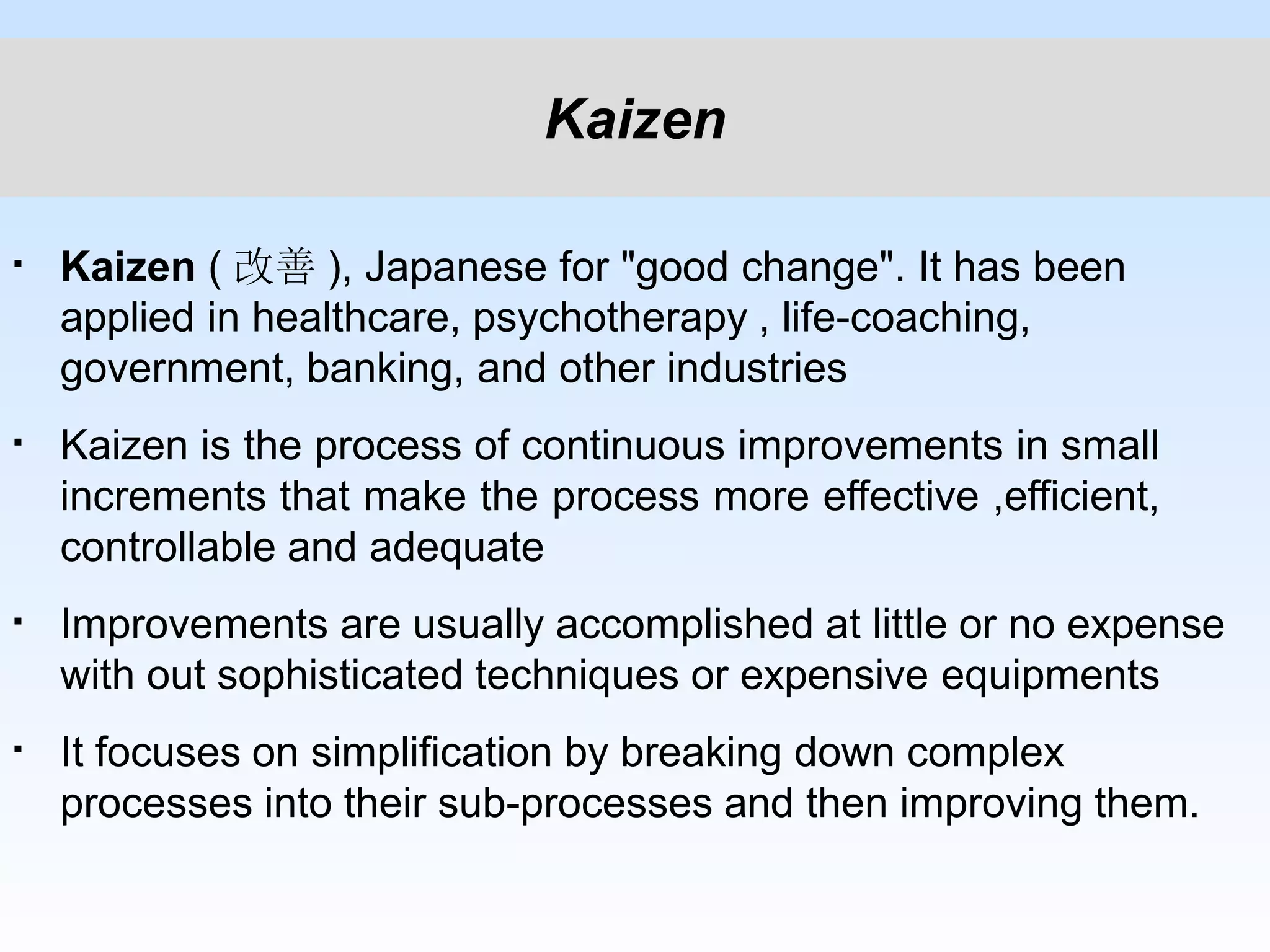
Kaizen ( 改善 ), Japanese for "good change". It has been
applied in healthcare, psychotherapy , life-coaching,
government, banking, and other industries
Kaizen is the process of continuous improvements in small
increments that make the process more effective ,efficient,
controllable and adequate
Improvements are usually accomplished at little or no expense
with out sophisticated techniques or expensive equipments
It focuses on simplification by breaking down complex
processes into their sub-processes and then improving them.
▪
▪
▪
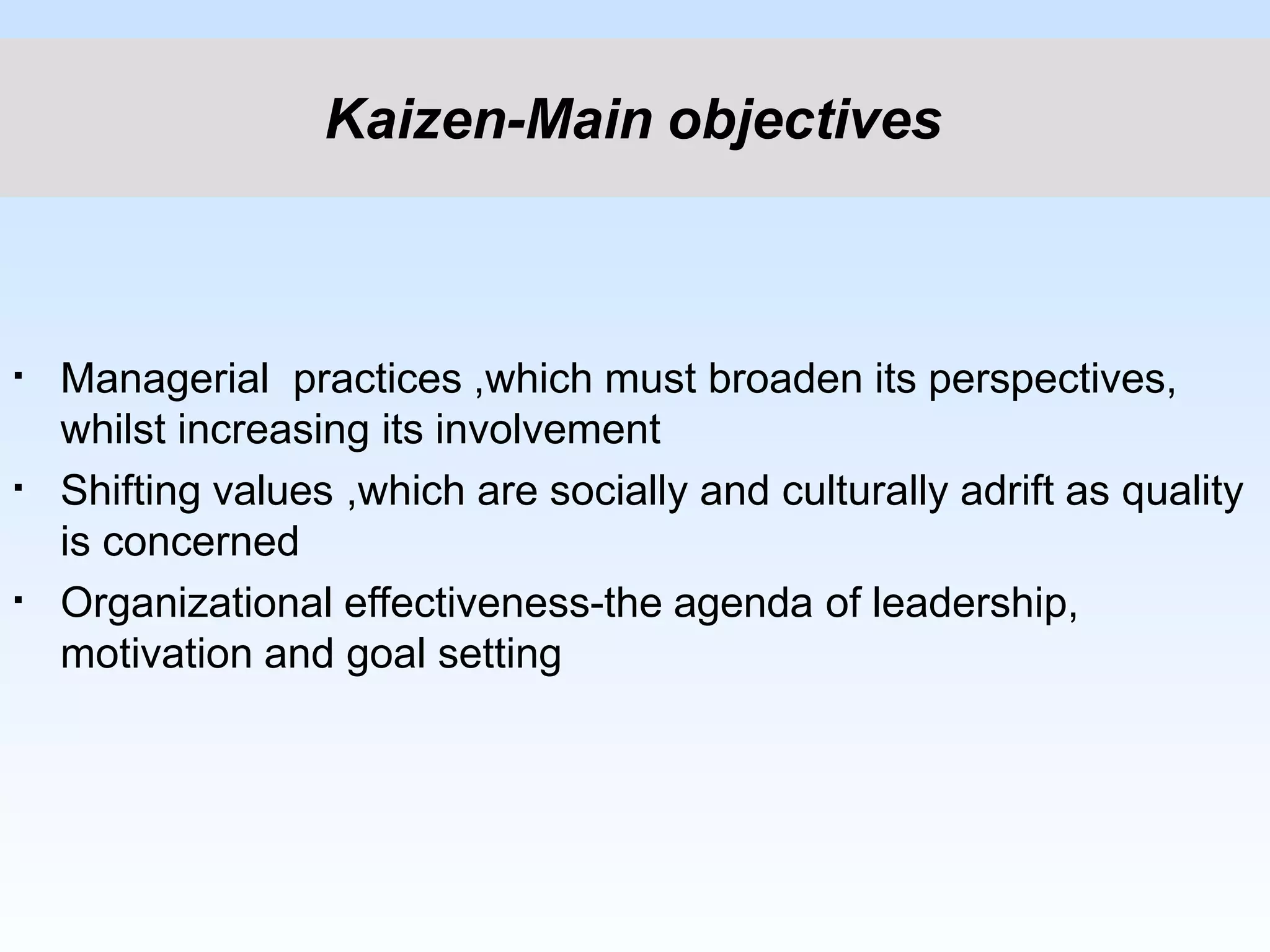
Managerial practices ,which must broaden its perspectives,
whilst increasing its involvement
Shifting values ,which are socially and culturally adrift as quality
is concerned
Organizational effectiveness-the agenda of leadership,
motivation and goal setting
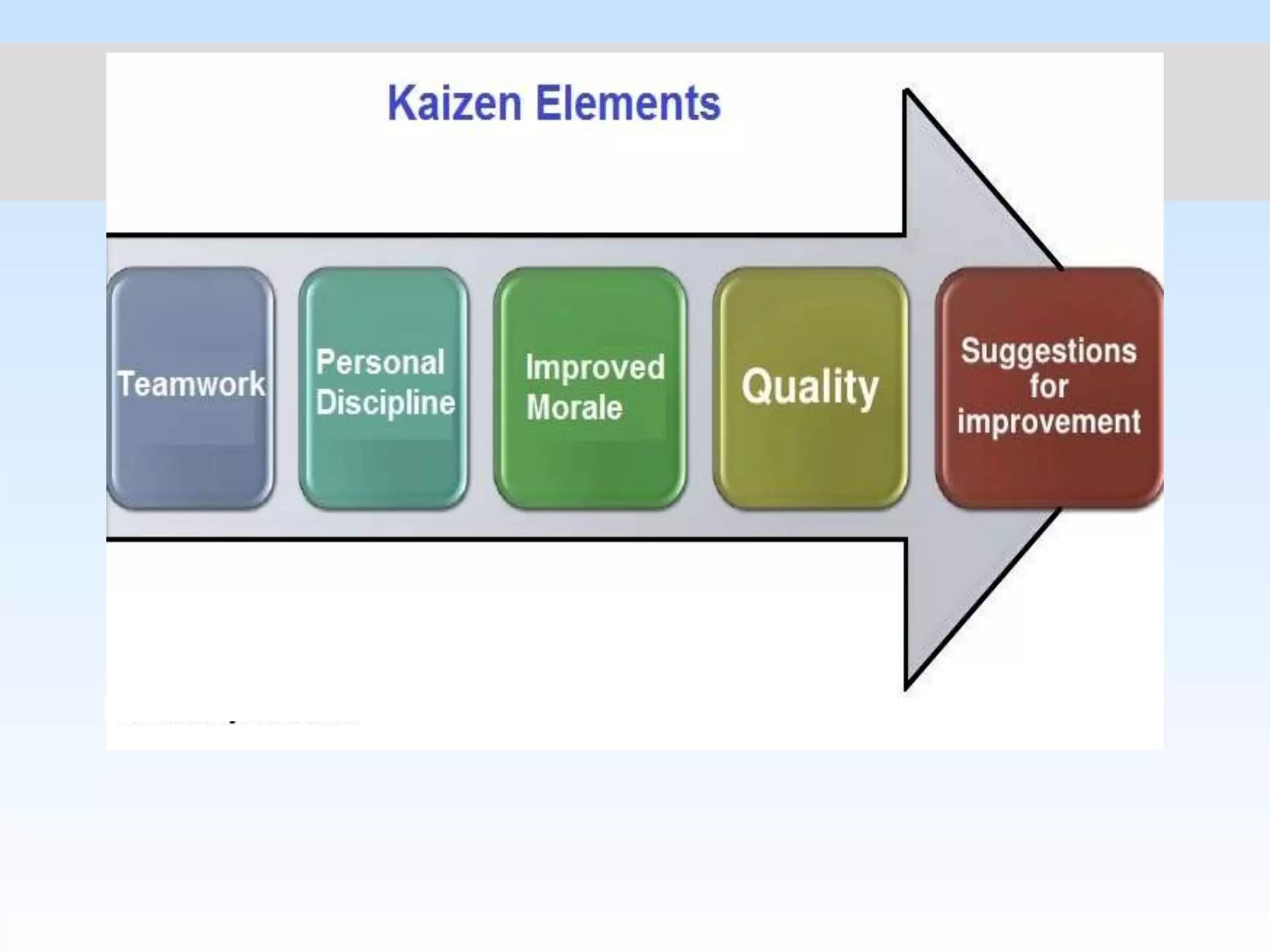
Kaizen-Main objectives
Kaizen
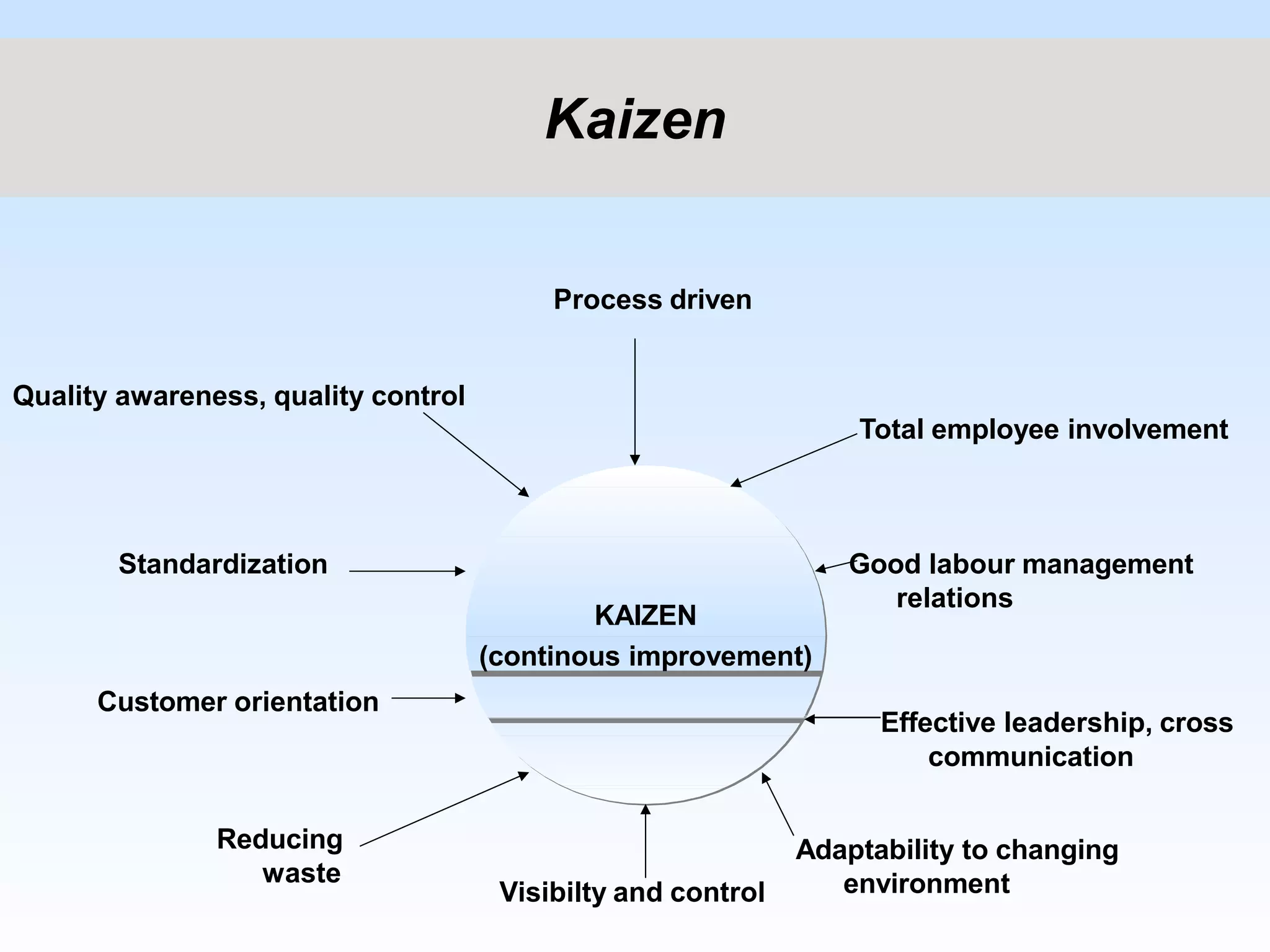
KAIZEN
(continous improvement)
Good labour management
relations
communication
Adaptability to changing
environment
Visibilty and control
Reducing
waste
Customer orientation
Effective leadership, cross
Standardization
Process driven
Quality awareness, quality control
Total employee involvement
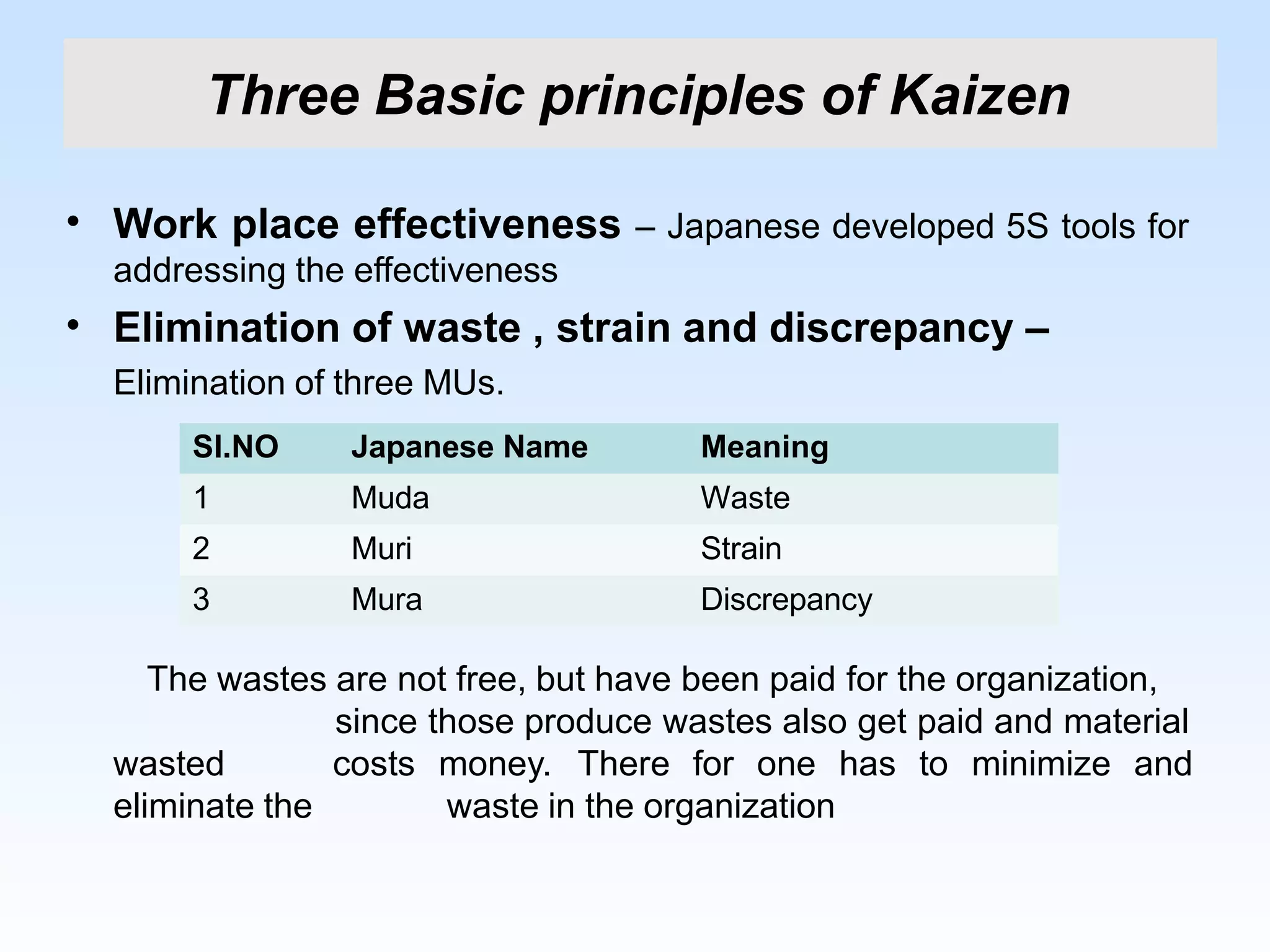
Three Basic principles of Kaizen
•
•
Work place effectiveness – Japanese developed 5S tools for
addressing the effectiveness
Elimination of waste , strain and discrepancy –
Elimination of three MUs.
The wastes are not free, but have been paid for the organization,
since those produce wastes also get paid and material
wasted costs money. There for one has to minimize and
eliminate the waste in the organization
Sl.NO Japanese Name Meaning
1 Muda Waste
2 Muri Strain
3 Mura Discrepancy
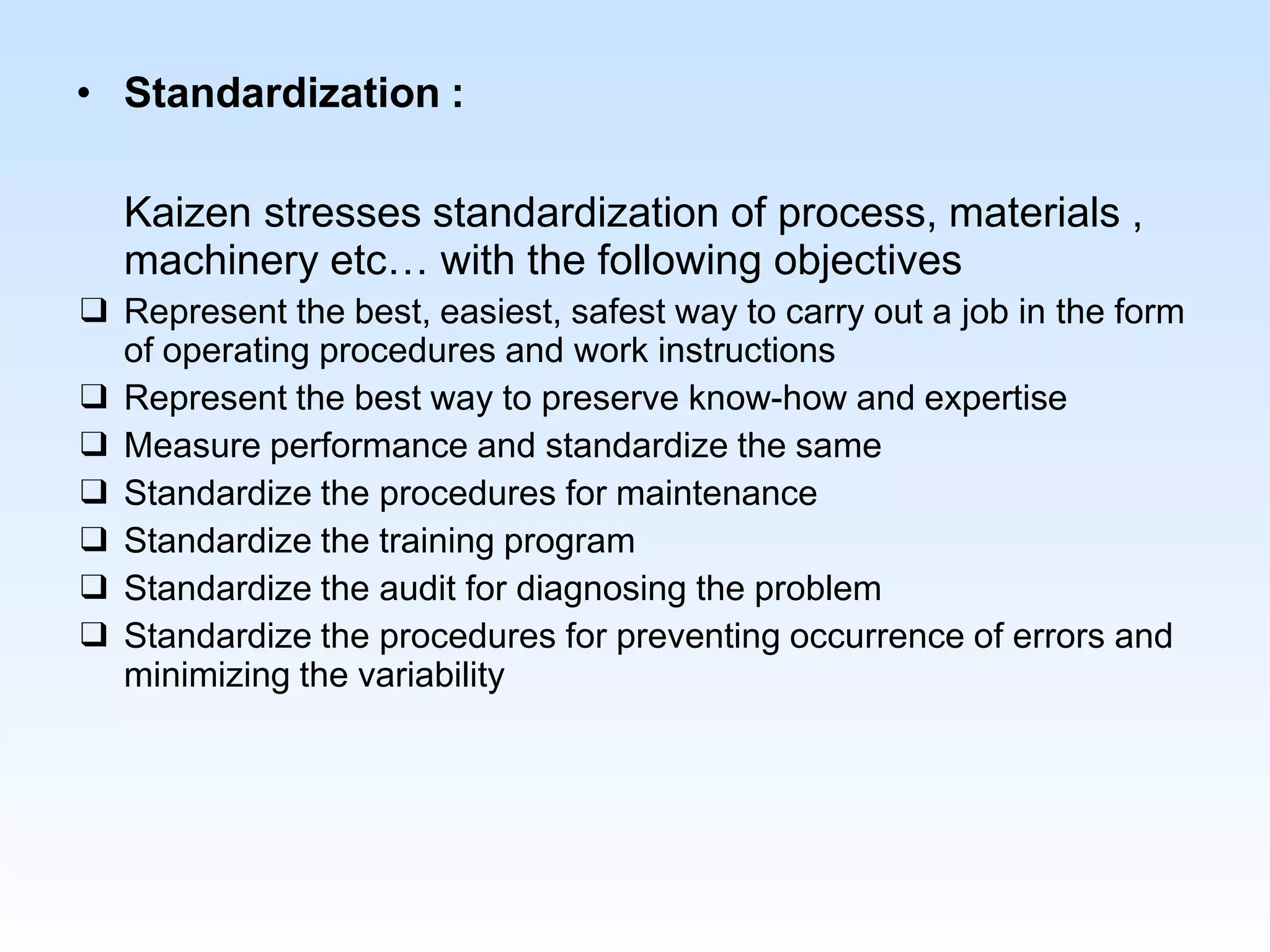
• Standardization :
Kaizen stresses standardization of process, materials ,
machinery etc… with the following objectives
❑ Represent the best, easiest, safest way to carry out a job in the form
of operating procedures and work instructions
❑ Represent the best way to preserve know-how and expertise
❑ Measure performance and standardize the same
❑ Standardize the procedures for maintenance
❑ Standardize the training program
❑ Standardize the audit for diagnosing the problem
❑ Standardize the procedures for preventing occurrence of errors and
minimizing the variability
▪
▪
▪
▪
▪
▪
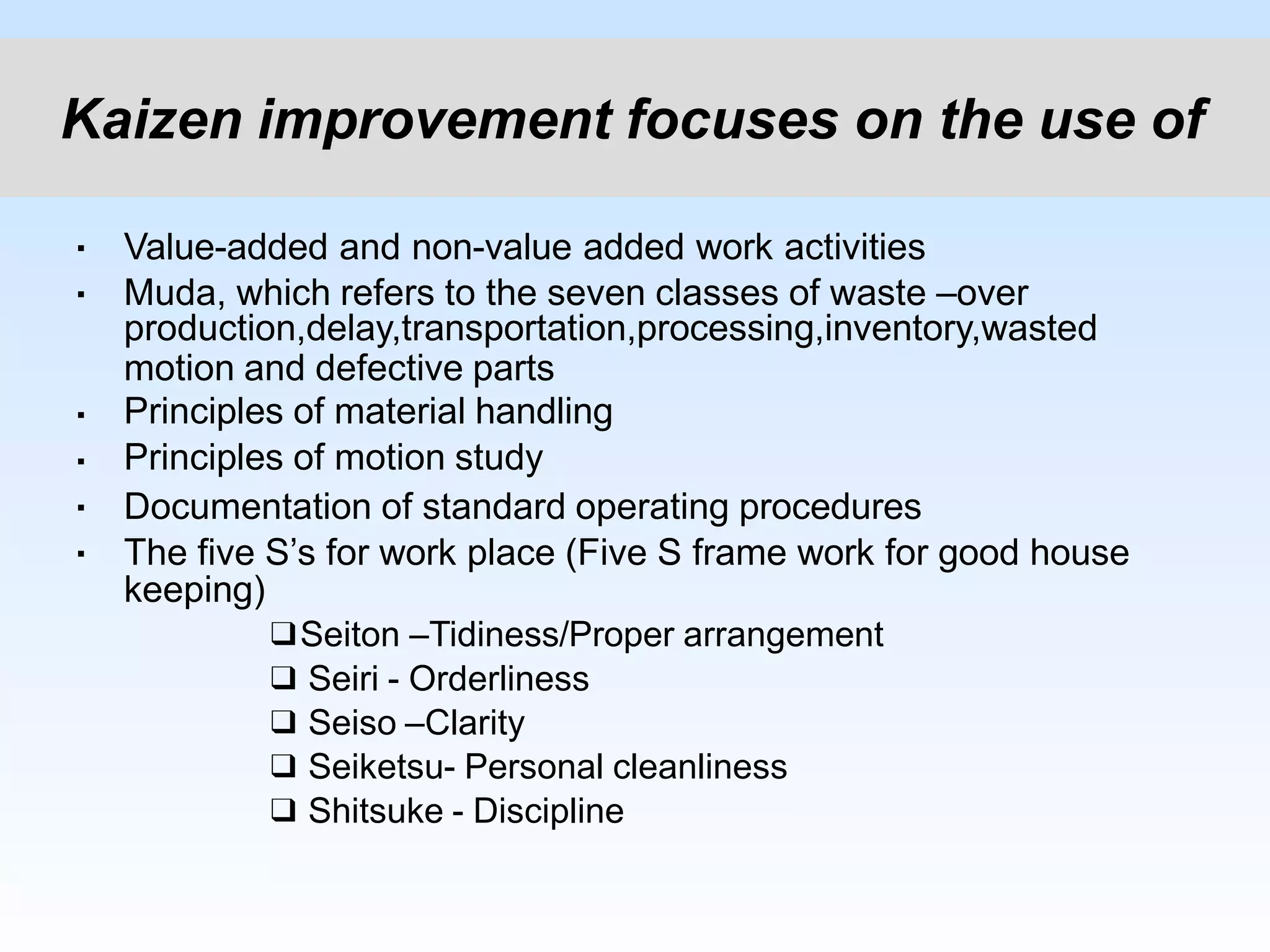
Value-added and non-value added work activities
Muda, which refers to the seven classes of waste –over
production,delay,transportation,processing,inventory,wasted
motion and defective parts
Principles of material handling
Principles of motion study
Documentation of standard operating procedures
The five S’s for work place (Five S frame work for good house
keeping)
❑Seiton –Tidiness/Proper arrangement
❑ Seiri - Orderliness
❑ Seiso –Clarity
❑ Seiketsu- Personal cleanliness
❑ Shitsuke - Discipline
Kaizen improvement focuses on the use of
▪ Better communication through visual displays such as
posters, bulletins etc.
▪ Just in Time principles
▪ Team effort on problem solving, conflict reduction and
communication.
Kaizen improvement focuses on the use of
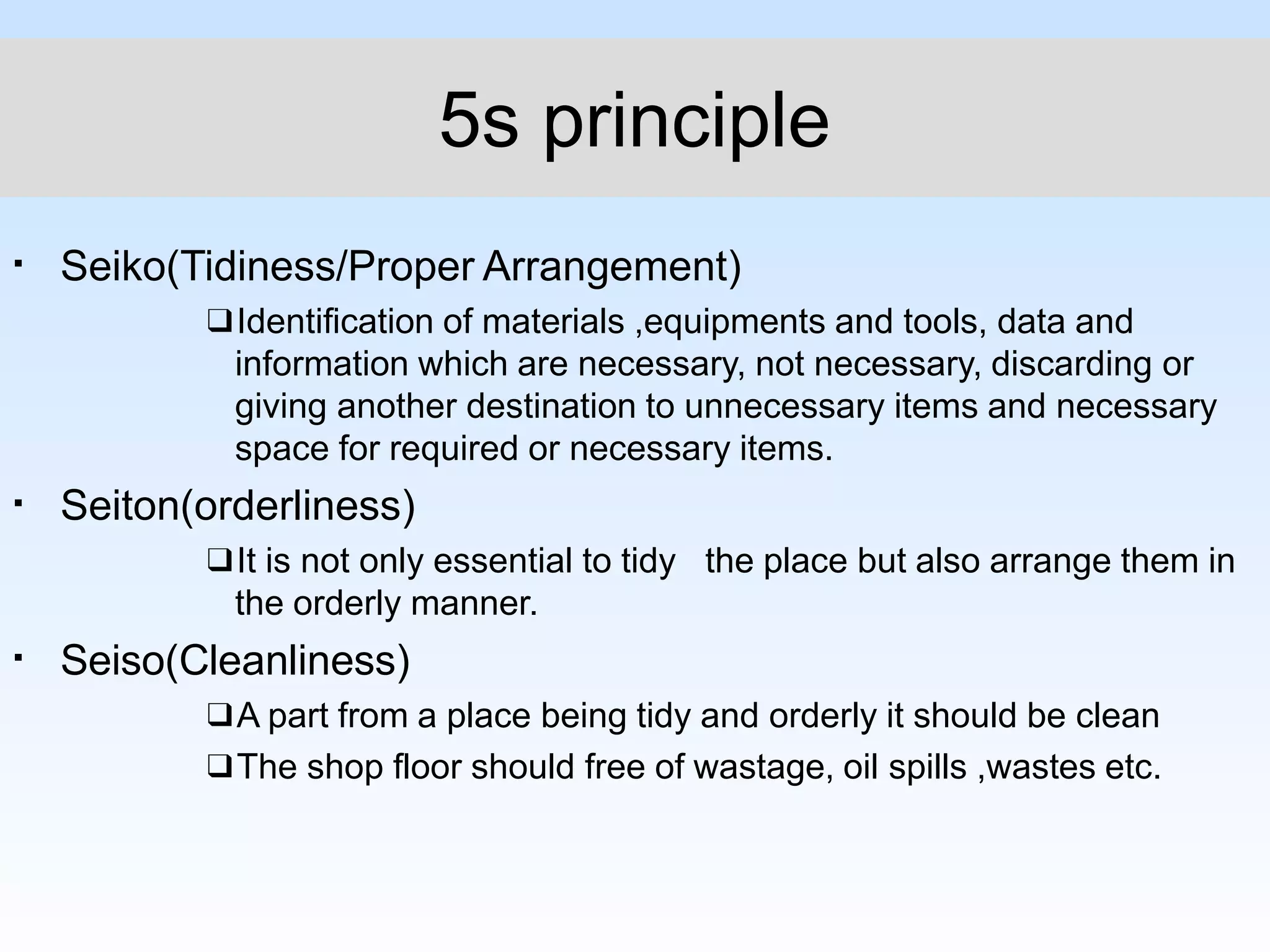
5s principle
▪
▪
▪
Seiko(Tidiness/Proper Arrangement)
❑Identification of materials ,equipments and tools, data and
information which are necessary, not necessary, discarding or
giving another destination to unnecessary items and necessary
space for required or necessary items.
Seiton(orderliness)
❑It is not only essential to tidy the place but also arrange them in
the orderly manner.
Seiso(Cleanliness)
❑A part from a place being tidy and orderly it should be clean
❑The shop floor should free of wastage, oil spills ,wastes etc.
▪
▪
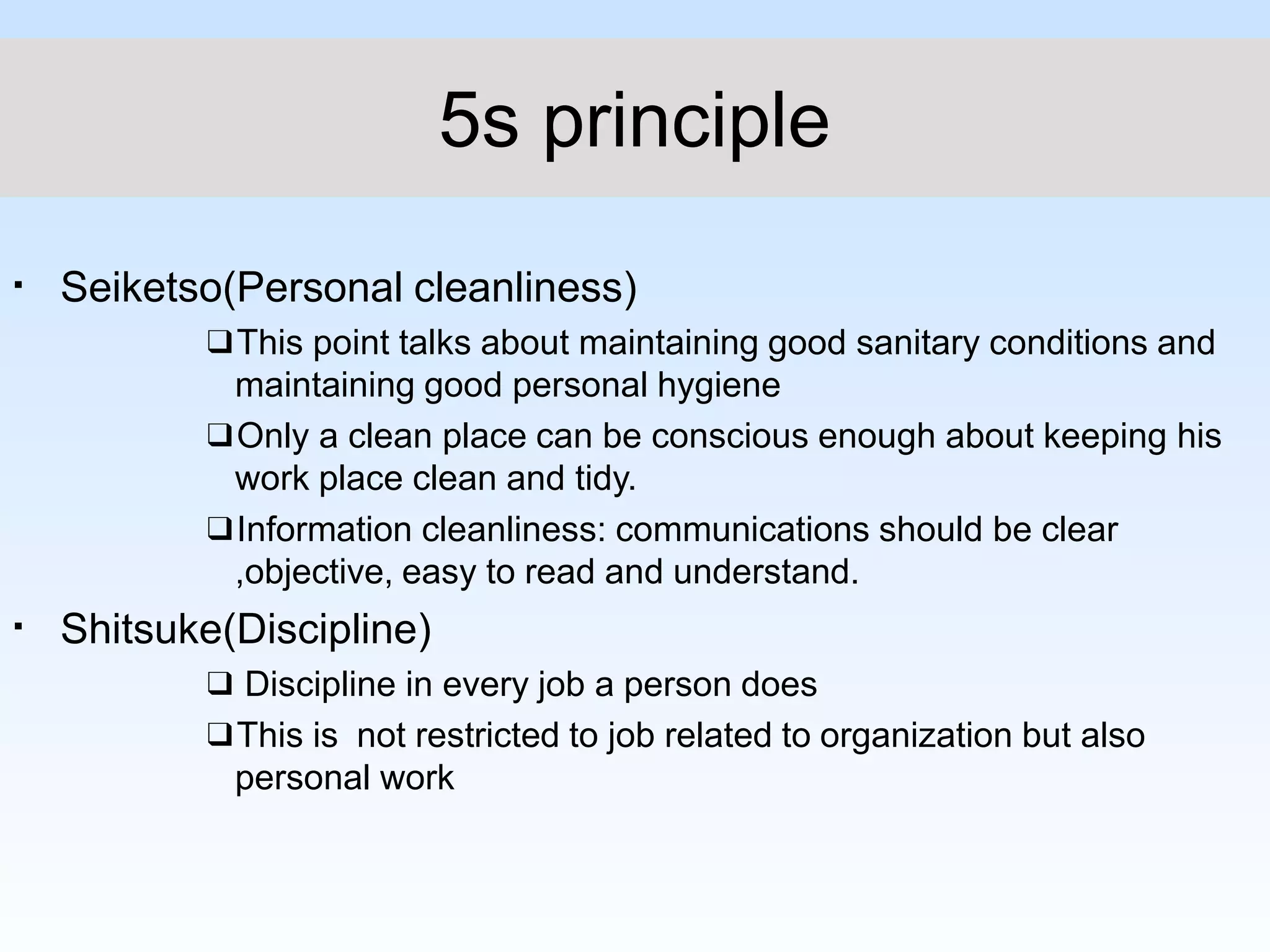
Seiketso(Personal cleanliness)
❑This point talks about maintaining good sanitary conditions and
maintaining good personal hygiene
❑Only a clean place can be conscious enough about keeping his
work place clean and tidy.
❑Information cleanliness: communications should be clear
,objective, easy to read and understand.
Shitsuke(Discipline)
❑ Discipline in every job a person does
❑This is not restricted to job related to organization but also
personal work
5s principle
Thank You

kaizen.pptx

  • 1.
  • 2.
    Kaizen ▪ ▪ ▪ ▪ Kaizen ( 改善), Japanese for "good change". It has been applied in healthcare, psychotherapy , life-coaching, government, banking, and other industries Kaizen is the process of continuous improvements in small increments that make the process more effective ,efficient, controllable and adequate Improvements are usually accomplished at little or no expense with out sophisticated techniques or expensive equipments It focuses on simplification by breaking down complex processes into their sub-processes and then improving them.
  • 3.
    ▪ ▪ ▪ Managerial practices ,whichmust broaden its perspectives, whilst increasing its involvement Shifting values ,which are socially and culturally adrift as quality is concerned Organizational effectiveness-the agenda of leadership, motivation and goal setting Kaizen-Main objectives
  • 4.
    Kaizen KAIZEN (continous improvement) Good labourmanagement relations communication Adaptability to changing environment Visibilty and control Reducing waste Customer orientation Effective leadership, cross Standardization Process driven Quality awareness, quality control Total employee involvement
  • 5.
    Three Basic principlesof Kaizen • • Work place effectiveness – Japanese developed 5S tools for addressing the effectiveness Elimination of waste , strain and discrepancy – Elimination of three MUs. The wastes are not free, but have been paid for the organization, since those produce wastes also get paid and material wasted costs money. There for one has to minimize and eliminate the waste in the organization Sl.NO Japanese Name Meaning 1 Muda Waste 2 Muri Strain 3 Mura Discrepancy
  • 7.
    • Standardization : Kaizenstresses standardization of process, materials , machinery etc… with the following objectives ❑ Represent the best, easiest, safest way to carry out a job in the form of operating procedures and work instructions ❑ Represent the best way to preserve know-how and expertise ❑ Measure performance and standardize the same ❑ Standardize the procedures for maintenance ❑ Standardize the training program ❑ Standardize the audit for diagnosing the problem ❑ Standardize the procedures for preventing occurrence of errors and minimizing the variability
  • 8.
    ▪ ▪ ▪ ▪ ▪ ▪ Value-added and non-valueadded work activities Muda, which refers to the seven classes of waste –over production,delay,transportation,processing,inventory,wasted motion and defective parts Principles of material handling Principles of motion study Documentation of standard operating procedures The five S’s for work place (Five S frame work for good house keeping) ❑Seiton –Tidiness/Proper arrangement ❑ Seiri - Orderliness ❑ Seiso –Clarity ❑ Seiketsu- Personal cleanliness ❑ Shitsuke - Discipline Kaizen improvement focuses on the use of
  • 9.
    ▪ Better communicationthrough visual displays such as posters, bulletins etc. ▪ Just in Time principles ▪ Team effort on problem solving, conflict reduction and communication. Kaizen improvement focuses on the use of
  • 10.
    5s principle ▪ ▪ ▪ Seiko(Tidiness/Proper Arrangement) ❑Identificationof materials ,equipments and tools, data and information which are necessary, not necessary, discarding or giving another destination to unnecessary items and necessary space for required or necessary items. Seiton(orderliness) ❑It is not only essential to tidy the place but also arrange them in the orderly manner. Seiso(Cleanliness) ❑A part from a place being tidy and orderly it should be clean ❑The shop floor should free of wastage, oil spills ,wastes etc.
  • 11.
    ▪ ▪ Seiketso(Personal cleanliness) ❑This pointtalks about maintaining good sanitary conditions and maintaining good personal hygiene ❑Only a clean place can be conscious enough about keeping his work place clean and tidy. ❑Information cleanliness: communications should be clear ,objective, easy to read and understand. Shitsuke(Discipline) ❑ Discipline in every job a person does ❑This is not restricted to job related to organization but also personal work 5s principle
  • 13.