Common Limitations with Big Data
in the Field
8/7/2014
Sean J. Taylor
Joint Statistical Meetings
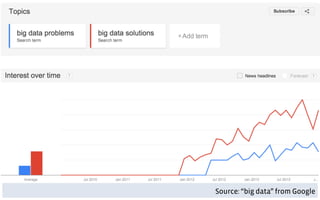
Source: “big data” from Google
Mo’ Data,
Mo’ Problems
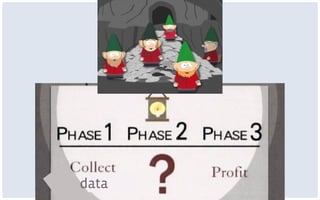
Why are the data so big?
data
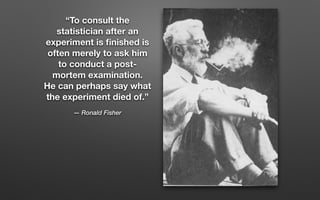
“To consult the
statistician after an
experiment is finished is
often merely to ask him
to conduct a post-
mortem examination.
He can perhaps say what
the experiment died of.”
— Ronald Fisher
Data Alchemy?
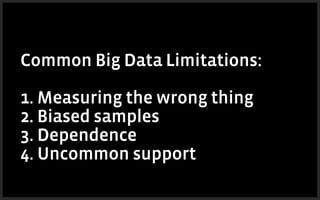
Common Big Data Limitations:
!
1. Measuring the wrong thing
2. Biased samples
3. Dependence
4. Uncommon support
1. Measuring the wrong thing
The data you have a lot of doesn’t
measure what you want.
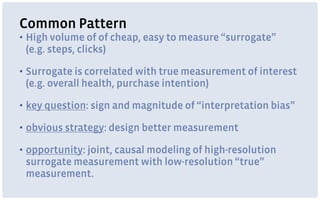
Common Pattern
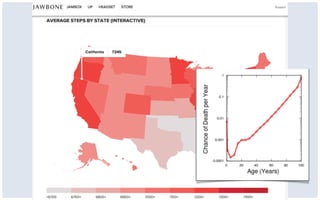
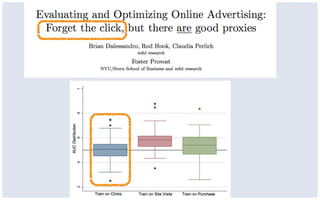
▪ High volume of of cheap, easy to measure “surrogate” 

(e.g. steps, clicks)
▪ Surrogate is correlated with true measurement of interest
(e.g. overall health, purchase intention)
▪ key question: sign and magnitude of “interpretation bias”
▪ obvious strategy: design better measurement
▪ opportunity: joint, causal modeling of high-resolution
surrogate measurement with low-resolution “true”
measurement.
2. Biased samples
Size doesn’t guarantee your data is
representative of the population.
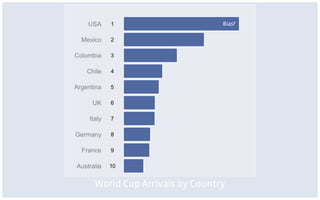
Bias?
World Cup Arrivals by Country
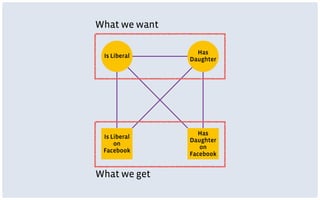
Is Liberal
Has
Daughter
Is Liberal
on
Facebook
Has
Daughter
on
Facebook
What we want
What we get
Common Pattern
▪ Your sample conditions on your own convenience, user
activity level, and/or technological sophistication of
participants.
▪ You’d like to extrapolate your statistic to a more general
population of interest.
▪ key question: (again) sign and magnitude of bias
▪ obvious strategy: weighting or regression
▪ opportunity: understand effect of selection on latent
variables on bias
3. Dependence
Effective size of data is small due
to repeated measurements of
units.
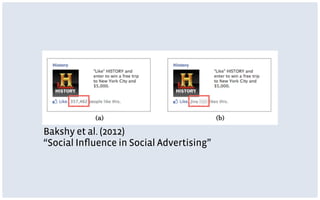
Bakshy et al. (2012)
“Social Influence in Social Advertising”
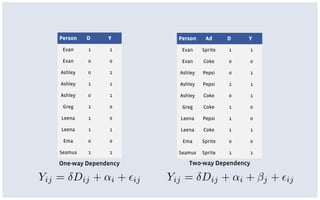
Person D Y
Evan 1 1
Evan 0 0
Ashley 0 1
Ashley 1 1
Ashley 0 1
Greg 1 0
Leena 1 0
Leena 1 1
Ema 0 0
Seamus 1 1
Person Ad D Y
Evan Sprite 1 1
Evan Coke 0 0
Ashley Pepsi 0 1
Ashley Pepsi 1 1
Ashley Coke 0 1
Greg Coke 1 0
Leena Pepsi 1 0
Leena Coke 1 1
Ema Sprite 0 0
Seamus Sprite 1 1
One-way Dependency Two-way Dependency
Yij = Dij + ↵i + j + ✏ijYij = Dij + ↵i + ✏ij
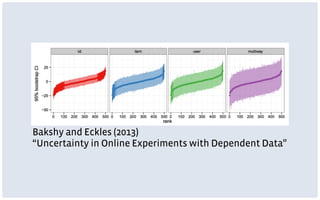
Bakshy and Eckles (2013)
“Uncertainty in Online Experiments with Dependent Data”
Common Pattern
▪ Your sample is large because it includes many repeated
measurements of the most active units.
▪ An inferential procedure that assumes independence will
be anti-conservative.
▪ key question: how to efficiently produce confidence
intervals with the right coverage.
▪ obvious strategy: multi-way bootstrap (Owen and Eckles)
▪ opportunity: scalable inference for crossed random effects
models
4. Uncommon support
Your data are sparse in part of the
distribution you care about.
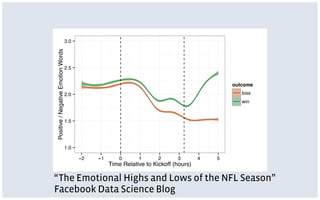
1.0
1.5
2.0
2.5
3.0
−2 −1 0 1 2 3 4 5
Time Relative to Kickoff (hours)
Positive/NegativeEmotionWords
outcome
loss
win
“The Emotional Highs and Lows of the NFL Season”
Facebook Data Science Blog
Which check-ins are useful?
▪ We can only study people who post enough text before
and after their check-ins to yield reliable measurement.
What is the control check-in?
▪ Ideally we’d do a within-subjects design. If so we’re stuck
with only other check-ins (with enough status updates)
from the same people.
▪ National Park visit is likely a vacation, so we need to find
other vacation check-ins. Similar day, time, and distance.


Only a small fraction of the “treatment” cases yield
reliable measurement plus control cases.
Common Pattern
▪ Your sample is large but observations satisfying some set
of qualifying criteria (usually matching) are rare.
▪ Even with strong assumptions, hard to measure precise
differences due to lack of similar cases.
▪ key question: how to use as many of the observations as
possible without introducing bias.
▪ obvious strategy: randomized experiments
▪ opportunity: more efficient causal inference techniques
that work at scale (high dimensional regression/matching)
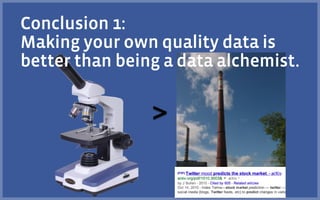
>
Conclusion 1:
Making your own quality data is
better than being a data alchemist.
Conclusion 2:
Great research opportunities in
addressing limitations of
“convenience” big data.
!
(or how I stopped worrying and
learned to be a data alchemist)
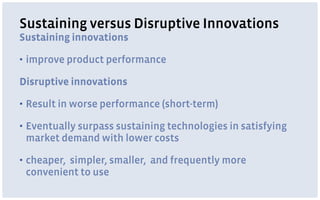
Sustaining versus Disruptive Innovations
Sustaining innovations
▪ improve product performance
Disruptive innovations
▪ Result in worse performance (short-term)
▪ Eventually surpass sustaining technologies in satisfying
market demand with lower costs
▪ cheaper, simpler, smaller, and frequently more
convenient to use
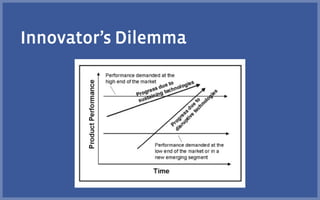
Innovator’s Dilemma
sjt@fb.com
http://seanjtaylor.com

Jsm big-data

  • 1.
    Common Limitations withBig Data in the Field 8/7/2014 Sean J. Taylor Joint Statistical Meetings
  • 4.
  • 6.
  • 7.
    Why are thedata so big?
  • 9.
  • 10.
    “To consult the statisticianafter an experiment is finished is often merely to ask him to conduct a post- mortem examination. He can perhaps say what the experiment died of.” — Ronald Fisher
  • 11.
  • 12.
    Common Big DataLimitations: ! 1. Measuring the wrong thing 2. Biased samples 3. Dependence 4. Uncommon support
  • 13.
    1. Measuring thewrong thing The data you have a lot of doesn’t measure what you want.
  • 16.
    Common Pattern ▪ Highvolume of of cheap, easy to measure “surrogate” 
 (e.g. steps, clicks) ▪ Surrogate is correlated with true measurement of interest (e.g. overall health, purchase intention) ▪ key question: sign and magnitude of “interpretation bias” ▪ obvious strategy: design better measurement ▪ opportunity: joint, causal modeling of high-resolution surrogate measurement with low-resolution “true” measurement.
  • 17.
    2. Biased samples Sizedoesn’t guarantee your data is representative of the population.
  • 19.
  • 21.
  • 22.
    Common Pattern ▪ Yoursample conditions on your own convenience, user activity level, and/or technological sophistication of participants. ▪ You’d like to extrapolate your statistic to a more general population of interest. ▪ key question: (again) sign and magnitude of bias ▪ obvious strategy: weighting or regression ▪ opportunity: understand effect of selection on latent variables on bias
  • 23.
    3. Dependence Effective sizeof data is small due to repeated measurements of units.
  • 24.
    Bakshy et al.(2012) “Social Influence in Social Advertising”
  • 25.
    Person D Y Evan1 1 Evan 0 0 Ashley 0 1 Ashley 1 1 Ashley 0 1 Greg 1 0 Leena 1 0 Leena 1 1 Ema 0 0 Seamus 1 1 Person Ad D Y Evan Sprite 1 1 Evan Coke 0 0 Ashley Pepsi 0 1 Ashley Pepsi 1 1 Ashley Coke 0 1 Greg Coke 1 0 Leena Pepsi 1 0 Leena Coke 1 1 Ema Sprite 0 0 Seamus Sprite 1 1 One-way Dependency Two-way Dependency Yij = Dij + ↵i + j + ✏ijYij = Dij + ↵i + ✏ij
  • 26.
    Bakshy and Eckles(2013) “Uncertainty in Online Experiments with Dependent Data”
  • 27.
    Common Pattern ▪ Yoursample is large because it includes many repeated measurements of the most active units. ▪ An inferential procedure that assumes independence will be anti-conservative. ▪ key question: how to efficiently produce confidence intervals with the right coverage. ▪ obvious strategy: multi-way bootstrap (Owen and Eckles) ▪ opportunity: scalable inference for crossed random effects models
  • 28.
    4. Uncommon support Yourdata are sparse in part of the distribution you care about.
  • 30.
    1.0 1.5 2.0 2.5 3.0 −2 −1 01 2 3 4 5 Time Relative to Kickoff (hours) Positive/NegativeEmotionWords outcome loss win “The Emotional Highs and Lows of the NFL Season” Facebook Data Science Blog
  • 31.
    Which check-ins areuseful? ▪ We can only study people who post enough text before and after their check-ins to yield reliable measurement. What is the control check-in? ▪ Ideally we’d do a within-subjects design. If so we’re stuck with only other check-ins (with enough status updates) from the same people. ▪ National Park visit is likely a vacation, so we need to find other vacation check-ins. Similar day, time, and distance.
 
 Only a small fraction of the “treatment” cases yield reliable measurement plus control cases.
  • 32.
    Common Pattern ▪ Yoursample is large but observations satisfying some set of qualifying criteria (usually matching) are rare. ▪ Even with strong assumptions, hard to measure precise differences due to lack of similar cases. ▪ key question: how to use as many of the observations as possible without introducing bias. ▪ obvious strategy: randomized experiments ▪ opportunity: more efficient causal inference techniques that work at scale (high dimensional regression/matching)
  • 33.
    > Conclusion 1: Making yourown quality data is better than being a data alchemist.
  • 34.
    Conclusion 2: Great researchopportunities in addressing limitations of “convenience” big data. ! (or how I stopped worrying and learned to be a data alchemist)
  • 36.
    Sustaining versus DisruptiveInnovations Sustaining innovations ▪ improve product performance Disruptive innovations ▪ Result in worse performance (short-term) ▪ Eventually surpass sustaining technologies in satisfying market demand with lower costs ▪ cheaper, simpler, smaller, and frequently more convenient to use
  • 37.
  • 38.