Putting the Magic in Data Science 
11/04/2014 
Sean J. Taylor 
QCon SF
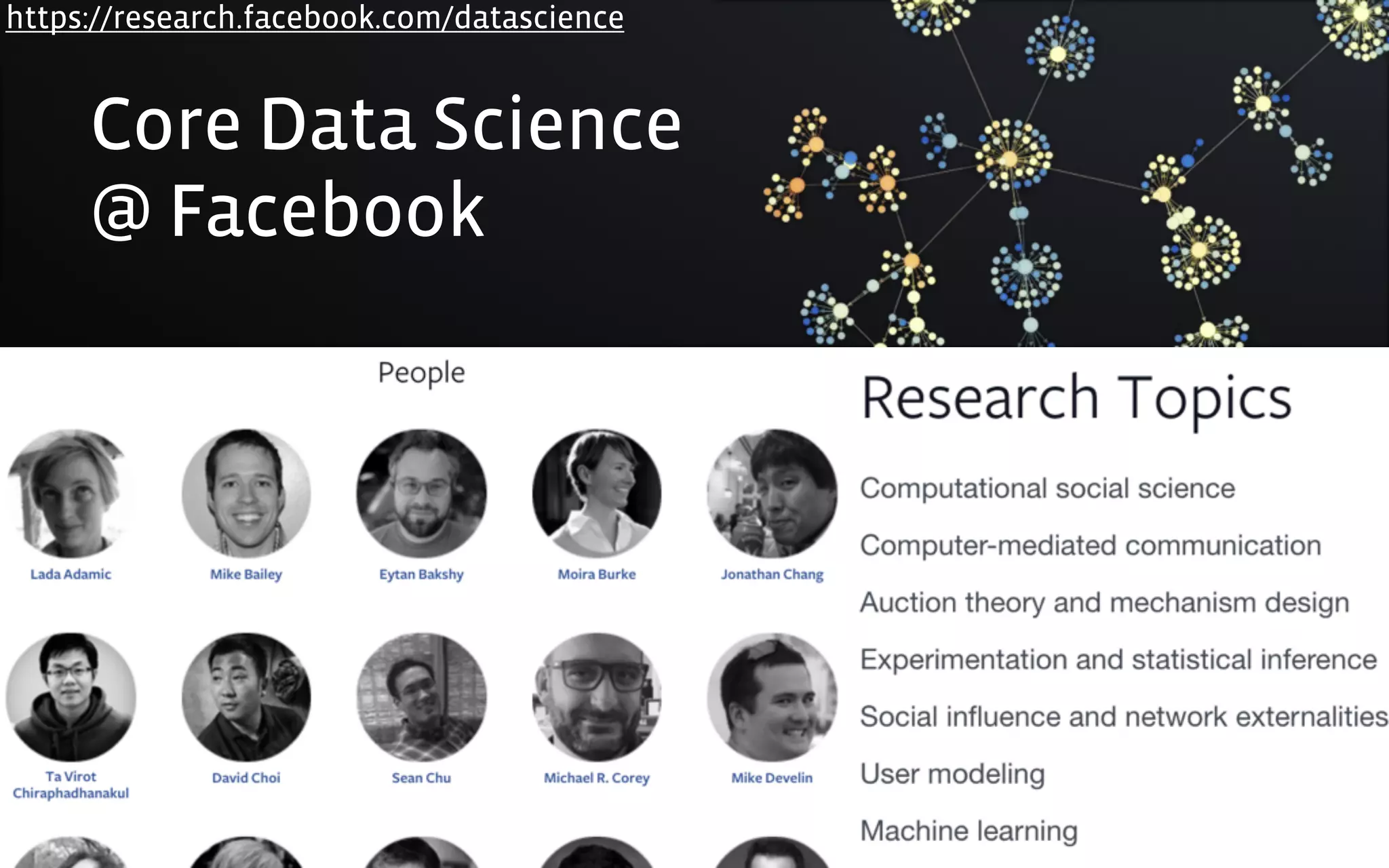
https://research.facebook.com/datascience 
Core Data Science 
@ Facebook
http://en.wikipedia.org/wiki/Pasteur's_quadrant 
“The mission of CDS is to provide research and innovation that 
fundamentally increase the magnitude of Facebook’s success.”
It’s not a trick, it’s an illusion.
Any sufficiently advanced 
technology is indistinguishable 
from magic. 
— Arthur C. Clarke
1. create technology: 
people who are not experts can 
use it easily with little difficulty 
and trust the output 
! 
2. make it “sufficiently advanced”
The Data Science Venn Diagram 
Drew Conway
Basic 
Research 
Applied 
Research 
Working 
Prototype 
Quality 
Code 
Tool or 
Service 
Maybe someday, someone can use this. 
I might be able to use this. 
I can use this (sometimes). 
Software engineers can use this. 
People can use this.
People can use it → People want to use it 
Data Science Impact = 
Value * (Num People) * (Frequency of Use) 
Very difficult to demand that people use new tech — must 
make a compelling value proposition for people and 
educate them.
What can data do? 
Data can’t do anything. 
People do things with data. 
(usually they make decisions)
The Last Mile Problem 
! 
It works for you. Can you get people to use it? 
Without considering this last step, all subsequent steps are 
useless.
Existence of 
Data 
Creation of 
Technologies 
Counterfactuals and Causal Inference 
Morgan and Winship 
Decision 
Existence of Quality 
Capabilities
Magical + Effective Data Science Tools 
• Planout: language for expressing / deploying experimental 
designs 
• Deltoid: analyzing the results of experiments 
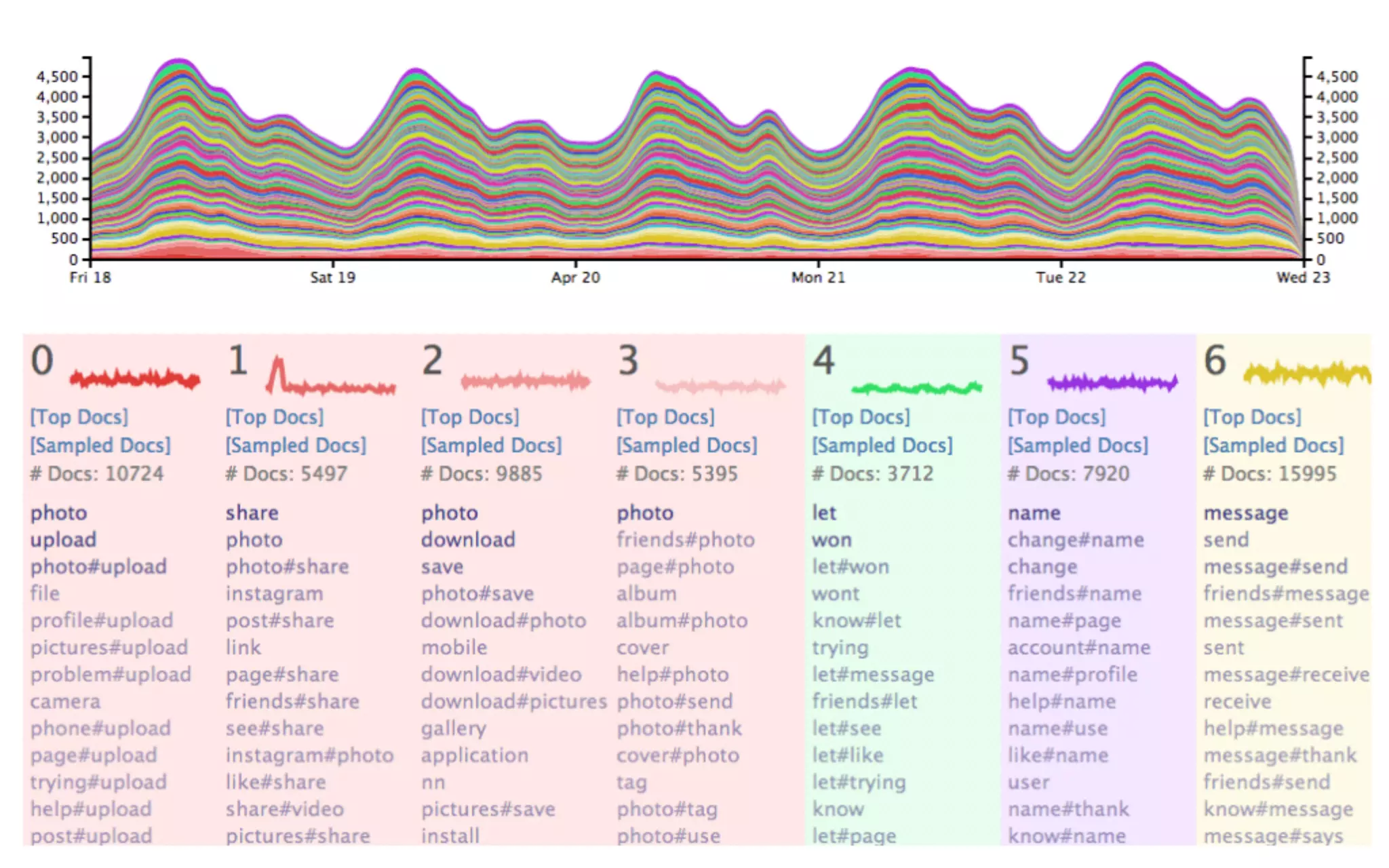
• ClustR: generic document clustering 
• Prophet: completely automatic forecasting procedure 
• Crystal Ball: large scale, interpretable regression models 
• Hive / Presto / Scuba: SQL engines for different problems
Outline 
! 
1. Sources of Magic 
2. Solving the Last Mile
Tricks: 
Sources of 
Data Science 
Magic
http://premise.com
http://premise.com
Of Data 
Trick 1: invest in data collection 
! 
Novel sources of data are magic.
Making your own quality data is 
better than being a data alchemist. 
>
Let’s say you have a billion users… 
and you want to listen to them all
Trick 2: Dimensionality Reduction 
Increasingly individual observations can be very high 
dimensional: text documents, images, audio. 
! 
! 
! 
! 
Clustering and classification techniques can find/extract a 
smaller dimensional representation that retains meaning.
Deep Learning is just (very) 
fancy dimensionality reduction
Problem: 
Estimate the probability 
of rare events or events 
pertaining to new 
objects. 
E.g. click, like, comment, 
share
Trick 3: Be a (Practical) Bayesian 
! 
• If you have rare or new things you’d like to learn about, it’s 
often hard to say much. 
• But it’s sometimes easy to think of cases which are similar 
to the one you are trying to predict. 
• James-Stein estimators demonstrate that weighted 
averages including related observations will help improve 
predictions.
0 
14 14 
billion 
Philadelphia Facebook Eagles Revenue 
Wins
Trick 4: Bootstrap all the statistics 
! 
• The bootstrap allows you to get a sampling distribution 
over almost any statistic you can compute from your data. 
• Embarrassingly parallelizable / computable online. 
confidence intervals
Bootstrapping in Practice 
R1 
All Your 
Data 
R2 
… 
R500 
Generate random 
sub-samples 
s1 
s2 
… 
s500 
Compute statistics 
or estimate model 
parameters 
} 
7.5 
5.0 
2.5 
0.0 
-2 -1 0 1 2 
Statistic 
Count 
Get a distribution 
over statistic of interest 
(usually the prediction) 
- take mean 
- CIs == 95% quantiles 
- SEs == standard deviation
Grab bag of tricks 
• Everything is linear if you use enough features. 
• Matrix factorizations: NMF, SVD. 
• Probabilistic data structures: LSH, min-hash. 
• Exploit distributed, online algorithms as much as possible. 
• “A little bit of ridge never hurts.” — Trevor Hastie 
• Label propagation: use data about network neighbors. 
• Data reduction: create bins & analyze weighted bin stats.
Last Mile of 
Data Science 
Magic
Principle 1: Reliability 
! 
“60% of the time, it works every time”
Test-driven data science 
Learn how to build reliable data science systems from 
software engineers. 
1. Write test fixtures with simulated or case-study data 
sets. 
2. Write automated tests that check that your system 
works on fixtures, and add new ones when it doesn’t. 
3. (Bonus) Test input data to ensure it meets all 
assumptions.
Principle 2: Latency + Interactivity 
! 
“how many hypotheses per second 
are you testing/generating?”
Answer more questions 
People have good intuitions and tend to search effectively 
given understandable tools. 
First order effect of speed: more answers per second. 
Second order effect of speed: more questions asked. 
Deltoid: effortless experimentation 
Scuba: in-memory, distributed, sampled database. 
Presto: aggressive caching, distributed SQL query engine
Principle 3: Simplicity + Modularity
Choose one thing to do very well 
! 
• It makes it easier to optimize your technology. 
! 
• It makes it easier for people to understand what it does. 
! 
• It makes people more likely to build around it.
Principle 4: Unexpectedness
Show people the most interesting things
Tricks Explained 
• Planout: simplicity + modularity 
• Deltoid: effortless experiment analysis + bootstrap 
• ClustR: dimensionality reduction + interactivity 
• Prophet: everything’s linear + basis expansion + new data 
• Crystal Ball: everything’s linear + regularization + speed 
• Hive / Presto / Scuba: reliability/latency tradeoffs
1. Learn as many tricks as you can 
2. Combine them in novel ways 
3. Consider the last mile
sjt@fb.com 
http://seanjtaylor.com 
(c) 2009 Facebook, Inc. or its licensors. "Facebook" is a registered trademark of Facebook, Inc.. All rights reserved. 1.0

Putting the Magic in Data Science

  • 1.
    Putting the Magicin Data Science 11/04/2014 Sean J. Taylor QCon SF
  • 2.
  • 3.
    http://en.wikipedia.org/wiki/Pasteur's_quadrant “The missionof CDS is to provide research and innovation that fundamentally increase the magnitude of Facebook’s success.”
  • 4.
    It’s not atrick, it’s an illusion.
  • 6.
    Any sufficiently advanced technology is indistinguishable from magic. — Arthur C. Clarke
  • 12.
    1. create technology: people who are not experts can use it easily with little difficulty and trust the output ! 2. make it “sufficiently advanced”
  • 13.
    The Data ScienceVenn Diagram Drew Conway
  • 14.
    Basic Research Applied Research Working Prototype Quality Code Tool or Service Maybe someday, someone can use this. I might be able to use this. I can use this (sometimes). Software engineers can use this. People can use this.
  • 15.
    People can useit → People want to use it Data Science Impact = Value * (Num People) * (Frequency of Use) Very difficult to demand that people use new tech — must make a compelling value proposition for people and educate them.
  • 16.
    What can datado? Data can’t do anything. People do things with data. (usually they make decisions)
  • 17.
    The Last MileProblem ! It works for you. Can you get people to use it? Without considering this last step, all subsequent steps are useless.
  • 18.
    Existence of Data Creation of Technologies Counterfactuals and Causal Inference Morgan and Winship Decision Existence of Quality Capabilities
  • 19.
    Magical + EffectiveData Science Tools • Planout: language for expressing / deploying experimental designs • Deltoid: analyzing the results of experiments • ClustR: generic document clustering • Prophet: completely automatic forecasting procedure • Crystal Ball: large scale, interpretable regression models • Hive / Presto / Scuba: SQL engines for different problems
  • 20.
    Outline ! 1.Sources of Magic 2. Solving the Last Mile
  • 21.
    Tricks: Sources of Data Science Magic
  • 23.
  • 24.
  • 25.
    Of Data Trick1: invest in data collection ! Novel sources of data are magic.
  • 26.
    Making your ownquality data is better than being a data alchemist. >
  • 27.
    Let’s say youhave a billion users… and you want to listen to them all
  • 29.
    Trick 2: DimensionalityReduction Increasingly individual observations can be very high dimensional: text documents, images, audio. ! ! ! ! Clustering and classification techniques can find/extract a smaller dimensional representation that retains meaning.
  • 30.
    Deep Learning isjust (very) fancy dimensionality reduction
  • 31.
    Problem: Estimate theprobability of rare events or events pertaining to new objects. E.g. click, like, comment, share
  • 33.
    Trick 3: Bea (Practical) Bayesian ! • If you have rare or new things you’d like to learn about, it’s often hard to say much. • But it’s sometimes easy to think of cases which are similar to the one you are trying to predict. • James-Stein estimators demonstrate that weighted averages including related observations will help improve predictions.
  • 34.
    0 14 14 billion Philadelphia Facebook Eagles Revenue Wins
  • 36.
    Trick 4: Bootstrapall the statistics ! • The bootstrap allows you to get a sampling distribution over almost any statistic you can compute from your data. • Embarrassingly parallelizable / computable online. confidence intervals
  • 37.
    Bootstrapping in Practice R1 All Your Data R2 … R500 Generate random sub-samples s1 s2 … s500 Compute statistics or estimate model parameters } 7.5 5.0 2.5 0.0 -2 -1 0 1 2 Statistic Count Get a distribution over statistic of interest (usually the prediction) - take mean - CIs == 95% quantiles - SEs == standard deviation
  • 38.
    Grab bag oftricks • Everything is linear if you use enough features. • Matrix factorizations: NMF, SVD. • Probabilistic data structures: LSH, min-hash. • Exploit distributed, online algorithms as much as possible. • “A little bit of ridge never hurts.” — Trevor Hastie • Label propagation: use data about network neighbors. • Data reduction: create bins & analyze weighted bin stats.
  • 39.
    Last Mile of Data Science Magic
  • 40.
    Principle 1: Reliability ! “60% of the time, it works every time”
  • 41.
    Test-driven data science Learn how to build reliable data science systems from software engineers. 1. Write test fixtures with simulated or case-study data sets. 2. Write automated tests that check that your system works on fixtures, and add new ones when it doesn’t. 3. (Bonus) Test input data to ensure it meets all assumptions.
  • 42.
    Principle 2: Latency+ Interactivity ! “how many hypotheses per second are you testing/generating?”
  • 43.
    Answer more questions People have good intuitions and tend to search effectively given understandable tools. First order effect of speed: more answers per second. Second order effect of speed: more questions asked. Deltoid: effortless experimentation Scuba: in-memory, distributed, sampled database. Presto: aggressive caching, distributed SQL query engine
  • 44.
  • 45.
    Choose one thingto do very well ! • It makes it easier to optimize your technology. ! • It makes it easier for people to understand what it does. ! • It makes people more likely to build around it.
  • 46.
  • 47.
    Show people themost interesting things
  • 48.
    Tricks Explained •Planout: simplicity + modularity • Deltoid: effortless experiment analysis + bootstrap • ClustR: dimensionality reduction + interactivity • Prophet: everything’s linear + basis expansion + new data • Crystal Ball: everything’s linear + regularization + speed • Hive / Presto / Scuba: reliability/latency tradeoffs
  • 49.
    1. Learn asmany tricks as you can 2. Combine them in novel ways 3. Consider the last mile
  • 50.
    sjt@fb.com http://seanjtaylor.com (c)2009 Facebook, Inc. or its licensors. "Facebook" is a registered trademark of Facebook, Inc.. All rights reserved. 1.0