 Recognize students varying background knowledge, 
readiness, language, preferences in learning, interests 
and to react responsively 
 Approach teaching and learning for students of 
differing abilities in the same classroom. 
 To maximize each student’s growth and individual 
success 
 Recognizing where each student is and assisting in 
their individual learning process
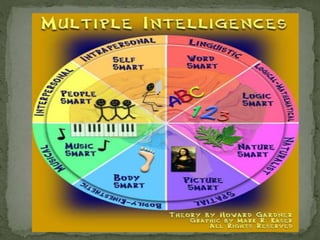
 Involves working with others 
 Social awareness 
 Leading 
 Understanding people 
 Communicating
 Sharing group work 
 Classroom parties 
 Class discussions 
 Brain storming 
 Peer editing
 To understand order and meaning of words 
 Explaining 
 Teaching and learning 
 Humor 
 Memory and recall
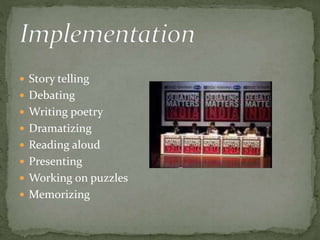
 Story telling 
 Debating 
 Writing poetry 
 Dramatizing 
 Reading aloud 
 Presenting 
 Working on puzzles 
 Memorizing
 Ability to use and recognize musical patterns 
 Picking up sounds 
 Remembering melodies 
 Singing 
 Rhythms
 Singing ABC songs 
 Have children create rap songs about topic 
 Humming/ tapping patterns to words 
 Give a presentation with appropriate musical 
accompaniment 
 Listening to music
 Identify relationships 
 See connections between separate distinct pieces of 
information 
 Reasoning 
 Logic 
 Math 
 Problem solving 
 Patterns
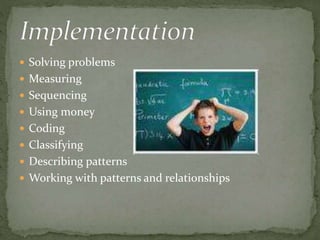
 Solving problems 
 Measuring 
 Sequencing 
 Using money 
 Coding 
 Classifying 
 Describing patterns 
 Working with patterns and relationships
 Moving the body to express emotion, to play games, 
invent activities 
 Processing knowledge through bodily sensations 
 Touching 
 Moving
 Create a movement to explain lesson 
 Plan and attend field trips 
 Bring hands on materials to demonstrate 
 Dancing 
 Athletics 
 Acting 
 Crafts 
 Using tools
 Critical thinking 
 Higher level of thinking 
 Understanding self 
 Recognizing strengths and weaknesses 
 Setting goals
 Personal response journals 
 Self paced projects 
 Reflecting on independent reading 
 Working alone 
 Reflecting
 Ability to form mental images and pictures 
 Sense of sight ability to form different perspectives 
 Visualizations 
 Imagination
 Using charts, maps or graphs 
 Creating slide shows, videos or photo albums 
 Create a piece of artwork 
 Illustrate, draw, paint, sketch, or sculpt 
 Imagine things
 Enjoy real world experiences 
 Exploring things 
 Hands on learning 
 Working in nature 
 Making distinctions in the natural world
 Reading outside 
 Cloud watching 
 Nature walks 
 Exploring things 
 Learning about natural events 
 Gardening 
 Field trips to animal sanctuaries
Ernie Barrington; Teaching to student diversity in 
higher education: How Multiple Intelligence 
Theory can help 
Robert J. Sternberg; The Answer Depends On the 
Question: A Reply To Eric Jensen 
Christine Kunkel; The Power of Key: Celebrating 
20 Years of Innovation At the Key Learning 
Community 
Matt Aborn, Ed.M. An Intelligent Use For Belief 
Howard Gardner and Seana Moran; The Science of 
Multiple intelligences Theory: A Response to Lynn 
Waterhouse 
http://images.google.com

Jodie Griffith

  • 1.
     Recognize studentsvarying background knowledge, readiness, language, preferences in learning, interests and to react responsively  Approach teaching and learning for students of differing abilities in the same classroom.  To maximize each student’s growth and individual success  Recognizing where each student is and assisting in their individual learning process
  • 3.
     Involves workingwith others  Social awareness  Leading  Understanding people  Communicating
  • 4.
     Sharing groupwork  Classroom parties  Class discussions  Brain storming  Peer editing
  • 5.
     To understandorder and meaning of words  Explaining  Teaching and learning  Humor  Memory and recall
  • 6.
     Story telling  Debating  Writing poetry  Dramatizing  Reading aloud  Presenting  Working on puzzles  Memorizing
  • 7.
     Ability touse and recognize musical patterns  Picking up sounds  Remembering melodies  Singing  Rhythms
  • 8.
     Singing ABCsongs  Have children create rap songs about topic  Humming/ tapping patterns to words  Give a presentation with appropriate musical accompaniment  Listening to music
  • 9.
     Identify relationships  See connections between separate distinct pieces of information  Reasoning  Logic  Math  Problem solving  Patterns
  • 10.
     Solving problems  Measuring  Sequencing  Using money  Coding  Classifying  Describing patterns  Working with patterns and relationships
  • 11.
     Moving thebody to express emotion, to play games, invent activities  Processing knowledge through bodily sensations  Touching  Moving
  • 12.
     Create amovement to explain lesson  Plan and attend field trips  Bring hands on materials to demonstrate  Dancing  Athletics  Acting  Crafts  Using tools
  • 13.
     Critical thinking  Higher level of thinking  Understanding self  Recognizing strengths and weaknesses  Setting goals
  • 14.
     Personal responsejournals  Self paced projects  Reflecting on independent reading  Working alone  Reflecting
  • 15.
     Ability toform mental images and pictures  Sense of sight ability to form different perspectives  Visualizations  Imagination
  • 16.
     Using charts,maps or graphs  Creating slide shows, videos or photo albums  Create a piece of artwork  Illustrate, draw, paint, sketch, or sculpt  Imagine things
  • 17.
     Enjoy realworld experiences  Exploring things  Hands on learning  Working in nature  Making distinctions in the natural world
  • 18.
     Reading outside  Cloud watching  Nature walks  Exploring things  Learning about natural events  Gardening  Field trips to animal sanctuaries
  • 19.
    Ernie Barrington; Teachingto student diversity in higher education: How Multiple Intelligence Theory can help Robert J. Sternberg; The Answer Depends On the Question: A Reply To Eric Jensen Christine Kunkel; The Power of Key: Celebrating 20 Years of Innovation At the Key Learning Community Matt Aborn, Ed.M. An Intelligent Use For Belief Howard Gardner and Seana Moran; The Science of Multiple intelligences Theory: A Response to Lynn Waterhouse http://images.google.com