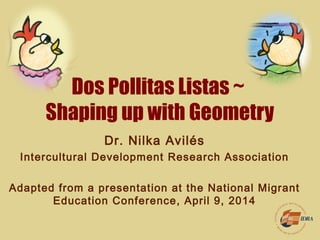
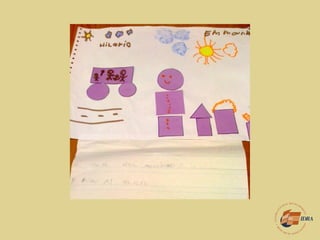
Dos Pollitas Listas ~
Shaping up with Geometry
Dr. Nilka Avilés
Intercultural Development Research Association
Adapted from a presentation at the National Migrant
Education Conference, April 9, 2014
Listen to Classnotes Podcast
episode on from this
presentation, “Geometry in
Early Childhood,” Episode 139
with Nilka Avilés, Ed.D.
http://www.idra.org/Podcasts/
Objectives
• Create mental images of geometric shapes using spatial
memory and spatial visualization
• Recognize and represent shapes from different
perspectives
• Categorize, define, and relate figures in a variety of
representations
• Use culturally connected instructional approaches such as
storytelling, song, rhythm, imagery, cooperative learning
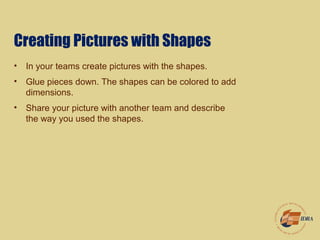
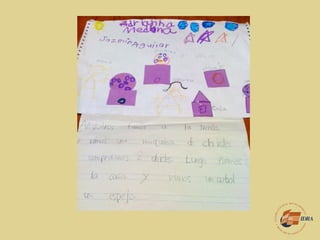
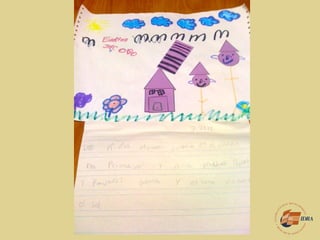
and creative writing
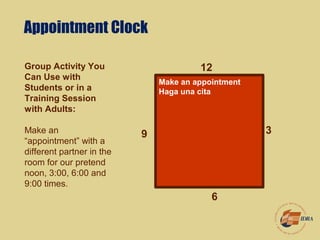
Appointment Clock
Make an appointment
Haga una cita
12
3
6
9
Group Activity You
Can Use with
Students or in a
Training Session
with Adults:
Make an
“appointment” with a
different partner in the
room for our pretend
noon, 3:00, 6:00 and
9:00 times.
Noon
Share with your partner a childhood
memory involving rhyme, rhythm and
repetition
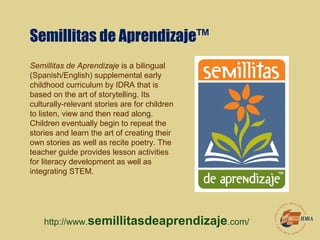
Semillitas de Aprendizaje is a bilingual
(Spanish/English) supplemental early
childhood curriculum by IDRA that is
based on the art of storytelling. Its
culturally-relevant stories are for children
to listen, view and then read along.
Children eventually begin to repeat the
stories and learn the art of creating their
own stories as well as recite poetry. The
teacher guide provides lesson activities
for literacy development as well as
integrating STEM.
Semillitas de Aprendizaje™ 
http://www.semillitasdeaprendizaje.com/
Semillitas de Aprendizaje
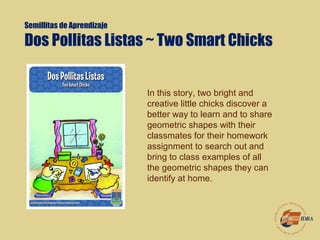
Dos Pollitas Listas ~ Two Smart Chicks 
In this story, two bright and
creative little chicks discover a
better way to learn and to share
geometric shapes with their
classmates for their homework
assignment to search out and
bring to class examples of all
the geometric shapes they can
identify at home.
The Power of Storytelling as a Tool for
Language Learning
• We are all storytellers, especially teachers
• At the heart of human experience
• Our brains are wired for story
• Most powerful tool in your toolbox
• Encourages students to join in repetitive phrases or refrains
• Encourages them to create mental pictures
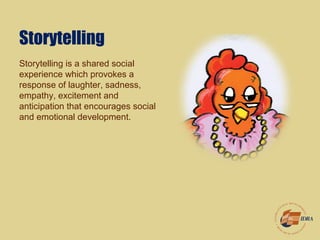
Storytelling
Storytelling is a shared social
experience which provokes a
response of laughter, sadness,
empathy, excitement and
anticipation that encourages social
and emotional development.
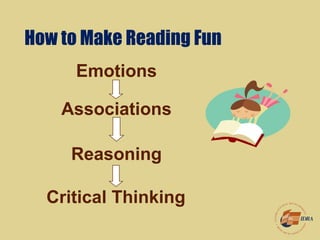
How to Make Reading Fun
Emotions
Associations
Reasoning
Critical Thinking
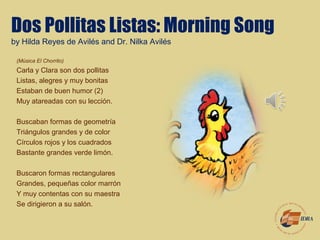
Dos Pollitas Listas: Morning Song
by Hilda Reyes de Avilés and Dr. Nilka Avilés
(Música El Chorrito)
Carla y Clara son dos pollitas
Listas, alegres y muy bonitas
Estaban de buen humor (2)
Muy atareadas con su lección.
Buscaban formas de geometría
Triángulos grandes y de color
Círculos rojos y los cuadrados
Bastante grandes verde limón.
Buscaron formas rectangulares
Grandes, pequeñas color marrón
Y muy contentas con su maestra
Se dirigieron a su salón.
What is geometry?
Geometry
• The geometry strand of the Principles and Standards for School
Mathematics covers skills and concepts of visualization, spatial
reasoning and representation, and analyzing characteristics and
properties of two and three dimensional shapes and their
relationships
• Activities that support this mix of identifying and describing,
moving and transforming geometric objects will help children
explore important geometric ideas and inspire creative writing
• Geometry is found everywhere: art, architecture, engineering,
space, sports, etc.
Geometry
• The foundations for geometric are laid early.
• Basic shapes are some of the first things infants learn to recognize.
• As children grow, they encounter two dimensional representations
or “pictures” of familiar three dimensional objects.
• With experience, children learn to “read” these pictures and
understand what they represent.
• Some children learn how to think with and reason about spatial
information, but many do not.
• Significant research shows that teachers can improve children’s
knowledge and ability to visualize and reason about the spatial
aspects of the world in which they live.
Shaping Up Academic Skills in Early Childhood
• Identify circles, squares, rectangles and triangles and describe their
properties
• Describe shapes in the environment
• Design a picture made of shapes
Group Activity You Can Use with Students
or in a Training Session with Adults:
1.Choose your first, second and third choices of
corners.
2.Go to your first choice corner. If more than 6
people are there, go to another corner.
3.Discuss with the others in your corner why you
chose it.
Corners: A Participation Structure
• Use to kickoff a new topic or unit or to conclude
one.
• Make signs for four or more topics, for example
colors, countries, characters or four or more
choices on a scale.
• Have students move to a chosen sign and discuss
why they chose it.
• Conduct a whole group discussion.
Name Objects According to Shapes
• Form teams of four and sit down.
• Number off 1,2,3,4.
• Put your heads together to name two objects that
have the shape you chose.
• #4’s respond first.
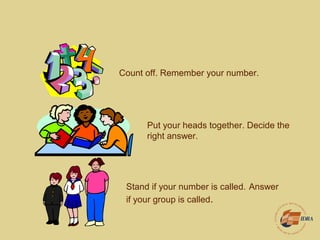
Count off. Remember your number.
Put your heads together. Decide the
right answer.
Stand if your number is called. Answer
if your group is called.
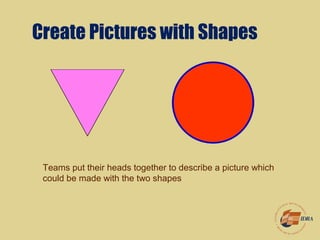
Create Pictures with Shapes
Teams put their heads together to describe a picture which
could be made with the two shapes
Creating Pictures with Shapes
• In your teams create pictures with the shapes.
• Glue pieces down. The shapes can be colored to add
dimensions.
• Share your picture with another team and describe
the way you used the shapes.
Individual Accountability
Have each student identify concrete and pictorial
shapes and their properties by verbalizing them.
Ask students to name objects in the environment which
are of each shape.
http://www.semillitasdeaprendizaje.com/
Intercultural Development Research
Association
Dr. María “Cuca” Robledo Montecel, President & CEO
5815 Callaghan Road, Suite 101
San Antonio, Texas 78228
210-444-1710 • contact@idra.org
www.www.idraidra.org.org
Assuring educational opportunity for every child
@IDRAedu
www.linkedin.com/company/
interculturaldevelopment-
researchassociation
facebook.com/IDRAed
pinterest.com/idraedu
www.slideshare.net/
IDRAedu
flickr.com/
photos/idraedu
Sign up to receive IDRA news by email at
www.idra.org/Receive_IDRA_News

Dos Pollitas Listas ~ Shaping up with Geometry

  • 1.
    Dos Pollitas Listas~ Shaping up with Geometry Dr. Nilka Avilés Intercultural Development Research Association Adapted from a presentation at the National Migrant Education Conference, April 9, 2014
  • 2.
    Listen to ClassnotesPodcast episode on from this presentation, “Geometry in Early Childhood,” Episode 139 with Nilka Avilés, Ed.D. http://www.idra.org/Podcasts/
  • 3.
    Objectives • Create mentalimages of geometric shapes using spatial memory and spatial visualization • Recognize and represent shapes from different perspectives • Categorize, define, and relate figures in a variety of representations • Use culturally connected instructional approaches such as storytelling, song, rhythm, imagery, cooperative learning and creative writing
  • 4.
    Appointment Clock Make anappointment Haga una cita 12 3 6 9 Group Activity You Can Use with Students or in a Training Session with Adults: Make an “appointment” with a different partner in the room for our pretend noon, 3:00, 6:00 and 9:00 times.
  • 5.
    Noon Share with yourpartner a childhood memory involving rhyme, rhythm and repetition
  • 6.
    Semillitas de Aprendizajeis a bilingual (Spanish/English) supplemental early childhood curriculum by IDRA that is based on the art of storytelling. Its culturally-relevant stories are for children to listen, view and then read along. Children eventually begin to repeat the stories and learn the art of creating their own stories as well as recite poetry. The teacher guide provides lesson activities for literacy development as well as integrating STEM. Semillitas de Aprendizaje™  http://www.semillitasdeaprendizaje.com/
  • 7.
    Semillitas de Aprendizaje DosPollitas Listas ~ Two Smart Chicks  In this story, two bright and creative little chicks discover a better way to learn and to share geometric shapes with their classmates for their homework assignment to search out and bring to class examples of all the geometric shapes they can identify at home.
  • 8.
    The Power ofStorytelling as a Tool for Language Learning • We are all storytellers, especially teachers • At the heart of human experience • Our brains are wired for story • Most powerful tool in your toolbox • Encourages students to join in repetitive phrases or refrains • Encourages them to create mental pictures
  • 9.
    Storytelling Storytelling is ashared social experience which provokes a response of laughter, sadness, empathy, excitement and anticipation that encourages social and emotional development.
  • 10.
    How to MakeReading Fun Emotions Associations Reasoning Critical Thinking
  • 11.
    Dos Pollitas Listas:Morning Song by Hilda Reyes de Avilés and Dr. Nilka Avilés (Música El Chorrito) Carla y Clara son dos pollitas Listas, alegres y muy bonitas Estaban de buen humor (2) Muy atareadas con su lección. Buscaban formas de geometría Triángulos grandes y de color Círculos rojos y los cuadrados Bastante grandes verde limón. Buscaron formas rectangulares Grandes, pequeñas color marrón Y muy contentas con su maestra Se dirigieron a su salón.
  • 12.
  • 13.
    Geometry • The geometrystrand of the Principles and Standards for School Mathematics covers skills and concepts of visualization, spatial reasoning and representation, and analyzing characteristics and properties of two and three dimensional shapes and their relationships • Activities that support this mix of identifying and describing, moving and transforming geometric objects will help children explore important geometric ideas and inspire creative writing • Geometry is found everywhere: art, architecture, engineering, space, sports, etc.
  • 14.
    Geometry • The foundationsfor geometric are laid early. • Basic shapes are some of the first things infants learn to recognize. • As children grow, they encounter two dimensional representations or “pictures” of familiar three dimensional objects. • With experience, children learn to “read” these pictures and understand what they represent. • Some children learn how to think with and reason about spatial information, but many do not. • Significant research shows that teachers can improve children’s knowledge and ability to visualize and reason about the spatial aspects of the world in which they live.
  • 15.
    Shaping Up AcademicSkills in Early Childhood • Identify circles, squares, rectangles and triangles and describe their properties • Describe shapes in the environment • Design a picture made of shapes
  • 16.
    Group Activity YouCan Use with Students or in a Training Session with Adults: 1.Choose your first, second and third choices of corners. 2.Go to your first choice corner. If more than 6 people are there, go to another corner. 3.Discuss with the others in your corner why you chose it.
  • 17.
    Corners: A ParticipationStructure • Use to kickoff a new topic or unit or to conclude one. • Make signs for four or more topics, for example colors, countries, characters or four or more choices on a scale. • Have students move to a chosen sign and discuss why they chose it. • Conduct a whole group discussion.
  • 18.
    Name Objects Accordingto Shapes • Form teams of four and sit down. • Number off 1,2,3,4. • Put your heads together to name two objects that have the shape you chose. • #4’s respond first.
  • 19.
    Count off. Rememberyour number. Put your heads together. Decide the right answer. Stand if your number is called. Answer if your group is called.
  • 20.
    Create Pictures withShapes Teams put their heads together to describe a picture which could be made with the two shapes
  • 21.
    Creating Pictures withShapes • In your teams create pictures with the shapes. • Glue pieces down. The shapes can be colored to add dimensions. • Share your picture with another team and describe the way you used the shapes.
  • 22.
    Individual Accountability Have eachstudent identify concrete and pictorial shapes and their properties by verbalizing them. Ask students to name objects in the environment which are of each shape.
  • 26.
  • 27.
    Intercultural Development Research Association Dr.María “Cuca” Robledo Montecel, President & CEO 5815 Callaghan Road, Suite 101 San Antonio, Texas 78228 210-444-1710 • contact@idra.org www.www.idraidra.org.org Assuring educational opportunity for every child @IDRAedu www.linkedin.com/company/ interculturaldevelopment- researchassociation facebook.com/IDRAed pinterest.com/idraedu www.slideshare.net/ IDRAedu flickr.com/ photos/idraedu Sign up to receive IDRA news by email at www.idra.org/Receive_IDRA_News

Editor's Notes

  • #11 Motivate through music, art, classical literature, etc.. Children associate with school, home, friends, surroundings, “their world,” etc.. Transfer of “me.” Identify with characters. How do I fit in? Is this valuable to me?
  • #14 Simply put, geometry is the study of the size, shape and position of 2 dimensional shapes and 3 dimensional figures. However, geometry is used daily by almost everyone. In geometry, one explores spatial sense and geometric reasoning. Geometry is found everywhere: in art, architecture, engineering, robotics, land surveys, astronomy, sculptures, space, nature, sports, machines, cars and much more.
  • #15 Spatial-temporal reasoning is the ability to visualize spatial patterns and mentally manipulate them over a time-ordered sequence of spatial transformations. This ability is important for generating and conceptualizing solutions to multi-step problems that arise in areas such as architecture, engineering, science, mathematics, art, games, and everyday life.