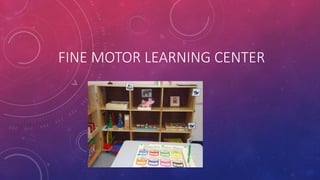
FINE MOTOR LEARNING CENTER
Item 1
In a Fine Motor Learning Center there should be 4 categories present.
These different categories should have 3-5 different materials available for
the students at all times. There should be no fewer than 15 for 5 children.
Categories
Art
Manipulatives
Small Building Toys
Puzzles
AR
T
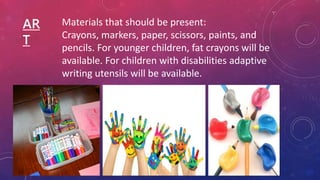
Materials that should be present:
Crayons, markers, paper, scissors, paints, and
pencils. For younger children, fat crayons will be
available. For children with disabilities adaptive
writing utensils will be available.
Manipulative
s
Materials that should be provided:
Interlocking beads (not for infants or toddlers as
they can be a choking hazard), therapy putty for
hiding small toys, peg boards, button/lacing
boards, and activity blocks for infants/toddlers.
Rattles, different textured and sized teething
toys, and grasping toys.
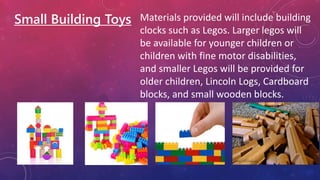
Small Building Toys Materials provided will include building
clocks such as Legos. Larger legos will
be available for younger children or
children with fine motor disabilities,
and smaller Legos will be provided for
older children, Lincoln Logs, Cardboard
blocks, and small wooden blocks.
Puzzles
Materials available will include puzzles of different
difficulty for different ages and abilities. Puzzles will
include peg puzzles, shape puzzles, and picture
puzzles.
All the materials in the Fine Motor Learning Center will be rotated
at least monthly to keep the children interested. The materials
will be kept well-organized and separated.
Item 2
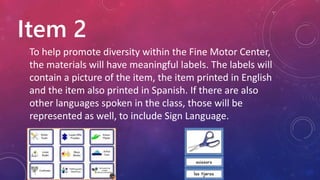
To help promote diversity within the Fine Motor Center,
the materials will have meaningful labels. The labels will
contain a picture of the item, the item printed in English
and the item also printed in Spanish. If there are also
other languages spoken in the class, those will be
represented as well, to include Sign Language.
Item 3
Fine Motor Skills are all about using the small muscles in the
hands and fingers. Developing these skills in a learning center
will help children to:
• Learn how to write
• Develop hand-eye coordination
• Learn to tie shoes
• Learn to maneuver buttons and snaps
• Learn how to cut
These are all tasks that are self-help skills and promote positive
self-esteem and independence.
Item 4
The teacher’s role in facilitating learning with these materials is
to help promote self-help skills and increase hand-eye
coordination.
EXAMPLES:
Encouraging kids to draw, which helps develop the holding grip.
Having a child put together a puzzle, which helps develop hand-
eye coordination.
Item 5- Milestones
Domain: Physical Development and Health
Strand 2: Fine Motor Development
B9. Show beginning control of writing, drawing, and art tools. (Pg. 127)
Strategies:
• Modeling writing, drawing, and the use of art tools, including
pencils, markers, chalk, paint brushes, and various types of
technology.
• Engaging child in writing letters and stories for friends or family.
Domain: Physical Development and Health
Strand 2: Fine Motor Development
B10. Persist in accomplishing more difficult fine motor tasks. (Pg. 127)
Strategies:
• Involving child in activities using fine motor skills (e.g., setting a
table, preparing food, sorting buttons).
• Providing blocks for construction.
Domain: Language and Literacy
Strand 5: Early Writing
E1. Begin to show interest in exploring writing tools. (Pg. 80)
Strategies:
• Supervising child’s exploration of child-safe writing tools.
Domain: Approaches to Learning
Strand 3: Creativity and Inventiveness. (Pg. 63)
C6. Approach tasks experimentally, adapting as the activity
evolves.
Strategies:
• Providing age-appropriate learning centers comprised of many
varied and open-ended materials.
• Providing opportunities for child to experiment with safe art
materials and create simple art projects.

Fine Motor 2

  • 1.
  • 2.
    Item 1 In aFine Motor Learning Center there should be 4 categories present. These different categories should have 3-5 different materials available for the students at all times. There should be no fewer than 15 for 5 children. Categories Art Manipulatives Small Building Toys Puzzles
  • 3.
    AR T Materials that shouldbe present: Crayons, markers, paper, scissors, paints, and pencils. For younger children, fat crayons will be available. For children with disabilities adaptive writing utensils will be available.
  • 4.
    Manipulative s Materials that shouldbe provided: Interlocking beads (not for infants or toddlers as they can be a choking hazard), therapy putty for hiding small toys, peg boards, button/lacing boards, and activity blocks for infants/toddlers. Rattles, different textured and sized teething toys, and grasping toys.
  • 5.
    Small Building ToysMaterials provided will include building clocks such as Legos. Larger legos will be available for younger children or children with fine motor disabilities, and smaller Legos will be provided for older children, Lincoln Logs, Cardboard blocks, and small wooden blocks.
  • 6.
    Puzzles Materials available willinclude puzzles of different difficulty for different ages and abilities. Puzzles will include peg puzzles, shape puzzles, and picture puzzles. All the materials in the Fine Motor Learning Center will be rotated at least monthly to keep the children interested. The materials will be kept well-organized and separated.
  • 7.
    Item 2 To helppromote diversity within the Fine Motor Center, the materials will have meaningful labels. The labels will contain a picture of the item, the item printed in English and the item also printed in Spanish. If there are also other languages spoken in the class, those will be represented as well, to include Sign Language.
  • 8.
    Item 3 Fine MotorSkills are all about using the small muscles in the hands and fingers. Developing these skills in a learning center will help children to: • Learn how to write • Develop hand-eye coordination • Learn to tie shoes • Learn to maneuver buttons and snaps • Learn how to cut These are all tasks that are self-help skills and promote positive self-esteem and independence.
  • 9.
    Item 4 The teacher’srole in facilitating learning with these materials is to help promote self-help skills and increase hand-eye coordination. EXAMPLES: Encouraging kids to draw, which helps develop the holding grip. Having a child put together a puzzle, which helps develop hand- eye coordination.
  • 10.
    Item 5- Milestones Domain:Physical Development and Health Strand 2: Fine Motor Development B9. Show beginning control of writing, drawing, and art tools. (Pg. 127) Strategies: • Modeling writing, drawing, and the use of art tools, including pencils, markers, chalk, paint brushes, and various types of technology. • Engaging child in writing letters and stories for friends or family.
  • 11.
    Domain: Physical Developmentand Health Strand 2: Fine Motor Development B10. Persist in accomplishing more difficult fine motor tasks. (Pg. 127) Strategies: • Involving child in activities using fine motor skills (e.g., setting a table, preparing food, sorting buttons). • Providing blocks for construction.
  • 12.
    Domain: Language andLiteracy Strand 5: Early Writing E1. Begin to show interest in exploring writing tools. (Pg. 80) Strategies: • Supervising child’s exploration of child-safe writing tools.
  • 13.
    Domain: Approaches toLearning Strand 3: Creativity and Inventiveness. (Pg. 63) C6. Approach tasks experimentally, adapting as the activity evolves. Strategies: • Providing age-appropriate learning centers comprised of many varied and open-ended materials. • Providing opportunities for child to experiment with safe art materials and create simple art projects.