WHAT IS
JET
ENGINE?
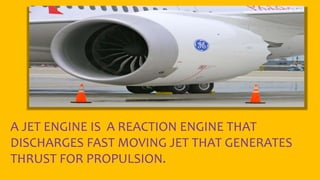
A JET ENGINE IS A REACTION ENGINE THAT
DISCHARGES FAST MOVING JET THAT GENERATES
THRUST FOR PROPULSION.
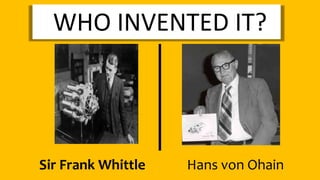
WHO INVENTED IT?
Sir Frank Whittle Hans von Ohain
TYPES OF JET ENGINE
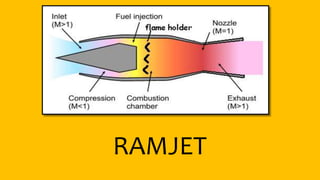
RAMJET
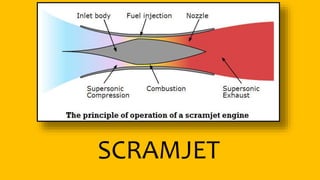
SCRAMJET
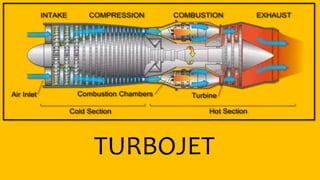
TURBOJET
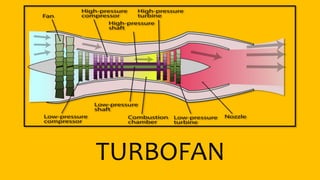
TURBOFAN
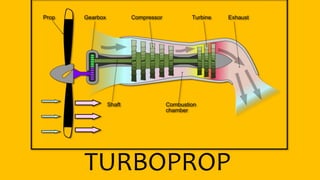
TURBOPROP
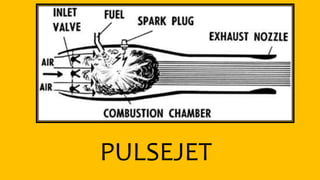
PULSEJET
MY TOPIC
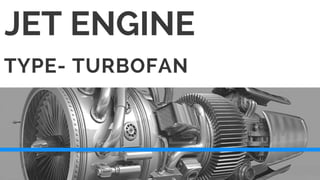
TURBOFAN ENGINE
BUT!!!!!!!
HOW IT
WORKS?????
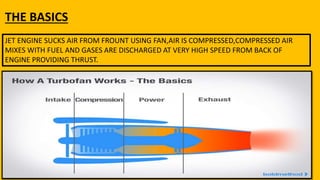
THE BASICS
JET ENGINE SUCKS AIR FROM FROUNT USING FAN,AIR IS COMPRESSED,COMPRESSED AIR
MIXES WITH FUEL AND GASES ARE DISCHARGED AT VERY HIGH SPEED FROM BACK OF
ENGINE PROVIDING THRUST.
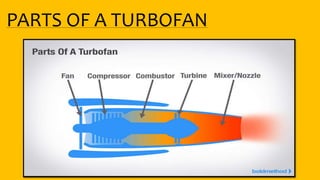
PARTS OF A TURBOFAN
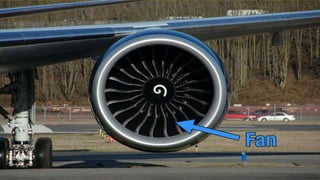
THE FAN
THE FAN BLADES ARE MADE UP TITANIUM WHICH SUCKS
TREMENDEOUS AMOUNT OF AIR.IN THIS TYPE OF JET ENGINE
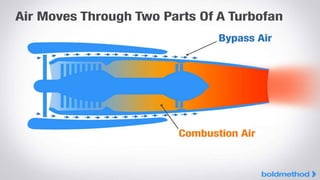
AIR FLOWS IN TWO PARTS-MAJORITY OF AIR IS BYPASSED
OUTSIDE THE COREOF THE ENGINE AND REST OF THE AIR IS
FLOWN THROUGH THE CORE OF THE ENGINE.
REASON
-PROVIDES ADDITIONAL THRUST.
-COOLS THE ENGINE.
-MAKES THE ENGINE QUITER.
THE COMPRESSOR
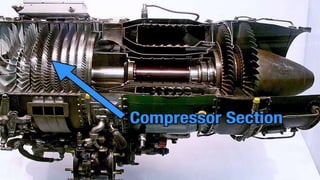
The compressor is located in the first part of the engine core. The compressor,
which is called an "axial flow compressor", It's called axial flow, because the air
passes through the engine in a direction parallel to the shaft of the engine.
As the air moves through the compressor, each set of blades is slightly smaller,
adding more energy and compression to the air.
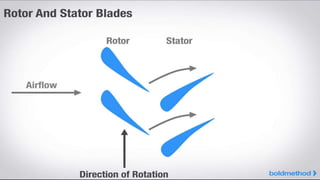
In between each set of compressor blades are non-moving airfoil shaped blades
called "stators". These stators (which are also called vanes), increase the pressure of
the air by converting the rotational energy into static pressure. The stators also
prepare the air for entering the next set of rotating blades. In other words, they
"straighten" the flow of air.
THE COMBUSTOR
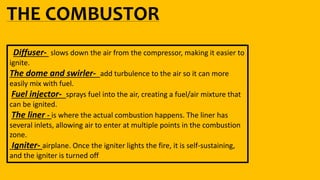
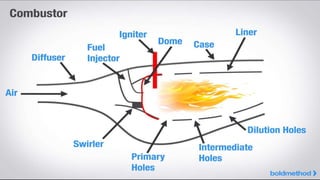
Diffuser- slows down the air from the compressor, making it easier to
ignite.
The dome and swirler- add turbulence to the air so it can more
easily mix with fuel.
Fuel injector- sprays fuel into the air, creating a fuel/air mixture that
can be ignited.
The liner - is where the actual combustion happens. The liner has
several inlets, allowing air to enter at multiple points in the combustion
zone.
Igniter- airplane. Once the igniter lights the fire, it is self-sustaining,
and the igniter is turned off
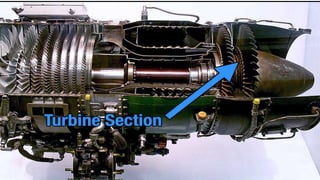
THE TURBINE
The turbine is a series of airfoil shaped blades that are very similar
to the blades in the compressor. As the hot, high-speed air flows
over the turbine blades, they extract energy from the air, spinning
the turbine around in a circle, and turning the engine shaft that it's
connected to.
This is the same shaft that the fan and compressor are connected
to, so by spinning the turbine, the fan and compressor on the front
of the engine continue sucking in more air that will soon be mixed
with fuel and burned.
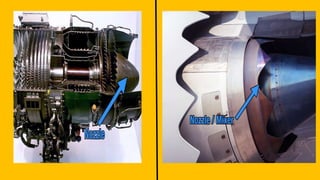
THE NOZZLE
The nozzle is essentially the exhaust duct of the engine, and it's where the high speed
air shoots out the back.
by forcing air out the back of the engine at high speed, the airplane is pushed
forward.
In some engines, there's a mixer in the exhaust nozzle as well. This simply mixes some
of the bypass air flowing around the engine with the hot, combusted air, making the
engine quieter.
STILL
DID’T UNDERSTAND!!!!!!
WATCH THIS
THANK YOU

Jet engine working principle

  • 2.
  • 3.
    A JET ENGINEIS A REACTION ENGINE THAT DISCHARGES FAST MOVING JET THAT GENERATES THRUST FOR PROPULSION.
  • 4.
    WHO INVENTED IT? SirFrank Whittle Hans von Ohain
  • 5.
  • 6.
  • 7.
  • 8.
  • 9.
  • 10.
  • 11.
  • 12.
  • 13.
  • 14.
  • 15.
    THE BASICS JET ENGINESUCKS AIR FROM FROUNT USING FAN,AIR IS COMPRESSED,COMPRESSED AIR MIXES WITH FUEL AND GASES ARE DISCHARGED AT VERY HIGH SPEED FROM BACK OF ENGINE PROVIDING THRUST.
  • 16.
    PARTS OF ATURBOFAN
  • 18.
    THE FAN THE FANBLADES ARE MADE UP TITANIUM WHICH SUCKS TREMENDEOUS AMOUNT OF AIR.IN THIS TYPE OF JET ENGINE AIR FLOWS IN TWO PARTS-MAJORITY OF AIR IS BYPASSED OUTSIDE THE COREOF THE ENGINE AND REST OF THE AIR IS FLOWN THROUGH THE CORE OF THE ENGINE. REASON -PROVIDES ADDITIONAL THRUST. -COOLS THE ENGINE. -MAKES THE ENGINE QUITER.
  • 20.
    THE COMPRESSOR The compressoris located in the first part of the engine core. The compressor, which is called an "axial flow compressor", It's called axial flow, because the air passes through the engine in a direction parallel to the shaft of the engine. As the air moves through the compressor, each set of blades is slightly smaller, adding more energy and compression to the air. In between each set of compressor blades are non-moving airfoil shaped blades called "stators". These stators (which are also called vanes), increase the pressure of the air by converting the rotational energy into static pressure. The stators also prepare the air for entering the next set of rotating blades. In other words, they "straighten" the flow of air.
  • 23.
    THE COMBUSTOR Diffuser- slowsdown the air from the compressor, making it easier to ignite. The dome and swirler- add turbulence to the air so it can more easily mix with fuel. Fuel injector- sprays fuel into the air, creating a fuel/air mixture that can be ignited. The liner - is where the actual combustion happens. The liner has several inlets, allowing air to enter at multiple points in the combustion zone. Igniter- airplane. Once the igniter lights the fire, it is self-sustaining, and the igniter is turned off
  • 25.
    THE TURBINE The turbineis a series of airfoil shaped blades that are very similar to the blades in the compressor. As the hot, high-speed air flows over the turbine blades, they extract energy from the air, spinning the turbine around in a circle, and turning the engine shaft that it's connected to. This is the same shaft that the fan and compressor are connected to, so by spinning the turbine, the fan and compressor on the front of the engine continue sucking in more air that will soon be mixed with fuel and burned.
  • 27.
    THE NOZZLE The nozzleis essentially the exhaust duct of the engine, and it's where the high speed air shoots out the back. by forcing air out the back of the engine at high speed, the airplane is pushed forward. In some engines, there's a mixer in the exhaust nozzle as well. This simply mixes some of the bypass air flowing around the engine with the hot, combusted air, making the engine quieter.
  • 29.
  • 30.
  • 32.