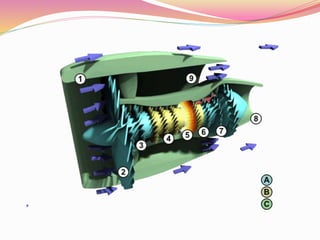

JET ENGINE BASIC
AVIOTRIX
www.aviotrix.com
TYPES OF ENGINE
 Piston engine (Reciprocating engine).
 Gas turbine engine.
-Jet Engine.
When it is invented?
 Frank Whittle’s patent award on the jet engine in
1930 and his static test of a jet engine in 1937.
 The gas turbine in replacing the reciprocating engine
as a power plant for high-speed aircraft.
 This is one of the growing at a rapid pace all over the
world.
Description of Gas Turbine
 The gas turbine is a machine that burns fuel to
provide energy to create a moving flow of air.
 In both the gas turbine and the motor car engine, air
is compressed fuel is added and the mixture is
ignited.
 The resulting hot gas expands rapidly and is used to
produce the power.
Cycles and Laws
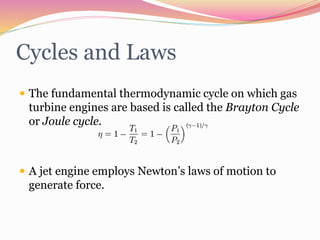
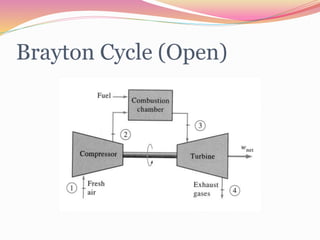
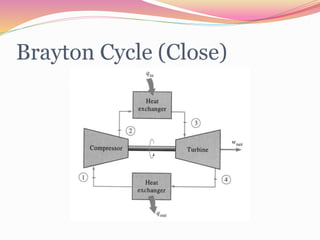
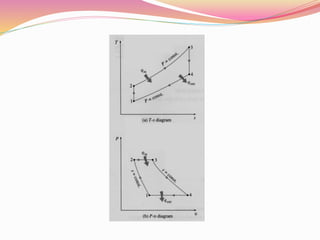
 The fundamental thermodynamic cycle on which gas
turbine engines are based is called the Brayton Cycle
or Joule cycle.
 A jet engine employs Newton’s laws of motion to
generate force.
Brayton Cycle (Open)
Brayton Cycle (Close)
Perfection in engineering
 There are four main types of gas turbine:
•The Turbojet ,
•The Turbofan,
•The Turboprop,
•The Turboshaft.
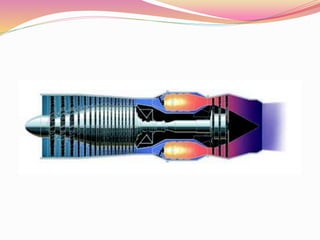
Turbo Jet Engine
 Simplest form of gas turbine
 High velocity hot gas provides thrust
 High fuel burn and high noise levels
Application:
 Most famously the Olympus 593 that powered
Concorde
 Military aircraft
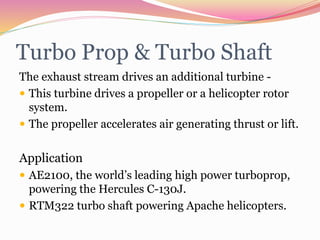
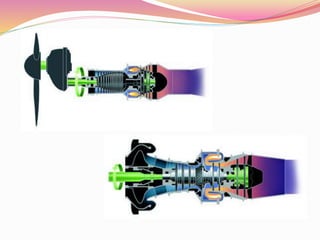
Turbo Prop & Turbo Shaft
The exhaust stream drives an additional turbine -
 This turbine drives a propeller or a helicopter rotor
system.
 The propeller accelerates air generating thrust or lift.
Application
 AE2100, the world’s leading high power turboprop,
powering the Hercules C-130J.
 RTM322 turbo shaft powering Apache helicopters.
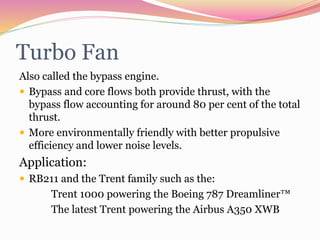
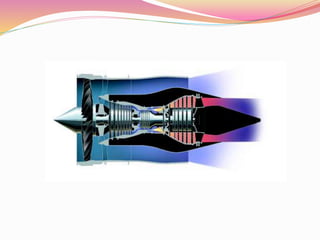
Turbo Fan
Also called the bypass engine.
 Bypass and core flows both provide thrust, with the
bypass flow accounting for around 80 per cent of the total
thrust.
 More environmentally friendly with better propulsive
efficiency and lower noise levels.
Application:
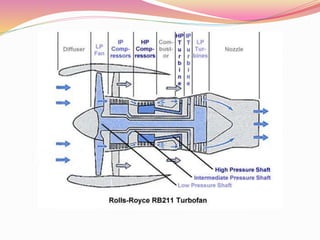
 RB211 and the Trent family such as the:
Trent 1000 powering the Boeing 787 Dreamliner™
The latest Trent powering the Airbus A350 XWB
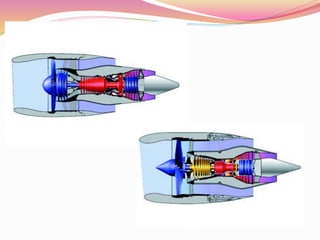
Types of Shaft
There are two types of shaft used in gas turbine.
 Two Shaft,
 Three Shaft.
Three Shaft:
 Shorter, stiffer shafts allowing improved performance retention
 Optimised blade speeds improving engine efficiency.
 Lighter weight engines resulting in higher revenue earning
potential.
 Modular design allowing easier maintainability
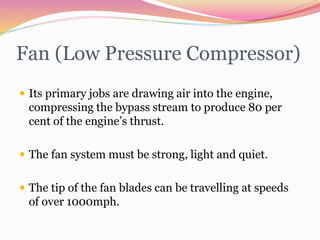
Fan (Low Pressure Compressor)
 Its primary jobs are drawing air into the engine,
compressing the bypass stream to produce 80 per
cent of the engine’s thrust.
 The fan system must be strong, light and quiet.
 The tip of the fan blades can be travelling at speeds
of over 1000mph.
The Compressor
 The compressor is made up of the fan and
alternating stages of rotating blades and static vanes.
 This compressor having eight intermediate pressure
stages and six high pressure stages.
The Combuster
 There are Three Types of combustion chamber.
 The multiple chamber,
 The tubo-annular chamber and
 The annular chamber.
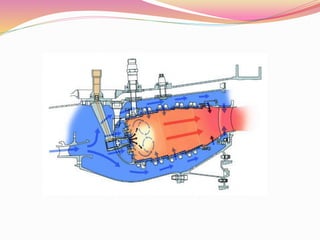
The Annular Combustion
Chamber
 The annular combustion chamber is located within a
casing structure.
 Kerosene is introduced through fuel injectors into
the front of the chamber.
 It is made up of nickel alloy walls.
 Cooling air and thermal barrier coatings are
therefore used to protect the walls and increase
component lives.
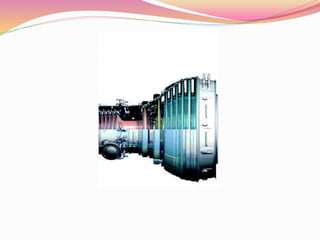
The Tubine
 The turbine is an assembly of discs with blades that
are attached to the turbine shafts, nozzle guide
vanes, casings and structures.
 The turbine extracts energy from the hot gas stream
received from the combustor.
 In a turbofan this power is used to drive the fan and
compressor.
 Applied by thermal barrier coatings.
THANKS !!!!

Jet engine

  • 1.
  • 2.
    TYPES OF ENGINE Piston engine (Reciprocating engine).  Gas turbine engine. -Jet Engine.
  • 3.
    When it isinvented?  Frank Whittle’s patent award on the jet engine in 1930 and his static test of a jet engine in 1937.  The gas turbine in replacing the reciprocating engine as a power plant for high-speed aircraft.  This is one of the growing at a rapid pace all over the world.
  • 4.
    Description of GasTurbine  The gas turbine is a machine that burns fuel to provide energy to create a moving flow of air.  In both the gas turbine and the motor car engine, air is compressed fuel is added and the mixture is ignited.  The resulting hot gas expands rapidly and is used to produce the power.
  • 6.
    Cycles and Laws The fundamental thermodynamic cycle on which gas turbine engines are based is called the Brayton Cycle or Joule cycle.  A jet engine employs Newton’s laws of motion to generate force.
  • 7.
  • 8.
  • 10.
    Perfection in engineering There are four main types of gas turbine: •The Turbojet , •The Turbofan, •The Turboprop, •The Turboshaft.
  • 11.
    Turbo Jet Engine Simplest form of gas turbine  High velocity hot gas provides thrust  High fuel burn and high noise levels Application:  Most famously the Olympus 593 that powered Concorde  Military aircraft
  • 13.
    Turbo Prop &Turbo Shaft The exhaust stream drives an additional turbine -  This turbine drives a propeller or a helicopter rotor system.  The propeller accelerates air generating thrust or lift. Application  AE2100, the world’s leading high power turboprop, powering the Hercules C-130J.  RTM322 turbo shaft powering Apache helicopters.
  • 15.
    Turbo Fan Also calledthe bypass engine.  Bypass and core flows both provide thrust, with the bypass flow accounting for around 80 per cent of the total thrust.  More environmentally friendly with better propulsive efficiency and lower noise levels. Application:  RB211 and the Trent family such as the: Trent 1000 powering the Boeing 787 Dreamliner™ The latest Trent powering the Airbus A350 XWB
  • 18.
    Types of Shaft Thereare two types of shaft used in gas turbine.  Two Shaft,  Three Shaft. Three Shaft:  Shorter, stiffer shafts allowing improved performance retention  Optimised blade speeds improving engine efficiency.  Lighter weight engines resulting in higher revenue earning potential.  Modular design allowing easier maintainability
  • 20.
    Fan (Low PressureCompressor)  Its primary jobs are drawing air into the engine, compressing the bypass stream to produce 80 per cent of the engine’s thrust.  The fan system must be strong, light and quiet.  The tip of the fan blades can be travelling at speeds of over 1000mph.
  • 21.
    The Compressor  Thecompressor is made up of the fan and alternating stages of rotating blades and static vanes.  This compressor having eight intermediate pressure stages and six high pressure stages.
  • 22.
    The Combuster  Thereare Three Types of combustion chamber.  The multiple chamber,  The tubo-annular chamber and  The annular chamber.
  • 23.
    The Annular Combustion Chamber The annular combustion chamber is located within a casing structure.  Kerosene is introduced through fuel injectors into the front of the chamber.  It is made up of nickel alloy walls.  Cooling air and thermal barrier coatings are therefore used to protect the walls and increase component lives.
  • 25.
    The Tubine  Theturbine is an assembly of discs with blades that are attached to the turbine shafts, nozzle guide vanes, casings and structures.  The turbine extracts energy from the hot gas stream received from the combustor.  In a turbofan this power is used to drive the fan and compressor.  Applied by thermal barrier coatings.
  • 28.