JERICHO
-ROHITH SAI REDDY
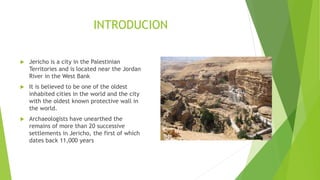
INTRODUCION
 Jericho is a city in the Palestinian
Territories and is located near the Jordan
River in the West Bank
 It is believed to be one of the oldest
inhabited cities in the world and the city
with the oldest known protective wall in
the world.
 Archaeologists have unearthed the
remains of more than 20 successive
settlements in Jericho, the first of which
dates back 11,000 years
Natufian hunter-gatherers
 Jericho has evidence of settlement dating back to 10,000 BC
 During the Younger Dryas period of cold and drought, permanent habitation of
any one location was impossible. However, the Ein es-Sultan spring at what
would become Jericho was a popular camping ground for Natufian hunter-
gatherer groups, who left a scattering of crescent-shaped microlith tools
behind them
 Around 9600 BC, the droughts and cold of the Younger Dryas period had come
to an end, making it possible for Natufian groups to extend the duration of
their stay, eventually leading to year-round habitation and permanent
settlement
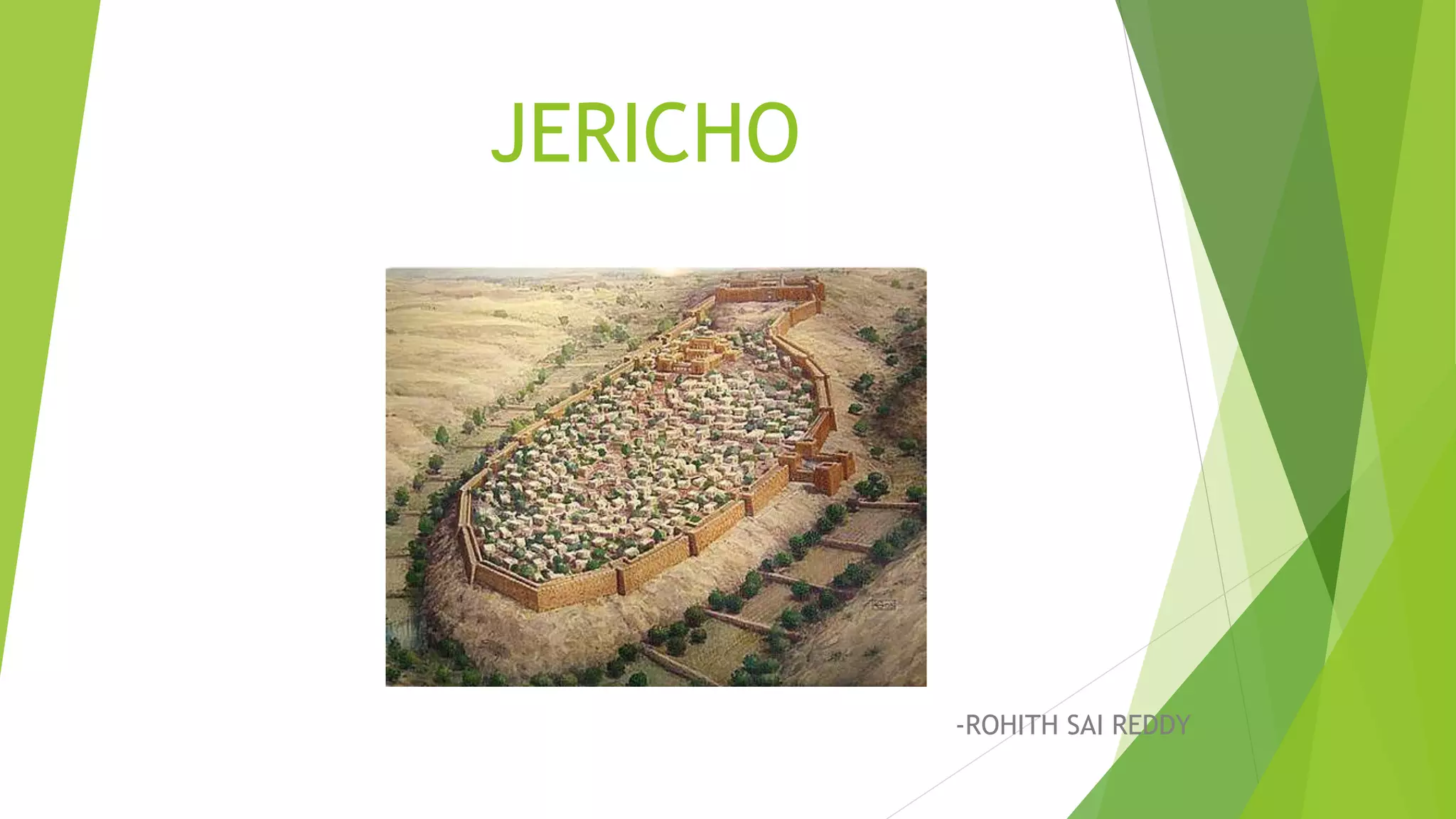
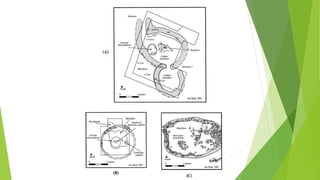
The site of Jericho
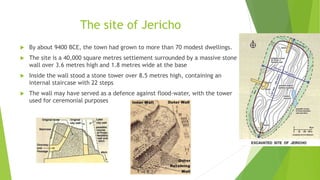
 By about 9400 BCE, the town had grown to more than 70 modest dwellings.
 The site is a 40,000 square metres settlement surrounded by a massive stone
wall over 3.6 metres high and 1.8 metres wide at the base
 Inside the wall stood a stone tower over 8.5 metres high, containing an
internal staircase with 22 steps
 The wall may have served as a defence against flood-water, with the tower
used for ceremonial purposes
Pre-Pottery Neolithic A (PPNA)
10000 BC - 8800 BC
 The first permanent settlement on the site of Jericho developed near the Ein
es-Sultan spring between 9,500 and 9000 BC.
 As the world warmed up, a new culture based on agriculture and sedentary
dwelling emerged, which archaeologists have termed "Pre-Pottery Neolithic A"
Features of Jericho in PPNA
 Small circular dwellings
 Burial of the dead under the floor of buildings
 Reliance on hunting of wild game
 Cultivation of wild or domestic cereals
 At Jericho, circular dwellings were built of clay and straw bricks left to dry in
the sun, which were plastered together with a mud mortar. Each house
measured about 5 metres across, and was roofed with mud-smeared brush.
Hearths were located within and outside the homes
Jericho in PPNA
 The town contained round mud-brick houses, yet no street planning.
 The identity and number of the inhabitants of Jericho during the PPNA period
is still under debate, with estimates going as high as 2,000–3,000, and as low
as 200–300.
 It is known that this population had domesticated emmer wheat, barley and
pulses and hunted wild animals.
Pre-Pottery Neolithic B
8800 BC – 6500 BC
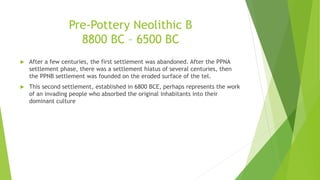
 After a few centuries, the first settlement was abandoned. After the PPNA
settlement phase, there was a settlement hiatus of several centuries, then
the PPNB settlement was founded on the eroded surface of the tel.
 This second settlement, established in 6800 BCE, perhaps represents the work
of an invading people who absorbed the original inhabitants into their
dominant culture
Jericho in PPNB
 Expanded range of domesticated plants
 Possible domestication of sheep
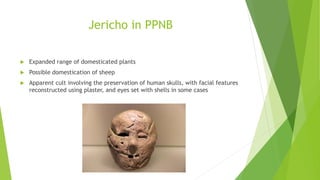
 Apparent cult involving the preservation of human skulls, with facial features
reconstructed using plaster, and eyes set with shells in some cases
Architecture in Jericho
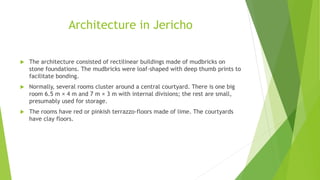
 The architecture consisted of rectilinear buildings made of mudbricks on
stone foundations. The mudbricks were loaf-shaped with deep thumb prints to
facilitate bonding.
 Normally, several rooms cluster around a central courtyard. There is one big
room 6.5 m × 4 m and 7 m × 3 m with internal divisions; the rest are small,
presumably used for storage.
 The rooms have red or pinkish terrazzo-floors made of lime. The courtyards
have clay floors.
Bibliography
 www.Wikipedia.org
 www.ancient.eu
 www.bibleplaces.com

Jericho

  • 1.
  • 2.
    INTRODUCION  Jericho isa city in the Palestinian Territories and is located near the Jordan River in the West Bank  It is believed to be one of the oldest inhabited cities in the world and the city with the oldest known protective wall in the world.  Archaeologists have unearthed the remains of more than 20 successive settlements in Jericho, the first of which dates back 11,000 years
  • 3.
    Natufian hunter-gatherers  Jerichohas evidence of settlement dating back to 10,000 BC  During the Younger Dryas period of cold and drought, permanent habitation of any one location was impossible. However, the Ein es-Sultan spring at what would become Jericho was a popular camping ground for Natufian hunter- gatherer groups, who left a scattering of crescent-shaped microlith tools behind them  Around 9600 BC, the droughts and cold of the Younger Dryas period had come to an end, making it possible for Natufian groups to extend the duration of their stay, eventually leading to year-round habitation and permanent settlement
  • 4.
    The site ofJericho  By about 9400 BCE, the town had grown to more than 70 modest dwellings.  The site is a 40,000 square metres settlement surrounded by a massive stone wall over 3.6 metres high and 1.8 metres wide at the base  Inside the wall stood a stone tower over 8.5 metres high, containing an internal staircase with 22 steps  The wall may have served as a defence against flood-water, with the tower used for ceremonial purposes
  • 5.
    Pre-Pottery Neolithic A(PPNA) 10000 BC - 8800 BC  The first permanent settlement on the site of Jericho developed near the Ein es-Sultan spring between 9,500 and 9000 BC.  As the world warmed up, a new culture based on agriculture and sedentary dwelling emerged, which archaeologists have termed "Pre-Pottery Neolithic A"
  • 6.
    Features of Jerichoin PPNA  Small circular dwellings  Burial of the dead under the floor of buildings  Reliance on hunting of wild game  Cultivation of wild or domestic cereals  At Jericho, circular dwellings were built of clay and straw bricks left to dry in the sun, which were plastered together with a mud mortar. Each house measured about 5 metres across, and was roofed with mud-smeared brush. Hearths were located within and outside the homes
  • 7.
    Jericho in PPNA The town contained round mud-brick houses, yet no street planning.  The identity and number of the inhabitants of Jericho during the PPNA period is still under debate, with estimates going as high as 2,000–3,000, and as low as 200–300.  It is known that this population had domesticated emmer wheat, barley and pulses and hunted wild animals.
  • 9.
    Pre-Pottery Neolithic B 8800BC – 6500 BC  After a few centuries, the first settlement was abandoned. After the PPNA settlement phase, there was a settlement hiatus of several centuries, then the PPNB settlement was founded on the eroded surface of the tel.  This second settlement, established in 6800 BCE, perhaps represents the work of an invading people who absorbed the original inhabitants into their dominant culture
  • 10.
    Jericho in PPNB Expanded range of domesticated plants  Possible domestication of sheep  Apparent cult involving the preservation of human skulls, with facial features reconstructed using plaster, and eyes set with shells in some cases
  • 11.
    Architecture in Jericho The architecture consisted of rectilinear buildings made of mudbricks on stone foundations. The mudbricks were loaf-shaped with deep thumb prints to facilitate bonding.  Normally, several rooms cluster around a central courtyard. There is one big room 6.5 m × 4 m and 7 m × 3 m with internal divisions; the rest are small, presumably used for storage.  The rooms have red or pinkish terrazzo-floors made of lime. The courtyards have clay floors.
  • 12.