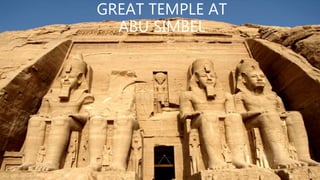
GREAT TEMPLE AT
ABU SIMBEL
INTRODUCTION
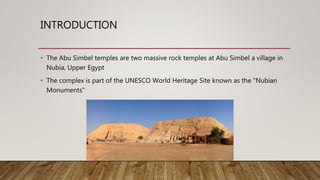
• The Abu Simbel temples are two massive rock temples at Abu Simbel a village in
Nubia, Upper Egypt
• The complex is part of the UNESCO World Heritage Site known as the "Nubian
Monuments"
HISTORY
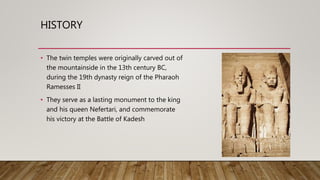
• The twin temples were originally carved out of
the mountainside in the 13th century BC,
during the 19th dynasty reign of the Pharaoh
Ramesses II
• They serve as a lasting monument to the king
and his queen Nefertari, and commemorate
his victory at the Battle of Kadesh
CONSTRUCTION
• Nubia was very important to the Egyptians because it was a source of gold and
many other precious trade goods
• Ramesses II built several grand temples there in order to impress upon the
Nubians Egypt's might and Egyptianize the people of Nubia
• The most famous temples are the rock-cut temples near the modern village of
Abu Simbel
• Construction of the temple complex started in approximately 1264 BC and lasted
for about 20 years, until 1244 BC
ENTRANCE
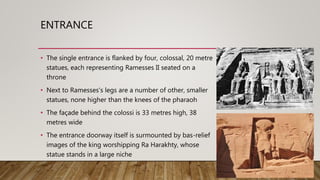
• The single entrance is flanked by four, colossal, 20 metre
statues, each representing Ramesses II seated on a
throne
• Next to Ramesses's legs are a number of other, smaller
statues, none higher than the knees of the pharaoh
• The façade behind the colossi is 33 metres high, 38
metres wide
• The entrance doorway itself is surmounted by bas-relief
images of the king worshipping Ra Harakhty, whose
statue stands in a large niche
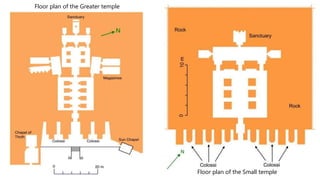
Floor plan of the Greater temple
Floor plan of the Small temple
INTERIORS
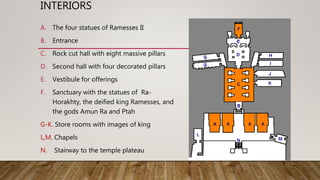
A. The four statues of Ramesses II
B. Entrance
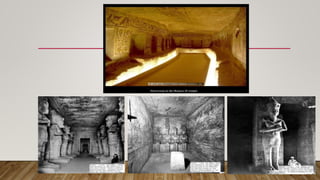
C. Rock cut hall with eight massive pillars
D. Second hall with four decorated pillars
E. Vestibule for offerings
F. Sanctuary with the statues of Ra-
Horakhty, the deified king Ramesses, and
the gods Amun Ra and Ptah
G-K. Store rooms with images of king
L,M. Chapels
N. Stairway to the temple plateau
RELOCATION
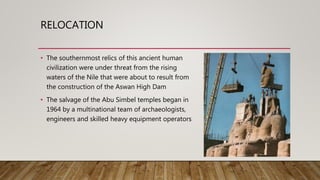
• The southernmost relics of this ancient human
civilization were under threat from the rising
waters of the Nile that were about to result from
the construction of the Aswan High Dam
• The salvage of the Abu Simbel temples began in
1964 by a multinational team of archaeologists,
engineers and skilled heavy equipment operators
RELOCATION
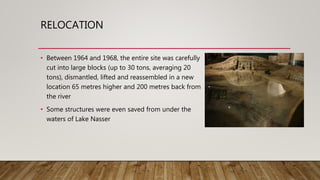
• Between 1964 and 1968, the entire site was carefully
cut into large blocks (up to 30 tons, averaging 20
tons), dismantled, lifted and reassembled in a new
location 65 metres higher and 200 metres back from
the river
• Some structures were even saved from under the
waters of Lake Nasser

Great temple at abu simbel

  • 1.
  • 2.
    INTRODUCTION • The AbuSimbel temples are two massive rock temples at Abu Simbel a village in Nubia, Upper Egypt • The complex is part of the UNESCO World Heritage Site known as the "Nubian Monuments"
  • 3.
    HISTORY • The twintemples were originally carved out of the mountainside in the 13th century BC, during the 19th dynasty reign of the Pharaoh Ramesses II • They serve as a lasting monument to the king and his queen Nefertari, and commemorate his victory at the Battle of Kadesh
  • 4.
    CONSTRUCTION • Nubia wasvery important to the Egyptians because it was a source of gold and many other precious trade goods • Ramesses II built several grand temples there in order to impress upon the Nubians Egypt's might and Egyptianize the people of Nubia • The most famous temples are the rock-cut temples near the modern village of Abu Simbel • Construction of the temple complex started in approximately 1264 BC and lasted for about 20 years, until 1244 BC
  • 5.
    ENTRANCE • The singleentrance is flanked by four, colossal, 20 metre statues, each representing Ramesses II seated on a throne • Next to Ramesses's legs are a number of other, smaller statues, none higher than the knees of the pharaoh • The façade behind the colossi is 33 metres high, 38 metres wide • The entrance doorway itself is surmounted by bas-relief images of the king worshipping Ra Harakhty, whose statue stands in a large niche
  • 6.
    Floor plan ofthe Greater temple Floor plan of the Small temple
  • 7.
    INTERIORS A. The fourstatues of Ramesses II B. Entrance C. Rock cut hall with eight massive pillars D. Second hall with four decorated pillars E. Vestibule for offerings F. Sanctuary with the statues of Ra- Horakhty, the deified king Ramesses, and the gods Amun Ra and Ptah G-K. Store rooms with images of king L,M. Chapels N. Stairway to the temple plateau
  • 9.
    RELOCATION • The southernmostrelics of this ancient human civilization were under threat from the rising waters of the Nile that were about to result from the construction of the Aswan High Dam • The salvage of the Abu Simbel temples began in 1964 by a multinational team of archaeologists, engineers and skilled heavy equipment operators
  • 10.
    RELOCATION • Between 1964and 1968, the entire site was carefully cut into large blocks (up to 30 tons, averaging 20 tons), dismantled, lifted and reassembled in a new location 65 metres higher and 200 metres back from the river • Some structures were even saved from under the waters of Lake Nasser