Japanese contribution to world
  class manufacturing


              Germany, the U.S.
              and Japan

               Md Asad Amin
               M. Tech.(mechanical)
               11-MEM-225
What is management ?


Takeo Fujisawa, Founder of Honda Motor
  Company:
„Japanese and American management are
  95 per cent the same, yet differ in all
  important respects.“


                Introduction
Management

   management in Japan has to
    coordinate, integrate and motivate

    in America management rather means
    supervising others


               Informal and Formal Company
                         Structure
Management Control

   Assure that resources are obtained and used
    effectively and efficiently in the
    accomplishment of the organization’s objective
   Has financial and non financial performance
    measurement
   Concerned with the implementation of
    strategies and Task control
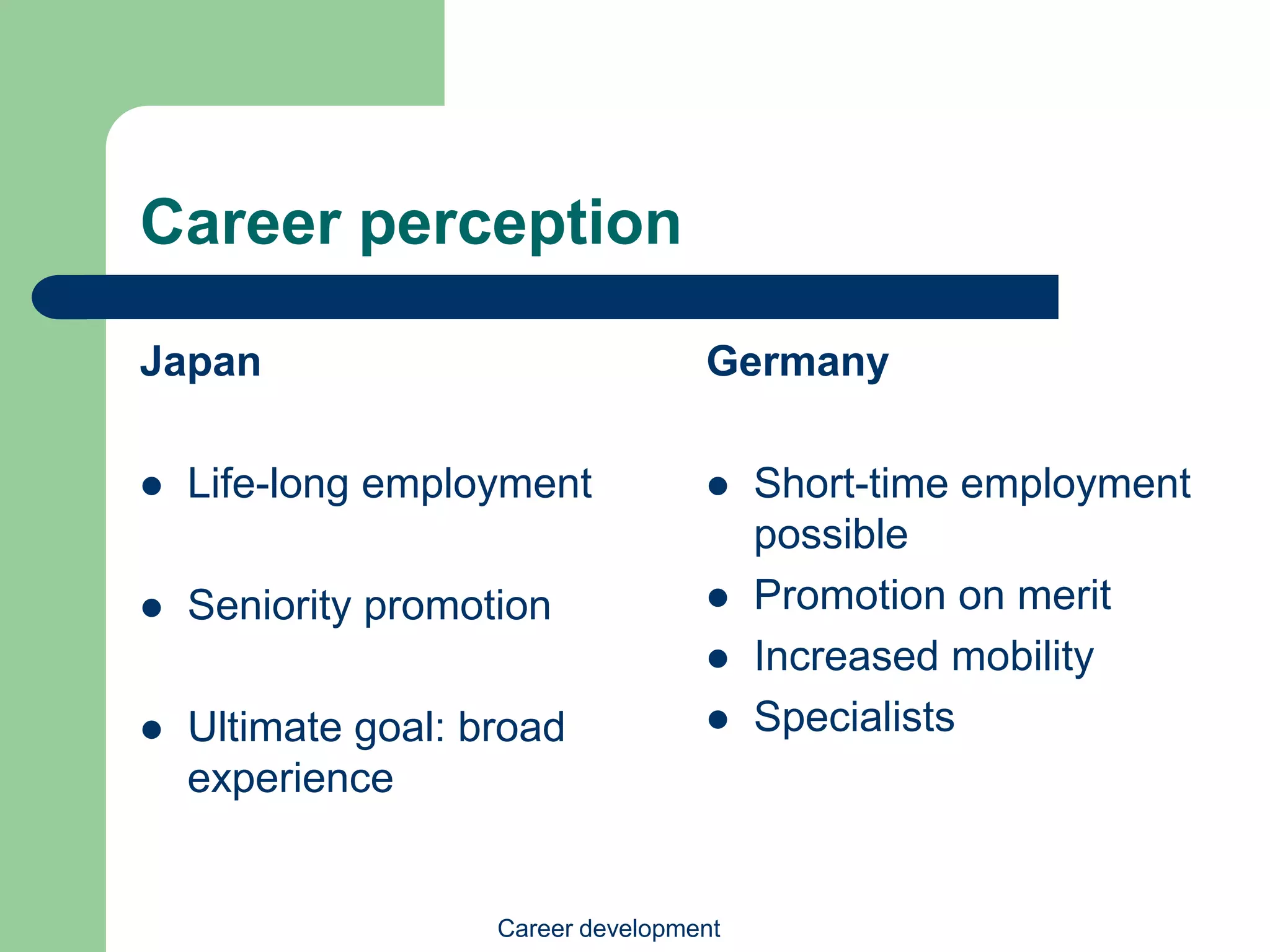
Career perception

Japan                               Germany

   Life-long employment                Short-time employment
                                         possible
   Seniority promotion                 Promotion on merit
                                        Increased mobility
   Ultimate goal: broad                Specialists
    experience


                    Career development
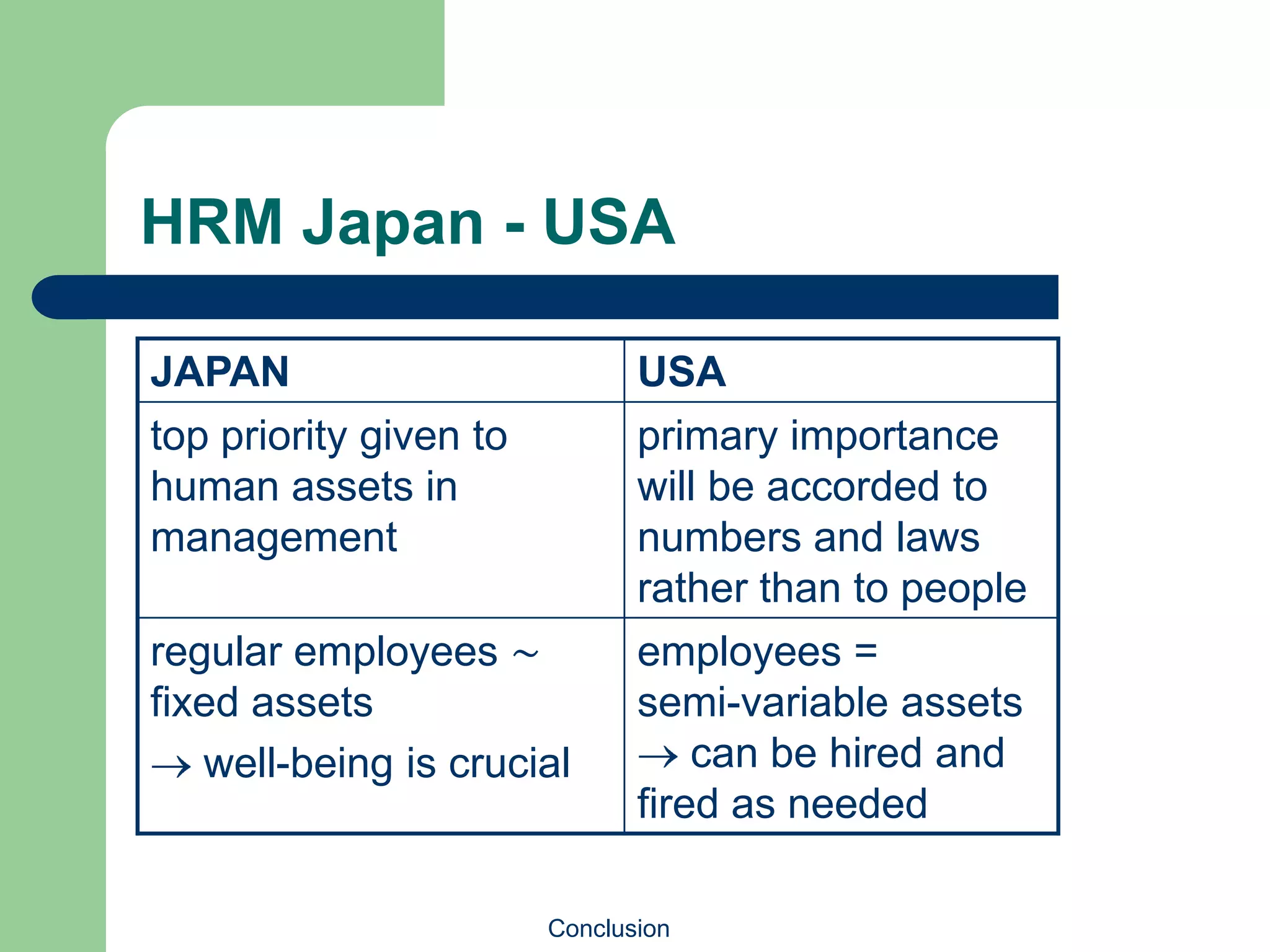
HRM Japan - USA

JAPAN                          USA
top priority given to          primary importance
human assets in                will be accorded to
management                     numbers and laws
                               rather than to people
regular employees ∼            employees =
fixed assets                   semi-variable assets
   well-being is crucial           can be hired and
                               fired as needed

                        Conclusion
HRM in Japan

„people-centered management“

   Japanese companies exist primarily “for the
    well-being of Japan and its people”
   people before profit ?


                    Conclusion
Decision Making
   popular view:
    JAPAN                      USA
    group process              individual process
       catchwords:
    JAPAN                      USA
    bottom up                  top down
   but reality is a little more subtle...

                        Communication
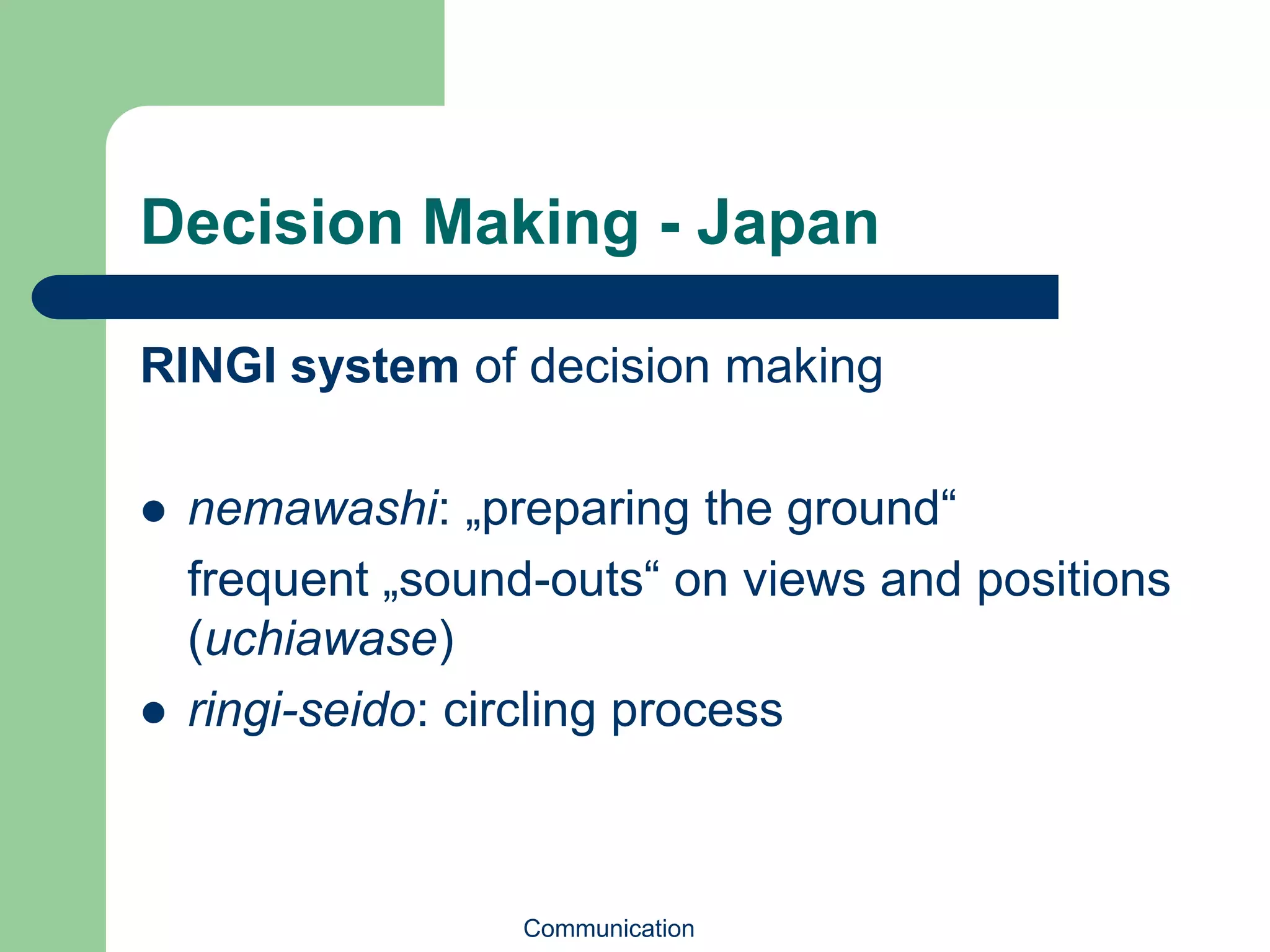
Decision Making - Japan

RINGI system of decision making

   nemawashi: „preparing the ground“
    frequent „sound-outs“ on views and positions
    (uchiawase)
   ringi-seido: circling process


                   Communication
Decision Making – Japan

ringi-seido 1

       ok?                          ok!         decision form
                                                („ringisho“)


             sound discussion                   proposal
             with the affected
             sections/ people
                                          fills out

                    Communication
Decision Making – Japan

ringi-seido 2
   proposal is forwarded to all relevant sections/ people

           section x                   section y
                                                         ...


   each will make comments on a sheet attached to the
    back of the proposal

                       Communication
Decision Making – Japan

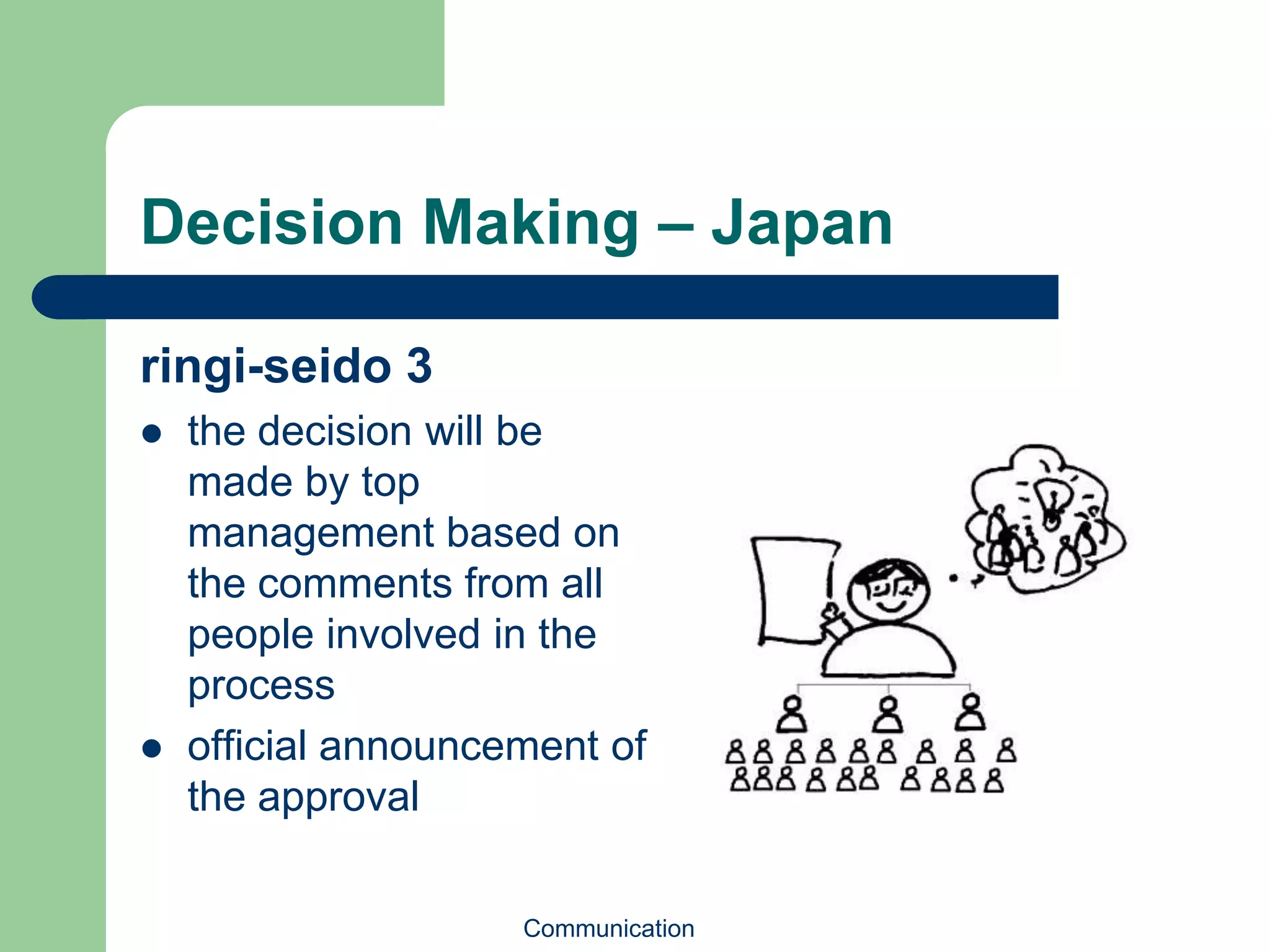
ringi-seido 3
   the decision will be
    made by top
    management based on
    the comments from all
    people involved in the
    process
   official announcement of
    the approval

                     Communication
Decision Making – Japan

Pros:
 elimination of dissension through participation of a
  large number of people
 participation of employees even at lower levels
 cumulated expertise
 gradual improvement/correction
 no individual responsibility -> daring and progressive
  decisions
 gather opinions of other sections (no “nicht mein Bier”)
 smooth/ more efficient implementation

                    Communication
Management and working styles 1

JAPAN                                    WEST
generalists                              specialists
promotion by seniority                   promotion by performance
conflict is solved privately             conflict is solved in public
people-oriented                          task-oriented
long-term planning                       short-term planning
informal communication                   formal communication
decision by consensus                    decision by majority
interdependency                          interdependency is viewed sceptically
                               Summary
Management and working styles 2

JAPAN                                    WEST
reciprocal commitment between            less bonds
managers and workers

open-plan offices                        working space is structured according
                                         to individual needs

formalized and ritualized interactions   informal interactions more common

intuitive, nonverbal communication is    analytical, logical argumentation style
important

face-to-face communication more          written communication more important
important

                               Summary
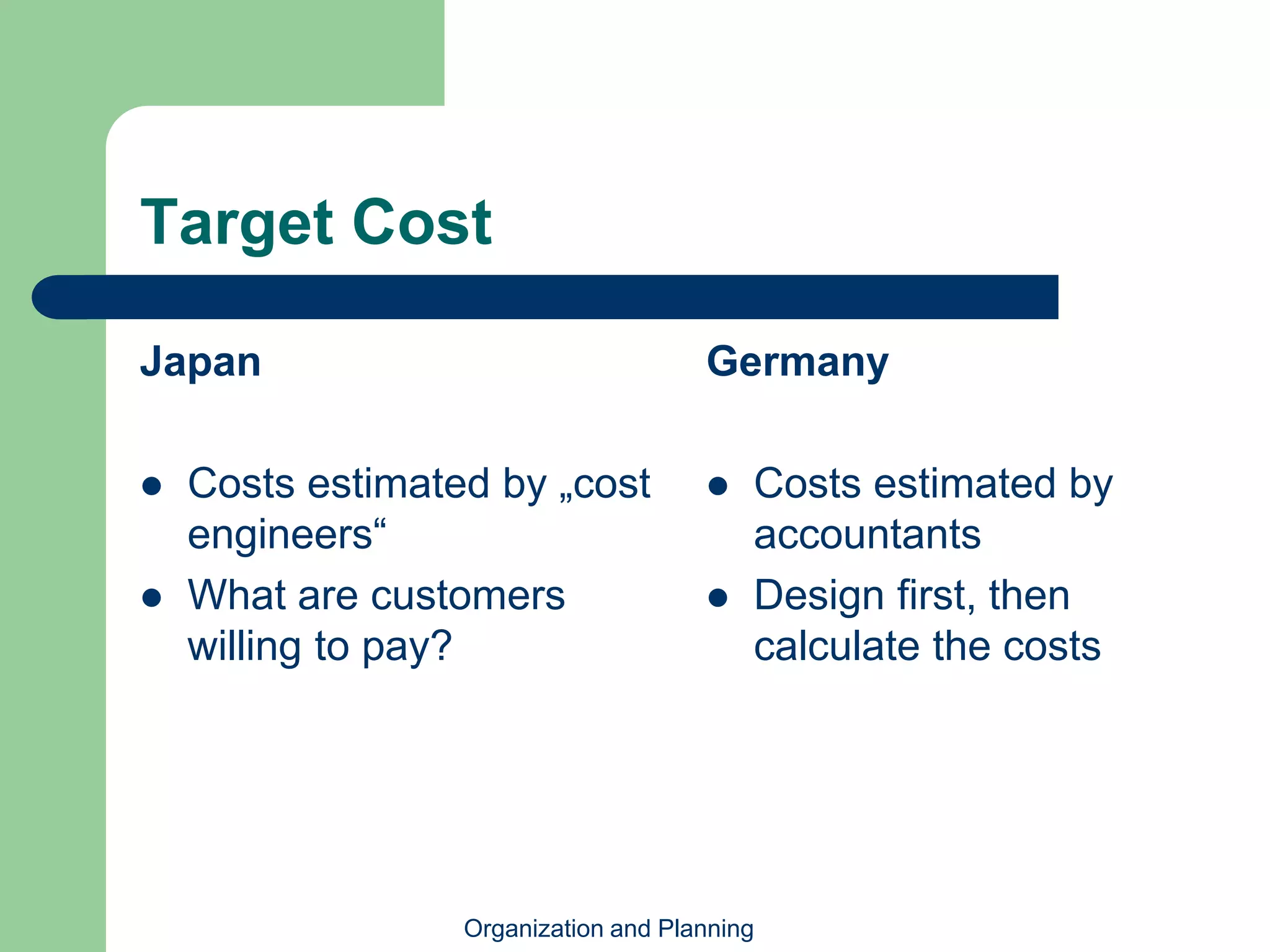
Target Cost

Japan                                 Germany

   Costs estimated by „cost             Costs estimated by
    engineers“                            accountants
   What are customers                   Design first, then
    willing to pay?                       calculate the costs


                  Organization and Planning
Just-in-Time (JIT) Systems
            Receive
           customer                    Complete products
            orders.                      just in time to
                                        ship customers.

           Schedule
          production.


    Receive materials               Complete parts
     just in time for               just in time for
       production.              assembly into products.

Nov2011                  Asad                         17/ 20
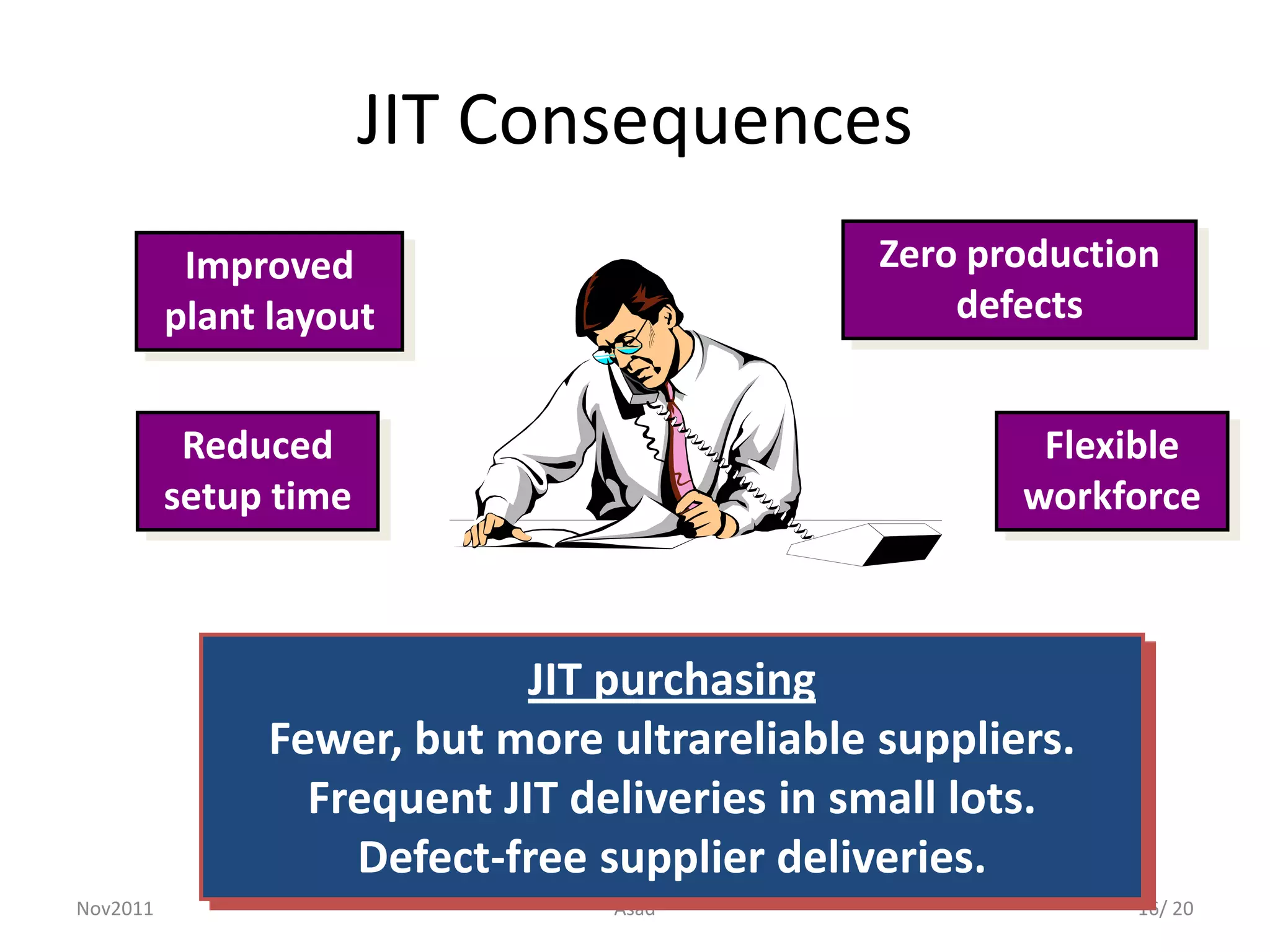
JIT Consequences
           Improved                          Zero production
          plant layout                           defects


           Reduced                                   Flexible
          setup time                                workforce


                            JIT purchasing
               Fewer, but more ultrareliable suppliers.
                 Frequent JIT deliveries in small lots.
                   Defect-free supplier deliveries.
Nov2011                         Asad                      16/ 20
Benefits of a JIT System
       Reduced                            Freed-up funds
      inventory
        costs
                                                   Greater
                                                  customer
  Higher quality                                 satisfaction
    products

                                         More rapid
                                         response to
                    Increased          customer orders
                   throughput

Nov 2011                        Asad                       19/20
Thank you
                                       for your
                                      attention.


For any feed back
E-mail:       mdasad.amin@gmail.com


                                                   20/20

Japan management styles and comparision to world

  • 1.
    Japanese contribution toworld class manufacturing Germany, the U.S. and Japan Md Asad Amin M. Tech.(mechanical) 11-MEM-225
  • 2.
    What is management? Takeo Fujisawa, Founder of Honda Motor Company: „Japanese and American management are 95 per cent the same, yet differ in all important respects.“ Introduction
  • 3.
    Management  management in Japan has to coordinate, integrate and motivate  in America management rather means supervising others Informal and Formal Company Structure
  • 4.
    Management Control  Assure that resources are obtained and used effectively and efficiently in the accomplishment of the organization’s objective  Has financial and non financial performance measurement  Concerned with the implementation of strategies and Task control
  • 5.
    Career perception Japan Germany  Life-long employment  Short-time employment possible  Seniority promotion  Promotion on merit  Increased mobility  Ultimate goal: broad  Specialists experience Career development
  • 6.
    HRM Japan -USA JAPAN USA top priority given to primary importance human assets in will be accorded to management numbers and laws rather than to people regular employees ∼ employees = fixed assets semi-variable assets well-being is crucial can be hired and fired as needed Conclusion
  • 7.
    HRM in Japan „people-centeredmanagement“  Japanese companies exist primarily “for the well-being of Japan and its people”  people before profit ? Conclusion
  • 8.
    Decision Making  popular view: JAPAN USA group process individual process catchwords: JAPAN USA bottom up top down  but reality is a little more subtle... Communication
  • 9.
    Decision Making -Japan RINGI system of decision making  nemawashi: „preparing the ground“ frequent „sound-outs“ on views and positions (uchiawase)  ringi-seido: circling process Communication
  • 10.
    Decision Making –Japan ringi-seido 1 ok? ok! decision form („ringisho“) sound discussion proposal with the affected sections/ people fills out Communication
  • 11.
    Decision Making –Japan ringi-seido 2  proposal is forwarded to all relevant sections/ people section x section y ...  each will make comments on a sheet attached to the back of the proposal Communication
  • 12.
    Decision Making –Japan ringi-seido 3  the decision will be made by top management based on the comments from all people involved in the process  official announcement of the approval Communication
  • 13.
    Decision Making –Japan Pros:  elimination of dissension through participation of a large number of people  participation of employees even at lower levels  cumulated expertise  gradual improvement/correction  no individual responsibility -> daring and progressive decisions  gather opinions of other sections (no “nicht mein Bier”)  smooth/ more efficient implementation Communication
  • 14.
    Management and workingstyles 1 JAPAN WEST generalists specialists promotion by seniority promotion by performance conflict is solved privately conflict is solved in public people-oriented task-oriented long-term planning short-term planning informal communication formal communication decision by consensus decision by majority interdependency interdependency is viewed sceptically Summary
  • 15.
    Management and workingstyles 2 JAPAN WEST reciprocal commitment between less bonds managers and workers open-plan offices working space is structured according to individual needs formalized and ritualized interactions informal interactions more common intuitive, nonverbal communication is analytical, logical argumentation style important face-to-face communication more written communication more important important Summary
  • 16.
    Target Cost Japan Germany  Costs estimated by „cost  Costs estimated by engineers“ accountants  What are customers  Design first, then willing to pay? calculate the costs Organization and Planning
  • 17.
    Just-in-Time (JIT) Systems Receive customer Complete products orders. just in time to ship customers. Schedule production. Receive materials Complete parts just in time for just in time for production. assembly into products. Nov2011 Asad 17/ 20
  • 18.
    JIT Consequences Improved Zero production plant layout defects Reduced Flexible setup time workforce JIT purchasing Fewer, but more ultrareliable suppliers. Frequent JIT deliveries in small lots. Defect-free supplier deliveries. Nov2011 Asad 16/ 20
  • 19.
    Benefits of aJIT System Reduced Freed-up funds inventory costs Greater customer Higher quality satisfaction products More rapid response to Increased customer orders throughput Nov 2011 Asad 19/20
  • 20.
    Thank you for your attention. For any feed back E-mail: mdasad.amin@gmail.com 20/20

Editor's Notes

  • #15 Consensus:broad unanimity: general or widespread agreement among all the members of a group After hours of deliberation, they finally reached a consensus.2. view of society in equilibrium: a concept of society in which the absence of conflict is seen as the equilibrium state of society.