Ancient Egypt PowerPoint by: James Spillman
Water The Nile River provided fresh water, irrigation, and fertilization. The Nile was the most important river of Ancient Egypt. Near the Nile R. lived fish, ducks, geese, hippos, crocodiles, giraffes, and ostriches.
Topoography In Egypt there are wide areas of flat land.  In the Nile River valley there were narrow valleys and hills. The vast deserts could be used as protection from invaders. Egypt was on the east of the Nile.
Vegetation A couple plants in Ancient Egypt were reeds and papyrus, a tough water plant. Reeds could be woven into baskets and roofs for houses. Papyrus was used for rope and paper. The rich farmland made it easy to grow crops like wheat and barley.
Religion The pharaohs were believed to be gods. The pharaohs owned all the land. They were responsible for the people. People thought there is an afterlife that never ended. The pharaohs built monuments to glorify power and success.
Pharaoh Khufu He was a builder of famous pyramids. He helped establish the pharaoh as central authority. He kept control over the food supply. Oversaw harvest and stored extra grain. Controlled a large network of government officials who carried out laws. He declared himself a god. He Built the great pyramid of Giza. He fed thousands of people.
Great Pyramid at Giza It took 20 years to complete. It contained 2 million stone blocks. Tunnels in the pyramid led to burial chambers. It was one of the wonders of the Ancient World. Placed at center of huge complex temples, statues, monuments, and smaller tombs.
King Tutankhamen He believed in eternal life. He was 18 or 19 when he died. Had 2 children and a wife. Believed death was a journey across the Nile to eternal life.
Pharaoh Hatshepsut She was the first female pharaoh. She was known for architecture, art, and trade. One of her greatest accomplishments was gaining power. Filled government with advisors. She spread stories that her father was a god. Made a great voyage to trade with Punt.
Temple at Dayr al-Bahri It was built into a cliff over the Nile. Had two tall obelisks at the entrance. Had 200 sphinx at entrance. Scenes of Hatshepsut’s reign decorated walls. Carvings depicted the voyage to Punt. Carvings also showed things brought back from Punt.
Opet Festival  Opet festival was celebrated when the Nile flooded the banks. During the festival fieldwork stopped. In the festival people celebrated the pharaoh and the god Amon-Re.
Social Class Everyone belonged to a social class. The classes together made a social pyramid. Top had fewer people and high status. Lower had more people and lower status.
Social Pyramid At the top was the pharaoh, Egypt’s supreme ruler. Next came government officials and priests. Then scribes and artisans. And at the bottom were peasants.
Government Officials The officials carried out orders. Most came from noble families. They had power, wealth, and high quality life.
Priests Were in charge of temples and religious rituals. Also made death and burial ceremonies.
Scribes Held a respected position. They recorded information for government and religious leaders. It took many years to become a scribe.
Artisans Included carpenters, metal-workers, painters, sculptors, and stone carvers. They were very skilled but had low status in society.
Peasants They were the largest social class. Peasants worked the land to provide a steady food supply. When not farming they worked on building projects.
Life in Social Classes People usually belong in the same social class as their parents. Most had little chance to move up. Most married within their social class. Children were highly valued. Men were the head of the households they worked to support the family. Fathers trained their sons at an early age to take on the line of work. Women managed the home and raised the children. Lower-class women had to do work for themselves. Women had more rights than most ancient society. Could own land, run businesses, ask for divorces, represent themselves in legal matters, and become doctors, government officials, and priestesses. Higher on the social pyramid meant a higher quality life.
Important Government Officials Three of the very important government officials were the vizier, chief treasurer, and general of of the armies. The vizier had more power than anyone but the pharaoh. He advised the pharaoh and carried out his commands. He also as a kind of head judge because judges brought their toughest cases of him. He had to be fair and impartial to either side of the case. The chief treasurer looked after the goods and money. His main task was to collect the taxes. Most of Egypt’s economical system was based on goods. The people of Egypt paid their taxes in grain, cloth, silver, and unexpectedly beer. Rather than the pharaoh the general of the armies was the highest military commander in all of Egypt. He advised the pharaoh in matters of war and security like how to protect the kingdom from invaders.
Life as a Government Official More important government officials led lives of pleasure. Most of these people were nobles with large fortunes, luxurious homes, and a large amount of time for family and friends. A decent banquet host would provide a great effort to provide only the best food. The cooks of these hosts cooked duck, geese, pigeons, quail, antelope, wild sheep, and goats. Dishes were filled to the brim with figs, dates, grapes, coconuts, bread, cakes, honey, and a lot of beer and wine. Guests dressed in exquisite clothing Men and women wore perfume. The women wore ropes of beads as necklaces or bracelets.
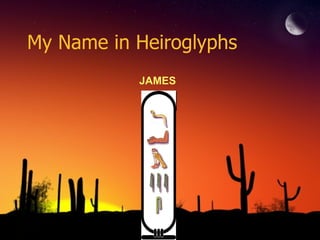
My Name in Heiroglyphs JAMES

James

  • 1.
    Ancient Egypt PowerPointby: James Spillman
  • 2.
    Water The NileRiver provided fresh water, irrigation, and fertilization. The Nile was the most important river of Ancient Egypt. Near the Nile R. lived fish, ducks, geese, hippos, crocodiles, giraffes, and ostriches.
  • 3.
    Topoography In Egyptthere are wide areas of flat land. In the Nile River valley there were narrow valleys and hills. The vast deserts could be used as protection from invaders. Egypt was on the east of the Nile.
  • 4.
    Vegetation A coupleplants in Ancient Egypt were reeds and papyrus, a tough water plant. Reeds could be woven into baskets and roofs for houses. Papyrus was used for rope and paper. The rich farmland made it easy to grow crops like wheat and barley.
  • 5.
    Religion The pharaohswere believed to be gods. The pharaohs owned all the land. They were responsible for the people. People thought there is an afterlife that never ended. The pharaohs built monuments to glorify power and success.
  • 6.
    Pharaoh Khufu Hewas a builder of famous pyramids. He helped establish the pharaoh as central authority. He kept control over the food supply. Oversaw harvest and stored extra grain. Controlled a large network of government officials who carried out laws. He declared himself a god. He Built the great pyramid of Giza. He fed thousands of people.
  • 7.
    Great Pyramid atGiza It took 20 years to complete. It contained 2 million stone blocks. Tunnels in the pyramid led to burial chambers. It was one of the wonders of the Ancient World. Placed at center of huge complex temples, statues, monuments, and smaller tombs.
  • 8.
    King Tutankhamen Hebelieved in eternal life. He was 18 or 19 when he died. Had 2 children and a wife. Believed death was a journey across the Nile to eternal life.
  • 9.
    Pharaoh Hatshepsut Shewas the first female pharaoh. She was known for architecture, art, and trade. One of her greatest accomplishments was gaining power. Filled government with advisors. She spread stories that her father was a god. Made a great voyage to trade with Punt.
  • 10.
    Temple at Dayral-Bahri It was built into a cliff over the Nile. Had two tall obelisks at the entrance. Had 200 sphinx at entrance. Scenes of Hatshepsut’s reign decorated walls. Carvings depicted the voyage to Punt. Carvings also showed things brought back from Punt.
  • 11.
    Opet Festival Opet festival was celebrated when the Nile flooded the banks. During the festival fieldwork stopped. In the festival people celebrated the pharaoh and the god Amon-Re.
  • 12.
    Social Class Everyonebelonged to a social class. The classes together made a social pyramid. Top had fewer people and high status. Lower had more people and lower status.
  • 13.
    Social Pyramid Atthe top was the pharaoh, Egypt’s supreme ruler. Next came government officials and priests. Then scribes and artisans. And at the bottom were peasants.
  • 14.
    Government Officials Theofficials carried out orders. Most came from noble families. They had power, wealth, and high quality life.
  • 15.
    Priests Were incharge of temples and religious rituals. Also made death and burial ceremonies.
  • 16.
    Scribes Held arespected position. They recorded information for government and religious leaders. It took many years to become a scribe.
  • 17.
    Artisans Included carpenters,metal-workers, painters, sculptors, and stone carvers. They were very skilled but had low status in society.
  • 18.
    Peasants They werethe largest social class. Peasants worked the land to provide a steady food supply. When not farming they worked on building projects.
  • 19.
    Life in SocialClasses People usually belong in the same social class as their parents. Most had little chance to move up. Most married within their social class. Children were highly valued. Men were the head of the households they worked to support the family. Fathers trained their sons at an early age to take on the line of work. Women managed the home and raised the children. Lower-class women had to do work for themselves. Women had more rights than most ancient society. Could own land, run businesses, ask for divorces, represent themselves in legal matters, and become doctors, government officials, and priestesses. Higher on the social pyramid meant a higher quality life.
  • 20.
    Important Government OfficialsThree of the very important government officials were the vizier, chief treasurer, and general of of the armies. The vizier had more power than anyone but the pharaoh. He advised the pharaoh and carried out his commands. He also as a kind of head judge because judges brought their toughest cases of him. He had to be fair and impartial to either side of the case. The chief treasurer looked after the goods and money. His main task was to collect the taxes. Most of Egypt’s economical system was based on goods. The people of Egypt paid their taxes in grain, cloth, silver, and unexpectedly beer. Rather than the pharaoh the general of the armies was the highest military commander in all of Egypt. He advised the pharaoh in matters of war and security like how to protect the kingdom from invaders.
  • 21.
    Life as aGovernment Official More important government officials led lives of pleasure. Most of these people were nobles with large fortunes, luxurious homes, and a large amount of time for family and friends. A decent banquet host would provide a great effort to provide only the best food. The cooks of these hosts cooked duck, geese, pigeons, quail, antelope, wild sheep, and goats. Dishes were filled to the brim with figs, dates, grapes, coconuts, bread, cakes, honey, and a lot of beer and wine. Guests dressed in exquisite clothing Men and women wore perfume. The women wore ropes of beads as necklaces or bracelets.
  • 22.
    My Name inHeiroglyphs JAMES