The Ottoman Empire
Rise of the Ottoman empire By the 1400’s, the once mighty Byzantine Empire had been in decline for nearly two centuries They faced a growing threat from the Ottomans, a nomadic group that had migrated from central Asia to Asia Minor In 1453, the Ottomans surrounded the capital of Constantinople During a two month siege, Ottoman cannons pounded Constantinople's city walls allowing attackers to break through and capture the city The Ottomans changed the name of the city to Istanbul and made the ancient Christian city the capital of their Muslim empire
Ottoman Siege of Constantinople
Geographic Expansion With well armed forces and effective military strategies, the Ottoman empire grew quickly After 1453, the Ottomans expanded into the Middle East, Egypt, the Balkans, and Russia By the 1500’s, the Ottomans had created the largest empire in the Middle East and Europe
Ottoman Expansion
Reasons for Ottoman Success Ottoman success was largely due to military technology, such as cannons In addition to cannons, the Ottoman army equipped soldiers with muskets This improved battlefield success and eliminated the need for cavalry
Clockwise from top left: Constantinople City walls, Ottoman Janissaries, Byzantine flag, Ottoman Cannon
Europeans Search for New Trade Routes As the Ottoman empire expanded, European trade routes were disrupted For example, Ottoman control of the eastern Mediterranean interfered with Europe's trade with East Asia The Portuguese sent sailors out across the oceans to search for new trade routes
Ottoman Territory
Suleiman’s Golden Age Called Suleiman the Magnificent by westerners, he ruled the Ottoman Empire from 1520 to 1566 He was a Sultan, a name Turks give to their rulers The years of his rule are considered the Golden Age of Ottoman History Suleiman strengthened the government and improved the system of justice throughout the empire Law was based on the Islamic system of law, Sharia Suleiman held absolute power, but consulted his advisors and council before making important decisions
Suleiman the Magnificent
Ottoman Society The Ottomans ruled a large area that included many diverse people and religions The empire consisted of four social classes: Men of the Pen – highly educated: scientists, lawyers, judges, doctors Men of the Sword – military personnel Men of Negotiation – merchants, artisans, and tax collectors Men of Husbandry – farmers and herders
Ottoman Society Continued The top two classes were made up entirely of Muslims Millets – non-Muslim organize religious communities that were allowed to practice their religion freely as long as they paid a tax and obeyed Ottoman law Janissaries – Boys from non-Muslim families were sometimes required to turn their sons over to the government for military service. The best soldiers became Janissaries, members of an elite force in the Ottoman army
Decline of the Ottoman Empire Problems developed within the Ottoman empire including poor leadership an corruption The rising power of European nations also led to it’s decline The Ottomans were cut off from global trade routes, limiting cultural diffusion and new ideas By the 1700’s, European technology surpassed that of the Ottomans European nations began to industrialize while the Ottomans remained an agricultural society

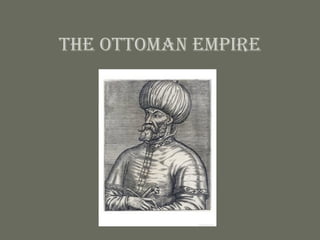
The Ottoman Empire

  • 1.
  • 2.
    Rise of theOttoman empire By the 1400’s, the once mighty Byzantine Empire had been in decline for nearly two centuries They faced a growing threat from the Ottomans, a nomadic group that had migrated from central Asia to Asia Minor In 1453, the Ottomans surrounded the capital of Constantinople During a two month siege, Ottoman cannons pounded Constantinople's city walls allowing attackers to break through and capture the city The Ottomans changed the name of the city to Istanbul and made the ancient Christian city the capital of their Muslim empire
  • 3.
    Ottoman Siege ofConstantinople
  • 4.
    Geographic Expansion Withwell armed forces and effective military strategies, the Ottoman empire grew quickly After 1453, the Ottomans expanded into the Middle East, Egypt, the Balkans, and Russia By the 1500’s, the Ottomans had created the largest empire in the Middle East and Europe
  • 5.
  • 6.
    Reasons for OttomanSuccess Ottoman success was largely due to military technology, such as cannons In addition to cannons, the Ottoman army equipped soldiers with muskets This improved battlefield success and eliminated the need for cavalry
  • 7.
    Clockwise from topleft: Constantinople City walls, Ottoman Janissaries, Byzantine flag, Ottoman Cannon
  • 8.
    Europeans Search forNew Trade Routes As the Ottoman empire expanded, European trade routes were disrupted For example, Ottoman control of the eastern Mediterranean interfered with Europe's trade with East Asia The Portuguese sent sailors out across the oceans to search for new trade routes
  • 9.
  • 10.
    Suleiman’s Golden AgeCalled Suleiman the Magnificent by westerners, he ruled the Ottoman Empire from 1520 to 1566 He was a Sultan, a name Turks give to their rulers The years of his rule are considered the Golden Age of Ottoman History Suleiman strengthened the government and improved the system of justice throughout the empire Law was based on the Islamic system of law, Sharia Suleiman held absolute power, but consulted his advisors and council before making important decisions
  • 11.
  • 12.
    Ottoman Society TheOttomans ruled a large area that included many diverse people and religions The empire consisted of four social classes: Men of the Pen – highly educated: scientists, lawyers, judges, doctors Men of the Sword – military personnel Men of Negotiation – merchants, artisans, and tax collectors Men of Husbandry – farmers and herders
  • 13.
    Ottoman Society ContinuedThe top two classes were made up entirely of Muslims Millets – non-Muslim organize religious communities that were allowed to practice their religion freely as long as they paid a tax and obeyed Ottoman law Janissaries – Boys from non-Muslim families were sometimes required to turn their sons over to the government for military service. The best soldiers became Janissaries, members of an elite force in the Ottoman army
  • 14.
    Decline of theOttoman Empire Problems developed within the Ottoman empire including poor leadership an corruption The rising power of European nations also led to it’s decline The Ottomans were cut off from global trade routes, limiting cultural diffusion and new ideas By the 1700’s, European technology surpassed that of the Ottomans European nations began to industrialize while the Ottomans remained an agricultural society