Egypt By: Tyler McQueen
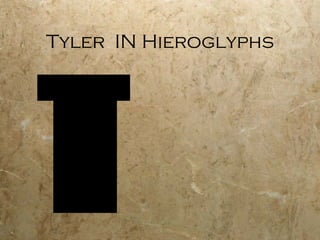
Tyler  IN Hieroglyphs
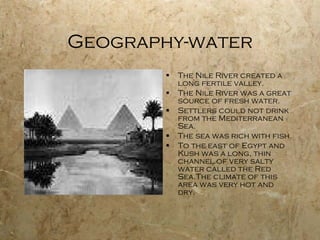
Geography-water The Nile River created a long fertile valley. The Nile River was a great source of fresh water. Settlers could not drink from the Mediterranean Sea. The sea was rich with fish. To the east of Egypt and Kush was a long, thin channel of very salty water called the Red Sea.The climate of this area was very hot and dry.
Vegetation The lack of water in the deserts made them useless for farming. In the Nile River valley, the river provided natural irrigation and fertilization.
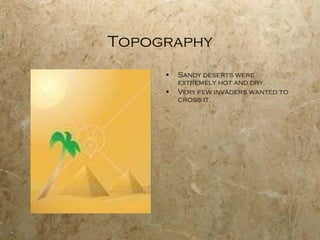
Topography Sandy deserts were extremely hot and dry. Very few invaders wanted to cross it.
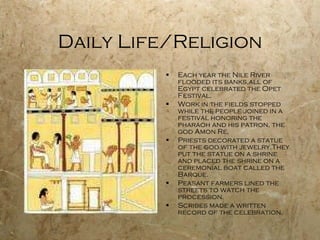
Daily Life/Religion Each year the Nile River flooded its banks,all of Egypt celebrated the Opet Festival. Work in the fields stopped while the people joined in a festival honoring the pharaoh and his patron, the god Amon Re. Priests decorated a statue of the god with jewelry.They put the statue on a shrine and placed the shrine on a ceremonial boat called the Barque. Peasant farmers lined the streets to watch the procession. Scribes made a written record of the celebration.
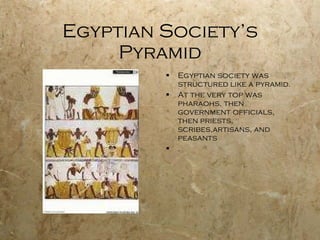
Egyptian Society’s Pyramid Egyptian society was structured like a pyramid. At the very top was pharaohs, then government officials, then priests, scribes,artisans, and peasants .
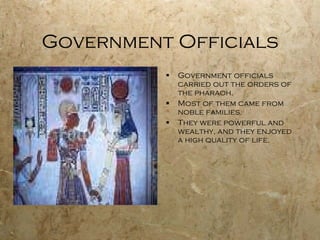
Government Officials Government officials carried out the orders of the pharaoh. Most of them came from noble families. They were powerful and wealthy, and they enjoyed a high quality of life.
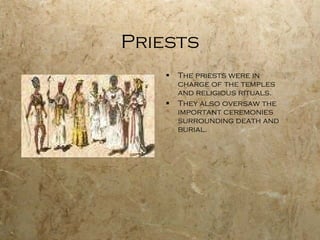
Priests The priests were in charge of the temples and religious rituals. They also oversaw the important ceremonies surrounding death and burial.
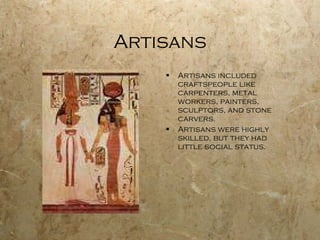
Artisans Artisans included craftspeople like carpenters, metal workers, painters, sculptors, and stone carvers. Artisans were highly skilled, but they had little social status.
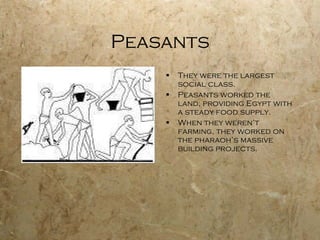
Peasants They were the largest social class. Peasants worked the land, providing Egypt with a steady food supply. When they weren’t farming, they worked on the pharaoh’s massive building projects.
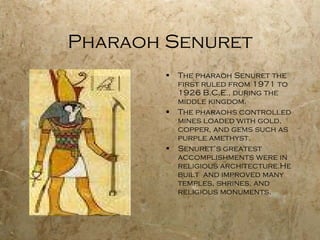
Pharaoh Senuret The pharaoh Senuret the first ruled from 1971 to 1926 B.C.E., during the middle kingdom. The pharaohs controlled mines loaded with gold, copper, and gems such as purple amethyst. Senuret’s greatest accomplishments were in religious architecture.He built  and improved many temples, shrines, and religious monuments.
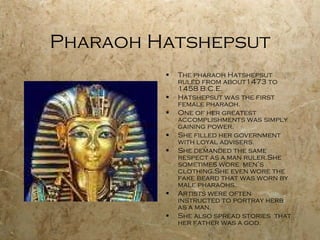
Pharaoh Hatshepsut The pharaoh Hatshepsut ruled from about1473 to 1458 B.C.E. Hatshepsut was the first female pharaoh. One of her greatest accomplishments was simply gaining power. She filled her government with loyal advisers. She demanded the same respect as a man ruler.She sometimes wore  men’s clothing.She even wore the fake beard that was worn by male pharaohs. Artists were often instructed to portray herb as a man. She also spread stories  that her father was a god.
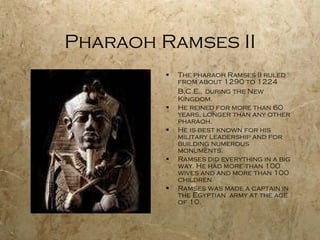
Pharaoh Ramses II The pharaoh Ramses II ruled from about 1290 to 1224 B.C.E.,   during the New Kingdom. He reined for more than 60 years, longer than any other pharaoh. He is best known for his military leadership and for building numerous monuments. Ramses did everything in a big way. He had more than 100 wives and and more than 100 children. Ramses was made a captain in the Egyptian  army at the age of 10.

Tyler

  • 1.
  • 2.
    Tyler INHieroglyphs
  • 3.
    Geography-water The NileRiver created a long fertile valley. The Nile River was a great source of fresh water. Settlers could not drink from the Mediterranean Sea. The sea was rich with fish. To the east of Egypt and Kush was a long, thin channel of very salty water called the Red Sea.The climate of this area was very hot and dry.
  • 4.
    Vegetation The lackof water in the deserts made them useless for farming. In the Nile River valley, the river provided natural irrigation and fertilization.
  • 5.
    Topography Sandy desertswere extremely hot and dry. Very few invaders wanted to cross it.
  • 6.
    Daily Life/Religion Eachyear the Nile River flooded its banks,all of Egypt celebrated the Opet Festival. Work in the fields stopped while the people joined in a festival honoring the pharaoh and his patron, the god Amon Re. Priests decorated a statue of the god with jewelry.They put the statue on a shrine and placed the shrine on a ceremonial boat called the Barque. Peasant farmers lined the streets to watch the procession. Scribes made a written record of the celebration.
  • 7.
    Egyptian Society’s PyramidEgyptian society was structured like a pyramid. At the very top was pharaohs, then government officials, then priests, scribes,artisans, and peasants .
  • 8.
    Government Officials Governmentofficials carried out the orders of the pharaoh. Most of them came from noble families. They were powerful and wealthy, and they enjoyed a high quality of life.
  • 9.
    Priests The priestswere in charge of the temples and religious rituals. They also oversaw the important ceremonies surrounding death and burial.
  • 10.
    Artisans Artisans includedcraftspeople like carpenters, metal workers, painters, sculptors, and stone carvers. Artisans were highly skilled, but they had little social status.
  • 11.
    Peasants They werethe largest social class. Peasants worked the land, providing Egypt with a steady food supply. When they weren’t farming, they worked on the pharaoh’s massive building projects.
  • 12.
    Pharaoh Senuret Thepharaoh Senuret the first ruled from 1971 to 1926 B.C.E., during the middle kingdom. The pharaohs controlled mines loaded with gold, copper, and gems such as purple amethyst. Senuret’s greatest accomplishments were in religious architecture.He built and improved many temples, shrines, and religious monuments.
  • 13.
    Pharaoh Hatshepsut Thepharaoh Hatshepsut ruled from about1473 to 1458 B.C.E. Hatshepsut was the first female pharaoh. One of her greatest accomplishments was simply gaining power. She filled her government with loyal advisers. She demanded the same respect as a man ruler.She sometimes wore men’s clothing.She even wore the fake beard that was worn by male pharaohs. Artists were often instructed to portray herb as a man. She also spread stories that her father was a god.
  • 14.
    Pharaoh Ramses IIThe pharaoh Ramses II ruled from about 1290 to 1224 B.C.E., during the New Kingdom. He reined for more than 60 years, longer than any other pharaoh. He is best known for his military leadership and for building numerous monuments. Ramses did everything in a big way. He had more than 100 wives and and more than 100 children. Ramses was made a captain in the Egyptian army at the age of 10.