Ancient Egypt and the pharaohs By : Tanner Scheetz  Photos from fotosearch
Tanner in heiroglyphs This my name in the egyptian language
Geography- water Nile River Red sea Mediterranean sea Dead sea Jordan river
Geography-land Libyan desert Nubian desert Arabian desert Negevo desert Syriano desert Lebanond Mountains
Pharaoh Ramses II  Ramses II ruled in the old kingdom. He was the military leader and master builder, and he ruled from 1290 to 1224 B.C.E.
King Tut King tut’s sarcafagus was made of gold, and he ruled in the new kindom (1600-1100 B.C.E.)
Pharaoh Khufu Khufu ruled from 2551 to 2528 B.C.E. which is the old kingdom. He was the pyramid builder of his time
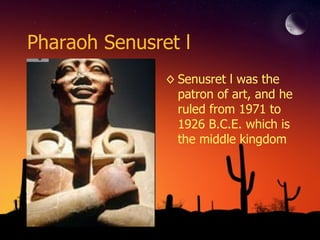
Pharaoh Senusret l Senusret l was the patron of art, and he ruled from 1971 to 1926 B.C.E. which is the middle kingdom
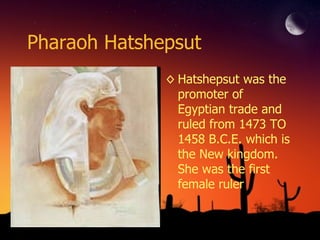
Pharaoh Hatshepsut Hatshepsut was the promoter of Egyptian trade and ruled from 1473 TO 1458 B.C.E. which is the New kingdom. She was the first female ruler
Gods  Pharaohs were belived to be gods  Pharoh Khufu demanded himself as a god  Pharaoh Hatshepsut told stories that said her dad was a god
Artisans  Pharoh Hatshepsut was known for her art Senusret l was another Pharaoh known for his art
Pharaohs and the three kingdoms  The three kingdoms are the old kingdom (2700-2200 b.c.e.) the middle kingdom (2000-1800b.c.e.) the new kingdom (1600-1100 b.c.e) they lived in the East, but wanted to be buried in the West
In everyday life, they belong to different social classes. These classes made up a social pyramid, with the pharaoh at the top and the peasants at the bottom, in between were the government officials, priests, scribes, and artisans. Artisans occupied the next lawyer of the social pyramid. Peasants were the largest social class, they worked on wealthy peoples land.
The vizer The vizer had more power than everyone except the pharaoh
The general After the pharaoh the general of the armies was the top military commander in Egypt. The general helped the pharaoh make alliances with other kingdoms.
The afterlife They thought the spirits of the dead needed their bodies in the afterlife so for this reason they preserved bodies from decay through embalming. Then after embalming the mummy was ready for burial, the mummy was placed in a wooden box which was then placed in a large stone coffin, called a sarcophagus
Hieroglyphs  Students had to learn hieroglyphs and they typically spent 12 years or more learning hieroglyphs.
Word key  Vizer = a high ranking government official  Census = official count of population or an official count of the people in that area Hieghoglyphs = symbols of the Egyptian system of writing

Tanner

  • 1.
    Ancient Egypt andthe pharaohs By : Tanner Scheetz Photos from fotosearch
  • 2.
    Tanner in heiroglyphsThis my name in the egyptian language
  • 3.
    Geography- water NileRiver Red sea Mediterranean sea Dead sea Jordan river
  • 4.
    Geography-land Libyan desertNubian desert Arabian desert Negevo desert Syriano desert Lebanond Mountains
  • 5.
    Pharaoh Ramses II Ramses II ruled in the old kingdom. He was the military leader and master builder, and he ruled from 1290 to 1224 B.C.E.
  • 6.
    King Tut Kingtut’s sarcafagus was made of gold, and he ruled in the new kindom (1600-1100 B.C.E.)
  • 7.
    Pharaoh Khufu Khufuruled from 2551 to 2528 B.C.E. which is the old kingdom. He was the pyramid builder of his time
  • 8.
    Pharaoh Senusret lSenusret l was the patron of art, and he ruled from 1971 to 1926 B.C.E. which is the middle kingdom
  • 9.
    Pharaoh Hatshepsut Hatshepsutwas the promoter of Egyptian trade and ruled from 1473 TO 1458 B.C.E. which is the New kingdom. She was the first female ruler
  • 10.
    Gods Pharaohswere belived to be gods Pharoh Khufu demanded himself as a god Pharaoh Hatshepsut told stories that said her dad was a god
  • 11.
    Artisans PharohHatshepsut was known for her art Senusret l was another Pharaoh known for his art
  • 12.
    Pharaohs and thethree kingdoms The three kingdoms are the old kingdom (2700-2200 b.c.e.) the middle kingdom (2000-1800b.c.e.) the new kingdom (1600-1100 b.c.e) they lived in the East, but wanted to be buried in the West
  • 13.
    In everyday life,they belong to different social classes. These classes made up a social pyramid, with the pharaoh at the top and the peasants at the bottom, in between were the government officials, priests, scribes, and artisans. Artisans occupied the next lawyer of the social pyramid. Peasants were the largest social class, they worked on wealthy peoples land.
  • 14.
    The vizer Thevizer had more power than everyone except the pharaoh
  • 15.
    The general Afterthe pharaoh the general of the armies was the top military commander in Egypt. The general helped the pharaoh make alliances with other kingdoms.
  • 16.
    The afterlife Theythought the spirits of the dead needed their bodies in the afterlife so for this reason they preserved bodies from decay through embalming. Then after embalming the mummy was ready for burial, the mummy was placed in a wooden box which was then placed in a large stone coffin, called a sarcophagus
  • 17.
    Hieroglyphs Studentshad to learn hieroglyphs and they typically spent 12 years or more learning hieroglyphs.
  • 18.
    Word key Vizer = a high ranking government official Census = official count of population or an official count of the people in that area Hieghoglyphs = symbols of the Egyptian system of writing