I VA N A A E N
D E PA RT M E N T O F C O M P U T E R S C I E N C E
I VA N @ C S . A A U . D K • W W W. E S S E N C E . D K
M AY 2 2 2 0 1 3
SOFTWARE INNOVATION
P R I N C I P P E R O G V Æ R K T Ø J E R
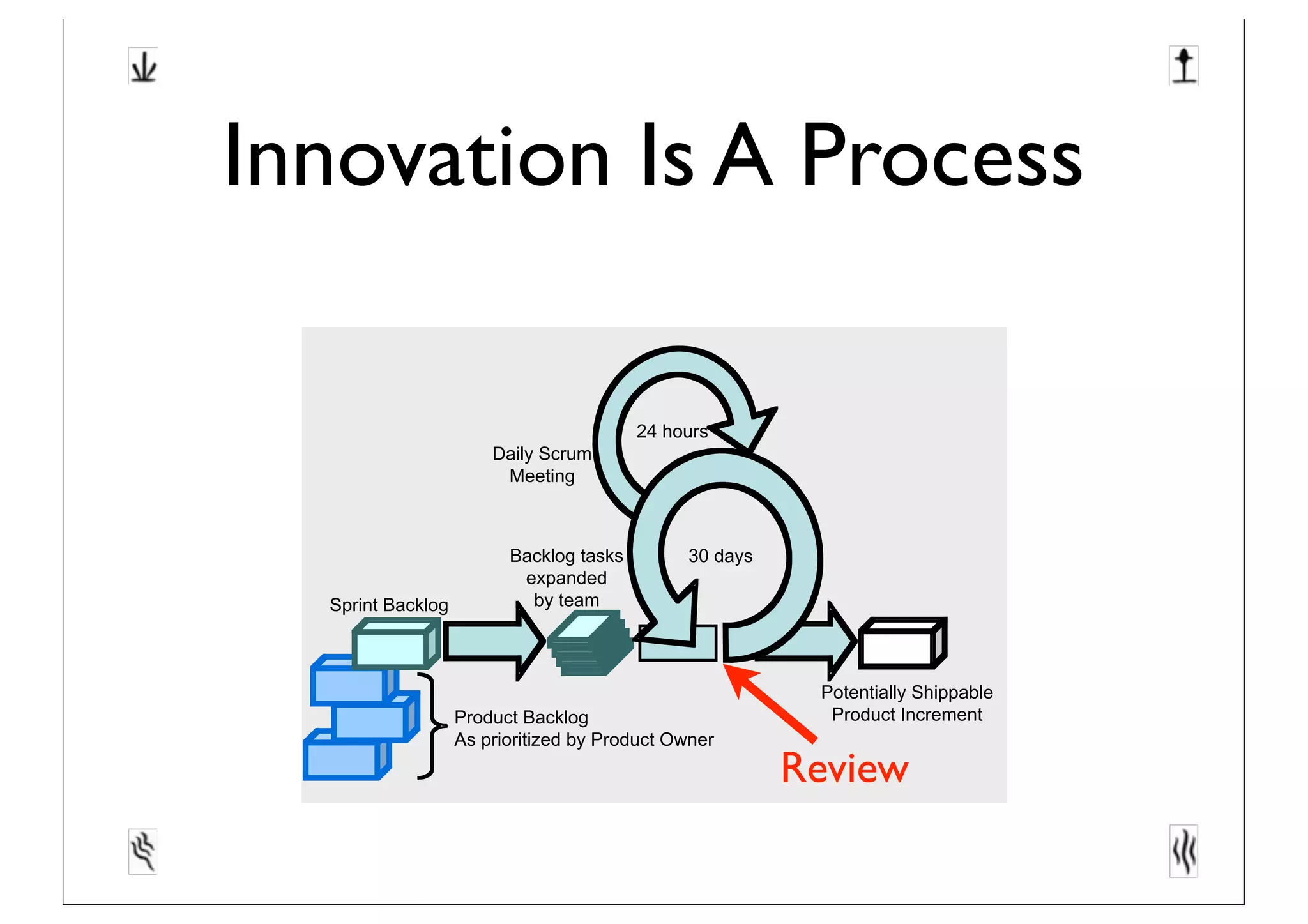
Innovation Is A Process
30 days
24 hours
Product Backlog
As prioritized by Product Owner
Sprint Backlog
Backlog tasks
expanded
by team
Potentially Shippable
Product Increment
Daily Scrum
Meeting
Review
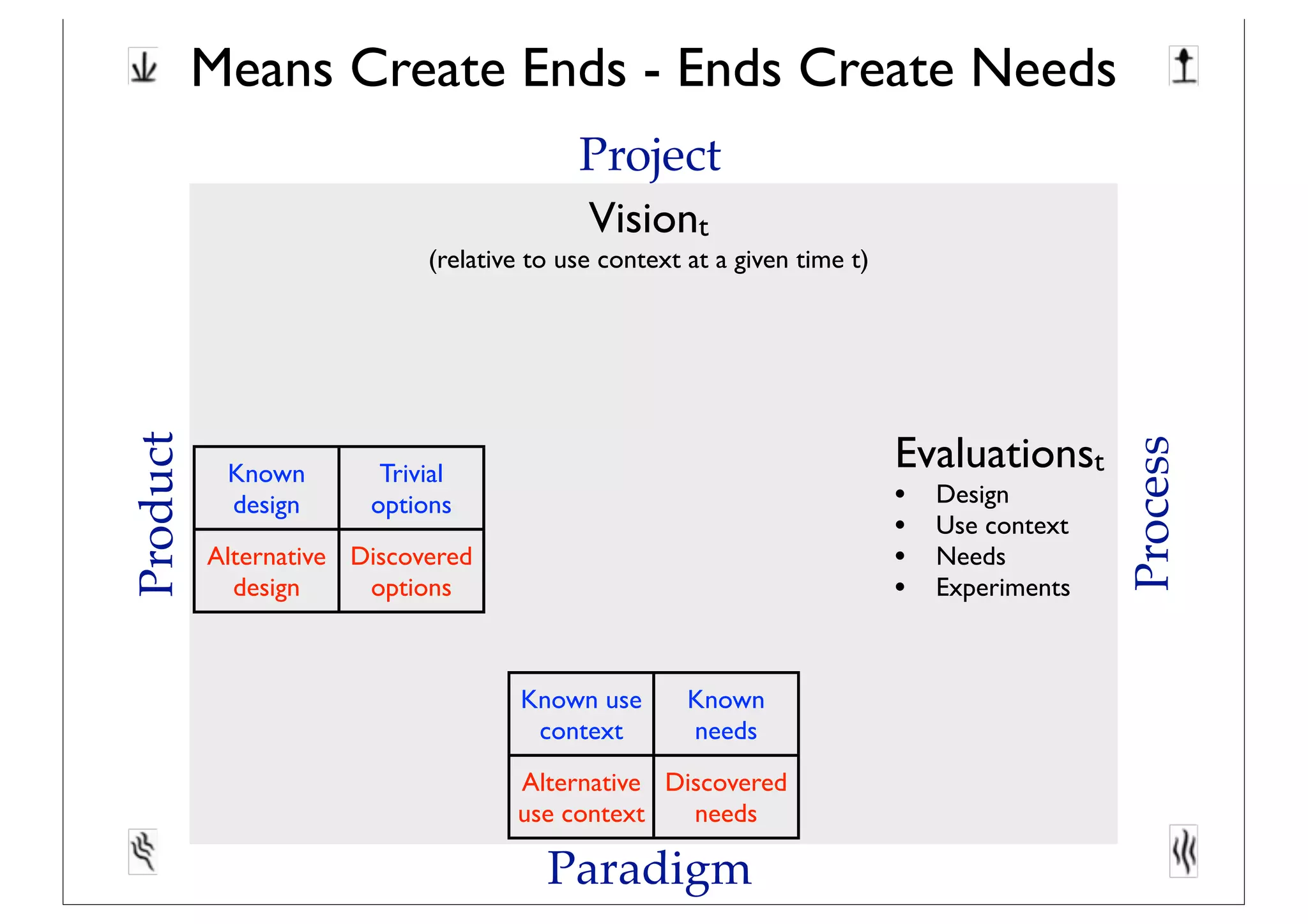
Means Create Ends - Ends Create Needs
Product
Process
Project
Paradigm
Known use
context
Known
needs
Alternative
use context
Discovered
needs
Known
design
Trivial
options
Alternative
design
Discovered
options
Visiont
(relative to use context at a given time t)
Evaluationst
• Design
• Use context
• Needs
• Experiments
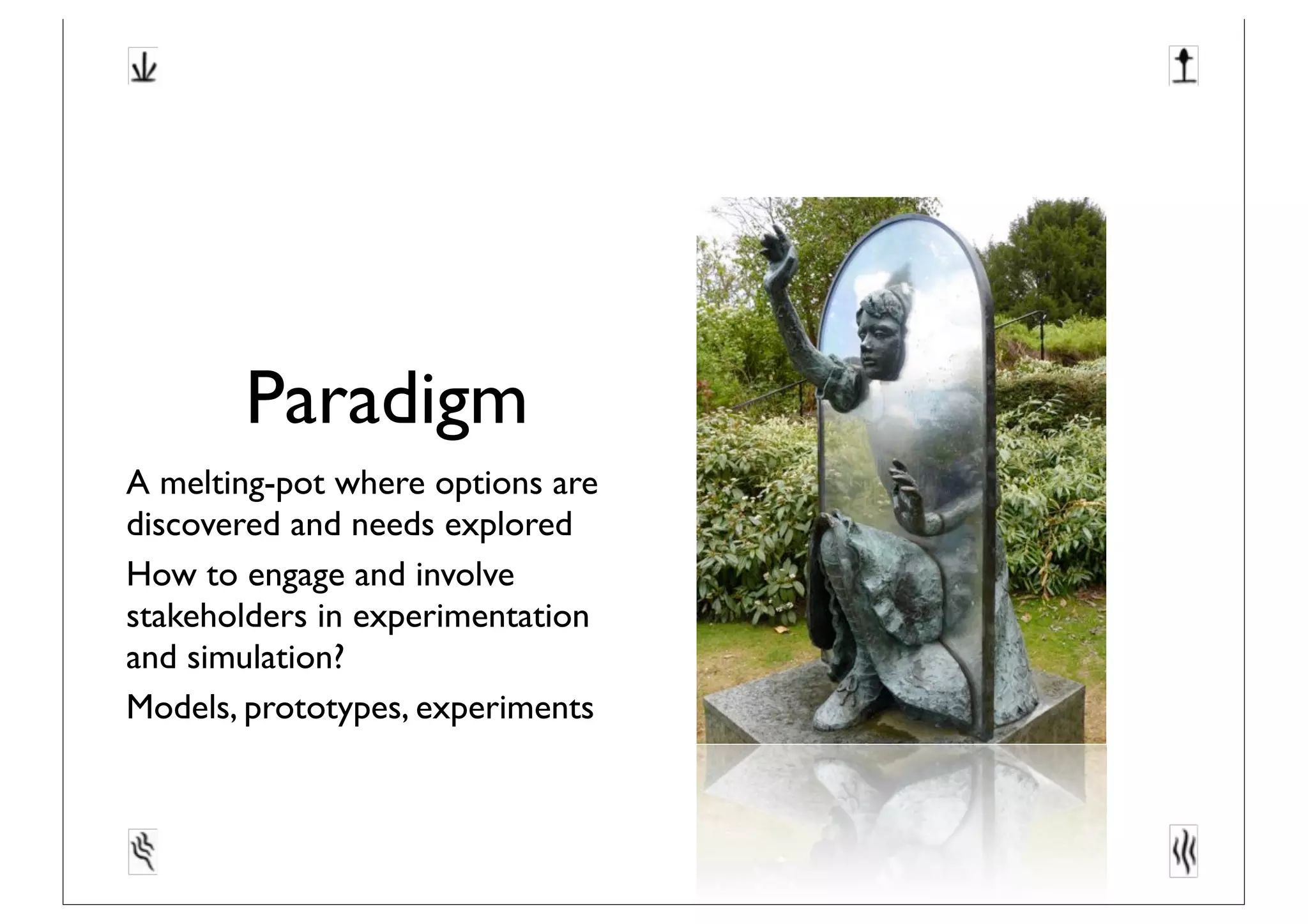
Paradigm
A melting-pot where options are
discovered and needs explored
How to engage and involve
stakeholders in experimentation
and simulation?
Models, prototypes, experiments
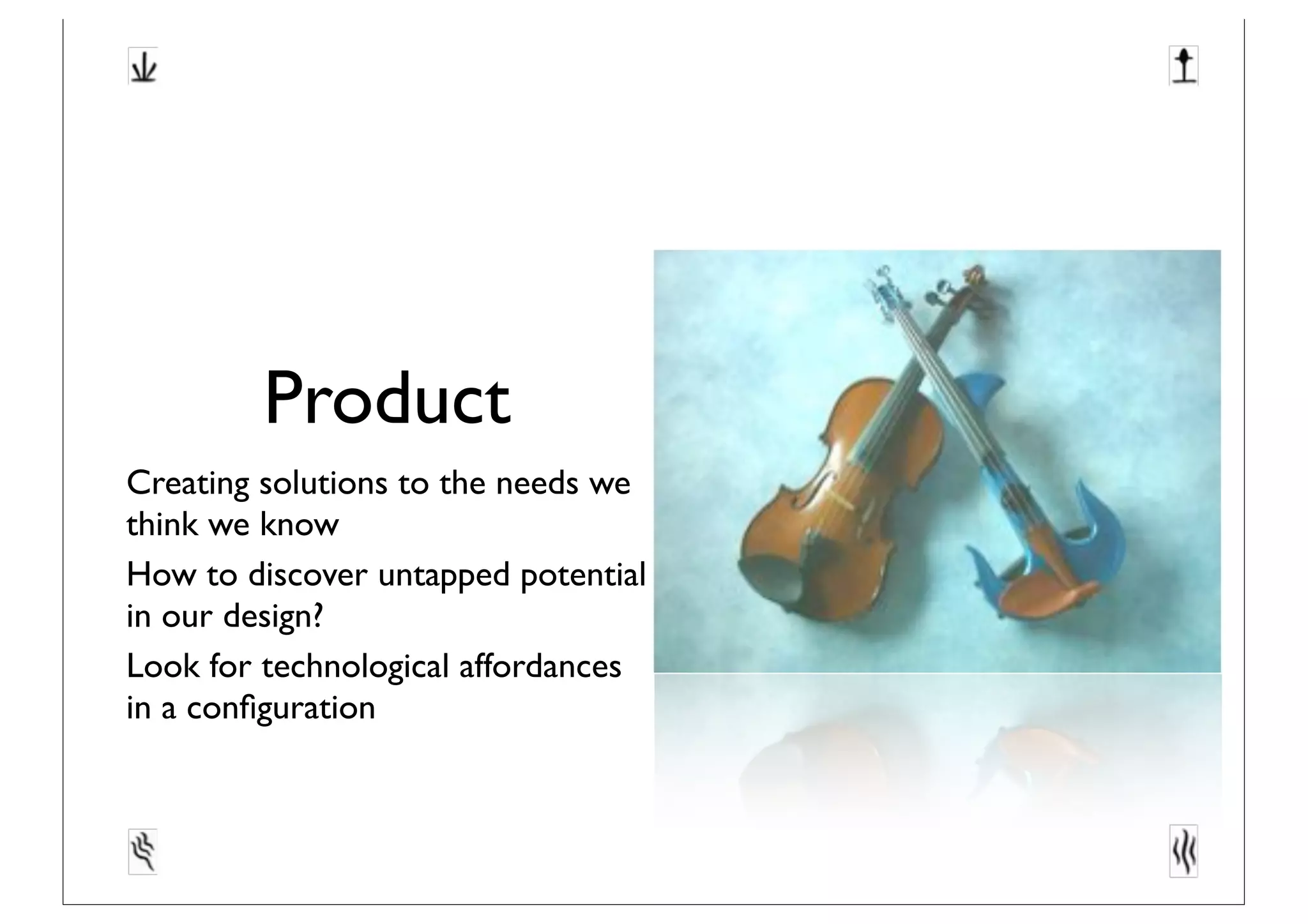
Product
Creating solutions to the needs we
think we know
How to discover untapped potential
in our design?
Look for technological affordances
in a configuration
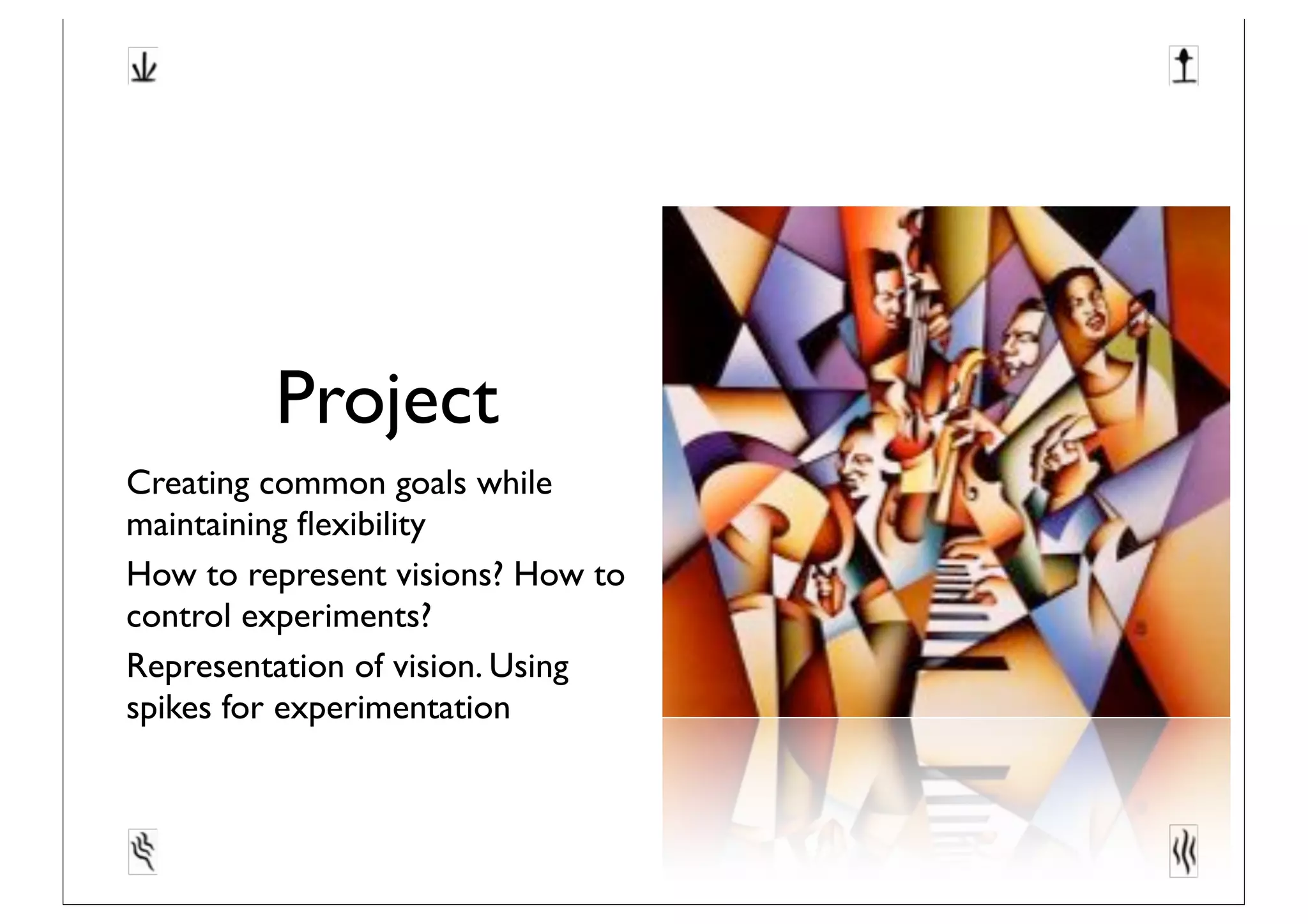
Project
Creating common goals while
maintaining flexibility
How to represent visions? How to
control experiments?
Representation of vision. Using
spikes for experimentation
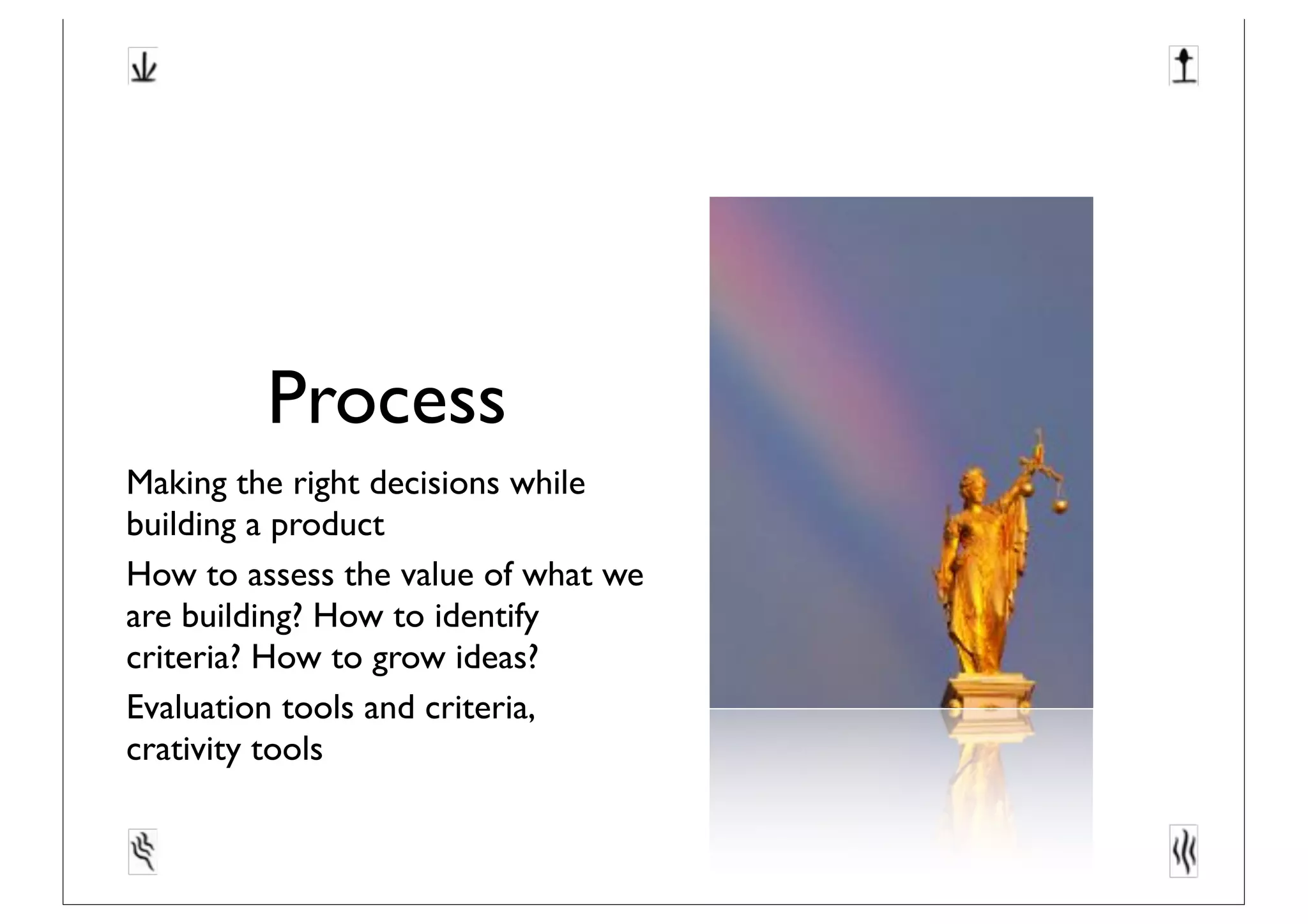
Process
Making the right decisions while
building a product
How to assess the value of what we
are building? How to identify
criteria? How to grow ideas?
Evaluation tools and criteria,
crativity tools
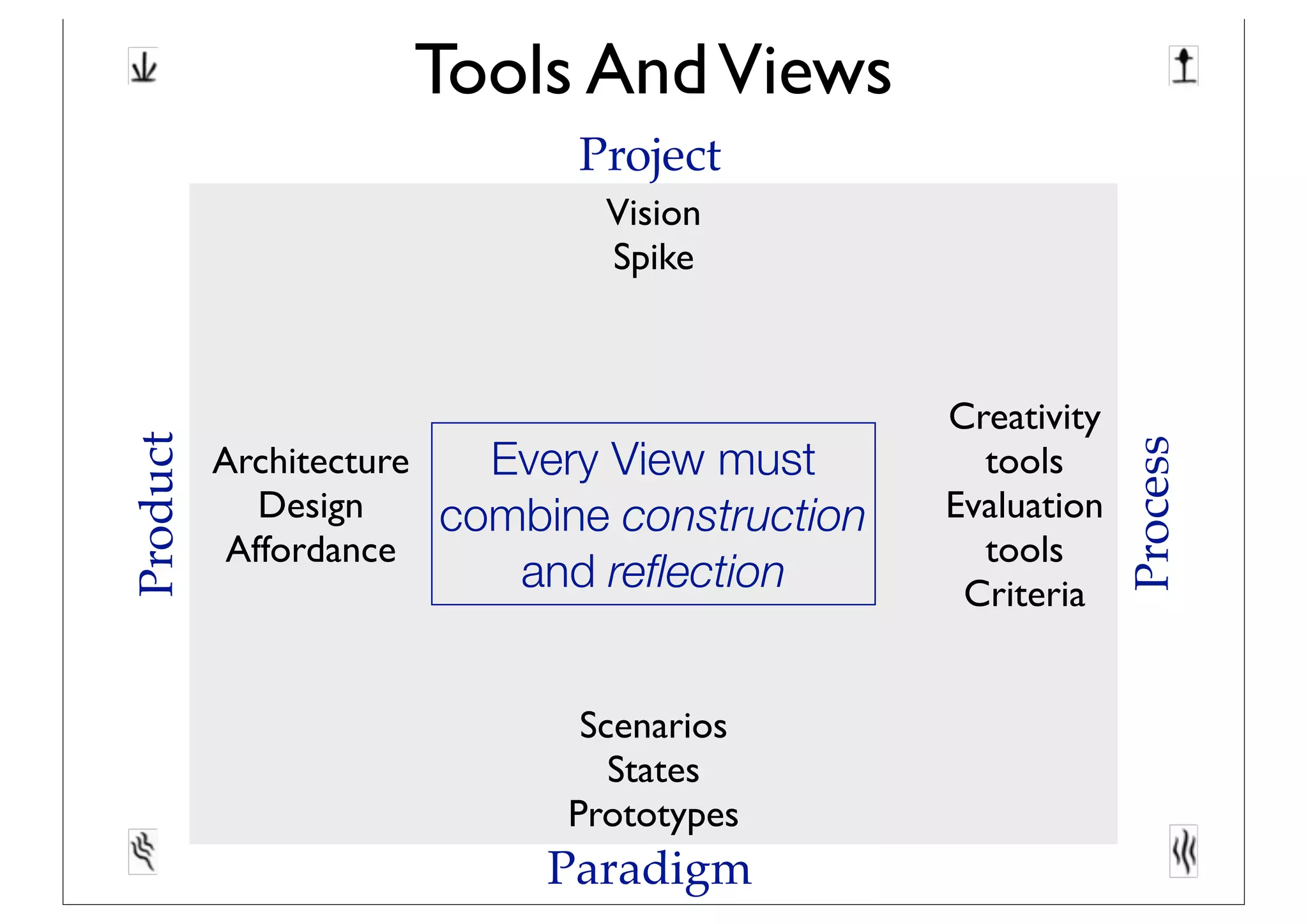
Tools AndViews
Product
Process
Project
Paradigm
Architecture
Design
Affordance
Creativity
tools
Evaluation
tools
Criteria
Vision
Spike
Scenarios
States
Prototypes
Every View must
combine construction
and reflection
Structures in Essence
Values Views Roles Vision
Reflection Paradigm Child Toulmin
Affordance Product Responder Prototype
Vision Project Challenger Metaphor
Facilitation Process Anchor Icon
Structures stimulate reflection
Visions
Structures for setting a course
Essentials aboutVisions
• Ideas versus visions.
• Visions facilitate the convergence of work in a
team.
• Visions are persistent and dynamic - they are
matured.
Representations and dialogue
matter
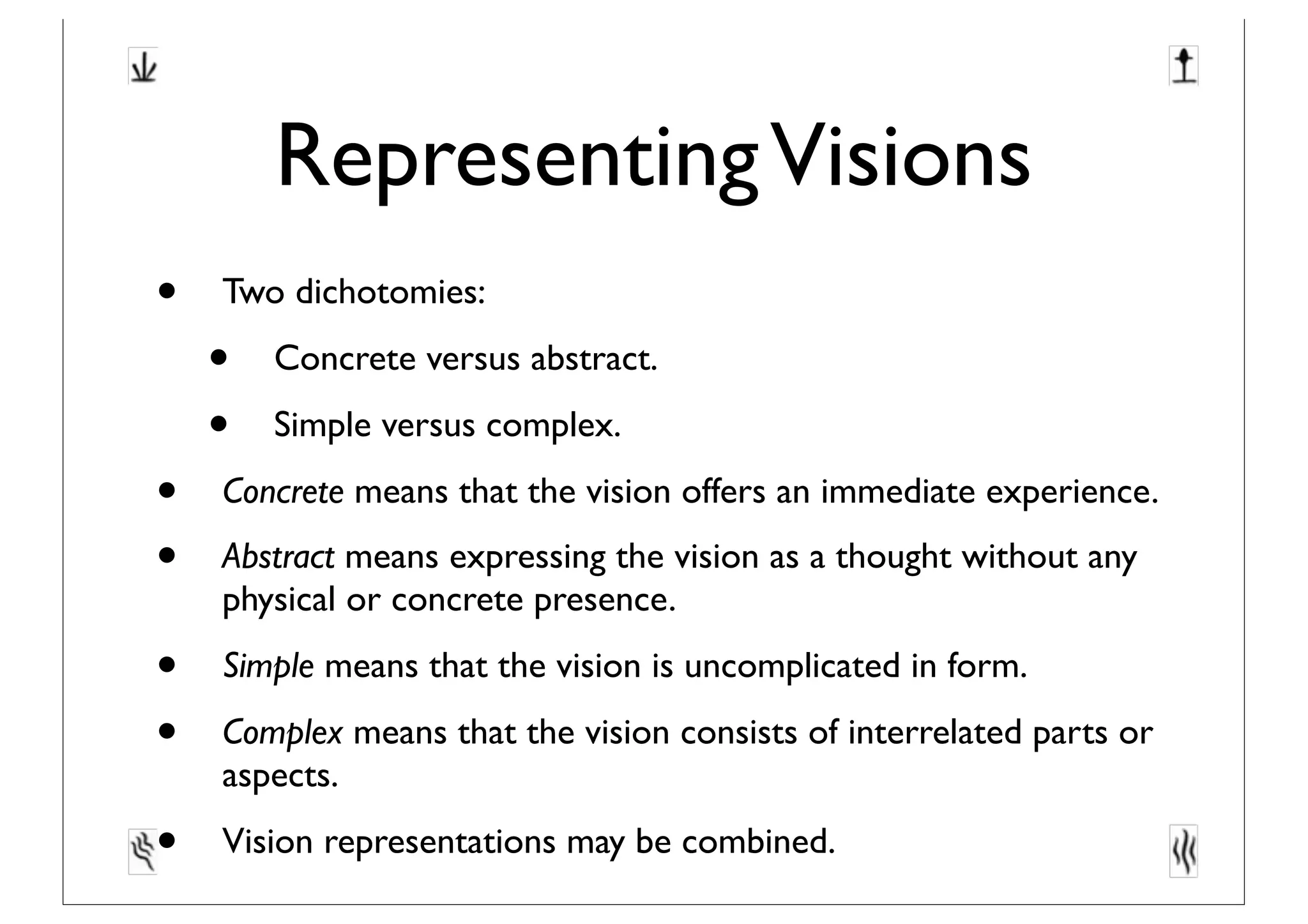
RepresentingVisions
• Two dichotomies:
• Concrete versus abstract.
• Simple versus complex.
• Concrete means that the vision offers an immediate experience.
• Abstract means expressing the vision as a thought without any
physical or concrete presence.
• Simple means that the vision is uncomplicated in form.
• Complex means that the vision consists of interrelated parts or
aspects.
• Vision representations may be combined.
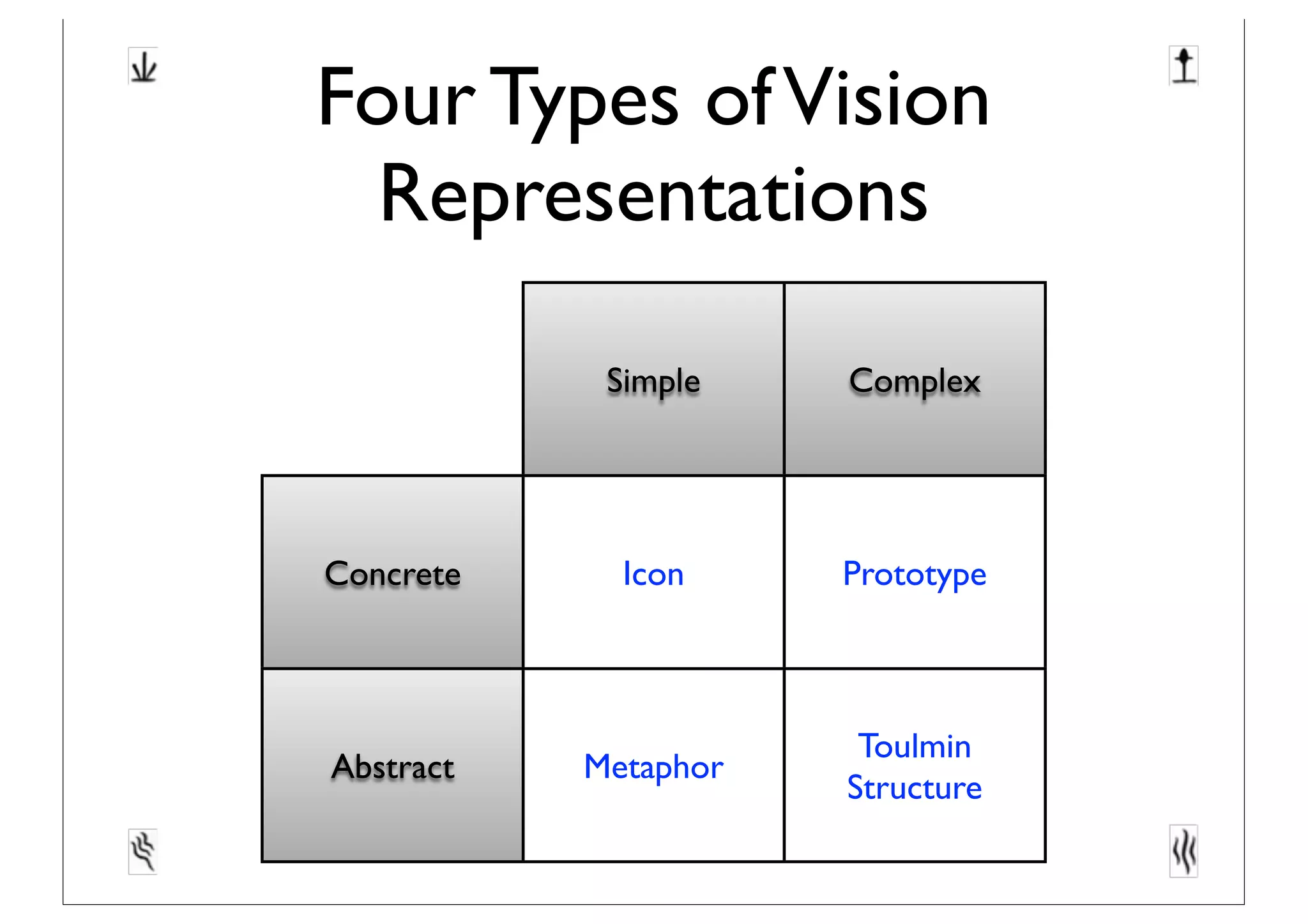
Four Types ofVision
Representations
Simple Complex
Concrete
Abstract
Icon Prototype
Metaphor
Toulmin
Structure

Software innovation - principper og værktøjer af Ivan Aaen, AAU

  • 1.
    I VA NA A E N D E PA RT M E N T O F C O M P U T E R S C I E N C E I VA N @ C S . A A U . D K • W W W. E S S E N C E . D K M AY 2 2 2 0 1 3 SOFTWARE INNOVATION P R I N C I P P E R O G V Æ R K T Ø J E R
  • 2.
    Innovation Is AProcess 30 days 24 hours Product Backlog As prioritized by Product Owner Sprint Backlog Backlog tasks expanded by team Potentially Shippable Product Increment Daily Scrum Meeting Review
  • 3.
    Means Create Ends- Ends Create Needs Product Process Project Paradigm Known use context Known needs Alternative use context Discovered needs Known design Trivial options Alternative design Discovered options Visiont (relative to use context at a given time t) Evaluationst • Design • Use context • Needs • Experiments
  • 4.
    Paradigm A melting-pot whereoptions are discovered and needs explored How to engage and involve stakeholders in experimentation and simulation? Models, prototypes, experiments
  • 5.
    Product Creating solutions tothe needs we think we know How to discover untapped potential in our design? Look for technological affordances in a configuration
  • 6.
    Project Creating common goalswhile maintaining flexibility How to represent visions? How to control experiments? Representation of vision. Using spikes for experimentation
  • 7.
    Process Making the rightdecisions while building a product How to assess the value of what we are building? How to identify criteria? How to grow ideas? Evaluation tools and criteria, crativity tools
  • 8.
  • 9.
    Structures in Essence ValuesViews Roles Vision Reflection Paradigm Child Toulmin Affordance Product Responder Prototype Vision Project Challenger Metaphor Facilitation Process Anchor Icon Structures stimulate reflection
  • 10.
  • 11.
    Essentials aboutVisions • Ideasversus visions. • Visions facilitate the convergence of work in a team. • Visions are persistent and dynamic - they are matured.
  • 12.
  • 13.
    RepresentingVisions • Two dichotomies: •Concrete versus abstract. • Simple versus complex. • Concrete means that the vision offers an immediate experience. • Abstract means expressing the vision as a thought without any physical or concrete presence. • Simple means that the vision is uncomplicated in form. • Complex means that the vision consists of interrelated parts or aspects. • Vision representations may be combined.
  • 14.
    Four Types ofVision Representations SimpleComplex Concrete Abstract Icon Prototype Metaphor Toulmin Structure