

1
HOW A PROJECT IS
BORN
Intro to Discovery Process
by Kate Semizhon
Solution Architect
AUGUST 3, 2015
2
INTRODUCTION
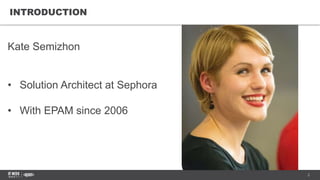
Kate Semizhon
• Solution Architect at Sephora
• With EPAM since 2006
3
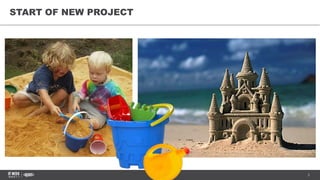
START OF NEW PROJECT
4
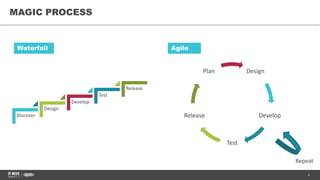
MAGIC PROCESS
Design
Develop
Test
Release
Plan
Discover
Design
Develop
Test
Release
Waterfall Agile
Repeat
5
YOU FOLLOWED BEST PRACTICES AND FAILED?
• One in six IT projects
• cost overrun of 200%
• schedule overrun of 70%.
• 1/3 of all projects were
successfully completed on time
and on budget.
6
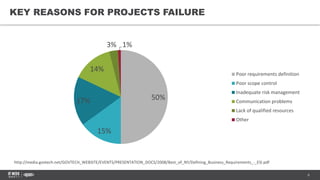
KEY REASONS FOR PROJECTS FAILURE
50%
15%
17%
14%
3% 1%
Poor requirements definition
Poor scope control
Inadequate risk management
Communication problems
Lack of qualified resources
Other
http://media.govtech.net/GOVTECH_WEBSITE/EVENTS/PRESENTATION_DOCS/2008/Best_of_NY/Defining_Business_Requirements_-_ESI.pdf
7
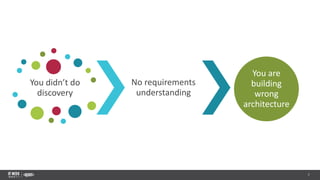
You didn’t do
discovery
No requirements
understanding
You are
building
wrong
architecture
8
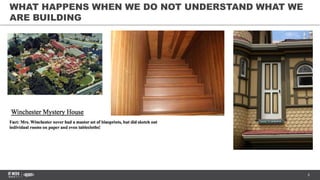
WHAT HAPPENS WHEN WE DO NOT UNDERSTAND WHAT WE
ARE BUILDING
9
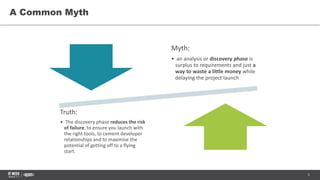
A Common Myth
Myth:
• an analysis or discovery phase is
surplus to requirements and just a
way to waste a little money while
delaying the project launch
Truth:
• The discovery phase reduces the risk
of failure, to ensure you launch with
the right tools, to cement developer
relationships and to maximise the
potential of getting off to a flying
start.
10
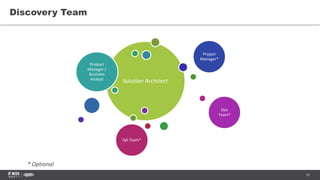
Discovery Team
Solution Architect
Product
Manager /
Business
Analyst
Project
Manager*
Dev
Team*
QA Team*
* Optional
11
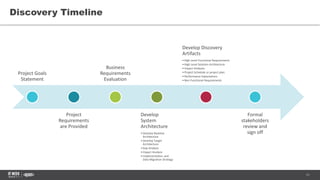
Discovery Timeline
Project Goals
Statement
Project
Requirements
are Provided
Business
Requirements
Evaluation
Develop
System
Architecture
• Develop Baseline
Architecture
• Develop Target
Architecture
• Gap Analysis
• Impact Analysis
• Implementation and
Data Migration Strategy
Develop Discovery
Artifacts
• High Level Functional Requirements
• High Level Solution Architecture
• Impact Analyzes
• Project Schedule or project plan
• Performance Expectations
• Non Functional Requirements
Formal
stakeholders
review and
sign off
12
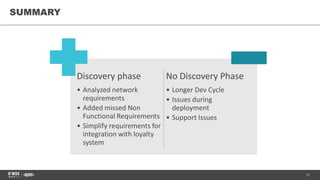
SUMMARY
Discovery phase
• Analyzed network
requirements
• Added missed Non
Functional Requirements
• Simplify requirements for
integration with loyalty
system
No Discovery Phase
• Longer Dev Cycle
• Issues during
deployment
• Support Issues
13
THANK YOU!

How a project is born. Intro to Discovery Phase

  • 1.
    1 HOW A PROJECTIS BORN Intro to Discovery Process by Kate Semizhon Solution Architect AUGUST 3, 2015
  • 2.
    2 INTRODUCTION Kate Semizhon • SolutionArchitect at Sephora • With EPAM since 2006
  • 3.
  • 4.
  • 5.
    5 YOU FOLLOWED BESTPRACTICES AND FAILED? • One in six IT projects • cost overrun of 200% • schedule overrun of 70%. • 1/3 of all projects were successfully completed on time and on budget.
  • 6.
    6 KEY REASONS FORPROJECTS FAILURE 50% 15% 17% 14% 3% 1% Poor requirements definition Poor scope control Inadequate risk management Communication problems Lack of qualified resources Other http://media.govtech.net/GOVTECH_WEBSITE/EVENTS/PRESENTATION_DOCS/2008/Best_of_NY/Defining_Business_Requirements_-_ESI.pdf
  • 7.
    7 You didn’t do discovery Norequirements understanding You are building wrong architecture
  • 8.
    8 WHAT HAPPENS WHENWE DO NOT UNDERSTAND WHAT WE ARE BUILDING
  • 9.
    9 A Common Myth Myth: •an analysis or discovery phase is surplus to requirements and just a way to waste a little money while delaying the project launch Truth: • The discovery phase reduces the risk of failure, to ensure you launch with the right tools, to cement developer relationships and to maximise the potential of getting off to a flying start.
  • 10.
    10 Discovery Team Solution Architect Product Manager/ Business Analyst Project Manager* Dev Team* QA Team* * Optional
  • 11.
    11 Discovery Timeline Project Goals Statement Project Requirements areProvided Business Requirements Evaluation Develop System Architecture • Develop Baseline Architecture • Develop Target Architecture • Gap Analysis • Impact Analysis • Implementation and Data Migration Strategy Develop Discovery Artifacts • High Level Functional Requirements • High Level Solution Architecture • Impact Analyzes • Project Schedule or project plan • Performance Expectations • Non Functional Requirements Formal stakeholders review and sign off
  • 12.
    12 SUMMARY Discovery phase • Analyzednetwork requirements • Added missed Non Functional Requirements • Simplify requirements for integration with loyalty system No Discovery Phase • Longer Dev Cycle • Issues during deployment • Support Issues
  • 13.

Editor's Notes

  • #2 What is hidden behind the customer’s requirement How important the business goal
  • #5 When a new agile project is started, it is assumed that development can be started immediately without discovery phase. But once the development is started, dev team faces different planning and design issues. Kate will explain what is hidden behind the customer’s requirements, how important is to understand the business goal and what can happen if the dev team blindly implements the customer’s requirements. Even if we do the design phase, usually it’s too short and there is no requirements understanding to future phases
  • #6 A project is considered a failure when it has not delivered what was required, in line with expectations. Therefore, in order to succeed, a project must deliver to cost, to quality, and on time 1. One in six IT projects have an average cost overrun of 200% and a schedule overrun of 70%. (Source: Harvard Business Review) <<Tweet this stat 2. The United States economy loses $50-$150 billion per year due to failed IT projects. (Source: Gallup Business Review) <<Tweet this stat 3. 75% of business and IT executives anticipate their software projects will fail. (Source: Geneca) <<Tweet this stat 4. 50% of all Project Management Offices (PMOs) close within just three years. (Source: KeyedIN) <<Tweet this stat 5. Fewer than a third of all projects were successfully completed on time and on budget over the past year. (Source: Standish Group) <<Tweet this stat 6. Barely over half (56%) of project managers are certified. (Source: Wrike) <<Tweet this stat
  • #7 http://media.govtech.net/GOVTECH_WEBSITE/EVENTS/PRESENTATION_DOCS/2008/Best_of_NY/Defining_Business_Requirements_-_ESI.pdf http://www.it-cortex.com/Stat_Failure_Cause.htm
  • #10 Some believe an analysis or discovery phase is surplus to requirements and just a way to waste a little money while delaying the project launch
  • #12  > Business / Project Goals Statement – What should this project achieve for the business, new clients? cost savings?   > Functional Requirements detailing what the website or application should do, documented as User Stories or another format developers can estimate and build from.   > Visual Designs illustrating the user flows and look of the website   > Information Architecture detailing what content will be displayed and how it will be accessed.   > Project Schedule or project plan covering the duration to complete the project and key milestones (or iterations if agile)   > Project Cost Estimate or Quote with detailed requirements it becomes possible to create more detailed and accurate cost estimates.   > Non Functional Prototype: Many tools exist to now prototype websites and mobile apps using drag and drop editors. This is great communication tool.