Design Process 
How a Design Project is managed.
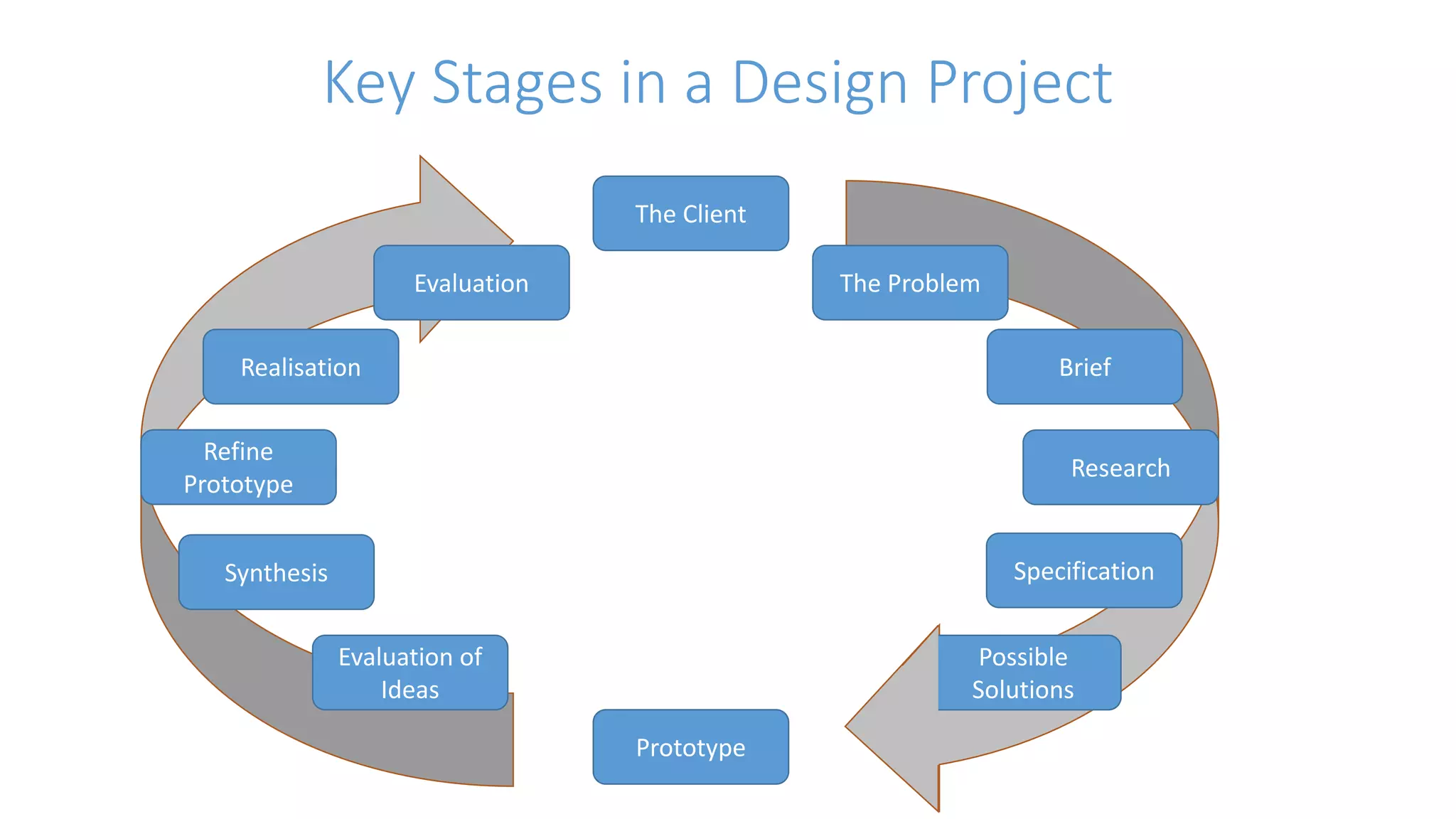
Key Stages in a Design Project 
The Problem 
The Client 
Brief 
Research 
Possible 
Solutions 
Realisation 
Evaluation of 
Ideas 
Synthesis 
Prototype 
Refine 
Prototype 
Evaluation 
Specification
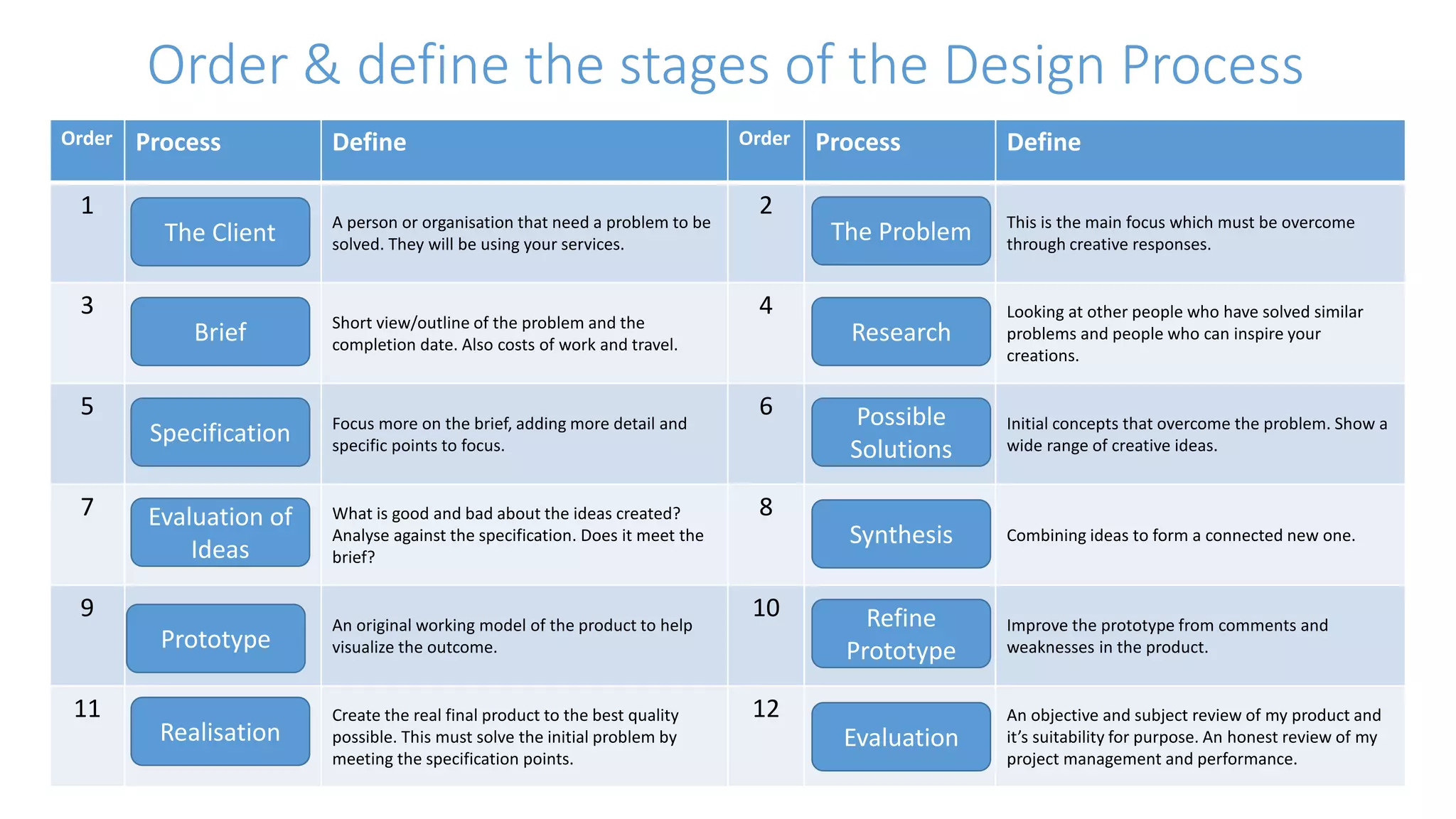
Order & define the stages of the Design Process 
Order Process Define Order Process Define 
1 
A person or organisation that need a problem to be 
solved. They will be using your services. 
2 
This is the main focus which must be overcome 
through creative responses. 
3 
Short view/outline of the problem and the 
completion date. Also costs of work and travel. 
4 Looking at other people who have solved similar 
problems and people who can inspire your 
creations. 
5 
Focus more on the brief, adding more detail and 
specific points to focus. 
6 
Initial concepts that overcome the problem. Show a 
wide range of creative ideas. 
7 What is good and bad about the ideas created? 
Analyse against the specification. Does it meet the 
brief? 
8 
Combining ideas to form a connected new one. 
9 
An original working model of the product to help 
visualize the outcome. 
10 
Improve the prototype from comments and 
weaknesses in the product. 
11 Create the real final product to the best quality 
possible. This must solve the initial problem by 
meeting the specification points. 
12 An objective and subject review of my product and 
it’s suitability for purpose. An honest review of my 
project management and performance. 
The Client The Problem 
Brief Research 
Specification 
Possible 
Solutions 
Evaluation of 
Ideas 
Synthesis 
Prototype 
Refine 
Prototype 
Realisation Evaluation

The Design Process

  • 1.
    Design Process Howa Design Project is managed.
  • 2.
    Key Stages ina Design Project The Problem The Client Brief Research Possible Solutions Realisation Evaluation of Ideas Synthesis Prototype Refine Prototype Evaluation Specification
  • 3.
    Order & definethe stages of the Design Process Order Process Define Order Process Define 1 A person or organisation that need a problem to be solved. They will be using your services. 2 This is the main focus which must be overcome through creative responses. 3 Short view/outline of the problem and the completion date. Also costs of work and travel. 4 Looking at other people who have solved similar problems and people who can inspire your creations. 5 Focus more on the brief, adding more detail and specific points to focus. 6 Initial concepts that overcome the problem. Show a wide range of creative ideas. 7 What is good and bad about the ideas created? Analyse against the specification. Does it meet the brief? 8 Combining ideas to form a connected new one. 9 An original working model of the product to help visualize the outcome. 10 Improve the prototype from comments and weaknesses in the product. 11 Create the real final product to the best quality possible. This must solve the initial problem by meeting the specification points. 12 An objective and subject review of my product and it’s suitability for purpose. An honest review of my project management and performance. The Client The Problem Brief Research Specification Possible Solutions Evaluation of Ideas Synthesis Prototype Refine Prototype Realisation Evaluation